
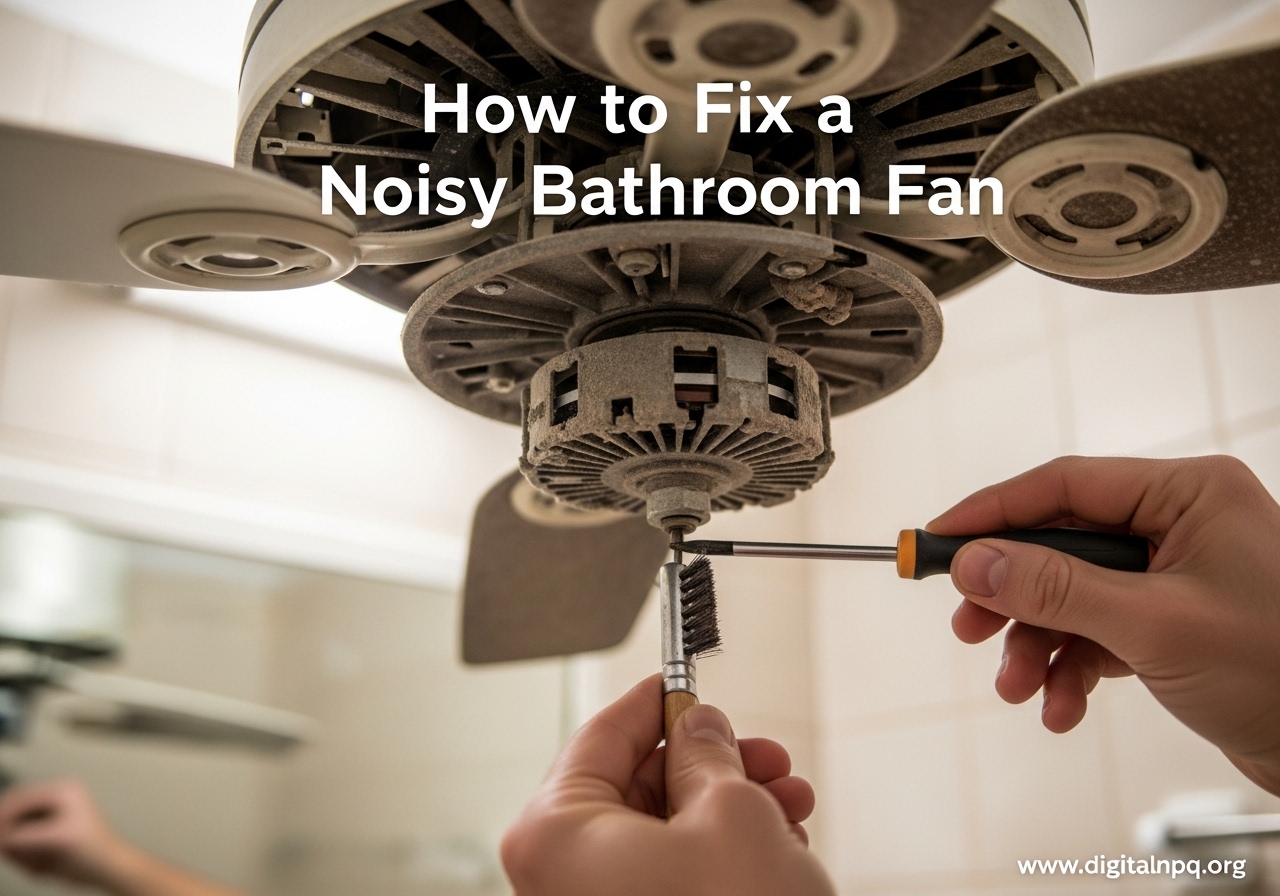
That rattling, humming, or squeaking sound coming from your bathroom ceiling is more than just annoying. A noisy bathroom exhaust fan often signals dust buildup, dry motor bearings, or loose mounting hardware, all of which can get worse over time if you ignore them. The good news is that most bathroom fan noise can be fixed in under an hour with basic household tools and no special skills.
In this guide, I will walk you through exactly how to fix a noisy bathroom fan, step by step. I have dealt with this problem in my own home and helped neighbors troubleshoot theirs, so I know which fixes actually work and which ones waste your time. You will learn how to diagnose the specific type of noise, clean and lubricate the fan properly, and decide whether repair or replacement makes more sense.
A properly running bathroom fan does more than keep things quiet. It pulls moisture out of the air, prevents mold growth on your walls and ceiling, and protects your bathroom fixtures from long-term water damage. If your fan has been getting louder over the past few months, it is time to take care of it before a minor annoyance turns into a bigger problem.
Why Is My Bathroom Fan So Loud? (Noise Diagnosis)
Before you grab a screwdriver, it helps to know what kind of noise your fan is making. Different sounds point to different causes, and diagnosing the problem correctly saves you time and effort. Here is a breakdown of the most common bathroom fan noises and what each one typically means.
Humming or Buzzing
A low, steady hum or buzz usually comes from vibration between the fan housing and the ceiling or wall. It can also mean the motor is struggling due to dust accumulation or aging bearings. If the humming is electrical in nature, a faint zapping sound, you should stop using the fan immediately and have an electrician inspect the wiring.
Clicking or Rattling
Clicking, ticking, or rattling sounds almost always point to something loose. The fan blade might be slightly bent and tapping the housing, a screw could have vibrated loose from the mounting bracket, or the grille cover may not be seated properly. This is one of the easiest noises to fix once you locate the source.
Squeaking or Grinding
Squeaking and grinding noises mean the motor bearings are dry or worn out. This is the most common noise complaint on older fans, especially those that have not been cleaned or lubricated in years. A high-pitched squeal that gets louder as the fan speeds up is a textbook sign of dry shaft bearings.
Rumbling or Deep Vibrating
A deep rumble or vibration that you can feel through the ceiling often comes from the ductwork or the way the fan is mounted. Kinked flex duct, a damper that is stuck partially closed, or a fan housing that is pressed tight against joists can all create this kind of noise. The fan itself might be running fine, but the surrounding structure is amplifying every vibration.
For reference, a typical quiet bathroom fan operates at around 0.5 to 1.5 sones (roughly 30 to 40 decibels, similar to a soft whisper). If your fan sounds louder than a normal conversation, which sits around 60 decibels, something is clearly wrong. Fans that exceed 70 decibels are loud enough to be heard through closed doors and should be addressed right away.
Tools and Materials You Need
Gather everything before you start so you are not running to the garage mid-project. Here is what I recommend having on hand.
- Screwdriver set (Phillips and flathead, most fans use Phillips head screws)
- Shop vacuum or vacuum with brush attachment (for removing dust and debris)
- Machine oil or silicone-based lubricant (do NOT use WD-40, I will explain why below)
- Soft cleaning cloth and mild dish soap
- Old toothbrush (great for scrubbing grime off fan blades)
- Safety glasses (dust and debris will fall when you open the housing)
- Flashlight or headlamp (bathroom lighting is often poor directly above the fan)
- Step ladder or step stool
The only specialty item here is the lubricant. I use 3-in-One multi-purpose oil, which costs a few dollars at any hardware store. Silicone spray also works well. The key is using a non-residue lubricant that will not attract more dust over time.
How to Fix a Noisy Bathroom Fan: Step-by-Step Guide
This is the core process I follow every time I need to fix a noisy bathroom fan. Each step builds on the last one, so work through them in order. The entire job typically takes 30 to 60 minutes depending on how dirty your fan is.
Step 1: Turn Off the Power
This is non-negotiable. Go to your breaker panel and switch off the circuit that powers your bathroom. Do not just turn off the wall switch, because wiring inside the fan housing can still be live. Flip the bathroom light switch after killing the breaker to confirm the power is off. If the light does not come on, you are safe to proceed.
If you are not sure which breaker controls the bathroom, plug a radio into the bathroom outlet and turn it up. When the music stops, you have found the right breaker.
Step 2: Remove the Fan Cover or Grille
Most bathroom fan grilles are held in place by one of two methods. The first is a spring clip system: gently pull the grille down about an inch, then squeeze the spring wires together on both sides and pull the cover free. The second is a single screw in the center of the grille visible when you look up at the fan. Remove that screw and the grille drops straight down.
Set the grille aside in your sink or tub. Now is a good time to wash it with warm soapy water and let it dry while you work on the rest of the fan.
Step 3: Clean All Dust and Debris
This is where most noise problems get resolved. Years of dust, hair, and lint collect on the fan blades and inside the housing, throwing the assembly off balance and forcing the motor to work harder.
Start by vacuuming out all loose dust with your brush attachment. Get into the corners of the housing and around the motor. Then use the toothbrush to gently scrub the fan blades clean. Wipe everything down with a damp cloth. If the blades are particularly grimy, a little dish soap on the toothbrush helps break it up.
Avoid using compressed air cans. I know it seems like a quick shortcut, but blowing dust into the motor bearings can actually make the noise worse. Stick with vacuuming and wiping.
Step 4: Inspect the Motor and Fan Blades
With the fan clean, look for visible problems. Spin the fan blade by hand and watch how it moves. Does it wobble? Does it scrape against the housing at any point in its rotation? Are any blades chipped, cracked, or bent?
Check the motor housing for discoloration or a burnt smell. If the motor looks darkened or smells like burnt plastic, the windings may be failing, and replacement is your best option. Also check the shaft where it connects to the fan blade. If there is visible play, meaning the blade rocks side to side on the shaft, the bearing is worn out.
Step 5: Lubricate the Motor Bearings
If the motor passed visual inspection but still squeaks or grinds, dry bearings are almost certainly the cause. Locate the shaft where it exits the motor housing. Apply two or three drops of machine oil directly to the shaft opening. Spin the blade by hand several times to work the oil into the bearing.
Some fan motors have a small rubber plug or oil port on top of the motor housing. Pop that plug out and add oil through that port if your model has one.
Now, about WD-40. I see this question constantly in DIY forums, and the answer is clear: do not use WD-40 on bathroom fan motors. WD-40 is a solvent and water displacer, not a long-term lubricant. It will dissolve whatever grease remains in the bearings, make the fan quieter for about a week, and then the noise will come back worse than before because the bearings are now completely dry. Use actual machine oil or a silicone-based lubricant instead.
Step 6: Tighten Loose Screws and Realign Blades
Check every screw you can see. The mounting screws that hold the fan housing to the ceiling joists are often the hidden source of rattling. Tighten them snugly but do not overtighten, which can crack the housing.
If a blade is slightly bent and tapping the housing, gently bend it back into alignment with your fingers. Go slowly and check the clearance by spinning the blade by hand. There should be an even gap between the blade tips and the housing all the way around.
Step 7: Check the Ductwork Connection
While you have the fan open, peek at the duct connection on the side or top of the housing. If the flex duct is kinked, crushed, or partially disconnected, it restricts airflow and makes the fan work harder, which creates more noise. Straighten any kinks and make sure the duct is firmly attached with a hose clamp or duct tape rated for HVAC use.
If your duct has a backdraft damper (a small flap inside the duct near the fan), check that it swings freely. A stuck damper rattles and restricts air movement.
Step 8: Reassemble and Test
Put the cleaned, dried grille back on the fan. If it uses spring clips, align the springs with the slots in the housing and push the grille up until it snaps into place. If it uses a center screw, hold the grille in position and reinstall the screw.
Turn the breaker back on and switch the fan on. Listen carefully. The difference is usually dramatic. A properly cleaned and lubricated fan should produce a soft, steady airflow sound with no rattling, squeaking, or humming. If the noise persists after all these steps, the motor bearings are likely worn beyond what lubrication can fix, and you should consider replacing the fan or the motor assembly.
When to Repair vs Replace Your Bathroom Fan
Not every noisy fan is worth fixing. Here is how I decide whether to repair or replace.
Repair if: the fan is less than 10 years old, the motor runs smoothly after cleaning and lubrication, and the CFM (cubic feet per minute) rating is adequate for your bathroom size. A quick rule of thumb for CFM is 1 CFM per square foot of bathroom area, with a minimum of 50 CFM for most standard bathrooms. If your fan meets this standard and the noise went away after cleaning, you are in good shape.
Replace if: the fan is more than 10 years old, the motor shows signs of burnout (burnt smell, discoloration, excessive heat), or the bearings are visibly worn with shaft play. Also replace if the fan’s CFM rating is too low for your bathroom, which was common in older homes where builders often installed the cheapest option available.
Modern bathroom fans are significantly quieter than models from even 10 years ago. Newer units operate at 0.3 to 1.0 sones, with some premium models dropping below 0.3 sones, which is virtually silent. If you are replacing an old fan, the noise reduction alone makes it worthwhile, and today’s fans also use less energy. An older fan might draw 40 to 80 watts, while a modern replacement with the same airflow can run on 10 to 25 watts.
The motor assembly on many fans can be replaced independently of the housing. If your housing is in good condition and properly ducted, you can swap just the motor and blade assembly in about 15 minutes. This saves money compared to a full replacement and avoids cutting into the ceiling drywall.
Ductwork and Mounting Issues That Cause Noise
Sometimes the fan itself is fine, but the installation around it is causing all the noise. This section addresses problems I see frequently that most guides never mention.
Flex Duct Problems
The flexible aluminum duct that connects your fan to the exterior vent can cause significant noise if it is improperly routed. Sharp bends, sagging sections, or duct that is crushed by insulation all restrict airflow. When air cannot exit freely, it creates turbulence and back-pressure that translates into noise at the fan housing.
Ideally, the duct run should be as short and straight as possible. Use 45-degree gradual bends instead of 90-degree sharp turns. If your duct travels more than 10 feet, consider upsizing from 4-inch to 6-inch duct to reduce resistance.
Mounting Bracket Contact
If the fan housing is pressed directly against ceiling joists or drywall, every vibration from the motor transfers straight into the structure of your house. This is why some fans seem loud even when they are brand new. Foam isolation tape between the mounting brackets and the joists can dramatically reduce this type of vibration noise.
Exterior Vent Cap Issues
Check the exterior wall or roof cap where the duct exits your home. If the flap or grille on the exterior cap is damaged, stuck open, or clogged with debris, it affects airflow throughout the entire system. A flapper that bangs in the wind is a common source of intermittent noise that seems to come from the fan but actually originates outside.
Preventive Maintenance Schedule for Bathroom Fans
The best way to avoid a noisy bathroom fan is to maintain it regularly. I follow this schedule at my own home, and it has kept my bathroom fans running quietly for years.
Every month: Do a quick visual check. Turn the fan on and listen for any changes in sound. If you notice the fan getting louder, do not wait, address it early before the motor bearings dry out completely.
Every 3 months: Remove the grille and give it a quick clean. Vacuum any visible dust from the housing area. This takes about 5 minutes and prevents the heavy buildup that causes most noise problems.
Every 6 months: Perform a more thorough cleaning. Vacuum the blades and motor area, wipe down the housing, and apply a drop or two of machine oil to the shaft bearing. This is the single most effective thing you can do to extend the life of your fan.
Once a year: Do a full inspection. Clean everything thoroughly, check the duct connection, tighten all mounting screws, and inspect the exterior vent cap. This is also a good time to evaluate whether the fan is still adequate for your bathroom’s ventilation needs.
Fans that are cleaned and lubricated regularly can last 15 to 20 years. Fans that are ignored typically start getting loud within 3 to 5 years and may fail completely within 7 to 10 years. The difference is almost entirely maintenance.
FAQ
How do I stop my bathroom fan from being so loud?
Turn off the power at the breaker, remove the grille cover, vacuum out all dust and debris from the housing and blades, lubricate the motor shaft with two or three drops of machine oil, tighten any loose mounting screws, and reassemble. This process fixes the majority of noisy bathroom fans in under an hour.
Can you spray WD-40 on a bathroom fan?
No, you should not use WD-40 on a bathroom fan. WD-40 is a solvent and water displacer, not a long-term lubricant. It will dissolve any remaining grease in the bearings and the noise will return worse within days or weeks. Use machine oil like 3-in-One oil or a silicone-based lubricant instead.
Can you lubricate a bathroom fan?
Yes, most bathroom exhaust fans can be lubricated. Apply two or three drops of machine oil directly to the motor shaft where it exits the housing. Some models have a small rubber oil port on top of the motor. Spin the blade by hand several times to work the oil into the bearing. This should be done every 6 months as preventive maintenance.
Is a noisy bathroom fan dangerous?
A noisy bathroom fan is not immediately dangerous in most cases, but it can indicate problems that could become hazardous over time. Dust buildup on the motor creates a fire risk, worn bearings can cause the motor to overheat, and poor ventilation from a malfunctioning fan allows mold growth and moisture damage. If you smell burning or hear electrical buzzing, turn the fan off at the breaker and have it inspected by an electrician.
Conclusion
Learning how to fix a noisy bathroom fan is one of those home maintenance skills that pays off repeatedly. The eight-step process, from shutting off the power through cleaning, lubricating, and reassembling, resolves the vast majority of fan noise problems without any professional help or expensive replacement parts.
The key takeaways are simple: clean the dust regularly, use proper machine oil instead of WD-40, tighten loose hardware, and inspect your ductwork. Follow the preventive maintenance schedule I outlined, and your bathroom fan should run quietly for years to come. If the motor is burnt out or the bearings are worn beyond repair, replacing the motor assembly or the full unit is a straightforward DIY project that most homeowners can handle in a single afternoon.