
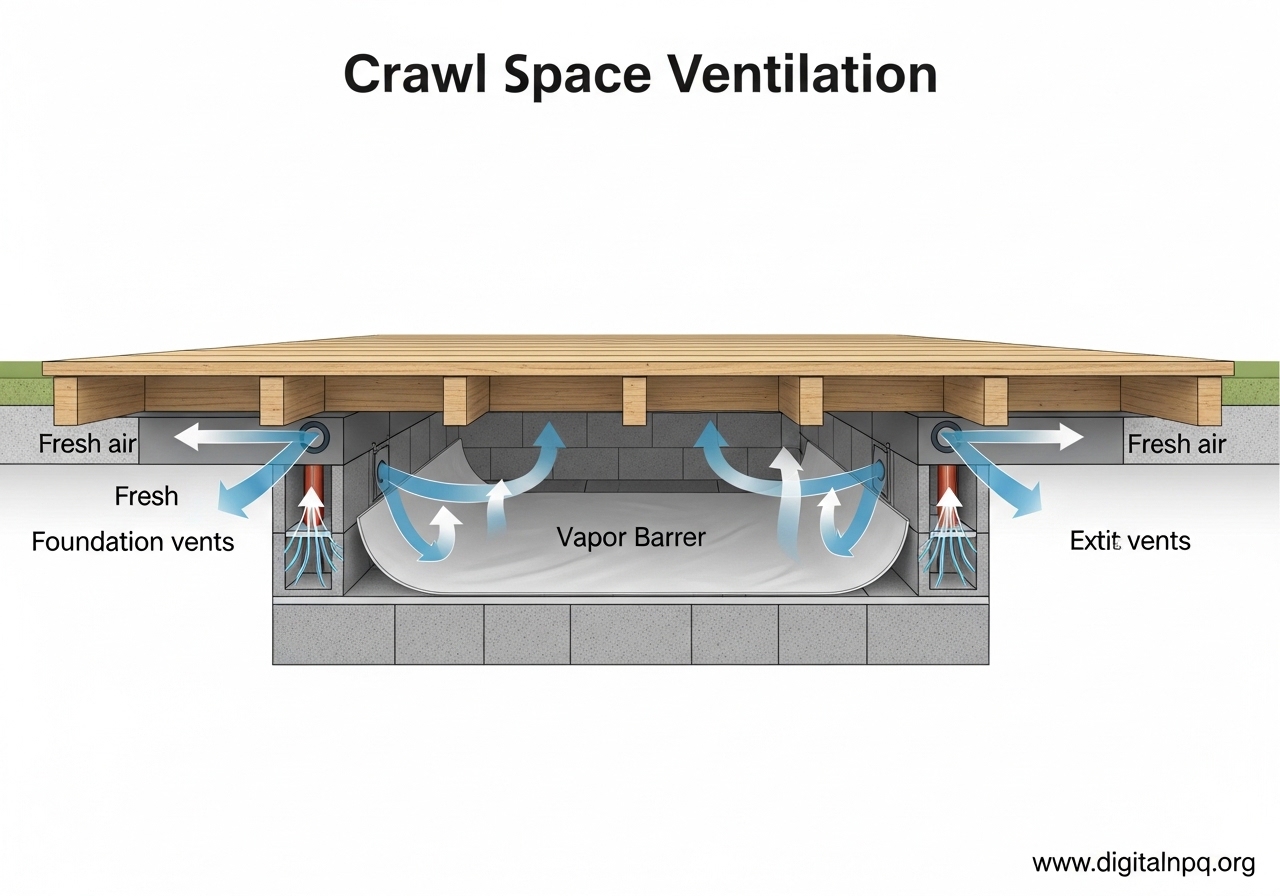
Crawl space ventilation is one of those home maintenance topics that generates more confusion than clarity. I have spent months researching building science, reading forum discussions from real homeowners, and comparing contractor recommendations. What I found surprised me: much of the conventional advice about crawl space ventilation is outdated or simply wrong for your specific climate.
In this guide, I will explain how crawl space ventilation actually works, what the current building codes require, and how to choose the right approach for your home. Whether you live in a humid coastal region, a dry desert climate, or somewhere in between, you will find specific recommendations you can act on today.
Our team has analyzed the latest IRC standards, EPA guidance, and real-world case studies from 2026 to bring you accurate, actionable information. By the end of this article, you will know whether your crawl space vents should be open or closed, how to spot moisture problems before they cause structural damage, and when to call a professional.
What Is Crawl Space Ventilation and Why Does It Matter?
Crawl space ventilation is the practice of controlling airflow and moisture in the unfinished area beneath your home. This space sits between the ground and your first floor, typically supported by foundation walls and piers. Because it connects directly to your living space through gaps in plumbing, ductwork, and flooring, the air quality in your crawl space affects the air you breathe indoors.
The stack effect drives this connection. Warm air rises through your home, creating negative pressure that pulls air upward from the crawl space. In a typical house, roughly 40 percent of the air on your first floor originates from the crawl space. That means mold spores, musty odors, and radon gas in that dark space do not stay there. They travel into your living areas.
Relative humidity is the critical measurement. When crawl space humidity exceeds 70 percent, mold growth becomes likely. Wood rot organisms activate around 80 percent. In humid climates, open foundation vents can actually pull moisture-laden air into the crawl space, causing condensation on cold surfaces and making the problem worse. This is why modern building science has shifted away from the old assumption that vents always help.
Proper crawl space ventilation prevents structural damage, protects indoor air quality, reduces energy costs, and extends the lifespan of your home. The question is not whether you need ventilation. The question is which method works best for your climate, soil conditions, and existing construction.
What Are the Building Code Requirements for Crawl Space Ventilation?
The International Residential Code (IRC) Section R408 provides the standards for crawl space ventilation in most jurisdictions. Understanding these rules helps you assess whether your home meets minimum requirements and what options you have for improvement.
For vented crawl spaces, the IRC requires a minimum net free vent area of 1 square foot for every 150 square feet of crawl space floor area. If you install a vapor barrier covering the ground, that ratio improves to 1 square foot per 1,500 square feet. The vents must be placed within 3 feet of each corner to promote cross ventilation, which prevents stagnant air pockets.
The code also allows unvented crawl spaces under specific conditions. If you choose a sealed approach, you must cover the earth floor with a Class I vapor barrier, extend that barrier 6 inches up the foundation walls, and either supply conditioned air from the HVAC system or install a continuous mechanical exhaust fan. This is where encapsulation enters the picture as a code-compliant alternative.
Local amendments vary. Some states with high termite risk, such as those in the Southeast, require inspection strips or specific vent screen mesh sizes. Flood-prone areas may require flood vents that meet FEMA standards. Always check with your local building department before making changes, especially if you plan to seal vents that were originally required by your permit.
Vented vs Sealed Crawl Space: Which Is Better?
The debate between vented and sealed crawl spaces has shifted dramatically over the past two decades. Older homes almost always have vented crawl spaces with foundation vents on every wall. Modern building science increasingly favors sealed and conditioned crawl spaces in many climates. Here is how they compare.
Vented Crawl Spaces
A vented crawl space relies on passive foundation vents to exchange outside air with crawl space air. In dry climates, this can work reasonably well. The outside air is drier than the crawl space air, so ventilation reduces relative humidity naturally.
The drawbacks are significant in humid climates. When warm, humid outdoor air enters a cool crawl space, it drops below the dew point and condenses on ductwork, pipes, and floor joists. This moisture feeds mold growth, causes wood rot, and saturates fiberglass insulation until it sags and falls. Homeowners in the Southeast and coastal Pacific Northwest frequently report that adding vents or fans made their moisture problems worse instead of better.
Sealed and Encapsulated Crawl Spaces
A sealed crawl space blocks all foundation vents, installs a heavy vapor barrier across the ground and up the walls, and uses a dehumidifier or conditioned air supply to maintain humidity below 60 percent. This approach treats the crawl space as part of the conditioned envelope of the home.
The benefits are substantial. Indoor air quality improves because the stack effect no longer draws musty, contaminated air upward. Energy bills drop because the HVAC system does not fight against extreme temperatures in the crawl space. Structural components stay dry, preventing the wood rot and termite attraction that moisture causes. Homeowners who encapsulate often report warmer floors in winter and reduced allergy symptoms.
The downside is upfront cost. Professional encapsulation ranges widely depending on square footage, existing conditions, and whether you need mold remediation first. A dehumidifier designed for crawl spaces also requires electricity and periodic maintenance. However, long-term energy savings and prevented structural damage usually offset the investment over time.
The Verdict
There is no universal answer. If you live in a dry climate like the Southwest, vented crawl spaces can perform adequately with proper cross ventilation. If you live in a humid climate like the Southeast or coastal regions, sealing and encapsulation is almost always the better choice. In mixed climates, a seasonal approach or full encapsulation provides the most consistent results.
Crawl Space Ventilation Methods Explained
Homeowners have several options for managing crawl space air quality and moisture. The right method depends on your climate, budget, and existing conditions.
Passive Foundation Vents
Passive vents are the traditional solution: screened openings in the foundation walls that allow natural air exchange. They cost little to install and require no electricity. Some models include manual dampers that let you open or close the vent seasonally.
The effectiveness of passive vents depends entirely on the climate. In dry regions, they can reduce humidity. In humid regions, they often make it worse. They also do nothing to address radon gas, pests, or temperature extremes. If you have passive vents and ongoing moisture issues, the vents may be part of the problem.
Powered Crawl Space Fans
Powered fans mount in foundation vents or exhaust through the crawl space wall to actively pull air through the space. They typically move air at rates around 1 CFM per 50 square feet of crawl space area. The idea is to force air exchange even when natural breeze is insufficient.
Our research shows that powered fans can help in specific scenarios, but they are not a universal fix. A fan that pulls in humid outside air simply accelerates moisture accumulation. A fan that exhausts crawl space air without addressing the source of moisture may create negative pressure that pulls conditioned air downward from your living space, wasting energy. If you install a powered fan, it should be paired with a humidistat that only activates when crawl space humidity exceeds a set threshold.
Automatic Vent Covers
Automatic vent covers use temperature or humidity sensors to open and close vents without manual intervention. When the outside air is dry and warm, the vent opens. When humidity rises or temperatures drop, the vent seals. This provides a middle ground between fully open and fully closed strategies.
These covers work best in mixed climates with seasonal variation. They are less effective in persistently humid regions because the vent will remain closed most of the time, and in that case, full encapsulation is usually more efficient. They also require battery or wired power and periodic sensor maintenance.
Encapsulation with Dehumidification
Encapsulation is the most comprehensive method. The process involves sealing all foundation vents, installing a thick polyethylene vapor barrier across the entire floor and up the walls, sealing seams and piers with tape or adhesive, and installing a dedicated crawl space dehumidifier. Some systems also add insulation to the foundation walls.
A properly sized dehumidifier for crawl spaces typically drains automatically to a sump pump or condensate pump, so you do not need to empty buckets. The goal is to maintain relative humidity between 50 and 60 percent year-round. In 2026, this approach has become the gold standard for humid climates and is increasingly recommended by building scientists and energy auditors.
Climate-Specific Crawl Space Ventilation Recommendations
One of the biggest frustrations homeowners report is conflicting advice. A contractor in Arizona tells you to keep vents open. A building science blog tells you to seal everything. Both can be correct depending on where you live. Here is the climate-specific guidance that actually works.
Humid Climates (Southeast, Gulf Coast, Pacific Northwest Coastal)
If you live where outdoor humidity regularly exceeds 70 percent, foundation vents are likely doing more harm than good. The outside air entering your crawl space carries moisture that condenses on cool surfaces. In these climates, encapsulation is the best long-term solution. If full encapsulation is not immediately affordable, closing the vents, installing a ground vapor barrier, and running a small dehumidifier is a workable interim step.
Homeowners in Tennessee and coastal regions frequently share the same story on forums: they left vents open for years, fought recurring mold, and finally sealed the space. After encapsulation, humidity dropped and musty odors disappeared. The pattern is consistent enough that building scientists now consider vented crawl spaces in humid climates a known mistake.
Dry Climates (Southwest, Mountain West)
In arid regions where outdoor humidity stays low, vented crawl spaces can perform well. The dry air entering through foundation vents helps control moisture from minor soil evaporation. You still need a ground vapor barrier, but full encapsulation is less critical unless you have specific issues like radon or extreme temperature swings.
Even in dry climates, check your crawl space after monsoon season or heavy rains. Temporary spikes in humidity can cause condensation if the ground becomes saturated. Automatic vent covers that close during rare wet periods can provide cheap insurance.
Cold Climates (Northern States, Alaska, High Elevations)
In cold regions, vented crawl spaces pull freezing air beneath your home. This creates cold floors, increases heating bills, and risks frozen pipes. The stack effect is stronger in winter because the temperature difference between inside and outside is larger. Sealing the crawl space and insulating the foundation walls dramatically improves comfort and energy efficiency.
Alaska homeowners and residents in northern states routinely block vents in winter. Some building codes in these regions now permit or encourage unvented crawl spaces with mechanical conditioning. If you have a vented crawl space in a cold climate, consider at minimum sealing the vents for the heating season and monitoring humidity with a remote sensor.
Mixed Climates (Mid-Atlantic, Midwest)
Mixed climates present the toughest challenge because conditions change seasonally. Humid summers favor sealed spaces. Dry winters might favor some ventilation. Managing this manually is exhausting and error-prone. Automatic vent covers or a full encapsulation system with a humidistat-controlled dehumidifier removes the guesswork.
Our recommendation for mixed climates is to invest in a monitoring system first. Place a humidity sensor in your crawl space for one full year. Track the data monthly. If you see humidity above 65 percent for more than three consecutive months, that is your signal to move toward encapsulation rather than seasonal vent management.
Common Crawl Space Ventilation Problems and Solutions
Recognizing the symptoms of poor crawl space ventilation early can save you thousands in structural repairs. Here are the problems homeowners report most often and the fixes that actually work.
Musty Odors and Mold Growth
If your home smells musty despite regular cleaning, the source is likely your crawl space. Mold colonies release microbial volatile organic compounds that travel upward through the stack effect. The solution is moisture control, not air fresheners. Identify the water source: soil evaporation, plumbing leaks, or outdoor air condensation. Then seal the moisture out with a vapor barrier or full encapsulation. If mold is already established, professional remediation may be necessary before sealing the space.
Wood Rot and Structural Damage
Wood rot fungi require sustained moisture above 20 percent wood moisture content. A damp crawl space provides that environment. Sagging floor joists, bouncy floors, and crumbling sill plates are signs of advanced rot. Stop the moisture first, then repair structural damage. Attempting repairs without fixing the ventilation problem is like repainting a leaking ceiling. The damage will return.
Sagging or Wet Insulation
Fiberglass insulation in crawl spaces is a common failure point. When humid air condenses on the insulation, the batts absorb water, compress, and fall away from the floor above. Once that happens, the insulation value is gone and the wet mass becomes a mold habitat. If you find sagging insulation, remove it, fix the moisture issue, and consider switching to rigid foam insulation on the foundation walls instead of floor joist batts.
Cold Floors in Winter
Cold floors above a crawl space usually mean cold air is circulating beneath the home. In vented crawl spaces, winter air temperatures can match the outside. Sealing the vents and insulating the foundation walls with rigid foam creates a conditioned buffer zone. Your feet will notice the difference immediately, and your heating system will work less.
High Energy Bills
When outside air moves freely through your crawl space, your HVAC system loses conditioned air through the floor and must work harder to maintain temperature. Sealing and insulating the crawl space reduces this thermal loss. The EPA and building science studies show that conditioned crawl spaces can reduce heating and cooling costs by 15 to 20 percent in many homes. The savings are most dramatic in extreme climates.
Pest and Termite Concerns
Open foundation vents provide entry points for rodents, insects, and termites. Moisture-damaged wood is particularly attractive to subterranean termites. Sealing vents and encapsulating the space closes off these entry routes. Some termite warranties require specific inspection gaps in the vapor barrier, so coordinate with your pest control provider before sealing the space completely.
Should Crawl Space Vents Be Open or Closed? Seasonal Guide
This is the most common question homeowners ask, and the answer depends on your climate and your system. If you have a traditional vented crawl space without encapsulation, here is the seasonal guidance that aligns with building science and real homeowner experiences.
Spring and Summer
In humid climates, close vents from late spring through early fall. The outdoor air is too moist and will cause condensation. In dry climates, vents can remain open during summer as long as humidity stays below 60 percent. Monitor with a crawl space humidity sensor rather than guessing.
Fall and Winter
In cold climates, close vents before the first freeze to prevent frozen pipes and cold floors. In mild winter climates where humidity stays low, some homeowners keep vents open. If you notice condensation on ductwork or pipes, that is your signal to close them regardless of the season.
When to Keep Vents Closed Permanently
If you encapsulate your crawl space, all vents should be sealed permanently. If you install a dehumidifier, keep vents closed so the unit does not waste energy fighting against humid outdoor air. If you have a radon mitigation system, sealed vents improve the system’s effectiveness by allowing the vacuum to draw from beneath the entire vapor barrier.
Automatic Vent Management
For homeowners who want a set-and-forget solution in mixed climates, automatic vent covers with temperature and humidity sensors handle seasonal changes without manual intervention. These devices are not a substitute for encapsulation in humid regions, but they can reduce the management burden in drier areas. Check the batteries and sensor calibration annually.
When Should You Call a Professional?
Some crawl space ventilation improvements are suitable for DIY. Others require professional expertise. Knowing the difference protects your home and your wallet.
Call a professional if you see structural damage such as sagging floor joists, cracked sill plates, or significant wood rot. These issues indicate that moisture has been present long enough to compromise the building’s integrity. A structural engineer or qualified contractor should assess the damage before you begin encapsulation or major changes.
Active mold covering more than a few square feet requires professional remediation. Disturbing large mold colonies releases spores into your home. Remediation contractors use containment, negative air pressure, and proper disposal methods to protect your indoor air quality during the process.
If you need radon mitigation integrated with your crawl space ventilation, hire a certified radon mitigation contractor. Radon systems require specific pipe routing, fan placement, and post-installation testing to ensure they meet EPA guidelines. Combining radon mitigation with encapsulation without proper design can create pressure imbalances that reduce effectiveness.
Electrical work for powered fans or dehumidifiers should be completed by a licensed electrician. Crawl spaces are damp environments where improper wiring poses serious hazards. The cost of professional installation is minor compared to the risk of fire or electrocution.
DIY encapsulation is possible for handy homeowners with small, accessible crawl spaces. However, most homeowners benefit from a professional assessment that identifies hidden moisture sources, proper dehumidifier sizing, and termite warranty requirements. A professional inspection typically costs far less than redoing a botched encapsulation job.
Frequently Asked Questions
What is the best way to ventilate a crawl space?
The best method depends on your climate. In humid climates, sealing the crawl space with a vapor barrier and dehumidifier works best. In dry climates, passive foundation vents with proper cross ventilation may be sufficient. For most homeowners in 2026, encapsulation provides the most consistent moisture control and air quality improvement.
Are crawl spaces supposed to be vented?
Building codes allow both vented and unvented crawl spaces. The IRC requires vents for traditional crawl spaces unless you install a vapor barrier and either supply conditioned air or use mechanical exhaust. Modern building science increasingly favors unvented, sealed crawl spaces in humid and cold climates because they provide better moisture control and energy efficiency.
Where should a crawl space vent be placed?
Foundation vents must be placed within 3 feet of each corner to promote cross ventilation. They should be distributed evenly around the perimeter. The IRC requires a net free vent area of 1 square foot per 150 square feet of crawl space floor area, or 1 square foot per 1,500 square feet if a ground vapor barrier is installed.
What are the code requirements for crawl space ventilation?
IRC Section R408 requires vented crawl spaces to have 1 square foot of net free vent area per 150 square feet of floor space. Unvented crawl spaces must have a Class I vapor barrier covering the ground, extending 6 inches up foundation walls, and either conditioned air supply or continuous mechanical exhaust. Local amendments may add requirements for flood vents, termite inspections, or specific screen sizes.
Should I close my crawl space vents in winter?
In cold climates, yes. Closing vents prevents freezing air from entering, reduces heating bills, and protects pipes. In mild climates with dry winters, you may leave vents open if humidity remains low. If you have encapsulated your crawl space, all vents should remain closed permanently year-round to maintain the conditioned environment.
Do crawl space vents cause mold?
In humid climates, open vents can cause mold by introducing moisture-laden outdoor air that condenses on cool surfaces. In dry climates, properly sized vents usually help control moisture. The mold risk depends on whether the outside air is drier or wetter than the crawl space air. If you have mold despite open vents, the vents are likely contributing to the problem.
How many crawl space vents do I need?
Calculate based on the IRC ratio of 1 square foot of net free vent area per 150 square feet of crawl space floor area. For a 1,500 square foot crawl space, you need 10 square feet of net free vent area total. Divide this among vents placed within 3 feet of each corner. If you install a ground vapor barrier, the requirement drops to 1 square foot per 1,500 square feet.
Conclusion
Crawl space ventilation is not a one-size-fits-all decision. The right approach depends on your climate, your home’s existing construction, and your specific moisture challenges. What we have learned from building science and thousands of homeowner experiences is clear: vented crawl spaces work in some climates but cause serious problems in others. Ignoring the crawl space is not an option, because the stack effect guarantees that whatever happens down there affects the air you breathe upstairs.
If you take one action from this guide, make it measurement. Buy an inexpensive humidity sensor and place it in your crawl space for a month. Track the readings. If relative humidity stays above 65 percent consistently, your current ventilation strategy is failing. In that case, closing the vents and installing a ground vapor barrier is the logical first step. From there, you can evaluate whether a dehumidifier or full encapsulation makes sense for your budget and your goals.
For homeowners in dry climates, vents may continue to serve you well if you maintain proper cross ventilation and keep the ground covered. For everyone else, especially in humid and cold regions, the evidence strongly favors sealing and conditioning the crawl space. The energy savings, air quality improvements, and structural protection are worth the investment.
Start with an honest assessment of your crawl space today. Look for musty odors, sagging insulation, mold, or cold floors. These are your home’s warning signals. Addressing crawl space ventilation now prevents the expensive repairs that moisture damage inevitably causes later. Your crawl space may be out of sight, but it should never be out of mind.