
When your air conditioning starts leaking water or you notice a musty smell from your vents, you likely have a clogged AC drain line. This common problem affects homeowners during hot summer months when AC units work overtime. Learning how to unclog an AC drain line is a straightforward DIY task most homeowners can handle in under an hour. With the right approach, you can restore proper drainage and avoid costly water damage repairs.
What is an AC Drain Line?
Your air conditioning system produces condensation as part of the cooling process. The AC drain line is a PVC pipe that carries this water away from your indoor unit to a drain or outside location. This line typically runs from the evaporator coil pan inside your air handler to an exit point near your outdoor unit.
During normal operation, moisture from the air collects on your evaporator coil and drips into the drain pan. Gravity pulls the water through the drain line and out of your home. When this pathway becomes obstructed, water has nowhere to go and can cause significant damage to your walls, ceilings, and belongings.
Signs of a Clogged AC Drain Line
Recognizing warning signs early can prevent extensive damage. Here are the most common indicators:
- Water pooling around your indoor unit or water damage on walls and ceilings
- Musty or moldy odors coming from your vents
- AC shuts off unexpectedly (many systems have a float switch that does this)
- Decreased cooling efficiency
- Visible algae or slime around the drain opening
Safety First: Turn Off Power
Before attempting any maintenance on your air conditioning system, you must turn off the power. Locate your AC’s disconnect box near your outdoor unit and pull it out. Also turn off the circuit breaker that controls your indoor air handler.
Tools and Materials Needed
- Shop vacuum (wet/dry model works best)
- Bucket or large container
- Clean towels
- Distilled white vinegar
- Flashlight
- Protective gloves
Why Drain Lines Clog
Understanding why your AC drain line becomes clogged helps you prevent future issues:
Dirt and Dust: Air filters capture most particles, but some fine dust still reaches the drain system. Over time, this debris accumulates and forms a blockage.
Algae and Mold Growth: The warm, moist environment inside your drain line provides perfect conditions for biological growth. These organisms create a slimy biofilm that traps other debris.
Sludge Buildup: The combination of condensation, dust, and biological growth produces thick sludge that adheres to pipe walls until water can no longer flow freely.
Step-by-Step Unclogging Instructions
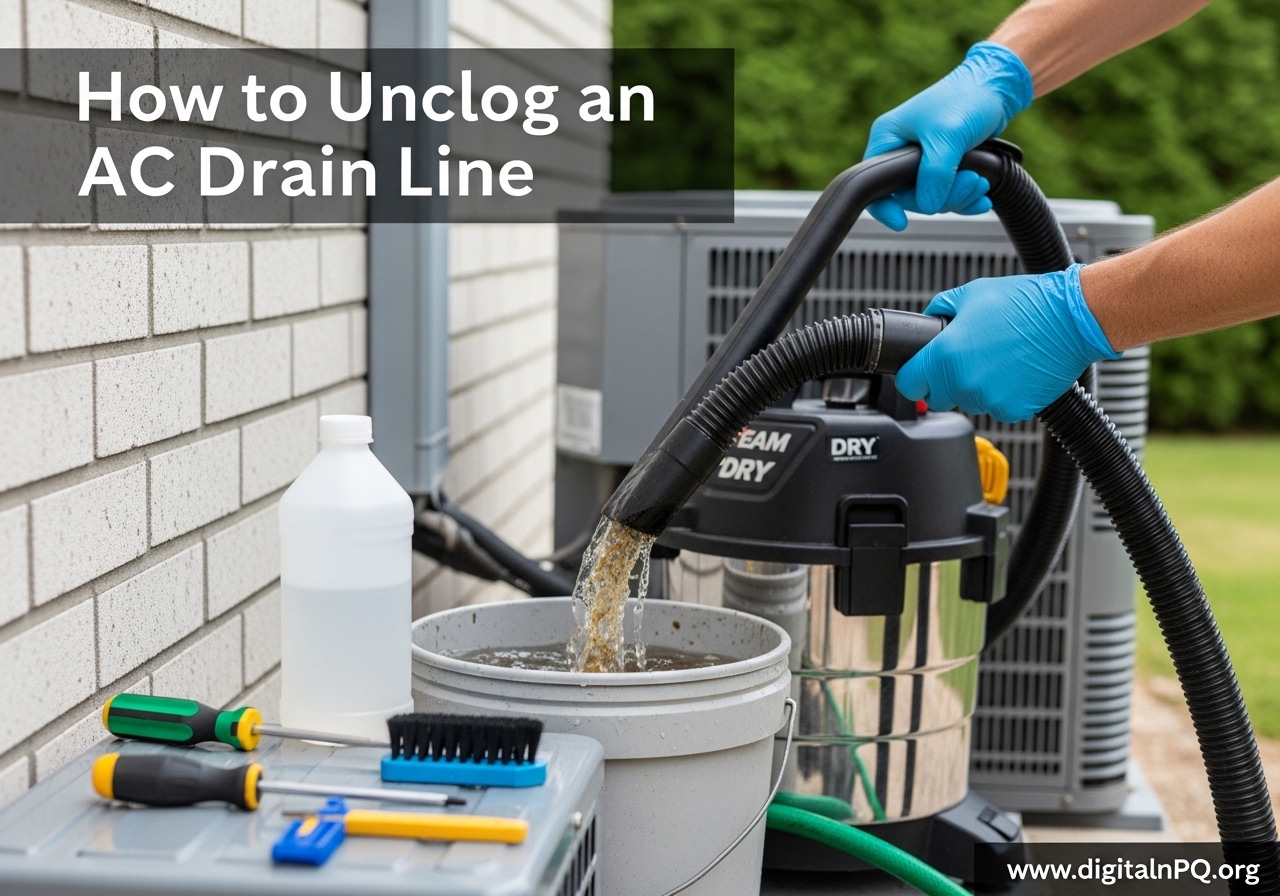
Follow these steps to unclog your AC drain line effectively. This shop vac method from the outside access point is recommended by HVAC professionals.
Step 1: Locate the Outdoor Access Point
Find where your AC drain line exits your home, typically near your outdoor condenser unit. You’ll see a small PVC pipe protruding from the wall. This is your primary access point for clearing the clog.
Step 2: Prepare Your Equipment
Position your shop vacuum at the outdoor access point. Remove the cap or plug from the drain line opening. Have your bucket ready to catch any water that may pour out.
Step 3: Create a Secure Seal
Fit the shop vacuum hose firmly into the drain line opening. Wrap towels around the hose where it meets the pipe to create a tighter seal for better suction.
Step 4: Apply Vacuum Pressure
Turn on the shop vacuum and let it run for 2-3 minutes. The powerful suction should pull the clog loose. If the vacuum struggles, gently rock the hose to help break up the blockage.
Step 5: Test with Water
Pour a cup of water into the drain pan inside your home. Watch the outdoor pipe to confirm water flows through without backing up. If water drains properly, you’ve successfully cleared the clog.
How to Flush with Vinegar
After removing the main clog, flushing your drain line with vinegar helps eliminate remaining debris and prevents future buildup. This natural solution is safe for your pipes and effective at killing algae and mold.
Pour 2 cups of distilled white vinegar slowly into the drain pan. Let the solution sit for 30 minutes to an hour, allowing it to break down organic matter. Then run your shop vacuum briefly to flush out loosened particles. Perform this flush every 2-3 months as part of regular AC maintenance.
How to Tell if Line is Clear
After completing the unclogging process, verify your drain line is functioning properly:
- Water flows freely when poured into the drain pan
- No musty odors remain
- AC runs continuously without shutting off unexpectedly
- No water leaks or pooling around your indoor unit
If you notice any remaining issues, repeat the vacuum process or consider calling a professional.
Prevention Tips
Regular maintenance prevents most AC drain line clogs:
- Change Your Air Filter Regularly: Check monthly and replace every 1-3 months to reduce debris reaching your drain system.
- Perform Quarterly Vinegar Flushes: This preventive measure keeps your drain line clear and costs only a few dollars. Schedule this task every 2026 to maintain optimal performance.
- Keep the Area Around Your Indoor Unit Clean: Vacuum around your unit regularly to prevent dust from entering the drain system.
- Inspect Your Outdoor Drain Line Periodically: Remove leaves or debris that may accumulate near the opening.
When to Call a Professional
While most clogs can be cleared DIY, contact an HVAC technician if you encounter persistent clogs despite repeated cleaning attempts, visible pipe damage or leaks, complex system configurations, or electrical issues. Professional drain line service typically costs between $100-$300.
Frequently Asked Questions
How do you dissolve gunk in an AC drain line?
The most effective method is flushing with hot water mixed with mild dish soap, followed by a vinegar rinse. Pour the solution into your drain pan, let it sit for 15-20 minutes, then use your shop vacuum to flush out the loosened material. For severe buildup, repeat this process or use a specialized enzymatic drain cleaner designed for HVAC systems.
Can I pour Drano down an AC drain?
No, never use Drano or chemical drain cleaners in your AC drain line. These harsh chemicals can damage your PVC pipes and harm internal components. They can also cause dangerous chemical reactions with residual moisture. Use natural solutions like vinegar and hot water, or employ mechanical methods like a shop vacuum for safe and effective clearing.
How to know if an AC drain line is clear?
Pour a cup of water into your indoor drain pan and watch the outdoor access point. If water flows out freely within a few seconds, the line is clear. Also check that your AC no longer shuts off unexpectedly and there are no musty odors or water pooling around your indoor unit.
Can I snake a clogged AC drain line?
Yes, you can use a drain snake to clear a clogged AC drain line if vacuuming doesn’t work. Feed a small handheld drain snake carefully into the drain line from the outdoor access point, rotating as you push to catch and break up debris. Use caution to avoid damaging your pipes or pushing the clog further into the system.
Why put vinegar in AC drain line?
Vinegar is excellent for AC drain lines because it effectively kills algae, mold, and bacteria that cause clogs. The acetic acid dissolves the slimy biofilm these organisms create, allowing it to be easily flushed away. Monthly vinegar treatments prevent organic buildup from accumulating, keeping your drain line clear between thorough cleanings.
How much does it cost to flush AC drain line?
If you hire a professional HVAC technician to flush your AC drain line, expect to pay between $100-$300 depending on your location and system complexity. Some companies offer annual maintenance contracts that include drain cleaning for a flat fee of $150-$400. DIY cleaning costs are minimal, typically requiring only vinegar and your time.
Conclusion
Learning how to unclog an AC drain line is an essential skill for any homeowner who wants to maintain a reliable air conditioning system. By understanding the warning signs, following proper safety procedures, and using the methods outlined above, you can handle most clogs without professional help. Perform regular preventive maintenance including quarterly vinegar flushes to keep your drain line clear and avoid emergency repairs.
If at any point you feel uncomfortable with the process or encounter issues beyond your expertise, contact a qualified HVAC professional. Your safety and your home’s comfort are worth the investment. With proper care, your AC system will provide reliable cooling for years to come.