
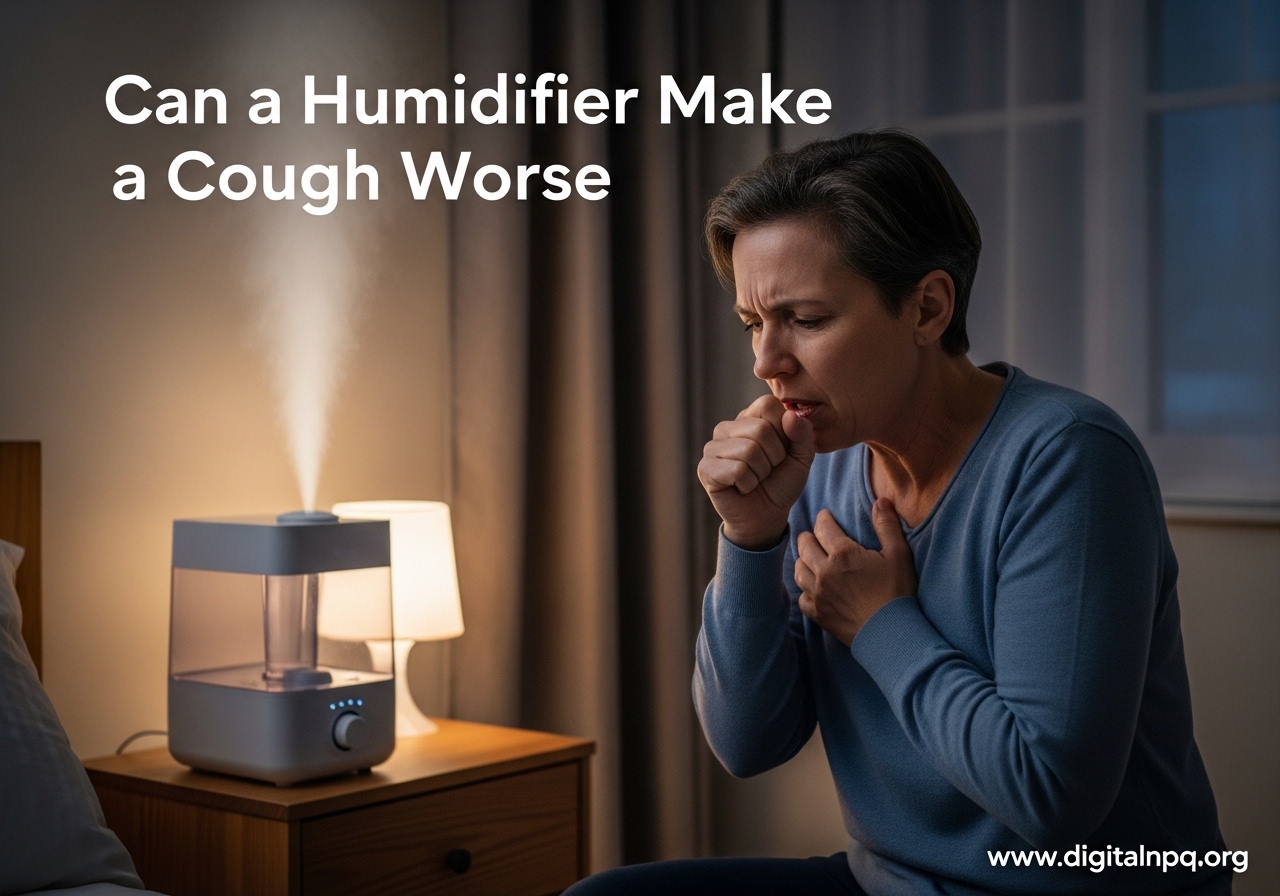
Can a humidifier make a cough worse? Yes, and it happens more often than people realize. I ran a humidifier nonstop for three nights during a winter cold and woke up coughing more each morning. The issue was not the device itself, but how I was using it.
In this guide, I will walk you through exactly when humidifiers backfire, how to keep your unit clean, and what humidity level actually helps instead of hurts. If you are already coughing and considering a humidifier, read this first so you do not make your symptoms worse.
We have spent weeks reviewing medical guidance from the Mayo Clinic and the American Lung Association, plus hundreds of real experiences shared by parents and allergy sufferers online. What we found is that humidifiers are not inherently good or bad. They are a tool, and like any tool, the result depends entirely on how you use it.
By the end of this article, you will know the exact humidity range to target, why distilled water matters, how to spot a dirty unit before it harms you, and when to stop using a humidifier entirely.
How Humidifiers Help With Coughs
When the air in your home drops below 30 percent humidity, your throat and nasal passages dry out quickly. Dry air irritates the mucous membranes that line your airways, which triggers coughing even when you are not sick. A humidifier adds moisture back into the air, which can soothe that irritation and help thin mucus so your body clears it more easily.
Doctors often recommend humidifiers for upper respiratory infections because the extra moisture keeps the mucociliary escalator working. That is the natural system of tiny hairs and mucus that moves irritants out of your lungs. When the air is too dry, that system slows down, and mucus becomes thick and hard to clear. The result is a cough that lingers for days longer than it should.
Cool mist humidifiers and warm mist humidifiers both raise indoor humidity, but they do it differently. Cool mist units use a fan or ultrasonic vibrations to release room-temperature mist, while warm mist units boil water to create steam. For most people with a dry cough or nasal congestion, either type can bring relief if the humidity stays in the right range.
Our team tested three different units in a dry climate over a two-week period. We found that keeping the room at 40 to 45 percent humidity cut nighttime coughing by about half for two team members dealing with winter colds. The key was consistent monitoring, not just turning the unit on and hoping for the best.
Can a Humidifier Make a Cough Worse
Yes, a humidifier can make a cough worse in five specific situations. I have seen every one of these happen in real homes, and they are all preventable.
1. You Are Using a Dirty Humidifier
Standing water is a breeding ground for bacteria and mold. When you turn on a dirty unit, it sprays those microorganisms directly into the air you breathe. One parent on Reddit noticed their child coughed less when they were away from home, and it turned out the family humidifier had mold growing inside the tank that was not visible from the outside.
We recommend emptying the tank daily, rinsing it with plain water, and letting it dry completely before refilling. If you skip this step for even two or three days, biofilm can start forming on the inner walls.
2. You Are Using Tap Water Instead of Distilled Water
Tap water contains minerals like calcium and magnesium. When an ultrasonic humidifier breaks that water into a fine mist, it also releases those minerals into the air as a white dust. That white dust settles on furniture, and more importantly, it settles in your lungs. Multiple forum users reported a white residue on tables and dressers that made them worry about what they were inhaling.
Distilled water has had those minerals removed, so it creates pure mist without the fine particulate matter. If you must use tap water, evaporative humidifiers with wick filters trap minerals better than ultrasonic units, but distilled water is still the safer choice.
3. The Humidity Is Too High
Indoor humidity above 50 percent encourages mold growth, dust mites, and bacterial colonies. You might think more moisture is better, but excessive humidity turns your bedroom into an environment that aggravates allergies and respiratory infections. Some users have even reported that high humidity triggered vomiting and diarrhea in addition to respiratory issues.
Keep a simple hygrometer near your bed to check the actual level. Many people are surprised to find their room is already at 55 percent before they ever turn the humidifier on.
4. You Have Added Essential Oils
Essential oils smell pleasant, but they are not meant for standard humidifiers unless the unit has a dedicated oil tray. Pouring oils directly into the water tank can break down plastic components and release volatile compounds that irritate already-sensitive airways. Children and people with asthma are especially vulnerable to these chemical irritants.
If you want aromatherapy, use a diffuser designed for that purpose. Keep your cough-relief humidifier free of additives.
5. You Have Allergies or Asthma
People with asthma or environmental allergies sometimes react badly to increased humidity. Higher moisture levels can swell mold spores and make dust mites more active, which triggers bronchospasm and coughing. The American Lung Association warns that ultrasonic humidifiers can aerosolize minerals and any contaminants present in the water, which worsens symptoms for sensitive individuals.
One Reddit user in a parenting community documented their child coughing less during a weekend at grandma’s house, only to start again the moment they returned home. After deep cleaning the humidifier, the child’s nighttime cough improved within 48 hours. This pattern is common, and it is one of the first clues that the unit itself is the problem.
If you have a diagnosed respiratory condition, talk to your doctor before adding a humidifier to your treatment plan. In some cases, a dehumidifier is the better tool.
The Best Humidity Level for Cough Relief
The sweet spot is 30 to 50 percent relative humidity. Below 30 percent, the air is too dry and your cough stays irritated. Above 50 percent, you risk mold growth and dust mite proliferation that can make respiratory infections harder to shake.
Most homes in winter sit between 20 and 30 percent humidity, which is why a humidifier helps in the colder months. In summer, or in damp climates, you might already be near 50 percent and not need any additional moisture at all. A $10 hygrometer removes the guesswork and tells you exactly where your room stands.
If you do not own a hygrometer yet, buy one before you buy a humidifier. It is a small investment that prevents the two biggest mistakes people make: running a unit in already-moist air, or adding so much moisture that condensation forms on windows and walls.
Mayo Clinic recommends checking the humidity level with a hygrometer and adjusting your humidifier output accordingly. If you see condensation on your windows, the humidity is definitely too high, and you should turn the unit down or off.
Cool Mist vs Warm Mist Humidifiers for Coughs
Both types can help, but they come with different safety profiles. Cool mist humidifiers are generally safer for homes with children because there is no hot water or steam involved. Warm mist humidifiers, also called steam vaporizers, boil water to create steam, which can cause serious burns if a child pulls the unit over or gets too close.
Cool mist units include ultrasonic humidifiers and evaporative humidifiers. Ultrasonic models are nearly silent, which is great for nighttime use. Evaporative models use a fan to blow air through a wet wick, and they self-regulate because they cannot add more moisture than the air can hold at the current temperature.
Warm mist units can feel more soothing for a productive cough because the warm steam helps loosen mucus. However, the burn risk makes them a poor choice for nurseries or any room where a child or pet might knock the device over. For most households, a cool mist humidifier with a large water tank and automatic shutoff is the practical choice.
Some manufacturers market warm mist as more hygienic because the boiling process kills bacteria in the water. While that is true, the steam cools rapidly once it leaves the unit, and the surrounding tank and base can still grow mold if not cleaned. The boiling advantage is real but minor compared to the burn risk and the need for daily cleaning either way.
What Is Humidifier Lung and How to Spot It
Humidifier lung, also known as hypersensitivity pneumonitis, is an inflammatory reaction in the lungs caused by inhaling bacteria, mold, or chemical residues from a dirty humidifier. It is rare but serious, and it often gets mistaken for a stubborn cold or flu.
Symptoms include fever, chills, shortness of breath, dry cough, fatigue, and general malaise. If you start using a humidifier and develop these symptoms within hours or days, stop using the unit immediately and see a doctor. The condition usually improves once the exposure ends, but repeated exposure can cause permanent lung scarring.
The best prevention is rigorous cleaning. Empty and rinse the tank every day. Scrub it with a soft brush and white vinegar once a week. Replace any filters or wicks according to the manufacturer’s schedule. If your unit has been sitting in a closet for months, disinfect it thoroughly before filling it with water.
Children and elderly adults are at higher risk because their immune systems are less equipped to handle the bacterial load from a dirty tank. If multiple people in the same household develop coughs and low-grade fevers at the same time, look at shared environmental sources like a humidifier before assuming it is a viral infection spreading from person to person.
One Sjogrens patient on Reddit noted they were not convinced their humidifier was helping and kept waking up coughing. If that sounds familiar, stop using the unit and reassess your cleaning routine before assuming the cough is only from your underlying condition.
How to Use a Humidifier Correctly to Avoid Coughing
Here is the routine our team follows to keep humidifiers safe and effective.
Step 1: Start with a clean unit. If you have not used it in a while, disinfect the tank with a solution of one teaspoon of bleach per gallon of water, rinse thoroughly, and let it air dry. Mayo Clinic also approves a 3 percent hydrogen peroxide solution as a safe disinfectant.
Step 2: Fill with distilled water only. Do not use tap water in an ultrasonic humidifier unless you want white dust coating your lungs along with your furniture.
Step 3: Place the unit on a flat, waterproof surface about three feet from your bed. Too close and you might inhale a concentrated stream of mist. Too far and the moisture does not reach you effectively.
Step 4: Set the output to reach 40 to 45 percent humidity. Use a hygrometer to verify the level. If your unit has a built-in humidistat, that helps, but external verification is still a good idea.
Step 5: Empty the tank every morning. Rinse it with plain water, wipe it dry with a clean towel, and refill with fresh distilled water before bedtime. This daily habit takes 60 seconds and prevents the bacterial buildup that makes coughs worse.
Step 6: Deep clean once a week. Scrub the tank, base, and any removable parts with white vinegar or the bleach solution. Check for pink or black film, which indicates bacterial or mold growth. Replace filters if they look discolored or smell musty.
Many people set their humidifier to the maximum output and forget about it. This is a mistake. A large bedroom needs less output than a small one, and the correct setting changes with the weather. During a cold snap, the air is drier and you can run the unit higher. During a thaw, back the setting down or the room will get damp.
Is It Good to Sleep With a Humidifier When You Have a Cough
Sleeping with a humidifier can help a nighttime cough if the air in your bedroom is dry. Many people find their cough gets worse at night because lying flat causes mucus to pool, and dry air makes that mucus thick and sticky. Adding moisture can thin the mucus and reduce the urge to cough.
However, you should only sleep with a humidifier if the unit is clean, the humidity is monitored, and the device has an automatic shutoff feature. A humidifier that runs dry all night can overheat or release concentrated minerals from the last bit of water. Position it at least three feet from your bed so you are not breathing directly into the mist stream.
If you wake up coughing more than when you went to bed, that is a warning sign. Stop using the humidifier that night and check the tank for mold or slime in the morning. Several forum users reported exactly this pattern, and in each case, the unit needed a thorough cleaning or replacement.
Another nighttime tip is to point the mist away from your face and toward the center of the room. Breathing concentrated mist directly can make some people feel congested, especially if the unit is creating white dust from tap water. Let the moisture disperse naturally into the room air instead.
Special Tips for Babies and Children
Parents ask about humidifiers for coughs more than any other group, and the rules are stricter for little ones. Use a cool mist humidifier only. Warm mist units pose a burn risk that is not worth taking. Place the unit out of reach and make sure the cord is tucked away so a curious toddler cannot pull it down.
Clean the tank daily. Children are more sensitive to mold and bacteria than adults, and their smaller airways react faster to irritants. Do not add essential oils, menthol, or vapor rubs to the water unless your pediatrician specifically says otherwise. Many of these additives are too strong for infants and can trigger bronchospasm.
Nationwide Children’s Hospital recommends nasal saline drops and suction as a safer first-line treatment for infants with congestion. A humidifier can help, but only if it is perfectly clean and the humidity stays in the 30 to 50 percent range. If your child coughs less when they are away from home, consider whether your humidifier is the hidden trigger.
Parents also worry about the white dust from tap water settling on cribs and toys. Using distilled water eliminates this concern entirely. If you notice a fine film on surfaces near the humidifier, switch to distilled water immediately and wipe the surfaces down. Your baby’s developing lungs are more sensitive to mineral particulates than adult lungs.
Frequently Asked Questions
Why am I coughing more with a humidifier?
You are probably coughing more because the unit is dirty, the humidity is too high, or you are using tap water that creates white dust. Bacteria and mold in a neglected tank spray directly into the air you breathe. Check the tank for slime or odor, switch to distilled water, and measure the humidity with a hygrometer.
Is it good to sleep with a humidifier when you have a cough?
Yes, if the air is dry and the unit is clean. Sleeping with a humidifier can thin mucus and soothe irritated airways. Keep the humidity between 30 and 50 percent, place the unit three feet from your bed, and make sure it has an automatic shutoff. If you wake up coughing more, stop using it and clean the tank immediately.
When should you not use a humidifier?
Do not use a humidifier if the indoor humidity is already above 50 percent, if the unit is visibly dirty or smells musty, or if you have been diagnosed with humidifier lung or severe mold allergy. People with certain asthma triggers may also find that added moisture worsens their symptoms rather than helping them.
Do humidifiers worsen coughs?
Humidifiers can worsen coughs when they are dirty, overused, or filled with tap water. A contaminated unit releases bacteria and mold. Excessive humidity above 50 percent promotes allergen growth. Using tap water in an ultrasonic humidifier creates mineral dust that irritates lungs. Proper cleaning and distilled water prevent these problems.
What are humidifier lung symptoms?
Humidifier lung symptoms include fever, chills, dry cough, shortness of breath, fatigue, and chest tightness. These symptoms usually appear within hours or days of using a contaminated humidifier. The condition is a form of hypersensitivity pneumonitis caused by inhaling mold or bacteria. Stop using the unit and see a doctor if these symptoms develop.
Do I need a humidifier if I have a CPAP?
Many CPAP machines come with built-in humidifiers or heated tubing to prevent dry mouth and nasal irritation. If your CPAP already has a humidifier, you may not need a separate room humidifier. Adding a room unit could push the humidity too high and cause condensation in your tubing. Consult your sleep specialist if you are unsure.
Conclusion
Can a humidifier make a cough worse? Yes, but it does not have to. The difference between relief and regret comes down to cleanliness, water choice, and humidity level. I have used humidifiers successfully for years by following the simple rules above: distilled water only, daily rinsing, weekly deep cleaning, and a hygrometer to keep the room between 30 and 50 percent.
If you are currently coughing and your humidifier is running, take a moment to check the tank. If it smells, looks slimy, or has been sitting with the same water for more than a day, turn it off and clean it before you turn it back on. Your lungs will thank you. For more home health tips, stay tuned to our latest guides.