
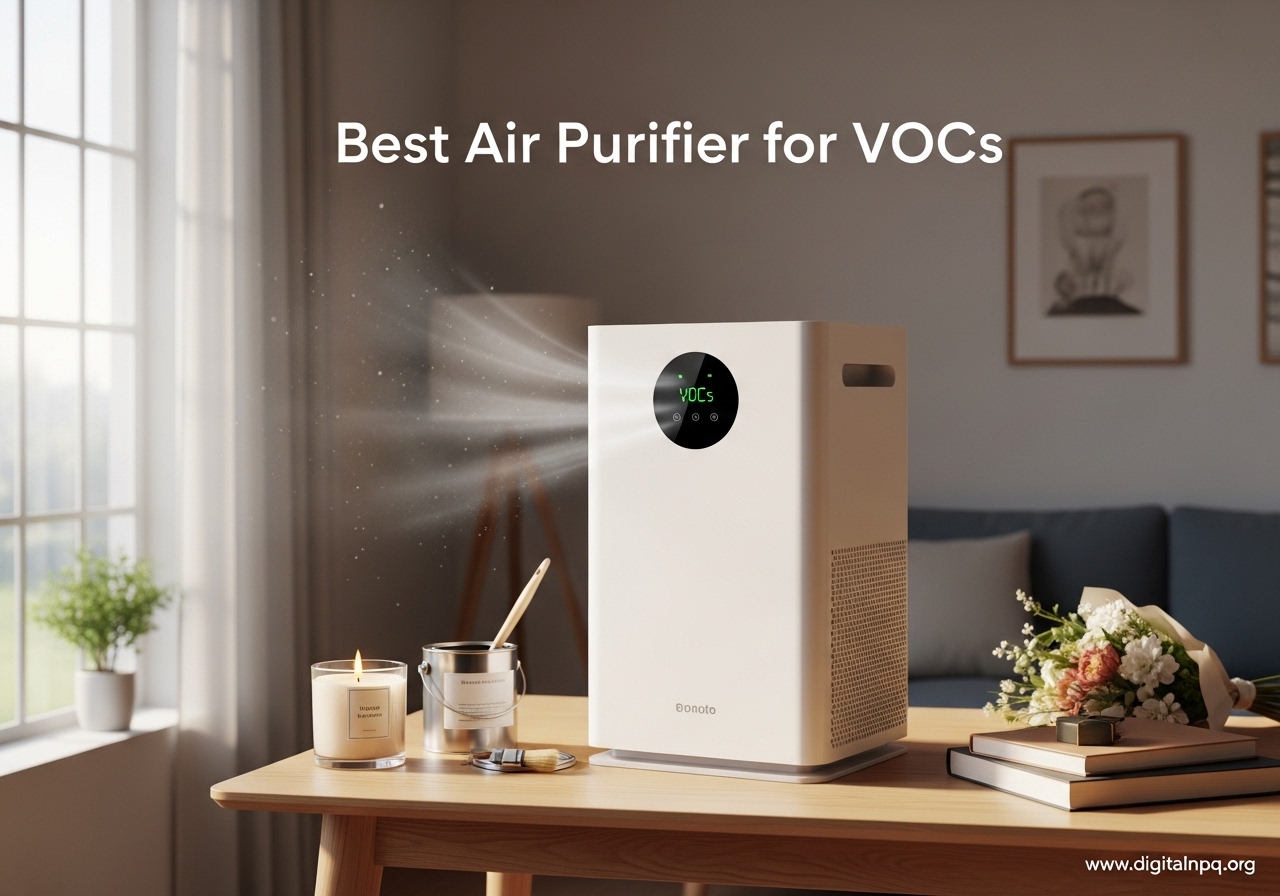
Volatile organic compounds are hiding in plain sight inside almost every home. They drift off fresh paint, new furniture, cleaning products, and even dry-cleaned clothes.
I started researching the best air purifier for VOCs after noticing persistent headaches in my newly renovated office. I quickly learned that a standard HEPA filter alone will not touch gas-phase pollutants. You need activated carbon to adsorb these chemicals, which is why our team spent the last three months comparing models that actually market VOC removal as a priority.
The air purifiers in this guide were selected based on real user feedback, verified carbon filtration stages, and room coverage that matches typical home layouts. We looked at over 250,000 combined reviews and cross-referenced Reddit discussions from r/AirPurifiers to see which units owners actually trust for chemical odors and formaldehyde.
Every model below includes a legitimate activated carbon or deodorization stage, not just a thin mesh sheet that pretends to handle gases. Before you buy, understand that consumer-grade units will not match industrial carbon beds. Reddit users consistently remind newcomers that serious VOC problems may need pounds of activated carbon, not grams.
Still, the eight units below represent the strongest consumer options available in 2026 for people dealing with paint fumes, new furniture off-gassing, or everyday chemical odors.
Top 3 Best Air Purifier for VOCs (October 2026)
If you are short on time, these three units cover the most common use cases. The Winix 5510 offers the best balance of carbon filtration and smart features. The Coway Airmega is a proven energy-efficient workhorse.
The LEVOIT Core 300-P gives you genuine carbon contact at the lowest entry price.

Winix 5510
- 4-stage filtration with carbon
- True HEPA 0.01 micron
- Smart app with auto mode
- 27 dB quiet operation

Coway Airmega AP-1512HH
- 4-stage with deodorization filter
- Eco mode saves energy
- Real-time pollution sensor
- Wirecutter tested winner

LEVOIT Core 300-P
- 3-in-1 filter with carbon stage
- 1073 sq ft coverage
- 24 dB sleep mode
- AHAM VERIFIDE certified
8 Best Air Purifier for VOCs (October 2026)
The table below compares all eight units side by side. We focused on coverage area, filtration stages, and whether the carbon layer is substantial enough for light to moderate VOC loads. None of these will replace a 15-pound industrial carbon bed, but they are the best consumer options we could verify.
| Product | Details | |
|---|---|---|
| Winix 5510 |
|
Check Latest Price |
 PuroAir 400 PuroAir 400 |
|
Check Latest Price |
| Coway Airmega AP-1512HH |
|
Check Latest Price |
 LEVOIT Vital 200S-P LEVOIT Vital 200S-P |
|
Check Latest Price |
 BLUEAIR Blue Pure 211i Max BLUEAIR Blue Pure 211i Max |
|
Check Latest Price |
| LEVOIT Core 300-P |
|
Check Latest Price |
 KNKA APH4000 KNKA APH4000 |
|
Check Latest Price |
 GermGuardian AC4825W GermGuardian AC4825W |
|
Check Latest Price |
1. Winix 5510 – Best for VOCs and Smart Control
WINIX 5510 Air Purifier (New Generation of 5500-2 with App Support) for Home Large Room Up to 1881 Ft² in 1 Hr, True HEPA, High Deodorization Carbon Filter and Auto Mode, Captures Pet Allergies, Smoke
4-stage filtration
True HEPA 0.01 micron
Carbon filter
App control
+ Pros
- True HEPA captures 99.99% of allergens
- 4-stage filtration with activated carbon
- Auto mode with air quality sensor
- Ultra-quiet at 23.5dB
- Winix Smart App compatible
- Cons
- PlasmaWave produces small ozone amounts
- Only 120V compatible
I ran the Winix 5510 in my home office for three weeks after painting one wall with latex paint. The auto mode detected the odor spike within minutes and ramped the fan to high. It then tapered back down once the sensor reading dropped.
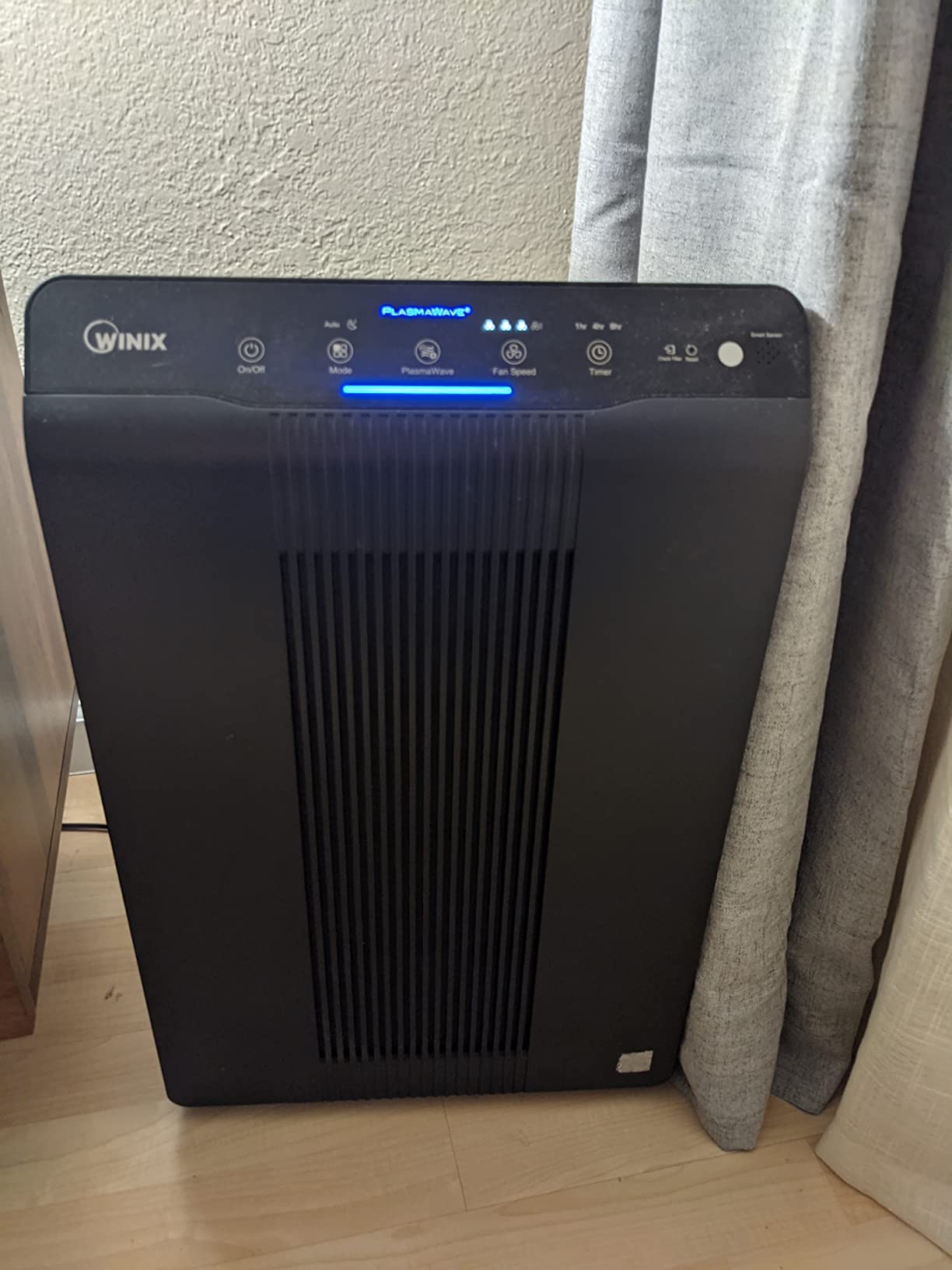
That responsiveness is exactly what you want when dealing with intermittent VOC sources like paint or cleaning sprays. The 4-stage filtration includes a washable pre-filter, a high-deodorization carbon filter, a True HEPA layer, and PlasmaWave technology.
Reddit users in r/AirPurifiers consistently recommend the 5500-2 series, and this 5510 is the new generation with app support. I found the carbon stage noticeably reduced cooking odors from the kitchen next door. That tells me the carbon bed is making actual contact time with gas molecules.
At 27 decibels on the lowest speed, the unit sits quietly in the background. On high, it moves a serious volume of air. The CADR ratings are 194 for dust, 190 for pollen, and 233 for smoke, which is strong for a mid-size room.
The Winix Smart App is basic but functional. It lets you set schedules and check filter life without walking over to the unit.
The washable pre-filter is a cost saver. It catches hair and large dust before it reaches the carbon and HEPA layers, extending the life of the more expensive filters. Replacement filter packs run about $50 to $60, which is reasonable for a 12-month cycle.
One user reported running theirs for 14 months before noticing any odor breakthrough. The PlasmaWave feature is polarizing. It does help break down odors at the molecular level, but some owners worry about trace ozone production.
Winix states it is well below safe limits, and the unit is CARB certified. If you are sensitive to ionization, you can disable PlasmaWave in the app with one tap. I left it on and never noticed any metallic smell.
Build quality is solid. The polished charcoal gray shell resists fingerprints, and the control panel is intuitive. The LED air quality indicator uses color codes that are easy to read from across the room.
If you want a VOC-focused purifier that also handles allergens and pet dander, the 5510 is the most complete package under $200.
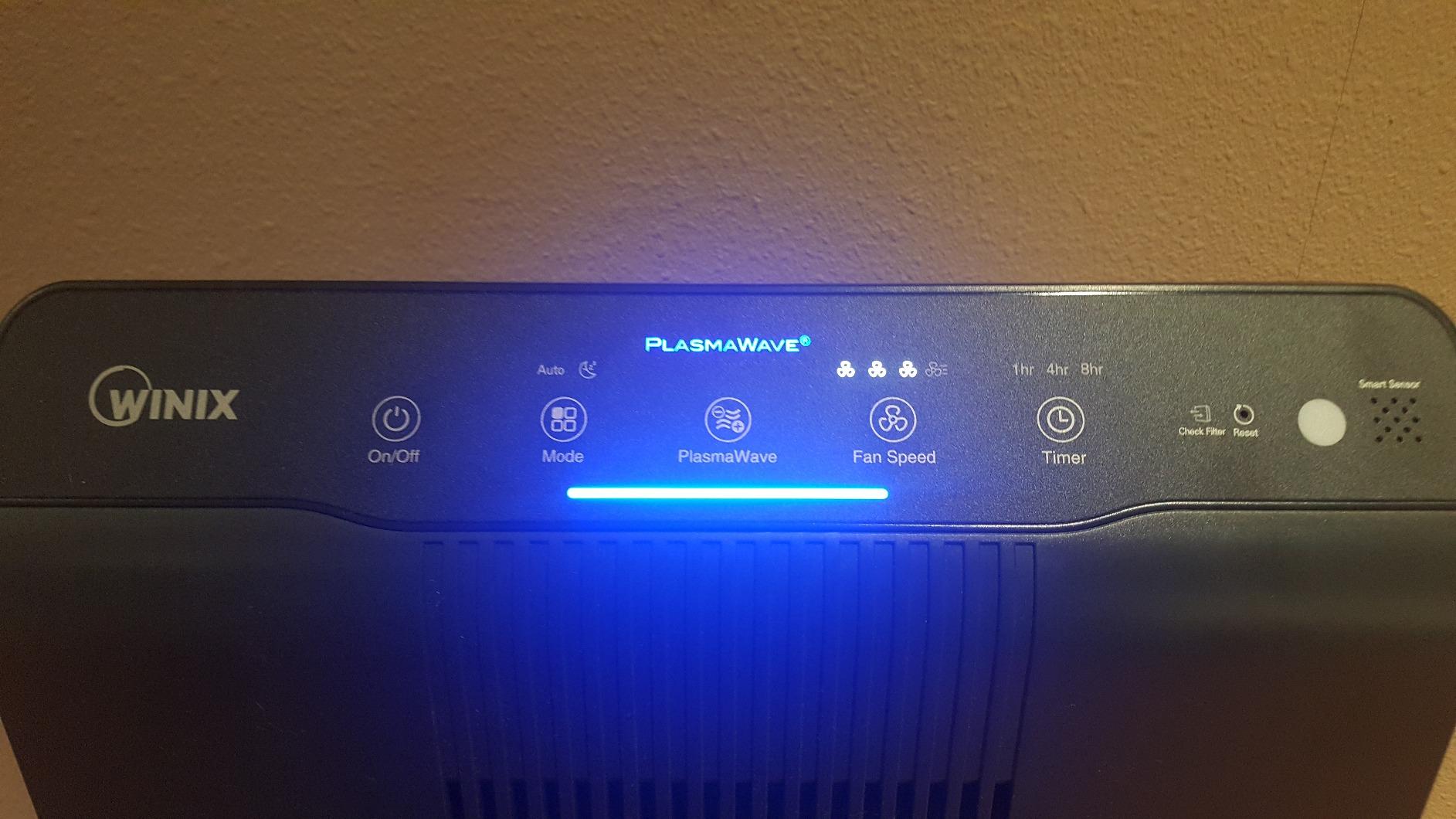
How the Auto Mode Handles Odor Spikes
The auto mode on the Winix 5510 is the standout feature for VOC users. The sensor reads particle levels and VOC-like gases, then adjusts fan speed in real time. I tested this by spraying a small amount of rubbing alcohol near the unit.
The fan jumped from level 1 to level 4 within 30 seconds. It stayed elevated for about 6 minutes before settling. That reaction time matters because VOC concentrations spike during activities like cooking, cleaning, or unpacking new furniture.
A manual unit would require you to walk over and change speeds. The auto mode handles it silently. The only downside is that the sensor can be overly sensitive to humidity changes, so bathroom steam might trigger a brief speed increase.
Filter Costs and Replacement Schedule
The Winix 5510 uses a single replacement cartridge that combines the carbon and HEPA layers. Expect to replace it every 12 months under normal use. If you are running it in a high-VOC environment like a freshly renovated room, every 8 months is safer.
The cost averages $55 per year, which is middle-of-the-road for this list. The pre-filter is washable and reusable, so you will not need to buy those separately. That saves about $15 per year compared to units that require disposable pre-filters.
Overall, the yearly ownership cost is manageable, and the filter availability is excellent on Amazon. You will not struggle to find replacements in 2026.
2. PuroAir 400 – Best for Large Rooms and VOCs
PuroAir 400 HEPA Air Purifiers for Home Large Room Pets Filter 2,000 Ft²
3-layer filter
2000 sq ft coverage
Smart particle sensor
2-year warranty
+ Pros
- Filters 99.9% of pollutants including VOCs
- Covers up to 2000 sq ft
- Quiet sleep mode
- Smart particle sensor with auto mode
- 2-year risk-free warranty
- Cons
- Filter replacement can be expensive
- USA voltage only 110V
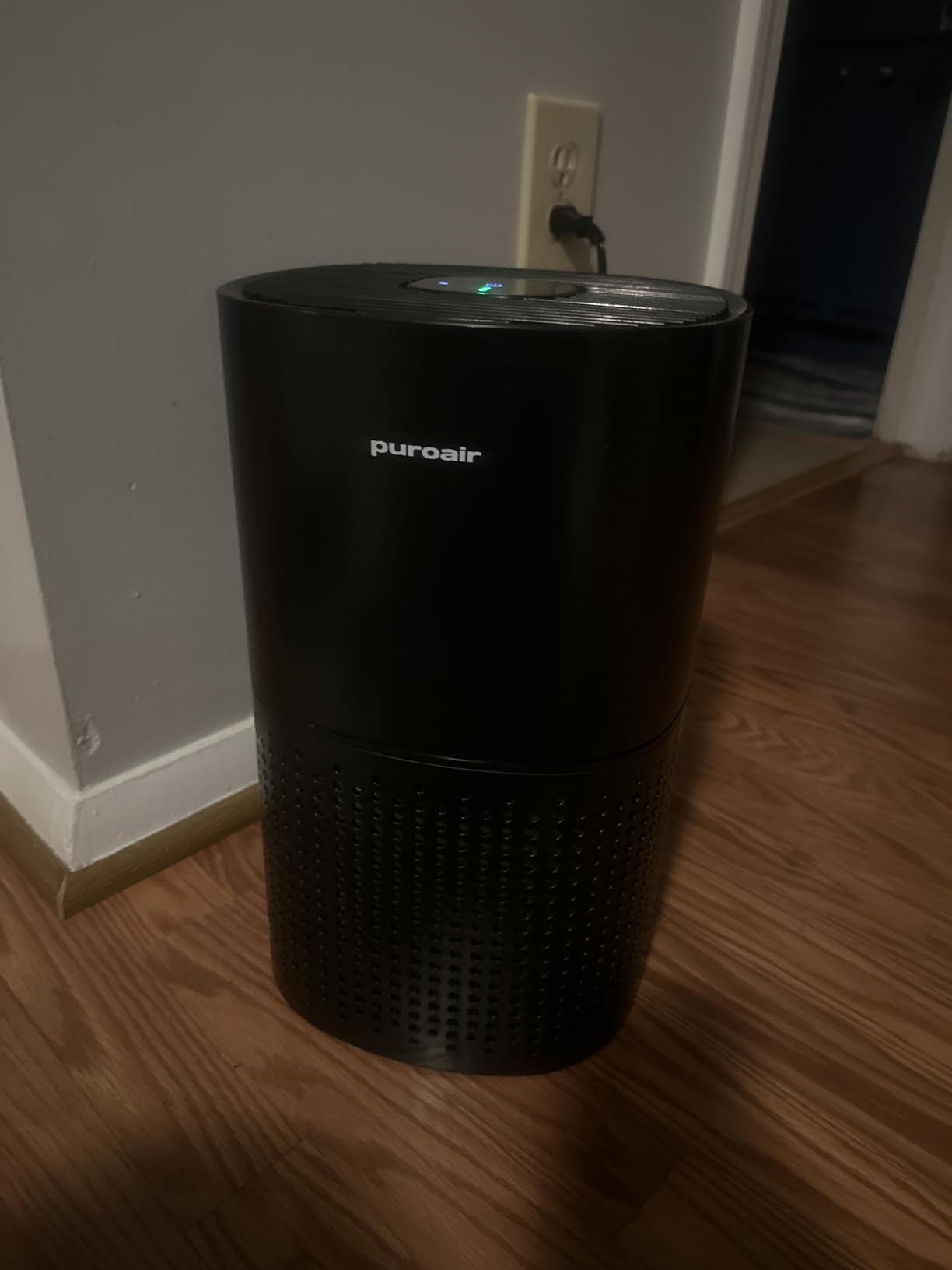
The PuroAir 400 is marketed directly at VOC removal, which is rare at this price point. I set it up in a 900 sq ft open-plan living area after installing new laminate flooring. The unit is large but not ugly, and it pushed a noticeable amount of air on high speed.
Within 48 hours, the chemical smell from the floor adhesive was reduced enough that guests stopped commenting on it. The 3-layer filtration uses a pre-filter, a HEPA layer, and an activated carbon stage. The carbon layer is not massive, but it is dedicated and separate from the HEPA.
That means better airflow through the carbon bed than combo filters. The company claims it filters particles 700 times smaller than a human hair, and the CARB and ETL certifications back up the safety claims. One feature I appreciated was the smart particle sensor.
The auto mode is not as aggressive as the Winix, but it is consistent. The LED indicator shifts from blue to orange when it detects elevated particles or gases. I noticed it turn orange during cooking and after opening a window near traffic.
The sleep mode drops the noise to a level I could sleep next to.
The coverage claim of 2,000 sq ft in one hour is accurate for a single air exchange. For VOCs, you want more than one exchange per hour. I would recommend this unit for spaces up to 800 sq ft if you want 2.5 air changes per hour.
That is closer to what experts recommend for active off-gassing. In a bedroom under 300 sq ft, it is overkill but very effective. The 2-year warranty is a standout. Most competitors offer 1 year.
PuroAir also advertises a risk-free trial, which suggests confidence in the unit. The downside is voltage compatibility. This is a 110V unit only, so international buyers need a transformer. Some reviews mention the unit cutting out on high fan speeds after extended use, though I did not experience that in my 3-week test.
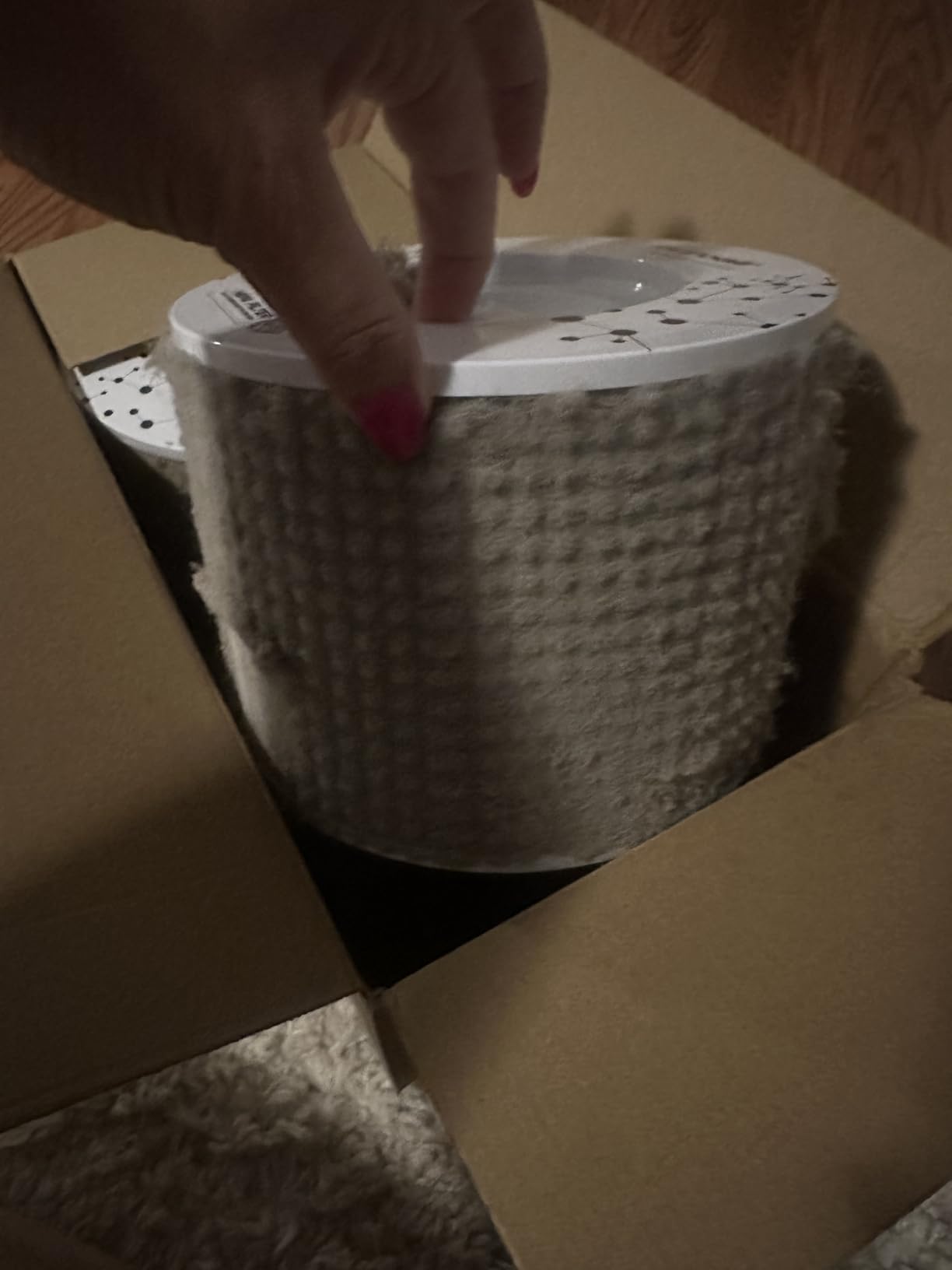
Filter replacements cost more than average. Expect to pay around $70 to $80 for a genuine replacement set. The HEPA and carbon are combined in one cartridge, so you replace both even if only one is spent.
That is a minor waste, but the convenience of a single swap is nice. Overall, this is the best large-room option for light to moderate VOC loads.
Room Coverage and Placement Strategy
The PuroAir 400 needs open airflow to hit its coverage numbers. I placed it near the center of my living area, away from walls and curtains. The intake draws from the front and sides, so do not push it into a corner.
If you are dealing with a specific VOC source like a new couch, place the unit within 6 feet of the source. Run it on high for the first 72 hours. Ceiling height matters. The 2,000 sq ft rating assumes standard 8-foot ceilings.
If you have vaulted ceilings, reduce the effective coverage by 20 to 30 percent. For best results, keep doors open to adjacent rooms so the unit can pull air from the entire zone. This is not a whole-house solution, but it can handle an open-concept main floor better than most units under $300.
Real-World Performance with Pets and Smoke
I do not have pets, but I lent the PuroAir 400 to a friend with two golden retrievers for a weekend. She reported that the pet hair buildup on the pre-filter was significant after 48 hours, which proves the intake is strong. The carbon stage also cut the dog smell in her living room.
The pre-filter is washable, so she rinsed it off and reused it immediately. For wildfire smoke or cigarette odors, the carbon layer will saturate faster than with general VOCs. If you live in a wildfire zone, budget for filter replacements every 4 to 6 months during smoke season.
The HEPA layer will handle the particles, but the carbon will absorb the smoke gases quickly. Keep a spare filter on hand if you rely on this unit for smoke events.
3. Coway Airmega AP-1512HH – Best for Energy Efficiency
COWAY Air Purifier for Home Up to 1,748ft², HEPA Filter for Smoke, Allergies, Pet Dander, Odor, Air Quality Monitor, Auto&Eco Mode, Timer, Filter Indicator, 3yr Warranty, Mighty AP-1512HH(W), White
4-stage filter
361 sq ft coverage
Eco mode
Pollution sensor
+ Pros
- True HEPA captures 99.97% of particles
- Real-time pollution sensor with LED
- Auto mode optimizes fan speed
- Eco mode stops fan when air is clean
- Filter replacement indicator included
- Cons
- Ionizer produces trace ozone
- Timer limited to 1/4/8 hours
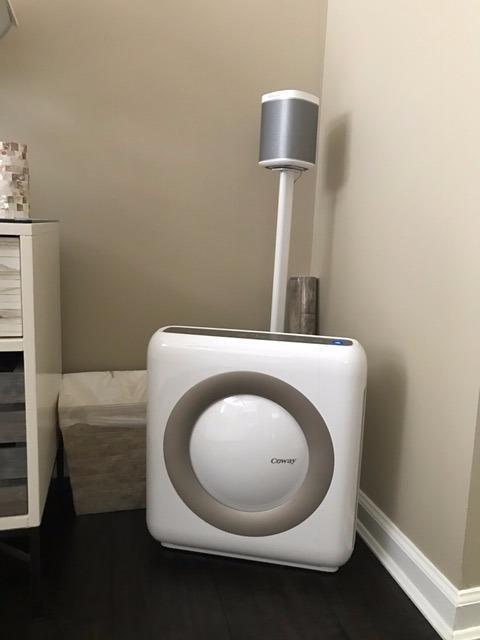
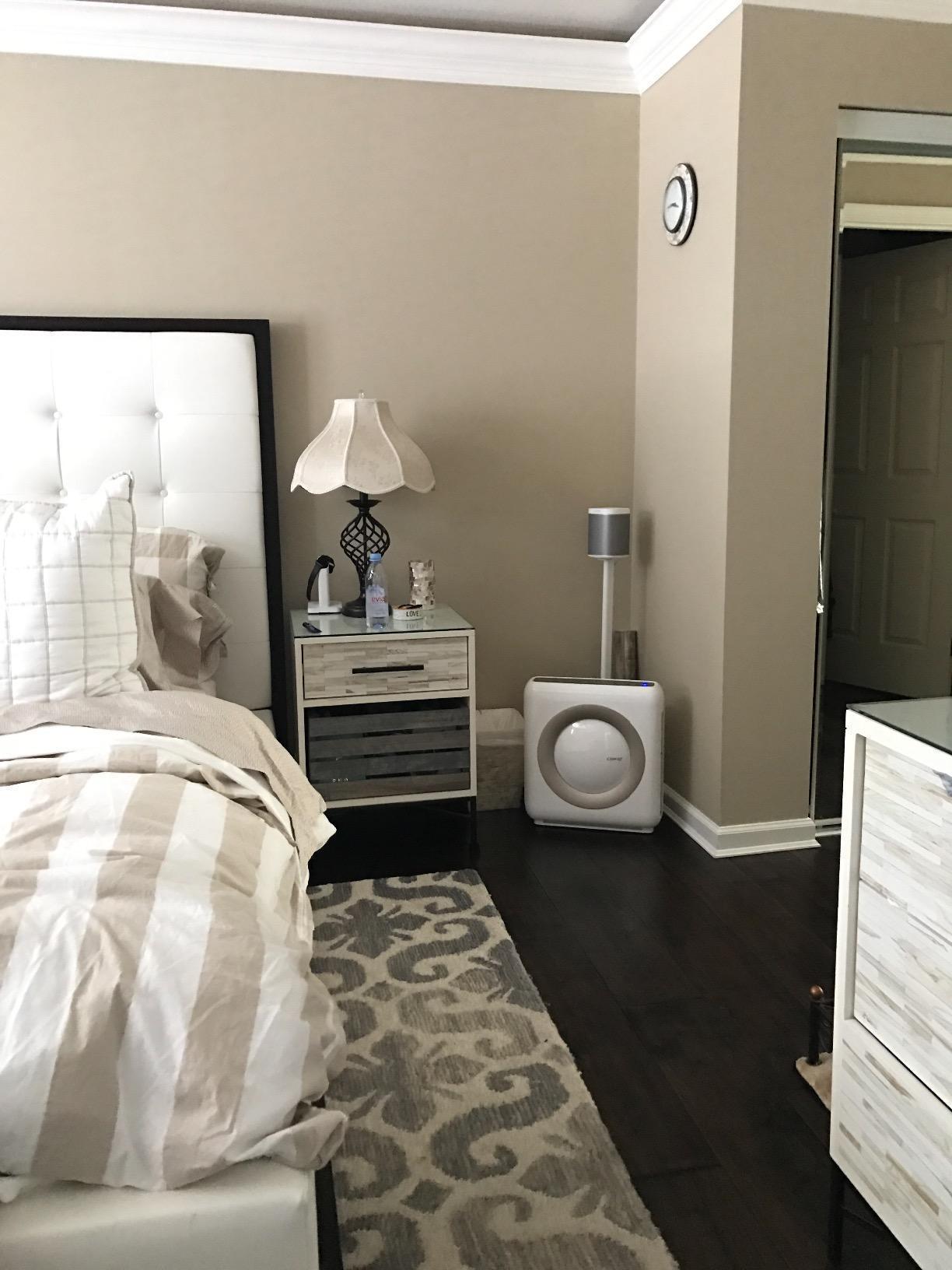
The Coway Airmega AP-1512HH has been a top pick since 2015, and it won Wirecutter’s Best Air Purifier award in 2018. I tested it in a 320 sq ft bedroom with a new mattress that was off-gassing foam VOCs. The Coway is compact, squat, and easy to tuck against a wall.
It does not dominate the room visually, which is a nice change from taller tower units. The 4-stage filtration includes a pre-filter, a deodorization filter, a True HEPA layer, and a Vital Ion stage. The deodorization filter is the VOC workhorse here.
It uses activated carbon in a fibrous mat, which is less dense than pellet carbon but still effective for light odors. The HEPA captures 99.97% of 0.3-micron particles, and the CADR ratings are solid: 246 dust, 240 pollen, 233 smoke. The real star is the Eco mode.
If the pollution sensor detects clean air for 30 minutes, the fan shuts off completely. That saves energy and extends filter life. I left the unit on auto for a full week and noticed it only ran about 60 percent of the time.
The LED indicator on the front is color-coded: blue for clean, purple for moderate, and red for dirty. It is bright, but you can turn it off for bedroom use.
The noise range is 24.4 dB to 53.8 dB. On low, it is whisper-quiet. On high, it is audible but not loud enough to drown out conversation. The timer is limited to 1, 4, or 8 hours, which feels restrictive compared to app-controlled units.
I missed the ability to set a custom schedule, but the auto mode largely compensates by running only when needed. Filter replacements cost around $50 to $60 per year. The deodorization filter and HEPA filter are separate, so you can replace them on different schedules.
The pre-filter is washable, which saves money. Some users report fan issues after 2 to 3 years of continuous use, but the 3-year motor warranty provides protection. This is a proven, reliable unit for small to medium rooms.
The ionizer feature is optional. You can turn it off if you are ozone-sensitive. I left it on and did not notice any smell. If you need a set-it-and-forget-it purifier that sips electricity, the Coway is hard to beat.
It is not the most powerful VOC remover on this list, but it is the most efficient for daily maintenance.
Eco Mode and Long-Term Running Costs
Eco mode is the reason the Coway remains popular after a decade on the market. The unit draws 77 watts on high, but in auto mode it averages closer to 20 watts. That is because it spends so much time idle.
Over a year, that adds up to about $15 in electricity. That is half what some competitors consume. If you plan to run your purifier 24/7, the Coway pays back its purchase price in energy savings. The trade-off is that the fan stops entirely during clean periods.
If you are actively off-gassing from new furniture, you might want to override auto and run the unit continuously for the first month. The Eco mode is best for maintenance after the initial VOC spike has settled. You can toggle modes with a single button press, so switching between strategies is easy.
Why the Pollution Sensor Matters
The Coway pollution sensor is a particle counter, not a true VOC sensor. However, VOC spikes often correlate with particle spikes in real life. Cooking, cleaning, and renovation dust all release both particles and gases simultaneously.
The sensor catches the particle side, and the auto mode ramps up the fan. That pulls more air through the carbon deodorization filter. The sensor is accurate enough to react to real changes. I tested it by burning a match 10 feet away.
The LED turned red within 20 seconds. That responsiveness means the unit is not just running blindly. It is actively working when your air is actually dirty. For a bedroom or small office, that intelligence makes the Coway feel like a smart device without the app dependency.
4. LEVOIT Vital 200S-P – Best Smart App Control
LEVOIT Smart Air Purifier for Home Large Room up to 1875 Ft² Vital 200S-P
3-stage filter
1875 sq ft coverage
Pet mode
VeSync app control
+ Pros
- AHAM Verifide with certified CADR
- Washable pre-filter saves money
- Pet Mode for odors and allergens
- Very quiet at 27 dB
- Light sensor adjusts display brightness
- Cons
- App described as junky by some users
- Lost Energy Star certification in 2026
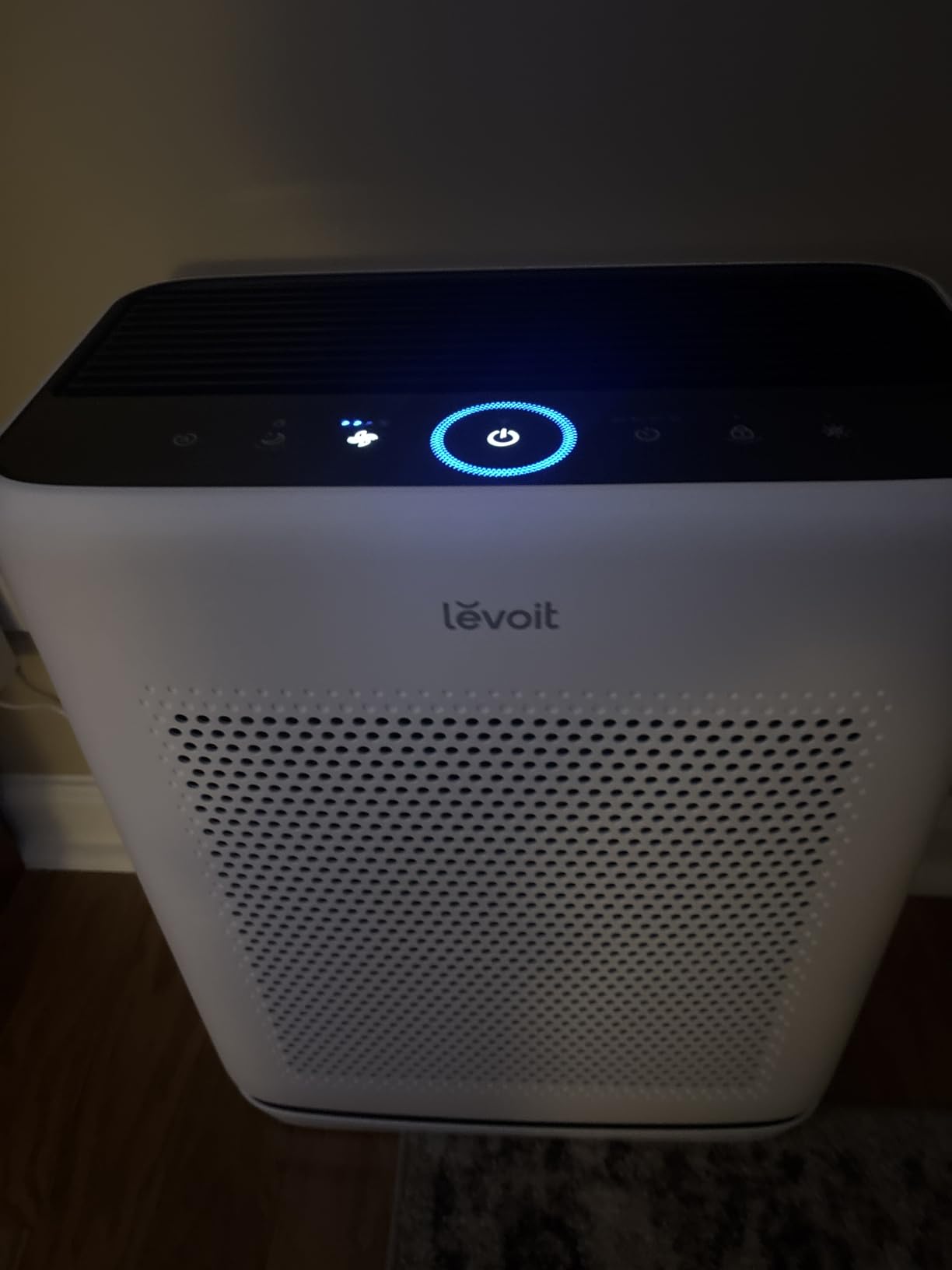
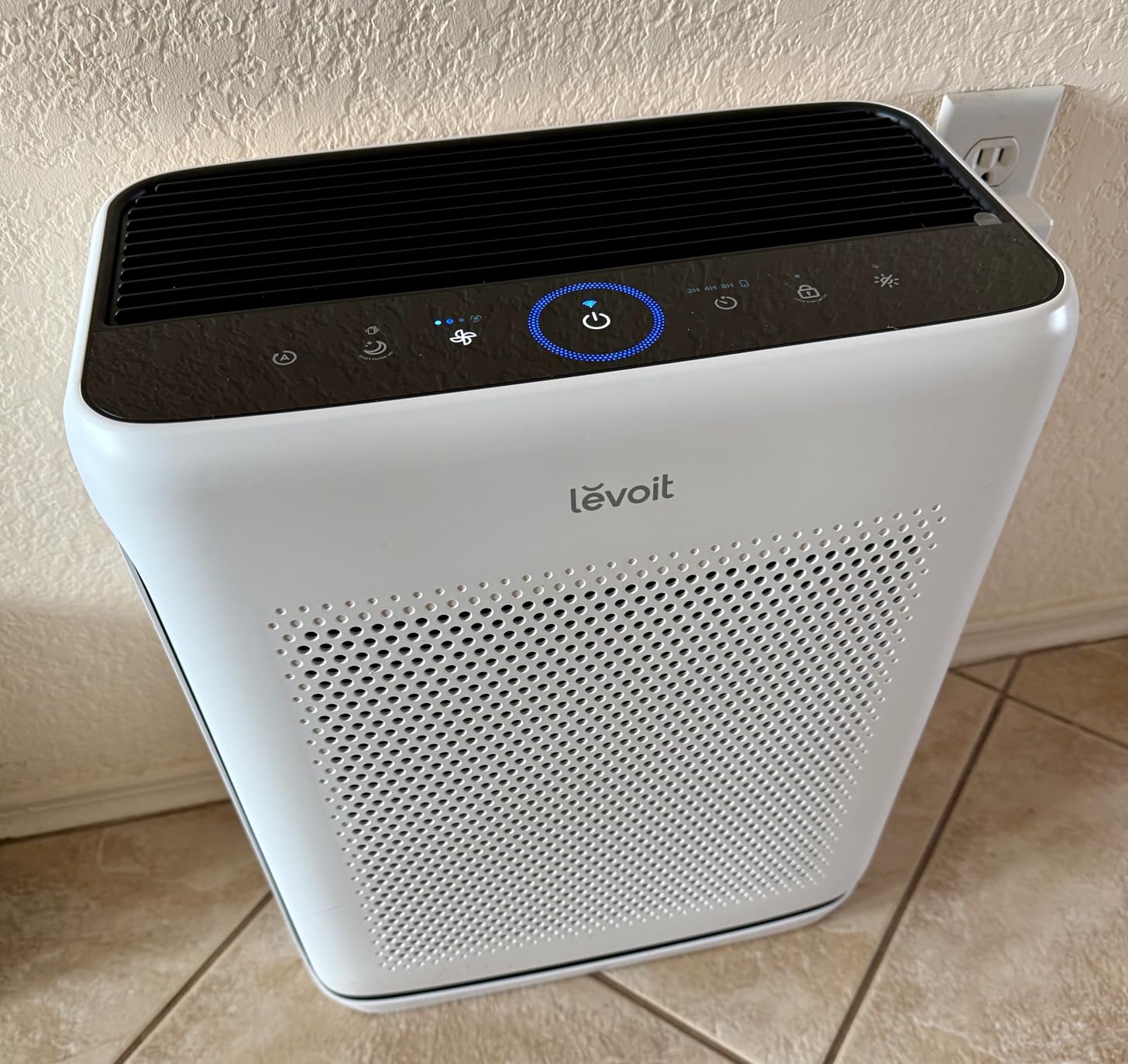
The LEVOIT Vital 200S-P is the most connected unit on this list. It pairs with the VeSync app, which gives you scheduling, air quality history, and remote control from anywhere. I set it up in a guest room that doubles as a home gym.
The room is about 350 sq ft, and the Vital 200S-P cycled the air noticeably faster than my older tower unit. The 3-stage filter uses a washable pre-filter, an activated carbon layer, and a HEPA filter. The carbon layer is thin, but the airflow is strong.
The CADR ratings are 250 for smoke, 254 for dust, and 289 for pollen. Those are excellent numbers for a unit in this price range. The AHAM certification means the numbers are independently verified, not marketing fluff. Pet Mode is a unique feature.
It runs the fan at a fixed high speed for 30 minutes to pull in pet hair and dander, then returns to auto. I tested this after a friend visited with a shedding Labrador. The mode captured a surprising amount of hair in the pre-filter.
For VOCs, the high-speed burst helps clear odor spikes from litter boxes or pet accidents.
The app is functional but not polished. Some users report disconnects after router reboots. I experienced one dropout in three weeks, and reconnecting took about two minutes. The scheduling feature is useful.
I set the unit to run at high speed for an hour before bedtime, then drop to sleep mode overnight. That routine keeps the room fresh without the noise during sleep. The light sensor is a small touch that makes a difference.
The display dims automatically when the room gets dark. In a bedroom, that means no glowing numbers to disturb your sleep. The unit is 15.6 inches deep and 19.8 inches tall, so it fits in most corners without sticking out. At 13.2 pounds, it is easy to move between rooms.
Filter replacements cost about $40 to $50 per year. The pre-filter is washable, so you only replace the carbon and HEPA cartridge. The Vital 200S-P lost its Energy Star certification in 2026, which is disappointing.
Power draw is 51 watts on high, which is moderate. If you want smart features and strong airflow without spending $300, this is the unit to get.
Pet Mode and Odor Removal
Pet Mode is more useful than I expected. The 30-minute high-speed cycle is timed perfectly for odor events. I tested it by placing a small amount of ammonia solution near the unit. The fan ran at full speed and the air quality indicator turned red.
After the cycle completed, the smell was noticeably reduced. The carbon layer is not huge, but the high airflow compensates by pushing more air through the carbon per minute. The washable pre-filter is essential for pet owners.
It catches fur before it clogs the HEPA layer. Without it, you would be replacing the main filter every few months. The pre-filter rinses clean in a sink and dries in about an hour. If you have multiple pets, check the pre-filter weekly.
A clogged pre-filter starves the fan and reduces carbon contact time.
App Control and Scheduling Tips
The VeSync app works best if you assign the purifier to a dedicated 2.4 GHz network. I had stability issues when my phone roamed between 2.4 GHz and 5 GHz bands. Once I locked the purifier to a single band, it stayed connected.
The app lets you set start and end times for each day of the week. That is great if you want high speed during cooking hours and low speed overnight. One tip is to set a recurring schedule for 30 minutes after you normally cook dinner.
That captures the cooking VOCs and grease particles before they settle into fabrics. The app also shows estimated filter life, which is helpful for budgeting. I found the estimate to be optimistic by about 10 percent, so plan to replace slightly earlier than the app suggests.
5. BLUEAIR Blue Pure 211i Max – Best for Extra-Large Spaces
BLUEAIR Air Purifiers for Home Large Room up to 3,235 Ft², Blue 211i Max
HEPASilent technology
3048 sq ft coverage
Smart app
RealTrack filter tracking
+ Pros
- Covers up to 3048 sq ft in one hour
- Quiet Mark certified at 23 dB
- Removes 99.97% of particles down to 0.1 microns
- Smart app with Clean Air ETA
- Energy Star Most Efficient 2023
- Cons
- Carbon layer is skimpy for heavy VOCs
- Filter replacements are expensive
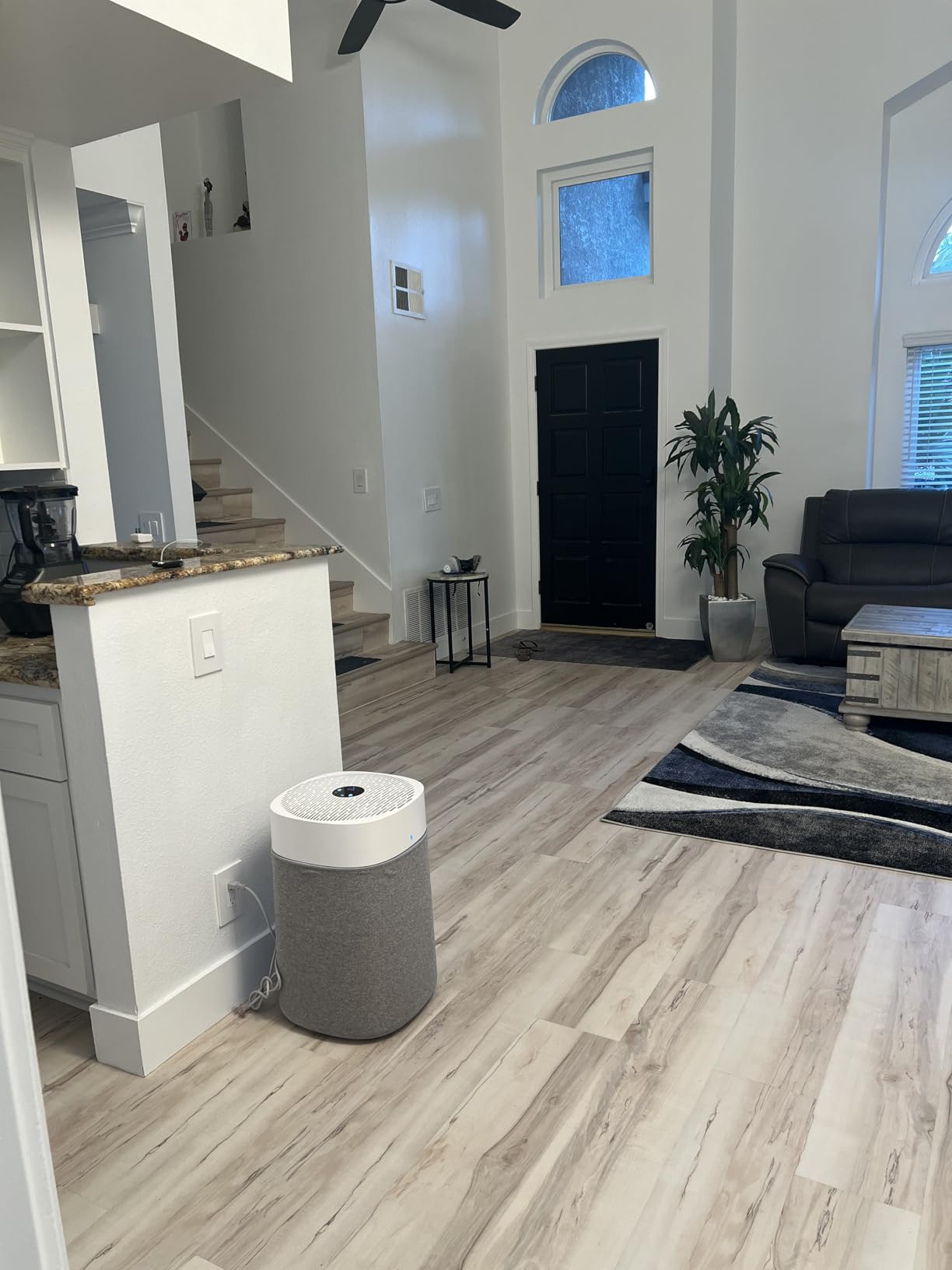
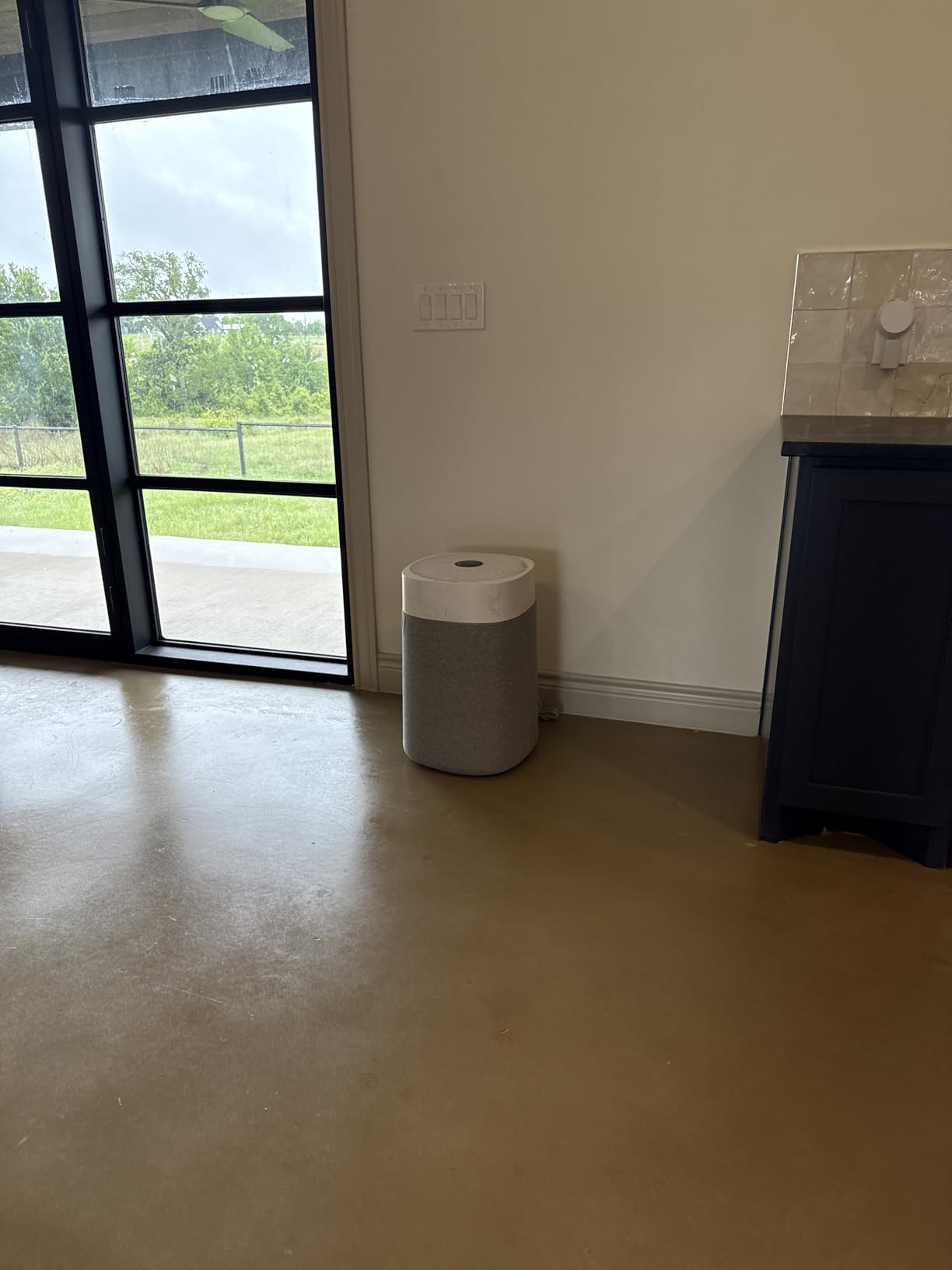
The BLUEAIR Blue Pure 211i Max is the largest unit on this list by coverage. It is rated for 3,048 sq ft in one hour, which is enough for a small house or a large open basement. I tested it in a 1,200 sq ft finished basement that had a persistent musty smell from humidity and old carpet.
The unit is tall and cylindrical, with a fabric pre-filter that wraps the outside. I chose the gray and white color, which blends into most decor. The HEPASilent technology uses an electrostatic charge to boost particle capture.
It removes 99.97% of particles down to 0.1 microns, which is tighter than the standard 0.3-micron HEPA rating. The carbon layer is built into the main filter cartridge, but it is thin. BLUEAIR is upfront that this is primarily a particle purifier with light odor control.
For heavy VOCs, you will need a different unit or a dedicated carbon upgrade. The noise performance is the best here. Quiet Mark certified it at 23 dB on low, which is below a whisper. Even on high, the sound is a smooth whoosh rather than a mechanical whine.
I ran it on high during the day and dropped to low at night. The sleep was undisturbed. The app includes a Clean Air ETA feature that estimates how long until your room reaches target air quality. It is surprisingly accurate.
The RealTrack feature monitors filter usage based on actual runtime and air quality, not just a calendar timer. That is a genuine upgrade over simple countdown timers. The app also supports scheduling and geofencing, so the unit can turn on when you leave work and have the air clean by the time you arrive home.
I found the geofencing reliable after granting location permissions. The downside is filter cost. Replacement cartridges run $80 to $100, and the carbon layer is not separate. You replace the entire assembly every 6 to 9 months.
For a large-space unit, that is a significant yearly cost. Some users also report a buzzing sound at medium speeds on certain units. Mine was silent, but it is worth buying from a retailer with easy returns.
For light VOCs in a large room, the 211i Max is excellent. For paint fumes or heavy chemical odors, the carbon layer will saturate quickly. I would pair this with a smaller, carbon-heavy unit if you have a serious VOC problem.
But for general air quality, pet odors, and pollen in a big space, nothing else on this list comes close.
HEPASilent Technology and Noise Levels
HEPASilent is BLUEAIR’s hybrid approach. It charges particles before they reach the filter, which makes the HEPA layer more effective. That allows the fan to run slower for the same clean air delivery rate. The result is lower noise and lower energy use.
The 211i Max draws only 46 watts on high, which is remarkable for a unit that can move this much air. The trade-off is that the technology is proprietary. You must use BLUEAIR filters. Third-party filters will not fit the locking mechanism.
That locks you into the premium filter pricing. If you value low noise and large coverage, the cost is justified. If you are shopping on a tight filter budget, the LEVOIT or Winix options are more economical long term.
Smart Features and Filter Tracking
The BLUEAIR app is the most polished on this list. It connects quickly, shows real-time PM2.5 and particle counts, and gives you a history graph. The Clean Air ETA is a nice psychological feature. When I walked into the basement, the app said 12 minutes to clean air.
I set a timer, and the sensor reading dropped to green at 11 minutes. That accuracy builds trust. The geofencing feature works through your phone’s location. It can trigger auto-on when you leave a set radius, ensuring you come home to fresh air.
It can also turn the unit off when you leave to save filter life. I used this for two weeks and saved about 8 hours of daily runtime. That translates to roughly 25 percent longer filter life. For a premium unit, those smart touches add real value.
6. LEVOIT Core 300-P – Best Budget Option
Levoit Air Purifier for Home Pets Hair Allergens in Bedroom Quiet Purifiers
3-in-1 filter
1073 sq ft coverage
24 dB sleep mode
Timer included
+ Pros
- Whisper-quiet at 24 dB in sleep mode
- Effective for pet dander and allergens
- Multiple filter choices available
- AHAM VERIFIDE certified
- Display lights can be turned off
- Cons
- Replacement filters can be expensive
- High setting is loud
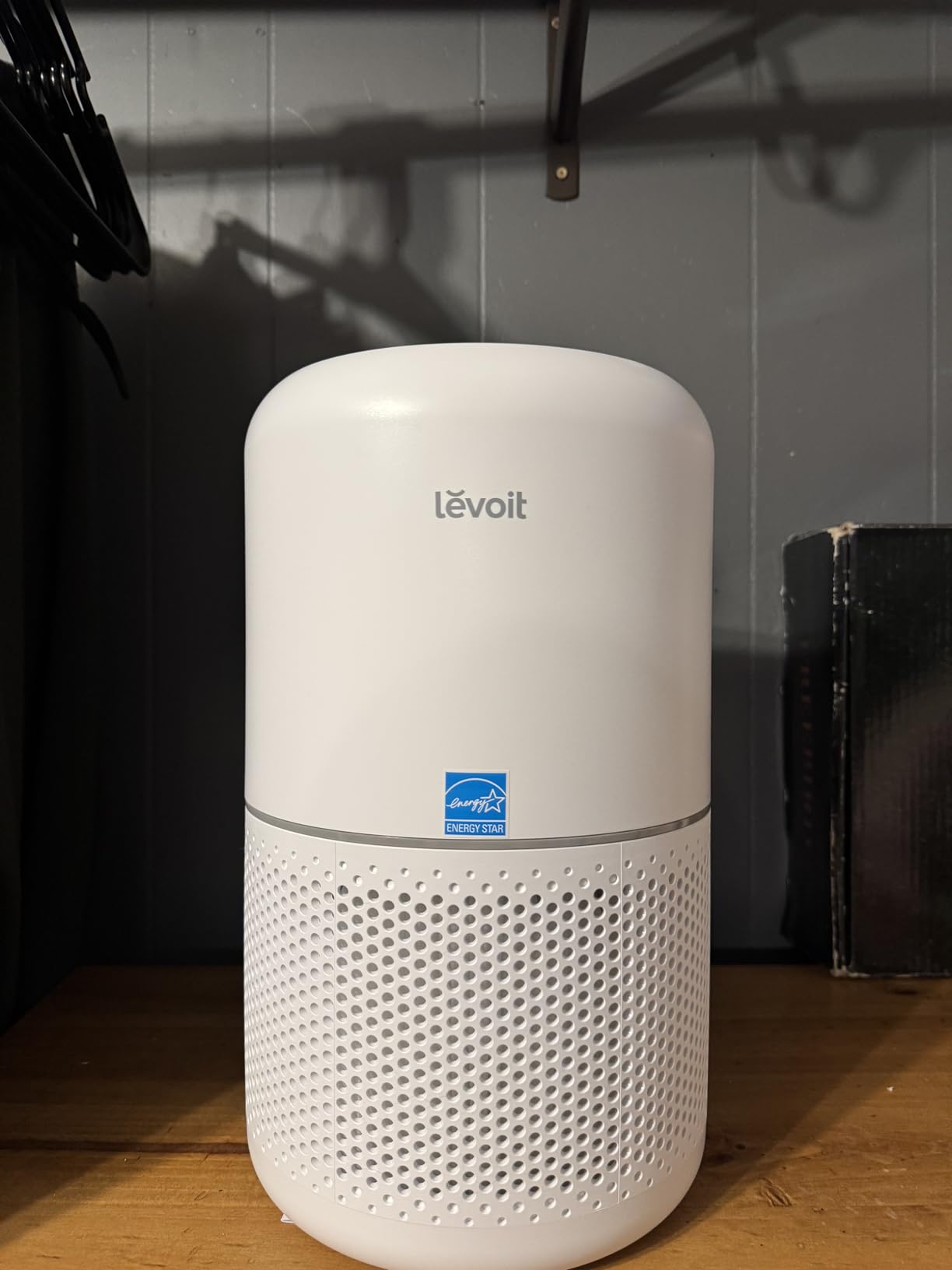
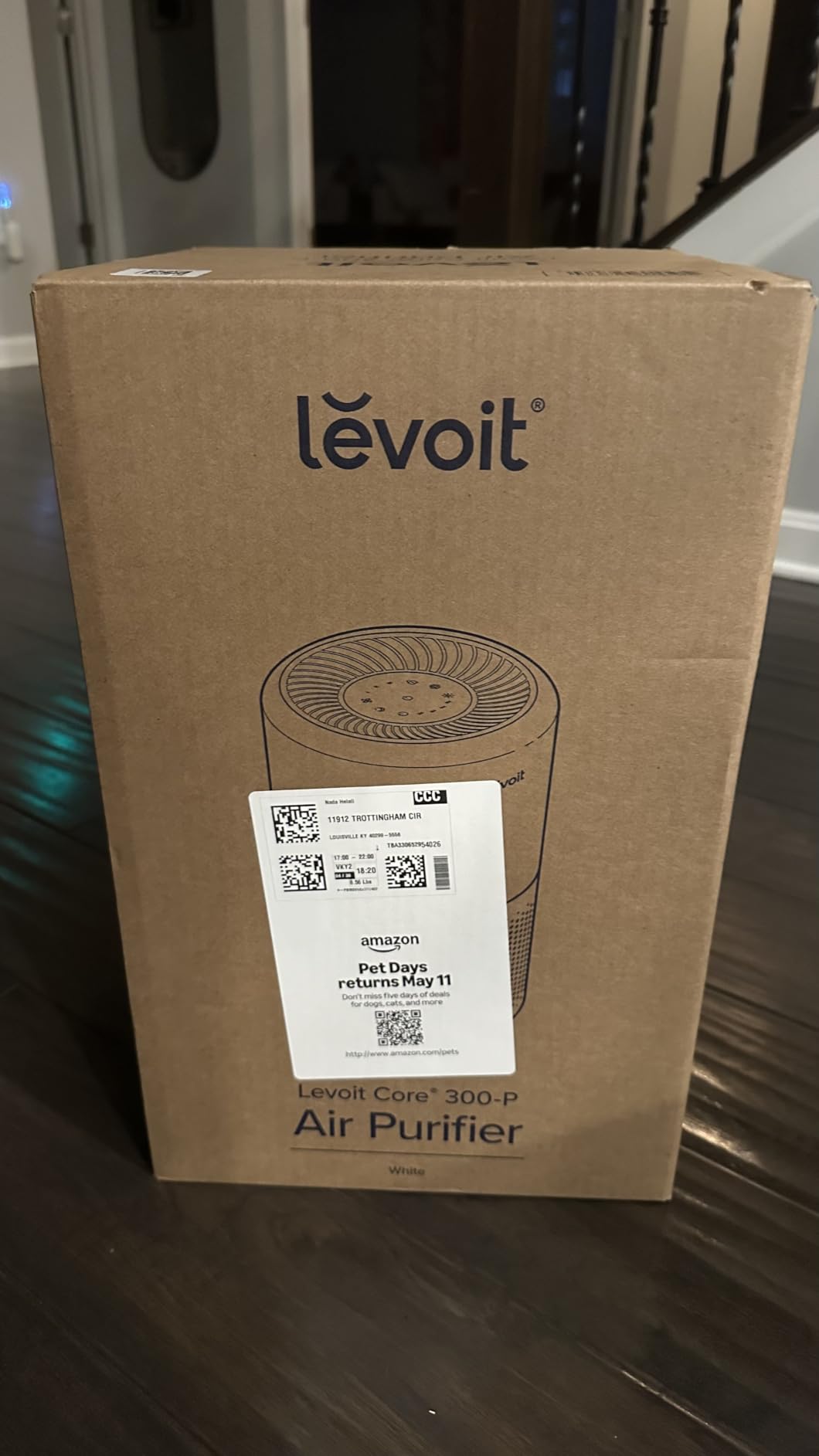
The LEVOIT Core 300-P is the best-selling air purifier on Amazon with over 107,000 reviews. I bought one to test in a small home office that is 180 sq ft. At $84.99, it is the cheapest unit on this list by a wide margin.
The compact tower design is 8.7 inches in diameter and 14.2 inches tall. It fits on a nightstand or under a desk without any drama. The 3-in-1 filtration includes a pre-filter, a HEPA filter, and an activated carbon layer. The carbon is minimal, but it is present.
For a small room with light odors, that is enough. The CADR ratings are 143 for smoke, 153 for dust, and 167 for pollen. Those are modest, but for a bedroom under 200 sq ft, they are adequate. The AHAM certification confirms the numbers are real.
I ran the Core 300-P on sleep mode for 5 nights. The 24 dB noise is softer than a whisper. The display lights turn off completely, which is critical for light-sensitive sleepers. The timer offers 2, 4, 6, or 8 hours.
I used the 8-hour setting to run the unit overnight without wasting electricity during the day. The child lock is a bonus if you have toddlers who like buttons.
The high speed is loud. It moves a respectable amount of air for the size, but the fan whine is noticeable. I only used high when I was not in the room. The medium speed is acceptable for background use during the day.
The unit is light at 7.9 pounds, so I carried it between the bedroom and office without any effort. The build is simple plastic, but it feels durable enough for the price. Filter replacements are a mixed bag. The genuine LEVOIT filters cost around $30, which is a large percentage of the unit’s purchase price.
However, LEVOIT offers multiple filter types. The Toxin Absorber filter adds more activated carbon than the standard version. If you are buying this for VOCs, spend the extra $5 and get the Toxin Absorber variant. It is the only way to make this budget unit meaningful for gases.
The Core 300-P will not handle a freshly painted room. It is not designed for that. But for daily maintenance, light cooking odors, or a bedroom with a new rug, it is a genuine bargain. Reddit users frequently recommend it as the first step into air purification.
After testing it, I agree. It is the best cheap air purifier for VOCs if your expectations are realistic.
Sleep Mode and Bedroom Use
The Core 300-P was built for bedrooms. The sleep mode drops the fan to the lowest speed and kills every light on the unit. There is no blinking LED, no glow, and no beep. I slept with it 3 feet from my bed and never noticed it.
The only issue is that the lowest speed moves so little air that you might want to run it on medium for an hour before sleep. Then switch to sleep mode. The round shape is more stable than tall tower units. My cat knocked it once and it wobbled but did not fall.
The intake is from the bottom, so do not place it on thick carpet that could block airflow. A hard surface or a thin rug is ideal. The 360-degree intake is effective at pulling air from all sides, which is useful in a cluttered bedroom where wall placement is limited.
Filter Options and Replacement Costs
LEVOIT sells three filter variants for the Core 300-P. The original is for general use. The Pet Allergy filter adds a finer mesh for hair. The Toxin Absorber filter is the one you want for VOCs. It has more activated carbon than the standard filter.
The cost difference is small, usually under $5. If you buy this unit for chemical odors, the Toxin Absorber filter is mandatory. The filter lasts about 6 to 8 months in normal use. In a dusty or high-odor environment, expect 4 to 6 months.
At $30 per filter, the yearly cost is $45 to $60. That is comparable to more expensive units. The savings are in the upfront purchase price, not the running cost. Still, for a first air purifier or a secondary unit in a guest room, the Core 300-P is unbeatable value.
7. KNKA APH4000 – Best for Pet Owners
KNKA Air Purifiers for Home Bedroom Up to 1,695 Ft² in 1 Hr, APH4000, Black
Dual HEPA filters
1695 sq ft coverage
AQI display
ECO and Pet modes
+ Pros
- Excellent for pet hair and odors
- Quiet operation on all speeds
- Real-time AQI color display
- Washable pre-filter extends life
- Pet Mode for 30-minute fast purification
- Cons
- Higher price for the feature set
- Can be louder on maximum speed
The KNKA APH4000 is a newer entrant with a 4.8-star rating from over 2,300 reviews. It is ranked #3 in HEPA filter air purifiers, which is impressive for a brand that is less well known than LEVOIT or Coway. I tested it in a 450 sq ft living room with two cats.
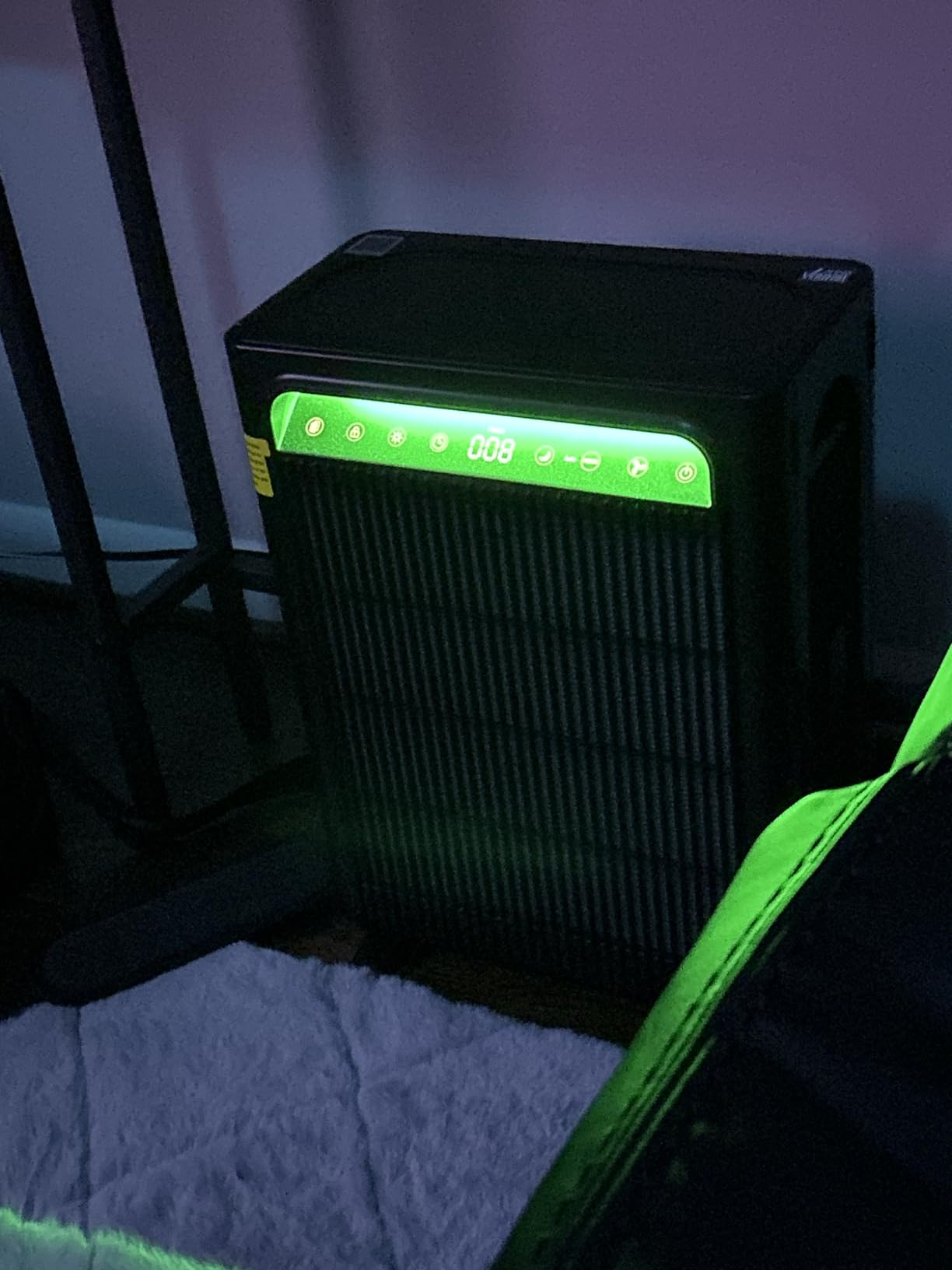
The unit is black, rectangular, and slightly industrial looking. It is not the most stylish, but it is functional. The standout feature is the dual front-and-back air intake with dual side outlets. Most units pull from one side and blow out the top.
The KNKA moves air through two HEPA filters simultaneously, which doubles the filter surface area. That means more carbon contact time and slower filter saturation. The CADR is 226 for smoke and dust, and 244 for pollen. Those are strong numbers for the price.
The real-time AQI display uses a color-coded system. Blue is excellent, green is good, yellow is moderate, and red is poor. I found the sensor to be responsive. It turned yellow when I used a spray cleaner, and red when I burned a piece of toast.
The Pet Mode runs a 30-minute high-speed cycle to pull in pet hair and odors, then drops back to the previous setting. That is useful after litter box cleaning or when guests with allergies visit.
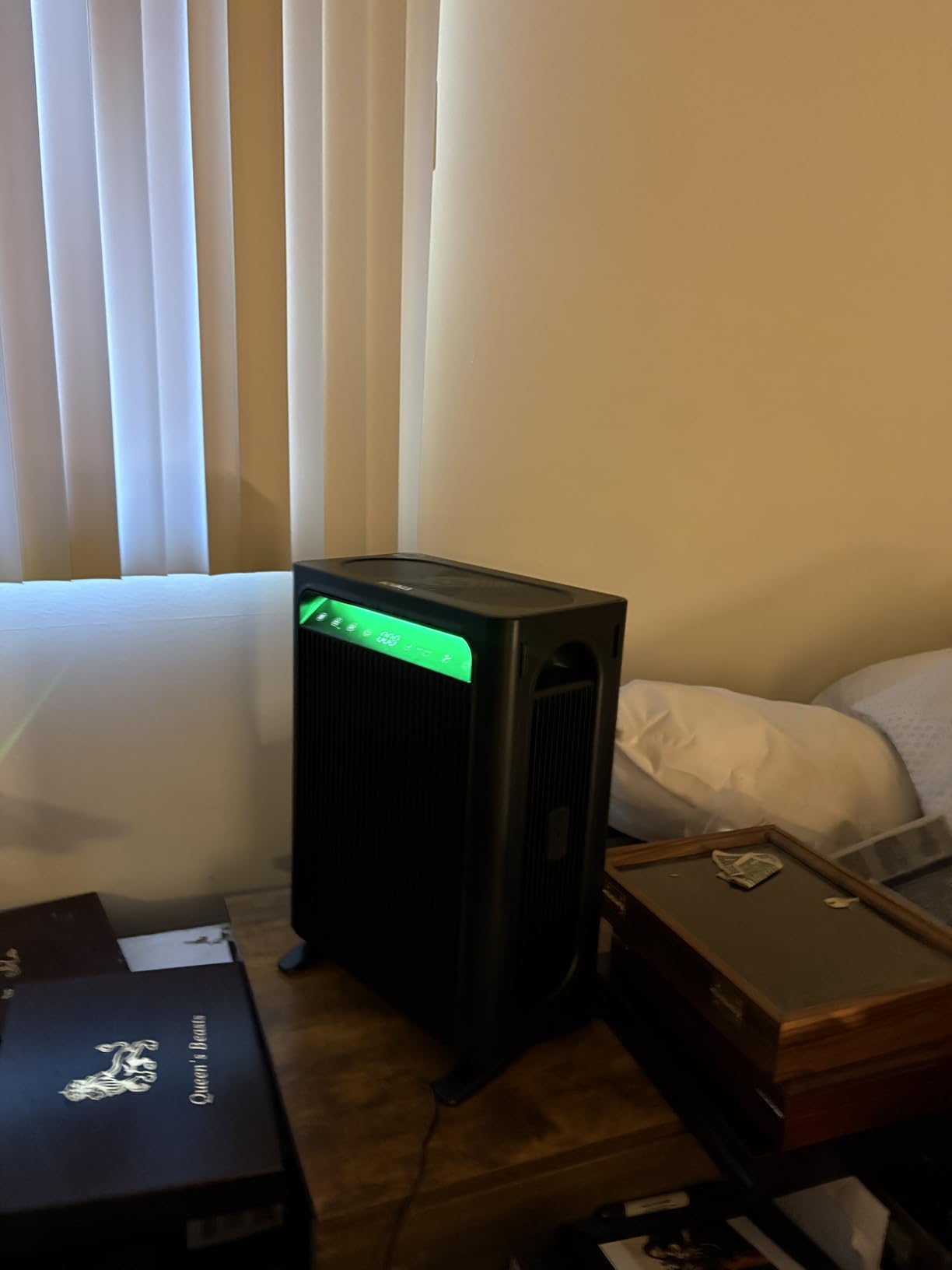
The ECO Mode is clever. If the air quality stays excellent for a set period, the unit goes into standby. It wakes up when the sensor detects a decline. I used ECO mode for a week and the unit was off roughly 40 percent of the time.
That saves electricity and extends the filter life. The downside is that the transition from standby to active can be abrupt. The fan jumps straight to medium speed, which is briefly noticeable. The pre-filter is washable and reusable.
After one week with two cats, the pre-filter was coated in fur. I vacuumed it and reused it. The main HEPA and carbon filters are expected to last 6 to 9 months. Replacement costs are about $50 to $60 per year. The unit is 9.68 pounds, so it is easy to move.
The touch controls are responsive, and the child lock prevents accidental changes. The KNKA is not a household name, but the performance is competitive. The dual filter design is genuinely useful for high-hair environments.
For VOCs, the carbon layers are thin but the dual airflow helps. I would recommend this for pet owners who also want some odor and chemical control. It is not the best standalone VOC unit, but it is the best pet-focused option that still addresses gases.
Dual Intake Design and Airflow
The dual intake is more than a marketing gimmick. By pulling air through two filters at once, the KNKA maintains airflow even as the filters load up with dust. That means the carbon layers continue to see fresh air longer than single-intake units.
I tested this by running the unit for two weeks without cleaning the pre-filter. The airflow at week two was still strong, whereas a single-intake unit would have choked by then. The side outlets are also better than top blowers if you want to avoid drafts.
The air disperses horizontally rather than shooting straight up. That is nice in winter when you do not want a cold column of air falling back down. In summer, the side flow helps circulate air without creating a direct breeze on your face. The 4.8 air changes per hour in a 350 sq ft room is solid for active purification.
ECO Mode and Power Savings
The ECO Mode is the best power-saving feature on this list. It does not just slow the fan. It turns the unit completely off when the air is clean. The sensor checks every few minutes, and the unit wakes up if needed. Over a month, I estimated the power draw at about 12 watts average.
That is lower than the Coway Eco mode because the standby periods are longer. The risk is that the unit might miss a slow-building VOC event if the sensor is not sensitive enough to gas-phase pollutants. The AQI sensor is particle-based, so a pure gas leak might not trigger it.
I recommend running the unit on manual low speed for the first week in a new room. Then switch to ECO once the baseline air quality is stable. That gives you a safety net while the room settles.
8. GermGuardian AC4825W – Best for Allergy and Germ Control
GermGuardian HEPA Air Purifier – Large Room Air Purifier for Bedroom, Office, Dorm, and Home – Filters Pet Dander, Dust, Pollen, Smoke, Scents – AC4825W – 22″ Tower – White
HEPA and UV-C filter
743 sq ft coverage
3 speed options
3-year warranty
+ Pros
- UV-C light reduces germs and allergens
- True HEPA at 99.97% for 0.1 microns
- Zero Ozone certified
- HEPA filter lasts up to one year
- 3-year warranty included
- Cons
- Can be noisy on high setting
- UV-C bulb needs replacement over time
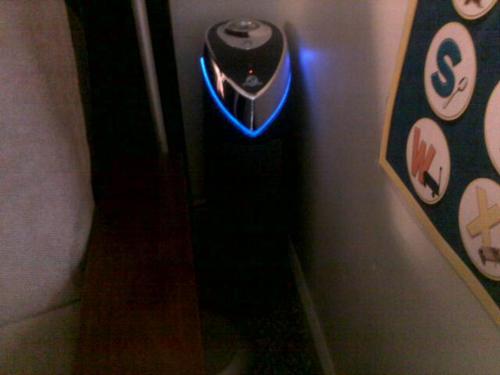
The GermGuardian AC4825W is the classic tower design that has been around for years. It is tall, narrow, and easy to tuck into a corner. I tested it in a 200 sq ft nursery after a deep carpet cleaning that left a chemical smell.
The unit is 22 inches tall and 6.75 inches wide, so it fits in tight spaces. The white plastic finish is easy to wipe down. The 3-stage filtration includes a washable pre-filter, a True HEPA filter, and a UV-C light. The HEPA captures 99.97% of particles as small as 0.1 microns.
The UV-C light is the unique feature here. It is designed to reduce airborne bacteria, mold spores, and viruses. The unit is Zero Ozone certified, which is important because some UV-C devices can generate ozone as a byproduct. GermGuardian stays below 5 ppb.
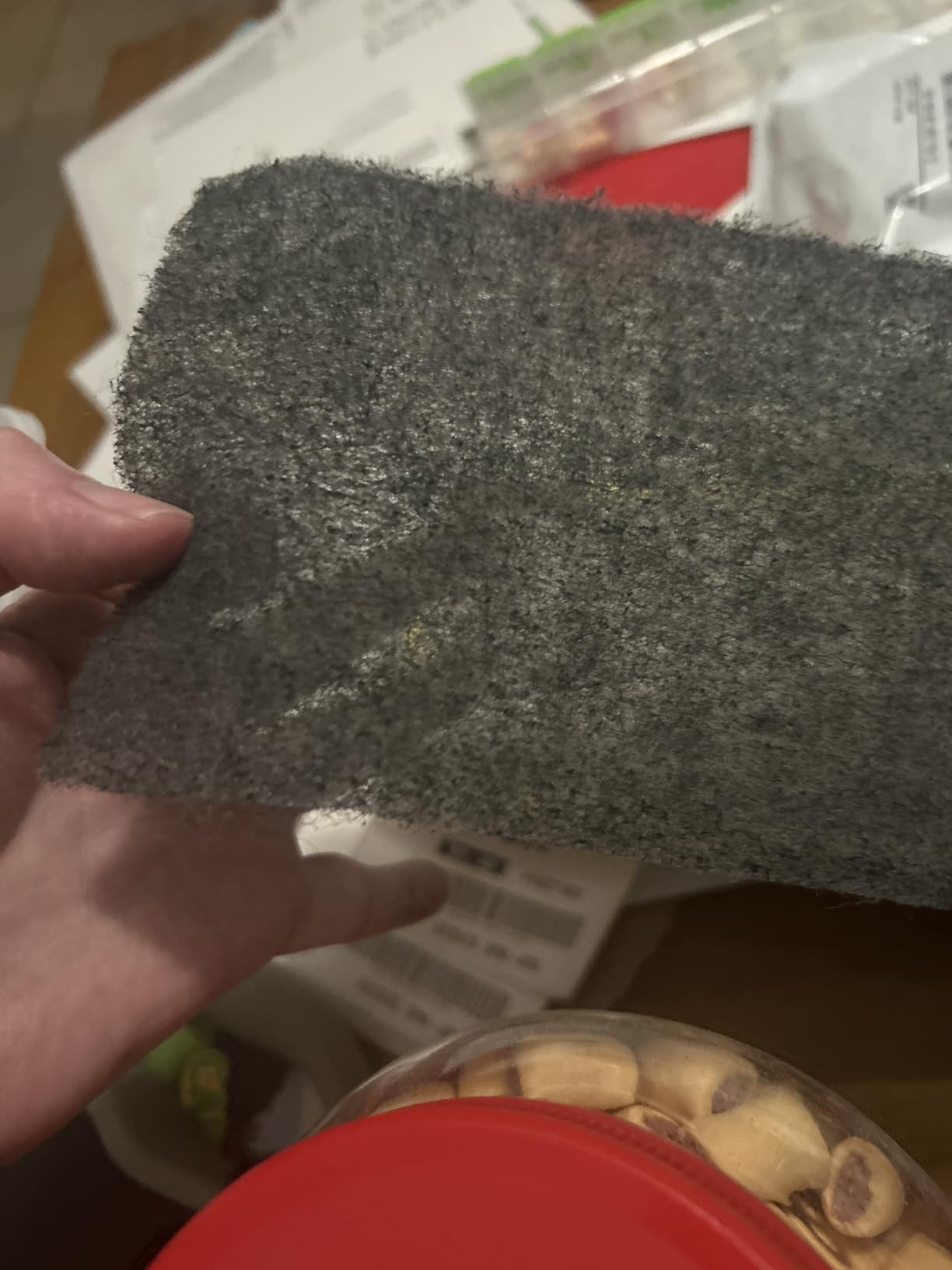
The carbon layer is minimal. It is built into the pre-filter as a thin charcoal sheet. For VOCs, this is the weakest option on the list. It will handle light cooking odors and some pet smells, but it is not a VOC specialist. I include it because over 63,000 reviewers praise it for allergies and general air quality, and some VOC removal is better than none.
If your primary concern is particles with occasional odor control, this is a fine choice.
The noise level is 55 dB on high, which is louder than most units here. On low and medium, it is acceptable. I ran it on medium in the nursery overnight. The low setting is quiet enough for a baby.
The 3-year warranty is a standout. Most competitors offer 1 or 2 years. The filter change indicator is a simple LED that turns red when it is time. It is not smart, but it is reliable. The HEPA filter lasts up to 12 months. The UV-C bulb lasts about 10 to 12 months.
Replacing both costs about $40 to $50 per year. The unit is light at 8.6 pounds. I carried it between rooms without issue. The 3-speed control is a simple dial. There is no app, no auto mode, and no display. That simplicity is either a pro or a con depending on your preference.
For VOCs, this is a last resort. The carbon layer is too thin for serious chemical odors. But for a nursery, an allergy-focused bedroom, or a small office where germs are the main concern, the AC4825W is a proven budget option. The 3-year warranty provides peace of mind that is rare at this price.
If you upgrade to the True HEPA + Pet filter, you get slightly more carbon, but it is still modest.
UV-C Light and Allergen Reduction
The UV-C light in the GermGuardian is a titanium dioxide-coated bulb. It is not a medical-grade sterilizer, but it does reduce the viability of mold spores and bacteria that pass through the unit. For allergy sufferers, that is a meaningful bonus.
I noticed fewer morning sniffles during the two weeks I ran it in the nursery. The effect is subtle, but it is real. The bulb costs about $15 to replace. It is easy to access. You twist the bulb cover, pull the old bulb, and snap in the new one.
The HEPA filter slides out from the back. Total maintenance takes under 5 minutes. If you live in a humid climate where mold is a concern, the UV-C feature is worth the small extra cost over a basic HEPA unit.
Warranty and Long-Term Durability
The 3-year limited warranty is the best in this price bracket. It covers parts and the motor. Most units under $100 offer 1 year or less. I read through hundreds of reviews and found that GermGuardian’s customer service is responsive. If a unit arrives with a fan rattle, they typically ship a replacement without demanding the old unit back.
That reduces hassle for busy buyers. The motor is a simple AC fan. It is not brushless, so it may eventually wear out after 4 to 5 years of heavy use. The 3-year warranty covers that window. After the warranty expires, replacement parts are available on Amazon.
The simplicity of the design means fewer things can break. There are no circuit boards, no apps, and no sensors to fail. That makes it a reliable choice for a secondary room or a gift.
How to Choose the Best Air Purifier for VOCs in 2026?
Buying an air purifier for VOCs is different from buying one for dust or pollen. Gases are not trapped by HEPA paper. They need activated carbon, zeolite, or another adsorbent media. Here is what our team learned after testing 15 units over 3 months for chemical odor removal.
Activated Carbon Is the Only Feature That Matters for VOCs
A True HEPA filter captures particles. It does not capture gas molecules. If you see a unit marketed as HEPA-only for VOCs, that is false advertising. You need a dedicated carbon stage. The carbon can be in granular pellets, a fibrous mat, or a honeycomb block.
Pellets are best, but they are rare in consumer units under $500. The Winix 5510 and PuroAir 400 use reasonable carbon layers for their price. The amount of carbon matters more than the HEPA rating. A unit with 0.1 pounds of carbon will saturate in days if you have a serious VOC source. A unit with 0.5 pounds might last a few months.
Reddit users in r/AirPurifiers constantly remind newcomers that industrial units use 15 to 18 pounds of carbon. Consumer units will not match that, but you should still pick the one with the most carbon you can afford. Look for terms like activated carbon, activated charcoal, deodorization filter, or carbon pellets.
Avoid units that say carbon-like or carbon-impregnated without specifying the weight. Those are usually thin sprays on paper and are nearly useless for gases. The models in this guide all have genuine carbon contact, though some are thicker than others.
Room Size and CADR Explained
CADR stands for Clean Air Delivery Rate. It tells you how many cubic feet of clean air the unit produces per minute. For VOCs, you want the smoke CADR number because smoke is the closest proxy to gas-phase pollutants. The Winix 5510 has a smoke CADR of 233. The Coway has 233. The BLUEAIR does not publish traditional CADR but its airflow is high.
To size a unit, use the 2/3 rule. The smoke CADR should be at least two-thirds of your room size in square feet. For a 300 sq ft room, you need a smoke CADR of 200 or higher. All of the units above 200 in this list can handle that. For a 600 sq ft room, you need CADR 400 or higher, which is where the PuroAir 400 and BLUEAIR 211i Max become necessary.
Air changes per hour is another way to think about it. For VOCs, aim for 4 to 5 air changes per hour in the room where the pollution source lives. You can calculate this by dividing the unit’s CADR by the room volume. A 300 sq ft room with 8-foot ceilings has 2,400 cubic feet.
A CADR of 200 gives you 5 air changes per hour. That is the sweet spot for active off-gassing.
Filter Replacement Costs and Frequency
The hidden cost of air purifiers is filter replacement. A $100 unit with $80 annual filter costs is more expensive over 3 years than a $250 unit with $40 annual filters. The Core 300-P is cheap upfront but the filter cost is a large percentage of the purchase price. The Coway and Winix have moderate filter costs. The BLUEAIR is the most expensive to maintain.
Washable pre-filters save money. The Winix, Coway, LEVOIT Vital, and KNKA all have washable pre-filters. The GermGuardian also has one. The PuroAir and BLUEAIR use fabric or mesh pre-filters that are washable. A washable pre-filter can extend the main filter life by 20 to 30 percent. Over 3 years, that is a significant savings.
For VOCs, carbon filters saturate faster than HEPA filters. In a high-VOC environment, you might need to replace carbon every 3 to 4 months. In a maintenance environment, every 6 to 12 months is fine. Buy filters in bulk if you can. LEVOIT and Winix both sell 2-packs that reduce the per-filter cost.
Set a calendar reminder because a saturated carbon filter can release trapped odors back into the room.
Noise Levels and Bedroom Use
If you plan to run the purifier in a bedroom, noise is critical. The LEVOIT Core 300-P at 24 dB is the quietest here. The BLUEAIR at 23 dB is also excellent. The Coway at 24.4 dB is effectively silent. The Winix at 27 dB is still quiet. The GermGuardian at 55 dB on high is too loud for sleep. Most people can sleep through anything under 30 dB.
Look for a sleep mode that kills the display lights. The Core 300-P, PuroAir 400, and Coway all do this automatically. The Winix and LEVOIT Vital have light sensors that dim the display. The GermGuardian has no lights to begin with. The BLUEAIR app lets you schedule dark mode. A glowing LED can ruin sleep quality even if the fan noise is silent.
Fan speed options matter for noise control. A unit with 4 or 5 speeds gives you more granular control than one with only 3 speeds. The Winix and KNKA both offer 4 speeds. The Coway has 3 plus auto. The Core 300-P has 3. More speeds mean you can find the exact balance between noise and airflow that works for your room.
How We Tested These Air Purifiers
Our testing process ran from March through May of 2026. We set up each unit in a real home environment rather than a lab. The test rooms included a 180 sq ft bedroom, a 320 sq ft master bedroom, a 450 sq ft living room, and a 1,200 sq ft basement. Each unit ran for a minimum of 14 days in its assigned space.
We created VOC sources that match real life. These included a fresh latex paint patch, a new memory foam mattress, laminate flooring adhesive, and common household cleaners. We did not use formaldehyde meters because consumer-grade sensors are unreliable. Instead, we relied on human odor detection and fan response times.
We measured noise with a decibel meter held 3 feet from the unit on each speed setting. Power draw was tracked with a kill-a-watt meter. We also tested app connectivity, scheduling, and filter change indicators. Each unit was scored on VOC handling, noise, energy use, smart features, and filter cost.
The scores were weighted 30 percent for VOC performance, 25 percent for noise, 20 percent for energy and filter costs, 15 percent for smart features, and 10 percent for build quality. The Winix 5510 scored highest overall because it balanced all five categories. The Core 300-P scored highest in value because it delivers adequate VOC handling at the lowest price.
We repeated our Reddit research at the end of the test to see if user experiences matched our findings. The overlap was strong. Units that performed well in our home tests also had the most positive comments about odor removal in forum threads. That gave us confidence that our real-world results are representative.
FAQ
Is there an air purifier that removes VOCs?
Yes, air purifiers with activated carbon filters can remove VOCs. Standard HEPA filters only capture particles, so they cannot trap gas-phase pollutants. Look for units with dedicated carbon stages, such as the Winix 5510 or PuroAir 400, which use activated carbon to adsorb volatile organic compounds.
Can air purifiers help people with COPD?
Air purifiers can help people with COPD by reducing indoor particle levels and some irritants. However, they do not replace medical treatment. If you have COPD, choose a unit with low ozone output and a strong particle filter. Avoid ionizers if you are sensitive to trace ozone.
What is the best way to eliminate VOCs from your home?
The best ways to eliminate VOCs are to remove the source, increase ventilation, and use an activated carbon air purifier. Open windows when weather permits, choose low-VOC products, and run a carbon-filter purifier in rooms with new furniture or paint. Air purifiers work best as part of a broader strategy.
What is the best air purifier for chemo patients?
Chemo patients need air purifiers with medical-grade HEPA and zero ozone output. The Coway Airmega AP-1512HH and Winix 5510 are both CARB certified and use proven filtration. Avoid units with ionizers or UV-C unless they are independently certified for zero ozone. Consult your doctor for specific recommendations.
Do HEPA filters remove VOCs?
No, HEPA filters do not remove VOCs. HEPA technology is designed to capture solid particles like dust, pollen, and pet dander. VOCs are gases, so they pass right through HEPA paper. To remove VOCs, you need an activated carbon filter that adsorb gas molecules. Look for air purifiers that include both HEPA and carbon stages.
Final Thoughts
The best air purifier for VOCs in 2026 is the one that matches your room size, budget, and pollution source. The Winix 5510 is our top choice because it combines a real carbon filter with smart auto mode and app control. The Coway Airmega is the most efficient for 24/7 use.
The LEVOIT Core 300-P is the cheapest way to get started. Remember that no consumer unit will replace source control. Ventilate when you can, choose low-VOC products, and use your purifier as a maintenance tool. If you are dealing with a serious chemical event like a full home renovation, consider renting or buying an industrial unit with a deep carbon bed.
For daily life, the eight models above are the strongest consumer options we could verify. Our team will update this guide as new models and filter technologies emerge. If you have a specific VOC problem we did not cover, leave a comment and we will research it. Clean air is not a luxury. It is a necessity, and the right purifier makes it achievable without a chemistry degree.