
If you are searching for how to clean a humidifier, you have come to the right place. I have cleaned dozens of humidifiers over the past few years, and I can tell you that the difference between a healthy home and a respiratory nightmare comes down to one simple habit: regular cleaning.
A humidifier adds much-needed moisture to dry air, but that same water creates a perfect breeding ground for mold, bacteria, and mineral deposits if you ignore maintenance. The EPA recommends cleaning portable humidifiers every third day, yet most people I talk to admit they only think about it when the tank looks slimy.
In October 2026, I will show you exactly how to clean a humidifier from start to finish. You will learn a quick daily routine that takes under five minutes, a weekly deep clean using white vinegar, and a monthly disinfection protocol that kills bacteria and mold spores.
I will also cover how to handle different humidifier types, what to do when regular cleaning is not enough, and natural alternatives for anyone who cannot stand the smell of vinegar. By the end, you will have a complete humidifier cleaning system that protects your air quality and extends the life of your machine.
Why Regular Humidifier Cleaning Is Non-Negotiable
A dirty humidifier does not just look gross. It actively pumps mold spores, bacteria, and mineral particles into the air you breathe.
Medical experts at National Jewish Health warn that neglected humidifiers can cause humidifier lung, a type of hypersensitivity pneumonitis that triggers coughing, fever, and shortness of breath. I have seen Reddit users share stories of persistent coughs that disappeared only after they deep cleaned their units.
Stagnant water breeds biofilm within 24 to 48 hours. That slippery film is not just algae. It is a colony of bacteria that clings to tank walls and internal tubes.
When the humidifier turns on, those particles become airborne. Regular humidifier cleaning prevents this cycle and keeps your indoor air safe.
Children, elderly individuals, and people with allergies or asthma are especially vulnerable to contaminated mist. A clean humidifier should help your health, not harm it. That is why I treat cleaning as a non-negotiable part of ownership.
What You Need Before You Start
You do not need expensive products to clean a humidifier. I keep a dedicated kit under my sink so I am never tempted to skip maintenance.
Here is what I use: white vinegar, hydrogen peroxide at 3 percent, unscented bleach, a soft bottle brush or scrub brush, microfiber cloths, dish soap, and a basin or sink.
White vinegar is my go-to for weekly cleaning because the acetic acid dissolves mineral buildup and limescale. Hydrogen peroxide and bleach are reserved for monthly disinfection.
Never mix vinegar and bleach. That combination creates toxic chlorine gas that can damage your lungs.
I also recommend buying a long, flexible bottle brush if your humidifier has narrow mist tubes. Those hard-to-reach areas are where mold loves to hide.
If you have sensitive skin, wear rubber gloves during the monthly disinfection step. Bleach and hydrogen peroxide can irritate bare hands. I keep a pair of dish gloves hanging next to my cleaning kit just for this task.
How to Clean a Humidifier
This is the core process I follow every week. I have broken it down into daily, weekly, and monthly tasks so you can build a routine that fits your schedule.
The daily step takes five minutes. The weekly deep clean takes 30 minutes including soak time. The monthly disinfection takes about 45 minutes.
Preparation Steps
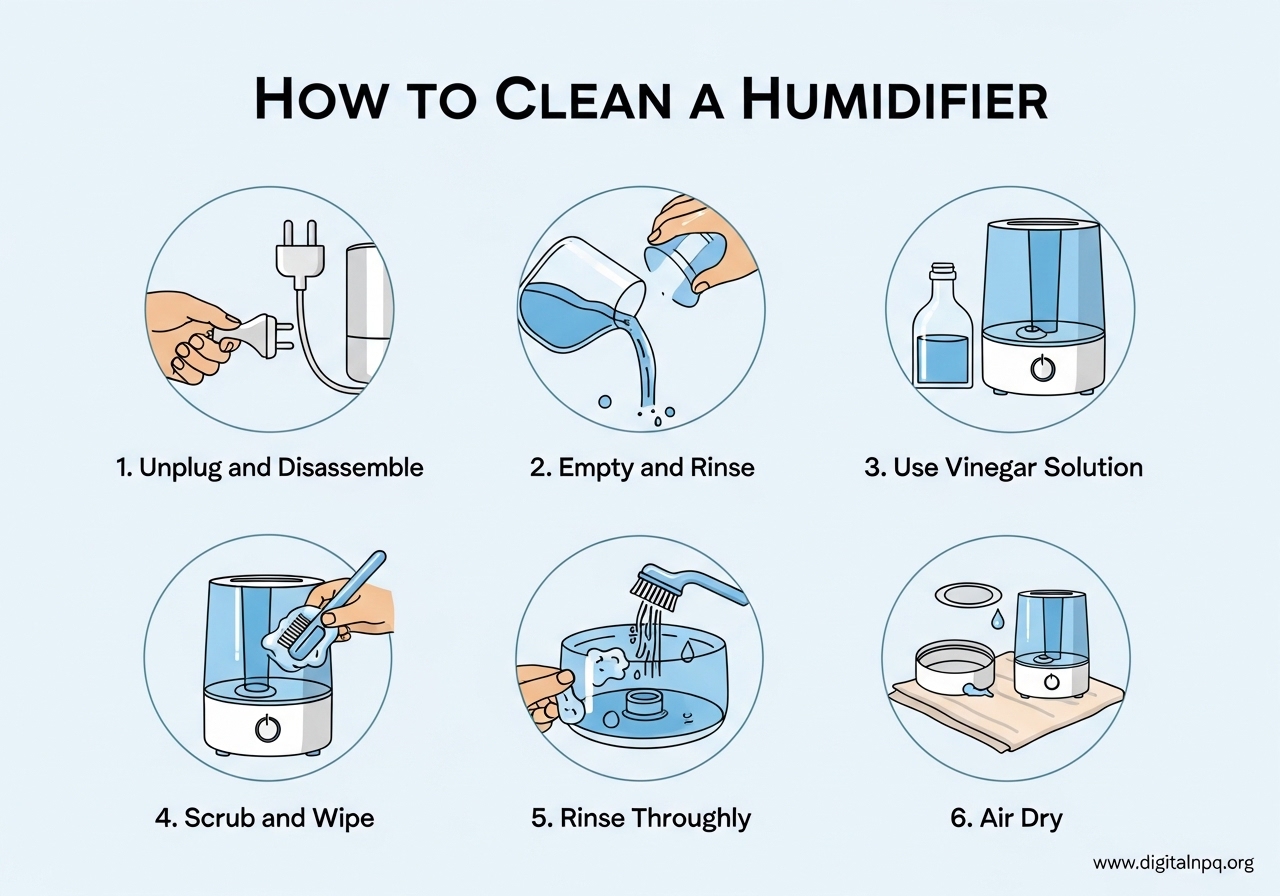
Before you touch any cleaning solution, unplug the humidifier and carry it to a well-ventilated area. Empty every drop of water from the tank and the base.
I usually pour the old water into a houseplant since it is already room temperature. Disassemble the unit completely. Remove the tank, the mist tube, the filter, and any small caps or seals.
Rinse each part with warm water. Do not soak the motor base or any electrical components. If your humidifier has a heating element in the base, wipe it gently with a damp cloth only.
Lay out all the pieces on a towel so you can see every surface that needs attention.
Daily Cleaning Routine
The daily routine is the easiest part of humidifier care, and it makes the weekly deep clean much faster. I do this every morning right after the unit shuts off automatically.
Empty the tank completely. Rinse it with warm water and swish it around to dislodge any film.
Wipe the base with a damp cloth. If you see any white dust or mineral residue, a quick rub with a microfiber cloth usually removes it.
Dry the tank with a towel or let it air dry with the cap off. Leaving the tank open during the day prevents moisture from getting trapped.
This five-minute habit stops biofilm from forming and keeps your humidifier fresh between deep cleans. I set a phone reminder for the first two weeks until it became automatic.
Weekly Deep Cleaning With Vinegar
I deep clean my humidifier every weekend using white vinegar. It is the most effective method I have found for removing limescale and killing mold.
Here is the exact process I follow. Step 1: Fill the tank with equal parts white vinegar and warm water. I usually use one cup of each for a standard one-gallon tank.
Step 2: Swirl the solution around and let it sit for 20 to 30 minutes. Step 3: Use a bottle brush to scrub the interior walls, corners, and the mist opening.
Pay attention to the base where the tank connects. Mineral deposits love to collect there.
Step 4: Rinse everything thoroughly with warm water until the vinegar smell disappears. Step 5: Dry all parts completely before reassembling.
If you have stubborn buildup, soak the affected parts in pure white vinegar for one hour. For narrow mist tubes, thread a flexible brush through the opening and scrub back and forth.
I learned this trick from a Reddit user who had been struggling with a Levoit Ultrasonic Cool Mist humidifier. The mist tube is the most overlooked part, and it is often where the worst mold hides.
Monthly Disinfection Protocol
Once a month, I disinfect the humidifier to kill bacteria and mold spores that vinegar alone might miss. You have two safe options: bleach or hydrogen peroxide.
Both work well, but I prefer hydrogen peroxide because it leaves no chemical residue after rinsing.
For the bleach method, mix one teaspoon of unscented bleach with one gallon of water. For hydrogen peroxide, mix three ounces of 3 percent peroxide with one quart of water.
Fill the tank and base with your chosen solution. Let it sit for 30 minutes. Scrub any stained areas.
Rinse every part at least three times with clean water. I cannot stress enough how important thorough rinsing is.
You do not want to breathe bleach or peroxide mist. Allow all components to air dry completely. I leave mine on a drying rack for an hour.
Reassemble only when every surface is dry to prevent moisture from getting trapped inside. If you notice any pink or black staining that does not come off after disinfection, that section may need replacement.
Humidifier Filter Care and Replacement
Not all humidifiers have filters, but if you own an evaporative model, the wick filter is a critical component that needs attention. A dirty filter will harbor bacteria and restrict airflow.
I check my filter every week during heavy use. If the filter is reusable, rinse it under cool water.
Do not squeeze or wring it, as that can damage the wick fibers. Let it air dry completely before reinstalling.
Most manufacturers recommend replacing disposable filters every one to two months. I mark the replacement date on my calendar so I do not forget.
If your filter looks yellow, crusty, or smells musty even after rinsing, replace it immediately. A degraded filter cannot humidify effectively and will circulate mold spores instead of clean moisture.
I buy filters in bulk so I always have a spare ready.
How to Clean a Humidifier by Type
Different humidifier types require slightly different approaches. I have owned ultrasonic, evaporative, and warm mist units, and each has its own quirks that you need to know.
Ultrasonic humidifiers use a vibrating plate to create mist. The plate can develop mineral scale quickly.
Wipe the transducer gently with a vinegar-dampened cloth. Never scrape it with a hard brush.
The mist tube on these units is also narrow, so a flexible brush is essential. I have cleaned several ultrasonic units, and the transducer is always the most delicate part.
Evaporative humidifiers pull air through a wet wick filter. Clean the base with vinegar and water, but never put the wick filter in vinegar. The acid will break down the wick material.
Replace the filter on schedule. Warm mist humidifiers boil water to create steam. The heating element collects thick mineral scale.
Soak the base in a vinegar solution and then scrub the element with a soft brush. Be careful around the electrical connections.
If you use a humidifier for sinus congestion or allergy relief, keeping it clean is even more important. Dirty humidifiers can make sinus problems worse instead of better.
If you are struggling with your current unit, check our picks for the best humidifiers for sinus problems that feature easier maintenance designs.
Water Quality Matters
The water you pour into the tank determines how much cleaning you will need. I switched to distilled water two years ago and immediately noticed less white dust and mineral buildup.
Tap water contains calcium and magnesium that leave limescale deposits on the tank walls and the transducer. Distilled water has those minerals removed.
It costs more upfront, but it extends the time between deep cleans and keeps the unit running efficiently. If distilled water is not practical, filtered or reverse osmosis water is a decent alternative.
The Mayo Clinic specifically recommends distilled water for humidifiers to reduce mineral dispersion into the air. Hard water users will need to deep clean weekly without exception.
You can also use demineralization cartridges if your humidifier supports them. I have a friend who uses reverse osmosis water, and she cleans half as often as I used to with tap water.
Common Mistakes to Avoid
I have made most of these mistakes myself, so I am sharing them so you do not have to learn the hard way. Never leave water sitting in the tank for more than 24 hours.
Even clean water starts growing bacteria overnight. Do not ignore the base. Most people scrub the tank and forget the base where the real buildup hides.
Do not mix vinegar and bleach. I mentioned this before, but it deserves repeating because the resulting chlorine gas is dangerous.
Do not put the motor base or electrical parts in water. A damp cloth is enough. Do not skip the drying step.
Reassembling a humidifier while damp traps moisture and guarantees mold growth. One more mistake I see often is using scented cleaning products.
Bleach with added fragrance can leave residue that irritates the lungs. Stick to unscented bleach and plain white vinegar.
Troubleshooting Recurring Mold and Buildup
If you clean your humidifier regularly and still see mold, you are not alone. I read dozens of Reddit threads where users describe the same frustration.
Here is what actually works when standard cleaning fails. First, increase your cleaning frequency. The EPA says every three days, but heavy users in humid climates may need to clean daily.
Second, inspect hidden areas like the mist tube, rubber seals, and the underside of the tank cap. Mold loves sharp corners and tight spaces.
Third, switch to distilled water. Even filtered water can contain enough organic material to feed bacteria. Fourth, let the unit dry completely between uses.
If you run it overnight, empty and dry it during the day. If none of these steps work, the unit may have internal biofilm that cannot be reached.
I had a humidifier that stayed moldy no matter what I tried. I eventually replaced it because the risk was not worth it. If your unit is over two years old and has chronic mold issues, replacement is the safest option.
Sometimes the antimicrobial coating wears off, and the plastic itself becomes porous.
How to Clean a Humidifier Without Vinegar
Some people cannot stand the smell of vinegar, and that is completely understandable. I have helped friends find alternative methods that work just as well without the sour odor.
Hydrogen peroxide is the best vinegar substitute. Use a 3 percent solution undiluted for soaking, or mix it with water for regular cleaning.
It kills bacteria and breaks down biofilm without the lingering smell. Citric acid is another option. Dissolve two tablespoons of citric acid powder in warm water and soak the tank for 30 minutes.
It dissolves limescale faster than vinegar. Baking soda works for scrubbing but does not kill bacteria, so pair it with peroxide.
You can also buy commercial humidifier bacteriostatic treatments. These are designed to prevent microbial growth between cleanings. I have used them during high-humidity summers with good results.
One friend uses citric acid exclusively because she is sensitive to vinegar fumes.
Seasonal Storage Preparation
When the heating season ends, do not just unplug the humidifier and walk away. I learned this the hard way after finding a moldy unit in my closet six months later.
Clean and disinfect the humidifier thoroughly before storage. Remove the filter and discard it if it is disposable.
Dry every part completely. I leave the tank and base in a sunny spot for a full day. Store the unit in a breathable container, not a sealed plastic bin.
Sealed storage traps moisture and guarantees mold. Put a small desiccant packet in the storage box if you have one. When you pull it out next season, do a quick rinse before the first use.
Frequently Asked Questions
Can I run vinegar through my humidifier to clean it?
Yes, but only during the cleaning cycle. Fill the tank with a 50-50 mixture of white vinegar and water. Let the humidifier run for 15 to 20 minutes so the solution circulates through the internal components and the mist tube. Then turn it off, unplug it, and rinse every part thoroughly. Never breathe vinegar mist or run the unit with vinegar while people are nearby. I do this once a month as a deep flush, followed by a full rinse and dry.
What kills bacteria in a humidifier?
Three common household agents kill bacteria effectively. White vinegar kills about 82 percent of mold species and dissolves mineral deposits. Hydrogen peroxide at 3 percent concentration kills bacteria and viruses on contact. A diluted bleach solution of one teaspoon per gallon of water is the strongest disinfectant and kills virtually all bacteria and mold spores. Always rinse thoroughly after using any disinfectant.
How often should you clean a humidifier?
The EPA recommends cleaning portable humidifiers every third day. I follow a tiered schedule. Empty and rinse the tank daily. Deep clean with vinegar weekly. Disinfect with bleach or hydrogen peroxide monthly. If you have hard water or live in a humid climate, clean every two days to prevent rapid mineral and mold buildup.
What happens if you do not clean your humidifier?
Stagnant water becomes a breeding ground for bacteria, mold, and biofilm within 24 to 48 hours. When the humidifier runs, it aerosolizes those contaminants into your air. This can trigger allergies, asthma attacks, and respiratory infections. In severe cases, dirty humidifiers cause humidifier lung, a serious condition characterized by coughing, fever, and difficulty breathing.
Can you get sick from a dirty humidifier?
Yes, absolutely. A dirty humidifier can cause flu-like symptoms, lung inflammation, and allergic reactions. The Mayo Clinic and National Jewish Health both warn that contaminated mist can irritate the lungs and sinuses. Children, elderly individuals, and people with weakened immune systems are at the highest risk.
Why does my humidifier get moldy?
Mold grows because humidifiers create a warm, wet environment with plenty of organic material from tap water. If you do not empty the tank daily, mold spores have time to colonize. Hard water accelerates the problem because mineral deposits give mold a surface to cling to. Poor air circulation around the unit and reassembling parts while damp also contribute to recurring mold.
How to clean a humidifier without vinegar?
Use hydrogen peroxide, citric acid, or baking soda. Soak the tank in undiluted 3 percent hydrogen peroxide for 30 minutes. Dissolve two tablespoons of citric acid in warm water and soak for 30 minutes to remove limescale. Scrub with baking soda paste for physical cleaning, but pair it with peroxide for disinfection. Commercial humidifier cleaning tablets are also available.
How do I remove limescale from a humidifier?
Soak the affected parts in white vinegar or a citric acid solution for 30 minutes to one hour. Scrub with a soft brush to break loose the softened deposits. For stubborn buildup on ultrasonic transducers or heating elements, make a paste with citric acid powder and a few drops of water. Apply the paste, let it sit for 15 minutes, then wipe gently.
Conclusion
Cleaning a humidifier is not complicated, but it does require consistency. I have been following this routine for years, and it takes me less than ten minutes per week.
The daily rinse prevents biofilm. The weekly vinegar soak removes mineral buildup. The monthly disinfection keeps bacteria and mold spores out of my air.
If you skip maintenance, you are not just shortening the life of your machine. You are actively polluting the air you breathe.
The good news is that once you build the habit, it becomes automatic. Start with tonight’s daily rinse. Do your first deep clean this weekend.
Your lungs will thank you. Remember that how to clean a humidifier is a skill that pays off in better sleep, fewer allergies, and a longer-lasting appliance.
In October 2026, make clean air a priority and keep your humidifier working at its best.