
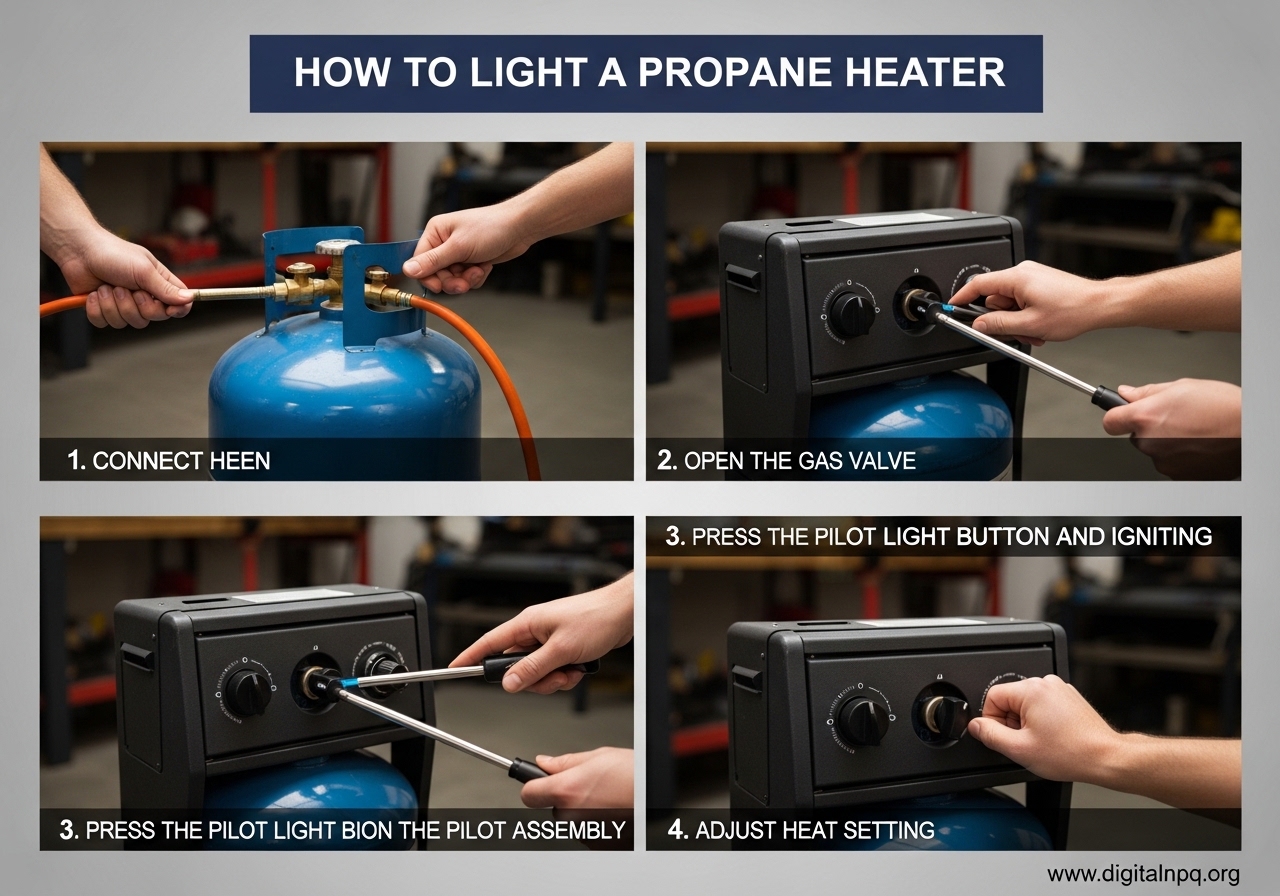
Learning how to light a propane heater safely is a skill every homeowner, camper, or patio owner should master before cold weather arrives. I have helped dozens of friends and family members troubleshoot their heaters over the years, and the most common mistake I see is skipping the pre-lighting safety checks. Whether you own a portable Buddy heater, a patio heater, or a wall-mounted propane unit, the basic lighting process follows the same principles.
You need to connect the tank properly, check for gas leaks, and follow the correct control knob sequence to ignite the pilot. In this guide, I will walk you through every step I use personally, including what to do when things do not go as planned. You will also learn how to handle the frustrating scenario where your heater clicks but won’t light, or the pilot flame dies the moment you release the button.
I have spent time reading forums and talking to propane technicians to gather the most common fixes that actually work. Propane heater safety should never be an afterthought, so I have included ventilation tips and carbon monoxide warnings throughout. By the end, you will feel confident lighting any propane heater on your own, even if you have never done it before.
This guide is updated for 2026 with the latest safety recommendations and real troubleshooting advice from actual users. Before we get into the steps, I want to stress one point: propane is a safe fuel when handled correctly, but it demands respect. A small leak left unchecked can fill a garage with explosive gas in minutes.
A heater used without ventilation can poison a room with carbon monoxide while you sleep. The procedures below are not suggestions; they are the standard practices that professionals and experienced users follow every single time. I light my own propane heaters using this exact process, and I have never had a dangerous incident.
Safety First: Critical Pre-Lighting Checks
Never skip safety checks before lighting a propane heater. Gas leaks and carbon monoxide exposure are real risks that can cause injury or worse. I always tell people to treat every lighting session like it is the first time, because conditions change and equipment wears out.
Start by reading the owner’s manual for your specific model. The manufacturer designed your heater with exact control knob sequences and safety warnings that you should not ignore. If you lost the manual, most brands publish PDF versions on their websites.
I keep a printed copy in the same drawer as my heater accessories so I never have to hunt for it. Manuals also list the exact propane pressure requirements and approved cylinder sizes for your unit, which matters more than most people realize.
Check your ventilation setup before you even touch the propane tank. Indoor propane heaters require open windows or vents to bring in fresh air and exhaust combustion gases. Carbon monoxide is odorless and invisible, so you cannot detect it without a working CO detector.
I install a carbon monoxide detector within 10 feet of any indoor propane heater and test the batteries monthly. Some states now require CO detectors by law, and I consider them non-negotiable regardless of local rules. Outdoor heaters still need clearance from walls, awnings, and combustible materials.
I maintain at least three feet of open space around every side of my patio heater. Decks with overhead coverings need extra attention because heat can accumulate and scorch wooden beams.
Inspect the propane tank connection and regulator for visible damage. Look for cracked hoses, corroded fittings, or a regulator that looks warped from heat exposure. If anything looks suspicious, replace the part before using the heater.
A damaged regulator can send too much pressure to the burner, creating a fire hazard. I also keep a small fire extinguisher rated for Class B fires within arm’s reach whenever I run propane heating equipment. You can also look at alternative heating options like kerosene heaters if you want to compare fuel types before committing to propane.
Kerosene heaters have their own safety profiles, and comparing them helped me decide which fuel worked best for my workshop. Perform a gas leak test every time you connect a new tank or after the heater has been stored for a while. Mix one part dish soap with three parts water in a spray bottle.
Turn on the propane cylinder valve slowly, then spray the soapy mixture onto every connection point between the tank, regulator, and heater inlet. If you see bubbles forming, you have a leak. Turn off the gas immediately, disconnect the tank, and replace the faulty seal or hose.
Never use a flame to check for leaks. I learned this soap test from a propane delivery driver over ten years ago, and I still use it every single time. It takes less than a minute and gives you peace of mind.
Know the difference between indoor-rated and outdoor-only heaters. Using an outdoor propane heater inside a closed garage or tent can deplete oxygen and build up deadly carbon monoxide levels. If you need heat in a garage or workshop, use a heater specifically labeled for indoor use with an oxygen depletion sensor.
I made this mistake once in my early twenties, and I still remember the headache that warned me something was wrong. Trust the labels and your instincts. If the heater says outdoor only, keep it outside.
Finally, know where your emergency shut-off is located. Every propane installation should have a shut-off valve between the tank and the appliance. If you ever smell a strong rotten egg odor or suspect a major leak, turn off the gas at the tank valve first, then at the shut-off valve.
Evacuate the area and call your propane supplier or the fire department from a safe distance. Do not re-enter until a professional has cleared the space.
Types of Propane Heaters and Their Ignition Systems
Propane heaters fall into two main ignition categories: automatic and manual. Understanding which type you own determines the exact lighting steps you need to follow.
Automatic ignition heaters use a piezo-electric igniter button that creates a spark when pressed. You typically find this system on portable Buddy heaters, some patio heaters, and many newer tank-top models. The advantage is that you do not need a separate lighter or match.
I prefer automatic ignition for camping because I never worry about wind blowing out a match before the pilot catches. The igniter button usually sits right next to the control knob, making it easy to press both at once with one hand.
Manual ignition heaters require an external flame source such as a long candle lighter or a stick match. You will see this design on older patio heaters, some forced-air construction heaters, and basic portable models. The process is simple but demands steady hands and a longer reach to keep your fingers away from the burner.
I keep a long-neck candle lighter in my outdoor heater storage bin so I am never searching for one when it is freezing outside. Wind is the biggest enemy of manual lighting, so I cup my hand around the lighter flame when working outdoors.
Heater types also vary by application. Patio heaters are tall, freestanding units that radiate heat downward for outdoor dining or events. Portable Buddy heaters sit on the floor or a table and work well for camping, ice fishing, or workshops.
Tank-top heaters screw directly onto a propane cylinder and blast heat in one direction. Forced-air heaters use a fan to push heated air across a larger area, making them popular on construction sites. Wall-mounted and freestanding indoor units connect to larger propane tanks or household lines and often include thermostats.
No matter which style you own, the lighting fundamentals remain similar: supply gas, ignite the pilot, and wait for the safety mechanism to engage.
Pre-Lighting Checklist: What to Do Before You Start
Complete these five checks before you attempt to light your propane heater. I run through this list every time, and it has saved me from countless headaches.
Step 1: Verify the propane tank has fuel. Lift the tank or check the gauge. An empty tank is the number one reason a heater won’t light, and it is embarrassing to troubleshoot for twenty minutes before realizing you ran out of gas.
If you just refilled the tank, remember that air can enter the line during the exchange, which I will cover in the troubleshooting section. A full 20-pound tank should feel noticeably heavy compared to an empty one.
Step 2: Inspect the regulator and hose connections. Make sure the regulator is seated firmly on the tank valve and the hose clamps are tight. A loose connection will leak gas or restrict flow enough to prevent ignition.
I hand-tighten the regulator nut, then give it a quarter turn with a wrench if it feels loose. Do not overtighten, because you can strip the threads. Check the hose for kinks or pinch points that could block gas flow.
Step 3: Open the cylinder valve slowly. Turn the knob on top of the propane tank counterclockwise until you feel resistance, then stop. Opening it too quickly can trigger the excess flow valve inside the regulator, which limits gas flow and makes the heater behave like it is out of fuel.
I turn mine about one full rotation and wait five seconds before proceeding. If you suspect the excess flow valve has tripped, close the valve, disconnect the regulator, wait sixty seconds, then reconnect and open slowly.
Step 4: Clear the area around the heater. Remove leaves, paper, fabric, or any flammable material within a three-foot radius. If you are using a patio heater, check the reflector and burner screen for spider webs or debris.
I once found a mud dauber nest completely blocking the pilot tube on my patio heater after a month of storage. A blocked pilot tube will prevent ignition even when everything else is working perfectly.
Step 5: Test the soapy water leak check on all connections. This takes thirty seconds and gives you absolute confidence that no gas is escaping before you introduce a flame. Once you see no bubbles, you are ready to light the heater.
Keep the spray bottle handy during the first few minutes of operation so you can recheck if you smell anything unusual.
How to Light a Propane Heater
The exact steps depend on whether your heater uses automatic or manual ignition. I will cover both methods because many households own one of each type.
Lighting a Heater with Automatic Ignition
Automatic ignition propane heaters are the easiest to light once you know the sequence. I can light my portable Buddy heater in under a minute using this method.
Step 1: Turn the control knob to the pilot position. You will feel a slight detent or click when the knob reaches the pilot setting. Some models label it “Pilot” or show a small flame icon.
Do not press the knob yet. If your model has an “Off” position, make sure you pass through it cleanly on the way to Pilot.
Step 2: Press and hold the control knob down. This opens the gas valve to the pilot assembly. You should hear a faint hiss as propane begins to flow.
If you smell gas strongly at this stage, stop and perform the leak check again. A strong smell means you have a leak or the knob is not sealing properly.
Step 3: Push the igniter button repeatedly while holding the knob down. You will hear a clicking sound each time the piezo igniter sparks. It usually takes three to five clicks for the pilot to catch.
If the pilot lights on the first click, count yourself lucky and keep holding the knob. Some models require you to press the igniter button once per second.
Step 4: Continue holding the control knob for 30 to 60 seconds after the pilot flame appears. This waiting period is critical. The thermocouple, a small metal rod sitting in the pilot flame, must heat up enough to signal the safety valve that the pilot is stable.
If you release the knob too early, the thermocouple cools down and the safety valve shuts off the gas, killing the pilot. I count slowly to forty-five every time, and I have never had a pilot drop out.
Users in online forums confirm this same timing; many say 30 seconds is the minimum, but 45 seconds is the sweet spot.
Step 5: Release the control knob slowly and turn it to the desired heat setting. The main burner should ignite immediately with a soft whoosh. If the burner does not light, turn the knob back to pilot and repeat the process.
Once the main burner is running, adjust the heat level to low, medium, or high depending on your comfort. I usually start on low for the first two minutes to let the burner warm up evenly.
Lighting a Heater with Manual Ignition
Manual ignition requires a long flame source because you must reach the pilot assembly while the control knob is depressed. I use a 12-inch candle lighter for every manual lighting job.
Step 1: Turn the control knob to the pilot position and press it down just like you would with an automatic model. The gas should begin flowing to the pilot assembly. If you do not hear a hiss, check the tank valve and regulator connection before proceeding.
Step 2: Light your candle lighter or long match. Hold the flame near the pilot tube opening, which is usually a small metal tube pointing toward the burner. You may need to peek through a sight glass or hole in the heater housing to see the pilot location.
I angle the lighter so my hand stays below the burner level, away from the flame path.
Step 3: Hold the flame at the pilot orifice until the pilot catches. This usually takes two to five seconds. The flame should be steady and blue with a small yellow tip.
A yellow or orange pilot that flickers wildly indicates a dirty orifice or low gas pressure. If the pilot does not catch after ten seconds, release the knob, wait one minute for gas to dissipate, and try again.
Step 4: Keep the control knob pressed for 30 to 60 seconds after the pilot is stable. This step is identical to the automatic process because the thermocouple still needs time to heat up and lock the safety valve open.
I cannot stress enough how many people skip this step and then complain that the pilot won’t stay lit. The thermocouple is a safety feature, not an inconvenience. Respect the timing.
Step 5: Release the knob and turn it to your heat setting. The main burner should light from the pilot flame. If it does not, verify that the pilot is still burning and that the control knob turned far enough to open the main gas valve.
I have seen knobs that feel like they are on High but are actually stuck between Pilot and Low. Give it a firm twist to the detent.
Troubleshooting: When Your Propane Heater Won’t Light
Even when you follow every step correctly, propane heaters sometimes refuse to cooperate. I have dealt with every issue below, and the fixes are usually simple once you identify the cause.
The Heater Won’t Light at All
An empty propane tank is the most obvious cause, so confirm the fuel level first. If you just refilled or exchanged the tank, air may have entered the gas line. This is the infamous need to burp the propane tank.
Disconnect the regulator, open the tank valve for one second to release the trapped air, then reconnect and try again. I learned this trick from an RV forum where users reported trying to light their heaters a hundred times after a tank swap. Burping takes ten seconds and solves the problem immediately.
Check that the cylinder valve is actually open all the way. A valve turned only halfway can restrict flow enough to prevent ignition. Also verify that the regulator is not in excess-flow lockout mode.
If you opened the valve too quickly, the regulator safety may have tripped. Close the valve, disconnect the regulator, wait one minute, reconnect, and open the valve slowly. I have tripped this lockout myself by rushing the valve open on a cold morning.
If you smell propane but the heater still won’t ignite, you likely have a gas flow problem rather than an ignition problem. The smell confirms that gas is escaping somewhere, but it may not be reaching the pilot in the right concentration.
Check the pilot orifice for blockages first, then verify the regulator is delivering the correct pressure. A regulator that has been dropped or frozen can fail internally while still looking fine on the outside. If you cannot find the source of the smell within a few minutes, turn off the tank and call a technician.
The Pilot Light Won’t Stay Lit
If the pilot ignites but dies when you release the control knob, the thermocouple is either not hot enough or not working. First, make sure you are holding the knob for at least 45 seconds. A cold thermocouple cannot keep the gas valve open.
If you held it for a full minute and the pilot still dies, the thermocouple may be dirty or faulty. Spider webs and dust can clog the pilot orifice, causing a weak flame that does not engulf the thermocouple properly. I blow out the pilot tube with compressed air at the start of every season.
If the thermocouple itself is coated in soot, clean it gently with fine steel wool. A failing thermocouple will need replacement, which is a cheap part you can order online by model number. I replaced mine last year for under fifteen dollars and it took ten minutes with a wrench.
The Igniter Clicks But Won’t Spark
When the igniter button clicks but no spark jumps at the pilot, you usually have a debris problem or an electrode gap issue. Remove the front guard or housing panel to access the igniter electrode. Look for a white ceramic insulator with a metal tip positioned near the pilot tube.
The gap between the electrode tip and the pilot tube should be about one-eighth of an inch. Clean any rust or carbon buildup off the electrode with a small file or sandpaper. If the electrode is bent away from the pilot tube, bend it back gently.
Some electronic igniters run on a AA battery; check the battery compartment if your model has one. If the igniter still fails, switch to manual lighting with a candle lighter until you can replace the igniter assembly. I once camped for a full weekend using a candle lighter because I forgot to replace the igniter battery before the trip.
How to Burp a Propane Tank After Refill
Burping removes trapped air from the propane line after a tank refill or exchange. Air in the line prevents the pilot from receiving enough gas to ignite. I do this every time I swap tanks.
Disconnect the regulator from the tank valve. Stand the tank upright outdoors. Open the tank valve for exactly one second, then close it.
You will hear a short hiss as the trapped air escapes. Reconnect the regulator, perform your soapy water leak test, and attempt to light the heater again. This simple procedure solves the majority of post-refill lighting problems I see in online forums.
It is the first thing I try when a heater that worked fine yesterday suddenly won’t light today after a tank change.
Maintenance and Storage Tips for 2026
Regular maintenance keeps your propane heater lighting reliably season after season. I spend about twenty minutes on each heater before I store it for the summer, and it pays off every fall when the unit fires up on the first try.
Clean the pilot assembly and burner orifice with compressed air or a soft brush. Remove the bug screen if your heater has one, and wash it with soapy water. Insects love to build nests in these warm spots, and a single spider web can shut down the entire unit.
Inspect the hose for cracks, especially at the bends near the regulator and heater inlet. UV exposure degrades rubber hoses over time, so replace them every two to three years even if they look fine. A cracked hose can leak gas slowly without you noticing until you perform the soap test.
Place carbon monoxide detectors at the correct height for your space. CO mixes with air and does not rise like smoke, so mount detectors at breathing height on a wall or use a combination stand.
I place one detector near the heater and another near the sleeping area if I am using a portable unit overnight. Test the detector monthly and replace the entire unit every five to seven years according to the manufacturer schedule.
Store propane heaters in a dry garage or shed with the tank disconnected and the valve closed. Never store propane tanks inside your home, basement, or attached garage for extended periods. I keep my portable heaters on a shelf in my detached shed with a dust cover over them.
For patio heaters, I remove the tank, cover the burner head with a weatherproof bag, and secure the reflector so wind cannot damage it. When you pull the heater out next season, run the leak test and light the pilot before you actually need the heat.
Waiting until the first freezing night to discover a problem is a mistake I made once and never repeated. Early preparation is the difference between a cozy evening and a cold trip to the hardware store.
Frequently Asked Questions
Why can’t I get my propane heater to light?
The most common reasons are an empty tank, a closed cylinder valve, air trapped in the line after a refill, or a regulator stuck in excess-flow lockout. Check the fuel level, open the valve slowly, burp the tank to clear air, and verify the regulator is seated properly. A dirty pilot orifice or failed thermocouple can also prevent ignition.
How to start a little propane heater?
For a small portable heater like a Buddy heater, connect the propane tank, open the valve slowly, turn the control knob to Pilot, press and hold the knob, then push the igniter button until the pilot catches. Hold the knob for 45 seconds before releasing to let the thermocouple heat up.
How do I burp my propane tank?
Disconnect the regulator from the tank valve. Open the tank valve for one second while the tank is upright outdoors, then close it. This releases trapped air from the line. Reconnect the regulator, check for leaks with soapy water, and attempt to light the heater again.
How to light a propane heater for the first time?
Read the owner’s manual first. Connect the tank, open the valve slowly, check for leaks with soapy water, clear the area of flammable materials, then follow the control knob sequence for your ignition type. Hold the pilot for 45 to 60 seconds before releasing the knob.
Can you manually light a propane heater?
Yes, if the heater has a pilot position on the control knob. Turn the knob to Pilot, press and hold it down, then bring a long candle lighter or match to the pilot orifice. Once the pilot catches, hold the knob for 45 to 60 seconds before releasing and turning to your heat setting.
What would make a propane heater not light?
An empty tank, closed valve, air in the line, failed regulator, dirty pilot orifice, bad thermocouple, dead igniter battery, or excess-flow lockout can all prevent lighting. Work through the checklist of fuel supply, gas flow, and ignition source to isolate the cause.
How to unclog a pilot light assembly on a propane heater?
Turn off the gas and let the heater cool. Remove the front guard or access panel. Use compressed air to blow out the pilot tube and orifice. Clean the thermocouple with fine steel wool. Reinstall the guard and test the pilot before running the main burner.
Conclusion
Learning how to light a propane heater comes down to preparation, patience, and respect for the fuel. If you run through the safety checklist, connect the tank properly, and hold that control knob for a full 45 seconds, you will succeed on the first try most of the time. When problems do appear, the fixes are usually simple: burp the tank, clean the pilot, or replace a worn hose.
Stay safe, keep a fire extinguisher nearby, and enjoy the warmth.