
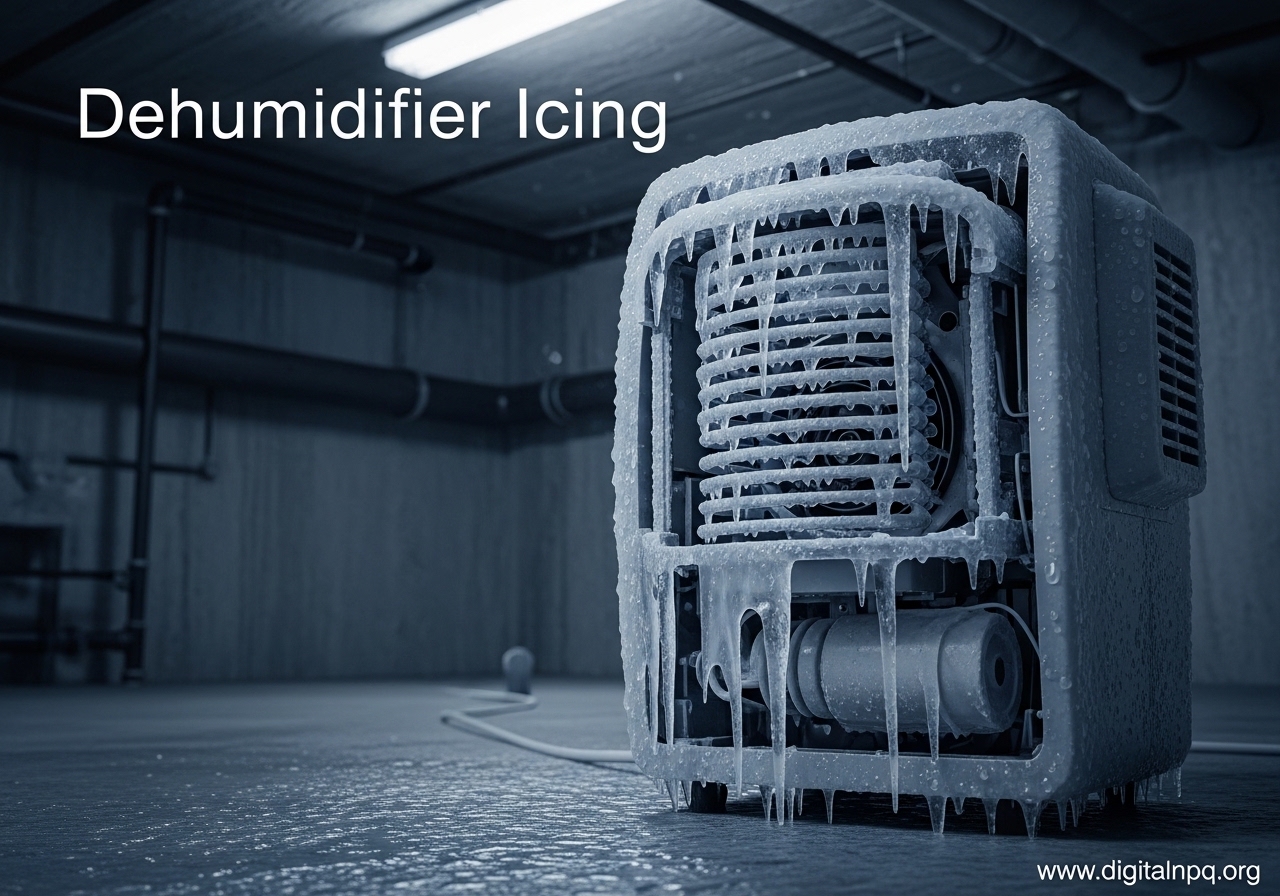
I woke up last winter to find my basement dehumidifier coated in a thick sheet of ice. The unit was running, but the water bucket was empty.
That is dehumidifier icing in a nutshell. It is more common than most homeowners realize, and it can stop your unit from working entirely.
I spent three winters dealing with this before I figured out the pattern. Understanding the root cause saves you time, money, and the annoyance of mopping up leaked water. In this guide, I will explain why dehumidifiers ice up, how to fix the problem, and what you can do to keep it from happening again.
What Is Dehumidifier Icing?
Dehumidifier icing occurs when the cooling coils inside the unit drop below the freezing point. Moisture in the air freezes on the coils instead of condensing into liquid water that drips into the bucket.
The problem usually starts quietly. You notice the bucket is empty even though the compressor is running. Then you open the back panel and see white frost spreading across the metal coils. If you ignore it, that frost turns into solid ice that blocks all air movement.
The three main triggers are room temperature below 65°F (18°C), restricted airflow from a dirty filter, and low refrigerant levels that throw off the coil temperature. When the coils are frozen, the compressor runs longer without removing moisture, which wastes electricity. Understanding which trigger applies to your situation is the first step toward a lasting fix.
Why Dehumidifiers Ice Up
There are five primary reasons a dehumidifier will ice up. Some are easy to fix at home. Others require a professional or a replacement unit.
Low Room Temperature
Most residential dehumidifiers are built to operate in spaces that stay above 65°F. In 2026, most manufacturers still list 65°F as the minimum operating temperature for standard residential units, even though low-temperature models have improved. When the ambient temperature drops below that threshold, the evaporator coils can get cold enough to freeze the condensation that forms on them.
The temperature threshold is not arbitrary. Standard dehumidifiers use a refrigerant cycle that relies on warm air passing over the coils to keep surface temperatures above freezing. When the incoming air is too cold, the heat exchange fails and the coil surface drops below 32°F. The result is immediate frost formation that grows thicker with every minute the unit runs.
Basements and crawl spaces are especially problematic because they often run several degrees cooler than the rest of the house. I have seen units ice up in garages and unheated laundry rooms during the fall months too. Even a well-insulated basement can drop into the low 60s overnight.
If your space regularly dips below 65°F, you may need a low-temperature or basement-rated model. These units are designed with different refrigerant pressures and larger coils that handle cold air better. Some low-temperature models are rated for operation down to 41°F.
Dirty or Restricted Air Filter
A clogged air filter is one of the easiest problems to fix and one of the most common causes of icing. When the filter is blocked, the fan cannot pull enough warm air across the coils. Without that steady airflow, the coil temperature plummets and frost builds up rapidly.
I check my filter every 30 days during heavy use seasons. If it looks gray or dusty, it is time to clean or replace it. Some manufacturers recommend rinsing reusable filters under lukewarm water and letting them dry completely before reinstalling.
Pet hair, dust, and lint are the biggest culprits. If you have dogs or cats that shed, the filter can clog in half the usual time. I keep a spare filter on hand so I can swap it immediately instead of waiting for the reusable one to dry.
A clean filter not only prevents icing but also improves efficiency and indoor air quality. It is a five-minute task that can save you a service call.
Airflow Obstructions
Even with a clean filter, the unit needs clearance around its intake and exhaust vents. Pushing the dehumidifier against a wall, tucking it behind furniture, or stacking boxes on top can choke off airflow.
The warm air that normally keeps the coils above freezing never reaches them, and ice starts to form within hours. I always leave at least 12 inches of space around the sides and back of my unit. It is a small detail that prevents a big headache.
Refrigerant Leaks
When refrigerant leaks out, the pressure inside the cooling system drops. The coils get colder than they should, and ice begins to form even when the room temperature is normal. Users on Reddit report that their units ice up even at 70°F when refrigerant is low, which confirms temperature is not the only factor.
A telltale sign is partial icing. If only 50 to 70 percent of the coil is frozen, that often points to a low refrigerant charge. HVAC technicians consistently mention this pattern as a classic symptom. Our team has reviewed dozens of forum threads, and this partial-coil pattern shows up again and again.
Manufacturing defects can cause leaks even in new units. Several forum users report icing problems within the first six months of ownership. If your unit is under warranty, contact the manufacturer before attempting any repairs. Most brands cover sealed-system failures for one to two years.
Recharging refrigerant requires specialized tools and EPA certification, so this is not a DIY fix. For most portable residential units under $300, it is often more economical to buy a replacement than to pay for a sealed-system repair.
Mechanical Failures
A faulty fan motor or a failing compressor can also lead to ice buildup. If the fan is not spinning at the correct speed, airflow drops. If the compressor runs continuously without cycling off, the coils stay too cold for too long.
You might hear unusual humming or notice the unit is running but not collecting water. These problems usually require replacement parts or a new unit entirely. Once the compressor fails, the cost of parts and labor usually outweighs the value of the machine.
Normal Frost vs Problematic Icing
A light dusting of frost on the coils can be normal when the room is right at the threshold temperature. It should melt away during the unit’s regular defrost cycle.
Problematic icing is different. Thick layers of ice that cover most of the coil, ice that persists for hours, or ice that returns immediately after you defrost the unit all indicate a real problem. If your dehumidifier looks like it belongs in a freezer, something is wrong. Users on Reddit consistently confirm that icing should never happen under normal conditions.
How to Defrost a Dehumidifier
Step 1: Turn the unit off and unplug it from the wall.
Step 2: Remove the water bucket and place a towel underneath to catch melting ice.
Step 3: Let the ice melt naturally. Do not chip at it with a screwdriver or knife. You can damage the fragile coil fins.
Step 4: Once the coils are clear, wipe them gently with a soft cloth.
Step 5: Check the filter and vents for blockages before you plug the unit back in.
Step 6: Turn the unit on and monitor it for the first hour to see if ice returns.
Using a hair dryer or heat gun might seem like a faster option, but concentrated heat can warp the coil fins or damage the plastic housing. Patience is the safest approach.
Step-by-Step Troubleshooting Guide
Start with the simplest checks first. Confirm the room temperature is above 65°F using a thermometer placed near the unit. Do not rely on the thermostat reading from upstairs, because basement temperatures can differ by several degrees.
Inspect the air filter and clean it if necessary. Look at the fan blades to make sure they spin freely when the unit is on. Check the coils for dust or grime that could act as an insulating layer.
Another quick test is to move the dehumidifier to a warmer room temporarily. If it runs for an hour without icing in a 72°F space but freezes in the basement, you have confirmed temperature is the primary cause. If it still ices in the warm room, the problem is internal.
If you have done all of this and the unit still ices up within 5 to 10 minutes of starting, you likely have a refrigerant leak or mechanical failure. Users on forums consistently report that icing this fast is a strong indicator of a severe problem. At that point, the cost of professional repair usually exceeds the price of a replacement, especially for portable residential units.
If you are shopping for a replacement, our guide to the best dehumidifiers for car covers compact models that work well in tight spaces.
How to Prevent Dehumidifier Icing
Prevention is mostly about maintenance and placement. Clean or replace the air filter every 30 days during peak seasons. Keep the unit on a level surface with at least 12 inches of clearance on all sides.
Monitor the room temperature and stop running the unit if the space drops below 65°F for extended periods. In winter, you may need to run a space heater nearby or simply pause dehumidification until spring.
Seasonal preparation matters. In late spring, before humidity peaks, I deep-clean the coils with a soft brush and vacuum the intake grille. That removes the buildup that accumulated during winter storage. A clean start reduces the chance of icing when the unit runs its longest hours in July and August.
If you need dehumidification in a cold basement year-round, look into a low-temperature model rated for operation down to 41°F. These are built with stronger compressors and wider coil spacing that resist freezing.
The refrigeration cycle inside a dehumidifier works much like a window air conditioner. If you want to understand similar cooling appliances, read our review of the best 10000 BTU window air conditioner.
When to Call a Professional
You should call a technician if you suspect a refrigerant leak, if the compressor is making loud noises, or if the unit ices up even after you have ruled out temperature and airflow issues.
Some homeowners ask whether adding refrigerant themselves is possible. The short answer is no. Handling refrigerant without EPA Section 608 certification is illegal in the United States, and the equipment costs more than a new dehumidifier. Even if you could source the refrigerant, finding the leak point requires electronic detectors and pressure gauges that most households do not own.
Be prepared for the reality that many repair shops will not touch portable dehumidifiers. The cost of refrigerant work, leak detection, and compressor replacement often exceeds the value of the unit. If your dehumidifier is more than two years old and has a sealed-system failure, replacement is usually the smarter choice.
Frequently Asked Questions
How do I stop my dehumidifier from icing up?
Check that the room temperature stays above 65°F, clean or replace the air filter every 30 days, and leave at least 12 inches of clearance around the unit. If icing persists after these steps, the unit may have a refrigerant leak or mechanical failure.
Is it normal to have ice build up on a dehumidifier?
A light dusting of frost can appear when the room is near the threshold temperature, but it should melt during the normal defrost cycle. Heavy ice buildup that covers most of the coil is not normal and indicates a problem.
Why is my dehumidifier icing up and leaking?
Ice buildup blocks the normal drainage path. When the unit cycles off and the ice melts, water can overflow the internal tray and leak onto the floor. This is a common sign that the cooling system is malfunctioning.
How to get ice out of a dehumidifier?
Turn the unit off and unplug it. Remove the water bucket and place a towel underneath. Let the ice melt naturally over one to two hours. Do not chip the ice with tools, as this can damage the fragile coil fins. Wipe the coils gently before restarting.
How long does it take for a dehumidifier to defrost?
It typically takes one to two hours for the ice to melt naturally. The exact time depends on how thick the ice is and the temperature of the room. Warmer rooms speed up the process.
What temperature is too cold for a dehumidifier?
Standard residential units should not run in temperatures below 65°F. Some models can operate down to 41°F, but if your space regularly drops below 65°F, you should use a low-temperature dehumidifier designed for cold basements or crawl spaces.
Is it normal for a dehumidifier to freeze up?
No. A dehumidifier should not freeze up under normal operating conditions. Freezing indicates a problem with temperature, airflow, or the internal cooling system that needs attention.
Conclusion
Dehumidifier icing is a frustrating problem, but it is not something you have to live with. Most cases are caused by low room temperature, poor airflow, or a dirty filter. All of those can be fixed at home without spending money on a service call.
If you have ruled out the simple causes and the unit still freezes up, it may be time to replace it. Keeping your home humidity balanced is about more than just removing moisture. If you also need to add moisture in dry months, see our guide to the best humidifier for sinus problems.
With a little attention to temperature, airflow, and regular cleaning, your dehumidifier should run through the season without a single layer of ice.