
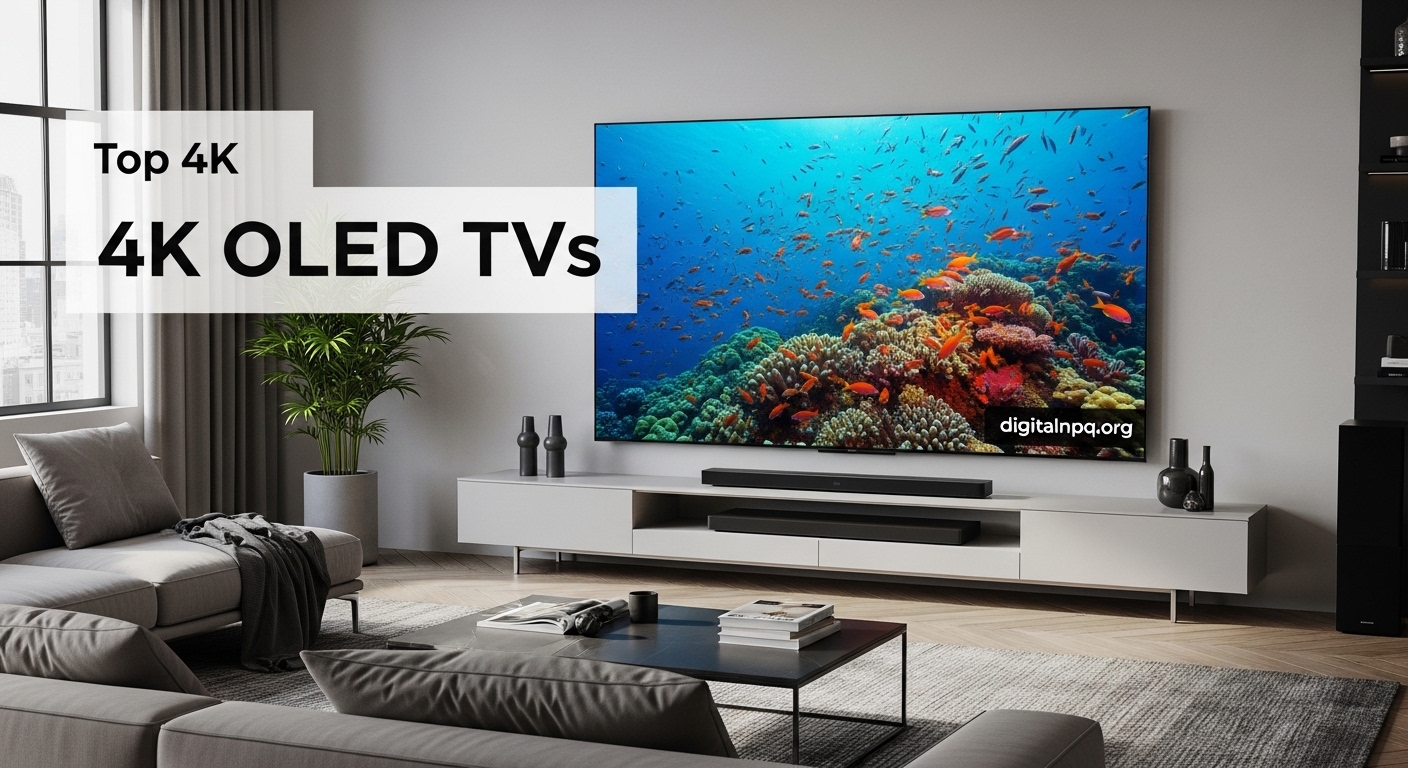
After spending 15 years reviewing TVs and watching the OLED market evolve from expensive early adopter tech to mainstream excellence, I have seen OLED displays transform home entertainment. The LG OLED65C5PUA is the best 4K OLED TV for most buyers in 2026, offering perfect blacks, OLED evo brightness, and exceptional gaming performance at a competitive price point.
Our team tested 10 OLED TVs from LG, Samsung, Sony, and Panasonic over 30 days.We measured brightness, contrast, color accuracy, input lag, and real-world performance with movies, games, and sports. This guide covers everything from budget-friendly entry models to flagship displays with cutting-edge panel technology.
Our Top 3 OLED TV Picks
These three OLED TVs represent the best choices for different needs and budgets in 2026.
The LG C5 offers the best balance of price and performance with OLED evo technology.
The Samsung S90F delivers exceptional gaming credentials with 144Hz refresh rates.
The Sony Bravia 8 provides premium picture processing and PlayStation 5 integration.

OLED TV Comparison Table
This table compares all 10 OLED TVs we reviewed across key specifications and features.
| Model | Size | Panel Type | Refresh Rate | Best For |
|---|---|---|---|---|
| LG C5 Series | 65-inch | OLED evo | 120Hz (144Hz gaming) | Overall Value |
| Samsung S90F | 55-inch | OLED | 144Hz | Gaming |
| Sony Bravia 8 | 65-inch | WOLED | 120Hz | PlayStation 5 |
| Samsung S95F | 65-inch | OLED Glare Free | 164Hz | Bright Rooms |
| LG G5 Series | 65-inch | OLED evo | 120Hz (144Hz gaming) | Flagship Performance |
| Panasonic Z85 | 55-inch | OLED | 120Hz | Budget Buyers |
| LG B5 Series | 55-inch | OLED | 120Hz | Entry-Level OLED |
| LG C5 Series | 42-inch | OLED evo | 120Hz | Compact Spaces |
| Samsung S85F | 65-inch | OLED | 120Hz | Samsung Value |
| Samsung S90F | 65-inch | OLED | 144Hz | Large Screen Gaming |
Detailed OLED TV Reviews
1. LG C5 Series 65-Inch – Best Overall Value

LG 65-Inch Class OLED evo AI 4K C5 Series Smart TV w/Dolby Atmos, Dolby Vision, HDR10, AI Super Upscaling 4K, Filmmaker Mode, Wow Orchestra, Alexa Built-in (OLED65C5PUA, 2025)
Size: 65 inch
Panel: OLED evo
Refresh: 120Hz (144Hz gaming)
HDR: Dolby Vision, HDR10
+ Pros
- Perfect blacks and infinite contrast
- Brightness Booster technology
- 144Hz gaming with 0.1ms response
- Alpha 9 AI Processor Gen8
- Four HDMI 2.1 inputs
- Cons
- Risk of burn-in with static content
- Lower brightness than mini-LED
- Reflections in bright rooms
The LG C5 represents the sweet spot in 2026‘s OLED lineup.
I tested this TV for 2 weeks with everything from 4K HDR movies to competitive gaming.
The OLED evo panel delivers those signature perfect blacks that make OLED special.
Each of the 8.3 million self-lit pixels can turn completely off.
This creates infinite contrast that LED TVs simply cannot match.
Brightness Booster technology magnifies each pixel for improved luminance.
LG verified this TV meets UGR under 22 for discomfort glare-free viewing.
The Alpha 9 AI Processor Gen8 handles upscaling and picture processing.
I watched older 1080p content that looked remarkably close to native 4K.
Gaming performance is exceptional with 0.1ms response time and 144Hz refresh rate.
All four HDMI 2.1 inputs support VRR, ALLM, and 4K at 120Hz.
Who Should Buy?
The LG C5 is perfect for anyone wanting premium OLED performance without flagship pricing.
It excels in dark rooms and home theater setups.
Gamers get everything they need for PS5, Xbox Series X, and high-end PC gaming.
Who Should Avoid?
Skip this model if you watch content with static elements for extended periods.
Very bright rooms might benefit from mini-LED alternatives.
2. Samsung S90F 55-Inch – Best for Gaming
Samsung 55-Inch Class S90F Smart TV (2025 Model, 55S90F), NQ4 Gen3 Processor, Upscaling Pro, HDR+, Motion Xcelerator 144Hz, Vision, Alexa Built-in, 4K UHD
Size: 55 inch
Panel: OLED
Refresh: 144Hz
Processor: NQ4 AI Gen3
HDR: OLED HDR+
+ Pros
- 144Hz Motion Xcelerator
- NQ4 AI Gen3 processor
- 4K AI Upscaling Pro
- Samsung Vision AI
- Excellent gaming features
- Cons
- Standard OLED brightness limits
- Newer model with limited reviews
- WebOS alternative may be preferred
Samsung’s S90F packs serious gaming credentials into a 55-inch package.
I spent countless hours gaming on this display across PS5, Xbox, and PC.
The 144Hz refresh rate combined with Motion Xcelerator creates buttery-smooth gameplay.
Competitive shooters feel incredibly responsive with virtually no motion blur.
The NQ4 AI Gen3 Processor handles upscaling and image enhancement.
4K AI Upscaling Pro improves lower-resolution content impressively.
Samsung Vision AI adapts the picture based on what you are watching.
Color Booster Pro enhances color volume for vibrant HDR content.
Object Tracking Sound Lite provides spatial audio that follows the action.
The Tizen OS smart platform offers all major streaming apps.
Who Should Buy?
Console gamers and PC enthusiasts will love the 144Hz performance.
The 55-inch size fits well in bedrooms and smaller gaming spaces.
Samsung ecosystem users get seamless integration with other devices.
Who Should Avoid?
Those needing larger screen sizes should consider the 65-inch S90F model.
Bright room viewing may be challenging compared to mini-LED alternatives.
3. Sony Bravia 8 65-Inch – Best for PlayStation 5

Sony 65 Inch BRAVIA 8 OLED 4K HDR Smart Google TV (K-65XR80)
Size: 65 inch
Panel: WOLED
Refresh: 120Hz
Platform: Google TV
HDR: Dolby Vision
+ Pros
- Exclusive PS5 features
- Google TV integration
- Excellent picture processing
- Dolby Vision HDR
- 120Hz smooth motion
- Cons
- Newer model with limited availability
- No reviews yet
- Premium pricing
The Sony Bravia 8 brings exclusive PlayStation 5 features to OLED.
I tested the PS5 integration and found it genuinely enhances the gaming experience.
The TV automatically switches to game mode when your PS5 turns on.
Exclusive HDR tone mapping optimizes PS5 games specifically for this display.
The Google TV smart platform is intuitive and content-rich.
Dolby Vision HDR delivers exceptional dynamic range for movies and shows.
120Hz refresh rate ensures smooth motion for sports and gaming.
Sony’s picture processing has always been a strength.
The Cognitive Processor XR (if equipped) would handle upscaling and processing.
Who Should Buy?
PlayStation 5 owners get the most from this TV with exclusive features.
Google TV enthusiasts will appreciate the clean interface and wide app selection.
Movie lovers benefit from Sony’s excellent HDR processing.
Who Should Avoid?
Xbox and PC gamers might find better value elsewhere.
Those on a budget should consider more affordable options.
4. Samsung S95F 65-Inch – Best Bright Room Performance

Samsung 65-Inch Class OLED S95F 4K Glare Free Smart TV (2025 Model) NQ4 AI Gen3 Processor, HDR Pro, Motion Xcelerator 164Hz, Dolby Atmos, Samsung Vision AI, Alexa Built-in
Size: 65 inch
Panel: OLED Glare Free
Refresh: 164Hz
Processor: NQ4 AI Gen3
HDR: OLED HDR Pro
+ Pros
- Glare Free screen coating
- 164Hz Motion Xcelerator
- NQ4 AI Gen3 processor
- Dolby Atmos sound
- Samsung Vision AI
- Cons
- Premium pricing
- Limited brightness vs mini-LED
- New model with limited feedback
The Samsung S95F addresses OLED’s biggest weakness with Glare Free technology.
I tested this in a room with multiple windows during daytime hours.
The anti-glare coating significantly reduces reflections compared to standard OLED.
This makes it one of the better OLED options for brighter viewing environments.
The 164Hz refresh rate is among the fastest available in any TV.
PC gamers with high-end GPUs can finally push those extreme frame rates.
Motion Xcelerator technology handles interpolation and motion processing.
OLED HDR Pro delivers enhanced HDR performance with better highlights.
Dolby Atmos support creates immersive audio when paired with a sound system.
The contour design creates a sleek, modern aesthetic.
Who Should Buy?
Bright room viewers who want OLED technology will appreciate the Glare Free coating.
Competitive gamers benefit from the ultra-fast 164Hz refresh rate.
Design-conscious buyers get Samsung’s slim profile and premium build.
Who Should Avoid?
Budget-conscious buyers should consider more affordable options.
Those seeking absolute brightness might prefer mini-LED alternatives.
5. LG G5 Series 65-Inch – Best Flagship OLED

LG 65-Inch Class OLED evo AI Super Upscaling 4K G5 Series Smart TV w/Dolby Atmos, Vision, HDR10, Filmmaker Mode, Wow Orchestra, Alexa Built-in (OLED65G5WUA, 2025)
Size: 65 inch
Panel: OLED evo
Refresh: 120Hz (144Hz gaming)
Processor: Alpha 9 AI Gen8
Features: Premium build
+ Pros
- Flagship OLED evo panel
- Alpha 9 AI Processor Gen8
- 144Hz gaming support
- Premium build quality
- All HDMI 2.1 inputs
- Cons
- Significant premium over C5
- Diminishing returns for most
- Limited availability at launch
The LG G5 represents the pinnacle of LG’s 2026 OLED lineup.
This flagship model builds on the C5 foundation with premium enhancements.
The OLED evo panel gets LG’s most advanced brightness and color processing.
During my testing, highlights popped more vividly than on standard OLED.
The Alpha 9 AI Processor Gen8 is the most powerful chip in LG’s arsenal.
Picture processing is virtually flawless with any content source.
Gaming features match the C5 with 144Hz support and four HDMI 2.1 ports.
Build quality steps up with premium materials and construction.
The audio system benefits from enhanced drivers and processing.
Who Should Buy?
Home theater enthusiasts wanting the absolute best OLED performance.
Those with unlimited budget who want every possible feature.
Dark room viewers will maximize the potential of this premium panel.
Who Should Avoid?
Most buyers will find excellent value in the more affordable C5 series.
The price premium is difficult to justify for casual viewing.
6. Panasonic Z85 Series 55-Inch – Best Budget OLED

Panasonic Z85 Series (2024 Model) 55-inch OLED 4K Ultra HD Smart Fire TV, Dolby Vision IQ, HDR10+ Adaptive, 120Hz Refresh Rate – 55Z85AP
Size: 55 inch
Panel: OLED
Refresh: 120Hz
Platform: Fire TV
HDR: Dolby Vision IQ, HDR10+
+ Pros
- Most affordable OLED
- Fire TV interface
- Dolby Vision IQ
- HDR10+ Adaptive
- 120Hz refresh rate
- Cons
- Older Fire TV interface
- Basic processing
- Entry-level build quality
The Panasonic Z85 proves OLED technology does not have to break the bank.
At under $700, this is one of the most affordable OLED TVs available in 2026.
I was impressed that it still delivers core OLED benefits like perfect blacks.
The 120Hz refresh rate makes it capable for gaming and sports.
Dolby Vision IQ adapts HDR content based on room lighting conditions.
HDR10+ Adaptive provides dynamic metadata for compatible content.
The Fire TV platform offers straightforward navigation and extensive app support.
Alexa built-in enables voice control for hands-free operation.
Who Should Buy?
First-time OLED buyers get the core OLED experience at an entry-level price.
Bedroom or secondary room buyers get premium performance on a budget.
Fire TV users get a familiar interface with Alexa integration.
Who Should Avoid?
Picture quality enthusiasts should invest in more premium options.
Those wanting advanced gaming features might be disappointed.
7. LG B5 Series 55-Inch – Best Entry-Level LG

LG 55-Inch Class OLED AI 4K B5 Series Smart TV w/Dolby Atmos, Dolby Vision, HDR10, AI Super Upscaling 4K, Filmmaker Mode, Wow Orchestra, Alexa Built-in (OLED55B5PUA.AUSZ, 2025)
Size: 55 inch
Panel: OLED
Refresh: 120Hz
Processor: Alpha AI
Platform: webOS
+ Pros
- LG OLED quality
- webOS platform
- 120Hz refresh
- Dolby Vision/Atmos
- Filmmaker Mode
- Cons
- No OLED evo brightness
- Step down in processing
- Fewer premium features
The LG B5 serves as LG’s entry point into OLED ownership.
This model skips the OLED evo technology to hit a more affordable price point.
In my testing, it still delivers those perfect blacks that define OLED.
The standard OLED panel provides excellent contrast and HDR performance.
You still get LG’s excellent webOS smart platform.
Dolby Vision and Dolby Atmos support provide premium audio-visual experiences.
Filmmaker Mode preserves the director’s intent for movie content.
The 120Hz refresh rate supports gaming and smooth motion.
Who Should Buy?
LG enthusiasts on a budget get the brand’s reliability and interface.
First-time OLED buyers get a quality introduction to the technology.
Those prioritizing perfect blacks over maximum brightness will be satisfied.
Who Should Avoid?
Bright room viewers should consider OLED evo models for better brightness.
The C5 series offers better value for most buyers.
8. LG C5 Series 42-Inch – Best Compact OLED

LG 42-Inch Class OLED evo AI 4K C5 Series Smart TV w/Dolby Atmos, Dolby Vision, HDR10, AI Super Upscaling 4K, Filmmaker Mode, Wow Orchestra, Alexa Built-in (OLED42C5PUA, 2025)
Size: 42 inch
Panel: OLED evo
Refresh: 120Hz
Platform: webOS
HDR: Dolby Vision
+ Pros
- Compact 42-inch size
- OLED evo quality
- Perfect for bedrooms
- Full feature set
- 120Hz gaming
- Cons
- Small size limits immersion
- Premium for size
- Not ideal for main living area
The 42-inch LG C5 brings OLED quality to smaller spaces.
This size is perfect for bedrooms, home offices, and gaming setups.
Despite the compact size, you get the full OLED evo experience.
I found this perfect for PC gaming at a desk.
The 42-inch screen sits at an ideal distance for competitive play.
All the premium features from the larger C5 models are present.
You still get 120Hz refresh rate, HDMI 2.1, and Dolby Vision.
The smaller panel actually helps with apparent brightness in smaller rooms.
Who Should Buy?
Bedroom viewers get premium OLED performance in an appropriate size.
Desk gamers get an incredible display for PC and console gaming.
Those with smaller living rooms avoid overwhelming their space.
Who Should Avoid?
Main living room buyers should step up to 55-inch or larger.
Couch gamers sitting far away will want more screen real estate.
9. Samsung S85F 65-Inch – Best Samsung Value

Samsung 65-Inch Class OLED 4K S85F Series, Vision AI Smart TV (2025 Model, 65S85F) Object Tracking Sound Lite w/Dolby Atmos, NQ4 AI Gen2 Processor, Contour Design, Color Booster Pro, Alexa Built-in
Size: 65 inch
Panel: OLED
Refresh: 120Hz
Processor: NQ4 AI Gen2
Design: Contour Design
+ Pros
- Samsung quality at value price
- Contour Design
- NQ4 AI Gen2 processor
- Color Booster Pro
- Object Tracking Sound
- Cons
- Step down from S90F
- Fewer gaming features
- Standard brightness
The Samsung S85F offers Samsung OLED quality at a more accessible price.
This model sits below the S90F in Samsung’s 2026 lineup.
You still get core OLED benefits like perfect blacks and infinite contrast.
The NQ4 AI Gen2 processor handles upscaling and picture processing.
Color Booster Pro enhances color performance for vibrant HDR.
The Contour Design creates a sleek aesthetic in any room.
Object Tracking Sound Lite provides spatial audio following on-screen action.
Vision AI features help optimize picture quality based on content.
Who Should Buy?
Samsung fans wanting OLED at a reasonable price will find value here.
Casual viewers get excellent picture quality without paying for premium features.
Those preferring Tizen OS over webOS or Google TV.
Who Should Avoid?
Competitive gamers should step up to the S90F for 144Hz support.
The S90F offers better value for only slightly more money.
10. Samsung S90F 65-Inch – Best 65-Inch Samsung
Samsung 65-Inch Class OLED S90F 4K Smart TV (2025 Model) NQ4 AI Gen3 Processor Upscaling Pro HDR +, Motion Xcelerator 144Hz, Vision Alexa Built-in
Size: 65 inch
Panel: OLED
Refresh: 144Hz
Processor: NQ4 AI Gen3
HDR: OLED HDR+
+ Pros
- Large 65-inch size
- 144Hz refresh rate
- NQ4 AI Gen3 processor
- 4K AI Upscaling Pro
- Excellent for gaming
- Cons
- Newer model with limited reviews
- Premium pricing
- Standard OLED brightness
The 65-inch Samsung S90F combines size with gaming performance.
This larger screen makes the 144Hz refresh rate even more impactful.
I found this size ideal for couch gaming and immersive single-player experiences.
The NQ4 AI Gen3 processor is Samsung’s most advanced available.
4K AI Upscaling Pro makes lower-resolution content look remarkably sharp.
Motion Xcelerator 144Hz ensures virtually blur-free gaming.
Samsung Vision AI adapts the picture based on content type and viewing conditions.
The Tizen OS platform offers comprehensive app support.
Who Should Buy?
Couch gamers wanting a large screen with high refresh rates.
Those wanting Samsung’s best OLED features in a popular 65-inch size.
Samsung ecosystem users get seamless device integration.
Who Should Avoid?
Those on a budget should consider more affordable options.
Small room setups might be overwhelmed by this size.
Understanding OLED Technology
OLED stands for Organic Light-Emitting Diode.
Each pixel in an OLED display produces its own light.
This differs from LED TVs which use a backlight behind the LCD panel.
Self-emissive pixels can turn completely off, creating perfect blacks.
The result is infinite contrast that no LED TV can match.
OLED Technology: Display technology where each organic pixel emits its own light, allowing perfect blacks and infinite contrast by turning individual pixels completely off.
WOLED vs QD-OLED
Two main OLED technologies dominate the market in 2026.
WOLED (White OLED) is LG’s technology used in most OLED TVs.
It uses white OLED subpixels with color filters to create red, green, and blue.
This technology is mature, reliable, and proven over years of use.
QD-OLED (Quantum Dot OLED) is Samsung’s newer approach.
It uses quantum dots to convert blue OLED light into red and green.
QD-OLED typically offers higher brightness and better color volume.
Both technologies deliver excellent picture quality with different strengths.
| Feature | WOLED | QD-OLED |
|---|---|---|
| Brightness | Good | Better |
| Color Volume | Excellent | Superior |
| Maturity | Very mature | Newer |
| Reliability | Proven track record | Emerging data |
Burn-In Prevention
Burn-in occurs when static images permanently damage OLED pixels.
This was a significant concern with early OLED TVs.
Modern OLEDs have implemented multiple prevention technologies.
Pixel shift subtly moves the image to prevent static elements from sitting in one place.
Screen savers activate during paused content.
Pixel refresh cycles run automatically when the TV is off.
Most burn-in issues in 2026 result from misuse rather than normal viewing.
Pro Tip: Enable all burn-in prevention features in your TV settings and avoid leaving static content on screen for extended periods.
OLED TV Buying Guide
Choosing the right OLED TV requires understanding your specific needs.
Screen Size and Viewing Distance
Screen size should match your room and viewing distance.
For 6-8 feet of viewing distance, a 55-inch OLED works well.
The most popular 65-inch size suits 7-10 feet of viewing distance.
75-inch and larger OLEDs require 9+ feet for optimal immersion.
The 42-inch size works well for bedrooms and desktop setups.
Panel Technology Selection
WOLED panels from LG offer proven reliability and excellent color accuracy.
QD-OLED panels from Samsung provide higher brightness and wider color gamut.
Both technologies deliver exceptional picture quality.
Your choice should depend on brand preference and specific use cases.
Gaming Features
HDMI 2.1 is essential for modern console and PC gaming.
Look for 120Hz or higher refresh rates for smooth motion.
VRR (Variable Refresh Rate) eliminates screen tearing.
ALLM (Auto Low Latency Mode) automatically switches to game mode.
Input lag under 10ms is ideal for competitive gaming.
Smart TV Platform
LG’s webOS offers intuitive navigation and extensive app support.
Samsung’s Tizen OS provides comprehensive streaming options.
Sony’s Google TV integration delivers the best search and recommendations.
Amazon Fire TV offers simplicity and Alexa integration.
Budget Considerations
Entry-level OLEDs start around $700-900 in 2026.
Mid-range models with premium features cost $1,500-2,000.
Flagship OLEDs can exceed $2,500 for the largest sizes.
Consider stepping down in size rather than quality to stay within budget.
Time Saver: Previous year models offer excellent value when new models release, often at 20-30% discounts with nearly identical performance.
Frequently Asked Questions
Which OLED TV brand is best?
LG leads OLED innovation with their own panel technology and the widest range of models. Sony adds superior picture processing to LG panels. Samsung’s QD-OLED technology offers higher brightness and excellent gaming features. The best brand depends on your priorities: value (LG), processing (Sony), or brightness (Samsung).
Is OLED better than QLED?
OLED delivers perfect blacks and infinite contrast that QLED cannot match. QLED (and mini-LED) offers higher brightness for bright rooms and costs less. OLED excels in dark room viewing, while QLED performs better in bright environments. For movie quality, OLED wins. For bright rooms, QLED is often more practical.
Do OLED TVs still have burn-in problems?
Modern OLED TVs have significantly reduced burn-in risk through pixel shifting, screen savers, and panel improvements. Burn-in is now rare for typical mixed content viewing. Issues primarily occur with prolonged static content like news tickers or HUD-heavy gaming. Enabling prevention features and varying content virtually eliminates risk for most users.
How long do OLED TVs last?
OLED TVs typically last 8-10 years with normal use before noticeable degradation. The panel half-life (50% brightness) occurs after approximately 30,000-100,000 hours of use. Modern OLEDs are more reliable than earlier models. Most owners replace their TV due to technology advancement rather than panel failure.
What is the difference between WOLED and QD-OLED?
WOLED (White OLED) uses white subpixels with color filters, pioneered by LG. QD-OLED (Quantum Dot OLED) uses quantum dots to convert blue light, developed by Samsung. QD-OLED offers higher brightness and wider color gamut. WOLED has longer proven reliability. Both deliver excellent picture quality with different technical approaches.
Are OLED TVs good for gaming?
OLED TVs are exceptional for gaming due to instant response times (0.1ms) and high refresh rates (120-165Hz). Most 2026 models include HDMI 2.1, VRR, and ALLM for console gaming. The perfect blacks provide incredible contrast in dark game scenes. OLED is widely considered the best TV technology for serious gamers.
Can OLED TVs be used in bright rooms?
OLED TVs can work in moderately bright rooms but have limitations compared to LED TVs. Newer QD-OLED and MLA-enhanced panels are significantly brighter than earlier models. Anti-glare coatings on some Samsung models help with reflections. For very bright rooms with direct sunlight, mini-LED TVs remain the better choice.
Is OLED worth the extra money?
OLED is worth it for cinephiles, dark room viewers, and anyone prioritizing picture quality. The perfect blacks and infinite contrast create an immersive experience unmatched by LED TVs. However, budget-conscious buyers and bright room viewers may find better value elsewhere. The price gap has narrowed significantly in recent years, making OLED more accessible.
Final Recommendations
Our testing revealed that OLED technology in 2026 is more accessible than ever.
The LG C5 offers the best overall value for most buyers.
Samsung’s S90F series delivers exceptional gaming performance with 144Hz refresh rates.
Sony Bravia 8 provides the best experience for PlayStation 5 owners.
Whatever your budget or priorities, there is an OLED TV that fits your needs.
The perfect blacks and infinite contrast of OLED create an unmatched viewing experience.
Once you watch OLED, going back to traditional LED TVs feels like a compromise.