
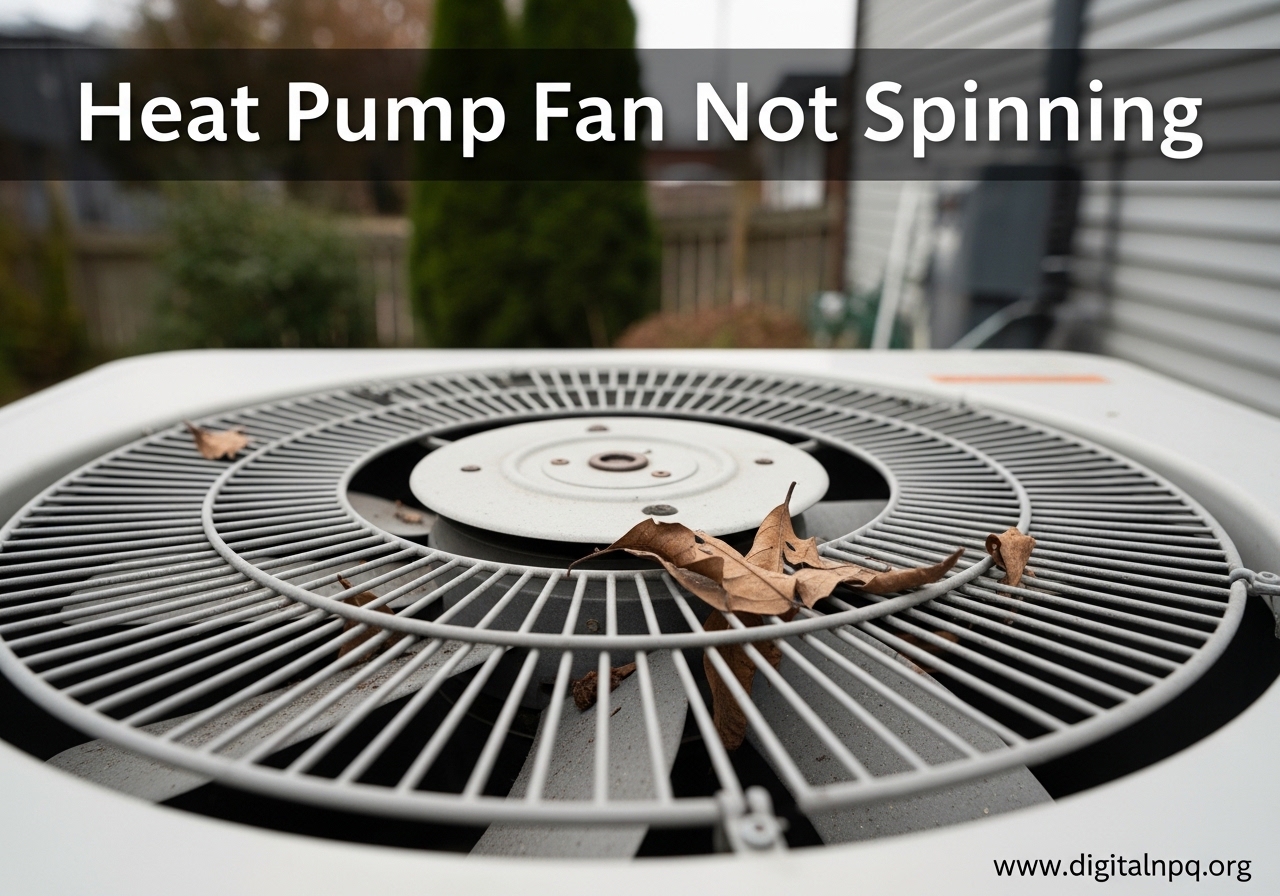
A heat pump fan not spinning is one of those problems you notice fast. Your home feels uncomfortable, the outdoor unit hums or clicks but the blades sit still, and your energy bill starts creeping up. I have dealt with this exact issue myself, and the good news is that many causes are surprisingly simple to diagnose and sometimes even fix on your own.
In this guide, our team walks you through the most common reasons your heat pump fan is not spinning, a clear step-by-step troubleshooting process, cost estimates for repairs, and honest advice on when you should tackle the job yourself versus calling an HVAC professional.
Quick Diagnosis: Which Fan Is the Problem?
Before diving into causes, it helps to know which fan you are dealing with. Most heat pump systems have two separate fans, and each one behaves differently depending on the mode your system is running in.
The outdoor fan (condenser fan) sits on top of or beside your outdoor unit. It draws air across the condenser coil to release heat in cooling mode and absorb heat in heating mode. When people search for a heat pump fan not spinning, this is usually the fan they mean.
The indoor blower fan sits inside your air handler or furnace cabinet. It pushes conditioned air through your ductwork and into your living spaces. If you feel no airflow from your vents but the outdoor unit seems to be running, the indoor blower is likely the culprit.
This guide focuses primarily on the outdoor condenser fan because it is the more common source of visible problems. However, many of the troubleshooting steps, especially those related to thermostats and circuit breakers, apply to both fans.
5 Common Causes of a Heat Pump Fan Not Spinning
Through our research across HVAC forums, manufacturer documentation, and real homeowner experiences, these five causes account for the vast majority of heat pump fan failures. I have ordered them roughly from simplest to most complex.
1. Debris and Physical Obstructions
This is the most common and easiest fix. Leaves, twigs, grass clippings, dirt buildup, and even small animal nests can physically jam the fan blades. In winter, ice and snow accumulation can freeze the blades in place.
How to check: Turn off power to the unit at the breaker and the outdoor disconnect switch. Shine a flashlight through the fan grille and look for any material wedged between the blades or around the motor housing. Spin the blade gently by hand. It should rotate freely with only slight resistance from the motor.
How to fix: Remove visible debris by hand or with a soft brush. Clear the area around the unit so there is at least two feet of clearance on all sides. If ice is the problem, do not chip at it with tools. Let the unit thaw naturally or use a gentle stream of lukewarm water.
2. Failed Capacitor
The capacitor is a small cylindrical component that gives the fan motor the electrical jolt it needs to start spinning and keep running. Capacitors degrade over time and eventually fail, especially after power surges or outages. This is the single most common electrical cause of a heat pump fan not spinning.
Key symptom: If you hear a humming sound coming from the outdoor unit but the fan is not turning, a bad capacitor is the prime suspect. The motor is trying to start but cannot overcome the initial resistance without that extra electrical boost.
How to check: After shutting off all power, locate the capacitor inside the electrical compartment of the outdoor unit. Look for visible signs of failure: a bulging or swollen top, oily residue leaking from the bottom, or a cracked casing. A multimeter with a capacitance setting can confirm whether the capacitor is holding its rated charge.
How to fix: Capacitor replacement is one of the more approachable DIY electrical repairs, costing between $20 and $50 for the part. However, capacitors store a dangerous electrical charge even after power is disconnected, so you must discharge them safely before handling. If you are not comfortable working with electrical components, this is a quick and relatively inexpensive fix for a professional, typically $150 to $350 including labor.
3. Tripped Circuit Breaker or Blown Fuse
Your heat pump has at least one dedicated circuit breaker in your electrical panel, and most outdoor units also have a local disconnect switch mounted on the wall nearby. A power surge, electrical fault, or simply an aging breaker can trip and cut power to the fan.
How to check: Open your main electrical panel and look for any breaker in the tripped position, which is usually between the ON and OFF positions. Also check the outdoor disconnect switch, which may be a pull-out block or a toggle switch.
How to fix: Flip the tripped breaker fully to OFF first, then back to ON. Reset the outdoor disconnect if needed. If the breaker trips again immediately or within a few minutes, do not keep resetting it. That indicates a deeper electrical problem, possibly a short circuit or a failing component drawing too much current. In that case, call an HVAC technician.
4. Bad Fan Motor
Fan motors wear out over time. Bearings dry up and seize, windings short out, or the motor overheats and fails permanently. A bad motor is a more serious issue that usually requires professional replacement.
Key symptoms: A grinding or screeching noise before the fan stopped, excessive heat coming from the motor housing, a burning smell, or the fan blade being very stiff or locked solid when you try to spin it by hand. If you hear a humming sound and the blade spins freely when you push it manually, that points more toward a capacitor issue. If the blade is stiff or will not budge at all, the motor bearings are likely shot.
How to fix: Fan motor replacement is not a typical DIY job for most homeowners. It involves dealing with high-voltage wiring, proper refrigerant handling awareness, and matching the new motor specifications exactly. Professional replacement typically costs $500 to $1,500 depending on your unit and your area. The part itself runs $100 to $400, and labor adds $200 to $500 or more.
5. Thermostat or Control Board Malfunction
Sometimes the fan itself is perfectly fine, but the signal telling it to run never arrives. A malfunctioning thermostat, a failed fan relay on the control board, or damaged wiring between the thermostat and the outdoor unit can all prevent the fan from spinning.
How to check: First, verify your thermostat is set to the correct mode (heat or cool) and the temperature setting is at least a few degrees above or below room temperature. Replace the thermostat batteries if you have not done so recently. Check for loose or corroded wire connections at both the thermostat and the outdoor unit.
How to fix: A simple thermostat battery replacement or setting correction resolves this category more often than you might expect. For relay or control board failures, the diagnostic work requires electrical testing with a multimeter and an understanding of the system wiring diagram. These repairs typically need a professional. Control board replacement costs $300 to $800 including parts and labor.
Cold Weather and Frozen Unit Issues
If you are dealing with a heat pump fan not spinning during cold weather, there are a few additional factors to consider. Ice and snow are obvious culprits, but the defrost cycle also plays a role that catches many homeowners off guard.
The defrost cycle is normal. Heat pumps in heating mode will periodically switch to a defrost cycle to melt frost buildup on the outdoor coil. During defrost, the outdoor fan actually stops running on purpose while the compressor continues. The unit may make a whooshing or reversing sound. This is normal behavior and usually lasts 5 to 15 minutes. If the fan comes back on after a short period, there is nothing wrong.
When ice is a real problem: If your outdoor unit is encased in a thick layer of ice, the fan blades are frozen solid, and it does not clear up after an hour or more, you have a real issue. First, turn off the breaker to the unit. Do not try to chip the ice away with sharp tools because you can damage the delicate coil fins. Let the unit thaw naturally, or carefully pour lukewarm water over the ice buildup. Once thawed, check for the root cause, which is often a failed defrost control or a low refrigerant charge that allowed excessive frost to accumulate.
Step-by-Step Troubleshooting Guide
Follow these steps in order to systematically diagnose why your heat pump fan is not spinning. Always turn off power at the breaker and outdoor disconnect before touching any components.
Step 1: Do a visual inspection. Walk around the outdoor unit and look for obvious problems. Is debris jamming the fan blades? Is the unit covered in ice? Do you see any visible damage to wires or components?
Step 2: Check the thermostat. Make sure it is set to the correct mode and the temperature is set several degrees above or below the current room temperature. Replace the batteries. Wait five minutes to see if the system responds.
Step 3: Reset the circuit breaker. Go to your electrical panel and find the breaker for the heat pump. Flip it fully off, then back on. Also check the outdoor disconnect switch near the unit. Turn the system on and observe the outdoor fan.
Step 4: Listen carefully. Turn the system on and stand near the outdoor unit. A humming sound without fan movement strongly suggests a failed capacitor. A clicking sound without any hum may indicate a control board or relay issue. Complete silence may mean no power is reaching the unit at all.
Step 5: Try the manual spin test. With power OFF, reach through the grille and give the fan blade a gentle push. It should spin freely and coast to a stop gradually. If it spins freely, the motor bearings are probably fine and the issue is likely electrical, such as a capacitor. If it feels stiff, gritty, or locked, the motor bearings are likely worn out.
Step 6: Inspect the capacitor. With power OFF, open the electrical access panel on the outdoor unit. Look at the capacitor for any bulging, leaking, or cracking. If you have a multimeter with capacitance testing, measure the capacitance and compare it to the rating printed on the side. A reading more than 10 percent below the rated value means the capacitor needs replacement.
Safety warning: Capacitors can hold a dangerous electrical charge even after the power is disconnected. Never touch the capacitor terminals with bare hands. Use an insulated screwdriver across the terminals to discharge it before handling, or better yet, let a professional handle it if you are unsure.
DIY vs Professional Repair: When to Call an HVAC Technician
Knowing what you can safely handle yourself and what needs a professional is critical for both your safety and your wallet. Here is a straightforward breakdown.
Safe for most homeowners (DIY):
- Clearing debris and obstructions from around the outdoor unit
- Resetting a tripped circuit breaker
- Checking and adjusting thermostat settings and batteries
- Gently thawing ice buildup with lukewarm water
- Visually inspecting the fan blade and spinning it by hand to test for resistance
Best left to a professional HVAC technician:
- Capacitor testing and replacement (unless you have electrical experience)
- Fan motor replacement
- Control board or relay diagnostics
- Refrigerant-related work (requires EPA certification)
- Any work involving high-voltage wiring
- Issues that persist after you have completed all the basic troubleshooting steps
Typical cost ranges: A service call from an HVAC technician usually runs $75 to $200 just for the visit. If the problem is a failed capacitor, expect $150 to $350 total. A fan motor replacement generally costs $500 to $1,500. Control board replacement runs $300 to $800. These prices vary based on your location, the brand of your heat pump, and the time of year. Repairs during peak summer or winter months often cost more due to demand.
Warranty note: If your heat pump is still under warranty, check with the manufacturer before attempting any DIY repairs. Some warranties are voided if non-certified individuals work on the system. The cost savings of a warranty-covered repair can easily exceed $1,000, so this is worth a phone call.
Preventing Future Fan Problems
Most heat pump fan issues are preventable with basic maintenance. After dealing with my own fan problems, I put together a short checklist that has kept my system running smoothly since.
Schedule an annual professional inspection. An HVAC technician can catch early signs of capacitor weakening, motor bearing wear, and refrigerant leaks before they become breakdowns. The best time to schedule this is in early spring or fall, before the peak heating or cooling season when technicians are swamped.
Keep the outdoor unit clear. Maintain at least two feet of open space around the unit on all sides. Trim back shrubs, remove leaf piles, and clear grass clippings after mowing. During winter, shovel snow away from the unit and brush off any accumulation on top.
Replace air filters regularly. A clogged filter forces the entire system to work harder, which can contribute to overheating and premature component failure. Check your filter monthly and replace it every one to three months depending on the type.
Listen for warning signs. Unusual sounds like grinding, screeching, or clicking are early warnings. A fan that starts slowly or hesitates before reaching full speed often indicates a weakening capacitor. Addressing these signs early can save you from a much more expensive repair down the road.
FAQ
Should a heat pump fan be spinning?
Yes, the outdoor fan on your heat pump should be spinning whenever the compressor is running in either heating or cooling mode. The only exception is during the defrost cycle in heating mode, when the fan stops for 5 to 15 minutes while the system melts frost off the outdoor coil. If the compressor is running but the fan is not spinning outside of defrost mode, you have a problem that needs attention.
Why is my heat pump running but not the fan?
The most common reasons are a failed capacitor, a bad fan motor, debris physically blocking the fan blades, or a tripped breaker cutting power to just the fan circuit. A humming sound from the outdoor unit with no fan movement usually points to a bad capacitor. A fan blade that feels stiff or locked when you try to spin it by hand typically means the motor bearings have failed.
Why is my heat pump humming but the fan not turning?
A humming sound with no fan movement is the classic symptom of a failed capacitor. The motor is receiving power and trying to start, but without the capacitor providing that initial electrical boost, it cannot overcome the starting resistance. This is one of the most common heat pump fan failures and is relatively inexpensive to fix, typically $150 to $350 for a professional repair.
How to tell if a heat pump fan motor is bad?
Several signs point to a bad fan motor: the fan blade is stiff or locked when you try to spin it by hand, you hear grinding or screeching sounds before the fan stopped, the motor housing feels excessively hot, or you notice a burning smell near the unit. You can also test the motor windings with a multimeter to check for open circuits or shorts. If the blade spins freely but the motor still will not run, the issue may be the capacitor instead.
Conclusion
A heat pump fan not spinning is a problem you should address quickly. Running the compressor without a functioning fan can cause overheating and permanent compressor damage, which is a far more expensive repair than any of the individual causes covered in this guide. Start with the simple checks: clear debris, verify your thermostat, reset the breaker, and listen for sounds that point to a specific cause. If the issue involves electrical components like the capacitor or motor, weigh the cost of professional repair against your comfort level with DIY electrical work. For most homeowners, the safest and most reliable path is to handle the basic troubleshooting yourself and call a licensed HVAC technician for anything beyond that.