
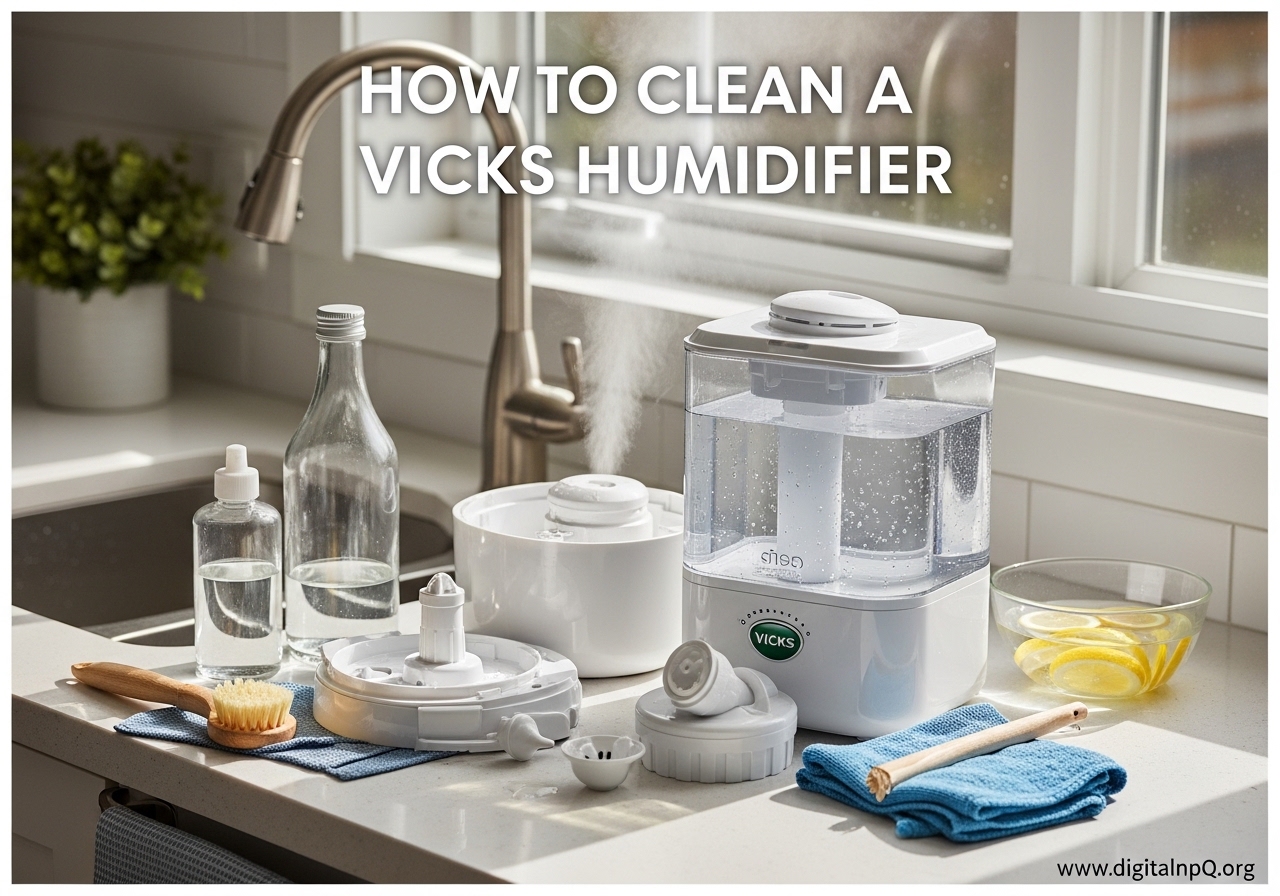
Cleaning your Vicks humidifier every week is the single most important thing you can do to keep it running well and the air in your home safe to breathe. I have been using Vicks humidifiers for over five years across multiple models, and I learned the hard way that skipping even one weekly cleaning can lead to stubborn mineral scale, musty odors, and bacteria growth that is tough to reverse. If you want to know how to clean a Vicks humidifier the right way, this guide walks you through every step with exact measurements, safety warnings, and model-specific tips that most manuals gloss over.
We will cover two cleaning processes: descaling with white vinegar to dissolve mineral deposits, and disinfecting with a bleach solution to kill mold and bacteria. I will also share model-specific instructions for warm mist, cool mist, ultrasonic, and vaporizer units, plus troubleshooting tips for the most common problems I see people run into on forums.
Why You Need to Clean Your Vicks Humidifier Regularly
A dirty humidifier does not just perform poorly. It can actually make the air in your room worse. When mineral deposits, mold, and bacteria build up inside the tank and internal components, the humidifier disperses those contaminants into the air you breathe. This is especially concerning for households with children, elderly family members, or anyone with allergies or respiratory issues.
Hard water accelerates mineral buildup on heating elements and nebulizers, which reduces mist output and can eventually stop your humidifier from working entirely. I have seen neglected Vicks warm mist units where the heating element became so encrusted with scale that it simply stopped producing steam.
The good news is that a consistent weekly cleaning routine takes about 20 to 30 minutes and prevents all of these issues. Regular cleaning also extends the life of your humidifier significantly. Many users on the BuyItForLife subreddit report their Vicks humidifiers lasting 5 to 10 years with proper maintenance.
Supplies You Will Need
Before you start, gather everything so you are not hunting for supplies mid-cleaning. Here is what I keep on hand for weekly Vicks humidifier maintenance:
- White distilled vinegar – for descaling and mineral deposit removal
- Unscented household bleach – for disinfection (1/2 teaspoon per 1/2 gallon water)
- Hydrogen peroxide (3%) – alternative disinfectant if you prefer not to use bleach
- Soft-bristled brush or old toothbrush – for scrubbing deposits without scratching
- Cotton swabs – for cleaning hard-to-reach areas like mist nozzles
- Toothpick – for clearing clogged vaporizer steam outlets
- Protective gloves – especially when handling bleach
- Clean, soft cloth – for wiping exterior surfaces
- Fresh water – preferably distilled or filtered to reduce future buildup
I store these in a small caddy near my cleaning supplies so weekly maintenance takes almost no setup time. If you have hard water in your area, consider keeping an extra bottle of vinegar on hand because you will use it more frequently.
Safety Precautions Before You Start
Safety comes first with any humidifier cleaning. These are non-negotiable steps I follow every single time:
Always unplug the humidifier before cleaning. Never clean a unit that is plugged in or has been recently running. The heating element in warm mist models gets extremely hot and can cause burns.
Never mix vinegar and bleach. Combining these two chemicals creates toxic chlorine gas. Always complete the descaling step with vinegar first, rinse thoroughly, then proceed to disinfection with bleach as a completely separate step.
Wear protective gloves when handling bleach solution. Even at the low concentration used for humidifier cleaning, prolonged skin contact can cause irritation.
Work in a well-ventilated area. Open a window or run a fan when using bleach, especially in small bathrooms or laundry rooms where fumes can accumulate.
How to Clean a Vicks Humidifier (Step-by-Step Weekly Method)
The weekly cleaning process has two parts: scale removal and disinfection. You should do both every week for the best results. The entire process takes about 30 minutes of active work plus soaking time.
Here is the complete weekly cleaning routine that works for most Vicks humidifier models:
Step 1: Disassemble the Humidifier
Unplug the unit and carefully take it apart. Remove the water tank, mist chimney or mist outlet, medicine cup if your model has one, and any removable internal parts. For cool mist models, remove the wicking filter and set it aside. Do not wash the filter with vinegar or bleach. Instead, rinse it under cool water or replace it if it appears discolored or has an odor.
Take a moment to inspect all parts for visible mold, mineral deposits, or discoloration. This tells you which areas need extra attention during cleaning.
Step 2: Scale Removal with White Vinegar
Scale removal is the first and arguably most important step in how to clean a Vicks humidifier. Mineral deposits from hard water accumulate on the heating element (warm mist models), the nebulizer (ultrasonic models), and inside the water tank over time. White distilled vinegar dissolves these deposits effectively.
For the water tank and removable parts: Fill the tank partially with undiluted white vinegar. Swirl it around to coat all interior surfaces, then let it sit for at least 20 minutes. For heavier buildup, extend the soak to 30 minutes or even overnight.
For the heating element (warm mist models only): Pour undiluted vinegar into the heating chamber until the element is fully submerged. Let it soak for 20 to 30 minutes. Use a soft-bristled brush to gently scrub away loosened deposits. Never use abrasive pads or sharp metal tools that could damage the coating on the heating element.
For the nebulizer (ultrasonic models): Place a few drops of vinegar directly on the nebulizer disc and let it sit for 5 minutes. Gently wipe with a cotton swab. Avoid applying pressure that could crack the disc.
After soaking, dump the vinegar and scrub any remaining deposits with a soft brush. Use cotton swabs for tight spaces like the mist nozzle and float paddle area. A toothpick works well for clearing clogged steam outlets on vaporizer models.
Step 3: Rinse Thoroughly After Descaling
Rinse every vinegar-treated part under running water until you can no longer smell vinegar. This is critical because any residual vinegar will mix with the bleach in the next step. I typically rinse each part two or three times to be safe.
Fill the tank with clean water, swirl, and dump. Repeat until the water runs clear and odor-free.
Step 4: Disinfecting Your Humidifier with Bleach Solution
Disinfection kills mold, mildew, and bacteria that vinegar alone cannot eliminate. This step is essential if you notice any musty smell, visible mold spots, or if the humidifier has sat unused for more than a week.
Mix the bleach solution: Combine 1/2 teaspoon of unscented household bleach with 1/2 gallon of cool water. This specific ratio comes directly from the official Vicks cleaning instructions and is safe for all their humidifier models.
Disinfect the tank: Pour the bleach solution into the water tank. Swirl it to coat all interior surfaces, making sure the solution reaches every corner. Let it sit for exactly 20 minutes.
For the base: Pour the remaining bleach solution into the humidifier base, ensuring all water-contact surfaces are covered. Let it stand for 20 minutes as well.
Do not use bleach on the wicking filter in cool mist models. The filter will degrade and need replacement sooner.
Step 5: Final Rinse and Reassembly
This is where patience pays off. Rinse every part that touched the bleach solution under running water at least two or three times. Any residual bleach smell will dissipate, but you want to be thorough. I fill the tank with water, shake it, dump it, and repeat until I cannot detect any bleach odor.
Wipe down the exterior of the humidifier with a damp, soft cloth. Let all parts air dry completely before reassembling. Reassemble the unit and fill the tank with fresh, cool water. Run the humidifier for a few minutes in a well-ventilated area to flush out any remaining traces of cleaning solution.
Model-Specific Cleaning Instructions
Different Vicks humidifier models have slightly different components that require specific attention. I have used several models over the years and these are the quirks worth knowing about.
Vicks Warm Mist Humidifiers (VWM845, V750 Series)
Warm mist models have a heating element that boils water to produce steam. This element is the most common spot for mineral buildup because the boiling process concentrates minerals. After weekly descaling with vinegar, check the heating element by touch. If it still feels rough or has visible white crust, soak it again for another 20 minutes.
The mist chimney on warm mist units can also accumulate scale. Remove it and soak it in vinegar alongside the tank. Use a bottle brush to scrub the inside of the chimney if needed.
Vicks Cool Mist Humidifiers (V4600, VUL545 Series)
Cool mist models use a wicking filter and fan system. The wicking filter is the main component to watch. It cannot be washed with vinegar or bleach. Instead, rinse it under cool water weekly and flip it over to extend its life. Replace the filter every 30 to 60 days depending on water hardness and usage.
The water tray and base of cool mist models tend to collect sediment and mildew. Remove the tray and soak it in vinegar, then use a soft brush to scrub the tray and the area around the float paddle.
Vicks Ultrasonic Humidifiers
Ultrasonic models use a small ceramic or metal disc called a nebulizer to create mist. This disc is delicate and prone to mineral buildup that reduces mist output. Clean the nebulizer gently with a cotton swab dipped in vinegar. Never scrub it with a brush or apply heavy pressure.
Some ultrasonic models also have a vapoPad door for scent pads. Wipe this area with a damp cloth and check for any residue buildup around the door seal.
Vicks Steam Vaporizers (V150, V188 Series)
Vaporizers are among the easiest Vicks models to clean because they have fewer parts. The main concern is mineral buildup around the steam outlets. Soak the unit in vinegar as described above and use a toothpick to clear any clogged holes in the steam outlet.
The medicine cup on vaporizers should be washed with warm soapy water after each use, especially if you use Vicks VapoSteam or similar products.
Deep Cleaning a Neglected Vicks Humidifier
If your Vicks humidifier has been sitting unused for months or has not been cleaned regularly, the standard weekly method might not be enough. I have rescued two neglected units using this deep cleaning approach.
Overnight vinegar soak: For heavy mineral encrustation on the heating element, fill the heating chamber with undiluted white vinegar and let it soak overnight (8 to 12 hours). This gives the acetic acid time to break down thick, hardened scale that a 20-minute soak will not touch.
Aggressive scrubbing: After the overnight soak, use a soft-bristled toothbrush to scrub the loosened deposits. Work in small circles and reapply vinegar as needed. For particularly stubborn spots, make a paste of baking soda and vinegar and apply it directly to the deposit before scrubbing.
Repeated disinfection: For units with visible mold or a strong musty smell, you may need to run the bleach disinfection step twice. Follow the same 1/2 teaspoon bleach per 1/2 gallon water ratio and 20-minute soak time, but repeat the entire process after the first round.
Know when to replace: If the heating element is pitted, rusted, or the mineral buildup has not improved after overnight soaking and scrubbing, it is time to replace the unit. A severely degraded heating element will not heat efficiently and can be a safety concern. Similarly, if the water tank has mold in areas you cannot reach even with a bottle brush, replacement is the safer option.
How to Clean a Vicks Humidifier Without Vinegar
Some people cannot tolerate the smell of vinegar or prefer not to use it. I get it. The smell can linger, especially in small spaces. Here are three effective alternatives:
Hydrogen peroxide (3%): Pour undiluted 3% hydrogen peroxide into the tank and let it sit for 30 minutes. It breaks down mineral deposits and kills bacteria without the strong smell of vinegar. Rinse thoroughly afterward.
Citric acid solution: Dissolve 1 tablespoon of citric acid powder in 1/2 gallon of warm water. Pour into the tank and soak for 20 to 30 minutes. Citric acid is excellent for dissolving mineral scale and is odorless. You can find it at most grocery stores or online.
Dish soap and warm water: For light weekly maintenance, a solution of mild dish soap and warm water works for warm steam vaporizers and general tank cleaning. It will not dissolve heavy mineral deposits, but it handles slime, grime, and light buildup well.
Note that hydrogen peroxide and citric acid are good for descaling but you should still use a bleach solution for disinfection if mold or bacteria is a concern. If you want to avoid bleach entirely, hydrogen peroxide serves as a reasonable (though slightly less potent) disinfectant at full 3% concentration with a 30-minute soak.
Troubleshooting Common Vicks Humidifier Cleaning Problems
Even with regular cleaning, you might run into persistent issues. These are the problems I see most often in forums and how to address them.
My Humidifier Still Smells Musty After Cleaning
A lingering musty smell usually means mold or bacteria is hiding in an area you missed. Check these spots: the underside of the tank cap, the water tank handle cavity, the seam where the tank meets the base, and any rubber gaskets or seals. Soak these parts in bleach solution for an additional 20 minutes. Run the unit for 10 minutes with fresh water to flush remaining odors.
If the smell persists after a second thorough cleaning, the mold may have penetrated plastic that cannot be fully cleaned. In that case, replacing the water tank or the entire unit is the safest choice.
Mineral Buildup Keeps Coming Back Quickly
If you live in an area with hard water, mineral deposits will return faster. Switch to distilled or filtered water in your humidifier to dramatically reduce buildup. Distilled water costs a bit more but saves significant cleaning time and extends the life of your humidifier.
Reduced Mist Output After Cleaning
If your humidifier produces less mist after cleaning, check for residual vinegar or bleach that was not fully rinsed. Also verify that the nebulizer (ultrasonic models) or heating element (warm mist models) is completely free of deposits. A partially clogged nebulizer disc or scaled heating element will reduce output significantly.
Heating Element Not Working After Scale Removal
This is a frustrating one. If you scrubbed the heating element too aggressively with an abrasive tool, the protective coating may be damaged. In some cases, the element can still function but will accumulate scale faster. If the element does not heat at all after cleaning, it likely needs replacement. Contact Vicks customer support or check if your model has a replaceable heating element assembly.
Storage Preparation Tips
When the dry season ends and you put your humidifier away for the summer, a proper storage cleaning prevents nasty surprises when you pull it out next winter. None of the top competitors cover this, but it makes a real difference.
Clean the unit using both the descaling and disinfection methods described above. Then let every part dry completely for 24 to 48 hours before storage. Store the humidifier in its original box or a sealed plastic bin in a dry location. Leave the water tank cap loosely attached so air can circulate and prevent mold growth.
When you take the humidifier out of storage next season, run a quick vinegar rinse and bleach disinfection before first use. Dust and residual moisture can create a perfect environment for mold during months of storage.
FAQ
How often should you clean your Vicks humidifier?
You should clean your Vicks humidifier once a week using both the descaling (vinegar) and disinfection (bleach) processes. If you use hard water, you may need to descale more frequently to prevent mineral buildup on the heating element or nebulizer.
Can I run vinegar through my Vicks humidifier?
No, you should not run vinegar through the humidifier while it is operating. The recommended method is to fill the tank or heating chamber with undiluted vinegar and let it soak for 20 minutes with the unit unplugged. Running vinegar through a powered unit can damage internal components and is not recommended by Vicks.
How do I get rid of mineral buildup in my Vicks humidifier?
Soak the affected parts in undiluted white vinegar for at least 20 minutes. For heavy mineral buildup, extend the soak to overnight. After soaking, scrub loosened deposits with a soft-bristled brush. Use cotton swabs for tight areas and a toothpick for clogged steam outlets. Rinse thoroughly with clean water.
What is the best way to clean a Vicks humidifier?
The best method is a two-step weekly process: first, soak removable parts and the heating chamber in undiluted white vinegar for 20 minutes to dissolve mineral scale. Second, disinfect with a solution of 1/2 teaspoon bleach per 1/2 gallon water for 20 minutes. Rinse all parts thoroughly between and after each step. Never mix vinegar and bleach.
How do I get the mold smell out of my Vicks humidifier?
First, clean the unit with the standard vinegar descaling method. Then disinfect with bleach solution (1/2 teaspoon per 1/2 gallon water) for 20 minutes, making sure the solution reaches all interior surfaces including under the tank cap and inside the handle cavity. Rinse thoroughly. If the smell persists after a second cleaning, the mold may have penetrated the plastic and replacement is recommended.
Can I still use my humidifier if it has mold?
No, you should not use a humidifier with visible mold. Running a moldy humidifier disperses mold spores into the air, which can cause respiratory issues, allergic reactions, and worsen asthma symptoms. Clean the unit thoroughly with the bleach disinfection method before using it again. If mold has penetrated hard-to-reach areas that cannot be fully cleaned, replace the unit.
How do I clean my Vicks humidifier without vinegar?
You can use 3% hydrogen peroxide as a substitute for vinegar. Pour it undiluted into the tank and soak for 30 minutes. Citric acid dissolved in warm water (1 tablespoon per 1/2 gallon) also works for descaling. For light cleaning, mild dish soap and warm water works on vaporizers and tanks. You should still use bleach for disinfection unless you use hydrogen peroxide at full strength for 30 minutes.
What is the easiest way to clean a humidifier?
The easiest approach is prevention: use distilled water to minimize mineral buildup and empty the tank daily. For the quickest weekly clean, pour undiluted vinegar into the tank, swirl to coat all surfaces, and let sit for 20 minutes while you do something else. Rinse, then do a quick bleach soak for another 20 minutes. The actual hands-on scrubbing time is only about 5 to 10 minutes.
Conclusion
Learning how to clean a Vicks humidifier properly is not complicated once you establish a routine. The two-step weekly process of descaling with vinegar and disinfecting with bleach solution takes about 30 minutes of hands-on time and prevents the vast majority of problems people experience.
The key habits that make the biggest difference are cleaning weekly without fail, using distilled water if you have hard water in your area, emptying the tank between uses, and letting the unit dry completely before storage. If you follow the steps in this guide, your Vicks humidifier will produce clean, healthy mist for years to come.
Start with the weekly routine, adjust for your specific model, and do not wait until you see mold or smell musty odors. Consistent maintenance is always easier than deep cleaning a neglected unit.