
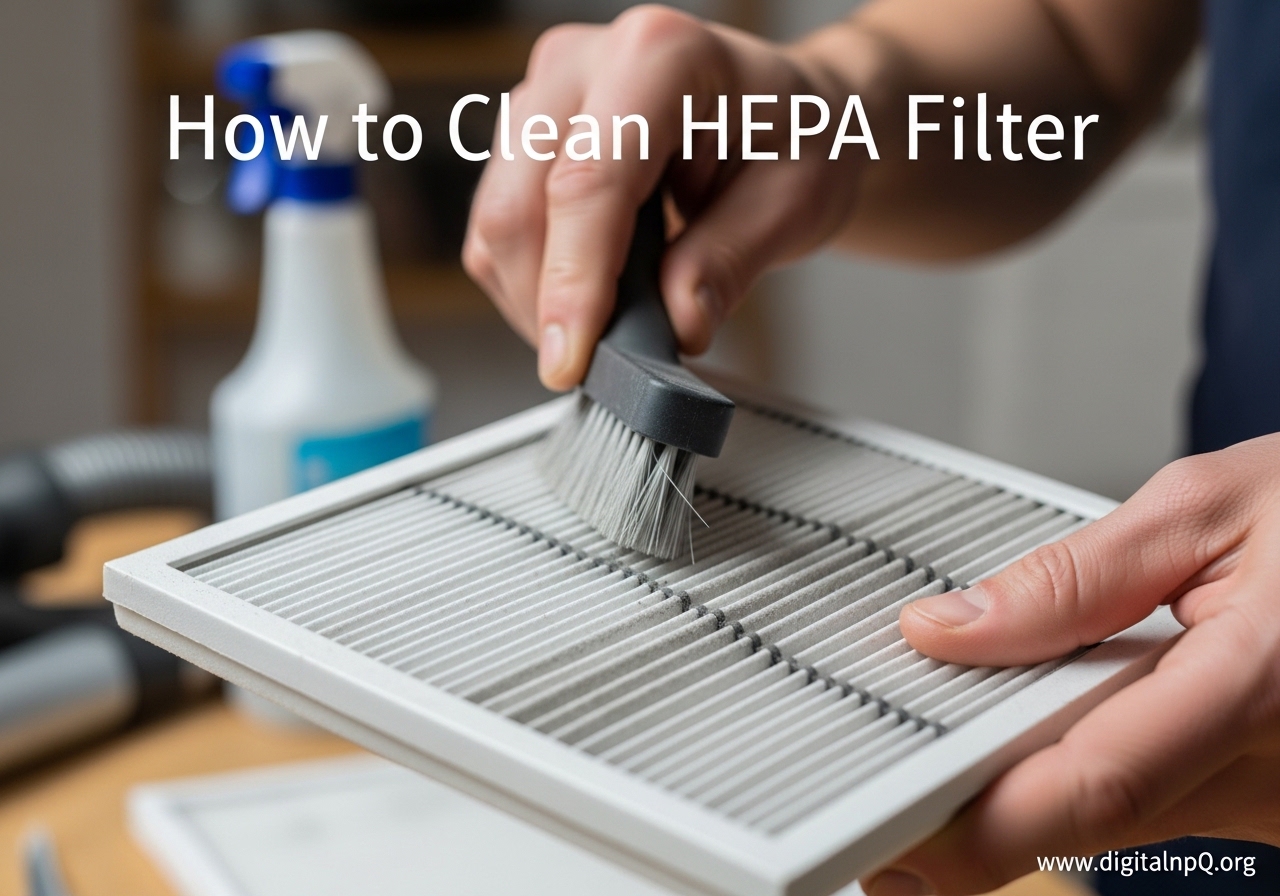
If you own an air purifier, vacuum cleaner, or HVAC system, chances are it relies on a HEPA filter to keep your air clean. Over time, those filters collect dust, pollen, pet dander, and other airborne particles until they look like they have had enough. That is when most people start wondering how to clean a HEPA filter without ruining it.
The answer is not as simple as you might think. Some HEPA filters are designed to be washed and reused, while others will lose their filtering ability the moment water touches them. Cleaning the wrong type of filter can actually make your air quality worse, not better.
In this guide, I will walk you through everything you need to know about HEPA filter cleaning. You will learn how to identify your filter type, the proper cleaning methods for each kind, and when you are better off simply replacing it. I have spent hours researching manufacturer guidelines, Reddit discussions from communities like r/CleaningTips and r/VacuumCleaners, and scientific test data to give you the most accurate advice possible.
What Is a HEPA Filter and How Does It Work
HEPA stands for High-Efficiency Particulate Air. To meet the true HEPA standard, a filter must capture at least 99.97% of airborne particles that are 0.3 microns in diameter. That includes dust mites, mold spores, pollen, pet dander, and even some bacteria.
The filter works through a dense mat of randomly arranged fibers, usually made from fiberglass. As air passes through this mesh, particles get trapped through four mechanisms: interception, impaction, diffusion, and electrostatic attraction. The fibers do not just act like a sieve. Instead, particles stick to the fibers through a combination of physical processes.
You will find HEPA filters in three main places around your home. Air purifiers use them to clean room air. Vacuum cleaners use them to trap fine dust that would otherwise blow back into your living space. And HVAC systems in some homes use HEPA-grade filtration to clean the air circulating through your ducts.
The reason HEPA filters are so effective is also the reason they eventually need attention. All those trapped particles build up over time, restricting airflow and reducing the filter’s ability to capture new contaminants. That is why knowing how to clean HEPA filter media properly, or when to replace it, matters so much for maintaining good indoor air quality.
Can You Clean a HEPA Filter
The short answer is: it depends entirely on what type of HEPA filter you have. This is the most important thing to understand before you do anything else.
Some HEPA filters are explicitly labeled as washable or permanent. These are designed with materials that can handle gentle water exposure without degrading. Manufacturers like Dyson, Levoit, and Shark produce certain models with washable HEPA filters, and their user manuals include specific cleaning instructions.
The majority of HEPA filters, however, are disposable. These use delicate fiberglass fiber mats that break down when exposed to water, soap, or physical agitation. If you wash a disposable HEPA filter, the fiber structure gets damaged. Test data from Smart Air Filters showed that washing disposable HEPA filters improved airflow but significantly reduced particle capture efficiency. In plain terms, air moved through faster but was not getting cleaned as well.
Reddit users on r/Frugal have shared similar experiences. Many tried washing disposable filters to save money, only to find their allergy symptoms returned within days. The filter might look cleaner, but its ability to trap microscopic particles was compromised.
So before you start any cleaning process, you need to figure out which type of filter you are dealing with. That brings us to the next section.
How to Identify Your Filter Type
Before you attempt any HEPA filter maintenance, take five minutes to identify exactly what kind of filter you have. This step saves you from potentially ruining an expensive component.
First, check the filter itself for labels. Many manufacturers print “washable,” “permanent,” “cleanable,” or “do not wash” directly on the filter housing or frame. If you see “do not wash” or no cleaning instructions at all, treat it as disposable.
Second, consult your device’s user manual. This is the most reliable source of information. The manual will tell you whether the HEPA filter in your specific model is washable and, if so, exactly how to clean it. If you lost the physical manual, most manufacturers offer PDF versions on their websites.
Third, look at the filter material. Washable HEPA filters tend to have a more plastic-like, durable mesh structure. Disposable filters usually have a soft, papery, or fabric-like pleated material that feels fragile to the touch.
Fourth, check the product specifications online. Search for your air purifier, vacuum, or HVAC model number followed by “HEPA filter type.” Product pages and replacement filter listings almost always specify whether the filter is washable or disposable.
When in doubt, assume the filter is disposable. It is always safer to replace a filter than to wash one that was never designed for water exposure. A damaged HEPA filter provides a false sense of security while letting particles pass right through.
How to Clean a HEPA Filter: Step-by-Step Instructions
Once you have confirmed your filter type, follow the appropriate cleaning method below. Each method targets a specific filter category, so make sure you are using the right one.
Method 1: Cleaning a Washable HEPA Filter
If your filter is confirmed washable, follow these steps carefully. I cannot stress enough how important it is to be gentle throughout this process.
Step 1: Turn off and unplug your device. Never attempt to remove a filter while the device is running. Unplugging prevents any accidental startups while your hands are inside the unit. This is a basic safety precaution that applies to air purifiers, vacuums, and HVAC systems alike.
Step 2: Remove the filter carefully. Open the access panel according to your device’s instructions. Slide or lift the filter out gently, keeping it level so you do not dump accumulated dust back into the device or onto your floor. Take note of the airflow direction arrow on the filter frame. You will need this when reinstalling.
Step 3: Tap off loose dust. Hold the filter over a trash bin and give it a few gentle taps. This removes the loose surface dust and makes the washing step more effective. Do not shake it aggressively or bang it against anything.
Step 4: Rinse under lukewarm running water. Use lukewarm water, never hot. Hold the filter at a slight angle and let water run through the pleats from the clean side to the dirty side. This pushes trapped particles out the way they came in rather than driving them deeper into the fibers. Keep the water pressure low. A gentle stream from your kitchen sink or a hose without a nozzle works best.
Step 5: Use mild detergent if needed. For filters with stubborn grime or oily residue, add a small amount of mild dish detergent to the water. Gently swish the filter around in the soapy water. Never scrub, brush, or use any abrasive tools on the filter media. Rinse thoroughly afterward to remove all soap residue, as leftover detergent can attract more dust and create odors.
Step 6: Air dry completely for at least 24 hours. This is the step most people get wrong. The filter must be 100 percent dry before it goes back into your device. Set it in a well-ventilated area, ideally near an open window or in a room with a fan running. Some manufacturers recommend 24 to 48 hours of drying time. Do not use a hair dryer, heat gun, or oven to speed things up. Heat warps the filter media and ruins its filtering ability.
Step 7: Reinstall the filter. Once completely dry, place the filter back into your device. Make sure the airflow direction arrow points the correct way. Close the access panel and plug the device back in.
Method 2: Cleaning a Non-Washable HEPA Filter
Cleaning a non-washable HEPA filter is limited to surface-level maintenance. You cannot truly restore a disposable filter to like-new condition, but you can extend its useful life slightly with careful techniques.
Option A: Gentle vacuuming. Use your vacuum cleaner’s soft brush attachment on the lowest suction setting. Lightly run the brush along the filter surface to pick up loose dust and debris. Move in the direction of the pleats and avoid pressing down. This removes some surface particulate matter but will not reach the particles trapped deeper in the fiberglass fibers. Forum users on r/VacuumCleaners report that vacuuming provides minimal but real improvement in airflow.
Option B: Compressed air at low pressure. If you have a can of compressed air or a compressor with adjustable pressure, you can blow loose dust out of the filter. Use the lowest pressure setting and hold the nozzle at least 6 inches away from the filter surface. Short bursts work better than a continuous stream. Always wear a mask and do this outdoors or in a well-ventilated area, because you are blowing fine particles into the air.
Important warning: Both of these methods provide only marginal improvement. They will not restore a clogged disposable filter to full efficiency. If your filter is heavily soiled or has been in use for 6 to 12 months, replacement is the only real solution.
Method 3: Cleaning by Device Type
Air purifier HEPA filters: Most standalone air purifiers use cylindrical or rectangular HEPA filters. Check the manual for washability. Models from Levoit, Coway, and Blueair often have pre-filters that are washable, while the HEPA component itself is usually disposable. Always clean the pre-filter first, as a dirty pre-filter forces the HEPA filter to work harder and clog faster.
Vacuum cleaner HEPA filters: Many modern vacuums, including models from Dyson and Shark, include washable HEPA filters. Dyson recommends rinsing their washable filters under cold water and letting them dry for at least 24 hours. Shark washable filters follow a similar process. For non-washable vacuum HEPA filters, tapping out loose dust is about the only maintenance option.
HVAC HEPA filters: Whole-house HEPA filters in HVAC systems are almost always disposable due to their size and the volume of air they process. Check the filter access panel, replace according to the manufacturer schedule, and do not attempt to wash them. The risk of mold growth from trapped moisture is too high in an HVAC system.
Signs Your HEPA Filter Needs Cleaning or Replacement
Your HEPA filter will tell you when it needs attention. You just need to know what to look for. Here are the most reliable indicators.
Reduced airflow. If your air purifier or vacuum feels like it is barely pushing air, a clogged filter is the most likely culprit. When the dense fiber mat fills with particles, air struggles to pass through. You will notice weaker suction in vacuums or less air output from purifiers.
Visible discoloration or dust buildup. A clean HEPA filter usually has a uniform white or off-white color. If it has turned gray, brown, or yellow throughout, it is loaded with captured particles. Surface dust you can see means the internal fiber structure is likely saturated as well.
Musty or unpleasant odors. HEPA filters can develop a sour or musty smell when they absorb moisture or when trapped organic material begins to break down. Reddit users on r/CleaningTips frequently ask about this issue. If your air purifier starts blowing air that smells worse than the room air, the filter is the problem.
Increased allergy symptoms. If you or your family members start experiencing more sneezing, congestion, or itchy eyes despite running your air purifier regularly, the filter may no longer be capturing allergens effectively. This is especially common during peak pollen seasons.
The device is running louder than usual. A clogged filter forces the motor to work harder, which often results in increased noise. If your purifier or vacuum suddenly sounds like it is straining, check the filter.
Manufacturer-recommended schedule has passed. Most manufacturers suggest replacing or cleaning HEPA filters every 6 to 12 months for air purifiers, every 6 months for vacuums, and every 3 to 6 months for HVAC systems. Even if the filter looks okay, exceeding these timelines means you are likely running at reduced efficiency.
Common Mistakes to Avoid When Cleaning HEPA Filters
Over the years of researching and testing HEPA filter maintenance, I have seen the same errors come up again and again. Avoiding these mistakes can save you from ruining a perfectly good filter.
Using hot water. Hot water softens and deforms the fiber materials in HEPA filters. Even washable filters should only be rinsed with lukewarm or cool water. The fiber structure depends on maintaining its precise arrangement, and heat compromises that structure.
Using high water pressure. Blasting your filter with a pressure washer or a high-pressure hose nozzle tears the delicate fiber mesh. One Reddit user on r/Roborock reported destroying their robot vacuum’s filter in seconds with a garden hose on its jet setting. Use a gentle stream of water, the kind you would use to rinse vegetables.
Scrubbing or brushing the filter media. Never use a brush, sponge, or cloth to scrub the pleated filter surface. The fiberglass or synthetic fibers are incredibly fine and fragile. Physical abrasion breaks the fibers and creates gaps where particles can pass through unfiltered.
Using harsh chemicals, bleach, or strong detergents. Chemicals degrade the filter material and leave residues that can be blown back into your air. Stick with a small amount of mild dish soap if absolutely necessary, and rinse thoroughly. Bleach is particularly damaging and should never be used on any HEPA filter.
Not letting the filter dry completely. Reinstalling a damp filter is one of the most common and most harmful mistakes. Moisture trapped in the filter creates an ideal environment for mold and bacteria growth. Instead of cleaning your air, a damp filter can actively contaminate it. Always allow a minimum of 24 hours of drying time, and honestly, 48 hours is better.
Washing a non-washable filter. I know replacement filters are expensive, and the temptation to wash a disposable one is real. But test data consistently shows that washing disposable HEPA filters damages the fiber structure and significantly reduces particle capture. You end up with a filter that looks clean but performs poorly.
Cleaning vs Replacing: When to Make the Call
This is the question I see most often in forums and comments. People want to know whether it is worth cleaning their filter or if they should just buy a new one. Here is how I think about it.
For washable HEPA filters: Clean them regularly according to the manufacturer schedule, which is usually every 1 to 3 months. Even washable filters do not last forever. Most have a lifespan of 1 to 3 years before the fiber structure degrades enough to warrant replacement. If you notice that cleaning no longer restores airflow or performance, it is time for a new filter.
For disposable HEPA filters: Do not try to wash them. Gentle vacuuming or compressed air can extend their life by a few weeks or maybe a month, but it is not a long-term solution. Plan to replace disposable filters every 6 to 12 months depending on usage and air quality conditions.
Cost considerations: Replacement HEPA filters for air purifiers typically range from moderate to expensive depending on the brand. Vacuum HEPA filters are usually less costly. HVAC HEPA filters fall somewhere in between. Cleaning a washable filter costs nothing but your time. But trying to extend the life of a disposable filter by washing it risks poor air quality and potential health effects, which can cost far more in the long run.
Environmental impact: This is a valid concern. Disposable HEPA filters create waste, and many end up in landfills. If environmental impact matters to you, look for devices that use washable or permanent HEPA filters when it is time to replace your current unit. Some manufacturers also offer recycling programs for used filters.
The bottom line: If your filter is washable, clean it regularly and replace it when performance drops. If it is disposable, budget for regular replacements and accept that as part of the cost of clean air. Trying to stretch a disposable filter too far is a false economy that affects your health and comfort.
FAQ
Can a HEPA filter be cleaned and reused?
Yes, but only if it is specifically labeled as washable or permanent by the manufacturer. Washable HEPA filters can be gently rinsed with lukewarm water, air dried for 24 to 48 hours, and reinstalled. Disposable HEPA filters should not be washed because water damages the fiberglass fiber structure and significantly reduces particle capture efficiency. Always check your filter label or device manual before attempting to clean any HEPA filter.
Can all HEPA filters be washed?
No. Only HEPA filters explicitly labeled as washable, permanent, or cleanable can be safely washed. The majority of HEPA filters on the market are disposable and use delicate fiberglass fibers that break down when exposed to water. Washing a disposable HEPA filter damages its internal structure, reducing its ability to capture particles. Check your manufacturer’s instructions to confirm whether your specific filter is washable.
How do I wash my HEPA filter?
To wash a washable HEPA filter, follow these steps: (1) Turn off and unplug the device. (2) Remove the filter carefully. (3) Tap off loose dust over a trash bin. (4) Rinse under lukewarm water from the clean side to the dirty side using low water pressure. (5) Use mild dish detergent if needed and rinse thoroughly. (6) Air dry completely for at least 24 hours in a well-ventilated area. (7) Reinstall the filter with the airflow arrow pointing the correct direction.
Can you clean a HEPA filter with compressed air?
Yes, compressed air can be used to remove loose dust from both washable and non-washable HEPA filters. Use the lowest pressure setting and hold the nozzle at least 6 inches from the filter surface. Apply short bursts rather than a continuous stream. This method only removes surface particles and will not fully restore a clogged filter. Always wear a mask and work in a well-ventilated area or outdoors to avoid inhaling blown particles.
How often should I clean my HEPA filter?
For washable HEPA filters, clean them every 1 to 3 months depending on usage and air quality conditions. If you have pets, live in a dusty area, or run your air purifier constantly, lean toward monthly cleaning. For non-washable filters, gentle vacuuming can be done every 2 to 3 months, but plan to replace them entirely every 6 to 12 months. Always follow your device manufacturer’s recommended maintenance schedule.
Can I use soap or bleach to clean my HEPA filter?
A small amount of mild dish soap is acceptable for washable HEPA filters if they have stubborn grime. Rinse thoroughly to remove all soap residue. Never use bleach, harsh chemical cleaners, or strong detergents on any HEPA filter. Chemicals degrade the filter fibers and leave residues that can be blown back into your air. Bleach is particularly damaging and can permanently ruin the filter’s ability to capture particles.
Conclusion
Learning how to clean a HEPA filter the right way comes down to one critical first step: knowing your filter type. If your filter is washable, a gentle rinse with lukewarm water followed by thorough air drying will keep it performing well for years. If it is disposable, resist the urge to wash it and plan for regular replacements instead.
Regular HEPA filter maintenance keeps your air purifier, vacuum cleaner, or HVAC system running efficiently and protects your indoor air quality. A clogged or damaged filter cannot do its job, and that directly affects the air you breathe every day.
Take a few minutes this week to check your filters. Look for the washable label, consult your device manual, and set a reminder for your next cleaning or replacement date. Your lungs will thank you for it.