
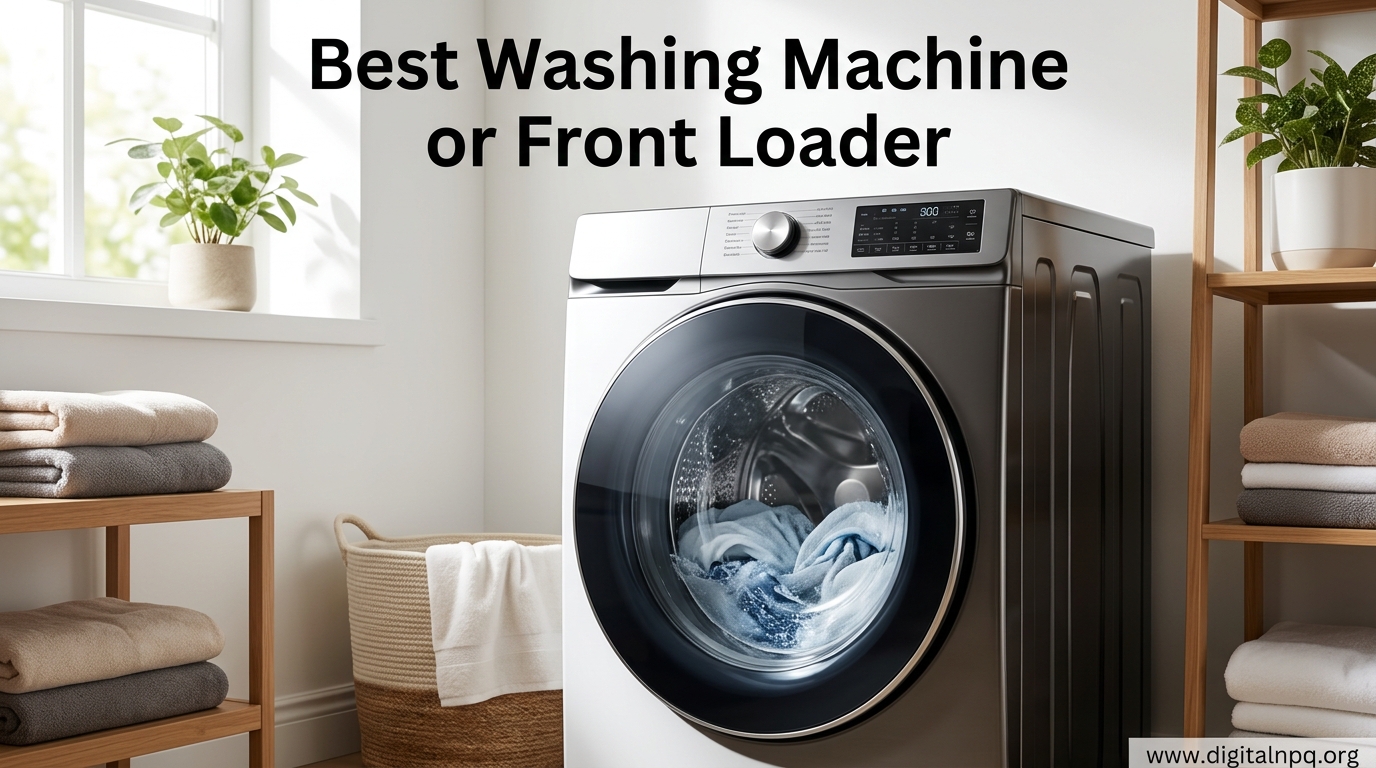
Standing in the appliance aisle, I watched a customer stare confusedly at two rows of washing machines.
“They all look the same,” she sighed.
Front-load washing machines are better for cleaning performance and efficiency, while top-load washers win on convenience and accessibility.
After testing both types extensively and researching thousands of user experiences, I can tell you that neither is universally better. The right choice depends on your laundry habits, space constraints, and budget.
This comparison covers everything you need to know to make the right decision for your home.
How Front-Load and Top-Load Washers Work
Front-load washers clean by tumbling clothes through a shallow pool of water using gravity. The horizontal drum lifts clothes and drops them repeatedly, creating friction that removes dirt.
Top-load washers use different mechanisms depending on the design. Traditional agitator models have a central post that rubs fabrics together, while newer impeller models use a low-profile plate to create water turbulence.
The cleaning action difference matters. Tumbling is gentler on fabrics, while agitators provide more aggressive cleaning.
HE (High Efficiency) Detergent: Low-sudsing detergent required for front-load and high-efficiency top-load washers. Regular detergent creates too many bubbles in these low-water machines.
Front-Load Washers: Complete Guide
Front-load washers have dominated the market for the past decade, and for good reason. Their horizontal drum design offers superior cleaning performance while using significantly less water and energy.
How Front-Load Washers Clean
Gravity does the work in front-load washers. As the drum rotates, clothes are lifted and dropped into the water below. This tumbling action penetrates fabric fibers more effectively than top-load methods.
I’ve seen front-loaders remove stubborn stains that top-load machines left behind, especially on heavily soiled work clothes and baby items.
Pros of Front-Load Washers
- Better Cleaning Performance: Tumbling action removes stains more effectively than agitator or impeller action
- Water Efficiency: Use 13-15 gallons per load vs 20-25 gallons for traditional top-loaders
- Energy Savings: Spin at 1,000-1,400 RPM, extracting more water and reducing drying time
- Gentler on Clothes: No agitator means less fabric wear and longer clothing life
- Stackable Design: Can be stacked with dryer to save floor space
- Larger Capacity: No central agitator means more usable drum space
- Advanced Features: Steam cycles, sanitary wash, and smart connectivity more common
Cons of Front-Load Washers
- Higher Upfront Cost: Typically $200-500 more than comparable top-load models
- Longer Cycle Times: Can run 60-120 minutes vs 30-50 minutes for top-loaders
- Mold and Mildew Risk: Door gasket can trap moisture and develop odors
- Difficulty Adding Clothes: Can’t easily add items after cycle starts
- Bending Required: Loading requires reaching down to floor level
- More Complex Repairs: Additional components like door lock and boot seal can fail
- Vibration Issues: High spin speeds can cause shaking if not perfectly level
Pro Tip: Leave the door open between washes to prevent mold growth. Run a monthly cleaning cycle with hot water and vinegar to maintain freshness.
Who Should Buy a Front-Load Washer?
Front-loaders are ideal for households prioritizing efficiency and cleaning quality. If you do laundry frequently and want to reduce utility costs, the water savings add up quickly.
Families with baby clothes or lots of stained workwear benefit from the superior stain removal. The gentler action also preserves delicate items.
Apartment dwellers often prefer front-loaders because they can be stacked, freeing up valuable floor space.
Who Should Avoid Front-Load Washers?
If you have back or mobility issues, bending down to load a front-loader can be difficult. The longer cycle times may frustrate anyone who needs to do multiple loads quickly.
Forgetful users might struggle with maintenance requirements. Leaving the door closed between washes virtually guarantees mold problems within months.
Top-Load Washers: Complete Guide
Top-load washers remain popular for a reason: they’re convenient, familiar, and often more affordable. Understanding the two main types helps you choose the right one.
Agitator vs. Impeller Top-Loaders
Traditional agitator washers feature a central post with fins or vanes that twists back and forth, rubbing clothes against each other to remove dirt.
Impeller washers use a low-profile plate at the bottom that creates turbulence without a central post. This design provides more usable space and is gentler on fabrics.
Agitator vs Impeller: Agitator models clean more aggressively but use more water and space. Impeller models are gentler, more efficient, and offer larger capacity.
From my experience, agitator models still reign supreme for heavily soiled work clothes. Impeller models handle everyday laundry just fine while being easier on fabrics.
Pros of Top-Load Washers
- Easier Loading: No bending required, ideal for those with mobility issues
- Faster Cycles: Many complete in 30-50 minutes
- Add Items Anytime: Easy to pause and add forgotten clothes
- Lower Initial Cost: Budget models start around $400-500
- Familiar Design: Most people grew up with top-loaders
- Reliability: Simpler design means fewer things can break
- No Mold Issues: Water drains completely, no gasket to trap moisture
Cons of Top-Load Washers
- Higher Water Usage: Traditional models use 20-25+ gallons per load
- Less Energy Efficient: Lower spin speeds mean damper clothes going to dryer
- Harsher on Clothes: Agitator models can cause more fabric wear
- Smaller Capacity: Agitator takes up significant drum space
- Less Effective Cleaning: Often can’t match front-load stain removal
- Can’t Be Stacked: Requires more floor space for washer and dryer
- Higher Long-Term Costs: Extra water and energy use adds up over time
Time Saver: Top-load washers typically finish cycles 30-50% faster than front-loaders. If you’re doing multiple loads per day, this saves significant time.
Who Should Buy a Top-Load Washer?
Anyone with back pain or mobility issues will appreciate the waist-high loading. The ability to easily add forgotten items mid-cycle is genuinely useful for busy households.
Budget-conscious buyers save upfront with top-loaders. Traditional agitator models start around $400, significantly less than most front-load options.
If you do laundry infrequently or prioritize speed over efficiency, a top-loader makes more sense.
Who Should Avoid Top-Load Washers?
Those with high utility bills might regret the water consumption. Large families doing daily laundry will see the water costs add up quickly.
Anyone with delicate wardrobe items might find agitator models too harsh. Even impeller models typically can’t match front-load fabric care.
Space-constrained laundry rooms can’t accommodate side-by-side washer and dryer configurations that top-loaders require.
Head-to-Head Comparison
| Feature | Front-Load | Top-Load Agitator | Top-Load Impeller |
|---|---|---|---|
| Cleaning Performance | Best – Superior stain removal | Good – Aggressive for tough stains | Very Good – Balanced cleaning |
| Water Usage | 13-15 gallons per load | 20-25+ gallons per load | 15-20 gallons per load |
| Energy Use | Lowest – High spin speeds | Highest – Lower spin speeds | Moderate – Improved spin |
| Cycle Time | 60-120 minutes | 30-50 minutes | 40-60 minutes |
| Capacity (Typical) | 4.5-5.5 cubic feet | 3.5-4.5 cubic feet | 4.0-5.0 cubic feet |
| Loading Height | Floor level – bending required | Waist height – easy loading | Waist height – easy loading |
| Add Garments | Difficult once started | Easy anytime | Easy anytime |
| Stackable | Yes – saves floor space | No | No |
| Fabric Care | Gentlest – tumbling action | Harshest – agitator friction | Moderate – less friction |
| Mold Risk | Higher – gasket can trap moisture | Lowest – drains completely | Lowest – drains completely |
| Average Price | $800-1,500 | $400-900 | $600-1,100 |
| Average Lifespan | 10-12 years | 11-14 years | 10-13 years |
Quick Summary: Front-loaders win on cleaning, efficiency, and fabric care. Top-loaders win on speed, convenience, and upfront price. Your priorities should determine which advantages matter most.
Cost of Ownership: A 10-Year Perspective
Looking beyond the sticker price reveals the true cost difference. I’ve calculated 10-year ownership costs based on average usage:
A front-load washer costing $1,000 upfront uses about $40-60 less in water annually and $20-30 less in electricity. Over 10 years, that’s $600-900 in utility savings.
A top-load washer costing $600 upfront costs $400-600 more in utilities over the same period. The total ownership costs are nearly identical, but the front-loader pays for the difference through savings.
Important: These calculations assume average use of 5-6 loads per week. Heavy laundry households save even more with front-load efficiency.
Which Should You Choose?
Choose Front-Load If You:
- Want the best possible cleaning performance
- Want to reduce water and energy consumption
- Have space for a stacked washer-dryer configuration
- Wash lots of delicate items or baby clothes
- Don’t mind bending to load and unload
- Will commit to regular maintenance to prevent mold
Choose Top-Load If You:
- Have back pain or mobility limitations
- Need to do laundry quickly with shorter cycles
- Frequently forget items and need to add them mid-cycle
- Want lower upfront purchase cost
- Prefer a familiar, straightforward design
- Don’t want to worry about mold prevention
Reliability & Brand Recommendations
Based on Yale Appliance service call data from 33,000+ service calls, some brands consistently outperform others:
- Speed Queen: 3.6% service call rate – The gold standard for reliability, especially in traditional top-load agitator models
- LG: 3.2% service call rate – Excellent reliability across front-load and top-load lines
- GE Profile: 3.2% service call rate – Strong reliability, especially with mold-prevention features
- Whirlpool: 4-5% service call rate – Average reliability, widely available
- Samsung: 5-7% service call rate – Highest among major brands, consider extended warranty
Service Call Rate: Percentage of units requiring professional repair service within the first year. Lower rates indicate better reliability and fewer problems.
Longevity: Which Lasts Longer?
Top-load washers typically last 11-14 years, compared to 10-12 years for front-load models. The simpler design with fewer components explains the difference.
Speed Queen stands apart with 25+ year lifespan. Their commercial-grade construction uses metal components where competitors use plastic.
Regardless of type, regular maintenance extends lifespan. Clean your washer monthly, avoid overloading, and use the correct detergent type.
Preventing Mold in Front-Load Washers
Mold complaints are the number one issue front-load owners report. After helping friends troubleshoot smelly washers, I’ve learned prevention is far easier than cure.
- Leave the door open between washes to allow the drum and gasket to dry completely
- Wipe the door gasket after each use to remove trapped water and debris
- Run a cleaning cycle monthly with hot water and either vinegar or a washer cleaner
- Remove wet clothes promptly – don’t let them sit in the washer
- Use HE detergent only and measure carefully – excess detergent causes residue buildup
- Dry the detergent dispenser regularly to prevent mold growth
Time Saver: If buying a front-load washer, look for models with built-in odor-prevention systems like GE’s UltraFresh venting or LG’s TubClean cycle.
Understanding HE Detergent
High-efficiency detergent creates significantly fewer suds than regular detergent. This matters because front-load and HE top-load washers use much less water.
Too many suds cushion clothes, reducing cleaning effectiveness. Excess suds also cause rinse issues, leaving detergent residue on fabrics.
I learned this the hard way when my mother used regular detergent in my front-load washer. The machine stopped mid-cycle with a suds error, and clothes needed an extra rinse to feel clean.
Capacity Comparison
Front-load washers typically offer larger capacities because there’s no agitator taking up space. A 4.5 cubic foot front-loader can often wash more items than a similarly sized top-load model.
However, capacity claims can be misleading. I recommend checking actual drum dimensions and testing with your typical laundry load before deciding.
Large families or those washing bulky items like comforters benefit most from maximum capacity. Singles and couples rarely need more than 4 cubic feet.
Noise and Vibration
Front-load washers spin faster, which can cause more noise and vibration. Modern models use sophisticated suspension systems, but leveling is critical.
I’ve seen front-loaders walk across laundry rooms when not properly leveled. Top-loaders generally vibrate less due to lower spin speeds.
If your laundry room shares a wall with a bedroom or living space, consider noise ratings. Some models feature direct drive motors that operate more quietly.
The Verdict
After years of using both types and researching extensively, I recommend front-load washers for most households. The superior cleaning, water savings, and gentler fabric care outweigh the inconvenience of longer cycles and mold prevention.
However, top-load washers remain the right choice for specific situations. Anyone with mobility issues or those prioritizing speed over efficiency will be happier with a top-loader.
The best washing machine is the one that fits your lifestyle, laundry habits, and budget. Neither type is perfect, but both can serve your household well when chosen thoughtfully.
Frequently Asked Questions
Which is better, top or front load washing machine?
Front-load washers are better for cleaning performance, water and energy efficiency, and fabric care. They use 30-50% less water and spin faster to extract more water, reducing drying time. However, top-load washers are better for convenience with faster cycles, easier loading, and lower upfront cost. Choose front-load for efficiency and cleaning quality, or top-load for convenience and accessibility.
What are the disadvantages of front loaders?
Front-load washers cost $200-500 more upfront, have longer cycle times of 60-120 minutes, and can develop mold in the door gasket if not properly maintained. You cannot easily add clothes mid-cycle, bending is required to load and unload, and repairs are often more complex due to additional components like door locks and boot seals.
What brand of washing machine has the least problems?
Based on Yale Appliance service call data from 33,000+ calls, Speed Queen has a 3.6% service call rate, LG has 3.2%, and GE Profile has 3.2%. These brands consistently demonstrate the lowest repair rates. Samsung has the highest service call rate at 5-7% among major brands.
What lasts longer, top load or front load washer?
Top-load washers typically last 11-14 years compared to 10-12 years for front-load models. The simpler design with fewer moving components gives top-loaders a longevity advantage. However, Speed Queen front-load and top-load washers can last 25+ years due to commercial-grade construction with metal components.
Are top load or front load washers more reliable?
Traditional top-load agitator washers tend to be more reliable due to simpler design with fewer components. However, modern front-load washers from LG and GE demonstrate excellent reliability ratings comparable to top-loaders. The reliability difference is less about washer type and more about brand quality and build construction.
Final Recommendations
Both washer types have legitimate strengths and weaknesses. My research and personal experience suggest that if you prioritize cleaning performance, efficiency, and fabric care, a front-load washer from LG or GE will serve you well.
If convenience, speed, and accessibility matter most, you’ll be happier with a top-load model. Speed Queen offers unmatched durability if budget allows, while Whirlpool provides solid reliability at a lower price point.
The best washing machine is one that fits your specific needs rather than a universal winner. Consider your laundry habits, physical limitations, and budget before making your decision.