
If your dehumidifier has started smelling musty or you have noticed dark spots forming inside the water bucket, it is past time for a cleaning. I learned this the hard way after ignoring my basement unit for three months and ending up with a slimy, foul-smelling mess that took twice as long to fix.
Learning how to clean a dehumidifier is one of those simple maintenance tasks that takes about 15 to 20 minutes but saves you from mold problems, higher energy bills, and a unit that stops pulling moisture from the air. This guide covers every component you need to tackle, from the water bucket to the coils, with specific cleaning solutions and techniques that actually work.
Whether you have a portable unit for a single room or a larger model running in your basement, the cleaning process is the same. I will walk you through it step by step, including the cleaning frequency that keeps problems from coming back.
Why You Need to Clean Your Dehumidifier Regularly
A dehumidifier pulls moisture from the air, and all that water passes through a collection bucket, over coils, and through a filter. Over time, that warm and wet environment becomes the perfect breeding ground for mold, mildew, and bacteria. If you do not clean your dehumidifier, you end up blowing those contaminants right back into your home.
The problems go beyond just a musty smell. Dust and debris clogging the air filter force the compressor to work harder, which drives up your electricity bill and shortens the life of the unit. I have seen reports of energy consumption increasing by 15 to 25 percent when filters and coils are left dirty for months.
Mold in the water bucket is the most common issue people mention in forums. Users on Reddit report that a slimy film develops on the bucket walls within weeks of regular use, even when the unit runs only a few hours a day. Yellow spots at the bottom of the bucket are usually the first visible sign that something is growing.
If anyone in your household has allergies, asthma, or respiratory sensitivities, a dirty dehumidifier can actually make air quality worse instead of better. Regular dehumidifier cleaning prevents all of these problems and keeps the unit working at full capacity.
What You Need to Clean a Dehumidifier
Gather your supplies before you start so you are not running to the kitchen mid-cleaning. Here is what I keep in my cleaning kit for this job:
- White vinegar (for general sanitizing and mold removal)
- Mild liquid dish soap
- Soft cloth or microfiber towels
- Vacuum cleaner with brush attachment
- Spray bottle
- Soft-bristled toothbrush (for tight corners in the bucket)
- Non-abrasive sponge
- Optional: AC coil foaming cleaner (for deep cleaning the evaporator coils)
- Optional: Mild bleach (only for heavy mold on the bucket)
For cleaning solutions, you will want two mixtures ready. A 50/50 blend of white vinegar and water in a spray bottle handles most surfaces. For sanitizing a heavily molded bucket, use 90 percent water and 10 percent bleach. Never mix vinegar and bleach together, as the combination produces toxic fumes.
How to Clean a Dehumidifier: Step-by-Step Guide
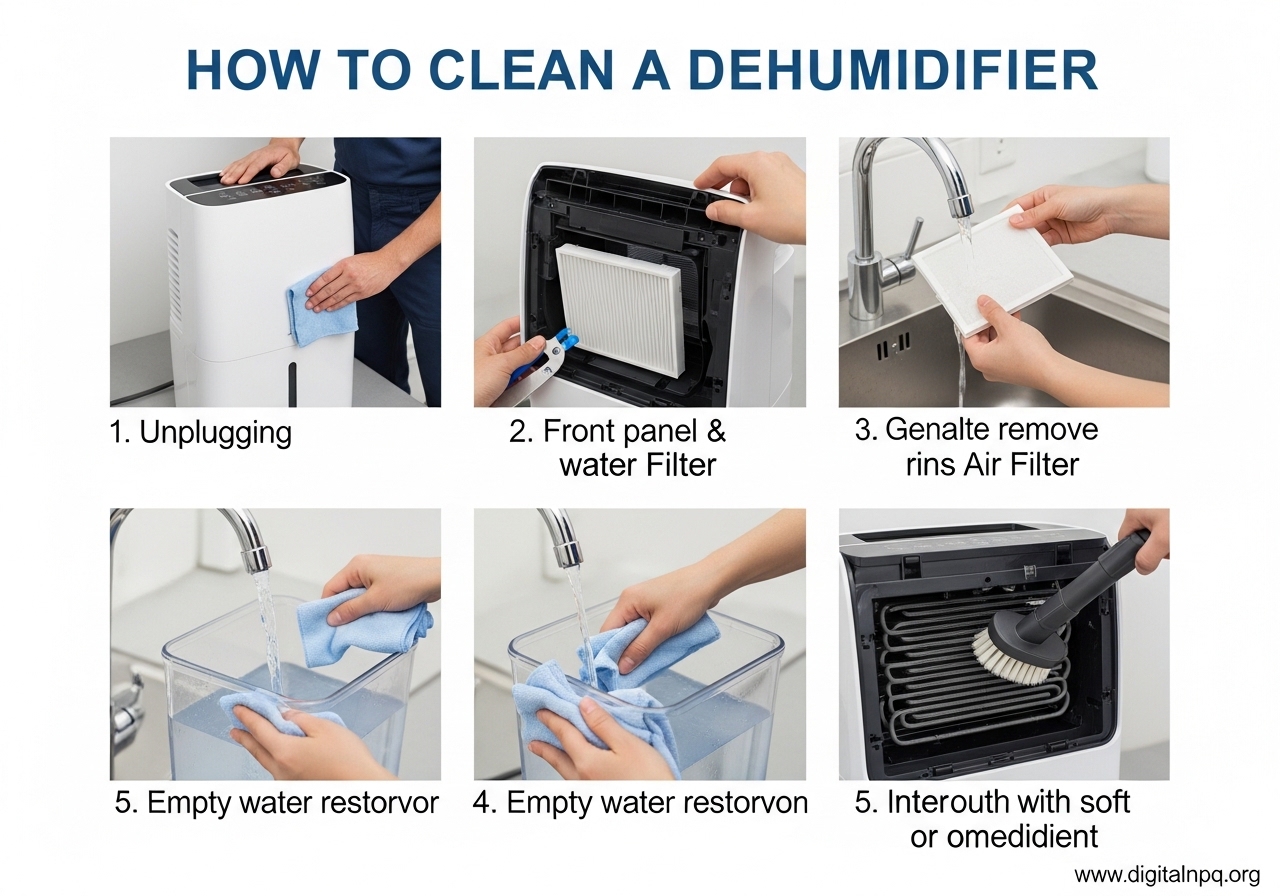
This is the full cleaning process I follow every month on my own unit. Each step targets a specific component. The entire routine takes about 15 to 20 minutes if you stay on top of it regularly.
Step 1: Unplug and Disassemble
Always start by turning off your dehumidifier and unplugging it from the wall. This is a safety step you should never skip since you will be working around water and electrical components. Pull the unit away from the wall so you have room to work on all sides.
Remove the water collection bucket first and set it in a sink or bathtub. Take out the air filter, which usually slides out from the back or side of the unit. If your model has a removable front grille, take that off too. Check your owner’s manual if you are unsure which parts detach on your specific model.
Step 2: Clean the Water Bucket
The water bucket is where most of the gunk accumulates. Empty any remaining water into a drain. Add a few drops of mild dish soap and warm water, then scrub the inside with a non-abrasive sponge. Pay extra attention to the bottom corners where slime tends to build up.
For stubborn mold or yellow staining, use the soft-bristled toothbrush to scrub the tight corners and edges. Soak the bucket for 15 to 20 minutes in a solution of 90 percent water and 10 percent bleach if the mold is heavy. After soaking, scrub again, then rinse thoroughly with clean water until no bleach smell remains.
Dry the bucket completely with a clean towel before putting it back. Any leftover moisture encourages mold to return faster. This is the step where forum users say they see the biggest difference in odor control.
Step 3: Wash or Replace the Air Filter
The air filter catches dust, pet hair, and airborne particles before they reach the coils. A clogged filter chokes airflow and forces the unit to run harder. If you have never checked yours, it might be packed with a thick layer of gray dust by now.
For a reusable filter, rinse it under warm running water. If it is really dirty, soak it in warm soapy water for 10 minutes, then rinse clean. Let the filter air dry completely before reinserting it. A wet filter will just grow mold faster.
Some models use disposable paper filters that you cannot wash. If yours is that type, vacuum off the surface dust first. Replace the filter entirely if it looks discolored, torn, or packed with debris that vacuuming cannot remove. Most manufacturers recommend replacing disposable filters every 3 to 6 months depending on usage.
Step 4: Clean the Evaporator and Condenser Coils
The coils are the heart of your dehumidifier, and they collect dust and grime that reduce cooling efficiency. This is where a little extra care pays off in both performance and energy savings.
Start by using your vacuum’s brush attachment to gently remove loose dust from the coil fins. Work in an up-and-down motion rather than side to side to avoid bending the delicate aluminum fins. If you have access to both the evaporator and condenser coils, clean both sets.
For a deeper clean, spray an AC coil foaming cleaner directly onto the coils. Hardware stores carry foaming coil cleaners specifically designed for this purpose. Let the foam sit for 5 to 10 minutes according to the product directions, then rinse with a gentle stream of water. Do not use high pressure, which can bend the fins.
Forum users frequently recommend this foaming cleaner approach, and hardware store staff confirm it is safe for dehumidifier coils. Just avoid aggressive scrubbing or disassembling the coil housing, as that can void your warranty.
Step 5: Clear the Drain Hose
If your dehumidifier uses a continuous drain hose instead of (or in addition to) the bucket, that hose needs attention too. Mineral deposits and biofilm can build up inside the hose over time, causing blockages and backups.
Disconnect the drain hose from both ends. Flush it with hot water from a faucet or garden hose. For stubborn clogs, run a solution of equal parts vinegar and warm water through the tube and let it sit for 15 minutes before flushing again with clean water.
Reconnect the hose and make sure the connections are tight. A loose drain hose connection can leak water onto your floor, which defeats the purpose of the unit.
Step 6: Wipe Down the Exterior and Grilles
Grab your spray bottle with the vinegar and water solution. Wipe down the entire exterior casing, paying close attention to the air intake grille and outlet vents. Dust on the grille restricts airflow just like a dirty filter does.
Use a damp cloth to wipe the louvers and any visible fan blades through the grille openings. Do not spray liquid directly into the unit. Spray the cloth first, then wipe. This prevents water from reaching electrical components inside.
Finish by wiping the power cord and checking that the plug is clean and dry. This quick exterior wipe takes about two minutes but makes a real difference in how much dust the unit pulls in during operation.
Step 7: Reassemble and Test
Once every component is completely dry, put everything back together. Reinsert the air filter, slide the water bucket into place, and reconnect the drain hose if you use one. Move the unit back to its operating position.
Plug it in and turn it on. Let it run for about 10 minutes and check that water is collecting in the bucket properly. Listen for any unusual sounds, which could indicate a loose part or a coil fin that got bent during cleaning. If everything sounds normal and water starts collecting, your cleaning is complete.
Vinegar vs Bleach: Choosing the Right Cleaning Solution
One of the most common questions about cleaning a dehumidifier is whether to use vinegar or bleach. The short answer is that both work, but they serve different purposes and one is safer for regular use.
White vinegar is my go-to for routine cleaning. A 50/50 mix of vinegar and water kills most mold species and bacteria, dissolves mineral deposits, and is safe to use on all surfaces inside the unit. It is also non-toxic, so you do not have to worry about chemical residue. Some users on home improvement forums prefer vinegar specifically because it leaves no harmful residue and you can run the unit right after cleaning with it.
Bleach is stronger and better suited for heavy mold infestations in the water bucket. Use a 90 percent water and 10 percent bleach solution only on the removable bucket, never on the coils or internal components. Always rinse the bucket thoroughly after using bleach and let it dry completely. Never mix bleach with vinegar or any other cleaning product.
For the coils, skip both vinegar and bleach. Use a dedicated AC coil foaming cleaner instead. These products are formulated to dissolve grime without corroding the aluminum fins or leaving residue that interferes with heat transfer.
How Often Should You Clean Your Dehumidifier
Cleaning frequency depends on how hard your unit works and where it operates. Here is the schedule I recommend based on my own experience and manufacturer guidelines:
For the water bucket, give it a quick rinse and wipe every week if your unit runs daily. In humid climates or during peak summer months, that bucket fills fast and the warm stagnant water grows mold quickly. A weekly rinse prevents slime from getting established.
For the full cleaning covering all components, do it once a month during periods of heavy use. This means cleaning the filter, wiping the coils, clearing the drain hose, and sanitizing the bucket. Monthly dehumidifier maintenance keeps efficiency high and prevents odors.
For a deep cleaning with coil foaming cleaner, do it once every three months or at the start and end of the humid season. This handles the grime that builds up on coils over time and that regular vacuuming cannot fully remove.
If your dehumidifier runs in a dusty environment like a basement or workshop, check and clean the filter more often. Some users find they need to clean their filter every two weeks in dusty conditions. The filter indicator light on newer models takes the guesswork out of this by reminding you after a set number of operating hours.
Troubleshooting Common Dehumidifier Problems After Cleaning
Sometimes you finish cleaning and the unit still does not perform as expected. Here are the most common issues and what to do about them.
If your dehumidifier still smells bad after cleaning, the odor is likely coming from the internal components you cannot easily reach. Run a cycle with the bucket filled halfway with a vinegar and water solution, then rinse and dry. If the smell persists, the mold may be inside the fan housing or on internal ducts that require professional servicing.
If water is not collecting after cleaning, check that the bucket is seated properly in its slot. Many units have a safety switch that prevents operation when the bucket is not correctly positioned. Also verify that the room humidity is above the unit’s target setting. If the air is already dry, the unit will not extract additional moisture.
If the unit runs but collects very little water, the coils may not be cooling properly. This can indicate a refrigerant issue or a compressor problem, not a cleaning issue. At this point, professional service or replacement may be needed.
If mold keeps returning to the bucket within days of cleaning, try adding a small amount of vinegar to the bucket between cleanings. Some users report that a tablespoon of vinegar in the collection tank creates an environment that slows mold growth significantly.
How to Store a Dehumidifier for the Season
If you only use your dehumidifier during the humid months, proper storage prevents problems when you pull it out next season. This is a step many people skip, and it leads to moldy, musty units in the spring.
Clean the unit thoroughly using the full process above before storing it. Make absolutely sure every component is bone dry, especially the bucket and filter. Any moisture left inside will grow mold over months of storage.
Remove the filter and store it separately in a dry location. Store the unit upright in a cool, dry place. Cover it with a breathable cloth or the original packaging to keep dust off. Do not use plastic wrap, which traps moisture inside. When you set the unit up again next season, give it a quick wipe-down and check the filter before turning it on.
FAQ
What is the best way to clean inside a dehumidifier?
Unplug the unit first, then remove and wash the water bucket with dish soap and warm water. Take out the air filter and rinse or replace it. Vacuum the coils with a brush attachment, then apply foaming coil cleaner for a deeper clean. Wipe the exterior and air grilles with a vinegar and water solution. Let all parts dry completely before reassembling and turning the unit back on.
Can I run vinegar through my dehumidifier?
You should not pour vinegar directly into the dehumidifier’s internal components or reservoir while it is running. Instead, use a vinegar and water solution (50/50 mix) to wipe down the bucket, exterior, and removable parts. You can add a small amount of vinegar to the collection bucket between cleanings to slow mold growth, but do not run concentrated vinegar through the unit’s operating system.
Do dehumidifiers need to be cleaned?
Yes, dehumidifiers absolutely need regular cleaning. The moist, warm environment inside a dehumidifier is ideal for mold, mildew, and bacteria growth. Without cleaning, the unit blows those contaminants back into your air. A dirty filter and coils also reduce efficiency, increase energy consumption, and shorten the lifespan of the unit. Monthly cleaning during heavy use keeps the unit working properly.
Should you use a dehumidifier if you have COPD?
A clean dehumidifier can benefit people with COPD by maintaining healthy humidity levels between 30 and 50 percent, which reduces dust mites and mold in the home. However, a dirty dehumidifier can worsen respiratory symptoms by circulating mold spores and bacteria. If you have COPD, clean your dehumidifier monthly at minimum and consider using a continuous drain to avoid standing water in the bucket. Consult your doctor for personalized advice.
Conclusion
Knowing how to clean a dehumidifier is not complicated, but it does require consistency. The seven-step process I outlined above takes less than 20 minutes once you get the hang of it. Unplug, clean the bucket, wash the filter, tackle the coils, clear the hose, wipe the exterior, and reassemble. That is the entire routine.
The real payoff comes from doing it regularly. A monthly cleaning schedule during humid months prevents mold from taking hold, keeps your air fresh, and helps the unit run efficiently for years. If you have been putting it off, start with the bucket and filter today. Those two steps alone make a noticeable difference in how your dehumidifier performs and smells.
Seasonal storage matters just as much as active cleaning. A clean and dry unit put away properly in the fall will be ready to go without any nasty surprises when humidity returns in the spring. Treat your dehumidifier right, and it will keep your home comfortable and mold-free season after season.