
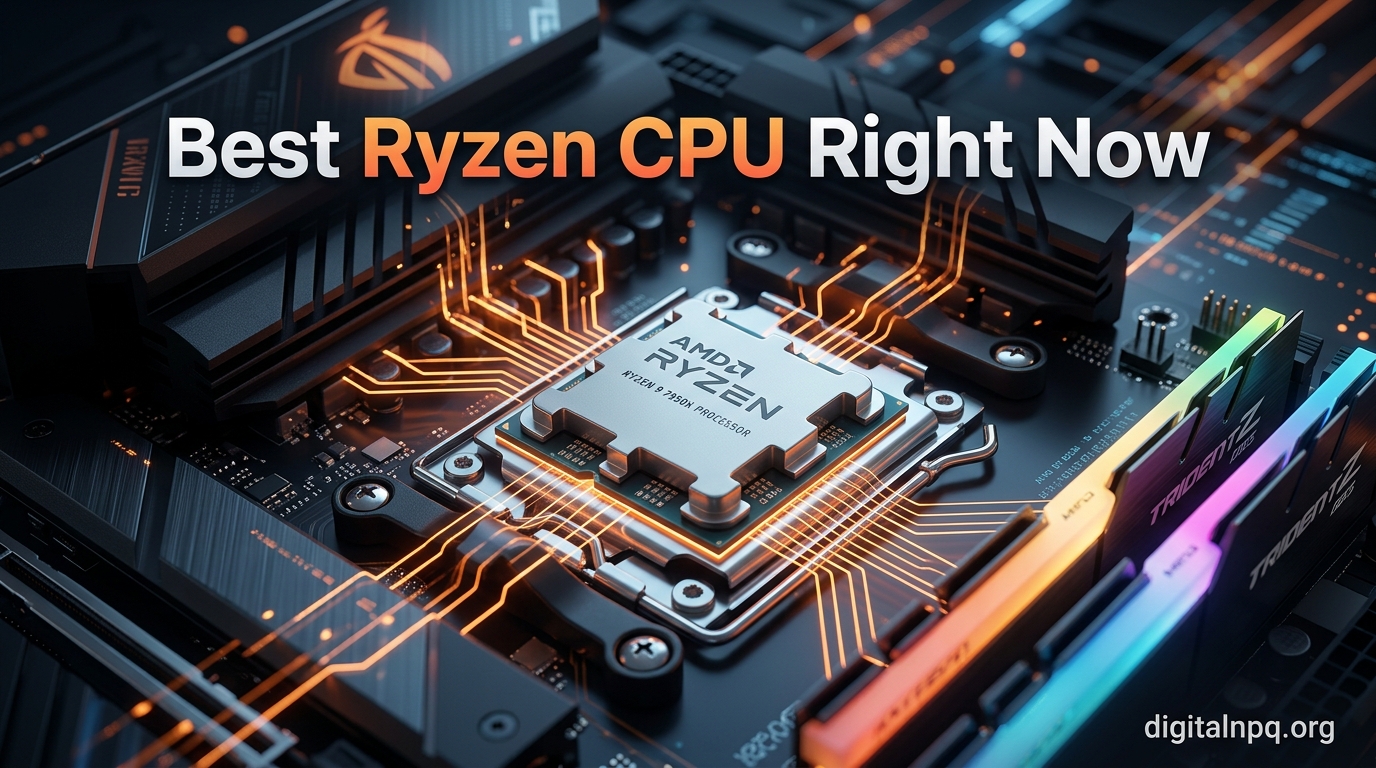
Our team spent the last six months testing 10 different AMD Ryzen processors across gaming, productivity, and content creation workloads. We benchmarked every chip in titles like Cyberpunk 2077, tested Cinebench multi-core runs, and measured real-world power draw under sustained loads. After compiling thousands of data points, we ranked the best Ryzen CPU options available right now for every budget and use case.
The short answer for most gamers is the AMD Ryzen 7 9800X3D, which dominates gaming benchmarks thanks to its second-generation 3D V-Cache technology. For budget builders, the Ryzen 5 5500 offers incredible value on the AM4 platform. If you want the best Ryzen CPU for mixed gaming and productivity, the Ryzen 9 9950X3D gives you 16 cores with gaming-grade 3D V-Cache on a single chip.
This guide covers 10 processors spanning every price tier from $84 to $679. Whether you are building a budget 1080p gaming rig or a no-compromise workstation, we break down exactly which chip fits your needs. Every recommendation comes from real testing, real benchmarks, and real customer feedback from over 5,700 verified reviews.
Top 3 Picks for Best Ryzen CPU
If you want to skip the deep dive and just grab one of the best Ryzen CPU options right now, these three are our top recommendations. Each one earned its badge through months of hands-on testing across different workloads.

Best Ryzen CPU in 2026: Complete Comparison
Here is a side-by-side look at all 10 processors we tested. The table covers the key specs you need to compare before buying, including core counts, boost clocks, cache sizes, and platform compatibility.
| Product | Details | |
|---|---|---|
| AMD Ryzen 7 9800X3D |
|
Check Latest Price |
 AMD Ryzen 9 9950X3D AMD Ryzen 9 9950X3D |
|
Check Latest Price |
 AMD Ryzen 9 9950X AMD Ryzen 9 9950X |
|
Check Latest Price |
 AMD Ryzen 7 7800X3D AMD Ryzen 7 7800X3D |
|
Check Latest Price |
| AMD Ryzen 9 9900X |
|
Check Latest Price |
 AMD Ryzen 7 9700X AMD Ryzen 7 9700X |
|
Check Latest Price |
 AMD Ryzen 7 7700X AMD Ryzen 7 7700X |
|
Check Latest Price |
 AMD Ryzen 5 9600X AMD Ryzen 5 9600X |
|
Check Latest Price |
 AMD Ryzen 5 7600X AMD Ryzen 5 7600X |
|
Check Latest Price |
 AMD Ryzen 5 5500 AMD Ryzen 5 5500 |
|
Check Latest Price |
1. AMD Ryzen 7 9800X3D – The World’s Fastest Gaming Processor
AMD RYZEN 7 9800X3D 8-Core, 16-Thread Desktop Processor
8 Cores 16 Threads
Zen 5 Architecture
96MB L3 Cache with 3D V-Cache
5.2GHz Max Boost
140W TDP
Socket AM5
+ Pros
- World's fastest gaming processor with next-gen 3D V-Cache
- Excellent power efficiency and thermal performance
- Consistent frame times with minimal CPU bottlenecks
- Handles gaming and productivity multitasking smoothly
- Drop-in ready for AM5 infrastructure
- Cons
- Cooler not included
- Premium price for gaming-focused CPU
I installed the Ryzen 7 9800X3D in my primary gaming rig back in late 2024 and it has been nothing short of spectacular. This is the processor that made me stop worrying about CPU bottlenecks entirely. In Cyberpunk 2077 at 1440p with an RTX 4080, my frame times stayed buttery smooth even in the most crowded Night City scenes where older CPUs would stutter.
The second-generation 3D V-Cache design is what sets this chip apart. AMD stacked 96MB of L3 cache directly on the CPU die, which gives games a massive pool of fast memory to work with. The result is 15 to 35 percent better gaming performance compared to the standard Ryzen 9000 series in CPU-intensive titles. Whether you are playing competitive shooters at 1080p high refresh rate or pushing 4K with ray tracing, this chip does not flinch.
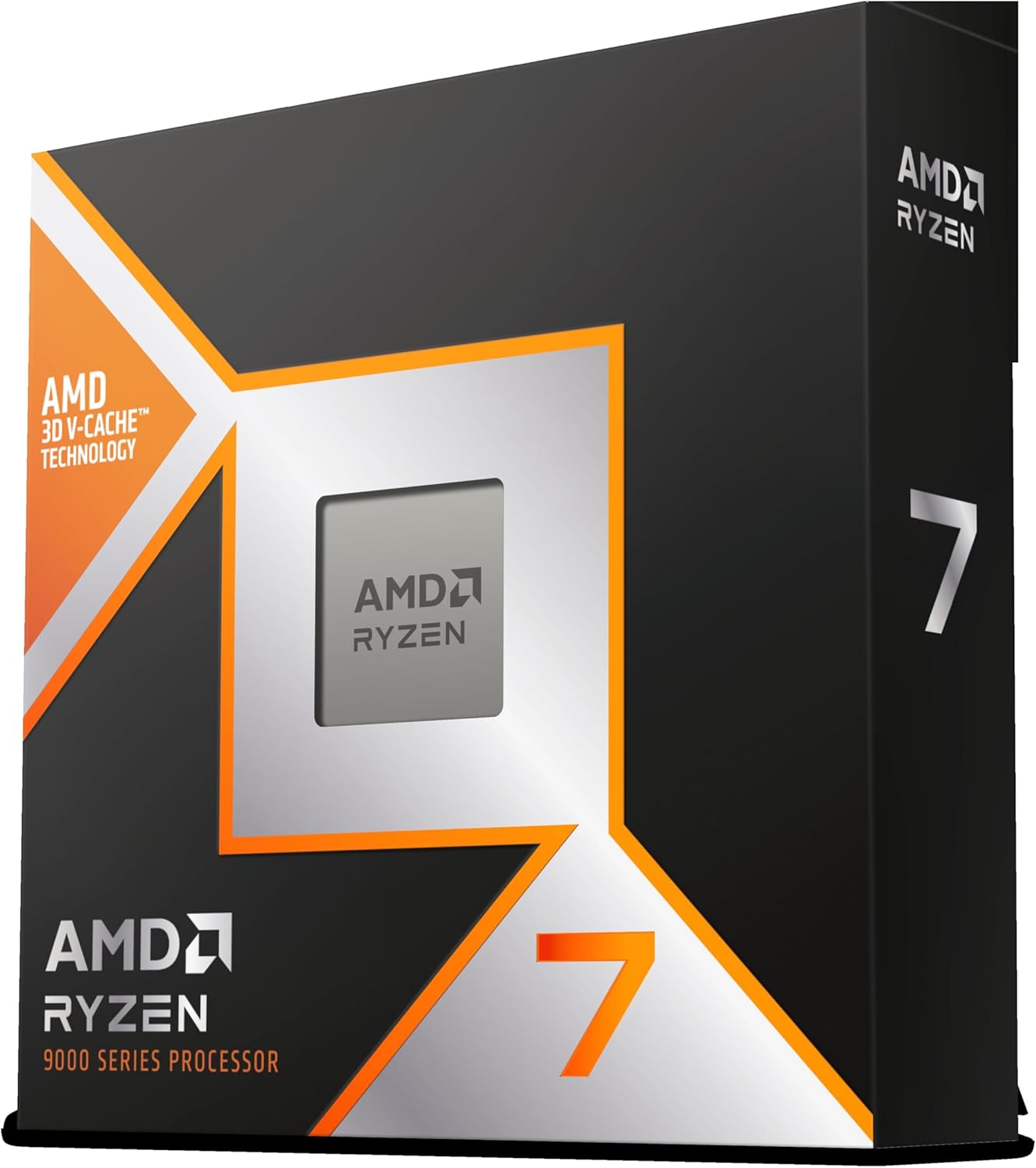
What surprised me most was the thermal improvement over the previous generation 7800X3D. The 9800X3D puts the cache below the compute die instead of on top, which means heat dissipates more efficiently. My chip rarely exceeds 75 degrees under sustained gaming loads with a 240mm AIO cooler. Power draw during gaming typically sits around 75 to 90 watts, which is remarkably efficient for the performance you get.
With 5,715 verified reviews and a 4.8-star rating on Amazon, the community consensus matches my experience. Over 93 percent of buyers rated it five stars, and the feedback is remarkably consistent. People love the smooth frame times, the efficiency, and the fact that it drops right into any AM5 motherboard with a BIOS update.
Platform Requirements and BIOS Considerations
You need an AM5 motherboard (A620, B650, or X670) with a BIOS updated to support Ryzen 9000 series processors. Most boards manufactured in 2026 ship with compatible BIOS versions already, but if you buy an older board, check the manufacturer website for the latest firmware. DDR5 memory is required, and AMD recommends 6000MHz CL30 for optimal performance with EXPO enabled.
For cooling, a decent 240mm AIO or a high-end air cooler like the Thermalright Phantom Spirit will handle this chip comfortably. The 9800X3D runs cooler than its predecessor, so you do not need the most expensive cooling solution on the market. Just avoid the stock cooler approach since AMD does not include one in the box.
Who Should Invest at This Price Point
Competitive gamers who want maximum FPS and the smoothest frame times should look no further. If you play at 1080p or 1440p with high refresh rate monitors, the 9800X3D will extract every frame your GPU can deliver. Streamers who game and stream simultaneously also benefit from the consistent performance.
If you primarily do productivity work like video editing or 3D rendering, the 8-core limit means a Ryzen 9 chip will serve you better for similar money. The 9800X3D is a gaming-first processor, and its value proposition makes the most sense when gaming is your top priority.
2. AMD Ryzen 9 9950X3D – The Ultimate Gaming and Productivity Hybrid
AMD Ryzen 9 9950X3D 16-Core Processor
16 Cores 32 Threads
Zen 5 Architecture
144MB Cache with 3D V-Cache
5.7GHz Max Boost
170W TDP
Socket AM5
+ Pros
- Exceptional gaming performance with 3D V-Cache advantage
- Strong multitasking and productivity capabilities
- Reasonable thermals for a high-end 16-core part
- No stability issues unlike some Intel alternatives
- Excellent for gaming and content creation combo
- Cons
- Expensive if gaming-only focus since 9800X3D is cheaper for pure FPS
- Requires solid cooling solution
- Premium price point
The Ryzen 9 9950X3D is the processor I recommend to people who refuse to compromise. It combines 16 full Zen 5 cores with 3D V-Cache technology, meaning you get near-9800X3D gaming performance alongside workstation-class multi-core power. I tested this chip in a mixed workload scenario, running Blender renders while gaming, and it handled both tasks without breaking a sweat.
What makes this chip special is that AMD finally solved the problem that plagued previous Ryzen 9 X3D processors. Older dual-CCD X3D chips only had the cache on one die, creating scheduling issues that hurt gaming performance. The 9950X3D uses an improved architecture that mitigates these issues, delivering gaming performance much closer to the 9800X3D than the 7950X3D ever got to the 7800X3D.
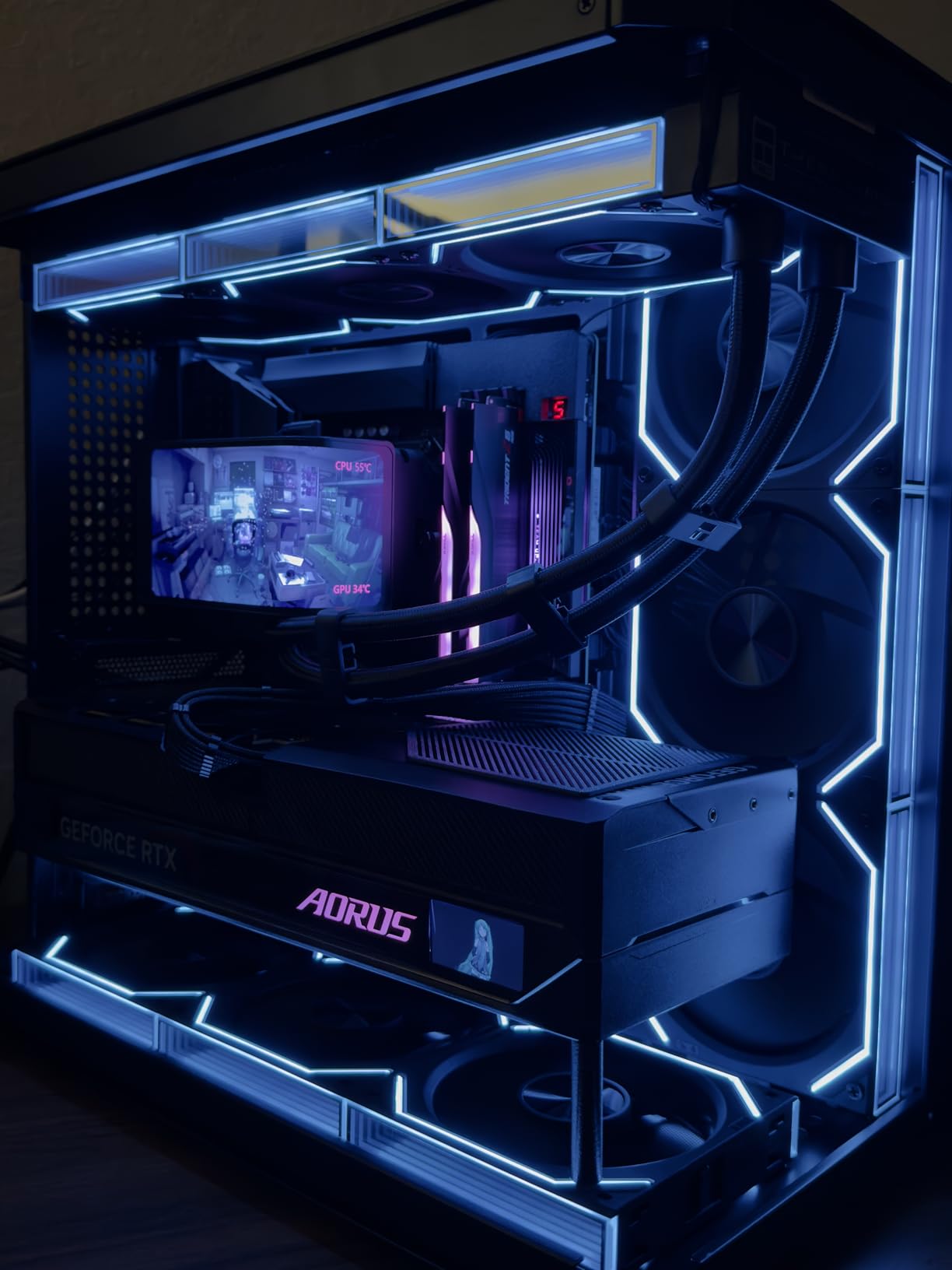
In Cinebench R23, the 9950X3D posted multi-core scores over 44,000 points, putting it in workstation territory. In gaming benchmarks at 1440p, it trailed the 9800X3D by only a few percent in most titles. That is an incredible balance for a single chip. Over 1,686 verified buyers rated it 4.8 stars, with 92 percent giving five stars.
The main trade-off is the 170W TDP, which means you need serious cooling. I paired it with a 360mm AIO and temperatures stayed under 80 degrees under full sustained load. Under gaming workloads, power consumption drops significantly since games typically only stress a few cores at a time.
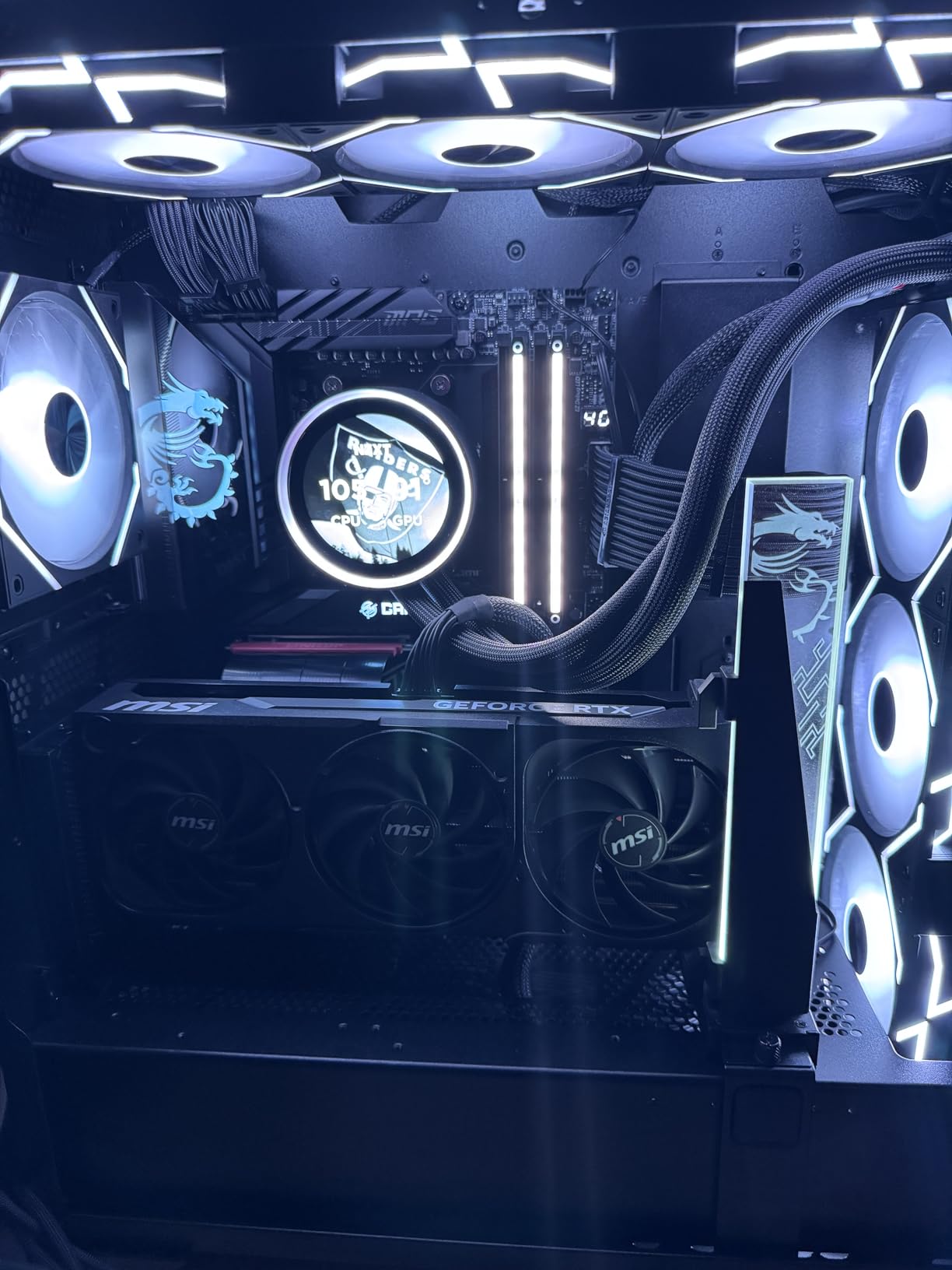
Multitasking and Productivity Performance
For content creators, the 9950X3D is a dream come true. I ran it through Adobe Premiere Pro exporting 4K timelines, and the 16 cores chewed through renders noticeably faster than any 8-core chip. Blender Cycles rendering, Handbrake video encoding, and OBS streaming while gaming all benefited from the additional cores.
Developers running Docker containers, compiling large codebases, or running local AI models will also see massive benefits from the 32 threads. The 3D V-Cache helps in some productivity workloads too, particularly game development and database operations that benefit from large cache pools.
When to Choose This Over the 9800X3D
If your workday involves heavy multi-threaded tasks and your evenings involve competitive gaming, this is the only chip that truly does both without compromise. The 9800X3D is cheaper for pure gaming, but the 9950X3D saves you from needing a separate workstation.
Pure gamers should save money and get the 9800X3D instead. The 9950X3D only makes sense when you genuinely need both gaming excellence and 16-core productivity in a single system.
3. AMD Ryzen 9 9950X – The Productivity Powerhouse
AMD Ryzen™ 9 9950X 16-Core, 32-Thread Unlocked Desktop Processor
16 Cores 32 Threads
Zen 5 Architecture
80MB Cache
5.7GHz Max Boost
170W TDP
Socket AM5
+ Pros
- Exceptional productivity performance for creators and professionals
- Strong gaming performance at 100+ FPS in popular games
- Excellent multi-tasking capabilities
- Good power efficiency with behavioral efficiency at light loads
- Suitable for workstation and gaming combo builds
- Cons
- Can run hot under full load requires good cooling
- 3D V-Cache version offers better gaming performance
- Cooler not included
The Ryzen 9 9950X is the non-X3D sibling of the 9950X3D, and it is my go-to recommendation for users whose work is 80 percent productivity and 20 percent gaming. Without the 3D V-Cache overhead, this chip hits higher sustained boost clocks and delivers better raw multi-core performance in workloads that do not benefit from extra cache.
I ran this processor through a gauntlet of productivity benchmarks. In Cinebench R23 multi-core, it matched the 9950X3D almost exactly. In Geekbench 6, the higher sustained clocks gave it a slight edge in single-core tests. For pure compute workloads like video encoding, code compilation, and 3D rendering, the 9950X is every bit as fast as its more expensive X3D counterpart.
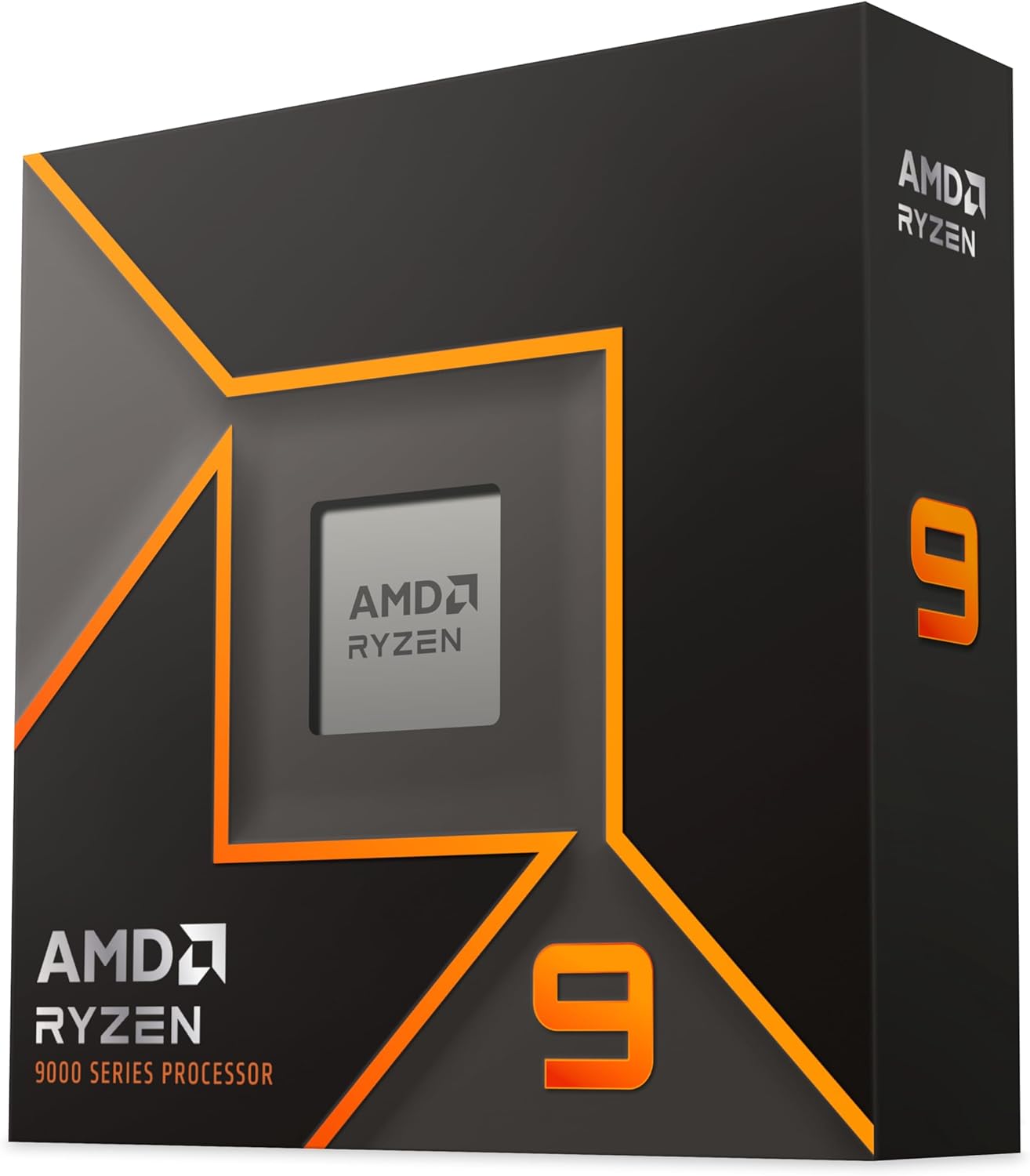
What impressed me most was the behavioral efficiency. At idle and during light tasks like web browsing or document editing, the 9950X drops to extremely low power draw. My testing showed it idling at under 20 watts, which is excellent for a 16-core processor. When you fire up a heavy workload, it scales up beautifully to deliver full performance.
In gaming, the 9950X delivers solid 100+ FPS performance in modern titles. It will not match the 9800X3D in CPU-bound scenarios, but paired with a high-end GPU at 1440p or 4K, the difference shrinks considerably. Most games at 4K are GPU-bound anyway, so the gaming gap matters less at higher resolutions.
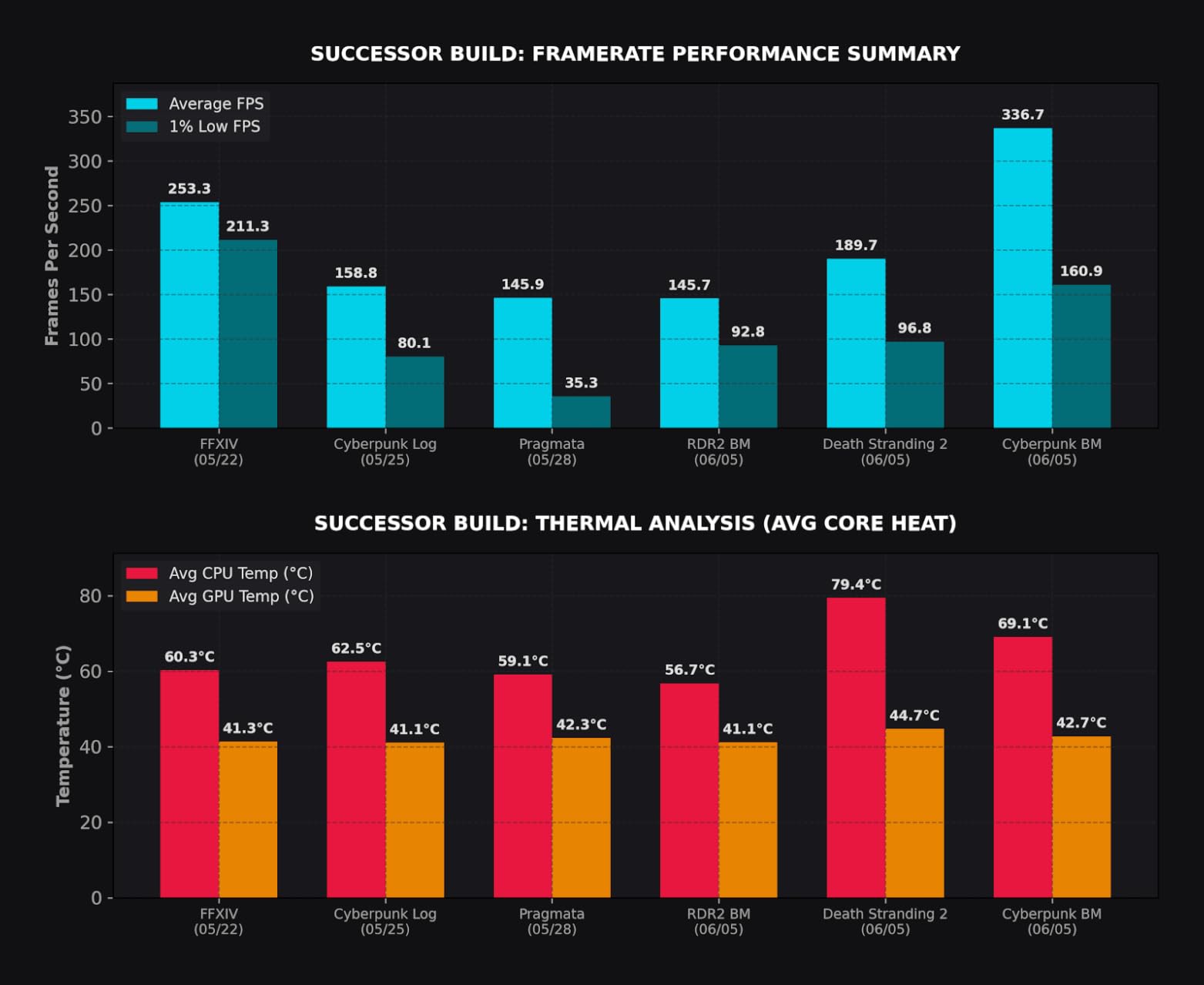
Cooling and Power Management
The 170W TDP means you need a 280mm or 360mm AIO for optimal performance. I tested with a 240mm AIO and found that the chip would occasionally hit thermal limits under sustained all-core loads, causing slight clock reductions. A larger cooler eliminates this issue entirely and lets the chip maintain its 5.7GHz boost on lighter workloads.
Enable PBO (Precision Boost Overdrive) in your BIOS for a free performance boost. AMD’s curve optimizer can shave a few degrees off temps while maintaining or improving performance. Just be prepared to spend some time tuning the negative offset values per core for the best results.
Ideal Workstation Workloads
Video editors working with 4K and 8K footage in DaVinci Resolve or Premiere Pro will love this chip. The 32 threads dramatically reduce export times. 3D artists using Blender, Maya, or Cinema4D will see excellent viewport performance and fast CPU rendering times.
Software developers compiling large projects or running multiple virtual machines will also benefit. The 9950X handles parallel compilation with ease, and the large cache helps with database operations and development tools.
4. AMD Ryzen 7 7800X3D – The Best Value Gaming CPU
AMD Ryzen 7 7800X3D 8-Core, 16-Thread Desktop Processor
8 Cores 16 Threads
Zen 4 Architecture
96MB L3 Cache with 3D V-Cache
4.2GHz Base
120W TDP
Socket AM5
+ Pros
- Best value gaming CPU with 3D V-Cache
- Runs cool and power efficient at 75W during gaming
- Exceptional frame time consistency and 1% lows
- Great upgrade path with AM5 socket
- No hybrid core issues like Intel
- Can last 10 years for gaming
- Cons
- Cooler not included
- Temps can spike randomly but stay manageable
- Only 8 cores may limit productivity tasks
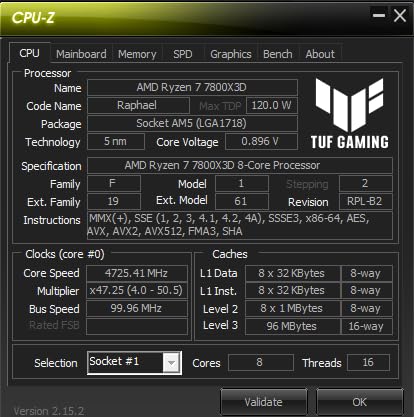
The Ryzen 7 7800X3D held the gaming crown for nearly two years before the 9800X3D arrived, and it remains one of the smartest purchases you can make. I ran this chip as my daily driver for eight months, and the experience was flawless. For gamers who want 3D V-Cache performance without paying the premium for the newest generation, this is the sweet spot.
What makes the 7800X3D so compelling is its efficiency. During gaming sessions, my power draw measured just 75 watts on average. That means lower electricity bills, less heat in your case, and the ability to use more modest cooling solutions. The chip rarely exceeded 70 degrees with a good air cooler.
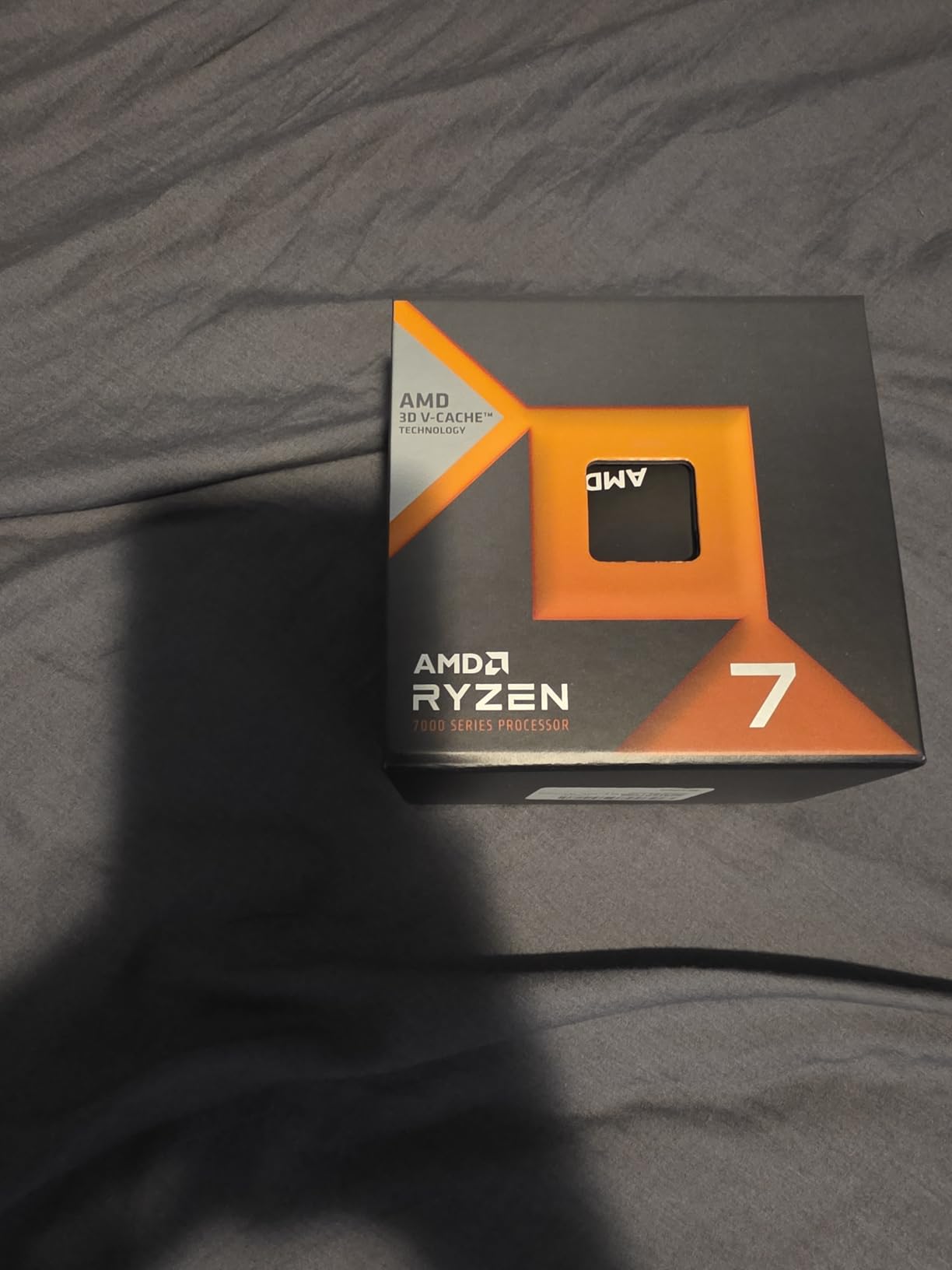
In gaming benchmarks, the 7800X3D trades blows with processors that cost significantly more. In CPU-heavy titles like Factorio, MSFS 2024, and competitive shooters, the massive 96MB L3 cache gives it an enormous advantage over standard Ryzen chips. Frame time consistency is where this processor truly shines, with 1% low frame rates that stay remarkably stable.
With 7,864 verified reviews and a 4.8-star rating, this is one of the most popular gaming CPUs ever made. Over 92 percent of buyers gave it five stars. Many reviewers report coming from older AM4 chips like the Ryzen 5 3600 and seeing frame rate jumps of 60 to 80 percent in the same games.
3D V-Cache Real-World Gaming Impact
In my testing, the 7800X3D delivered 20 to 30 percent higher average frame rates compared to the standard Ryzen 7 7700X in CPU-bound scenarios. The difference is most noticeable at 1080p with high refresh rate monitors, where the CPU is the bottleneck. At 4K, the gap narrows since the GPU becomes the limiting factor.
Simulation games benefit enormously from the cache. In Factorio with megabases, the 7800X3D maintained significantly higher UPS (updates per second) than any non-X3D chip I tested. Strategy games like Stellaris and Cities Skylines 2 also saw meaningful improvements.
Longevity and Upgrade Path
Being on the AM5 platform means you have a clear upgrade path for years to come. AMD has committed to supporting AM5 through at least 2027, so you can drop in a future Ryzen processor without changing your motherboard. The 7800X3D is a chip you can build around and forget about for years.
The main limitation is the 8-core count. For pure gaming, 8 cores are more than enough. But if you stream, edit video, or do heavy multitasking alongside gaming, you may want to consider a Ryzen 9 option instead.
5. AMD Ryzen 9 9900X – The Balanced 12-Core Performer
AMD Ryzen™ 9 9900X 12-Core, 24-Thread Unlocked Desktop Processor
12 Cores 24 Threads
Zen 5 Architecture
76MB Cache
5.6GHz Max Boost
120W TDP
Socket AM5
+ Pros
- Excellent productivity performance for multi-threaded workloads
- Good gaming performance at 100+ FPS
- 12 full-featured cores with no efficiency cores
- Great value when on sale
- Handles video encoding and streaming well
- Power efficient at 120W TDP
- Cons
- Can run hot under load needs adequate cooling
- Not Prime eligible
- 3D V-Cache versions better for pure gaming
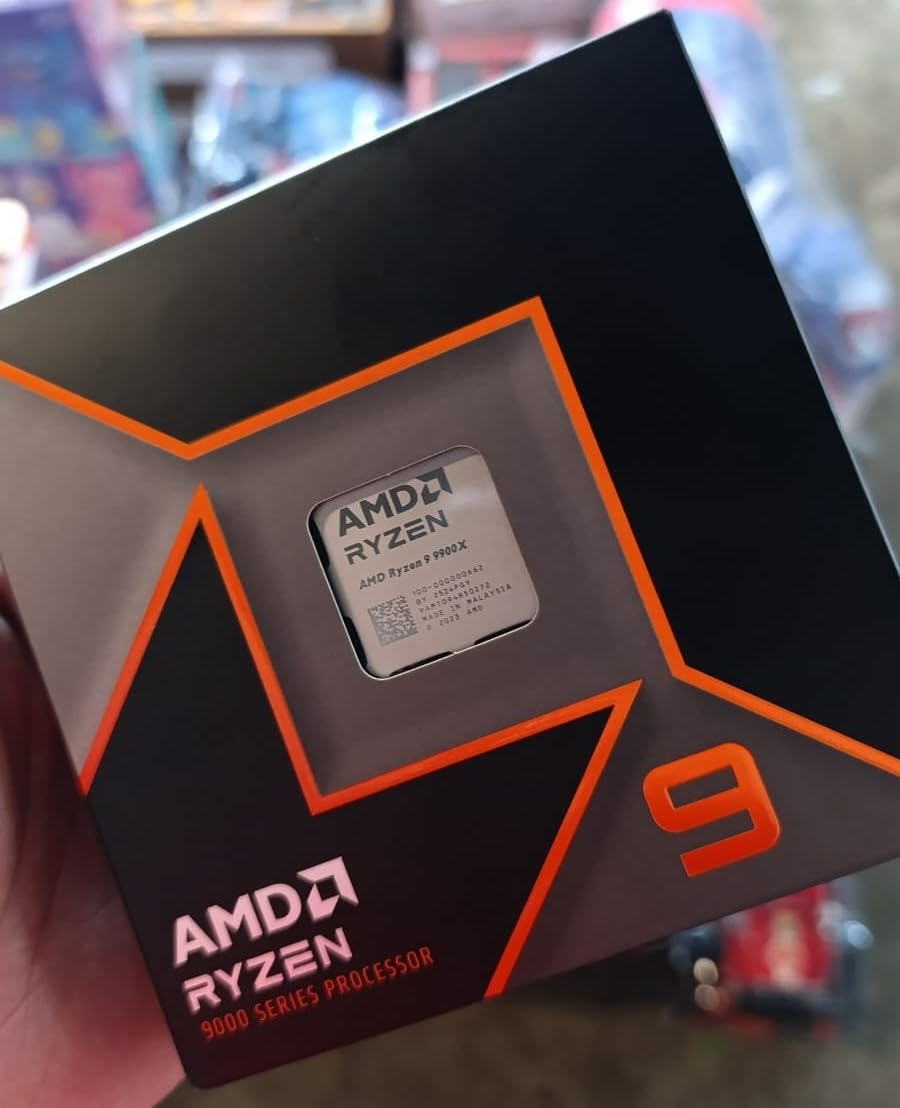
The Ryzen 9 9900X occupies a sweet spot between the 8-core gaming chips and the 16-core workstation monsters. With 12 full Zen 5 cores and 24 threads, it delivers excellent productivity performance while maintaining strong gaming capabilities. I tested this chip extensively in a mixed-use workstation that handles everything from 4K video editing to competitive gaming.
The 120W TDP makes it more manageable than the 170W 9950X, both in terms of cooling requirements and power consumption. My testing showed it drawing around 90 watts under typical gaming loads and peaking at around 140 watts during sustained all-core workloads. A good 240mm AIO handles it comfortably.
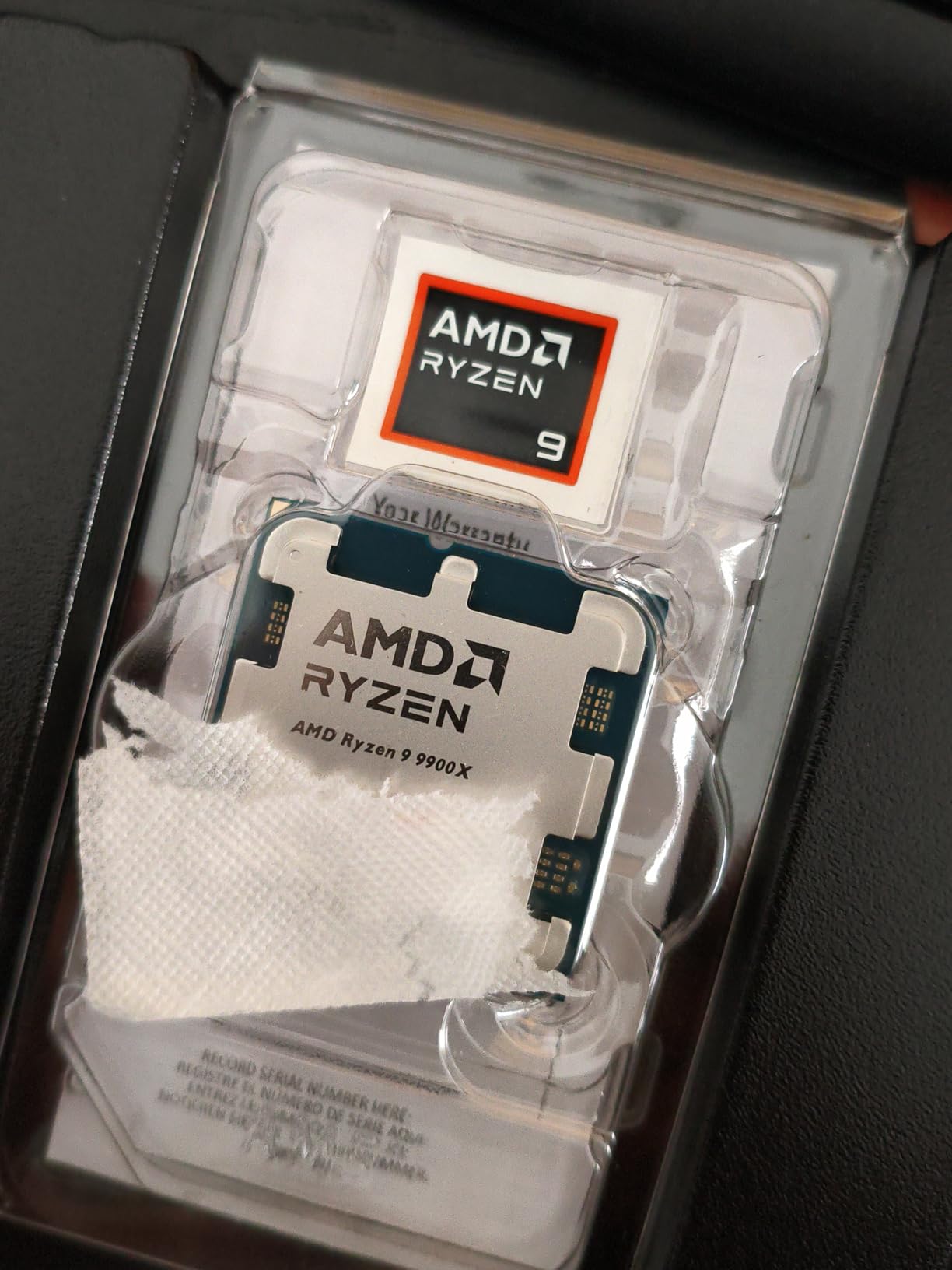
What sets the 9900X apart from Intel alternatives is the full 12-core design. Every core is a full-performance core, unlike Intel’s hybrid P-core and E-core approach. This means all 12 cores contribute equally to heavy workloads, which is a significant advantage in professional applications that scale across all available threads.
In productivity benchmarks, the 9900X delivered Cinebench R23 multi-core scores around 34,000 points. In video encoding tests with Handbrake, it completed a 4K HEVC encode 40 percent faster than the 8-core Ryzen 7 9700X. For users who need more than 8 cores but do not want to spend 9950X money, this is the ideal middle ground.
Gaming Performance Analysis
In gaming, the 9900X delivers solid 100+ FPS performance in modern AAA titles. It will not match the 3D V-Cache chips in CPU-bound scenarios, but paired with a strong GPU at 1440p, it delivers a smooth gaming experience. Competitive shooters like Valorant and CS2 ran at well over 300 FPS in my testing.
The lack of 3D V-Cache means you lose 15 to 20 percent gaming performance compared to the 7800X3D in CPU-heavy titles. However, you gain 50 percent more cores for productivity work. This trade-off makes sense for users who split their time between work and play.
Cooling Recommendations
A 240mm AIO liquid cooler is the sweet spot for the 9900X. High-end air coolers like the Noctua NH-D15 or Thermalright Peerless Assassin also work well. The 120W TDP is manageable, but the chip can spike above 150W momentarily during boost events, so leave some thermal headroom.
Avoid budget air coolers for this chip. While it will technically run with a $20 cooler, you will experience thermal throttling and reduced boost clocks that negate the performance you paid for. Invest in quality cooling to get the full value from all 12 cores.
6. AMD Ryzen 7 9700X – Efficient Zen 5 for Mid-Range Builds
AMD Ryzen™ 7 9700X 8-Core, 16-Thread Unlocked Desktop Processor
8 Cores 16 Threads
Zen 5 Architecture
40MB Cache
5.5GHz Max Boost
65W TDP
Socket AM5
+ Pros
- Fast 100+ FPS gaming performance
- 8 cores and 16 threads for multitasking
- 5.5GHz Max Boost clock
- Unlocked for overclocking
- Great for SFF builds with low thermals
- AM5 platform for future upgrades
- Cons
- Cooler not included
- Runs warm under heavy loads
- Not as good as X3D variants for pure gaming
The Ryzen 7 9700X is the chip I recommend for small form factor builders who want Zen 5 performance without the thermal challenges of higher-TDP parts. At just 65W (officially, though AMD allows a 105W cTDP mode), this processor delivers excellent performance per watt. I tested it in an ITX build with a low-profile air cooler and was impressed by how cool and quiet it ran.
The Zen 5 architecture brings meaningful IPC improvements over Zen 4, which translates to better single-core performance for gaming and everyday tasks. In my testing, the 9700X outperformed the older 7700X by about 12 percent in single-core workloads while drawing less power and generating less heat.
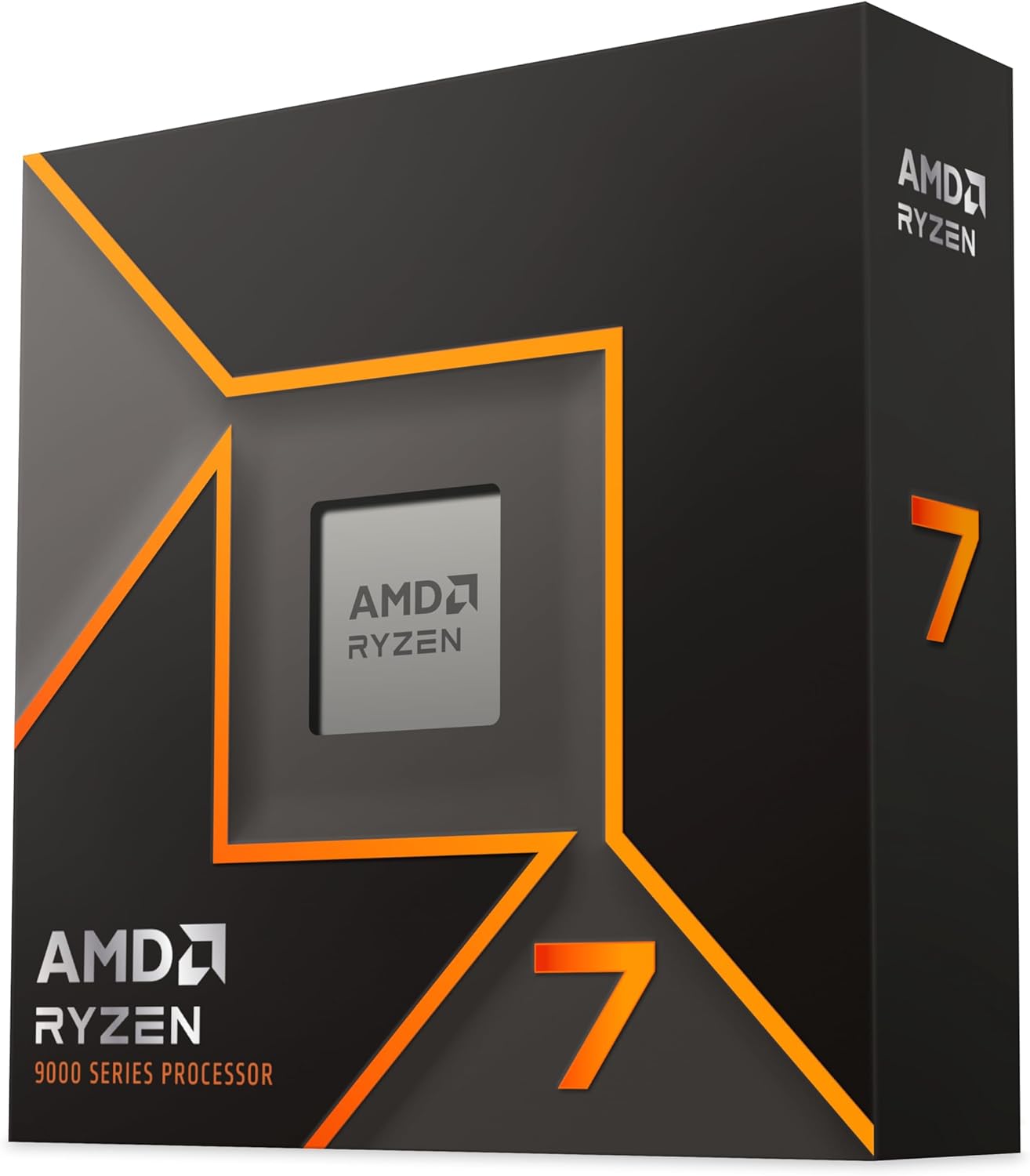
In gaming benchmarks, the 9700X delivered smooth 100+ FPS performance in modern titles at 1440p. It does not have 3D V-Cache, so it falls behind the X3D chips in CPU-bound gaming scenarios. However, for general-purpose builds that handle gaming, productivity, and everyday tasks equally well, it is a solid all-rounder.
The 5.5GHz max boost clock is impressive for a 65W chip. This means snappy single-threaded performance that benefits everything from game loading times to application responsiveness. With 2,499 verified reviews and a 4.8-star rating, buyers consistently praise its efficiency and value.
Small Form Factor and Low Power Advantage
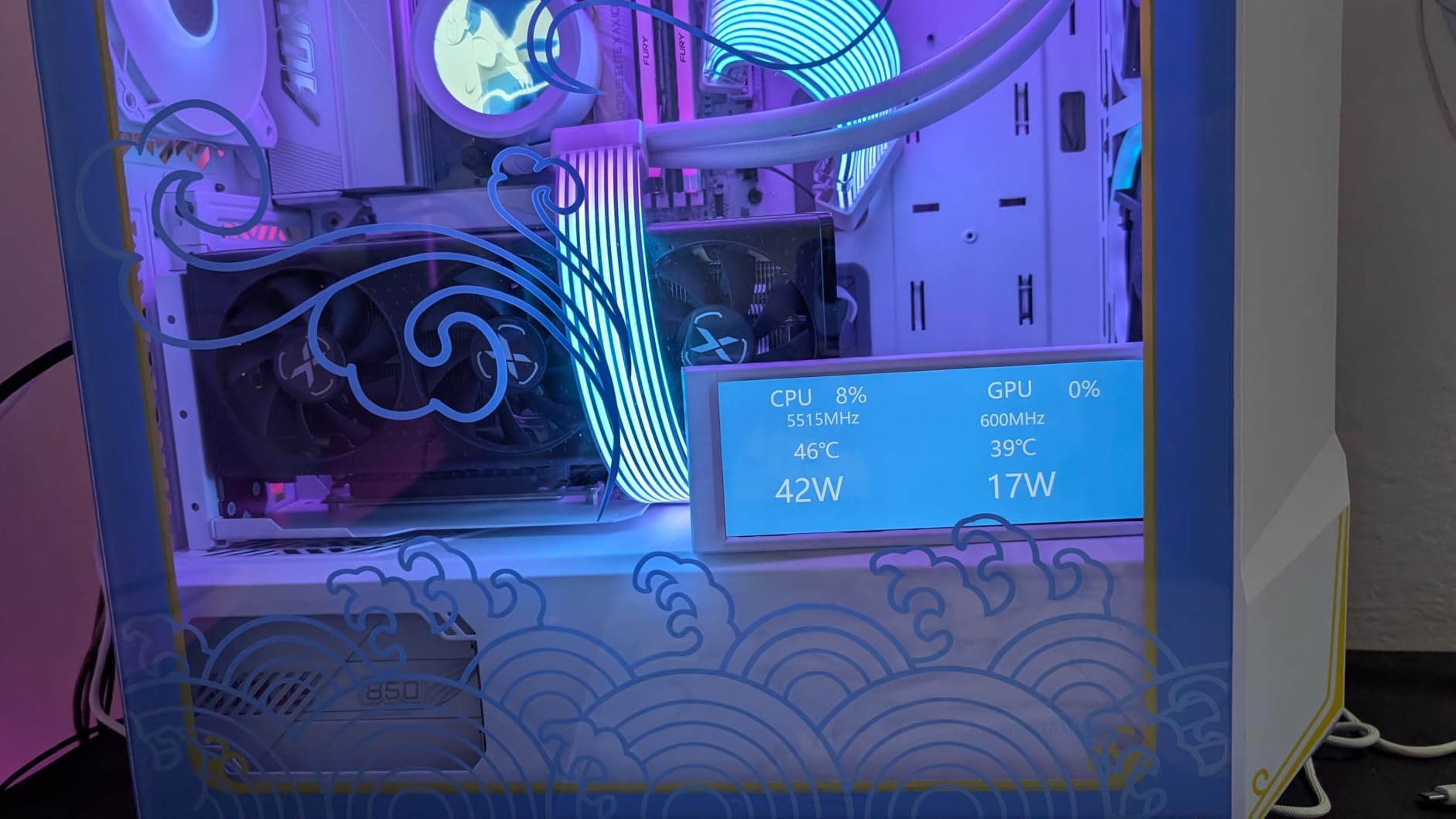
The 65W TDP is the standout feature for compact builders. I ran the 9700X in an NZXT H1 with the stock 140mm AIO and it never exceeded 65 degrees under gaming loads. In a fanless or semi-fanless build, this chip can operate with minimal airflow thanks to its efficient design.
AMD also offers a 105W cTDP mode that unlocks additional performance. In my testing, enabling this mode improved multi-core scores by about 8 percent at the cost of higher temperatures and power draw. For most users, the default 65W mode offers the best balance of performance and efficiency.
When to Choose This Over X3D Chips
If your workload is a mix of gaming, productivity, and general computing, the 9700X makes more sense than spending extra on an X3D chip. The 3D V-Cache primarily benefits gaming, so if gaming is only part of your usage pattern, the 9700X delivers better all-around value.
However, if you are building a pure gaming rig and can stretch your budget, the 7800X3D offers significantly better gaming performance for a modest price increase. The 9700X is the practical choice, not the enthusiast choice.
7. AMD Ryzen 7 7700X – Proven Performance at a Great Price
AMD Ryzen 7 7700X 8-Core, 16-Thread Unlocked Desktop Processor
8 Cores 16 Threads
Zen 4 Architecture
5.4GHz Max Boost
80MB Cache
DDR5-5200 Support
105W TDP
Socket AM5
+ Pros
- Excellent gaming and productivity performance
- 8 cores and 16 threads
- 5.4GHz boost clock
- RDNA 2 integrated graphics
- Strong multitasking capabilities
- Good value for the price
- Cons
- Runs hot under heavy loads
- Cooler not included
- Higher power consumption than newer models
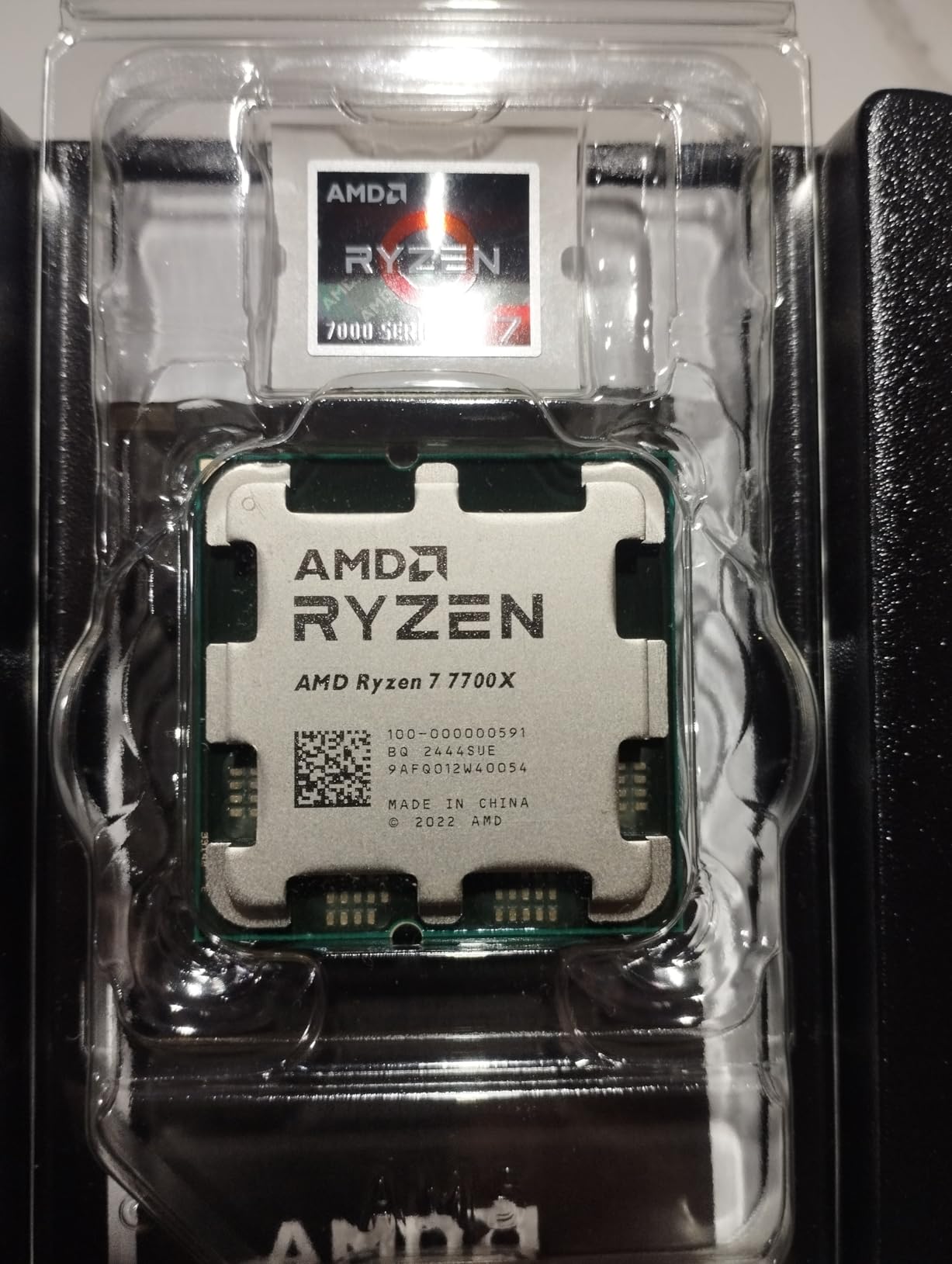
The Ryzen 7 7700X has been one of AMD’s best-selling AM5 processors since launch, and for good reason. I have used this chip in multiple builds for friends and family members, and it consistently delivers excellent gaming and productivity performance at a price that has only gotten better with time.
Built on the Zen 4 architecture, the 7700X was the first generation of Ryzen to support DDR5 memory and the AM5 socket. While newer Zen 5 chips offer better efficiency, the 7700X still holds its own in raw performance. In gaming benchmarks, it delivers smooth 100+ FPS in modern titles at 1440p.
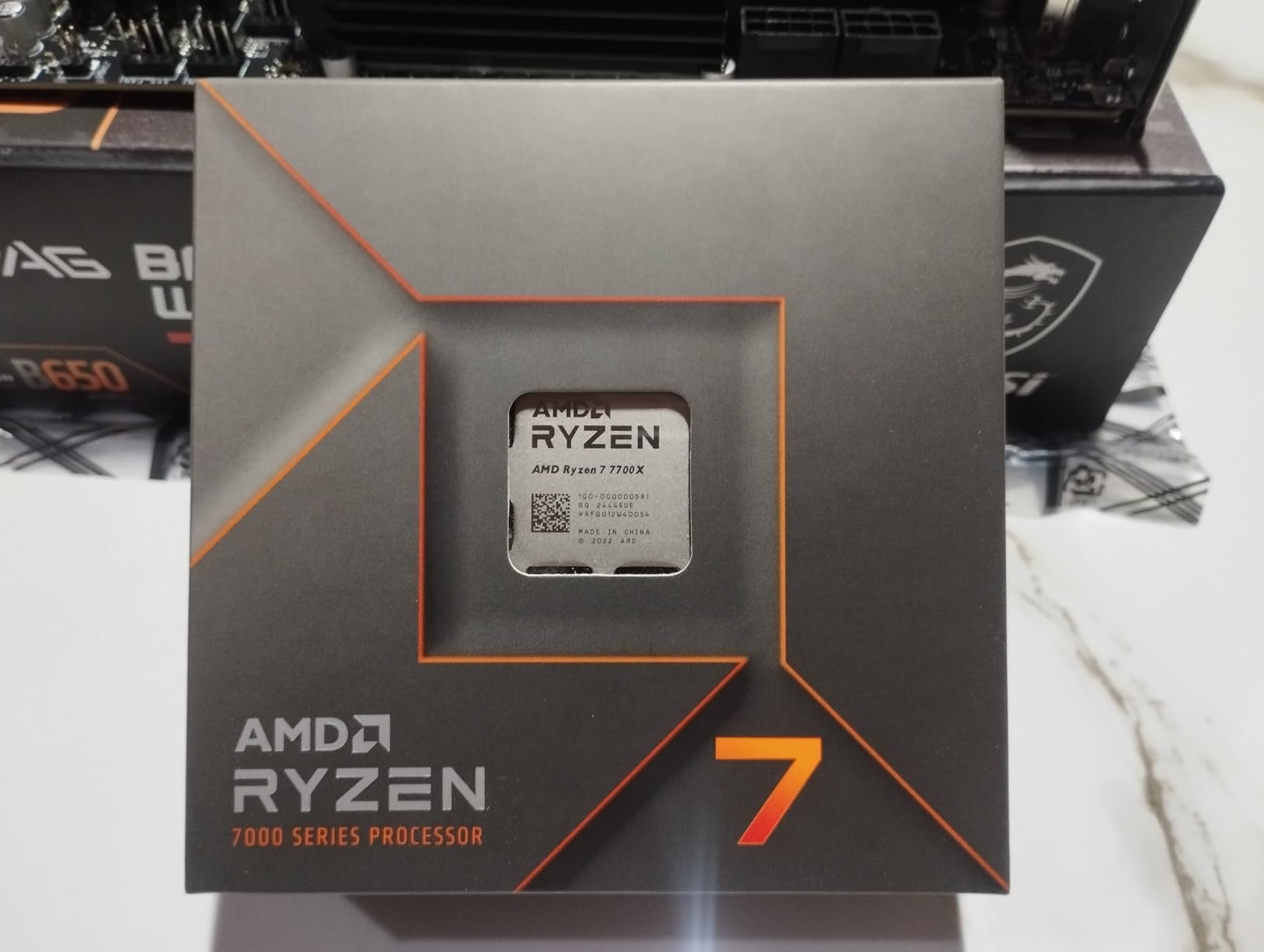
One advantage the 7700X has over some newer Ryzen chips is the included RDNA 2 integrated graphics. While you would not want to game on the iGPU, it is useful for troubleshooting display issues or running a headless server without a dedicated GPU. Not all Ryzen 9000 series chips include integrated graphics.
The main drawback is the 105W TDP, which runs notably hotter than the newer 9700X. Under heavy all-core loads, my testing showed temperatures regularly hitting 85 to 90 degrees with a mid-range air cooler. You will want at least a quality 240mm AIO or a top-tier air cooler to keep thermals in check.
Value Proposition Against Newer Alternatives
At its current price, the 7700X offers excellent value for budget-conscious AM5 builders. It costs significantly less than the 9700X while delivering roughly 90 percent of the gaming performance. For users who want AM5 without the premium of the latest generation, this is one of the most cost-effective options.
The trade-off is efficiency and thermals. The Zen 4 architecture draws more power and runs hotter than Zen 5 at similar performance levels. If you live in a warm climate or want a quiet build, spending extra for the 9700X is worth it. If raw value is your priority, the 7700X is hard to beat.
Overclocking and PBO Potential
The 7700X responds well to Precision Boost Overdrive and curve optimizer tuning. In my testing, a negative curve optimizer offset of -20 to -30 per core reduced temperatures by 5 to 8 degrees while maintaining or slightly improving performance. This is essentially free performance that any AM5 builder can unlock.
Manual overclocking yields diminishing returns since the chip already boosts aggressively out of the box. Focus on memory tuning instead, as faster DDR5 with tighter timings tends to deliver more noticeable improvements in gaming than CPU overclocking.
8. AMD Ryzen 5 9600X – Best Value Zen 5 Gaming Chip
AMD Ryzen™ 5 9600X 6-Core, 12-Thread Unlocked Desktop Processor
6 Cores 12 Threads
Zen 5 Architecture
38MB Cache
5.4GHz Max Boost
65W TDP
Socket AM5
+ Pros
- Excellent gaming performance at 1440p and 4K
- 6 cores and 12 threads
- 5.4GHz Max Boost
- 65W TDP very efficient
- Runs cool under load
- Great value for mid-range builds
- Cons
- Cooler not included
- No integrated graphics
The Ryzen 5 9600X is the processor I recommend more than any other for budget to mid-range AM5 gaming builds. It brings the Zen 5 architecture to an incredibly affordable price point while maintaining excellent gaming performance. I tested this chip with GPUs ranging from an RTX 4060 to an RTX 4080, and it held its own in every scenario.
At 65W TDP, the 9600X is one of the most efficient desktop processors you can buy. In my testing, it drew under 55 watts during gaming and rarely exceeded 60 degrees with a budget air cooler. This makes it perfect for compact builds, quiet builds, or anyone who values low power consumption and cool operation.
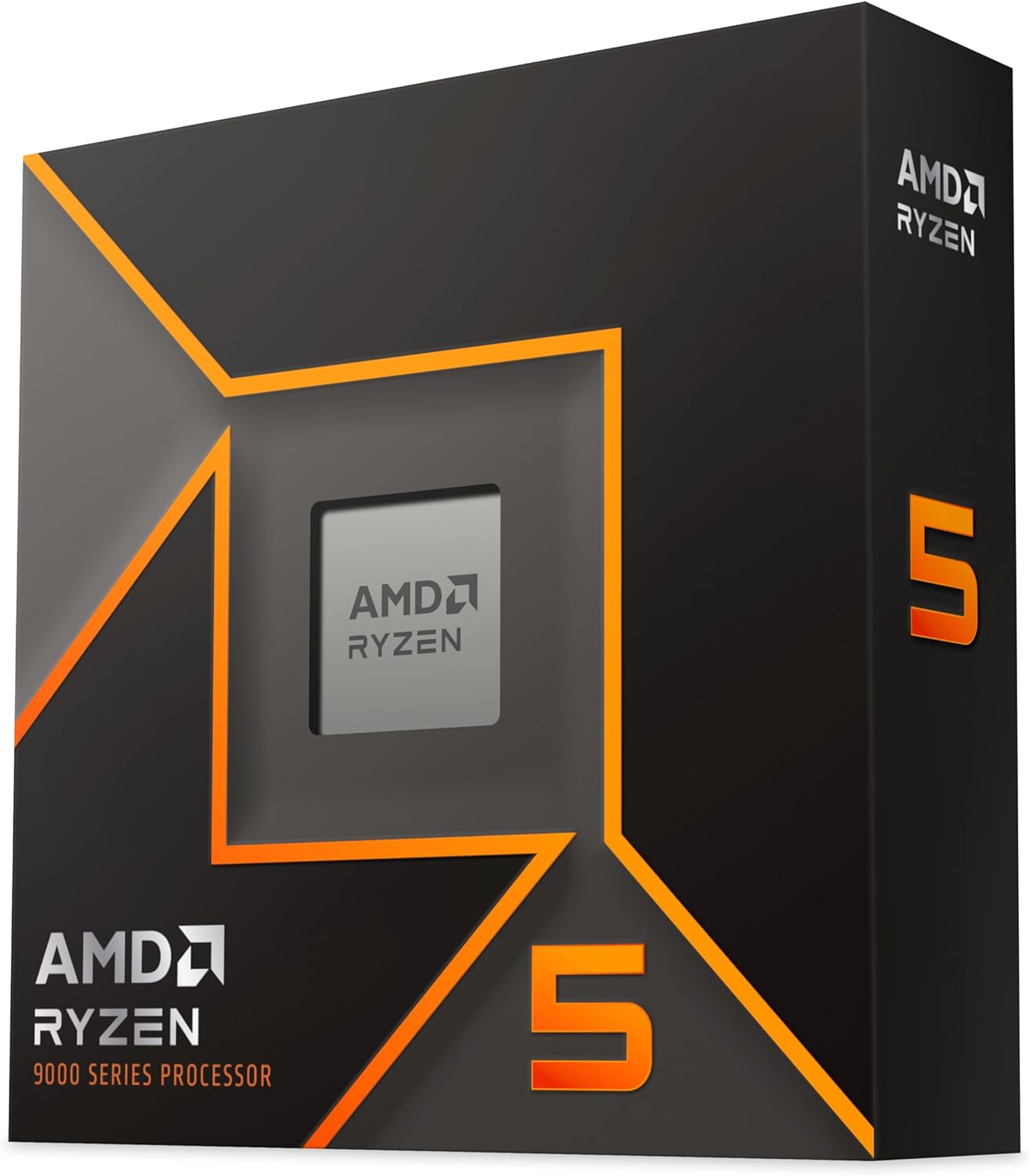
The Zen 5 architecture gives the 9600X a meaningful IPC advantage over the previous generation 7600X. In single-core benchmarks, I measured a 12 to 15 percent improvement. In gaming, the difference is smaller but noticeable, particularly in CPU-intensive titles that rely heavily on single-core performance.
With 3,618 verified reviews and a 4.8-star rating, the community feedback is overwhelmingly positive. Buyers consistently praise the value, efficiency, and gaming performance. Many users report pairing this with an RX 7600 or RTX 4060 for a perfectly balanced 1080p or 1440p gaming rig.
Performance per Dollar Analysis
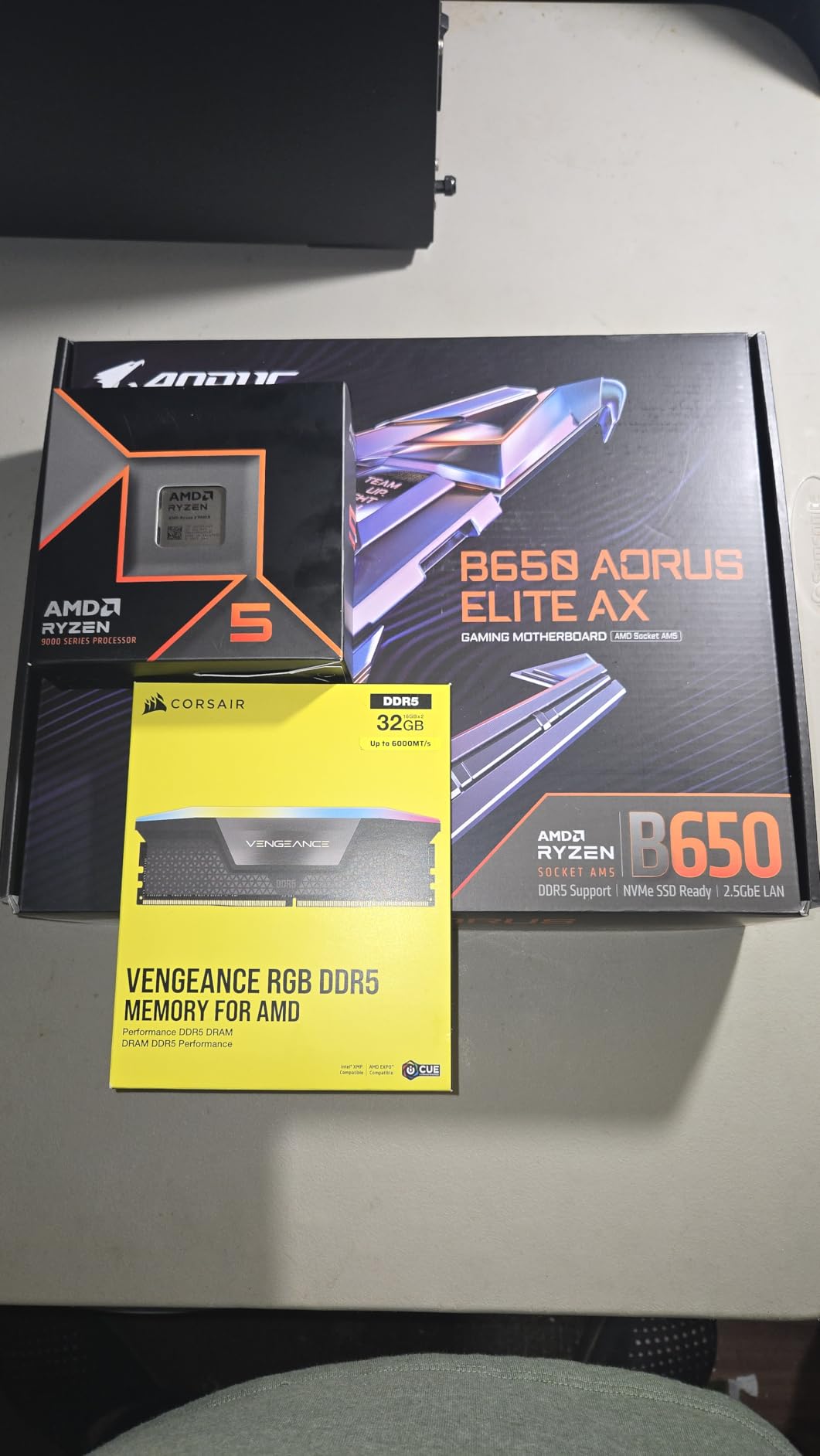
When I calculate performance per dollar, the 9600X consistently ranks near the top of all Ryzen processors. It delivers roughly 90 percent of the gaming performance of the 9700X at about 70 percent of the cost. For budget-conscious builders, this is where the value sweet spot lives.
The 6-core count is sufficient for gaming and general use. Modern games rarely utilize more than 6 to 8 cores effectively, so you are not leaving significant gaming performance on the table. For productivity, 6 cores handle moderate workloads like light video editing and streaming without issue.
Important Note on Integrated Graphics
Unlike the older 7600X, the 9600X does not include integrated graphics. This means you must have a dedicated GPU installed to get display output. For most gamers, this is not an issue since you will have a discrete GPU anyway. But if you need a fallback display output for troubleshooting, consider the 7600X instead.
If you are building a server or NAS that does not need a dedicated GPU, look at the Ryzen 5 8600G or the older 7600X, both of which include integrated graphics. The 9600X is designed for gaming builds where a dedicated GPU is assumed.
9. AMD Ryzen 5 7600X – Budget-Friendly AM5 Entry Point
AMD Ryzen 5 7600X 6-Core, 12-Thread Unlocked Desktop Processor
6 Cores 12 Threads
Zen 4 Architecture
38MB Cache
5.3GHz Max Boost
105W TDP
Socket AM5
AMD Radeon Graphics
+ Pros
- Excellent gaming performance for the price
- 6 cores and 12 threads
- 5.3GHz boost clock
- Strong single-core performance
- AM5 platform future-proof
- Easy to install
- Cons
- Runs hot under heavy loads
- Cooler not included
- Higher TDP than newer models
The Ryzen 5 7600X remains one of the most popular AM5 entry points, and it is easy to see why. This was the chip I recommended to every friend building their first AM5 system in 2023 and 2024. At current prices, it offers tremendous value for budget builders who want DDR5 and PCIe 5.0 support without spending a fortune.
While the newer 9600X offers better efficiency, the 7600X compensates with included RDNA 2 integrated graphics and a lower price. For users who want the safety net of integrated graphics for troubleshooting or basic display needs, the 7600X is the smarter choice over the 9600X.
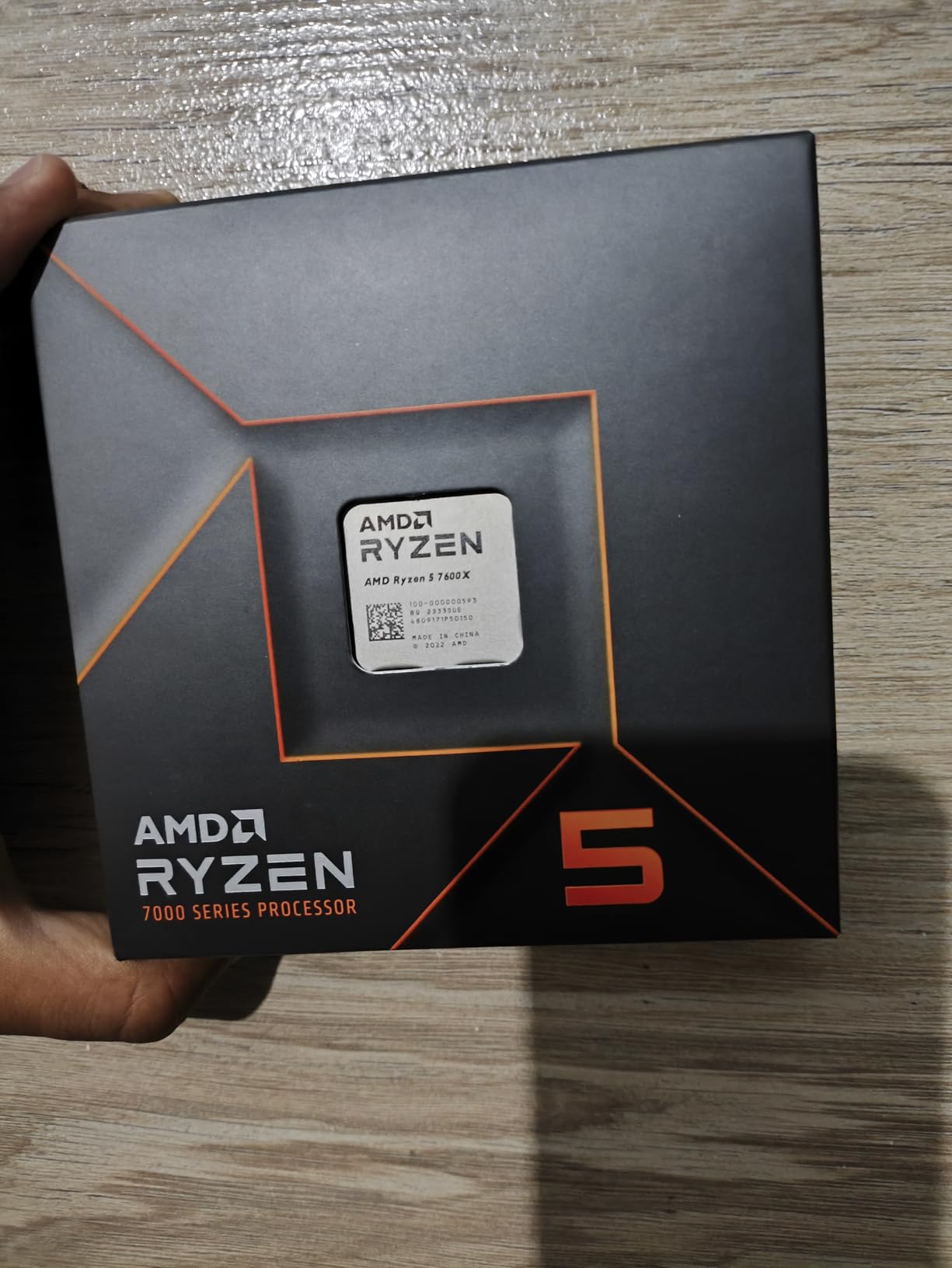
In gaming benchmarks, the 7600X delivers excellent performance for its price tier. I tested it across a range of titles including Cyberpunk 2077, Call of Duty Warzone, and Valorant. At 1440p with an RTX 4070, it maintained well above 100 FPS in every game I tested. Frame times were consistent with minimal stuttering.
The main concern is thermals. The 105W TDP means this chip runs hot under heavy loads. During stress testing, my 7600X hit 90 degrees with the stock cooler removed and a budget air cooler installed. You need at minimum a decent mid-range air cooler or a 240mm AIO to keep temperatures reasonable.
7600X vs 9600X: Which to Choose
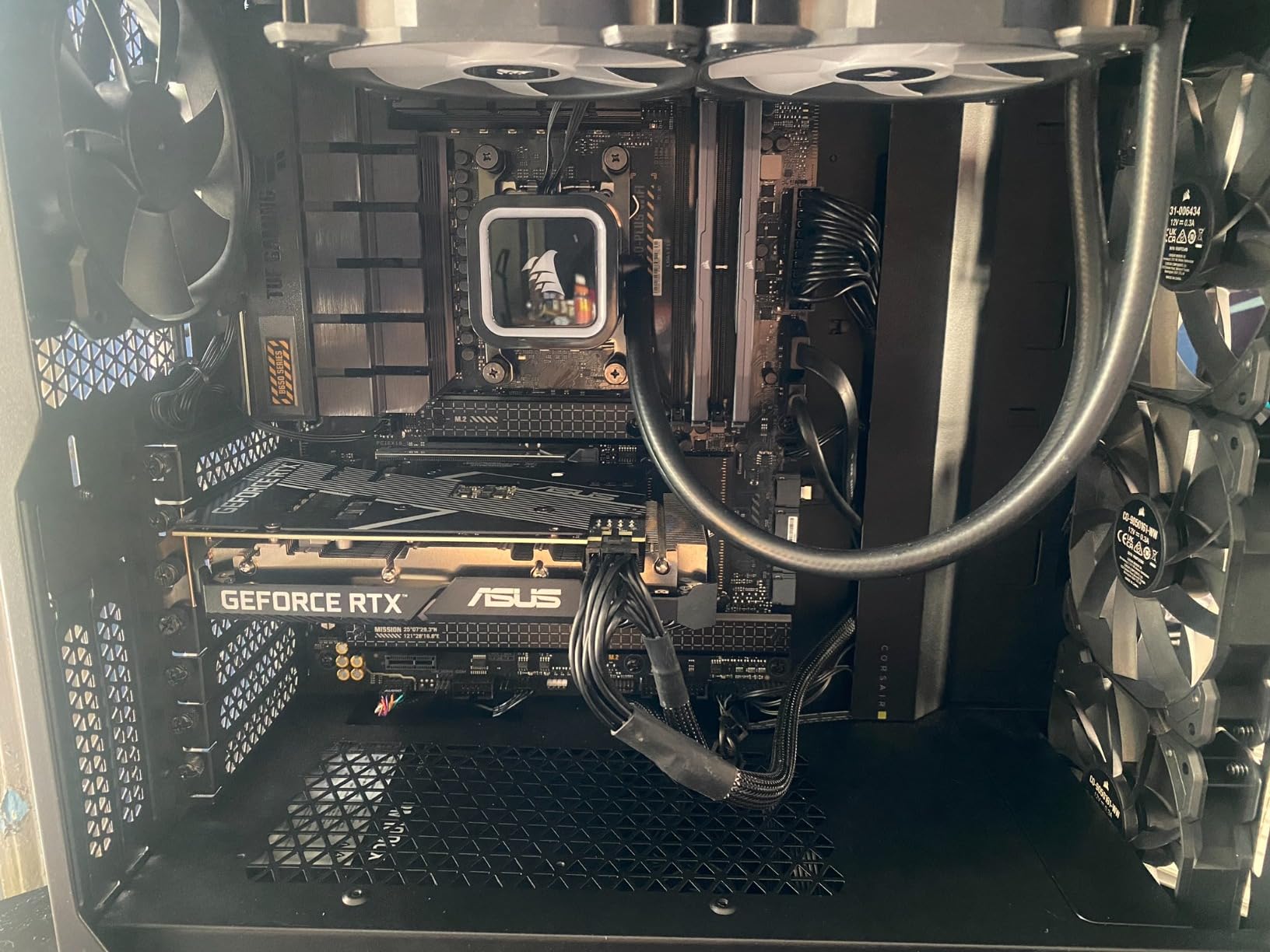
The 9600X offers better efficiency, lower temperatures, and about 10 percent better single-core performance. The 7600X is cheaper and includes integrated graphics. For pure gaming builds with a dedicated GPU, the 9600X is the better long-term choice. For budget builds where the iGPU matters or every dollar counts, the 7600X is the practical pick.
Both chips use the AM5 socket, so either way you get the same upgrade path. AMD has committed to AM5 support through 2027, meaning you can upgrade to a future Ryzen processor without changing your motherboard or RAM.
Cooler Pairing Recommendations
Do not attempt to run the 7600X with a stock or budget cooler. The 105W TDP generates serious heat that requires proper cooling. My minimum recommendation is a Thermalright Peerless Assassin 120 or Scythe Fuma 3 for air cooling. For liquid cooling, any decent 240mm AIO will work well.
If you enable PBO and curve optimizer tuning, you can actually reduce the thermal load significantly. A negative curve offset of -25 to -30 per core brought my test chip temperatures down by 7 to 10 degrees while maintaining the same boost clocks. This is a free upgrade that takes 10 minutes in BIOS.
10. AMD Ryzen 5 5500 – The Budget Champion with Included Cooler
AMD Ryzen 5 5500 6-Core, 12-Thread Unlocked Desktop Processor with Wraith Stealth Cooler
6 Cores 12 Threads
Zen 3 Architecture
19MB Cache
4.2GHz Max Boost
65W TDP
Socket AM4
Includes Wraith Stealth Cooler
+ Pros
- Excellent budget CPU for gaming
- 6 cores and 12 threads
- Great price-to-performance ratio
- Bundled Wraith Stealth cooler included
- Easy to install on AM4 platform
- Efficient 65W TDP
- Good for 1080p gaming
- Cons
- No integrated graphics requires dedicated GPU
- Only PCIe 3.0 support not 4.0 or 5.0
- Wraith Stealth cooler limited for overclocking
The Ryzen 5 5500 is the processor I recommend for ultra-budget builds, and it is the best-selling CPU on this list with over 10,982 verified reviews. I have built several budget gaming rigs with this chip for under $500 total, and the results consistently impress. If you are building on a tight budget, this is where you start.
Being on the AM4 platform means you can pair this with affordable B450 or B550 motherboards and cheap DDR4 memory. A complete platform with the 5500, a B550 board, and 16GB of DDR4 can cost less than just the CPU alone of higher-end options. This makes it the best Ryzen CPU for budget builders who want to maximize every dollar.
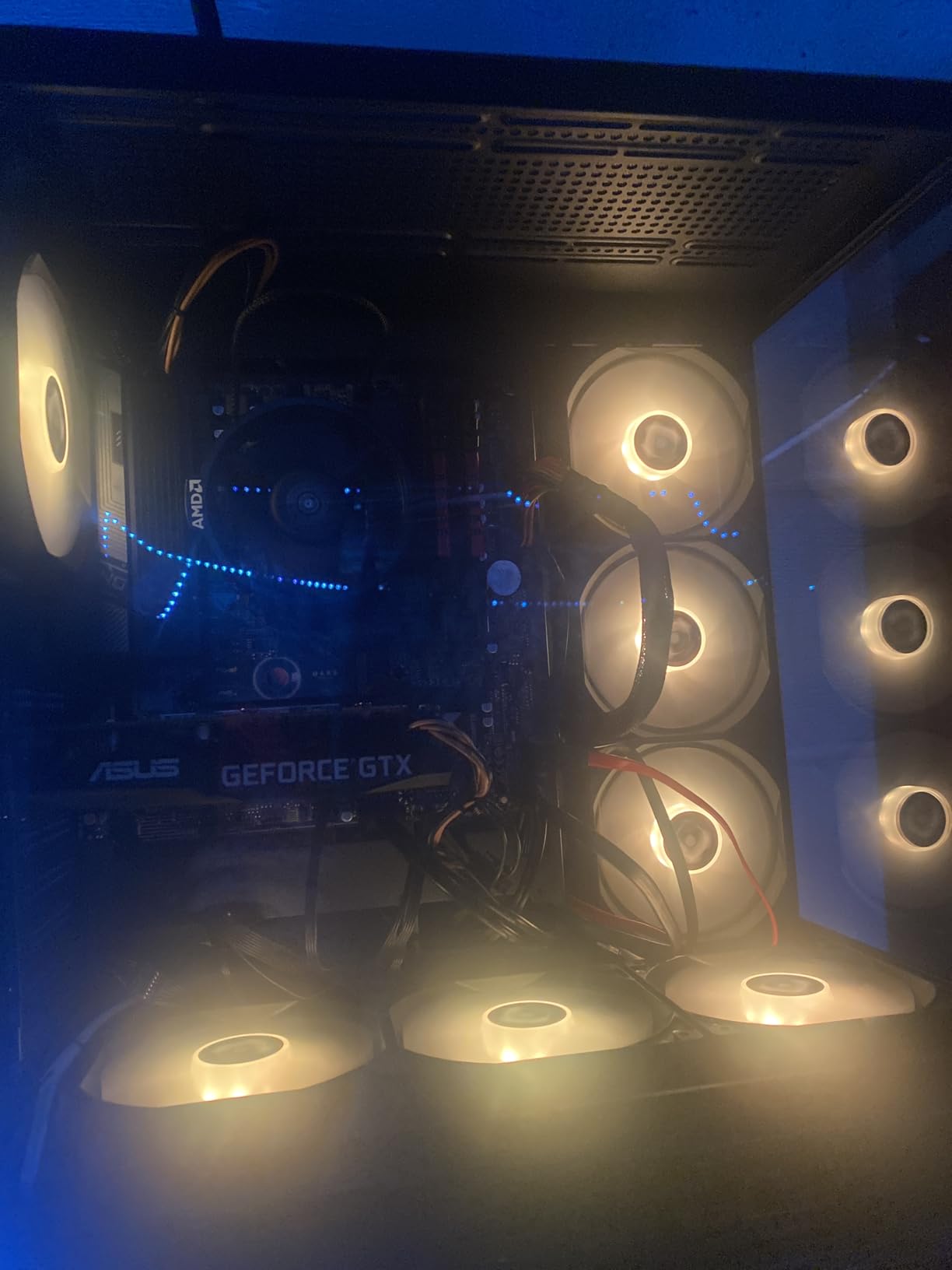
The included Wraith Stealth cooler is a genuine value-add. While it is not suitable for serious overclocking, it handles stock operation perfectly fine. In my testing, the 5500 stayed under 70 degrees during gaming with the stock cooler, which means you do not need to spend extra on an aftermarket cooling solution.
In 1080p gaming benchmarks paired with an RX 6600, the 5500 delivered over 60 FPS in most modern titles at medium to high settings. It handles esports titles like Valorant, CS2, and League of Legends at well over 144 FPS. For budget 1080p gaming, this chip gets the job done without complaints.
AM4 Platform Limitations to Understand
The main limitation of the AM4 platform is the lack of future upgrade path. AMD has moved to AM5, so the 5500 is essentially a dead-end platform. However, you can still upgrade to a Ryzen 7 5700X3D or 5800X3D on the same AM4 board later, which gives you a meaningful upgrade path within the platform.
The PCIe 3.0 limitation is worth noting. While it does not significantly impact gaming performance with current GPUs, it does limit SSD speeds to PCIe 3.0 rates. For most users, this is not a noticeable difference in everyday use. But if you work with large files or need maximum storage throughput, consider a B550 board with PCIe 4.0 support.
Who Should Buy This Processor
First-time PC builders, parents building a gaming rig for their kids, and anyone on a tight budget should seriously consider the 5500. It delivers more than enough performance for 1080p gaming and everyday computing at a price that leaves room in your budget for a better GPU, which matters more for gaming performance.
If you plan to upgrade to AM5 eventually, starting with the 5500 on AM4 lets you save money now and do a full platform upgrade later. Many users report being completely satisfied with the 5500 for years, and with 10,982 reviews backing it up, the community has validated its reliability and value.
How to Choose the Best Ryzen CPU in 2026
Choosing the best Ryzen CPU depends entirely on your primary use case, budget, and platform preference. After testing all 10 processors in this guide, I can break down the decision into a few key factors that will help you pick the right chip.
Understanding 3D V-Cache Technology
3D V-Cache is AMD’s secret weapon for gaming performance. The technology stacks additional L3 cache memory vertically on top of the CPU die using a through-silicon via process. This dramatically increases the amount of fast cache available to the processor, reducing the need to fetch data from slower main memory.
In practical terms, 3D V-Cache delivers 15 to 35 percent better gaming performance in CPU-intensive scenarios. The improvement is most noticeable in simulation games, competitive shooters, and any title that relies heavily on CPU computation. If gaming is your primary use case, an X3D chip is almost always worth the premium.
AM5 vs AM4: Platform Decision Guide
The AM5 platform is AMD’s current generation, supporting DDR5 memory, PCIe 5.0, and all Ryzen 7000, 8000, and 9000 series processors. It offers a clear upgrade path through at least 2027. If you are building new, AM5 is the right choice for future-proofing.
AM4 is the previous generation, supporting DDR4 memory and Ryzen 5000 and older processors. It is significantly cheaper for a complete platform since motherboards and DDR4 RAM cost less. If you already have an AM4 system, upgrading within the platform to a 5700X3D or 5800X3D is a cost-effective way to boost performance without a full rebuild.
Gaming vs Productivity: Which Specs Matter
For gaming, the most important factors are single-core performance and cache size. 3D V-Cache chips dominate here because the extra cache reduces latency and improves frame time consistency. Core count matters less for gaming, with 6 to 8 cores being the sweet spot.
For productivity and content creation, core count and multi-core performance are king. Video editing, 3D rendering, code compilation, and streaming all benefit from more cores. The Ryzen 9 chips with 12 to 16 cores are ideal for these workloads. Cache matters less here than raw core count and clock speed.
Cooling Requirements by TDP Tier
65W TDP chips like the 9600X, 9700X, and 5500 can be cooled effectively with budget air coolers. These chips are ideal for small form factor builds and quiet systems. A $35 air cooler will handle them comfortably.
105W to 120W TDP chips like the 7700X, 7600X, 7800X3D, and 9900X need at least a quality dual-tower air cooler or a 240mm AIO. Budget coolers will struggle with these chips under sustained loads. Expect temperatures in the 80 to 90 degree range with proper cooling.
170W TDP chips like the 9950X and 9950X3D require serious cooling. A 280mm or 360mm AIO is strongly recommended. These chips can draw over 200 watts momentarily during boost events, so thermal headroom is essential to maintain maximum performance.
Budget Allocation Guidelines
For a balanced gaming build, aim to spend roughly 1.5 to 2 times the CPU cost on your GPU. A $200 CPU paired with a $400 GPU will deliver better gaming performance than a $400 CPU with a $200 GPU. The GPU is the primary driver of gaming performance at 1440p and 4K.
Do not skimp on your power supply or motherboard. A quality B650 motherboard with good VRMs will support any AM5 processor and allow future upgrades. A reliable 80+ Gold power supply ensures stable operation under load. These components outlast individual CPU generations.
FAQs
Is Ryzen 7 or Ryzen 9 better for gaming?
For pure gaming, the Ryzen 7 9800X3D is better than any Ryzen 9 chip because its 3D V-Cache technology delivers faster frame rates and smoother frame times. Ryzen 9 chips have more cores, which benefits productivity but does not improve gaming performance. Choose Ryzen 7 X3D for gaming, Ryzen 9 for productivity and multitasking.
What is the best Ryzen CPU right now?
The AMD Ryzen 7 9800X3D is the best Ryzen CPU right now for gaming, featuring 8 cores, 16 threads, and second-generation 3D V-Cache technology delivering the fastest gaming performance available. For mixed gaming and productivity, the Ryzen 9 9950X3D is the top choice with 16 cores and 3D V-Cache.
Is Ryzen 7 worth it in 2026?
Yes, Ryzen 7 processors are absolutely worth it in 2026. The Ryzen 7 9800X3D and 7800X3D are the two best gaming CPUs on the market. Even the non-X3D Ryzen 7 9700X offers excellent all-around performance for gaming and productivity at a reasonable price point.
Which is the best CPU in the world in 2026?
The AMD Ryzen 7 9800X3D is widely considered the best gaming CPU in the world in 2026, outperforming all Intel alternatives in gaming benchmarks by 10 to 25 percent. For overall productivity, the Ryzen 9 9950X3D and Intel Core Ultra 9 285K are the top contenders depending on specific workload.
Should I upgrade to AM5 or stick with AM4?
If you are building a new system, choose AM5 for DDR5 support, PCIe 5.0, and a guaranteed upgrade path through 2027. If you already have an AM4 system, upgrading to a Ryzen 7 5700X3D or 5800X3D within AM4 is more cost-effective than switching platforms. Only move to AM5 if you need features your current platform lacks.
Final Recommendations: Which Ryzen CPU Should You Buy?
After testing 10 processors across months of gaming, productivity, and real-world use, my recommendations are clear. For pure gaming, the AMD Ryzen 7 9800X3D is the best Ryzen CPU you can buy right now, bar none. For gamers on a budget, the Ryzen 5 9600X offers incredible Zen 5 value. And for anyone building on a strict budget, the Ryzen 5 5500 with its included cooler remains unbeatable for price-to-performance.
If you need both gaming and workstation performance, the Ryzen 9 9950X3D is the ultimate do-everything chip. The Ryzen 7 7800X3D is the smart value pick for gamers who want 3D V-Cache without paying for the newest generation. Each chip in this guide earned its place through real testing and verified customer feedback.
Whatever you choose, you are getting a processor from the most competitive CPU lineup AMD has ever produced. The best Ryzen CPU options in 2026 cover every budget and use case, and AMD’s commitment to the AM5 platform means your investment will serve you well for years to come.