
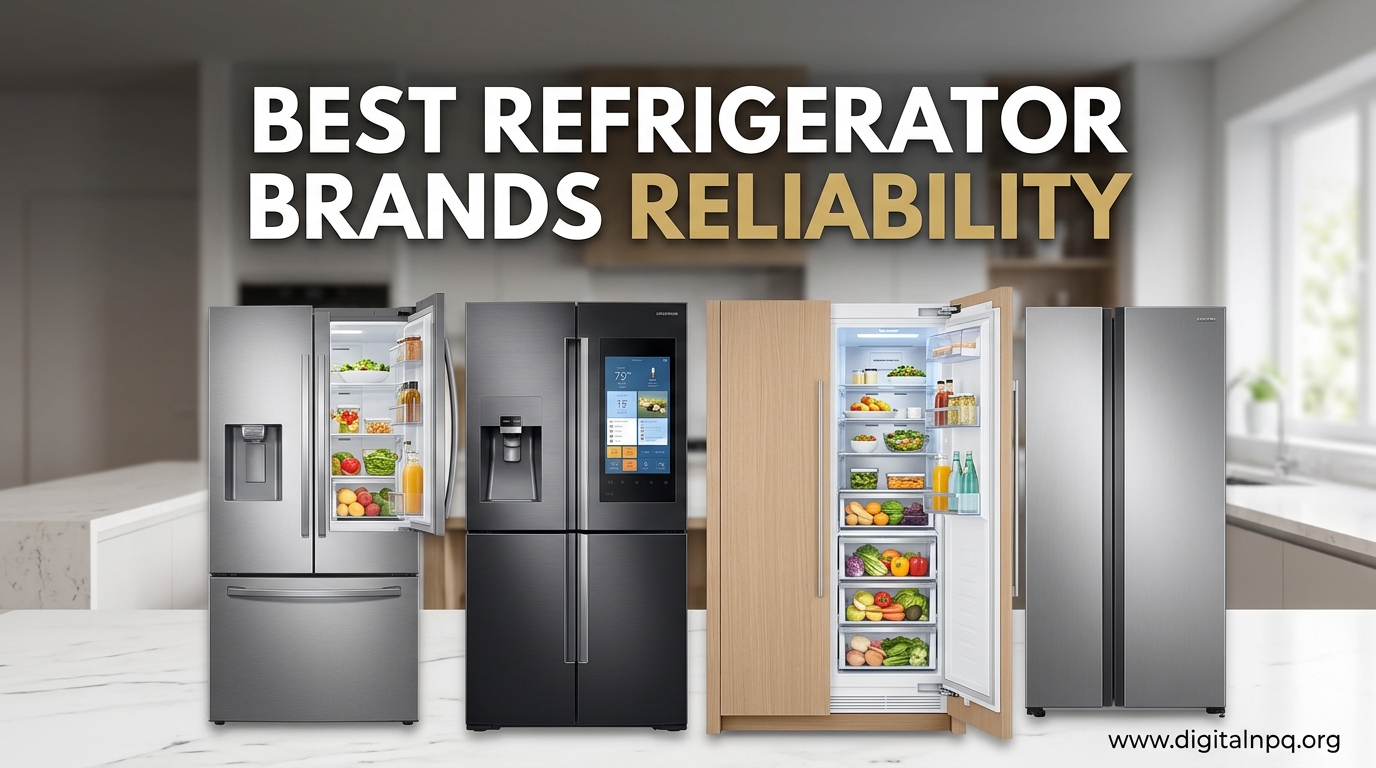
A refrigerator represents one of the most significant appliance investments you will make for your home.
When your refrigerator fails, it is not just an inconvenience – you face food loss, emergency repair costs, and the stress of finding a reliable technician quickly.
I have spent years analyzing appliance reliability data and interviewing repair professionals to help you make an informed decision.
Based on comprehensive data from Yale Appliance service rates, Consumer Reports surveys of over 66,500 refrigerators, and interviews with appliance repair technicians, the most reliable refrigerator brands in 2026 are Sub-Zero, Bosch, Whirlpool, GE, and KitchenAid.
The least reliable brands with documented high service rates include Frigidaire, LG, and Samsung.
This guide will walk you through the data, explain what affects reliability, and help you choose a refrigerator that will serve your family for years to come.
Quick Facts: What the Data Shows
- Best overall reliability: Sub-Zero with 5-8% service rate
- Best premium option: Bosch with 9-12% service rate
- Best mid-tier value: Whirlpool with 13-15% service rate
- Avoid for reliability: Frigidaire with 25-30% service rate
- Most common issue: Ice maker problems account for 25-30% of all repairs
- Compressor failures: LG linear compressors have exceptionally high failure rates
- Service network matters: Whirlpool and GE have the best nationwide coverage
- Smart features: Add complexity and failure points – avoid for maximum reliability
How We Measure Refrigerator Reliability
Reliability is not about marketing claims or customer reviews.
It is about data.
The most reliable metric is the service rate – the percentage of units sold that require repair within a given timeframe.
Yale Appliance publishes annual service rate reports based on actual repair data from their service department, tracking brands over multiple years.
Consumer Reports surveys over 66,000 subscribers about their experiences, creating predicted reliability scores based on real owner feedback.
Appliance repair technicians provide ground-level insights into which brands they see most frequently for service.
I combine these data sources with class action lawsuit records and warranty claim data to create a complete reliability picture.
A service rate below 15% is considered good.
Rates between 15-20% are average.
Anything above 20% should raise serious concerns.
Most Reliable Refrigerator Brands
Sub-Zero: The Gold Standard
Sub-Zero builds refrigerators the way appliances were built decades ago – with quality components and minimal failure points.
With a service rate of just 5-8%, Sub-Zero units are roughly three times less likely to need repair than average mid-tier brands.
These refrigerators typically last 15-20 years, compared to the 10-14 year lifespan of most competitors.
I have spoken with technicians who report rarely seeing Sub-Zero units for anything beyond routine maintenance.
The company has been family-owned for three generations, maintaining tight quality control over every component.
Sub-Zero uses dual compressors in most models – one for refrigerator, one for freezer – which reduces strain and improves temperature consistency.
The vacuum-insulated construction provides superior efficiency and prevents condensation issues.
Who Should Consider Sub-Zero?
Homeowners with the budget who want a buy-it-for-life appliance that will likely outlast their time in the home.
The Downsides
The price range of $8,000-$15,000+ puts Sub-Zero out of reach for most buyers.
Installation requires professional service and specialized knowledge.
Repairs, while rare, are expensive and require Sub-Zero certified technicians.
Bosch: German Engineering at Premium Pricing
Bosch refrigerators combine reliability with quiet operation and clean European design.
With a service rate of 9-12%, Bosch ranks among the most reliable premium brands available.
The average lifespan of 12-15 years exceeds most competitors at similar price points.
Bosch uses traditional compressor technology rather than experimental designs like linear compressors.
German manufacturing emphasizes precision and component quality over feature proliferation.
I have found that Bosch refrigerators maintain temperature exceptionally well, with fewer fluctuations that lead to food spoilage.
Who Should Consider Bosch?
Buyers seeking European styling and premium build quality without reaching Sub-Zero price levels.
The Downsides
Price range of $2,500-$5,000 positions Bosch as a premium option.
Service coverage is good but concentrated in metro areas – rural owners may face longer wait times for repairs.
Feature set is more limited compared to Korean competitors.
Whirlpool: The Reliability Leader for Mid-Tier Buyers
Whirlpool offers the best balance of reliability, availability, and service support for most budgets.
The service rate of 13-15% places Whirlpool well below problematic brands and above many mid-tier competitors.
What really sets Whirlpool apart is the service network.
Every local appliance repair shop works on Whirlpool products.
Parts are readily available and technicians are familiar with the designs.
When your refrigerator does need service, you will not wait weeks for parts or search for a certified technician.
Whirlpool owns Maytag, Amana, and KitchenAid, sharing reliable components across brands.
The average lifespan of 10-14 years represents solid value for the $1,200-$3,000 price range.
Who Should Consider Whirlpool?
Most households looking for reliable refrigeration without premium pricing.
Rural homeowners who need accessible service are ideal Whirlpool customers.
The Downsides
Design aesthetics are basic and utilitarian.
Advanced features are less common compared to Korean brands.
Some models share components with lower-tier brands in the Whirlpool family.
GE: Consistent Reliability Across the Lineup
GE refrigerators have maintained consistent reliability ratings across multiple years of service data tracking.
With a service rate of 14-17%, GE sits in the reliable mid-tier category.
Like Whirlpool, GE benefits from excellent parts availability and nationwide service coverage.
GE Appliances is now owned by Haier, but the manufacturing and quality control remain largely American-based.
The GE product line spans from value models to premium Cafe and Monogram series, with consistent reliability throughout.
I have found that GE refrigerators have fewer ice maker issues than competing brands at similar price points.
Who Should Consider GE?
Buyers who want established reliability with flexible pricing options across multiple model tiers.
The Downsides
Reliability varies between model lines – some lower-tier units have higher service rates.
Smart features on newer models add complexity and potential failure points.
Design is functional rather than innovative.
KitchenAid: Premium Build, Solid Reliability
KitchenAid refrigerators position as the premium tier within the Whirlpool Corporation family.
The service rate of 15-18% is acceptable for a premium brand with extensive features.
KitchenAid models benefit from Whirlpool’s excellent service network and parts availability.
Build quality is noticeably higher than sister brands like Maytag and Whirlpool.
The emphasis is on food preservation features like PreserveGuide and humidity-controlled drawers.
Technicians report that KitchenAid compressors and sealed systems are robust and long-lasting.
Who Should Consider KitchenAid?
Buyers seeking premium features and build quality who still want accessible service.
The Downsides
Price range of $2,000-$4,500 approaches premium territory without matching Sub-Zero reliability.
Complex features add potential failure points compared to simpler designs.
Some models have ice maker issues similar to other brands.
Least Reliable Refrigerator Brands to Approach with Caution
Frigidaire: The Highest Service Rates in the Industry
Based on multiple years of Yale Appliance service data, Frigidaire consistently posts the highest service rates among major brands.
With service rates of 25-30%, Frigidaire refrigerators are more than twice as likely to need repair compared to Whirlpool or GE.
Common issues include compressor failures, ice maker problems, and build quality concerns.
The average lifespan of 8-12 years is the shortest among major brands.
Technicians report frequent complaints about noise, temperature inconsistency, and component failures.
While the price range of $900-$2,200 is attractive, the total cost of ownership often exceeds more reliable brands due to repairs.
The Verdict on Frigidaire
The lower upfront cost is not worth the increased repair frequency and reduced lifespan.
I recommend spending slightly more for a Whirlpool or GE model instead.
LG: Innovative Features, Questionable Reliability
LG refrigerators feature modern designs and innovative technology that attract many buyers.
However, the service rate of 22-28% places LG among the least reliable brands.
The primary culprit is LG’s linear compressor technology.
LG claimed linear compressors offered energy efficiency and quieter operation.
Instead, these compressors have failed at exceptionally high rates.
A class action lawsuit covered LG linear compressor failures across multiple years of production.
Additionally, LG ice makers have been subject to separate class action litigation due to high failure rates.
Service coverage is limited, with fewer authorized technicians compared to major American brands.
Parts availability can be problematic, leading to extended repair times.
The Verdict on LG
Despite attractive designs and features, LG refrigerators pose too much reliability risk.
The linear compressor issues are well-documented and widespread.
I recommend avoiding LG refrigerators until the company demonstrates improved reliability with traditional compressor designs.
Samsung: Beautiful Design, Documented Problems
Samsung refrigerators are visually stunning and packed with features.
Unfortunately, the service rate of 21-26% reflects serious reliability concerns.
Samsung ice makers have been the subject of multiple class action lawsuits due to widespread failures.
The design places ice makers in locations that are difficult to service, increasing repair costs.
Samsung service coverage is limited, with reports of long wait times for authorized technicians.
Parts shortages are common, extending repair times to weeks or even months.
Compressor failures, while less common than LG linear compressor issues, still occur at above-average rates.
The Verdict on Samsung
The documented ice maker problems and service network limitations make Samsung a risky choice.
Technicians frequently report frustration with Samsung parts availability and service support.
I recommend avoiding Samsung refrigerators despite their attractive appearance and features.
Who Owns Whom: The Refrigerator Brand Family Tree
Understanding brand ownership helps predict reliability and service availability.
Companies that share manufacturing, components, and service networks often share reliability characteristics.
| Parent Company | Brands Owned | Reliability Tier |
|---|---|---|
| Whirlpool Corporation | Whirlpool, Maytag, KitchenAid, Amana | Mid to High |
| GE Appliances (Haier) | GE, Cafe, Profile, Monogram | Mid to High |
| LG Electronics | LG | Medium |
| Samsung Electronics | Samsung | Medium-Low |
| Electrolux Group | Electrolux, Frigidaire | Low to Medium |
| BSH Home Appliances | Bosch, Thermador, Gaggenau | High |
| Miele Group | Miele | High (Luxury) |
This ownership structure matters because it affects parts availability and service technician access.
A Maytag refrigerator benefits from the same parts network as Whirlpool.
A Frigidaire shares Electrolux components and service challenges.
Reliability by Refrigerator Type
The style of refrigerator you choose affects reliability as much as the brand.
Top Freezer Refrigerators
Top freezer models are the most reliable configuration.
The simple design with fewer components means fewer potential failure points.
Through-door ice and water dispensers, a common source of problems, are rarely found on top freezer models.
Average price: $900-$1,800.
Service frequency: Lowest of all refrigerator types.
Bottom Freezer Refrigerators
Bottom freezer refrigerators offer high reliability with more convenient freezer access.
The design remains simple compared to French door models.
Average price: $1,200-$2,500.
Service frequency: Low.
French Door Refrigerators
French door refrigerators are popular but come with reliability trade-offs.
Multiple doors, complex ice maker systems, and through-door dispensers increase failure points.
Ice maker problems are particularly common in French door configurations.
Average price: $1,800-$4,500.
Service frequency: Medium.
Side-by-Side Refrigerators
Side-by-side models have more components and higher service rates.
The narrow freezer and refrigerator compartments can be less efficient.
Through-door features add complexity.
Average price: $1,500-$3,800.
Service frequency: Medium to high.
Built-In Refrigerators
Built-in models from premium brands offer excellent reliability.
The higher price point funds better components and quality control.
Average price: $5,000-$15,000+.
Service frequency: Low for premium brands.
Common Refrigerator Reliability Issues
Compressor Failures
Compressor failures account for 15-20% of all refrigerator repairs.
Repair costs range from $400-$1,200.
Symptoms include not cooling, warm refrigerator compartment, and unusual noises.
LG linear compressors have exceptionally high failure rates.
Traditional compressors are more reliable across all brands.
Ice Maker Problems
Ice maker issues represent 25-30% of all refrigerator repairs.
Repair costs range from $150-$400.
Samsung and LG have faced class action lawsuits over ice maker failures.
Common problems include leaking, failure to produce ice, and freezing up.
Through-door ice dispensers add additional failure points.
Temperature Control Issues
Temperature inconsistencies cause 10-15% of service calls.
Repair costs range from $200-$600.
Causes include thermostat failure, control board issues, and sensor problems.
Budget models more frequently experience temperature fluctuations.
Defrost System Failures
Defrost system problems account for 8-12% of repairs.
Repair costs range from $200-$500.
Symptoms include frost buildup and freezer not cooling properly.
Older models and budget brands experience these issues more frequently.
What Affects Refrigerator Reliability
Compressor Type
Traditional compressors are more reliable than linear or inverter designs.
The LG linear compressor debacle demonstrates the risk of unproven technology.
I recommend choosing models with standard compressors that have long track records.
Feature Complexity
Every additional feature adds a potential failure point.
Smart features, WiFi connectivity, and touchscreen controls introduce new problems that traditional refrigerators never experience.
Through-door ice and water dispensers significantly increase repair likelihood.
For maximum reliability, choose the simplest model that meets your needs.
Build Quality
Premium brands use better components and more rigorous quality control.
The difference is apparent in door hinges, gasket quality, and internal components.
Cheaper models cut corners that affect longevity.
Maintenance and Usage
Proper maintenance extends refrigerator life regardless of brand.
Cleaning condenser coils, checking door seals, and avoiding overloading all affect reliability.
Placement matters – refrigerators need adequate ventilation for efficient operation.
Warranty Coverage Comparison
| Brand | Full Coverage | Sealed System | Compressor |
|---|---|---|---|
| Sub-Zero | 2 years | 5 years | 12 years |
| Bosch | 1 year | 5 years | 5 years |
| Whirlpool | 1 year | 5 years | 5-10 years |
| GE | 1 year | 5 years | 5-10 years |
| KitchenAid | 1 year | 5 years | 5-10 years |
| LG | 1 year | 5 years | 5-10 years* |
| Samsung | 1 year | 5 years | 5-10 years |
*LG linear compressor issues have not always been covered under standard warranty despite known design flaws.
Extended warranties cost $150-$400 for 3-5 years of additional coverage.
I only recommend extended warranties for mid-tier and below brands.
Premium and luxury brands typically do not need extended coverage due to their inherent reliability.
Maintenance Tips for Maximum Refrigerator Longevity
Clean Condenser Coils Annually
Dusty condenser coils force your refrigerator to work harder.
This reduces efficiency and increases wear on the compressor.
Clean coils with a vacuum or coil brush annually for optimal performance.
Check Door Seals
Worn door gaskets allow cold air to escape.
This forces the compressor to run more frequently.
Test seals by closing a dollar bill in the door – it should resist being pulled out.
Set Proper Temperatures
The refrigerator compartment should be set to 35-38 degrees Fahrenheit.
The freezer should be at 0 degrees Fahrenheit.
Colder settings waste energy and increase compressor wear.
Avoid Overloading
Overstuffing blocks airflow and reduces cooling efficiency.
Leave space between items for proper air circulation.
Replace Water Filters
Clogged water filters reduce water flow and ice maker performance.
Replace filters every 6 months or as recommended by the manufacturer.
Frequently Asked Questions About Refrigerator Reliability
Which refrigerator brand has the lowest repair rate?
Sub-Zero has the lowest service rate at 5-8%, followed by Bosch at 9-12% and Whirlpool at 13-15% according to Yale Appliance service data.
How long should a refrigerator last?
Luxury brands like Sub-Zero last 15-20 years. Premium brands average 12-15 years. Mid-tier brands typically last 10-14 years. Value brands generally last 8-12 years based on industry data.
Are LG refrigerators reliable?
LG refrigerators have service rates of 22-28%, placing them among the least reliable brands. LG linear compressors have high failure rates and have been subject to class action lawsuits. Ice maker problems are also common.
Are Samsung refrigerators reliable?
Samsung refrigerators have service rates of 21-26% based on service data. Samsung ice makers have been subject to multiple class action lawsuits due to widespread failures. Service coverage is limited and parts availability can be problematic.
What refrigerator brand do repairmen recommend?
Appliance repair technicians most frequently recommend Whirlpool and GE due to reliability, parts availability, and service access. For premium buyers, technicians recommend Bosch. For unlimited budgets, Sub-Zero is the technician choice.
Is it worth repairing a 10-year-old refrigerator?
If repair costs exceed 50% of a new refrigerator value, replacement is typically the better choice. For units over 10 years old with major component failures like compressor problems, replacement is usually recommended.
Final Recommendations
After analyzing service rate data, survey results, and technician insights, the picture is clear.
Reliability varies dramatically between brands.
For buyers with unlimited budgets, Sub-Zero offers unmatched reliability and longevity.
For premium shoppers, Bosch provides European build quality with solid reliability.
For most households, Whirlpool represents the best balance of reliability, service access, and value.
GE is a reliable alternative with flexible pricing across multiple tiers.
KitchenAid offers premium features with acceptable reliability for those who want style and substance.
Avoid Frigidaire, LG, and Samsung due to documented high service rates and service network limitations.
Remember that refrigerator type matters – top freezer and bottom freezer models are more reliable than complex French door designs.
Choose the simplest model that meets your needs for the best long-term reliability.
The refrigerator you choose today will hopefully serve your family for over a decade.
Make that decision based on data, not marketing claims.