
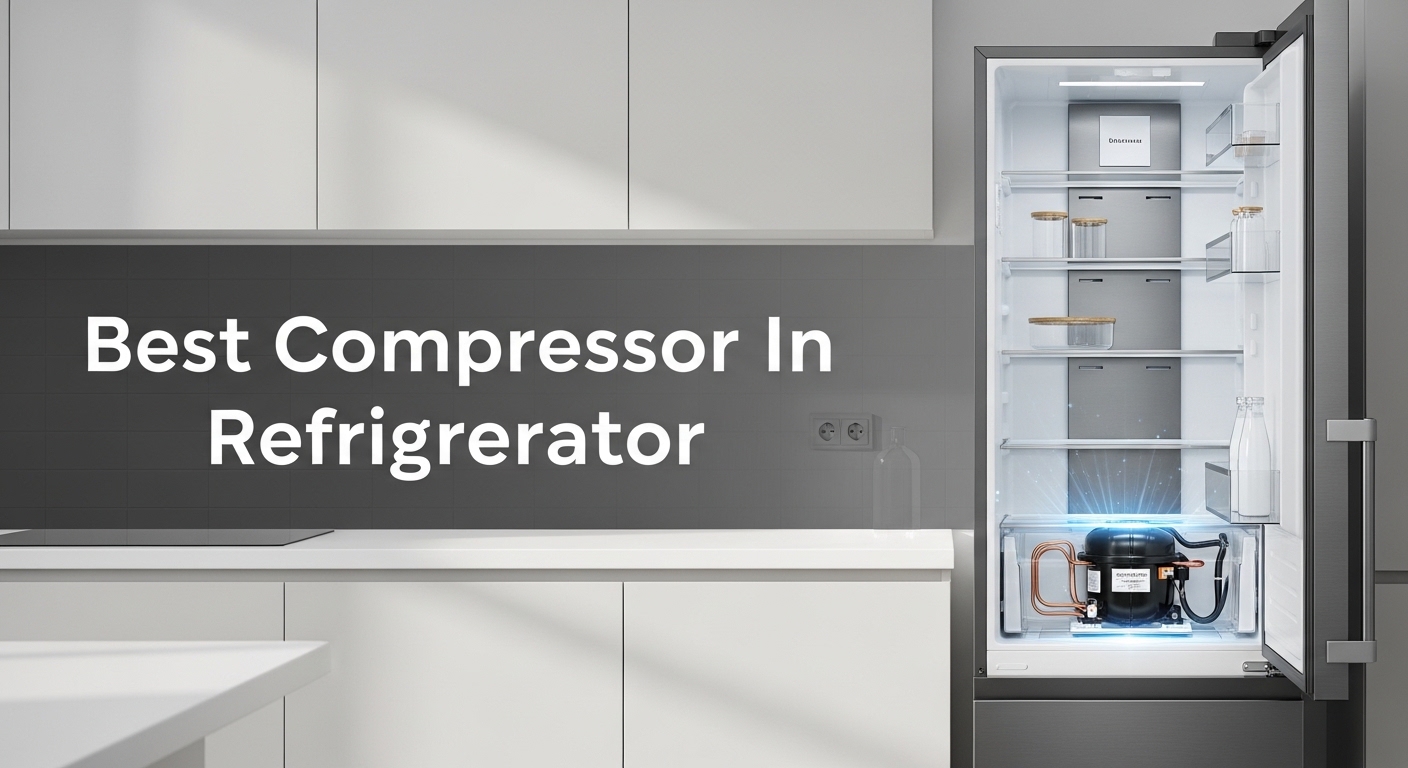
The compressor is the heart of your refrigerator. It’s the pump that circulates refrigerant and creates the cooling effect that preserves your food. When researching the best compressor in refrigerator options, digital inverter compressors from Samsung, Whirlpool, and GE are considered the most reliable choices, offering 20-32% energy savings, quieter operation, and longer lifespans compared to traditional reciprocating compressors.
This guide explains everything you need to know about refrigerator compressors, including types, brand reliability, warranty comparisons, and what to avoid.
What Is a Refrigerator Compressor?
A refrigerator compressor is a mechanical pump that compresses refrigerant gas and circulates it through the cooling system. Think of it like the human heart—just as your heart pumps blood throughout your body, the compressor pumps refrigerant through your refrigerator’s coils to remove heat.
The compressor is typically located at the bottom rear of your refrigerator. When you hear your fridge “running,” that’s the compressor working. It’s the most critical component because if it fails, the entire refrigerator stops cooling.
How Compressors Work?
The compression cycle works in four stages. First, the compressor pulls low-pressure refrigerant gas from the evaporator coils inside the fridge. Second, it compresses this gas into a high-pressure, high-temperature state. Third, the hot gas flows through the condenser coils on the back or bottom of the refrigerator, releasing heat into the surrounding air. Finally, the cooled refrigerant expands and circulates back to the evaporator to absorb heat from inside the refrigerator.
This continuous cycle is what keeps your food cold and frozen. The compressor is the only moving part in this sealed system, which is why its reliability determines the entire refrigerator’s lifespan.
Compressor Location Matters
Most modern refrigerators have the compressor at the bottom rear, accessible through a removable grille. Some premium models place compressors in a separate compartment to reduce noise transmission. Side-by-side refrigerators often have compressors centrally located, while French door models typically position them at the bottom for better weight distribution.
Top-freezer refrigerators historically had compressors at the top, which made them noisier since the compressor noise was closer to ear level. The shift to bottom-mounted compressors has significantly reduced perceived noise in modern refrigerators.
Types of Refrigerator Compressors
Understanding the different compressor types is essential for choosing a reliable refrigerator. Here’s a complete comparison:
| Compressor Type | Efficiency | Noise Level | Lifespan | Cost | Best For |
|---|---|---|---|---|---|
| Reciprocating | Standard | 45-55 dB | 10-15 years | $800-$1,800 | Budget-conscious buyers |
| Rotary | Better | 40-50 dB | 12-15 years | $1,000-$2,000 | Quieter operation needs |
| Inverter | Best (20-32% savings) | 40-55 dB | 15-20 years | $1,200-$3,000 | Energy efficiency focus |
| Linear | Good | 32-45 dB (quietest) | 2-5 years (LG problems) | $1,500-$3,500 | Maximum quiet needs |
| Scroll | Excellent | 35-45 dB | 15+ years | Premium pricing | Commercial use |
1. Reciprocating Compressor
Reciprocating compressors use a piston to compress refrigerant. They’re the most common type found in home refrigerators due to their affordability and proven reliability. These compressors run at a fixed speed—either fully on or fully off.
Pros: Affordable, proven reliability, easy to repair
Cons: Higher energy consumption, louder operation, more wear from frequent start-stop cycles
2. Rotary Compressor
Rotary compressors use a rotating mechanism instead of a piston. This design reduces friction and makes them quieter and more efficient than reciprocating models. They’re commonly found in larger refrigerators and commercial applications.
Pros: Quieter operation, better efficiency, fewer moving parts
Cons: More expensive than reciprocating, harder to find parts for repairs
3. Inverter Compressor
Inverter compressors are variable-speed motors that can adjust their cooling output based on demand. Instead of running at full power and shutting off, they run at lower speeds continuously to maintain temperature. This reduces energy consumption by 20-32% and extends compressor lifespan.
Pros: Best energy efficiency, quieter, longer lifespan, stable temperatures
Cons: 20-30% higher upfront cost, more complex repairs
How Inverter Technology Works?
Traditional compressors use single-speed motors that operate at full capacity whenever they run. This creates temperature fluctuations as the fridge cycles between fully on and fully off. Inverter compressors use variable-frequency drives to adjust motor speed precisely based on cooling demand.
When you add groceries to a warm refrigerator, the inverter compressor ramps up to maximum speed to cool the contents quickly. Once the desired temperature is reached, it slows to a gentle hum that maintains temperature without the energy-intensive start-stop cycles of traditional compressors.
Smart Inverter vs Digital Inverter
These terms refer to essentially the same technology with different branding. Samsung uses “Digital Inverter,” LG uses “Smart Inverter” for their BLDC (brushless DC) motors, and Whirlpool uses “Inverter Technology.” All deliver the same benefits of variable-speed operation and energy efficiency.
The key difference between LG’s Smart Inverter and their problematic Linear Compressor is that Smart Inverters use proven BLDC motor technology similar to Samsung’s Digital Inverter, while Linear Compressors use LG’s proprietary linear motion design that has been plagued by reliability issues.
4. Linear Compressor
Linear compressors use a piston that moves in a linear motion (back and forth) rather than circular rotation. This design reduces vibration and noise, making them the quietest option at 32-45 dB. However, LG’s linear compressors have faced significant reliability issues.
Pros: Quietest operation, reduced vibration, energy efficient
Cons: Known reliability issues (see LG lawsuit section), expensive repairs
5. Scroll Compressor
Scroll compressors use two interleaved spirals to compress refrigerant. They’re known for smooth, quiet operation and high efficiency but are primarily used in commercial applications rather than residential refrigerators.
Pros: Extremely quiet, highly efficient, very reliable
Cons: Limited residential availability, higher cost
Inverter vs Linear Compressor: Which Is Better?
This is one of the most common questions when researching refrigerators. Here’s a detailed comparison:
| Feature | Digital Inverter | Linear Compressor |
|---|---|---|
| Technology | Variable speed motor | Linear piston motion |
| Noise Level | 40-55 dB | 32-45 dB (quieter) |
| Energy Efficiency | 20-32% savings vs standard | 15-25% savings vs standard |
| Reliability | Proven track record | Known issues (LG lawsuit) |
| Lifespan | 15-20 years | 2-5 years (affected LG models) |
| Brands | Samsung, Whirlpool, GE | LG (primarily) |
Bottom Line: Digital inverter compressors are the better choice for reliability and energy efficiency. While linear compressors are slightly quieter, the known failure issues with LG’s linear compressors make them a risky investment.
Brand Reliability Rankings
Not all brands use the same compressor quality. Here’s how major brands compare based on compressor reliability:
| Brand | Compressor Type | Reliability Score | Warranty | Key Notes |
|---|---|---|---|---|
| Samsung | Digital Inverter | High | 10 years parts, 5 years labor | Best warranty, proven reliability |
| Whirlpool | Varies (often Embraco) | High | 10 years parts (select models) | Most reliable overall |
| GE | Varies | High | 5-10 years (model dependent) | High J.D. Power ranking |
| LG | Linear/Smart Inverter | Controversial | 10 years parts | Lawsuit issues with linear models |
| Sub-Zero | Premium | Very High | 2-5 years full | Premium longevity, high cost |
Expert Recommendation: Whirlpool is consistently ranked most reliable by appliance experts due to their use of quality compressors (often Embraco) and proven durability. Samsung’s Digital Inverter technology offers the best warranty protection with 10 years parts AND 5 years labor coverage.
Compressor Warranty Comparison
Warranty coverage is critical because compressor replacement costs $400-$1,200+. Here’s how brands compare:
| Brand | Parts Warranty | Labor Warranty | Notes |
|---|---|---|---|
| Samsung | 10 years | 5 years | Best overall coverage |
| True Commercial | 7 years | 7 years | Full parts and labor coverage |
| LG | 10 years | 1-2 years | Labor not covered after year 1-2 |
| Whirlpool | 10 years (select) | 1-5 years | Coverage varies by model |
| GE | 5-10 years | 1-2 years | Model dependent |
Important: Pay attention to labor coverage. A 10-year parts warranty may sound great, but if labor isn’t covered after the first year or two, you’ll still pay $400+ for repairs if the compressor fails.
Energy Efficiency Analysis
Inverter compressors offer significant energy savings compared to traditional fixed-speed compressors. Here’s the data:
| Compressor Type | Annual Energy Cost | Savings vs Standard | Payback Period |
|---|---|---|---|
| Reciprocating | $70-90 | Baseline | N/A |
| Inverter | $50-65 | 20-32% ($15-25/year) | 5-8 years |
| Linear | $55-70 | 15-22% ($10-20/year) | 8-12 years |
Energy Savings Calculation
If an inverter refrigerator costs $400 more upfront but saves $50-80 annually on electricity:
- Annual savings: $50-80
- Payback period: 5-8 years
- Lifespan benefit: 5+ additional years of operation
- Net savings over 15 years: $350-$800
Noise Level Comparison
For open-concept homes where the kitchen is near living areas, noise level is a critical factor:
| Compressor Type | Noise Level | Sound Comparison |
|---|---|---|
| Linear | 32-45 dB | Quiet library, whisper |
| Inverter | 40-55 dB | Normal conversation |
| Reciprocating | 45-55 dB | Moderate traffic |
Linear compressors are the quietest option, but given the reliability concerns with LG models, inverter compressors offer the best balance of noise and reliability.
Compressor Lifespan & Maintenance
How long should your refrigerator compressor last? Here’s what to expect by type:
- Reciprocating: 10-15 years typical
- Inverter: 15-20 years (less wear from variable speed)
- Linear: 2-5 years for affected LG models, 10+ years for others
- Average across all types: 8-10 years
- With proper maintenance: Up to 20 years
Why Inverter Compressors Last Longer?
The extended lifespan of inverter compressors comes from reduced mechanical stress. Traditional compressors experience high inrush current each time they start—similar to how a car uses more fuel when accelerating from a stop. By running continuously at variable speeds, inverter compressors avoid these stressful start-stop cycles.
The motor also operates within a narrower temperature range since it’s not constantly heating up from full-power operation and cooling down when off. This thermal stability reduces wear on bearings, windings, and other internal components.
Environmental Factors That Affect Lifespan
Your environment significantly impacts compressor longevity. Kitchens with high humidity cause more condensation on coils, leading to corrosion. Kitchens with poor ventilation trap heat around the refrigerator, forcing the compressor to work harder. Homes with voltage fluctuations can damage compressor electronics over time.
If you live in a hot climate, your refrigerator compressor will run more frequently to maintain temperature. Similarly, if your family opens the refrigerator door frequently, the compressor must work harder to remove the introduced heat. These factors don’t necessarily mean you’ll have problems, but they make proper maintenance even more important.
Maintenance Tips to Extend Compressor Life
- Clean condenser coils annually—dust buildup forces the compressor to work harder
- Ensure proper ventilation—leave 2-3 inches of clearance around the refrigerator
- Check door seals—worn gaskets make the compressor run more frequently
- Avoid overfilling—proper air circulation reduces compressor workload
- Set appropriate temperatures—35-38°F for fridge, 0°F for freezer
LG Linear Compressor Lawsuit: What You Need to Know
Warning: LG linear compressors have been subject to multiple class-action lawsuits affecting 1.6+ million refrigerators. Failures typically occur within 2-5 years of purchase.
Lawsuit Details
- Models affected: LG refrigerators with linear compressors from approximately 2026 through 2026
- Failure pattern: Compressor fails within 2-5 years, often just after the standard warranty expires
- Legal action: Multiple class-action lawsuits filed in the US and Canada
- LG response: Now offering “Smart Inverter” (BLDC) compressors as an alternative to linear technology
What This Means for Buyers?
If you’re considering an LG refrigerator, avoid models with linear compressors. Look for LG’s Smart Inverter models instead, which use more proven technology. Check the specifications carefully—the linear compressor is often marketed as a premium feature despite its reliability issues.
How to Identify LG Linear Compressor Models?
LG typically labels linear compressor models with terms like “Linear Compressor,” “SmartLinear,” or “Linear Cooling” in the product description and specifications. The energy guide label may also mention linear technology. If the specifications don’t clearly state the compressor type, contact LG customer service with the model number before purchasing.
Models manufactured after 2026 may include LG’s newer Smart Inverter technology instead of the problematic linear compressor. When shopping at retail stores, ask specifically for LG models with Smart Inverter compressors, not linear compressors.
LG’s Response and Current Offerings
LG has acknowledged the problems and now offers Smart Inverter compressors as an alternative. These use BLDC (brushless DC) motor technology similar to Samsung’s Digital Inverter and have shown much better reliability. However, LG still produces some models with linear compressors, so careful research is essential before purchase.
7 Warning Signs of Compressor Failure
Catching compressor problems early can save you from expensive repairs and food loss. Watch for these warning signs:
- Fridge not cooling properly—food spoiling faster than usual, ice cream melting
- Loud clicking or buzzing noises—especially when the compressor starts
- Compressor constantly running—never seems to shut off
- Food spoiling quickly—despite temperature settings
- Higher energy bills—sudden unexplained increase
- Fridge cycling on/off frequently—short cycling pattern
- Leaking refrigerant—oil pooling under the unit
If you notice these signs, contact a professional technician immediately. Continuing to run a failing compressor can cause complete system failure and make repairs impossible.
Understanding the Warning Signs
The clicking sound often heard with failing compressors is the start relay attempting to activate the motor but failing. This usually indicates worn internal bearings or a failing start capacitor. The buzzing sound without cooling typically means the compressor is trying to run but can’t compress refrigerant properly—often a sign of internal mechanical failure.
If your refrigerator runs continuously without cycling off, the compressor may have lost its ability to pressurize the refrigerant. This forces it to run constantly in an attempt to maintain temperature. Short cycling—frequently turning on and off—can indicate an overheating compressor or problems with the start relay.
Repair vs Replace Decision
When a compressor fails, you’ll face a decision between repair and replacement. Compressor replacement typically costs $400-$1,200+ including parts and labor. If your refrigerator is less than 8 years old and otherwise in good condition, repair may be worthwhile. If the refrigerator is over 10 years old, replacement is usually more economical since other components may also be nearing end of life.
Consider the energy efficiency of newer models too. A 2026 model with an inverter compressor could save $50-80 annually compared to an older refrigerator, offsetting some of the replacement cost over time.
Compressor Manufacturers: Who Makes the Best?
Many refrigerator brands don’t manufacture their own compressors—they buy from specialized manufacturers. Here are the major players:
- Embraco: Manufactures 1 in 5 compressors globally. Used by Whirlpool, GE, and others. Known for reliability and quality.
- Copeland: Premium commercial compressors, high-end residential applications
- Tecumseh: Budget-friendly options, good basic reliability
- Panasonic: High-quality inverter compressors used by multiple brands
- LG: Manufactures own linear and Smart Inverter compressors
- Samsung: Manufactures own Digital Inverter compressors
When shopping, look for refrigerators that specify Embraco compressors—they’re widely considered among the most reliable in the industry.
FAQ: Common Questions About Refrigerator Compressors
What is the best type of refrigerator compressor?
Digital inverter compressors are considered the best overall for residential refrigerators. They offer 20-32% energy savings compared to standard compressors, quieter operation (40-55 dB), and longer lifespans (15-20 years) due to reduced wear from variable-speed operation.
What brand of refrigerator has the least problems?
Whirlpool and LG are rated most reliable by appliance experts, though LG’s rating is complicated by their linear compressor problems. GE also ranks highly in J.D. Power studies for refrigerator reliability. For the fewest problems, choose Whirlpool models with Embraco compressors or Samsung models with Digital Inverter technology.
Which company makes the best compressor?
Embraco manufactures 1 in 5 compressors globally and is widely considered the most reliable OEM supplier. Other quality manufacturers include Copeland (premium), Panasonic (inverter specialists), and Tecumseh (budget-friendly). Samsung manufactures its own Digital Inverter compressors with excellent reliability.
What is the most reliable compressor type?
Rotary screw compressors have fewer moving parts, making them more reliable than other types for commercial applications. For residential refrigerators, reciprocating compressors have the longest proven track record, while inverter compressors show excellent reliability due to reduced wear from variable-speed operation. LG linear compressors have known reliability issues.
Is an inverter compressor refrigerator good?
Yes, an inverter compressor refrigerator is excellent. Benefits include better energy efficiency (20-32% savings), lower electricity bills, quieter performance, more stable cooling temperatures, and longer lifespan. The main disadvantage is the higher initial purchase cost (20-30% more than standard models).
What is the disadvantage of an inverter refrigerator?
The main disadvantages of inverter refrigerators are: higher initial purchase cost (20-30% premium), greater sensitivity to unstable power (may need voltage stabilizer), potentially slower initial cool-down compared to traditional models, and more complex/expensive repairs if they fail.
Which is better: digital inverter or linear compressor?
Digital inverter compressors are generally better due to superior energy efficiency and proven reliability. Linear compressors offer reduced vibration and lower noise levels (32-45 dB vs 40-55 dB) but have known failure issues from the LG lawsuit affecting 1.6+ million units. Samsung and Whirlpool use digital inverter compressors, which are recommended over LG linear compressors.
How long does a refrigerator compressor last?
Refrigerator compressors typically last 8-10 years on average. With proper maintenance including annual coil cleaning and ensuring proper ventilation, some compressors can last up to 20 years. Inverter compressors generally last longer due to reduced wear from variable-speed operation, while LG linear compressors have documented failures within 2-5 years.
Final Recommendations
When choosing a refrigerator based on compressor quality:
- Choose inverter technology for the best balance of efficiency, noise, and reliability
- Prioritize Samsung or Whirlpool for proven compressor reliability and excellent warranties
- Avoid LG linear compressors due to known failure issues and lawsuit history
- Look for Embraco compressors when brand specifications are available
- Check warranty coverage—prefer models with 10-year parts AND labor coverage
- Consider noise levels if your kitchen is near living areas
- Factor in energy savings to justify the higher upfront cost of inverter models
The compressor is the most expensive component to replace and the most critical for refrigerator performance. Choosing a model with a reliable compressor from a reputable brand will save you money and headaches in the long run.