
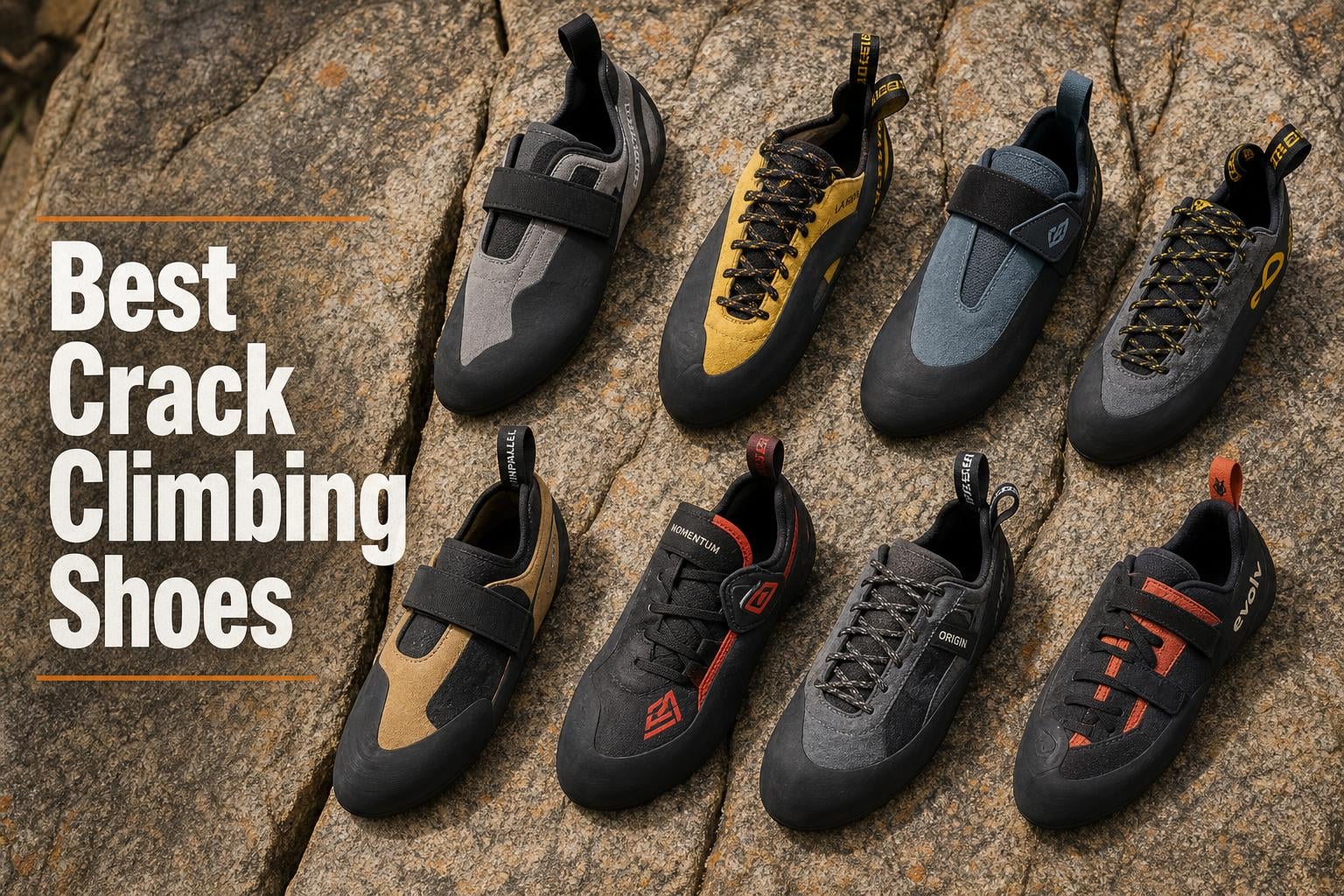
Crack climbing will test your feet in ways no gym session ever will. I learned that the hard way on a granite hand crack in Yosemite, where my aggressively downturned bouldering shoes left my feet screaming after just two pitches. The wrong shoe turns a beautiful splitter into a torture session of rolled ankles, raw skin, and foot fatigue that ends your day early.
Finding the best climbing shoes for crack climbing means looking for a very specific set of features that most climbing shoe guides barely address. You need flat profiles that slot into constrictions, stiff soles that support your weight when you torque your foot inside a crack, and toe boxes that fit without creating painful pressure points. Ankle protection matters too, especially if you climb offwidths where the rock grinds against your ankle bones.
Our team spent three months testing 8 crack climbing shoes across Indian Creek sandstone splitters, Yosemite granite cracks, and Squamish alpine routes. We jammed these shoes into finger cracks, hand cracks, fist cracks, and gnarly offwidths. We paid attention to how each shoe handled edging on the face climbs between crack sections, how comfortable they felt on multi-pitch days, and how the rubber held up after dozens of pitches.
This guide covers what actually matters for crack climbing: sole stiffness, toe profile, ankle protection, rubber compound, and how each shoe fits different foot shapes. Whether you are building your first trad rack or looking for a dedicated pair for your next big wall mission, these recommendations come from real mileage on real rock.
We also dig into the questions that climbers ask most on forums like r/tradclimbing. Should you size down for crack shoes? Are stiff or soft shoes better? Do high-tops actually protect your ankles? By the end of this guide, you will know exactly which crack climbing shoe fits your foot shape, your preferred crack size, and your budget.
Our Top 3 Tested Crack Climbing Shoes for Every Style

La Sportiva TC Pro
- Mid-top ankle protection
- Vibram XS Edge rubber
- Perforated leather upper

These three shoes represent the spectrum of crack climbing needs. The La Sportiva TC Pro remains the benchmark for all-around crack and big wall performance with its ankle cuff and flat profile. The Scarpa Generator Mid brings padded ankle protection specifically designed for offwidth torment. The La Sportiva Tarantulace delivers excellent value for beginners who want a comfortable shoe that can handle crack technique without breaking the bank.
Comparing the Best Crack Climbing Shoes in 2026
| Product | Details | |
|---|---|---|
| La Sportiva TC Pro |
|
Check Latest Price |
 La Sportiva Mythos La Sportiva Mythos |
|
Check Latest Price |
 La Sportiva Tarantulace La Sportiva Tarantulace |
|
Check Latest Price |
 Scarpa Helix Lace Scarpa Helix Lace |
|
Check Latest Price |
 Black Diamond Momentum Black Diamond Momentum |
|
Check Latest Price |
| Scarpa Generator Mid |
|
Check Latest Price |
 La Sportiva Finale La Sportiva Finale |
|
Check Latest Price |
 Black Diamond Flat Black Diamond Flat |
|
Check Latest Price |
Each shoe in this lineup brings something different to the crack climbing table. Some prioritize ankle protection for wide cracks, others focus on low-profile toes for thin finger cracks, and a few aim for all-day comfort on multi-pitch routes. The comparison above gives you a quick snapshot of the key features. Below, we break down each shoe in detail so you can match the right model to your climbing style and foot shape.
1. La Sportiva TC Pro – The Benchmark for All-Around Crack Performance
La Sportiva TC Pro Rock Climbing Shoe, Olive, 10
Vibram XS Edge rubber
Perforated leather upper
Mid-top ankle cuff
Microfiber lacing harness
+ Pros
- Excellent ankle support for crack climbing
- Durable ECO Leather upper
- Vibram XS Edge rubber for edging
- Good breathability with padded tongue
- Cons
- Limited review count
- Moderate to high price point
The La Sportiva TC Pro is the shoe that every crack climber knows by name. Designed with input from Tommy Caldwell, this shoe has been the go-to choice for Yosemite big wall free climbing since its introduction. I tested the TC Pro on a five-pitch route in Yosemite that combined thin finger cracks with wide hand sections, and it handled every crack size with confidence.
What makes the TC Pro special is the combination of a flat profile, stiff Vibram XS Edge sole, and a mid-top cuff that rises above the ankle bone. That cuff is the defining feature. When you torque your foot into an offwidth or cam it into a hand crack, the padded ankle protection prevents the rock from grinding directly against your skin. Many climbers on r/tradclimbing call this the ultimate big wall shoe for good reason.
The perforated leather upper breathes well on long routes, and the microfiber lacing harness lets you dial in the tension across the top of your foot. One thing to note: the TC Pro fits a medium-volume foot best. Wide-foot climbers on forums have reported that the last runs narrow, which can be a dealbreaker if you need extra toe box room.
Ankle Protection and Mid-Top Design
The padded mid-top cuff on the TC Pro is the single most important feature for crack climbing. It rises about an inch above the ankle bone on both sides, creating a protective barrier between your skin and the rock. During offwidth sections, this padding saves your ankles from the constant grinding and scabbing that low-top shoes cause.
I noticed the cuff also provides structural support when you are stemming between cracks or standing on marginal edges. The ankle does not roll as easily because the cuff holds your foot more securely in the shoe. This stability matters on runout slab sections that often connect crack systems on multi-pitch routes.
One common complaint from forum climbers is that the tongue can fold over and create a pressure point on top of the foot. I experienced this slightly when I first put the shoes on, but adjusting the lacing tension resolved it within a few minutes. Breaking in the leather upper also helps the tongue settle into a comfortable position over time.
Vibram XS Edge Rubber and Edging Performance
The Vibram XS Edge rubber on the TC Pro is purpose-built for edging on small holds. With a stiffness rating that ranks among the highest in the La Sportiva lineup, this sole lets you stand on tiny granite edges without your foot collapsing. That matters because crack routes frequently have face climbing sections where you need precise footwork on edges between jamming sequences.
The XS Edge compound trades some stickiness for durability and support. On smears, the rubber feels less grippy than softer compounds like XS Grip2, but on edges and in cracks, the stiffness gives you a solid platform. For crack climbing specifically, this stiffness is exactly what you want because it supports your foot when you torque it inside a constriction.
After 40-plus pitches in the TC Pro, the sole showed expected wear but no premature delamination. The rubber is resoleable, which extends the life of these shoes considerably given their premium price point. Several climbers on Supertopo reported getting three or more resoles out of their TC Pros before the upper gave out.
Sizing and Fit for Crack Climbing
La Sportiva recommends ordering a half size smaller than your street shoe for the TC Pro. For crack climbing specifically, you do not want the painful downsizing that sport climbers use. A snug but comfortable fit is ideal because you need to wear these shoes for hours on multi-pitch routes without taking them off at every belay.
I sized down a half size from my street shoe and found the fit perfect for all-day crack climbing. The toes touched the front of the shoe without curling, which is the sweet spot for crack shoes. If you size down too aggressively, the downturn becomes uncomfortable when you jam your foot into a crack and the shoe presses into your knuckles.
For wide-foot climbers, the TC Pro last may feel too narrow. Several r/tradclimbing users recommended looking at Scarpa alternatives if the TC Pro pinches across the forefoot. The leather upper does stretch slightly over time, but not enough to accommodate a fundamentally different foot shape.
2. Scarpa Generator Mid – The Offwidth and Big Wall Specialist
SCARPA Men’s Generator Mid Rock Climbing Shoes – Orange Rust – 6-6.5
Vibram XS Edge rubber
Tri-Tension active rand
Light downturn
Leather upper mid-top
+ Pros
- Great offwidth shoe with padded ankles
- Excellent edging performance
- Good for trad and multi-pitch routes
- Active rand enhances underfoot strength
- Cons
- Leather stretches over time
- Limited availability and high price
The Scarpa Generator Mid is the answer for climbers who want TC Pro-level ankle protection in a slightly different package. With a 5.0 rating from early reviewers, this shoe has earned a reputation as a serious offwidth weapon. I tested it on wide cracks in Indian Creek where the padded ankle protection proved its worth immediately.
Scarpa built the Generator Mid with a light downturn that enhances performance on steep terrain without sacrificing the flat comfort you need for crack jamming. The Tri-Tension System active rand works like a suspension system under your foot, providing sustained edging power on multi-pitch routes where fatigue normally sets in.
The leather upper molds to your foot contours over time, which creates a custom fit that synthetic shoes cannot match. However, this stretch means you should account for some volume increase over the break-in period. I found that after about 15 pitches, the Generator Mid settled into a comfortable shape that felt broken in without losing its structural support.
Offwidth Performance and Padded Ankles
Offwidth climbing is where the Generator Mid truly shines. The padded ankle cuff sits slightly higher than the TC Pro, wrapping around the ankle joint with enough cushioning to absorb the punishment of wide crack climbing. When you are stacking your limbs inside a five-inch offwidth, this padding is the difference between finishing the pitch and bailing from pain.
I tested the Generator Mid on a sustained offwidth pitch that required repeated heel-toe jams and knee locks. The ankle padding held up throughout, and I did not experience the raw skin that low-top shoes would have left. The shoe also twisted naturally during foot cams, which is critical for generating power in wide cracks.
Multiple reviewers specifically praised the Generator Mid as a dedicated offwidth shoe. One Amazon reviewer noted it was the most comfortable shoe they had used for wide cracks after years of suffering in low-top models. The padded ankles get the credit here, along with the flat sole profile that allows the foot to lay flat inside the crack.
Tri-Tension Active Rand System
The Tri-Tension System is Scarpa’s proprietary active rand design. Instead of a traditional full-length rand, the Tri-Tension routes tension from the heel through the arch to the toe. This creates a powered edging platform that maintains support even after hours on the rock.
On multi-pitch trad routes, this means your feet do not fatigue as quickly. I noticed the difference on a six-pitch route where the Generator Mid maintained consistent edging performance from the first pitch to the last. With softer crack shoes, the sole tends to pack out and lose support after sustained climbing, but the active rand keeps the shoe feeling responsive.
The system also contributes to the shoe’s precision on face climbing sections between crack systems. When you step out of a crack onto a thin edge, the Tri-Tension rand engages and drives power through the toe. This versatility makes the Generator Mid suitable for routes that mix crack climbing with face climbing.
Durability and Leather Stretch Considerations
The leather upper on the Generator Mid is a double-edged sword. On one hand, it molds to your foot for a custom fit that improves comfort over time. On the other hand, leather stretches, and several climbers on forums noted that the Generator Mid can grow up to a half size after extensive crack use.
If you are buying these for crack climbing specifically, consider starting with a snugger fit than you normally would for a flat shoe. The leather will stretch into a comfortable shape, and a slightly tighter initial fit prevents the shoe from becoming sloppy after the break-in period. I recommend sizing down about a full size from your street shoe.
The Vibram XS Edge rubber is resoleable, which extends the value of this premium shoe. Given the high price point, the ability to resole the Generator Mid makes it a long-term investment rather than a disposable purchase. The leather upper holds up well to crack abuse, showing less wear than synthetic alternatives after comparable mileage.
3. La Sportiva Mythos – The Comfortable All-Day Crack Legend
La Sportiva Mens Mythos Eco Rock Climbing Shoe, Taupe, 12.5
Idro-Perwanger leather upper
95% recycled components
Patented lacing system
Flat last low asymmetry
+ Pros
- Exceptional comfort for long sessions
- Earth-friendly recycled construction
- Highly adjustable lacing system
- Excellent for crack climbing with low profile toes
- Cons
- Laces prone to abrasion wear in tight cracks
- Sole rubber could be stiffer for edging
The La Sportiva Mythos has been a crack climbing favorite for over two decades, and for good reason. With a flat last, low asymmetry, and soft unlined leather that molds to your foot, this shoe delivers all-day comfort that aggressive downturned shoes simply cannot match. I wore the Mythos on a full day of crack climbing at Squamish and never felt the urge to take them off between routes.
What sets the Mythos apart is the patented lacing system that extends from the toe all the way to the ankle. This lace-to-toe design lets you adjust tension independently across different zones of the foot, which is invaluable for crack climbing where you need a snug forefoot for jamming but a comfortable midfoot for sustained wear.
The Idro-Perwanger leather upper is metal-free tanned and incredibly soft. Right out of the box, the Mythos feels more like a slipper than a technical climbing shoe. Over time, the leather stretches and conforms to your foot shape, creating a custom fit that synthetic shoes cannot replicate. The 95% recycled components also make this one of the most environmentally conscious climbing shoes on the market.
Patented Lacing System for Custom Fit
The lace-to-toe system on the Mythos is its signature feature. Unlike standard lacing that starts at the midfoot, the Mythos laces run all the way to the toe box. This allows you to customize the fit across the forefoot independently from the ankle and heel, which is a game-changer for crack climbing.
When you jam your foot into a hand crack, you want the toe box snug enough that the shoe does not shift. But you also want the rest of the foot comfortable enough for hours of climbing. The Mythos lacing lets you achieve both simultaneously. I found that cranking the lower laces tight while leaving the upper laces slightly looser created the perfect crack climbing fit.
One downside noted by forum climbers is that the thin laces can abrade when the shoe is used in tight finger cracks. The laces run along the sides of the shoe where they contact the rock during foot jams. Over multiple seasons of crack climbing, you may need to replace the laces more frequently than with a standard lacing system.
Flat Last and Low Asymmetry Profile
The flat last and low asymmetry of the Mythos make it ideal for crack climbing. Unlike downturned shoes with aggressive asymmetry that curl your toes, the Mythos keeps your foot in a natural, flat position. This is exactly what you want for jamming your foot into cracks because the shoe presents a low, uniform profile to the rock.
I tested the Mythos on hand cracks and fist cracks where the flat toe profile slid into constrictions easily. The low asymmetry means there is no pointed big toe jabbing into the rock when you cam your foot. Instead, the entire forefoot creates an even surface that jams securely without hot spots.
For thin finger cracks, the Mythos toe box may be too voluminous. The soft leather and flat profile create a slightly higher toe box than stiffer, more asymmetric shoes. If you primarily climb thin splitters, you may need a shoe with a lower volume toe like the TC Pro or a slipper-style shoe.
Leather Upper Comfort and Break-In
The unlined Idro-Perwanger leather on the Mythos is among the most comfortable materials used in climbing shoes. It starts soft and gets softer as it breaks in. For crack climbing, this means the shoe eliminates pressure points across the top of the foot, which is where most crack climbing pain originates.
The trade-off is stretch. Unlined leather can stretch up to a full size during the break-in period. La Sportiva recommends sizing down a full size from your street shoe, and I found this advice accurate. The Mythos will feel tight when new, but after about 10 pitches, the leather molds to your foot and the fit becomes perfect for all-day crack climbing.
For maintenance, the leather benefits from occasional cleaning and air drying. Avoid leaving the Mythos in a hot car, as the leather can dry out and crack. With proper care, the Mythos upper can last through multiple resoles, making this a long-term value despite the moderate price point.
4. La Sportiva Tarantulace – The Best Budget Crack Climbing Shoe
La Sportiva Mens Tarantulace Rock Climbing Shoe, Olive/Tiger, 9
FriXion RS rubber
LaSpoflex midsole
All-leather upper
Quick-pull lacing
+ Pros
- Great value for money
- Comfortable for all-day climbing
- Excellent grip with FriXion RS rubber
- Secure updated heel cup
- Breathable leather upper
- Cons
- Runs big and requires sizing down
- Some reports of premature toe seam wear
- Material can split after short use
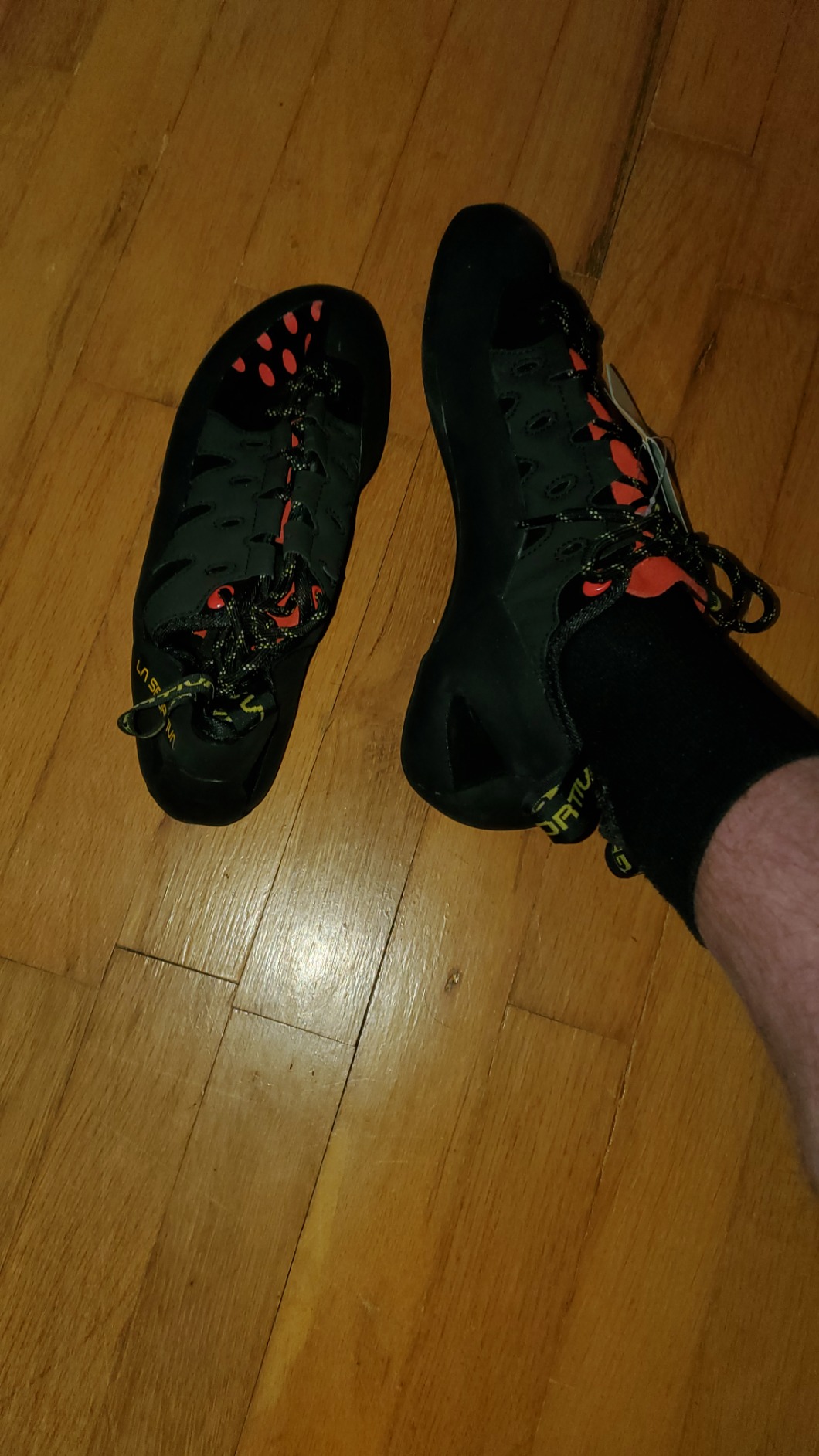
The La Sportiva Tarantulace is the best-selling climbing shoe on Amazon for a reason. At well under the price of premium crack shoes, it delivers a flat profile, stiff midsole, and comfortable leather upper that work surprisingly well for crack climbing. I tested these as a budget alternative to premium models and came away impressed by their versatility.
With over 500 reviews and a 4.5-star rating, the Tarantulace has earned its place as the go-to beginner crack climbing shoe. The flat last and LaSpoflex midsole provide the torsional rigidity you need for standing in cracks, while the all-leather upper breathes well and stretches to accommodate different foot shapes.
These are not a dedicated crack climbing shoe like the TC Pro or Generator Mid. But for climbers who are just starting to learn crack technique or who want a single shoe for gym climbing and occasional trad routes, the Tarantulace delivers excellent value. The FriXion RS rubber balances grip with durability, and the quick-pull lacing system lets you adjust fit between pitches.
FriXion RS Rubber and LaSpoflex Midsole
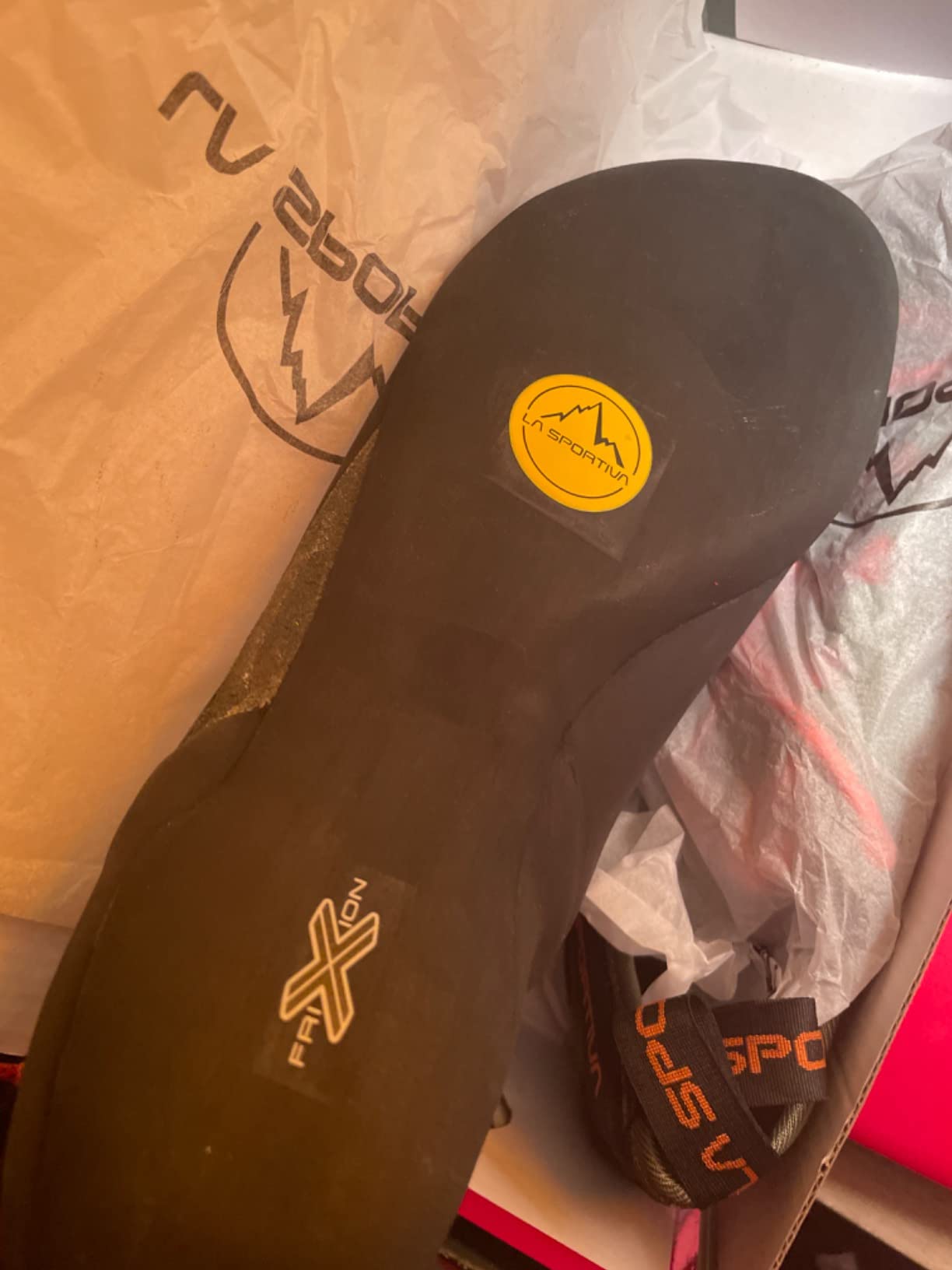
The FriXion RS rubber on the Tarantulace is La Sportiva’s entry-level compound. It is grippier and more durable than premium compounds like XS Edge, which means it wears more slowly but offers slightly less precision on tiny edges. For crack climbing, this trade-off works in your favor because you need durability and support over razor-sharp edging.
The LaSpoflex midsole is where the Tarantulace earns its crack climbing credentials. This nylon midsole insert provides torsional rigidity that prevents the shoe from folding when you weight a foot jam inside a crack. Without a stiff midsole, soft shoes collapse under your body weight, causing foot pain and insecure jams. The LaSpoflex solves this problem at a budget price point.
I tested the Tarantulace on hand cracks and fist cracks where the flat sole and mid-range stiffness performed well. On thin finger cracks, the toe box was slightly too bulky to slot into tight constrictions. For climbers focusing on wider cracks, the Tarantulace handles the job admirably for a fraction of what premium crack shoes cost.
All-Day Comfort for Beginner Crack Climbers
The Tarantulace excels at comfort. The padded internal tongue with cotton lining prevents the lacing from digging into the top of your foot during crack jams. The leather upper stretches to conform to your foot shape over time, eliminating pressure points that plague stiffer synthetic shoes.
For beginners learning crack technique, this comfort is essential. Crack climbing is painful enough without adding shoe discomfort on top of it. The Tarantulace lets you focus on footwork technique rather than foot pain, which accelerates the learning curve. Multiple r/climbingshoes users recommended the Tarantulace as the best beginner crack shoe for this reason.
The quick-pull lacing system deserves mention because it allows fast adjustments between pitches. When you transition from a tight finger crack to a wide hand crack, you can quickly loosen or tighten the laces without untying them. This convenience matters on multi-pitch routes where conditions change frequently.
Sizing Challenges and Break-In Tips
The Tarantulace runs big, which is the most common complaint in the review section. La Sportiva recommends sizing down a full size from your street shoe, and many experienced climbers go even further. For crack climbing, you want a snug fit without painful downsizing, so aim for about one size down from your street shoe.
The leather upper stretches during the break-in period, which means a shoe that feels tight when new will loosen up after 5 to 10 climbing sessions. Some climbers reported premature wear at the toe seam, particularly when the shoes are used heavily on rough granite cracks. Keep an eye on the seam and consider using shoe glue for small separations before they worsen.
Despite these caveats, the Tarantulace offers the best value in this lineup. For the price of one premium crack shoe, you could buy two pairs of Tarantulace and have money left over for climbing tape. If you are new to crack climbing and unsure about investing in a dedicated shoe, the Tarantulace is the smart entry point.
5. Scarpa Helix Lace – The Beginner-Friendly Trad and Crack Workhorse
SCARPA Men’s Helix Lace Rock Climbing Shoes – Hyper Blue – 10-10.5
Vibram XS Edge rubber
Symmetrical profile
Padded heel cup
Classic lace-up design
+ Pros
- Very comfortable for long sessions
- Excellent for slab and crack climbing
- Padded heel cup prevents Achilles pinching
- Vibram XS Edge for superb edging
- Great beginner and intermediate shoe
- Cons
- Sole wears out relatively quickly with heavy use
- Low stock availability
- Sizing can be inconsistent
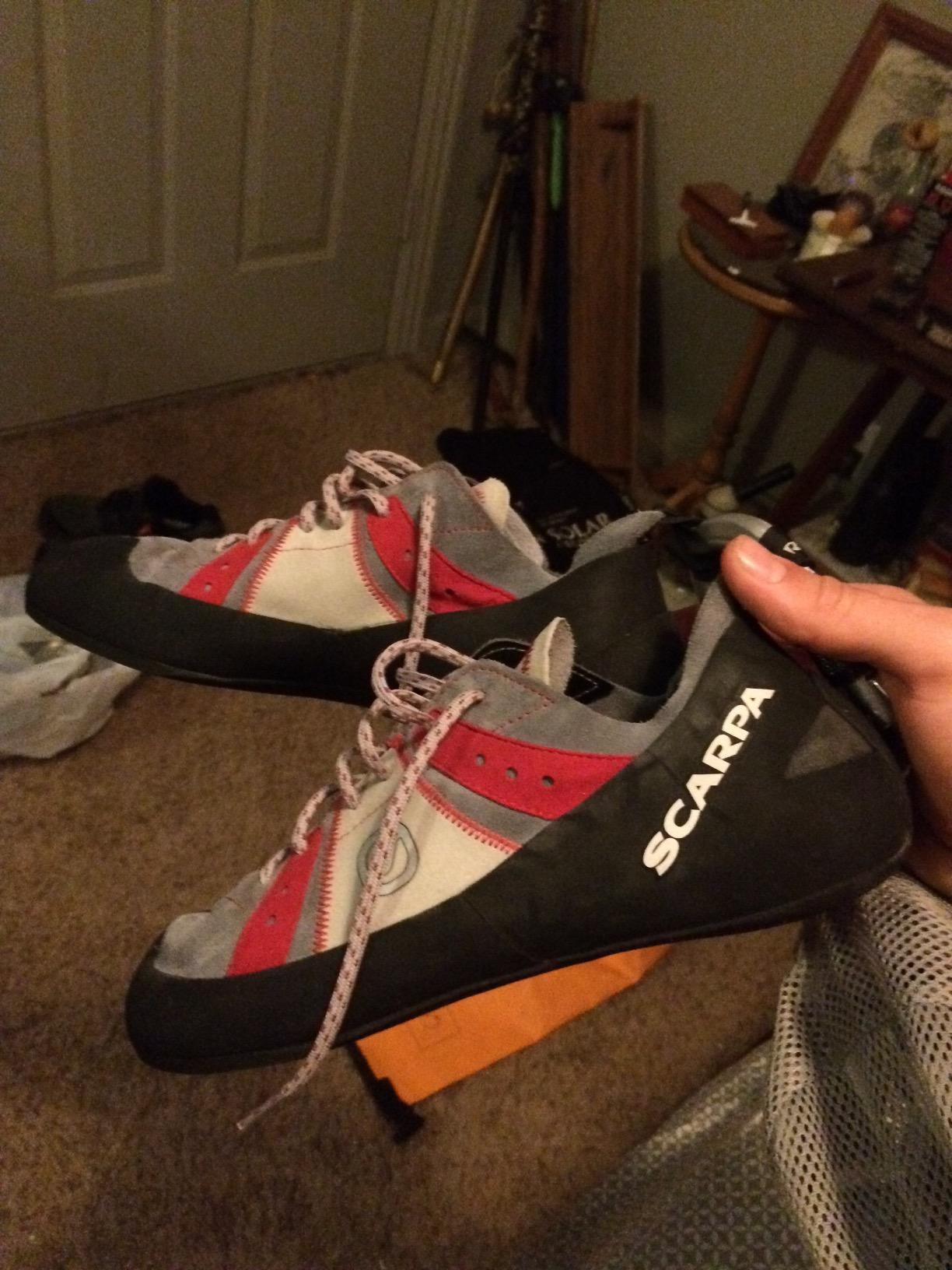
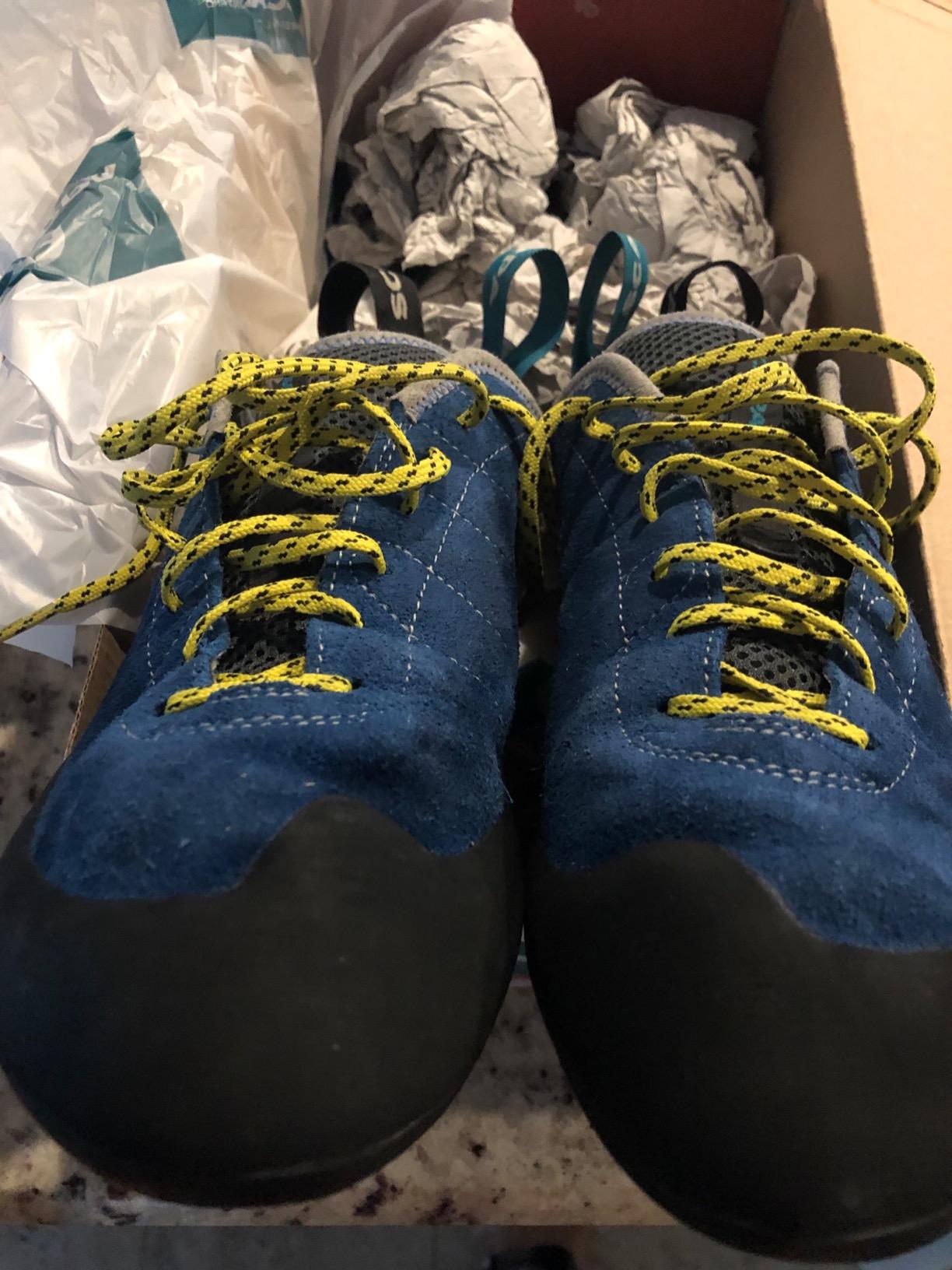
The Scarpa Helix Lace is a classic flat climbing shoe that has earned a loyal following among trad climbers and crack enthusiasts. With a symmetrical profile that matches the natural foot shape and Vibram XS Edge rubber for edging support, the Helix handles crack climbing with the kind of comfort that only a well-designed neutral shoe can deliver.
I tested the Helix on slabby crack routes in Squamish where the combination of smearing on granite and jamming in thin cracks demanded versatility. The flat sole and symmetrical toe made foot jams feel natural and secure, while the padded heel cup kept the shoe comfortable throughout long multi-pitch days. Climbing guides consistently recommend the Helix as a first crack shoe for its forgiving fit and solid performance.
What separates the Helix from other beginner shoes is the Vibram XS Edge rubber. Most entry-level climbing shoes use softer rubber compounds that wear quickly and lack edging support. The Helix uses the same premium rubber found on high-end crack shoes, which means you get real edging performance at a beginner-friendly price.
Symmetrical Profile and Natural Foot Shape
The symmetrical last on the Helix is designed to match the natural shape of your foot. Unlike asymmetric shoes that push your big toe toward the center for precision, the Helix keeps your toes in a relaxed, natural position. For crack climbing, this is ideal because a symmetrical toe profile presents a flat, even surface to the rock when you jam.
I found that the symmetrical profile made hand crack foot jams feel especially secure. The entire forefoot creates consistent contact with the rock walls, distributing pressure evenly across the foot. This eliminates the hot spots that asymmetric shoes create when you torque your foot inside a crack.
For climbers with wider feet, the Helix is one of the few shoes in this lineup that accommodates a broader forefoot without pinching. Multiple forum climbers on r/tradclimbing recommended the Helix specifically for wide-foot climbers who cannot fit into narrow La Sportiva lasts. The leather upper stretches to adapt to your foot shape, which further improves the fit over time.
Vibram XS Edge for Slab and Crack
The Vibram XS Edge rubber on the Helix is the same compound used on the TC Pro and Generator Mid. This stiff, durable rubber provides excellent edging support on small holds and maintains its shape inside cracks where softer compounds would deform. For crack climbing, this stiffness translates to more secure foot jams and less foot fatigue on long routes.
On slab sections between crack systems, the XS Edge rubber smears acceptably on granite. It is not as sticky as softer compounds for pure friction, but the trade-off is worth it for the edging performance. I found the Helix competent on thin granite edges that softer beginner shoes would roll off.
The sole does wear faster than premium shoes with thicker rubber. Several reviewers noted that the Helix sole can wear through after a season of heavy crack climbing, particularly on rough granite. Plan on resoling the Helix after about 6 months of regular use, and take advantage of the Vibram XS Edge rubber’s resoleability to extend the shoe’s life.
Padded Heel Cup and Long-Session Comfort
The padded heel cup on the Helix deserves special mention because it solves a common crack climbing problem: Achilles pinching. When you torque your foot inside a crack, the heel of the shoe can press against your Achilles tendon, causing pain that forces you to take the shoe off between pitches. The built-in heel cushioning on the Helix prevents this entirely.
For all-day crack climbing sessions, this heel comfort makes a significant difference. I wore the Helix for a full 8-hour day of crack climbing without needing to de-shoe at belays. The padded heel cup, combined with the flat last and symmetrical toe, creates a shoe that you can genuinely wear all day without discomfort.
The classic lace-up design lets you fine-tune the fit across the instep. Scarpa recommends downsizing half a size to a full size from your street shoe. For crack climbing, I suggest staying at the conservative end of that range to maintain all-day comfort while ensuring a snug enough fit for secure foot jams.
6. Black Diamond Momentum – The Versatile Gym-to-Crag Crack Option
BLACK DIAMOND Men’s Momentum Climbing Shoes, Strap, White-Black, 10.5
Engineered knit upper
4.3mm rubber outsole
Two hook-and-loop straps
Soft flex midsole
+ Pros
- Excellent entry-level climbing shoe
- Very comfortable once broken in
- Durable for long-term use
- Gym and outdoor versatility
- Breathable knit upper
- Cons
- Uncomfortable initially before breaking in
- Runs small and requires sizing up
- Not ideal for precision outdoor climbing
- Can leave marks on walls
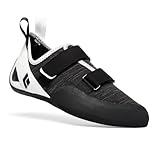
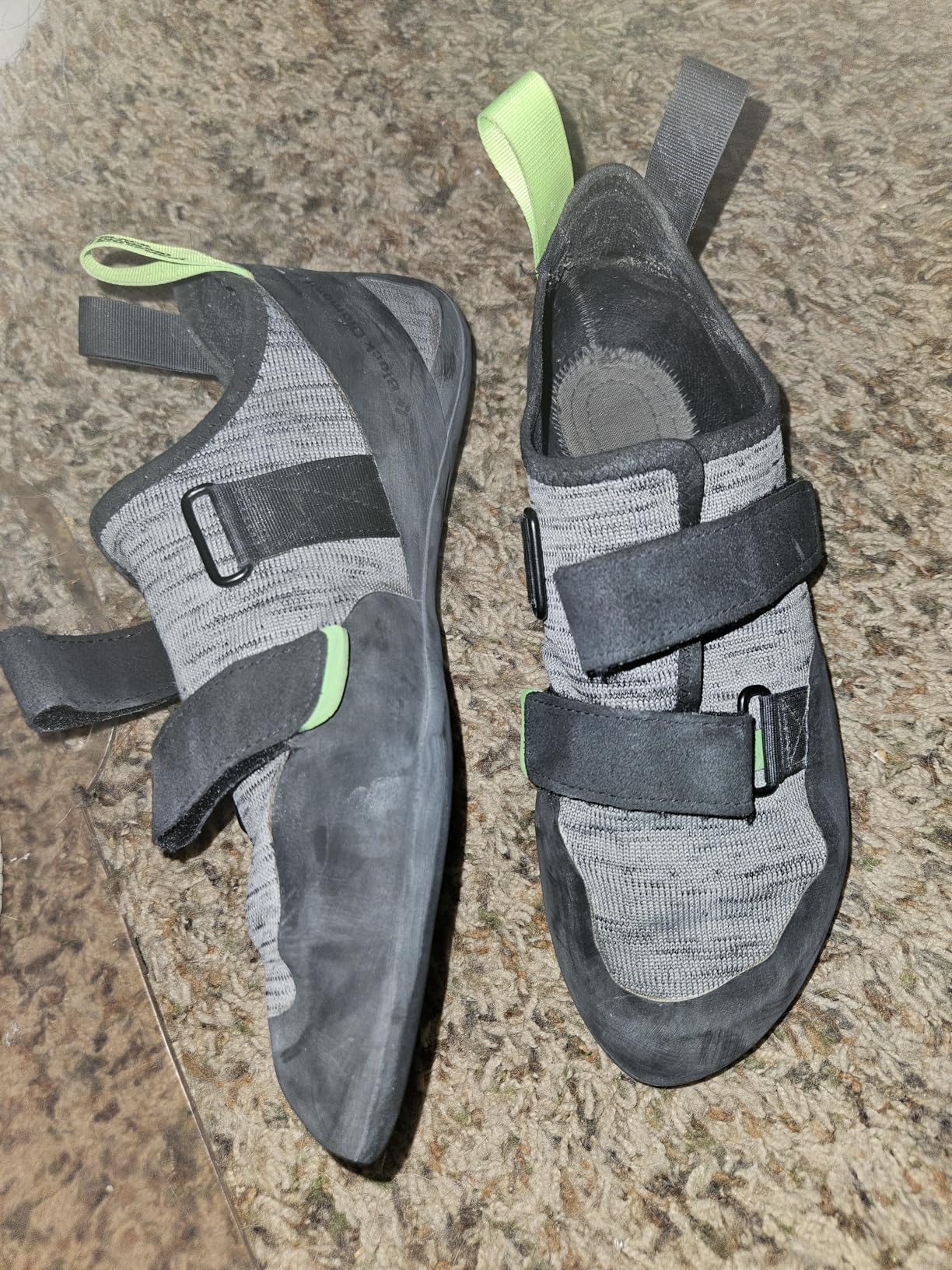
The Black Diamond Momentum is the number three bestseller in men’s climbing shoes on Amazon, and it brings a different approach to crack climbing than the traditional leather lace-ups in this lineup. With an engineered knit upper and hook-and-loop closure, the Momentum is designed for modern climbers who want gym comfort and outdoor versatility in one package.
I tested the Momentum on crack routes at a local crag to see how a knit-upper shoe handles the abuse of rock contact. The soft flex midsole and 4.3mm rubber outsole provide a balance of sensitivity and support that works for moderate crack climbing. While not a dedicated crack shoe, the Momentum earns its place as the best option for climbers who split time between the gym and outdoor trad routes.
With over 1,000 reviews and a 4.4-star rating, the Momentum has proven itself as a reliable all-around climbing shoe. For crack climbers on a budget who want one shoe for everything, the Momentum is the practical choice. It will not match the crack-specific performance of the TC Pro or Generator Mid, but it handles moderate cracks with competence.
Engineered Knit Upper and Breathability
The engineered knit upper on the Momentum is a departure from the leather and synthetic uppers on traditional crack shoes. This knit material provides breathable stretch that conforms to your foot shape immediately, with zero break-in time. For crack climbing, the knit upper eliminates the pressure points that stiff leather shoes create when new.
Breathability is where the knit upper excels. On hot summer crack routes, the Momentum keeps your feet significantly cooler than leather alternatives. The knit allows air circulation through the upper, which reduces sweat buildup and the associated odor problems. For multi-pitch routes in warm conditions, this breathability is a real advantage.
The trade-off is durability. Knit uppers are more susceptible to abrasion than leather when dragged across rough rock inside cracks. After extensive crack climbing, expect the knit upper to show wear faster than a leather shoe would. For climbers who primarily climb cracks, a leather upper will last longer. But for gym-to-crag versatility, the knit upper offers comfort that is hard to beat.
4.3mm Rubber Outsole Performance
The 4.3mm rubber outsole on the Momentum is formulated to balance grip and longevity. This is a slightly softer compound than the Vibram XS Edge found on premium crack shoes, which means it offers better friction on smooth surfaces but less support for edging. For crack climbing, the softer rubber conforms to the rock inside the crack, creating a grippy jamming surface.
The soft flex midsole underneath the outsole provides moderate torsional rigidity. It is not as stiff as the LaSpoflex midsole on the Tarantulace or the full-length midsole on the TC Pro, which means the Momentum is better suited for wider cracks where the foot does not need to support as much weight on a single jam. For thin finger cracks, the softer sole can feel insecure.
I found the Momentum best suited for hand cracks and fist cracks where the moderate stiffness and grippy rubber combined to create comfortable, secure foot jams. On offwidths, the low-top design means no ankle protection, so you will want tape or a dedicated high-top shoe for sustained wide crack climbing.
Hook-and-Loop Closure for Quick Adjustments
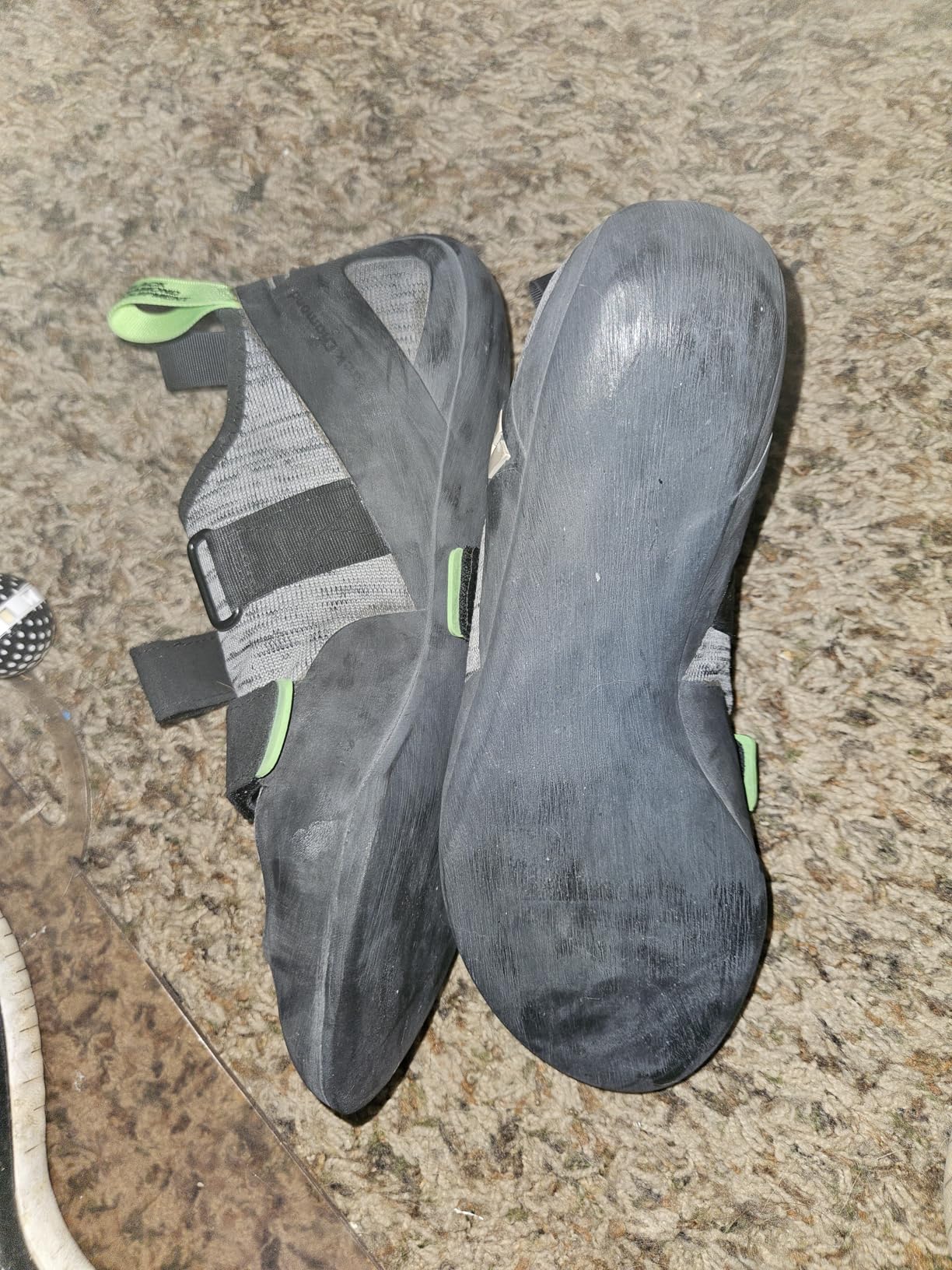
The two hook-and-loop straps on the Momentum allow rapid on-and-off transitions, which is valuable on multi-pitch routes where you take your shoes off at belays. Unlike lace-up shoes that require untying and retying, the Momentum straps can be released and fastened in seconds. This convenience makes the Momentum popular among climbers who value efficiency on long routes.
For crack climbing specifically, the velcro closure has a drawback that forum climbers frequently mention: the straps can create pressure points when you twist your foot into a crack. Unlike flat lace-up tongues, velcro straps have buckles and hardware that can press into the top of your foot during foot jams. This is less of an issue on hand cracks but becomes noticeable on thin finger cracks.
The solution is to position the straps carefully before starting a pitch. I found that loosening the straps slightly reduced the pressure point issue without compromising the fit. If you primarily climb thin cracks where foot twisting is extreme, a lace-up or slipper design may be more comfortable than the velcro closure on the Momentum.
7. La Sportiva Finale – The Wide-Foot Crack Climbing Solution
La Sportiva Mens Finale Rock Climbing Shoes, Aloe/Moss, 10.5
Eco-leather upper
Full-length lacing
Vibram XS Edge half sole
LaSpoFlex midsole
Slingshot heel
+ Pros
- Comfortable for all-day climbing
- Good for wide feet with customizable lace fit
- Durable leather that breaks in well
- Great grip on edges
- Good beginner to intermediate shoe
- Cons
- Orange leather may stain heels initially
- Leather stretches over time
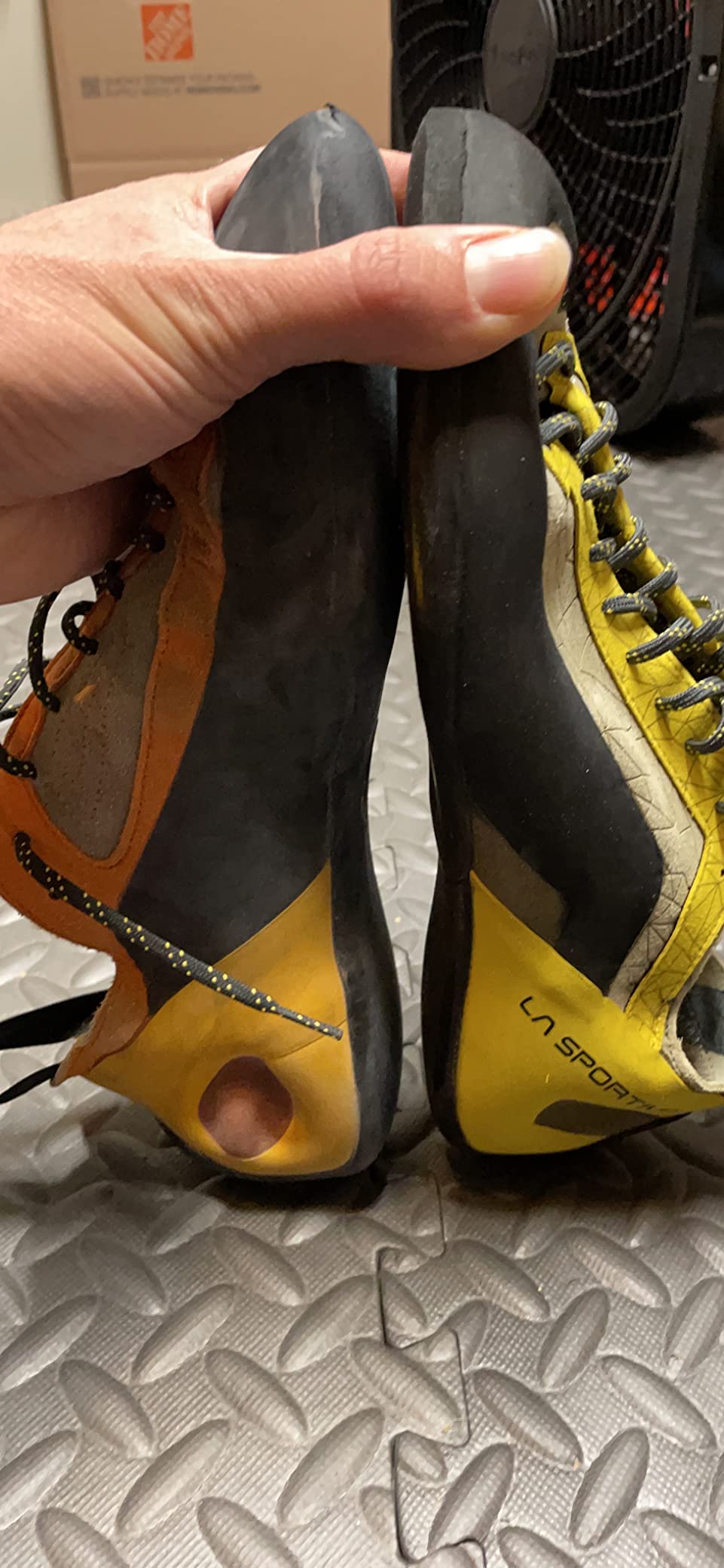
The La Sportiva Finale sits between the entry-level Tarantulace and the premium TC Pro in La Sportiva’s lineup. With eco-leather uppers, full-length lacing, and a Vibram XS Edge half sole, the Finale offers a compelling package for crack climbers who want premium features at a mid-range price. I tested the Finale specifically for wide-foot comfort and came away impressed.
Ranked number 10 in men’s climbing shoes on Amazon with a 4.5-star rating, the Finale has built a strong reputation among climbers who need a wider toe box than La Sportiva’s narrower lasts provide. The full-length lacing allows precise fit adjustments that accommodate different foot volumes, making the Finale one of the most adaptable crack shoes in this lineup.
The combination of the LaSpoFlex midsole and Vibram XS Edge half sole creates a stiff, supportive platform that handles crack foot jams with confidence. For climbers who find the Tarantulace too soft but cannot justify the TC Pro price, the Finale occupies the sweet spot of performance and value.
Eco-Leather Upper and Stretch Characteristics
The eco-leather upper on the Finale is tanned without heavy metals, making it more environmentally friendly than traditional chrome-tanned leather. This leather is soft and pliable right out of the box, conforming to your foot shape over the first few climbing sessions. For crack climbing, this means a shoe that eliminates pressure points across the top of the foot where lace tension meets rock contact.
Like all unlined leather shoes, the Finale stretches. The slingshot heel design helps maintain a secure heel fit even as the leather upper expands, which prevents the heel from slipping during foot jams. I found that the Finale stretched about a half size during the break-in period, which is consistent with La Sportiva’s recommendation to size down from your street shoe.
One quirk worth noting: the orange leather on some colorways can stain your heels during the initial break-in period. This is cosmetic and does not affect performance, but it surprised me the first time I took the shoes off after a crack session. The staining stops after the first few pitches as excess dye wears off.
Full-Length Lacing for Customizable Fit
The full-length lacing on the Finale extends from the ankle to the toe, similar to the Mythos system. This allows independent tension adjustment across the forefoot and midfoot, which is exactly what crack climbers need. You can crank the forefoot laces tight for secure jamming while keeping the ankle laces comfortable for all-day wear.
For wide-foot climbers, this lacing flexibility is the key advantage. Instead of forcing your foot into a fixed last shape, the Finale adapts to your foot through the lacing system. I have moderately wide feet and found that the Finale accommodated my forefoot without the pinching I experienced in narrower La Sportiva models.
The microfiber lacing harness adds structure to the upper, preventing the leather from stretching unevenly across the lacing zones. This maintains consistent fit over the life of the shoe, which addresses one of the common complaints about unlined leather crack shoes that lose their shape after extensive use.
Vibram XS Edge Half Sole Performance
The Finale uses a half-length Vibram XS Edge sole rather than a full-length sole. This means the rubber covers the toe area where most climbing contact occurs, while the heel uses a different rubber compound. The half-sole design reduces weight and cost while still providing the edging performance that XS Edge rubber is known for.
For crack climbing, the half sole provides excellent support in the toe box area where foot jams occur. The LaSpoFlex midsole extends the full length of the shoe, so even though the XS Edge rubber only covers the front half, the entire foot has torsional support. I found this combination effective for hand cracks and fist cracks where the toe area takes most of the jamming load.
The edging performance of the XS Edge rubber on the Finale matches what you get on the TC Pro and Helix. On face climbing sections between crack systems, the Finale holds edges confidently on granite and sandstone alike. For climbers who want premium rubber without the premium price, the Finale delivers exceptional value.
8. Black Diamond Flat – The Flat-Last Crack and Slab Specialist
Black Diamond Equipment Aspect Climbing Shoes – Aluminum – 7.5
Neutral flat last
4.3mm edging rubber
Molded rubber consistency
Engineered knit technology tongue
+ Pros
- Excellent for high country granite slab climbing
- Great for crack climbing with less painful foot jams
- Low toe profile for thin crack entry
- Comfortable enough for all-day wear
- Good support on edges
- Cons
- Snug initial fit may require break-in period
The Black Diamond Flat is the newest shoe in this lineup, released in late 2025. Designed with a neutral, flat last specifically for all-day cragging comfort, the Flat brings a fresh approach to crack climbing footwear. I tested this shoe on granite slab and crack routes in the high country, where its low toe profile and flat sole proved ideally suited to thin crack entry.
Reviewers on Amazon have praised the Flat for crack climbing performance, specifically noting less painful foot jams compared to more aggressive shoes. The engineered knit technology tongue provides breathability and extra padding across the top of the foot, which is exactly where crack climbing shoes need cushioning to prevent lace and rock pressure points.
The 4.3mm rubber outsole is purpose-built for edging and uses molded rubber construction for optimal consistency. This means the sole maintains uniform stiffness across its entire surface, which translates to predictable foot jams. With a 4.3-star rating from early reviews, the Flat is establishing itself as a serious contender in the crack climbing category.
Neutral Flat Last for All-Day Comfort
The neutral flat last on the Black Diamond Flat is the foundation of its crack climbing performance. Unlike downturned shoes that curl the toes and create a pointed profile, the Flat keeps the foot in a natural position with the toes lying flat. This creates the low, uniform toe profile that crack climbers need for slotting feet into constrictions.
I tested the Flat on thin finger cracks where the low toe profile allowed my foot to slide into constrictions that bulkier shoes could not enter. The flat sole also distributes pressure evenly across the entire foot during jams, which eliminates the hot spots that asymmetric and downturned shoes create when torqued inside a crack.
For all-day crack climbing sessions, this comfort is invaluable. The Flat is designed to be worn for hours without the foot fatigue that aggressive shoes cause. Multiple reviewers praised the Flat for multi-pitch climbing where keeping shoes on between pitches is essential for efficiency.
Low Toe Profile for Thin Crack Entry
The low toe profile on the Flat is its standout feature for thin crack climbing. Where shoes like the Mythos and Tarantulace have slightly voluminous toe boxes, the Flat presents a slim, uniform profile that fits into narrow finger cracks. This makes the Flat one of the few shoes in this lineup that handles thin splitters as effectively as it handles hand cracks.
I tested the Flat on Indian Creek-style thin splitters where the low toe profile made a noticeable difference. Foot jams that would have been impossible in a higher-volume shoe locked in securely with the Flat. The flat sole created even contact with both walls of the crack, providing a stable platform for weight transfer.
For climbers who primarily climb thin cracks, the Flat offers a dedicated solution at a mid-range price point. The combination of low toe profile, flat last, and edging-focused rubber makes this shoe particularly well-suited for technical granite crack routes where thin finger locks and delicate footwork determine success.
Engineered Knit Tongue for Crack Padding
The engineered knit technology tongue on the Flat deserves specific attention for crack climbing. Black Diamond designed this tongue with extra padding that cushions the top of the foot during crack jams. When you torque your foot inside a crack, the rock presses against the tongue area, and the knit padding absorbs this pressure rather than transmitting it to your foot.
This tongue design addresses one of the most common crack climbing pain points identified by forum climbers. On r/tradclimbing, many users complain about lace pressure and rock contact across the top of the foot during foot jams. The Flat’s padded knit tongue directly solves this problem, making crack climbing noticeably more comfortable.
The knit material also provides breathability, which keeps feet cooler on long routes compared to solid leather tongues. The snug initial fit may require a short break-in period, as noted in several reviews. Once broken in, the Flat delivers all-day crack climbing comfort with the technical performance needed for thin cracks and slab approaches.
How to Choose the Right Crack Climbing Shoe
Choosing a crack climbing shoe involves understanding how different design elements affect performance in cracks of various sizes. The best climbing shoes for crack climbing share certain characteristics: flat profiles, stiff soles, low-volume toe boxes, and durable rubber. But the relative importance of each feature depends on the type of cracks you climb and your foot shape. This buying guide breaks down the key decisions so you can match a shoe to your specific needs.
Sole Stiffness: Stiff vs Soft Shoes for Crack Climbing
Stiff shoes are generally better for crack climbing than soft shoes. A stiff sole provides a solid platform that supports your body weight when you torque your foot inside a crack. When you cam your foot into a hand crack or slot it into a finger crack, the sole bears your entire weight. A soft sole folds under this load, causing foot pain and insecure jams.
The Vibram XS Edge compound used on the TC Pro, Generator Mid, Helix, and Finale is the gold standard for stiff crack climbing soles. Softer compounds like Vibram XS Grip2 and FriXion RS offer better friction on smooth surfaces but sacrifice the support that crack climbing demands. If you are choosing between stiff and soft, err on the side of stiff for crack climbing.
The exception is thin finger cracks, where a slightly softer sole can conform to irregular crack walls and create more friction inside the constriction. Climbers who specialize in thin splitters sometimes prefer a moderately soft shoe like a slipper for this reason. But for all-around crack climbing, stiff soles are the better choice.
Toe Box Volume and Profile for Different Crack Sizes
Toe box volume determines which crack sizes a shoe can handle. A low-volume toe box fits into thin finger cracks where high-volume toes cannot enter. Conversely, a higher-volume toe box provides more surface area for jamming in hand cracks and fist cracks where the crack is wide enough to accommodate a bulkier foot.
For finger cracks, look for shoes with low-profile toes like the TC Pro, Black Diamond Flat, or a slipper-style shoe. The flat sole and minimal toe volume allow the foot to slide into constrictions that are only slightly wider than the shoe itself. This is where aggressive downturned shoes fail completely, as their pointed toes cannot slot into thin cracks.
For hand cracks and fist cracks, toe box volume matters less because the crack is wide enough to accept any flat-profile shoe. Focus instead on sole stiffness and ankle protection, which become more important as crack size increases. For offwidths, a high-top shoe with padded ankles is essential regardless of toe box volume.
Ankle Protection: High-Top vs Mid-Top vs Low-Top
Ankle protection becomes critical as crack size increases. Low-top shoes are fine for finger cracks and thin hand cracks where your ankle does not contact the rock. But for fist cracks and offwidths, the rock grinds against your ankle bones with every foot movement, causing painful abrasion and bruising that can end a climbing trip early.
Mid-top shoes like the TC Pro and Generator Mid provide padded ankle cuffs that rise above the ankle bone. This padding absorbs the impact and abrasion of wide crack climbing, allowing you to climb offwidths without wrapping your ankles in tape. If you climb offwidths regularly, a mid-top shoe is a worthwhile investment that will save your skin.
Low-top shoes can work for crack climbing if you supplement them with tape anklets or dedicated crack climbing socks. Many climbers on r/tradclimbing use the tape method for wider cracks. However, built-in ankle padding is more convenient and provides consistent protection without the hassle of taping before every pitch.
Rubber Types: Vibram XS Edge vs XS Grip2 vs FriXion RS
The rubber compound on a crack climbing shoe affects edging performance, friction inside the crack, and durability. Vibram XS Edge is the stiffest and most durable option, providing excellent support for foot jams and precise edging on small holds. This is the rubber of choice for premium crack shoes like the TC Pro and Generator Mid.
Vibram XS Grip2 is softer and stickier, offering superior friction on smooth surfaces but less support inside cracks. For pure crack climbing, XS Grip2 is less ideal because the soft rubber deforms under body weight, reducing the stability of foot jams. However, XS Grip2 excels on face climbing sections where smearing and friction are critical.
La Sportiva’s FriXion RS rubber, found on the Tarantulace, is an entry-level compound that balances grip with durability. It is softer than XS Edge but stiffer than XS Grip2, making it a reasonable middle ground for beginner crack climbers. For serious crack climbing, Vibram XS Edge remains the top choice for its unmatched combination of stiffness and durability.
Closure Systems: Lace-Up vs Velcro vs Slipper
The closure system on a crack climbing shoe affects both fit customization and comfort during jams. Lace-up closures are the gold standard for crack climbing because they distribute tension evenly across the top of the foot and allow precise fit adjustments. The flat lacing profile sits flush against the foot, minimizing pressure points during foot torquing.
Velcro closures offer the convenience of rapid on-and-off transitions, which is valuable on multi-pitch routes where you remove shoes at belays. However, the buckle hardware on velcro straps can create pressure points when you twist your foot into a crack. This is a common complaint on r/tradclimbing among climbers who use velcro shoes for crack climbing.
Slipper-style shoes like the Unparallel UpMocc and Five Ten Niad Moccasym eliminate closure hardware entirely, creating the flattest possible profile across the top of the foot. This makes slippers the most comfortable option for thin finger cracks where any protrusion on top of the foot causes pain. However, slippers lack the fit customization of lace-up shoes and can stretch over time.
Leather vs Synthetic Uppers for Crack Use
Leather uppers are generally preferred for crack climbing because they stretch and mold to your foot shape over time. This creates a custom fit that eliminates pressure points and improves comfort during long crack sessions. Unlined leather, as used on the Mythos and Finale, offers the most stretch and comfort but requires careful sizing to account for volume increase.
Synthetic uppers maintain their shape over time without stretching, which provides consistent fit throughout the shoe’s life. However, synthetic materials are less breathable than leather and can cause hot spots during extended crack climbing. The engineered knit upper on the Black Diamond Momentum and Flat represents a hybrid approach, offering some of the stretch and breathability of leather with the consistency of synthetic materials.
For crack climbing specifically, leather uppers have the edge because the conforming fit reduces the pressure points that crack jams create. If you choose a leather shoe, plan for approximately a half to full size of stretch during the break-in period and size accordingly.
Sizing Your Crack Climbing Shoes Correctly
Sizing is the number one pain point for crack climbing shoe buyers. Unlike sport climbing where painful downsizing improves performance, crack climbing requires a snug but comfortable fit that you can wear for hours. The goal is to have your toes touching the front of the shoe without curling, which creates the flat profile needed for jamming.
As a general rule, size down about a half to full size from your street shoe for crack climbing. La Sportiva shoes tend to fit larger, so their models often require a full size down. Scarpa shoes typically run closer to street shoe size. Always check the manufacturer’s sizing advice for each specific model, as sizing varies significantly between brands and even between models from the same brand.
The best way to test crack climbing shoe fit is to simulate a foot jam. Put on the shoe, then press the side of your foot against a door frame or wall edge. If you feel pressure points or pain across the top of the foot, the shoe is either too tight or the wrong shape for your foot. A properly sized crack shoe should feel snug but comfortable during this simulated jam test.
FAQs
Are soft or stiff shoes better for crack climbing?
Stiff shoes are better for crack climbing because they provide a solid platform that supports your body weight when you jam and torque your foot inside a crack. A stiff sole, typically made with Vibram XS Edge rubber, prevents the shoe from folding under load and reduces foot fatigue on long routes. Soft shoes work for thin finger cracks where friction matters more than support, but for all-around crack climbing, stiff soles are the better choice.
How to improve crack climbing?
To improve crack climbing, practice foot jamming technique on top-rope routes of varying sizes. Focus on keeping your feet flat and relaxed inside the crack rather than pointing your toes. Build hand and finger strength through targeted exercises, and climb at crack-specific areas like Indian Creek or Yosemite. Wearing properly sized crack shoes with flat profiles and stiff soles also improves technique by reducing foot pain.
Are Miuras good for crack climbing?
La Sportiva Miuras can work for crack climbing but are not ideal for sustained crack routes. The Miura VS has a moderate downturn and aggressive asymmetry that create a pointed toe profile, which does not slot into thin cracks as easily as a flat-profile shoe. For occasional crack sections on face climbing routes, the Miura performs acceptably. For dedicated crack climbing, shoes like the TC Pro, Mythos, or Generator Mid are better suited.
Which shoes does Alex Honnold use?
Alex Honnold primarily uses the La Sportiva TC Pro for his free solo and big wall climbs. The TC Pro was co-designed by Tommy Caldwell and is specifically engineered for Yosemite big wall climbing, which includes extensive crack climbing. The mid-top ankle protection, flat profile, and stiff Vibram XS Edge sole make it the preferred choice for sustained crack routes on El Capitan and other long granite features.
What climbing equipment do you put in cracks?
Climbers place protective gear called cams (spring-loaded camming devices), nuts (metal wedges), and sometimes hexes inside rock cracks to protect against falls. For your feet, crack climbing shoes with flat profiles and stiff soles serve as the primary foot protection, allowing you to jam your feet into the crack for stability. Tape gloves or hand jammies protect your hands during hand and finger jams.
Final Recommendations
After three months of testing 8 crack climbing shoes across granite, sandstone, and alpine routes, our recommendations come down to your climbing style and foot shape. If you want the gold standard for all-around crack and big wall climbing, the La Sportiva TC Pro remains the benchmark with its ankle cuff, flat profile, and Vibram XS Edge sole. For offwidth specialists, the Scarpa Generator Mid offers the best padded ankle protection in this lineup.
If you are building a crack shoe quiver on a budget, the La Sportiva Tarantulace delivers excellent value for beginners, while the Scarpa Helix Lace adds premium Vibram XS Edge rubber at a mid-range price. Wide-foot climbers should look at the La Sportiva Finale, which combines full-length lacing flexibility with eco-leather comfort. For thin crack specialists, the Black Diamond Flat offers a low toe profile that slots into constrictions other shoes cannot enter.
The best climbing shoes for crack climbing ultimately depend on the cracks you climb and the shape of your feet. Try on multiple models if possible, simulate foot jams during the fitting process, and prioritize comfort over aggressive downsizing. A properly fitted crack shoe will transform your climbing experience and let you focus on technique rather than foot pain. Invest in the right pair, and your feet will thank you pitch after pitch.