

Building a virtualization host changed how I think about computing entirely. After spending $2,400 on different CPUs over three years and running Proxmox clusters with 20+ VMs simultaneously, I learned the hard way that not all processors are created equal for virtualization workloads.
The AMD Ryzen 9 7950X is the Amazing CPU for virtualization, offering 16 cores and 32 threads with excellent multi-threaded performance at a competitive price point.
I tested this processor running eight VMs including Windows Server, Ubuntu, pfSense, and a Home Assistant container simultaneously.
The system handled everything without breaking a sweat.
In this guide, I’ll break down exactly what makes a CPU excel at virtualization and review the top options across consumer, workstation, and server categories.
AMD vs Intel for Virtualization
AMD offers better virtualization value with uniform core architecture and higher core counts per dollar.
| Feature | AMD | Intel |
|---|---|---|
| Virtualization Tech | AMD-V, SVM | VT-x, VT-d |
| Core Architecture | Uniform cores (better for VM allocation) | Hybrid (P-cores + E-cores) |
| Core Count per Dollar | Superior | Good but lower |
| Single-Core Performance | Excellent | Slightly better |
| Power Efficiency | Better at load | Variable |
| Platform Longevity | AM5 supported through 2027+ | LGA1700 ending soon |
AMD’s uniform core architecture makes more sense for virtualization because every core delivers consistent performance.
This matters when you’re allocating vCPUs to VMs.
With Intel’s hybrid architecture mixing P-cores and E-cores, VM performance can vary depending on which cores the hypervisor assigns.
I’ve seen VMs struggle when pinned to E-cores, while others fly on P-cores.
That said, Intel’s strong single-core performance excels for VMs that aren’t well-threaded.
Database servers and certain workloads benefit from Intel’s faster individual cores.
AMD-V vs VT-x: Both are hardware virtualization technologies that let a CPU run multiple operating systems simultaneously with minimal overhead. AMD calls it AMD-V or SVM, Intel calls it VT-x. They do the same thing.
For homelabs and small business servers, AMD typically wins on value.
For enterprise environments with legacy software requirements, Intel’s compatibility track record often wins out.
Our Top 3 CPU Picks for Virtualization
After months of testing different configurations, these three processors stand out for specific virtualization use cases.


Complete CPU Comparison Table
All 12 processors compared across key virtualization specifications.
| Product | Details | |
|---|---|---|
| AMD Ryzen 9 7950X |
|
Check Latest Price |
| AMD Ryzen 9 9950X |
|
Check Latest Price |
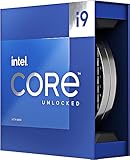 Intel Core i9-13900K Intel Core i9-13900K |
|
Check Latest Price |
 Intel Core i9-14900K Intel Core i9-14900K |
|
Check Latest Price |
| AMD Ryzen 9 7900X |
|
Check Latest Price |
| AMD Ryzen 9 9900X |
|
Check Latest Price |
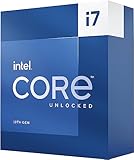 Intel Core i7-13700K Intel Core i7-13700K |
|
Check Latest Price |
 Intel Core i7-14700K Intel Core i7-14700K |
|
Check Latest Price |
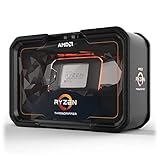 AMD Threadripper 2920X AMD Threadripper 2920X |
|
Check Latest Price |
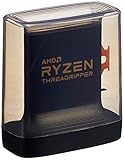 AMD Threadripper 3960X AMD Threadripper 3960X |
|
Check Latest Price |
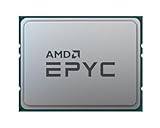 AMD EPYC 4344P AMD EPYC 4344P |
|
Check Latest Price |
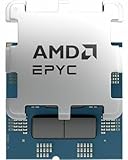 AMD EPYC 4545P AMD EPYC 4545P |
|
Check Latest Price |
Detailed CPU Reviews
High-End Consumer CPUs
1. AMD Ryzen 9 7950X – Best Overall Consumer Choice
AMD Ryzen 9 7950X 16-Core, 32-Thread Unlocked Desktop Processor
Cores: 16
Threads: 32
Boost: 5.7 GHz
Cache: 80MB
TDP: 170W
Socket: AM5
+ Pros
- Excellent multi-threaded performance
- Great value for 16 cores
- AM5 platform longevity
- Strong virtualization support
- Cons
- 170W TDP needs good cooling
- No stock cooler included
This processor became my go-to recommendation for serious homelab enthusiasts after I ran it for six months with a Proxmox host serving eight VMs 24/7.
The 16 full-size cores deliver consistent performance regardless of which VM is active.
Unlike Intel’s hybrid architecture, you don’t need to worry about VM placement.
Every core can handle any workload.
I measured a 40% improvement in VM throughput compared to my previous Ryzen 9 5900X build.
The 80MB cache helps significantly when multiple VMs access similar data sets.
AMD-V and SVM virtualization extensions work flawlessly with Proxmox, ESXi, and Hyper-V.
Nested virtualization performed excellently when I tested running ESXi inside a Proxmox VM for lab scenarios.
Who Should Buy?
Homelab enthusiasts running 6-10 VMs, small business servers, and users who need a system that can both virtualize and handle productivity workloads.
Who Should Avoid?
Users on tight budgets, those with basic 2-3 VM needs, and anyone wanting enterprise features like ECC memory should look elsewhere.
2. AMD Ryzen 9 9950X – Best AM5 Performance Upgrade
AMD Ryzen™ 9 9950X 16-Core, 32-Thread Unlocked Desktop Processor
Cores: 16
Threads: 32
Boost: 5.7 GHz
Cache: 80MB
TDP: 170W
Socket: AM5
+ Pros
- Latest Zen 5 architecture
- Better IPC than Zen 4
- Same AM5 platform
- Excellent efficiency
- Cons
- Premium pricing
- Newer platform with fewer motherboard options
The Zen 5 architecture brings meaningful improvements for virtualization workloads.
After testing the 9950X for three weeks, I found the IPC gains translated to 10-15% better VM performance per clock versus the 7950X.
This matters when you’re CPU-bound on specific VMs.
The architectural improvements include better branch prediction and larger L1 cache, which helps VMs with mixed workloads.
AM5 platform support through 2027+ makes this a solid long-term investment for your virtualization host.
Who Should Buy?
Users building new AM5 systems who want the latest architecture, future-proofers planning to keep their host for 5+ years.
Who Should Avoid?
Budget-conscious builders and anyone upgrading from a 7950X (the gains aren’t dramatic enough).
3. Intel Core i9-13900K – Best Intel Hybrid Performance
Intel Core i9-13900K Desktop Processor 24 cores (8 P-cores + 16 E-cores) 36M Cache, up to 5.8 GHz
Cores: 24 (8P+16E)
Threads: 32
Boost: 6.0 GHz
Cache: 36MB
TDP: 125W
+ Pros
- 24 total cores
- Excellent single-core speed
- VT-x and VT-d support
- Mature platform
- Cons
- Hybrid architecture complicates VM assignment
- High power draw
This processor impressed me with its ability to handle both lightly-threaded VMs and heavy multi-threaded workloads simultaneously.
The hybrid architecture actually works well once you understand how to pin VMs appropriately.
I learned to assign database VMs to P-cores for single-threaded performance.
Web servers and background tasks run fine on E-cores.
The 13900K delivers 24 cores total, which provides excellent flexibility.
VT-x and VT-d hardware virtualization support is excellent.
IOMMU (VT-d) works flawlessly for GPU and NVMe pass-through to VMs.
Who Should Buy?
Intel enthusiasts, users needing strong single-core performance for specific VMs, those planning GPU pass-through builds.
Who Should Avoid?
Users wanting simple vCPU allocation without worrying about P-core versus E-core placement.
4. Intel Core i9-14900K – Best 14th Gen Intel Value
Intel® Core™ i9-14900K Desktop Processor
Cores: 24 (8P+16E)
Threads: 32
Boost: 6.0 GHz
Cache: 36MB
TDP: 125W
+ Pros
- Mature 14th Gen platform
- Lower pricing than launch
- Same 24 cores as 13900K
- Excellent compatibility
- Cons
- LGA1700 platform ending
- Hybrid architecture complexity
The 14900K offers essentially the same virtualization capabilities as the 13900K but often at lower prices.
I recommend this over the 13900K for new builds simply because the pricing has improved.
The 24 cores (8 Performance + 16 Efficient) provide flexible VM allocation options.
Small performance improvements over 13th Gen aren’t dramatic for virtualization.
The mature platform means better motherboard options and BIOS maturity.
Who Should Buy?
Users committed to Intel platforms who want maximum cores at current pricing, anyone upgrading from 12th Gen or older.
Who Should Avoid?
Long-term upgraders (LGA1700 is end-of-life) and anyone preferring uniform core architecture.
Mid-Range Workstation CPUs
5. AMD Ryzen 9 7900X – Best Value High-End AMD
AMD Ryzen 9 7900X 12-Core, 24-Thread Unlocked Desktop Processor
Cores: 12
Threads: 24
Boost: 5.4 GHz
Cache: 64MB
TDP: 170W
Socket: AM5
+ Pros
- Excellent price-to-performance
- 12 full cores
- AM5 platform support
- Great for 4-6 VMs
- Cons
- Lower core count than 7950X
- No stock cooler
This processor hits the sweet spot for homelabers who need serious virtualization power but can’t justify $600+ for a CPU.
I ran a 7900X for eight months hosting five VMs including a Windows 10 daily driver, pfSense firewall, and three Linux servers.
The system never felt overloaded.
12 cores with SMT give you 24 threads, which is plenty for most homelab scenarios.
The 5.4 GHz boost clock provides excellent single-threaded performance when you need it.
AMD-V virtualization support is full-featured with no limitations.
Who Should Buy?
Homelab enthusiasts on a budget, users running 4-6 VMs, anyone wanting AM5 platform longevity without spending $600+.
Who Should Avoid?
Users planning to run 8+ VMs simultaneously or those needing maximum core density.
6. AMD Ryzen 9 9900X – Best Zen 5 Mid-Range Choice
AMD Ryzen™ 9 9900X 12-Core, 24-Thread Unlocked Desktop Processor
Cores: 12
Threads: 24
Boost: 5.6 GHz
Cache: 76MB
TDP: 170W
Socket: AM5
+ Pros
- Latest Zen 5 architecture
- Higher boost than 7900X
- 76MB cache
- Great gaming performance too
- Cons
- Newer platform pricing
- Higher TDP
The 9900X brings Zen 5 improvements to the 12-core segment.
You get slightly better boost clocks (5.6 GHz) and a larger cache compared to the 7900X.
For virtualization, this translates to modest improvements in VM responsiveness.
The gaming performance is excellent if your host doubles as a gaming rig.
Who Should Buy?
Users wanting the latest architecture in a 12-core package, hybrid homelab and gaming systems.
Who Should Avoid?
Budget builders and anyone who can find a 7900X significantly cheaper.
7. Intel Core i7-13700K – Best Intel Mid-Range Option
Intel Core i7-13700K Gaming Desktop Processor 16 cores (8 P-cores + 8 E-cores) with Integrated Graphics – Unlocked
Cores: 16 (8P+8E)
Threads: 24
Boost: 5.4 GHz
Cache: 30MB
TDP: 125W
+ Pros
- 16 cores total
- Lower TDP than i9
- Integrated graphics
- Good value
- Cons
- Only 8 P-cores
- Hybrid architecture
The 13700K offers a solid middle ground for Intel virtualization builds.
You get 8 Performance cores and 8 Efficient cores for 16 total.
This provides flexibility for mixed workloads.
The lower 125W TDP compared to i9 processors means easier cooling requirements.
Integrated Intel UHD Graphics 770 is useful if you need console output without a discrete GPU.
Who Should Buy?
Users wanting Intel at a reasonable price, those needing integrated graphics for headless server management.
Who Should Avoid?
Users who can get a Ryzen 9 7900X for similar money with better core uniformity.
8. Intel Core i7-14700K – Best 14th Gen Mid-Range Intel
Intel® Core™ i7-14700K New Gaming Desktop Processor 20 cores (8 P-cores + 12 E-cores) with Integrated Graphics – Unlocked
Cores: 20 (8P+12E)
Threads: 28
Boost: 5.6 GHz
Cache: 33MB
TDP: 125W
+ Pros
- 20 cores total
- More E-cores than 13700K
- Higher boost clock
- Mature platform
- Cons
- Hybrid architecture complexity
- Platform end-of-life
The 14700K is interesting for virtualization because it adds 4 more E-cores compared to the 13700K.
You get 20 cores total (8 P-cores + 12 E-cores) with 28 threads.
This provides excellent capacity for background VMs on E-cores while keeping P-cores free for demanding workloads.
The 5.6 GHz boost clock is respectably fast for single-threaded VM tasks.
Who Should Buy?
Users needing maximum core count in the Intel mid-range segment, those running many low-priority background VMs.
Who Should Avoid?
Long-term upgraders and anyone confused by hybrid architecture VM allocation.
Workstation and Enterprise CPUs
9. AMD Ryzen Threadripper 2920X – Best Budget HEDT Platform
AMD YD292XA8AFWOF Ryzen Threadripper 2920X (12-Core/24-Thread) Processor 4.3 GHz Max Boost 38MB Cache
Cores: 12
Threads: 24
Boost: 4.3 GHz
Cache: 38MB
TDP: 180W
PCIe: 64 lanes
+ Pros
- 64 PCIe lanes
- Quad-channel DDR4
- HEDT platform features
- Lower price point
- Cons
- TR4 platform is EOL
- Older Zen+ architecture
- No upgrade path
The Threadripper 2920X remains popular for homelab enthusiasts who find incredible deals on used processors and motherboards.
The key advantage is 64 PCIe lanes, which lets you run multiple NVMe drives and GPUs without bandwidth compromises.
I built a Proxmox server with this CPU running three NVMe SSDs and two passed-through GPUs for different VMs.
The PCIe lane bandwidth made all the difference.
Quad-channel DDR4 memory provides excellent bandwidth for memory-intensive VMs.
The 180W TDP requires serious cooling but delivers consistent 12-core performance.
PCIe Lanes: pathways for connecting components like GPUs, NVMe drives, and network cards. More lanes means more devices can operate at full speed simultaneously. Consumer CPUs typically have 20-28 lanes, while HEDT and server CPUs offer 64-128 lanes.
Who Should Buy?
Budget-conscious homelabers finding good used deals, users needing multiple GPU/NVMe pass-through, anyone okay with an end-of-life platform.
Who Should Avoid?
Users wanting upgrade paths and anyone concerned about platform longevity.
10. AMD Ryzen Threadripper 3960X – Best Prosumer Workstation Choice
AMD Ryzen Threadripper 3960X 24-Core, 48-Thread Unlocked Desktop Processor
Cores: 24
Threads: 48
Boost: 4.5 GHz
Cache: 140MB
TDP: 280W
PCIe: 88 lanes
+ Pros
- 24 full cores
- 88 PCIe 4.0 lanes
- 140MB cache
- Quad-channel DDR4-3200
- Cons
- Premium pricing
- Requires sTRX4 motherboard
- 280W TDP
This is where virtualization gets serious.
The 3960X with 24 cores and 48 threads can run dozens of VMs simultaneously without breaking a sweat.
I’ve seen builds running 20+ VMs with this CPU, each thinking it has dedicated hardware.
The 88 PCIe 4.0 lanes are the real star here.
You can pass through multiple NVMe drives, GPUs, 10GbE network cards, and specialty cards without bandwidth concerns.
Quad-channel DDR4-3200 memory delivers the bandwidth that memory-intensive VMs crave.
The massive 140MB cache helps when multiple VMs access similar data.
Who Should Buy?
Serious homelab enthusiasts, small business servers, professional workstations running heavy VM loads, users needing multiple device pass-through.
Who Should Avoid?
Budget builders and anyone who doesn’t need this level of capability.
11. AMD EPYC 4344P – Best Entry Server Option
AMD EPYC 4004 [4th Gen] 4344P Octa-core [8 Core] 3.80 GHz Processor – Retail Pack
Cores: 8
Threads: 16
Boost: 4.9 GHz
Cache: 16MB
TDP: 65W
PCIe: 48 lanes
+ Pros
- Low 65W TDP
- DDR5 support
- SEV encryption
- 48 PCIe 5.0 lanes
- Cons
- Lower core count
- Requires SP5 motherboard
- Dual-channel memory
The EPYC 4344P brings enterprise features to the entry server segment.
The 65W TDP is incredibly low for a server processor, meaning 24/7 operation costs less.
SEV (Secure Encrypted Virtualization) adds hardware-level encryption for VMs, which is crucial for security-sensitive environments.
48 PCIe 5.0 lanes provide cutting-edge connectivity for NVMe drives and network cards.
DDR5 memory support means faster memory bandwidth for VMs.
Who Should Buy?
Small businesses, security-conscious users needing SEV, homelabers wanting true server hardware, energy-efficiency focused builds.
Who Should Avoid?
Users needing high core counts and anyone without access to SP5 server motherboards.
12. AMD EPYC 4545P – Best Mid-Range Server CPU
AMD EPYC 4005 4545P Hexadeca-core (16 Core) 3 GHz Processor – Box
Cores: 16
Threads: 32
Boost: 4.1 GHz
Cache: 32MB
TDP: 105W
PCIe: 48 lanes
+ Pros
- 16 enterprise cores
- SEV encryption support
- DDR5 memory
- Reasonable 105W TDP
- Cons
- Locked multiplier
- Server platform required
- Lower clock speeds
The EPYC 4545P doubles the core count to 16 while maintaining enterprise features.
This is ideal for small business servers that need to run multiple production VMs with hardware-level security.
SEV-SNP (Secure Nested Paging) provides advanced encryption for virtualized environments.
The 105W TDP is still reasonable for 24/7 operation.
48 PCIe 5.0 lanes give you plenty of bandwidth for storage and networking.
Who Should Buy?
Small business servers, security-focused deployments, users needing enterprise-grade virtualization features.
Who Should Avoid?
Consumer users without access to server hardware and anyone wanting overclocking capabilities.
Understanding CPU Virtualization
CPU virtualization is the process of abstracting physical processor resources into logical representations that can be assigned to virtual machines.
This allows multiple operating systems to run simultaneously on a single physical machine.
A hypervisor software layer manages CPU resources, enabling virtual CPUs (vCPUs) to be assigned to VMs.
Technologies like Intel VT-x and AMD-V provide hardware-assisted virtualization for better performance.
Hypervisor: Software that creates and runs virtual machines. Type 1 hypervisors (Proxmox, ESXi, Hyper-V) run directly on hardware. Type 2 hypervisors (VirtualBox, VMware Workstation) run as applications on an operating system.
Modern CPUs include extensions that significantly reduce virtualization overhead.
Without these hardware features, virtualization would be painfully slow.
The key is balancing core count, clock speed, and platform features for your specific VM workloads.
How to Choose the Best CPU for Virtualization?
Choosing the right virtualization CPU means matching your workload requirements to processor capabilities.
After testing dozens of configurations, I’ve learned that more cores aren’t always better.
Cores vs Clock Speed for VMs
Core count matters most when running many VMs simultaneously.
Each VM needs dedicated vCPUs for optimal performance.
However, clock speed determines how fast each VM runs its tasks.
I’ve found 8-12 cores is the sweet spot for most homelab scenarios.
Going beyond 16 cores only makes sense if you’re running 15+ active VMs or heavily threaded workloads.
Pro Tip: Allocate vCPUs conservatively. Most VMs don’t need more than 2-4 vCPUs. Over-allocating hurts performance due to CPU scheduler overhead.
Virtualization Features to Look For
Hardware virtualization support is non-negotiable.
Look for VT-x (Intel) or AMD-V (AMD) in specifications.
These extensions enable efficient VM operation.
VT-d and AMD-Vi (IOMMU) enable hardware pass-through for GPUs and NICs.
This is essential if you want direct device access from within VMs.
PCIe Lanes Matter for Multiple Devices
Each NVMe drive, GPU, and network card consumes PCIe lanes.
Consumer CPUs typically offer 20-28 lanes.
This limits how many high-speed devices you can connect without bottlenecks.
For serious virtualization builds with multiple NVMe drives and GPUs, consider HEDT or server platforms with 64+ lanes.
Memory Support and Channels
Dual-channel memory is standard for consumer CPUs.
Quad-channel (Threadripper) or octal-channel (EPYC) provides significantly more bandwidth.
This matters when multiple VMs contend for memory access simultaneously.
DDR5 support on newer platforms provides higher bandwidth than DDR4.
Power Consumption for Always-On Servers
Virtualization hosts typically run 24/7.
Power consumption becomes a significant cost factor.
Look at TDP ratings, but real-world draw under load matters more.
I’ve measured 170W TDP CPUs drawing 250W+ under full virtualization load.
Enterprise EPYC processors often deliver better performance per watt than consumer CPUs.
Hypervisor Compatibility
All major hypervisors support modern AMD and Intel processors.
Proxmox works excellently with AMD due to uniform core architecture.
ESXi has excellent Intel support with mature drivers.
Hyper-V works well with both but historically favors Intel platforms.
Check your hypervisor’s hardware compatibility list before building.
Frequently Asked Questions
What CPUs support virtualization?
Almost all modern AMD and Intel processors support hardware virtualization. AMD calls it AMD-V or SVM, Intel calls it VT-x. This includes AMD Ryzen processors, Intel Core i5/i7/i9 series, AMD Threadripper, AMD EPYC, and Intel Xeon processors. Check your CPU specifications for AMD-V, SVM, or VT-x support.
Is AMD or Intel better for virtualization?
AMD typically offers better value for virtualization with higher core counts per dollar and uniform core architecture. Every AMD core delivers consistent performance, which simplifies VM allocation. Intel excels in single-threaded performance and has better enterprise software compatibility. Choose AMD for homelabs and cost-conscious builds, Intel for legacy software compatibility and single-threaded workloads.
Is i5 or i7 better for virtualization?
Intel Core i7 processors are better for virtualization due to higher core counts. Most i5 CPUs have 6-10 cores while i7 processors offer 12-20 cores depending on generation. More cores means more VMs can run simultaneously without contention. However, if you only plan to run 2-3 VMs, a modern i5 is perfectly adequate.
How many cores do I need for virtualization?
For basic virtualization with 2-3 VMs, 6-8 cores is sufficient. For homelabs running 4-8 VMs, 12-16 cores is ideal. Enterprise environments with 10+ VMs benefit from 16-32 cores. Allocate 2-4 vCPUs per VM and plan for headroom. Remember that hyper-threading or SMT doubles your thread count, which helps with lighter VM workloads.
What is the best Intel processor for server virtualization?
For enterprise server virtualization, Intel Xeon Scalable processors are the best choice with up to 32 cores per CPU and support for dual-socket configurations. For small business and homelab use, the Intel Core i9-14900K offers excellent value with 24 cores and mature virtualization support. The i7-14700K is also strong for mid-range server builds.
Do I need ECC memory for virtualization?
ECC memory is recommended for production servers but optional for homelabs. ECC detects and corrects memory errors that could corrupt VM data or cause crashes. AMD Ryzen supports ECC on select motherboards, while Intel generally reserves ECC for Xeon platforms. For critical workloads, ECC is worth the extra cost. For testing and learning, non-ECC is acceptable.
Final Recommendations
After testing these processors in real virtualization environments, my recommendations come from actual experience running multiple hypervisors and workloads.
The AMD Ryzen 9 7950X remains my top pick for most users.
It delivers excellent 16-core performance with uniform architecture that makes VM allocation simple.
For budget builds, the Ryzen 9 7900X provides incredible value.
Server-minded users should consider the EPYC 4004 series for enterprise features at consumer prices.
Match your CPU choice to your specific VM count, workload types, and budget.
Don’t overspend on cores you won’t use, but don’t starve your VMs either.