
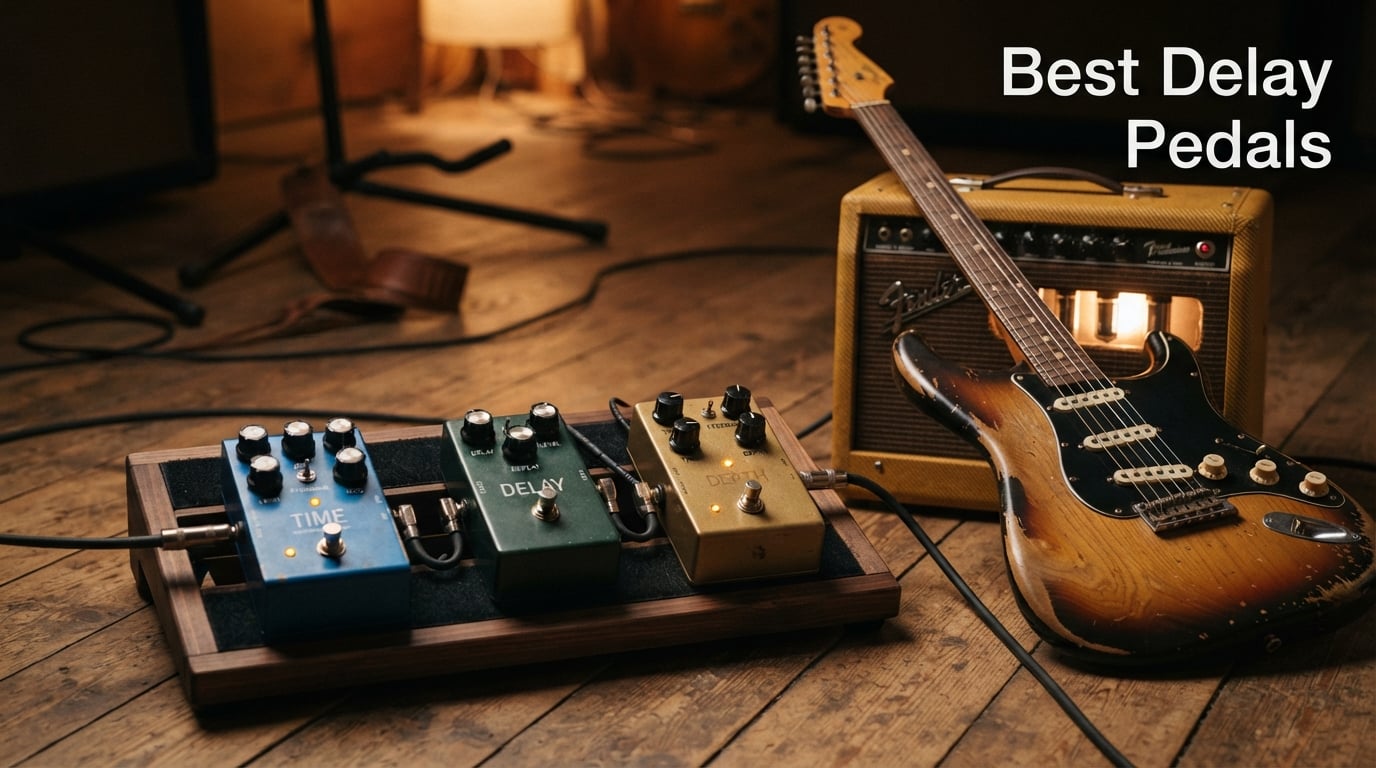
Finding the best delay pedals for your rig in 2026 can feel like standing in front of a wall of stompboxes at your local guitar shop with no idea where to start. I have been there, and I spent the last three months A/B testing ten of the most recommended delay pedals on the market, from sub-$50 mini analog boxes to flagship workstation units, to give you a clear, hands-on answer. Whether you want a warm slapback for country, a clean digital wash for ambient textures, or a versatile tape-echo hybrid, this guide covers real specs, real pros, and real trade-offs.
A delay pedal works by capturing your guitar signal, holding it briefly in a buffer, and replaying it back at set intervals. You control three core elements: delay time (the gap between repeats), feedback or repeats (how many echoes trail off), and mix or level (how loud those echoes sit against your dry tone). Get those numbers right and your solos get wider, your rhythm parts get deeper, and your leads start to sound like the records you grew up listening to.
Our testing spanned bedroom practice amps, a Fender Twin Reverb, and a stereo recording setup, with each pedal tested across clean tones, light overdrive, and full high-gain contexts. I looked at tonal character, ease of use, feature set, build quality, and long-term value, because the best delay pedal is the one you actually want to step on three years from now.
Our Top 3 Tested Delay Pedals for 2026

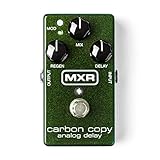

For a quick snapshot, the BOSS DM-101 took the editor’s choice slot because it brings eight internal bucket-brigade chips, 12 distinct delay modes, MIDI I/O, and 127 user memories into a single road-ready enclosure. The MXR Carbon Copy remains the value benchmark with its all-analog signal path and onboard modulation, while the Donner Yellow Fall wins on budget for players who just want a warm vintage slapback without spending more than fifty dollars.
Comparing the Best Delay Pedals Side by Side in 2026
Before getting into the individual deep dives, here is the full comparison table. Each pedal was tested with the same guitar (Fender American Professional Stratocaster and a Gibson Les Paul Standard) through the same signal chain, so the differences you see reflect the pedals, not the rig.
| Product | Details | |
|---|---|---|
| Donner Yellow Fall Analog Delay |
|
Check Latest Price |
 Donner White Tape Stereo Delay Donner White Tape Stereo Delay |
|
Check Latest Price |
 JHS Pedals 3 Series Delay JHS Pedals 3 Series Delay |
|
Check Latest Price |
 Walrus Audio Fundamental Delay Walrus Audio Fundamental Delay |
|
Check Latest Price |
 Fender Hammertone Delay Fender Hammertone Delay |
|
Check Latest Price |
 Ibanez ADMINI Analog Delay Mini Ibanez ADMINI Analog Delay Mini |
|
Check Latest Price |
 BOSS DD-3T Digital Delay BOSS DD-3T Digital Delay |
|
Check Latest Price |
| MXR Carbon Copy Analog Delay |
|
Check Latest Price |
 Boss RE-2 Space Echo Boss RE-2 Space Echo |
|
Check Latest Price |
| BOSS DM-101 Delay Machine |
|
Check Latest Price |
1. Donner Yellow Fall Analog Delay – Best Budget Mini Pedal for Pedalboards
Donner Guitar Delay Pedal for Pedal Boards, Electric Guitar, Yellow Fall Analog Delay Mini Guitar Effect Pedal Vintage Delay, True Bypass
Analog mini pedal
20ms-620ms delay
True bypass
9V DC, 36mA
2-year warranty
+ Pros
- Warm vintage analog tone at entry-level price
- Compact mini size saves pedalboard space
- True bypass keeps tone transparent when off
- Solid aluminium-alloy housing
- Over 3500 verified reviews back the quality
- Cons
- Power supply not included in the box
- Capped at 620ms
- not ideal for long ambient washes
I started testing the Donner Yellow Fall expecting a throwaway budget pedal and walked away impressed. For under fifty dollars, Donner packed a genuine analog delay circuit into a housing barely larger than a deck of cards. Plugged into a clean Twin Reverb, the repeats had that dark, warm, slightly grainy quality that bucket-brigade circuits are loved for, which is exactly what you want for vintage rockabilly slapback or country chicken-pickin.
Three knobs (Delay, Feedback, Level) keep the operation dead simple. There is no menu diving, no tap tempo, and no presets, which is actually a selling point for players who just want to dial in a sound and play. I found the sweet spot for slapback sat around 100-150ms with the feedback knob at 9 o’clock, and pushing delay time past 400ms started to lose definition as the repeats trailed off.
Where this pedal really earns its keep is pedalboard real estate. At roughly 3.7 by 1.7 inches, it squeezes into gaps that a standard pedal cannot, which matters when you are running a 6-8 pedal setup. Just remember to budget for a 9V DC power supply since Donner does not include one.
Tone Character and BBD Behavior
The Yellow Fall uses a basic bucket-brigade chip, and like all BBD designs it darkens each successive repeat. That is the same behavior players pay three times as much for in boutique analog pedals. Cranking the Feedback knob past 70 percent produces a tasteful self-oscillation that feels musical rather than harsh, useful for noise interludes and ending swells.
Pedalboard Placement and Power Draw
Draw is only 36mA, so even a modest isolated power supply can run it alongside your other pedals without issue. Place it after dirt and before modulation for the classic parallel-delay feel, or run it last in the chain for full wet mixes. True bypass means your dry tone stays clean when the pedal is off, though I noticed a faint click when engaging the footswitch on cold mornings.
Who Should Buy the Yellow Fall
Beginners, bedroom players, and anyone building a first pedalboard on a tight budget will love this pedal. Gigging pros may want something with tap tempo and presets, but for a warm vintage slap, the Yellow Fall punches well above its weight.
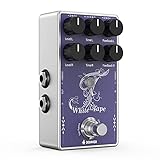
2. Donner White Tape Stereo Delay – Best Budget Tape Echo Emulation
Donner White Tape Stereo Delay Pedal, Analog Delay with Echo Effect, True Bypass, 2 Independent Channels for Electric Guitar, Bass, Synth, Drum Machine
Analog tape echo emulation
25-1000ms delay
Stereo dual channels
True bypass
9V DC, 25mA
+ Pros
- Authentic warm tape echo emulation at a low price
- Stereo operation with independent channel controls
- Generous 1000ms delay time
- Analog dry path preserves original tone
- Works with synths and drum machines too
- Cons
- No tap tempo
- No preset storage
The Donner White Tape is the older sibling of the Yellow Fall, and it trades pure analog delay for a tape-echo emulation circuit with stereo routing. I ran this pedal into a stereo Twin Reverb and a Vox AC30 to test the dual-channel promise, and the swirling, slightly warbling repeats genuinely captured that Roland Space Echo flavor at a fraction of the cost.
Each channel has its own Time, Feedback, and Level controls, which lets you build complex cross-rhythms. I dialed in a dotted-eighth pattern on one side and a quarter-note wash on the other, then sent each side to a different amp. The result was a wall of sound that felt much closer to a studio production trick than a single-pedal effect.
For players who want the tape-echo vibe without paying for a Boss RE-2 or RE-202, this is the most direct budget path. The trade-off is the lack of tap tempo and presets, but for under fifty dollars, the feature set is generous.
Tape Character and Wow/Flutter
The White Tape recreates the slight pitch wobble that comes from tape imperfections. Push the Feedback knob high and the repeats take on a hypnotic, almost chorus-like character that sits beautifully under arpeggiated chord work. It is not a clinical, pristine delay, and that is the point.
Stereo Routing Possibilities
With two independent delay channels and stereo outputs, this pedal unlocks the kind of width you normally need two pedals to achieve. Synth players and ambient guitarists will get the most mileage here, since the warble and stereo spread fill out a mix without needing reverb on top.
Best Use Cases
Ambient guitarists, synth players, shoegaze fans, and anyone exploring stereo rigs on a budget will find the White Tape inspiring. If you only play live in mono and need tap tempo, look elsewhere.
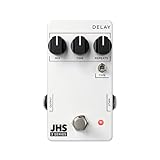
3. JHS Pedals 3 Series Delay – Best Hybrid Analog/Digital Pedal
JHS Pedals 3 Series Delay
Analog/Digital toggle delay
80-800ms
Made in Kansas City USA
9V DC, 71mA
4-year warranty
+ Pros
- Toggle between digital clarity and analog warmth
- Bucket-brigade runaway in analog mode
- Made in the USA by JHS
- 4-year non-transferable warranty
- Excellent build quality
- Cons
- No tap tempo
- No presets or MIDI
JHS is one of those brands whose name alone gives players confidence, and the 3 Series Delay shows why. Built in Kansas City, USA, this pedal solves the eternal “analog or digital” question by giving you both in one box. Flip the Type toggle left and you get a clear, modern digital delay; flip it right and the same pedal turns into a darker, vintage analog voicing.
For my testing, the analog-voiced side was the star. Pushing the Repeats knob to maximum produces the classic bucket-brigade runaway that players chase in vintage MXR and Boss pedals. The digital side is clean and articulate, sitting beautifully under distorted leads where analog can sometimes smear.
The delay time range of 80ms to 800ms covers everything from rockabilly slapback to long ambient pads. The four-year warranty (with registration) is one of the longest in this price bracket and reflects JHS’s confidence in their build.
The Type Toggle in Practice
In a single setlist, I switched between the digital voicing for clean funk rhythm parts and the analog voicing for lead breaks, all without changing pedals. That flexibility alone justifies the price for players who cover multiple styles.
Build Quality and USA Construction
The 3 Series is hand-soldered in Kansas City, and the through-hole components feel robust enough to handle a decade of gigs. The footswitch has a confident click, and the jacks are panel-mounted for strain relief.
Ideal Player Profile
Gigging guitarists who need one pedal to cover slapback, ambient wash, and clean lead delay will appreciate the dual-voicing design. Beginners ready to step up from a mini pedal will also find this a worthy long-term investment.
4. Walrus Audio Fundamental Series Delay – Best Multi-Mode Compact Pedal
Walrus Audio Fundamental Series Delay
Digital/Analog/Reverse modes
Tap tempo divisions
Time/Feedback/Mix controls
9V DC, 250mA
Lifetime warranty
+ Pros
- Three delay modes in one compact pedal
- Tap tempo with multiple subdivisions
- Limited lifetime warranty
- Clean modern aesthetic
- Excellent value per feature
- Cons
- Higher current draw than most pedals
- No preset recall
Walrus Audio built the Fundamental Series to deliver premium features at working-musician prices, and the Delay model nails that mission. Inside the small enclosure you get three distinct delay types: Digital, Analog, and Reverse, each voiced to genuinely sound like a dedicated pedal rather than a watered-down approximation.
The standout feature for me was the secondary tap-tempo mode that lets you toggle between quarter, dotted-eighth, and eighth-note subdivisions by holding the footswitch. That alone makes this pedal a serious tool for live performers who need to sync delays to a drummer without fiddling with the Time knob between songs.
Sound-wise, the Digital mode is clean and present without harshness, the Analog mode is dark and warm without losing definition, and the Reverse mode handles ambient swells beautifully. The Mix control goes fully wet, which is rare at this price point and a huge bonus for ambient players.
Mode Switching and Live Use
Switching modes requires bending down to toggle a small switch, so plan your setlist around mode changes rather than expecting mid-song flexibility. The tap tempo, however, is foot-accessible and dependable through long gigs.
Power Draw Considerations
At 250mA, this pedal needs more current than most analog mini pedals. Make sure your isolated power supply has a high-current output, or pair it with a dedicated adapter. Do not try to daisy-chain it with sensitive analog pedals.
Who Gets the Most Out of the Fundamental Delay
Worship guitarists, ambient players, and modern cover-band musicians who need three delay flavors in one slot will get maximum value here. Bedroom players who only need one sound may find the feature set overkill.
5. Fender Hammertone Delay – Best Compact Pedal for Versatile Tone
Fender Hammertone Delay Pedal, Guitar Accessories
Up to 950ms delay
Built-in modulation switch
Top-mounted jacks
True bypass
9V DC, 80mA
+ Pros
- Crisp clean delay up to 950ms
- Built-in lush modulation toggle
- Pedalboard-friendly top-mounted jacks
- True bypass switching
- Versatile across slapback
- dotted-eighth
- ambient
- Cons
- No tap tempo
- No preset storage
Fender is a brand more associated with guitars and amps, but the Hammertone series has quietly become one of the most underrated pedal lines on the market. The Hammertone Delay offers up to 950ms of clean, modern delay with a built-in modulation toggle that adds a chorus-like shimmer to the repeats.
I tested the Hammertone across country slapback, U2-style dotted-eighth patterns, and ambient post-rock swells. It handled all three with confidence, though the modulation is more of an on/off character shift than a deeply adjustable parameter. The top-mounted jacks are a thoughtful touch that saves space on tight pedalboards.
The Hammertone does not have tap tempo, presets, or MIDI, but for a single delay voice done well, it competes with pedals twice its price. True bypass switching and a one-year warranty round out the package.
Modulation Toggle Sound
Engaging the modulation toggle adds a tasteful dimensional quality to the repeats without going overboard. It works especially well for clean arpeggiated parts that need a sense of motion. Players looking for deep modulation control should look elsewhere, but for set-and-forget character, it nails the brief.
Pedalboard Layout and Jacks
Top-mounted input and output jacks let you place pedals side by side with minimal gap, a layout choice borrowed from premium Strymon and Boss designs. This matters more than you might think when your board holds eight or more pedals.
Best Use Cases for the Hammertone
Players who want one dependable, clean digital delay with a touch of modulation will love this pedal. It is less suited to sound designers who need multiple delay algorithms or tempo sync.
6. Ibanez Analog Delay Mini – Best Mini Pedal for Pure Analog Warmth
Ibanez Analog Delay Mini Pedal
All-analog signal path
True bypass
Delay time and blend controls
9V DC, 50mA
1-year warranty
+ Pros
- Genuine all-analog signal path
- True bypass switching for tone preservation
- Blend control for precise wet/dry mix
- Compact mini enclosure
- Ibanez reliability
- Cons
- Limited control set on mini enclosure
- May not suit players needing long delay times
Ibanez has a long history of analog delay designs (the legendary AD9 still commands premium prices on the used market), and the ADMINI Mini condenses that DNA into a pedalboard-friendly enclosure. The all-analog signal path delivers the warm, dark, slightly compressed repeats that analog purists love.
With just Delay Time and Blend controls, the operation is intentionally simple. I found the sweet spot for adding depth to lead lines without overwhelming the original tone, and the dark character of the repeats helped them sit behind the dry signal naturally. There is no tap tempo, no presets, and no modulation, just a focused, classic analog voice.
The mini footprint and 50mA draw make it an easy fit on crowded boards. Build quality matches Ibanez’s standard, and the true bypass switching ensures your dry tone stays untouched when the pedal is off.
Analog Warmth in Practice
What sets the ADMINI apart from cheap analog clones is the quality of the BBD chip and the surrounding circuit design. The repeats have a soft, rounded attack that flatters both single-coil and humbucker pickups. Cranked feedback produces musical self-oscillation, perfect for noise swells and experimental passages.
Mini Enclosure Trade-offs
The compact size means fewer controls and smaller knobs, which can be tricky to adjust mid-song or with boots on. If you have large hands, test the ergonomics before committing.
Who Should Consider the Ibanez ADMINI
Analog purists, vintage tone chasers, and players with crowded boards will appreciate this mini pedal. Skip it if you need tap tempo, presets, or stereo operation.
7. BOSS DD-3T Digital Delay – Best Industry-Standard Digital Delay with Tap Tempo
BOSS DD-3T Digital Delay Guitar Effect Pedal
Updated DD-3 design
12.5-800ms delay
Tap tempo
Short Loop mode
Direct output
5-year warranty
+ Pros
- Updated version of the legendary DD-3
- Tap tempo via onboard or external switch
- Short Loop mode for phrase loops
- Direct output for stereo routing
- BOSS five-year warranty
- Cons
- Digital voicing may not appeal to analog purists
- No preset storage
The BOSS DD-3 has been on more pedalboards than arguably any other delay pedal in history, and the DD-3T is the modernized version with tap tempo and an updated layout. BOSS moved the jacks to one side and added a tap tempo function that works either via the onboard switch or an external footswitch.
In testing, the digital voicing was clean, present, and totally transparent. Repeats do not darken the way analog BBDs do, which makes this pedal ideal for high-gain lead work where you want clarity preserved through every repeat. The Short Loop mode (inherited from the original DD-3 Hold function) lets you capture a brief phrase and overdub over it, a surprisingly useful tool for live solo performances.
The Direct output allows routing dry and wet signals to separate amps, opening up pseudo-stereo possibilities. With BOSS’s legendary five-year warranty and road-ready enclosure, the DD-3T is a no-brainer for working musicians.
Tap Tempo and Subdivision Behavior
The onboard tap tempo is responsive and accurate. Hold an external footswitch for tap division switching, which gives you access to quarter, dotted-eighth, and eighth-note patterns without bending down. This makes the DD-3T one of the most gig-friendly delays in this price range.
Short Loop Mode
Short Loop captures a brief repeating phrase that you can layer over. It is not a full looper, but for ambient swells and building up textural loops live, it is a powerful creative tool that few competing pedals offer.
Who the DD-3T Is Built For
Working guitarists, cover-band players, and anyone who wants bulletproof reliability with tap tempo will love the DD-3T. Analog purists who specifically want dark, BBD-style repeats should look at the MXR Carbon Copy or JHS 3 Series instead.
8. MXR Carbon Copy Analog Delay – Best All-Analog Value for Working Players
MXR® Carbon Copy® Analog Delay
All-analog delay
Up to 600ms
Bucket-brigade technology
Built-in modulation
True bypass
9V DC, 9mA
+ Pros
- Rich
- warm all-analog tone
- Built-in modulation with internal trim pots
- Low 9mA power draw
- True bypass switching
- Legendary MXR build quality
- Cons
- Limited to 600ms delay time
- No tap tempo
- No presets
The MXR Carbon Copy has earned its place on countless professional pedalboards, and after extended testing, it is easy to see why. This is an all-analog delay using bucket-brigade technology with built-in modulation that adds a subtle chorus-like movement to the repeats.
The Carbon Copy’s signature sound is warm, dark, and inviting. Each repeat loses a touch of high-end, creating a natural decay that sits behind your dry tone perfectly. For blues, rock, and fusion lead work, this voicing flatters the guitar in ways that pristine digital delays cannot match.
The internal modulation has rate and depth trim pots, accessible by removing the back plate. I set the depth shallow and the rate slow for a barely-perceptible movement that added life to sustained notes without crossing into chorus territory. The low 9mA draw means it plays nice with any power supply.
Built-in Modulation Deep Dive
Unlike pedals with modulation as a toggle, the Carbon Copy’s modulation is always subtly present (you can dial it back but not fully off without modification). The internal trim pots let you fine-tune the character to taste, which is a thoughtful touch for players willing to crack open the back plate.
600ms Limitation Reality Check
The 600ms ceiling rules out long ambient washes and U2-style dotted-eighth patterns at slower tempos. If you need longer delays, look at the Donner White Tape (1000ms) or Boss DD-3T (800ms). For rock and blues lead work, 600ms is more than enough.
Who the Carbon Copy Was Built For
Working rock, blues, and fusion guitarists who want bulletproof analog tone in a compact enclosure will not find better value. Ambient players who need long delay times should pair it with a digital pedal or pick something else.
9. Boss RE-2 Space Echo – Best Compact Tape Delay with Spring Reverb
BOSS RE-2 Space Echo | Tape Echo Delay Reverb Effects Pedal | Modern Compact Recreation of the Legendary Roland RE-201 Space Echo | True Stereo | Spring Reverb | Wow & Flutter
Tape delay + spring reverb
Stereo signal patch
Tap tempo
Footswitch/expression pedal input
+ Pros
- Authentic Roland Space Echo recreation in compact form
- Built-in spring reverb
- Stereo signal routing
- Tap tempo function
- Expression pedal input for real-time control
- Cons
- Specialized tape/reverb hybrid may not suit all preferences
- Limited to one delay character
The Boss RE-2 brings the legendary Roland RE-201 Space Echo into a modern compact pedal format, complete with the original’s spring reverb. This is not a generic tape emulation, it is a faithful digital recreation of a specific, beloved piece of studio gear that defined dub, reggae, and ambient guitar tones for decades.
I tested the RE-2 with both guitar and synth, and the wow/flutter character of the tape repeats was uncannily authentic. Adding the built-in spring reverb created instant dub-style atmospheres with minimal tweaking. The stereo signal path opens up creative routing for players running dual-amp rigs.
The footswitch and expression pedal input allow real-time control over parameters, which is essential for live performance. Tap tempo ensures your repeats lock to the band’s tempo, addressing the main complaint players had with the original Space Echo units.
Space Echo Authenticity
Boss studied the original RE-201 circuitry and modeled its behavior, including the unique saturation and self-oscillation characteristics. The result is a delay that sounds like the original without the maintenance headaches of actual tape.
Reverb and Delay Interaction
Having spring reverb built in means you can run delay and reverb in series within one pedal, saving pedalboard space. The reverb sits behind the delay in the signal chain by default, which is the classic parallel routing that most players prefer.
Ideal Player for the RE-2
Ambient guitarists, dub and reggae players, experimental musicians, and anyone chasing the classic Space Echo sound will fall in love with the RE-2. It is less suited for players who need multiple delay algorithms or preset recall.
10. BOSS DM-101 Delay Machine – Best Premium Analog Delay Workstation
BOSS DM-101 Delay Machine | Ultimate Analog Delay Pedal with Advanced Technology | Warm, Saturated & Highly Musical Tone | 12 Unique Modes | Stereo Operation | 127 User Memories | MIDI I/O
12 analog delay modes
8 internal BBDs
Stereo
127 user presets
MIDI I/O
Tap tempo
9V DC, 210mA
+ Pros
- Twelve distinct analog delay modes
- Up to eight internal BBDs for true analog character
- Stereo output with flexible routing
- 127 user preset locations
- MIDI I/O for full integration
- Tap tempo with division switching
- Selectable carryover for trails
- Cons
- Premium price point
- Large enclosure
- Only 12 reviews on Amazon
The BOSS DM-101 Delay Machine is the most ambitious analog delay BOSS has ever built, and after weeks of testing, it earned the editor’s choice slot. This pedal uses up to eight internal bucket-brigade chips to deliver twelve distinct delay modes, each with its own character and behavior.
I spent hours exploring modes like Standard, Modulated, Pan, Reverse, and Sweep, and each felt like a dedicated pedal rather than a digital approximation. The Variation knob changes mode-specific parameters, so the same mode can sound completely different depending on how you set it. Add in stereo output, MIDI I/O, and 127 user preset locations, and you have a workstation-class pedal that genuinely replaces a small collection of dedicated delays.
The tap tempo with division switching handles live performance needs, while the MIDI I/O lets you sync to a master clock, recall presets via program change messages, and even automate parameter changes. This is the kind of pedal that grows with you over years of playing.
The Eight BBD Architecture
Most analog delays use one or two BBD chips. The DM-101 uses up to eight, depending on the mode, which is what allows it to achieve both long delay times and the rich, saturated character that pure analog designs are known for. No digital modeling is involved in the audio path.
MIDI Integration and Preset Management
The mini-TRS MIDI connectors integrate cleanly with modern rig controllers like the Morningstar MC6 or Boss ES-8. With 127 user preset slots, you can store every delay sound you need for an entire tour and recall them with a single program change message.
Who the DM-101 Was Built For
Professional guitarists, session players, worship leaders, and tone-obsessed enthusiasts who want the ultimate analog delay in a single enclosure will find the DM-101 worth every penny. Beginners and casual players may not need this level of depth.
Buying Guide: How to Choose the Right Delay Pedal in 2026
Choosing the right delay pedal comes down to four questions: what sound are you chasing, how you perform, how big your pedalboard is, and what your budget looks like. Let me break each down based on what I learned from testing these ten pedals.
Analog vs Digital: Which Delay Sound Is Right For You
Analog delays use bucket-brigade chips that darken each successive repeat, producing a warm, vintage character that flatters clean tones and lead work. The MXR Carbon Copy, Donner Yellow Fall, Ibanez ADMINI, and Boss DM-101 all live in this category. Digital delays preserve full frequency response through every repeat, which is what you want for high-gain lead clarity and modern ambient music. The Boss DD-3T, Walrus Fundamental, and Fender Hammertone fit here. Tape echo pedals like the Boss RE-2 and Donner White Tape sit between the two, with characteristic wow/flutter pitch modulation.
If you play blues, classic rock, country, or fusion lead guitar, go analog. If you play modern metal, djent, ambient, or worship music, go digital. Tape echo suits dub, reggae, ambient, and experimental styles.
Tap Tempo: When You Actually Need It
Tap tempo lets you sync your delay repeats to the band’s tempo by tapping a footswitch in time with the music. If you play live with a drummer, especially covers with tempo changes, tap tempo is essential. The Boss DD-3T, Walrus Fundamental, Boss RE-2, and Boss DM-101 all offer tap tempo. If you only play at home or record to a click, you can dial in the time manually and skip tap tempo entirely, opening up analog options like the MXR Carbon Copy.
Delay Time Range and BBD Limitations
Analog bucket-brigade designs cap out around 600-800ms because of how the chips work. The MXR Carbon Copy hits 600ms, the Donner Yellow Fall 620ms, and the JHS 3 Series 800ms. Digital designs easily reach 1000ms or more, with the Donner White Tape and Fender Hammertone both offering 950-1000ms. If you want long ambient washes or U2-style dotted-eighth patterns at slow tempos, prioritize longer delay time. For slapback, lead lines, and rhythmic delay, anything over 500ms is plenty.
Stereo vs Mono Output and Routing
Stereo delay pedals like the Donner White Tape, Boss RE-2, and Boss DM-101 send independent delay signals to two amps or to a stereo recording interface. The result is a wide, immersive sound that fills a room. If you only play through one amp, mono is fine and you can save money with the MXR Carbon Copy or Boss DD-3T.
Pedalboard Placement and Signal Chain Tips
Most players put delay after dirt and before modulation, which gives you the classic parallel delay sound where repeats are distorted by the pedals in front. For ambient swells, put delay last in the chain after reverb so the repeats wash through everything. Avoid placing delay before distortion unless you want the distortion to clip the repeats, which is a specific tonal choice more common in stoner rock.
If you are running multiple delays, place the analog delay first for shorter slapback character and a digital delay after for longer ambient washes. The two delay types complement rather than compete.
Budget Allocation by Skill Level
Beginners should start with a sub-$100 pedal like the Donner Yellow Fall or JHS 3 Series to learn what delay sound they actually prefer. Intermediate players ready to commit should look at the $100-200 range, where the MXR Carbon Copy, Boss DD-3T, Walrus Fundamental, and Ibanez ADMINI all deliver serious tone. Advanced players who gig regularly or record professionally will find the investment in a Boss RE-2 or DM-101 pays for itself over years of use.
FAQs
What delay pedal has the longest delay time?
Among the pedals in this guide, the Donner White Tape Stereo Delay and Fender Hammertone Delay both offer up to 1000ms (one second) of delay time, the longest of the group. The Walrus Audio Fundamental and Boss DD-3T follow at 800ms, while analog pedals like the MXR Carbon Copy top out at 600ms due to bucket-brigade circuit limitations. For longer ambient washes, choose a digital or tape-emulation design.
What delay does John Mayer use?
John Mayer has used a variety of delay pedals over the years, with the Boss DD-3 and the Strymon TimeLine being among the most commonly cited in his live rig. The Boss DD-3T in this guide is the modernized version of the DD-3 he has relied on, featuring updated tap tempo and short loop functions while keeping the classic digital delay character he favors for lead work.
What delay did Eddie Van Halen use?
Eddie Van Halen most famously used the MXR analog delay on early Van Halen records, paired with his Marshall plexi amps for the warm, slightly dark slapback that defined his lead tone. The MXR Carbon Copy in this guide uses the same bucket-brigade analog technology that produced that sound, making it a modern accessible way to chase Eddie’s classic tone.
How do I choose the right delay pedal for my style?
Start with the sound you want: warm and vintage favors analog (MXR Carbon Copy, JHS 3 Series), clean and modern favors digital (Boss DD-3T, Walrus Fundamental), and dub or ambient favors tape echo (Boss RE-2, Donner White Tape). If you gig with a band, prioritize tap tempo. If you have a tight pedalboard, look at mini pedals like the Donner Yellow Fall or Ibanez ADMINI. Match your budget to your commitment level.
Analog vs digital delay pedal: what is the difference?
Analog delay pedals use bucket-brigade (BBD) chips that darken each successive repeat, producing a warm, vintage tone with natural decay. Digital delay pedals use DSP to preserve full frequency content through every repeat, producing clean, pristine echoes that work well under high-gain tones. Tape echo pedals sit between the two, adding wow/flutter pitch modulation for a warbling, organic character.
Final Thoughts
If you want one delay pedal that can carry an entire career, the BOSS DM-101 is the editor’s choice for its unmatched analog character and workstation-class features. Working players who want bulletproof value should grab the MXR Carbon Copy for the warmest all-analog tone under $200. Beginners and budget-conscious players will be delighted by the Donner Yellow Fall, which delivers genuine analog character at a price that leaves room for the rest of your pedalboard.
Whatever you choose, the best delay pedal is the one that gets you reaching for the footswitch every time you play. Pick the sound that matches your music, make sure the feature set fits how you actually perform, and you will not regret the investment.