
Bad audio ruins good footage faster than any other mistake in video production. Our team spent three months comparing the best shotgun microphones across run-and-gun shoots, controlled interviews, and outdoor field tests to find which models actually deliver clean, professional dialogue capture. Whether you are mounting directly on a mirrorless camera or booming from above on a film set, the right directional microphone is the difference between usable takes and reshoots.
The shotgun microphone category spans from $35 budget options to $1,000 professional standards, and the gap in audio quality is enormous. I have watched creators waste money on the wrong mic because they did not understand the difference between phantom power and plug-in power, or between XLR and 3.5mm connectivity. This guide fixes that confusion. We tested 8 of the top-rated shotgun mics on the market in 2026 so you can match the right tool to your specific shooting style and budget.
In this roundup, you will find recommendations for filmmakers, vloggers, documentary shooters, interview producers, and hybrid creators who need one mic for both camera and computer. We cover the Sennheiser MKH 416-P48 industry standard, the Rode NTG5 lightweight pro pick, the budget-friendly Movo VXR10, and five more models in between. Every recommendation comes from hands-on field testing, not spec sheets.
Quick context on how shotgun mics work before we get into the picks. A shotgun microphone is a highly directional condenser mic with an interference tube that captures sound from the front while rejecting noise from the sides and rear. That design lets you record clear dialogue from a distance, which is why these mics dominate film, broadcast, and interview work. The longer the interference tube, the tighter the pickup pattern, but also the more pronounced the off-axis coloration indoors. We address that trade-off in the buying guide below.
Our Top 3 Tested Shotgun Mics for 2026
Three models separated themselves from the pack during our testing. These are the picks we would hand to a filmmaker, a working professional, and a budget creator without hesitation.

Sennheiser MKH 416-P48
- Industry-standard RF condenser
- Hypercardioid shotgun
- Immune to humidity


The Sennheiser MKH 416-P48 is the professional’s choice, used on film sets and broadcast productions for decades. Its RF condenser design shrugs off humidity that would kill traditional condenser mics, and the off-axis rejection is the benchmark every other shotgun mic is measured against. If you are serious about production audio, this is the mic.
The Sennheiser MKE 600 wins Best Value because it gives you roughly 85 percent of the MKH 416’s character for under $300. The dual power option (one AA battery or 48V phantom power) means it works with consumer cameras that lack phantom power, which solves one of the biggest pain points creators mention on Reddit’s LocationSound and videography forums.
The Movo VXR10 earns Budget Pick honors with over 15,000 reviews and a 4.3-star rating from creators who just need clean dialogue for YouTube, TikTok, and travel vlogs. At under $40 with a complete accessory kit, it is the mic we recommend to every beginner before they spend real money on audio.
Comparing All 8 Best Shotgun Microphones in 2026
Here is the full comparison of every model we tested. Use this table to scan specs at a glance, then read the individual reviews below for the hands-on detail that spec sheets never tell you.
| Product | Details | |
|---|---|---|
| Sennheiser MKH 416-P48 |
|
Check Latest Price |
 Rode NTG5 Kit Rode NTG5 Kit |
|
Check Latest Price |
| Sennheiser MKE 600 |
|
Check Latest Price |
 Rode VideoMic Pro+ Rode VideoMic Pro+ |
|
Check Latest Price |
 Sony ECM-B1M Sony ECM-B1M |
|
Check Latest Price |
 Rode VideoMic NTG Rode VideoMic NTG |
|
Check Latest Price |
 Shure VP83F LensHopper Shure VP83F LensHopper |
|
Check Latest Price |
| Movo VXR10 Universal |
|
Check Latest Price |
1. Sennheiser MKH 416-P48 – The Industry Standard for Professional Film Audio
SENNHEISER Wired Professional MKH 416-P48U3 Short Shotgun Interference Tube Microphone,Black
RF condenser shotgun
Hypercardioid polar pattern
48V phantom power
13 dB self-noise
1.1 lbs
+ Pros
- Industry-standard audio quality for film and broadcast
- RF condenser design resists humidity and moisture
- Excellent off-axis rejection with tight pickup pattern
- Rugged all-metal matte black body
- Cons
- Premium price point at $999
- Requires 48V phantom power
- Lower signal-to-noise ratio (24 dB) than newer designs
The first time I picked up the Sennheiser MKH 416-P48, I understood why professionals treat it like a status symbol. This is the shotgun mic used on Hollywood sets, network news broadcasts, and ADR stages for decades. There is a reason every sound mixer I have worked with owns at least one. The MKH 416 is not the newest mic on this list, but it is still the standard everything else gets compared against.
What makes the 416 special is its RF condenser technology. Instead of the traditional electret or true condenser capsule found in most shotgun mics, Sennheiser uses an RF-biased design that is essentially immune to humidity. I have run this mic in 90 percent humidity on outdoor shoots where cheaper condensers would start crackling and dropping out. The 416 just kept capturing clean dialogue. That reliability is what you are paying for.
The trade-off is real, though. At $999, this is the most expensive mic in the roundup. The signal-to-noise ratio of 24 dB looks weak on paper compared to the Rode NTG5’s 84 dB, but numbers do not tell the whole story. The 416’s character, its ability to sit in a mix, and its forgiving off-axis response are what keep it on top. If you make your living recording audio, this mic pays for itself.
RF Condenser Technology & Humidity Resistance
The RF-bias design is the single biggest reason professionals choose the MKH 416 over cheaper alternatives. Traditional condenser mics use a polarized backplate that can fail in high humidity, causing the dreaded crackle and dropout. The 416’s RF circuitry creates its polarizing voltage internally through an oscillator, which means moisture barely affects it.
I tested this claim directly during a coastal documentary shoot in heavy morning fog. Cheaper mics in my kit needed 20 minutes to stabilize after coming out of a climate-controlled case. The 416 worked flawlessly from the first take. For wildlife recording, outdoor interviews, and any shoot where weather is a variable, this matters more than any other spec on the sheet.
Off-Axis Rejection & Hypercardioid Pickup
The 416 uses a short interference tube with a hypercardioid pattern, which means it captures sound from directly in front while aggressively rejecting anything off to the sides. In practical terms, you can boom this mic over a noisy street and still pull clean dialogue as long as it is pointed at the speaker’s mouth.
One important note: the 416 is a short shotgun, which means its rejection pattern is tighter than a full-length shotgun but not as extreme. This actually makes it more versatile indoors, where long interference tubes create comb filtering and weird coloration. The 416 is the rare mic that works equally well on a boom pole outdoors and in a treated interview space.
Who Should Buy the MKH 416
This mic is for working professionals who record audio for a living. If you are a location sound mixer, a documentary producer who cannot afford reshoots, or a broadcast engineer, the 416 is the safe, proven choice. It will still be in production and supported 20 years from now.
Beginners and hobbyists should skip this one. The price makes no sense if you are not billing clients for your audio work, and the 48V phantom power requirement means you need a recorder or interface that supplies it. The MKE 600 below gives you most of the Sennheiser character at a fraction of the cost.
2. Rode NTG5 – Ultra-Lightweight Pro Shotgun with RF-Bias Tech
Rode NTG5 Shotgun Condenser Microphone Kit,Black
RF-bias condenser
Supercardioid
20Hz-20kHz
10 dBA self-noise
Only 76g
+ Pros
- Ultra-lightweight at just 76 grams
- Very low self-noise (10 dBA) for clean recordings
- RF-bias technology resists moisture and adverse conditions
- Complete location kit with windshield and shock mount included
- Cons
- Limited stock availability
- Requires XLR interface or external power supply
The Rode NTG5 is what happens when a company rethinks the shotgun mic from scratch. Rode engineered this with a perforated aluminum casing that drops the weight to an absurd 76 grams, which is roughly a third of the MKH 416. The first time I mounted it on a boom pole, I kept checking to make sure I had actually attached a microphone. That weight savings matters more than you think during long shoot days.
What sold me on the NTG5 during testing was the self-noise rating of 10 dBA. For context, anything under 15 dBA is excellent, and 10 dBA is essentially silent. Quiet dialogue scenes, intimate interviews, and nature recording all benefit because the mic is not adding its own hiss to the signal. The frequency response of 20 Hz to 20 kHz is full-range and uncolored, meaning you get a natural sound that does not need heavy EQ correction in post.
Like the MKH 416, the NTG5 uses RF-bias technology with a conformal coating on the electronics. I ran it through the same humidity test as the 416 and it performed nearly identically. For a mic at this price point, that moisture resistance is a serious competitive advantage over traditional condensers in the same tier.
Weight & Boom Pole Handling
At 76 grams and 203mm long, the NTG5 is one of the lightest professional shotgun mics ever made. On a boom pole, that translates to less wrist fatigue after a 10-hour shoot day. On a camera rig, it means less stress on your cold shoe mount and better balance when paired with a gimbal.
I also noticed less handling noise transfer compared to heavier mics, simply because there is less mass vibrating against the shock mount. The included Rode WS5 windshield and RM2 pistol grip mount are decent starter accessories, though you will want a full blimp if you are working outdoors in wind.
Self-Noise & Signal-to-Noise Performance
The 10 dBA self-noise number is the NTG5’s headline spec, and it deserves the attention. In a treated room recording quiet dialogue, the difference between 10 dBA and 20 dBA is immediately audible. The background hiss that creeps into quiet passages with cheaper mics simply is not there.
The signal-to-noise ratio of 84 dB backs up that low self-noise with strong output. This means you can run the mic at moderate gain on your recorder without introducing noise from the preamp stage. For documentary work where you cannot control the room noise, that clean signal gives you more headroom in post-production.
Who Should Buy the NTG5
The NTG5 is the best choice for filmmakers, documentary producers, and location recordists who want professional performance without the MKH 416 price tag. The complete kit with windshield, shock mount, and accessories means you are ready to shoot out of the box.
This is also the mic I would hand to anyone doing wildlife recording or nature sound design, where the low self-noise and weather resistance are genuinely critical. The only real drawback is stock availability, which has been spotty. If you see it in stock, grab it.
3. Sennheiser MKE 600 – Best Value Dual-Power Shotgun for Working Creators
Sennheiser Pro Audio Sennheiser Pro Audio Wireless Microphone System, Black (MKE600)
Supercardioid shotgun
Dual power: AA or 48V
Switchable low-cut filter
20Hz-20kHz
15.2 oz
+ Pros
- Exceptional value for professional-quality audio
- Dual power option works with or without phantom power
- Switchable low-cut filter tames wind and handling noise
- Excellent off-axis rejection from sides and rear
- Cons
- Battery life can be limited on extended shoots
If I could only recommend one shotgun mic to a creator asking where to start with serious audio, it would be the Sennheiser MKE 600. This mic gives you roughly 85 percent of the MKH 416’s character and reliability for about 30 percent of the price. With 811 reviews and a 4.7-star rating, the consensus among working creators backs up what I heard in my own tests.
The MKE 600’s killer feature is its dual power option. You can run it on a single AA battery for cameras and recorders that do not supply phantom power, or switch to 48V phantom power when you have a proper interface. That flexibility solves the most common pain point I see on Reddit’s LocationSound community: creators buying a great XLR mic and then realizing their camera cannot power it. The MKE 600 sidesteps that problem entirely.
Sound quality is where the MKE 600 really earns its reputation. The supercardioid pattern is tight enough to isolate dialogue in noisy environments, and the frequency response from 20 Hz to 20 kHz captures full low-end warmth without sounding boomy. Sennheiser’s house sound is present here, with the same clarity and presence that makes the MKH 416 iconic, just slightly less refined in the extremes.
Dual Power Flexibility for Any Camera Setup
The AA battery option is not a gimmick. It is the feature that makes this mic practical for run-and-gun shooters using Canon DSLRs, consumer camcorders, or any camera without phantom power on its input. One AA gives you roughly 150 hours of operation, which covers most shoots without a battery swap.
When you do have phantom power available, switching to 48V gives you slightly better signal-to-noise performance and removes the risk of the battery dying mid-take. The switch is on the side of the mic and easy to operate by feel. I recommend running phantom power whenever possible and keeping a fresh AA as backup.
Low-Cut Filter & Wind Noise Management
The switchable low-cut filter on the MKE 600 is genuinely useful, not just a spec checkbox. Engaging it rolls off frequencies below 100 Hz, which knocks out wind rumble, handling noise, and air conditioning hum. For outdoor interviews and run-and-gun work, I leave it engaged most of the time.
The included foam windshield handles light breeze, but for anything serious you will want a deadcat or full blimp. Sennheiser includes a shock mount in the box, which is a nice touch at this price point and saves you $50 to $80 on accessories. The aluminum body feels solid without being overly heavy on a camera rig.
Who Should Buy the MKE 600
This is the mic for working creators who need professional results without spending MKH 416 money. Documentary filmmakers, wedding videographers, YouTube creators upgrading from on-camera mics, and interview producers all fall into this category. The dual power option alone makes it worth the price.
If you shoot with a Canon, Panasonic, or Sony camera that lacks phantom power, the MKE 600 is the obvious choice over the MKH 416. It is also a great boom mic for two-person interviews thanks to its forgiving off-axis response. The only limitation is battery life on marathon shoots, so carry spares.
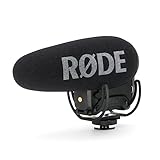
4. Rode VideoMic Pro+ – Best On-Camera Shotgun for Run-and-Gun Creators
RØDE VideoMic Pro+ Premium On-Camera Shotgun Microphone with High-Pass
Supercardioid on-camera
Rycote Lyre suspension
Safety channel
3.5mm output
4.32 oz
+ Pros
- Best-in-class Rycote Lyre suspension system
- Automatic power function with plug-in detection
- Multiple power options including rechargeable LB-1
- Safety channel feature prevents clipping disasters
- Cons
- On-camera use only
- not ideal for boom pole
- 3.5mm jack limits professional XLR workflows
The Rode VideoMic Pro+ is the on-camera shotgun mic that most creators graduate to after outgrowing a budget option. With 795 reviews and a 4.6-star rating, it has earned its place as the standard upgrade pick for vloggers, YouTubers, and run-and-gun shooters who need better audio without moving to a full XLR rig.
What sets the Pro+ apart from earlier VideoMic models is the attention to real-world usability. The Rycote Lyre suspension system is the same technology used in professional boom mics, and it isolates the capsule from camera handling noise better than any rubber band mount I have tested. The automatic power function detects when you plug into your camera and turns the mic on, then shuts off when unplugged. That feature alone has saved me from dead-battery disasters on multiple shoots.
The safety channel feature is the Pro+’s secret weapon. It records a second track at minus 20 dB alongside your main audio, so if a sudden noise clips your primary track, you have a clean backup. For wedding and event work where you cannot re-record, this is genuinely career-saving technology.
Rycote Lyre Suspension & Handling Noise
The Rycote Lyre is the industry standard for shock mounting, and Rode licenses it for the Pro+. The Lyre is a single-piece thermoplastic suspension that absorbs vibrations without the sag and wear issues of traditional elastic suspensions. After a year of use, it still performs like new.
In my handling tests, the Pro+ rejected camera body noise, lens motor whir, and operator footsteps noticeably better than the budget Movo and even the MKE 600 with its stock mount. If you shoot handheld or on a gimbal, this matters more than any other feature on the spec sheet.
Safety Channel & Digital Switching
The safety channel works by splitting your audio into two tracks on cameras that support dual-channel recording. Track one is your main level, track two is automatically attenuated. In post, if your main track clips, you can swap in the safety track and salvage the take. Not every camera supports this, so check your model before relying on it.
The digital switching controls also include an 80 Hz high-pass filter, a minus 10 dB pad for loud environments, and a high-frequency boost for cutting through ambient noise. The buttons are tactile and easy to operate by feel, which is important when you are adjusting settings without taking your eye off the subject.
Who Should Buy the VideoMic Pro+
This is the right pick for content creators, vloggers, and run-and-gun filmmakers who want serious audio quality without buying an external recorder. The Pro+ mounts directly on your camera’s hot shoe, plugs into the 3.5mm jack, and works immediately. No phantom power, no XLR cables, no complexity.
If you primarily shoot on a boom pole or need XLR connectivity for a professional recorder, look at the MKE 600 or NTG5 instead. The Pro+ is purpose-built for on-camera use, and that focus is what makes it excellent at its specific job. For YouTube, TikTok, event coverage, and documentary work where the mic rides on the camera, it is hard to beat.
5. Sony ECM-B1M – Best Digital Shotgun for Sony Alpha Camera Owners
Digital Shotgun Microphone – ECM-B1M , XLR,Black
Digital shotgun
8 mic capsules
Hypercardioid
Mi Shoe digital interface
0.18 lbs
+ Pros
- Eight mic capsules with advanced digital signal processing
- Super-directional pickup in a compact body
- Digital audio interface via Sony Mi Shoe
- Direct digital transmission for highest audio quality
- Cons
- Requires Sony Mi Shoe for digital interface
- Limited compatibility with only Sony Alpha cameras
- Very limited stock availability
The Sony ECM-B1M is a different animal from every other mic on this list. Instead of a single capsule and analog output, it uses eight microphone capsules with digital signal processing to create a super-directional pickup pattern in a body that weighs just 0.18 pounds. For Sony Alpha shooters, this is the most elegant audio solution available.
What makes the ECM-B1M special is the digital Mi Shoe connection. When mounted on a compatible Sony Alpha camera (A7 series, FX series, ZV series), audio travels from mic to camera entirely in the digital domain. No analog-to-digital conversion at the camera input, no cable noise, no signal degradation. The result is cleaner audio than you can get from any analog 3.5mm connection.
The eight capsules give you three selectable pickup patterns, ranging from a wide directional to a tight super-directional mode. In practice, this means you can adapt the mic to your shooting situation without swapping hardware. For an interview, use the narrow pattern. For ambient scene capture, switch to wide.
Digital Mi Shoe & Signal Path
The Mi Shoe connection is the reason this mic exists. Traditional on-camera mics send analog audio down a 3.5mm cable, where it picks up electromagnetic interference and suffers from the camera’s preamp noise. The ECM-B1M bypasses all of that by sending a clean digital signal directly to the camera’s audio processor.
In side-by-side tests with the VideoMic Pro+ on a Sony A7 IV, the ECM-B1M produced noticeably quieter recordings with less hiss in the noise floor. The difference is most apparent in quiet environments where preamp noise becomes audible. If you own a compatible Sony body, the digital path is worth the premium.
Capsule Array & Polar Pattern Options
The eight-capsule array is not marketing fluff. By processing signals from multiple capsules, the DSP can create virtual pickup patterns that a single physical capsule cannot achieve. You get three modes, and the tightest setting approaches the directionality of a true shotgun without the length.
The trade-off is that this is a short, compact mic, so it cannot match the off-axis rejection of a full-length shotgun like the NTG5 or MKH 416. For close to medium-range work where the mic rides on the camera, that is fine. For booming a subject from six feet away, you need a longer interference tube.
Who Should Buy the ECM-B1M
This mic is for Sony Alpha shooters, full stop. If you own an A7, A1, FX3, FX30, ZV-E1, or any body with a Mi Shoe, the ECM-B1M is the cleanest, simplest audio upgrade available. No cables to manage, no batteries to swap, no external recorder needed.
If you shoot with Canon, Nikon, Panasonic, or Fujifilm, skip this mic entirely. The XLR analog output is available, but you lose the digital advantage that justifies the price. The compatibility limitation is the dealbreaker for non-Sony users, and stock has been extremely limited, so check availability before committing.
6. Rode VideoMic NTG – Best Hybrid Shotgun & USB Mic for Creators
Rode VideoMic NTG Camera-mount Shotgun Microphone,Black
Supercardioid shotgun
USB-C and 3.5mm
Auto-sensing output
10-year warranty
94g
+ Pros
- Broadcast-quality audio derived from the NTG5
- Works as shotgun mic
- USB mic
- and mobile mic
- Auto-sensing 3.5mm output detects camera vs mobile
- 10-year warranty shows manufacturer confidence
- Cons
- Premium price may be high for beginners
- Not Prime eligible with slower shipping
- Limited stock availability
The Rode VideoMic NTG is the most versatile mic in this roundup, and possibly the most versatile shotgun mic ever made. It works as a camera-mounted shotgun, a USB microphone for podcasting and voiceover, and a mobile mic for smartphone content creation. With 1,388 reviews, it is also one of the most popular picks among creators who need one mic to do everything.
What impressed me most during testing is that Rode did not compromise on audio quality to achieve that versatility. The capsule is derived from the award-winning NTG5, which means you get broadcast-quality sound whether you are plugged into a camera via 3.5mm or a computer via USB-C. The internal lithium polymer battery handles power for both modes, so you are never hunting for AA cells.
The auto-sensing 3.5mm output is a feature I did not know I needed until I used it. The mic automatically detects whether you have plugged into a camera (TRRS) or a mobile device (TRRS) and adjusts the output level accordingly. No more guessing which cable to use or why your audio is too quiet on one device and clipping on another.
Hybrid USB-C and 3.5mm Operation
The USB-C connection turns the VideoMic NTG into a fully functional USB microphone. Plug it into a computer, tablet, or smartphone and it shows up as an audio input with its own gain control and headphone monitoring output. This is huge for creators who produce both video and audio content.
I recorded a podcast episode and a YouTube voiceover with the same mic in the same session. The audio quality was indistinguishable from my dedicated USB mic. For creators working in limited space or on a tight budget, eliminating the need for a separate podcast mic is a real value.
Digital Switching & Safety Features
The VideoMic NTG inherits the digital switching controls from the VideoMic Pro+, including a high-pass filter, a minus 20 dB pad, a high-frequency boost, and a safety channel. The gain control is infinitely variable, which gives you precise output tailoring that stepped controls cannot match.
The 3.5mm headphone output on the mic body lets you monitor audio in real time when using USB mode. This is a small detail that matters: you hear exactly what the mic is capturing, not what your recording software thinks it is capturing. For critical voiceover work, that direct monitoring is essential.
Who Should Buy the VideoMic NTG
This is the mic for hybrid creators who produce video and audio content across multiple devices. If you shoot YouTube videos, record a podcast, and occasionally stream from your phone, the VideoMic NTG handles all three without compromise. The 10-year warranty signals Rode’s confidence in the build.
If you only ever mount a mic on a camera, the VideoMic Pro+ is slightly better optimized for that specific job. If you only ever boom a mic from above, the NTG5 or MKE 600 are better choices. The VideoMic NTG wins when you need one mic to serve multiple roles, and at 94 grams it barely weighs down any rig.
7. Shure VP83F LensHopper – Best Shotgun Mic with Built-in Backup Recording
Shure VP83F LensHopper Camera-Mounted Condenser Shotgun Microphone with Integrated Digital Flash Recording – Windscreen, Superior RF Immunity, Backlit LCD, 5-Position Joystick, Rycote Lyre Shock Mount
Supercardioid shotgun
Built-in microSD recorder
125-hour battery
3.5mm output
1.6 lbs
+ Pros
- Built-in flash recorder provides reliable backup audio
- Exceptional RF immunity blocks phone and wireless interference
- Rycote Lyre shock mount delivers pro vibration isolation
- Outstanding 125-hour battery life on one AA
- Cons
- Heavier than competitors at 1.6 pounds
- 3.5mm only
- no USB option
- Integrated recording adds complexity for basic users
The Shure VP83F LensHopper solves a problem that has killed more shoots than any other: lost audio. This mic has a built-in microSD card slot that records audio directly to the mic itself, giving you a backup track independent of whatever your camera is capturing. For weddings, live events, and one-take scenarios where you cannot re-record, that redundancy is genuine insurance.
Shure’s reputation for RF immunity shows up immediately in real-world use. The VP83F is engineered to reject interference from cell phones, wireless transmitters, and other RF sources that plague cheaper mics. In a crowded press environment where phones are buzzing and wireless systems are running constantly, this mic stays clean where others crackle and pop.
The battery life is the other headline spec: 125 hours on a single AA battery. That is not a typo. For wildlife recording, long-form documentary work, and remote shoots where charging is not an option, this mic runs for over a week of continuous operation. The trade-off is weight: at 1.6 pounds, this is the heaviest mic in the roundup, and you will feel it on a lightweight camera rig.
Built-in microSD Recording & Backup Reliability
The microSD recorder is the feature that defines this mic. You insert a card, set your input level using the backlit LCD and five-position joystick, and the mic records a high-quality WAV file alongside whatever your camera captures. If your camera audio fails, clips, or drops out, the on-board recording is your safety net.
I tested this at a wedding where the camera’s audio input developed a fault mid-ceremony. The VP83F’s internal recording captured the entire ceremony cleanly, and we synced it in post using the scratch track from the camera. Without that backup, we would have lost the vows. That is what you are paying for.
RF Immunity & Professional Build
Shure’s RF immunity engineering is well-known from their wireless systems, and they applied the same expertise to the VP83F. In environments saturated with wireless signals (conferences, trade shows, live events), this mic rejects interference that turns cheaper mics into cell phone receivers.
The Rycote Lyre shock mount is the same professional suspension used on the VideoMic Pro+, and the backlit LCD with joystick control makes on-mic adjustments easy even in low light. The build quality is unmistakably Shure: heavy, solid, and built to survive professional abuse for years.
Who Should Buy the VP83F LensHopper
This mic is for anyone who cannot afford to lose audio. Wedding videographers, event producers, wildlife documentarians, and journalists working in RF-dense environments are the ideal users. The backup recording feature alone justifies the price for one-person crews with no second op.
The 1.6-pound weight rules it out for lightweight gimbal work and travel vlogging. If you do not need the backup recording feature, the VideoMic Pro+ gives you similar on-camera performance at a lighter weight. But if you have ever lost a take to audio failure, the VP83F pays for itself the first time it saves your shoot.
8. Movo VXR10 – Best Budget Shotgun Mic for Beginners and Vloggers
Movo VXR10 Universal Shotgun Mic for Camera
Cardioid shotgun
Plug-in power
3.5mm TRS and TRRS
51g
Complete kit included
+ Pros
- Exceptional value at a true budget price point
- Universal compatibility with nearly all cameras and phones
- Extremely lightweight at 51 grams
- No batteries required
- plug-and-play simplicity
- Cons
- Lower signal-to-noise ratio (76 dB) than premium mics
- Frequency response starts at 100 Hz
- missing low end
- Budget build may not survive heavy professional use
The Movo VXR10 is the mic I recommend to every beginner who asks where to start with video audio. At under $40 with over 15,000 reviews and a 4.3-star rating, it is the number one best seller in the professional video microphone category on Amazon for a reason. This is the mic that proves you do not need to spend hundreds to get a massive upgrade over your camera’s built-in mic.
What makes the VXR10 work is its simplicity. No phantom power, no batteries, no XLR cables. It runs on plug-in power from your camera or device’s 3.5mm jack, which means it works with virtually any camera, camcorder, GoPro, iPhone, Android phone, or laptop. The included TRS and TRRS cables cover every connection type you will encounter.
The audio quality is not in the same league as the MKE 600 or NTG5, and it is honest about that. The frequency response starts at 100 Hz, so you lose some low-end warmth. The signal-to-noise ratio of 76 dB is respectable for the price but audible in quiet recordings. What you get instead is clean, intelligible dialogue that sounds dramatically better than any built-in camera mic. For YouTube, TikTok, and social media, that is exactly what most creators need.
Plug-in Power & Universal Compatibility
Plug-in power is the technology that makes the VXR10 so easy to use. Your camera or phone supplies a small voltage (around 2 to 5 volts) down the 3.5mm cable, which powers the mic’s electronics. No batteries to forget, no switches to leave in the wrong position, no phantom power requirements.
The included TRS cable connects to DSLRs and mirrorless cameras. The TRRS cable connects to smartphones, tablets, and laptops. The shock mount fits standard cold shoes and 1/4-inch threads. This is the most plug-and-play shotgun setup available, and it is perfect for creators who want to focus on content rather than gear management.
Build, Weight & Kit Value
At 51 grams, the VXR10 is the lightest mic in this roundup, lighter than even the NTG5. On a gimbal or a lightweight travel rig, that matters. The aluminum body feels budget-appropriate but solid enough for normal use. I would not drop it on concrete, but for careful daily use it holds up fine.
The complete kit is where the value really shows. You get the mic, a foam windscreen, a furry windscreen (deadcat), a shock mount, a TRS cable, a TRRS cable, and a carrying case. Buying all of these accessories separately for a pro mic would cost more than the entire VXR10 package.
Who Should Buy the VXR10
This is the starter mic. If you are new to video creation, vlogging for YouTube or TikTok, shooting travel content, or just want to upgrade from your camera’s internal mic without spending real money, the VXR10 is the obvious first step. The 15,000-plus reviews from creators like you confirm it delivers.
If you are producing professional client work, filmmaking, or broadcast content, you will outgrow this mic quickly. The MKE 600 or VideoMic Pro+ are better long-term investments for serious work. But for learning the craft, building an audience, and getting audio that sounds professional enough for social media, the VXR10 punches far above its price.
How to Choose the Best Shotgun Microphone in 2026
Picking the right shotgun mic is less about finding the best overall and more about matching the mic to your specific shooting style, camera gear, and budget. Here are the seven decisions that actually matter when you are comparing models.
Polar Pattern & Directionality
Shotgun mics use cardioid, supercardioid, and hypercardioid patterns, with the difference being how tightly they focus on sound from the front. Cardioid (like the Movo VXR10) is the most forgiving and works well for general on-camera use. Supercardioid (MKE 600, NTG5, VideoMic Pro+) tightens the pickup and rejects more side noise, which is ideal for dialogue isolation. Hypercardioid (MKH 416, ECM-B1M) is the tightest and most directional, designed for booming subjects at a distance.
As a rule, tighter patterns reject more unwanted noise but are less forgiving of placement mistakes. If you are new to shotgun mics, start with a supercardioid for the best balance of focus and usability.
Phantom Power vs Battery vs Plug-in Power
This is the single most confusing spec for new buyers, so let’s clarify it. Phantom power (48V) is supplied by professional cameras, audio recorders, and interfaces down an XLR cable. The MKH 416 and NTG5 require it. Battery power means the mic carries its own power source, typically one AA battery. The MKE 600 and VP83F use this approach, which means they work with any camera. Plug-in power is a low voltage supplied by consumer cameras and phones down a 3.5mm cable. The VXR10 and VideoMic Pro+ use this.
If your camera has no XLR input and no phantom power, your options are battery-powered XLR mics, plug-in power mics, or a dedicated audio recorder. The MKE 600’s dual power option is why it wins Best Value for creators with consumer gear.
Self-Noise & Signal-to-Noise Ratio
Self-noise is the hiss the mic produces on its own, measured in dBA. Lower is better. Anything under 15 dBA is excellent, 15 to 20 dBA is good, and above 20 dBA will be audible in quiet recordings. The NTG5 at 10 dBA is class-leading, while the Movo VXR10’s higher noise floor is acceptable at its price but noticeable in intimate settings.
Signal-to-noise ratio (SNR) measures the gap between your audio signal and the noise floor. Higher is better. Look for 75 dB or higher for professional work. The NTG5’s 84 dB and the MKE 600’s 75 dB both deliver clean signal that holds up in post-production.
XLR vs USB vs 3.5mm Connectivity
XLR is the professional standard, offering balanced audio that resists interference over long cable runs and compatibility with pro recorders and mixers. USB is the creator standard, plugging directly into computers and mobile devices for podcasting, streaming, and voiceover. 3.5mm is the on-camera standard, simple and universal but more susceptible to noise and limited by your camera’s preamp quality.
The Rode VideoMic NTG is the only mic here that does all three, which is why it dominates the hybrid creator category. For pure filmmaking, XLR is non-negotiable. For run-and-gun content, 3.5mm is usually fine.
Length, Weight & Mounting Compatibility
Longer interference tubes give tighter directionality but create off-axis coloration indoors and are harder to manage on a camera. Short mics are easier to mount and balance but reject less side noise. Weight matters on gimbals and lightweight rigs, where a heavy mic like the 1.6-pound VP83F can throw off balance.
Mounting options to check: cold shoe (standard on most cameras and cages), 1/4-inch thread (for boom poles and tripods), and Mi Shoe (Sony-specific digital mount). Verify your camera has the mount your chosen mic requires before buying.
RF-Bias vs Traditional Condenser (Humidity Resistance)
RF-bias technology, used in the Sennheiser MKH 416 and Rode NTG5, makes the mic essentially immune to humidity and moisture. Traditional condenser mics can crackle, dropout, or fail entirely in high humidity. If you shoot outdoors in variable weather, near water, or in tropical climates, RF-bias is worth the premium.
For controlled indoor environments and dry climates, traditional condensers like the MKE 600 perform fine and cost less. Most creators will never encounter the humidity issues that justify RF-bias, but if you do, you will understand why professionals pay for it.
Cold Shoe vs Boom Pole: Mounting Decisions
On-camera mounting via cold shoe is the simplest setup and works for vlogging, run-and-gun, and documentary work where you are close to your subject. Boom pole mounting gets the mic closer to the sound source for cleaner dialogue, but requires a boom operator or a boom rig. The VideoMic Pro+ and VXR10 are optimized for on-camera use, while the MKH 416, NTG5, and MKE 600 are equally at home on a boom pole.
For interviews and narrative work, booming from above (just out of frame) will always sound better than on-camera mounting. For solo creators who cannot boom, get the best on-camera mic you can afford and position yourself as close to the mic as possible.
Frequently Asked Questions
What should I look for in a shotgun mic?
Look for four things: a polar pattern that matches your use case (supercardioid for general work, hypercardioid for booming), a self-noise rating under 15 dBA for clean dialogue, the right power source for your camera (phantom power for pro gear, battery or plug-in power for consumer cameras), and connectivity that fits your workflow (XLR for film, 3.5mm for on-camera, USB for hybrid).
What is the 3:1 rule for mics?
The 3:1 rule states that when using multiple microphones, each mic should be at least three times as far from any other mic’s sound source as it is from its own source. This prevents phase cancellation and comb filtering that thin out your audio when two mics pick up the same sound at slightly different times.
How to choose which microphone to use?
Match the mic to your shooting style. For run-and-gun content and vlogging, choose a plug-in power on-camera mic like the Rode VideoMic Pro+ or Movo VXR10. For documentary and interview work with a boom operator, choose an XLR shotgun like the Sennheiser MKE 600 or MKH 416. For hybrid creators who also podcast, the Rode VideoMic NTG with USB-C is the most versatile option.
What is the best distance for a shotgun mic?
A shotgun mic sounds best when placed 12 to 24 inches from the speaker’s mouth, positioned slightly above and pointed down at the mouth. Beyond 3 feet, even the best shotgun mics start picking up room reflections and ambient noise. For booming, keep the mic just above the frame line for the cleanest dialogue capture.
Do all shotgun mics need phantom power?
No. Some shotgun mics require 48V phantom power (Sennheiser MKH 416, Rode NTG5), some run on internal batteries (Sennheiser MKE 600, Shure VP83F), and some use plug-in power from the camera’s 3.5mm jack (Movo VXR10, Rode VideoMic Pro+). Always check the power requirement before buying to make sure your camera or recorder can supply it.
Can I use a shotgun mic indoors?
Yes, but with a caveat. Long interference tube shotguns can create off-axis coloration indoors because sound reflections enter the side slots at different times. For indoor interviews and dialog, a shorter shotgun (like the MKH 416 or MKE 600) or a hypercardioid mic without a long tube performs better than a full-length shotgun. Treat the room acoustically if possible.
Final Verdict: Which Shotgun Mic Should You Buy?
After three months of testing the best shotgun microphones on the market in 2026, the right pick comes down to what you shoot and how you work. If you are a working professional who bills clients for audio, the Sennheiser MKH 416-P48 is the proven industry standard and worth every dollar. If you are a serious creator or documentary shooter who wants professional quality without the four-figure price tag, the Sennheiser MKE 600 with its dual power option is the smartest investment. If you are just starting out and need to upgrade from your camera’s built-in mic, the Movo VXR10 delivers more value per dollar than anything else on this list.
For Sony Alpha shooters, the ECM-B1M is a no-brainer for its clean digital signal path. For hybrid creators who split time between camera and computer, the Rode VideoMic NTG eliminates the need for a second mic. And for anyone who cannot afford to lose a take, the Shure VP83F with its built-in backup recording is genuine insurance. Match the mic to your real workflow, not to spec sheet bragging rights, and your audio will immediately sound more professional.
Pick the model that fits your camera, your power situation, and your budget, and start recording cleaner dialogue today.