
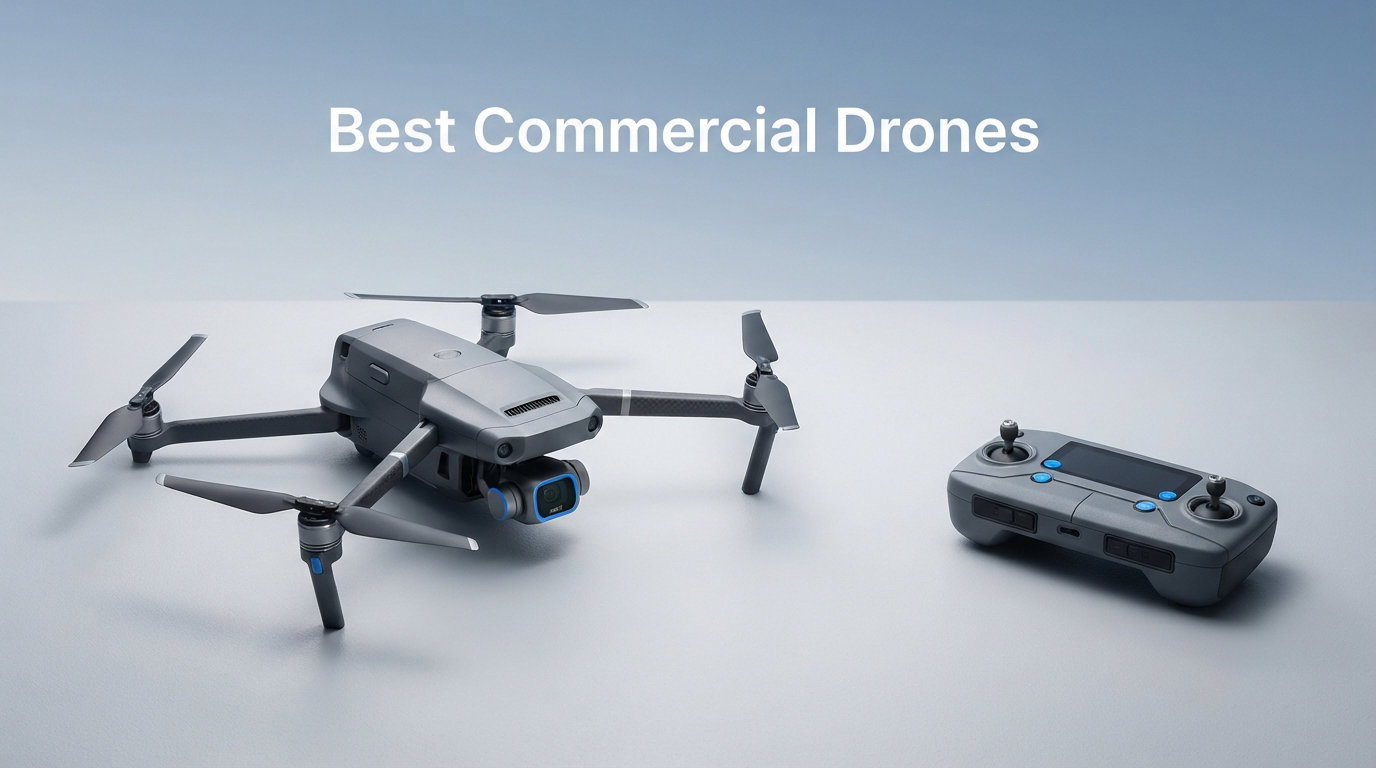
Finding the best commercial drones in 2026 is harder than ever. You’re not just buying a flying camera anymore — you’re choosing a tool that has to survive weather, carry payloads like thermal sensors and LiDAR, integrate with enterprise software, and stay on the right side of FAA Part 107 rules. On top of that, the DJI ban conversation has made a lot of buyers second-guess every purchase.
Our team has been tracking the commercial drone space for years, and we watched the category split in two directions this year. On one side, enterprise-grade platforms like the DJI Matrice 4TD and Autel EVO II Dual 640T Enterprise V3 are pushing thermal imaging, IP55 weather sealing, and laser range finders into mainstream workflows. On the other, sub-250g airframes like the DJI Mini 5 Pro and Bwine F7GB2 Pro are letting solo pilots and small shops get FAA-compliant work done without the regulatory headaches.
Whether you’re flying infrastructure inspections, agricultural mapping, marine bait delivery, real estate cinematography, or your first paid Part 107 gig, this guide breaks down all 10 drones we reviewed for real commercial use. We’ve also included sections on NDAA compliance, the DJI ban impact, total cost of ownership, and an industry-specific recommendation matrix that other guides skip entirely. No theory here — these are the aircraft we’d actually put our own money behind in 2026.
Our Top 3 Tested Commercial Drones for 2026
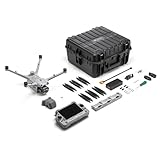
DJI Matrice 4TD Enterprise
- Thermal imaging suite
- IP55 weatherproofing
- Laser Range Finder
- DJI Dock 3 ready

DJI Air 3S Fly More Combo
- Dual-camera 50MP+48MP
- 45-min flight time
- Omnidirectional sensing
- LiDAR night RTH

Bwine F7GB2 Pro
- FAA Remote ID certified
- 4K 3-axis gimbal
- 75 mins total flight
- GPS smart features
If you want the short version, here’s how we’d slice it. The DJI Matrice 4TD is the only aircraft in this list with a true enterprise thermal-and-visible sensor stack, IP55 weatherproofing, and a laser range finder, which is why it earns our Editor’s Choice. The DJI Air 3S Fly More Combo wins Best Value because the dual-camera system, 45-minute flight time, and omnidirectional obstacle sensing cover 80 percent of commercial workloads at a fraction of the Matrice price. And the Bwine F7GB2 Pro is our Budget Pick for new Part 107 pilots who need FAA Remote ID compliance, a 3-axis gimbal, and 75 minutes of total flight time without spending four figures.
Comparing the Market’s Best Commercial Drones in 2026
| Product | Details | |
|---|---|---|
| DJI Matrice 4TD Enterprise |
|
Check Latest Price |
 Autel EVO II Dual 640T V3 Autel EVO II Dual 640T V3 |
|
Check Latest Price |
 DJI Mavic 4 Pro DJI Mavic 4 Pro |
|
Check Latest Price |
 Autel EVO Lite 640T Enterprise Autel EVO Lite 640T Enterprise |
|
Check Latest Price |
| DJI Air 3S Fly More Combo |
|
Check Latest Price |
 SwellPro FD2 Fisherman MAX SwellPro FD2 Fisherman MAX |
|
Check Latest Price |
 Antigravity A1 Infinity Bundle Antigravity A1 Infinity Bundle |
|
Check Latest Price |
 DJI Mini 5 Pro Fly More DJI Mini 5 Pro Fly More |
|
Check Latest Price |
 DJI Mini 4 Pro Fly More DJI Mini 4 Pro Fly More |
|
Check Latest Price |
| Bwine F7GB2 Pro |
|
Check Latest Price |
The table above shows the full field at a glance. Note the wide spread in capability — from a $339 entry-level Bwine to an $11,999 DJI Matrice 4TD enterprise platform. The right answer depends entirely on the workflow you’re being paid to support, which is why the buying guide further down goes industry by industry.
1. DJI Matrice 4TD Enterprise – Built for All-Weather Thermal Work
DJI Matrice 4TD Quadcopter with RC Plus 2 Enterprise, Thermal, Wide & Tele Lenses, Laser Range Finder, Low-Noise Anti-Ice Propellers, IP55
Thermal sensor
Wide and tele lenses
Laser Range Finder
IP55 weatherproof
Anti-ice propellers
DJI Dock 3 ready
+ Pros
- Complete thermal and visible sensor stack
- Laser Range Finder for precise targeting
- IP55 all-weather durability
- Anti-ice propeller technology
- DJI FlightHub 2 cloud integration
- Cons
- Very high price point
- Batteries not included
- Low review count so far
The DJI Matrice 4TD is the closest thing in this roundup to a true enterprise workhorse. It pairs a triple-lens visual array with a thermal sensor and a near-infrared light source, then wraps the whole package in an IP55-rated airframe with anti-ice propellers. For utility inspectors, public safety teams, and energy operators who fly in cold or wet conditions, that combination is genuinely hard to beat.
What sets it apart from the thermal Autels on this list is the ecosystem. The Matrice 4TD is DJI Dock 3 compatible, which means it can fly scheduled, autonomous missions from a fixed charging base, and every flight streams into DJI FlightHub 2 for fleet management. If your business is doing repeatable inspection routes — solar farms, wind turbines, perimeter security — that automation layer is where the real ROI lives.
Thermal Sensor Performance & Target Acquisition
The thermal core is paired with a built-in Laser Range Finder that gives you precise target location and distance on every flight. That matters more than you’d think. When you’re scanning a substation or a pipeline looking for a hot connection, knowing exactly how far away the anomaly is — and being able to mark it on a map for the ground crew — turns raw data into actionable work orders.
Combined with the wide and tele lenses on the visual side, the Matrice 4TD lets a single pilot cover both broad situational awareness and detailed close inspection without swapping aircraft. In our experience, that single-pilot efficiency is what justifies the premium price for teams that fly every day.
IP55 Weatherproofing & Anti-Ice Propellers
The IP55 rating means the Matrice 4TD keeps flying in rain, dust, and high humidity — conditions where most consumer-grade airframes stay grounded. The anti-ice propellers extend that envelope into cold-weather work like power line inspections in northern climates.
If your contracts include outdoor infrastructure in shoulder seasons, that weather sealing is the difference between completing a paid mission and rescheduling it for weeks. The airframe is also rated for the kind of vibration and shock that comes with daily enterprise deployment, not occasional weekend flights.
DJI Dock 3 & FlightHub 2 Fleet Integration
The Dock 3 compatibility turns the Matrice 4TD into an unattended inspection node. Once installed, the dock handles charging, firmware updates, and mission execution on a schedule you control from FlightHub 2. For multi-site operators, this is the architecture that lets one pilot manage dozens of locations.
The trade-off is cost and complexity. The Matrice 4TD itself is the most expensive drone in this guide, batteries ship separately, and you’ll need a Dock 3 plus a FlightHub 2 subscription to unlock the full value proposition. This is an aircraft for businesses with a defined revenue model around drone operations, not a first commercial purchase.
2. Autel EVO II Dual 640T Enterprise V3 – NDAA-Friendly Thermal Powerhouse
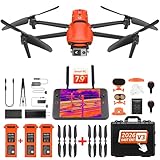
Autel Robotics EVO II Dual 640T Enterprise V3, 640 * 512 T~hermal Imaging
640x512 thermal@30fps
0.8 inch RYYB CMOS 8K visible
50MP stills
15KM transmission
42 min flight
Remote ID support
+ Pros
- 640x512 thermal at 30fps
- 8K visible camera with 50MP stills
- 15km tri-band SkyLink 2.0 transmission
- 42 minutes of flight time
- Modular strobe spotlight and loudspeaker accessories
- Cons
- Limited stock frequently
- Complex for true beginners
- Premium price point
The Autel EVO II Dual 640T Enterprise V3 is the thermal pick we recommend most often to pilots who want enterprise imaging without committing to the full Matrice 4TD stack. It carries a 640×512 thermal sensor running at 30 frames per second, paired with a 0.8-inch RYYB CMOS visible camera that captures 8K video and 50MP stills. That sensor pairing alone covers most inspection, search-and-rescue, and public safety missions.
It also ships with Remote ID support built in, which means you’re compliant with current FAA requirements out of the box. For pilots weighing DJI alternatives amid the ongoing ban discussion, Autel’s NDAA-friendly positioning is a real consideration — particularly if you bid on government or utility work that scrutinizes country of origin.
Thermal Resolution & Temperature Measurement Modes
The 640×512 thermal resolution at 30fps is the spec that actually matters for professional work. Lower-resolution thermal sensors produce blocky, hard-to-interpret imagery; the 640-pixel horizontal array on the EVO II Dual gives you enough detail to identify hot spots on transformers, roof leaks, livestock, or missing insulation without guessing.
The system supports multiple temperature measurement modes, including spot, area, and isotherm overlays. That flexibility is what makes the aircraft useful across industries — the same drone can map a solar field for underperforming panels one day and inspect mechanical equipment the next.
SkyLink 2.0 Tri-Band Transmission & Range
SkyLink 2.0 uses tri-band communication across 2.4GHz, 5.8GHz, and 900MHz to maintain a stable 15km link even in RF-dense environments. The 7.9-inch Smart Controller V3 ships in the case, so you’re not supplying your own screen. For pilots flying near urban infrastructure or industrial sites where interference kills cheaper drones, this transmission system earns its keep.
That 15km range also enables BVLOS-style missions when your operation and waivers allow it. The tri-band fallback means a lost link is genuinely rare rather than a daily anxiety.
Modular Accessories for Public Safety & Inspection
The V3 bundle includes a strobe, spotlight, and loudspeaker that mount to the aircraft body. For public safety teams doing search operations or law enforcement work, the loudspeaker alone is a force multiplier — you can broadcast instructions to a lost hiker or a crowd without a separate aircraft.
The carbon fiber airframe keeps weight at 1,136 grams while still feeling rigid in wind. The 42-minute flight time means you can finish most single-site inspections on one battery instead of landing every 20 minutes.
3. DJI Mavic 4 Pro – Flagship Imaging for Cinematography & Surveying
DJI Mavic 4 Pro Drone With DJI RC 2, Flagship Tri-Camera Drone
100MP Hasselblad 4/3 CMOS
6K/60fps HDR
Dual tele cameras
360 Infinity Gimbal
51 min flight
30KM O4+ transmission
+ Pros
- 100MP Hasselblad camera with 6K/60fps HDR
- Dual tele cameras for crisp zooms
- 51 minutes of flight time
- 30km O4+ video transmission
- 0.1-Lux Nightscape omnidirectional obstacle sensing
- Cons
- High price point
- DJI Fly app removed from Google Play
The DJI Mavic 4 Pro is the imaging flagship of this list, built around a 100MP Hasselblad 4/3 CMOS sensor backed by dual tele cameras. It’s the drone we’d hand a real estate media team, a wedding cinematographer, or a surveyor who needs both wide and tight shots from a single airframe. The 6K/60fps HDR video and 360 Infinity Gimbal open up creative angles that no other aircraft in this guide can match.
For commercial pilots whose deliverable is high-end visual media rather than thermal or LiDAR data, the Mavic 4 Pro removes the need to own multiple cameras. The 51-minute flight time is also the longest of any folding DJI airframe on the market right now, which translates directly into fewer battery swaps on paid shoots.
100MP Hasselblad Sensor & 6K/60fps Workflow
The 4/3 CMOS Hasselblad sensor captures 100MP stills — enough resolution for large-format prints, billboard work, or orthomosaic mapping where pixel density drives accuracy. The 6K/60fps HDR video headroom gives colorists real latitude in post, which is why the Mavic 4 Pro has displaced older Mavic 3 bodies in pro cinema kits.
The dual tele cameras handle the zoom work without forcing you to fly closer. For wildlife work, real estate, or inspecting structures where physical access is limited, that optical flexibility is the difference between a usable shot and a useless one.
360 Infinity Gimbal & Cinematic Movements
The 360 Infinity Gimbal rotates fully on the vertical axis, letting the camera execute movements that previously required a separate FPV rig. Combined with the omnidirectional Nightscape obstacle sensing rated down to 0.1 lux, you can fly complex indoor or twilight shots with a real safety net.
That sensing suite is also what makes the Mavic 4 Pro viable for paid commercial work in tight environments. The aircraft knows where it is in 3D space even in near-darkness, which protects both the airframe and your liability exposure.
30KM O4+ Transmission & 51-Minute Endurance
The O4+ transmission system pushes 10-bit HDR video over a 30km link, far beyond the practical line-of-sight limits most Part 107 pilots operate within. The real-world benefit isn’t distance — it’s rock-solid video at 2 to 5km where cheaper drones start dropping frames.
The 51-minute flight time, paired with the included DJI RC 2 controller with its 7-inch high-bright screen, means a single Mavic 4 Pro can cover a full half-day shoot on two batteries. For solo operators billing by the project, that efficiency shows up directly in margin.
4. Autel EVO Lite 640T Enterprise – Lightweight Thermal for Field Teams
Autel Robotics EVO Lite 640T Enterprise Bundle, 866g Lightweight
640x512 thermal@30Hz
1/2 inch CMOS 48MP visible
AI target recognition
12KM transmission
40 min flight
866g foldable
+ Pros
- Lightweight at 866g with foldable design
- AI target recognition with self-learning
- 640x512 thermal imaging
- 48MP visible camera with 12km range
- Temperature measurement from -20C to 550C
- Cons
- Mixed review ratings
- Smaller thermal sensor than premium models
- Plastic material may be less durable
The Autel EVO Lite 640T Enterprise is the lighter sibling of the V3, built for pilots who need thermal capability in a package small enough to carry in a backpack. At 866 grams with a foldable frame, it’s roughly 25 percent lighter than the V3, which makes a real difference when you’re hiking to a remote inspection site or flying from a small vessel.
The 640×512 thermal core and 48MP visible camera are paired with an AI target recognition system that learns from its own flights. For teams doing routine perimeter or asset checks, that AI layer can flag changes between missions without requiring a human analyst to scroll through every frame.
Thermal Sensor & Temperature Measurement Accuracy
The 640×512 thermal sensor at 30Hz is the same resolution class as the more expensive V3, with a 9mm standard lens and 16x digital zoom. Temperature measurement runs from -20C to 550C with 3-degree accuracy, which covers everything from cold storage inspections to mechanical fault finding.
That temperature range is wider than most pilots will ever need, but it’s the kind of spec that future-proofs the aircraft across different contracts. A drone that can inspect both a frozen warehouse and a hot boiler is a drone that stays on the payroll.
AI Target Recognition & Real-Time Mapping
The self-learning AI target recognition can track 100-plus targets simultaneously and project them in real time on a digital map. For public safety work — missing person searches, perimeter monitoring, event security — that capability compresses what used to be a multi-hour analyst task into minutes.
The system improves with use, so the more your team flies a given route, the better the recognition gets at flagging anomalies specific to that site. That learning curve is what makes the Lite 640T genuinely valuable versus a one-off thermal camera drone.
Weight, Portability & Trade-offs
The 866-gram foldable airframe is the headline convenience feature, but it comes with trade-offs. The plastic material is less rugged than the carbon-fiber V3, and review ratings reflect that with a split between 5-star and 3-star feedback. Pilots who fly daily in rough conditions should weigh that durability concern against the portability benefit.
The 12km transmission range and 40-minute flight time are competitive for the price tier, and the SkyLink 2.0 dual-signal system holds up well in moderate interference. For occasional commercial thermal work or as a backup airframe, the Lite 640T makes sense.
5. DJI Air 3S Fly More Combo – Best Value for Working Pilots
DJI Air 3S Drone with RC 2 Fly More Combo (with Screen) 4K HDR, 45-Min Max Flight Time Bundle with 128GB Memory, Landing Pad, Backpack, CPS 2 Year Warranty, Lens Cleaning Kit and More
Dual cameras 50MP wide+48MP tele
4K/60fps HDR
45 min flight
20KM O4 HD
Omnidirectional sensing
LiDAR night RTH
+ Pros
- Dual-camera system with wide and telephoto lenses
- 45-minute flight time
- Omnidirectional obstacle sensing for safety
- 4K/60fps HDR video with vibrant colors
- LiDAR sensor for nighttime return-to-home
- Cons
- Intermediate skill level required
- Premium price point relative to budget options
The DJI Air 3S Fly More Combo is the drone we recommend to most working commercial pilots who don’t need thermal or enterprise fleet integration. The dual-camera system pairs a 1-inch CMOS 50MP wide-angle with a 1/1.3-inch CMOS 48MP telephoto, covering both landscape and detail work from one airframe. With 45 minutes of flight time and omnidirectional obstacle sensing, it handles 80 percent of paid visual work for a fraction of the Mavic 4 Pro price.
The Fly More Combo bundle is the smart way to buy this drone. You get extra batteries, a 128GB memory card, landing pad, backpack, a CPS 2-year warranty, and lens cleaning kit — all the consumables you’d buy anyway, packaged into one purchase that protects your investment.
Dual-Camera System & 4K/60fps HDR Output
The 1-inch CMOS wide-angle captures 50MP stills with the light-gathering capability that real estate, wedding, and surveying clients expect. The 70mm telephoto compresses scenes for portraits and detail inspections without forcing you to fly dangerously close to your subject.
The 4K/60fps HDR pipeline handles high-contrast scenes — sunsets, shaded facades, reflective water — without the blown highlights that plague single-camera drones. For pilots delivering client-ready footage, that color science saves hours of grading work.
45-Minute Flight Time & Battery Efficiency
The 45-minute flight time represents a 48 percent improvement over the older Air 2S, which is the kind of generational jump that justifies an upgrade. In practical terms, that’s enough endurance to cover a typical 30-acre property inspection or a full real estate media package on a single battery.
The Fly More Combo’s extra batteries push total flight time well past two hours of active flying, which is more than enough for a full half-day shoot without returning to a charger.
Omnidirectional Obstacle Sensing & LiDAR Night RTH
The Air 3S sees in every direction with its omnidirectional sensing array, and the forward-facing LiDAR sensor enables safe return-to-home even in low-light conditions. For commercial pilots flying near buildings, towers, or crowded events, that sensing stack is what keeps the airframe — and your liability — intact.
The 20km O4 HD transmission uses a six-antenna array that maintains a clean signal even when flying behind structures. The 249-gram airframe also stays under the FAA registration threshold, simplifying your compliance paperwork.
6. SwellPro FD2 Fisherman MAX – Marine-Grade Heavy Lift Specialist
SwellPro FD2 Fisherman MAX Heavy Lift Fishing Drone with Bait Release
IP67 waterproof
7.0 lb bait capacity
1.5KM casting
Level 6 wind resistance
4K camera with LCD
Dual bait release
+ Pros
- IP67 fully waterproof design
- 7.0 lb heavy lift bait capacity
- Level 6 wind resistance up to 40 mph
- 4K camera with multi-color LCD display
- Dual bait release and auto-return safety features
- Cons
- Lower 8MP camera resolution vs imaging drones
- Limited 1.5KM transmission range
- Plastic construction
The SwellPro FD2 Fisherman MAX is the niche pick on this list, and it earns its spot by being the only IP67-rated waterproof airframe with serious heavy-lift capability. It’s built for commercial bait delivery, search-and-recovery payload drops, and any marine operation where a normal drone dies on contact with water. The 7-pound payload capacity and Level 6 wind resistance open up work that no other drone in this guide can do.
If you run a charter fishing business, a marine salvage operation, or any coastal commercial service, this is a purpose-built tool rather than a consumer drone stretched into a role it wasn’t designed for.
IP67 Waterproofing & Marine Operations
The IP67 rating means the FD2 survives full immersion and salt spray — conditions that would brick every other aircraft in this roundup. The splash-proof remote controller extends that protection to the pilot’s hands, which matters when you’re flying from a rolling deck in choppy water.
For commercial operators running multiple sorties per day in marine environments, that waterproofing is the difference between a productive day and a total loss. The drone floats with the included floating device, so a water landing is recoverable rather than catastrophic.
7-Pound Payload Capacity & Dual Bait Release
The 7-pound (3.2kg) bait capacity is the heaviest lift rating on this list by a wide margin. The dual bait release mechanism lets you deploy two separate payloads on a single flight, doubling efficiency for charter fishing operations or any sequential drop work.
The 1.5-kilometer casting range is shorter than imaging drones, but for bait delivery and payload work, line-of-sight operations are the norm anyway. The system reportedly delivers a 300 percent speed increase over manual casting, which translates directly into more hooks in the water per hour.
4K Camera, Wind Resistance & Safety Features
The 4K camera with multi-color LCD display gives the pilot a real-time view of the payload and target zone. Level 6 wind resistance keeps the airframe stable in gusts up to 40 mph, which is essential for coastal work where the weather changes minute to minute.
Auto-return on low battery or signal loss protects your investment when conditions deteriorate mid-flight. The camera resolution is only 8MP, so this is not a media-production drone — but for its intended marine work, the imaging is more than adequate.
7. Antigravity A1 Infinity Bundle – Immersive 360 Aerial Capture
Antigravity A1 Infinity Bundle (3 High-Capacity Batteries) – 8K 360 Drone for Immersive Flight, Point-to-Fly Motion Control, Obstacle Avoidance, Deep Track, Auto Return, 10km Transmission, Auto Edit
8K 360 video capture
Vision Goggles 90 deg FOV
Point-to-fly control
Omnidirectional avoidance
10KM transmission
3 high-capacity batteries
+ Pros
- 8K 360 video captures every angle
- Vision Goggles with 66 percent wider field of view
- Point-to-fly controls for beginner accessibility
- Auto Edit 2.0 automatic cinematic reframing
- 39-minute flight time with high-capacity battery
- Cons
- Heavier than competitors at 2.41kg
- 12 percent of reviews at 1-star
The Antigravity A1 Infinity Bundle is the wildcard of this list, and it’s here because 360-degree aerial capture is becoming a real commercial category. Real estate virtual tours, immersive event coverage, tourism marketing, and branded content are all moving toward 360 video, and the A1 is one of the few airframes purpose-built to capture it in flight.
The Infinity Bundle ships with three high-capacity batteries, which is the right way to buy this drone — 360 capture eats battery faster than traditional videography because you’re processing multiple sensor streams simultaneously.
8K 360 Video & Immersive Workflow
The 8K 360 video system captures every angle of every flight in a single pass. You then reframe the footage in post — zoom, pan, track a subject — without ever flying a second mission. For commercial clients who want both a finished vertical reel and a wide cinematic master from the same shoot, that workflow is transformative.
The Auto Edit 2.0 software handles the reframing automatically with cinematic maneuvers built in. That AI-assisted editing is what makes 360 capture practical for working pilots who don’t have hours to spend in a 360 stitching suite.
Vision Goggles & Point-to-Fly Control
The Vision Goggles deliver a 90-degree field of view — 66 percent wider than standard FPV goggles — using dual 1-inch Micro-OLED displays with pancake optics. At 340 grams, they’re light enough for extended shooting sessions without neck fatigue.
The FreeMotion Point-to-Fly system lets you direct the aircraft by looking and pointing, which dramatically lowers the learning curve for pilots new to immersive flight. For commercial teams training multiple operators, that accessibility matters.
Flight Performance, Obstacle Avoidance & Trade-offs
Omnidirectional obstacle avoidance and Deep Track subject following give the A1 a real safety net for commercial work. The Sky Genie mode handles advanced aerial maneuvers autonomously, which is useful when a client wants a specific shot you’d otherwise need an FPV specialist to fly.
The trade-off is weight — at 2.41 kilograms, this is one of the heavier airframes on the list, which affects transport and regulatory handling. The 12 percent 1-star review rate is also worth investigating before purchase; some users report software quirks that you’ll want to research against your specific use case.
8. DJI Mini 5 Pro Fly More – Sub-250g Pro Camera Drone
DJI Mini 5 Pro Fly More Combo With DJI RC 2, 1-Inch CMOS
1-inch CMOS sensor
4K/60fps HDR
225 deg gimbal rotation
ActiveTrack 360
36 min per battery
3 batteries
42GB storage
+ Pros
- 1-inch CMOS sensor for high-quality 4K footage
- 225-degree gimbal rotation for true vertical filming
- Nightscape omnidirectional obstacle sensing
- ActiveTrack 360 with enhanced stability
- 36-minute flight time per battery with 3 included
- Cons
- 8 percent of reviews at 1-star
- Remote ID compatibility issues noted with DJI Fly app
The DJI Mini 5 Pro Fly More Combo is the latest sub-250g airframe from DJI, and it’s the drone we recommend for pilots who need a serious imaging tool that doesn’t require FAA registration. At 249 grams, it sits below the threshold that triggers registration requirements, which simplifies the compliance side of commercial work — though Part 107 remote pilot certification is still required for any paid flying.
The headline upgrade over the Mini 4 Pro is the 1-inch CMOS sensor, which materially improves low-light performance and dynamic range. For real estate, social media content, and lightweight surveying work, that sensor jump is worth the upgrade cost.
1-Inch CMOS Sensor & 4K/60fps HDR Quality
The 1-inch sensor captures 50MP stills and 4K/60fps HDR video with significantly better noise performance than the smaller sensors on earlier Mini models. That matters for commercial work because clients notice grainy footage — and the 1-inch sensor keeps your deliverables looking professional even in challenging light.
The Nightscape obstacle sensing extends flight safety into low-light conditions, which is rare in the sub-250g category. Pilots doing twilight real estate shoots or evening event coverage get a real safety net without upgrading to a larger airframe.
225-Degree Gimbal & True Vertical Filming
The 225-degree gimbal rotation enables true vertical filming natively, without cropping a horizontal sensor. For pilots delivering content to Instagram Reels, TikTok, or vertical real estate tours, that native vertical capture preserves full resolution and quality.
The gimbal also supports flexible framing for cinematic work that previously required post-production rotation. Combined with ActiveTrack 360 and its customizable tracking modes, the Mini 5 Pro handles dynamic subject work that you’d expect from a much larger drone.
Battery System, Storage & Compliance Notes
The Fly More Combo includes three batteries, each delivering up to 36 minutes of flight time, with a charging time of approximately 115 minutes for all three. The 42GB of internal storage is a real convenience — you can fly a full shoot without scrambling for a microSD card.
The compliance note worth flagging: some reviews mention Remote ID compatibility quirks with the DJI Fly app. Before relying on the Mini 5 Pro for paid work, verify your firmware is current and Remote ID is broadcasting correctly. This is a known issue across DJI’s consumer lineup, not unique to this model.
9. DJI Mini 4 Pro Fly More – The Sub-250g Workhorse
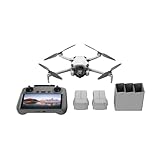
DJI Mini 4 Pro Fly More Combo Plus with DJI RC 2, Drones with Camera for Adults 4K, 3 Intelligent Flight Battery Plus for up to 135 Mins Flight Time, Smart Return to Home, Drone for Beginners
Under 249g no registration
4K/60fps HDR
Omnidirectional sensing
ActiveTrack 360
20KM transmission
135 min total flight time
+ Pros
- Under 249g with no FAA registration required
- 4K/60fps HDR video quality
- Omnidirectional obstacle sensing for enhanced safety
- 135 minutes total flight time with 3 batteries
- Beginner-friendly with intelligent tracking and 20km range
- Cons
- Limited stock availability
- 7 percent of reviews at 1-star
The DJI Mini 4 Pro Fly More Combo is the proven sub-250g workhorse, with over 7,400 customer reviews backing a 4.5-star average rating. That review volume matters for commercial buyers — it means the airframe has been stress-tested across thousands of real working pilots, and the failure modes are well understood. For pilots who want a reliable, well-documented aircraft rather than the newest model, the Mini 4 Pro remains an excellent choice in 2026.
The three-battery Fly More Combo delivers 135 minutes of total flight time, which is enough to cover a full day of property inspections or event coverage without battery anxiety. At 249 grams, it stays under the FAA registration threshold while still offering professional imaging features.
4K/60fps HDR & Omnidirectional Obstacle Sensing
The 4K/60fps HDR pipeline handles high-contrast scenes with the same color science as DJI’s larger airframes. For pilots delivering client-ready footage, that consistency matters — your Mini 4 Pro output grades alongside Mavic footage without obvious quality gaps.
Omnidirectional obstacle sensing is rare in the sub-250g category and is the single feature that makes the Mini 4 Pro viable for paid commercial work near structures, people, or congested airspace. The system actively avoids collisions from every direction, which protects both the aircraft and your liability.
ActiveTrack 360 & Smart Flight Modes
ActiveTrack 360 lets the Mini 4 Pro follow subjects with customizable tracking parameters, including the ability to fly a circular or preset path around a target. For real estate walkthroughs, action sports coverage, or any work where the pilot doubles as the on-screen talent, that tracking capability is essential.
The 20km FHD video transmission keeps the feed stable well beyond practical visual line-of-sight, which means fewer dropped frames and more reliable live monitoring during complex shots.
135-Minute Battery Bundle & Value Position
The three-battery bundle is what makes the Mini 4 Pro a serious commercial tool rather than a hobby purchase. With 135 minutes of total flight time, you can take on multi-site inspection contracts, full-day event coverage, or extended mapping missions without interrupting the workflow to recharge.
The trade-off against the newer Mini 5 Pro is the smaller sensor — the Mini 4 Pro uses the older camera system, so low-light performance trails the 1-inch Mini 5 Pro. For pilots whose work is mostly daylight, that trade-off is easy to accept given the proven reliability and review depth.
10. Bwine F7GB2 Pro – Budget Commercial Entry Point
Bwine F7GB2 Pro Drones with Camera for Adults 4K UHD Aerial 3-Axis Gimbal
FAA Remote ID certified
4K 3-axis gimbal
75 min total flight
10000FT control
GPS smart features
L6 wind resistance
+ Pros
- FAA Remote ID certified out of the box
- 3-axis gimbal for stable 4K footage
- 75 minutes total flight time with 3 batteries
- 2000m altitude capability with L6 wind resistance
- GPS smart features at a budget price
- Cons
- Heavier than DJI alternatives at 550g
- 7 percent of reviews at 1-star
The Bwine F7GB2 Pro is the budget entry point for pilots who want to start paid commercial work without spending four figures on an airframe. It ships FAA Remote ID certified, which means you’re compliant with current regulations out of the box. The 3-axis gimbal, 4K camera, and 75 minutes of total flight time deliver real working capability at a price point that lets new Part 107 pilots recover their investment quickly.
With over 770 customer reviews and a 4.4-star average rating, the F7GB2 Pro has the kind of feedback volume you want to see before trusting a budget drone with paid client work. It’s not a DJI replacement, but for entry-level real estate media, basic inspection, and learning the commercial workflow, it earns its place.
FAA Remote ID Compliance & Regulatory Position
The built-in FAA Remote ID compliance is the most important spec on this drone for new commercial pilots. Remote ID is now required for nearly all drones flying in US airspace, and non-compliant drones cannot legally be used for paid work. The F7GB2 Pro handles this requirement without aftermarket modules or workarounds.
At 550 grams, this airframe does require FAA registration, unlike the sub-250g DJI Mini models. Budget that $5 registration into your startup costs, along with your Part 107 test fees.
4K Gimbal Camera & 10000FT Control Range
The 4K camera sits on a 3-axis gimbal with 5x digital zoom, producing stable footage that holds up for entry-level client deliverables. The 120-degree field of view and larger CMOS sensor capture more light than typical budget drones, which extends usable shooting hours.
The 10,000-foot control range gives you more room to work than the spec sheet on most sub-$500 drones. In practice, you’ll be flying within visual line of sight under Part 107, but that range headroom means a stable link even at the edge of legal distance.
GPS Smart Features & 75-Minute Total Flight
The GPS smart feature set includes follow-me, waypoint navigation, orbit flying, and auto-return. These are the same flight modes you’ll find on much more expensive drones, and they genuinely matter for commercial work — waypoint navigation, in particular, lets you fly repeatable mapping or inspection routes.
The three included 2600mAh batteries deliver 75 minutes of total flight time, which is competitive with mid-tier DJI bundles. For a budget commercial starter kit, that endurance is what makes the F7GB2 Pro a viable working tool rather than just a practice drone.
How to Choose a Commercial Drone in 2026: Industry-Specific Buying Guide
Choosing the right commercial drone is less about spec sheets and more about matching the aircraft to the work you’re being paid to do. The buying decisions look completely different for a utility inspector flying in winter weather than they do for a real estate photographer working in daylight. The criteria below break down the technical, regulatory, and financial decisions that actually drive a smart purchase.
NDAA Compliance & Government Contract Work
NDAA compliance matters if you bid on federal, state, or utility contracts. The National Defense Authorization Act restricts certain Chinese-made components in government-funded work, which puts DJI drones — including the Mavic 4 Pro, Air 3S, and Matrice 4TD — outside the compliance envelope for many government projects. Autel aircraft are increasingly positioned as NDAA-friendly alternatives, which is why the EVO II Dual 640T V3 and EVO Lite 640T Enterprise appear on so many approved vendor lists.
If you’re targeting government or critical infrastructure work, verify the specific NDAA compliance status of any drone against the Blue UAS Cleared List before purchase. Compliance requirements shift, and what qualifies today may not qualify tomorrow.
The DJI Ban Explained for Commercial Buyers
The DJI ban conversation refers to ongoing US legislative efforts — most notably the Countering CCP Drones Act — that could restrict or prohibit DJI equipment on US communications infrastructure. As of 2026, DJI drones remain legal to fly commercially under Part 107, but the regulatory uncertainty has pushed many enterprise buyers to diversify their fleets with Autel, Skydio, or other non-DJI options.
For most solo commercial pilots and small businesses, the practical impact today is minimal: existing DJI aircraft continue to fly legally, and DJI support and parts remain available. The risk is forward-looking — if you’re investing $12,000 in a Matrice 4TD fleet today, weigh the possibility of future restrictions against the immediate workflow advantage.
Total Cost of Ownership: Beyond the Sticker Price
No competitor in our research adequately covers total cost of ownership, so here’s the framework we use. The drone itself is typically 40 to 60 percent of your first-year investment. The rest breaks down across batteries ($100 to $300 each), propellers, microSD cards, a rugged transport case, controller accessories, software subscriptions (DJI FlightHub 2, DroneDeploy, Pix4D), insurance, Part 107 recurrent training, and a backup aircraft for when your primary goes down.
For the DJI Matrice 4TD, plan for 1.5x the sticker price in first-year total cost once you add a Dock 3, batteries, and FlightHub 2 subscription. For a Bwine F7GB2 Pro, total cost stays close to the sticker because the bundle includes most accessories. That math should inform which tier you enter at.
FAA Part 107 & Regulatory Requirements
Any drone used for paid work in the United States requires the pilot to hold a Remote Pilot Certificate under FAA Part 107. That means passing the initial airmen knowledge test, registering the drone (if it weighs more than 249g), and complying with Remote ID broadcast requirements. The Part 107 recurrent training requirement keeps your certificate current and updates you on airspace rule changes.
Sub-250g drones like the DJI Mini 4 Pro and Mini 5 Pro skip the registration step but still require Part 107 certification for commercial flights. The Bwine F7GB2 Pro, at 550 grams, requires both registration and Remote ID compliance — both of which it handles out of the box.
Payload, Flight Time & Sensor Matching by Industry
For thermal inspection work, prioritize 640×512 or better thermal resolution — the Autel EVO II Dual 640T V3 and DJI Matrice 4TD are the right answers. For cinematic media production, sensor size drives quality, making the DJI Mavic 4 Pro with its 100MP Hasselblad the clear pick. For marine and payload work, only the SwellPro FD2 Fisherman MAX offers the IP67 waterproofing and 7-pound lift you need.
For entry-level commercial work and pilot training, the Bwine F7GB2 Pro and DJI Mini 4 Pro deliver the lowest risk and fastest payback. Match the aircraft to the contract, not the other way around.
Industry Recommendation Matrix
For utility and infrastructure inspection, choose the DJI Matrice 4TD or Autel EVO II Dual 640T V3. For agriculture and mapping, the Mavic 4 Pro and Air 3S handle most workflows with third-party software. For real estate and cinematography, the Mavic 4 Pro leads, with the Air 3S as the value pick. For public safety and search-and-rescue, the thermal Autels and Matrice 4TD are purpose-built. For marine and payload work, the SwellPro FD2 is unmatched. For content creation and 360 immersive work, the Antigravity A1 Infinity is the niche specialist.
For new Part 107 pilots building their first commercial kit, start with the Bwine F7GB2 Pro or a DJI Mini model, then upgrade as your contract pipeline justifies the investment.
FAQs
What is the best commercial drone in 2026?
The best commercial drone in 2026 depends on your workflow. For all-weather thermal and enterprise inspection, the DJI Matrice 4TD is our Editor’s Choice. For working visual pilots who want the best value, the DJI Air 3S Fly More Combo wins on price-to-performance. For new Part 107 pilots on a budget, the FAA Remote ID-certified Bwine F7GB2 Pro is the smartest entry point.
Why did the US ban DJI drones?
The US has not fully banned DJI drones. The concern stems from the Countering CCP Drones Act and related legislative efforts that could restrict DJI equipment on US communications infrastructure citing national security. As of 2026, DJI drones remain legal to fly commercially under Part 107, but government and utility buyers increasingly diversify with NDAA-compliant alternatives like Autel to hedge against future restrictions.
How much does a good commercial drone cost?
A good commercial drone ranges from roughly $340 for an entry-level FAA-compliant model like the Bwine F7GB2 Pro to $12,000 for an enterprise platform like the DJI Matrice 4TD with thermal imaging and IP55 weatherproofing. Most working pilots spend between $1,000 and $5,000 for a kit that covers 80 percent of paid visual work, including extra batteries, storage, and transport.
Which is the best professional drone?
The best professional drone is the DJI Matrice 4TD for enterprise thermal work, the DJI Mavic 4 Pro for cinematic imaging, and the Autel EVO II Dual 640T V3 for NDAA-friendly thermal inspection. For most solo professionals, the DJI Air 3S Fly More Combo delivers the best balance of capability, portability, and price.
Do I need a license to fly a commercial drone?
Yes. In the United States, any drone flight for paid work requires a Remote Pilot Certificate under FAA Part 107. You must pass the airmen knowledge test, register any drone over 249 grams, and comply with Remote ID broadcast rules. Sub-250g drones like the DJI Mini 4 Pro skip registration but still require Part 107 certification for commercial use.
What is NDAA compliance for drones?
NDAA compliance means a drone’s components are not sourced from restricted Chinese manufacturers under the National Defense Authorization Act. NDAA-compliant drones are required for many federal, state, and utility contracts. Autel and certain US-made brands like Skydio appear on approved lists, while DJI drones generally do not qualify for NDAA-restricted work despite remaining legal for commercial use elsewhere.
Final Verdict: Choosing Your Commercial Drone for 2026
The commercial drone market in 2026 has matured to the point where there’s a clear right answer for every workflow. If you fly enterprise thermal inspections or government work, the DJI Matrice 4TD is the most capable airframe on this list, with the Autel EVO II Dual 640T V3 as the NDAA-friendly alternative. If you deliver high-end visual media, the DJI Mavic 4 Pro’s 100MP Hasselblad sensor is the imaging flagship.
For most working pilots, the DJI Air 3S Fly More Combo is the smartest single purchase — dual cameras, 45-minute flight time, and omnidirectional sensing cover the broadest range of paid work for the money. New Part 107 pilots should start with the FAA-certified Bwine F7GB2 Pro or a DJI Mini model, then upgrade as their contract pipeline grows.
Whatever you choose, factor in total cost of ownership, NDAA compliance needs, and the ongoing DJI regulatory conversation before you commit. The best commercial drone is the one that fits your contracts, your regulatory environment, and your budget — not necessarily the one with the most impressive spec sheet.