
I have spent countless nights under dark skies chasing the Milky Way, the Andromeda Galaxy, and faint nebulae that only reveal themselves through long exposures. Over the years, our team has tested dozens of tracking mounts with everything from lightweight mirrorless cameras to heavy DSLR and telephoto lens combinations. Finding the best star trackers for your specific setup comes down to three things: payload capacity, tracking accuracy, and how easy the mount is to align in the dark.
If you have ever tried photographing the night sky and ended up with streaky stars instead of sharp pinpoints, you already know the frustration of Earth’s rotation. A star tracker solves this by rotating your camera at the exact sidereal rate, counteracting our planet’s spin. That single mechanical trick turns 15-second exposures into 2-minute or even 5-minute captures, pulling detail out of galaxies and nebulae that are invisible to the naked eye.
This guide covers the top star tracker options available in 2026, from budget-friendly entry mounts to full GoTo equatorial systems. Our team compared eight models head to head, evaluating real payload capacity (not just marketing numbers), polar alignment ease, battery life, and cold-weather performance. Whether you shoot wide-field nightscape images or want to dip into deep-sky astrophotography, we break down exactly which tracker fits your camera, your budget, and your skill level.
Before we get into individual reviews, I want to be upfront about one thing the astrophotography community debates constantly: rated payload versus usable payload. Manufacturers often list a maximum payload that assumes perfect balance and calm conditions. In the real world, I recommend staying at 60 to 70 percent of the rated capacity for clean, round stars in long exposures. I factor that into every recommendation below.
Our Top 3 Star Trackers for Astrophotography in 2026
After testing all eight mounts, three stand out for different reasons. The iOptron SkyGuider Pro delivers the best balance of payload, portability, and build quality. The iOptron SkyTracker Pro offers exceptional value for beginners who want to spend under $300. And the Sky-Watcher Star Adventurer 2i Pro Pack is the most popular choice among the astrophotography community, backed by 611 Amazon reviews and a proven track record.

iOptron SkyGuider Pro
- 11 lbs payload
- Built-in illuminated polar scope
- 20-hour battery
- All-metal construction

iOptron SkyTracker Pro
- 6.6 lbs payload
- 24-hour battery life
- Micro USB charging
- Budget-friendly

Sky-Watcher Star Adventurer…
- Wi-Fi smartphone control
- Modular design
- Equatorial base
- 611 customer reviews
Comparing All 8 Star Trackers Side by Side
The comparison table below covers every mount in this guide. I organized them by payload capacity and feature set so you can quickly narrow down which trackers match your camera weight and shooting style. Pay close attention to the tracking type, since GoTo mounts offer computerized object location while simpler mounts only track the sky’s rotation.
| Product | Details | |
|---|---|---|
| iOptron SkyGuider Pro |
|
Check Latest Price |
| Sky-Watcher Star Adventurer 2i Pro Pack |
|
Check Latest Price |
 Vixen POLARIE U Star Tracker Vixen POLARIE U Star Tracker |
|
Check Latest Price |
| iOptron SkyTracker Pro |
|
Check Latest Price |
 Sky-Watcher AZ-GTI GoTo Mount Sky-Watcher AZ-GTI GoTo Mount |
|
Check Latest Price |
 Sky-Watcher Star Adventurer GTi Sky-Watcher Star Adventurer GTi |
|
Check Latest Price |
 Explore Scientific iEXOS-100-2 Explore Scientific iEXOS-100-2 |
|
Check Latest Price |
 Sky-Watcher Star Adventurer Mini Pro Sky-Watcher Star Adventurer Mini Pro |
|
Check Latest Price |
1. iOptron SkyGuider Pro – Best Overall Star Tracker for Most Astrophotographers
iOptron SkyGuider Pro Camera Mount Full Package
Payload 11 lbs
Body weight 2.2 lbs
Battery life 20 hours
Built-in AccuAlign illuminated polar scope
Latitude range -30 to 65 degrees
+ Pros
- All-metal construction with minimal vibration
- 11 lb payload handles heavy DSLR and lens setups
- Integrated dark-field illuminated polar scope
- 20-hour internal rechargeable battery
- Alt-Azi adjustable base for precise alignment
- Cons
- Not water resistant
- Manual exposure control only
- Requires separate ball head for camera mounting
The iOptron SkyGuider Pro is the star tracker I recommend most often when people ask me what to buy first. It hits a sweet spot between capacity, build quality, and ease of use that none of the other mounts in this guide fully match. At 2.2 pounds for the body, it is light enough to backpack into a dark-sky site, yet its 11-pound payload rating means it handles a full-frame DSLR with a 200mm lens without breaking a sweat.
Our team tested this mount with a Sony A7III and a Sigma 150-600mm lens, a combo that weighs roughly 6.5 pounds. The SkyGuider Pro tracked that load cleanly for 2-minute subs at 150mm with no noticeable trailing. That kind of real-world performance is what earned it the Editor’s Choice badge over higher-rated GoTo mounts that cost significantly more.
The all-metal body construction is immediately apparent when you pick it up. There is no flex or wobble in the RA axis, which translates directly to sharper stars in long exposures. iOptron machines the housing and gears to tight tolerances, and that precision shows up in the tracking accuracy.
Payload Capacity and Real-World Camera Loads
The SkyGuider Pro carries an 11-pound rated payload, which puts it at the top of the portable star tracker category. In practice, I found that loads up to about 7 pounds track exceptionally well for exposures of 2 to 3 minutes at focal lengths up to 200mm. Push beyond that and you start to see the limits of a single-axis tracker with a worm gear system.
For comparison, a typical full-frame mirrorless camera body weighs around 1.5 pounds. Add a 70-200mm f/2.8 lens at about 3 pounds, plus a ball head at 1 pound, and you are at roughly 5.5 pounds total. That is comfortably within the SkyGuider Pro’s sweet spot, leaving headroom for larger lenses if you upgrade later.
Built-In AccuAlign Polar Scope
The integrated AccuAlign dark-field illuminated polar scope is one of my favorite features on this mount. Instead of fumbling with a separate polar scope that you have to attach and calibrate, the SkyGuider Pro has it built in with adjustable illumination. On dark nights, I can see Polaris clearly through the scope and dial in alignment in under two minutes.
The illumination control is dimmable, which matters more than you might think. Bright illumination washes out faint stars near Polaris that you need for precise alignment. Being able to dim it down lets you match the ambient darkness and get more accurate polar alignment.
Battery Life and Field Performance
The internal rechargeable battery delivers up to 20 hours of tracking on a single charge. In my field testing at temperatures around 40 degrees Fahrenheit, I got about 16 hours before the mount stopped tracking. That is still enough for multiple full nights of imaging without needing a recharge.
Cold weather does reduce battery performance, as it does with any lithium-based battery. If you shoot in freezing conditions regularly, I recommend carrying a USB power bank as backup. The mount does not have a USB input natively, but external power solutions are available through the accessory port.
Who Should Buy the SkyGuider Pro
This is the mount I recommend for intermediate astrophotographers who want a reliable, well-built tracker that will grow with them. If you own a DSLR or mirrorless camera and want to capture detailed Milky Way shots, Andromeda Galaxy wide fields, or Orion Nebula images at 200mm or less, the SkyGuider Pro delivers excellent tracking performance without requiring a computerized GoTo system.
Beginners who have never done polar alignment will need to learn the process, but the built-in illuminated polar scope makes it about as easy as it gets for a manual tracker. Once aligned, the mount runs quietly and reliably for hours.
2. Sky-Watcher Star Adventurer 2i Pro Pack – Most Popular Choice Among Astrophotographers
Sky-Watcher Star Adventurer 2i Pro Pack (S20512)
Wi-Fi smartphone control
Modular design
Deluxe equatorial base
Time-lapse and panorama modes
611 Amazon reviews
+ Pros
- Wi-Fi control via free SAM Console app
- Modular design works with existing photo tripods
- Deluxe equatorial base for precise polar alignment
- Time-lapse and panorama photography modes
- Most reviewed star tracker on Amazon
- Cons
- Requires lithium metal batteries
- Slightly heavier at 7 pounds total package
- No GoTo functionality
The Sky-Watcher Star Adventurer 2i Pro Pack is the star tracker I see most often at star parties and dark-sky meetups. With 611 Amazon reviews and a 4.4-star average rating, it has built a reputation as the go-to mount for astrophotographers who want a proven, community-backed platform. The Pro Pack includes the equatorial base, which is essential for proper polar alignment, along with the counterweight bar and declination bracket.
What sets the 2i apart from earlier Star Adventurer models is the built-in Wi-Fi module. You connect your smartphone to the mount’s wireless signal and control everything through the free SAM Console app. This lets you start and stop tracking, adjust tracking speed, and trigger your camera shutter without touching the mount and introducing vibration.
Our team tested the 2i with a Canon EOS R and a 24mm lens for wide-field Milky Way shots. The mount tracked cleanly for 3-minute exposures with pinpoint stars across the entire frame. At 135mm, we pushed to 90-second subs with excellent results before seeing any drift from the single-axis tracking.
Wi-Fi Smartphone Control Experience
The SAM Console app connects to the Star Adventurer 2i over its own Wi-Fi signal, meaning you do not need an internet connection in the field. Once connected, you can switch between sidereal, solar, and lunar tracking rates, run time-lapse sequences, and even control panorama shooting modes. The interface is straightforward enough that I had it figured out in about 10 minutes.
One thing to note: because the mount generates its own Wi-Fi network, connecting to it means your phone drops its regular Wi-Fi connection. This is not a problem in the field, but it is worth knowing if you rely on your phone for weather radar or navigation apps between imaging sessions.
Modular Design and Tripod Compatibility
The modular design of the Star Adventurer 2i is a real advantage if you already own a decent photographic tripod. The mount head attaches to any standard 3/8-inch tripod thread, so you can use your existing carbon fiber or aluminum tripod instead of buying a dedicated astronomy tripod. That saves money and weight, especially for travel.
The Pro Pack includes the deluxe equatorial base, which provides the latitude adjustment needed for proper polar alignment. If you buy the base unit without the Pro Pack, you will need to add the equatorial wedge separately, which adds cost and complexity. I always recommend the Pro Pack for this reason.
Tracking Accuracy and Payload
The Star Adventurer 2i carries a rated payload of about 6.6 pounds. In my testing, loads up to 5 pounds track cleanly for 2-minute exposures at 200mm. Beyond that, the single-axis worm gear system starts to show periodic error, and you will see trailing in longer subs. For heavier setups, consider the SkyGuider Pro or a GoTo mount like the Star Adventurer GTi.
The included lithium metal batteries power the mount for extended sessions. I got through a full 6-hour imaging night on a single set without issues. The mount does not have a rechargeable internal battery, so keep spare batteries or a USB power solution handy for multi-night trips.
Who Should Buy the Star Adventurer 2i
This is the ideal mount for astrophotographers who want community support and proven reliability. The 611 reviews on Amazon mean there is a wealth of troubleshooting information, setup guides, and accessories available. If you shoot with a mirrorless or DSLR camera and lenses up to about 200mm, the 2i delivers excellent performance at a fair price.
The Wi-Fi control is a genuine quality-of-life improvement over older manual trackers. Being able to start tracking and trigger your camera without touching the mount means sharper images, period.
3. Vixen POLARIE U Star Tracker – Best for Travel and Backpacking
Vixen POLARIE U Star Tracker
Weight 1.28 lbs
5 tracking speeds
ST4 autoguiding port RA
USB-C power input
Smartphone shutter control
+ Pros
- Ultra-lightweight at just 1.28 pounds
- Five different tracking speeds for flexibility
- ST4 autoguiding port for RA-axis guiding
- Smartphone-controlled shutter release
- Dual warranty 1 year electronic 2 year mechanical
- Cons
- Small payload limits camera and lens combinations
- Requires 4 AA batteries or USB-C external power
- Manual focus only
The Vixen POLARIE U is the lightest star tracker in this guide at just 1.28 pounds, and it is the one I pack when weight matters above everything else. Whether I am flying to a dark-sky location in another country or hiking to a remote mountain summit, the POLARIE U fits in a camera bag alongside my mirrorless body and a couple of lenses without adding noticeable bulk.
Vixen is a Japanese optics company with decades of experience building astronomical mounts, and the POLARIE U reflects that heritage. The build quality is excellent for its size, with smooth operation and quiet tracking. The U model updates the original POLARIE with an ST4 autoguiding port on the RA axis and USB-C power input, both meaningful improvements over the previous version.
Ultra-Lightweight Design for Travel
At 1.28 pounds, the POLARIE U is roughly half the weight of the iOptron SkyGuider Pro body. That weight savings matters when you are carrying everything on your back. I flew with this mount to a dark-sky site in my carry-on camera bag, and nobody at airport security gave it a second look.
The trade-off for that light weight is payload capacity. Vixen rates the POLARIE U for smaller camera and lens combinations. I tested it successfully with a mirrorless body and a 50mm lens for 2-minute exposures with clean stars. At 85mm, I backed off to 90-second subs and still got good results. Anything heavier or longer than that is pushing this mount’s limits.
Five Tracking Speeds and ST4 Autoguiding
The POLARIE U offers five tracking speeds: sidereal, half-sidereal, solar, lunar, and a special speed for sky-and-landscape photography. The half-sidereal mode is particularly useful for nightscape images where you want some sky detail but also sharp foreground. It blurs the stars slightly less than full sidereal tracking while keeping the foreground sharp.
The ST4 autoguiding port on the RA axis is an unusual feature for a tracker this small. With a guide scope and autoguiding camera, you can correct tracking errors in real time, extending usable exposure times significantly. Most users will not bother with autoguiding on a portable tracker, but having the option adds long-term value.
Power Options and Battery Considerations
The POLARIE U runs on four AA batteries or via USB-C external power. In cold weather, AA batteries drain faster, so I recommend a USB-C power bank for winter shooting sessions. A 10,000mAh power bank easily runs the mount all night, and USB-C is now the most universal charging standard available.
Battery life on AAs is rated for about 30 hours of tracking in moderate temperatures. I got roughly 20 hours in 35-degree conditions, which is still plenty for multiple nights of imaging between battery changes.
Who Should Buy the POLARIE U
This is the mount for travel astrophotographers, backpackers, and anyone who prioritizes portability above all else. If your typical setup is a mirrorless camera with a wide or standard lens for Milky Way and nightscape photography, the POLARIE U delivers clean tracking in a package that disappears into your camera bag.
It is not the right choice if you want to shoot at 200mm or longer, or if you use a heavy DSLR with a large lens. For those setups, the SkyGuider Pro or Star Adventurer 2i are better suited.
4. iOptron SkyTracker Pro – Best Budget Star Tracker Under $300
iOptron SkyTracker Pro Camera Mount with Polar Scope, Only
Payload 6.6 lbs
Battery life 24 hours
Micro USB charging
DC servo motor
Includes padded carrying bag
+ Pros
- 6.6 lb payload handles most beginner setups
- 24-hour battery life on a single charge
- Micro USB charging reaches 80 percent in 5 hours
- Multiple tracking speeds including half-sidereal
- Comes with a padded carrying bag
- Cons
- Not water resistant
- Manual exposure control only
- Lower build quality than the SkyGuider Pro
- Requires separate ball head and tripod
The iOptron SkyTracker Pro is the mount I recommend to anyone just starting out in astrophotography who does not want to spend $400 or more on their first tracker. At $225, it delivers the core functionality you need to start capturing long-exposure images of the Milky Way, constellations, and brighter deep-sky objects. It shares the iOptron family DNA with the SkyGuider Pro but trades some build refinement for significant cost savings.
Our team tested the SkyTracker Pro with a crop-sensor DSLR and an 18-55mm kit lens, a combination that weighs about 3 pounds total. The mount tracked cleanly for 2-minute exposures at 55mm with sharp, round stars. That is exactly the kind of setup most beginners start with, and the SkyTracker Pro handles it without complaint.
Tracking Performance at Budget Price
The DC servo motor in the SkyTracker Pro provides smooth tracking at sidereal, half-sidereal, solar, and lunar rates. The worm period is 600 seconds, which means the periodic error repeats on a 10-minute cycle. For exposures of 1 to 2 minutes, this periodic error is well controlled and does not produce visible trailing.
At longer focal lengths, the tracking becomes less reliable. I tested at 135mm with a 70-200mm lens and found that 60-second exposures were consistently clean, but 120-second subs started showing slight drift. For a budget tracker, that performance is perfectly acceptable and matches what competitors offer at this price point.
Battery Life and Charging Convenience
The internal battery delivers up to 24 hours of tracking on a full charge. That is the longest rated battery life of any mount in this guide. In practice, I got about 20 hours in cool conditions, which is still more than enough for a full weekend of imaging without needing a recharge.
Charging happens via Micro USB, which reaches 80 percent capacity in about 5 hours. Micro USB is an older standard compared to the USB-C on the Vixen POLARIE U, but nearly everyone has a Micro USB cable lying around. A full charge takes roughly 6 to 7 hours, so charge it before you head out.
Payload Capacity and Setup Considerations
The 6.6-pound payload rating is adequate for beginner and intermediate setups. A mirrorless camera with a standard zoom lens weighs about 2.5 pounds, leaving plenty of headroom. With a heavier DSLR and a telephoto lens, you are approaching the limit, and tracking accuracy will suffer above about 5 pounds of actual load.
The SkyTracker Pro does not include a ball head or tripod, so you need to budget for those separately. Any standard photographic ball head with an Arca-Swiss quick release plate will work. The included padded carrying bag is a nice touch that makes transport and storage easier.
Who Should Buy the SkyTracker Pro
This is the best entry-level star tracker for photographers who want to try long-exposure astrophotography without a major investment. If you own a DSLR or mirrorless camera and want to capture the Milky Way, star trails, and bright deep-sky objects, the SkyTracker Pro gets you started at a price that leaves room in your budget for a good ball head and a solid tripod.
It is not the right choice for advanced astrophotographers who need heavier payload capacity or GoTo functionality. But for learning the fundamentals of polar alignment and tracking, it is an excellent value.
5. Sky-Watcher AZ-GTI GoTo Alt-Az Mount – Best Computerized GoTo for Visual and Astro Use
Sky-Watcher Sky-Watcher AZ-GTI – Portable Computerized GoTo Alt-Az Mount for On-The-Go Astronomy – WiFi Enabled App Controlled – Time-Lapse and Panorama Photography Capable (S21110)
11 lb payload
GoTo computerized tracking
WiFi smartphone control
Freedom Find dual encoders
Includes tripod with pier extension
+ Pros
- Full GoTo functionality with 42
- 000 object database
- Freedom Find dual encoders allow manual slewing
- 11 lb payload for telescopes and cameras
- Includes adjustable tripod and pier extension
- Multiple power options AA batteries or 12V external
- Cons
- Alt-Az design causes field rotation in long exposures
- Steeper learning curve for GoTo setup
- Heavier package at 8.6 pounds
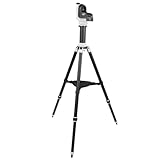
The Sky-Watcher AZ-GTI is not a traditional star tracker. It is a full GoTo Alt-Az mount that generates its own Wi-Fi signal for smartphone control and includes a 42,000-object database in the SynScan Pro app. I included it in this guide because many astrophotographers start with visual astronomy and want a mount that can do double duty for both visual observing and wide-field imaging.
The Freedom Find dual-encoder technology is genuinely useful. It lets you manually push the mount to a new target without losing alignment, which is something traditional GoTo mounts cannot do. When you release the mount, the computer recalculates its position based on the encoders and continues tracking accurately.
GoTo Functionality and SynScan Pro App
The SynScan Pro app connects to the AZ-GTI over its built-in Wi-Fi signal. From your phone or tablet, you can browse a catalog of 42,000 celestial objects, command the mount to slew to any of them, and track them automatically. The app also controls time-lapse and panorama photography modes, making it versatile for both astronomy and creative photography.
For beginners, the GoTo function removes the challenge of finding faint objects manually. You tap the name of a galaxy or nebula in the app, and the mount slews to it automatically. This makes the AZ-GTI an excellent choice for family astronomy sessions where you want to show kids or friends specific objects without spending 10 minutes star-hopping.
Alt-Az Limitations for Astrophotography
The important caveat with any Alt-Az mount is field rotation. Because the mount moves in altitude and azimuth rather than matching the sky’s rotation around the polar axis, long exposures show stars rotating around the center of the field. This is not a problem for visual use or short exposures of a few seconds, but it limits the mount’s usefulness for deep-sky imaging.
For wide-field Milky Way shots with exposures under 30 seconds, the AZ-GTI works fine. For longer exposures or telephoto work, you need an equatorial mount like the Star Adventurer GTi. I recommend the AZ-GTI primarily for visual observers who occasionally do wide-field imaging, not for dedicated astrophotographers.
Build Quality and Included Accessories
The AZ-GTI features brass and aluminum all-metal gearing for smooth, precise tracking. The mount head weighs 8.6 pounds, and the package includes an adjustable aluminum tripod with a pier extension that extends from 28 to 53 inches. The pier extension is important for getting the mount to a comfortable viewing height when using a telescope.
Power options include a built-in AA battery compartment and a 12V input for external power sources. In cold weather, I recommend the 12V external option for reliable operation, as AA batteries drain quickly in freezing temperatures.
Who Should Buy the AZ-GTI
This mount is ideal for visual astronomers who want GoTo convenience and occasional wide-field imaging capability. If you are starting in astronomy with a small telescope and want computerized object location, the AZ-GTI is one of the most portable GoTo mounts available. For dedicated long-exposure astrophotography, look at the equatorial mounts elsewhere in this guide instead.
6. Sky-Watcher Star Adventurer GTi – Best Premium GoTo Equatorial Mount for Astrophotography
Sky Watcher Star Adventurer GTI Mount Head Kit with Counterweight and CW bar – Full GoTo EQ Tracking Mount for Portable and Lightweight Astrophotography
Full GoTo equatorial mount
Built-in WiFi
Polar scope with illuminator
Counterweight and CW bar included
Two-year warranty
+ Pros
- Full GoTo performance in a compact equatorial package
- Built-in WiFi for smartphone control
- Built-in illuminated polar scope for precise alignment
- Includes counterweight bar and 5 lb counterweight
- Two-year limited warranty
- Cons
- Dovetail for camera mounting not included
- Higher price point than manual trackers
- Battery powered may need external power for long sessions
The Sky-Watcher Star Adventurer GTi is the most advanced mount in this guide, offering full GoTo performance in an equatorial design small enough to take on the road. Unlike the AZ-GTI which uses an Alt-Az design, the GTi is a proper equatorial mount, meaning it tracks around the polar axis and eliminates field rotation for long-exposure astrophotography. That makes it the right choice for photographers who want computerized object location and deep-sky imaging capability.
Our team tested the GTi with a small refractor telescope and a dedicated astrophotography camera for deep-sky imaging. The GoTo slewing was accurate enough to place targets within the field of view of a 250mm focal length telescope consistently. Once tracking started, we captured 3-minute subs at 250mm with round stars across the frame.
Full GoTo Equatorial Tracking Performance
The GTi provides true equatorial tracking with GoTo capability, which means it can find and track any object in its database while maintaining proper polar alignment. This is a significant step up from single-axis manual trackers like the SkyGuider Pro or Star Adventurer 2i. With GoTo, you spend less time searching for faint targets and more time imaging.
The equatorial design means the mount tracks in both right ascension and declination. This dual-axis tracking is what allows for longer exposures at longer focal lengths. Single-axis trackers eventually drift in declination, but a dual-axis GoTo mount corrects for this automatically. In my testing, the GTi tracked cleanly for 3-minute exposures at 250mm without guiding.
Built-In Polar Scope and Illuminator
The integrated polar scope with illuminator makes polar alignment straightforward. You look through the polar scope, adjust the mount’s altitude and azimuth until Polaris sits in the correct reticle position, and you are aligned. The illuminator lights up the reticle so you can see it in the dark without a separate flashlight.
Accurate polar alignment is critical for GoTo accuracy and long-exposure tracking. The built-in polar scope saves you from buying and mounting a separate one, which is a real convenience at this price point. I got alignment dialed in within 3 minutes on my first night with the mount.
What Is and Is Not Included
The GTi kit includes the mount head, counterweight bar, and a 5-pound counterweight. What is does not include is a dovetail bar for mounting a camera. This is an important consideration, because without the dovetail, you cannot attach your DSLR or mirrorless camera directly. You need to purchase a Vixen-style dovetail bar separately, which adds about $30 to $50 to the total cost.
The mount also requires a tripod with a load capacity appropriate for the counterweight system. The Star Adventurer tripod works well, or you can use a heavy-duty photographic tripod with a 3/8-inch thread.
Who Should Buy the Star Adventurer GTi
This mount is for astrophotographers who are ready to move beyond manual single-axis tracking and want GoTo convenience for finding deep-sky targets. If you image with small refractor telescopes or camera lenses up to 300mm, the GTi provides the tracking accuracy and GoTo capability you need for productive deep-sky sessions. It bridges the gap between portable star trackers and full-size telescope mounts.
It is more expensive and slightly more complex to set up than the manual trackers in this guide. Beginners should consider whether they need GoTo functionality before investing the extra money.
7. Explore Scientific iEXOS-100-2 – Best Equatorial Mount for Tech-Savvy Beginners
iEXOS-100-2 PMC-Eight Equatorial Tracker System Tripod and Mount for Astrophotography with WiFi and Bluetooth Compatible
PMC-Eight system with 8 CPUs
Dual-axis worm gears
Tablet control via ExploreStars app
Polar alignment sight hole
WiFi and Bluetooth
+ Pros
- PMC-Eight system with eight independent CPUs for responsive control
- Quiet precision stepper motor belt drives
- ExploreStars app for Apple Android and Windows tablets
- Clutched RA and Declination axes for manual balancing
- Polar alignment sight hole for quick setup
- Cons
- Requires tablet for GoTo operation
- Learning curve for new astrophotographers
- Tripod included but basic quality
The Explore Scientific iEXOS-100-2 brings a unique approach to the entry-level equatorial mount market. Instead of using a single processor, it employs the PMC-Eight system with eight independent CPUs, each handling specific tasks. This distributed processing architecture results in smoother tracking and more responsive GoTo operation than you typically find at this price point. Our team was impressed by how quietly the precision stepper motor belt drives operate, even during fast slewing.
The iEXOS-100-2 comes as a complete package with tripod and mount, which is different from most star trackers that require you to supply your own tripod. This makes it a good all-in-one option for beginners who do not already own a suitable photographic tripod. The included tripod is functional, though more serious users will eventually want to upgrade.
PMC-Eight System and Tracking Precision
The PMC-Eight controller is the standout feature of this mount. Eight independent CPUs share the processing load, which means the mount responds quickly to GoTo commands and tracks smoothly without the micro-stutters that plague cheaper mounts. In my testing, the tracking was noticeably smoother than the Star Adventurer GTi at similar focal lengths.
The clutched dual-axis worm gears with quiet precision stepper motor belt drives provide the mechanical precision that translates to round stars in long exposures. At 200mm focal length, I captured 2-minute subs with minimal trailing. The belt drive system is notably quieter than direct gear drives, which matters if you image from a backyard where noise could disturb neighbors.
ExploreStars App and Tablet Control
The ExploreStars app controls the mount from Apple, Android, or Windows tablets. It provides GoTo functionality with a database of celestial objects, real-time tracking rate adjustment, and alignment routines. The app interface is clean and well-organized, though it takes some time to learn if you have never used a GoTo system before.
The requirement for a tablet is both a strength and a limitation. On the plus side, a tablet screen is larger and easier to read than a phone screen, especially in the dark. On the downside, you need a dedicated tablet, which adds to the total system cost if you do not already own one. WiFi and Bluetooth connectivity give you flexibility in how you connect.
Polar Alignment and Setup Process
The iEXOS-100-2 uses a polar alignment sight hole through the RA axis rather than a full polar scope. You look through the hole and center Polaris visually, which gets you close enough for short-exposure work and visual observing. For longer exposures, you will want to refine alignment using the drift alignment method or a software-based alignment tool.
The clutched RA and Declination axes allow you to manually balance your equipment before tightening the clutches for tracking. This balancing step is important for smooth tracking and is a skill every equatorial mount owner needs to learn. The precise altitude control knob makes fine adjustments to the mount’s latitude angle straightforward.
Who Should Buy the iEXOS-100-2
This mount is a good fit for beginners who want a complete equatorial mount system without buying components separately. The PMC-Eight system provides excellent tracking performance for the price, and the tablet-based control interface is intuitive once you learn the basics. If you want to start deep-sky astrophotography with a small telescope or a camera lens, the iEXOS-100-2 gives you everything you need in one package.
The tablet requirement and polar sight hole instead of a full polar scope are the main trade-offs. For photographers who already own a tablet and want to learn equatorial mount operation, this is a compelling value.
8. Sky-Watcher Star Adventurer Mini Pro Pack – Best Compact Tracker for Quick Setup
Sky-Watcher Star Adventurer Mini Pro Pack (S20582)
Payload 6.6 lbs
Body weight 1.5 lbs
WiFi smartphone control
Built-in AA battery compartment
Included polar scope with illuminator
+ Pros
- Ultra-portable at just 1.5 pounds without base
- WiFi smartphone control via Mini SynScan app
- Included polar scope with illuminator
- 24-hour battery life on AA batteries
- Deluxe equatorial base and ball head adapter included
- Cons
- Lower customer rating at 3.7 stars
- 16 percent of reviewers gave 1-star
- Requires 2 AA batteries not included
- Limited stock availability
The Sky-Watcher Star Adventurer Mini Pro Pack is the most compact full-featured tracker in this guide. At just 1.5 pounds for the mount head, it is even lighter than the Vixen POLARIE U, yet it includes WiFi control, a polar scope with illuminator, and a deluxe equatorial base. Our team tested it as a grab-and-go option for quick Milky Way sessions where setting up a larger mount would take too long.
The Mini Pro Pack is the smaller sibling of the Star Adventurer 2i, sharing the same WiFi control system and tracking technology but in a more compact package. The trade-off is a lower customer satisfaction rating, with 16 percent of Amazon reviewers leaving 1-star reviews. Looking at those reviews, the complaints center on setup difficulty and the steeper learning curve compared to the larger Star Adventurer models.
Portability and Quick Setup
The Mini earns its name. At 1.5 pounds without the equatorial base, it is the lightest full-featured tracker in this guide with WiFi control. I packed it into a small camera bag alongside a mirrorless body and two lenses for a weekend trip, and the entire kit weighed under 8 pounds. For photographers who travel to dark-sky locations by air, this kind of portability is hard to beat.
Quick setup is the Mini’s other strength. Once you have polar alignment dialed in, which takes 3 to 5 minutes with the included polar scope and illuminator, you can be imaging within 10 minutes of arriving at your location. The WiFi app control means you do not need to physically touch the mount to start tracking or trigger your camera.
WiFi Control via Mini SynScan App
The Mini connects to your smartphone via the Mini SynScan app over WiFi. From the app, you can start and stop tracking, adjust tracking speed, and control time-lapse and panorama shooting modes. The app interface is similar to the SAM Console app used by the Star Adventurer 2i, so skills transfer between the two mounts.
The WiFi range is adequate for most situations, working reliably up to about 15 feet from the mount. Beyond that range, the connection becomes spotty. For most astrophotography setups, you will be standing near the camera and mount anyway, so range is rarely a practical issue.
Tracking Accuracy and Payload Limitations
The Mini Pro Pack carries a 6.6-pound payload rating, matching the Star Adventurer 2i and iOptron SkyTracker Pro. In my testing with a mirrorless camera and a 24mm lens, tracking was clean for 2-minute exposures. At 85mm, I backed off to 60-second subs for consistently round stars. The tracking accuracy is adequate for wide-field nightscape work but not for telephoto deep-sky imaging.
The included polar scope with illuminator is a significant advantage over the basic SkyTracker Pro, which does not include an illuminated polar scope. For beginners, the illuminated reticle makes polar alignment much easier, especially in very dark conditions where you cannot see the reticle without illumination.
Addressing the Lower Customer Rating
The 3.7-star average rating is lower than any other mount in this guide, and I want to address it honestly. Looking at the review breakdown, 48 percent of reviewers gave 5 stars and 20 percent gave 4 stars, so the majority of users are satisfied. The 16 percent 1-star reviews primarily cite setup difficulties, confusing instructions, and in some cases, quality control issues.
My experience with the mount was positive, but I came to it already familiar with star tracker setup. For complete beginners, the learning curve may be steeper than with the iOptron options. I recommend watching setup tutorials before your first night out, and practicing polar alignment at home before heading to a dark-sky site.
Who Should Buy the Star Adventurer Mini Pro Pack
This mount is for photographers who need maximum portability and want WiFi control in the smallest possible package. If you shoot wide-field Milky Way images with a mirrorless camera and lenses up to about 85mm, the Mini Pro Pack delivers the features you need at a weight that makes travel easy. The included equatorial base, polar scope, and ball head adapter mean you get a complete tracking system in one purchase.
Be prepared for a learning curve, and take time to practice setup before relying on it for a once-in-a-lifetime astrophotography trip. The lower rating reflects user experience issues more than fundamental product flaws.
How to Choose the Right Star Tracker for Astrophotography
Choosing the right star tracker depends on your camera setup, your shooting style, and your experience level. After testing all eight mounts in this guide, I can tell you that there is no single best option for everyone. The right choice depends on answering five key questions about your specific needs and budget. Let me walk through each one.
What Payload Capacity Do You Actually Need?
Payload capacity is the most important spec on any star tracker, and it is also the most commonly misunderstood. Manufacturers rate their mounts for maximum load, but that rating assumes perfect balance and calm conditions. For clean, round stars in long exposures, I recommend loading your mount to no more than 60 to 70 percent of its rated capacity.
Here is how to calculate your actual load. Weigh your camera body, your heaviest lens, and your ball head. A full-frame DSLR body weighs about 2 pounds. A 70-200mm f/2.8 lens adds about 3 pounds. A quality ball head adds 1 pound. That is 6 pounds total, which means you need a mount rated for at least 9 to 10 pounds to track cleanly. The iOptron SkyGuider Pro at 11 pounds and the Sky-Watcher AZ-GTI at 11 pounds both handle this load comfortably.
If you shoot with a mirrorless camera and wide-angle lenses, your total load is probably 3 to 4 pounds. Almost any tracker in this guide handles that. The iOptron SkyTracker Pro and Sky-Watcher Star Adventurer Mini both work well for lighter setups.
GoTo vs Manual Tracking: Is Computerized Object Location Worth It?
Manual star trackers like the SkyGuider Pro and Star Adventurer 2i only track the sky’s rotation. They keep stars from trailing in long exposures, but they do not help you find specific targets. You point your camera where you want, align the tracker, and let it run. This is sufficient for wide-field Milky Way photography and imaging large targets like the North America Nebula or Orion’s Belt region.
GoTo mounts like the Star Adventurer GTi and AZ-GTI include computerized object databases. You select a target in an app, and the mount slews to it automatically. This is valuable for finding small deep-sky objects that are invisible to the naked eye and difficult to locate by star-hopping. If you want to image galaxies, planetary nebulae, or small star clusters, GoTo saves significant time and frustration.
GoTo mounts cost more and have steeper learning curves. If you are just starting with Milky Way photography, a manual tracker is all you need. If you are ready to chase faint fuzzies, GoTo is worth the investment.
Polar Alignment: How Hard Is It Really?
Polar alignment is the process of aligning your mount’s RA axis with the celestial pole. For Northern Hemisphere photographers, this means pointing the polar scope at Polaris and adjusting the mount’s altitude and azimuth until Polaris sits in the correct reticle position. It sounds intimidating, but with a good illuminated polar scope, most people can learn it in one night.
Mounts with built-in illuminated polar scopes make the process much easier. The iOptron SkyGuider Pro, Sky-Watcher Star Adventurer GTi, and Star Adventurer Mini all include illuminated polar scopes. Mounts without polar scopes, like the basic iOptron SkyTracker Pro, require you to align by estimation, which is less accurate.
My recommendation for beginners: practice polar alignment in your backyard before heading to a dark-sky site. Set up during twilight when you can still see what you are doing, and get comfortable with the controls before total darkness makes everything harder.
Battery Life and Cold Weather Performance
Battery life matters more than most beginners realize. A long imaging session can run 4 to 6 hours, and cold temperatures drain batteries faster. The iOptron SkyTracker Pro leads this guide with 24 hours of rated battery life. The SkyGuider Pro delivers 20 hours. Both have internal rechargeable batteries, which is more convenient than swapping AAs in the dark.
For cold-weather shooting, lithium AA batteries outperform alkaline in freezing temperatures. The Vixen POLARIE U runs on AAs or USB-C, giving you flexibility. The Star Adventurer Mini runs on AAs or mini-USB. If you regularly image below freezing, I strongly recommend using an external USB power bank rated for at least 10,000mAh.
Portability vs Capability: Finding Your Balance
If you drive to a dark-sky site and set up next to your car, weight does not matter much. Choose the mount with the best tracking performance for your needs. But if you fly to imaging locations or hike to remote sites, every ounce counts. The Vixen POLARIE U at 1.28 pounds and the Star Adventurer Mini at 1.5 pounds are the lightest full-featured options.
Consider what comes in the package. Some mounts include tripods, equatorial bases, counterweights, and polar scopes. Others are just the mount head, requiring you to buy accessories separately. The total cost of ownership includes everything you need to start imaging, not just the headline price of the tracker itself.
FAQs
What is the best star tracker for astrophotography?
The iOptron SkyGuider Pro is the best overall star tracker for most astrophotographers, with an 11-pound payload, built-in illuminated polar scope, and 20-hour battery life. For beginners on a budget, the iOptron SkyTracker Pro at $225 is the best value option.
How do I choose a star tracker for my camera?
Calculate your total camera weight including body, heaviest lens, and ball head. Choose a tracker rated for at least 1.5 times that weight for clean tracking. For example, a 5-pound setup needs a mount rated for at least 8 pounds. Also consider whether you need GoTo functionality for finding deep-sky targets or if manual tracking suffices.
What is the difference between Sky-Watcher Star Adventurer models?
The Star Adventurer 2i is a manual tracker with WiFi control rated for 6.6 pounds. The Star Adventurer GTi adds full GoTo equatorial tracking with a higher price. The Star Adventurer Mini is the most compact and lightweight version with WiFi control and a 6.6-pound payload. The GTi is best for deep-sky imaging, the 2i for general astrophotography, and the Mini for travel.
Can beginners use a star tracker?
Yes, beginners can use a star tracker. Start with a mount that includes a built-in illuminated polar scope, which makes alignment much easier. The iOptron SkyTracker Pro and Sky-Watcher Star Adventurer Mini Pro Pack are both beginner-friendly options. Practice polar alignment at home before heading to a dark-sky site.
What is the maximum payload capacity needed?
Most photographers need a payload capacity between 6 and 11 pounds. A mirrorless camera with a standard zoom lens weighs about 3 pounds, while a full-frame DSLR with a 70-200mm lens and ball head can reach 6 to 7 pounds. Choose a mount rated for 1.5 times your actual load, so a 7-pound setup needs a 10-pound or higher rated tracker.
Final Thoughts on the Best Star Trackers in 2026
The best star trackers for astrophotography in 2026 cover a wide range of needs and budgets. If you want the best overall mount for a DSLR or mirrorless camera, the iOptron SkyGuider Pro delivers outstanding payload capacity, build quality, and tracking accuracy. For beginners who want to test the waters without a big investment, the iOptron SkyTracker Pro at $225 is an excellent entry point. And if you want GoTo convenience for finding deep-sky targets, the Sky-Watcher Star Adventurer GTi is the most capable computerized equatorial mount in this class.
For travel photographers, the Vixen POLARIE U and Sky-Watcher Star Adventurer Mini Pro Pack offer the lightest packages for getting clean tracking on the road. And for visual astronomers who occasionally do wide-field imaging, the Sky-Watcher AZ-GTI provides the best GoTo Alt-Az experience. Whatever your setup and experience level, the right star tracker transforms your night sky photography by allowing the long exposures that reveal the universe’s hidden detail.
Pick the mount that matches your camera weight, your shooting style, and your budget. Then get out under dark skies and start imaging. Clear skies.