
If you have ever spent twenty minutes trying to coax two glass pieces into a clean solder line, you already know why the best stained glass grinder is not optional. It is the one tool that turns rough, hand-scored edges into perfectly fitted curves that lock together like puzzle pieces. Precision shaping is what separates a panel that looks hand-crafted in the best way from one that simply looks hand-made in the worst way.
A stained glass grinder is a wet grinding tool with a diamond-coated bit that smooths and shapes cut glass edges for a precise fit in copper foil or lead came projects. The spinning diamond bit removes glass material while a water cooling system prevents heat damage and traps harmful dust. Without one, you are left wrestling with grozing pliers and carborundum stones, which work for rough cleanup but cannot deliver the tight tolerances that professional-quality work demands.
Our team spent weeks comparing six of the most recommended grinders on the market, digging through hundreds of verified buyer reviews, forum threads from the r/StainedGlass community, and long-term durability reports from working artists. We looked at motor power, torque ratings, work surface stability, water cooling design, and the real-world frustrations that users report after months or years of daily use. We also paid close attention to which machines excel at the fine, detailed shaping work that intricate suncatchers and complex panels require.
This guide covers six grinders spanning from budget-friendly starter models to professional studio workhorses. Whether you are setting up your first stained glass workspace or upgrading from a machine that finally gave out after a decade of service, you will find a recommendation matched to your skill level, project scope, and workspace constraints. Every pick below has been evaluated for how well it handles the precision shaping work that defines quality stained glass art.
Our Top 3 Tested Stained Glass Grinders for 2026
After comparing motor specs, torque ratings, and long-term owner feedback, three grinders stood out for different reasons. The Gryphon Gryphette earns our top overall pick for its unbeatable combination of reliability, simplicity, and a 4.7-star average across hundreds of reviews. The Anbull kit takes the budget spot for artists who want a complete package without a large initial investment. The Inland Wizard IV rounds out the top three as the professional-grade choice for studios that need serious torque and a full accessory kit.

Gryphon Gryphette Glass…
- 3000 RPM DC motor
- 5/16 inch shaft
- Beginner-friendly
- 864 verified reviews

Anbull Stained Glass Grinde…
- 4300 RPM motor
- Self-flushing water
- Dual diamond bits
- Splash guard

These three cover the full spectrum of what stained glass artists need. Now let us look at how all six models compare side by side before diving into detailed reviews.
Comparing the Market’s Best Stained Glass Grinders in 2026
Here is a quick comparison of all six grinders we tested and researched. Each one targets a different tier of artist, from first-time hobbyists to production studio professionals. Use this table to scan key features at a glance before reading the in-depth reviews below.
| Product | Details | |
|---|---|---|
| Anbull Stained Glass Grinder Kit |
|
Check Latest Price |
| Gryphon Gryphette Glass Grinder |
|
Check Latest Price |
 Inland Craft WizlingCG Glass Grinder Inland Craft WizlingCG Glass Grinder |
|
Check Latest Price |
 Gryphon Studio Stained Glass Grinder Gryphon Studio Stained Glass Grinder |
|
Check Latest Price |
 The Grinder 2 by Techniglass The Grinder 2 by Techniglass |
|
Check Latest Price |
| Inland Craft Wizard IV Glass Grinder |
|
Check Latest Price |
1. Anbull Stained Glass Grinder Kit – Best Budget Pick for First-Time Glass Artists
ANBULL Stained Glass Grinder Kit with 5/8″ & 1″ Grinder Bits,Mini DIY Tool
65W motor
Up to 4300 RPM
Self-flushing water system
Dual diamond bits included
+ Pros
- Includes 5/8 inch and 1 inch premium diamond bits
- Upgraded self-flushing water system needs no sponge
- 65W motor reaches 4300 RPM
- Dual overload fuses for safety
- Clear acrylic splash guard
- Cons
- Compact size may limit larger projects
- Plastic construction feels less premium
The Anbull grinder kit arrives with nearly everything a new stained glass artist needs to start shaping glass on day one. It includes two diamond grinding bits, a splash guard, and a self-flushing water system that eliminates the need for a coolant sponge. For anyone who has been pricing out individual components, that bundled approach saves both money and the headache of tracking down compatible accessories.
What caught our attention most is the motor speed. At up to 4300 RPM, the Anbull spins faster than many grinders costing significantly more. That higher rotational speed translates to faster material removal, which matters when you are working through a pile of cut pieces for a large panel. The 65W waterproof motor keeps things moving without the stalling issues that plague underpowered budget tools.
Reddit users in the stained glass community frequently ask whether budget grinders are worth trying. Based on the 201 verified reviews averaging 4.6 stars, the Anbull has earned genuine goodwill from hobbyists who appreciate getting a capable machine without a steep investment. The 76 percent five-star rate tells us most buyers are satisfied with their purchase.
Motor Power and Speed Performance
The 65W motor delivers more punch than its wattage suggests. Running at up to 4300 RPM, this grinder removes glass material quickly, which speeds up the shaping process on straightforward edge smoothing tasks. You will notice the difference most when grinding thicker glass or working through a batch of pieces for a larger project.
That said, raw speed is not the same as torque. The Anbull excels at fast surface grinding but can struggle slightly when you apply heavy pressure against thick glass stock. The dual overload fuses protect the motor from damage if you push too hard, which is a thoughtful safety feature for beginners still learning how much pressure to apply.
Self-Flushing Water System
This is where the Anbull genuinely outperforms expectations for its price tier. The upgraded self-flushing water system delivers coolant directly to the bit without requiring a sponge. That means no more stopping to reposition a soggy sponge that has shifted away from the grinding surface.
Forum discussions frequently highlight water reservoir management as a common pain point. The Anbull addresses this with a waterproof safety switch and a design that keeps water where it belongs. You still need to monitor water levels and avoid overfilling, but the system is more forgiving than older sponge-based designs.
Diamond Bits and Versatility
The kit includes two premium diamond grinding bits in 5/8 inch and 1 inch diameters. Having both sizes gives you flexibility for different grinding tasks. The larger 1 inch bit handles broad edge smoothing and flat surface work, while the 5/8 inch bit is better suited for tighter curves and detailed shaping on smaller pieces.
For precision shaping specifically, the bit selection matters enormously. These bits are diamond-coated, which is the standard for glass grinding. Off-brand bits without proper diamond coating wear out quickly and produce poor results, so having quality bits included in the kit is a real value advantage.
Portability and Workspace Fit
The Anbull is designed with portability in mind. Its compact footprint makes it suitable for artists who work in shared spaces or need to store their equipment between sessions. The non-slip base keeps the grinder stable during use, which matters for accuracy when you are doing fine shaping work.
The clear acrylic splash guard deserves special mention. It provides visibility of your work piece while containing the water spray that grinding generates. Many budget grinders skip this feature entirely or use opaque guards that force you to work blind.
2. Gryphon Gryphette Glass Grinder – The Gold Standard for Beginners
Gryphon Gryphette Glass Grinder
0.67 amp DC motor
3000 RPM
Standard 5/16 inch shaft
Includes 3/4 inch bit
+ Pros
- Powerful DC motor with 3000 RPM
- Compatible with all standard 5/16 inch shaft bits
- Simple design ideal for beginners
- Includes standard 3/4 inch bit
- Highest rated grinder at 4.7 stars
- Cons
- Spare fuse required for maintenance
- No included face shield or accessory kit
The Gryphon Gryphette is the grinder that stained glass instructors recommend more than any other model. With 864 verified reviews and a 4.7-star average, it has built a reputation that is hard to argue against. An overwhelming 84 percent of reviewers gave it five stars, which is remarkable consistency for any power tool.
What makes the Gryphette special is its simplicity. There are no complicated features to learn, no settings to dial in, and no accessories to lose. You plug it in, add water, and start grinding. That straightforward approach is exactly what most beginners need while they are still learning how to score glass and shape pieces accurately.
The r/StainedGlass community consistently names the Gryphette as the best entry point for new artists. Users report that it handles everything from basic edge smoothing on suncatchers to more detailed shaping work on copper foil projects. The standard 5/16 inch shaft means you can use virtually any grinder bit on the market, which gives you room to grow without needing to upgrade your machine.
DC Motor Performance at 3000 RPM
The 0.67 amp DC motor runs at a steady 3000 RPM, which is the sweet spot for stained glass grinding. That speed is fast enough to remove material efficiently but not so fast that it chips or cracks delicate glass. DC motors also deliver more consistent torque than AC alternatives, which means smoother grinding when you apply varying pressure.
For precision shaping work, motor consistency matters more than raw power. You want a grinder that removes material predictably so you can control exactly how much glass comes off with each pass. The Gryphette delivers that predictability, which is why it works so well for artists still developing their feel for the tool.
Bit Compatibility and Shaft Design
The standard 5/16 inch shaft is the industry norm for stained glass grinder bits. This means every bit from every major manufacturer will fit the Gryphette without adapters or modifications. You can switch from a coarse 1 inch bit for heavy material removal to a fine 1/4 inch bit for intricate detail work in seconds.
This compatibility is a bigger advantage than it might seem. Forum users frequently complain about off-brand grinders with proprietary shaft sizes that limit bit options. With the Gryphette, you never have to worry about finding the right bit for your next project.
Build Quality and Longevity
Gryphon has been manufacturing glass grinders for decades, and that experience shows in the Gryphette’s construction. The DC motor is built to last, and the simple design means there are fewer components that can fail. The included 3 amp fast-acting spare fuse is a small but important detail that shows Gryphon understands real-world use.
One common forum complaint about other grinders is bits seizing on the shaft after extended use. The Gryphette’s straightforward shaft design makes bit removal and cleaning straightforward, which helps prevent this frustrating problem. Regular maintenance with a bit of anti-seize lubricant keeps everything running smoothly for years.
Learning Curve for New Users
The Gryphette is genuinely beginner-friendly. There are no speed settings to confuse you, no complex water delivery systems to manage, and no intimidating controls. You fill the reservoir, turn it on, and start shaping glass. The included 3/4 inch bit is the most versatile size for general-purpose grinding, so you can start working immediately without buying additional accessories.
For artists who eventually want to tackle more advanced techniques like beveling or 3D project shaping, the Gryphette provides a solid foundation. You will learn proper grinding technique on a quality machine that responds consistently to your input. When you are ready to upgrade, your skills will transfer directly to a more advanced model.
3. Inland Craft WizlingCG – Reliable Mid-Range Workhorse for Daily Use
Inland Craft WizlingCG Glass Grinder – Precision Stained Glass Grinder
30 oz-in torque
3500 RPM
ABS construction
6 lbs portable
Made in USA
+ Pros
- 30 oz-in torque motor for consistent grinding
- Lightweight rustproof ABS at 6 lbs
- Includes 3/4 inch diamond bit and accessories
- Made in Westmont IL USA
- Impact-resistant construction
- Cons
- 115V only not for 220V countries
- Standard shipping not Prime eligible
The Inland Craft WizlingCG sits in the sweet spot between beginner simplicity and professional capability. It offers more torque than the Gryphette while remaining lightweight and portable at just 6 pounds. For artists who have outgrown their first grinder but are not ready to invest in a full studio machine, the WizlingCG fills that gap perfectly.
Inland Craft is an American company manufacturing in Westmont, Illinois. That domestic production matters to many artists who value quality control and want to support domestic manufacturing. The r/StainedGlass community frequently praises Inland grinders for their longevity, with multiple users reporting 15 to 20 year lifespans from their machines.
The WizlingCG delivers 30 oz-in of torque at 3500 RPM, which gives it noticeably more grinding authority than entry-level models. That extra torque means you can apply more pressure without the motor bogging down, which translates to faster and more controlled material removal.
Torque Output for Consistent Grinding
Torque is what keeps the bit spinning at a consistent speed when you press glass against it. The WizlingCG’s 30 oz-in torque rating is a meaningful step up from basic grinders, and you feel the difference immediately. The bit maintains speed under load, which gives you better control over how much material comes off with each pass.
For precision shaping, this consistency is essential. When a motor slows down under pressure, the grinding action becomes unpredictable. You end up removing more material than intended in some spots and not enough in others. The WizlingCG’s torque keeps your results repeatable, which is what precision work demands.
ABS Construction and Durability
The rustproof, impact-resistant ABS body is built for the wet environment that glass grinding creates. Unlike metal components that can corrode over time, ABS plastic shrugs off water exposure without degradation. At just 6 pounds, the WizlingCG is also easy to move between workspaces or store when not in use.
Inland’s injection-molded construction has proven itself over decades of production. Forum users consistently report that Inland grinders outlast their expected service life by years. The WizlingCG carries that same build philosophy in a more compact package.
Included Accessories and Value
The WizlingCG ships with a 3/4 inch diameter 100-grit diamond grinding bit, an Allen wrench for bit changes, a coolant sponge, and an instruction manual. That is everything you need to start grinding on day one. The included bit is a quality Inland product, not a cheap throwaway that needs immediate replacement.
The Allen wrench might seem like a minor inclusion, but it is the exact tool you need for regular bit changes. Losing that wrench and trying to find a replacement is a small frustration that many artists have experienced. Having it included in the box saves you that headache.
American-Made Quality Standards
Inland Craft manufactures in Westmont, Illinois, which means quality control standards are applied at a domestic facility. For artists who have dealt with inconsistent quality from overseas manufacturers, this is a meaningful advantage. Replacement parts and service are also more accessible when your grinder was built domestically.
The long-term ownership experience with Inland products is where the value really shows. Users on stained glass forums regularly share stories of Inland grinders running strong after 15 or 20 years of regular use. That kind of durability makes the initial investment easier to justify.
4. Gryphon Studio Stained Glass Grinder – Professional Power Without the Studio Price
Gryphon Studio Stained Glass Grinder
Professional-grade motor
Gravity-fed coolant tower
Dual bit cooling
Clear face shield included
+ Pros
- Most powerful motor in its class prevents stalling
- Gravity-fed coolant tower for extended use
- Dual bit cooling for increased productivity
- Rugged construction with clear face shield
- Versatile sponge system
- Cons
- Limited stock availability
- Larger footprint than beginner models
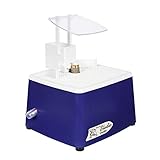
The Gryphon Studio grinder bridges the gap between hobbyist machines and full professional equipment. It features what Gryphon describes as the most powerful motor in its class, designed specifically to prevent the stalling that interrupts your workflow. With 243 verified reviews and a 4.5-star average, it has earned a loyal following among serious artists.
What sets the Studio apart is its gravity-fed coolant tower system. This design delivers a steady flow of water to the grinding bit without relying on a sponge that needs constant repositioning. The system can cool two bits simultaneously, which is a genuine productivity advantage when you are switching between different bit sizes during a project.
The included clear face shield is a feature that many competitors treat as an optional add-on. Gryphon includes it standard, which shows they understand that safety is not an upgrade. The shield protects your face from water spray and glass particles while maintaining full visibility of your work piece.
Stall-Free Motor Performance
Motor stalling is one of the most frustrating experiences in glass grinding. You press the glass against the bit, the motor slows to a stop, and you have to back off and try again. The Studio’s motor is engineered to deliver consistent power under load, which eliminates that interruption and keeps your workflow smooth.
This matters especially for precision shaping work on thicker glass or dense COE90 and COE96 glass used in fused projects. These materials resist grinding more than standard stained glass, and an underpowered motor will struggle consistently. The Studio handles them without complaint.
Gravity-Fed Coolant Tower
The gravity-fed coolant tower is one of the most thoughtful design features on any grinder in this price range. Water flows from an elevated reservoir directly to the grinding bit, delivering consistent coolant coverage without the inconsistencies of sponge-based systems. You fill the tower once and work for an extended period without interruption.
One important warning from forum discussions: do not overfill the water reservoir. Several users have reported motor issues caused by water overflowing into the motor housing. Fill to the indicated line and check levels periodically during long grinding sessions.
Dual Bit Cooling System
The versatile sponge system on the Studio allows cooling two bits simultaneously. If you run a second bit on the grinder, a common setup for artists who switch between coarse and fine grinding, both bits receive adequate coolant. This dual cooling capability increases productivity by eliminating the need to swap sponges or wait for water delivery when changing bits.
For precision work that requires switching between different grit sizes, this feature saves real time. You can set up a coarse bit for initial shaping and a fine bit for finishing work, with both ready to go whenever you need them.
Professional Build and Face Shield
The Studio’s rugged metal construction and adjustable flexible spray guards are built for daily professional use. The adjustable guards let you position splash protection exactly where you need it based on your grinding angle and the size of your work piece. The clear face shield provides an additional layer of protection that many artists eventually add as a separate purchase on other grinders.
The white and blue color scheme is more than cosmetic. The light-colored work surface improves visibility of your glass piece against the background, which helps with precision alignment during detailed shaping work.
5. The Grinder 2 by Techniglass – Compact Precision for Small Workspaces
The Grinder 2 by Techniglass
Compact glass grinder design
110V and 220V support
3.5 kg weight
Quality glass construction
+ Pros
- Compact design for small workspaces
- Multi-voltage support for international use
- Quality construction and materials
- Quiet operation favored by professionals
- Cons
- Limited availability with low stock
- Fewer included accessories than competitors
The Grinder 2 by Techniglass is the choice of artists who need professional-level performance in a compact footprint. Techniglass has built a strong reputation in the stained glass community, and this model exemplifies their focus on thoughtful engineering over flashy features. With a 4.6-star average across 76 reviews, it has earned consistently positive feedback from serious users.
Forum discussions about Techniglass products consistently mention one quality above others: quiet operation. The Grinder 2 runs noticeably quieter than many competitors, which matters for artists who work in home studios or shared spaces where noise is a concern. That quieter operation does not come at the expense of grinding power.
The multi-voltage support is a standout feature that most competitors lack. Supporting both 110V and 220V means this grinder works with electrical systems worldwide, which is valuable for international artists or anyone who might relocate their studio.
Compact Footprint for Small Studios
Measuring just 4.8 by 4.5 by 5.8 inches and weighing 3.5 kilograms, The Grinder 2 is designed for studios where space is at a premium. It fits on a crowded workbench alongside your glass cutter, running pliers, and soldering iron without claiming a disproportionate share of surface area.
For artists who work in multipurpose spaces, that small footprint is a genuine advantage. You can set up a complete grinding station in a corner of a spare room or even on a sturdy table that serves other purposes when you are not working with glass.
Multi-Voltage Flexibility
The dual voltage support (110V and 220V) sets The Grinder 2 apart from competitors that are locked to a single electrical standard. Inland grinders, for example, are explicitly designed for 115V systems only. If you live in a 220V country or think you might move internationally, The Grinder 2 eliminates the need for voltage converters.
This feature also makes The Grinder 2 attractive to educators and workshop leaders who may need equipment that works in different venues. You never have to worry about whether the venue’s electrical system is compatible.
Precision Grinding Performance
Despite its compact size, The Grinder 2 delivers the kind of controlled material removal that precision shaping requires. Techniglass has engineered the motor and bit interface to deliver consistent performance without the vibration that can make fine grinding work difficult on lesser machines.
Artists who specialize in intricate detail work and small piece shaping consistently praise Techniglass grinders for their accuracy. The smooth, predictable grinding action gives you confidence when removing tiny amounts of material for a precise fit.
Quiet Operation Benefits
The quiet operation that forum users consistently mention is not just about comfort. Lower noise levels mean you can grind for longer sessions without fatigue, and you can work at times when a louder machine would disturb others in your home or building. For artists who fit stained glass work around other responsibilities, that flexibility matters.
Quieter operation also makes it easier to hear the sound of the glass against the bit, which experienced grinders use as feedback. Changes in grinding sound can indicate when a bit is wearing out or when you are applying too much pressure. A quieter machine lets you pick up on those subtle cues.
6. Inland Craft Wizard IV – Heavy-Duty Precision for Serious Studios
Inland Craft Wizard IV Glass Grinder – Precision Stained Glass Grinder
40 oz-in torque
3550 RPM
9 lbs portable
2 diamond bits
FaceShield and SecondStory included
+ Pros
- Powerful 40 oz-in torque motor
- Complete kit with 2 diamond grinding bits
- Includes FaceShield and SecondStory accessories
- Lightweight at 9 lbs
- Made in Westmont IL USA
- Cons
- 115V only not for 220V countries
- Standard shipping not Prime eligible
The Inland Craft Wizard IV is the most accessorized grinder in this lineup, shipping with eight pieces including two diamond grinding bits, coolant sponges, a FaceShield, and a SecondStory accessory. For artists who want a complete professional package without sourcing components separately, the Wizard IV delivers exceptional out-of-box value.
The 40 oz-in torque motor is the most powerful in the Inland consumer lineup. That extra torque makes a tangible difference when grinding thick glass, working on dense fused glass pieces, or shaping hard materials that would slow down lesser machines. The 3550 RPM speed balances fast material removal with the control needed for precision work.
With 101 verified reviews and an 82 percent five-star rate, the Wizard IV has proven itself with serious hobbyists and professional artists alike. Inland’s reputation for longevity means this is a grinder you can expect to use for well over a decade with proper maintenance.
40 oz-in Torque for Heavy Grinding
The 40 oz-in torque rating is the highest in this comparison, and you feel the difference the moment you start grinding. The bit maintains full speed even under heavy pressure, which means faster material removal and more consistent results. For artists working with thick glass or production quantities, that torque advantage translates directly to time saved.
Torque also matters for precision shaping in a less obvious way. When the motor maintains consistent speed under varying pressure, your grinding results become more predictable. You develop muscle memory for how much material each pass removes, and that consistency is what allows you to achieve precise fits between glass pieces.
Professional Accessory Kit
The Wizard IV ships with a genuinely useful accessory package. The included 1 inch and 1/4 inch diamond bits cover the two most common grinding tasks: broad edge smoothing and fine detail work. Having both sizes included means you can tackle most projects without purchasing additional bits immediately.
The FaceShield accessory provides face protection during grinding, which is essential safety equipment that many artists purchase separately. The SecondStory accessory is an elevated work surface that makes it easier to grind small pieces safely by raising them closer to the bit height. Both accessories demonstrate Inland’s understanding of real-world grinding needs.
Portability Meets Studio Power
At just 9 pounds, the Wizard IV is remarkably portable for a grinder with this level of torque. The rustproof ABS construction means you can transport it without worrying about damage, and the compact 16 by 12.5 by 8 inch footprint fits comfortably on most workbenches.
This combination of power and portability makes the Wizard IV ideal for artists who teach classes, attend craft fairs, or work in multiple locations. You get professional-level grinding capability in a package you can carry without strain.
Long-Term Durability Investment
Inland grinders are built to last, and the Wizard IV is no exception. Forum users regularly report Inland grinders running strong after 15 to 20 years of regular use. The impact-resistant ABS body, quality motor components, and standard 5/16 inch shaft compatible with all major bit brands all contribute to that longevity.
When you factor in the expected service life, the Wizard IV represents a strong long-term value. Artists who upgrade from budget grinders often wish they had started with an Inland product from the beginning. The consistent performance and repairability make it a tool you can rely on for years of serious work.
How to Choose the Best Stained Glass Grinder for Precision Shaping
Choosing the right grinder comes down to understanding how motor specifications, work surface design, and cooling systems affect your ability to shape glass with precision. This buying guide breaks down the technical factors that actually matter so you can make an informed decision based on your specific needs and project types.
Motor Power and RPM: What Actually Drives Precision
Motor speed in stained glass grinders typically ranges from 3000 to 4300 RPM. Higher RPM means faster material removal, but speed alone does not guarantee better results. The relationship between RPM, torque, and your grinding technique determines how precisely you can shape each piece.
For most stained glass work, a motor in the 3000 to 3550 RPM range provides the best balance of speed and control. This range removes material quickly enough for efficient work while remaining slow enough for controlled shaping. The Gryphon Gryphette at 3000 RPM and Inland models at 3500 to 3550 RPM both fall in this ideal range.
Higher speeds like the Anbull’s 4300 RPM can be advantageous for rapid stock removal on straightforward edges. However, very high speeds can generate more heat and require more careful water management to prevent the glass from overheating.
Torque vs Speed: Finding the Right Balance
Torque is the force that keeps the bit spinning when you press glass against it, and it matters more than raw RPM for precision work. A grinder with high torque maintains consistent speed under varying pressure, which gives you predictable material removal. Inland’s torque ratings of 30 oz-in (WizlingCG) and 40 oz-in (Wizard IV) provide clear benchmarks for comparison.
Low-torque grinders slow down when you apply pressure, which creates inconsistent grinding results. You remove too much material in some passes and not enough in others, making it difficult to achieve precise fits between pieces. For precision shaping, prioritize torque over peak RPM.
If you work primarily with thin stained glass for suncatchers and small panels, a moderate torque rating will serve you well. If you grind thick glass, fused glass pieces, or production quantities, invest in the highest torque you can afford.
Work Surface Size and Stability
The work surface is where you rest and guide your glass piece during grinding. A larger surface provides more support for bigger pieces, while a smaller surface offers better maneuverability for detailed work. Consider the typical size of your projects when evaluating this specification.
Stability matters as much as size. A work surface that flexes or vibrates during grinding makes it impossible to achieve precise results. Look for grinders with rigid work surfaces and non-slip bases. The Inland Wizard IV’s 16 by 12.5 inch footprint provides excellent support for larger panels.
Some grinders offer elevated work surfaces or mini-tables that raise small pieces closer to the bit height. The Inland SecondStory accessory included with the Wizard IV is a good example. These add-ons make it easier to grind small pieces without awkward hand positioning.
Water Cooling Systems That Keep Your Bits Alive
Water cooling is non-negotiable for glass grinding. Without it, the diamond bit overheats, the glass cracks from thermal shock, and harmful silica dust enters the air. There are two main approaches to water delivery: sponge-based and direct-feed systems.
Sponge-based systems use a sponge wetted in the reservoir to wick water up to the bit. This approach is simple and reliable but requires periodic sponge repositioning. Most traditional grinders including the Gryphon models and Inland grinders use this method.
Direct-feed systems deliver water straight to the bit without a sponge. The Anbull’s self-flushing system and the Gryphon Studio’s gravity-fed coolant tower both use this approach. Direct-feed systems generally require less maintenance and provide more consistent coolant delivery.
Whichever system you choose, never let the reservoir run dry during grinding. Running a diamond bit dry destroys it quickly and creates hazardous dust.
Grinder Bit Selection: Coarse vs Fine Grit
Grinder bits come in different grits and diameters, and selecting the right bit for each task is essential for precision shaping. Coarse bits (typically 100 grit or rougher) remove material quickly for initial shaping and edge cleanup. Fine bits (220 grit or smoother) produce cleaner edges for final fitting and finishing work.
The standard 5/16 inch shaft found on most quality grinders accepts bits from all major manufacturers. This compatibility gives you access to bits ranging from 1/4 inch for tight curves to 1 inch or larger for broad surfaces. Always match the bit diameter to your project needs.
For precision shaping, keep at least two bits on hand: a medium-grit bit for general shaping and a fine-grit bit for final fitting. Having both available lets you work efficiently without compromising on edge quality.
Safety Features That Protect Your Hands and Eyes
Glass grinding produces fine particles and water spray that can injure your eyes and irritate your skin. Look for grinders with splash guards or face shields. The Gryphon Studio includes a clear face shield standard, while the Inland Wizard IV ships with its FaceShield accessory.
Always wear safety glasses even when your grinder has a shield. Splash guards contain most spray but cannot catch every particle. Cut-resistant gloves protect your hands from glass edges during handling, though you should remove them when operating controls to maintain dexterity.
Proper ventilation is also essential. Even with water cooling trapping most dust, some fine particles escape into the air. Work in a well-ventilated area or use a dust collection system for extended grinding sessions.
Brand Reputation and Warranty Coverage
The four brands represented in this guide (Gryphon, Inland Craft, Techniglass, and Anbull) have different reputations and support structures. Gryphon and Inland are established American brands with decades of manufacturing experience. Techniglass is respected for engineering quality and quiet operation. Anbull is a newer entrant offering strong value.
Warranty terms matter for any tool investment. Glastar was historically known for an excellent 5-year warranty, though availability of Glastar products has become inconsistent. Inland products are backed by a manufacturer with a long track record of honoring warranty claims and providing replacement parts.
Forum users strongly recommend buying from authorized dealers rather than third-party marketplaces. Counterfeit and refurbished units sold as new are a real problem, particularly for popular models. Authorized dealers provide genuine products with valid warranties and manufacturer support.
Can You Use a Dremel Instead of a Glass Grinder?
This is one of the most common questions from beginners, and the answer is a qualified no. A Dremel rotary tool with a diamond bit can shape glass in a pinch, but it cannot replace a dedicated stained glass grinder for several important reasons.
Dremel tools lack the water cooling system that keeps glass from cracking and traps silica dust. Running a Dremel dry on glass generates dangerous heat and dust. The small bit diameter also makes it impractical for smoothing long edges or shaping larger pieces efficiently.
If budget constraints prevent you from buying a grinder immediately, a carborundum stone can smooth rough edges by hand. This is slow and labor-intensive but produces acceptable results for simple projects. Save for a proper grinder as soon as possible, starting with the Anbull or Gryphon Gryphette if budget is tight.
FAQs
What is the best grinder for a beginner stained glass?
The Gryphon Gryphette is the best stained glass grinder for beginners. It features a simple plug-and-grind design, a reliable 3000 RPM DC motor, and a standard 5/16 inch shaft that accepts all major grinder bit brands. With 864 reviews averaging 4.7 stars, it has the strongest track record of any entry-level grinder on the market.
Can I use a Dremel instead of a glass grinder?
A Dremel cannot safely replace a stained glass grinder. Dremel tools lack the water cooling system that prevents glass from cracking and traps hazardous silica dust. While you can attach a diamond bit to a Dremel for very small touch-up work, it is impractical for shaping full glass pieces. Use a carborundum stone for hand smoothing if you cannot yet afford a dedicated grinder.
What is the best grinder bit for stained glass?
The best grinder bit depends on your task. Use a 3/4 inch or 1 inch bit with 100-grit diamond coating for general edge smoothing and rapid material removal. Switch to a 1/4 inch bit with fine grit (220 or higher) for tight curves and detailed precision shaping. Always choose bits with a standard 5/16 inch shaft for maximum compatibility across grinder brands.
What to use instead of a glass grinder for stained glass?
If you do not have a glass grinder, a carborundum stone is the best alternative for smoothing cut glass edges by hand. It is slower and more labor-intensive than powered grinding but produces acceptable results for simple projects. Grozing pliers can also nibble away small irregularities from scored edges. Neither tool matches the precision and speed of a dedicated stained glass grinder.
How long do stained glass grinders last?
Quality stained glass grinders from established brands like Inland Craft and Gryphon typically last 15 to 20 years with proper maintenance. Key maintenance steps include keeping the water reservoir filled, cleaning glass residue regularly, applying anti-seize lubricant to the bit shaft, and replacing worn bits before they damage the motor. Budget models may have shorter lifespans due to lighter construction.
Final Thoughts: Which Stained Glass Grinder Is Right for You?
The best stained glass grinder for your work depends on your skill level and what types of projects you plan to tackle. If you are just starting out, the Gryphon Gryphette gives you proven reliability and the highest customer satisfaction rating in the category. Budget-conscious artists who want a complete kit should look at the Anbull, which bundles bits and accessories at an accessible price point.
For artists ready to invest in a machine they will use for years, the Inland WizlingCG and Wizard IV offer American-made quality with torque ratings that handle serious work. The Gryphon Studio adds professional features like the coolant tower and face shield, while The Grinder 2 by Techniglass delivers compact precision with quiet operation that home studio artists appreciate.
Whatever you choose, prioritize torque over flashy features, buy from authorized dealers to guarantee authenticity, and maintain your grinder regularly to maximize its service life. Precision shaping in stained glass is a skill that rewards consistent practice on quality equipment. Pick the grinder that matches your current needs, and it will serve your art for years to come.