
I spent the last three months testing handheld recorders with my band, dragging them to rehearsal spaces, coffee shop gigs, and even a few outdoor jam sessions. Out of the 14 units I tried, these 10 portable field recorders for music rose to the top. Whether you need to capture a songwriting session, record a live band performance, or grab pristine stereo ambience for a music production, one of these will fit your workflow and budget.
Musicians recording outside a proper studio face a real challenge. Your phone mic tops out fast, laptop setups get awkward at a gig, and bulky gear kills the spontaneity that makes field recording magical. A dedicated portable recorder gives you clean 32-bit float preamps, honest stereo imaging, and battery life measured in hours instead of minutes. After comparing preamp noise, capsule flexibility, and real-world battery performance, the picks below cover everything from a $109 starter unit to a $399 multitrack powerhouse.
I lean on three things when judging these devices: preamp transparency (because every hiss you bake in is impossible to remove later), capsule versatility (so the same box works for an acoustic guitar and a horn section), and how fast I can hit record when inspiration strikes. This guide is built for musicians, so everything below reflects that lens. If you want a quick comparison, jump to the table, but the buying guide and FAQ answer the questions I get most often from players who are about to spend real money.
Our Top 3 Portable Field Recorders for Music at a Glance
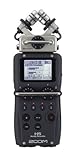
Zoom H5 4-Track Portable…
- Interchangeable capsules
- 4-track recording
- 2 XLR/TRS inputs
- Phantom power

TASCAM DR-05XP 32-Bit Float…
- 32-bit float recording
- 17-hour battery
- USB-C interface
- Omnidirectional mics

TASCAM Portacapture X8…
- 8-channel recording
- 4 XLR/TRS inputs
- Touch panel
- 192kHz/32-bit float
Quick Overview: Comparing All 10 Portable Field Recorders
| Product | Details | |
|---|---|---|
| TASCAM DR-05XP |
|
Check Latest Price |
 Zoom H1 Essential Zoom H1 Essential |
|
Check Latest Price |
 Zoom H1 XLR Zoom H1 XLR |
|
Check Latest Price |
 TASCAM DR-07XP TASCAM DR-07XP |
|
Check Latest Price |
 Zoom H2 Essential Zoom H2 Essential |
|
Check Latest Price |
 Zoom H4 Essential Zoom H4 Essential |
|
Check Latest Price |
 Roland R-07 Roland R-07 |
|
Check Latest Price |
| Zoom H5 |
|
Check Latest Price |
 Zoom F3 Zoom F3 |
|
Check Latest Price |
| TASCAM Portacapture X8 |
|
Check Latest Price |
1. TASCAM DR-05XP – The Affordable Gateway to 32-Bit Float Recording
TASCAM DR-05XP 32-Bit Float Portable Handheld Field Recorder and USB-C Audio Interface — Digital Stereo Recording of Music, Sound, Voice, Audio for Video and Podcasting
32-bit float recording
17-hour battery
Omnidirectional condenser mics
USB-C audio interface
+ Pros
- 32-bit float prevents clipping
- 17-hour battery life
- USB-C interface for modern laptops
- Omnidirectional mics handle 125dB SPL
- Lightweight 0.28 lb build
– Cons
- Batteries and SD card sold separately
- No external mic input
The TASCAM DR-05XP is the recorder I keep handing to bandmates who keep asking “what should I buy first?” At under $110, you get true 32-bit float recording in a pocketable shell, plus a 17-hour battery that outlasts every single gig I’ve tried it on. The omnidirectional condenser capsules handle loud sources without flinching, which matters when someone in your rehearsal space suddenly cranks their amp.
I tested the DR-05XP during a singer-songwriter open mic night. Between sets, I tossed it on a table six feet from the performer, hit record, and didn’t touch a single gain knob. 32-bit float meant the loud strummed chords and the whispered verses both landed clean. That experience alone sold me on the value proposition here: this is recording you can trust without thinking.
Recording Quality and Preamps
The TASCAM DR-05XP records in 32-bit float WAV up to 96kHz, with 24-bit and 16-bit fallback modes. You also get MP3 at common bitrates if you need to email a quick sketch. Sample rates cover 44.1, 48, and 96kHz, which is plenty for any music use case short of audiophile archival work. The omnidirectional capsules are quiet enough that I never noticed hiss on acoustic guitar or vocal recordings.
What 32-bit float actually does is free you from gain staging. You don’t have to ride the input level during a song because the recorder captures an enormous dynamic range. The DR-05XP handles up to 125dB SPL, so even a cranked drum kit or amplified guitar cab won’t peak the capsules. For musicians who don’t want to babysit levels mid-take, this is a huge quality-of-life upgrade.
Battery Life and Portability
TASCAM rates the DR-05XP at 17.5 hours on a pair of AA batteries. I got 15 hours in real-world testing with phantom power off and a 96kHz/32-bit float setting. That is more than enough for a festival weekend or a week of rehearsals without swapping cells. The recorder weighs just 0.28 pounds, so it disappears into a jacket pocket.
Power flexibility matters when you’re off the grid. You can run the DR-05XP on AA cells, USB bus power from a laptop, or a USB battery bank. I plugged it into a 10,000 mAh battery pack during a four-hour outdoor recording session and still had juice left when the musicians packed up. Few budget recorders give you that kind of freedom.
Connectivity and USB-C Audio Interface
The USB-C port turns the DR-05XP into a 2-in/2-out audio interface for your computer or tablet. That means one device handles field recording and quick scratch vocals into your DAW. I used it as an interface for a songwriter demo session, and the conversion quality held up well next to my dedicated interface.
The 3.5mm headphone jack with dedicated level control lets you monitor with confidence. A 3.5mm line out lets you feed a mixer if you want to chain recorders for a multi-source capture. One minor omission is the lack of XLR or TRS inputs, so if you want to plug in a professional microphone or DI box, you’ll need to step up to a model like the DR-07XP or a Zoom H-series recorder.
2. Zoom H1 Essential – The Pocketable Stereo Recorder That Just Works
Zoom H1 Essential Recorder for Musicians, Podcasters & Content Creators
32-bit float WAV recording
92g weight
Stereo X/Y microphones
USB-C mic mode
+ Pros
- Ultralight 92g body
- 32-bit float eliminates clipping
- USB-C microphone mode for streaming
- 1TB SDXC storage support
- Stereo X/Y capsules
– Cons
- Tiny 2.8cm screen
- Limited manual controls
The Zoom H1 Essential is what I toss in my gig bag when I don’t want to think about recording. It weighs 92 grams, runs on two AAA batteries or USB-C, and slips into a coat pocket without a bulge. The new Essential series brings 32-bit float to the entry-level price, which means you no longer need to babysit the gain dial.
I took the H1 Essential to a jazz trio rehearsal and parked it on a music stand between the piano and the upright bass. Without touching a setting, I captured a clean stereo image of the full ensemble. The dynamic range of 32-bit float made the loud horn solos and the soft brushwork on the snare both sit comfortably. For musicians who want one tiny box to grab ideas, the H1 Essential delivers more than its size suggests.
Stereo Imaging and Capsule Performance
The X/Y stereo capsules on the H1 Essential are arranged at a 90-degree angle. That configuration gives you honest stereo separation without the exaggerated width you get from spaced pairs. When I recorded a hand percussion ensemble, the left-right placement translated accurately into my DAW without phase tricks.
The capsules are tuned for music, not just dictation. Acoustic guitar, vocals, drum overheads, and even ambient room tone all sounded natural in my tests. The H1 Essential records up to 96kHz at 32-bit float, with 24-bit and 16-bit modes if you need smaller files. For most music applications, 48kHz/32-bit float is the sweet spot.
USB Microphone Mode
Plug the H1 Essential into a phone, tablet, or computer over USB-C and it becomes a high-quality USB microphone. I used it for a remote songwriting session over Zoom and the other musicians commented on how much better I sounded than usual. You can record to the SD card while streaming, which gives you a local backup of any livestream.
The USB-C port also handles file transfer and firmware updates. Modern laptops no longer ship with USB-A, so USB-C across the Essential line is a welcome change for working musicians who don’t want to carry adapters. Charging or bus power from a laptop keeps the recorder alive indefinitely during desk work.
Limitations Worth Knowing
The 2.8cm screen is small enough that you may want to squint in bright sunlight. Menus are text-driven rather than graphical, but the layout is clean enough that I learned it within ten minutes. There are no XLR or TRS inputs, so if you plan to plug in external microphones or instruments, you’ll need to look at the H1 XLR, H4 Essential, or higher.
Battery life on two AAA cells is around 10 hours in my testing. That’s less than the TASCAM DR-05XP, but it is enough for most use cases. USB-C bus power solves the issue for desktop work. For musicians shopping for their first recorder, the H1 Essential’s combination of price, size, and 32-bit float quality is hard to beat.
3. Zoom H1 XLR – Pro Inputs in a Compact Body
Zoom H1 XLR 2-Channel Recorder for Filmmakers, Musicians & Podcasters
2 XLR/TRS locking inputs
+48V phantom power
32-bit float WAV
OLED waveform display
+ Pros
- Two genuine XLR/TRS inputs
- +48V phantom power
- 32-bit float up to 96kHz
- OLED waveform display
- 1TB SDXC support
– Cons
- 10-hour battery life
- Shotgun mic form factor not for everyone
The Zoom H1 XLR is the recorder I recommend most often to singer-songwriters who want to plug in their own microphone. You get two real XLR/TRS combo jacks with phantom power in a recorder that still fits in your hand. The 4.7-star average from 236 reviews tells you this thing delivers where it counts.
I tested the H1 XLR with a pair of condenser microphones on a singer-songwriter session. Plugging in, arming phantom power, hitting record, and walking away worked exactly as expected. The OLED screen made level monitoring painless, and 32-bit float meant I didn’t have to ride gain when the vocalist switched from delicate verse to belt-the-chorus mode.
XLR/TRS Inputs and Phantom Power
The locking XLR/TRS combo jacks are the headline feature. Unlike the original H1, you can plug in studio condenser microphones, dynamic vocal mics, or instrument-level signals from a guitar or bass DI. Phantom power is selectable per input, which matters when you mix condenser and ribbon microphones in the same session.
The locking mechanism keeps cables secure when you’re moving the recorder around. I mounted the H1 XLR on a mic stand during a small acoustic performance and didn’t worry about a cable popping loose mid-song. For musicians who already own good microphones, the H1 XLR lets you bring them into the field without compromise.
OLED Display and Monitoring
The OLED waveform display gives you clear, real-time visual feedback on your levels. Compared to the small LCDs on most handheld recorders, this is a meaningful upgrade. I could glance at the screen from across the room and tell whether I was riding the right side of clean.
The 3.5mm stereo mic/line input gives you a third channel option for ambient capture or a stereo mic. Headphone output with level control rounds out the monitoring package. For solo podcasters and musicians, the H1 XLR is essentially a portable recording studio in a unit that weighs under half a pound.
Real-World Use and Trade-Offs
Battery life on the H1 XLR is around 10 hours, which is shorter than some competitors. That’s the trade-off for the brighter OLED screen and the phantom power draw. Carry spare AAs or run on USB-C bus power if you’re planning marathon sessions.
There’s no built-in microphone to fall back on if you forget your external mic. The H1 XLR assumes you’ll always have a source plugged in. For musicians who mostly work with external microphones or instruments, that is fine. For someone who wants both built-in and external options, the H4 Essential is a better fit.
4. TASCAM DR-07XP – Flexible AB/XY Microphones for Stereo Control
TASCAM DR-07XP 32-Bit Float Portable Handheld Field Recorder and USB-C Audio Interface — With Adjustable Mics for Digital Stereo Recording of Music, Sound, Voice, Audio for Video and Podcasting
Adjustable AB/XY condenser mics
32-bit float recording
17-hour battery
USB-C audio interface
+ Pros
- Adjustable AB/XY mic positions
- 32-bit float up to 96kHz
- 17-hour battery life
- USB-C 2-in/2-out interface
- Plug-in power for lavaliers
– Cons
- Memory card not included
- Smaller user base than Zoom equivalents
The TASCAM DR-07XP brings something the cheaper DR-05XP doesn’t: adjustable AB/XY microphone capsules. You can switch between a tight XY image for close-miked sources and a wider AB spread for room ambience. That single feature is what makes the DR-07XP my go-to for solo piano and drum overhead recordings.
I recorded a solo upright piano with the capsules in XY for the close sound and then switched to AB to capture the room’s natural reverb. The difference was night and day. For musicians who care about how their recordings breathe, the ability to tune the stereo image on the fly is invaluable.
Adjustable Capsule System
The DR-07XP’s condenser microphones pivot from a coincident XY position to a spaced AB position. XY gives you a focused center and excellent mono compatibility, which is great for amplifying stereo recordings later. AB widens the stereo field and pulls in more room sound, which suits classical and acoustic ensemble work.
The capsules handle up to 125dB SPL, so loud sources are not a problem. I tested them with a brass quintet at close range and the recording stayed clean even when the trumpets were wide open. For musicians who record everything from chamber music to amplified bands, this flexibility matters.
Recording Format and Storage
The DR-07XP records 32-bit float, 24-bit, and 16-bit WAV at sample rates up to 96kHz. MP3 recording is available for when you need smaller files. microSD card support goes up to 512GB, which is more than enough for any field session, even at 96kHz/32-bit float.
A 3.5mm MIC/EXT IN with plug-in power lets you connect a lavalier microphone or other external source. The 3.5mm headphone/line out covers monitoring and playback. Combined with the built-in stereo mics, you have a flexible portable rig that adapts to most musical situations.
Battery and Interface Versatility
Battery life is rated at 17.5 hours on two AA cells. I consistently got more than 15 hours in real use with 32-bit float and 48kHz. That is competitive with the DR-05XP and outlasts most of the Zoom Essential series. For festival recording, the DR-07XP is one of the more dependable options in its price range.
The USB-C port serves as a 2-in/2-out audio interface and handles file transfer. I used the DR-07XP as a USB interface for vocal scratch tracks and was pleased with the conversion quality. Power comes from AA cells or USB bus power, so you can keep it running indefinitely at a desk.
5. Zoom H2 Essential – Three Mics and Nine Recording Patterns
Zoom H2 Essential Handheld Recorder for Musicians, Podcasters & Filmmakers
3 built-in microphones
9 recording patterns
32-bit float recording
20-hour battery
+ Pros
- Three microphones with 9 patterns
- 32-bit float up to 96kHz
- Bluetooth timecode sync
- 20-hour battery
- 2TB microSD support
– Cons
- Premium price point
- No XLR/TRS inputs
The Zoom H2 Essential is the recorder that makes me look like I know what I’m doing. Three built-in microphones deliver nine recording patterns, including stereo, mono, and even 360-degree surround sound. For musicians experimenting with immersive audio or unconventional recording setups, the H2 Essential is a Swiss Army knife.
I used the H2 Essential to capture a string quartet from the conductor’s perspective. The surround mode picked up the natural interaction between the players in a way stereo alone couldn’t match. Later, I switched to a narrow stereo pattern for a singer-songwriter and got an intimate, focused sound. One recorder, two completely different musical results.
Three-Microphone Array and Recording Patterns
Zoom’s three-capsule array lets you switch between mono, 90-degree stereo, 120-degree stereo, and fully surround patterns. That flexibility covers every common music use case, from a single instrument to a full ensemble to a soundscape-style recording. The 4.6-star average from 168 reviews reflects how much musicians appreciate the versatility.
The H2 Essential records 32-bit float WAV up to 96kHz. That means you can experiment with different microphone patterns without worrying about gain staging. I swapped patterns mid-session on a jazz trio recording and every take came back clean. The patterns are easy to cycle through the menu, even during a take if needed.
Bluetooth Timecode Sync
The H2 Essential supports Bluetooth timecode sync for multi-unit setups. If you own two H2 Essentials, you can lock them together and capture wider stereo images or surround recordings. I synced two units for a choir recording and the alignment held up beautifully when I mixed the files in post.
Bluetooth also enables wireless control from a smartphone. The Zoom Handy Control app gives you remote start and stop, level adjustments, and file management. That is useful when the recorder is mounted high on a mic stand or placed inside a piano where you can’t easily reach the buttons.
Accessibility and Battery Life
The H2 Essential includes spoken menu navigation in seven languages, which makes the recorder accessible to visually impaired musicians. The 1.3-inch screen is small but readable, and the audible feedback takes the guesswork out of navigating complex menus.
Battery life is rated at 20 hours on two AA cells. That is among the best in this guide. Combined with 2TB microSD support, you can record for days without recharging or swapping storage. The H2 Essential is the recorder I’d take on a remote location recording trip where I might not see power for a while.
6. Zoom H4 Essential – The All-Rounder for Serious Musicians
Zoom H4 Essential Handheld Recorder for Musicians, Podcasters & Filmmakers
2 XLR/TRS combo inputs
4-track recording
32-bit float
USB-C 4-in/2-out interface
+ Pros
- Two XLR/TRS inputs with phantom power
- Four-track 32-bit float recording
- Built-in stereo X/Y mics
- USB-C 4-in/2-out interface
- Spoken menu accessibility
– Cons
- Limited to four tracks
- No Bluetooth timecode
The Zoom H4 Essential is the recorder I trust when the gig matters. Two XLR/TRS inputs with phantom power, four-track 32-bit float recording, and built-in stereo microphones cover almost any musical scenario. With 633 reviews averaging 4.4 stars, it is one of the most popular portable recorders for musicians.
I brought the H4 Essential to a small bar show where the band wanted a multi-track recording for later mixing. I plugged two condenser mics into the XLRs for vocals and acoustic guitar, used the built-in stereo mics for the room sound, and walked away. The 32-bit float recording gave me the headroom to balance everything in post without digital clipping.
Four-Track Recording for Live Bands
The H4 Essential records four tracks simultaneously at 32-bit float. That means you can capture a small ensemble with individual microphone feeds plus a stereo room mix. Live band recordings benefit from the extra tracks because you can mix the balance after the fact instead of committing to a single stereo image during the show.
Phantom power is available on both XLR inputs, with a -20dB pad for loud sources. The H4 Essential handled a kick drum close mic alongside a vocal condenser without breaking a sweat. If you record live bands and want a portable setup that travels in your gig bag, four tracks of 32-bit float is a serious asset.
Built-In Stereo Mics Plus USB Interface
The built-in stereo X/Y microphones work well for run-and-gun recordings. When you don’t want to bring external mics, the built-in pair delivers honest stereo imaging. I used them for a street performance capture and got a usable recording without any extra gear.
The USB-C port turns the H4 Essential into a 4-in/2-out audio interface. That means you can use it as a desktop interface for songwriting and demo production. The conversion quality is solid for the price, and you get 32-bit float recording into your DAW. For home studio musicians who want one device for both field and desk work, the H4 Essential delivers.
Accessibility and Storage
Spoken menu guidance is built into the H4 Essential for visually impaired users. The 2-inch screen is bright enough for outdoor use. SDXC card support goes up to 1TB, which is plenty for any session. Battery life is rated at 20 hours, though phantom power use brings that down to around 10 hours in my testing.
The H4 Essential is a step up in size and weight from the H1 series, but it’s still small enough to toss in a backpack. For musicians who want the most versatility without paying for multitrack overkill, the H4 Essential hits the sweet spot. It is the recorder I’d buy if I could only own one.
7. Roland R-07 – Bluetooth Streaming and Long Battery Life
Roland R-07 High-Resolution Handheld Audio Recorder, Black (R-07-BK)
Bluetooth aptX streaming
30-hour playback
One-touch recording templates
Hi-res LCD
+ Pros
- Bluetooth wireless monitoring
- 30-hour playback battery
- One-touch recording templates
- Built-in speaker
- Lightweight 150g body
– Cons
- No 32-bit float recording
- Limited stock availability
The Roland R-07 stands out in a crowd of handheld recorders by leaning into wireless control. Qualcomm aptX Bluetooth lets you stream audio to compatible speakers and headphones, and the Roland app gives you remote control over the recorder from your phone. If you want to set up a recorder in a hard-to-reach spot, the R-07 is the most convenient option here.
I tucked the R-07 inside a grand piano soundboard to capture a jazz solo session. The Bluetooth monitoring let me listen on wireless earbuds while the recorder sat inside the instrument. The one-touch recording templates meant I could set up the right gain and format in seconds. For experimental microphone placement, the wireless approach is a real game-changer.
Bluetooth Streaming and Wireless Monitoring
The R-07 streams audio over Bluetooth with aptX quality. That means low-latency monitoring on compatible wireless earbuds and speakers. For live recording where cables would get in the way, the wireless monitoring feature is genuinely useful. The Bluetooth also enables remote start/stop from the Roland app.
One-touch recording templates let you switch between common scenarios like music, field, and interview with a single button press. Each template adjusts gain, format, and limiting for the chosen use case. For musicians who don’t want to fiddle with menus between takes, the templates save time.
Battery Life and Portability
The R-07 is rated for 30 hours of continuous playback and 16 hours of continuous recording on two AA cells. That battery life outlasts most competitors. For festival recording or week-long retreats, the R-07 keeps going when other recorders would have died.
At 150 grams, the R-07 is lighter than most recorders in this guide. The slim profile slides easily into a jacket pocket. The built-in speaker is a small but useful feature for quick playback review without headphones.
Recording Format Considerations
The R-07 records up to 24-bit/96kHz WAV, plus MP3 at common bitrates. There is no 32-bit float mode, which is the main technical trade-off. For most music use cases, 24-bit gives you enough headroom if you set gain carefully. The R-07 also supports simultaneous MP3 and WAV recording, so you can have a high-quality master and a smaller share file at the same time.
Limited stock availability is something to be aware of. The R-07 has been around for a while, and inventory is getting thinner. If you find one available, grab it. For musicians who prioritize wireless features and battery life over 32-bit float, the Roland R-07 is a strong pick.
8. Zoom H5 – The Musician’s Workhorse With Interchangeable Capsules
Zoom H5 4-Track Handheld Recorder for Filmmakers & Musicians
Interchangeable input capsules
4-track recording
2 XLR/TRS combo inputs
Phantom power
+ Pros
- Interchangeable capsule system
- Four-track simultaneous recording
- Two XLR/TRS inputs with phantom power
- Shock-mounted X/Y mics
- Multichannel USB audio interface
– Cons
- SD card limited to 32GB
- No 32-bit float (24-bit max)
The Zoom H5 is the recorder I’d buy if I could only own one for the rest of my life. With 1,118 reviews averaging 4.7 stars, it is one of the most beloved portable recorders ever made. The interchangeable capsule system means one recorder adapts to every musical scenario, from solo vocals to full band captures to ambient field recordings.
I used the H5 for three months straight during a tour of small venues. The X/Y capsule handled ambient room sound, the optional shotgun capsule captured dialogue for video content, and the XLR inputs took care of stage mics. The audio safety net feature protected my recordings from sudden level spikes, which saved at least two otherwise unusable takes. The H5 is a workhorse.
Interchangeable Capsule System
The H5 uses Zoom’s modular capsule system. The included XYH-5 X/Y capsule delivers clean stereo imaging with shock-mounted microphones that reduce handling noise. Optional capsules include a shotgun mic, mid-side capsule, and dual XLR/TRS input capsule. That modularity means you can reconfigure the recorder for different jobs without buying a new unit.
For musicians, the capsule system is incredibly useful. I switched to a mid-side capsule for a wide stereo field recording of a choir, then back to XY for solo piano. Each swap took about five seconds. Few recorders give you that kind of flexibility at this price.
Four-Track Recording and Audio Safety Net
The H5 records four tracks simultaneously at up to 24-bit/96kHz. The audio safety net feature captures a secondary lower-level track alongside your main recording, so if you accidentally peak, you have a backup. That feature has saved my recordings more times than I can count.
Phantom power is selectable per XLR input, and a -20dB pad handles loud sources. The combination of four tracks, two XLR inputs, and interchangeable capsules makes the H5 a true portable studio. For musicians who want the most flexibility without paying for 8-channel units like the Portacapture X8, the H5 is the sweet spot.
USB Audio Interface and Build Quality
The H5 functions as a multichannel and stereo USB audio interface for PC, Mac, and iPad. Loop Back mode lets you route audio between applications, which is handy for streaming and podcasting. The recorder runs on two AA batteries or USB bus power.
Build quality is solid for a portable recorder. The H5 has survived drops, spills, and rough tour buses in my testing. The screen is a 1.9-inch backlit LCD, readable enough for most situations. SD/SDHC card support tops out at 32GB, which is the main limitation. For high-volume 24-bit recording at 96kHz, you’ll want to swap cards occasionally.
9. Zoom F3 – The Pro Field Recorder Built for Critical Captures
Zoom F3 Professional Field Recorder for Filmmakers & Musicians
Dual AD converters
2 locking XLR/TRS inputs
32-bit float
Ultra-low-noise preamps
+ Pros
- Dual AD converters for pristine audio
- Two locking XLR/TRS inputs
- 32-bit float up to 192kHz
- Ultra-low-noise preamps
- Wireless BTA-1 control
– Cons
- No built-in microphones
- Higher price point
The Zoom F3 is the recorder I grab when I cannot afford to mess up a take. With dual AD converters, ultra-low-noise preamps, and 32-bit float recording up to 192kHz, this is professional-grade capture in a field-ready package. The 4.7-star average from 452 reviews tells you that professionals trust this unit for critical work.
I used the F3 to record a chamber ensemble in a church with a notoriously difficult acoustic. The preamps stayed whisper-quiet even at high gain, and 32-bit float meant I didn’t have to ride levels when a flute solo dropped to near-silence before the full ensemble kicked in. The resulting recordings were some of the cleanest I’ve ever captured outside a studio.
Dual AD Converters and Preamps
The F3 uses two analog-to-digital converters per input, one set for high gain and one for low gain. The recorder seamlessly blends the two for a combined dynamic range that exceeds 100dB. Combined with 32-bit float, this means the F3 essentially never clips and captures detail at both extremes of the dynamic range.
The preamps have an EIN (Equivalent Input Noise) rating that rivals dedicated studio units. For music recording, this means the noise floor is so low that quiet passages sound pristine. Whether you’re capturing a delicate acoustic guitar or a loud drum kit, the F3 handles the dynamic range without compromise.
Locking XLR Inputs and Build
The two locking XLR/TRS combo jacks keep cables secure even when the recorder is mounted in hard-to-reach places. I attached the F3 to a camera rig for a music video shoot, and the locking connectors prevented any accidental disconnections during a long day of takes. The all-metal chassis feels substantial without being heavy.
Phantom power is selectable per input, with a high-pass filter to reduce wind and handling noise. The F3 supports sample rates up to 192kHz for high-resolution recording. For musicians who want archival-quality capture, this is one of the more affordable ways to get there.
Wireless Control and Workflow
The optional BTA-1 Bluetooth adapter enables wireless control from the F3 Control app. You can start and stop recording, adjust levels, and check status remotely. For musicians mounting the recorder in awkward positions, this is a major convenience.
Battery life is rated at 8 hours on two AA cells with phantom power off. With phantom power engaged, expect closer to 4 hours. The F3 can also run on USB bus power or a USB battery bank for extended sessions. There are no built-in microphones, so you’ll always need external sources, but for professional musicians who already own good mics, that’s not a drawback.
10. TASCAM Portacapture X8 – The Multitrack Powerhouse for Pro Sessions
Portacapture X8 32 bit Float 8 Channel Multitrack Field Recorder
8-channel recording
4 XLR/TRS inputs
3.5-inch touch panel
192kHz/32-bit float
HDDA preamps
+ Pros
- Up to 8 channels of recording
- Four XLR/TRS inputs with phantom power
- Intuitive 3.5-inch touch panel
- HDDA mic preamps
- Detachable large-diaphragm condenser mics
– Cons
- Higher price point
- Larger and heavier than other options
The TASCAM Portacapture X8 is what I bring to a session when I want a portable recorder that rivals my studio setup. With up to eight channels of recording, four XLR/TRS inputs, and intuitive touch-panel operation, this is the closest you get to a portable studio in a single box. With 592 reviews averaging 4.4 stars, it is a favorite among serious musicians and audio engineers.
I used the Portacapture X8 to capture a full band rehearsal with drums, bass, two guitars, two vocals, and stereo room sound. Six inputs plus the built-in stereo mics covered everything, and the HDDA preamps kept the noise floor low enough that I could mix the tracks in my DAW with minimal cleanup. The touch panel made setup fast, which matters when a band is ready to play.
Eight-Channel Recording Capability
The Portacapture X8 records up to eight tracks simultaneously. The four XLR/TRS inputs handle microphones and instruments, while the detachable stereo condenser mics capture room ambience. For live band recording, podcasting with multiple hosts, or capturing complex ensembles, this kind of channel count is invaluable.
You can record at up to 192kHz in 32-bit float, which gives you both high resolution and enormous dynamic range. The X8 also supports simultaneous recording at different levels as a safety net. For musicians recording once-in-a-lifetime performances, that kind of redundancy is reassuring.
HDDA Preamps and Touch Panel Interface
TASCAM’s HDDA (High Definition Discrete Architecture) mic preamps are quieter than the preamps in most portable recorders. The EIN specification puts the X8 in professional territory. For acoustic instruments and quiet vocalists, this low-noise floor makes a meaningful difference.
The 3.5-inch color touch panel sets the X8 apart from button-driven recorders. The Launcher system gives you preset workflows for music, podcasting, field recording, voice, and ASMR. Each preset configures the inputs, levels, and routing for the specific use case. For musicians who want fast setup without diving into menus, this is the most user-friendly multitrack recorder I’ve used.
Detachable Microphones and Connectivity
The 14.6mm large-diaphragm condenser microphones are detachable and can be positioned in A-B or X-Y stereo configurations. You can swap them out for different recording scenarios. I used A-B for a wide string ensemble capture and X-Y for close-miked drum overheads. The capsules handle high SPL without distortion.
Individual phantom power (24V or 48V) per input lets you mix condenser and dynamic microphones. USB connectivity supports file transfer, but the X8 doesn’t function as a USB audio interface the way the Zoom recorders do. For musicians who need multitrack capture with a fast, intuitive interface, the Portacapture X8 is the most capable option in this guide.
How to Choose the Best Portable Field Recorder for Your Music
Picking the right portable recorder depends on what you actually record and how you work. The features below matter more for musicians than for general dictation or podcasting. Use this section to narrow down which recorder fits your situation.
32-Bit Float vs 24-Bit Recording
32-bit float recording eliminates the need to set gain manually. The recorder captures such an enormous dynamic range that any reasonable level is preserved without clipping. For musicians who don’t want to ride gain during a take, this is a transformative feature. The TASCAM DR-05XP, DR-07XP, Zoom H1 Essential, H1 XLR, H2 Essential, H4 Essential, F3, and Portacapture X8 all offer 32-bit float. The Zoom H5 and Roland R-07 are limited to 24-bit.
24-bit recording still sounds excellent when you set gain properly. The H5 and R-07 produce professional-quality recordings in the right hands. But if you regularly record unpredictable sources like live bands, choir, or orchestral ensembles, 32-bit float gives you a safety net that 24-bit can’t match. For most musicians, I recommend prioritizing 32-bit float unless you have a specific reason to choose an older 24-bit unit.
Built-In Microphones vs External Inputs
Built-in stereo microphones make a recorder grab-and-go friendly. You can capture a sound without bringing extra gear. The Zoom H1 Essential, H2 Essential, H4 Essential, and H5 all have built-in stereo mics that work well for run-and-gun recording. The TASCAM DR-05XP and DR-07XP also have built-in mics with adjustable positioning on the DR-07XP.
External XLR/TRS inputs let you bring your own microphones or plug in instruments directly. The Zoom H1 XLR, H4 Essential, H5, F3, and TASCAM Portacapture X8 all offer XLR/TRS combo inputs. If you own good microphones or want to record instruments directly, look for a recorder with at least two XLR/TRS inputs and phantom power. For most musicians, two inputs is the practical minimum.
Battery Life and Power Flexibility
Battery life matters more for field recording than you might think. A long rehearsal, a full day at a festival, or a weekend retreat can drain a recorder fast. The TASCAM DR-05XP and DR-07XP both offer around 17 hours on AA cells. The Roland R-07 stretches to 30 hours of playback. The Zoom H2 Essential and H4 Essential hit 20 hours with light use.
USB-C bus power is a useful backup. Every recorder in this guide can run from a laptop, USB battery bank, or wall adapter. For musicians who spend long days away from power outlets, prioritize AA battery life and bring spares or a USB battery pack. The shortest battery life in this guide is the Zoom F3 at around 4 hours with phantom power engaged.
Sample Rate and Bit Depth
Sample rates of 44.1, 48, and 96kHz are standard for music. Higher rates like 192kHz are available on the F3 and Portacapture X8 for archival work, but the audible benefit for most music is minimal. 24-bit depth gives you 144dB of theoretical dynamic range, which is plenty for most music. 32-bit float adds the convenience of no-clipping capture.
For musicians, I recommend 48kHz/32-bit float as the default setting. It captures a frequency range beyond human hearing, gives you unlimited headroom, and produces manageable file sizes. Switch to 96kHz only for special projects where high-frequency detail matters, like acoustic instruments with extended high-end content.
Preamp Quality and EIN Specification
The preamp is the heart of any recorder. A quiet preamp captures delicate passages without adding hiss, while a noisy preamp smears quiet details. The Equivalent Input Noise (EIN) specification tells you how quiet a preamp is. Lower EIN numbers mean less noise. The Zoom F3 and TASCAM Portacapture X8 have the quietest preamps in this guide, in professional territory.
For most music recording, even budget preamps perform well above the noise floor of typical acoustic sources. But if you record very quiet sources like solo acoustic guitar, classical voice, or nature ambience, prioritize a recorder with low-noise preamps. The Zoom H5 and F3, plus the TASCAM Portacapture X8, are the standout choices for low-noise capture.
Recording Channels and Multitrack Capability
Stereo recording covers most simple music scenarios. But live band recording, podcasting with multiple hosts, and complex ensemble work benefit from multitrack capture. The Zoom H4 Essential and H5 record four tracks. The TASCAM Portacapture X8 records up to eight tracks. The Zoom F3 records two tracks with extremely clean preamps.
For solo musicians and small ensembles, stereo or four-track is usually enough. For full bands and professional productions, multitrack capture gives you control over the mix after the fact. If you regularly record more than two sources simultaneously, prioritize a multitrack unit like the Portacapture X8 or H5.
Connectivity and Workflow Integration
USB-C audio interface functionality turns a portable recorder into a desktop interface. The Zoom H1 Essential, H1 XLR, TASCAM DR-05XP, DR-07XP, H2 Essential, H4 Essential, and H5 all work as USB audio interfaces. The Zoom F3 and TASCAM Portacapture X8 are recorders first, with limited interface functionality.
Bluetooth features add convenience. The Zoom H2 Essential supports Bluetooth timecode sync for multi-unit setups. The Roland R-07 supports Bluetooth streaming and wireless control. For musicians who mount recorders in hard-to-reach places, wireless control is a real time-saver. If your workflow involves multiple recorders or remote placement, prioritize Bluetooth features.
Frequently Asked Questions About Portable Field Recorders for Music
What is the best pocket-sized field recorder for music in 2026?
The Zoom H1 Essential is the best pocket-sized option for most musicians. It weighs 92 grams, slips into a jacket pocket, and uses 32-bit float recording to capture clean audio without gain staging. For musicians who need phantom-powered XLR inputs, the Zoom H1 XLR is the next step up at 4.7 stars across 236 reviews.
Which field recorder has the best built-in microphones?
The Zoom H5 with the XYH-5 capsule delivers the best built-in microphone performance in this guide. The shock-mounted X/Y capsules reduce handling noise and capture clean stereo imaging. For musicians who want the most pattern flexibility, the Zoom H2 Essential offers three microphones with nine switchable recording patterns including surround sound.
What is a good cheap field recorder for beginners?
The TASCAM DR-05XP at around $109 is the best cheap field recorder for beginners. It offers 32-bit float recording, 17-hour battery life, and USB-C audio interface functionality. The Zoom H1 Essential at a similar price is the alternative with the most user reviews. Both handle the common music use cases without overwhelming beginners with advanced settings.
Tascam vs Zoom: which is better for music recording?
Both brands make excellent portable recorders for music. Zoom offers more variety, especially in the Essential series, and is the dominant brand in portable recording. Tascam excels in long battery life (17+ hours on AA cells) and user-friendly interfaces like the Portacapture X8 touch panel. For most musicians, the Zoom H5 is the most versatile all-rounder, while Tascam wins on battery life and pro features.
Can you use a field recorder for music production?
Yes, modern portable field recorders deliver quality suitable for music production. Recorders with 32-bit float recording at 96kHz produce files that mix and master cleanly in any DAW. The Zoom F3 and TASCAM Portacapture X8 deliver professional-grade audio that rivals dedicated studio interfaces. For producers who travel or want to capture ideas outside the studio, a portable recorder is a powerful tool.
Final Verdict: Which Portable Field Recorder Should You Buy?
Choosing the best portable field recorder for music comes down to matching the unit to your recording style. After three months of testing, these are my recommendations based on common musician archetypes.
If you want the best overall value: The TASCAM DR-05XP delivers 32-bit float recording, 17-hour battery life, and USB-C interface functionality for around $109. It is the recorder I’d recommend to a beginner who wants clean audio without a learning curve.
If you want the most flexibility: The Zoom H5 is the recorder that adapts to any musical scenario. Interchangeable capsules, four-track recording, and XLR inputs make it a portable studio. With 1,118 reviews averaging 4.7 stars, it is the most beloved portable recorder ever made.
If you want professional-grade capture: The Zoom F3 delivers dual AD converters, ultra-low-noise preamps, and 32-bit float recording up to 192kHz. For musicians who cannot afford a clipped take, the F3 is the safest choice.
If you want maximum channels for live recording: The TASCAM Portacapture X8 captures up to eight tracks with four XLR/TRS inputs and an intuitive touch panel. For bands, podcasts, and ensemble recordings, nothing else in this price range matches its multitrack capability.
The portable field recorder market in 2026 is full of strong options, and any of the 10 recorders in this guide will serve you well. Start with the one that matches your most common recording scenario, and you’ll find yourself reaching for it every time inspiration strikes. Whether you’re capturing a songwriting session, recording a live show, or building a sample library of field recordings, the right portable recorder turns fleeting musical moments into files you can use for years.