
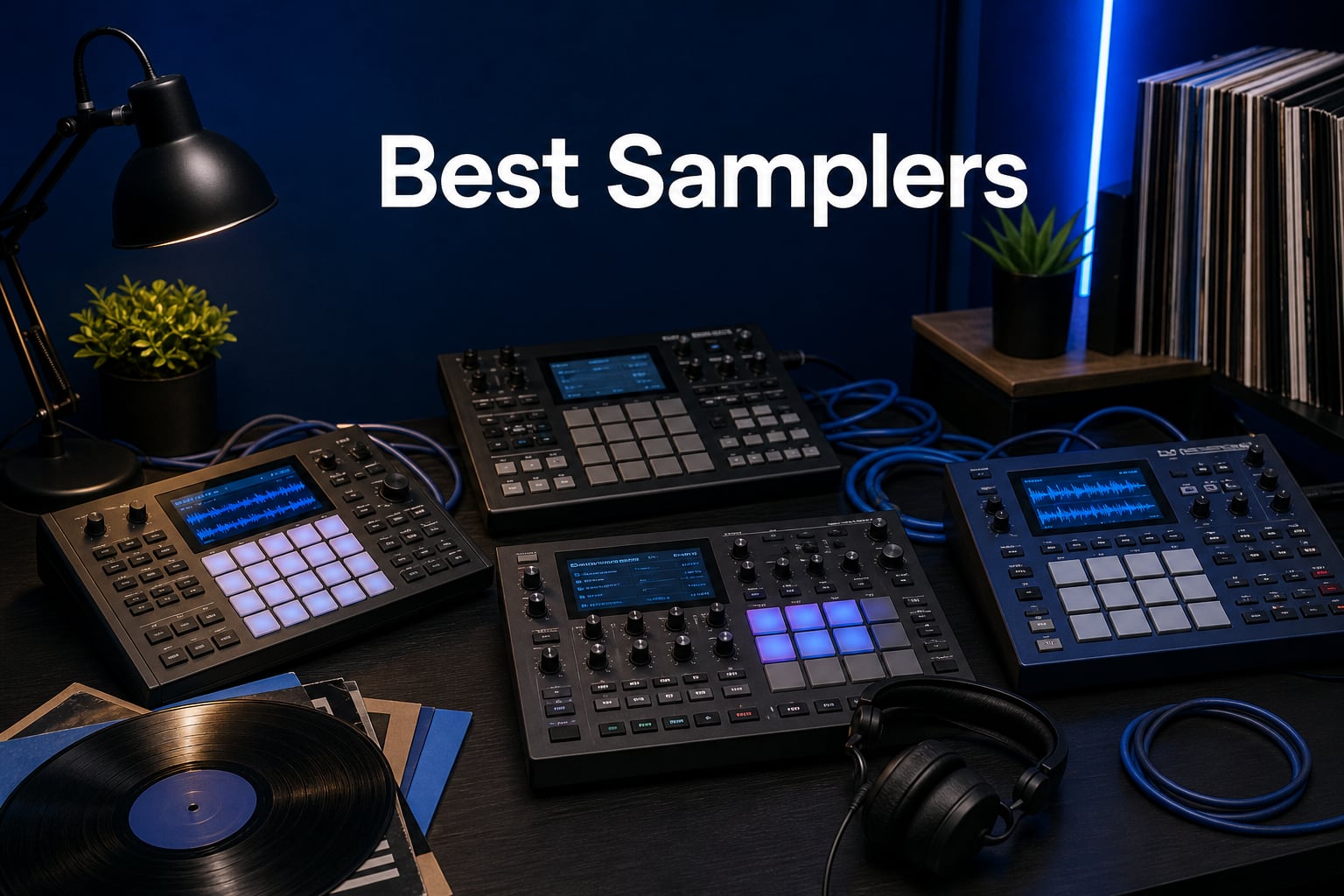
There is something special about chopping a sample with your hands, laying it across velocity-sensitive pads, and building a beat without ever touching a mouse. The best samplers in 2026 bring that tactile, hands-on magic back to music production, and our team has spent months testing the top hardware options to find which ones actually deliver.
Hardware samplers have evolved far beyond the classic Akai MPC and E-mu SP-1200 roots that defined hip-hop production decades ago. Today’s standalone units pack multi-core processors, touchscreens, battery power, and deep sequencing engines into devices that can replace an entire studio rig. Whether you are a finger drumming performer, a lo-fi beat maker, or a producer looking to step away from the screen, there is a sampler built for your workflow.
I have tested everything from pocket-sized units to full-blown production centers with 8-core processors. What I found is that the “best” sampler depends entirely on how you work. A live performer needs different features than a studio producer. A beginner wants something intuitive, while an experienced sound designer craves depth and parameter control.
This guide covers 12 of the best hardware samplers available right now. I will break down each one by sound engine, pad quality, sequencing depth, portability, and real-world workflow so you can find the machine that matches your creative process. Let me start with my top three picks, then dive into the full lineup.
Our Top 3 Tested Hardware Samplers for 2026
After testing all 12 samplers extensively, three stood out above the rest. These picks represent the best options across different budgets and use cases, from full production workstations to ultra-portable pocket samplers.

The Akai MPC Live III takes the top spot for producers who want a complete standalone production center. Its 8-core processor, 3D-sensing MPCe pads, and built-in battery make it the most capable sampler in this lineup. You get studio-grade connectivity, 128GB of internal storage, and the full MPC software ecosystem in one portable package.
For the best overall value, the Roland SP-404MKII remains the industry standard for performance-based beat making. It has been the weapon of choice for lo-fi producers, live performers, and sample-based artists for years, and the MKII upgrade brought 16GB of storage, 17 velocity-sensitive pads, and a brighter OLED display to an already legendary platform.
If you want to spend as little as possible while still getting a genuinely fun and capable sampler, the Teenage Engineering PO-33 K.O.! is my budget pick. This pocket-sized unit runs for a month on two AAA batteries and includes a built-in microphone for sampling anything around you. It is the perfect entry point for anyone curious about hardware sampling.
Comparing the Best Hardware Samplers Side by Side
Before diving into individual reviews, here is a quick comparison of all 12 samplers. This table covers the key specs that matter most when choosing a sampler, from track count and pad quality to power options and connectivity.
| Product | Details | |
|---|---|---|
| Akai MPC Live III |
|
Check Latest Price |
 Roland SP-404MKII Roland SP-404MKII |
|
Check Latest Price |
 Elektron Digitakt II Elektron Digitakt II |
|
Check Latest Price |
 Akai MPC One G2 Akai MPC One G2 |
|
Check Latest Price |
 Polyend Play Polyend Play |
|
Check Latest Price |
 Akai MPC Sample Akai MPC Sample |
|
Check Latest Price |
 Novation Circuit Rhythm Novation Circuit Rhythm |
|
Check Latest Price |
 Elektron Model:Samples Elektron Model:Samples |
|
Check Latest Price |
 TE EP-133 K.O. II TE EP-133 K.O. II |
|
Check Latest Price |
 Roland AIRA P-6 Roland AIRA P-6 |
|
Check Latest Price |
 Korg Volca Sample 2 Korg Volca Sample 2 |
|
Check Latest Price |
 TE PO-33 K.O.! TE PO-33 K.O.! |
|
Check Latest Price |
As you can see, the range is wide. You have full production workstations at the top, versatile grooveboxes in the middle, and ultra-portable pocket samplers at the entry level. Now let me walk through each one in detail.
1. Akai Professional MPC Live III – Standalone Production Powerhouse
Akai Professional MPC Live III Portable Music Production Center
8-core processor
8GB RAM
7-inch touchscreen
128GB storage
+ Pros
- Standalone operation with no computer required
- Powerful 8-core processor with 8GB RAM
- Expressive 3D-sensing MPCe pads
- Built-in microphone and speakers for portable sketching
- Rechargeable battery for true portability
- Comprehensive studio I/O with CV/Gate and MIDI
- 128GB internal storage expandable via SD or SSD
– Cons
- Premium price point
- Steep learning curve for beginners
- Heavier than portable alternatives at 3.9 kg
The MPC Live III is the sampler I reach for when I want to produce an entire track without opening my laptop. Akai packed an 8-core processor and 8GB of RAM into this device, which means it handles complex projects, plugin instruments, and heavy sample manipulation without breaking a sweat. This is a genuine production center, not just a beat machine.
What sets the Live III apart from every other sampler in this guide is its combination of power and portability. The built-in rechargeable battery gives you hours of untethered production time. The stereo monitors and internal microphone mean you can sketch ideas anywhere without external gear. And the 7-inch multi-touch display makes navigating the MPC software feel natural.
Standalone Power and Processing
The 8-core processor is the heart of this machine. I loaded projects with dozens of tracks, multiple plugin instruments, and heavy effects chains, and the Live III never stuttered. With 8GB of RAM behind it, you can run up to 32 plugin instances per project and stack samples without worrying about polyphony limits.
This processing power also enables real-time timestretching and pitch shifting that sounds clean and natural. For producers who work with vocal chops, melodic samples, or complex arrangements, the Live III handles it all in standalone mode. No computer required.
3D-Sensing MPCe Pads
The 16 MPCe pads are the most expressive pads I have used on any hardware sampler. They sense velocity, pressure, and X/Y position simultaneously, which opens up performance techniques that standard pads cannot match. You can bend pitch, modulate filters, and trigger multiple parameters from a single pad press.
For finger drummers, the responsiveness is outstanding. The pads have that classic MPC feel that producers have relied on for decades, but with a modern sensitivity that captures every nuance of your playing.
Connectivity and Studio Integration
The I/O on the Live III reads like a professional audio interface spec sheet. You get two combo XLR/TRS inputs, six TRS outputs, MIDI I/O, CV/Gate outputs for modular synth integration, and USB-C. This is a sampler that can serve as the centerpiece of a full hardware studio.
I connected it directly to my modular synth via CV/Gate, controlled external MIDI modules, and used the audio inputs to sample vinyl through a preamp. The integration possibilities are extensive, and the 128GB of internal storage means you have room for massive sample libraries.
Who Should Buy the MPC Live III
This is the sampler for serious producers who want a standalone production center that can replace a computer-based DAW. If you produce full tracks, work with plugins, and need professional connectivity, the Live III is the most complete option on this list.
It is not the right choice if you are just starting out, want something ultra-portable, or need a simple sample trigger for live performance. The learning curve is real, and the weight makes it less practical for casual on-the-go use.
2. Roland SP-404MKII – The Legendary Performance Sampler
Roland SP-404MKII Creative Sampler and Effector | The Legendary SP-404 Beat Maker with Some Serious Upgrades | Fast workflow | 16GB Internal Storage | 32-Voice Polyphony | 160 Samples Per Project
16GB storage
32-voice polyphony
17 RGB pads
Battery powered
+ Pros
- Industry-standard performance sampler
- 16GB internal storage for massive libraries
- 32-voice polyphony for complex arrangements
- 17 velocity-sensitive RGB pads
- Multiple power options including AA batteries
- Classic SP effects that define the lo-fi sound
- Pre-loaded with 144 professional samples
– Cons
- Limited stock availability
- Only one project active at a time
The Roland SP-404MKII needs little introduction among beat makers. The SP-404 series has been the backbone of lo-fi hip-hop, jazz-influenced beats, and sample-based performance for over a decade. The MKII version brought meaningful upgrades while preserving the workflow that made the original legendary.
What makes the SP-404MKII special is its focus on performance. This is not a full production workstation like the MPC. It is a performance instrument designed for triggering, effecting, and manipulating samples in real time. The 16GB of internal storage, 32-voice polyphony, and 17 velocity-sensitive pads give you plenty of room to build complex live sets.
Sound Engine and Effects
The effects section is where the SP-404MKII truly shines. Roland loaded it with the classic SP effects that producers obsess over, including the legendary DJFX Looper, vinyl simulation, and tape echo. These effects are not just functional additions. They are the sound that defines entire genres of sample-based music.
I spent hours just running samples through the filter section and feedback looper. The character and warmth these effects add cannot be replicated in software. For producers chasing that classic SP sound, the MKII delivers it authentically.
Performance Workflow
The 17 pads are arranged in the familiar SP-404 layout that performers know by heart. The no-click pad design feels smooth under the fingers, and the velocity sensitivity captures dynamics accurately. The OLED display makes waveform editing far more practical than on previous generations.
The pattern sequencer is straightforward but effective. You can build patterns, chain them, and trigger them live with the kind of spontaneity that makes SP-404 performances so compelling. This is a machine built for the stage as much as the studio.
Power and Portability
The SP-404MKII offers remarkable flexibility in power options. You can run it from an AC adapter, a USB-C connection, a mobile battery pack, or six AA batteries. This makes it one of the most portable professional samplers available. I regularly took it to sessions and gigs without worrying about power.
The compact size and light weight mean it fits in a backpack alongside other gear. For producers who perform live or move between studios, this portability is a major advantage over larger workstations.
Who This Fits Best
The SP-404MKII is the best sampler for live performers, lo-fi producers, and anyone who prioritizes hands-on sample manipulation over full-track production. If your workflow revolves around chopping, effecting, and performing samples, this is your machine.
It is less suited for producers who need linear arrangement, plugin support, or deep MIDI sequencing. The single-project limitation also means you need to plan your sets and sample loads carefully.
3. Elektron Digitakt II – Professional 16-Track Sound Design
Elektron Digitakt II 16-Track Drum Computer and Sampler
16 tracks
128-step sequencer
3 LFOs per track
Cast aluminum
+ Pros
- 16 versatile audio and MIDI tracks
- 128-step Elektron sequencer with Euclidean generator
- 3 assignable LFOs per track
- High-quality per-track effects
- Swappable filter algorithms
- Durable cast aluminum construction
- Song Mode for full compositions
– Cons
- Premium price for professional market
- No battery option
- Limited reviews as newer product
The Elektron Digitakt II is a serious piece of professional gear. Elektron built their reputation on deep sequencing engines and sound design tools that reward patient exploration, and the Digitakt II pushes that philosophy further with 16 tracks of audio and MIDI, a 128-step sequencer, and extensive modulation options.
This is not a sampler for casual beat making. It is a sound design instrument that happens to include sampling. If you enjoy crafting intricate patterns, exploring parameter locks, and pushing samples through complex modulation chains, the Digitakt II offers a depth that few competitors can match.
Sequencing Depth
The 128-step Elektron sequencer is the defining feature of this machine. Each step can have its own parameter locks, meaning you can program per-step changes to pitch, filter cutoff, LFO rate, effects sends, and dozens of other parameters. This level of control creates evolving, dynamic patterns that feel alive.
The Euclidean generator is a powerful addition that lets you create complex polyrhythms and glitch patterns with minimal effort. Combined with the four trig modes and Song Mode for arranging full compositions, the sequencing capabilities here are among the best in hardware.
Sound Shaping Tools
Each of the 16 tracks gets three assignable LFOs, swappable filter algorithms, and per-track effects including delay, reverb, chorus, bit reduction, sample reduction, and overdrive. The filter options are particularly impressive, with Base-width, Multi-mode, Low pass 4, Comb, EQ, and Legacy algorithms available.
I found myself spending entire sessions just exploring filter combinations and LFO routings. The Digitakt II rewards experimentation in a way that keeps the creative process fresh and surprising.
Build Quality
The cast aluminum body feels built to last decades. This is gear that can handle studio use, live performance, and travel without complaint. The knobs have a solid, precise feel, and the button layout follows Elektron’s established design language.
The lack of battery power means you are tethered to an outlet, which is a consideration if portability matters to you. But for studio and stage use where power is available, the build quality and durability are worth the trade-off.
Workflow Considerations
The Elektron workflow has a learning curve, but it is one of the most rewarding once mastered. Parameter locks, trig conditions, and pattern chaining become second nature after a few weeks. The Digitakt II is for producers who enjoy deep, methodical sound design.
If you want quick results with minimal menu diving, this may not be the right choice. But if you are willing to invest the time, the creative payoff is substantial.
4. Akai Professional MPC One G2 – Desktop Production Center
Akai Professional MPC One G2 Next-Generation Standalone Production Center
8-core processor
4GB RAM
7-inch touchscreen
USB-C connectivity
+ Pros
- Standalone operation with no laptop needed
- 4x faster processor than previous generation
- One-cable USB-C connectivity with 24×24 audio
- Modern track-based workflow with Linear Arranger
- Ableton Live integration
- Over 20GB factory content included
- Compact desktop form factor
– Cons
- Limited reviews due to new product
- No battery power option
The MPC One G2 is the second generation of Akai’s compact standalone production center. It shares the 8-core processor and 7-inch touchscreen of the MPC Live III but drops the battery, built-in speakers, and premium feature set. For desktop producers who want MPC power without paying for portability features they may not need, this is an excellent option.
The processor upgrade delivers four times the performance of the previous generation MPC One. That translates to smoother project handling, more plugin instances, and faster sample processing. The track-based workflow with Linear Arranger makes this feel like a proper DAW in a box.
Processing Power Upgrade
The jump to an 8-core processor with 4GB of RAM puts the MPC One G2 in serious production territory. I ran multi-track projects with dozens of samples, effects, and plugin instruments without performance issues. The 24×24 multichannel audio over USB-C means you can integrate it with your existing studio setup seamlessly.
Over 20GB of factory content comes pre-loaded, which gives you a massive library of sounds, kits, and instruments to start producing immediately. The included plugins cover everything from drums and bass to synthesizers and effects.
Track-Based Production Workflow
The Linear Arranger is a significant addition that addresses one of the main criticisms of earlier MPC models. You can now arrange full songs in a linear timeline, not just loop-based patterns. This makes the MPC One G2 viable as a complete production workstation for finished tracks.
Ableton Live integration means you can move projects between the MPC and your computer with minimal friction. For producers who use both hardware and software workflows, this interoperability is a major advantage.
Best Use Cases
The MPC One G2 is ideal for desktop producers who want standalone MPC power without the battery and speaker features of the Live III. If you produce primarily at a desk, have studio monitors already, and want the full MPC software ecosystem, this delivers the same processing performance in a more focused package.
The lack of battery power is the main limitation. If you need portable production, the Live III or MPC Sample are better fits. But for studio-bound beat makers, the One G2 is a compelling value.
5. Polyend Play – Creative Groovebox Sampler
Polyend Play Audio and MIDI Sampler, Sequencer, and Groovebox
8 audio tracks
8 MIDI tracks
64-step sequencer
16GB microSD included
+ Pros
- 8 audio tracks and 8 MIDI tracks for versatile production
- 64-step sequencer for complex patterns
- Built-in effects processing
- Compact and sturdy stainless steel design
- Includes 16GB microSD card
- Ableton Live compatible
- 2-year warranty
– Cons
- Limited stock availability
- Higher price point
- Learning curve for new users
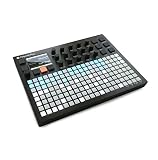
The Polyend Play brings a fresh perspective to hardware sampling. Instead of copying established workflows from Akai or Elektron, Polyend designed a groovebox that prioritizes creative pattern generation and quick results. The result is a sampler that feels different from anything else in this guide.
With 8 audio tracks and 8 polyphonic MIDI tracks, the Play offers serious production capacity in a compact, sturdy package. The stainless steel construction and touch control interface give it a premium feel that justifies its position in the mid-range of this lineup.
Track Architecture
The dual track system sets the Play apart from most samplers in its category. Audio tracks handle your samples and recorded sounds, while MIDI tracks control external synths, drum machines, or software instruments. This gives you 16 total tracks of creative possibilities.
I found the track layout intuitive once I understood the color-coding system. Each track type has its own workflow, and switching between audio and MIDI feels natural. The 8-channel mixer gives you hands-on control over levels, panning, and effects sends.
Sequencing Power
The 64-step sequencer offers plenty of resolution for intricate patterns. Polyend’s approach to sequencing includes probability, velocity, micro-timing, and per-step parameter locks. The randomization features are particularly inspiring for breaking creative blocks and generating unexpected ideas.
Pattern chaining and song arrangement are straightforward, and the built-in effects add character and depth without needing external processing. The Play is designed for rapid idea generation, and it delivers on that promise.
Who Should Consider It
The Polyend Play suits producers who want a groovebox that encourages experimentation and fast results. If you enjoy generative techniques, randomization, and a workflow that differs from traditional MPC or Elektron paradigms, this is worth serious consideration.
The learning curve and limited stock availability are factors to weigh. But for creative producers looking for something outside the mainstream, the Play offers a distinctive and rewarding experience.
6. Akai Professional MPC Sample – Portable Entry-Level MPC
Akai Professional MPC Sample Portable Sampler
16 MPC pads
Built-in speaker
Battery powered
microSD storage
+ Pros
- Fully portable with rechargeable battery
- Built-in speaker and microphone
- Outstanding value for beginners
- Intuitive workflow for all skill levels
- 100+ factory kits included
- microSD card storage
- 4 onboard FX processors with 60 effect types
– Cons
- Limited to 16 pads standard layout
- Smaller display than higher-end MPC models
The MPC Sample is Akai’s most accessible standalone sampler, and after testing it extensively, I can see why it ranks as the number one best-seller in the audio sampler category. It brings the core MPC workflow into a compact, battery-powered device that costs a fraction of the Live III or One G2.
This is the sampler I recommend to most beginners and intermediate producers. You get 16 responsive MPC pads, a built-in speaker, an internal microphone, and a rechargeable battery in a device weighing under one kilogram. It is the most portable way to experience genuine MPC workflow.
Portable Beatmaking
The battery life and built-in speaker make the MPC Sample genuinely portable in a way that larger MPCs are not. I carried it on commutes, used it on the couch, and sketched beats in hotel rooms. The compact size fits in a small bag, and the 2.4-inch color display is surprisingly usable for its size.
The internal microphone lets you sample sounds from your environment instantly. No cables, no interfaces, no setup. Just hit record and capture. For field recording and on-the-go sampling, this convenience is hard to overstate.
Sound Quality and Effects
Despite its compact size, the MPC Sample does not skimp on sound quality. The 4 internal FX processors with 60 effect types give you professional-grade processing tools. Over 100 factory kits come pre-loaded, covering everything from classic drum sounds to modern electronic textures.
The 16 pads maintain the MPC feel that the brand is known for. They are responsive, velocity-sensitive, and satisfying to play. For finger drumming practice and sample chopping, they perform well within the device’s intended scope.
Value Proposition
For what you get, the MPC Sample delivers exceptional value. You get standalone operation, battery power, built-in monitoring, and the MPC software ecosystem in a single portable device. It is the sampler I recommend most often to people asking where to start with hardware beat making.
The main trade-offs are the smaller display and standard 16-pad layout. If you need deeper sequencing, more tracks, or a larger touchscreen, the MPC One G2 or Live III are the logical upgrades. But for most beat makers, the Sample covers the essentials beautifully.
7. Novation Circuit Rhythm – Grid-Based Beat Maker
Novation Circuit Rhythm Sampler and Groovebox
8 sample tracks
Performance FX
Direct recording
USB-C connectivity
+ Pros
- Eight flexible sample tracks
- Performance FX including lo-fi tape and beat repeat
- Direct recording from phone turntable or synths
- 32-step patterns chainable for up to 256 steps
- 3-year warranty included
- Hands-on grid sequencer
– Cons
- Some users report reliability issues
- Limited stock availability
The Novation Circuit Rhythm is a grid-based sampler and groovebox that emphasizes hands-on beat making and live performance. With eight sample tracks, performance effects, and direct recording capabilities, it covers a lot of creative ground in a compact, lightweight package.
Novation designed the Circuit Rhythm for producers who want immediate results without deep menu diving. The grid-based workflow is intuitive, and the performance effects add a live dimension that makes this sampler as suited to the stage as the studio.
Grid Workflow
The hands-on sequencer uses a grid layout that makes pattern creation fast and visual. You can record in quantized mode for tight results or go off-grid for a more human feel. The 32-step patterns chain together for up to 256 steps per track, giving you plenty of room for evolving arrangements.
I found the grid approach particularly effective for drum programming. Seeing your pattern laid out visually helps you understand rhythm and arrangement in a way that linear sequencers cannot always match.
Performance Effects
The performance effects are a highlight of the Circuit Rhythm. Lo-fi tape saturation, beat repeat, and other real-time effects let you transform patterns during live performance. These are not subtle embellishments. They are dramatic sound-shaping tools that can completely change the character of your beats.
For producers who perform live, these effects give you the kind of spontaneous control that keeps sets fresh and unpredictable. Each performance can be genuinely different from the last.
Sampling Capabilities and Reliability
The direct recording feature lets you sample from your phone, a turntable, synthesizers, or any line-level source. This flexibility means you can build sample libraries from vinyl, streaming audio, or your own hardware instruments without needing a separate recording setup.
The reliability concerns noted by some users are worth mentioning. While most units perform well, the small percentage of one-star ratings suggests some quality control variability. Novation backs it with a 3-year warranty, which provides reasonable protection.
8. Elektron Model:Samples – Compact Six-Track Groovebox
Elektron Model:Samples Six Track Sample Based Groovebox
6-track groovebox
96 patterns
Velocity pads
MIDI I/O
+ Pros
- Compact and lightweight for studio and live use
- 96 projects with 96 patterns each
- 64 MB sample memory with 1 GB storage
- Six velocity-sensitive pads
- Resonant multimode filter per track
- Assignable LFO per track
- MIDI I/O for controlling external hardware
– Cons
- Limited sample memory at 64 MB
- Limited stock availability
The Elektron Model:Samples is the entry point into the Elektron ecosystem. It brings the core of Elektron’s sequencing philosophy into a compact, lightweight groovebox that is far more approachable than the Digitakt II. For producers who want Elektron’s workflow without the premium investment, this is the gateway.
Six tracks may seem limited compared to 16-track competitors, but Elektron’s per-step parameter locking system means each track can carry enormous variation. A single track can produce patterns that sound like multiple instruments working together.
Sound Engine
Each of the six tracks features a resonant multimode filter and an assignable LFO. While the modulation options are simpler than the Digitakt II’s three LFOs per track, they still provide meaningful sound-shaping capability. The filter sounds musical and responsive, cutting and boosting frequencies with precision.
The sample engine handles audio cleanly. With 64 MB of sample memory and 1 GB of storage, you can load a respectable library of sounds. The limitation becomes apparent when working with longer samples or large multi-sampled instruments, but for beat making and pattern construction, it is generally sufficient.
Sequencing Features
The Elektron sequencer is the star here, even in this simplified form. Parameter locks let you program per-step changes to any parameter. The 96 projects, each with 96 patterns, give you vast creative space. Real-time and grid recording modes accommodate different working styles.
I found the learning curve gentler than the Digitakt II. The Model:Samples is designed to be approachable while still teaching you the Elektron workflow. For producers considering a future upgrade to Digitakt or Octatrack, this is excellent preparation.
Portability and Build
At just 1.8 pounds, the Model:Samples is one of the lightest full-featured grooveboxes available. It runs on USB power, making it easy to integrate with a laptop setup or a USB power bank for portable use.
The build is plastic rather than the cast aluminum of higher-end Elektron products. This keeps the weight down but means it is less rugged than its more expensive siblings. For studio use and careful transport, the construction is perfectly adequate.
9. Teenage Engineering EP-133 K.O. II – Portable Sampler with Punch
teenage engineering EP–133 K.O. II 128MB sampler, drum machine and sequencer with built-in microphone and effects
128MB memory
999 sample slots
Built-in mic
Battery powered
+ Pros
- Double memory at 128MB compared to previous version
- 4 groups x 99 patterns for extensive sequencing
- 12 punch-in effects plus 6 built-in effects
- Built-in microphone for instant sampling
- Song mode for arranging tracks up to 9801 bars
- Portable with AAA battery or USB-C power
– Cons
- Not Prime eligible
- Newer product with limited review count
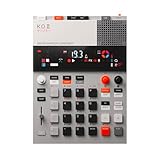
The Teenage Engineering EP-133 K.O. II takes the pocket operator concept and scales it up into a serious portable sampler. With 128MB of sample memory, 999 sample slots, and a built-in microphone, it is designed for producers who want to sample, sequence, and arrange complete tracks on a device that runs on AAA batteries.
The OS 2.0 update brought significant improvements including resampling, chopping, and song mode. These additions transformed the EP-133 from a fun toy into a genuinely capable production tool. The song mode can arrange tracks up to 9,801 bars, which is enough for complete compositions.
Sampling and Sound Design
The built-in microphone is the EP-133’s secret weapon. You can sample any sound in your environment instantly, then chop it, pitch it, and sequence it into a beat. This immediacy captures a type of creative energy that is difficult to replicate with larger, more complex setups.
The 12 punch-in effects are performance-oriented, designed for real-time manipulation during playback. Combined with 6 built-in effects, you have a solid palette of sound-shaping tools. The resampling feature lets you capture your effected output and use it as a new sample, creating layered, complex textures.
Sequencing and Song Mode
The 4-group, 99-pattern sequencer provides plenty of arrangement space. Each group can hold different sample content, and patterns chain together to build full tracks. The song mode elevates this from a pattern-based groovebox to a genuine composition tool.
I was impressed by how quickly I could build complete tracks on the EP-133. The workflow encourages fast iteration, and the limited screen real estate forces creative decisions rather than endless tweaking. Sometimes constraints produce better music.
Build and Feel
The EP-133 has a distinctive aesthetic that divides opinion. The plastic body feels lightweight, and the rubberized pads have a unique tactile character. It runs on four AAA batteries or USB-C power, making it genuinely portable.
For producers who want a capable sampler that fits in a small bag and runs on batteries, the EP-133 K.O. II occupies a unique niche. It is more capable than a pocket operator but more portable than a full groovebox.
10. Roland AIRA Compact P-6 – Pocket Granular Sampler
Roland AIRA Compact P-6 Creative Sampler | Granular Sound Design | Powerful Sequencer | Onboard Keyboard | Custom Loops | Built-In Mic | Hands-on Effects
Pocket-size
64-step sequencer
Built-in mic
Granular engine
+ Pros
- Pocket-size and highly portable
- Built-in microphone for quick sampling
- 64-step sequencer with hands-on controls
- Granular sound engine with extensive parameters
- Dedicated filter and envelopes per sample
- USB-C audio and MIDI connectivity
- Resampling for sound design
– Cons
- Limited pad count
- Menu navigation can be complex
The Roland AIRA Compact P-6 is a pocket-sized sampler that punches far above its weight class. What makes it special is the granular sound engine, which lets you break samples into tiny grains and manipulate them in ways that go far beyond traditional sample playback. For sound designers and experimental producers, the P-6 offers creative depth in an impossibly small package.
At just 0.67 pounds, the P-6 is one of the most portable samplers in this guide. It features a built-in microphone, USB-C connectivity, and approximately 3 hours of battery life. Roland packed professional features into a device that fits in your hand.
Granular Sound Engine
The granular engine is the standout feature. Parameters for detuning, head position, head speed, spread, and grain control let you transform any sample into evolving textures, pads, and atmospheric sounds. This is the kind of sound design tool that usually requires software plugins.
I spent hours feeding simple drum loops through the granular engine and producing completely unrecognizable, beautiful textures. For ambient producers, film scorers, and experimental electronic musicians, this capability alone justifies the P-6’s place in your setup.
Sampling Workflow
The built-in microphone makes capturing sounds effortless. The chop function slices samples into segments automatically, and the Step Sampling mode lets you create split samples for more complex arrangements. Resampling lets you capture internal audio to build layered sounds.
Each sample gets dedicated filter and envelope controls, which is impressive for a device this size. The 20 mega effects provide additional processing options, and the P-6 Sample Tool software for macOS and Windows makes sample management straightforward.
Portability and Power
The 3-hour battery life is adequate for most sessions but shorter than some competitors. The USB-C connectivity handles both audio and MIDI, which simplifies integration with other gear and computers. The compact size means you can carry it anywhere.
The menu navigation takes some getting used to given the limited physical controls. But once you learn the layout, the workflow becomes efficient. For a pocket sampler with this much sound design power, the trade-offs are reasonable.
11. Korg Volca Sample 2 – Budget Sample Sequencer
Korg Volca Sample 2 Digital Sample Sequencer Drum Machine w/Pattern Chain Mode and 16-step Sequencer
8-voice polyphony
16-step sequencer
Digital reverb
Under 1 pound
+ Pros
- Compact and lightweight under 1 pound
- 8-voice polyphony for layered beats
- 16-step sequencer with pattern chain
- Double memory of previous models
- Digital reverb and double filter
- Dedicated Librarian software
- Micro USB for DAW integration
– Cons
- Bass wood body may be sensitive to impacts
- Quality concerns reported by some users
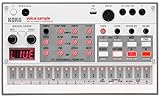
The Korg Volca Sample 2 is one of the most affordable entry points into hardware sampling. As part of Korg’s beloved Volca series, it brings 8-voice polyphony, a 16-step sequencer, and double the sample memory of the original Volca Sample. For producers on a tight budget, this is where the hardware sampler journey can begin.
The Volca Sample 2 does not try to be a full production workstation. It is a focused sample sequencer designed for quick beat creation and pattern experimentation. The integrated speaker, battery power option, and sub-one-pound weight make it as portable as samplers get.
Sound Engine and Effects
The 8-voice polyphony gives you enough voices for layered drum patterns and simple melodic sequences. The digital reverb adds spatial depth, and the double filter provides more sound-shaping control than the original Volca Sample. These improvements make the Sample 2 a more versatile instrument than its predecessor.
The sound quality is solid for its category. Samples come through clean, and the effects add genuine character. You are not getting the pristine audio quality of a Digitakt or MPC, but for beat sketching and creative exploration, the Volca Sample 2 delivers.
Sequencing Features
The 16-step sequencer includes pattern chain mode and start delay functions. You can build patterns, chain them into longer sequences, and create evolving arrangements. The sequencer is straightforward and accessible, making it ideal for beginners learning the fundamentals of step sequencing.
The dedicated Librarian software for Mac and PC is essential for managing samples. It lets you load your own sounds onto the Volca Sample 2, organize them, and swap sample sets quickly. Without this software, you are limited to factory content.
Value Assessment
For what you pay, the Volca Sample 2 offers remarkable value. It is not the most powerful or deepest sampler in this guide, but it provides a genuine hardware sampling experience at a price point that makes experimentation low-risk.
The quality concerns noted by some users are worth monitoring. The bass wood body requires some care, and the 8 percent one-star review rate suggests occasional issues. But for the majority of users, the Volca Sample 2 delivers a fun, accessible sampling experience.
12. Teenage Engineering PO-33 K.O.! – Ultra-Portable Pocket Sampler
teenage engineering pocket operator PO-33 K.O.! micro sampler and drum machine with built-in microphone, sequencer and effects
40-second memory
Built-in mic
16 effects
1-month battery
+ Pros
- Pocket-sized and ultra-portable design
- Built-in microphone for sampling anything
- 40 second sample memory across 16 slots
- 16 built-in effects
- Melodic and drum modes
- Very affordable
- Excellent battery life of 1 month
– Cons
- Limited 40-second sample memory
- Small form factor may not suit all users
The Teenage Engineering PO-33 K.O.! is the most affordable and portable sampler in this guide, and it is also one of the most fun devices I have ever tested. This pocket-sized sampler runs on two AAA batteries for a month, has a built-in microphone, and packs 16 effects into a board that weighs practically nothing.
The PO-33 is not a production workstation. It is a creative tool for capturing ideas, experimenting with samples, and making beats wherever you happen to be. The 40-second sample memory is limited, but within that constraint, the PO-33 delivers a genuinely engaging sampling experience.
Sampling On the Go
The built-in microphone is the PO-33’s defining feature. You can sample any sound around you in seconds. A car horn, a conversation, a bird call, a drum loop from your phone speaker. The PO-33 captures it all and lets you chop it into melodic or drum samples immediately.
The 8 melodic sample slots and 8 drum slots give you enough voices to build complete patterns. The melodic mode enables chromatic playback, so your sampled sounds can form basslines, melodies, and chord parts. The drum mode handles rhythm and percussion.
Sound Capabilities
The 16 built-in effects add character and variation to your samples. These are simple effects by professional standards, but they provide meaningful sound-shaping options in a device this small. The effects include filters, delays, and modulation options that can transform a basic sample into something interesting.
The sound quality is lo-fi by design. The PO-33 has a distinctive character that many producers actually prefer for certain genres. It adds grit and warmth that can sit beautifully in lo-fi hip-hop, experimental electronic, and sample-based music.
Battery and Portability
The 1-month battery life on two AAA batteries is remarkable. This is a sampler you can carry in your pocket every day without thinking about charging. The built-in speaker and headphone output mean you can use it anywhere, anytime.
For anyone curious about hardware sampling but unwilling to invest heavily, the PO-33 is the perfect starting point. It teaches the fundamentals of sampling, sequencing, and beat making in a format that is impossible to resist.
How to Choose the Right Hardware Sampler
Choosing among the best samplers comes down to understanding your workflow, experience level, and creative goals. After testing all 12 devices in this guide, I identified six key factors that should drive your decision. Let me walk through each one.
Standalone vs Controller Samplers
Standalone samplers operate without a computer. The MPC Live III, MPC One G2, MPC Sample, SP-404MKII, Digitakt II, and others in this guide all work independently. This is essential if you want to produce away from your screen or perform live without a laptop.
Controller-based samplers require a connected computer. None of the samplers in this guide are controllers only, but it is a distinction worth understanding. All 12 picks here offer at least some standalone capability, which is what makes them true hardware samplers.
Pad Quality and Count
Pads are your primary interface with the sampler. The MPC Live III’s MPCe pads with 3D sensing offer the most expressive performance. The SP-404MKII’s 17 velocity-sensitive RGB pads are tuned for live performance. Budget options like the PO-33 use simpler buttons that still work but lack velocity sensitivity.
Consider how many pads you need. Sixteen pads is the industry standard for beat making, but some compact samplers use fewer. If finger drumming is your main technique, prioritize pad count and quality above most other specs.
Sequencing Depth
Sequencing is where samplers differentiate themselves most significantly. The Elektron Digitakt II offers a 128-step sequencer with per-step parameter locks, trig conditions, and a Euclidean generator. The MPC line provides both pattern-based and linear arrangement workflows. Simpler devices like the Volca Sample 2 offer basic 16-step sequencing.
If you produce complex, evolving patterns, prioritize sequencer depth. The Elektron machines and MPC workstations lead this category. If you prefer simple, immediate beat making, the SP-404MKII, Circuit Rhythm, and pocket samplers get you there faster.
Portability and Power Options
Battery-powered samplers change how and where you create. The MPC Live III, MPC Sample, SP-404MKII, EP-133 K.O. II, PO-33, and P-6 all offer battery operation. The Digitakt II and MPC One G2 require AC power, which limits where you can use them.
Weight matters too. The PO-33 weighs a few ounces. The MPC Live III weighs nearly 4 kilograms. Think about whether you need a sampler for the studio, the stage, the couch, or your daily commute.
Storage and Sample Management
Sample storage ranges from the PO-33’s 40 seconds to the MPC Live III’s 128GB expandable to terabytes via SSD. Consider how many samples you work with and whether you need to carry large libraries. MicroSD storage on the MPC Sample, SP-404MKII, and others provides a good balance of capacity and portability.
Sample management software also varies. The MPC ecosystem offers desktop software for organization. The Volca Sample 2 has dedicated Librarian software. Elektron provides Overbridge for integration. Factor software workflow into your decision.
Effects and Sound Design Tools
Built-in effects define the sonic character of many samplers. The SP-404MKII’s classic SP effects are legendary for lo-fi production. The Digitakt II’s per-track effects and swappable filters offer professional sound design. The P-6’s granular engine opens entirely different creative possibilities.
Think about what effects matter to your genre. Lo-fi producers need tape saturation and vinyl effects. Sound designers need granular processing and modulation. Performers need real-time effects they can trigger live. Match the effects capabilities to your creative needs.
FAQs
What is the easiest sampler to use?
The Akai MPC Sample is the easiest standalone sampler for beginners, offering intuitive MPC workflow in a compact device with a built-in speaker and microphone. For absolute simplicity at a lower price, the Teenage Engineering PO-33 K.O.! is the most approachable option with its minimal controls and instant sampling via built-in microphone. The Korg Volca Sample 2 is another beginner-friendly choice with its straightforward 16-step sequencer.
Are hardware samplers worth it in 2026?
Yes, hardware samplers are worth it in 2026 for producers who want tactile, screen-free music creation, live performance capabilities, and workflow constraints that boost creativity. Unlike software plugins, hardware samplers provide physical pads, dedicated controls, and standalone operation that many producers find more inspiring and immediate. They also hold resale value well, particularly established models like the SP-404 and MPC series.
Which is better: MPC or SP-404?
The MPC is better for full-track production with its sequencing depth, plugin support, and linear arrangement capabilities. The SP-404 is better for live performance and sample-based beat making with its signature effects and performance-oriented workflow. Both are excellent samplers, but they serve different needs. Choose MPC for studio production and SP-404 for performance and lo-fi aesthetics.
Can I use a hardware sampler without a computer?
Yes, all 12 samplers in this guide offer standalone operation without a computer. Devices like the Akai MPC Live III, MPC One G2, Elektron Digitakt II, and Roland SP-404MKII are designed as complete production tools that work independently. You only need a computer for initial setup, sample transfer, or firmware updates on most models.
What is the best sampler for beginners?
The best sampler for beginners is the Akai MPC Sample, which combines genuine MPC workflow with portability and an approachable learning curve. For a lower budget, the Teenage Engineering PO-33 K.O.! is the most accessible entry point available. The Korg Volca Sample 2 is another strong beginner option with its simple sequencer and dedicated sample management software.
Final Thoughts on the Best Samplers for 2026
After testing all 12 samplers in this guide, the right choice comes down to who you are as a producer. If you want a complete standalone production center with professional power, the Akai MPC Live III is unmatched. If live performance and lo-fi aesthetics define your sound, the Roland SP-404MKII remains the gold standard. And if you are just starting your hardware sampling journey, the Teenage Engineering PO-33 K.O.! delivers incredible fun and learning value at an unbeatable price point.
For studio producers who do not need battery power, the Akai MPC One G2 delivers the same processing power as the Live III in a more focused desktop package. Sound designers who crave deep modulation should explore the Elektron Digitakt II. And portable producers have excellent options across price points with the MPC Sample, EP-133 K.O. II, and P-6.
The best samplers in 2026 prove that hardware music creation is thriving. Whatever your budget or workflow, one of these machines will transform how you make music. Pick the one that matches your creative needs, and start chopping.