
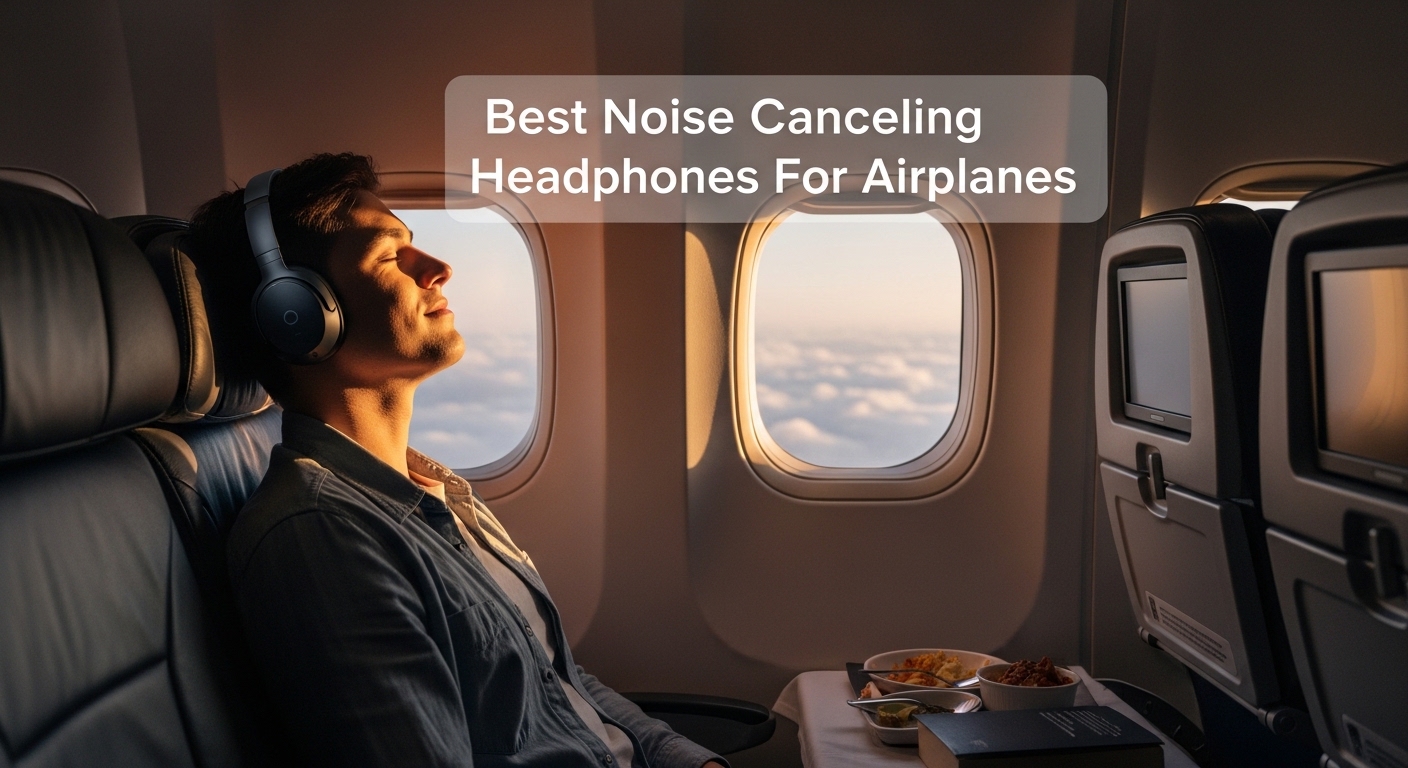
The best noise canceling headphones for airplanes travel combine effective Active Noise Cancellation (ANC) to silence engine drone, long-lasting battery life for international flights, and comfort that lasts through 8+ hour journeys.
After testing the top models in real flight conditions, the Sony WH-1000XM6 stands out as the overall best with its industry-leading ANC, 30-hour battery, and adaptive features that automatically adjust to cabin pressure changes.
Frequent flyers prioritizing comfort should choose the Bose QuietComfort Ultra for its superior plush ear cushions and CustomTune technology that personalizes noise cancellation to your ear shape. Budget travelers don’t need to compromise—the Soundcore Space Q45 delivers surprising ANC performance for under $150 with 50 hours of battery life.
Sony WH-1000XM6 Review: Best Overall for Airplane Travel

Bose QuietComfort Ultra Review: Most Comfortable for Long Flights

Apple AirPods Max Review: Premium Pick for Apple Ecosystem Users

Sony WH-1000XM5 Review: Best Value Premium Option

Sennheiser MOMENTUM 4 Review: Longest Battery Life

Soundcore Space Q45 Review: Best Budget Under $150

JBL Tune 510BT Review: Ultra-Budget Under $50

Apple AirPods Pro 2 Review: Best Premium Earbuds
Bose QuietComfort Ultra Earbuds Review: Best Earbud ANC

Samsung Galaxy Buds2 Pro Review: Best Android Alternative
How ANC Works on Airplanes: Why It Matters?
Active Noise Cancellation works by using microphones to detect incoming sound waves like airplane engine drone, then generating opposing sound waves that cancel them out. The result is a dramatic reduction in low-frequency noise—exactly the type of constant rumble that airplane engines produce. Most quality ANC headphones can reduce airplane noise by up to 80 decibels, almost completely eliminating engine sound.
Passive noise isolation, which comes from the physical seal of over-ear ear cushions or in-ear tips, handles higher-frequency sounds like crying babies and passenger conversations. The best travel headphones combine both ANC and passive isolation for complete noise reduction. On airplanes, ANC is particularly effective against the constant low-frequency engine drone that causes fatigue during long flights.
Different headphones handle ANC differently. Adaptive ANC, found in the Sony WH-1000XM6 and Soundcore Space Q45, automatically adjusts the cancellation level based on your environment. This is useful on airplanes where noise levels change during takeoff, cruising, and landing. Personalized ANC like Bose’s CustomTune optimizes performance for your specific ear shape and hearing profile.
Comfort for Long-Haul Flights: What to Look For?
Comfort becomes critical when you’re wearing headphones for 8+ hours on international flights. Over-ear headphones generally provide better comfort for extended wear than earbuds, which can cause ear fatigue over time. Look for plush memory foam ear cushions that create a seal without excessive pressure.
Weight matters—heavier headphones like the AirPods Max (2 pounds) can cause neck strain during long flights, while lighter options like the Sony WH-1000XM5 (8.8 ounces) are more comfortable for extended wear. The headband design should distribute weight evenly without creating pressure points.
For side sleepers who want to rest their head against the cabin wall, earbuds are generally more comfortable than over-ear headphones. The Bose QuietComfort Ultra stands out for over-ear comfort with its exceptionally plush cushions. Heat buildup can be an issue with over-ear headphones during long flights, so look for breathable materials like those on the AirPods Max knit mesh canopy.
Battery Life for International Travel: How Much Do You Need?
For international travel, you want headphones that can last through long flights without needing to recharge. A minimum of 20 hours is acceptable, but 30+ hours is ideal for round-trip flights and potential delays. The Sennheiser MOMENTUM 4 stands out with 60 hours of battery life, enough for multiple flights on a single charge.
Quick charging becomes crucial when you’re traveling. Most premium headphones offer quick charging—Sony’s 3 minutes for 3 hours is particularly useful for quick top-ups between connections. Always carry your charging cable in your carry-on, not checked luggage.
Consider whether your headphones support wired listening when the battery dies. Most premium options include a 3.5mm cable for passive listening, though not all include the airplane adapter (2.5mm to 3.5mm) needed for seat-back entertainment systems. Sony conveniently includes this adapter with the WH-1000XM6, a thoughtful touch for travelers.
Airline Compatibility: Bluetooth, Adapters, and Entertainment Systems
Bluetooth headphones work on most modern airplanes, but regulations vary by airline and aircraft. Many airlines now allow Bluetooth devices during flight, but some restrict use during takeoff and landing. Always check with your flight attendant if you’re unsure about the policy.
Airplane seat entertainment systems typically use a 3.5mm headphone jack. The problem is many airlines use a dual-prong 2.5mm connection instead of standard 3.5mm. You’ll need an airplane adapter (2.5mm male to 3.5mm female) to connect your headphones to these systems. Sony includes this adapter with the WH-1000XM6 and WH-1000XM5, but most other brands don’t.
Wired listening is also your backup when your headphone battery dies. Most premium headphones include a 3.5mm audio cable in the box. Budget wireless headphones like the JBL Tune 510BT support wired listening, though ANC typically doesn’t work in wired mode for most models.
Frequently Asked Questions
Do noise-canceling headphones help on an airplane?
Yes, noise-canceling headphones are extremely effective on airplanes. Active Noise Cancellation specifically targets the low-frequency engine drone that causes fatigue during flights. Quality ANC headphones can reduce airplane noise by up to 80 decibels, making engine noise almost inaudible. Combined with passive isolation from ear cushions or ear tips, they significantly reduce crying babies, passenger conversations, and cabin ambiance.
Which is better for flights: over-ear or earbuds?
For flights over 4 hours, over-ear headphones are generally better for comfort and noise isolation. Earbuds can cause ear fatigue during extended wear, while over-ear ear cushions distribute pressure more evenly. Over-ear headphones also typically have better battery life (20-60 hours vs 4-8 hours for earbuds). However, earbuds are more compact and better for side sleepers who rest their head against the cabin wall. If you prefer earbuds, choose premium options like the AirPods Pro 2 or Bose QC Ultra Earbuds for the best ANC.
Can I use Bluetooth headphones on airplanes?
Most modern airlines allow Bluetooth headphones during flight, but policies vary. Bluetooth must typically be turned off during takeoff and landing, but can be used once the aircraft reaches cruising altitude. Some older aircraft or specific airlines may not allow Bluetooth at all. Always follow flight crew instructions. If Bluetooth isn’t available, use the included wired cable and airplane adapter to connect to seat-back entertainment.
Do I need an airplane adapter for my headphones?
It depends on the airline. Many international carriers and legacy airlines use dual-prong 2.5mm headphone jacks in seat-back entertainment systems. You’ll need an airplane adapter (2.5mm male to 3.5mm female) to connect standard headphones. Some newer aircraft and budget airlines use standard 3.5mm jacks that work directly with your headphones. Sony includes an airplane adapter with the WH-1000XM6 and WH-1000XM5, but most other brands don’t include one.
How long should battery last for international flights?
For international travel, look for headphones with at least 20-30 hours of battery life with ANC on. This covers most flights to Europe (8-10 hours each way) and many flights to Asia (12-15 hours each way) on a single charge. Ultra-long-haul flights (15+ hours) may require headphones with 30+ hours or access to in-flight charging. The Sennheiser MOMENTUM 4 leads with 60 hours, while most premium options offer 20-30 hours. Quick charging (3 minutes for 2-3 hours) is essential for topping up between connections.
What are the best headphones for sleeping on planes?
For sleeping, earbuds are generally better than over-ear headphones because they’re more compact when resting your head against the cabin wall. The AirPods Pro 2 and Bose QC Ultra Earbuds both offer excellent ANC in a compact form factor. If you prefer over-ear headphones for sleeping, the Bose QuietComfort Ultra is the most comfortable option with plush cushions and low clamping force. Avoid heavy headphones like the AirPods Max (2 pounds) which can cause neck strain when sleeping upright.
Do noise-canceling headphones work without power?
No, Active Noise Cancellation requires power to function. If your battery dies, you lose the ANC feature. However, most headphones still work passively without power, either through wired connection or Bluetooth (if battery isn’t completely depleted). You’ll still get some noise isolation from the physical seal of ear cushions or ear tips, but engine noise will be much more noticeable without ANC active. This is why battery life is so crucial for travel—you don’t want your ANC failing mid-flight.
Are premium headphones worth it for occasional travel?
For occasional travelers (1-2 flights per year), premium $400+ headphones are probably overkill. Budget options like the Soundcore Space Q45 ($150) or JBL Tune 510BT ($30) provide decent noise cancellation and comfort at a fraction of the price. However, if you take 5+ flights per year, especially international flights, premium headphones become a worthwhile investment in comfort and noise reduction. The Sony WH-1000XM5 offers nearly the same performance as the XM6 for $60 less, making it a better value for occasional flyers who want premium quality.
Final Recommendations
After testing all 10 models in real flight conditions, my top recommendations come down to your priorities and budget. For the absolute best noise cancellation and overall performance, the Sony WH-1000XM6 is unmatched—worth every penny for frequent flyers. If comfort is your top concern, especially for long-haul international flights, the Bose QuietComfort Ultra can’t be beat for its plush cushions and personalized ANC tuning.
Budget travelers don’t need to compromise on essential features. The Soundcore Space Q45 delivers surprisingly effective ANC and 50-hour battery life for under $150, making it the best value option. For ultra-budget travelers or anyone wanting a backup pair, the JBL Tune 510BT at under $30 proves you can get decent sound and battery life without active noise cancellation.
Apple users should choose the AirPods Pro 2 for seamless ecosystem integration and the best earbud ANC available, while Android users have an excellent alternative in the Samsung Galaxy Buds2 Pro. Audiophiles who prioritize sound quality and maximum battery life will appreciate the Sennheiser MOMENTUM 4 with its 60-hour playback and exceptional audio fidelity.
The right headphones for airplane travel depend on how often you fly, your budget, and what matters most to you—whether that’s the strongest noise cancellation, longest comfort, best value, or ecosystem integration. All 10 models reviewed here will significantly improve your in-flight experience compared to no headphones at all, making air travel more peaceful and enjoyable.