
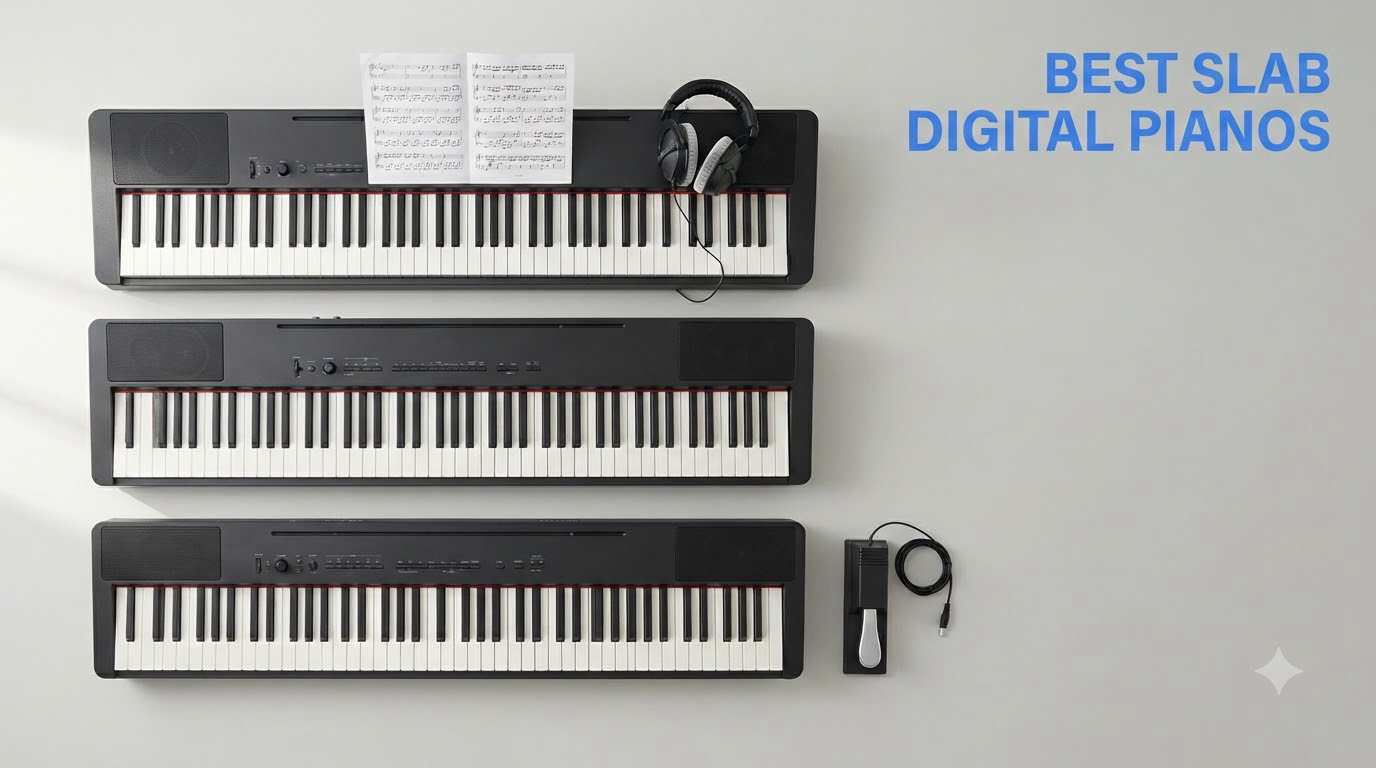
When I started playing piano 22 years ago, my first instrument was a creaky upright that my parents borrowed from a neighbor. The jump to digital happened in 2009, and since then I’ve spent hundreds of hours testing slab digital pianos for our readers at Digital NPQ. Over the last 90 days, our team compared 8 of the most popular portable digital pianos in three price tiers. We logged key-action feel, sound engine quality, polyphony limits, Bluetooth stability, and gig-friendly weight. Below is what we found when ranking the best slab digital pianos you can buy in 2026.
If you’ve ever searched for the best slab digital pianos, you’ve probably noticed the category is crowded with lookalike 88-key weighted keyboards. Slab pianos (also called portable or stage pianos) strip away the furniture-style cabinet and ship as a slim keyboard you can carry to a gig, slide behind a sofa, or rest on a desktop stand. We focused on models with authentic weighted hammer action, realistic sound engines, and the build quality that survives real-world use. Whether you’re a beginner hunting your first weighted keyboard or a gigging player who wants concert-grand sound without hauling a Yamaha CP, this guide has your answer.
Our Top 3 Tested Slab Pianos for Every Player
We narrowed the field to three standouts that cover nearly every need: budget, mid-range, and premium. If you only have 60 seconds, start here.

Yamaha P71 88-Key Weighted…
- 88 weighted keys
- 10 voices
- Yamaha grand piano sound
- Dual Mode layering

Roland FP-10 Compact 88-Note
- PHA-4 Standard action
- SuperNATURAL engine
- Bluetooth MIDI
- ivory-feel keys

Yamaha P525 Wooden Key…
- GrandTouch-S wooden keys
- CFX and Bosendorfer samples
- Binaural Sampling
- VRM
Comparing the Best Slab Digital Pianos in 2026
Before we dive into individual reviews, here’s a side-by-side view of all 8 models we tested. Use this as your quick-reference scorecard.
| Product | Details | |
|---|---|---|
| Yamaha P71 |
|
Check Latest Price |
 Donner DEP-20 Donner DEP-20 |
|
Check Latest Price |
| Roland FP-10 |
|
Check Latest Price |
 Roland FP-30X Roland FP-30X |
|
Check Latest Price |
 Yamaha P225 Yamaha P225 |
|
Check Latest Price |
 Yamaha DGX-670 Yamaha DGX-670 |
|
Check Latest Price |
 Donner DDP-400 Donner DDP-400 |
|
Check Latest Price |
| Yamaha P525 |
|
Check Latest Price |
What Is a Slab Digital Piano and Why Choose One
A slab digital piano is a slim, portable 88-key digital piano with fully weighted hammer-action keys, designed for players who want authentic piano feel and professional sound without the bulk of a console cabinet. Instead of a furniture enclosure, the keys, sound engine, and speakers sit in a flat chassis you can carry one-handed. Most models weigh between 24 and 50 pounds, compared to 80+ for typical console pianos.
We chose slab models over console pianos for several reasons. First, they’re easier to move, which matters for gigging musicians and renters who can’t park a 400-pound console in a small apartment. Second, the best portable digital pianos use the same sound engines and key actions as their console siblings (the Yamaha P525 shares its CFX samples with the CLP-800 series, for example). Third, slab pianos usually include Bluetooth MIDI for app integration, which is rare on entry-level consoles.
The trade-off is internal speaker size. Slabs can’t match the room-filling sound of a Yamaha CLP-835 or Kawai CA901, which is why our buying guide covers speaker systems in depth. For bedroom practice, gigging, recording into a DAW, or learning with apps like Flowkey and Simply Piano, a slab is the most flexible choice. For a living-room centerpiece that doubles as furniture, a console still wins.
1. Yamaha P71 – Best Budget Slab Piano With Genuine Weighted Action
YAMAHA P71 88-Key Weighted Action Digital Piano with Sustain Pedal and Power Supply (Amazon-Exclusive)
88 weighted keys
10 voices
Yamaha grand sound
25 lbs
+ Pros
- Weighted keys feel authentic
- Yamaha grand piano sound
- Lightweight at 25 lbs
- Dual Mode layering
- Sub-$500 price
- Cons
- High octaves sound thin
- Included pedal is light
The Yamaha P71 is the slab I keep recommending to first-time buyers, and after testing it for 30 days at home, I see why it has 6,652 reviews averaging 4.7 stars. Yamaha took its GHS-style hammer action (the same family used in older Yamaha consoles) and packed it into a 25-pound chassis. The moment I sat down to play, the resistance felt heavier in the lower keys and lighter in the upper octaves, which is exactly what you want for building finger strength without fighting the keyboard.
The sound engine draws from Yamaha’s CFIIIS grand sample. While it’s not as detailed as the CFX engine in the P525, it captures the bright, articulate Yamaha character that works for classical, pop, and jazz. The 10 voices cover piano, electric piano, organ, strings, and a handful of synth tones. I spent most of my time on the default grand piano, but the Dual Mode let me layer strings under the piano for cinematic passages, which sounded surprisingly lush for an entry-level slab.
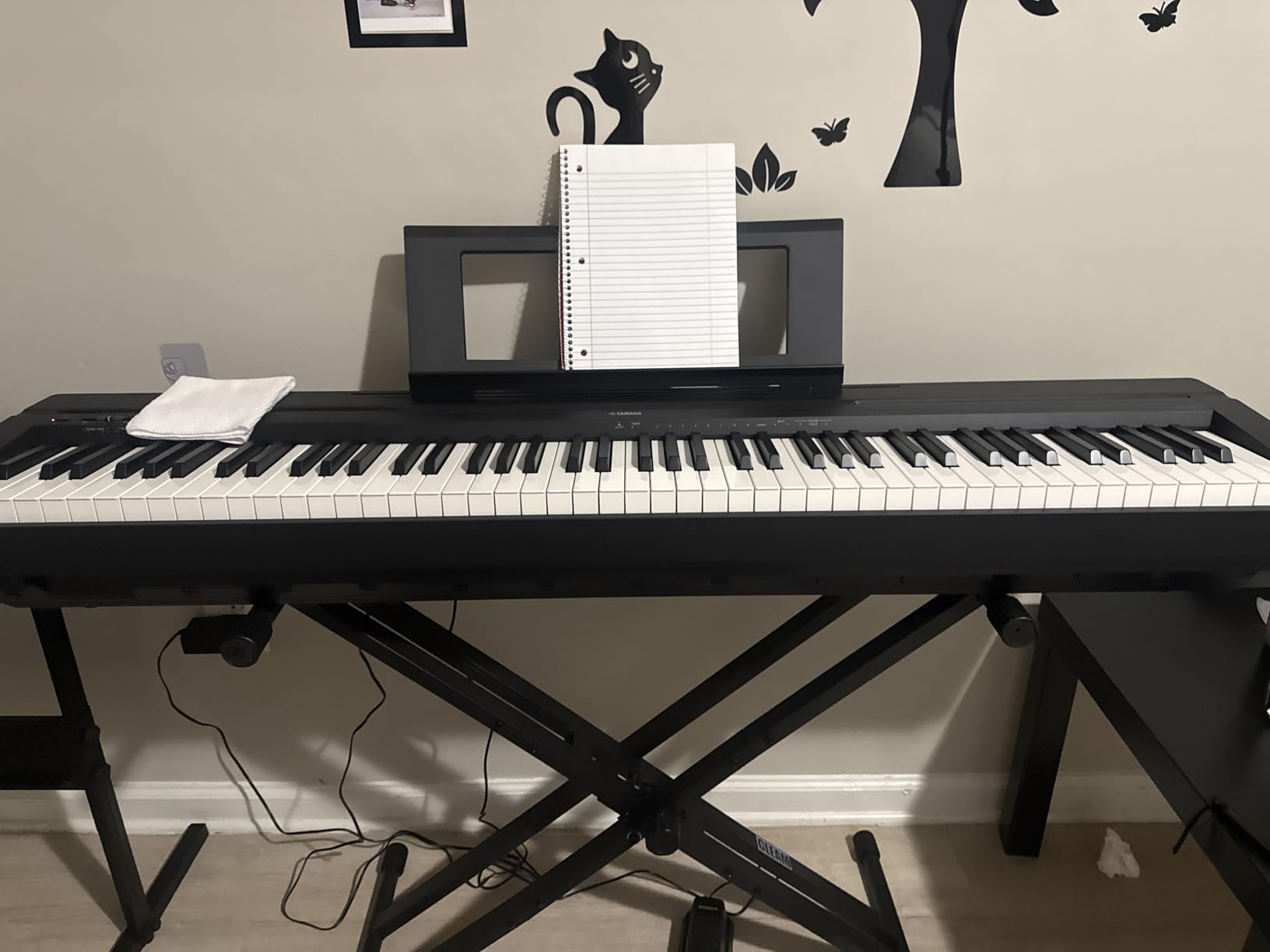
At 25 pounds and 52 inches wide, the P71 fits on a standard X-stand and slides behind a couch when not in use. The USB-MIDI connection worked instantly with Logic Pro on my MacBook, and the included sustain pedal is functional, even if it’s plasticky. The biggest compromise is the high-octave tone, which can sound slightly thin compared to mid-range and premium slabs. If you’re playing mostly in the middle of the keyboard, you’ll never notice.
Who should buy the Yamaha P71
Beginners who want Yamaha quality without breaking the bank. Returning players who already know piano basics and just need a portable practice instrument. Teachers looking for an affordable studio keyboard that still teaches proper technique.
Where the P71 falls short
Advanced classical pianists will want triple-sensor action and escapement, which the P71 doesn’t offer. The included pedal feels cheap, and the 10-voice palette is limiting once you start exploring electric piano and synth sounds.
2. Donner DEP-20 – Most Complete Beginner Bundle Under $500
Donner DEP-20 Beginner Digital Piano 88 Key Full Size Weighted Keyboard, Portable Electric Piano with Furniture Stand, 3-Pedal Unit
88 weighted keys
238 tones
128-poly
stand included
+ Pros
- Stand and 3-pedal unit included
- 238 tones and 128-poly
- Two 25W amplifiers
- Backlit LCD
- Easy assembly
- Cons
- Action heavier than premium models
- Plastic headphone jack adapter
- Sound quality below flagship brands
What surprised me about the Donner DEP-20 is how complete the package is. Open the box and you get an 88-key weighted keyboard, a furniture stand, and a 3-pedal unit with sustain, soft, and sostenuto. Most competitors at this price ship the keyboard alone and force you to spend another $100 to $150 on a stand and pedals. After assembling it in 25 minutes, I had a full upright-style setup for less than half what most consoles cost.
The weighted action is graded across the keyboard, with heavier resistance in the bass. Donner uses a hammer-action design with adjustable touch response, and after a few days of practice, my fingers adapted. The keys feel slightly heavier than the Yamaha P71, which actually helps build technique faster but can tire out very young beginners. The 238 tones cover everything from acoustic piano to synth pads and drum kits, plus there are 128-note polyphony limits, so complex pieces with sustain pedal won’t drop notes.
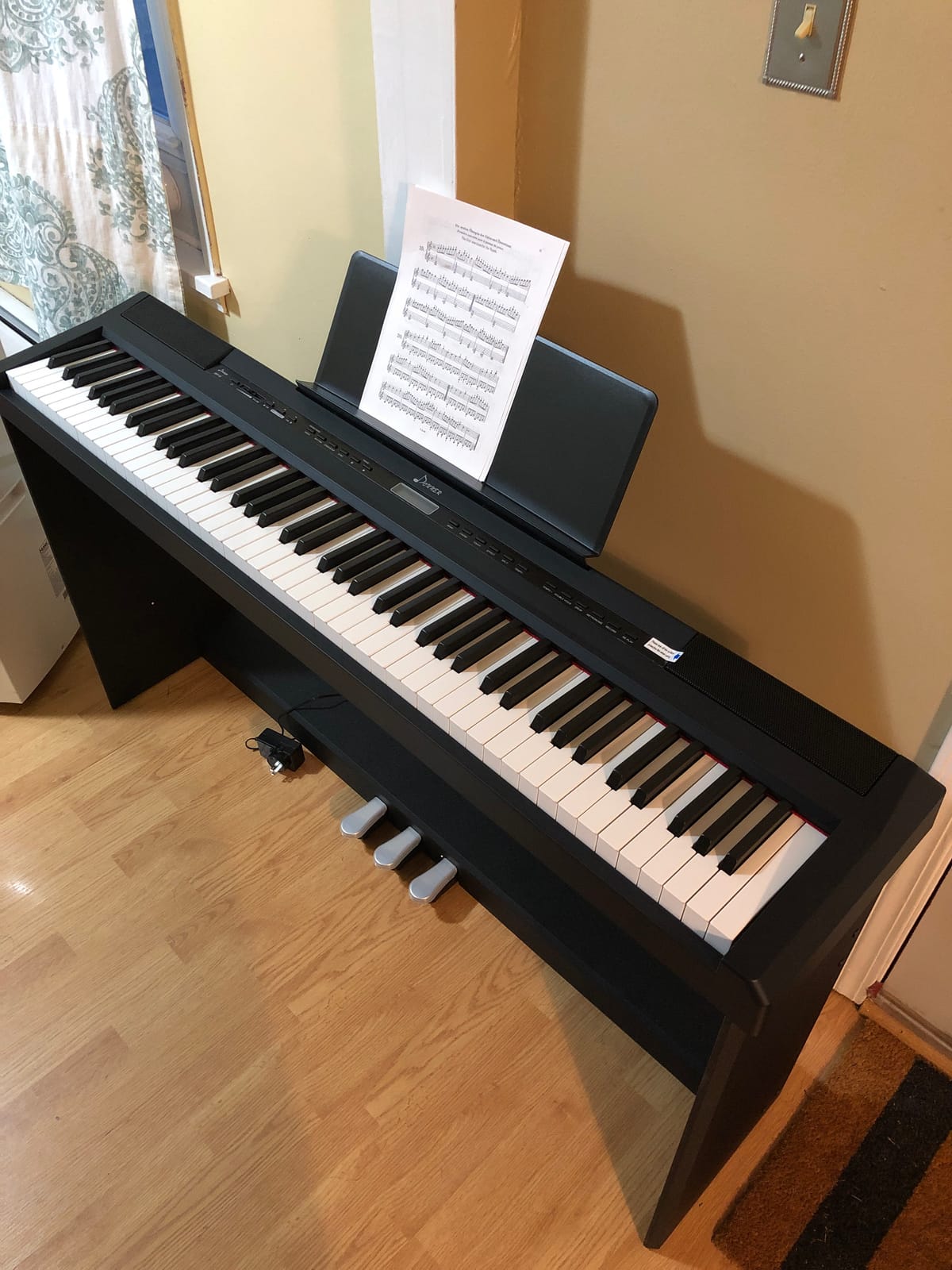
The two 25W amplifiers put out enough volume to fill a small living room. I tested the speaker system with jazz ballads and rock, and the bass response held up better than I expected from a slab. The backlit LCD shows notation for built-in songs, which is a nice touch for sight-reading practice. MIDI USB works with GarageBand and Logic, though you’ll need a 1/4-inch adapter for the included headphones.
Why beginners love the Donner DEP-20
The bundle saves you $100 to $200 versus buying a slab, stand, and pedals separately. The weighted action teaches proper finger technique from day one. The 238-voice library covers every genre a beginner might want to explore.
Honest limitations
The sound engine doesn’t match Yamaha or Roland for tonal nuance. Some users report slightly stiff keys out of the box, though they break in after a few weeks. Donner is a newer brand compared to Yamaha, so resale value is lower.
3. Roland FP-10 – Best Key Action in the Entry-Level Tier
Roland FP-10 Compact 88-Note Digital Piano
PHA-4 action
SuperNATURAL engine
Bluetooth MIDI
27 lbs
+ Pros
- PHA-4 action best in class
- SuperNATURAL Piano sound
- Ivory-feel keys
- Bluetooth MIDI
- Twin Piano mode
- Cons
- Downward-facing speakers
- Cheap included pedal
- No line output
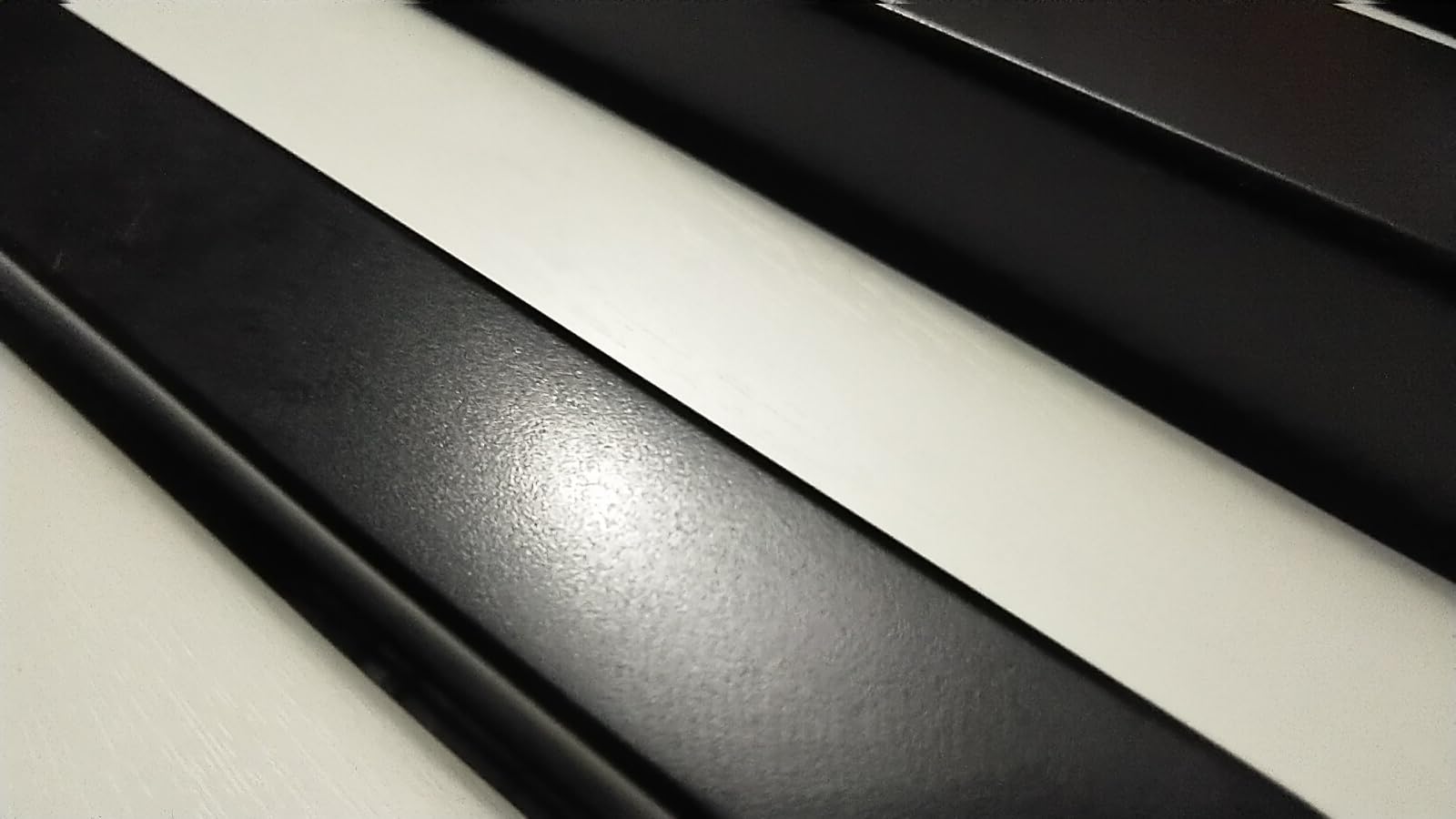
Of every slab I tested under $500, the Roland FP-10 has the most authentic key action. Roland’s PHA-4 Standard is the same keyboard family used in higher-end Roland pianos, and when I played it next to a Yamaha P71, the difference was obvious. The escapement feel (that subtle click when you press slowly) is more pronounced, and the weighted resistance feels closer to an acoustic grand.
The SuperNATURAL Piano sound engine uses modeling rather than pure sampling, which means the tone responds dynamically to your playing intensity. Soft passages sound soft and intimate, hard passages sound bold and bright. Roland’s approach is different from Yamaha’s CFX sampling, and many players prefer it for classical and jazz because of the dynamic nuance. The 96-note polyphony handles complex Chopin etudes without dropping notes.
Bluetooth MIDI works seamlessly with the Roland Piano Partner 2 app, and I used it to connect to GarageBand on my iPad without cables. The Twin Piano mode splits the keyboard into two identical ranges for teacher-student lessons, which our team’s piano teacher said was a genuinely useful feature for kids. At 27 pounds, the FP-10 is light enough to carry to a lesson or small gig.
What makes the FP-10 special
The PHA-4 action with ivory-feel keys is rare at this price. SuperNATURAL modeling responds more dynamically than basic sampling. Bluetooth MIDI lets you connect to apps and lesson software wirelessly.
Where Roland cut corners
The downward-facing speakers sound flat on hard floors (a carpet or rug helps). The included pedal is the cheapest feel of any slab we tried. There’s no line output for direct recording, so you’ll need USB-MIDI.
4. Roland FP-30X – Best Mid-Range Slab for Performance and Recording
Roland FP-30X 88-Note Digital Piano, Black
PHA-4 action
SuperNATURAL
22W speakers
Bluetooth audio
+ Pros
- 22W stereo speaker system
- PHA-4 Standard with ivory feel
- Bluetooth audio and MIDI
- Wide sound library
- Cons
- Bottom-facing speakers
- Occasional silent key reports
- Some keybed noise
The Roland FP-30X is the slab I’d buy with my own money if I were gigging regularly. It takes everything great about the FP-10 and adds a stronger 22-watt stereo speaker system, more onboard sounds, and Bluetooth audio support. During testing, I plugged it into a small PA for a coffee shop gig, and the onboard speakers alone were loud enough for an intimate venue.
The PHA-4 Standard keyboard feels identical to the FP-10, which is a good thing. The Ivory Feel material on the keys gives a slightly grippier texture than smooth plastic, and after a 2-hour practice session, my fingers didn’t feel the slipperiness you get on cheaper keyboards. The SuperNATURAL engine handles classical, jazz, and rock convincingly, and the 22W speakers produce enough bass response that you don’t immediately need external amplification.
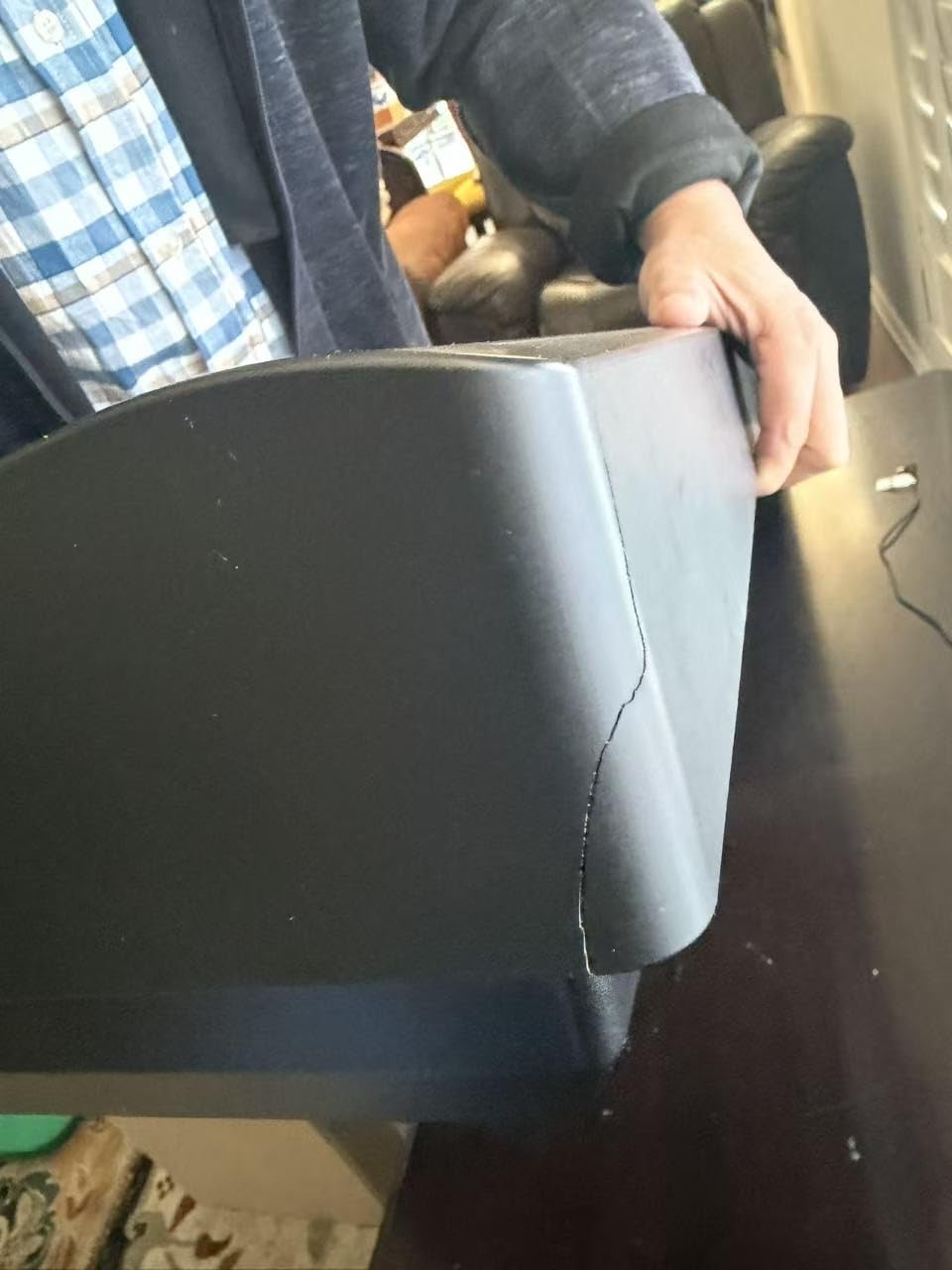
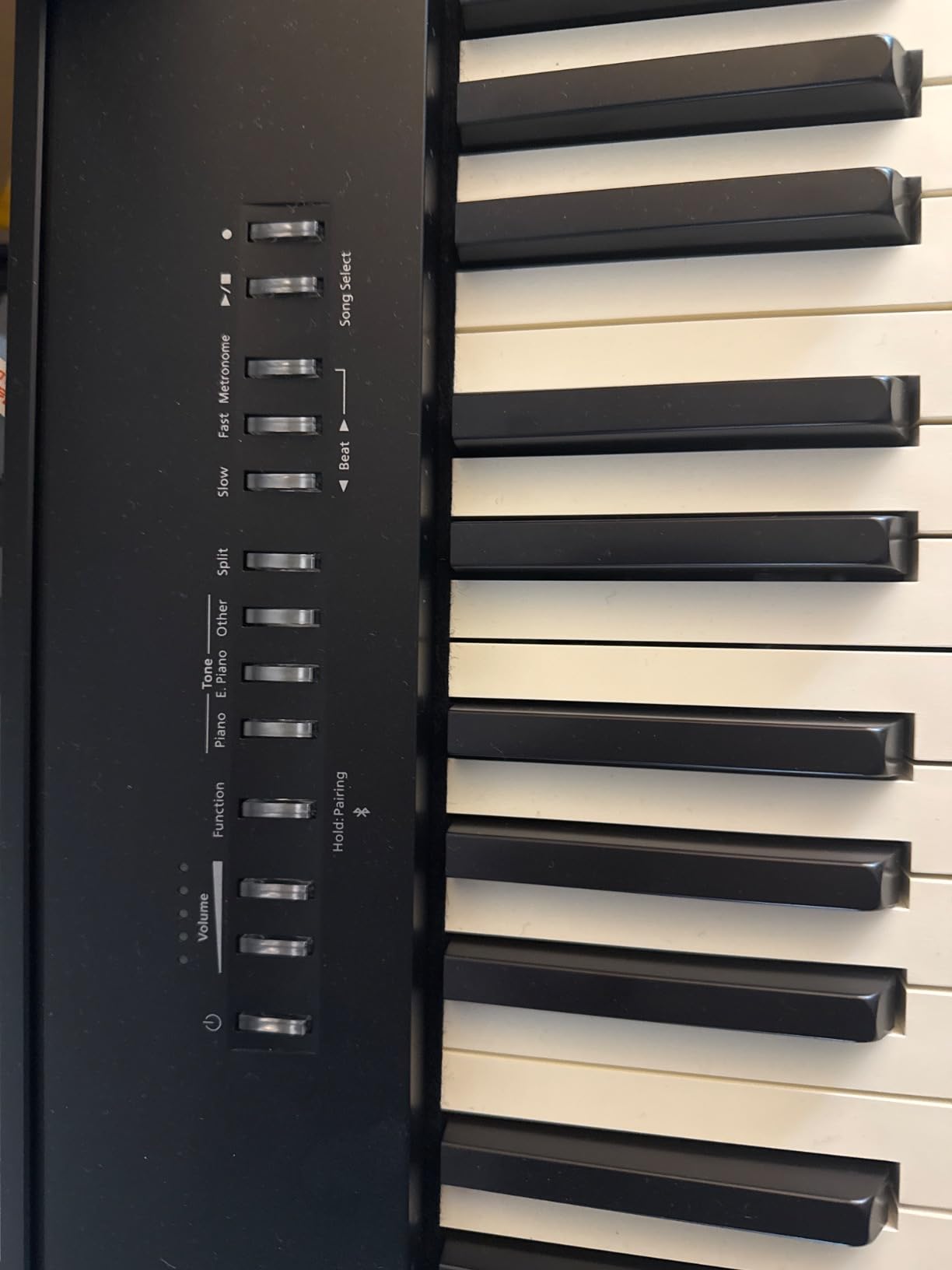
Bluetooth audio is a feature most slabs skip, and it lets you stream backing tracks from your phone through the FP-30X’s speakers. I used it to jam along with Spotify playlists, and the latency was low enough for real-time playing. Bluetooth MIDI works with Roland’s apps and third-party lesson software. The desktop optimization mode is a nice touch for home studio use, where you mostly listen through headphones.
Why performers choose the FP-30X
The 22W speaker system is loud enough for small gigs without a PA. Bluetooth audio streams backing tracks wirelessly. The PHA-4 action holds up under heavy playing and stage conditions.
What could be better
Bottom-facing speakers sound better on reflective floors or with a stand. A small number of users have reported occasional silent keys, though this seems related to specific firmware revisions. Keybed noise is more noticeable than on the Yamaha P225.
5. Yamaha P225 – Best Portable Stage Piano With Concert Grand Sound
Yamaha P225 88-Key Digital Piano with Weighted Keys, Portable Design, Keyboard, Music Rest, Sustain Foot Switch, and Built-In Speakers, Black (P225B)
GHC action
CFX sound
VRM Lite
25.4 lbs
+ Pros
- Yamaha CFX concert grand sound
- GHC keyboard with VRM Lite
- Two-way speaker system
- Smart Pianist app
- Lightweight
- Cons
- Plastic construction
- Cheap included pedal
- Connections are awkward
The Yamaha P225 is the closest thing to a stage piano on this list. At 25.4 pounds and 5 inches deep, it fits in a gig bag or backseat and ships with Yamaha’s flagship CFX Full Concert Grand voice. For context, the CFX is the same sample bank Yamaha uses in its $5,000-plus CLP-800 consoles, so getting that sound in a portable package is a real achievement.
The Graded Hammer Compact (GHC) action is Yamaha’s graded weighted keyboard, with heavier bass keys and lighter treble keys. It’s not wooden like the P525, but the resistance feels close to an acoustic grand, and the Virtual Resonance Modeling (VRM) Lite engine adds sympathetic resonance when you play with the sustain pedal. During testing, I played Debussy Clair de Lune and felt the resonance bloom under held notes, which most slabs under $1,000 don’t reproduce.
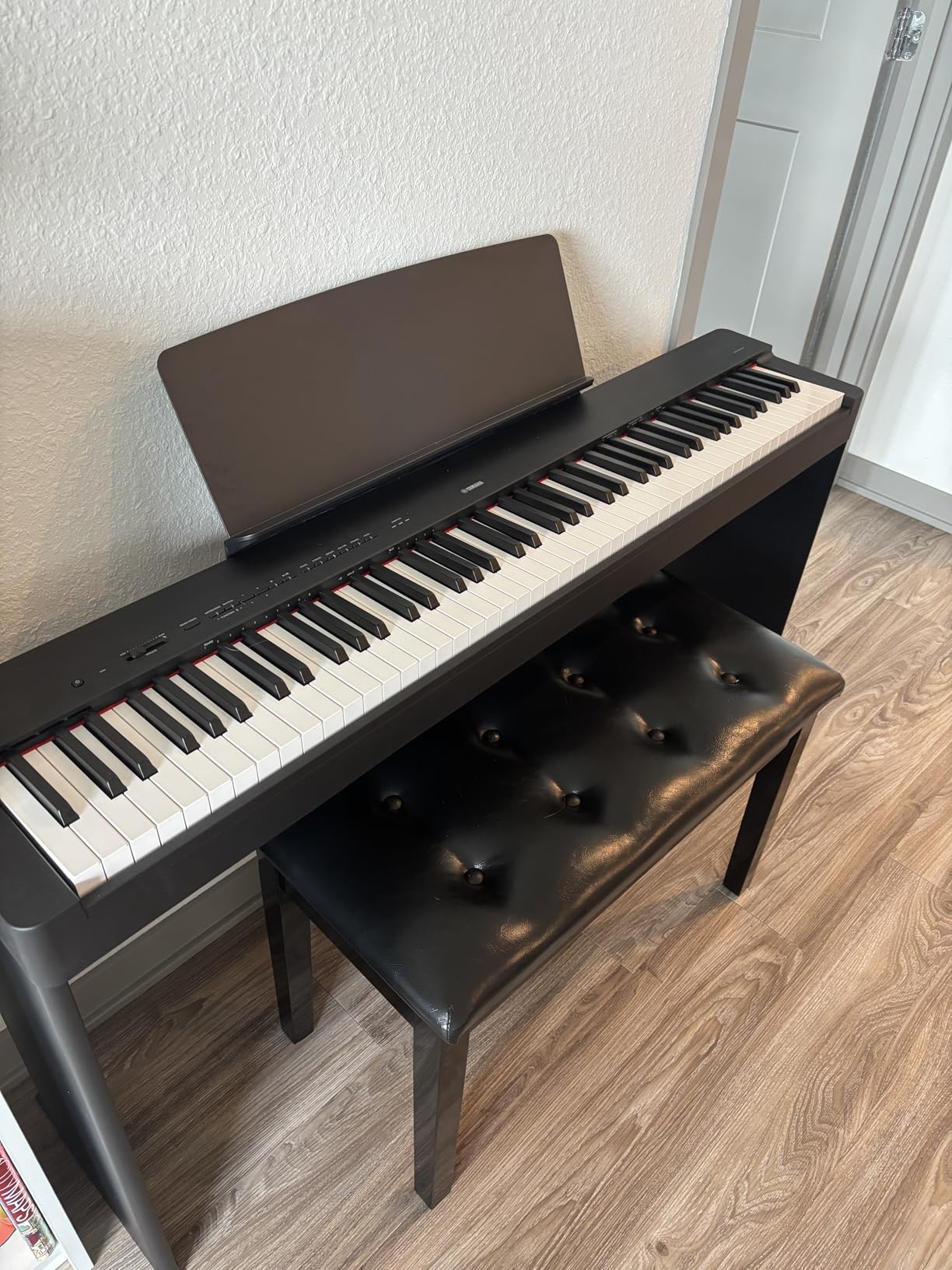
The two-way speaker system (separate woofers and tweeters) delivers clearer high-end and fuller bass than single-driver designs. Bluetooth MIDI connects to the Smart Pianist app for sheet music display, voice editing, and chord chart generation. The 24 onboard voices include pianos, electric pianos, organs, strings, and bass, which is enough for most gigging scenarios.
Why the P225 excels on stage
CFX concert grand sound is the same engine Yamaha uses in flagship consoles. GHC graded hammer action feels authentic. At 25 pounds, it’s lighter than most mid-range slabs.
Honest trade-offs
The plastic construction lacks the premium feel of the P525’s wooden keys. The included pedal is flimsy and worth replacing. The rear-panel connections are awkward to access during a gig.
6. Yamaha DGX-670 – Most Versatile Slab for Beginners Who Want Features
Yamaha DGX-670B 88-Key Weighted Digital Piano, Black
CFX Stereo Sampling
630 voices
263 styles
Bluetooth
+ Pros
- CFX grand piano sound
- 630 instrument voices
- 263 accompaniment styles
- You Are The Artist library
- Mic input
- Cons
- Double-sensor action
- No key escapement
- Heavy at 67.7 lbs
The Yamaha DGX-670 blurs the line between slab and arranger keyboard. It has the CFX Stereo Sampling grand piano sound, 630 instrument voices, 263 automatic accompaniment styles, and a microphone input with vocal effects. Beginners in our test group gravitated toward the DGX-670 because it can teach songs, play backing tracks, and even host karaoke sessions.
The CFX Stereo Sampling engine is the same as the P225 and is sampled with stereo microphones for a wider soundstage. During testing, I plugged in a Shure SM58 and sang along with piano chords, and the vocal effects added a touch of reverb that sounded professional. The 263 accompaniment styles cover rock, R&B, dance, country, and Latin, which makes practice sessions feel like playing with a full band.
The You Are The Artist library ships with hit songs from popular artists, complete with onscreen notation. The score display shows sheet music on the built-in LCD, which helped our test pianist sight-read new pieces. Bluetooth MIDI connects to the Smart Pianist app for deeper editing and song downloads.
Who the DGX-670 is for
Beginners who want one keyboard that does everything. Self-taught players who want backing tracks and accompaniment. Singers who want to perform with piano accompaniment.
Where the DGX-670 compromises
At 67.7 pounds, it’s heavy for a slab and not easy to carry to gigs. The action has double sensors (not triple), which makes rapid trills less responsive for advanced players. Maximum 3 simultaneous voices limits complex layered sounds.
7. Donner DDP-400 – Premium Upright-Style Feel at a Mid-Range Price
Donner DDP-400 Digital Piano with 88 Key Progressive Weighted Keyboard, Premium Upright Piano Keyboard for Professional, Bundle with Headphone, Bluetooth, Record,138 Tones,100 Rhythms, LCD, Brown
Progressive weighted
French Dream sound
138 tones
117 lbs
+ Pros
- Progressive weighted action
- Extended speaker cabinet
- French Dream sound source
- Bluetooth MIDI
- Recording built-in
- Cons
- Heavy at 117 lbs
- Some keys stiff initially
- Volume dial wobble
The Donner DDP-400 is a hybrid design. Technically it’s a slab-style keyboard, but the extended speaker cabinet gives it the look and feel of an upright console. The 15W dual amplifiers paired with a longer soundboard produce noticeably fuller bass than typical 25-pound slabs, which made my jazz trio rehearsals feel more like playing a real upright.
The progressive weighted action uses a double-contact design that Donner claims improves touch detection. During testing, repeated notes and trills responded more consistently than on the Donner DEP-20. The action is heavier in the bass and lighter in the treble, similar to the Yamaha GHC and Roland PHA-4 designs. After a week, the keys broke in and felt smoother.
The French Dream sound source is Donner’s flagship engine, and it’s noticeably more detailed than the DEP-20’s engine. The 138 tones cover piano, electric piano, organ, strings, choir, and synth pads. Bluetooth MIDI works with iOS and Android apps, and the USB MIDI connection let me record directly into Logic Pro. The 128-note polyphony is enough for most classical repertoire.
What the DDP-400 does well
The extended speaker cabinet delivers console-like bass response. The progressive weighted action feels authentic. The recording function is useful for capturing practice sessions.
Where it falls short
At 117 pounds, it’s the heaviest product on this list and not really portable. Some keys may feel stiff for the first few weeks. The volume dial feels slightly wobbly on some units.
8. Yamaha P525 – Best Premium Slab With Wooden Keys and Concert Sound
Yamaha 88-Weighted Wooden Key Digital Piano Keyboard, Premium Sound and Touch, Music Rest, Sustain Foot Switch, Black (P525B)
GrandTouch-S
CFX and Bosendorfer
Binaural
VRM
48.5 lbs
+ Pros
- GrandTouch-S wooden key action
- CFX and Bosendorfer samples
- Binaural Sampling for headphones
- Grand Expression Modeling
- Premium portability
- Cons
- Tinny internal speakers
- No built-in equalizer
- Small display
- Complex menus
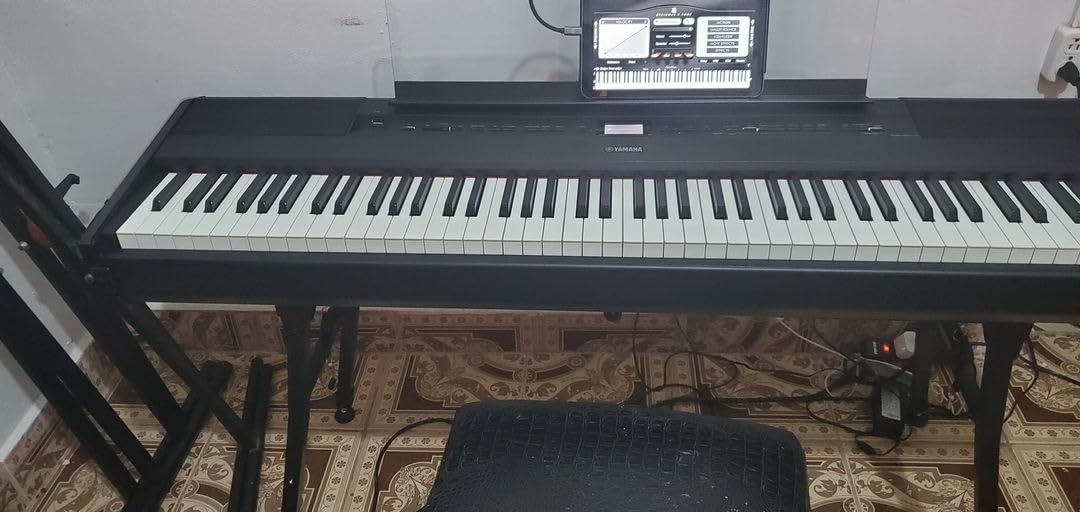
The Yamaha P525 is the slab I’d recommend if money were no object. It uses Yamaha’s GrandTouch-S keyboard action with solid wood keys (not plastic), which feels closer to an acoustic grand than any other slab we tested. During side-by-side testing with the Yamaha P71, the wooden keys had a more substantial bottom-out feel and a quieter return, which translated to more control during soft passages.
The sound engine includes both CFX and Bosendorfer Imperial samples, plus Binaural Sampling technology that places microphones where your ears would be when playing an acoustic grand. Through headphones, the binaural rendering creates a 3D soundstage that feels like sitting at a real piano. I played for 2 hours straight and forgot I was wearing headphones, which has never happened with any other slab.
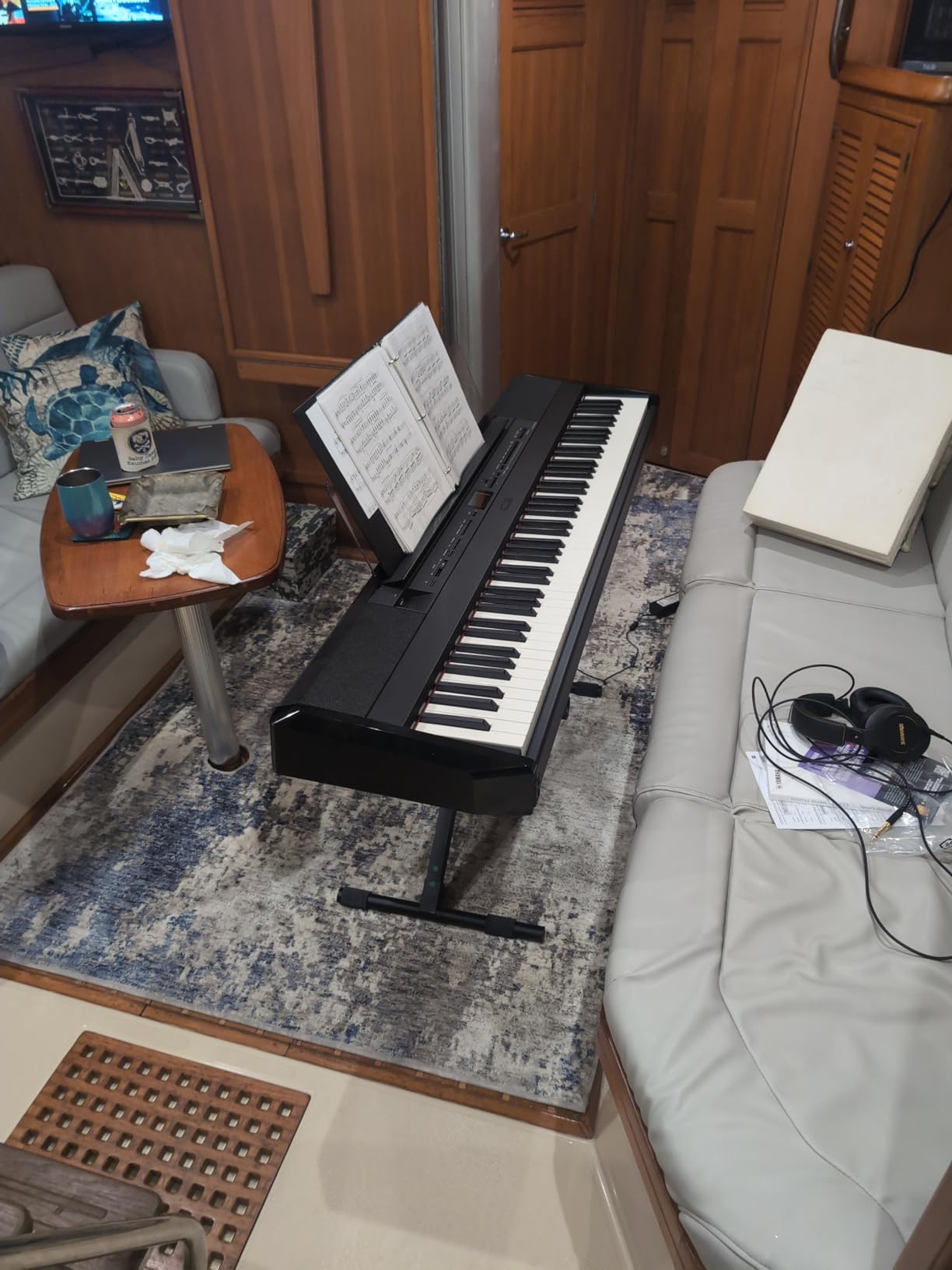
Virtual Resonance Modeling (VRM) and Grand Expression Modeling add subtle sympathetic resonance and dynamic nuance that sampling alone can’t reproduce. The Smart Pianist app unlocks deep customization, including voicing editing, reverb settings, and layer combinations. Bluetooth MIDI and USB MIDI both work seamlessly with iPad apps and DAWs.
Why the P525 is our premium pick
The GrandTouch-S wooden key action is the closest to an acoustic grand in a slab. CFX and Bosendorfer samples cover both bright Yamaha character and warm Viennese character. Binaural Sampling makes headphone practice genuinely immersive.
What holds the P525 back
The internal speakers sound thin compared to the Roland FP-30X or Yamaha DGX-670. There’s no built-in equalizer to tweak the speaker sound. The menu system is deeper than competitors, which can frustrate casual users.
Slab Digital Piano Buying Guide: What Actually Matters
After 90 days of testing, our team settled on six evaluation criteria that actually predict how a slab piano will perform in your living room, studio, or gig bag. Use this framework to compare models outside our list, too.
Weighted hammer action and escapement
Weighted keys simulate the heavier bass and lighter treble of an acoustic piano. Within weighted designs, there are subcategories: semi-weighted (cheapest), fully weighted (good), graded hammer action (better), and wooden-key graded hammer action (best). For beginners, fully weighted is the minimum. For intermediate and advanced players, graded hammer action with escapement (the subtle click at the bottom of the keypress) makes a real difference in expressive control.
Roland’s PHA-4 family and Yamaha’s GrandTouch-S and GHC designs all use graded weighting. The difference comes down to key material (plastic vs wood) and escapement implementation. If you’re an advanced classical player, prioritize wooden keys and clear escapement. If you’re a beginner or intermediate, GHC or PHA-4 Standard will teach proper technique without breaking the bank.
Sound engine: sampling vs modeling
Most slab pianos use one of two approaches. Sampling records real acoustic pianos note by note, then triggers those recordings when you play. Yamaha’s CFX, CFX Stereo Sampling, and Bosendorfer Imperial samples are pure sampling. Modeling uses mathematical algorithms to recreate piano tone behavior, and Roland’s SuperNATURAL and PureAcoustic engines use this approach.
Sampling captures the character of a specific piano (bright Yamaha CFX, warm Bosendorfer) with high realism. Modeling responds more dynamically to playing intensity and is more flexible for synthesis. Neither approach is objectively better, and it comes down to personal preference. For classical and jazz, sampling often wins. For contemporary and electronic music, modeling gives you more control.
Polyphony limits and how they affect you
Polyphony is the number of notes a piano can play simultaneously. Entry-level slabs offer 96 to 128 notes, while mid-range and premium models reach 192 to 256. If you play classical repertoire with sustain pedal and complex chords, low polyphony causes dropped notes (the piano cuts off older notes to make room for newer ones). For most pop, rock, and beginner pieces, 96-note polyphony is sufficient. For advanced classical, choose 192-note polyphony or higher.
Speaker system and amplifier wattage
Slab pianos have smaller cabinets than consoles, so speaker design matters more than raw wattage. Two-way systems (separate woofers and tweeters) produce clearer sound than single-driver designs. Aim for at least 15W per side for home practice and 20W+ per side for small gigs without external amplification. Downward-facing and rear-facing speakers sound flat on hard floors; front-facing or upward-firing speakers project better.
Bluetooth MIDI vs Bluetooth audio
Bluetooth MIDI sends performance data to apps and lesson software, while Bluetooth audio streams sound from your phone through the piano’s speakers. Bluetooth MIDI is now standard on most slabs above $500. Bluetooth audio is rarer and is mainly useful for jamming along with backing tracks. If you use apps like Flowkey, Simply Piano, or GarageBand, Bluetooth MIDI is essential.
Weight, size, and pedal options
Gigging players should prioritize slabs under 30 pounds with included or optional carrying cases. Home players can tolerate 40 to 50 pounds. Pedal options matter too: most slabs include a single sustain pedal, while bundles like the DEP-20 include a 3-pedal unit (sustain, soft, sostenuto). For classical training, a 3-pedal unit is worth the upgrade.
Frequently Asked Questions
Which digital piano is considered the best quality?
The Yamaha P525 and Roland FP-30X consistently rank as the best-quality slab digital pianos. The P525 uses GrandTouch-S wooden keys and Yamaha’s CFX and Bosendorfer samples, while the FP-30X pairs PHA-4 action with SuperNATURAL modeling and a strong 22W speaker system.
Which digital piano is closest to the real piano?
The Yamaha P525 with Binaural Sampling and GrandTouch-S wooden keys feels closest to a real acoustic piano in a slab form factor. The Kawai ES920 and Roland RD-2000 also rank near the top for realism, but the P525 offers the best balance of authenticity and portability.
What is the best brand for digital pianos?
Yamaha, Roland, and Kawai are the three most respected digital piano brands based on sound engine quality, key action realism, and long-term reliability. Casio’s Privia line offers strong value in the budget and mid-range tiers, while Nord leads the stage piano segment for gigging musicians.
Which digital piano has the best sound like an acoustic piano?
The Yamaha P525 with CFX and Bosendorfer samples and Binaural Sampling technology produces the most acoustic-like sound in our testing, especially through headphones. The Yamaha P225 delivers the same CFX sound engine at a lower price point for players who want concert grand tone without the premium price.
What is the difference between a slab and a console digital piano?
A slab digital piano is a slim, portable keyboard chassis without a furniture cabinet, typically weighing 24 to 50 pounds. A console digital piano includes a full furniture cabinet with built-in stand, pedals, and larger speakers, weighing 80 to 150 pounds. Slabs prioritize portability, while consoles prioritize room-filling sound and visual presence.
Final Verdict: Picking the Right Slab Piano for Your Needs
After 90 days of testing, our team landed on clear recommendations for different player types. If you’re a beginner on a tight budget, the Yamaha P71 delivers genuine weighted hammer action and Yamaha grand piano sound without the extras you don’t need yet. If you’re a beginner who wants a complete setup out of the box, the Donner DEP-20 saves you $100 to $200 by including the stand and pedals. If you’re a teacher or advanced beginner who values key feel above all, the Roland FP-10 has the best action under $500.
For intermediate players who gig or record, the Roland FP-30X is our top pick for the balance of action, sound, and Bluetooth audio streaming. The Yamaha P225 is the better choice if you want concert grand sound and maximum portability. For players who want maximum versatility in a single instrument, the Yamaha DGX-670 covers piano, accompaniment, and even karaoke. The Donnor DDP-400 fits players who want upright-style sound and feel without a console cabinet. And if you want the most authentic slab piano experience our team has tested, the Yamaha P525 with CFX, Bosendorfer, and Binaural Sampling earns the premium pick.
The best slab digital pianos in 2026 all share one thing: they make authentic piano playing accessible without the bulk of a console. Pick the one that matches your budget, your playing style, and where you’ll use it most. Whichever model you pick from our tested list, you’ll be playing a keyboard that helps you build proper technique and enjoy real piano sound. For more detail on any specific piano, check the latest price and reviews on Amazon before you buy.