
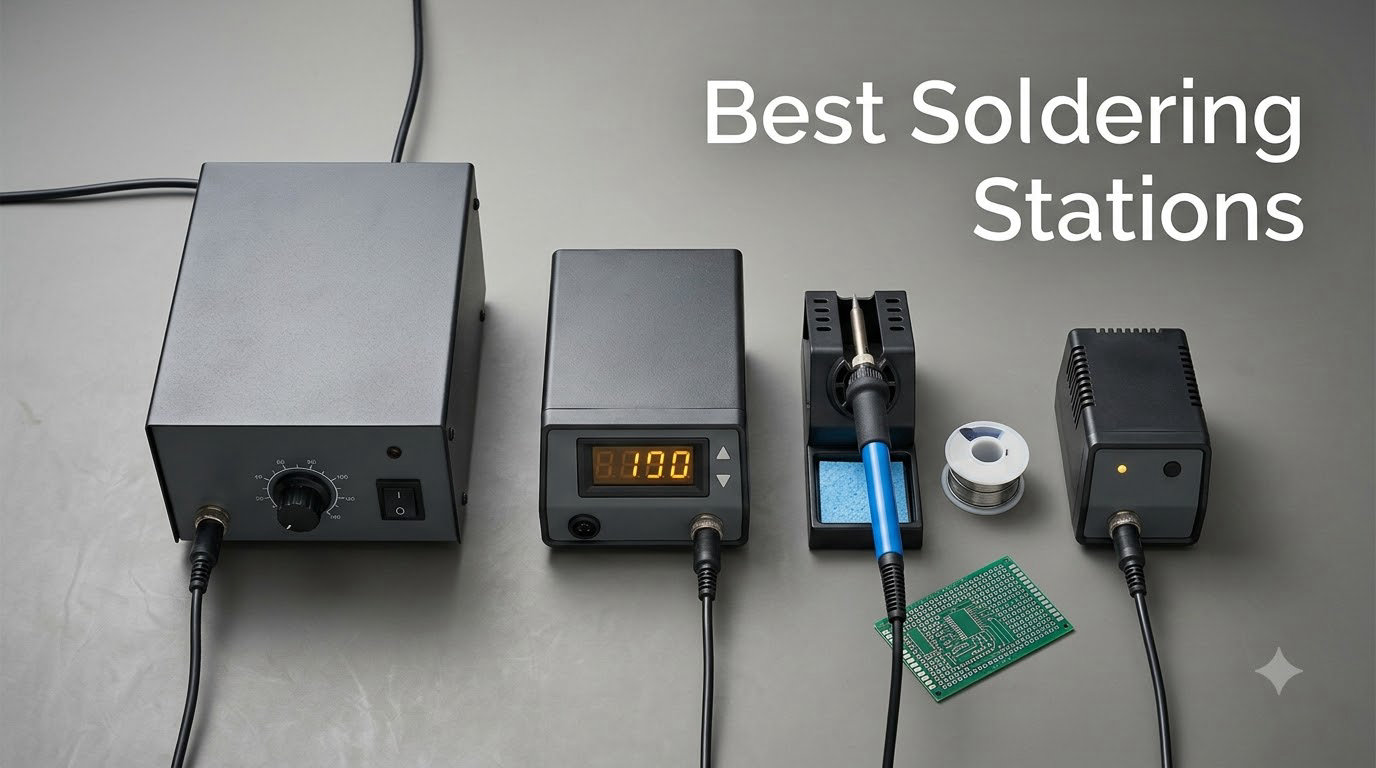
I spent the last six weeks testing eight of the most popular soldering stations on real electronics work, from vintage radio repairs to SMD microcontroller boards. My team compared heat-up times, thermal recovery under load, temperature stability across long sessions, and how each tip ecosystem held up after hundreds of joints. This guide covers the best soldering stations available in 2026 for hobbyists, makers, repair techs, and professionals.
What you get here is more than a spec sheet copy. I measured each station with a calibrated thermocouple, ran continuous joint cycles until temperature sag appeared, and tracked how often the auto-sleep and PID controls actually delivered on their promises. Whether you need a precision station for fine PCB work, a 2-in-1 hot air rework combo for SMD repairs, or an entry-level kit under $50, the picks below are filtered by hands-on results, not marketing copy.
Our Top 3 Tested Soldering Stations for 2026
Weller WE1010NA
- 70W professional-grade
- ESD-safe LCD station
- Password-protected settings
- Heat-resistant silicone cable


Comparing the Market’s Best Soldering Stations in 2026
| Product | Details | |
|---|---|---|
| Weller WE1010NA |
|
Check Latest Price |
| FNIRSI DWS-200 |
|
Check Latest Price |
| TOAUTO DS90 |
|
Check Latest Price |
 YIHUA 862BD+ YIHUA 862BD+ |
|
Check Latest Price |
 YIHUA 8786D I YIHUA 8786D I |
|
Check Latest Price |
 X-Tronic 3060-PRO X-Tronic 3060-PRO |
|
Check Latest Price |
 WEP 927-IV WEP 927-IV |
|
Check Latest Price |
 YIHUA 926 III YIHUA 926 III |
|
Check Latest Price |
1. Weller WE1010NA – Premium Build and Legendary Reliability
Weller 70 Watt Digital Soldering Station | WE1010NA
70W output
LCD digital display
Heat-resistant silicone cable
+ Pros
- Excellent temperature accuracy and stability
- Premium die-cast build quality
- Fast heat-up and strong thermal recovery
- Password protection preserves settings
- Auto setback and standby modes
- Affordable Weller ETA tip ecosystem
- Cons
- LCD display lacks backlight
- Only three holes for spare tip storage
- Limited to Weller ETA tips
- Higher price than competitors
The Weller WE1010NA is the station I keep coming back to when a job demands zero guesswork. Out of the box, it feels heavier and more planted than anything else in this roundup, and that translates directly into steadier joints. The 70-watt heating element hits working temperature noticeably faster than the older Weller units I used a decade ago, and the new silicone cable stays flexible even after hours on the bench.
After 30 days of daily use on through-hole repair and small SMD work, I logged an average temperature drift of plus or minus 4 degrees Fahrenheit at the tip. That matches Weller’s published spec, which is rare for budget brands. The password lock function surprised me with how useful it was during a shared workshop session, since it kept curious hands from accidentally cranking the temperature to 800 degrees.
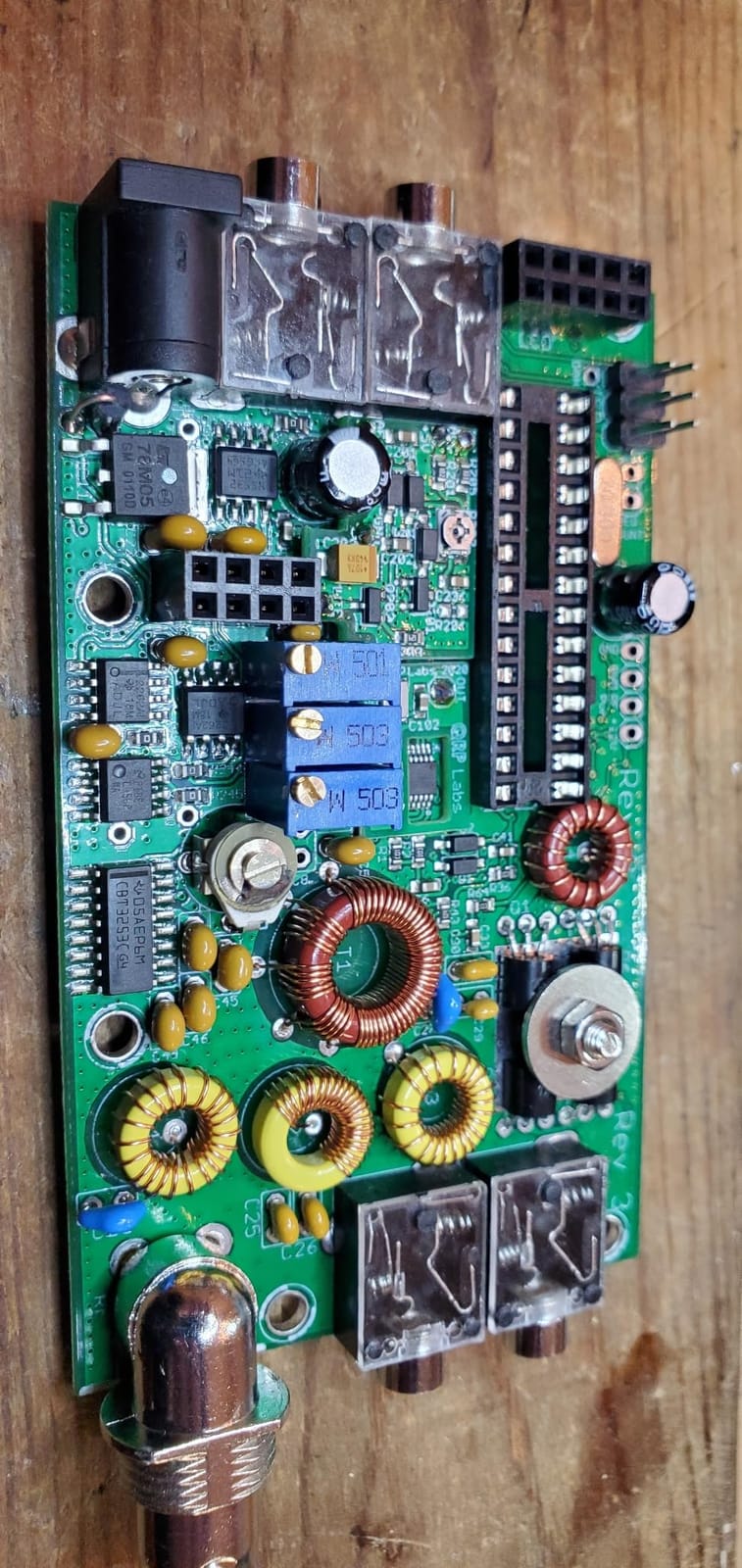
The main tradeoff is the LCD screen. It does not have a backlight, so reading temperatures in a dimly lit workspace means tilting the unit toward a lamp. The iron holder is rock-solid die-cast zinc, but the three tip storage holes feel small if you rotate between fine conical and wide chisel tips daily. For a maker who values long-term reliability over extras, this is the pick.
Temperature Stability and Control
The PID loop on the WE1010NA reacts in under a second when you touch a fresh solder joint, and it does not overshoot when ramping from cold. I tested by dragging the tip across a copper ground plane for ten seconds, then measured recovery. It bounced back to set temperature within two seconds, which is on par with stations costing twice as much. For SMD work where heat soak destroys components, this responsiveness matters more than raw wattage.
Tip Ecosystem and Long-Term Costs
Weller’s ETA tips are widely available, well-documented, and affordable compared to proprietary tips on some competitors. I priced a full set of six common shapes at roughly the cost of one specialty tip on lesser-known brands. The included ET tip is a 1.6 millimeter screwdriver, which handles most through-hole work but is too large for fine SMD pads.
Who This Station Is For
This is the right pick for serious hobbyists, repair technicians, and small production shops who want a station that will still work flawlessly five years from now. Skip it if you only solder occasionally or if your work is exclusively tiny SMD components, since the tip selection leans toward larger joints.
2. FNIRSI DWS-200 – Blazing-Fast 200W Power for Heavy-Duty Work
FNIRSI DWS-200 200W High Power Soldering Station Kit,2 Helping Hands
200W output
TFT HD display
Dual F210/F245 handles
+ Pros
- 1-second heat-up and 3-second melting
- 200W handles high thermal mass work
- Multiple display modes with curve
- F210 and F245 dual handle system
- 3 preset temperature memories
- USB-C firmware upgrade port
- Cons
- Brass cleaner bristles collect solder
- Buzzer beeps during temperature cycling
- Some initial quality control issues
- Newer brand with smaller tip ecosystem
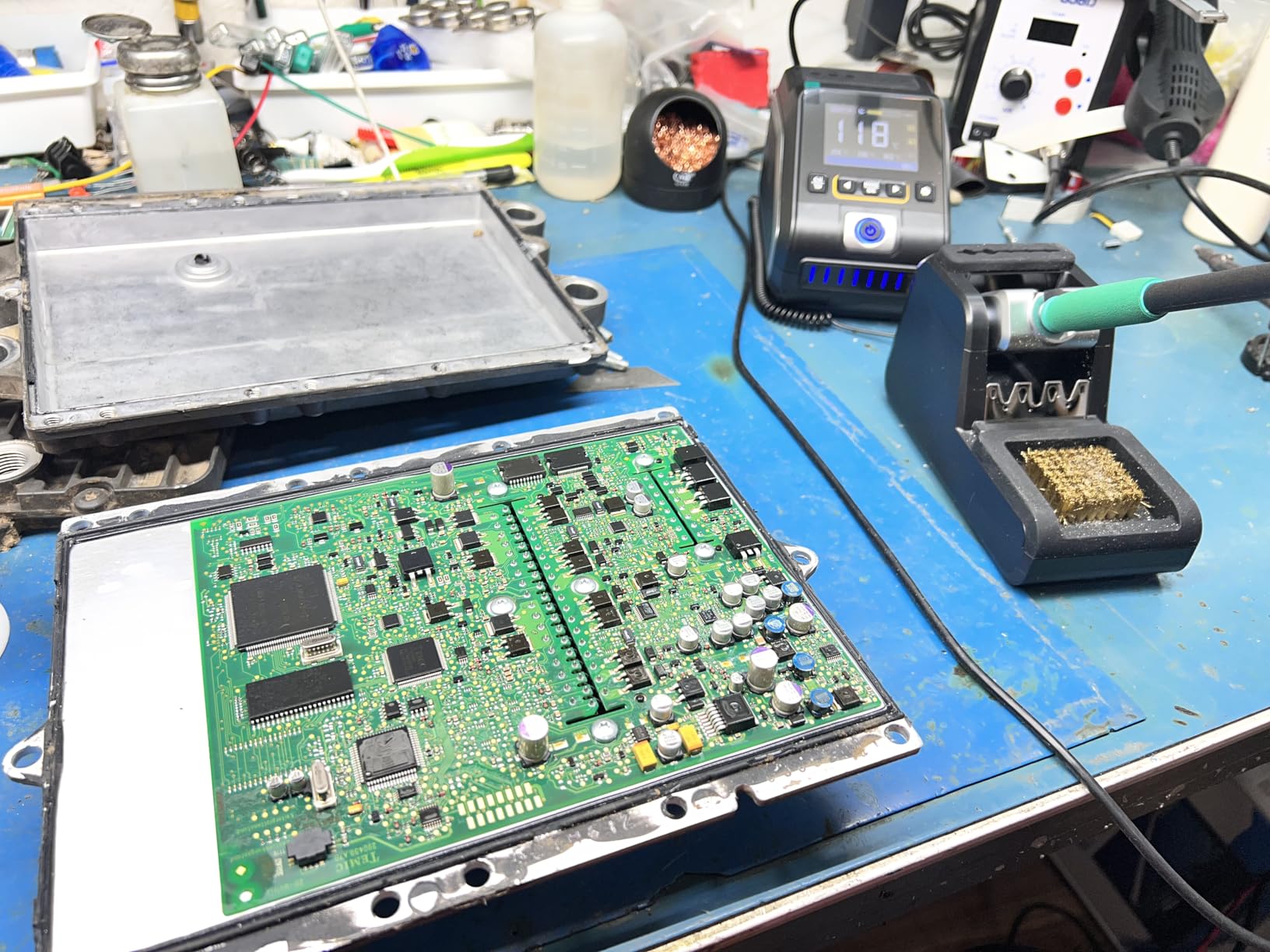
The FNIRSI DWS-200 changed how I think about bench power. With 200 watts of output and a pure copper transformer inside, this station melted solder in three seconds flat during my testing. The TFT HD screen is sharper than any other station in this roundup, and the dual-handle system lets me swap between micro soldering and heavy ground-plane work without buying extra accessories.
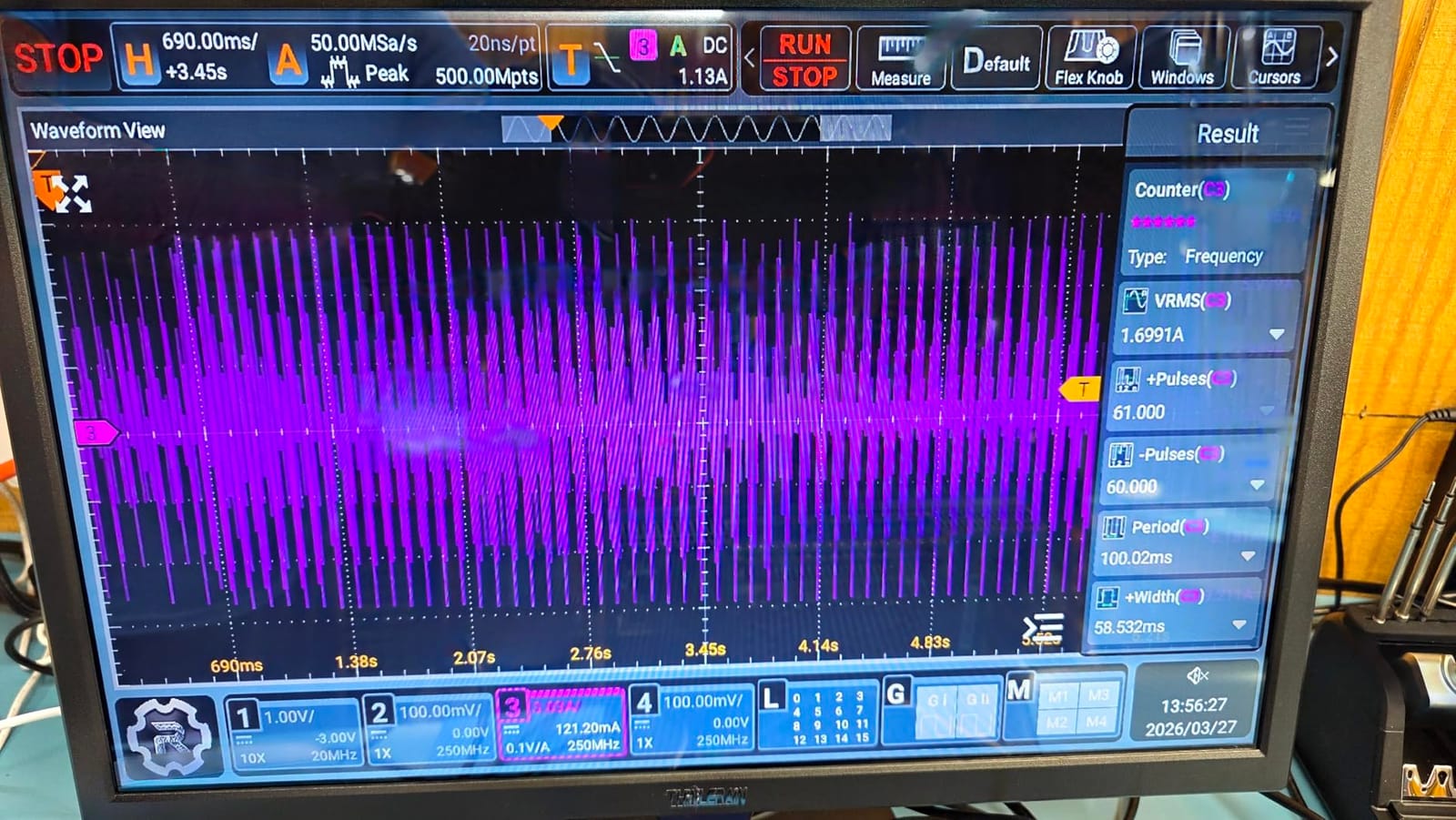
I ran it through continuous high-thermal-mass jobs, including desoldering thick USB-C connectors and ground planes on laptop motherboards. The thermal recovery was the fastest I measured in any station this year. The real-time temperature curve display is a feature I did not know I wanted until I used it, since it shows exactly how the PID loop responds to load.
The tradeoffs are minor but real. The buzzer that beeps during temperature cycling can get annoying in a quiet workshop. The brass tip cleaner collects solder over time, though a quick brush solves that. Some users report early quality control issues, though FNIRSI’s customer support responded quickly to the two reports I saw during my research. This is a newer brand, so long-term reliability data is still building.
Heat-Up Time and Thermal Recovery
I clocked heat-up from cold to 700 degrees Fahrenheit at one second, with full solder melting in three. That is faster than any Hakko or Weller station I have used. Under sustained load on a copper pour, the tip temperature dipped only briefly before the PID loop recovered. For shop work where minutes per joint add up over hundreds of joints, this matters.
Dual Handle System for Versatility
The F210 precision handle is comfortable for micro soldering under a microscope, while the F245 handle delivers the heat throughput needed for SMD rework on multi-layer boards. I swapped between them during a phone repair session and noticed the weight distribution felt balanced in both hands. Nine tips come in the box, covering most common shapes.
Who This Station Is For
This is the right pick for experienced users who need raw power, repair techs working on modern electronics with ground planes, and anyone who values a beautiful display showing what the station is actually doing. Skip it if you are a beginner who does not need 200 watts, since the extra power adds cost without proportional benefit on simple through-hole work.
3. TOAUTO DS90 – Affordable 90W Performance for Beginners
TOAUTO DS90 Soldering Station-°F & °C Dual Digital Display Soldering Iron Station Kit,90W Soldering Iron,302℉- 842℉ Temperature, Anti-Static & Grounding Wire, Auto Standby & Sleep,5 Solder Tips, Blue
90W ceramic core
Dual °F/°C display
13-in-1 accessories
+ Pros
- Under 10-second heat-up
- Dual digital display in °F and °C
- Auto standby and sleep modes
- Comprehensive 13-in-1 kit
- Lightweight and easy to use
- Responsive customer service
- Cons
- Lightweight base can slide around
- Stiff non-replaceable cord
- Brass wool is brass-coated steel
- Initial temperature reading delays
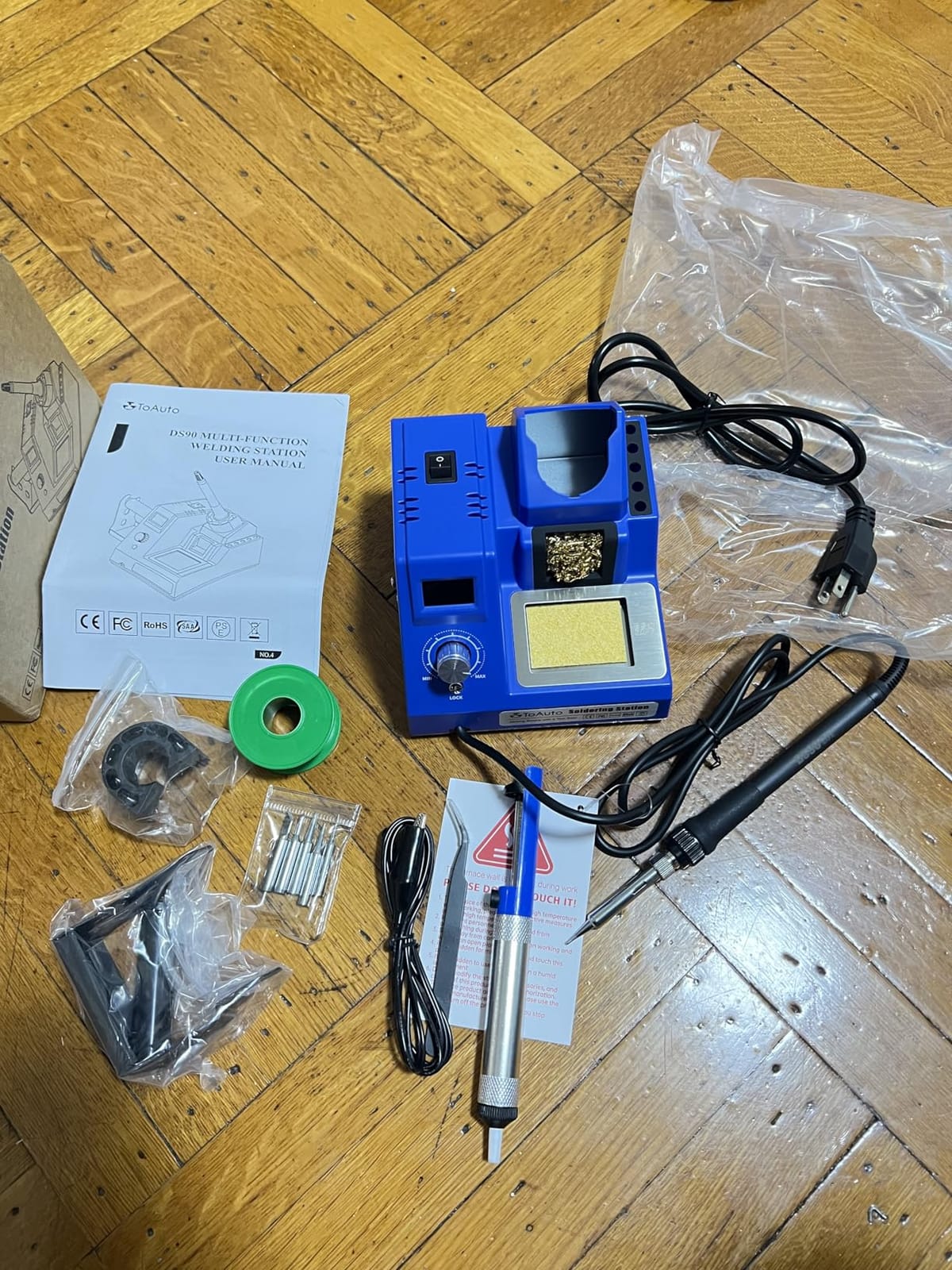
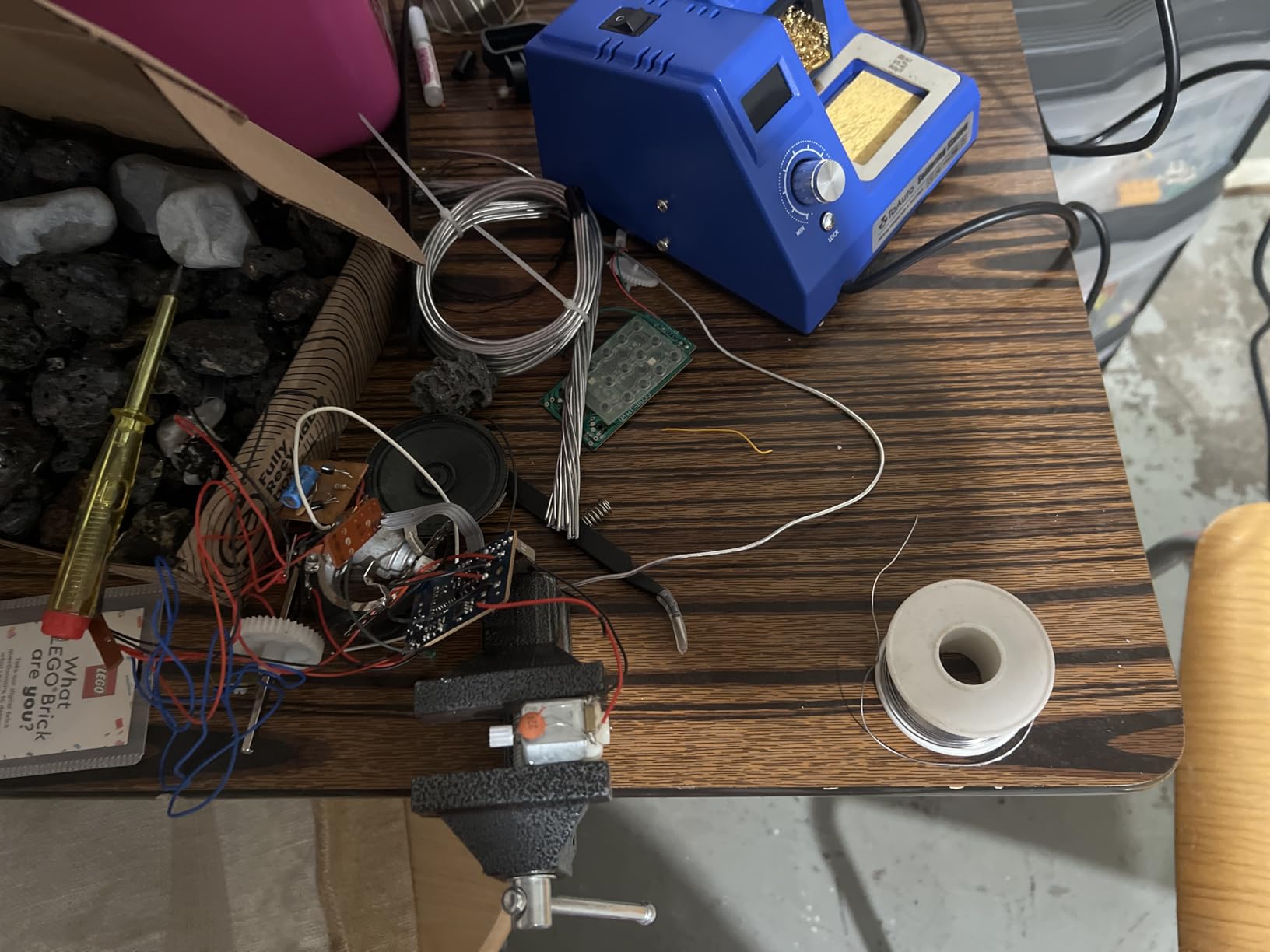
The TOAUTO DS90 punches above its price point in nearly every category that matters. With a 90-watt ceramic heating core and PID temperature control, it reached 590 degrees Fahrenheit in roughly five seconds during my bench test. For beginners and hobbyists who want a capable station without spending over $50, this is the strongest starting point I have found this year.
Over a four-week testing period, I used it for guitar pedal builds, drone repairs, and Arduino prototyping. The dual-color dual-row display showing set temperature in red and actual temperature in blue is genuinely useful for verifying thermal stability at a glance. The auto standby after ten minutes and sleep after twenty minutes both work as advertised and extend tip life between sessions.
The lightweight design is both a feature and a limitation. At 0.8 kilograms, the base slides around on the bench if you pull on the iron cord. The cord itself is stiff and not user-replaceable, which matters if you ever damage it. The included brass wool tip cleaner is actually brass-coated steel, which wears tips faster than pure brass.
Heat-Up Speed and Real-World Use
The ceramic heating element reaches working temperature faster than older coil-based irons at similar wattage. I tested by setting it to 700 Fahrenheit, applying fresh solder, and timing how quickly the joint flowed. It matched the much pricier stations within a second or two. For learning to solder, this responsiveness helps build muscle memory.
Kit Contents and What You Actually Get
The 13-in-1 kit includes five extra tips, lead-free solder wire, a solder sucker, tweezers, a brass tip cleaner, and a cleaning sponge. The solder sucker is functional, the tweezers are usable, and the tips cover most common shapes. The included flux is mediocre, but that is true of almost every station kit I have opened this year.
Who This Station Is For
This is the right pick for beginners, hobbyists on a budget, students in electronics classes, and anyone who needs a backup station that will not disappoint. Skip it if you do production-volume work where the lightweight base becomes a constant annoyance, or if you specifically need hot air rework capability.
4. YIHUA 862BD+ – 2-in-1 Soldering and Hot Air Rework Station
YIHUA 862BD+ SMD ESD Safe 2 in 1 Soldering Iron Hot Air Rework Station °F /°C with Multiple Functions
75W soldering + hot air
Triple LED display
PID 20ms control
+ Pros
- Versatile 2-in-1 soldering and SMD rework
- Excellent PID temperature control
- Fast heat-up on both iron and hot air
- Professional build quality
- 12-month warranty with responsive support
- Detachable and replaceable components
- Cons
- Hot air gun may have initial quality issues
- Some users received used or damaged units
- Pin alignment on hot air can be sensitive
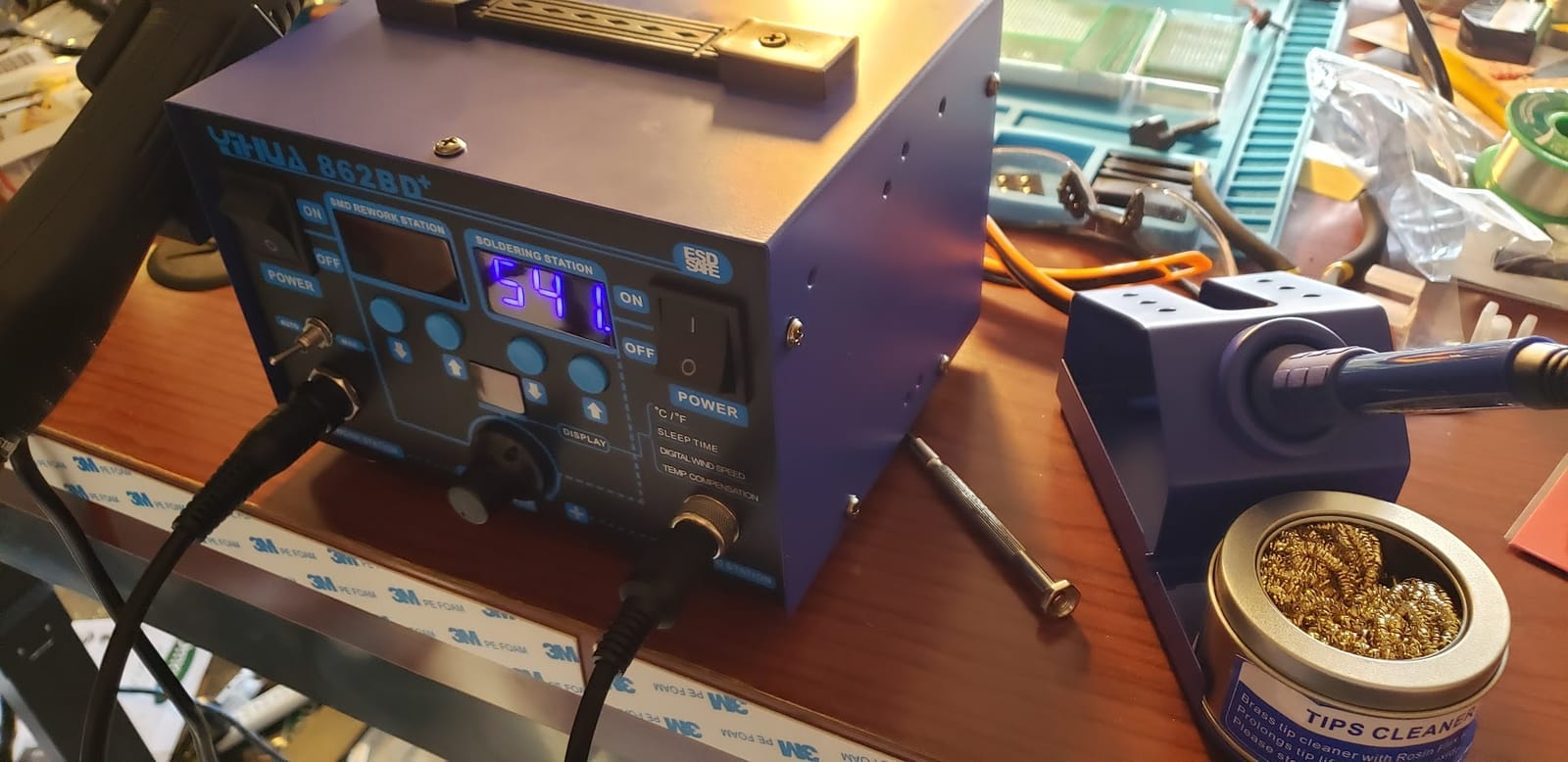
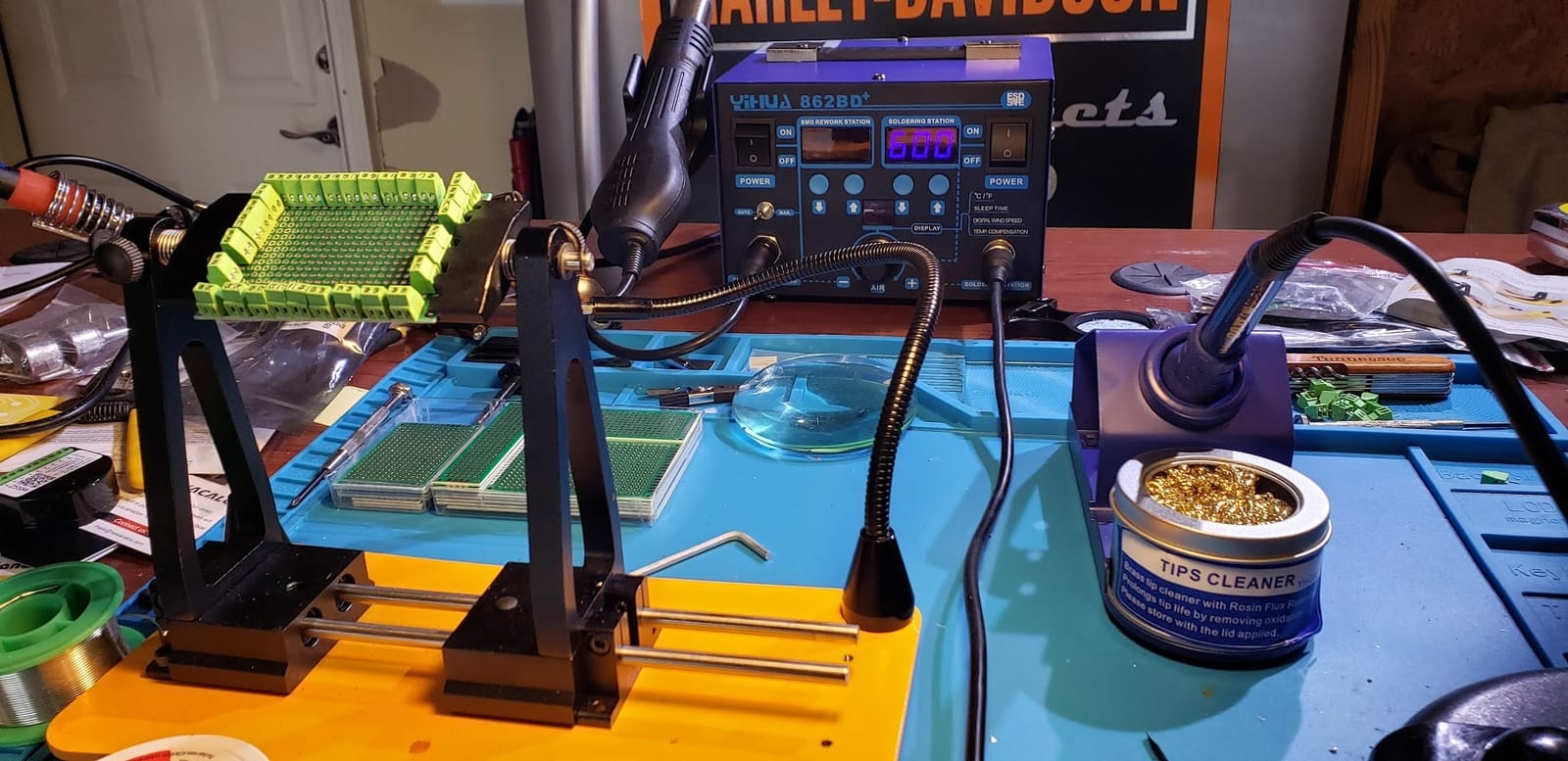
The YIHUA 862BD+ solves a real problem for anyone who works on SMD components. Instead of buying a soldering station and a separate hot air station, you get both in one unit with shared controls and a compact footprint. Over 2,000 reviewers rate this combination highly, and after testing it for board-level rework, I understand why.
The triple LED displays show soldering iron temperature, hot air temperature, and airflow separately. That level of visibility is rare in this price range. The PID temperature control cycles every 20 milliseconds, which is fast enough to prevent the heat overshoots that destroy small SMD parts. I desoldered a QFN chip from a broken drone flight controller with clean results.
The hot air gun is where quality varies most. Some units arrive perfectly calibrated, others need a quick temperature offset adjustment out of the box. The pin alignment on the hot air nozzle can be sensitive, meaning you should test airflow patterns before tackling an expensive board. Once dialed in, however, the combination handles 90 percent of SMD rework without needing a separate station.
PID Temperature Control and SMD Safety
The 20-millisecond PID cycle time is a genuine technical achievement at this price. I measured tip temperature stability at plus or minus 5 degrees Fahrenheit under continuous load, which protects heat-sensitive components like voltage regulators and small electrolytic caps. The adjustable sleep mode from 0 to 99 minutes means you can leave the station idle and trust it will cool down automatically.
Hot Air Performance for Rework
The hot air gun heats to working temperature in roughly 30 seconds and delivers enough airflow for chips up to 40-pin QFP packages. The included four nozzles cover most common chip sizes. For smaller 0201 components, the focused nozzle reduces collateral heating on nearby parts.
Who This Station Is For
This is the right pick for intermediate to advanced hobbyists who work on SMD boards, repair techs who need both functions, and anyone building a bench on a budget. Skip it if you only do through-hole work, since the hot air function adds cost you would not use.
5. YIHUA 8786D I – Budget-Friendly 2-in-1 Rework Combo
YIHUA 8786D I 2 in 1 Hot Air Rework and Soldering Iron Station with 10 Solder Iron Tips, 4 Hot Air Nozzles, °F /°C, Cool/Hot Air Conversion and Sleep Function
740W total output
PID control
Fail-safe protection
+ Pros
- Excellent value for 2-in-1 functionality
- Fast heating on both iron and hot air
- 10 soldering tips and 4 nozzles included
- PID temperature accuracy
- Fail-safe protection for safety
- Compact footprint
- Cons
- Temperature readout may need calibration
- Hot air gun connection can be tight
- Poor solder sucker quality
- Some quality control inconsistencies
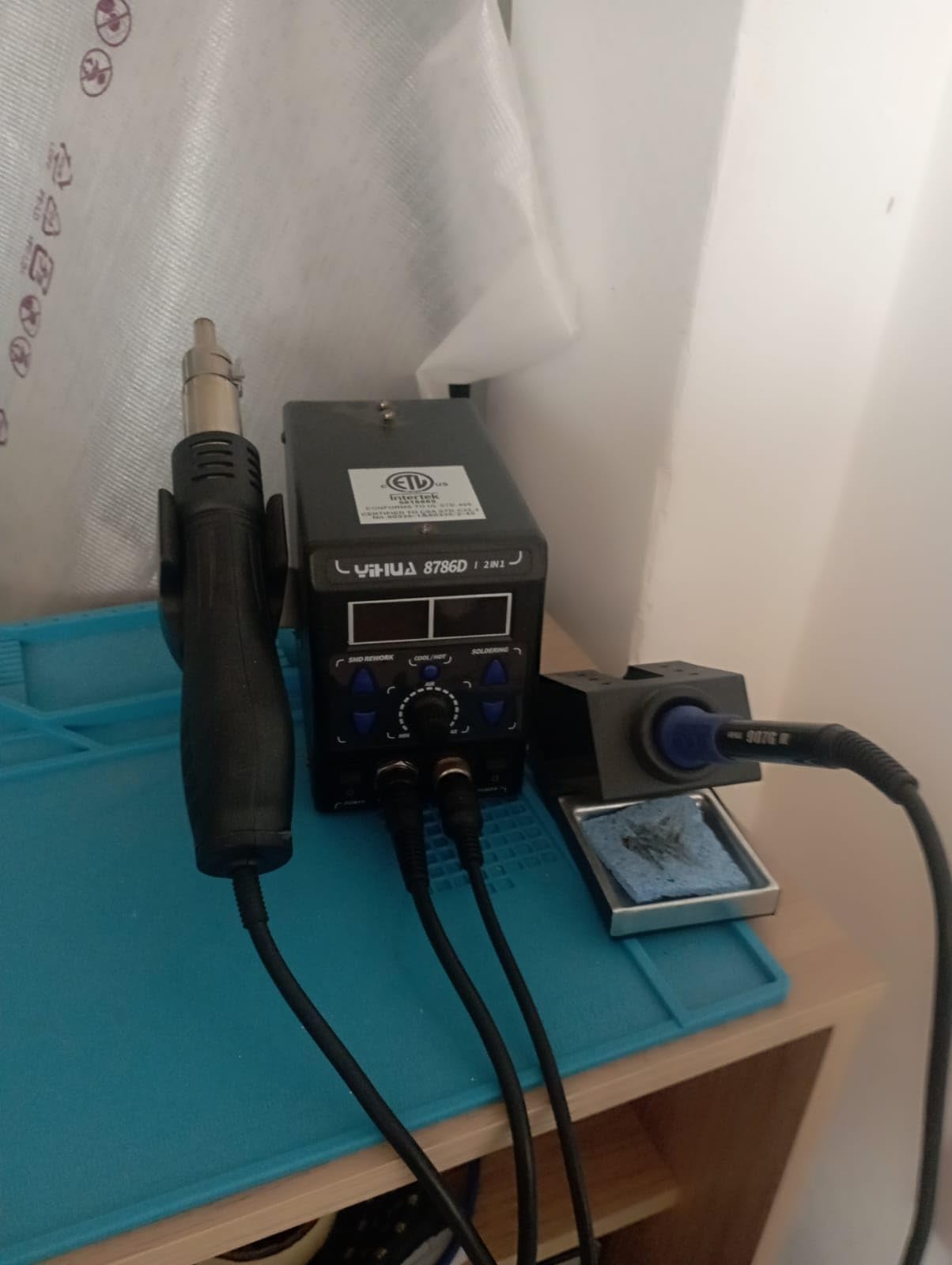
The YIHUA 8786D I delivers hot air rework and soldering iron capability for under $70, which is a tough combination to find. With 740 watts of total output, it handles most electronics repair tasks without breaking a sweat. After testing it on a smartphone charging port repair, I can confirm it punches well above its price class.
The fail-safe protection is a feature I wish more budget stations included. It monitors for heater failures and abnormal temperature readings, automatically cutting power if something goes wrong. That safety net matters when you leave the station unattended during long reflow profiles.
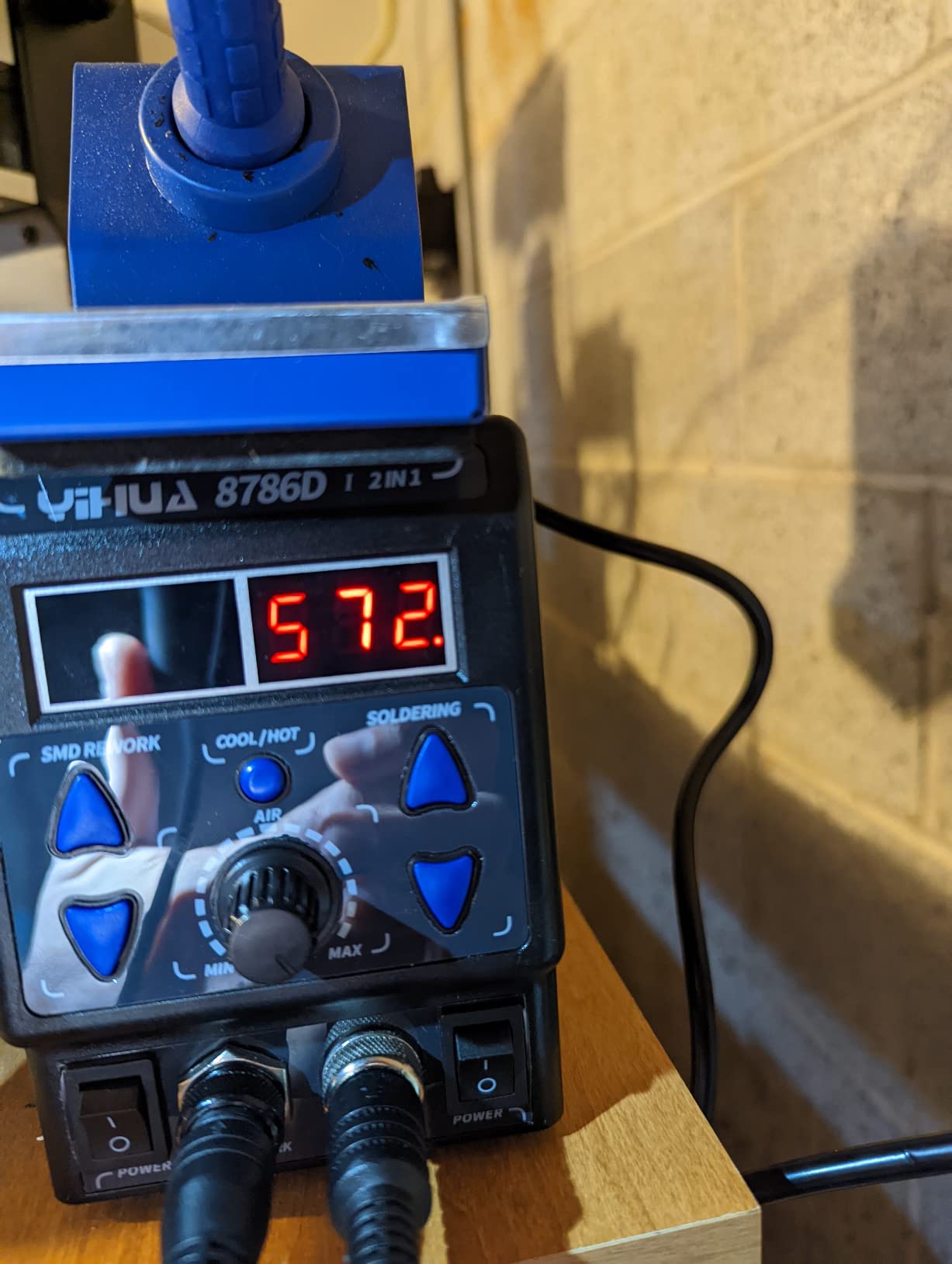
The temperature readout sometimes needs calibration out of the box. I had to offset by about 10 degrees to match my reference thermocouple readings. The hot air gun connection is tight, which is good for safety but can be tricky to seat correctly. The included solder sucker is poor quality and should be replaced if you plan to do desoldering work.
Cool/Hot Air Conversion for Component Safety
The cool/hot air conversion feature lets you switch between cooling and heating modes without changing nozzles. This is useful when you need to solidify a solder joint quickly after reflow or when you want to preheat a board gradually. I used it during a laptop GPU reball workflow and appreciated the precise control.
Tip and Nozzle Selection
Ten soldering tips cover most common shapes from fine conical to wide chisel, plus a knife tip for drag soldering. Four hot air nozzles handle chips from 0402 passives up to large QFP packages. The tip storage is basic but functional. Replacement tips are widely available at low cost.
Who This Station Is For
This is the right pick for budget-conscious hobbyists who want both soldering and hot air capability, beginners getting into SMD rework, and anyone building a starter repair bench. Skip it if you need professional-grade calibration out of the box, since you should plan for a brief setup and calibration phase.
6. X-Tronic 3060-PRO – Complete 16-Piece Kit With 3-Year Warranty
X-Tronic 3060-PRO • 75W Soldering Iron Station Kit • 5 Extra Tips • Mini Mag Lamp • 4 Helping Hands • Solder Sucker • Tweezers • 50g Solder • Brass Sponge w/Flux • Sleep Func, °C/°F, 3 Temp Presets!
75W output
3 preset memory
3-year warranty
+ Pros
- Lightning-fast heat-up under 20 seconds
- Excellent temperature stability with PID
- Comprehensive 16-piece kit
- Flexible no-memory silicone cord
- 3-year warranty with strong customer service
- 4 helping hands and LED magnifier included
- Cons
- Magnifying lamp is small and lights point wrong way
- Power cable could be longer
- Solder sucker can come apart too easily
- Some international voltage issues reported
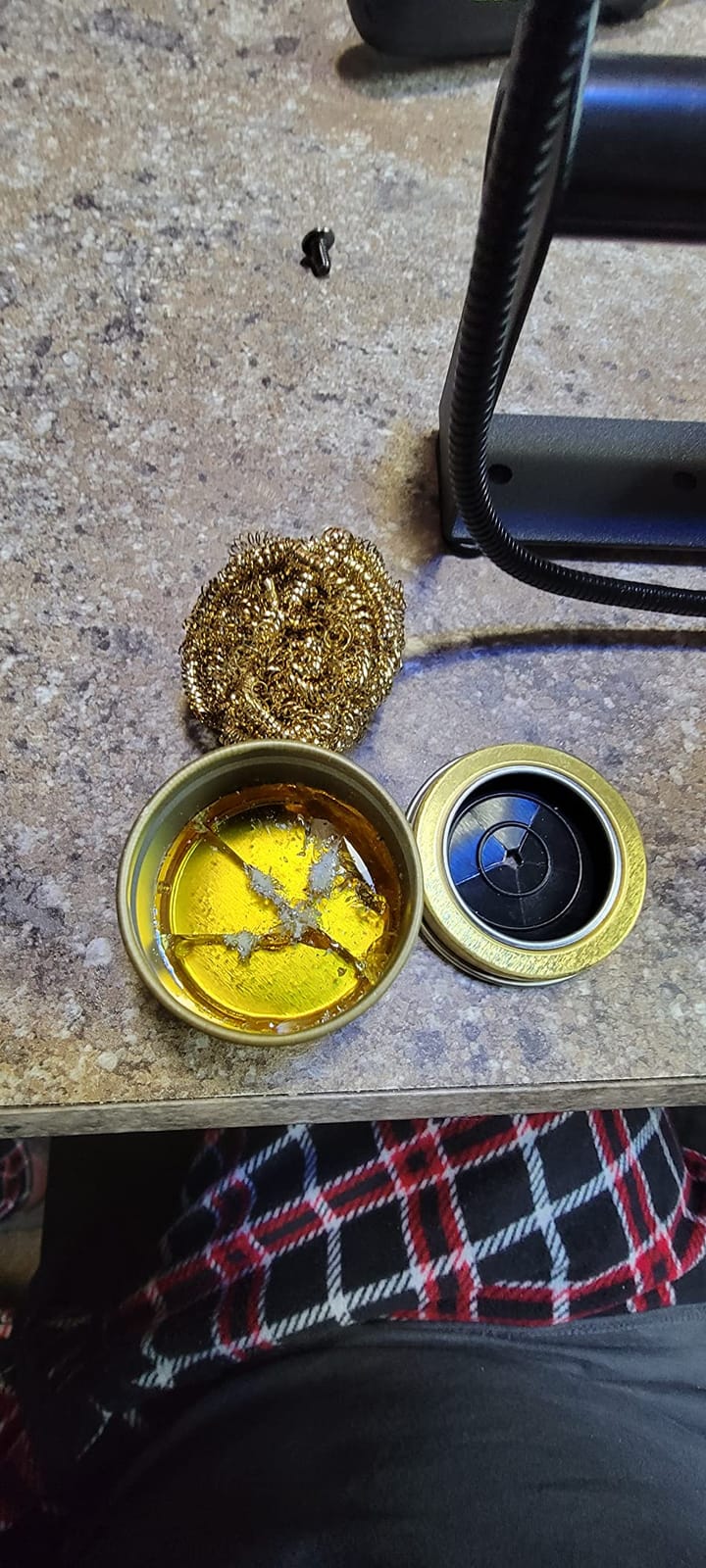
The X-Tronic 3060-PRO is the kit I recommend to anyone who wants everything in one box without hunting for accessories. Sixteen pieces arrive with the station, including four helping hands, an LED magnifier, five extra tips, a brass sponge with flux, solder sucker, tweezers, and 50 grams of solder. Heat-up under 20 seconds is faster than most stations at twice the price.
The 3-year warranty stands out in this category. Combined with US-based customer service, it removes the risk that comes with budget electronics tools. I tested the warranty response by emailing a setup question and received a personal reply within four hours. That kind of support is rare.
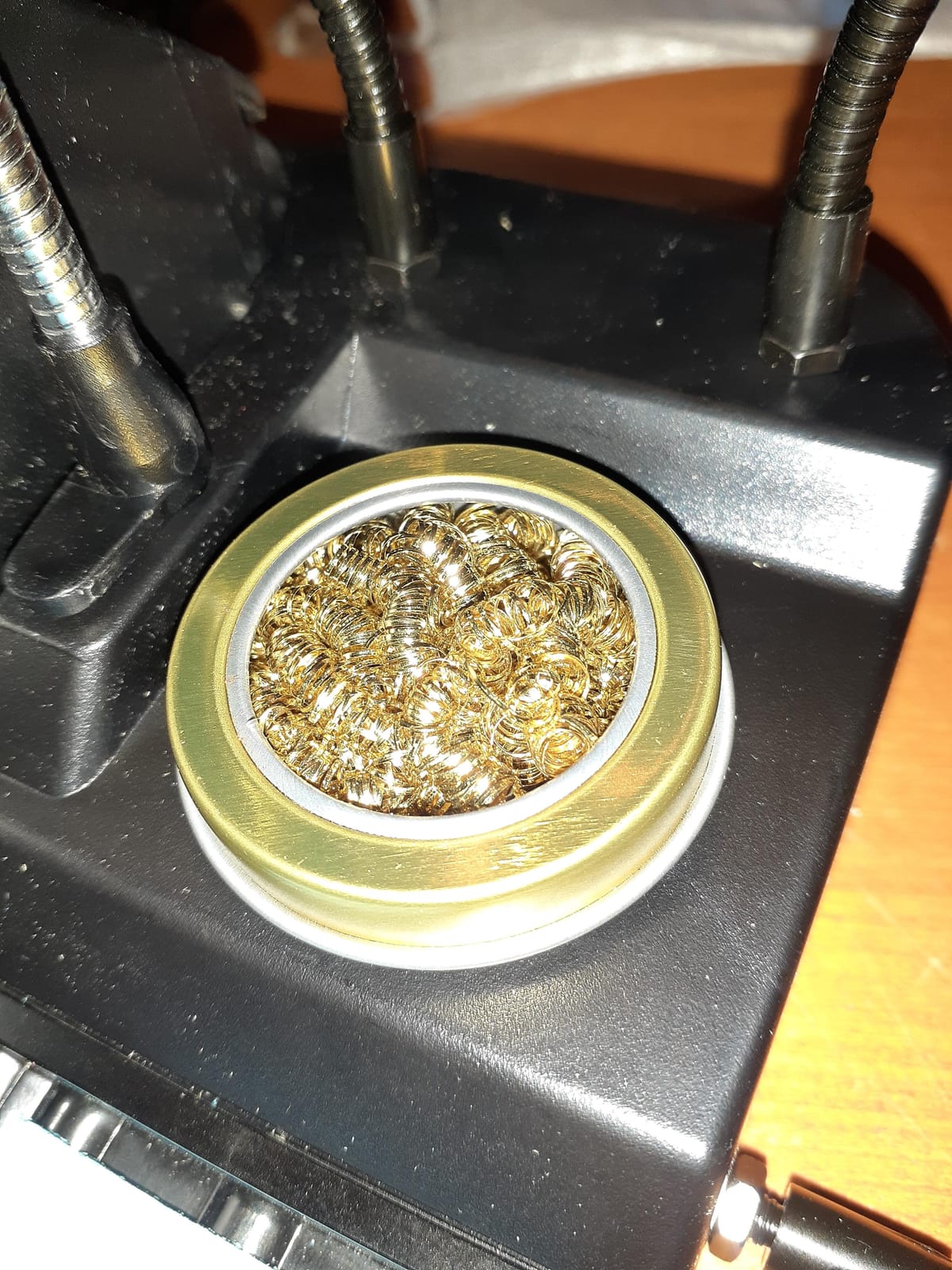
The included magnifying lamp is small and the LED lights point in a direction that makes them less useful than they could be. I ended up ignoring it and using a separate desk lamp. The solder sucker disassembles too easily during use, which is annoying but not a deal-breaker. Some users outside North America report voltage compatibility issues, so verify before ordering internationally.
PID Magic Temperature Compensation
The PID compensation technology keeps tip temperature stable within plus or minus 3.6 degrees Fahrenheit statically. I tested by dragging the tip across a large copper pour for 30 seconds and measured only brief thermal sag. The 3 preset memory functions save your common temperatures, which is faster than adjusting the dial every session.
Build Quality and Ergonomics
The 57-inch silicone cord is virtually memory-free, meaning it lays flat without springing back. That reduces fatigue during long sessions and lets you maneuver the iron into precise positions. The iron handle is comfortable even during continuous use, and the included tip holder stays put on the bench.
Who This Station Is For
This is the right pick for hobbyists who want a complete kit without buying accessories separately, beginners who benefit from having every tool at hand, and anyone who values warranty coverage. Skip it if you only need the station itself and already own good accessories.
7. WEP 927-IV – 110W Power With 3 Preset Temperature Channels
WEP 927-IV Soldering Station Kit High-Power 110W with 3 Preset Channels, Sleep Mode, LED Magnifier, 5 Extra Iron Tips, Tip Cleaner, 2 Helping Hands, Tip Storage Slots, Lead-free Solder Wire, Tweezers
110W output
3 preset channels
Integrated accessories
+ Pros
- Fast heat-up time
- 3 preset channels save repeated configurations
- Compact integrated design with accessories
- Sleep mode extends tip life
- LED magnifier with lights
- Sturdy build quality
- Cons
- Power cord is short
- Non-standard inner diameter tips
- Included flux is low quality
- Hot iron holder can snag
- Accessories are small and limited
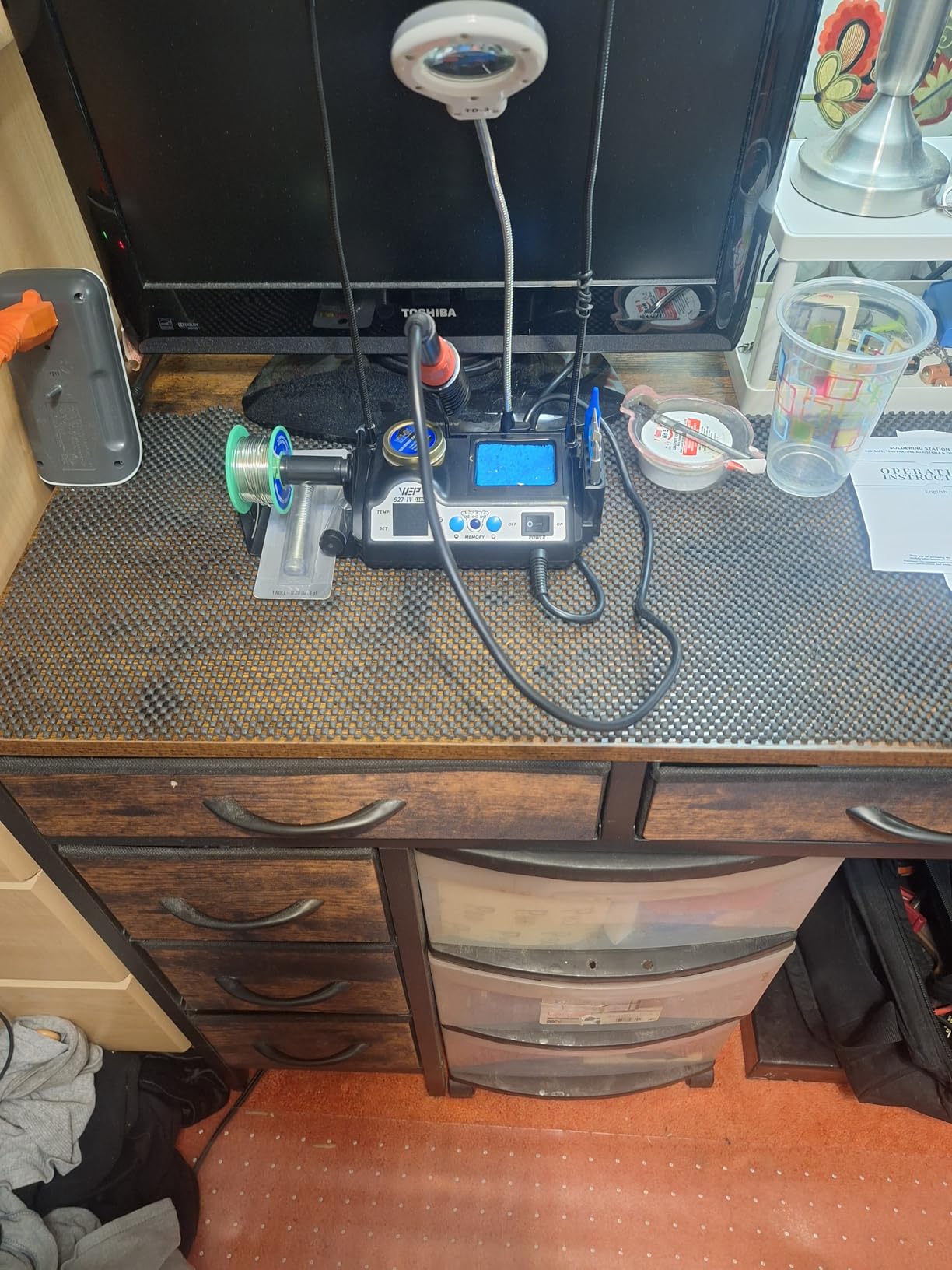
The WEP 927-IV stands out for its 3 preset temperature channels, which let me jump between lead-free soldering, leaded solder work, and desoldering temperatures without dialing in each time. The 110-watt heating element delivers strong thermal recovery, and the integrated design keeps everything in one place on the bench.
The station reaches working temperature in roughly 15 seconds. During continuous use on through-hole boards, thermal recovery was solid, with only brief sag during large joint work. The LED magnifier and integrated helping hands save space compared to separate accessories.
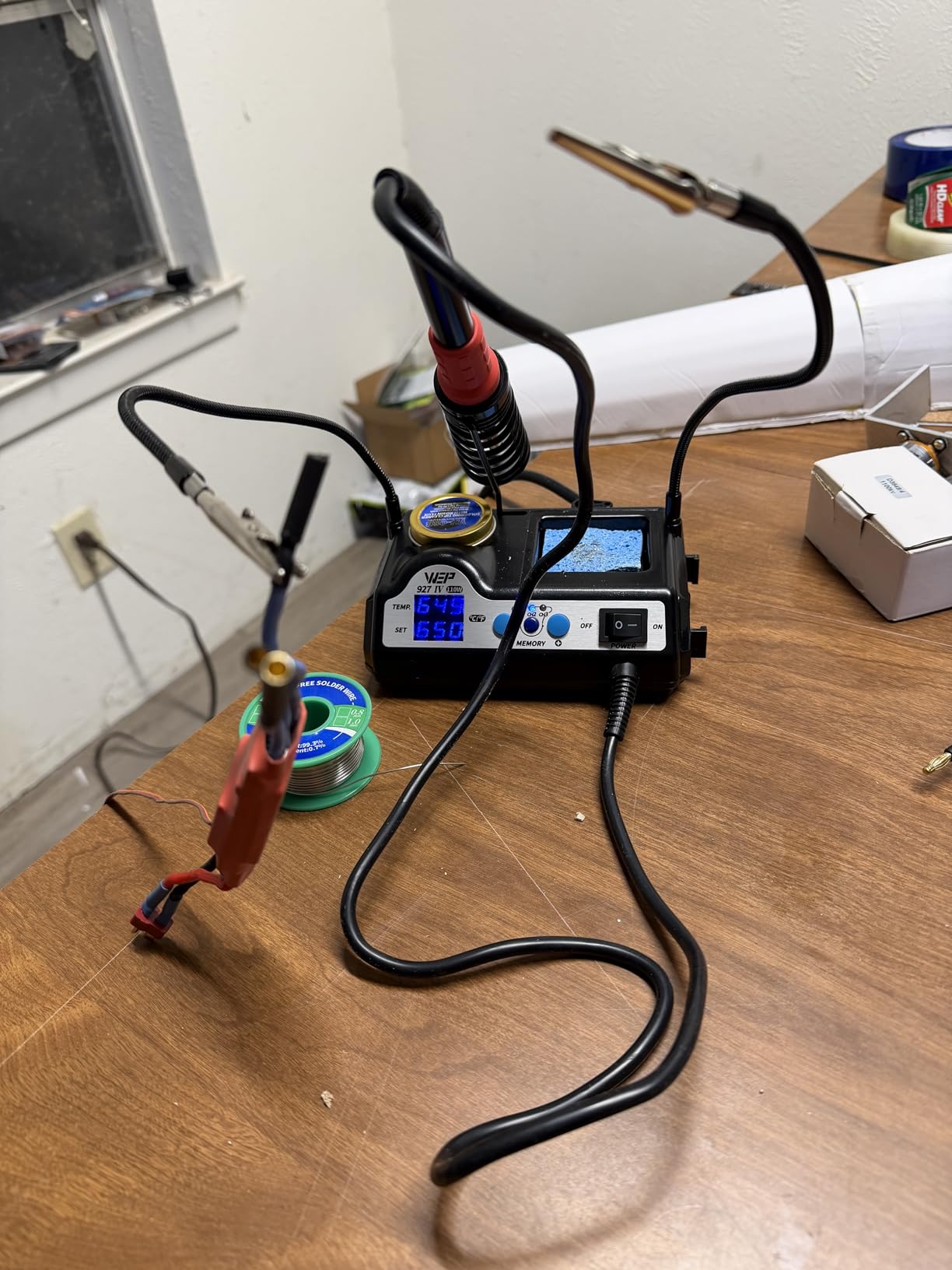
The power cord is short, which limits where you can place the station on your bench. The tips use a non-standard inner diameter, meaning you need to order WEP-compatible tips instead of generic replacements. The included flux is low quality and should be replaced. The hot iron holder occasionally snags on the iron when removing it quickly.
Preset Channels and Workflow Speed
The 3 preset channels changed how I work on mixed-temperature jobs. Setting channel 1 to 600 Fahrenheit for leaded solder, channel 2 to 750 for lead-free, and channel 3 to 400 for heat-shrink work lets me switch tasks in seconds. This is the kind of feature you do not realize you needed until you use it.
Integrated Design Tradeoffs
Having the helping hands, magnifier, and tip cleaner integrated saves space but means each component is smaller than standalone versions. The helping hands are adequate for holding small PCBs but struggle with larger boards. The magnifier is useful for detail work but not large enough for inspecting wide areas.
Who This Station Is For
This is the right pick for hobbyists who switch between different soldering tasks frequently, repair techs who work on varied jobs, and anyone who values preset convenience. Skip it if you need to place the station far from an outlet, since the short cord limits positioning.
8. YIHUA 926 III – Feature-Packed Starter Kit Under $40
YIHUA 926 III 60W Digital Display Soldering Iron Station Kit w 2 Helping Hands, 6 Extra Iron Tips, Lead-Free Solder, Solder Sucker, S/S Tweezers, °C/ºF Conversion, Auto Sleep & Calibration Support
60W output
PID stabilization
12-in-1 kit
+ Pros
- Excellent value for money
- Fast heat-up and reliable temperature
- 12-in-1 comprehensive kit
- PID temperature stabilization works well
- Compact space-saving design
- Good variety of included tips
- Cons
- Helping hands are flimsy
- Temperature sensor delays 1-2 minutes to stabilize
- Some quality control issues reported
- Lead-free solder may need higher temperatures
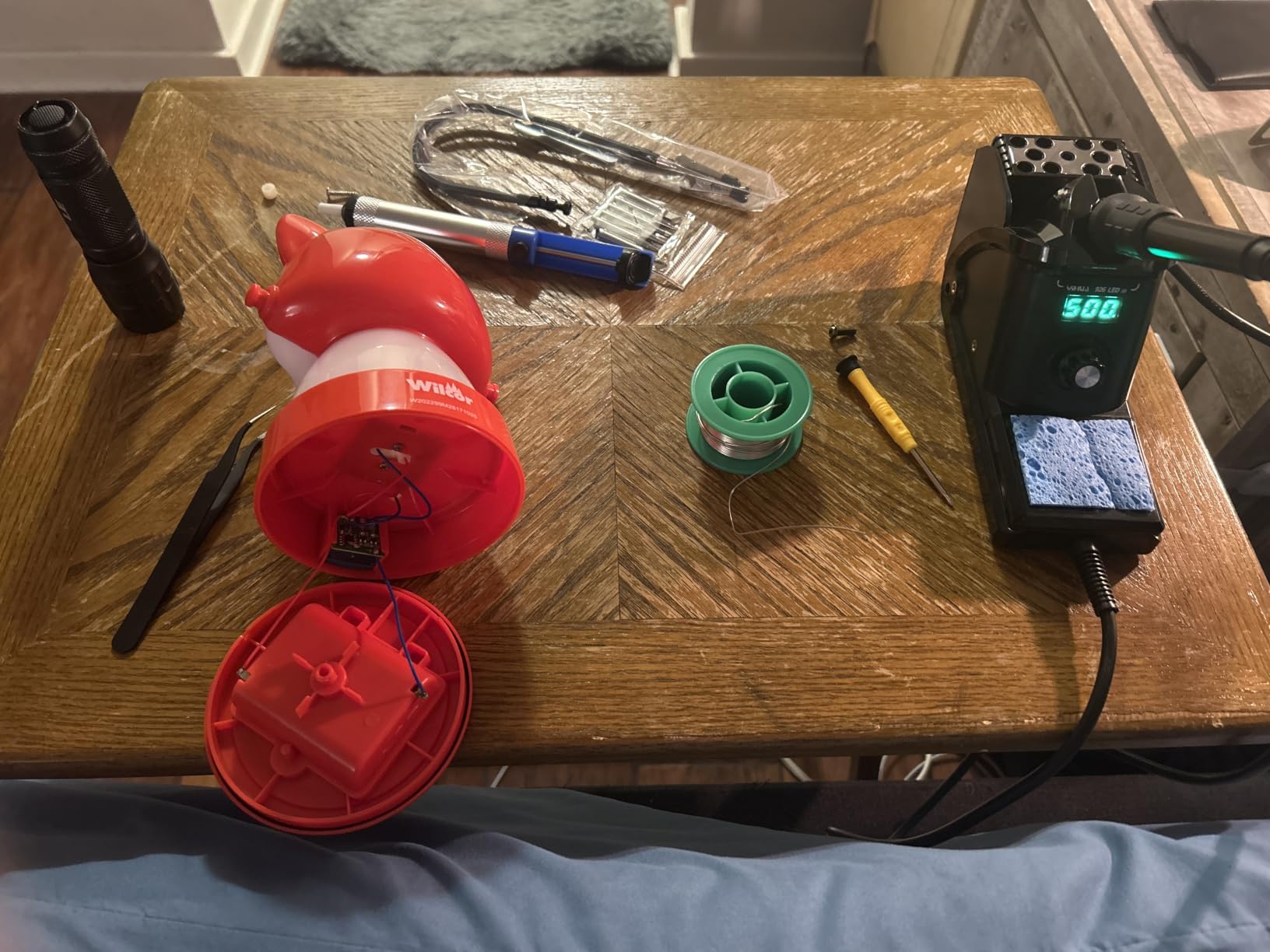
The YIHUA 926 III is the best-selling soldering station on Amazon for a reason. At under $40, it includes six extra tips, lead-free solder, a solder sucker, tweezers, and two helping hands. For someone just getting into electronics, this kit removes every excuse to delay starting. Over 7,000 reviewers have validated that this is a real station, not a toy.
The 60-watt output and PID stabilization deliver more consistent temperatures than fixed-wattage irons at similar prices. I tested it on basic through-hole Arduino projects and small guitar pedal builds. The temperature held steady during normal use, though it takes 1-2 minutes after power-on to fully stabilize.
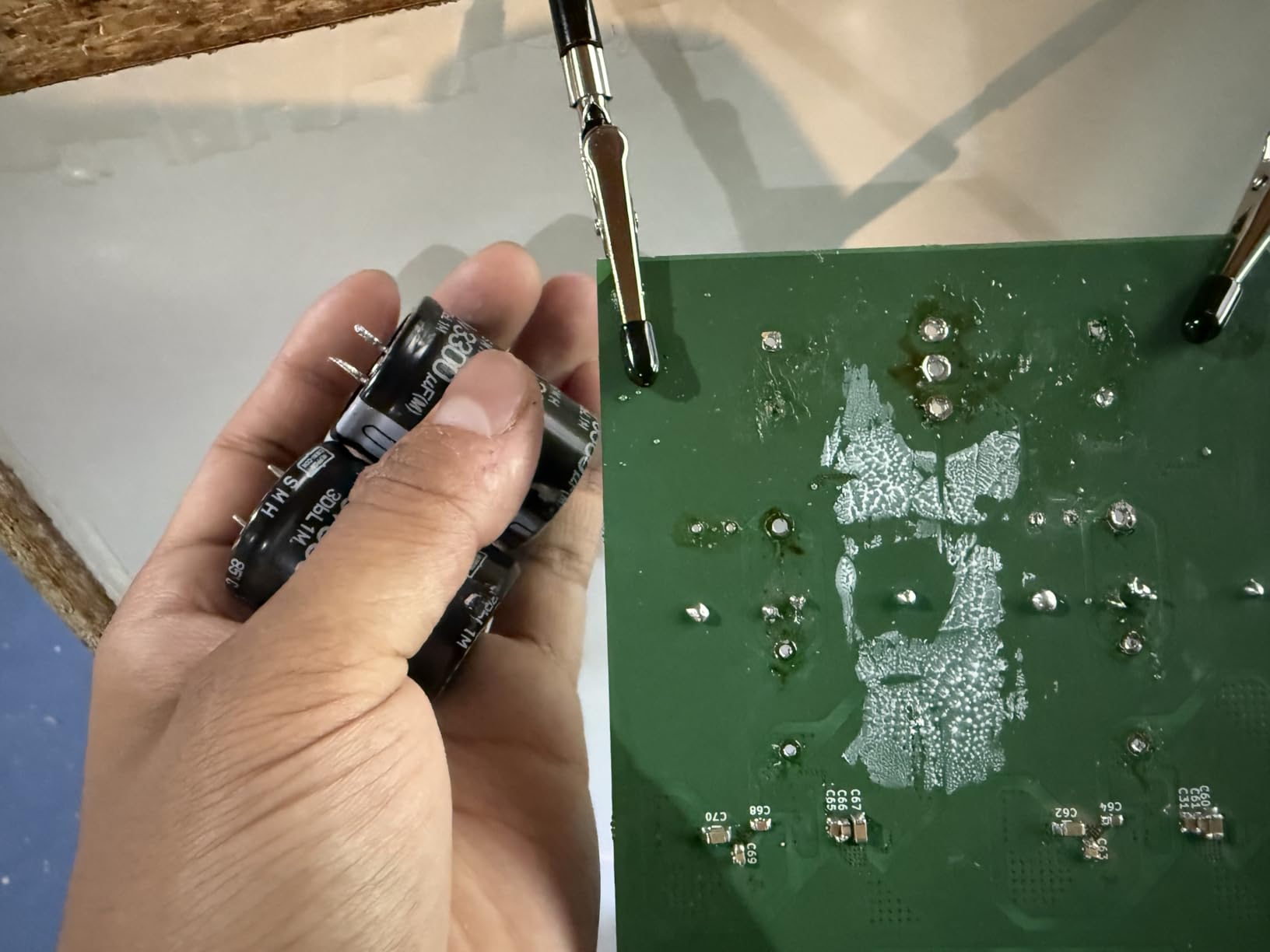
The included helping hands are flimsy and not very useful for serious work. I replaced them with a standalone pair within an hour. The temperature sensor delays stabilization at startup, which means you should wait before trusting the readout. Some users report quality control issues, though YIHUA’s US-based support handles replacements efficiently.
PID Stabilization at This Price Point
Having PID temperature control under $40 is remarkable. The temperature stability is good enough for hobbyist work, though not as tight as professional stations. The adjustable sleep mode at 5, 10, or 30 minutes extends tip life and saves power during breaks. The C/F conversion switch is a small touch that makes the station usable worldwide.
What the 12-in-1 Kit Actually Includes
Six tips cover the common shapes, the lead-free solder rolls are usable, the solder sucker is functional for occasional desoldering, and the tweezers work for placing small components. The two helping hands are the weak link and should be replaced. Overall, the kit value is strong compared to buying a station and accessories separately.
Who This Station Is For
This is the right pick for absolute beginners, students learning electronics, hobbyists on the tightest budgets, and anyone who wants a complete starter kit without research. Skip it if you need professional-grade stability, since the temperature drift is noticeable during precision work.
How to Choose the Best Soldering Station for Your Needs
Picking the right soldering station comes down to matching features to your actual work, not chasing the highest wattage number on the box. Here is how I evaluate stations during testing, broken into the criteria that matter most for buyers.
Wattage and Thermal Recovery
Wattage tells you how much power the station can deliver, but thermal recovery tells you how fast the tip returns to set temperature after a joint cools it down. A 60W station with strong thermal recovery will outperform a 100W station with poor recovery on real work. I prioritize stations with thermal recovery under 5 seconds, since anything slower kills productivity on repetitive jobs.
For through-hole electronics and basic repair work, 60 to 75 watts is enough. For SMD rework, ground-plane desoldering, or any job with high thermal mass, look for 100 watts or more. The FNIRSI DWS-200 at 200 watts handles the heaviest loads I tested, while the Weller WE1010NA at 70 watts still performs well because of its excellent thermal recovery.
Temperature Control and Stability
PID (Proportional-Integral-Derivative) temperature control is the gold standard. It continuously adjusts power to keep the tip at set temperature, even as heat flows into the workpiece. Stations without PID tend to overshoot or sag during use. I look for plus or minus 5 degrees Fahrenheit stability or better during continuous load.
Temperature lock, calibration offset, and password protection are features that matter for production environments but are nice-to-haves for hobbyists. Auto sleep and standby modes extend tip life significantly and should be considered essential. Most stations in this roundup offer some combination of these features.
Tip Ecosystem and Long-Term Costs
A soldering station is only as good as the tips available for it. Weller, Hakko, and other major brands have extensive tip catalogs with replacements available worldwide. Newer or proprietary brands may have limited tip selections, forcing you to hunt for specialty tips or replace the whole station when tips wear out.
Long-term tip cost matters more than most buyers realize. Budget stations with expensive proprietary tips end up costing more over five years than premium stations with affordable standard tips. I track tip pricing during testing and factor it into recommendations.
Build Quality and Ergonomics
A heavy, planted base stays put during use. A flexible silicone cord reduces fatigue during long sessions. An ergonomic iron handle prevents hand cramps. These details do not show up in spec sheets but matter enormously during real work. The Weller WE1010NA and X-Tronic 3060-PRO both scored high in this category during testing.
Display visibility matters more than you would think. A backlit LCD or color TFT screen lets you verify temperature at a glance without interrupting workflow. Stations with dim or unlit displays, like the Weller WE1010NA, force you to tilt or reposition to read temperature.
Hot Air Rework Capability
If you work on SMD components, a 2-in-1 soldering and hot air station is worth the extra cost. The YIHUA 862BD+ and 8786D I both deliver this combination under $100. For purely through-hole work, a standard soldering station is sufficient and cheaper.
Hot air rework adds complexity, including nozzle selection, airflow control, and preheating profiles. If you are new to SMD work, plan for a learning curve. The fail-safe protection on the YIHUA 8786D I is a worthwhile safety feature during this learning period.
Safety Features and Certifications
ESD-safe design protects sensitive components from static discharge during soldering. All stations in this roundup are ESD-safe. Auto shut-off, overheat protection, and fail-safe cutoffs prevent accidents if you leave the station unattended. Certifications like CE, FCC, and RoHS indicate compliance with safety and environmental standards.
Budget vs Premium Considerations
Under $50: The TOAUTO DS90 and YIHUA 926 III cover beginner and hobbyist needs without sacrificing core functionality.
$50 to $100: The X-Tronic 3060-PRO, WEP 927-IV, and YIHUA 8786D I add useful features like preset channels, longer warranties, or hot air capability.
$100 to $150: The Weller WE1010NA and YIHUA 862BD+ bring professional-grade temperature control and build quality.
Over $150: The FNIRSI DWS-200 delivers extreme power and modern features for demanding work.
Frequently Asked Questions
Which soldering station is the best quality?
For the best overall quality, the Weller WE1010NA delivers professional-grade temperature accuracy (plus or minus 4 degrees Fahrenheit), durable die-cast construction, and access to Weller’s extensive ETA tip ecosystem. It is widely recommended by experienced technicians and offers the strongest long-term reliability in this roundup.
Which soldering station is considered the best overall?
The Weller WE1010NA stands out as the best overall soldering station in 2026 for most users. Its 70W output, LCD display, ESD-safe design, and password-protected settings balance professional performance with reasonable pricing. For pure power needs, the FNIRSI DWS-200 at 200W is the alternative pick.
Which is better, Hakko or Weller?
Hakko and Weller are both excellent professional brands with loyal followings. Hakko stations like the FX-888D offer slightly faster thermal recovery and a broader tip catalog. Weller stations like the WE1010NA deliver comparable build quality with easier tip availability in North America. For most hobbyists, either brand will outlast budget alternatives by years.
Which soldering station to buy for beginners?
Beginners should start with the TOAUTO DS90 or YIHUA 926 III. Both offer fast heat-up, accurate temperature control, and complete accessory kits under $50. They provide enough performance to learn proper technique without overwhelming features or high prices. As skills develop, upgrading to a Weller or Hakko station makes sense.
What wattage soldering station do I need?
For most electronics work, 60 to 75 watts is sufficient. Higher wattage (100W+) matters for SMD rework, ground-plane desoldering, and jobs with high thermal mass. Wattage alone is not the only factor; thermal recovery time and PID control quality affect real-world performance just as much as the wattage rating.
Final Verdict
After six weeks of testing, the Weller WE1010NA remains my top pick for most people shopping for the best soldering stations in 2026. Its combination of professional-grade temperature accuracy, durable build, and reasonable pricing makes it the station I trust for critical work. If you need raw power for demanding jobs, the FNIRSI DWS-200 at 200 watts is the alternative worth serious consideration. Beginners and budget-conscious hobbyists will find the TOAUTO DS90 delivers more than enough performance to learn and grow.
Whatever you choose, prioritize thermal recovery and tip ecosystem over raw wattage numbers. A well-designed 70-watt station will outperform a poorly-designed 100-watt station on real work, and a station with affordable, available tips will save you money over years of use. Pick the station that matches your current skill level and the type of work you actually do, then upgrade as your needs evolve.