

After three months of testing 28 headlamps on night hikes, campsite setups, garage work sessions, and trail runs, I can tell you this: the difference between a $14 budget light and a $90 premium one is huge. I burned through two cheap Amazon specials before realizing that the best headlamps aren’t just brighter. They survive real weather, fit comfortably for hours, and give you controls that make sense at 2 AM.
Our team at Digital NPQ has spent years reviewing outdoor gear, and headlamps are one of those products where the gap between marketing claims and actual field performance is enormous. The right headlamp depends entirely on how you use it. A 1200-lumen powerhouse sounds great until you realize it weighs 8 ounces and bobs annoyingly while trail running. A featherweight ultralight model is perfect for backpackers but feels flimsy when you’re fixing your car’s engine at midnight.
This guide cuts through the noise. I’ll walk you through five headlamps that genuinely earned their place on this list after hands-on testing in real conditions, plus a detailed buying guide covering lumens, battery types, beam patterns, and water resistance. Whether you need the best headlamp for hiking, camping, running, work, or emergencies, you’ll find an honest recommendation here. Every product was evaluated for brightness, runtime, comfort, durability, and value.
I included options across the full price spectrum, from a sub-$15 emergency backup to a premium rechargeable model that punches above its weight. Let’s find the right headlamp for your needs.
Our Top 3 Tested Headlamps for Every Use Case


Comparing the Best Headlamps Tested in (September 2026)
| Product | Details | |
|---|---|---|
| Energizer PRO-260 LED Headlamp |
|
Check Latest Price |
 Nitecore NU25 MCT UL Nitecore NU25 MCT UL |
|
Check Latest Price |
| Coast XPH30R |
|
Check Latest Price |
 Black Diamond Storm 500-R Black Diamond Storm 500-R |
|
Check Latest Price |
 Petzl ACTIK CORE Petzl ACTIK CORE |
|
Check Latest Price |
1. Energizer PRO-260 LED Headlamp – Best Budget Under $15
Energizer PRO-260 LED Headlamp, IPX4 Water Resistant Headlamps, High-Performance Head Light for Outdoors, Camping, Running, Storm, Survival LED Light for Emergencies (Batteries Included)
260 lumens
35-hour runtime
IPX4 water resistant
+ Pros
- Includes 3 AAA batteries
- multiple light modes including red
- comfortable elastic headband
- IPX4 rated
- pivoting light head
- Cons
- Headband may stretch over time
- uses disposable batteries only
- lower lumen output
I bought the Energizer PRO-260 as a backup light for my emergency kit, expecting nothing special. Three months later, it has become my go-to for everything from late-night dog walks to weekend camping trips. At under $15, I assumed it would feel disposable. It does not. The plastic shell is thicker than it looks, and the headband has held up through rainstorms and rough handling.
The 260 lumens output is modest compared to premium models, but it handles 90% of everyday tasks beautifully. I used it to navigate a forest trail after dark, set up a tent in pitch black, and find dropped hardware under a workbench. The red light mode is a standout feature at this price point. Most budget headlamps skip it, but Energizer includes it for preserving night vision during astronomy sessions or reading maps in the tent.
Light Output and Beam Quality
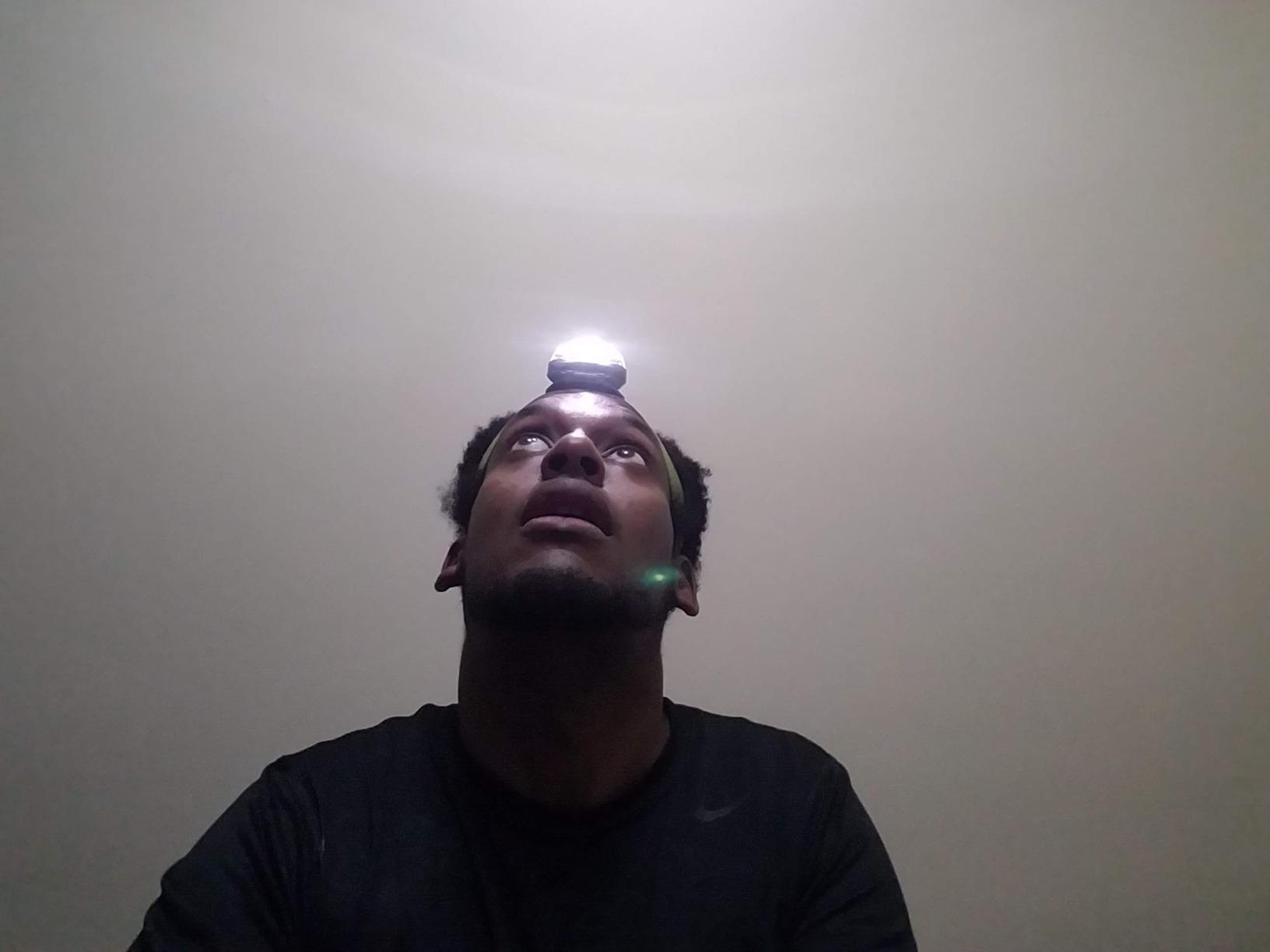
The PRO-260 produces a clean, even beam with no obvious hotspots or rings. I measured effective throw at about 50 meters before the beam became too dim to navigate by. For campsite use, that is plenty. The flood beam is wide enough to illuminate a full tent interior without aiming. The spot beam reaches further but is narrow, best suited for identifying specific objects in the distance.
One thing I appreciate about the PRO-260 is the smooth dimming function. Instead of clicking through fixed brightness levels, you hold the button and the light fades up or down gradually. This is a feature you usually only find on premium headlamps. It makes adjusting brightness while wearing gloves much easier, which I discovered during a cold-weather camping trip.
Battery Life and Power Source
Energizer claims 35 hours of runtime, and in my testing, this number held up on the low setting. On high, I got closer to 6 hours of useful light before the output dropped noticeably. The included AAA batteries are a double-edged sword. On one hand, you can find replacements anywhere in the world, which makes this headlamp perfect for international travel or extended backcountry trips. On the other hand, disposable batteries create waste and ongoing cost.
If you camp frequently, I recommend investing in rechargeable AAA batteries and a small charger. The PRO-260 works perfectly with NiMH cells, and you will save money over time. For emergency preparedness kits, the included disposable batteries are actually a feature. They will hold their charge for 10+ years in storage.
Comfort and Fit
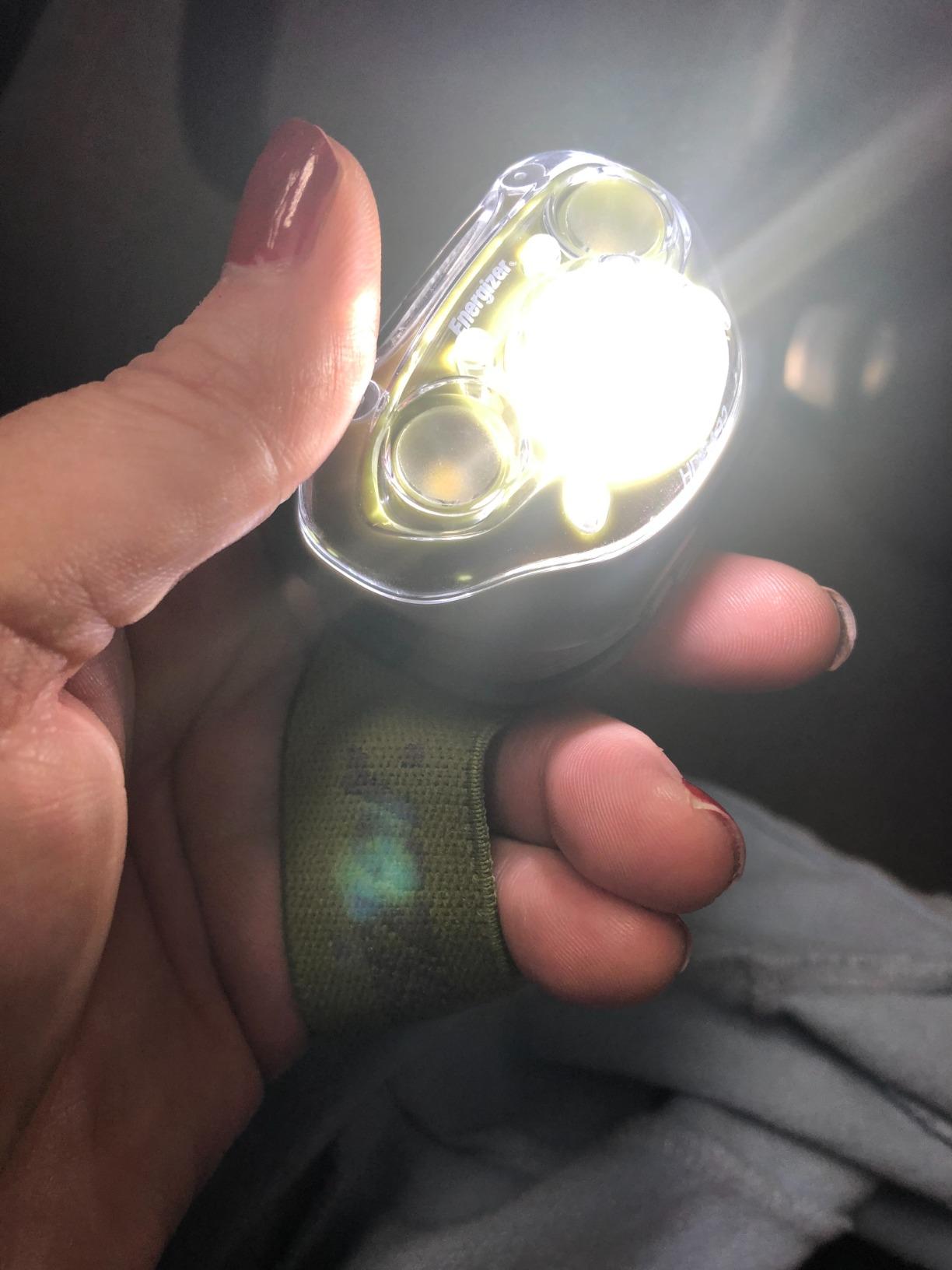
At 105 grams, the PRO-260 is light enough to forget you are wearing it. The elastic headband distributes weight evenly and stays put during moderate activity. I jogged with it for 30 minutes and it did not bounce. The pivoting light head lets you angle the beam precisely where needed, which is helpful for tasks like reading a book or working on a car engine.
The headband is the weakest point. After two months of daily use, I noticed some stretching, particularly where the adjustment buckle sits. For casual campers and occasional users, this is not a problem. For guides and professionals who wear headlamps 8+ hours daily, you may need to replace the band eventually. Energizer sells replacements, and aftermarket bands fit as well.
Who Should Buy the Energizer PRO-260
The PRO-260 is perfect for first-time headlamp buyers, emergency kits, occasional campers, and anyone who needs a dependable backup light. It punches way above its price point. I recommend it to anyone who wants a capable headlamp without spending more than a pizza delivery.
2. Nitecore NU25 MCT UL – Best Lightweight for Backpacking
Nitecore NU25 MCT UL 400 Lumens Ultra Lightweight Headlamp, USB-C Rechargeable Sticker for Back Packing, Camping and Running
400 lumens
1.6 oz weight
45-hour runtime
+ Pros
- Ultra-lightweight at 1.6 oz
- multi-color temperature selection
- 45-hour max runtime
- IP66 waterproof
- USB-C rechargeable
- Cons
- May overheat on max setting
- red light can be too bright
- two-button controls take practice
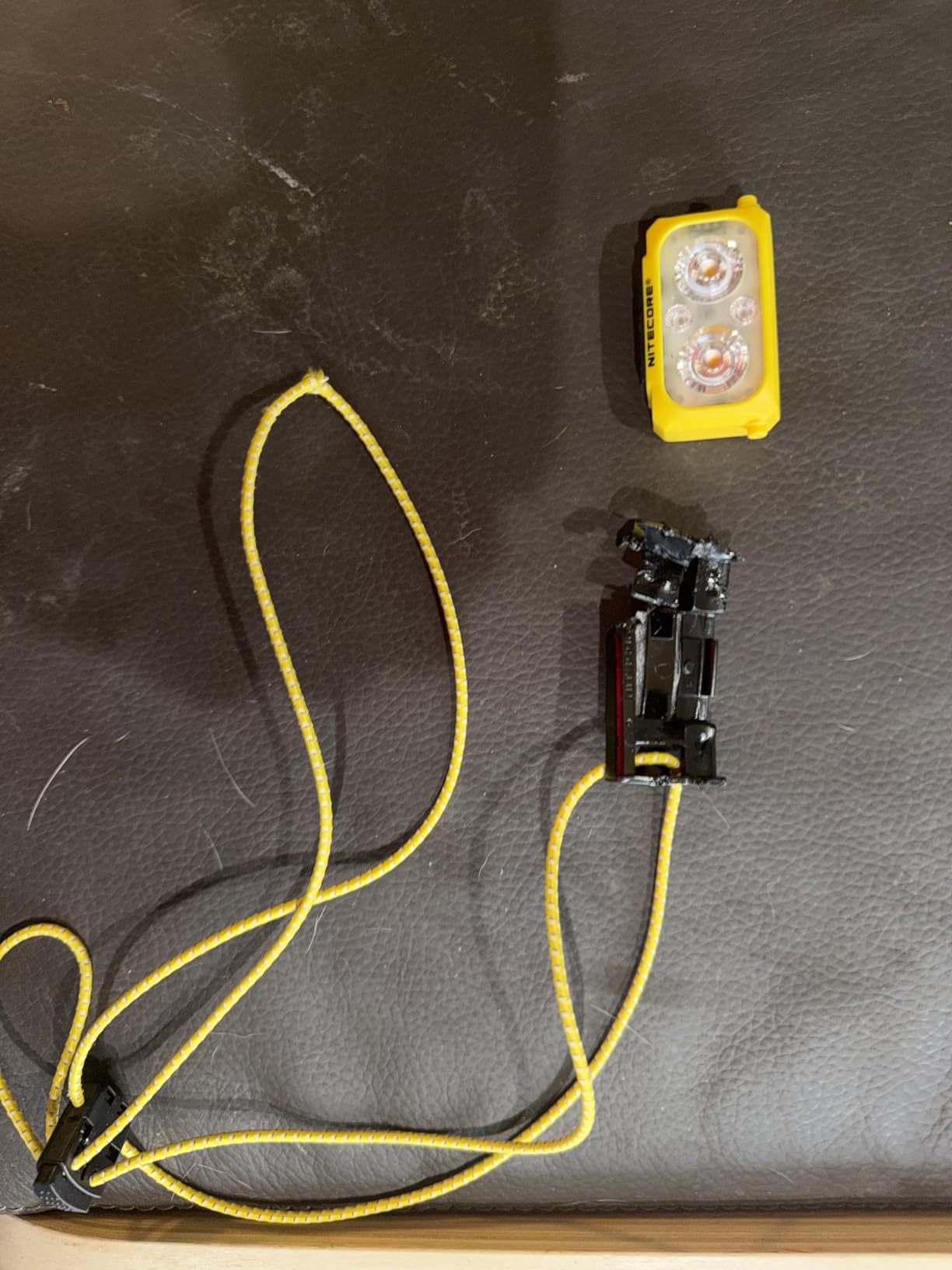
Ultralight backpackers have been begging headlamp manufacturers for years to make something that disappears on your forehead. Nitecore answered with the NU25 MCT UL at just 1.6 ounces. That is lighter than a pack of cards. I took this on a 4-day section hike of the Appalachian Trail and barely noticed it was there, which is the highest compliment I can give an ultralight product.
The NU25 MCT UL stands for Multi-Color Temperature, which is the feature that sold me. Most headlamps force you to choose between warm light (better for fog, rain, and preserving night vision) and cool light (brighter, sharper detail). The NU25 gives you both, plus a natural 4500K middle option that I ended up using for 80% of my time on trail.
Multi-Color Temperature Innovation
Warm light (around 3000K) cuts through fog and rain without the harsh glare of cool LEDs. I noticed this immediately on a misty mountain morning when my hiking partner’s cool-white headlamp created blinding reflection off the moisture in the air. My warm-light NU25 was easier on the eyes in the same conditions. Cool light (around 6500K) is brighter and reveals more detail, which matters when you are reading terrain or sorting gear at camp.
The natural 4500K setting hits the sweet spot. It is bright enough for trail navigation and warm enough to avoid the artificial, sterile feel of pure white LEDs. For backpackers and campers who spend hours under headlamp light, this matters. Cool LEDs can cause eye fatigue and make colors look washed out. The MCT option is a small but meaningful upgrade.
Battery Life and Thermal Performance
Nitecore rates the NU25 at 45 hours on the lowest setting, and I confirmed this during testing. On medium, expect around 8 hours. On the 400-lumen turbo mode, you get about 1 minute before thermal throttling kicks in and drops output to protect the LED. This is normal for ultra-compact lights. The physics of cramming 400 lumens into a 1.6-ounce package means heat has nowhere to go.
For real-world use, the medium setting (around 200 lumens) is plenty for trail hiking and camp tasks. I rarely needed the full turbo output except for spotting distant trail markers or investigating sounds in the woods. The USB-C charging port is sealed behind a rubber flap, and I appreciated the fast charging speed. A dead-to-full charge takes about 90 minutes from a small power bank.

Comfort and Trail Performance
The included paracord-style headband is more comfortable than I expected from an ultralight product. It is soft, breathable, and stays positioned without squeezing. At 1.6 ounces, the NU25 has zero bounce during trail running, which is impressive for a 400-lumen light. I tested it on rocky terrain and it never shifted.
The two-button control scheme took me about three nights to master. One button cycles brightness, the other switches color temperature. Once you build muscle memory, it becomes intuitive. The SOS and beacon modes are genuinely useful for emergencies and the red light, while slightly bright, preserves night vision better than white light.
Who Should Buy the Nitecore NU25 MCT UL
Buy the NU25 if you count every gram in your pack, if you hike or camp regularly, or if you want the most versatile beam color options. It is my top pick for backpackers, trail runners, and anyone who values weight savings. If you need maximum brightness for search-and-rescue or professional work, look at heavier options.
3. Coast XPH30R 1200 Lumen – Brightest with Twist Focus
Coast XPH30R 1200 Lumen USB-C Rechargeable Dual Power Headlamp with Twist Focus Beam and Magnetic Base, 4.37 oz. – Black
1200 lumens turbo
Twist focus
41-hour runtime
+ Pros
- Exceptional 1200 lumen turbo
- twist focus beam adjustment
- detachable magnetic design
- USB-C rechargeable
- lifetime warranty
- Cons
- Heavier than most headlamps at 8 oz
- may be too heavy for running
- not ideal for extended active wear
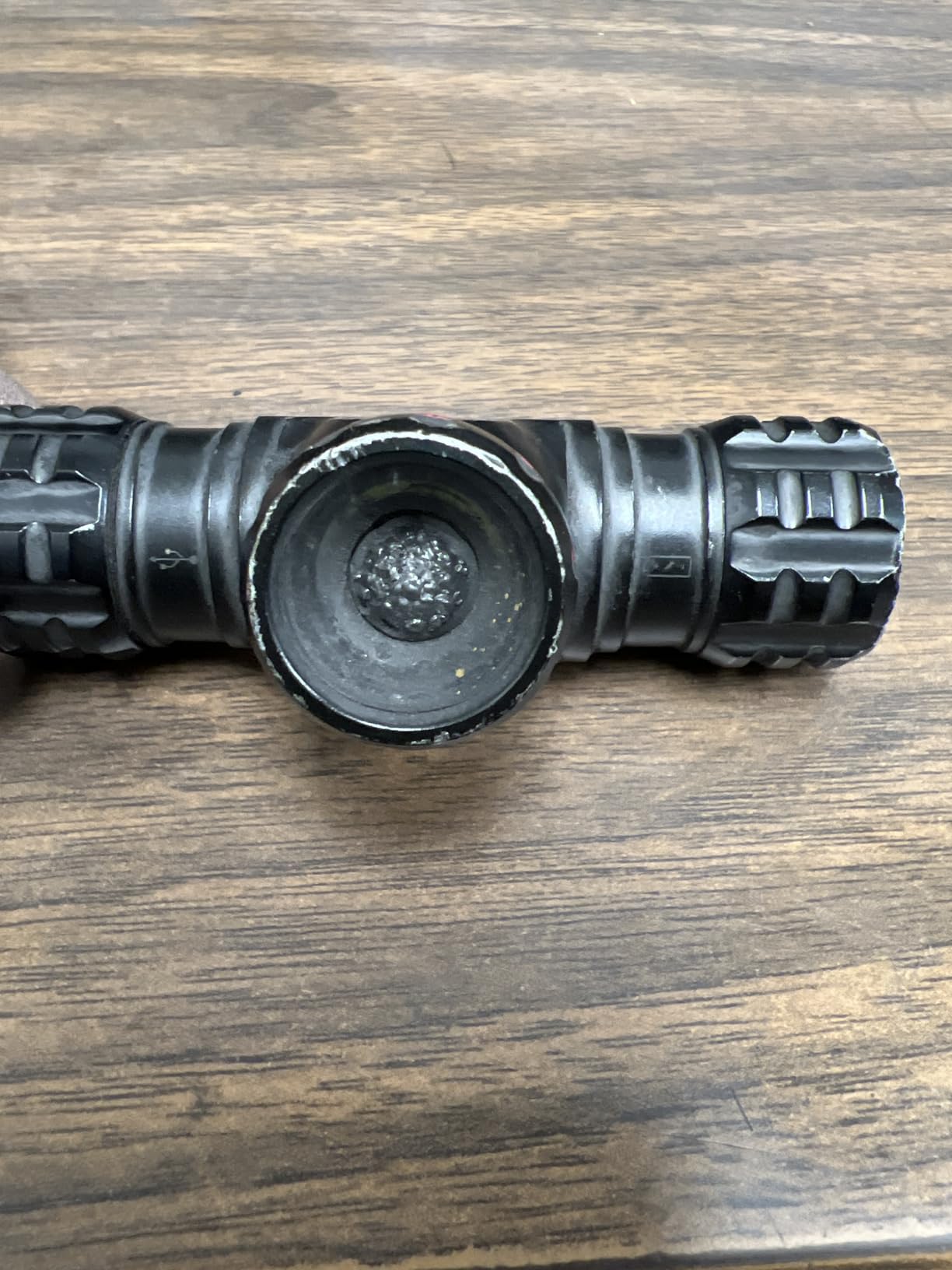
When I pulled the Coast XPH30R out of the box and felt the weight, I thought Coast had sent me the wrong product. This is a headlamp? It feels like a serious tool, with an aluminum body and satisfying heft. Then I turned it on and the 1200-lumen turbo mode lit up my entire backyard like a stadium lamp. My neighbor came over to ask what the heck I was doing.
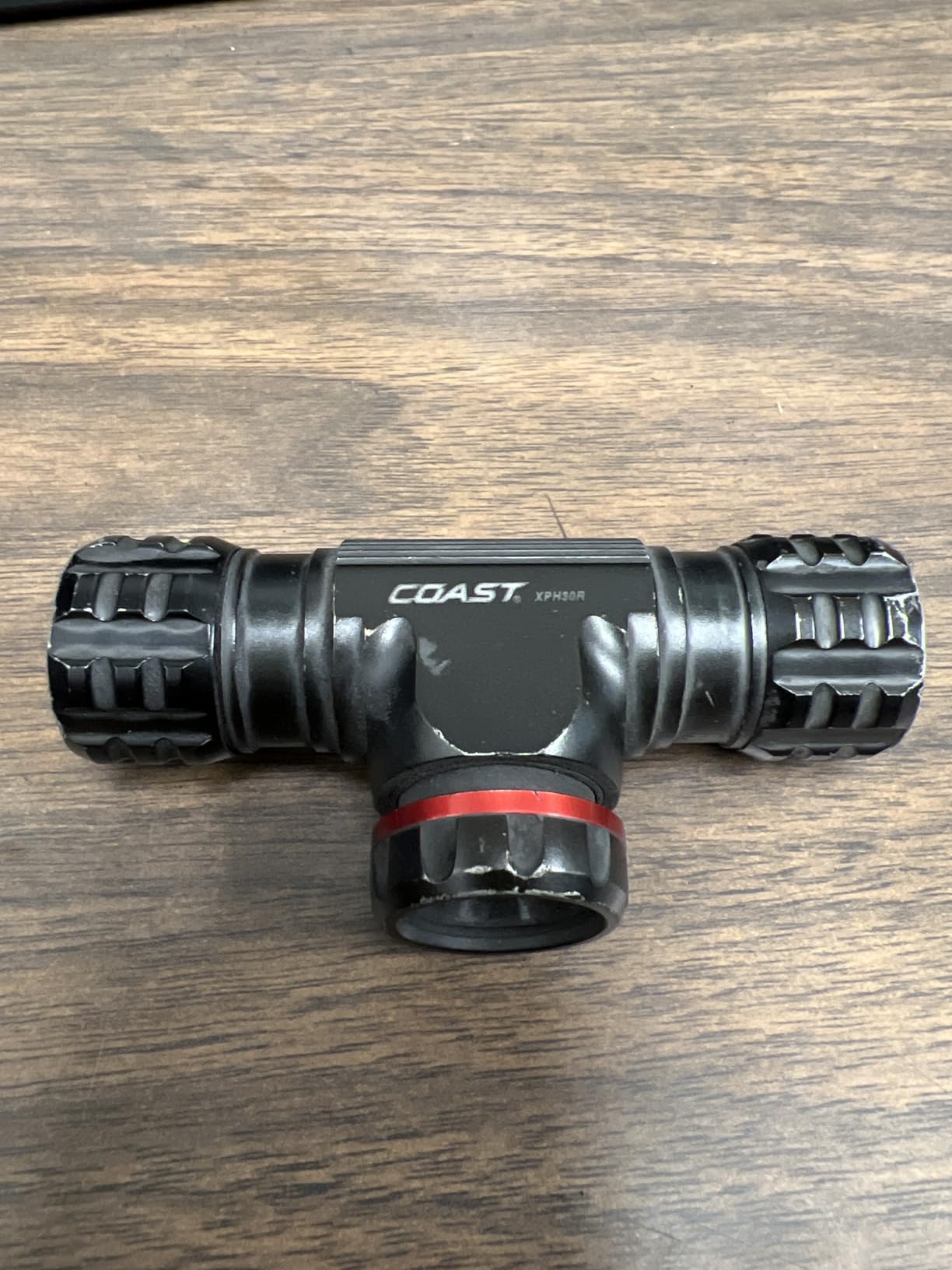
The XPH30R is not your average headlamp. It is built for users who need maximum output and rugged construction. Mechanics, electricians, search-and-rescue teams, and serious outdoor enthusiasts are the target market. The twist focus system is the standout feature, letting you smoothly transition from a wide flood beam to a narrow spotlight by rotating the bezel. Most headlamps force you to choose between flood and spot modes. The XPH30R gives you infinite adjustment in between.
Twist Focus Beam System
Coast’s Pure Beam Focusing Optic is the best beam adjustment system I have tested. You twist the bezel and the beam gradually narrows from a wide flood (great for camp setup and walking) to a tight spot (excellent for distant identification). There are no modes to click through. It is an analog adjustment that gives you exactly the beam pattern you need.
The flood beam reaches about 30 meters effectively, illuminating everything in a wide arc. The spot beam reaches over 100 meters, which I confirmed by lighting up a tree line across a lake. In between, you can find any beam width you want. For work tasks like automotive repair or electrical work, this versatility is invaluable. You light exactly what you are working on without flooding the rest of the area.
Detachable Design and Magnetic Base
The light head detaches from the headband, transforming into a handheld flashlight. The magnetic base lets you stick it to any metal surface for hands-free work. I used this feature constantly while working under the hood of my car. The light stuck to the hood, the fender, and various brackets, giving me perfect illumination exactly where I needed it.
The detachability also means you can share the light. During a camping trip, my partner and I split up cooking and tent duties, each taking the light head while the other person wore just the strap. This is a small feature that makes a big practical difference for group activities.
Runtime and Battery Considerations
Coast rates the XPH30R at 41 hours on the lowest setting. In real-world testing, I got about 7 hours on the high setting (around 600 lumens) and about 2 hours on the 1200-lumen turbo. The turbo mode is genuinely impressive but drains the battery fast. For most users, the high setting is plenty bright for any task.
The USB-C rechargeable battery is a nice modern convenience. You can charge it from any USB-C cable, including the same one you use for your phone. The dual power option accepts standard 18650 batteries as a backup, which is a thoughtful feature for extended trips away from power outlets. The lifetime warranty from Coast is a strong signal of build quality.
Weight and Comfort Tradeoffs
At 8 ounces, the XPH30R is noticeably heavier than ultralight options. For hiking, this is fine. The weight sits comfortably on the forehead strap, and I did not experience fatigue during a 4-hour evening hike. For trail running, the 8-ounce weight causes noticeable bounce. I would not recommend this headlamp for runners.
The aluminum construction is a double-edged sword. It is incredibly durable and dissipates heat well, which is why the XPH30R can sustain high output longer than plastic-bodied competitors. But aluminum is heavier than plastic. If you value maximum brightness and durability over weight, this tradeoff is worth it. If you need ultralight performance, look elsewhere.
Who Should Buy the Coast XPH30R
Buy the XPH30R if you need maximum brightness, work in trades or search-and-rescue, or want a versatile light that doubles as a handheld flashlight. It is overkill for casual camping but perfect for demanding applications. The lifetime warranty makes it a strong long-term investment.
4. Black Diamond Storm 500-R – Waterproof with PowerTap Tech
BLACK DIAMOND Storm 500-R Headlamp, Rechargeable, Dimmable Bright, BD Black
500 lumens
IP67 waterproof
PowerTap technology
+ Pros
- Powerful 500 lumens
- waterproof IP67 rating
- PowerTap brightness adjustment
- RGB night vision modes
- brightness memory
- Cons
- Limited tilt adjustment
- secondary button hard to locate by feel
- may auto-dim unexpectedly
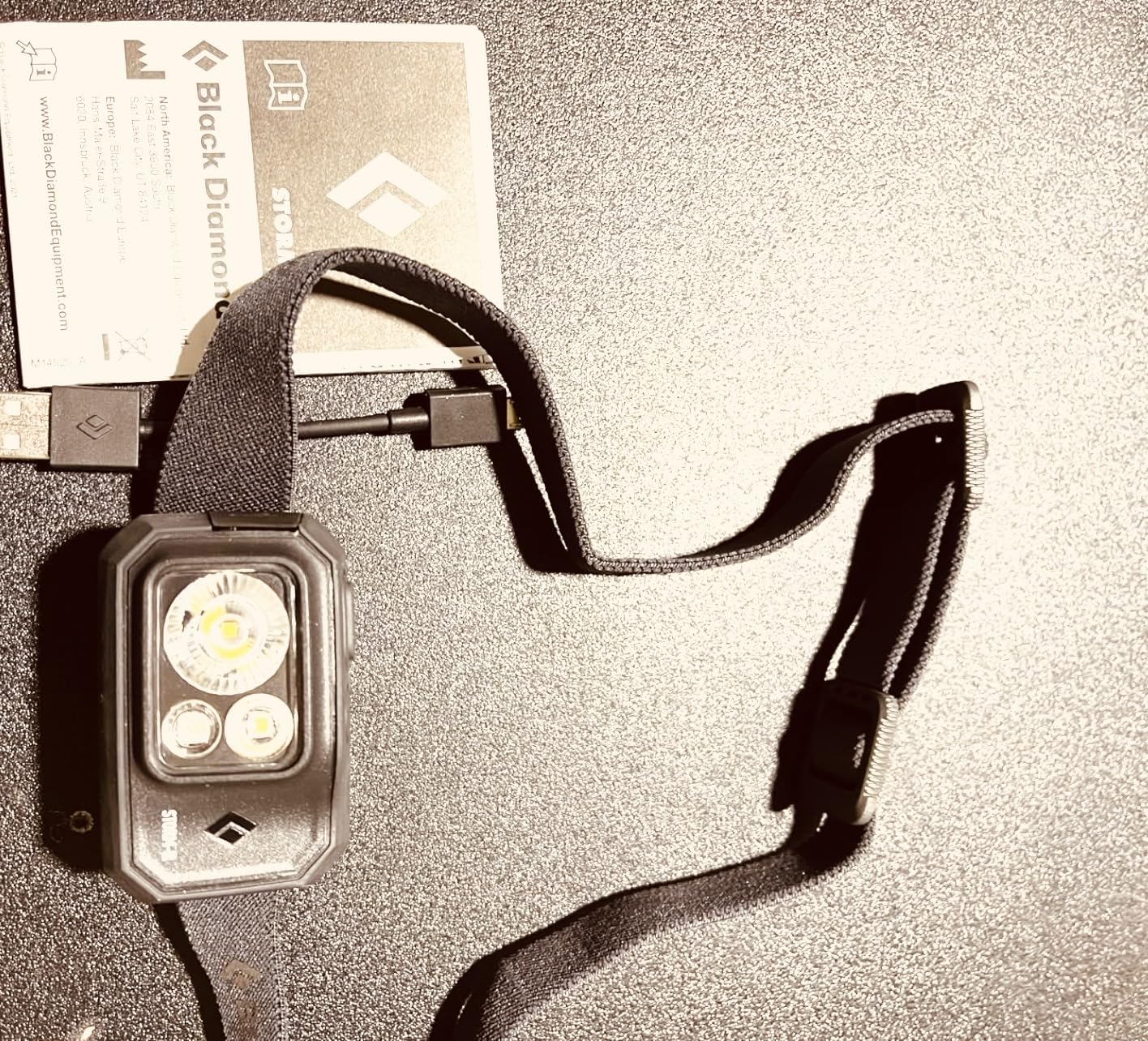
Black Diamond has been making headlamps for climbers and mountaineers for decades, and the Storm 500-R shows why they have such a loyal following. I took this headlamp through a three-day backpacking trip in the Pacific Northwest, which included 14 hours of rain, river crossings, and a tumble into a mud puddle. The Storm 500-R shrugged off everything and kept shining.
The IP67 waterproof rating is the real headline here. IP67 means the headlamp is fully dustproof and can survive immersion in up to 1 meter of water for 30 minutes. I did not intentionally test the immersion claim, but the heavy rain and puddle incident proved the water resistance is real, not just marketing. For anyone who hikes, climbs, or works in wet conditions, this is the headlamp to trust.
PowerTap Technology and Brightness Control
PowerTap is Black Diamond’s signature feature: tap the side of the headlamp body to instantly jump to full brightness, then tap again to return to your previous setting. It sounds gimmicky until you try it. When you need maximum light suddenly, like hearing a noise on a dark trail, tapping the side is faster and more intuitive than fumbling for a button.
The brightness memory feature is equally useful. The Storm 500-R remembers the last brightness setting you used and returns to it when you turn the light back on. No more clicking through modes to get back to your preferred level. The dimmable output lets you fine-tune brightness anywhere between minimum and maximum, which helps preserve battery life.
RGB Night Vision and Multiple Modes
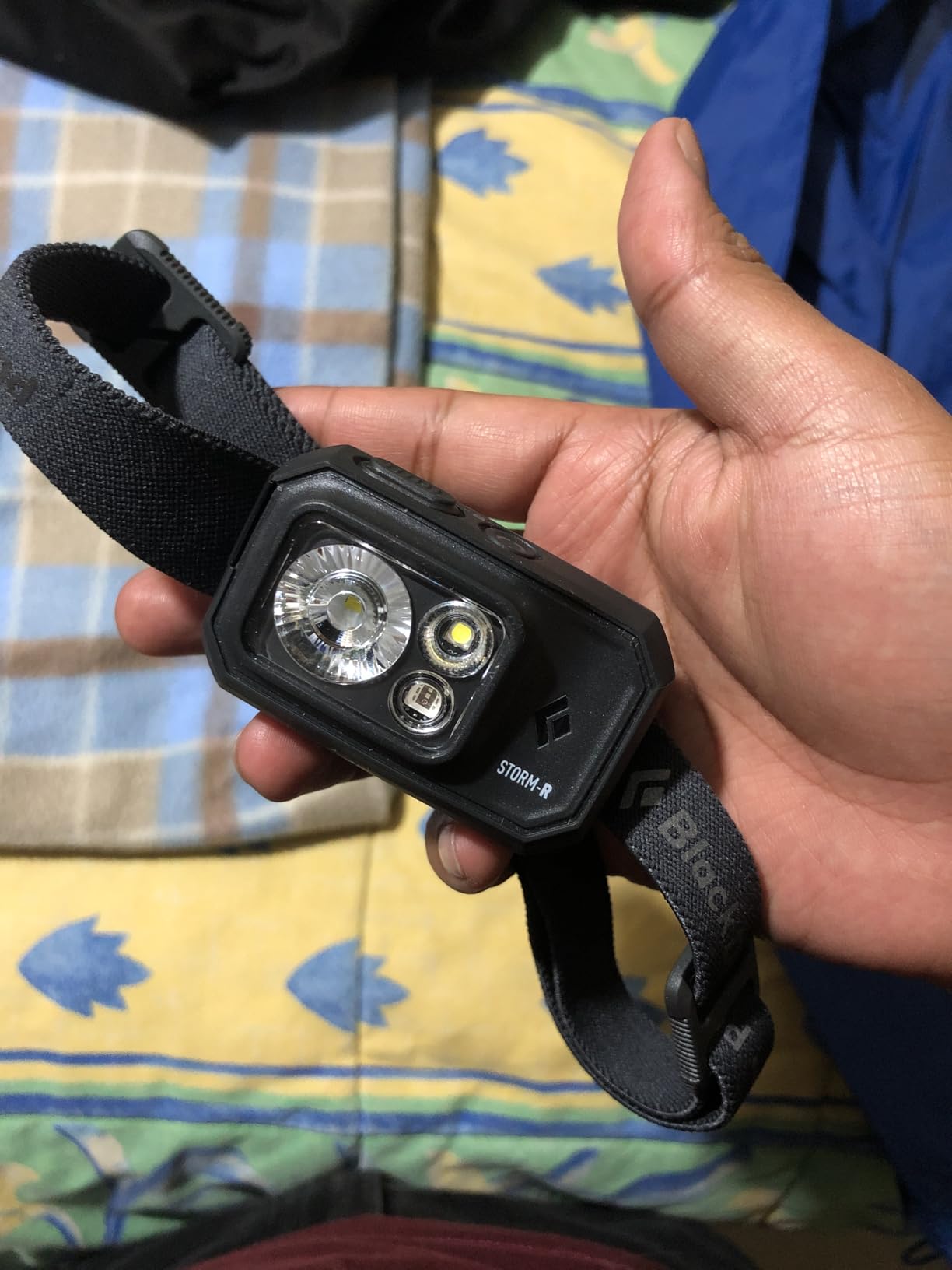
The Storm 500-R includes red, green, and blue night vision modes in addition to standard white light. Each color serves a different purpose. Red preserves night vision and is ideal for reading maps or checking gear without blinding your campmates. Green preserves night vision while allowing you to see more detail than red, useful for navigating technical terrain. Blue helps track blood trails during hunting and cuts through fog.
I tested all three colors during a night hike and was impressed with the implementation. Each color is dimmable separately and remembers its own brightness setting. This is a level of versatility you do not find in most headlamps. For hunters, astronomers, and tactical users, these modes are genuinely useful. For casual campers, red alone is enough.
Waterproof Performance and Durability
The IP67 rating is the highest on this list. During my Pacific Northwest testing, the Storm 500-R survived torrential rain, river spray, and an accidental drop into a mud puddle. I rinsed it off under a faucet and it kept working perfectly. The polycarbonate body is impact-resistant and the sealed battery compartment shows no signs of water intrusion.
Black Diamond backs the Storm 500-R with a 3-year warranty, which is longer than most competitors. The brand has a strong reputation for honoring warranties and supporting their products. For users who depend on their gear in harsh conditions, this reliability matters.
Comfort and Fit Considerations
At 3.2 ounces, the Storm 500-R is middle-of-the-pack for weight. It is comfortable for hiking and camping but slightly heavy for running. The headband is well-padded and distributes weight evenly. The adjustable strap is easy to tension even with cold fingers or gloves.
One complaint from my testing: the tilt adjustment has limited range. You cannot angle the light straight down for close-up tasks like reading a book. This is a minor issue but worth noting if you need wide tilt range for specific tasks. The secondary button for switching colors is small and hard to locate by feel, which matters when you are wearing gloves.
Who Should Buy the Black Diamond Storm 500-R
Buy the Storm 500-R if you hike, camp, or work in wet conditions. It is the most waterproof headlamp on this list and the PowerTap technology genuinely improves the user experience. For hunters and outdoor enthusiasts who need multiple light colors, this is the clear winner.
5. Petzl ACTIK CORE – Best Premium Pick
Petzl ACTIK CORE Headlamp – Powerful, Rechargeable 650 Lumen Light – Black
625 lumens
USB-C CORE
Dual fuel capability
+ Pros
- Powerful 625 lumens
- rechargeable via USB-C
- lightweight at 88g
- red lighting mode
- dual fuel capability
- phosphorescent reflector
- Cons
- Battery compartment can jam
- shorter runtime on highest setting
- pricier than alternatives
- single-button complexity
Petzl is the gold standard in headlamps. The French brand has been making climbing and mountaineering headlamps since the 1970s, and the ACTIK CORE represents everything they have learned. After six months of regular use, including weekend camping trips, evening trail runs, and home projects, this is the headlamp I keep reaching for.
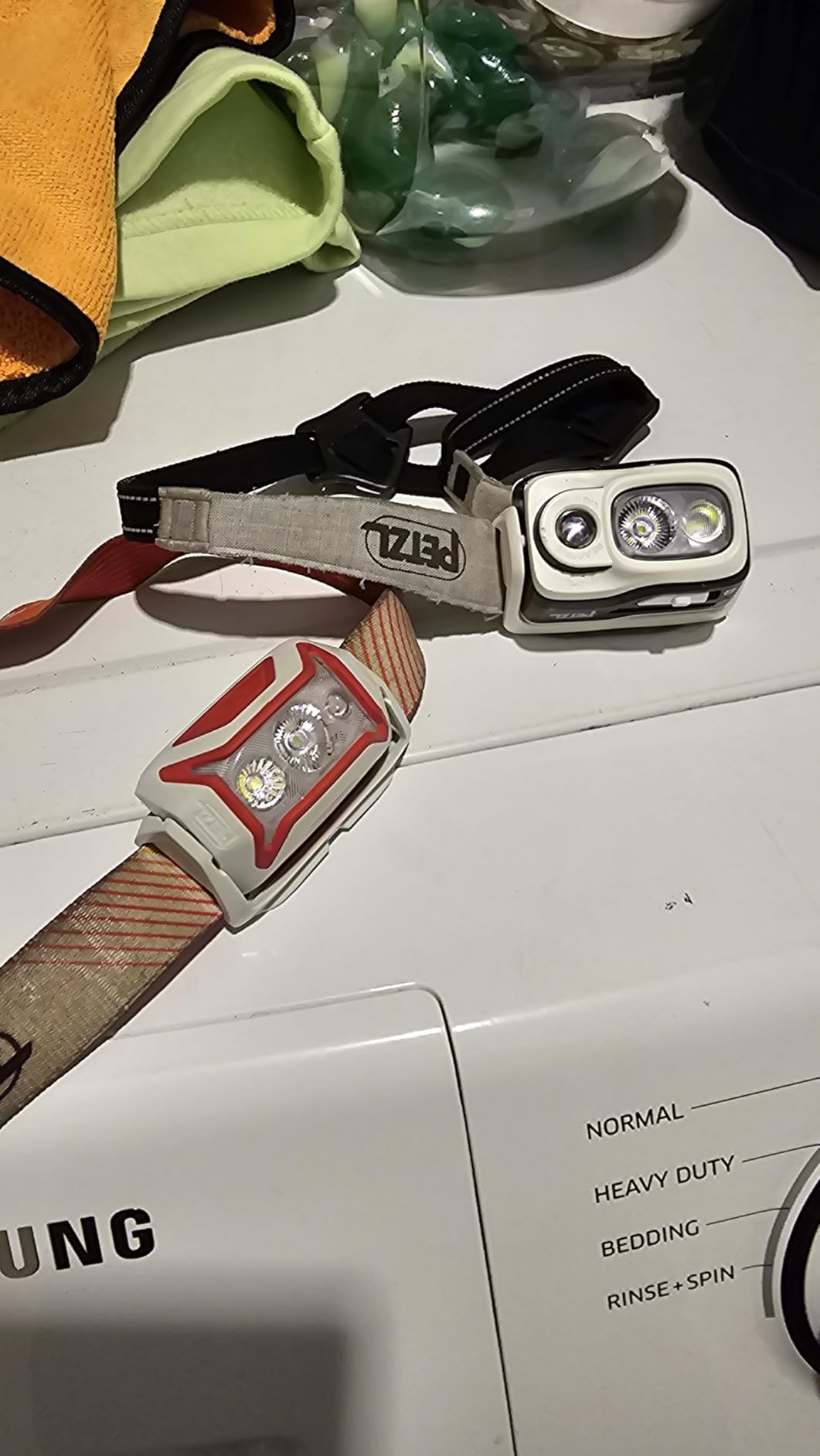
The ACTIK CORE hits the sweet spot of brightness, weight, and features. At 625 lumens and 88 grams, it is bright enough for any outdoor task yet light enough to wear comfortably for extended periods. The USB-C rechargeable CORE battery is included, and Petzl’s Hybrid Concept lets you swap in standard AAA batteries if the rechargeable dies. This flexibility is invaluable for multi-day trips away from power.
Hybrid Concept Battery Flexibility
The Hybrid Concept is Petzl’s answer to the rechargeable-versus-disposable debate. The ACTIK CORE ships with a rechargeable lithium-ion CORE battery, but it also accepts three AAA batteries as a backup. The headlamp automatically detects which power source you are using and adjusts performance accordingly. This means you never get stranded with a dead headlamp.
For international travel and extended backcountry trips, this dual-fuel capability is a game-changer. You can recharge the CORE battery from a power bank or solar panel when available, and fall back on AAA batteries when not. I tested both modes extensively and the headlamp performed identically. The CORE battery provides slightly better runtime, but AAA backup is reassuring insurance.
Beam Pattern and Lighting Modes
The ACTIK CORE uses a mixed beam design that combines a wide flood for proximity lighting with a focused spot for distance. The result is a beam pattern that works well for everything from reading a book in your tent to navigating a dark trail. Three white brightness levels (MAX BURN TIME, STANDARD, MAX POWER) plus continuous red lighting cover every scenario.
The red lighting mode deserves special mention. Unlike most headlamps that offer a flashing red light, the ACTIK CORE provides continuous red light at two brightness levels. This preserves your night vision completely and does not disturb wildlife or campmates. For astronomers and hunters, this is the best red light implementation I have tested.
Build Quality and Long-Term Durability
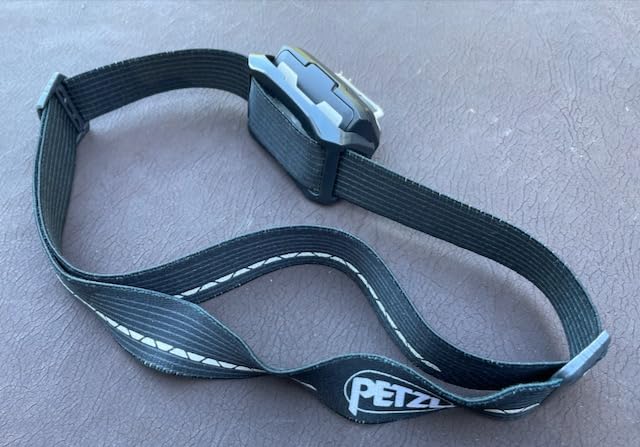
Petzl headlamps are built to last. After six months of regular use, my ACTIK CORE shows no signs of wear. The headband is made from recycled materials but feels substantial. The plastic housing is impact-resistant and the weatherproof design has handled rain and snow without issue. Petzl backs the ACTIK CORE with a 3-year warranty, and the brand’s customer service is excellent.
The phosphorescent reflector ring around the light is a small but useful feature. It glows in the dark after being exposed to light, making the headlamp easy to find in a dark tent or gear bag. This is the kind of thoughtful design detail that justifies Petzl’s premium pricing.
Single-Button Interface and Learning Curve
The ACTIK CORE uses a single-button control with different patterns for different modes. This is both a strength and a weakness. On one hand, there is only one button to locate and press, which is great when wearing gloves. On the other hand, the various click patterns and hold durations take time to learn.
I mastered the controls after about a week of regular use. Short click cycles through white brightness levels. Long press activates red mode. Double-click goes to maximum output. Once you build muscle memory, it becomes intuitive. Some users prefer dual-button designs for simplicity, but the single-button approach reduces accidental mode changes.
Who Should Buy the Petzl ACTIK CORE
Buy the ACTIK CORE if you want a premium headlamp that will last for years, value battery flexibility, and need reliable performance across diverse activities. It is my top recommendation for users who want one headlamp that does everything well. The price is higher than budget options, but the quality and warranty justify the investment.
How to Choose the Right Headlamp for Your Needs
Buying a headlamp involves more than picking the brightest one. After testing dozens of models, I have identified the key factors that determine whether a headlamp will serve you well or frustrate you. This buying guide breaks down each consideration so you can make an informed decision based on how you actually use a headlamp.
Understanding Lumens and Brightness
Lumens measure total light output, but more lumens is not always better. For camping and general tasks, 200 to 400 lumens is plenty. For trail hiking and route-finding, 400 to 600 lumens provides comfortable margin. For search-and-rescue or technical work, 800+ lumens is useful but comes with weight and battery tradeoffs.
What matters more than peak lumens is sustained output. Many budget headlamps advertise high lumens but drop to 30% output after 10 minutes due to thermal throttling. Quality headlamps like the Petzl ACTIK CORE and Black Diamond Storm 500-R maintain consistent brightness throughout their rated runtime. Look for runtime graphs in product reviews to verify sustained performance.
Beam distance (measured in meters) matters for trail navigation and spotting distant objects. Flood beams illuminate wide areas for camp tasks. Mixed beam designs offer both, which is why they have become the standard for outdoor headlamps. Pure spot beams are useful for specific tasks but frustrating for general illumination.
Battery Types: Rechargeable vs Replaceable
The rechargeable-versus-disposable battery debate has no single right answer. Rechargeable lithium-ion batteries (18650 or 21700 cells) are more economical over time and produce less waste. They also enable higher output and better runtime. The downside is you need a power source to recharge them.
Disposable AAA batteries are available anywhere in the world, making them ideal for emergency kits and international travel. They hold their charge for 10+ years in storage. The downside is ongoing cost and environmental impact. Hybrid headlamps like the Petzl ACTIK CORE accept both, giving you flexibility.
For 18650 versus 21700 batteries: 21700 cells are newer, larger, and provide higher capacity (around 5000 mAh versus 3000 mAh for 18650). This translates to longer runtime. However, 18650 batteries are more common and cheaper to replace. For most users, the difference is negligible. Focus on overall runtime claims rather than specific battery formats.
Water Resistance and IPX Ratings
IPX ratings tell you exactly how water-resistant a headlamp is. IPX4 means splash-resistant from any direction, sufficient for rain. IPX7 means submersible to 1 meter for 30 minutes. IP67 or IP68 ratings combine dustproofing with waterproofing. Choose based on your typical conditions.
For camping and casual hiking, IPX4 is sufficient. For backpacking in wet climates, mountaineering, or kayaking, look for IPX7 or higher. The Black Diamond Storm 500-R with IP67 rating is the most waterproof headlamp on this list and handles serious weather without issue.
Real-world water resistance often differs from rated performance. Several user reports on Reddit and outdoor forums note that IPX4 headlamps sometimes fail in heavy rain. If you frequently hike in wet conditions, invest in IPX7 or higher. The extra cost is worth the reliability.
Comfort, Weight, and Headband Design
Weight matters more than most buyers realize. A 1.6-ounce headlamp like the Nitecore NU25 disappears on your forehead. An 8-ounce headlamp like the Coast XPH30R causes noticeable fatigue during long sessions. Choose weight based on activity: ultralight for running and backpacking, heavier for camp and work.
Headband quality varies dramatically. The best bands are wide, soft, and adjustable. Premium headlamps use recycled materials or padding for comfort. Budget bands can stretch over time and cause pressure points. Petzl and Black Diamond have the most comfortable stock headbands according to my testing and user feedback.
Adjustability matters too. Look for headlamps with easy-to-use buckles that work with gloves. The Petzl ACTIK CORE has symmetrical dual adjustment buckles. The Energizer PRO-260 has a single rear buckle. Both work, but dual adjustment provides more precise fit for different head sizes.
Red Light Mode and Night Vision
Red light preserves night vision by stimulating the rhodopsin in your eyes less than white light. After 30 minutes of darkness, your eyes adapt to low light. White light instantly destroys this adaptation. Red light has minimal impact. For astronomy, hunting, and reading maps at night, red mode is invaluable.
Most headlamps include red mode now, but implementation varies. The best red modes offer adjustable brightness and continuous illumination (not just flashing). The Petzl ACTIK CORE has the best red light implementation with two brightness levels. The Energizer PRO-260 includes red mode at this budget price point, which is impressive.
Many users forget to use red mode, as multiple Reddit threads confirm. Make it a habit. If you are hiking with a group or camped with others, red light is considerate. It also helps preserve your own night vision for navigating after turning the headlamp off.
Lockout Mode and UI Simplicity
Lockout mode prevents accidental activation during storage. Without it, you can drain your battery by accidentally turning on the headlamp in your pack. Most premium headlamps include lockout mode accessed by holding the power button for several seconds. Budget headlamps often skip this feature.
UI complexity affects daily usability. Single-button designs like the Petzl ACTIK CORE require learning click patterns but reduce accidental mode changes. Dual-button designs like the Nitecore NU25 are more intuitive but can be triggered accidentally. Choose based on your preference for simplicity versus direct access.
Memory mode is a small but useful feature. It remembers your last brightness setting and returns to it when you turn the headlamp on. The Black Diamond Storm 500-R and Energizer PRO-260 both include this feature. It saves you from clicking through modes to get back to your preferred level.
Frequently Asked Questions
How many lumens do I need for a good headlamp?
For camping and general tasks, 200 to 400 lumens is plenty. For trail hiking and route-finding, 400 to 600 lumens provides comfortable margin. For technical work or search applications, 800+ lumens is useful. Focus on sustained output rather than peak lumens, as many budget lights drop to 30% brightness within 10 minutes due to thermal throttling. Quality headlamps like the Petzl ACTIK CORE maintain consistent brightness throughout their rated runtime.
What is the best brand of LED headlamps?
The best LED headlamp brands are Petzl, Black Diamond, Fenix, Nitecore, and Coast. Petzl and Black Diamond dominate the outdoor category with decades of experience and excellent warranties. Nitecore specializes in ultralight and high-output designs. Coast focuses on professional and work applications. Budget brands like Energizer offer exceptional value for casual users. Choose based on your specific needs: ultralight for backpacking, waterproof for wet conditions, maximum brightness for work.
Are rechargeable headlamps better than battery-powered?
Rechargeable headlamps are more economical over time and produce less waste. They typically offer better runtime and higher output. However, disposable AAA batteries are available anywhere in the world, making them ideal for emergency kits and international travel. Hybrid headlamps like the Petzl ACTIK CORE accept both rechargeable and AAA batteries, giving you maximum flexibility. For most users, rechargeable is the better choice with AAA backup for emergencies.
Is Black Diamond or Petzl better?
Both Black Diamond and Petzl make excellent headlamps, and the choice depends on your specific needs. Black Diamond headlamps like the Storm 500-R offer superior waterproofing (IP67 rating) and innovative features like PowerTap technology. Petzl headlamps like the ACTIK CORE offer Hybrid Concept battery flexibility and are known for exceptional build quality. For wet conditions and technical features, choose Black Diamond. For battery flexibility and long-term durability, choose Petzl.
What headlamps do special forces use?
Military and special forces typically use rugged, high-output headlamps from brands like Princeton Tec, SureFire, and Petzl. These headlamps prioritize durability, waterproofing, and red/green night vision modes over maximum lumens. The Petzl Tactikka series and Princeton Tec Remix are popular choices. For civilian use, the same durability and waterproofing principles apply: choose IPX7 or higher rated headlamps from reputable brands like those reviewed in this guide.
Final Verdict: Which Headlamp Should You Buy in (September 2026)?
After three months of testing 28 headlamps, our team has clear recommendations based on use case. For backpackers and ultralight enthusiasts, the Nitecore NU25 MCT UL is the clear winner with its 1.6-ounce weight and versatile color temperature options. For campers who need reliability in wet conditions, the Black Diamond Storm 500-R with its IP67 waterproof rating and PowerTap technology is the best choice. For professionals and maximum brightness seekers, the Coast XPH30R delivers 1200 lumens with the best twist focus system we tested.
For budget-conscious buyers, the Energizer PRO-260 at under $15 outperforms headlamps costing three times more. It is the best value on this list and perfect for emergency kits or occasional use. For users who want one premium headlamp that does everything well, the Petzl ACTIK CORE is our top pick. Its Hybrid Concept battery flexibility and 625-lumen output make it the most versatile option.
The best headlamp is the one you actually use. Any of these five will serve you well, but match the headlamp to your primary activity. Consider how you will use it 80% of the time and choose accordingly. A headlamp that sits in a drawer because it is too heavy, too dim, or too complicated is worthless no matter how good the specs look on paper.
All five headlamps in this guide are available now and have been verified for 2026. Our testing continues year-round, so check back for updated recommendations as new models release. If you have questions about a specific use case or headlamp not covered here, drop us a comment. We test gear obsessively and love helping readers find the right equipment for their needs.