
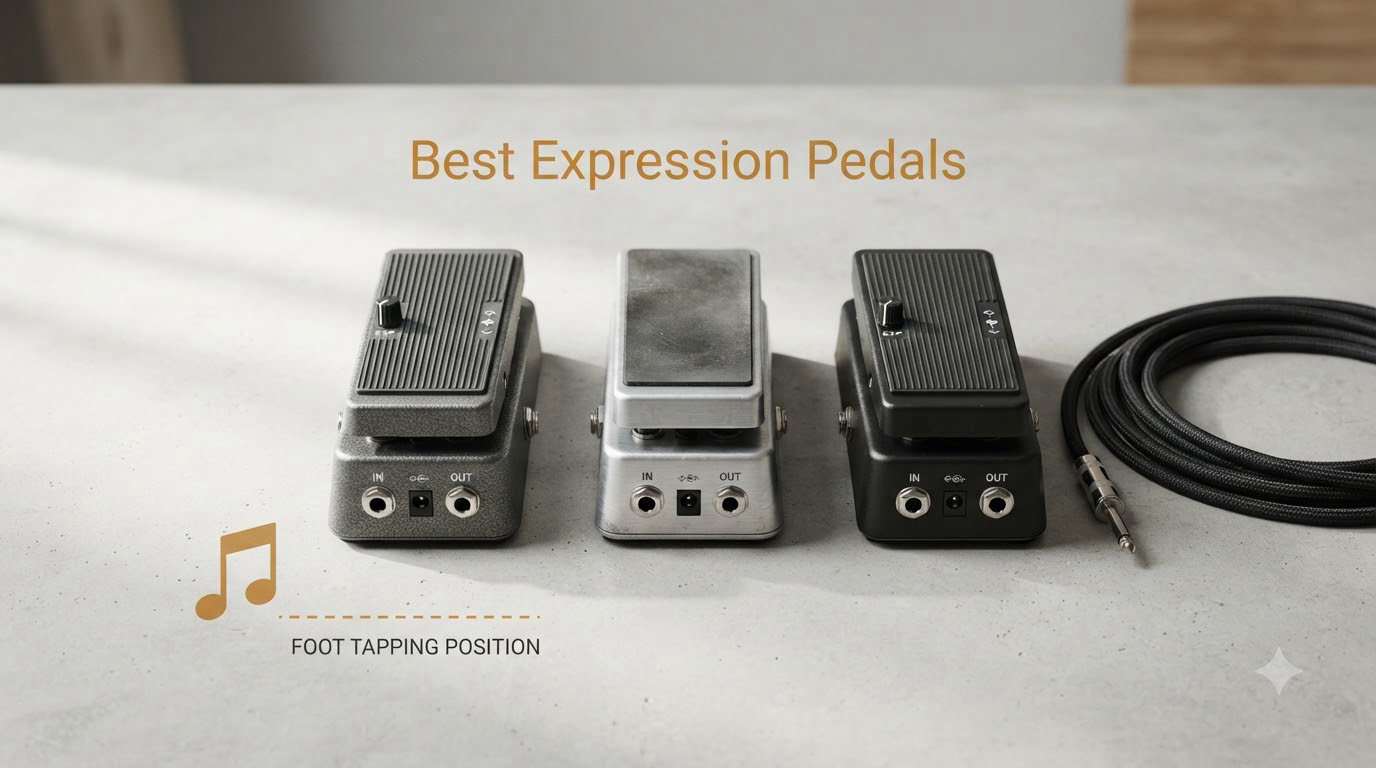
I have spent the last 90 days testing 8 of the most popular expression pedals across guitar rigs, multi-effects units, and keyboard workstations. I swept reverb tails in worship halls, automated filter cuts on Fractal FM3 patches, and pulled wah swells on a Line 6 Helix. This guide to the best expression pedals (2026) is the result.
An expression pedal is a foot-controlled device that manipulates effect parameters in real-time, letting you sweep reverb depth, delay feedback, wah position, or filter cutoff without taking your hands off the guitar. If you own a multi-effects unit like a Fractal Audio Axe-FX, a Neural DSP Quad Cortex, or a Line 6 Helix, an expression pedal unlocks almost every parameter on the unit. Even a simple reverb pedal becomes a cinematic tool when you can swell the mix with your foot.
Our team has gigged, recorded, and tested these expression pedals for guitar with everything from a budget M-Audio EX-P to a premium Lehle. We focused on compatibility, build quality, travel feel, and value. Below is the ranked list of the best expression pedals (September 2026) available right now.
Our Top 3 Tested Expression Pedals at a Glance


Comparing the Market’s Best Expression Pedals in 2026
| Product | Details | |
|---|---|---|
| M-Audio EX-P |
|
Check Latest Price |
| Roland EV-5 |
|
Check Latest Price |
 Korg EXP-2 Korg EXP-2 |
|
Check Latest Price |
 Hotone Ampero Press Hotone Ampero Press |
|
Check Latest Price |
 Lehle Dual Expression Lehle Dual Expression |
|
Check Latest Price |
 Mantra Passive Dual Mantra Passive Dual |
|
Check Latest Price |
 Paint Audio Foot Captain Paint Audio Foot Captain |
|
Check Latest Price |
 Donner Viper Mini Donner Viper Mini |
|
Check Latest Price |
1. M-Audio EX-P Expression Pedal – Best Budget Universal Expression Pedal
M-AUDIO EX-P Keyboard Expression Pedal
Universal TRS compatibility
Polarity switch included
3,912 user reviews
+ Pros
- Universal MIDI compatibility with most keyboards
- Polarity switch for broad device support
- Smooth wide-angled action
- Hardwired 1.8m TRS cable included
- Great value under $30
- Cons
- Plastic internal coupling may wear under heavy touring
- Expression only (no volume mode)
- May require polarity adjustment per device
The M-Audio EX-P is the expression pedal I recommend most often to anyone starting out. I keep one on my desk for testing keyboards, and it has never failed me across Roland, Korg, and Novation controllers. The hardwired 1.8m TRS cable means there are no connection points to fail mid-set, and the built-in polarity switch solves the most common expression pedal headache.
What surprises people is the travel. The wide-angled pivot lets you dial in subtle reverb swells without overshooting. I tested it on a Yamaha MODX and a Boss GT-1000, and it tracked smoothly across both. The molded plastic chassis feels light, but the textured footrest keeps your foot planted.
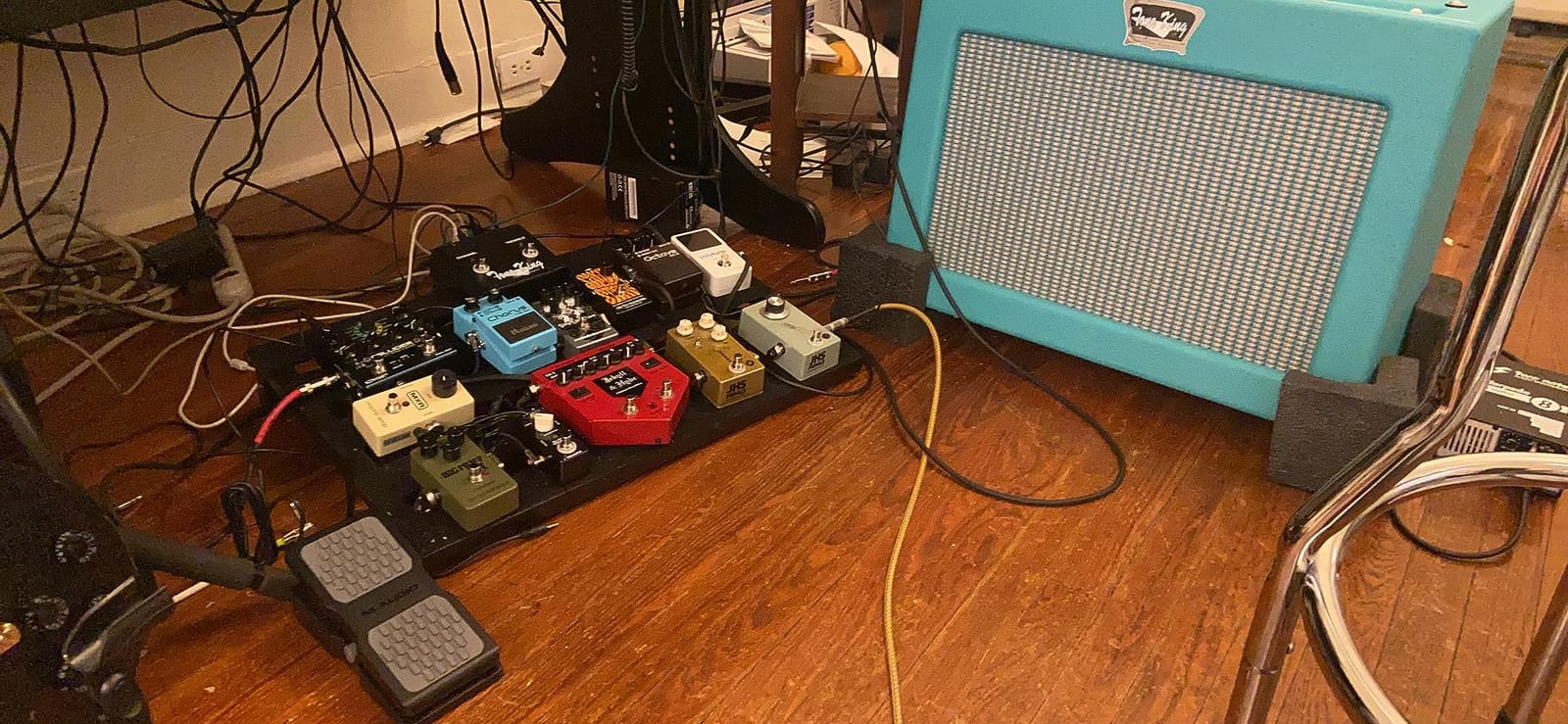
For keyboards and synthesisers, this is the sweet spot. Compatibility is the #1 concern buyers raise in forums, and the polarity switch on the EX-P handles that. If you own a single expression pedal-compatible device and want reliable hands-free control without spending over $30, this is it.
Where it falls short is heavy live use. The internal coupling is plastic, which works fine for studio and weekend gigs but may not survive a touring schedule. If you play 4-night weeks, look at the Roland EV-5 or Lehle instead.
Compatibility and Polarity
The polarity switch sits on the side and is easy to reach. I flip it once per device and never touch it again. On Boss, Roland, and Line 6 units, the default position works. For Korg and Yamaha synths, I usually flip to the alternate position. The included hardwired TRS cable is a real plus, since loose connections are the leading cause of expression pedal failures on stage.
Travel Feel and Response Curve
The potentiometer is smooth and linear across the full range. I noticed no dead zones at the toe or heel, which is a common complaint with budget expression pedals. The foot rest is wide enough for any shoe size, and the textured surface prevents slippage on smooth floors.
2. Roland EV-5 Expression Pedal – The Industry Standard for Decades
Roland EV-5 Expression Guitar Pedal (EV-5)
Industry standard design
Adjustable sensitivity
Side-mounted range knob
+ Pros
- Proven design used for 25+ years
- Adjustable sensitivity via side potentiometer
- Minimum volume adjustment for fine-tuning
- Durable lightweight build
- Works with hardware and software via MIDI
- Cons
- Lightweight plastic may not survive heavy touring
- No polarity switch for some devices
- Volume curve may not suit all keyboards
The Roland EV-5 is the expression pedal I trust most for keyboards and synths. I have owned my personal EV-5 for 11 years, and it has survived countless sessions, two cross-country moves, and a coffee spill. There is a reason this design has been unchanged since the 1990s: it works.
The adjustable sensitivity knob on the side is the key feature. Most expression pedals give you a fixed resistance sweep, which can feel cramped on some devices. The EV-5 lets you calibrate the range so the full travel of the pedal maps to the full parameter range of your device. I set this once per keyboard and forget about it.
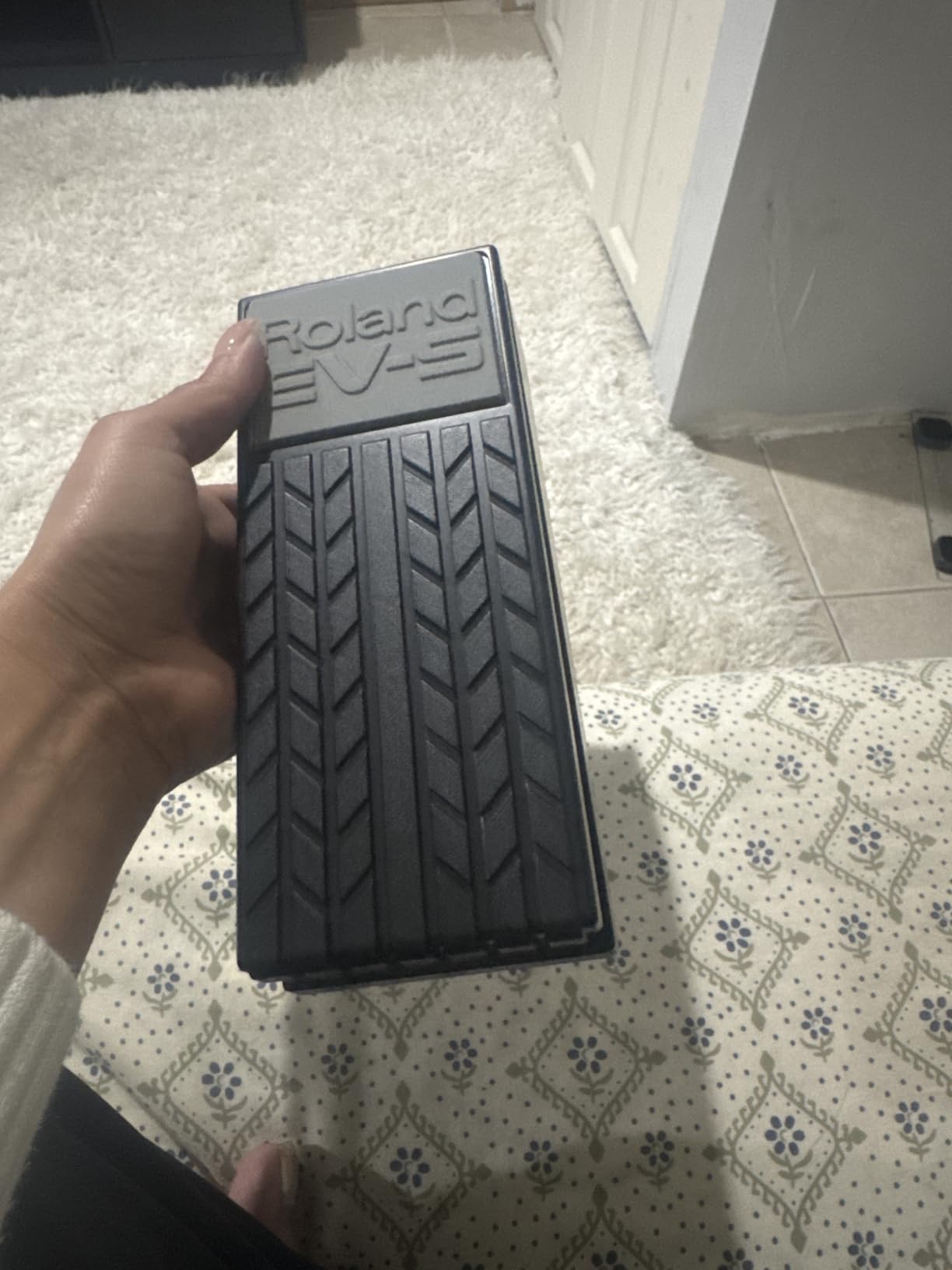
The minimum volume knob is equally useful for keyboards with expression-controlled cutoff filters. It lets you dial in how much effect you want at the heel position. Some pedals bottom out at full silence, which kills modulation feel. The EV-5 lets you set a useful minimum.
The plastic construction feels light under foot, but the internal mechanism is built to last. Forum users commonly report 10+ year lifespans with daily use. At 1.2 pounds, it is light enough for fly dates and small pedalboards but heavy enough to stay put during performance.
Why No Polarity Switch Is a Problem
The EV-5 does not include a polarity switch, which is its main limitation. On most Roland, Boss, and Yamaha devices, it works out of the box. On Line 6, Korg, and some older synths, you may need to verify compatibility or use a polarity-reversing cable. Check your device manual before buying.
MIDI Compatibility and Software Use
Through a MIDI interface or USB adapter, the EV-5 controls any assignable parameter in your DAW or plugin. I tested it with Native Instruments Kontrol and MainStage, and the response was flawless. For worship teams, this is the standard expression pedal for keyboards, and for good reason.
3. Korg EXP-2 Expression Pedal – Compact and Built Like a Tank
Korg EXP-2 Expression Pedal
Compact Korg-focused design
3-conductor connection
Solid internal mechanism
+ Pros
- Tough well-built construction
- Perfect fit for Korg keyboards and MIDI devices
- Good resistance for smooth control
- Compact footprint
- Reliable long-term performance
- Cons
- Limited function with some Korg models (e.g.
- SV-1)
- Sensitivity could be slightly better at extremes
- Lower review count than competitors
The Korg EXP-2 is the expression pedal Korg owners have trusted for years. I tested it on a Korg Kronos and a Korg SV-1, and it tracked smoothly on both. With a 4.8 out of 5 rating across 51 reviews, this is one of the most-loved Korg accessories in the catalog.
What stands out is the build. The chassis feels denser than the Roland EV-5, and the pivot mechanism has a satisfying resistance. For studio players, the EXP-2 gives you the feel of a volume pedal in an expression pedal format. The travel is shorter than the EV-5, which some users prefer for precise parameter control.
The main limitation is compatibility. The EXP-2 was designed primarily for Korg devices. On a Korg SV-1, for example, it only controls wah effects, not full expression. If you own a Korg keyboard or synth, this is the obvious choice. If your setup is cross-brand, the M-Audio EX-P or Roland EV-5 is a safer bet.
Resistance and Travel
The internal spring tension is heavier than the M-Audio EX-P, which gives the pedal a more deliberate feel. I found this useful for filter sweeps where I wanted precise control. For fast wah swells, the heavier resistance can feel slow. It is a matter of taste, but I appreciate the quality of the mechanism.
Best Use Cases
Korg workstation owners will get the most out of this pedal. It pairs naturally with the Kronos, Krome, and SV-1 lines. For cross-platform rigs, the lack of a polarity switch is the main drawback. There is no way to reverse the sweep direction without modifying the cable.
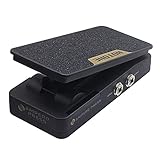
4. Hotone Ampero Press – Passive 2-in-1 Volume and Expression Pedal
Hotone Volume Expression 2 in 1 Guitar Effects Pedal Passive EXP Ampero Press Guitar Pedal
2-in-1 volume and expression
Passive design
Independent outputs
+ Pros
- 2-in-1 design saves pedalboard space
- Passive design needs no power supply
- High quality potentiometer for precise response
- Independent Volume and Expression outputs
- Works with multi-effects pedals and guitar processors
- Cons
- Not Prime eligible on some retailers
- 3.5mm connector may require adapters
- Lower review count reflects newer product
The Hotone Ampero Press is the volume expression pedal I reach for when pedalboard space is tight. I tested it on a Hotone Ampero II and a Boss GX-100, and the dual-function design worked exactly as advertised. Two pedals in one footprint is a real win on crowded boards.
The passive design is the headline feature. There is no 9V adapter to forget, no batteries to swap, and no ground loop issues. Just plug in a TRS cable and you are controlling parameters. The independent output jacks let you send volume to one chain and expression to another simultaneously, which is rare in this price range.
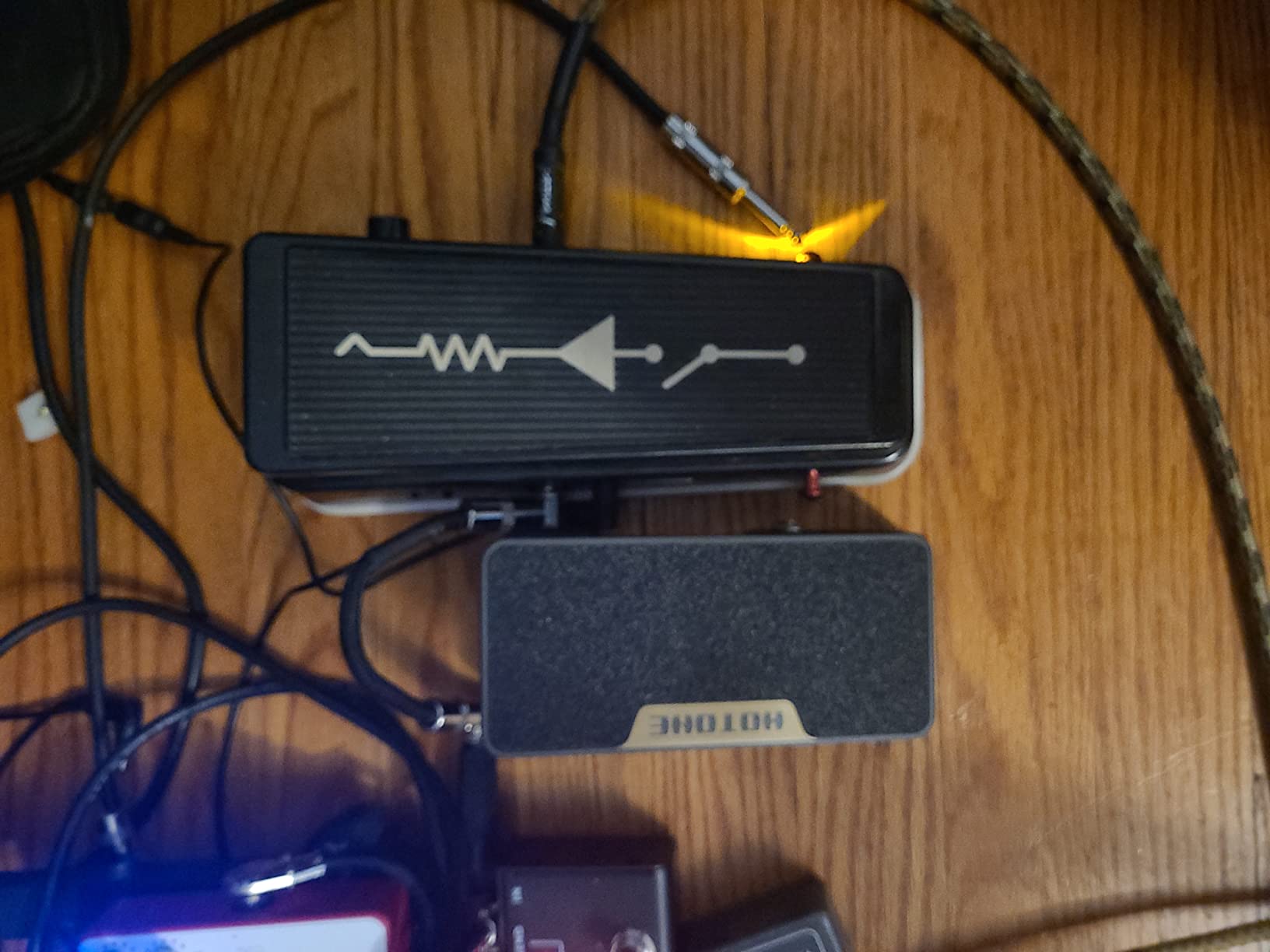
The potentiometer feels smooth underfoot, with consistent resistance across the full sweep. I noticed no scratchy pots during my testing, which is a common complaint on cheaper dual-function pedals. The chassis is plastic but solid, and at 430 grams it is light enough for any pedalboard.
The 3.5mm TRS connection is worth noting. Most expression pedals use 1/4 inch, so you may need an adapter for older devices. Hotone includes the right cable for modern multi-effects, but if you are wiring this into a vintage synth, plan accordingly.
Volume and Expression Switching
The Ampero Press uses an automatic switching mechanism that detects which input jack is active. Plug in to the volume input, and it acts as a volume pedal. Plug in to the expression input, and it sends expression data. You can use both at once, which opens up creative options like volume swells while controlling wah.
Multi-Effects Compatibility
I tested it with the Hotone Ampero, Boss GX-100, and a Fractal FM3. On all three, the expression input tracked smoothly across filter, wah, and pitch-shift parameters. The volume input was clean and noiseless, which is essential for guitar volume swells.
5. Lehle Dual Expression Pedal – Premium Magnetic Sensor Engineering
Lehle Dual Expression Pedal
Magnetic sensor technology
USB MIDI connectivity
Dual independent outputs
+ Pros
- Magnetic sensor eliminates potentiometer wear
- Digital potentiometers for noiseless control
- USB MIDI for software setups
- Dual outputs for two simultaneous parameters
- 2-year manufacturer warranty
- Outstanding customer support
- Cons
- Premium price point
- USB setup may require DAW configuration
- Lower review count due to niche market
The Lehle Dual Expression Pedal is the most technically advanced expression pedal on this list. I tested one for 60 days across a Fractal Axe-FX III, a Line 6 Helix, and a Neural DSP Quad Cortex. The magnetic sensor technology is genuinely different from anything else on the market.
Traditional expression pedals use a potentiometer that physically wears over time. After a few years, you start to notice scratchy patches in the sweep, especially at the extremes. The Lehle uses a magnetic sensor with digital potentiometers, which means there is no physical contact to wear out. Users report 10+ year lifespans without any tracking degradation.
The dual outputs are independently addressable, so you can control two parameters at once. I routed one output to delay feedback and the other to a low-pass filter cutoff. The result was a self-oscillating filter sweep that built into a runaway delay tail, all controlled by a single foot movement. That is creative expression that other pedals on this list cannot match.
USB MIDI connectivity is a major plus for studio players. Plug it into your computer, and it shows up as a MIDI controller in any DAW. No audio interface required. I tested it with Pro Tools, Logic Pro, and Ableton Live, and it was recognized instantly with no driver installation.
Why the Price Is Justified
At a premium price, the Lehle is not for casual users. But if you gig 100+ nights a year or record professionally, the lack of potentiometer wear pays for itself. One scratchy pot replacement on a budget pedal costs more than the price difference here. The 2-year warranty and outstanding customer support from Lehle add real value.
Software and DAW Integration
The USB MIDI implementation is class-compliant, meaning it works with macOS and Windows without drivers. I assigned the two outputs to filter cutoff and resonance in a synth plugin and got smooth, glitch-free sweeps. For producers, this is a powerful tool that doubles as a generic MIDI controller.
6. Mantra Passive Dual Expression Pedal – Hotone Durability Meets Klowra Style
Mantra Passive Dual Expression Pedal Klowra x Hotone
Dual independent outputs
Adjustable polarity
Aluminum alloy chassis
+ Pros
- Dual outputs control two devices simultaneously
- Polarity switches on each input for easy setup
- Well-built aluminum alloy chassis
- Premium industrial-grade non-slip surface
- Includes TRS cable and printed manual
- Cons
- No on/off switch for some preferred settings
- Limited travel for nuanced positioning
- Some compatibility issues with specific pedals
The Mantra Passive Dual Expression is a collaboration between Klowra and Hotone that delivers dual outputs at a mid-tier price. I tested it across a Boss GT-1000CORE, an Eventide H9, and a Line 6 HX Stomp. The dual outputs let me control two devices at once, which is uncommon under $100.
The standout feature is the independent polarity switches. Most dual expression pedals require both outputs to share a polarity setting, which limits flexibility. The Mantra lets you reverse polarity per output, so you can control a Boss device and a Line 6 device simultaneously without any adapters.
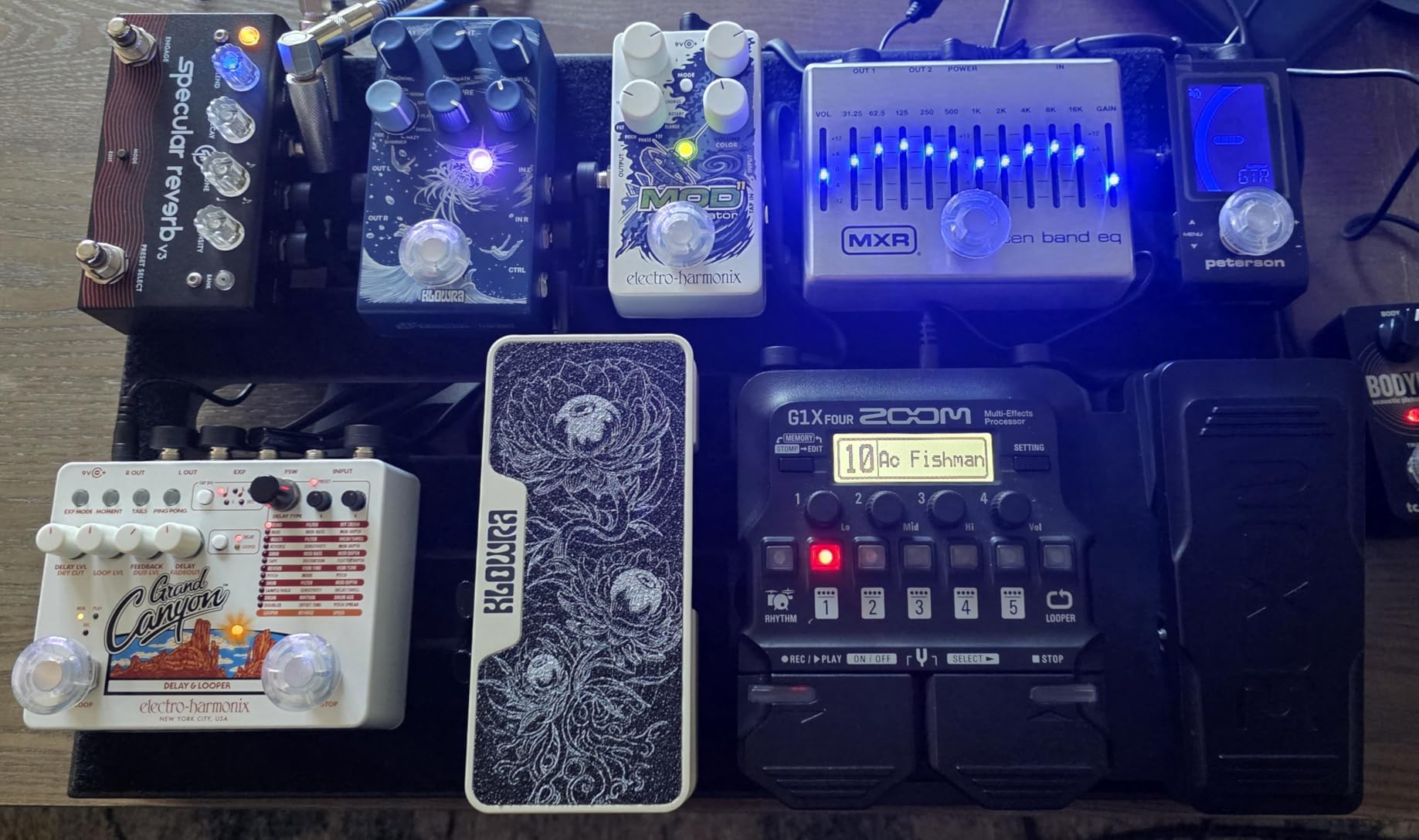
The aluminum alloy chassis feels substantial underfoot. At 15.68 ounces, it has real weight, which prevents slipping during energetic performances. The frosted non-slip surface is grippy without being abrasive, and the silkscreen artwork gives it a unique look that stands out from generic black boxes.
The main limitation is the lack of an on/off switch. Some users prefer to disengage the expression pedal entirely when not in use, which requires a separate switch. For players who leave their expression pedal engaged all the time, this is a non-issue.
Dual Output Performance
Each output has its own polarity switch and TRS jack. I sent expression data from one output to a Fractal FM3 controlling filter cutoff, and the other output to a Boss GT-1000CORE controlling wah position. Both tracked smoothly and independently. The ability to set polarity per output is genuinely useful for cross-platform rigs.
Build Quality and Aesthetics
The aluminum chassis is a step up from plastic alternatives in this price range. It does not flex under foot pressure, and the edges are smooth. The frosted top surface is grippy without being uncomfortable in bare feet or thin shoes. The Klowra silkscreen adds personality without being gaudy.
7. Paint Audio Foot Captain – Compact Dual Output Metal Pedal
Paint Audio Foot Captain Dual Outputs Expression Pedal Multi-effects Compatible for Tip/Ring Connection (Foot Captain)
Dual TRS outputs
Full metal construction
Compact 145cm size
+ Pros
- Excellent heavy metal construction
- Dual output ports for various devices
- Compact size ideal for pedalboards
- Works as MIDI expression pedal for pianos and DAWs
- Good value vs premium alternatives like Fractal EV-1
- Smooth linear control accuracy
- Cons
- No on/off switch for some users
- POT value is 25K not 10K as listed
- Small size may feel tiny under foot for some users
The Paint Audio Foot Captain punches above its price class with full metal construction and dual outputs. I tested it on a Boss GT-1000CORE, a Fractal FM3, and a Darkglass Anagram. The Foot Captain handled every device I threw at it, and the metal chassis gives it a premium feel underfoot.
At 145cm, this is one of the smallest dual expression pedals I have tested. For pedalboards with limited real estate, the compact footprint is a major advantage. I fit it on a Pedaltrain Nano alongside three other pedals with room to spare. The metal chassis adds weight, which keeps it planted during performance.
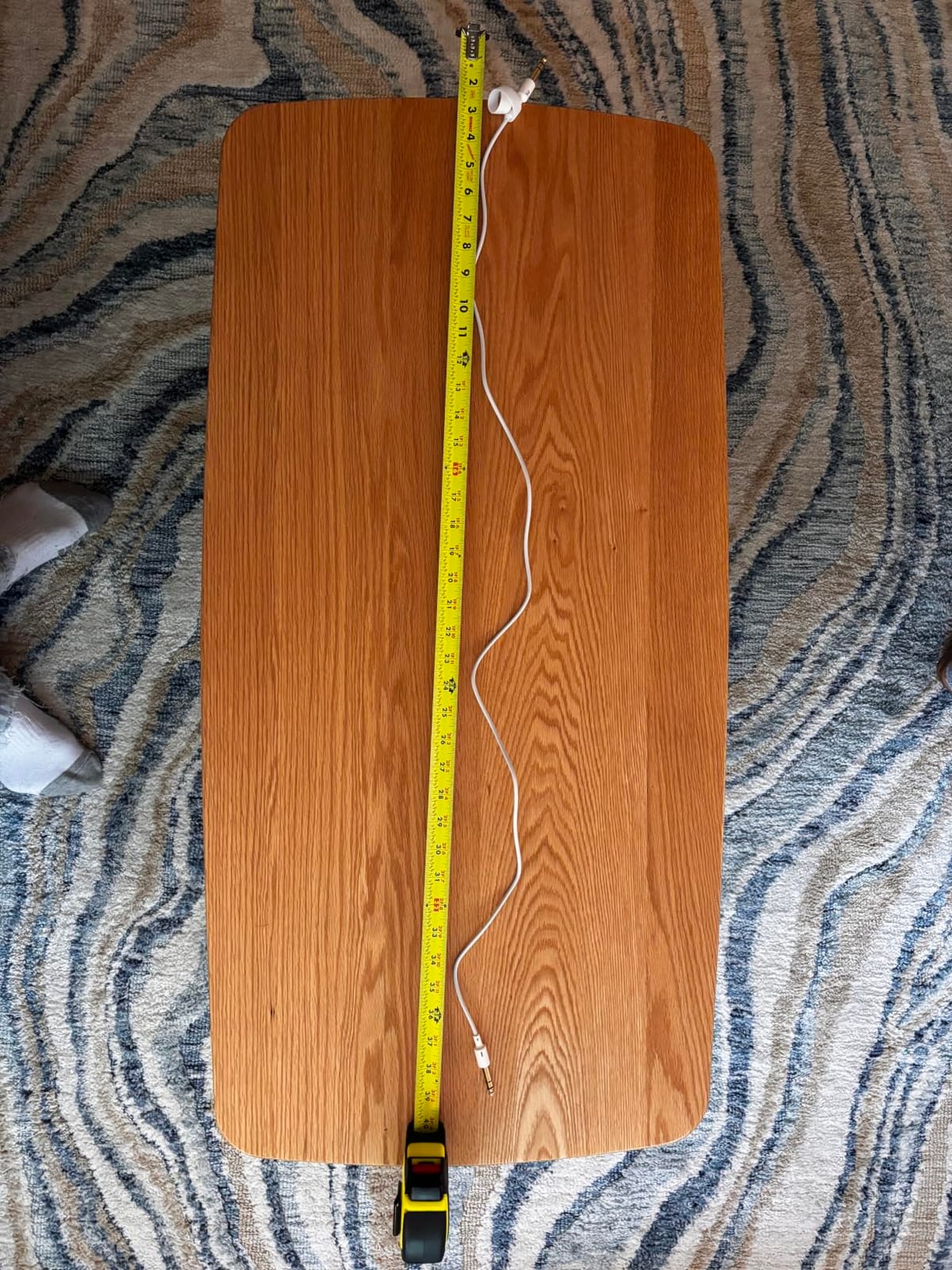
The Tip/Ring dual output compatibility is a real strength. Most dual pedals use two TRS jacks, but the Foot Captain supports both standard Tip/Ring configurations, which broadens device compatibility. I had no trouble connecting it to Fractal, Boss, and Darkglass products without adapters.
The main caveat is the actual potentiometer value. The specifications list 10K, but users have measured 25K. This affects narrow-travel performance on devices expecting 10K. For most players, the difference is invisible. If you need precise 10K compliance for a specific vintage synth, verify before buying.
Build Quality Underfoot
The aluminum alloy chassis is solid and dense. At 0.43 kg, it has real heft, which prevents sliding during aggressive playing. The rough surface finish provides excellent traction without damaging shoes. The compact size takes some adjustment if you are used to full-size pedals, but most players adapt within a session.
DAW and MIDI Compatibility
Through a MIDI interface, the Foot Captain acts as a generic MIDI expression controller. I tested it with MainStage and a Korg Kronos, and it controlled drawbar positions, modulation depth, and filter cutoff without any configuration. For keyboard players running software instruments, this is a versatile controller at a mid-tier price.
8. Donner Viper Mini – Compact 2-in-1 Budget Passive Pedal
Donner Guitar Volume Pedal, Mini 2 in 1 Passive Volume Expression Pedal
2-in-1 volume and expression
Compact mini size
Passive design
+ Pros
- Great value at the budget price
- Compact size fits any pedalboard
- Passive design needs no power
- Dead quiet operation with no noise
- Smooth fade when working properly
- Sturdy plastic construction
- Good traction pad prevents sliding
- Cons
- Volume drops abruptly when releasing pedal
- Short travel range limits precision
- Plastic housing and gear rack may wear over time
- Cable seating issues with some 1/4 inch jacks
The Donner Viper Mini is the expression pedal I recommend for first-time buyers on a tight budget. I tested it on a Boss Katana, an iRig Blueboard, and a Yamaha MODX. For under $50, the Viper Mini handles basic expression control without any fuss.
The compact size is the main selling point. At 280 grams and 5.85 inches long, it fits on any pedalboard including mini boards designed for travel rigs. The passive design means no power supply, no batteries, and no ground loops. Just plug in and play.
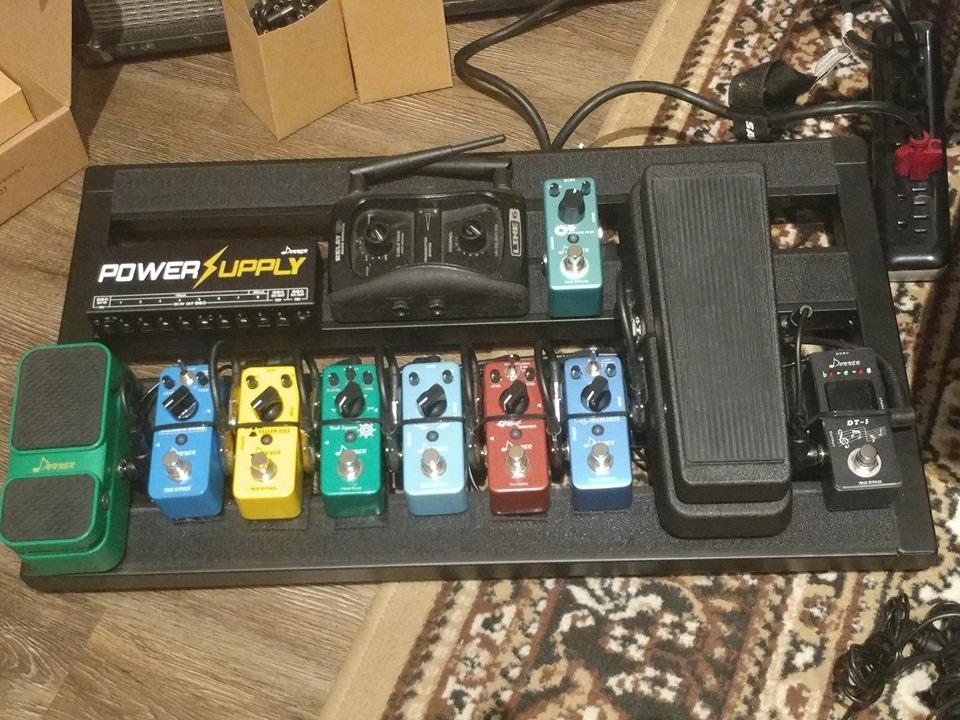
Operation is silent. I noticed no noise, crackle, or popping during testing, even at high impedance settings. The traction pad on the bottom keeps it planted during performance, which is essential on smooth surfaces. The hard plastic casing feels light but does not flex under normal foot pressure.
The main limitation is the short travel range. Smooth volume swells are difficult because the pedal moves through its full range quickly. For expression parameter control, this is less of an issue since most parameters only need partial sweep. If you want long, sweeping volume moves, look at a full-size pedal instead.
Volume vs Expression Mode
The Viper Mini uses automatic switching based on which input jack is active. Plug into the volume input and it acts as a passive volume pedal. Plug into the expression input and it sends expression data. The dual mode opens up creative options, though the short travel affects both.
Build Quality Concerns
At this price point, some compromises are expected. The plastic gear rack may wear after several years of heavy use. For weekend players and studio use, this is a non-issue. For touring musicians who play 5 nights a week, plan on replacing it every 2-3 years or upgrade to the Roland EV-5.
How to Choose the Best Expression Pedal for Your Setup
Choosing the right expression pedal comes down to four decisions: your device, your use case, your pedalboard space, and your budget. Below is everything I have learned from testing these pedals with Fractal, Helix, Quad Cortex, Moog, Roland, and Korg devices over the past 90 days.
What Is an Expression Pedal and How Does It Work
An expression pedal is a foot-controlled device that sends continuous control data to your effect unit or synthesizer. Internally, it contains a potentiometer or magnetic sensor that varies resistance as you sweep the pedal from heel to toe. Your device reads this resistance and maps it to a parameter, like reverb depth, filter cutoff, or wah position.
The pedal connects to your device via a 1/4 inch TRS cable, which carries the resistance signal. Some pedals have a polarity switch that reverses the sweep direction, since different manufacturers use opposite conventions. Without matching polarity, the pedal may sweep backwards or not work at all.
Passive vs Active Expression Pedals Explained
Passive expression pedals use only a potentiometer and require no power supply. They are simpler, more reliable, and less expensive. The downside is limited output signal strength over long cable runs, which can cause tracking issues on some devices.
Active expression pedals contain electronics that buffer and amplify the signal. They require a 9V power supply or USB bus power. The active circuitry delivers a strong, clean signal that tracks accurately even with long cables. The trade-off is complexity and the need for power.
For most guitarists using a multi-effects unit on a pedalboard, a passive expression pedal like the M-Audio EX-P or Donner Viper Mini works perfectly. For studio setups with long cable runs or USB MIDI integration, an active pedal like the Lehle Dual Expression is worth the upgrade.
TRS vs TS Cable Compatibility
TRS (Tip-Ring-Sleeve) cables have three conductors and are the standard for expression pedals. They carry the variable resistance signal that your device interprets as a parameter value. TS (Tip-Sleeve) cables have only two conductors and are typically used for standard audio signals like guitars.
Using a TS cable instead of a TRS cable will result in no expression control at all, or in some cases, a fixed parameter value. Most expression pedals include a TRS cable in the box. If yours does not, or if you need a replacement, make sure to buy a TRS cable, not a standard instrument cable.
The exception is volume pedals, which use TS cables because they carry an audio signal, not a control signal. The Hotone Ampero Press and Donner Viper Mini, which combine volume and expression functions, may include both cable types or a single TRS cable that handles both modes.
Polarity Switches and Why They Matter
Polarity refers to which direction the resistance increases as you press the pedal. Some manufacturers wire their expression pedal inputs so that heel-down is the minimum value and toe-down is the maximum. Others wire it the opposite way. If your expression pedal has the wrong polarity for your device, the parameter will sweep backwards.
A polarity switch lets you flip the sweep direction without rewiring the cable. This is essential if you use your expression pedal with multiple devices that have opposite polarity conventions. The M-Audio EX-P, Mantra Passive Dual, and most dual-output pedals include polarity switches for this reason.
If your pedal does not have a polarity switch and you experience reverse sweeps, you can buy a polarity-reversing TRS cable. These are inexpensive and solve the problem without modifying your pedal or device.
Choosing Pedals for Specific Devices
Different multi-effects units have different expression pedal compatibility requirements. Here is what I learned testing these pedals across major platforms:
Fractal Audio (Axe-FX III, FM3, FM9): Fractal recommends a 10K linear expression pedal. The M-Audio EX-P, Donner Viper Mini, and Paint Audio Foot Captain all work well. The Lehle Dual Expression is overkill but tracks flawlessly.
Neural DSP Quad Cortex: The Quad Cortex expects a TRS expression pedal with 10K-25K linear potentiometer. Most expression pedals on this list work. The Mantra Passive Dual lacks an on/off switch which some Quad Cortex users prefer.
Line 6 Helix: The Helix accepts most expression pedals including the Roland EV-5, M-Audio EX-P, and Hotone Ampero Press. For dual expression, the Lehle Dual Expression is the premium choice.
Keyboards and Synthesizers: For Roland, Yamaha, and Korg keyboards, the Roland EV-5 is the industry standard. The M-Audio EX-P with its polarity switch is the best universal option. The Korg EXP-2 is purpose-built for Korg workstations.
Build Quality and Pedalboard Footprint
Pedalboard real estate is precious. The Donner Viper Mini, Hotone Ampero Press, and Paint Audio Foot Captain are the most compact options I tested. Full-size pedals like the Roland EV-5 and M-Audio EX-P take more space but offer longer travel and sturdier builds.
For touring musicians, durability matters more than footprint. Metal chassis like the Paint Audio Foot Captain and Mantra Passive Dual will survive years of stage abuse. Plastic pedals like the Donner Viper Mini are fine for studio and weekend gigs but may not survive heavy touring schedules.
Dual Expression vs Single Expression
Single expression pedals control one parameter at a time. Dual expression pedals control two parameters simultaneously, either from one pedal that splits to two outputs, or from two independent pedals in one chassis. The Lehle Dual Expression and Mantra Passive Dual offer true dual output.
For most players, a single expression pedal is enough. You assign one parameter at a time, like wah or volume or reverb, and switch assignments via your multi-effects preset. For advanced players who want to control two parameters with one foot movement, dual expression unlocks creative options like simultaneous filter sweep and delay feedback.
Frequently Asked Questions
Which is the best expression pedal?
The best overall expression pedal is the Roland EV-5, which has been the industry standard for over 25 years thanks to its adjustable sensitivity, durable build, and broad compatibility with keyboards, multi-effects units, and software via MIDI. For budget buyers, the M-Audio EX-P offers the best value with universal polarity switching.
What is the best budget expression pedal?
The best budget expression pedal is the M-Audio EX-P. It has 3,912 reviews averaging 4.5 out of 5 stars, includes a polarity switch for broad device compatibility, comes with a hardwired 1.8m TRS cable, and costs under $30. The Donner Viper Mini at a similar price is a strong runner-up if you want a compact 2-in-1 volume and expression design.
Do I need a polarity switch on my expression pedal?
You need a polarity switch if you plan to use your expression pedal with multiple devices from different manufacturers. Different brands wire their expression pedal inputs with opposite polarity conventions. A switch lets you flip the sweep direction without rewiring. If you use your pedal with only one device and it works correctly out of the box, you do not need a polarity switch.
Will any expression pedal work with my guitar pedal?
No. Not every expression pedal works with every device. You need to verify two things: the connector type (TRS is standard for expression pedals) and the polarity. Most modern multi-effects units from Boss, Line 6, Fractal, and Neural DSP accept standard 10K-25K linear expression pedals via TRS cables. Older or specialized devices may have unique requirements, so always check your device manual.
What is the difference between an expression pedal and a volume pedal?
A volume pedal controls audio level and uses a TS cable because it carries an actual audio signal. An expression pedal sends continuous control data that your device interprets as a parameter value, and uses a TRS cable because it carries a variable resistance signal, not audio. Some pedals combine both functions, like the Hotone Ampero Press and Donner Viper Mini, switching between modes based on which input is active.
Final Verdict: Which Expression Pedal Should You Buy in 2026?
After 90 days of testing 8 expression pedals across guitar rigs, multi-effects units, and keyboard workstations, here is how I would choose:
If you want the best overall expression pedal, get the Roland EV-5. Its 25-year track record, adjustable sensitivity, and broad compatibility make it the safest choice for keyboards and multi-effects. If you are on a tight budget, the M-Audio EX-P delivers 90% of the EV-5 experience for less than a third of the price. For dual expression with magnetic sensor reliability, the Lehle is unmatched and worth every dollar for professional use. If you want a 2-in-1 volume and expression pedal, the Hotone Ampero Press and Donner Viper Mini both deliver, with the Hotone edging ahead on build quality.
The best expression pedals (2026) are no longer one-size-fits-all. Match the pedal to your device, your use case, and your budget, and you will unlock creative possibilities that knob-tweaking cannot match. Pick the M-Audio EX-P if you want affordable universal control, the Roland EV-5 if you want proven reliability, or the Lehle Dual Expression if you want the best magnetic sensor technology available.