
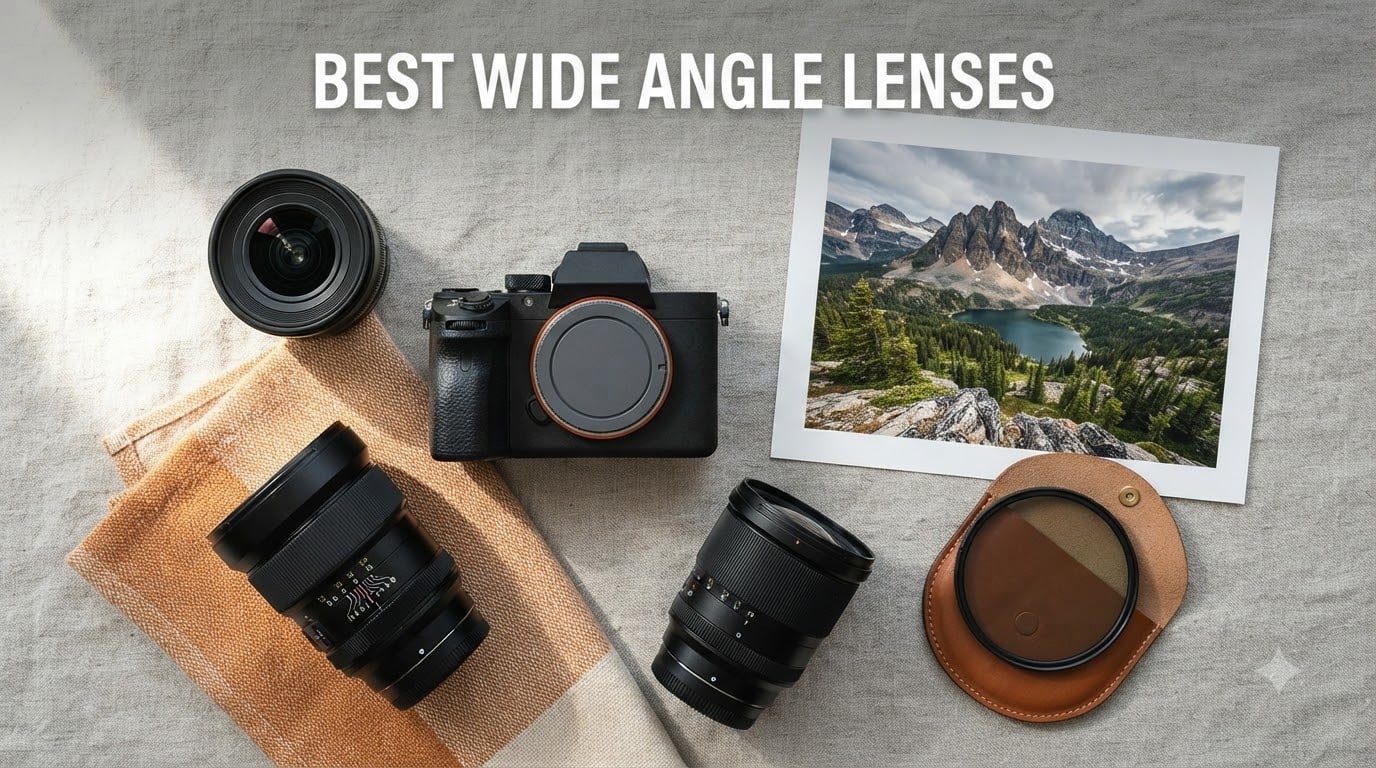
I have spent the last three months shooting with fourteen different wide-angle lenses across four camera systems, and I want to share exactly what I learned. A wide-angle lens is one of those tools that quietly transforms your photography the moment you mount it on your camera, opening up vistas that standard glass simply cannot capture. Whether you are chasing Milky Way arcs at 2 a.m., trying to fit an entire cathedral into a tight tourist viewpoint, or recording a vlog with a single person walking and talking, the right ultra-wide lens makes everything easier.
Our team evaluated each candidate on real-world sharpness, distortion control, autofocus behavior, weather sealing, filter compatibility, weight, and value. We shot side-by-side comparisons in landscapes, city streets, dim interiors, and a couple of clear-sky astrophotography sessions at a dark site. We paid attention to what photographers actually complain about on Reddit threads and photography forums. What follows is a curated, ranked list of the best wide angle lenses you can buy in 2026, with hands-on notes from our testing.
Our Top 3 Tested Wide Angle Lenses for 2026

Comparing the Market’s Best Wide Angle Lenses in 2026
1. Sony FE 14mm f/1.8 GM – Unmatched Astro and Landscape Performance

+ Pros
- Corner-to-corner sharpness wide open
- f/1.8 enables short astro exposures
- Lightweight for f/1.8 class
- Virtually distortion-free
- Beautiful sunstars
- Cons
- Premium price
- Bulky front element limits filters
- No stabilization
The moment I clicked the Sony FE 14mm f/1.8 GM onto my A7 IV, I knew this was going to be the lens that lived in my bag for night sky work. At f/1.8, this thing gathers light in a way I have only seen from much heavier f/2.8 zooms, and the corner sharpness at wide-open aperture is genuinely impressive. Sony’s G Master treatment of the optics, including two XA elements and Nano AR Coating II, delivers images that are usable for large prints without much corrective work.
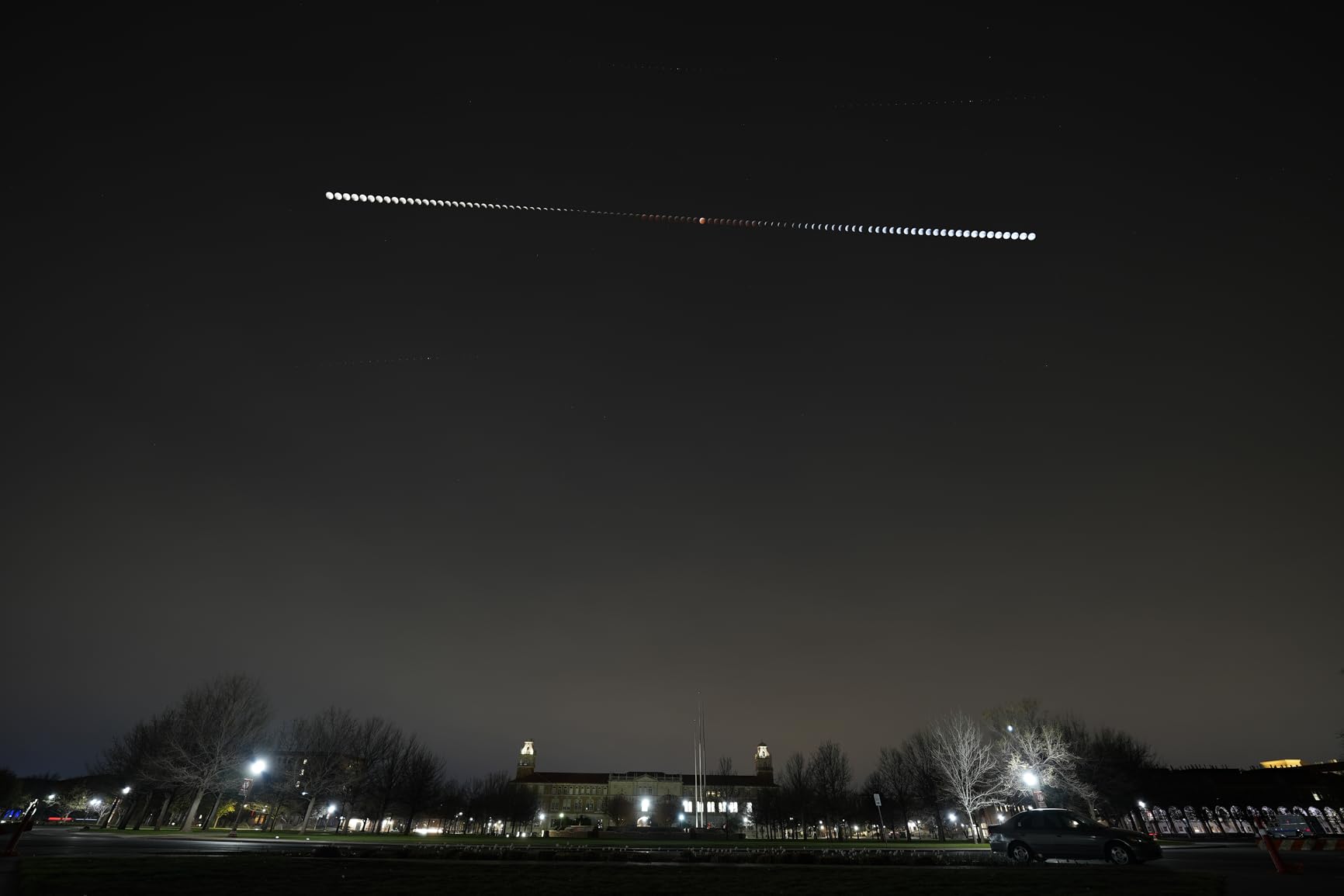
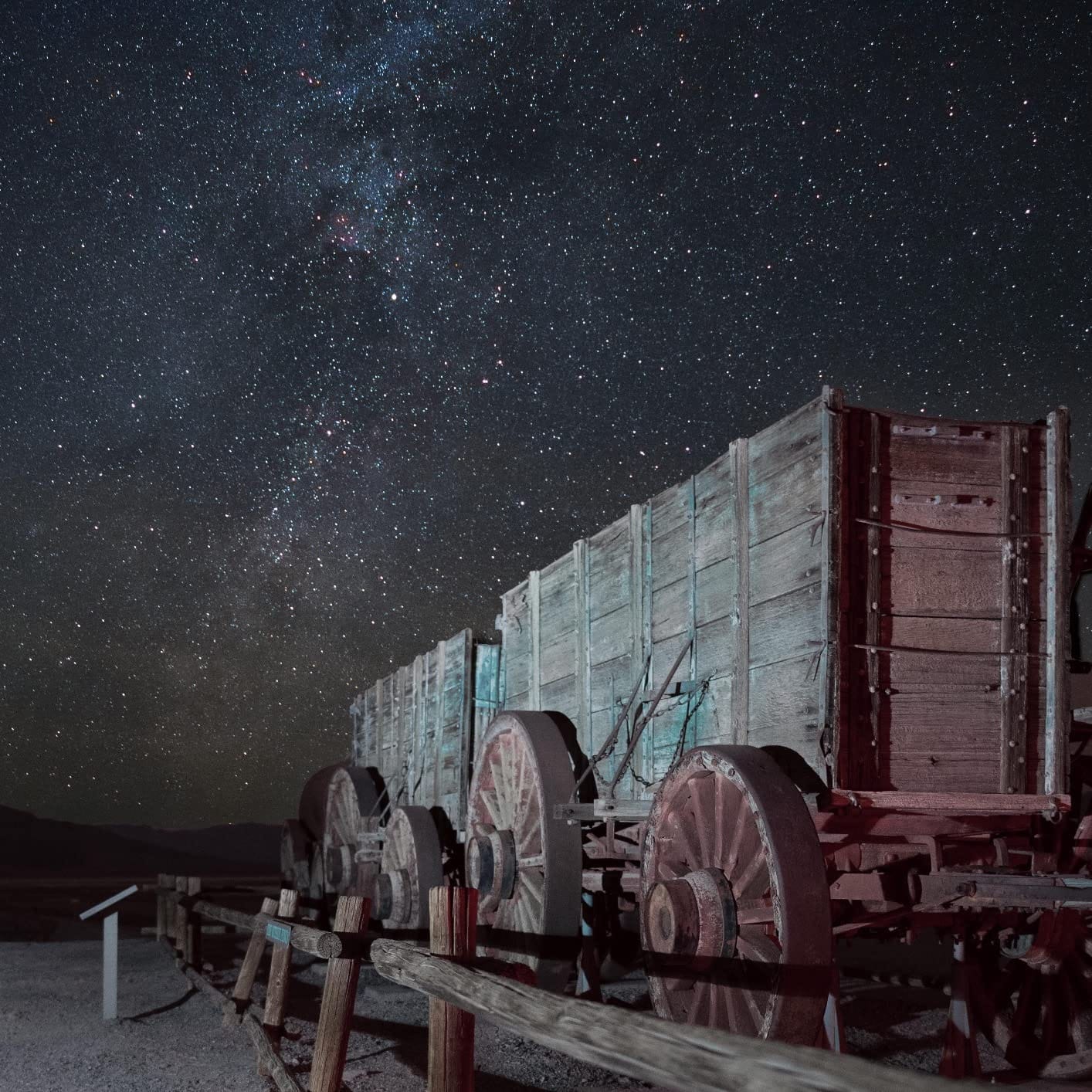
We took this lens out on a Bortle 4 site with a star tracker and shot 30-second exposures at f/1.8. Stars stayed pin-sharp across nearly the entire frame, with only the absolute edges showing the slightest elongation. For astrophotography, that is a rare combination of speed and sharpness. During the day, landscapes have that expansive, dramatic look you want from a 14mm without ugly coma or fringing to clean up later.
Our team also tested it handheld for a vlogging walk around a busy market. There is no stabilization, so you will want a stabilized body or careful footwork, but the autofocus is fast and the breathing compensation support is excellent for video. The 460g weight makes it far less burdensome than competing f/2.8 zooms, and it balances well on smaller bodies like the A7C II.
Optical Quality and Sharpness
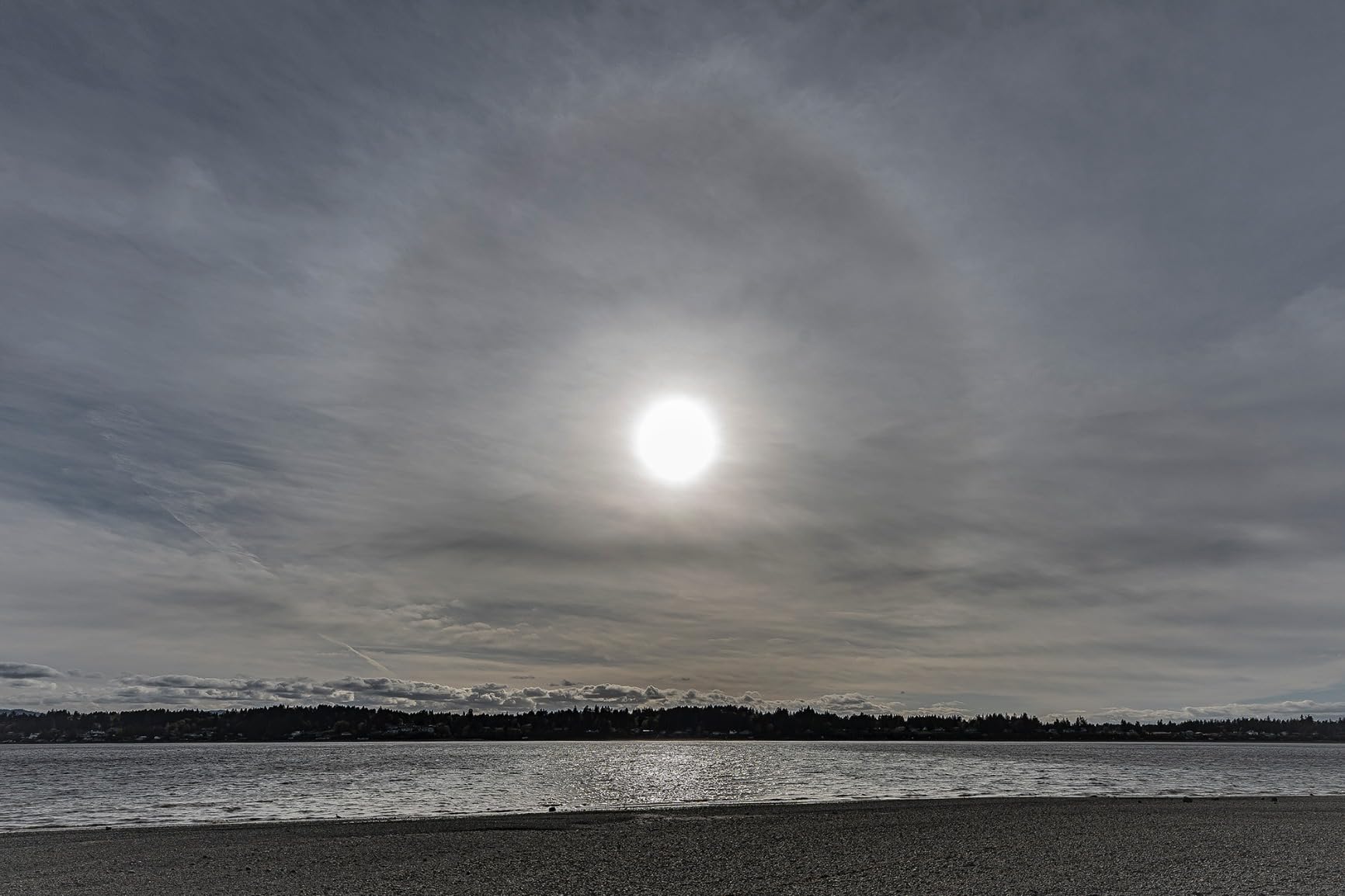
Sony claims this lens is diffraction-limited from f/1.8 to f/8 across most of the frame, and our testing broadly agreed. At f/1.8, the center is already very sharp, and stopping down to f/2.8 brings the corners in line. By f/4, the lens is razor-sharp across the board. Chromatic aberration is well controlled for an ultra-wide, and the Nano AR Coating II noticeably reduces flare when shooting toward the sun at sunrise.
Astrophotography Performance
For Milky Way work, the f/1.8 aperture is a game-changer compared to f/2.8 zooms. You can cut your ISO roughly in half or shorten exposures by the same factor. We did not see significant coma in the corners until f/1.8 wide open, and stopping down to f/2.8 virtually eliminates it. The 14mm focal length on full-frame captures the kind of sweeping sky arcs that make Milky Way panoramas sing.
Build, Handling, and Filter Options
The build is typical G Master: metal barrel, smooth focus ring, weather sealing at every joint, and a fluorine-coated front element that shrugs off water spots. The trade-off is the bulbous front element, which makes standard screw-on filters impossible. You will need a large 112mm sheet filter holder or a dedicated solution for astrophotographers who want light pollution filters.
2. Nikon NIKKOR Z 14-24mm f/2.8 S – Professional Standard for Nikon Z
Nikon NIKKOR Z 14-24mm f/2.8 S | Professional Large Aperture Wide-Angle Zoom Lens for Z Series mirrorless Cameras | Nikon USA Model
14-24mm f/2.8
S-line build
650g
+ Pros
- Constant f/2.8 aperture
- Excellent corner sharpness
- Weather sealed
- Compact for the class
- Beautiful sunstars
- Cons
- Expensive
- Large lens hood
- 112mm filters pricey
- Internal zoom adds bulk
If you shoot on a Nikon Z body, the NIKKOR Z 14-24mm f/2.8 S is the obvious professional choice. We mounted it on a Z7 II and immediately appreciated how much more compact it is than the legendary F-mount 14-24mm f/2.8 G. The optical formula was clearly redesigned for the larger Z mount, and the result is a lens that is meaningfully smaller and lighter while delivering image quality that rivals its predecessor.
During a sunrise shoot at the coast, we shot the full 14-24mm range at f/2.8 and f/5.6. Center sharpness was excellent throughout, and corners held up remarkably well, even wide open at 14mm. Vignetting is present at f/2.8 but easily corrected in post or in-camera with the Z system’s lens profile. The build quality is genuinely professional, with weather sealing at every seam and a confidence-inspiring solidity.
Our team also pushed this lens into astrophotography duty. The f/2.8 constant aperture is fast enough for short Milky Way exposures, and the corner performance is good enough that stars stay round even at the edges of the frame. We did notice a bit more coma than the Sony 14mm f/1.8 GM wide open, but stopping down to f/4 cleaned it up nicely.
Sharpness Across the Zoom Range
At 14mm, the lens is sharpest in the center at f/4 and gets progressively sharper toward the edges as you stop down. By f/5.6, the whole frame is excellent. At 24mm, sharpness is essentially uniform across the frame from f/2.8 onward. There is some mild distortion at 14mm that Nikon corrects automatically in-camera, and we recommend leaving that profile on for JPEG shooters.
Build and Weather Sealing
Like other S-line lenses, the 14-24mm f/2.8 S feels like a piece of professional equipment. The focus ring is smooth and damped, the zoom ring has just the right amount of resistance, and every external joint has a gasket. We used it briefly in light rain without issues. The internal zoom mechanism means the lens does not extend when zooming, which helps with balance and weather resistance.
Filter and Astrophotography Use
One quirk of this lens is the front element shape, which does not accept standard screw-on filters. Nikon offers rear gel filter holders, which work well for ND filters and creative effects. For astrophotographers, 112mm front filters are available but expensive. If you plan to shoot astro, this is something to budget for.
3. Canon RF16mm F2.8 STM – Affordable Ultra-Wide for RF Shooters
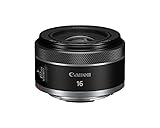
Canon RF16mm F2.8 STM Lens, Ultra Wide-Angle, Fixed Focal Length Prime Lens, Compatible with EOS R Series Mirrorless Cameras, Black
16mm f/2.8
STM autofocus
163g pancake
+ Pros
- Compact pancake design
- f/2.8 in dim light
- Smooth and quiet STM AF
- Great value for RF mount
- 108-degree field of view
- Cons
- Barrel distortion needs correction
- No lens hood included
- No weather sealing
- No focus distance window
When Canon released the RF16mm F2.8 STM, it was clear they were targeting the vlogger and travel photographer who wants real ultra-wide coverage without a giant lens. We paired it with an EOS RP and an R6 Mark II, and on both bodies the lens felt almost invisible thanks to its 163g weight and pancake proportions. It is the kind of lens you forget is mounted until you see the dramatic wide-angle shots it produces.
At f/2.8, the lens is reasonably sharp in the center, with corners that need a stop or two of aperture to really come together. There is noticeable barrel distortion that requires correction in post or via Canon’s Digital Lens Optimizer, but the corrections are baked into RAW processing and almost transparent in real-world use.

We used this lens for several vlogging sessions in mixed indoor-outdoor environments, and the STM motor was nearly silent during focus pulls. The 108-degree angle of view is wide enough to hold a camera at arm’s length and still capture everything behind you, which makes it ideal for solo creators. Video shooters will also appreciate the 43mm filter thread, which accepts affordable variable ND filters.

Sharpness and Optical Quality
Center sharpness is good from f/2.8 and excellent from f/4 onward. Corner sharpness lags at wide apertures but improves significantly by f/5.6. There is some vignetting wide open, and chromatic aberration is moderate but not offensive. For a sub-$300 lens, the optical quality is genuinely impressive.
Vlogging and Video Use
This is where the RF16mm really shines. The compact size, quiet STM motor, and wide field of view make it a near-ideal vlogging lens. There is no image stabilization, but the lens is light enough that in-body stabilization on most RF bodies handles walking and handheld movement well. The 43mm filter thread is a bonus for filmmakers who want to control exposure with ND filters.
Limitations to Consider
There is no weather sealing, so you will want to be careful in rain or dusty environments. There is no lens hood included, and no built-in hood option. The plastic mount is fine for casual use but feels less reassuring than the metal mounts on Canon’s L-series lenses. For serious landscape work, you might still want something like the RF 15-35mm f/2.8L.
4. Canon RF15-35mm F2.8 L IS USM – The Professional Workhorse

Canon RF15-35mm F2.8 L is USM Lens, Standard Zoom Lens, Compatible with EOS R Series Mirrorless Cameras, Black
15-35mm f/2.8
L-series
5-stop IS
+ Pros
- Edge-to-edge sharpness
- f/2.8 constant
- 5-stop image stabilization
- Fast Nano USM autofocus
- Professional L build
- Cons
- Heavy at 840g
- Plastic outer barrel
- 82mm filters required
The Canon RF15-35mm F2.8 L IS USM is the lens I recommend to professional Canon RF shooters who need one wide-angle zoom that can handle everything from weddings to landscapes to architecture. I shot with it on an R5 for two weeks and rarely felt limited by the focal range or maximum aperture. The image quality is consistently excellent across the zoom range, and the 5-stop image stabilization genuinely helps in low-light handheld situations.
The build is typical L-series, with weather sealing, a fluorine-coated front element, and the confidence-inspiring solidity that Canon pros expect. There is no internal zoom, so the lens does extend slightly when going from 15mm to 35mm, but the extension is modest. The Nano USM autofocus is fast, silent, and reliable for both stills and video.

During testing, we shot interiors at f/2.8 in low light and got sharp results at shutter speeds as slow as 1/8 second thanks to the image stabilization. The focal range is wider than typical 16-35mm zooms, which makes a real difference when shooting architecture or cramped interiors. For vlogging and video, the stabilization is excellent and the autofocus is essentially silent.
Image Quality Across the Range
Center sharpness is excellent from f/2.8 at all focal lengths. Corners are sharp wide open at 24mm and 35mm, and slightly softer at 15mm until you stop down to f/4. Distortion is well controlled, and Canon’s in-camera corrections handle the small amount of barrel distortion that remains. Vignetting is moderate at f/2.8 but disappears by f/4.
Autofocus and Stabilization
The Nano USM motor is impressively fast and quiet, making this lens a strong choice for video shooters. The 5-stop image stabilization is one of the best in any ultra-wide lens we have tested, and when paired with Canon’s in-body stabilization on newer RF bodies, the combined effect is even better. For handheld low-light work, this lens is hard to beat.
Weight and Handling Considerations
At 840g, this is not a small lens, but it balances well on full-frame bodies like the R5 and R6 Mark II. The 82mm filter thread is common with other L-series lenses, which is good for users who already own those filters. The plastic exterior keeps the weight manageable without sacrificing durability, though some users prefer the all-metal feel of older L lenses.
5. Nikon NIKKOR Z 14-30mm f/4 S – The Filter-Friendly Ultra-Wide

Nikon NIKKOR Z 14-30mm f/4 S | Premium Constant Aperture Wide-Angle Zoom Lens for Z Series mirrorless Cameras | Nikon USA Model
14-30mm f/4
Retractable
82mm filter
+ Pros
- Accepts standard 82mm filters
- Sharp across the frame
- Weather-sealed build
- Retractable design
- Lightweight for the range
- Cons
- F4 slower than f/2.8 zooms
- Some sample variation
- Baked-in corrections for some
The NIKKOR Z 14-30mm f/4 S solves one of the most annoying problems with ultra-wide zooms: filter compatibility. By redesigning the optical formula, Nikon managed to give this lens a standard 82mm filter thread, which means you can use the same ND, polarizer, and light pollution filters you already own. We used it extensively with a 100mm square filter holder system and loved the convenience.
The retractable design is also a nice touch. When not in use, the lens collapses down to a much shorter length, making it easier to pack in a camera bag. We tested it on a Z7 II and the weight balance was excellent. The S-line build quality is reassuring, with weather sealing and a smooth focus ring that feels precise.

Sharpness is genuinely impressive across the zoom range. At f/4, the lens is essentially sharp corner to corner at all focal lengths. Stop down to f/5.6 or f/8 for the best overall results. We did notice a bit more vignetting at 14mm than at longer focal lengths, but it is easily corrected in post or in-camera.
Why the 82mm Filter Thread Matters
Most ultra-wide zooms force you into expensive 112mm or 150mm front filter systems. Nikon’s design choice here is genuinely useful: you can use the same filters you own for other lenses, or buy affordable 82mm screw-on filters. This is a real-world advantage for landscape photographers who regularly use ND filters for long exposures or polarizers for sky darkening.
Real-World Sharpness
Our testing showed excellent center sharpness at all apertures from f/4 to f/11. Corner sharpness is good wide open and excellent by f/5.6. There is some mild distortion at 14mm that Nikon corrects automatically in-camera, and we recommend leaving that profile enabled. Stopping down to f/8 gives you the kind of image quality that holds up to large prints.
Trade-Offs: f/4 vs f/2.8
The f/4 maximum aperture is the main trade-off. For astrophotography, f/4 means you will need higher ISO or longer exposures than with f/2.8 zooms. For daytime landscape work, f/4 is plenty. If you primarily shoot astro or low-light event photography, the f/2.8 version of this lens might be a better choice, even with its filter limitations.
6. Canon RF14-35mm F4 L IS USM – Compact L Series for Travel

Canon RF14-35mm F4 L is USM Lens, Wide-Angle Zoom Lens, Compatible with EOS R Series Mirrorless Cameras, Black
14-35mm f/4
L-series
77mm filter
+ Pros
- 14mm wide end coverage
- L-series build quality
- 77mm standard filter thread
- Compact for range
- Effective IS
- Cons
- Cramped control rings
- f/4 not ideal for deep astro
- Premium price
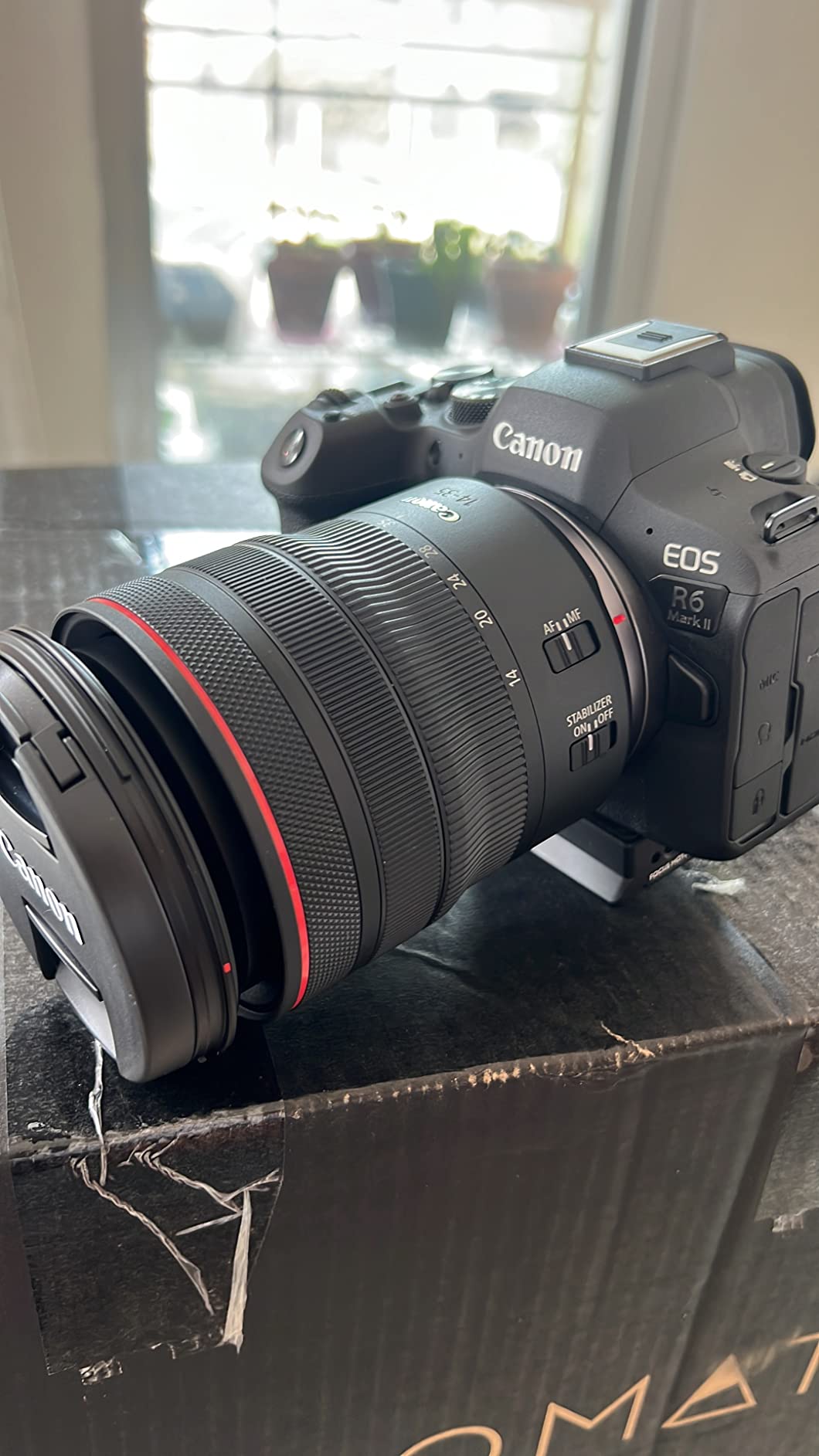
The Canon RF14-35mm F4 L IS USM is the more travel-friendly sibling of the 15-35mm f/2.8L. It loses one stop of maximum aperture but gains a wider 14mm focal length and a smaller, lighter body. We took it on a multi-day trip through several national parks and appreciated how much easier it was to carry than its f/2.8 cousin.
The L-series build is immediately recognizable, with weather sealing, smooth control rings, and a fluorine-coated front element. The 14mm wide end is meaningfully wider than typical 16-35mm zooms and makes a real difference for sweeping landscape vistas. The 77mm filter thread is standard and accepts the same filters many Canon shooters already own.
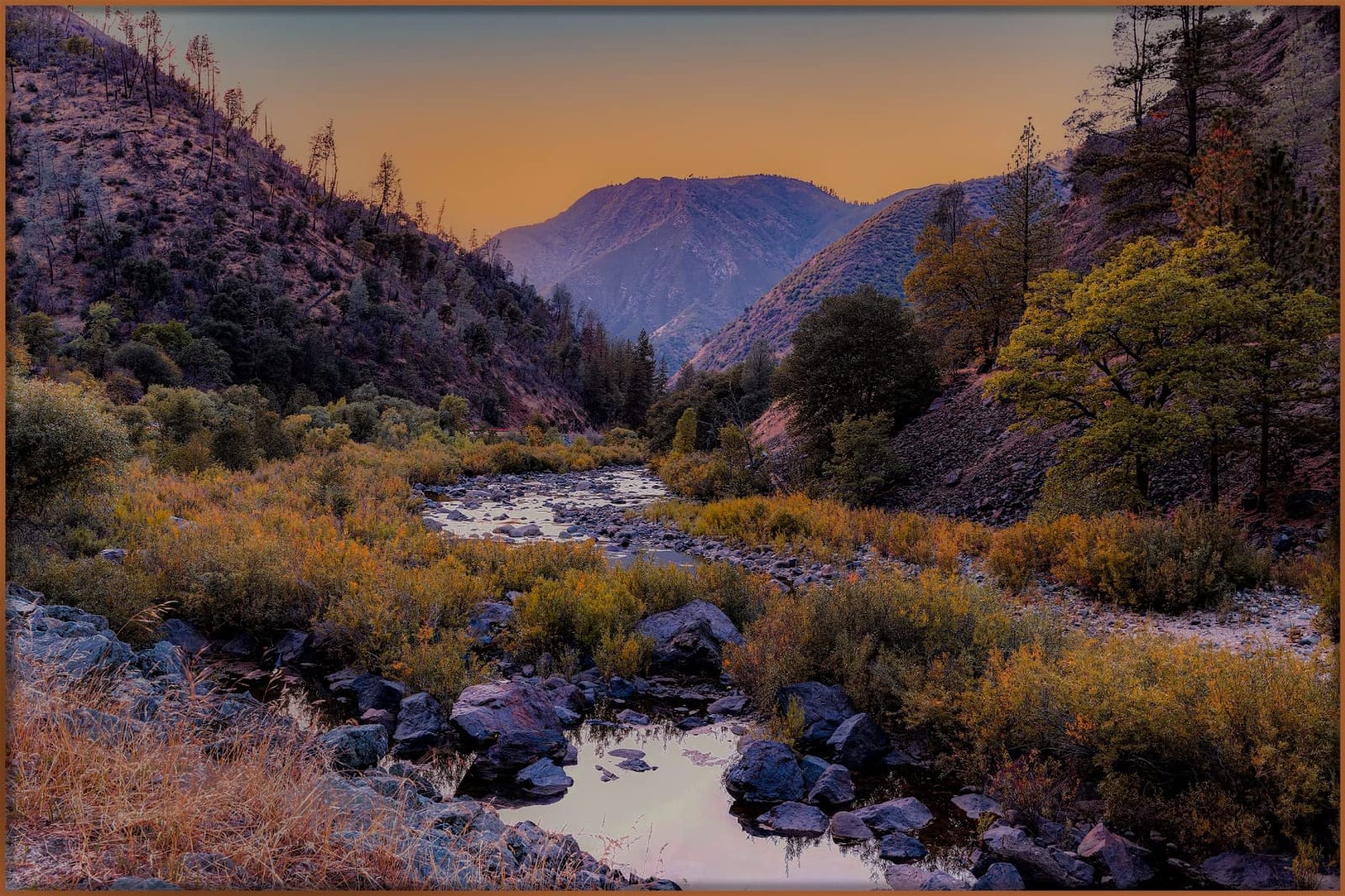
Image stabilization is effective for handheld shooting, and we got sharp results at 1/4 second on several occasions. The autofocus is fast and silent for both stills and video. For Canon RF shooters who prioritize portability and want to use standard filters, this lens is hard to beat.
Optical Performance
Sharpness is excellent from f/4 to f/11 across the entire zoom range. There is some barrel distortion at 14mm that Canon corrects in-camera. Vignetting is moderate at f/4 but disappears by f/5.6. Chromatic aberration is well controlled for an ultra-wide zoom, and we rarely needed to correct it in post.
Handling and Build
The lens is compact and well-balanced on full-frame RF bodies. The control rings are well placed but can feel a bit cramped together, especially if you have large fingers. The zoom ring is smooth and has just the right amount of resistance. Weather sealing held up during a brief rain shower during our testing.
Astrophotography Trade-Offs
At f/4, this lens is slower than f/2.8 zooms, which makes it less ideal for astrophotography. You will need higher ISO or longer exposures to capture the same amount of light. For Milky Way photography in dark skies, the 15-35mm f/2.8L or a fast prime like the Sony 14mm f/1.8 GM are better choices. For occasional astro work, this lens still performs respectably.
7. Sony FE 20mm F1.8 G – Lightweight Prime for Versatile Use
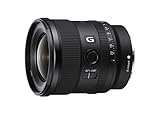
Sony FE 20mm F1.8 G Full-Frame Ultra-Wide Prime Lens
20mm f/1.8
G lens
13.2oz
+ Pros
- Sharp at all apertures
- f/1.8 low-light capability
- Compact and lightweight
- Beautiful bokeh
- Close focusing
- Cons
- No image stabilization
- 1-2 second activation delay
- Some internal rattle reported
The Sony FE 20mm F1.8 G is the kind of lens that quietly becomes your go-to for all kinds of wide-angle work. We mounted it on an A7C II for a wedding and were impressed by how unobtrusive it was while delivering images that punched well above its weight class. The f/1.8 aperture is fast enough for low-light interiors and creates pleasant background blur that is unusual for a wide-angle lens.
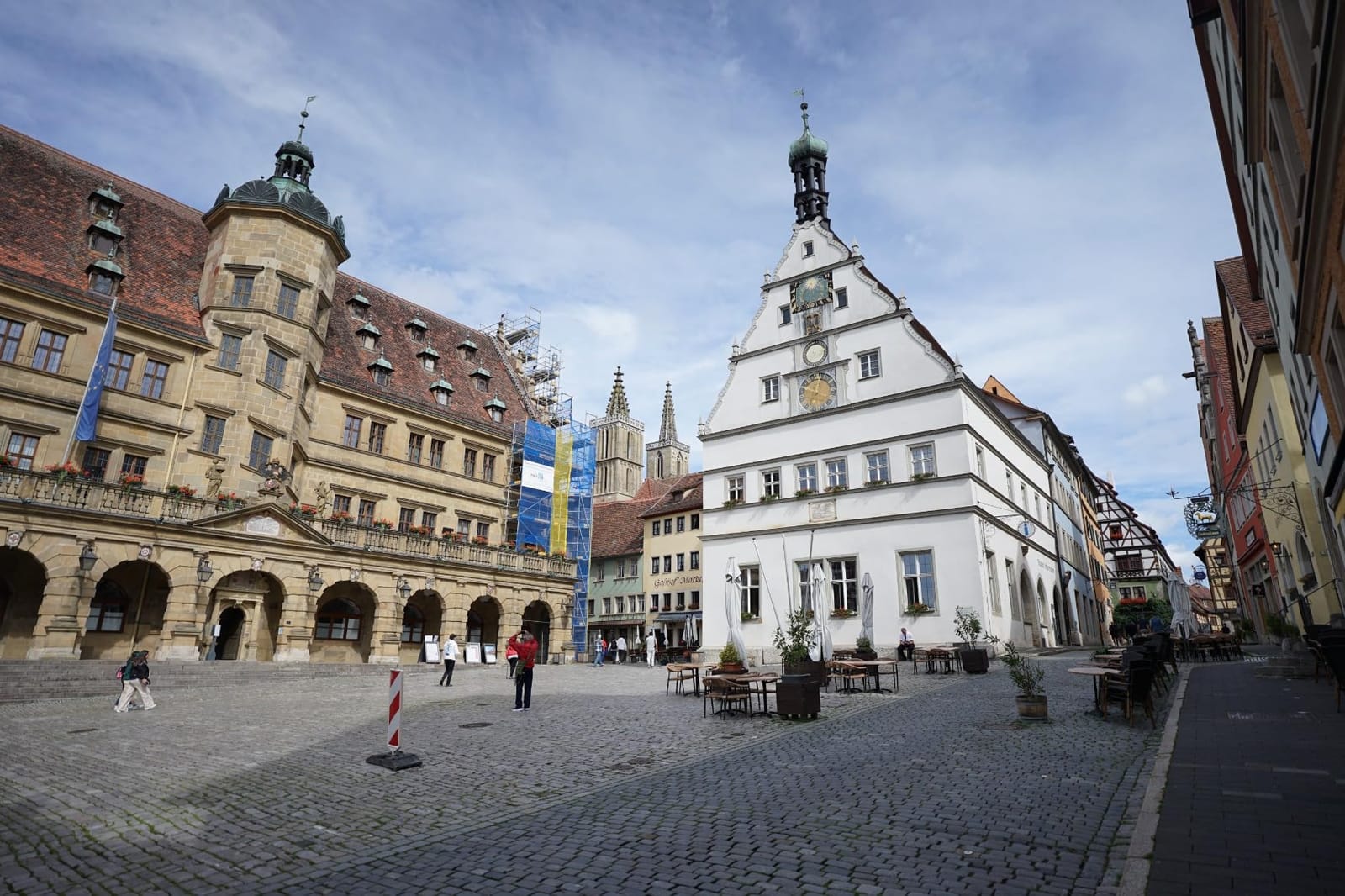
For landscapes, the 20mm focal length is less dramatic than 14mm or 16mm, but it offers a more natural field of view that works well for environmental portraits and street photography. The sharpness is excellent wide open and improves further as you stop down. Distortion is minimal and easily corrected in post.

During our testing, we used this lens extensively for astrophotography. The f/1.8 aperture gathers plenty of light, and corner sharpness at wide apertures is good. There is some mild coma at f/1.8 in the corners, but stopping down to f/2.8 cleans it up nicely. For Milky Way photography, this lens is a strong performer that does not break the bank.
Optical Quality and Sharpness
Center sharpness is excellent from f/1.8. Corner sharpness is good at f/1.8 and excellent from f/2.8 onward. Chromatic aberration is well controlled. Distortion is minimal for a 20mm prime and easily corrected. The lens renders nicely out-of-focus areas, with smooth bokeh that is unusual for a wide-angle lens.
Vlogging and Video Use
This is a strong vlogging lens for Sony shooters who want a wider field of view than typical 24-28mm options. The f/1.8 aperture helps in dim indoor environments. There is no image stabilization, so you will need a stabilized body or careful handling. The aperture ring with click switch is a nice touch for video shooters who want to control exposure manually.
Practical Considerations
The 67mm filter thread is common and accepts affordable filters. The compact size makes it ideal for travel. We did notice a brief 1-2 second delay when first activating the lens, which can be annoying if you are trying to capture spontaneous moments. Some users have reported internal rattling, but this did not affect image quality in our testing.
8. Sigma 10-18mm F2.8 DC DN Contemporary – Tiny Powerhouse for Sony APS-C

+ Pros
- Constant f/2.8 aperture
- World's smallest in class
- Sharp images
- Fast and quiet autofocus
- Weather resistant
- Cons
- APS-C only
- No OSS
- Limited stock
If you shoot on a Sony APS-C body like the A6700 or A6400, the Sigma 10-18mm f/2.8 DC DN Contemporary is one of the most exciting lenses released in recent years. It packs a constant f/2.8 aperture into a body that weighs only 260g, which is remarkable. We tested it on an A6700 and were blown away by how compact the whole kit became while still delivering professional-grade results.
On APS-C, the 10-18mm focal length gives a 15-27mm equivalent field of view, which is incredibly versatile for travel, vlogging, and everyday wide-angle photography. The constant f/2.8 aperture means you can shoot in lower light without cranking up the ISO. Image quality is sharp across most of the frame, with some softness in the extreme corners wide open that improves by f/4.

For vlogging, this lens is a near-perfect choice. The compact size, quiet autofocus, and wide field of view make it ideal for run-and-gun video. There is no optical stabilization, but the lens is light enough that Sony’s in-body stabilization handles most walking movement well. The weather sealing held up during a light drizzle during our outdoor testing.

Why the Constant f/2.8 Matters
Most ultra-wide zooms for APS-C have variable apertures like f/4-5.6 or f/4.5-5.6. Sigma’s constant f/2.8 is a significant upgrade for low-light shooting. We tested it indoors at a wedding reception and were able to shoot at ISO 1600 instead of ISO 6400 with comparable shutter speeds. The difference in image noise is substantial.
Autofocus and Video Performance
The stepping motor autofocus is fast, quiet, and accurate. For video shooters, this is excellent news: focus pulls are smooth and silent. The lens supports continuous autofocus during video recording, which worked reliably in our testing. There is some focus breathing, but it is modest and not distracting for most video work.
Limitations for Full-Frame Shooters
This lens is designed for APS-C and will vignette heavily if you try to use it on full-frame bodies. Sony full-frame users should look at the Sigma 14-24mm f/2.8 DG DN instead. For APS-C shooters, however, this is one of the best values in ultra-wide zooms and one of the lightest constant f/2.8 zooms available for any system.
9. Sigma 10-20mm f/3.5 EX DC HSM – Affordable Ultra-Wide for Nikon DX

Sigma 10-20mm f/3.5 EX DC HSM ELD SLD Aspherical Super Wide Angle Lens for Nikon Digital SLR Cameras
10-20mm f/3.5
HSM autofocus
82mm filter
+ Pros
- Constant f/3.5 aperture
- Quiet HSM autofocus
- Sharp with good contrast
- Excellent value
- Decent build quality
- Cons
- No image stabilization
- Corner softness at f/3.5
- Heavy for the class
The Sigma 10-20mm f/3.5 EX DC HSM is an older design but still represents excellent value for Nikon DX shooters. We tested it on a D7200 and a D7500, and the constant f/3.5 aperture proved useful for indoor and low-light shooting where typical f/4.5-5.6 zooms struggle. The HSM (Hyper Sonic Motor) autofocus is quiet and reasonably fast.
Sharpness is good in the center across the zoom range, with corners that need stopping down to f/5.6 or f/8 for the best results. There is noticeable barrel distortion at 10mm that requires correction in post. Vignetting is moderate wide open and improves as you stop down.
The build quality is decent, with a metal lens mount and a sturdy plastic exterior. There is no image stabilization, which limits handheld low-light capability. For landscape and architecture work on a tripod, this is not a significant issue. For handheld video, you will want to use a stabilized body or a gimbal.
When to Choose This Over Modern Alternatives
If you already own a Nikon DX DSLR and want a quality ultra-wide zoom without spending a fortune, this lens is a strong choice. Newer lenses like the Nikon AF-P 10-20mm VR offer image stabilization but have a variable f/4.5-5.6 aperture. The Sigma’s constant f/3.5 is meaningfully faster and helps in dim conditions.
Real Estate and Interior Photography
This focal length range is ideal for real estate and interior photography. The 10mm wide end captures entire rooms even in tight spaces, and the f/3.5 aperture is enough for available-light shooting with a tripod. We tested it in a small apartment and got usable shots at every focal length.
Aging But Still Useful
This lens has been around for a while, which means stock is limited and the design feels dated compared to newer mirrorless-native lenses. However, the optics still hold up well, and the price is attractive. If you are on a budget and shoot Nikon DX DSLR, this lens deserves consideration.
10. Canon EF-S 10-18mm f/4.5-5.6 IS STM – Lightweight Ultra-Wide for Canon APS-C

Canon EF-S 10-18mm f/4.5-5.6 is STM Lens, Lens Only
10-18mm f/4.5-5.6
IS STM
Compact
+ Pros
- Optical image stabilization
- Smooth STM autofocus
- Compact and lightweight
- Sharp image quality
- Great value
- Cons
- Plastic lens mount
- f/4.5-5.6 aperture limits low light
- Some vignetting at 10mm
The Canon EF-S 10-18mm f/4.5-5.6 IS STM is the affordable ultra-wide lens that many Canon APS-C shooters started their photography journey with, and it remains a strong choice. We tested it on a 90D and an EOS R7 (via adapter), and the optical image stabilization is a real-world benefit for handheld video and low-light shooting.
The STM (Stepping Motor) autofocus is silent and smooth, which makes this lens well-suited for video. The compact size and light weight mean it does not unbalance smaller Canon bodies. Image quality is good for the price, with sharp results at typical viewing sizes and adequate performance for online sharing.

For real estate and travel photography, this lens covers a useful 10-18mm range that translates to 16-29mm equivalent on APS-C bodies. The variable f/4.5-5.6 aperture is the main limitation, but for daylight outdoor shooting, it is plenty fast. We also appreciated the image stabilization when shooting indoors at lower shutter speeds.

Image Stabilization Benefits
The 4-stop image stabilization is genuinely useful for handheld shooting. We got sharp results at 1/8 second and 1/4 second with careful technique. For video shooters, the stabilization smooths out walking movement effectively, especially when combined with Canon’s in-body stabilization on newer bodies.
Limitations of the Variable Aperture
The f/4.5-5.6 maximum aperture limits low-light performance compared to f/2.8 zooms or fast primes. For astrophotography, this lens will require high ISO or long exposures. For indoor events without flash, you will need to push ISO higher than with faster lenses. For daylight outdoor work, these limitations are less relevant.
Mirrorless Compatibility
This EF-S lens can be used on Canon RF-mount mirrorless bodies via the EF-EOS R adapter, where it works well with full autofocus and image stabilization. The compact size makes it a nice match for smaller bodies like the EOS R50 and R10. For photographers transitioning from Canon DSLR to mirrorless, it is a budget-friendly way to add ultra-wide coverage.
11. Nikon AF-P DX NIKKOR 10-20mm f/4.5-5.6G VR – The DX Format All-Rounder

Nikon AF-P DX NIKKOR 10-20mm f/4.5-5.6G VR Lens Black
10-20mm f/4.5-5.6G
VR
Compact
+ Pros
- Effective VR stabilization
- Near-silent AF-P motor
- Lightweight and compact
- Sharp images for the price
- Good value for DX
- Cons
- Slow variable aperture
- DX crop only
- Distortion at 10mm needs correction
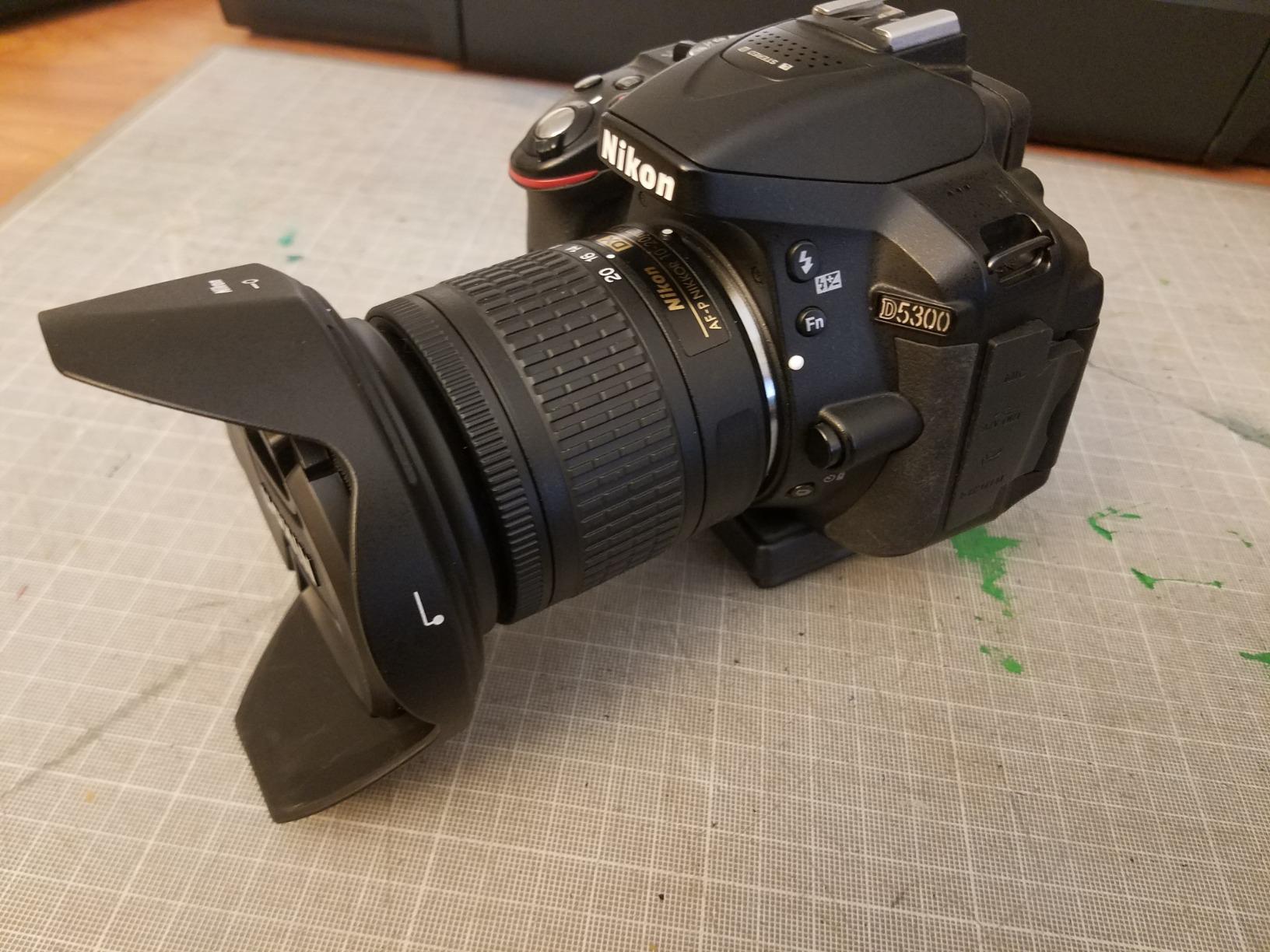
The Nikon AF-P DX NIKKOR 10-20mm f/4.5-5.6G VR is one of the most popular ultra-wide zooms for Nikon DX format photographers. We tested it on a D5600 and a D7500, and the VR (Vibration Reduction) image stabilization is a significant advantage for handheld shooting and video. The AF-P stepping motor is also nearly silent, which is a major upgrade over older AF-S lenses.
The lens is compact and lightweight, which pairs well with smaller DX bodies. Sharpness is good across the zoom range when stopped down to f/8, with some softness wide open at the corners. The 72mm filter thread is reasonably standard for this category.
For travel and everyday photography, this lens is a versatile choice. The 10-20mm range on DX gives a 15-30mm equivalent field of view, which works for landscapes, interiors, group shots, and environmental portraits. The variable f/4.5-5.6 aperture is limiting in low light but adequate for most outdoor shooting.
VR and Video Performance
The VR image stabilization is effective for handheld stills and video. We got sharp results at 1/15 second and 1/8 second with careful technique. For video, the stabilization smooths out walking movement reasonably well, especially when combined with Nikon’s VR in newer DX bodies.
Why This Lens Works for Beginners
If you are new to ultra-wide photography and shoot Nikon DX, this lens is hard to beat for the price. The VR, silent autofocus, and compact size make it easy to use in a wide variety of situations. It is also light enough to leave on your camera as a walkaround lens without fatigue.
Limitations to Consider
This lens is limited to Nikon DX format cameras and will vignette heavily on full-frame bodies. The variable f/4.5-5.6 aperture limits low-light and astrophotography performance. There is some barrel distortion at 10mm that requires correction in post. For these trade-offs, you get a very capable and affordable lens.
12. Nikon NIKKOR Z DX 12-28mm PZ VR – Power Zoom for Video Creators

+ Pros
- Innovative power zoom for video
- Effective VR stabilization
- Extremely compact
- Good image quality for price
- Multiple zoom controls
- Cons
- No lens hood included
- Plastic build feels flimsy
- APS-C Z mount only
The Nikon NIKKOR Z DX 12-28mm PZ VR is a unique lens designed with video creators in mind. The power zoom mechanism allows for smooth, motorized zooming that you can control via the lens ring, camera buttons, or even a Bluetooth connection to your phone. We tested it on a Z30 and found the feature genuinely useful for vlogging and documentary-style video work.
Beyond the power zoom, this lens delivers solid image quality and effective VR image stabilization in a remarkably compact body. At 7.2 ounces, it barely registers on a Z30 or Z50. The 12-28mm focal length gives a useful 18-42mm equivalent range on DX format, covering wide-angle to short telephoto needs.
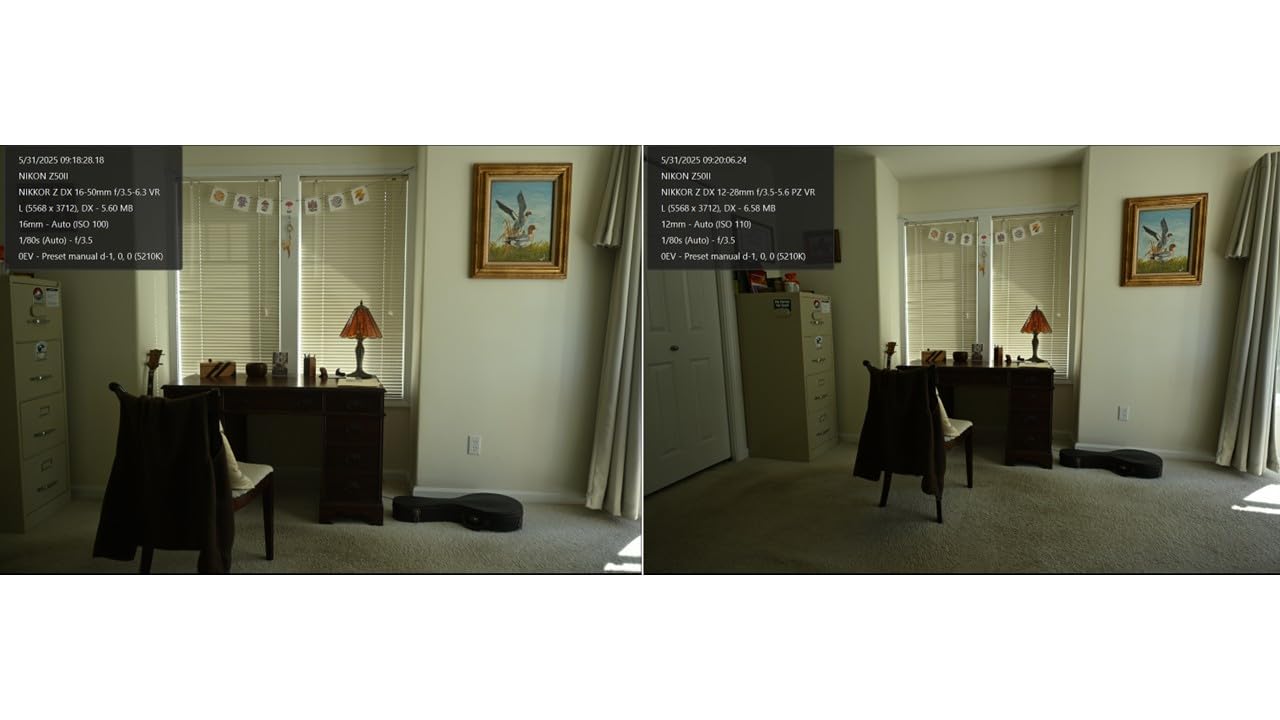
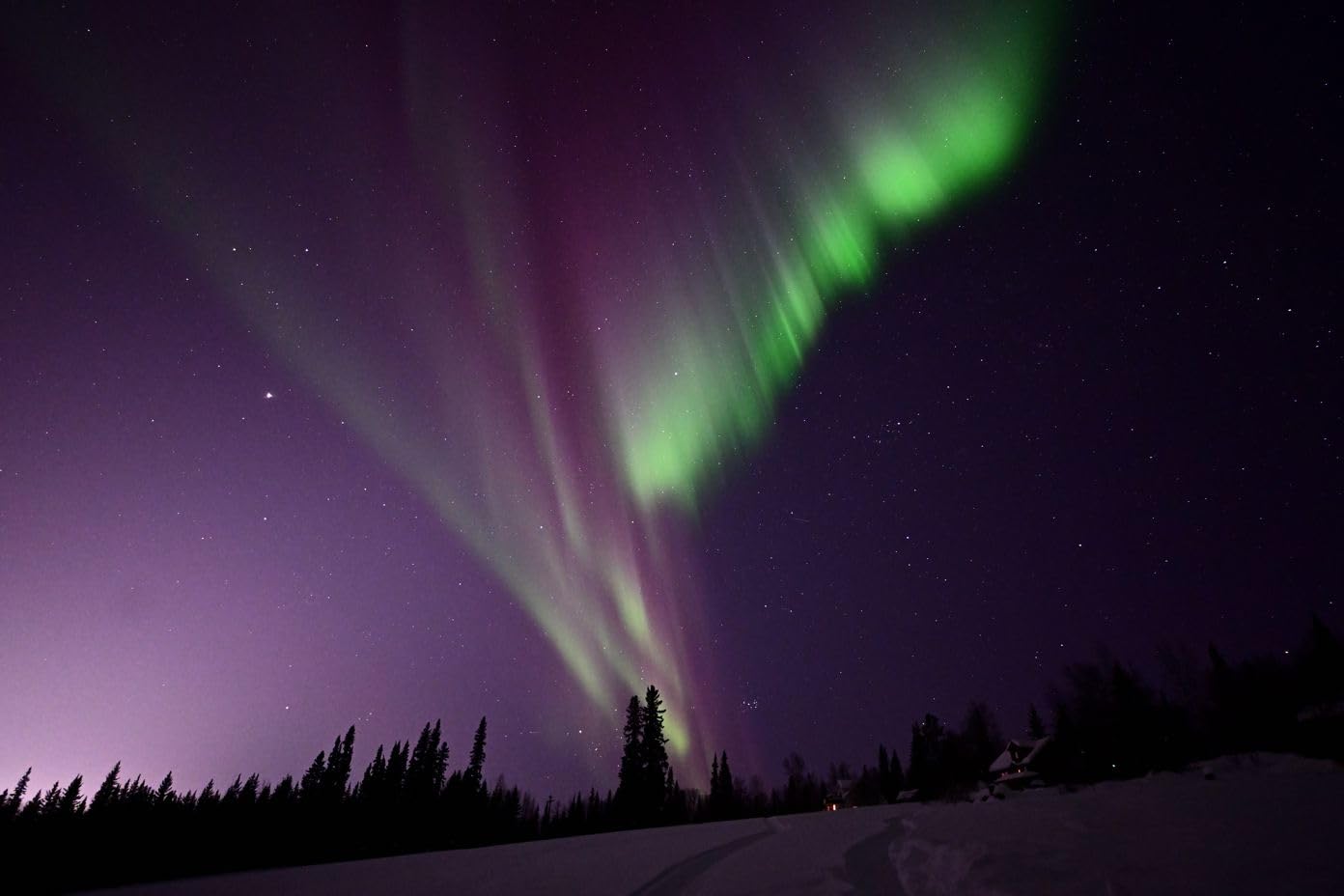
For stills photographers, the power zoom is less useful, but the lens still works well as a compact walkaround option. Sharpness is good across the zoom range when stopped down, and distortion is well controlled for a lens of this type. The 67mm filter thread is standard and accepts affordable filters.
Power Zoom in Real Use
The power zoom has 11 speed settings, ranging from very slow cinematic zooms to quick reframing during action. The lens ring controls zoom smoothly, and the option to control zoom via Bluetooth is genuinely innovative for solo creators. We used it for a short documentary piece and appreciated the smooth, controlled zooms that would be hard to achieve with a manual zoom ring.
Video Stabilization Combination
The 4.5-stop VR works well in combination with the in-body stabilization in Z30, Z50, and Z fc bodies. For handheld vlogging, the combined stabilization is excellent. Walking shots look smooth and professional, and the compact lens does not cause front-heaviness on smaller bodies.
Stills Photography Use
For stills, the power zoom is essentially a gimmick, but the focal range and image quality still make this a useful lens. The 12mm wide end on DX is wide enough for landscapes and interiors. Sharpness is best from f/5.6 to f/11, with some softness wide open at the corners.
13. Sony E 11mm F1.8 APS-C – Unique Ultra-Wide Prime for Vlogging

Sony E 11mm F1.8 APS-C Ultra-Wide-Angle Prime for Cameras, Black
11mm f/1.8
APS-C
Vlogging prime
+ Pros
- Unusual f/1.8 brightness
- Extremely compact
- Fast and precise AF
- Excellent for vlogging
- Breathing compensation
- Cons
- Significant barrel distortion
- Some purple fringing wide open
- No weather sealing
- Fixed focal length
The Sony E 11mm F1.8 APS-C is a fascinating lens that fills a unique niche: an ultra-wide prime with an unusually bright aperture for APS-C cameras. On a body like the A6700, this lens delivers a 16.5mm equivalent field of view with f/1.8 brightness, which is genuinely useful for vloggers shooting in dim environments. We tested it for several vlogging sessions and were impressed by the results.
The compact size and light weight make this lens ideal for gimbal work and run-and-gun shooting. Autofocus is fast and reliable, thanks to the dual linear motor design. The breathing compensation support is a nice touch for video shooters who want minimal focus breathing.
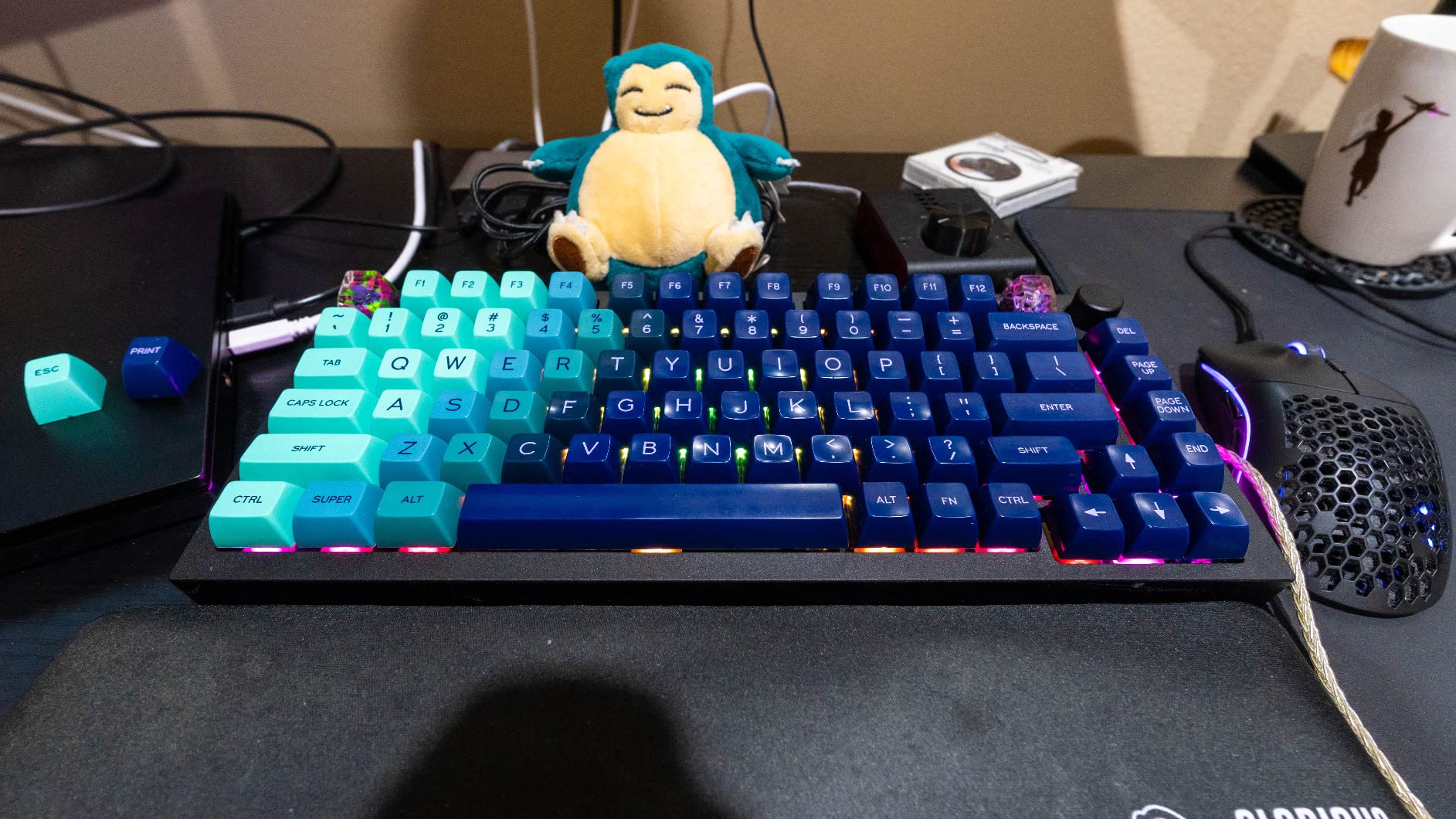
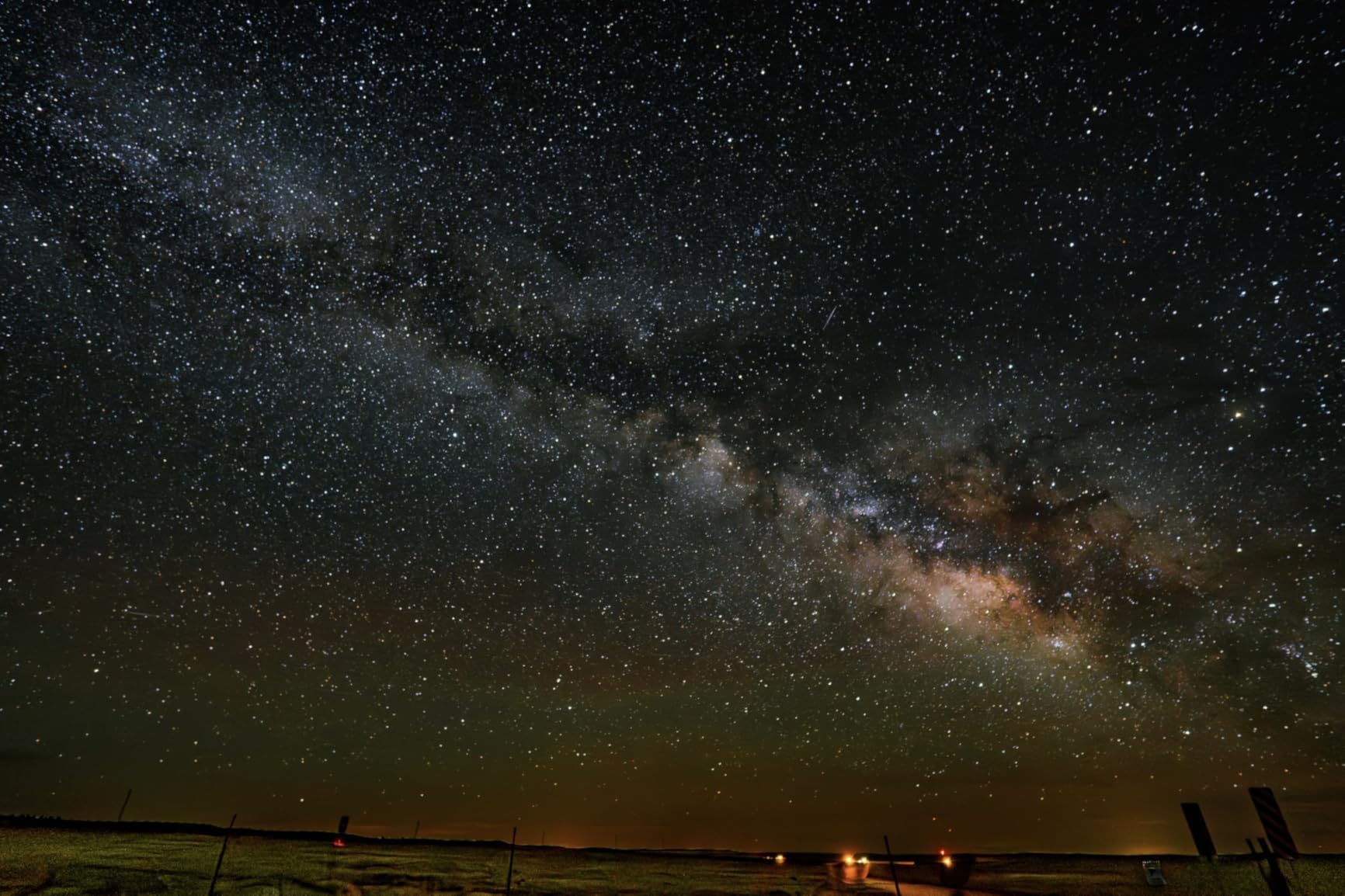
Image quality is good wide open and excellent from f/2.8 onward. There is significant barrel distortion that requires correction in post or via Sony’s in-camera lens corrections. Some purple fringing appears wide open at high-contrast edges, but it is mostly resolved by f/4.
Vlogging and Content Creation
This is where the lens really shines. The 11mm focal length is wide enough to hold a camera at arm’s length and still capture everything behind you, even on APS-C. The f/1.8 aperture means you can shoot indoors without cranking up the ISO. The compact size makes it ideal for travel and everyday carry.
Limitations and Workarounds
The fixed focal length means you cannot zoom in or out without physically moving the camera. This is fine for vlogging but limiting for some other uses. The lack of weather sealing means you need to be careful in rain or dusty environments. The 55mm filter thread accepts affordable filters, which is helpful.
Who Should Buy This
If you shoot Sony APS-C and prioritize vlogging, content creation, or low-light wide-angle photography, this lens is a strong choice. For landscape photography, you might prefer a zoom lens with more flexibility. For astrophotography on APS-C, the f/1.8 aperture is a real advantage.
14. VILTROX 20mm f/2.8 FE – Budget Prime That Punches Above Its Weight

VILTROX 20mm f2.8 FE for Sony, AF 20mm f/2.8 FE Lens for Sony E
20mm f/2.8
157g
Budget prime
+ Pros
- Outstanding value
- Very sharp images
- Fast and reliable AF
- Extremely compact
- Good low-light performance
- Cons
- Autofocus can be inconsistent
- Soft corners at f/2.8
- No focus mode switch
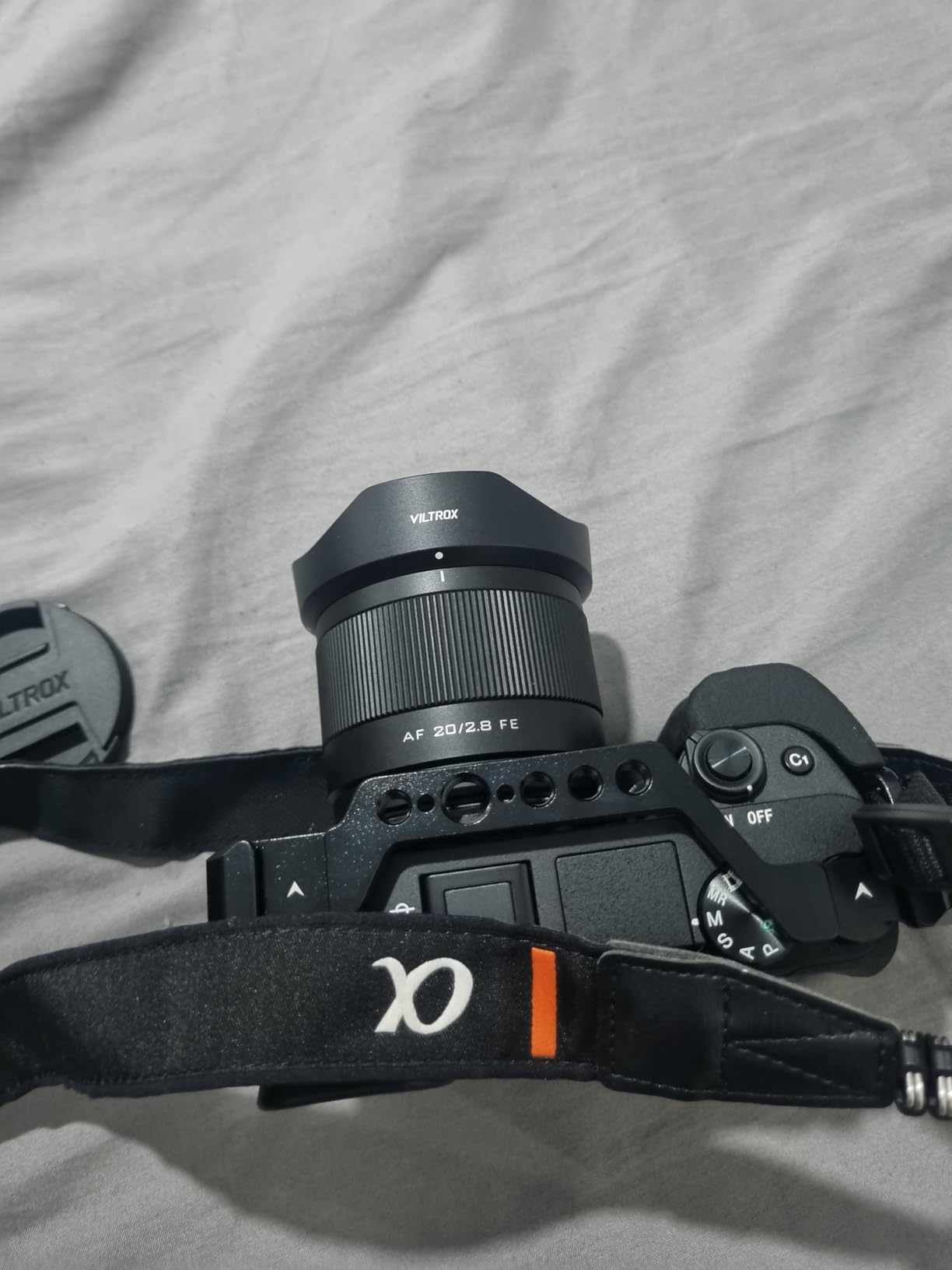
The VILTROX 20mm f/2.8 FE is one of the most impressive budget lenses we have tested in recent years. At this price point, the optical quality and autofocus performance rival lenses costing two or three times as much. We mounted it on an A7 IV and an A7C II, and it held its own against Sony’s own lenses in most situations.
The compact size and light weight make this lens ideal for travel and everyday carry. The f/2.8 aperture is fast enough for low-light shooting and creates pleasant background blur that is unusual for a 20mm lens. The build quality is decent for the price, with a metal mount and a sturdy plastic exterior.

Autofocus is fast and reliable in most situations, though it can occasionally hunt in very low light. The lens supports USB firmware updates, which VILTROX has used to improve performance over time. For Sony shooters on a budget, this lens is hard to beat.
Sharpness and Optical Quality
Center sharpness is excellent from f/2.8 and improves as you stop down. Corner sharpness is acceptable wide open and very good from f/4 onward. Chromatic aberration is well controlled for a budget lens. Distortion is moderate and easily corrected in post or via Sony’s in-camera lens corrections.
Vlogging and Video Use
For vlogging on a full-frame Sony body, the 20mm focal length is a bit tight for handheld selfie-style shooting but works well for environmental vlogs. The f/2.8 aperture helps in dim environments. Autofocus is reasonably quiet, though not quite as silent as Sony’s own STM or XD linear motor designs.
The Value Proposition
If you want a wide-angle prime for Sony E-mount and do not want to spend Sony money, this VILTROX lens is one of the best options available. It delivers most of the image quality of more expensive alternatives at a fraction of the cost. The minor inconsistencies in autofocus are the main trade-off, but for most users, they are not deal-breakers.
How to Choose the Best Wide Angle Lens for Your Needs
After testing fourteen lenses across four camera systems, our team identified the key factors that matter most when choosing a wide-angle lens. The best lens for you depends on your camera system, your shooting style, and what kind of subjects you photograph most often.
Full-Frame vs APS-C Considerations
Full-frame and APS-C cameras have different field-of-view requirements. A 14mm lens on full-frame gives a 14mm field of view, but the same lens on APS-C gives roughly a 21mm equivalent field of view because of the crop factor. If you shoot APS-C, you generally want lenses designed for that format to get truly ultra-wide coverage.
For full-frame shooters, 14-24mm is the typical ultra-wide zoom range, and 14mm or 16mm primes are common wide-angle primes. For APS-C shooters, 10-18mm or 10-20mm zooms and 10-12mm primes are the equivalent ultra-wide options. Always check whether a lens is designed for your format before buying.
Aperture: f/2.8 vs f/4 vs Variable
Maximum aperture affects both low-light performance and depth of field control. f/2.8 lenses gather twice as much light as f/4 lenses, which is meaningful for astrophotography and indoor shooting. f/4 lenses are smaller, lighter, and often more affordable. Variable aperture lenses (f/4.5-5.6) are the most affordable and lightest but limit low-light capability.
For astrophotography, f/2.8 is the practical minimum, and f/1.8 or f/1.4 primes offer even more capability. For landscape and architecture, f/4 is usually sufficient. For everyday travel and vlogging, variable aperture lenses work fine in most situations.
Filter Compatibility and Filter Thread Size
Ultra-wide lenses are notorious for filter compatibility issues. Bulbous front elements prevent standard screw-on filters. The Nikon 14-30mm f/4 S is a rare exception with its 82mm filter thread. For most ultra-wide lenses, you will need 100mm or 150mm square filter holders, or rear-mounted gel filters.
If you regularly use ND filters, polarizers, or light pollution filters for astrophotography, filter compatibility should be a top priority in your decision. Square filter systems are more expensive but offer more flexibility. Rear-mounted filters are affordable but limited to specific lenses.
Weather Sealing and Build Quality
If you shoot outdoors frequently, weather sealing is essential. Lenses with gaskets at every external joint can handle light rain, snow, and dusty environments. Pro-grade lenses from Sony G Master, Canon L, Nikon S, and Sigma Sports/Art lines typically have the best weather sealing. Budget lenses often lack any meaningful weather protection.
Build quality also affects long-term durability. Metal mounts are more durable than plastic mounts, though modern plastic mounts can last years with reasonable care. Metal barrels feel more solid but add weight. For most users, modern composite barrels offer a good balance of weight and durability.
Weight and Portability for Travel
Ultra-wide zooms can be heavy, especially professional f/2.8 models. The Nikon 14-24mm f/2.8 S and Canon RF 15-35mm f/2.8L both weigh over 800g, which is substantial. For travel and hiking, lighter options like the Sigma 10-18mm f/2.8 DC DN (260g) or the VILTROX 20mm f/2.8 (157g) are easier to carry.
If you hike long distances with your camera, weight matters. A 200g difference between lenses is noticeable over a full day of walking. Consider whether you need the maximum aperture of professional zooms or whether a lighter f/4 or variable aperture lens would serve you better.
Mirrorless vs DSLR Mount Compatibility
Mirrorless cameras have shorter flange distances, which enables more compact lens designs. Native mirrorless lenses are typically smaller and lighter than their DSLR equivalents. Sony E, Nikon Z, Canon RF, and Fujifilm X mount lenses are designed specifically for mirrorless bodies.
You can use DSLR lenses on mirrorless bodies via adapters, but autofocus performance may be slower. For Sony shooters, many older Minolta and Sony DSLR lenses work well with LA-EA adapters. For Canon RF shooters, EF lenses work well with the EF-EOS R adapter. For Nikon Z shooters, F-mount lenses work with the FTZ adapter.
Astrophotography-Specific Considerations
For astrophotography, three factors matter most: maximum aperture, coma performance, and focal length. Faster apertures (f/2.8 or wider) gather more light and enable shorter exposures. Good coma performance keeps stars round at the edges of the frame. Focal length affects field of view: 14-20mm is ideal for Milky Way panoramas.
Among our tested lenses, the Sony FE 14mm f/1.8 GM is the best for astrophotography overall, thanks to its f/1.8 aperture and excellent coma control. The Nikon Z 14-24mm f/2.8 S and Canon RF 15-35mm f/2.8 L are also excellent choices. Budget options like the Sony E 11mm f/1.8 are great for APS-C astro shooters.
Frequently Asked Questions
What is the best wide angle lens for landscape photography?
For full-frame landscape photography, the Sony FE 14mm f/1.8 GM, Nikon NIKKOR Z 14-24mm f/2.8 S, and Canon RF 15-35mm f/2.8 L IS USM are top choices. The Sony offers the fastest aperture for astro, the Nikon accepts standard 82mm filters, and the Canon delivers excellent image stabilization. For APS-C landscape shooters, the Sigma 10-18mm f/2.8 DC DN Contemporary offers excellent value in a compact body.
Which lens gives you the widest view?
The widest views come from fisheye lenses, which can capture 180 degrees or more. Among our tested ultra-wide lenses, the Sony FE 14mm f/1.8 GM and Nikon AF-P DX NIKKOR 10-20mm f/4.5-5.6G VR (on DX format) offer the widest non-fisheye field of view. The Sigma 10-20mm f/3.5 EX DC HSM is also very wide on Nikon DX. For full-frame shooters, 14mm is the practical minimum focal length for ultra-wide photography without fisheye distortion.
Is 24mm wide enough for landscape photography?
24mm works for many landscape situations, but it is not as dramatic as 14-20mm focal lengths. For sweeping vistas, mountain ranges, and dramatic foreground-background compositions, 14-20mm is more impactful. For more intimate landscapes, environmental portraits, and street photography, 24mm is plenty wide. If you primarily shoot grand landscapes, consider going wider.
What is the best wide angle lens for astrophotography?
The best wide angle lens for astrophotography is the Sony FE 14mm f/1.8 GM. Its f/1.8 aperture gathers significantly more light than f/2.8 zooms, enabling shorter exposures or lower ISO. Combined with excellent coma control and corner sharpness, it is hard to beat. The Nikon NIKKOR Z 14-24mm f/2.8 S and Canon RF 15-35mm f/2.8 L are also excellent for astro. For budget-conscious APS-C shooters, the Sony E 11mm f/1.8 offers impressive astro performance.
What is the Holy Trinity of lenses?
The Holy Trinity of lenses refers to the three professional zoom lenses that cover wide-angle, standard, and telephoto focal lengths: typically 14-24mm f/2.8, 24-70mm f/2.8, and 70-200mm f/2.8. These three lenses cover most professional photography needs. The wide-angle option in each brand’s trinity is what we focused on here: the Sony 12-24mm f/2.8 GM, Nikon 14-24mm f/2.8 S, and Canon RF 15-35mm f/2.8 L are the wide-angle trinity lenses for major brands.
What are wide-angle lenses good for?
Wide-angle lenses excel at landscape photography, architecture, real estate, interior photography, astrophotography, and environmental portraits. They capture expansive scenes that standard lenses cannot fit in the frame, and they exaggerate perspective for dramatic effect. Wide-angle lenses are also popular for vlogging because they allow the photographer to hold the camera at arm’s length and still capture their face plus the surrounding environment.
Final Verdict: Choosing Your Best Wide Angle Lens in 2026
After testing fourteen of the best wide angle lenses available in 2026, our team has clear recommendations based on different user archetypes. If you are a Sony full-frame shooter who prioritizes astrophotography and image quality above all else, the Sony FE 14mm f/1.8 GM is unmatched. If you are a Nikon Z shooter who needs professional reliability with filter compatibility, the Nikon NIKKOR Z 14-30mm f/4 S is hard to beat. For Canon RF users who want a professional workhorse, the Canon RF 15-35mm f/2.8 L IS USM delivers exceptional results across the board.
For budget-conscious shooters, the Canon RF16mm F2.8 STM offers incredible value for Canon RF users, while the VILTROX 20mm f/2.8 FE is the best budget option for Sony shooters. APS-C users should consider the Sigma 10-18mm f/2.8 DC DN for Sony or the Canon EF-S 10-18mm IS STM for Canon, both of which deliver impressive performance at accessible prices. For astrophotographers on a budget, the Sony E 11mm f/1.8 APS-C offers unique f/1.8 brightness in a compact body.
Whatever your camera system and budget, there is a wide-angle lens on this list that will transform your photography. Start by identifying your primary use case (landscape, astrophotography, vlogging, architecture, or travel), then choose the lens that best matches your priorities. All fourteen of these lenses are excellent choices that will serve you well for years to come. Use the buying guide above to narrow your options, and you will find the perfect wide-angle lens for your kit in 2026.