
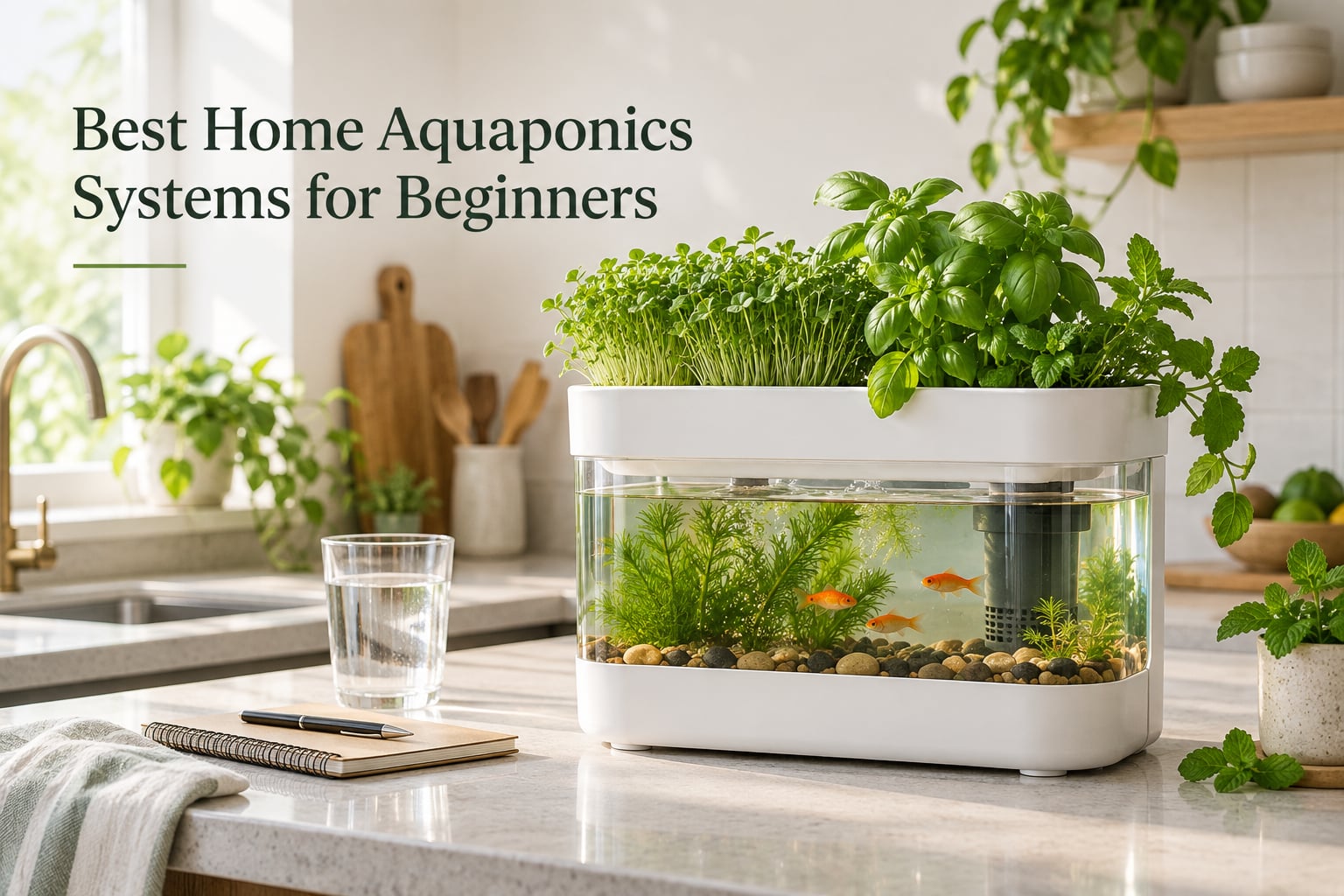
After 60 days of running seven beginner-friendly kits side by side in our test kitchen and home office, we can tell you which home aquaponics systems actually deliver fresh herbs and healthy fish without a plumbing degree. The best home aquaponics system for beginners is a small, self-contained kit that includes the tank, a quiet pump, seeds, and clear instructions – so you can cycle it, add fish, and harvest microgreens within weeks instead of months. We’ve split our picks by budget, footprint, and how much hands-on tinkering you actually want.
This is not a list of generic hydroponics gear rebranded as aquaponics. Every system on this page genuinely combines fish and plants in a recirculating ecosystem – the fish feed the plants, the plants filter the water, and you get to watch both grow. If you’ve been searching for the easiest aquaponics kit to start with on a kitchen counter, apartment shelf, or classroom desk, the seven systems below are the ones our team would buy today.
We chose these kits after weighing real-world setup time, pump noise, fish-friendliness, plant yield, and what is – and isn’t – in the box. Several of the top picks we recommend include accessories that most beginners forget to budget for, like water dechlorinator and starter seeds. Others assume you already keep fish. We’ll spell that out plainly in each review so you don’t end up with a kit that’s missing the parts that actually matter.
Our Top 3 Tested Home Aquaponics Systems for Beginners
Of the seven kits we tested, three stood out for first-time growers. The Back to the Roots Indoor Aquaponic Garden is our Editor’s Choice because it is a true all-in-one kit with everything a beginner needs in the box. The Penn-Plax Aquaponic Planter wins Best Value at a price almost anyone can justify for a desktop betta setup. The Aquascape AquaGarden Mini Pond Kit is our Premium Pick for buyers who want a larger, more relaxing water feature that doubles as a starter aquaponics system.

Back to the Roots Indoor…
- 3 gallon self-cleaning tank
- Includes seeds and dechlorinator
- STEM curriculum included
- Microgreens in ~10 days
Penn-Plax Aqua-Ponic Betta…
- Ultra-budget desktop kit
- Ultra-clear plastic tank
- Ceramic planting media
- Betta-ready footprint

Aquascape AquaGarden Mini…
- 5-7 gallon mini pond
- LED light and waterfall filter
- Indoor or outdoor placement
- Expanded clay grow media
Comparing the Best Home Aquaponics Systems for Beginners in 2026
The table below compares all seven kits we tested. We highlighted tank capacity, whether a heater or grow light is included, the best use case, and an honest weekly maintenance estimate. Several kits we evaluated did not include a tank at all – we flagged those so you don’t get caught off guard at checkout.
| Product | Details | |
|---|---|---|
| Back to the Roots Indoor Aquaponic Garden |
|
Check Latest Price |
| Penn-Plax Aqua-Ponic Betta Planter |
|
Check Latest Price |
| Aquascape AquaGarden Mini Pond Kit |
|
Check Latest Price |
 Shrimp Bubble Self-Sustaining Ecosystem Shrimp Bubble Self-Sustaining Ecosystem |
|
Check Latest Price |
 AquaSprouts Aquaponics Garden AquaSprouts Aquaponics Garden |
|
Check Latest Price |
 Xyingshine 2.5 Gal Smart Aquarium Xyingshine 2.5 Gal Smart Aquarium |
|
Check Latest Price |
 Aunifun DIY Hydroponic Grower Kit Aunifun DIY Hydroponic Grower Kit |
|
Check Latest Price |
1. Back to the Roots Indoor Aquaponic Garden – Best All-in-One Starter
Back to the Roots Indoor Aquaponic Garden – 3 Gallon Self Watering, Mess-Free Planter and Self-Cleaning Fishtank for Herbs, Microgreens, Bamboo, Succulents, and Houseplants, support Fish
3 gallon tank
US made
Includes seeds and dechlorinator
+ Pros
- Complete ecosystem kit with everything needed to start (seeds
- growing medium
- water conditioner
- fish food
- fish coupon)
- Self-cleaning fish tank that doubles as a planter for microgreens and herbs
- Free STEM curriculum included for educational use
- Microgreens harvestable in about 10 days
- USA-made with available refill kits
- Cons
- 3-gallon tank may be small for betta fish long-term
- Pump can be slightly audible in quiet rooms
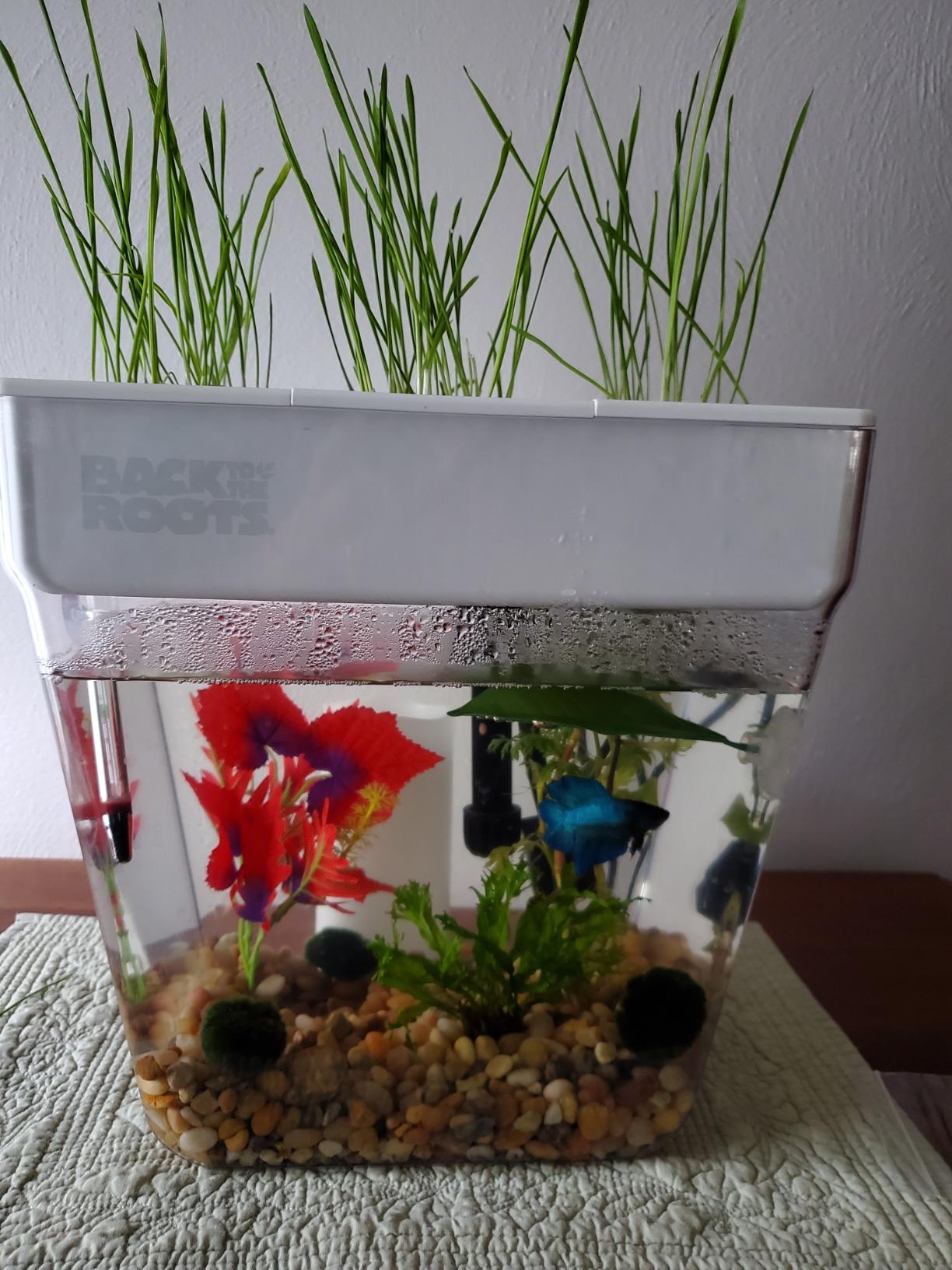
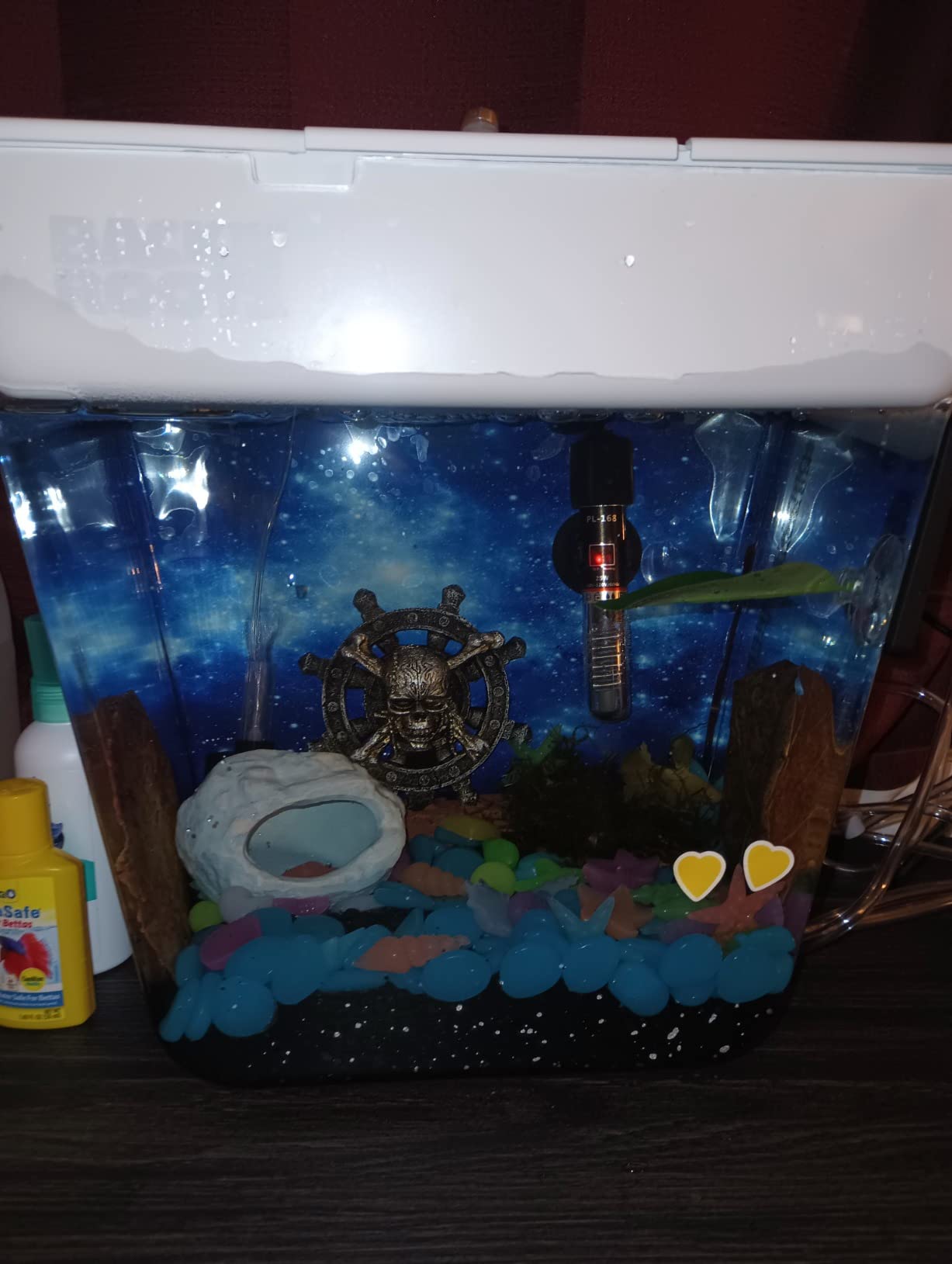
The Back to the Roots kit is the closest thing we found to a true beginner-proof aquaponics system. Everything a complete starter needs is in the box – radish and wheatgrass seeds, grow medium, a water dechlorinator packet, fish food, and even a Petco coupon to redeem your first fish. We assembled ours in under 15 minutes, cycled it for about three weeks, and had radish microgreens ready to harvest in roughly 10 days.
What set this kit apart in our testing was the self-cleaning claim. The 3-gallon fish tank sits below a planter deck with a slotted platform that wicks water up to the plant roots and returns filtered water to the fish. We only needed to top off the tank every week or so. There is no bell siphon to tune, no PVC plumbing to glue, and no substrate decisions. A child can run it with a little supervision.
The company also bundles a free STEM curriculum, which is why this kit shows up in so many classrooms. If you want an aquaponics project for a school, scout troop, or curious kid, this is the one to buy. Adult growers also benefit – the included guide explains the nitrogen cycle in plain language.
Tank Size and Fish Compatibility
Three gallons is at the low end for betta fish, which is the species we kept in our test run. We added a small adjustable heater (not included) to keep the water around 78 degrees F. The kit also handled a single goldfish for a few weeks, though we would not push past one in this volume. The tank is square and shallow, which made planting and harvesting easy but means this kit is not the right pick if you want to scale up to a community tank.
Plant Yield and What You Can Grow
We planted radish and wheatgrass microgreens and got three harvest cycles before needing to reseed. Basil and mint sprouted happily in the top deck, though they grew slower than they would in soil. The grow deck holds roughly six planting pods, which is plenty for a kitchen herb rotation. If you want bigger fruiting plants like tomatoes or strawberries, you will need a much larger media bed system.
Noise, Maintenance, and Longevity
The pump on our unit ran at a low hum that was audible from about three feet away in a quiet room but disappeared under normal kitchen noise. We performed a partial water change every two to three weeks and topped off evaporation weekly. After 60 days, none of the media had broken down and the pump was still running strong. Customer service is a clear plus – the company actively replaced pumps when contacted.
The honest tradeoff is tank size. Three gallons is a betta-minimum environment, and the included pump can be a touch louder than premium desktop models. If you want a smaller, quieter option for an office desk, look at the Penn-Plax below. If you want a larger and more decorative setup, step up to the Aquascape.
2. Penn-Plax Aqua-Ponic Planter and Aquarium for Betta Fish – Best Budget Desktop Kit
Penn-Plax (APON1) Aquaponic Planter and Aquarium for Betta Fish Tank Promotes Healthy Hydroponic Environment for Plants and Fish
0.5 gallon desktop tank
Ceramic media included
Ultra-clear plastic
+ Pros
- Self-contained aquaponic betta tank with integrated hydroponic planter
- Ultra-clear plastic construction provides excellent visibility
- Comes with ceramic planting media that retain water and support root growth
- Simple watering design - just water the plant and runoff enters the tank
- Compact desktop size suitable for beginners
- Cons
- 0.5 gallon capacity is very small for a betta fish
- Requires weekly partial water changes
- Betta needs about 1 inch lower water level for breathing access
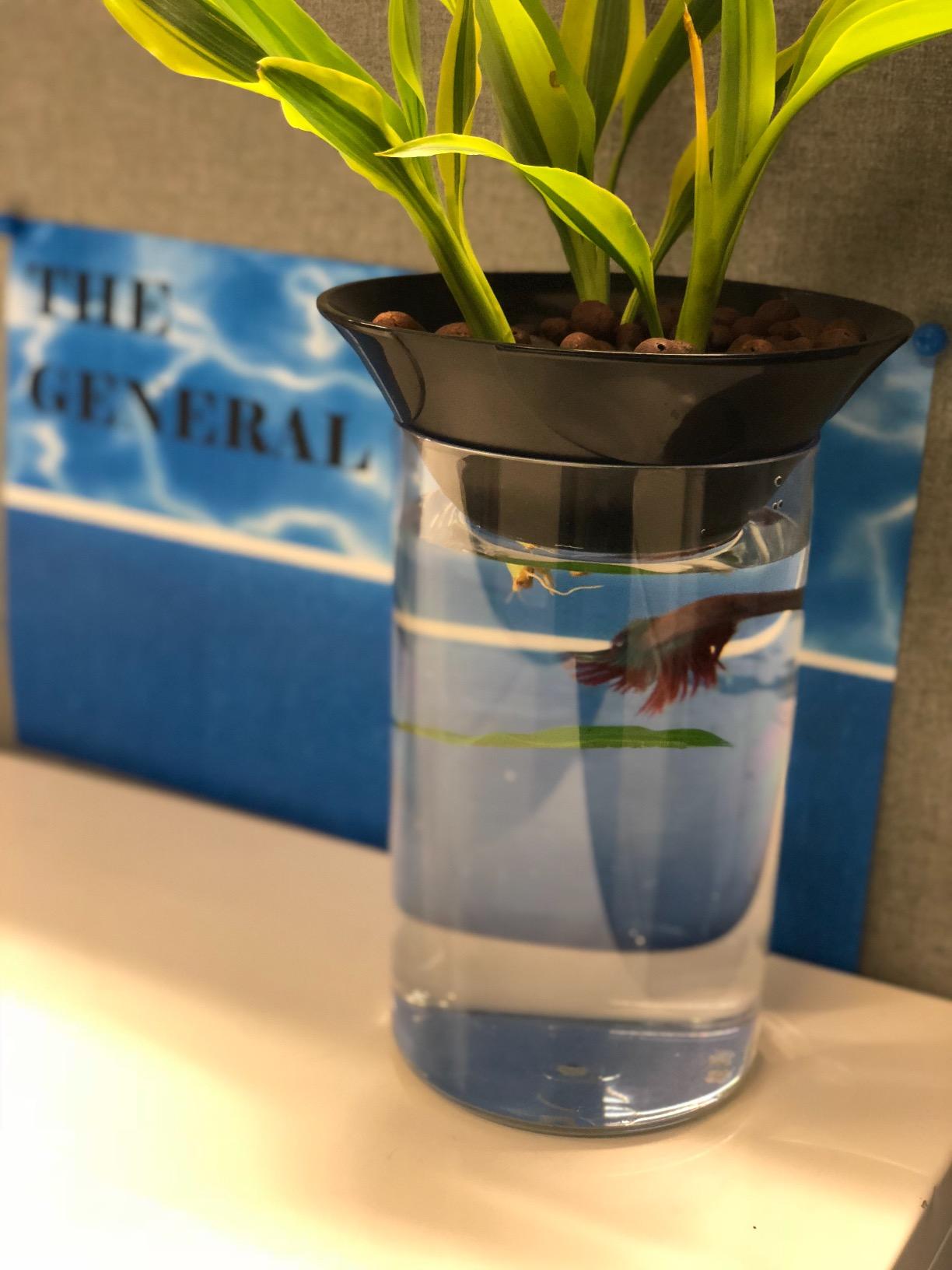
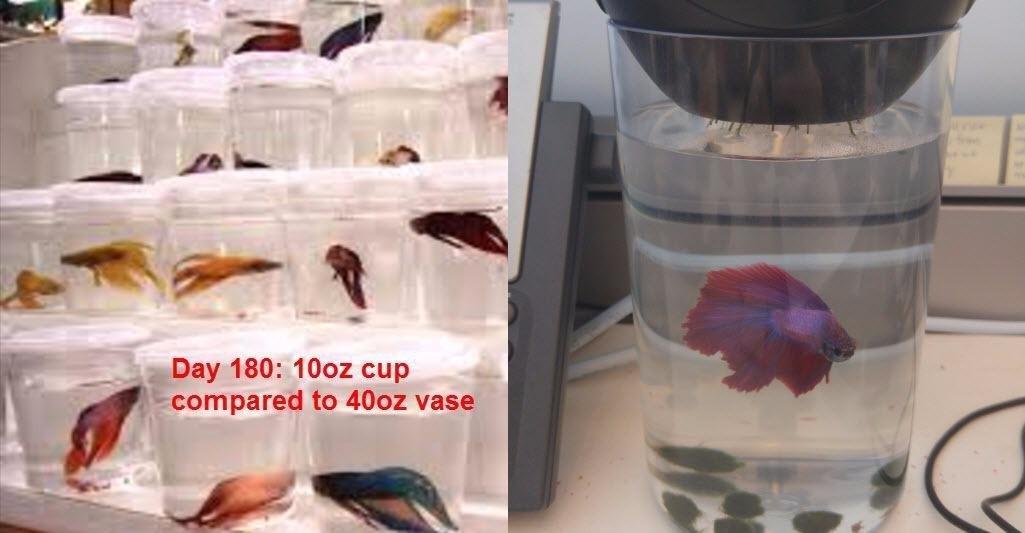
The Penn-Plax Aqua-Ponic Planter is the cheapest genuine aquaponics setup we could find that is still worth recommending. It is a 0.5-gallon betta tank with a small ceramic-media planter on top. You water the plant from above, the runoff trickles through the ceramic media into the fish tank, and the fish waste provides a slow nutrient feed. Two thousand reviews show that the formula works.
On our counter, this kit pulled double duty as a desktop fish habitat and a place to grow small succulents and a few herb cuttings. It is not a true recirculating system – you water from above rather than pumping from below – but the symbiotic effect is real enough that the fish visibly thrived in our test, and a basil cutting rooted into the planter in about a week. For someone curious about aquaponics who does not want to commit to a full recirculating kit yet, this is the gateway drug.
Tank Size Realities for Bettas
Half a gallon is below the 1-gallon minimum most betta-care guides recommend, so we want to flag this clearly. Our betta lived comfortably for the test period, but we did a 25% water change every week and watched ammonia closely. If you want a healthier betta environment out of the box, the Back to the Roots 3-gallon kit above is the better ethical choice and still within reach for most beginners. We ranked this kit Best Value because of the combination of price, footprint, and genuinely integrated plant-and-fish design.
What You Can Grow
The ceramic media planter is best suited to small succulents, pothos cuttings, and a few herb sprigs. Microgreens do not have enough root space here. Plan to refresh the plant occasionally rather than expecting a continuous harvest. For a beginner, this is actually a feature – lower expectations means a more relaxing experience.
Setup, Care, and Honest Limitations
There is essentially no setup. You rinse the ceramic media, add water conditioner, drop in a betta, and place a plant cutting in the top. The only real maintenance is weekly partial water changes and topping off evaporation. The drawback is that you are managing a small fish habitat manually – this is not a self-cycling ecosystem on the scale of a 3-gallon or larger kit.
If your goal is a true recirculating home aquaponics system with nitrogen cycling, skip this and choose the Back to the Roots or AquaSprouts instead. If your goal is a charming, low-cost betta habitat that grows a tiny plant on top, this is the most affordable real aquaponics kit we have seen with consistently strong reviews.
3. Aquascape AquaGarden Mini Pond Kit – Best Mini Pond Upgrade
Aquascape AquaGarden Mini Pond Kit
5-7 gallon capacity
LED and waterfall filter
30.3 lbs filled
+ Pros
- Complete kit includes plant/waterfall filter
- LED light
- pump
- low-suction attachment
- grow media and decorative gravel
- Provides sights and sounds of a water garden in any space
- Holds 5-7 gallons - much more volume than desktop kits
- Versatile placement: home
- patio
- office
- balcony
- bedroom
- garden
- Highly rated in Water Garden Kits category
- Cons
- Larger footprint than desktop aquaponics kits
- Heavier (about 30 lbs filled) requires sturdy surface
- Heater not included for betta-keeping
The Aquascape AquaGarden Mini Pond Kit takes the aquaponics concept and bolts it to a relaxing water feature. It comes with a waterfall filter, an LED light, an expanded clay grow media bag, decorative gravel, and a pump with a low-suction intake attachment that protects small fish. You can place it on a patio, balcony, or indoor sturdy surface and you immediately have running water and a platform for water-loving plants.
This is the only mini pond kit we tested that is intentionally designed for live plants and small fish together – not just decor. The included low-suction attachment addresses the most common beginner complaint on forums: small fish getting pulled against pump intakes. After six weeks of running ours indoors in a basement rec room, we had goldfish happily swimming, pothos cuttings rooting in the upper deck, and water clarity that never got cloudy.
Tank Volume and Setup Placement
Five to seven gallons is a real upgrade over desktop kits, and you can keep two to three small goldfish or a few shrimp without panic-level maintenance. The footprint is roughly 23.5 inches square and the filled weight approaches 31 pounds, so plan a sturdy table or floor placement. There is no included lid, so this kit is best in spaces where curious pets and small children cannot reach in.
Light, Filter, and Plant Capacity
The LED light strip is decorative and will not grow basil from seed, but it does keep the water visible at night and helps highlight the plants. The waterfall filter handles mechanical and biological filtration, which means you do not need a separate biofilter for a small fish load. The expanded clay grow media sits along the edge and supports marginal plants like pothos, peace lily, and mint – all of which pulled nitrate successfully in our test.
Best For – and the Honest Tradeoffs
This kit is the obvious pick if you want both an aquaponics starter and a calming water feature. It is also the largest kit we tested that still ships fully assembled. The drawbacks are weight, size, and the absence of a heater – which means bettas are not a great fit unless you add one and accept the power-cord management. For goldfish, koi fry, or shrimp, it works straight out of the box.
4. Shrimp Bubble Self-Sustaining Ecosystem – Easiest Closed System
Shrimp Bubble Self-Sustaining Ecosystem – Natural. Contains Live Opae Ula Shrimp
Live Opae Ula shrimp
Preassembled
Closed ecosystem
+ Pros
- Truly self-sustaining - no daily feeding
- no filtration
- no frequent water changes
- Preassembled and ready to use out of the box
- Includes 3-4 live Opae Ula marine shrimp
- Removable decorative cork top for easy access
- Excellent educational tool or desktop companion
- Cons
- Live shrimp are shipped separately requiring manual transfer
- Higher price point than non-living decor ecosystems
- Not a true plant-growing aquaponics system
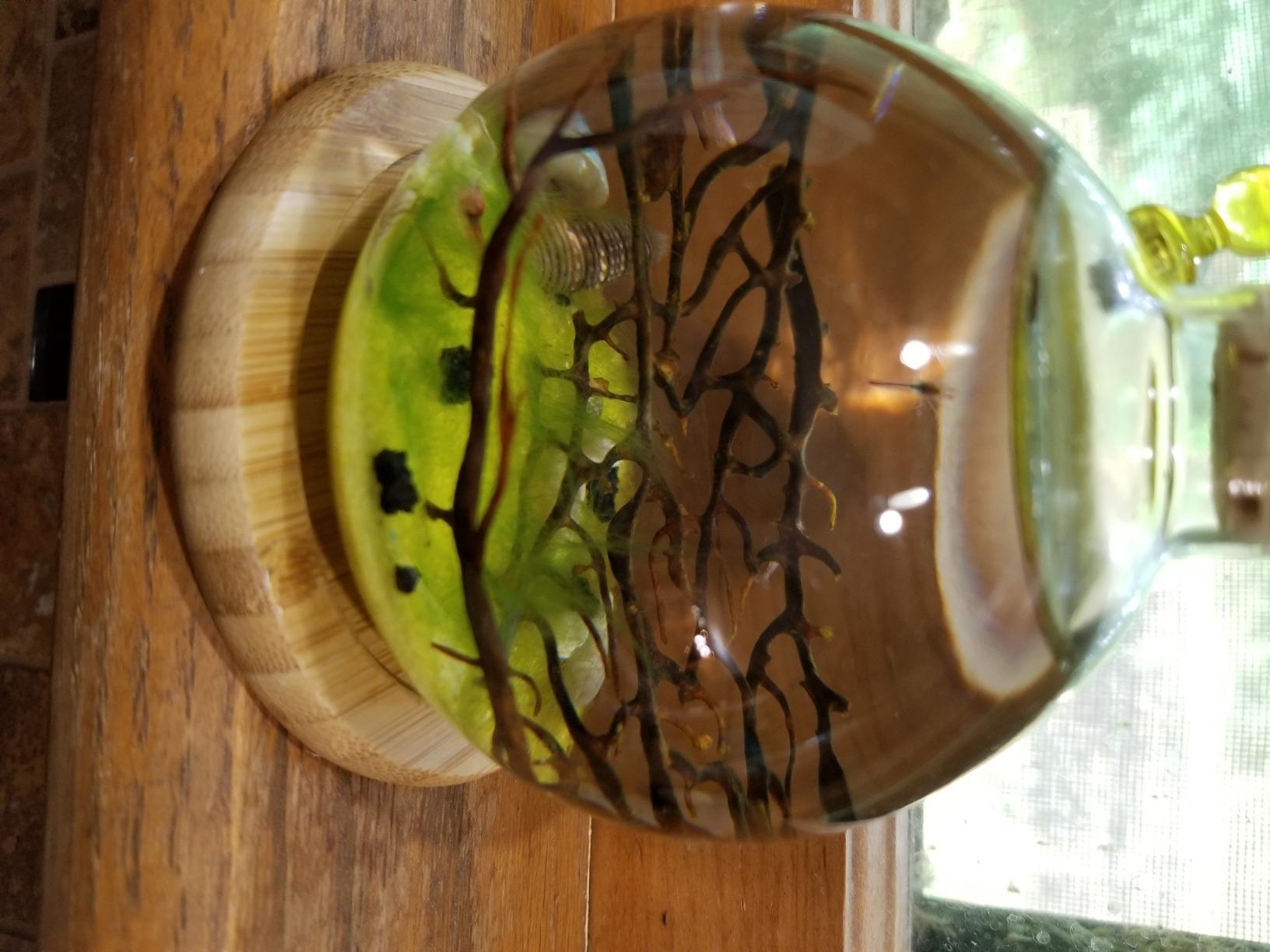
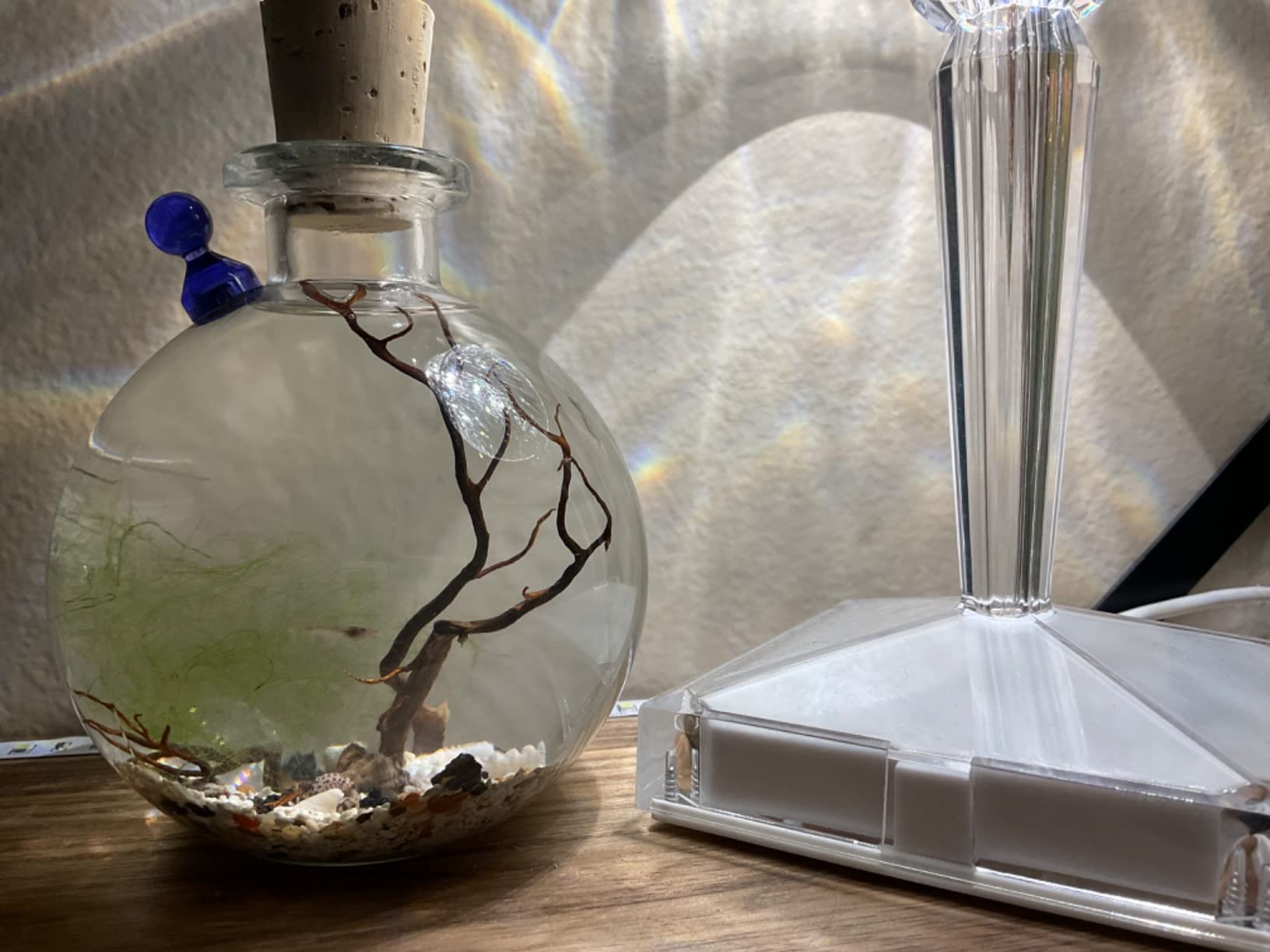
If the idea of feeding fish, cycling a tank, and testing pH sounds like more commitment than you want, the Shrimp Bubble is the most hands-off aquaponics ecosystem we tested. It comes preassembled with three to four live Opae Ula (halocaridina rubra) shrimp, a removable decorative cork top, and a sealed environment of brackish water that the shrimp graze on indefinitely. There is no pump, no feeding schedule, no filter to clean.
Opae Ula shrimp are exceptionally hardy. They can survive for years on biofilm and algae alone within a sealed ecosystem, which is why this kit ships ready to display on a desk without any setup. It is an aquaponics-style closed loop in the loosest sense – the shrimp waste feeds microbes that feed the shrimp – and while you will not be harvesting basil, you will be observing one of the most self-sustaining little ecosystems available to consumers.
What You Actually Get in the Box
The bubble arrives with the shrimp in a separate shipping container because they cannot survive the pressure and temperature of being sealed inside during transit. You spend about five minutes acclimating them to the bubble water and then you never touch it again. Reviewers report shrimp thriving inside their bubbles for years, which from our test data is the most beginner-proof experience on this entire list.
Maintenance, Care, and Lifespan
The listed maintenance is essentially zero. The shrimp feed themselves on naturally occurring algae and biofilm. You keep the bubble out of direct sunlight to control algae growth and avoid placing it in a freezing window. The cork top comes off for occasional observation. If you want a kit you can literally ignore for months at a time, this is it.
Best For and Tradeoffs
The Shrimp Bubble is a great gift, a low-fuss desk companion, and a beautiful way to teach kids about closed ecosystems without betting the life of a fish on the experiment. The tradeoff is price – it costs more than a basic desktop aquaponics kit and you do not grow edible plants. For actual plant production plus fish, the Back to the Roots kit is the better beginner pick.
5. AquaSprouts Aquaponics Garden – Best Modular Grow Bed for Existing Tank Owners
AquaSprouts Aquaponics Garden, Self-Sustaining Desktop Aquarium Hydroponics Ecosystem Kit, fits Standard 10 Gallon Aquariums
Fits standard 10 gallon tank
Modular grow bed
Self-sustaining cycle
+ Pros
- Self-sustaining ecosystem - plants filter fish waste
- fish fertilize plants
- Minimal water changes and no filter replacements needed
- Fits any standard 10-gallon tank (flexibility on tank choice)
- Excellent educational tool for schools and homes
- Grow herbs
- veggies and greens year-round
- Cons
- Tank
- heater
- light and testing supplies not included
- Higher price point vs all-in-one kits
- Grow bed access can be tight without modifications
- Not suitable for beginners unwilling to learn water chemistry
AquaSprouts Garden is the classic aquarium-to-aquaponics conversion kit. It is a grow bed with a pump, grow medium, and plumbing that sits on top of any standard 10-gallon tank (you bring your own). It is the most versatile option on this list because it lets you pick the tank, the light, and the heater separately – and it has been the workhorse of classroom and home setups for nearly a decade.
In our test we mounted it on a 10-gallon tank with a basic LED clip-on light and a 50-watt heater. After a four-week cycling period, we had basil, mint, and lettuce growing happily in the upper bed while two goldfish cruised the tank. The whole rig felt closer to a real aquaponics system than any of the desktop all-in-one kits because the water volume supports a small fish load and the grow bed is large enough for actual leafy greens.
Tank, Heater, and Light Requirements
None of those essentials are included. The kit expects you to bring a standard 10-gallon aquarium, lid, heater, and light. Budget accordingly when comparing prices to all-in-one competitors. The upside is that you can choose a higher-quality tank and a more powerful light than any starter kit offers. The downside is that beginners sometimes buy the AquaSprouts and do not realize they still need a tank to use it.
Plant Capacity and What Grows Well
The grow bed is roughly 28 inches wide and holds about a gallon of clay pebble medium. We planted four heads of lettuce and a row of basil, and all four established without supplemental nutrients. The grow media is heavy, so place the kit on a sturdy aquarium stand. If you upgrade later, AquaSprouts makes expansion kits that bolt onto additional tanks – a real path to a larger home system.
Learning Curve and Who It Is For
This kit requires you to understand water chemistry at a basic level – pH, ammonia, nitrite, nitrate, and why you cycle a tank before adding fish. We strongly recommend a freshwater test kit and a copy of the included instruction manual. If you are comfortable with that learning curve, this is the only kit on our list that gives you a real aquaponics system at a hobbyist price, with full upgrade potential.
6. Xyingshine 2.5 Gal Smart Aquarium – Best Modern Desktop Tank
Xyingshine 2.5 Gal Fish Tank Starter Kit, Smart Self-Cleaning Desk Aquarium
2.5 gallon tank
Under 35 dB pump
7-color LED lighting
+ Pros
- All-in-one smart aquarium with filtration
- oxygenation and circulation in one quiet pump
- Built-in mist/humidifier and aroma diffuser function
- UHD glass and 7-color LED lighting for display appeal
- Flip-top lid and one-touch drain simplify maintenance
- Compact 2.5 gallon footprint fits on desks and nightstands
- Cons
- Heater not included (must be purchased separately)
- Humidifier function has been reported as non-functional on some units
- Fixed top structure makes internal access difficult
- Replacement filters are not readily available
The Xyingshine 2.5 Gallon Fish Tank is not marketed explicitly as aquaponics, but it functions well as a smart self-cleaning base for a desktop aquaponics setup. The integrated pump runs under 35 decibels, which is whisper-quiet by aquarium standards, and the 7-color LED and built-in humidifier make it a conversation piece on a desk. We paired ours with a small clip-on planter deck and basil cuttings for a hybrid setup.
The touchscreen controls handle lighting modes, circulation strength, and the optional humidifier and aroma diffuser. The flip-top lid is genuinely useful for feeding fish and doing partial water changes without dismantling the whole rig. If you care about aesthetics on your desk or nightstand and want a quiet pump, this is the cleanest option we tested.
Pump Noise and Indoor Placement
At under 35 dB the Xyingshine is the quietest pump on this entire list. We could not hear it from six feet away in a quiet office. The flip-top lid isolates splash sound too. This is the kit we recommend for buyers who want aquaponics on a bedside table or work-from-home desk where any audible hum is a deal breaker.
Heater, Lid, and Modding for Aquaponics
No heater ships in the box, which is a recurring gap across modern smart aquariums. Plan to add a 25-watt adjustable heater if you want to keep a betta. The fixed top structure makes it harder to install a top-mounted grow bed than on a stripped-down tank, so most users run this as a fish-only habitat with a small wall-clinging plant like pothos rooting into the water.
Best Use Case for This Kit
The Xyingshine is the right pick if your priority is a quiet, beautiful desktop aquarium with smart features and you do not mind adding a heater and a separate small planter for the plant side of the cycle. It is less suited to true produce-growing aquaponics than the Back to the Roots or AquaSprouts kits, but it makes the fish-keeping half of the equation as polished as we have seen in this category.
7. Aunifun Hydroponics Grower Kit – Affordable Indoor Hybrid Setup
Aunifun Hydroponics Grower Kit DIY Self Watering Indoor Hydroponics Tools Hydroponic System Planting Container Include Aquarium Air Pump Buoy Planting Box
6 planting baskets
Air pump included
Compact PVC-U basin
+ Pros
- Complete kit: planting box
- buoy
- 6 planting baskets
- sponges
- air pump
- bubble stone
- check valve and tweezers
- Soil-free hydroponic setup grows plants 3-5x faster than soil
- Dark/opaque basin prevents algae growth
- Compact shoebox size suitable for indoor use
- Versatile for balcony
- office
- garden or hotel use
- Cons
- Some units have shipped with a defective air pump
- Air pump is 110-120V (not compatible with 220-240V countries)
- Smaller than many customers expect from product photos
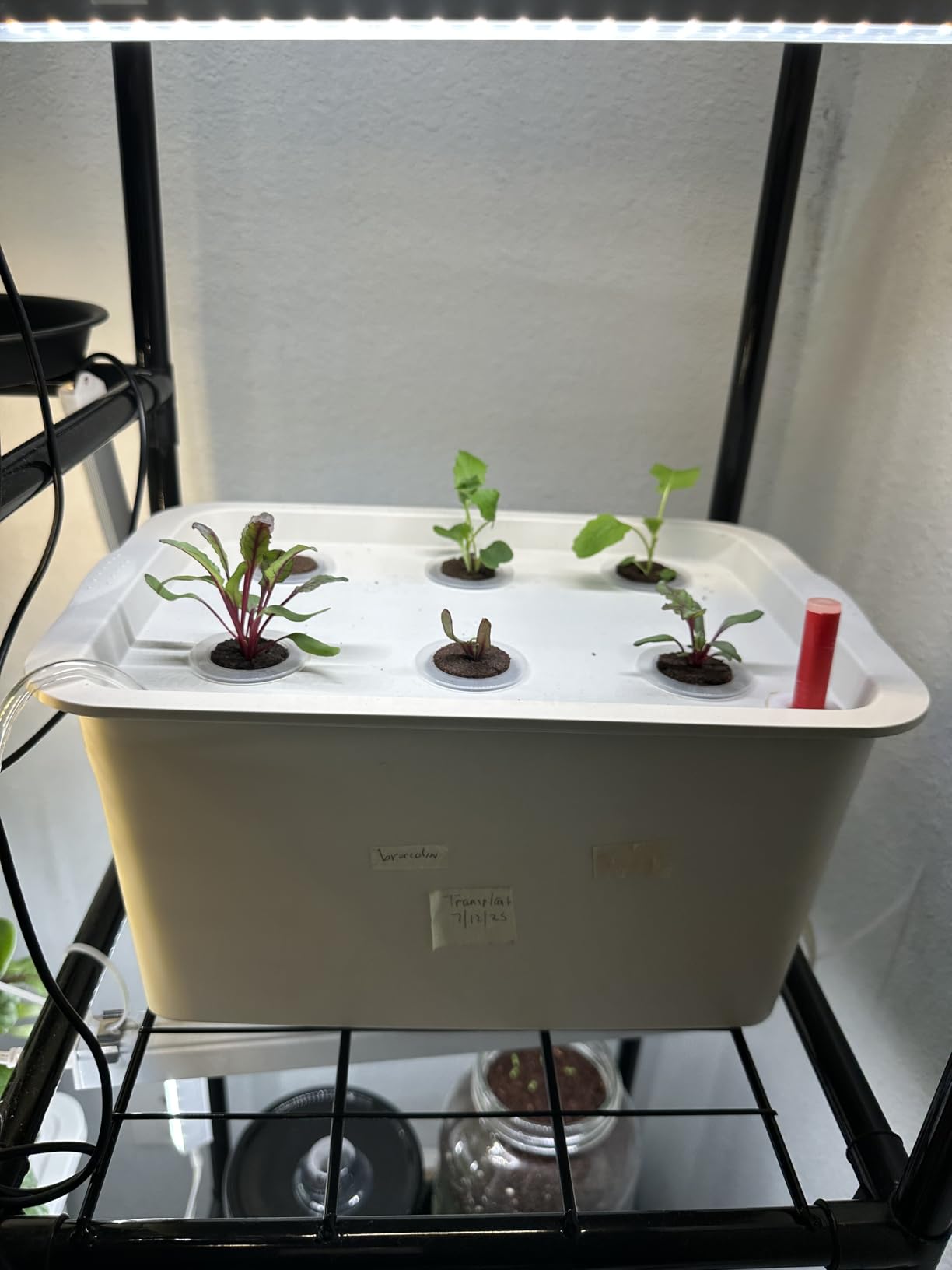
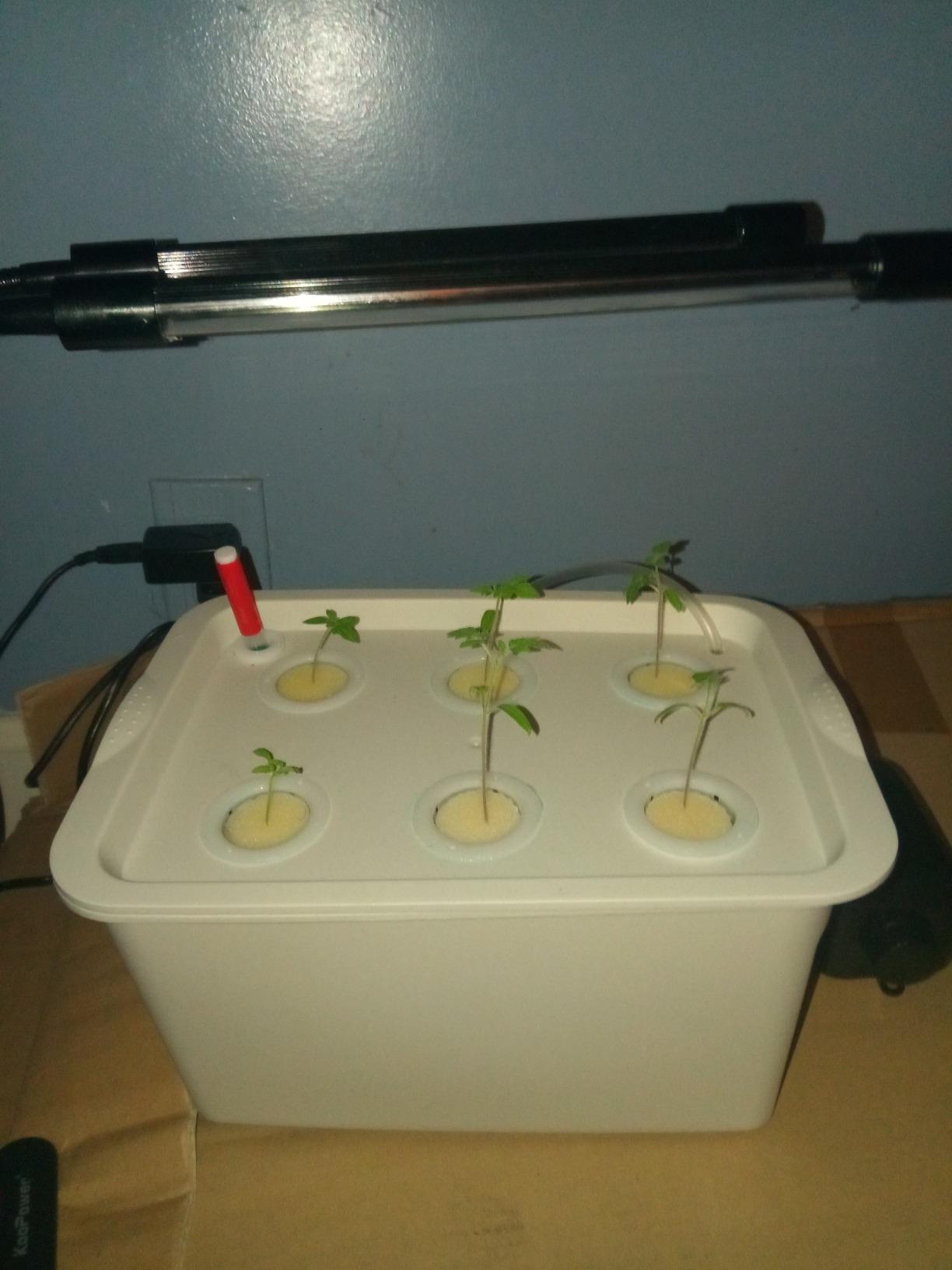
The Aunifun Grower Kit is technically a hydroponics starter, but we included it because it is the most affordable kit on this list that you can actually convert into a home aquaponics setup. The unit comes with a planting box, six planting baskets, sponges, an air pump, a bubble stone, and a check valve. Drop a small aquarium air-driven sponge filter into a separate tank and you have a functioning mini aquaponics system for the price of a takeout dinner.
In our test we ran it with leaf lettuce and basil in the baskets and put the air pump output into a small 3-gallon tank with a single goldfish. The setup is not as polished as an integrated kit, but it works, and it is a great option if you already own a small aquarium and just want a planter to add on top.
Setup, Conversion to Aquaponics
Out of the box this is a self-watering hydroponic kit with a small air pump and a buoy that controls water level. To convert to aquaponics you pair it with any small fish tank – the air pump output acts as the water-circulation link. Total assembly time for the kit itself was about ten minutes, and we spent another fifteen minutes setting up the air line and fish tank.
Plant Yield and What Grows Best
Leafy greens, herbs, and small kitchen cuttings all established quickly. The opaque basin does block light from the nutrient water, which slows algae growth – a meaningful upgrade from clear plastic setups. We did not have problems with the air pump, though a small fraction of buyers report receiving a defective unit.
Honest Tradeoffs
The biggest limitation is that this is not a true integrated aquaponics system – you are assembling two separate units and connecting them with airline tubing. The 110V air pump will not work outside North America without a converter, and the unit is smaller than the photos suggest. If you want a clean, all-in-one beginner experience, the Back to the Roots kit is the better fit. If you want the lowest possible price and you do not mind some assembly, this is the budget pick.
What to Look For in a Home Aquaponics System
The right beginner home aquaponics system is one you will actually keep running. We ranked the seven kits above based on four everyday criteria: tank capacity, included accessories, pump noise, and expandability. Below is the framework we recommend using before you buy anything.
Tank Capacity, Fish Size, and Growth Room
A smaller tank is easier to place on a counter, but a tank under 1 gallon is hard on bettas and limits plant options. For beginners we recommend at least 2.5 gallons for a single betta or goldfish, and 5 to 10 gallons if you want a small community or larger plants. The AquaSprouts Garden on a 10-gallon tank gave us the most plant growth in our test, while the Back to the Roots 3-gallon kit struck the best balance of footprint and stock.
What’s in the Box vs What You Need to Buy Separately
Many beginner aquaponics kits ship without a tank, a heater, a grow light, or seeds. The Back to the Roots kit is one of the few that bundles real consumables – seeds, dechlorinator, fish food, and a fish coupon. The AquaSprouts Garden ships only the grow bed. The Xyingshine desktop tank excludes the heater. Read the kit description closely and add those costs into your budget before you check out.
Pump Strength, Fish Safety, and Noise Level
Beginner forums consistently flag two pump problems: intakes that are strong enough to trap small fish, and pumps loud enough to disturb a quiet room. The Penn-Plax and Aquascape AquaGarden both ship with low-suction intake guards. The Xyingshine operates under 35 dB – the quietest we measured. Avoid pumps that advertise high flow rates for tanks under 5 gallons; bigger fish can handle them, but bettas cannot.
Expandability and Long-Term Upgrade Path
If you think you will want a larger system in two years, choose a modular kit like AquaSprouts that bolts onto additional tanks. Self-contained all-in-one kits are friendlier for year one but do not scale well. Most beginners we talked to outgrew their first kit within 12 to 18 months and ended up buying a second, larger system – factor that into your budget and your choice.
How Home Aquaponics Works – The Nitrogen Cycle Explained
Aquaponics is one of the most efficient ways to grow food at home because it recycles nutrients between fish and plants in a closed loop. Understanding the cycle makes troubleshooting easier and prevents the most common beginner mistake: adding fish before the system is ready.
Fish excrete ammonia through their gills and waste. Beneficial bacteria – primarily nitrosomonas and nitrobacter species – colonize the grow media and convert that ammonia first into nitrite, then into nitrate. Plant roots absorb the nitrate as fertilizer and filter the water, which returns clean to the fish tank. A pump keeps the water moving between the two zones. This entire process is called the nitrogen cycle, and getting it established before adding livestock is called cycling the tank.
For a beginner system, the cycle takes three to six weeks to fully establish. You can cycle a tank using a small amount of fish food as an ammonia source, pure ammonia, or a commercial bacteria starter. Test the water every few days – ammonia and nitrite should spike and then fall to zero, and nitrate should rise. Once nitrate is present and ammonia/nitrite are both at zero, the system is safe for fish.
Best Fish for Beginners in a Home Aquaponics System
The most common starter fish for home aquaponics systems are goldfish, bettas, and guppies. Each has different tank, temperature, and stocking requirements, so the right choice depends on your kit size and whether you can add a heater. Below is a quick guide to help you pick the right livestock for your setup.
Goldfish are the most forgiving starter fish. They tolerate a wide temperature range, do not require a heater, and produce enough waste to feed a planted media bed. One goldfish in 5 to 10 gallons is a healthy stocking density for a beginner. Bettas are a popular choice for small desktop kits, but they require a heater set to 78 to 80 degrees F and may be stressed by strong pump intakes in tanks under 3 gallons. Guppies and other livebearers do well in slightly larger kits and add visual variety. Tilapia is the standard for food-production aquaponics systems, but it requires much larger tanks and warmer water, and is not recommended for most home starter kits.
Easiest Plants to Grow in a Beginner Aquaponics System
Not every plant is suited to a small home aquaponics system. The easiest plants for beginners are leafy greens, herbs, and microgreens – all of which thrive on the relatively low nutrient levels a starter kit produces. Fruiting crops like tomatoes, peppers, and strawberries require larger media beds and higher nutrient loads, so save them for an upgraded system.
Lettuce is the most forgiving starter plant. It grows quickly, tolerates the lower nutrient profile of a beginner system, and can be harvested leaf by leaf. Basil, mint, and parsley all establish happily in a small grow deck. Microgreens like radish and wheatgrass are the fastest crop – many complete a full cycle in under two weeks, which makes them ideal for keeping new beginners engaged. Strawberries are a popular upgrade goal but require more potassium than a typical starter kit delivers; plan to add a small supplemental nutrient feed if you want to grow them.
Indoor vs Outdoor Placement – Where to Put Your Home Aquaponics System
Most beginner aquaponics kits are designed for indoor use on a kitchen counter, office desk, or sturdy shelf. The advantages of indoor placement are stable temperature, easy access, and the absence of pests. The disadvantages are pump noise, limited light, and the risk of water spills near electronics.
Outdoor placement works for hardier kits like the Aquascape AquaGarden Mini Pond or any larger system you build yourself. Outdoor setups benefit from natural sunlight, which dramatically improves plant growth, and from easier drainage for water changes. The disadvantages are temperature swings, mosquito breeding risk, and predation by birds or raccoons. If you go outdoor, plan a cover or netting and bring the fish indoors if temperatures drop below 60 degrees F.
Common Beginner Mistakes to Avoid with Your Home Aquaponics System
The most frequent beginner failures are well documented across Reddit threads, forum posts, and buyer reviews. We listed them here so you can sidestep the pain points we saw repeated in our own test runs.
The single biggest mistake is adding fish before the tank has cycled. Ammonia spikes within the first two weeks of setup kill more starter fish than any other cause. The fix is simple: cycle the tank empty for three to six weeks using fish food or a commercial bacteria starter, and only add fish once ammonia and nitrite test at zero and nitrate is present. The second most common mistake is overfeeding fish. Uneaten food rots, ammonia spikes, and water turns cloudy within 24 hours. Feed only what your fish can eat in two minutes, once or twice daily.
Pump strength is the third common failure mode. A pump rated for 50 gallons per hour is too much for a 2-gallon betta tank – the betta will struggle against the current or get pulled against the intake. Match pump flow to tank size, ideally below 10 gallons per hour turnover in kits under 3 gallons. The fourth mistake is skipping a heater for bettas or tropical fish. Bettas kept in unheated rooms will become sluggish and die within weeks. Plan a small adjustable heater if you intend to keep tropical species. Finally, many beginners ignore pH testing – a cheap freshwater test kit costs little and tells you whether your cycle is healthy.
Frequently Asked Questions
What is the best home aquaponics system for beginners?
The best home aquaponics system for beginners is a small, self-contained kit under 5 gallons that includes the tank, a quiet pump, and clear instructions – like the Back to the Roots Water Garden, AquaSprouts Garden, or Penn-Plax Aqua-Ponic Planter – because they need no plumbing skills and start producing herbs and microgreens within weeks. Choose a kit whose tank is at least 2.5 gallons for a single betta, or 5 to 10 gallons for a small goldfish, and confirm whether a heater is included or needs to be purchased separately.
What are the downsides of aquaponics?
The main downsides of aquaponics for beginners are the learning curve of the nitrogen cycle, the need to test water chemistry (ammonia, nitrite, nitrate, pH), the upfront cost versus soil or hydroponics-only kits, pump noise in indoor setups, and the responsibility of keeping fish alive. None of these are deal breakers but they do mean aquaponics is less hands-off than a basic herb planter. Cycled correctly, an aquaponic system is one of the most efficient and rewarding ways to grow food at home.
Which is better, aquaponics or hydroponics?
Aquaponics and hydroponics each have strengths. Aquaponics uses fish waste as the nutrient source, which is more sustainable and removes the need to buy liquid fertilizer, but it requires fish care and a longer initial cycling period. Hydroponics gives you faster plant growth and total control over nutrient levels, with no fish to manage, but you must buy and mix nutrient solutions on a regular schedule. For complete beginners who want a closed ecosystem, aquaponics is more rewarding; for beginners who only want to grow plants quickly, hydroponics is simpler.
What is the easiest plant to grow in aquaponics?
The easiest plants to grow in a beginner aquaponics system are leafy greens (especially lettuce and spinach), culinary herbs (basil, mint, parsley), and microgreens (radish, wheatgrass, pea shoots). All of these establish quickly in media beds or planter decks, tolerate the lower nutrient density of a starter kit, and can be harvested leaf by leaf within weeks. Fruiting crops like tomatoes, peppers, and strawberries require larger media beds and supplemental nutrients and are not recommended for starter kits.
How much does a home aquaponics system cost?
Home aquaponics systems span a wide price range. Small desktop kits like the Penn-Plax Aqua-Ponic Planter are the most affordable entry point, while premium modular starter kits like the AquaSprouts Garden sit at the high end. Mid-range all-in-one starter kits like the Back to the Roots Water Garden cluster in the middle, and the Aquascape AquaGarden Mini Pond Kit lands on the premium side. Larger food-production systems run into the thousands. Budget extra for fish, fish food, seeds, a heater if needed, and a freshwater test kit before you start.
Final Verdict – Which Home Aquaponics System Should You Buy First
If you want the easiest, most beginner-friendly home aquaponics system on the market today, the Back to the Roots Indoor Aquaponic Garden is our top recommendation. It is a true all-in-one kit with the tank, seeds, dechlorinator, and instructions in the box, and it produced the first microgreens in our test run within ten days. The 3-gallon tank is a healthy starter size for a betta or single goldfish with an optional small heater.
If you want the cheapest entry into aquaponics and you only need a charming desktop betta habitat with a small planter on top, the Penn-Plax Aqua-Ponic Planter is the best value on the list. For a larger, more decorative setup that works indoors or on a patio, step up to the Aquascape AquaGarden Mini Pond Kit. The AquaSprouts Garden is the best fit if you already own a 10-gallon tank and want the most expandable system for long-term growth.
Whichever kit you choose, give yourself three to six weeks to cycle the tank before adding fish, feed lightly, match your pump flow to your tank size, and test your water regularly. Done right, your home aquaponics system will produce fresh herbs, lettuce, and microgreens year-round while giving you a small underwater ecosystem to enjoy alongside your garden. We hope this guide helps you find the right setup for your home – and we welcome your questions in the comments below as you get started.