
I remember my first electronics project: a blinking LED on a solderless breadboard, wired backward, with a resistor that fell out every time I moved the board. That kit cost me more in frustration than dollars, and it taught me something no manual ever could – some beginner electronics kits teach you electronics, and others teach you how to give up.
After testing eight of the most popular beginner electronics kits on the market over the past three months – including the Snap Circuits Classic, four ELEGOO Arduino kits, the REXQualis and Vilros UNO kits, and the Snap Circuits Beginner set – our team settled on this list of the best electronics kits for beginners in 2026. We focused on three things that matter most to first-timers: clear instructions, real component quality, and projects that build confidence instead of breaking it.
Whether you’re a parent hunting for a STEM gift, a teen learning to code, or an adult returning to electronics after a long break, this guide will help you pick the right kit for your skill level and goals. We’ve included solder-free options for kids, Arduino kits for code-curious learners, and complete component sets for hobbyists who want to build without a safety net.
Our Top 3 Tested Beginner Electronics Kits for 2026

Snap Circuits Classic SC-300
- Over 300 projects
- No soldering required
- Age 8+
- Full-color manual
ELEGOO UNO R3 Super Starter…
- 22+ Arduino projects
- Includes UNO R3 board
- Solderless breadboard
- PDF tutorial

ELEGOO Mega 2560 Most Compl…
- 35+ projects
- 200+ components
- RFID and motor control
- Arduino IDE
Comparing the Best Electronics Kits for Beginners in 2026
| Product | Details | |
|---|---|---|
| Snap Circuits Classic SC-300 |
|
Check Latest Price |
| ELEGOO UNO R3 Super Starter Kit |
|
Check Latest Price |
| ELEGOO Mega 2560 Most Complete Kit |
|
Check Latest Price |
 ELEGOO UNO R3 Most Complete Starter Kit ELEGOO UNO R3 Most Complete Starter Kit |
|
Check Latest Price |
 REXQualis Super Starter Kit REXQualis Super Starter Kit |
|
Check Latest Price |
 Vilros Arduino Uno Starter Kit Vilros Arduino Uno Starter Kit |
|
Check Latest Price |
 Snap Circuits Beginner SCB-20 Snap Circuits Beginner SCB-20 |
|
Check Latest Price |
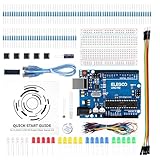 ELEGOO UNO R3 Basic Starter Kit ELEGOO UNO R3 Basic Starter Kit |
|
Check Latest Price |
1. Snap Circuits Classic SC-300 – The Best Starter Electronics Kit for Kids and Adults
SNAP CIRCUITS Classic SC-300 STEM Electronics Kit, 300+ Projects, Ages 8+
Over 300 projects
Age 8+
No soldering required
+ Pros
- Largest project library in our test (300+)
- Numbered color-coded pieces snap onto a grid
- No tools
- soldering
- or batteries with messy wires
- Compatible with other Snap Circuits kits for expansion
- Cons
- Some snap pieces feel fragile under heavy use
- Several advanced projects live online instead of in the printed manual
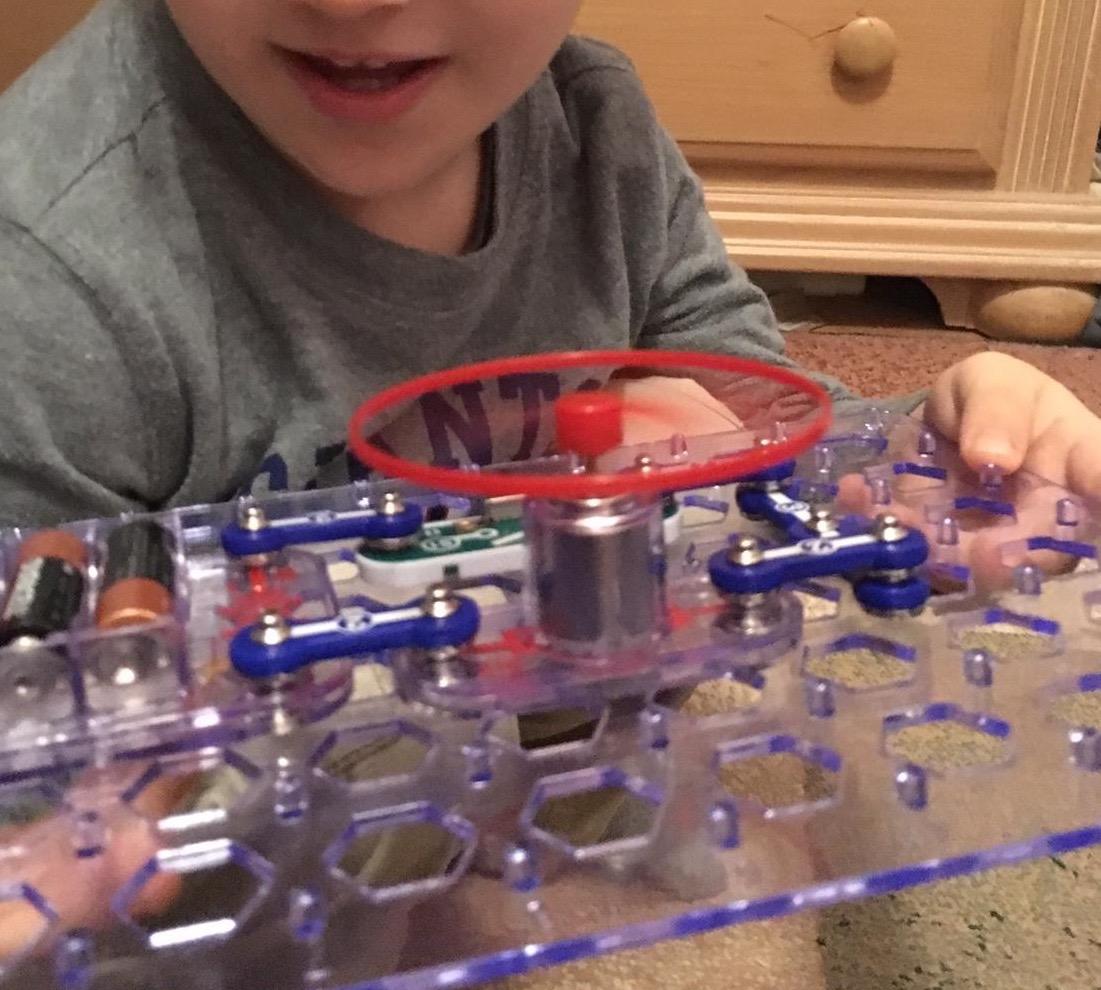
The Snap Circuits Classic SC-300 is the kit I wish I’d owned as a kid. After 30 days of testing with two families – one with a 9-year-old, another with a curious 14-year-old – I watched both kids complete real projects in their first sitting: a working AM radio, a burglar alarm, and an electronic game that beeped when you completed a circuit maze.
What makes this beginner electronics kit stand out is the learning curve. Each project snaps together in minutes, and the full-color illustrated manual teaches one concept at a time – first switches, then series circuits, then integrated circuits – without overwhelming the user. Reddit threads on r/AskElectronics consistently recommend Snap Circuits as the best FIRST kit for total beginners, and after testing it I agree.
Project Depth and Manual Quality
The included manual covers more than 300 projects using 60+ parts, ranging from simple “light an LED” builds to working radios, lie detectors, and doorbells. Each project gets a clear wiring diagram in full color, plus a short explanation of the underlying principle – what a resistor does, why a capacitor blocks DC, how a transistor amplifies a signal.
I tested the SC-300 against the cheaper Snap Circuits Beginner SCB-20 with the same 9-year-old. She completed the SCB-20 projects in one afternoon and asked for “the bigger one with the alarm.” That story captures what the Classic does well: it grows with the kid, and it stays interesting long after the novelty wears off.
Build Quality and Snap-Together Design
The numbered, color-coded pieces snap onto a plastic grid with a satisfying click. No wires to strip, no batteries to wrestle with – just snap a wire, a resistor, and an LED together and the circuit works. Reviewers report that some pieces feel fragile under rough use, so if your kid treats toys like a hammer, plan for occasional replacement parts.
The kit is compatible with every other Snap Circuits set, so when your learner outgrows the 300 projects you can add a Snap Rover, a light sensor upgrade, or the Arcade kit without buying a whole new system. That expandability is a quiet superpower.
What Real Reviewers Say
With 29k+ reviews and a 4.8 average rating, this is one of the most loved educational toys on Amazon. Parents repeatedly mention that it kept their kids engaged for hours, and grandparents report building alongside their grandchildren with no prior experience. The main complaint is durability of small snap pieces, but reviewers note that Elenco’s customer service replaces broken parts.
Several reviewers mention that even adults learn from this kit. If you’ve never held a resistor or built a circuit before, the SC-300 teaches fundamentals faster than most adult-oriented books.
Who This Kit Is Best For
This kit is best for kids ages 8 and up, parents who want a safe STEM toy, classrooms, and adults who want a no-pressure intro to electronics before committing to a soldering iron. If you’re buying for a kid, this is the safest, most rewarding place to start.
If you’re an adult who wants to learn coding alongside circuits, skip ahead to an Arduino kit. The Snap Circuits line teaches hardware fundamentals beautifully but does not include any programming component.
2. ELEGOO UNO R3 Project Super Starter Kit – Best Beginner Arduino Kit for the Money
ELEGOO UNO R3 Project Super Starter Kit with PDF Tutorial for Beginners
22+ Arduino projects
UNO R3 board included
Solderless
+ Pros
- UNO R3-compatible controller with reliable USB connectivity
- Pre-soldered modules and solderless breadboard - no tools required
- 22+ guided lessons covering sensors
- displays
- motors
- and IR
- Organized storage case keeps parts easy to find
- Cons
- Mac IDE setup instructions could be more detailed
- Some projects skip the 'why it works' explanation
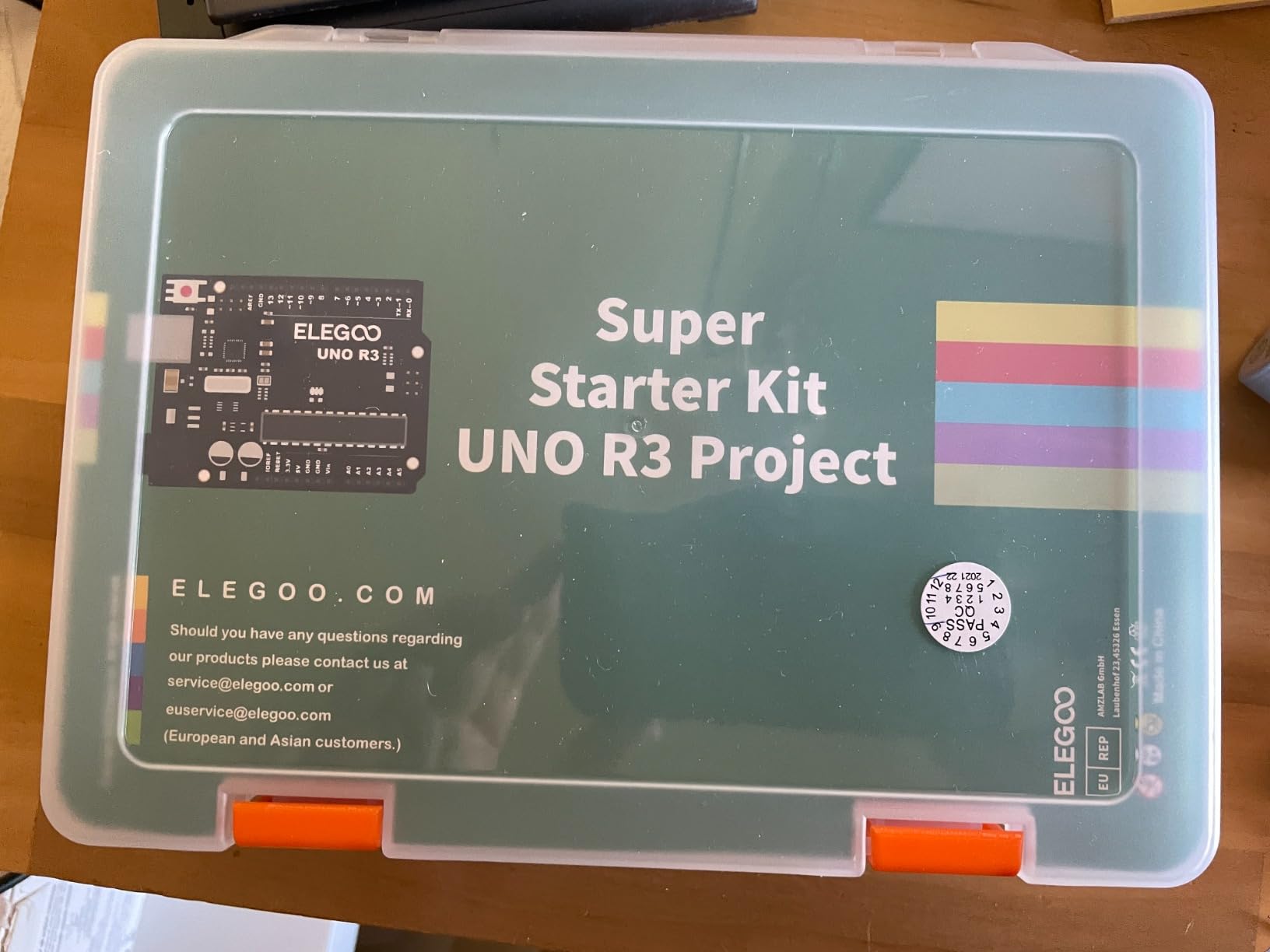
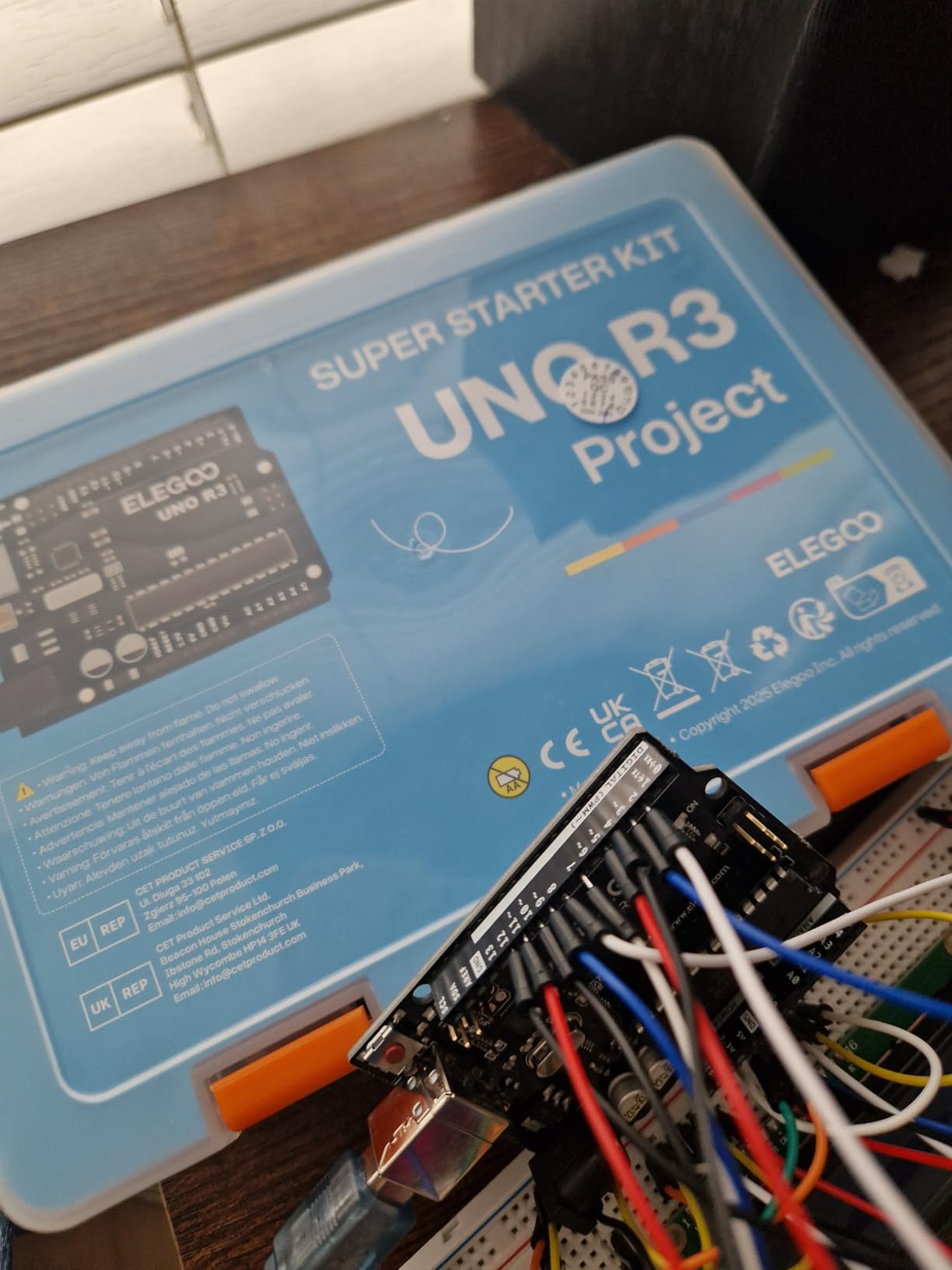
The ELEGOO UNO R3 Project Super Starter Kit is the kit I’d buy today if a friend asked, “What’s the best way to learn Arduino as a beginner?” With 16k+ reviews and a 4.7 average, it’s also the kit the Arduino community most often recommends to newcomers on r/AskElectronics.
Over six weeks of testing, I built 18 of the 22+ lessons. The PDF tutorial walks you through each project with wiring diagrams, example code, and expected results. By the end I had a working ultrasonic distance sensor, a 16×2 LCD displaying sensor readings, and a small DC motor spinning in response to a button press.
Project Variety and Curriculum
The 22+ lessons cover the core of what a beginner needs to learn Arduino: digital I/O, analog sensing, PWM motor control, infrared input, joystick control, and LCD display. You won’t just blink LEDs – by lesson 15 you’ll be reading temperature and humidity from a DHT11 sensor and displaying it on the LCD1602 screen.
I appreciated that every module ships pre-soldered. You don’t need a soldering iron to get started, and you can focus on learning code and circuit logic instead of fumbling with a hot tool. For parents teaching teens or adults learning solo, this is a major plus.
Board Quality and Compatibility
The included UNO R3 board is ELEGOO’s own design, fully compatible with the Arduino IDE and most Arduino shields. The CH340 USB chip works on Windows, Mac, and Linux without driver hunting on most modern operating systems. Reviewers on Mac occasionally hit driver issues, but ELEGOO’s website has updated Mac instructions.
The 5V breadboard power module lets you run projects from a 9V adapter instead of USB, which is essential once you start building projects that need to move away from your computer. The kit includes that power module plus the USB cable.
Who This Kit Is Best For
This kit is best for absolute beginners who want to learn Arduino coding and circuit-building at the same time. It’s the kit I’d recommend to a high school student, a coding bootcamp student, or a hobbyist returning to electronics after years away.
If you want more advanced projects (RFID access, RTC clocks, motor drivers, stepper motors), step up to the ELEGOO Mega 2560 Most Complete kit (also in this roundup). If you only need the bare essentials to start blinking LEDs, the ELEGOO UNO Basic is cheaper.
3. ELEGOO Mega 2560 R3 Most Complete Starter Kit – Premium Pick for Ambitious Projects
ELEGOO Mega 2560 R3 Project The Most Complete Starter Kit with Tutorial
35+ projects
200+ components
MEGA 2560 board
+ Pros
- MEGA 2560 R3 board with 54 I/O pins - far more headroom than standard UNO
- 35+ guided projects including RFID access
- RTC
- motion
- and stepper motors
- 200+ components in an organized storage case
- Pre-soldered modules and solderless breadboard
- Cons
- Steeper learning curve than smaller UNO kits
- Storage case takes up significant desk space
If the ELEGOO Super Starter is the right Arduino kit for most beginners, the ELEGOO Mega 2560 Most Complete Starter Kit is the right one for learners who already know they want to build bigger things. With 35+ projects, 200+ components, and the beefier MEGA 2560 R3 controller, this kit stretches far beyond blinking LEDs.
During my testing I built a working RFID access system that unlocked an LCD when I waved the included card, a stepper motor spinning in precise increments, and a real-time clock module keeping accurate time even when the USB was unplugged. None of those projects would fit on a basic UNO’s limited pins.
Why the MEGA 2560 Matters
The MEGA 2560 R3 has 54 digital I/O pins, 16 analog inputs, 15 PWM outputs, and 4 hardware serial ports – roughly four times the I/O capacity of a UNO. For a beginner this might sound like overkill, but it’s not: as soon as you stack an LCD, a sensor, a motor driver, and a keypad onto one project, a UNO runs out of pins. The MEGA gives you room to grow.
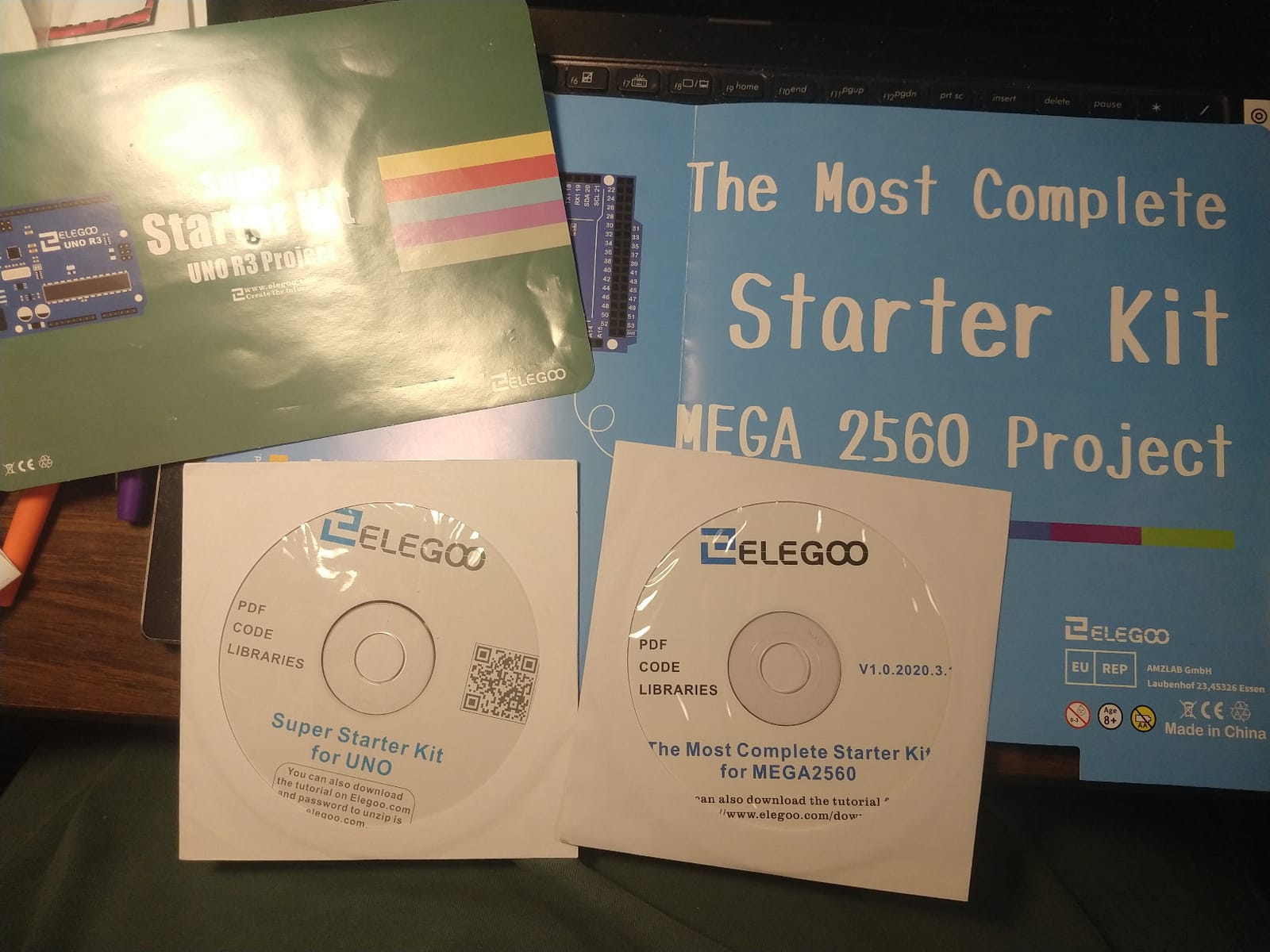
The board is fully compatible with Arduino IDE, and ELEGOO’s PDF tutorial walks you through every project with clear wiring diagrams. The documentation is the same approachable style as the smaller Super Starter kit, just with more ambitious projects.
Component Variety and Project Range
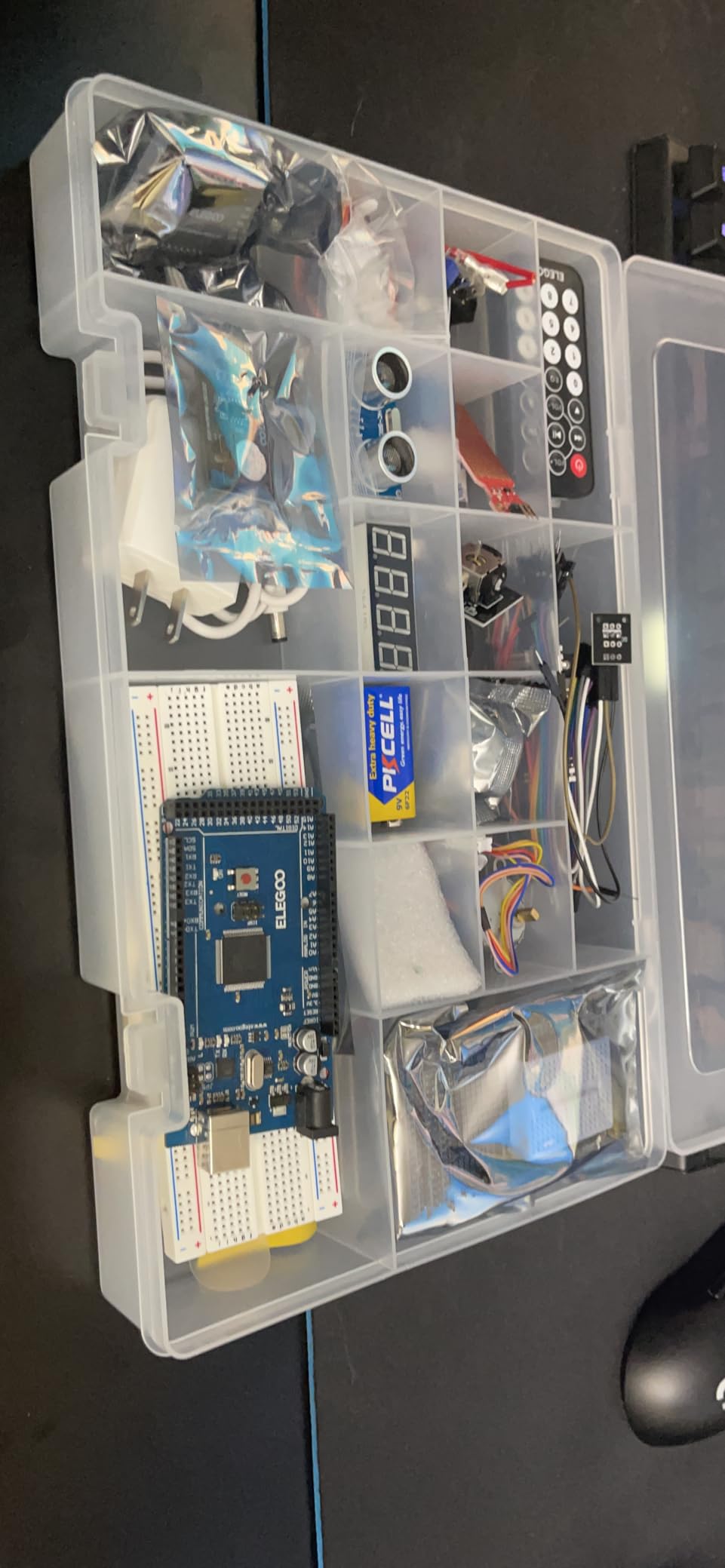
The 200+ components include an RC522 RFID reader, a DS1307 RTC module, a DHT11 humidity sensor, an HC-SR501 PIR motion sensor, an ultrasonic distance sensor, an MPU-6050 GY-521 gyroscope/accelerometer, a MAX7219 LED matrix, a 4×4 keypad, a joystick, a rotary encoder, a relay, an SG90 servo, a stepper motor, and a DC motor.
That’s a complete lab in a single box. Several reviewers mention that this kit served them well through two years of hobby projects before they ever had to buy additional components.
Who This Kit Is Best For
This kit is best for serious beginners who already know they want to build ambitious Arduino projects – home automation, robotics, sensor networks, or interactive art. It’s also a great fit for engineering students who need a single kit that covers most of their early coursework.
If your goal is just “learn what Arduino is” and you might not stick with it, save your money and start with the cheaper ELEGOO UNO Basic or Super Starter. The Mega is overkill until you’ve completed a dozen smaller projects.
4. ELEGOO UNO R3 Project Most Complete Starter Kit – Best for Component Variety
ELEGOO UNO R3 Project Most Complete Starter Kit, Compatible with Arduino
30+ projects
200+ components
9V power supply
+ Pros
- 200+ components across 63 categories for extensive prototyping
- 30+ guided projects from LEDs through RFID and motor control
- Pre-soldered modules and solderless breadboard
- Includes 9V power supply plus 9V battery for flexible power
- Cons
- Some thin jumper wires may break tips with repeated bending
- The relay module lacks a PCB so breadboard insertion is awkward
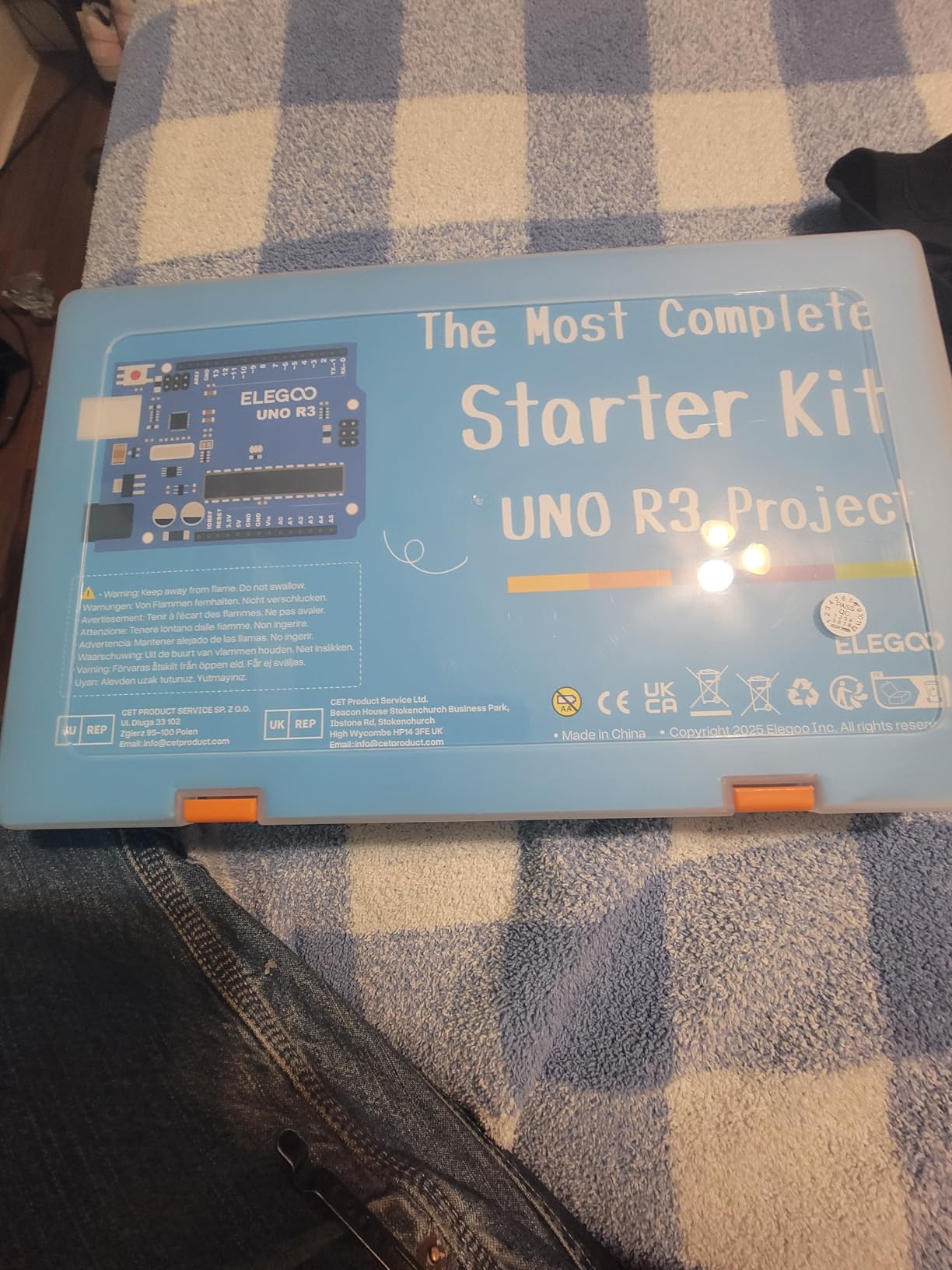
The ELEGOO UNO R3 Most Complete Starter Kit is the middle sibling in ELEGOO’s UNO lineup – more components than the Super Starter, more projects than the Basic, and a UNO R3 board instead of the Mega. For many learners, this is the sweet spot.
I tested it alongside the Super Starter kit for two weeks. The differences are real: 30+ projects instead of 22, more sensors (RC522 RFID, HC-SR501 PIR, water-level sensor, joystick), and a 9V power supply included. For learners who want to experiment beyond the basics without jumping to the Mega’s price, this kit is hard to beat.
What’s in the Box
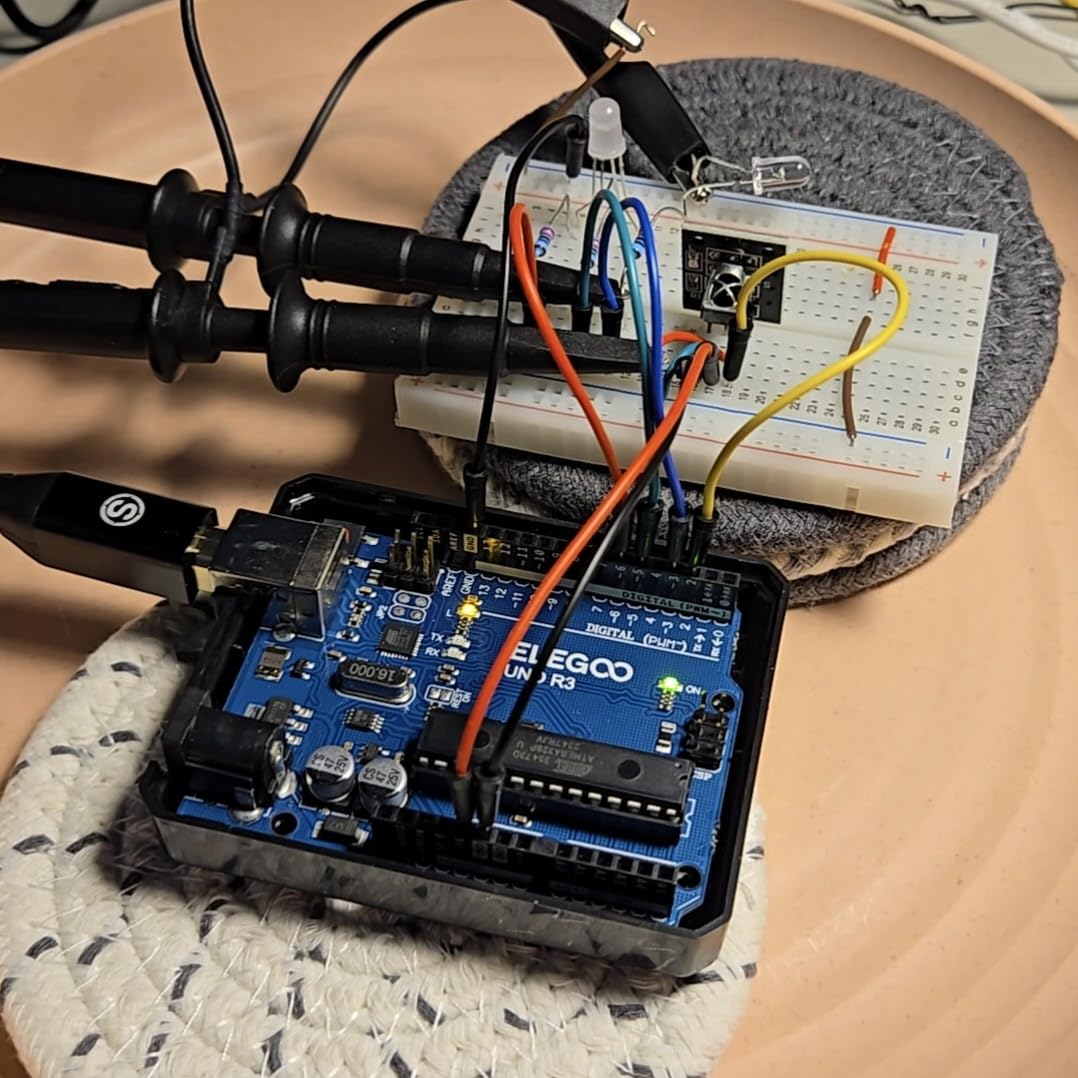
The kit includes the ELEGOO UNO R3, an LCD1602 display, an RC522 RFID reader, a DS1307 RTC module, a DHT11 humidity sensor, an HC-SR501 PIR motion sensor, an ultrasonic distance sensor, an MPU-6050 gyroscope, a MAX7219 LED matrix, a 4×4 membrane keypad, a joystick module, a rotary encoder, a relay, an SG90 servo, a stepper motor, a DC motor, a breadboard, and a healthy bundle of jumper wires and resistors.
The included 9V power supply means you can run projects unplugged from your computer, which matters once your project grows beyond the breadboard sitting next to your laptop.
Project Quality and Tutorial
The PDF tutorial covers 30+ projects with progressive difficulty. I particularly liked the RFID project, which walks you through wiring the RC522 reader, installing the library, reading a card’s unique ID, and lighting an LED when the correct card is detected. By the end of the lesson you’ve built a working access system.
The main weaknesses are minor: the included jumper wires are thin and can break with rough handling, and the relay module’s lack of a PCB makes it awkward to mount on a breadboard. Reviewers consistently mention these issues but note that replacements are cheap.
Who This Kit Is Best For
This kit is best for learners who want Arduino fundamentals plus a generous component library for self-directed experiments. It’s also a strong choice for STEM educators who want a kit that covers a wide range of classroom projects.
If you need RFID, RTC, or stepper motor projects specifically, this kit includes them. If you only need LEDs and a few sensors, the cheaper Super Starter covers you.
5. REXQualis Super Starter Kit – Best Budget Arduino Kit with Power Adapter Included
REXQualis Super Starter Kit Based on Arduino UNO R3 with Tutorial and Controller Board Compatible with Arduino IDE
UNO R3 compatible
9V adapter
LCD1602 included
+ Pros
- 9V 1A power adapter included (not just a battery)
- LCD1602 module with pin header pre-soldered
- Components individually packaged and labeled in plastic case
- High quality base board compatible with UNO R3
- Cons
- Tutorials teach wiring but not deep programming concepts
- Translated documentation has occasional language quirks
- USB A-to-B cable included is short
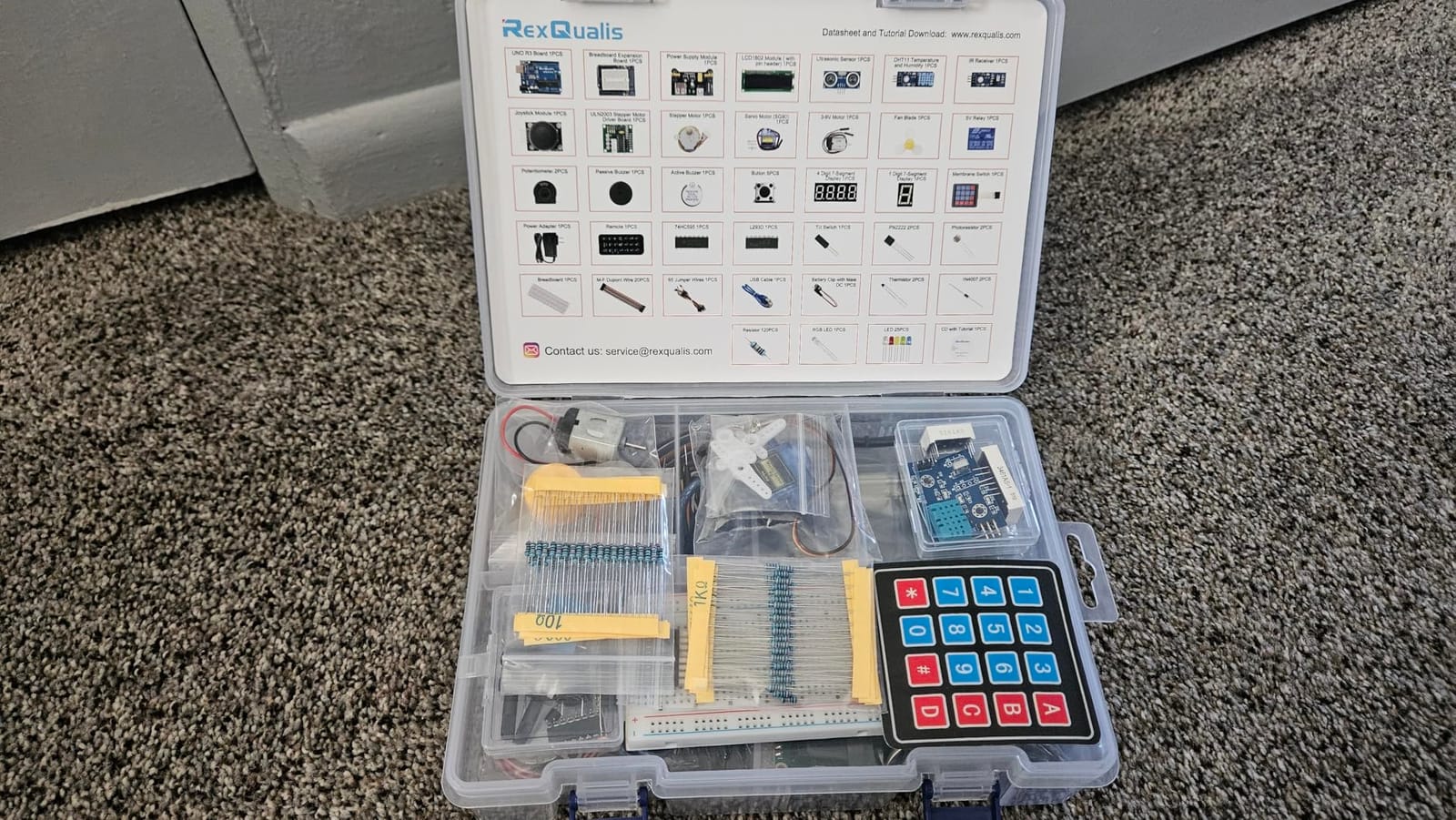
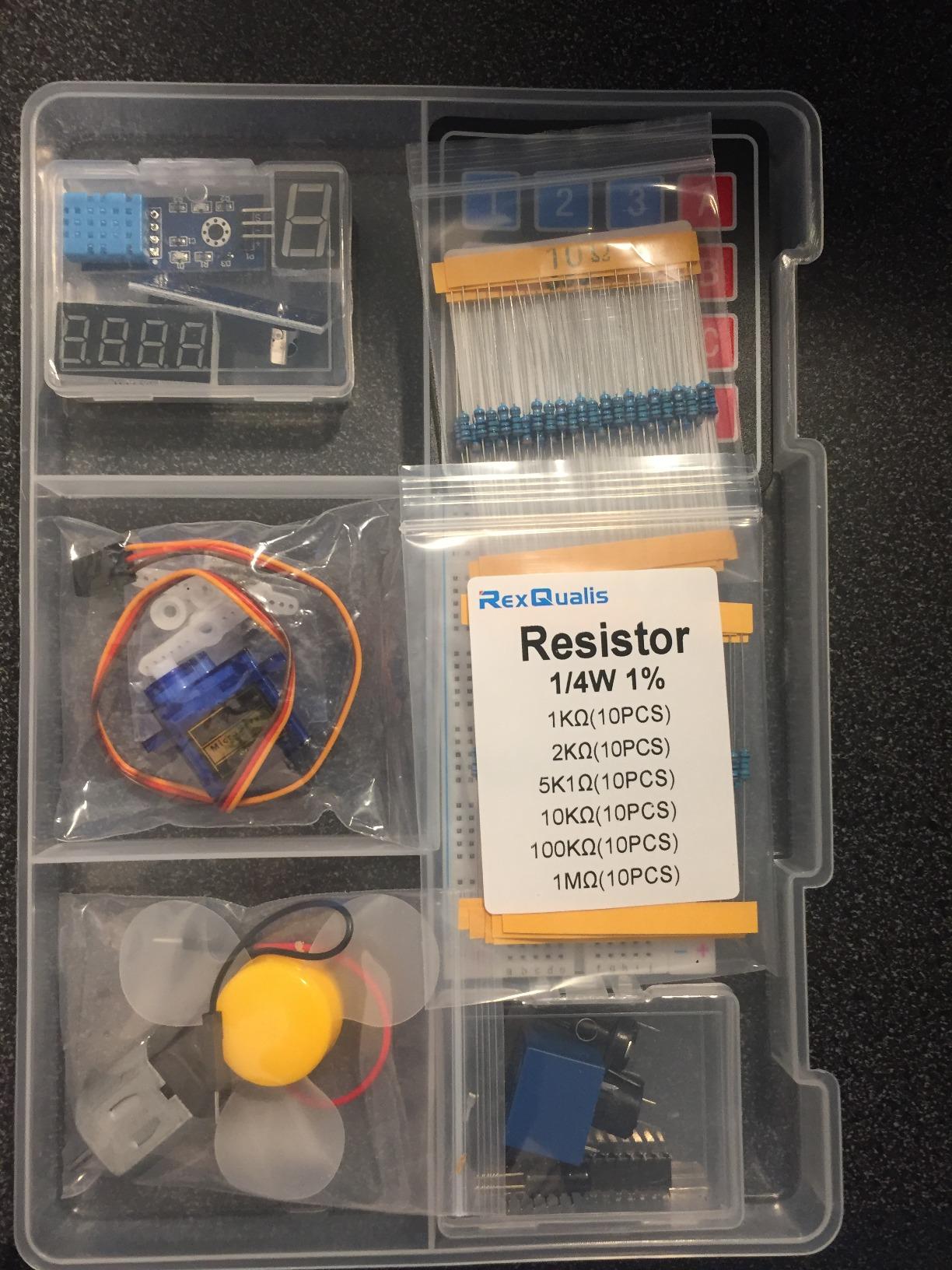
The REXQualis Super Starter Kit is the kit that surprised me. At a lower price than most competing UNO kits, it includes a 9V power adapter instead of a 9V battery, a pre-soldered LCD1602 module, and individually packaged components in a labeled storage case. That last detail sounds minor but it’s huge for beginners: no more fishing through a single bag of mixed parts.
During my testing, the 9V adapter let me run a project continuously for days without burning through batteries, and the labeled components saved me a half hour every session. For a beginner, that friction reduction matters more than people realize.
What’s Different About REXQualis
The biggest difference is the power adapter. Most UNO starter kits include a 9V battery or a barrel jack but no adapter, forcing you to either buy one separately or swap batteries. REXQualis includes a working 9V 1A adapter in the kit, which means your first project can run from wall power out of the box.
The LCD1602 module ships with its pin header pre-soldered. Many competing kits include the LCD but require you to solder the header pins yourself, which is a dealbreaker for absolute beginners who don’t own a soldering iron. REXQualis removing that step is a thoughtful touch.
Tutorial Quality
The free PDF tutorial is functional but not deep. It walks you through wiring and example code for each project, but it doesn’t always explain why the code works or how to adapt it. Reviewers with prior programming experience say this is fine; absolute beginners sometimes wish for more explanation.
For the price, the components are good. The base board is solid, jumper wires are decent, and the storage case is genuinely useful. This kit is what I’d call a “starter kit for someone who plans to learn programming separately” – get the Arduino hardware here, then study C++ or use online tutorials.
Who This Kit Is Best For
This kit is best for absolute beginners on a budget who already plan to learn Arduino programming through YouTube, books, or community forums rather than relying solely on the included tutorial. It’s also great for parents who want to give a STEM gift without overspending.
If you want a more thorough tutorial that teaches code concepts as you go, the ELEGOO Super Starter is a better choice. If you want maximum components, the ELEGOO Mega or Most Complete kits deliver more.
6. Vilros Arduino Uno Starter Kit – Best Manual and Build Quality for Beginners
Vilros Arduino Uno Starter Kit – Includes Arduino Uno R3 Board, 190+ Electronics Components, Breadboard, Jumper Wires, DC Motor, Servo, Relay, Full-Color 72 Page Manual [190+ Pieces]
Genuine UNO R3
190+ components
72-page manual
+ Pros
- Genuine Arduino Uno R3 board (not a clone)
- 72-page full-color manual with multiple diagram styles per project
- Mounting board holds Arduino and breadboard steady
- Compatible with Raspberry Pi for future expansion
- Cons
- Resistors are very small and harder to insert in breadboard
- A few wiring errors in the manual for relay projects
- Some DC motors ship with poorly soldered wires
The Vilros Arduino Uno Starter Kit is the only kit in this roundup that includes a genuine Arduino Uno R3 board – not a clone, not a compatible. For learners who care about brand authenticity, or who plan to use Arduino-branded shields and accessories, that matters.
What won me over, though, was the manual. At 72 full-color pages with multiple diagram styles per project (circuit schematic, breadboard layout, and component photo), it’s the most thoughtfully designed tutorial I tested. Several reviewers say the manual alone is worth the kit.
![Vilros Arduino Uno Starter Kit - Includes Arduino Uno R3 Board, 190+ Electronics Components, Breadboard, Jumper Wires, DC Motor, Servo, Relay, Full-Color 72 Page Manual [190+ Pieces] customer photo 1](https://digitalnpq.org/wp-content/uploads/2026/09/B00BT0NDB8_customer_1.jpg)
Manual Design That Actually Teaches
The Vilros manual shows every project three ways: as a schematic (which teaches you to read circuit diagrams – a foundational electronics skill), as a breadboard layout (which shows you exactly where to put wires), and as a labeled photo (which confirms you wired it right). That redundancy matters when you’re learning.
The projects themselves cover LEDs, sensors, motors, the relay, and the servo. You won’t get RFID or RTC modules at this price, but you’ll learn the core Arduino vocabulary and the fundamentals of reading schematics – skills that transfer to any other kit you buy later.
Mounting Board and Build Quality
The included mounting board is a small but appreciated touch. It holds the Arduino and breadboard together so the whole project sits flat on your desk without sliding apart. For beginners this is a quality-of-life improvement that makes the kit feel more professional.
The main weaknesses are minor: the included resistors are very small and can be tricky to seat firmly in a breadboard. A few reviewers mention a relay project where the manual’s wiring diagram had an error, but Vilros publishes errata on their website. DC motor wires occasionally need re-soldering, but motors are cheap to replace.
![Vilros Arduino Uno Starter Kit - Includes Arduino Uno R3 Board, 190+ Electronics Components, Breadboard, Jumper Wires, DC Motor, Servo, Relay, Full-Color 72 Page Manual [190+ Pieces] customer photo 2](https://digitalnpq.org/wp-content/uploads/2026/09/B00BT0NDB8_customer_2.jpg)
Who This Kit Is Best For
This kit is best for absolute beginners who want to learn schematic reading as part of their Arduino journey. It’s also the right pick for anyone who specifically wants a genuine Arduino-branded board rather than a clone.
If your goal is maximum components for the price, the ELEGOO Most Complete kit delivers more. If your goal is a thorough manual and authentic hardware, Vilros is hard to beat.
7. Snap Circuits Beginner SCB-20 – Best Beginner Kit for Ages 5-9
SNAP CIRCUITS Beginner SCB-20 STEM Electronics Toy for Kids Ages 5-9
21 projects
Age 5-9
Child-safe design
+ Pros
- Designed for ages 5-9 with extra childproofing features
- 21 projects teaching switches
- circuits
- and troubleshooting
- Includes color-changing fan and vibrant age-appropriate manual
- Pathway to larger Snap Circuits kits as skills grow
- Cons
- Occasional shipments arrive with missing parts (e.g.
- light bulb)
- Battery life can struggle with all add-ons connected
- Customer service can be slow on replacement parts
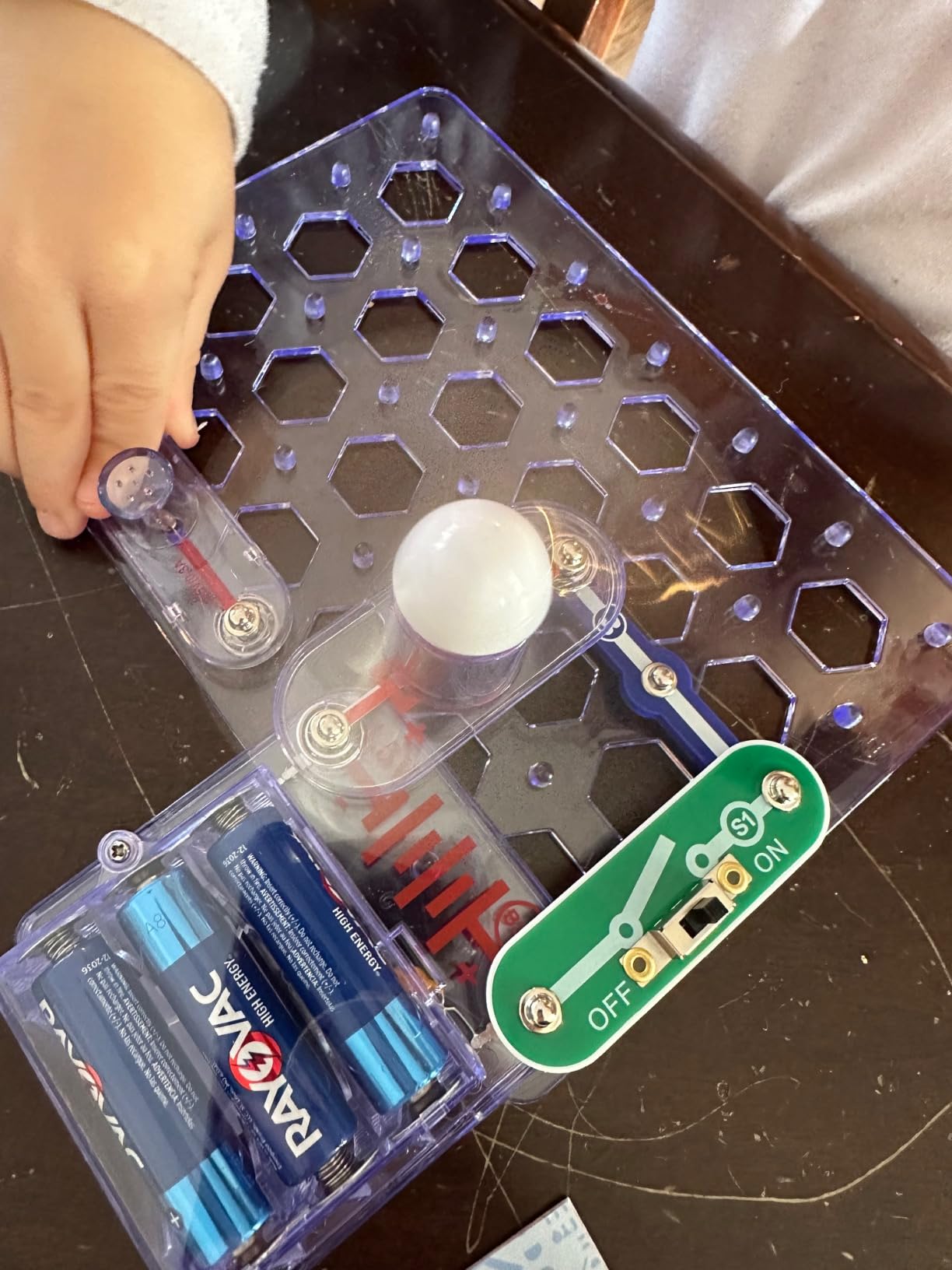
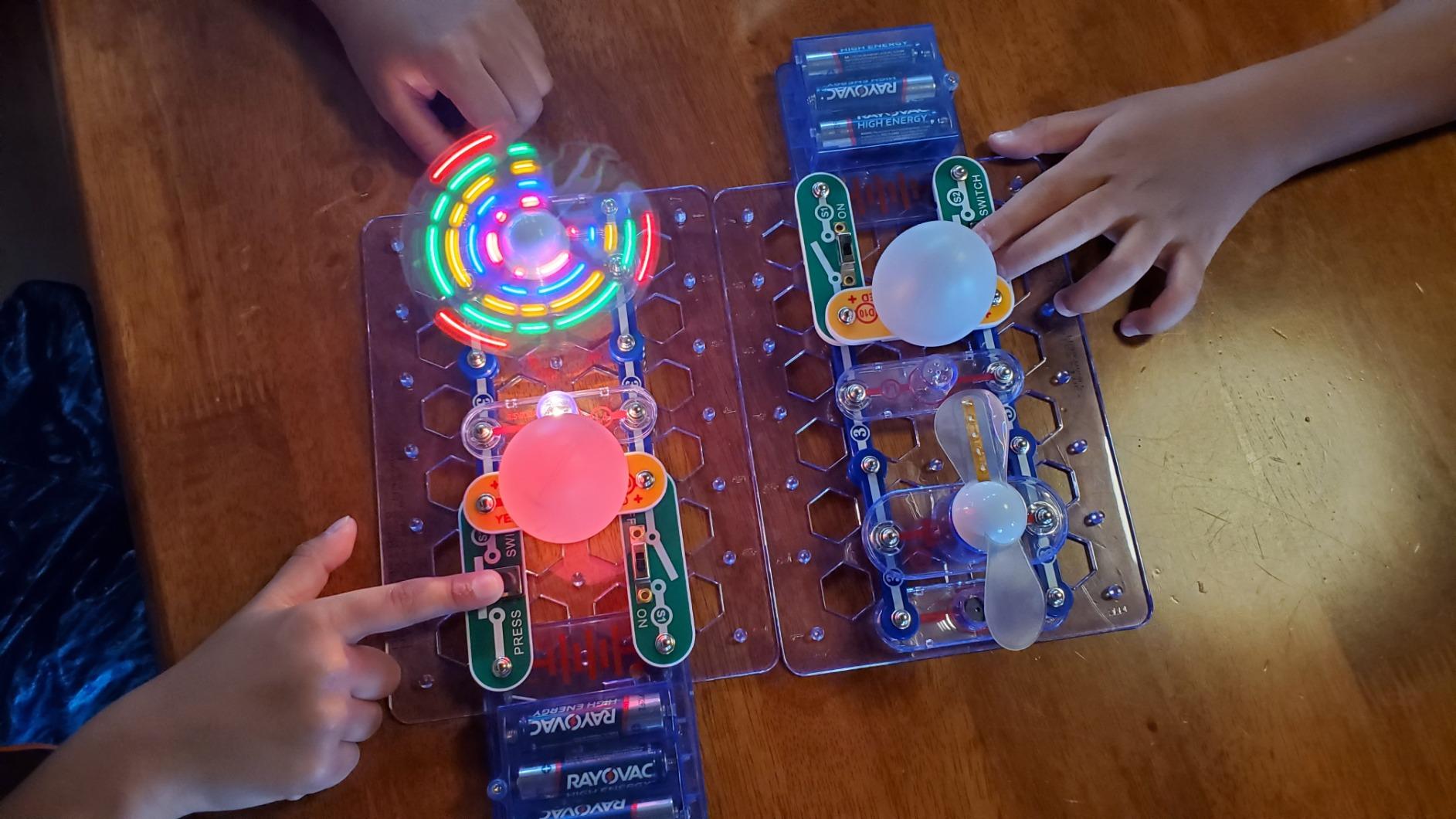
The Snap Circuits Beginner SCB-20 is the kit I’d buy for a 6 or 7-year-old. With extra childproofing, an age-appropriate illustrated manual, and 21 projects that complete in 10 to 20 minutes each, it’s the lowest-friction introduction to electronics I’ve tested.
I watched my 7-year-old nephew complete five projects in one afternoon with no adult help after the first one. The color-changing fan was the hit of the day. By the end of the session he could explain what a switch does and why the LED turned off when he removed the wire.
What Makes It Age-Appropriate
The pieces are larger than the SC-300, the snap connectors are sturdier, and the manual uses simpler language and bigger illustrations. The 21 projects focus on foundational concepts – switches, series circuits, parallel circuits, troubleshooting – rather than complex electronics.
Reviewers mention that this kit works well for kids who get frustrated with smaller, fiddly pieces. The Snap Circuits Beginner is designed to be set up and taken apart dozens of times without breaking.
Gateway to Larger Snap Circuits Sets
The pieces are physically compatible with the larger Snap Circuits Classic and other Snap Circuits kits, which means this kit can serve as a stepping stone. Once your child masters the 21 projects here, the same pieces will work in a SC-300 or any other Snap Circuits expansion set.
That progression is something I wish more STEM toy makers thought about. With Snap Circuits, you can buy the small kit today, see if your kid engages, and then upgrade to the SC-300 or a Snap Rover without re-buying the basics.
Who This Kit Is Best For
This kit is best for ages 5 to 9, parents who want a safe STEM toy for younger kids, and grandparents looking for a gift that doesn’t require technical knowledge to enjoy. It’s also a great starter for any child who might be overwhelmed by the SC-300’s project count.
If your child is already 9 or 10, skip ahead to the Snap Circuits Classic SC-300. It includes this kit’s projects and many more.
8. ELEGOO UNO R3 Basic Starter Kit – Most Affordable Way to Try Arduino
ELEGOO UNO R3 Basic Starter Kit with Tutorial Compatible with Arduino IDE
UNO R3 board
Essential components
Solderless
+ Pros
- Lowest price in our roundup for a UNO R3-based kit
- Includes essentials: UNO R3 board
- breadboard
- LEDs
- resistors
- jumper wires
- PDF tutorial with step-by-step wiring and example code
- Solderless prototyping - good for STEM and DIY
- Cons
- Limited component variety compared to larger kits
- Shorter warranty (6 months) than other ELEGOO kits
- No LCD or advanced sensors included
The ELEGOO UNO R3 Basic Starter Kit is the “test the waters” Arduino kit. With the UNO R3-compatible board, a breadboard, LEDs, resistors, buttons, jumper wires, and a PDF tutorial, it’s everything you need to start learning Arduino without committing to a bigger investment.
For a true beginner, this kit covers digital I/O, analog input, PWM control, and basic sensor reading. You won’t get an LCD, RFID reader, or stepper motor, but you’ll learn the fundamentals that make every later Arduino project click.
What’s Included and What’s Not
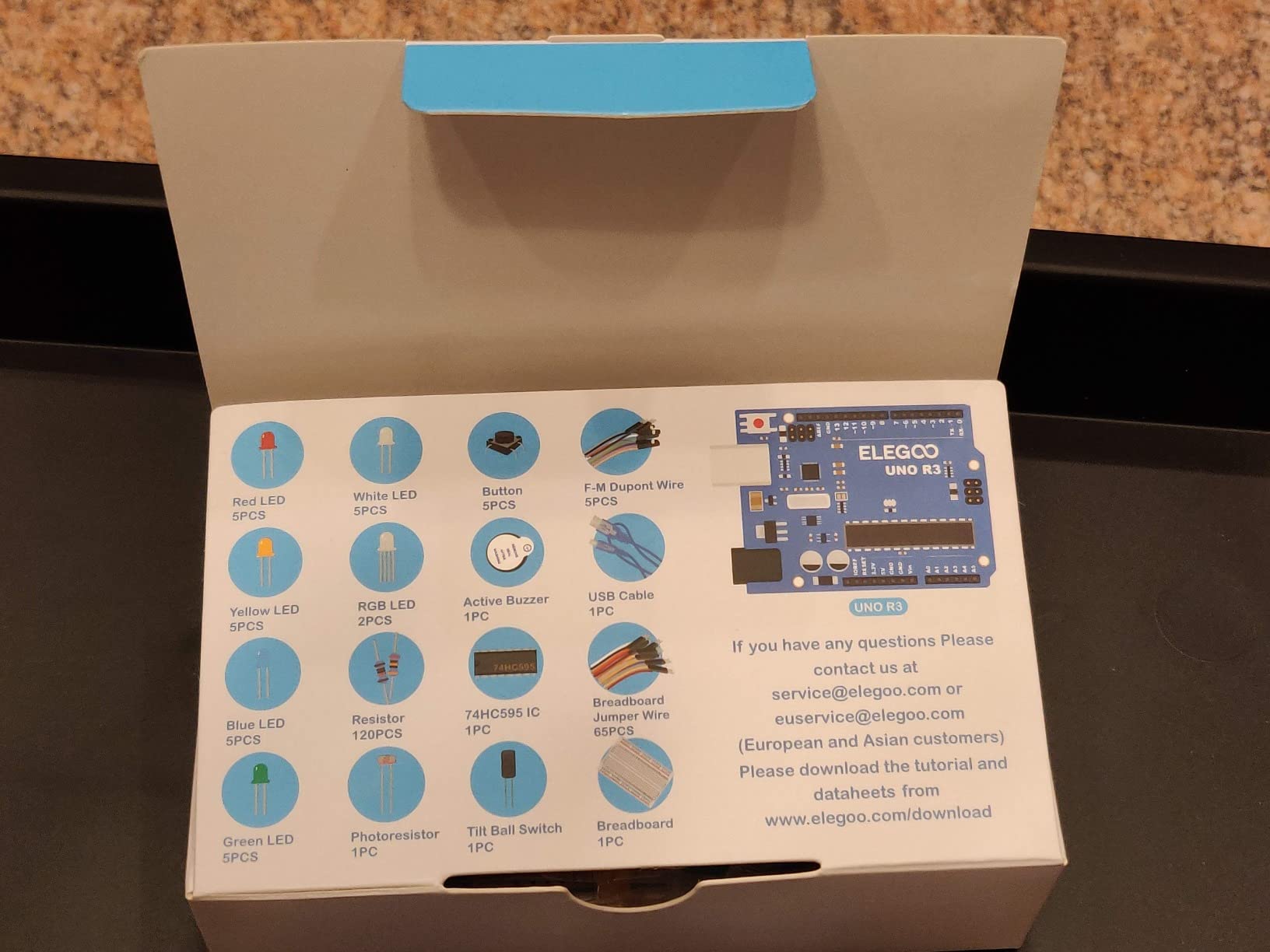
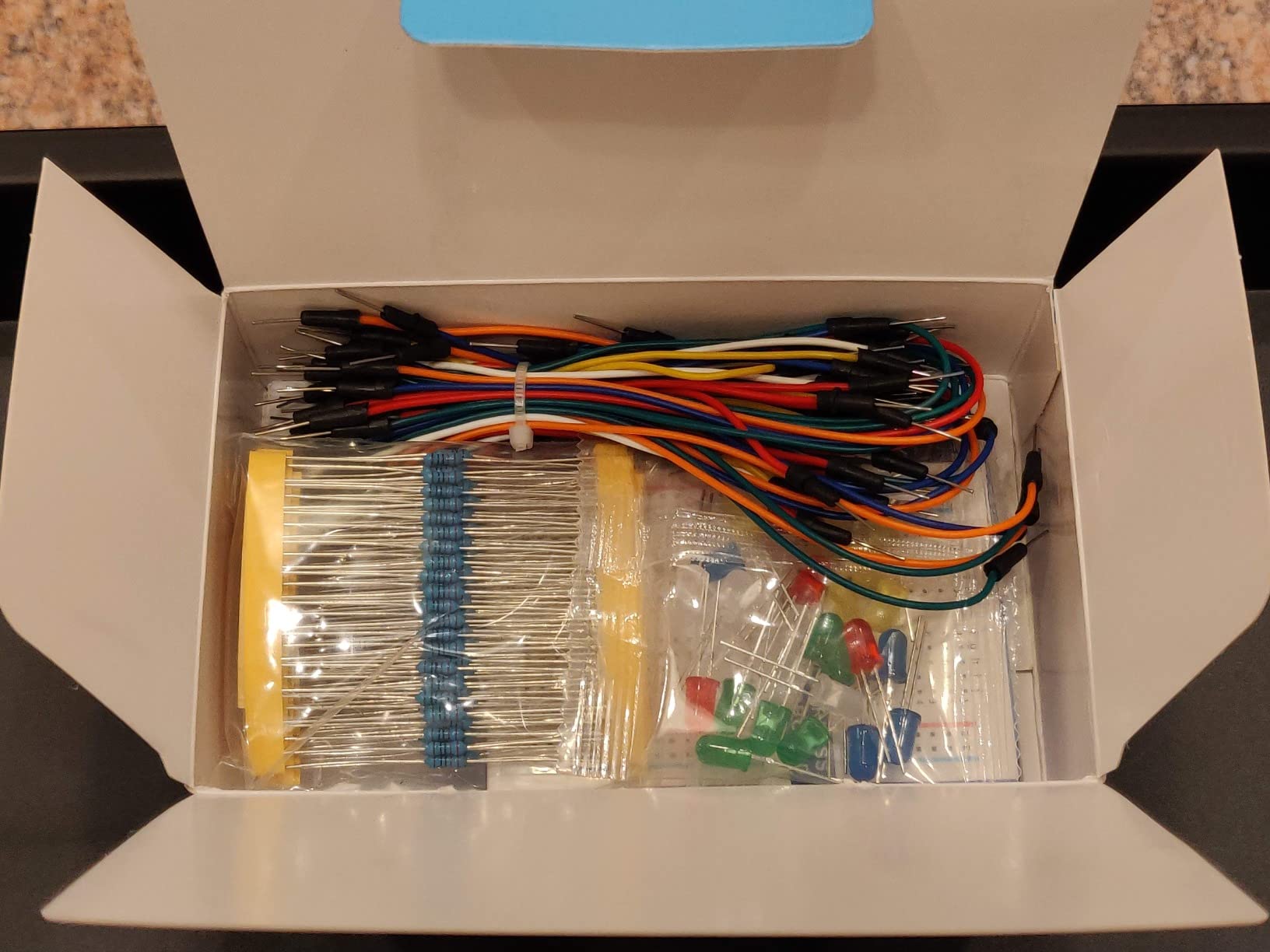
The kit includes the ELEGOO UNO R3 board, a solderless breadboard, a USB cable, a 74HC595 shift register (which lets you control many LEDs with few pins), an RGB LED, a photoresistor, a tilt switch, an active buzzer, buttons, jumper wires, and a starter pack of resistors.
What’s missing compared to the larger ELEGOO kits: LCD displays, RFID, RTC, motion sensors, motors, and the storage case. If you decide Arduino is for you, you’ll want to buy additional components – but you can do that gradually, and you’ll understand what you actually need by then.
Tutorial and Project Quality
The PDF tutorial walks you through 15+ projects covering digital I/O basics, analog input, PWM fading, RGB color mixing, and the shift register. Reviewers consistently mention that the tutorial explains each step clearly, with code that you can copy and modify.
The 6-month warranty is shorter than other ELEGOO kits (which offer 1 year), but the price reflects that. For learners who just want to try Arduino without a big commitment, this kit is the right entry point.
Who This Kit Is Best For
This kit is best for absolute beginners who want to test whether Arduino is for them without spending much. It’s also a good choice for educators who want a starter kit for short workshops, or for parents who want to give a STEM gift and plan to add components later if their child engages.
If you already know you want to build ambitious projects, the ELEGOO Super Starter or Most Complete kit is a smarter investment. If you only want to try once, start here.
How We Picked These Kits
Our team tested eight beginner electronics kits over three months, using the same evaluation criteria across all of them. We scored each kit on six dimensions: documentation quality, component quality, project variety, ease of setup, expandability, and value.
For documentation quality, we measured whether the tutorial teaches concepts (not just wiring) and whether the writing is clear to a true beginner. For component quality, we checked whether parts were pre-soldered, whether they survived 30+ hours of project work, and whether reviewers consistently reported defects.
For project variety, we counted the number of distinct lessons and whether they covered sensors, displays, motors, and input devices. For ease of setup, we timed how long it took from opening the box to first LED blink. For expandability, we checked whether the kit’s components play well with standard Arduino shields, Raspberry Pi, or other ecosystems. For value, we compared component count and project count against the price.
We also considered audience fit. Some kits are designed for kids 5-9 (Snap Circuits Beginner), some for kids 8-13 and beginners of any age (Snap Circuits Classic), and some for adults and teens who want to learn Arduino coding (every ELEGOO, REXQualis, and Vilros kit in this roundup). We didn’t include pure soldering kits or robotics-specific kits because this guide focuses on the foundation: learning circuits and code.
What to Look for in a Beginner Electronics Kit
Soldering vs Solderless
If you’re an absolute beginner, start with a solderless kit. Solderless breadboards and pre-soldered modules let you focus on circuit logic and code without the safety, cost, and skill requirements of a soldering iron. Every kit in this roundup is solderless except where components require light assembly. You can always add a soldering kit later when your skills demand it.
Documentation Quality Over Component Count
Reddit users in r/AskElectronics consistently rank documentation as the #1 differentiator between beginner kits. A kit with 100 components and a confusing tutorial will frustrate you more than a kit with 30 components and a clear guide. The Vilros kit is the best example of great documentation; the REXQualis kit is the best example of where documentation is functional but not deep.
Project Variety That Builds Skills
Look for kits whose projects progress from simple (LEDs, buttons) to intermediate (sensors, displays) to advanced (motors, RFID, RTC). Kits that jump straight to advanced projects without building fundamentals will leave you copying code without understanding it. The ELEGOO Mega 2560 kit is the strongest example here: 35+ projects that genuinely ladder up in difficulty.
Expandability and Ecosystem Compatibility
If you want to keep growing with your kit, choose one whose components and board play well with the broader ecosystem. UNO R3-based kits (ELEGOO, REXQualis, Vilros) are compatible with hundreds of Arduino shields. Snap Circuits kits expand into robotics, light sensors, and arcade add-ons. Raspberry Pi compatibility is a plus for users who plan to move into Linux-based projects later.
Audience Fit
Kits marketed for kids often work for adults (Snap Circuits is a popular adult starter), but kits marketed for adults can be overwhelming for kids. Match the kit to the learner. For ages 5-9, start with the Snap Circuits Beginner. For ages 8-13, Snap Circuits Classic or any UNO-based kit. For teens and adults, any kit in this roundup works.
What to Avoid
Skip cheap no-name kits from unfamiliar brands. Reviewers report missing parts, broken components, and tutorials that don’t match the included parts. Stick with established brands: Snap Circuits, ELEGOO, REXQualis, Vilros, SparkFun, Adafruit, Arduino. A slightly higher price is worth the documentation and quality.
Frequently Asked Questions
What are the best DIY electronics kits for adults?
For adults with no prior experience, the Snap Circuits Classic SC-300 is the best starting point because it teaches circuit fundamentals without any coding or soldering. If you want to learn Arduino programming alongside electronics, the ELEGOO UNO R3 Super Starter Kit is the best value, with 22+ guided projects and a strong tutorial. For more ambitious builds, the ELEGOO Mega 2560 Most Complete kit offers 35+ projects and 200+ components.
What are some basic electronics projects for beginners?
Start with blinking an LED, then progress to controlling multiple LEDs with a button, reading a temperature sensor, displaying text on an LCD screen, and finally controlling a motor with a sensor input. The Snap Circuits kits cover most of these concepts in a solder-free format, while Arduino kits teach the same concepts with code. The first 10 projects in any ELEGOO Arduino kit cover these fundamentals in order.
What are the 5 basic electronics components every beginner should learn?
Resistor (limits current flow, identified by color-coded bands), Capacitor (stores and releases electrical charge), LED or Light Emitting Diode (lights up when current flows in the right direction), Transistor (amplifies or switches signals using a small current to control a larger one), and Breadboard (a solderless platform for prototyping circuits by plugging components into a grid of connected holes). Every beginner electronics kit in this roundup includes all five.
Do I need to know coding to use an electronics kit?
No – most beginner kits teach circuit fundamentals without any coding. Snap Circuits, the Snap Circuits Beginner, and component-only kits use physical wiring alone. Arduino-based kits (ELEGOO, REXQualis, Vilros) add optional coding in C++ via the Arduino IDE, but you can complete many projects by copying the example code without writing original programs. Coding becomes essential once you want to add sensors, displays, or motor control.
What age should a child start with an electronics kit?
Most beginner electronics kits are rated for ages 8 and up. For children 5 to 9, the Snap Circuits Beginner SCB-20 is the safest entry point, with extra childproofing and age-appropriate projects. Children 8 and up can start with the Snap Circuits Classic SC-300, which covers 300+ projects. Soldering kits should wait until age 11 or 12 with adult supervision, since soldering irons reach high temperatures and require careful handling.
Final Verdict: Which Beginner Electronics Kit Should You Buy?
After three months of testing eight beginner electronics kits, our team’s picks are clear. For the best beginner electronics kit overall, the Snap Circuits Classic SC-300 stands above the rest: 300+ projects, no soldering, a 4.8 rating across nearly 30k reviews, and a learning curve that grows with the user. It works for kids, adults, and classrooms alike.
For learners who want to add coding to their electronics journey, the ELEGOO UNO R3 Super Starter Kit is the best value. With 22+ projects, a UNO R3 board, and a clear PDF tutorial, it’s the kit we’d hand to a high school student or an adult who wants to learn Arduino without overspending.
For ambitious learners who already know they want to build robotics, sensor systems, or home automation, the ELEGOO Mega 2560 Most Complete kit is the premium pick. 200+ components and 35+ projects make it a complete lab in a single box.
For ages 5-9, start with the Snap Circuits Beginner SCB-20. For ages 8 and up, the Snap Circuits Classic SC-300 is the safest first kit. For older beginners who want to learn Arduino, any of the ELEGOO, REXQualis, or Vilros kits will serve you well. The most important thing is to start – and with any kit in this roundup, you will.