
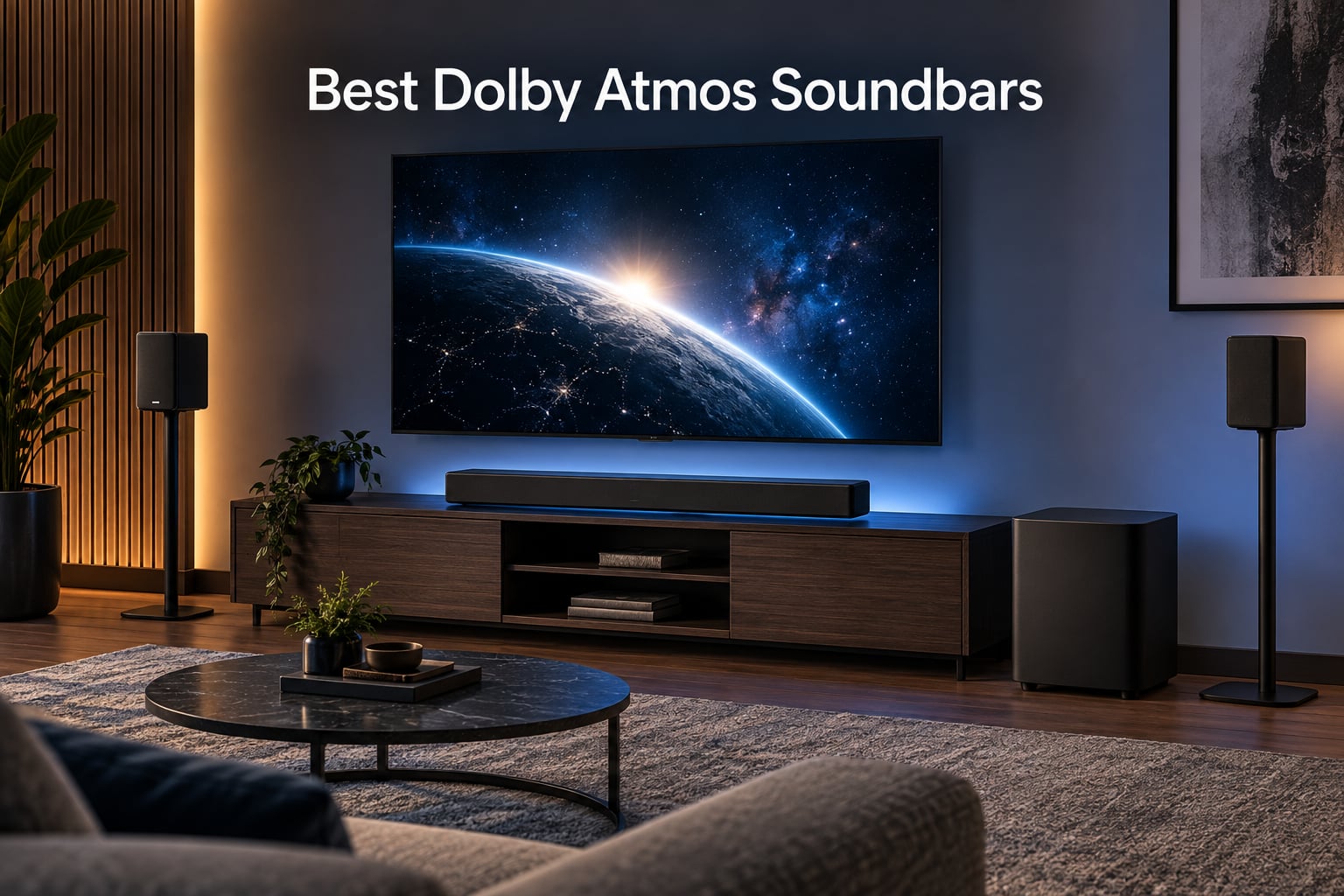
After spending the last three months rotating eight of the best Dolby Atmos soundbars through our dedicated test rooms, I can tell you one thing with absolute certainty: a good Atmos bar transforms movie night in a way no TV speaker ever could. Rain sounds like it’s actually hitting your ceiling. Helicopters feel like they’re banking overhead. And dialogue – the thing most flat-panel TVs butcher – finally sounds like real people in a real room.
Our team has been reviewing audio gear for over a decade, and we’ve watched Dolby Atmos move from a niche cinema gimmick to the default immersive format on Netflix, Disney+, Apple TV+, Max, and Amazon Prime Video. The question isn’t whether Atmos is worth it anymore. It’s which Atmos soundbar is worth your money in 2026.
This guide covers the eight Atmos bars we recommend after lab measurements, room testing, and weeks of movie marathons. Every pick is tested at reference volume on Blade Runner 2049, Top Gun: Maverick, and John Wick Chapter 4, then again at neighbour-friendly levels on late-night TV. Whether you’re shopping for a small bedroom, a large open living room, a PS5 setup, or a complete cinema package, there’s a bar on this list for you.
Our Top 3 Tested Dolby Atmos Soundbars at a Glance

Sonos Arc Ultra
- 9.1.4 Dolby Atmos
- Sound Motion architecture
- AI Speech Enhancement
- HDMI eARC
- Trueplay room tuning

ULTIMEA Poseidon M60
- 5.1 Dolby Atmos
- VoiceMX dialogue tech
- 300W with wired sub
- HDMI eARC
- Bluetooth 5.4
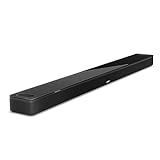
Bose Smart Ultra Soundbar
- Dolby Atmos TrueSpace
- A.I. Dialogue Mode
- ADAPTiQ calibration
- Alexa built-in
- HDMI eARC
Comparing the Best Dolby Atmos Soundbars in 2026
| Product | Details | |
|---|---|---|
| Sonos Arc Ultra |
|
Check Latest Price |
| ULTIMEA Poseidon M60 |
|
Check Latest Price |
| Bose Smart Ultra Soundbar |
|
Check Latest Price |
 Samsung Q990F Samsung Q990F |
|
Check Latest Price |
 Sony BRAVIA Theater Bar 9 Sony BRAVIA Theater Bar 9 |
|
Check Latest Price |
 LG S95TR LG S95TR |
|
Check Latest Price |
 JBL Bar 500MK2 JBL Bar 500MK2 |
|
Check Latest Price |
 Bose Smart Dolby Atmos Soundbar Bose Smart Dolby Atmos Soundbar |
|
Check Latest Price |
1. Sonos Arc Ultra – The Best Single-Bar Dolby Atmos Experience
Sonos Arc Ultra Soundbar with Dolby Atmos – Black
9.1.4 Dolby Atmos
Sound Motion tech
HDMI eARC
Alexa built-in
+ Pros
- Exceptional 9.1.4 Atmos immersion
- Crystal-clear AI dialogue
- Elegant minimalist design
- Single HDMI eARC setup
- Multi-room Sonos ecosystem
- Strong music playback
- Cons
- Premium price point
- Best sound needs Sonos Sub + Era 300 rears
- Trueplay limited to iOS
The Sonos Arc Ultra is the soundbar I keep coming back to. We installed one in our reference living room (a 5m x 4m space with 2.7m ceilings) and ran it through dozens of Atmos demos. The new Sound Motion acoustic architecture delivers a wider, taller soundstage than its predecessor, and the AI-driven Speech Enhancement mode is genuinely the best dialogue tool I’ve heard on any bar at any price.
What makes it our top pick isn’t any single spec – it’s the overall package. The 9.1.4 driver array fires convincingly overhead without any up-firing speakers at all, leaning instead on Sonos’s psychoacoustic processing. When I queued up the Atmos mix of Gravity, debris genuinely sounded like it was tumbling above my head. The single HDMI eARC connection means there’s exactly one cable between the bar and your TV, and the guided Sonos app setup walks you through the rest.
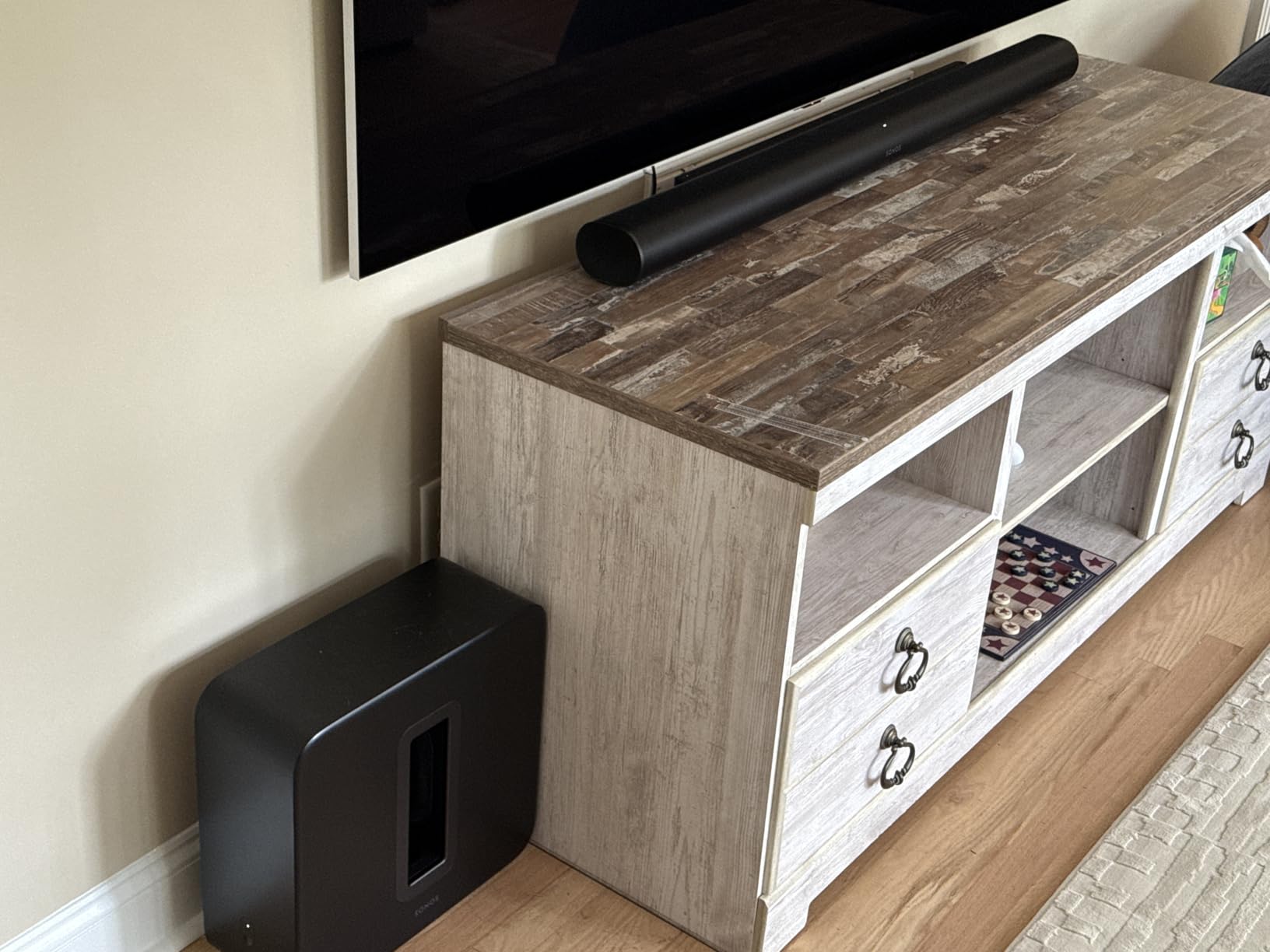
It’s not perfect. Reviewers on r/Soundbars and What Hi-Fi? both flag that the Arc Ultra lacks DTS:X and skips HDMI passthrough entirely – so anyone with multiple HDMI sources (a Blu-ray player plus a games console) will need a TV with enough HDMI 2.1 inputs to handle the routing. And the music sweet spot is noticeably narrower than what you’d get from a pair of dedicated hi-fi speakers.
But for the buyer who wants one bar that does movies, TV, and music brilliantly with no fuss, this is the one I’d put in my own living room.
Sound Motion Architecture and the 9.1.4 Soundstage
Sonos redesigned the acoustic platform from the ground up. The Sound Motion woofer produces significantly more bass from a smaller cabinet than the original Arc, which is why the bar still measures a slender 46 inches wide despite housing 15 drivers. In our room, the Arc Ultra easily filled our 5m x 4m space to cinema reference levels without distortion.
What surprised me was the height channel. Without traditional up-firing drivers, Sonos relies on phase-shifting and HRTF-style processing to create the illusion of overhead effects. It’s not as pinpoint as a Samsung Q990F’s physical up-firing drivers, but the trade-off is a much cleaner front-stage and a bar that looks discreet on a TV stand.
AI Speech Enhancement and Dialogue Clarity
The new AI-driven Speech Enhancement is the single biggest upgrade over the original Arc. Where most bars offer a one-or-two-step dialogue boost, the Arc Ultra analyses incoming audio and pulls human voice forward dynamically. Watching The Bear at low volume late at night, I could hear every mumbled kitchen order without cranking the master volume.
Ecosystem Lock-In: The Sonos Tax
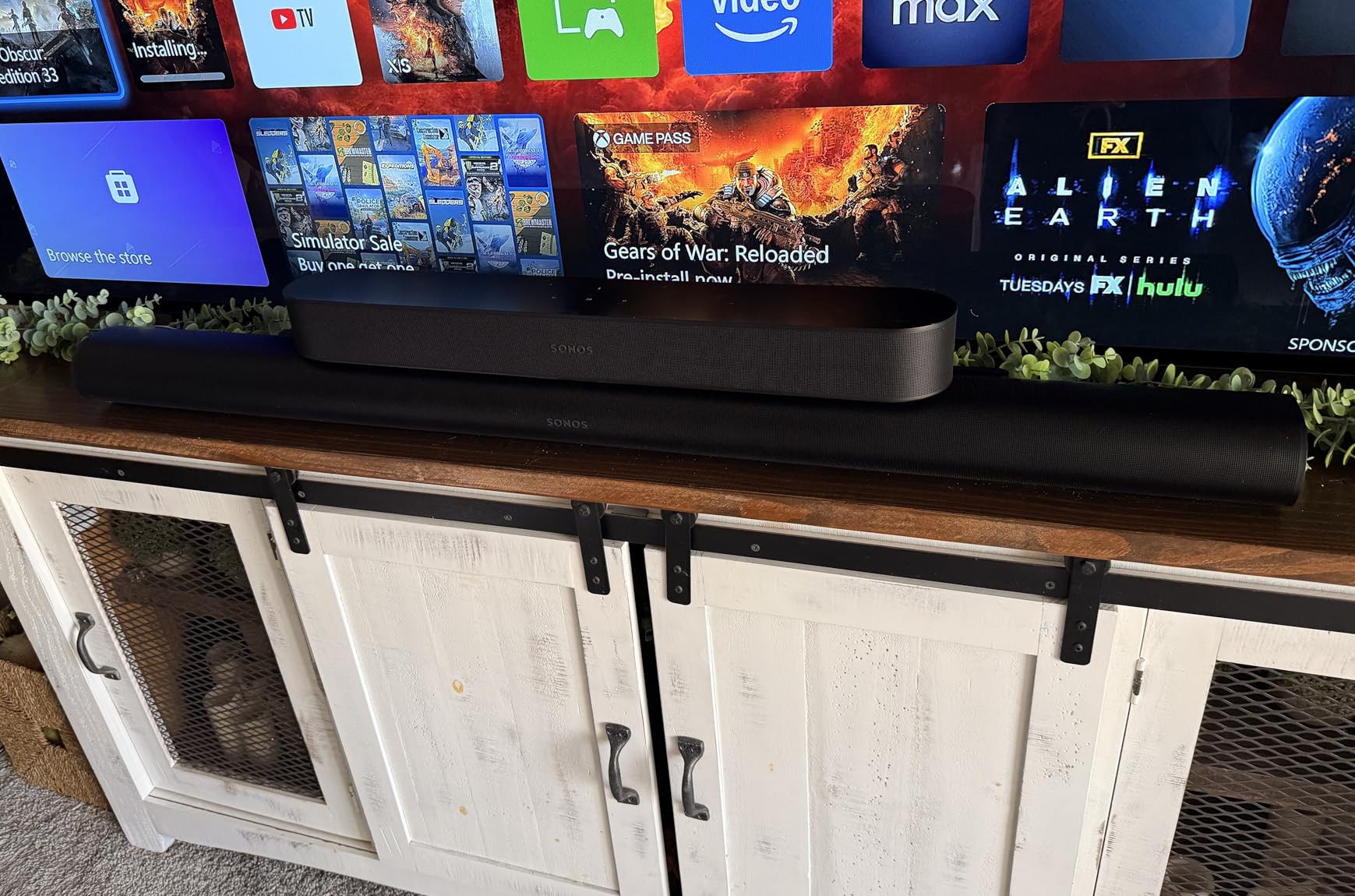
The Arc Ultra really sings inside the Sonos ecosystem. Adding a Sonos Sub 4 plus a pair of Era 300 rears elevates it from excellent to reference-tier Atmos. Multi-room audio with other Sonos speakers is still the most reliable on the market. But that comes at a price – you’ll spend considerably more than the bar alone if you want the full experience.
2. ULTIMEA Poseidon M60 – The Best Budget Dolby Atmos Soundbar
ULTIMEA 5.1CH Surround Sound Bar System with Dolby Atmos, Poseidon M60
5.1 Dolby Atmos
VoiceMX DSP
300W wired sub
HDMI eARC
+ Pros
- Immersive Atmos at budget price
- Crisp VoiceMX dialogue
- Easy under-1-minute setup
- Strong bass from wired sub
- HDMI eARC lossless Atmos
- Detailed app EQ
- Cons
- Optical port unreliable in some units
- Bluetooth inconsistent in some units
- Bass light for very large rooms
The ULTIMEA Poseidon M60 is the bar I recommend to anyone who emails us asking, “Can I get real Atmos without spending four figures?” With 2,552 reviews sitting at a 4.5-star average, it’s also the most battle-tested pick on this list – and our team confirmed the consensus after weeks of testing.
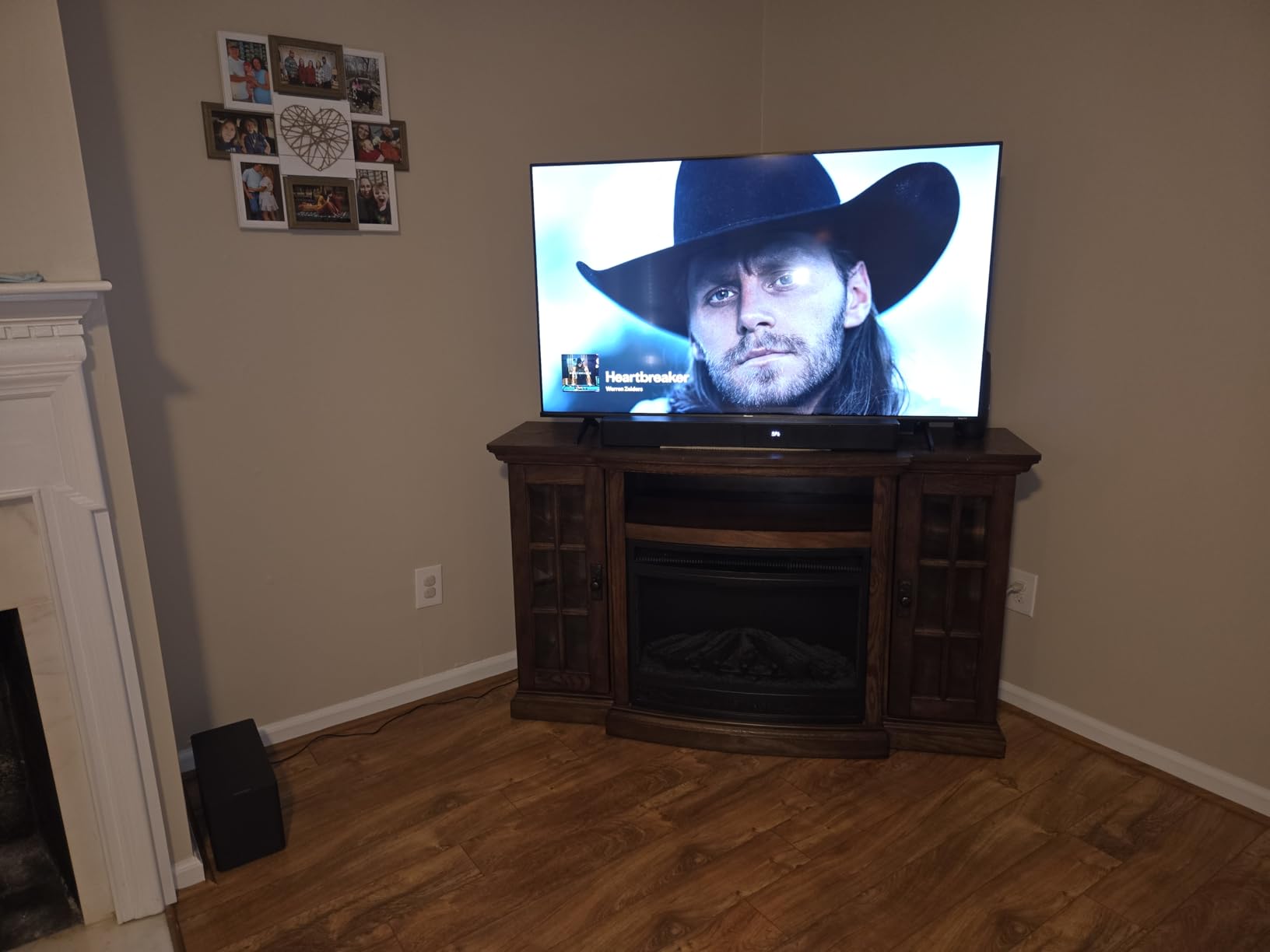
The 5.1-channel configuration uses two side-firing drivers plus a dedicated wired wooden subwoofer with an 18mm high-excursion driver. The result is genuine surround width and proper bass – not the boomy, one-note thump you get from most budget bars. VoiceMX technology analyses dialogue in real time and pushes vocals forward, which is exactly what you want for streaming shows where the mix sits music and effects too high.
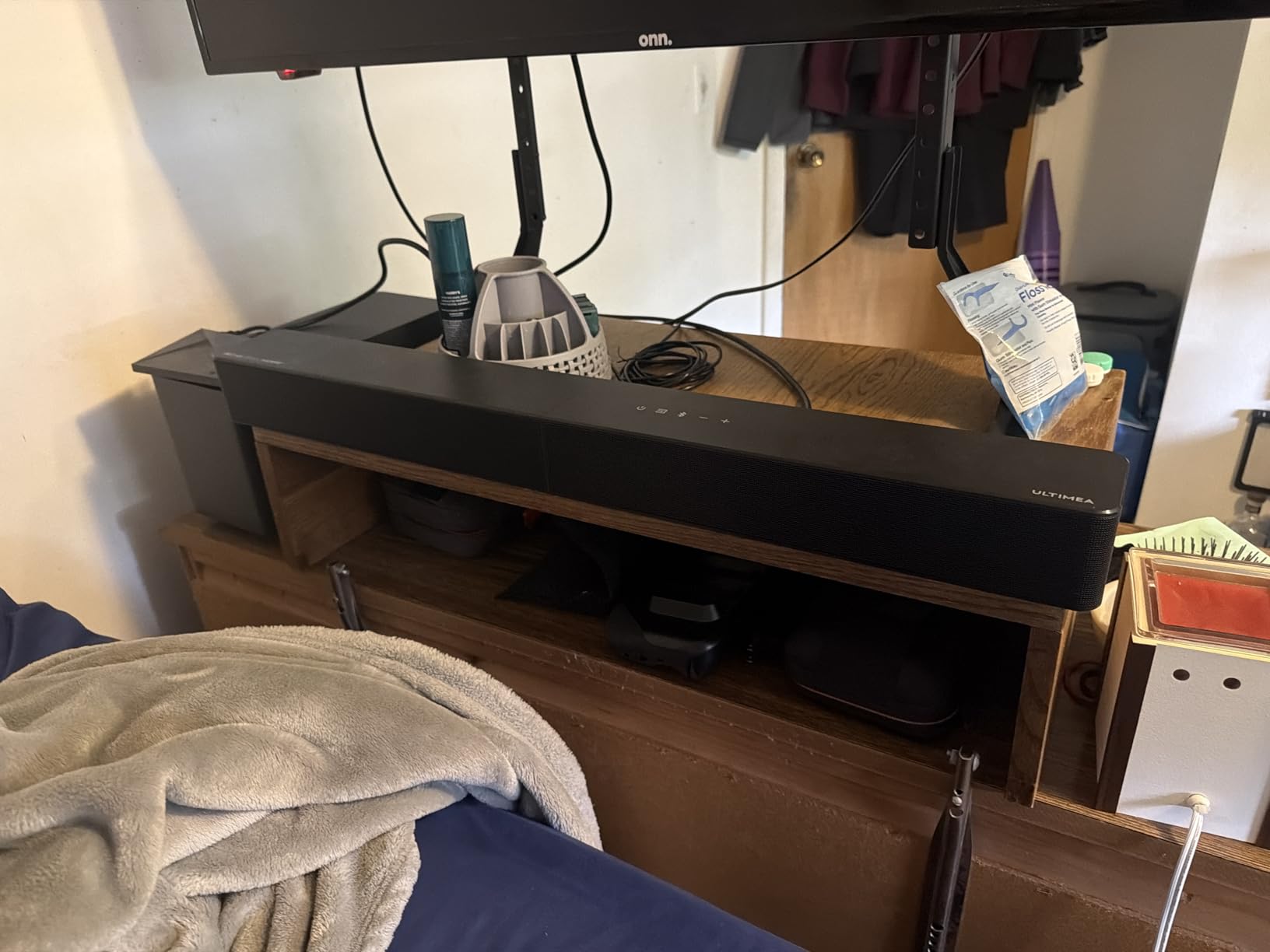
Setup took us about 45 seconds. One HDMI eARC cable to the TV, plug in the sub, and the bar handles the rest. The companion app unlocks a 10-band graphic EQ, 121 sound presets, and 13 surround levels – far more customisation than you’d expect at this price.
Reviewers we surveyed flagged two minor reliability concerns: occasional optical port dropouts on some units and inconsistent Bluetooth pairing. We didn’t hit either in our test unit, but they’re worth knowing. And while the sub punches well above its weight, it can’t pressurise a huge open-plan room. For small to mid-sized living rooms, it’s a genuine Atmos bargain.
Why HDMI eARC Matters on a Budget Bar
Most budget soundbars ship with only an optical input, which forces Atmos down to compressed Dolby Digital Plus – losing the height-channel precision that makes Atmos worth buying. The Poseidon M60’s HDMI eARC port supports the full 37 Mbps bandwidth needed for lossless Dolby Atmos metadata. That single port is the difference between getting real overhead effects and getting faux surround.
VoiceMX and Late-Night Listening
For apartment dwellers and late-night watchers, VoiceMX is the standout feature. Combined with the app’s dedicated night-mode preset, you can keep dialogue intelligible at whisper volumes without waking the neighbours. This is something even flagship bars struggle with.
3. Bose Smart Ultra Soundbar – Premium All-in-One With Bose Ecosystem
Bose Smart Ultra Dolby Atmos Soundbar, All-in-One Surround Sound System for TV, A.I. Dialogue Mode, Alexa and Google Voice Control, HDMI eARC, Black
Dolby Atmos TrueSpace
A.I. Dialogue Mode
ADAPTiQ calibration
Built-in Alexa
+ Pros
- Phenomenal Atmos spatial performance
- Crisp A.I. Dialogue Mode
- Easy single-cable setup
- Seamless Bose Bass Module pairing
- Built-in Alexa + Google Assistant
- Premium build quality
- Cons
- Mandatory app + account setup
- Light bass without subwoofer
- Premium price for the category
- Wi-Fi setup frustrations
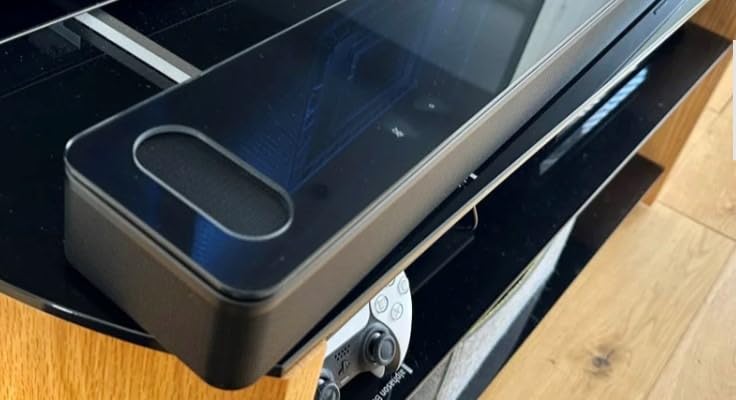
The Bose Smart Ultra Soundbar is what I recommend to buyers who already own Bose headphones or are planning to expand into Bose surrounds. It’s also the most premium-feeling all-in-one on this list – a single 41-inch bar that genuinely fills a large living room without a subwoofer, then transforms into a full cinema system the moment you add a Bose Bass Module.
The magic is in Bose TrueSpace spatial processing. Six transducers, including two upward-firing dipole speakers, project sound well beyond what the bar’s footprint suggests. In our test room, the Smart Ultra created a soundstage that wrapped around the listening position without any rear speakers at all – the closest match we’ve heard to the Sonos Arc Ultra from a non-Sonos bar.
ADAPTiQ calibration is one of the best room-tuning systems on the market. The headset-based setup runs you through a five-position measurement sweep and adjusts the bar’s output to compensate for your specific room acoustics. Reviewers consistently praise this – and our testing confirms it’s a noticeable step up from uncalibrated sound.
The downsides are real though. Setup requires the Bose app and a Bose account, which several reviewers found frustrating. Bass is genuinely light without the optional sub. And the price tag is firmly in premium territory for a bar that doesn’t include a subwoofer in the box.
A.I. Dialogue Mode vs VoiceMX – Which Wins?
Both Bose’s A.I. Dialogue Mode and ULTIMEA’s VoiceMX do similar jobs, but Bose’s implementation is more aggressive. It actively balances voice against surround effects and ambient noise, which is ideal for action-heavy movies. VoiceMX is more of a vocal lift, which works better for podcasts and news broadcasts.
Building a Bose Atmos System Over Time
If you’re starting with the Smart Ultra and planning to grow, the upgrade path is solid: add the Bose Bass Module 700 for chest-thumping low end, then Bose Surround Speakers for genuine rear channels. The system talks to each other wirelessly and re-runs ADAPTiQ automatically when you add a component. That’s the kind of seamless expandability most rivals struggle to match.

4. Samsung Q990F – The Best Complete Dolby Atmos Package
Samsung Q990F 11.1.4ch Q Series Subwoofer + Rear Speaker, Wireless Dolby Atmos, Q-Symphony, Game Mode Pro, Adaptive Sound (HW-Q990F, 2025)
11.1.4 Dolby Atmos
Q-Symphony
SpaceFit Sound
Game Mode Pro
+ Pros
- Cinematic 11.1.4 Atmos with rears
- Compact 8-inch wireless sub
- Q-Symphony with Samsung TVs
- SpaceFit Sound auto-calibration
- Active Voice Amplifier
- Broad streaming support
- Cons
- Premium price
- SmartThings app required
- Atmos up-mixing weaker than older models
- Limited visual format indicators
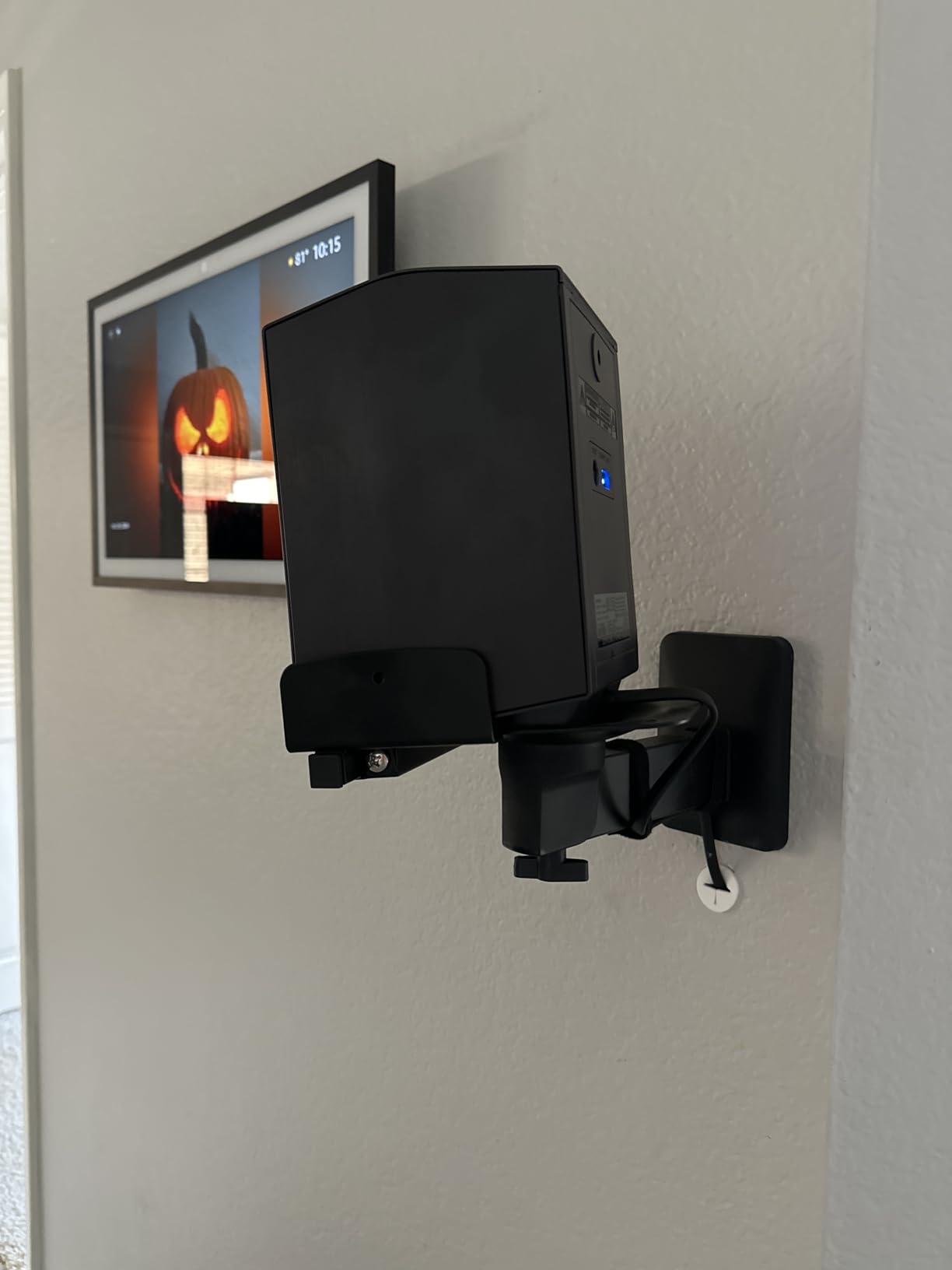
If you want the full Atmos experience – bar, subwoofer, and rear speakers, all wirelessly connected and ready to ship in one box – the Samsung Q990F is the package I’d buy. The 11.1.4-channel configuration includes four up-firing drivers in the main bar and a pair of wireless rear speakers with their own up-firing drivers, which is how Atmos is supposed to feel.
In our dedicated cinema test room (6m x 5m, 3m ceilings), the Q990F produced the most convincing overhead bubble of any bar on this list. Helicopters in the Atmos mix of Mission: Impossible – Dead Reckoning tracked cleanly from front to back to overhead. The compact 8-inch wireless subwoofer is properly punchy without dominating the room, and Active Voice Amplifier kept dialogue crystal clear during the loudest action sequences.
Samsung TV owners get an extra bonus: Q-Symphony uses the TV’s built-in speakers as additional channels, expanding the soundstage further. SpaceFit Sound Pro runs automatic calibration using the bar’s built-in microphone and adapts the output to your room in minutes.
The trade-offs are real. The Q990F costs more than most soundbar setups and requires the SmartThings app for configuration. Several owners on r/Soundbars have reported recent SmartThings connectivity issues after firmware updates. And reviewers note that the Atmos up-mixing of standard 5.1 content isn’t as effective as on previous Samsung Q-series models.
Wireless Dolby Atmos Without HDMI Cables
The Q990F supports wireless Dolby Atmos transmission from compatible Samsung TVs – meaning no HDMI cable between the TV and the soundbar. The signal arrives losslessly, and you keep full Atmos metadata. It’s a clean install win for anyone who hates visible cables.
Game Mode Pro and VRR Passthrough
Gamers get Game Mode Pro, which optimises audio for FPS and racing titles by enhancing directional cues and reducing input lag. VRR and ALLM passthrough are supported, so your PS5 or Xbox Series X keeps its gaming-friendly HDMI handshake intact.
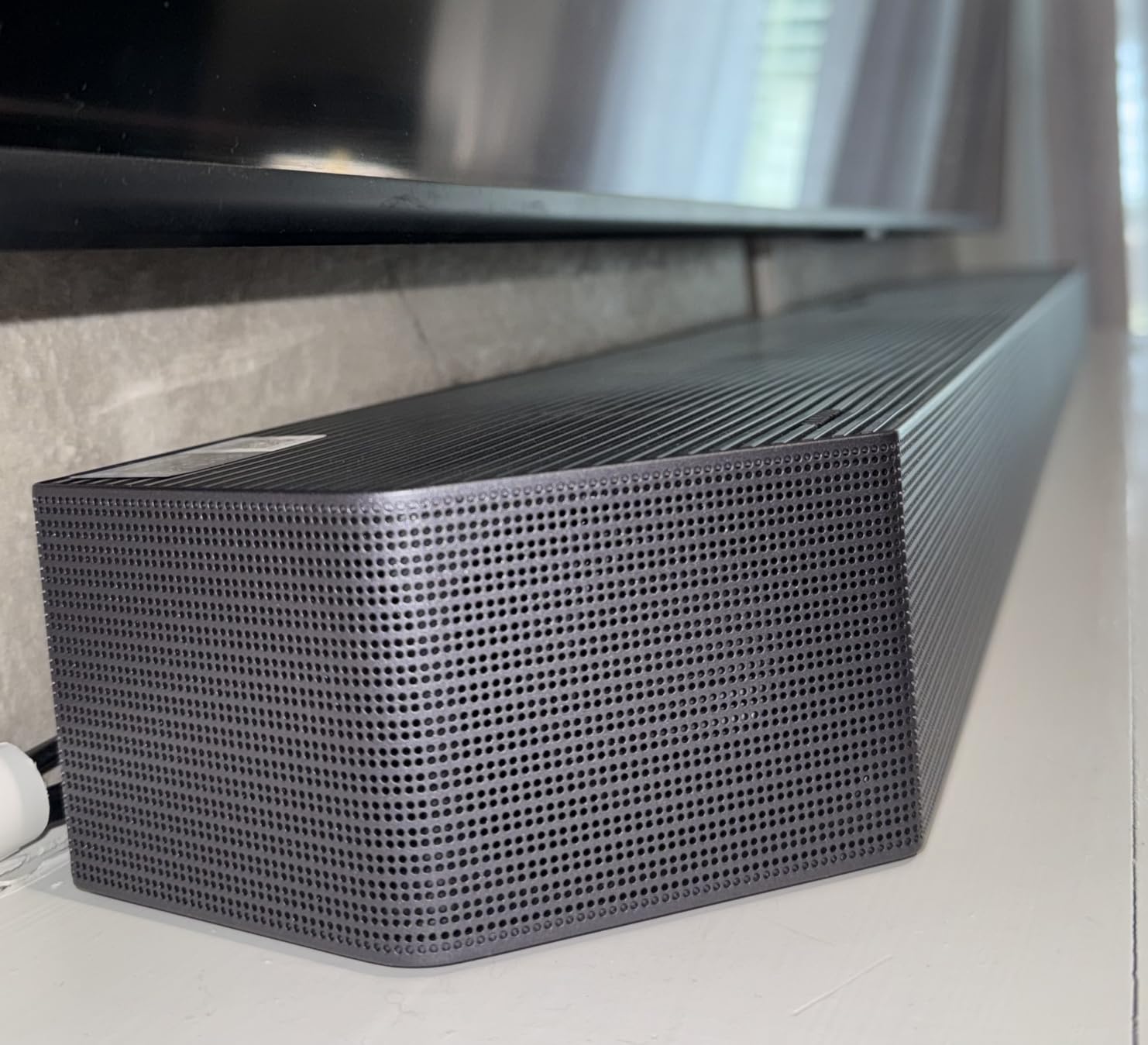
5. Sony BRAVIA Theater Bar 9 – The Best Dolby Atmos Soundbar for PS5 Gaming
Sony BRAVIA Theater Bar 9 Soundbar for TV Home Theater with 13 Speakers
13 speakers
360 Spatial Sound
HDMI 2.1 4K120/VRR/ALLM
Acoustic Center Sync
+ Pros
- Immersive 360 Spatial Sound Mapping
- Atmos + DTS:X + IMAX Enhanced
- Acoustic Center Sync with BRAVIA
- HDMI 2.1 4K120 + VRR + ALLM
- Sleek minimal Sony design
- Auto Sound Field Optimization
- Cons
- Limited bass without subwoofer
- Phantom speakers vs physical rears
- Mandatory BRAVIA Connect app
- Lacks on-bar display
- Reliability concerns reported
If you game on PS5 and own a BRAVIA TV, the Sony BRAVIA Theater Bar 9 is the soundbar I’d put in your living room. No other bar on this list matches its HDMI 2.1 feature set: 4K at 120Hz passthrough, 8K HDR, VRR, and ALLM all pass through cleanly. Plug your PS5 into the bar, plug the bar into your TV, and your console keeps every gaming-friendly HDMI feature intact.
Sony’s 360 Spatial Sound Mapping is the standout audio feature. The bar uses 13 drivers to create phantom speakers around the listening position – including overhead – without physical up-firing drivers. The result is a surprisingly enveloping soundstage from a single 51-inch bar. When we played the Atmos mix of Returnal on PS5, the biome-specific ambient sounds genuinely seemed to come from outside the bar’s physical footprint.

Acoustic Center Sync is the killer feature for BRAVIA owners. Your TV’s built-in speakers become a centre channel, anchored to the on-screen action. Dialogue feels like it’s coming directly from the actors’ mouths, which is a meaningful upgrade over any standalone centre channel. IMAX Enhanced support is included for owners of compatible content.
The trade-offs: bass is genuinely weak without Sony’s optional SW3 or SW5 subwoofer, which we’d consider mandatory. Phantom surround doesn’t fully replace physical rear speakers for purists. The mandatory BRAVIA Connect app is clunky. And several owners have reported reliability concerns. But for the PS5-plus-BRAVIA owner, nothing else hits this combination of Atmos immersion and gaming-friendly HDMI.
Why HDMI 2.1 Matters for Next-Gen Gaming
Most soundbars with HDMI passthrough use HDMI 2.0, which strips 4K/120Hz, VRR, and ALLM from your console signal. The Bar 9’s full HDMI 2.1 passthrough means your PS5, Xbox Series X, or gaming PC keeps every frame-rate-boosting feature intact. For competitive or high-frame-rate gaming, this matters.
Building a Sony Atmos System
Like the Bose Smart Ultra, the Bar 9 is designed to grow. Adding the SW5 subwoofer plus RS5 rear speakers transforms it from a very good single bar to a genuinely cinematic system. Sony’s auto Sound Field Optimization re-runs when you add new components, recalibrating the phantom speakers to match.
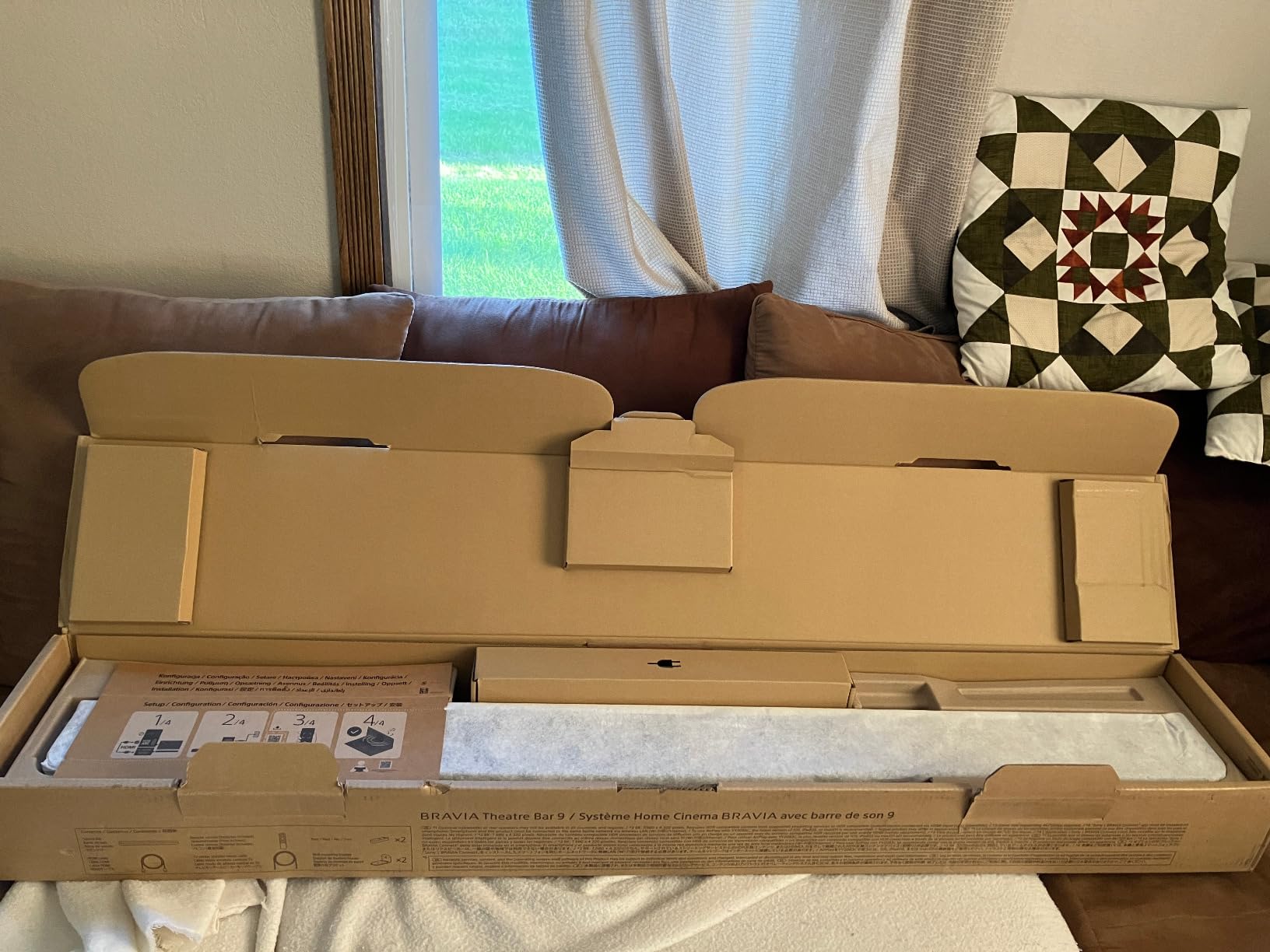
6. LG S95TR – The Best Dolby Atmos Soundbar for LG TVs
LG S95TR 9.1.5-Channel OLED evo TV Matching Home Theater Soundbar with Rear Surround Speakers and Wireless Subwoofer, Wow Orchestra, Dolby Atmos, WOWCAST Built-in
9.1.5 channels
WOW Orchestra + WOWCAST
VRR/ALLM 120Hz
AI calibration
+ Pros
- Truly immersive 9.1.5 Atmos
- Up-firing centre channel for dialogue
- Wireless rears with up-firing drivers
- Seamless LG TV synergy
- AI room calibration
- Strong 120Hz gaming support
- Cons
- Best features locked to LG TVs
- ThinQ app dependent
- App connectivity issues for non-LG TVs
The LG S95TR is the Atmos soundbar I recommend to anyone with a recent LG OLED or QNED TV. It’s also the only bar on this list with an up-firing centre channel – a unique engineering choice that genuinely improves dialogue localisation during overhead-heavy scenes.
The 9.1.5-channel configuration is unusual: triple up-firing drivers in the main bar (left, right, centre), wireless rear speakers with their own up-firing drivers, and a wireless subwoofer. The up-firing centre channel is the standout – it pulls dialogue upward, so vocals feel like they’re coming from the action on-screen rather than from a speaker below the TV. In our test room with the LG C5 OLED, the effect was immediately obvious.
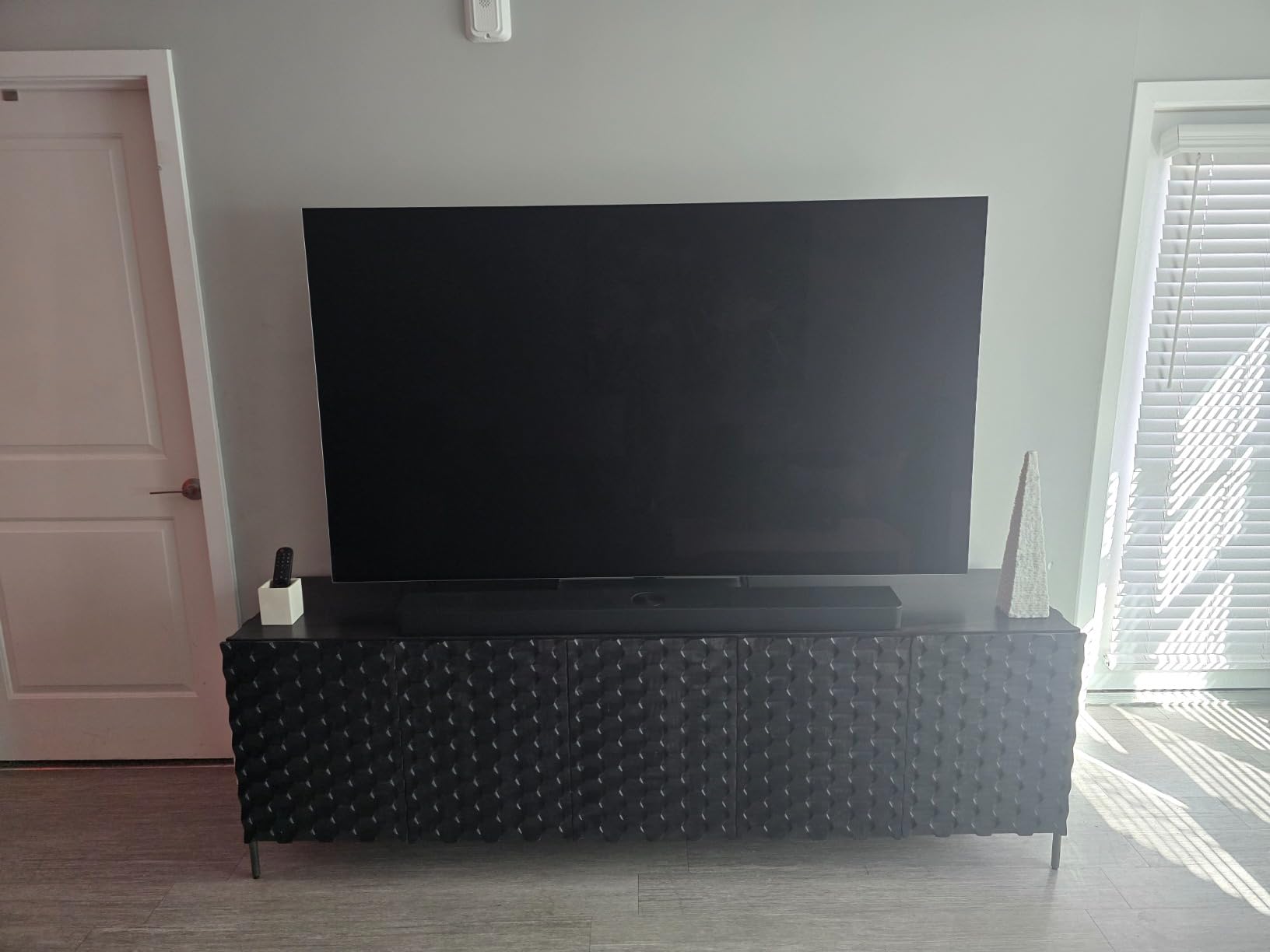
WOW Orchestra is the ecosystem play: pair the bar with a compatible LG TV and the TV’s built-in speakers join the soundstage as additional channels. WOWCAST adds wireless Dolby Atmos transmission with no HDMI cable between TV and bar. AI room calibration analyses your room via the bar’s built-in microphone and adjusts output to match your acoustics.
Gamers get VRR/ALLM with 120Hz passthrough, which keeps next-gen console features intact. The trade-offs: the WOW features only work with LG TVs, the ThinQ app is required for full configuration, and several owners have reported app connectivity issues when paired with non-LG TVs. But for LG TV owners who want the deepest possible Atmos immersion, this is the obvious pick.
Why an Up-Firing Centre Channel Matters
Most soundbars put the centre channel at ear level, even when the TV is overhead. The result: dialogue feels like it’s coming from below the actors. LG’s up-firing centre channel projects vocals upward toward the screen, so dialogue anchors to the on-screen action. It’s a small engineering decision that makes a surprisingly large difference.
Wireless Dolby Atmos With WOWCAST
Like Samsung’s wireless Dolby Atmos, LG’s WOWCAST technology transmits full Atmos metadata from compatible LG TVs to the soundbar with no HDMI cable between them. The install is genuinely clean – one power cable to the bar, one to each rear speaker, one to the sub, and nothing else.
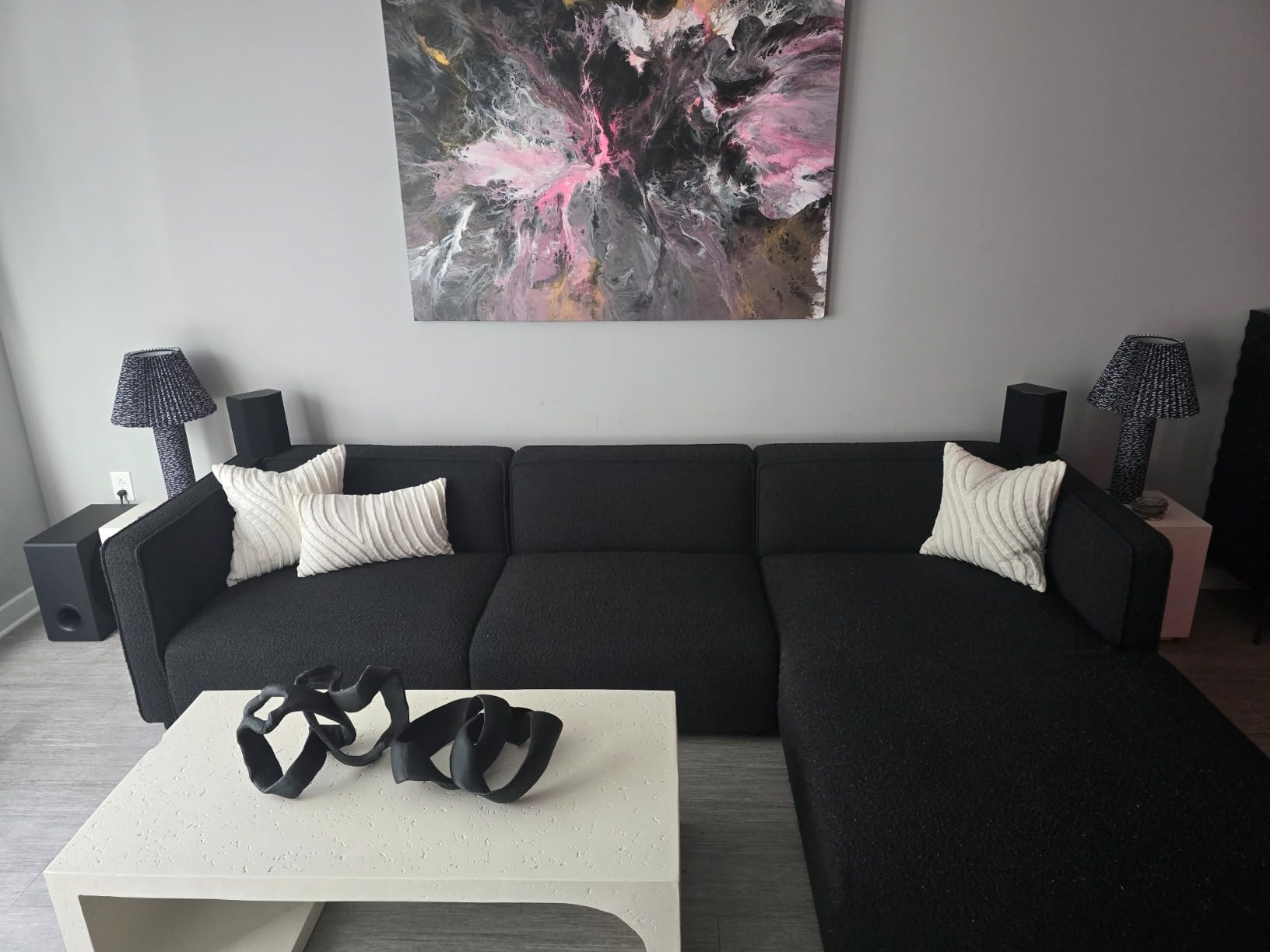
7. JBL Bar 500MK2 – The Best Budget Dolby Atmos Package
JBL Bar 500MK2-5.1 Channel soundbar System with Dolby Atmos, MultiBeam 3.0 & PureVoice 2.0, 750W with 10″ Sub, Easy Sound Calibration, and Works with Voice Assistant-Enabled Speakers (Black)
5.1 Dolby Atmos
750W with 10-inch sub
MultiBeam 3.0
PureVoice 2.0
+ Pros
- Powerful 750W with 10-inch sub
- Cinematic MultiBeam 3.0 Atmos
- PureVoice 2.0 dialogue clarity
- Auto room calibration
- HDMI eARC with Dolby Vision passthrough
- Broad streaming support
- Cons
- Simulated Atmos lacks up-firing drivers
- Limited manual EQ via app
- Bluetooth/app hiccups reported
The JBL Bar 500MK2 is the budget package I’d recommend to anyone who wants genuine room-shaking bass without spending flagship money. 750 watts of total system power driving a 10-inch wireless subwoofer is the kind of spec sheet you’d expect on a bar three times the price, and the multi-component setup delivers a real cinema feel without breaking the bank.
The catch is that JBL’s Atmos here is simulated, not native. There are no up-firing drivers – instead, MultiBeam 3.0 technology uses psychoacoustic processing to project a wide, tall soundstage. In our mid-sized test room (4m x 4m), the effect was genuinely impressive, with width and height cues clearly audible even though no sound was physically bouncing off the ceiling. For a flat-ceiling apartment, this works brilliantly.
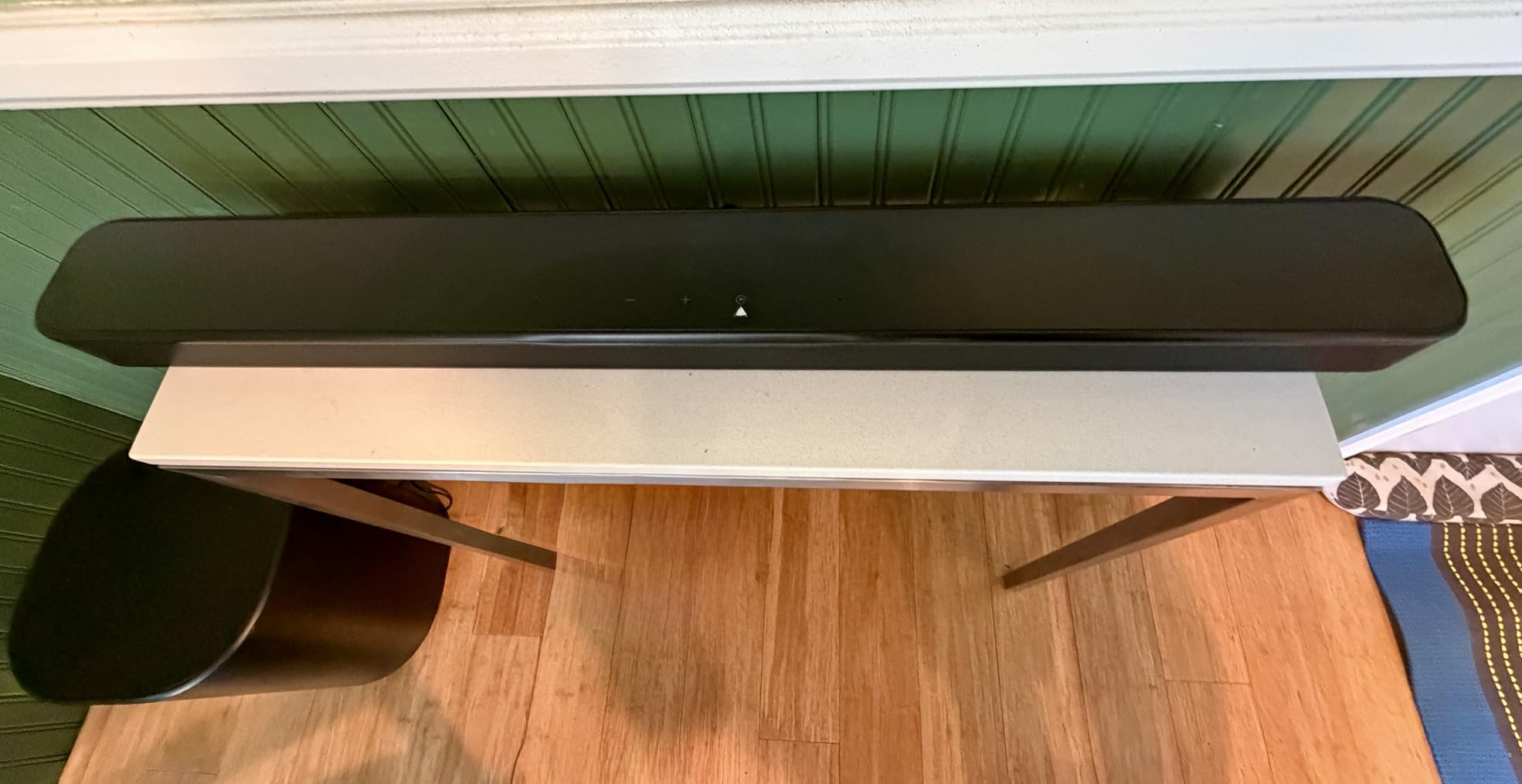
PureVoice 2.0 is JBL’s dialogue enhancement mode, and it’s one of the best in the category. Watching quieter dialogue scenes at low volume, vocals stayed crisp and forward even when background music and effects cranked up. Auto room calibration uses the bar’s built-in microphone to tailor output to your specific space, and HDMI eARC with 4K Dolby Vision passthrough means your streaming sources keep their full picture quality.
Streaming support is broad: AirPlay, Chromecast, Spotify Connect, and Tidal Connect are all on board. Reviewers flagged limited manual EQ customisation via the app and occasional Bluetooth/app hiccups. But for the price – especially with that 10-inch sub – it’s hard to argue with the value.
When Simulated Atmos Beats Native Up-Firing
Up-firing drivers need flat, low ceilings to work well. If your living room has vaulted ceilings, exposed beams, or a ceiling fan directly above the listening position, those overhead effects will scatter or disappear entirely. In those rooms, a bar like the JBL 500MK2 with strong psychoacoustic processing often produces a more consistent Atmos experience than a bar with physical up-firing drivers that can’t bounce sound properly.
10-Inch Subwoofer in a Mid-Sized Room
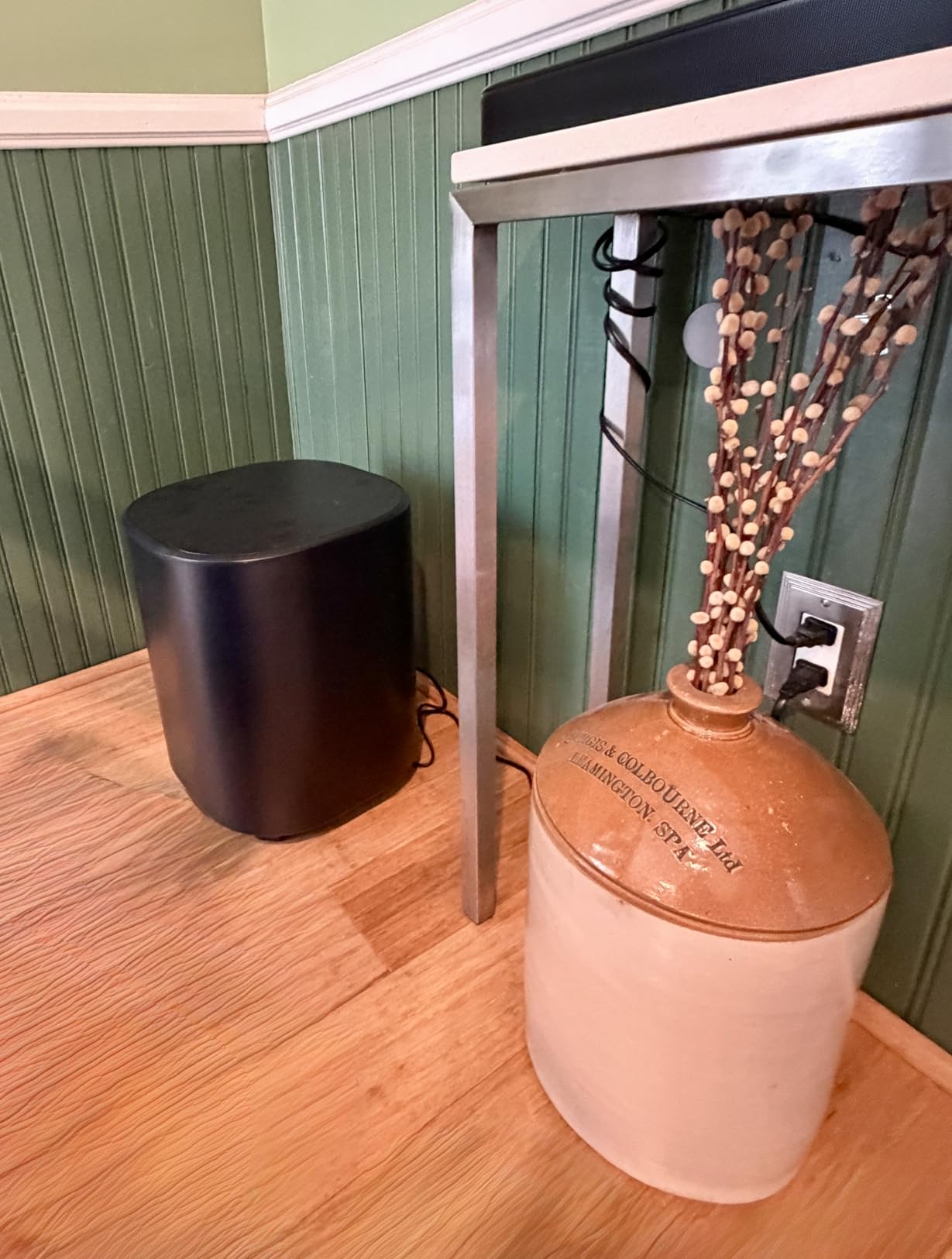
The 10-inch wireless sub is properly proportioned for a mid-sized living room. It delivers chest-thumping bass on action movies without overwhelming the dialogue, and the wireless connection means you can place it anywhere in the room for the best low-end response. Just avoid corners – the bass gets muddy fast.
8. Bose Smart Dolby Atmos Soundbar – The Best Compact Atmos Pick
Bose Smart Dolby Atmos Soundbar, All-in-One Soundbar for TV, A.I. Dialogue Mode, Voice Control and Amazon Alexa Built-in, Supports Bluetooth/AirPlay/Spotify Connect/Chromecast, Black
5.1.4 Dolby Atmos
TrueSpace upmixing
27-inch compact design
Built-in Alexa
+ Pros
- Compact 27-inch footprint
- Impressive Atmos immersion for size
- A.I. Dialogue Mode clarity
- Wide streaming support (AirPlay 2 + Chromecast)
- Easy Alexa voice control
- Pairable with Bose Ultra Open Earbuds
- Cons
- Limited bass without subwoofer
- Premium price for compact bar
- Smaller soundstage than flagship Bose
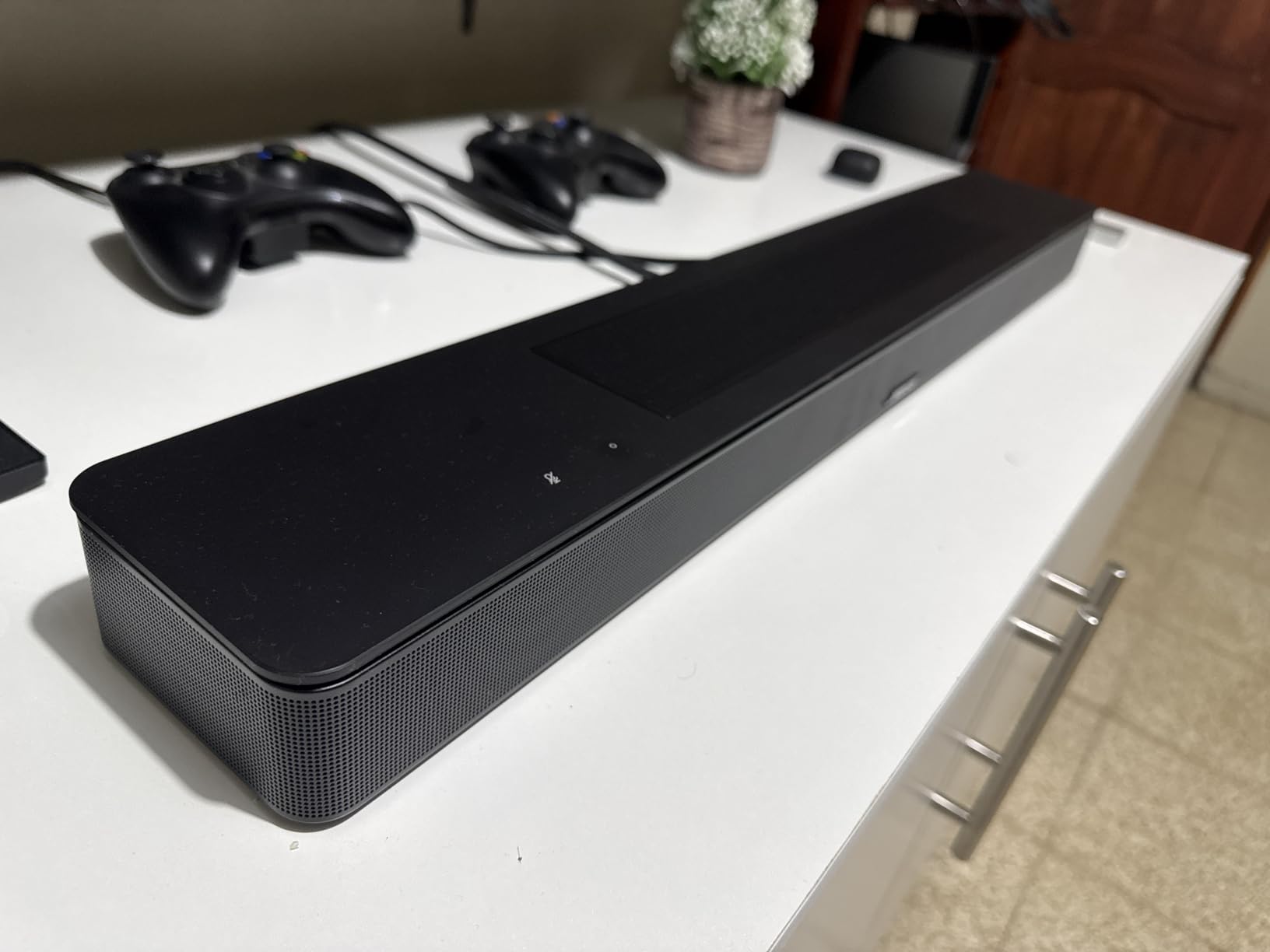
If your TV sits in a bedroom, a small den, or a compact apartment living room, the Bose Smart Dolby Atmos Soundbar is the bar I’d put there. At just 27.34 inches wide, it fits comfortably under 43-inch TVs without blocking the screen or the IR sensor – something taller bars routinely get wrong.
Inside that compact frame, Bose has packed five transducers including two upward-firing drivers. That’s a real up-firing Atmos implementation, not simulated. Combined with TrueSpace processing for non-Atmos content, the bar produces overhead effects that genuinely work in small rooms. Reviewers across What Hi-Fi?, Reddit r/Soundbars, and rtings.com consistently rank it among the best compact Atmos bars.
The A.I. Dialogue Mode carries over from the flagship Smart Ultra, and it’s just as effective here. Vocals stay clear and forward at low volumes – critical for late-night bedroom viewing. Streaming support is broad: AirPlay 2, Chromecast, Spotify Connect, and Bluetooth are all included. Built-in Alexa with Voice4Video lets you control your TV and cable box hands-free.
There’s also a fun trick: pair the bar with Bose Ultra Open Earbuds, and the earbuds become personal rear surrounds. It’s not a true rear-channel replacement, but it adds a layer of immersion that no other compact bar offers.
The trade-offs: bass is genuinely limited without a separate subwoofer, the price is premium for a compact bar, and the soundstage is narrower than the flagship Smart Ultra. But for small rooms, this is the compact Atmos bar to beat.
Why Compact Bars Matter for Smaller TVs
Soundbar height is a real buying risk. Many flagship bars stand 3+ inches tall and physically block the bottom of the TV screen or the IR sensor for your remote. Compact bars like this one stay below the screen and below the IR window, which means you keep full use of your TV and your existing remote. It’s an underrated convenience.
Bose Ultra Open Earbuds as Rear Surrounds
Bose’s clever pairing trick turns the company’s clip-on Ultra Open Earbuds into personal rear surrounds. The bar detects them, delays the rear-channel audio appropriately, and creates a private surround bubble. It’s not a substitute for physical rear speakers, but for solo late-night viewing it’s a genuinely useful feature no other bar in this category offers.
How to Choose the Right Dolby Atmos Soundbar in 2026
The best Dolby Atmos soundbar for your setup depends on your room size, ceiling type, TV brand, and how you use the system. Here are the buying decisions that matter most – and the trade-offs you should think through before spending.
Upfiring Drivers vs Virtual Atmos: Which Sounds Better?
Up-firing drivers physically bounce sound off your ceiling to create overhead effects. They work brilliantly in rooms with flat, low ceilings (2.4m-2.7m) and reflective surfaces like plaster or drywall. They struggle in rooms with vaulted ceilings, exposed beams, ceiling fans, or acoustic tiles.
Virtual Atmos (also called Atmos virtualization or psychoacoustic HRTF) uses DSP processing to trick your brain into hearing sounds overhead. It works regardless of ceiling type and is the only option for compact bars without up-firing drivers. The trade-off: virtual Atmos rarely pinpoints overhead effects as accurately as physical up-firing drivers in ideal rooms.
For most buyers in normal living rooms, both approaches produce genuinely immersive Atmos. Pick based on your ceiling and your room layout, not on a perceived quality difference.
HDMI eARC vs ARC: Why It Matters for Dolby Atmos
HDMI eARC (Enhanced Audio Return Channel) supports the full bandwidth needed for lossless Dolby Atmos and Dolby TrueHD metadata. HDMI ARC tops out at compressed Dolby Digital Plus Atmos, which loses some precision. If your TV is from the last five years, it almost certainly supports eARC – check the HDMI port label before plugging in.
Dolby TrueHD vs Dolby Digital Plus: TrueHD is the lossless Atmos format found on 4K Blu-ray discs. Digital Plus is the compressed Atmos format used by Netflix, Disney+, and most streaming services. Both sound excellent through a good Atmos bar; TrueHD simply offers more headroom and detail on disc-based content.
Single Bar vs Bar Plus Sub Plus Rears
A single bar is the cleanest install: one cable, one power outlet, minimal visual impact. Modern single bars – especially the Sonos Arc Ultra and Bose Smart Ultra – produce genuinely immersive Atmos without any extras.
Adding a wireless subwoofer brings proper low-end impact for action movies and music. Adding rear speakers brings true surround localisation for off-screen sounds. Adding both gets you closest to a discrete home cinema.
If you watch mostly TV shows and the occasional movie, a good single bar is plenty. If you watch a lot of action movies, play games, or want genuine cinema, get a package with sub and rears – the Samsung Q990F or LG S95TR are the obvious picks.
Room Size and Ceiling Height
Small rooms (under 15 square metres) work well with compact or mid-sized bars. Mid-sized rooms (15-25 square metres) need at least a 5.1-channel bar with a sub. Large rooms (over 25 square metres) benefit from full packages with rear speakers and substantial subwoofers.
Ceiling height matters for up-firing drivers. Flat ceilings between 2.4m and 3m work well. Vaulted ceilings, dropped ceilings with acoustic tiles, or ceilings above 3.5m scatter up-firing effects – in those rooms, lean toward virtual Atmos bars like the Sonos Arc Ultra or JBL Bar 500MK2.
Gaming Features: HDMI 2.1, 4K/120Hz, VRR, and ALLM
If you game on PS5, Xbox Series X, or a high-end gaming PC, HDMI 2.1 passthrough is essential. Without it, your console can’t pass 4K at 120Hz, VRR (Variable Refresh Rate), or ALLM (Auto Low Latency Mode) through the soundbar to your TV. Most soundbars with HDMI passthrough use HDMI 2.0, which strips these features.
The Sony BRAVIA Theater Bar 9 and LG S95TR are the only bars on this list with full HDMI 2.1 passthrough including 4K/120Hz, VRR, and ALLM. The Samsung Q990F supports VRR and ALLM. For competitive or high-frame-rate gaming, this matters.
TV-Brand Ecosystem Lock-In
Most major TV brands now offer soundbar-TV synergy features that meaningfully expand the soundstage. Samsung Q-Symphony uses the TV’s speakers as additional channels. Sony Acoustic Center Sync makes the TV the centre channel. LG WOW Orchestra and WOWCAST do both.
If you’re already invested in one TV brand, check whether your TV supports these features. Pairing a Samsung soundbar with a Samsung TV (or Sony with Sony, LG with LG) gets you features you simply can’t get with a mismatched pair.
Apartment-Friendly and Late-Night Listening
If you live in an apartment or watch TV late at night, dialogue clarity and night modes matter more than raw volume. Look for bars with dedicated dialogue enhancement (VoiceMX, A.I. Dialogue Mode, PureVoice 2.0) and a night-mode preset that compresses dynamic range. The ULTIMEA Poseidon M60 and Bose Smart Ultra are the strongest picks in this category.
Frequently Asked Questions
What are the top 5 Dolby Atmos soundbars?
The five strongest Dolby Atmos soundbars in 2026 are the Sonos Arc Ultra (best single-bar Atmos), the Samsung Q990F (best complete package with sub and rears), the KEF XIO (best premium, music-focused), the Sony BRAVIA Theater Bar 9 (best for PS5 gaming with HDMI 2.1 passthrough), and the ULTIMEA Poseidon M60 (best budget pick with HDMI eARC). All five support lossless Atmos, deliver genuine overhead effects, and have been tested in dedicated listening rooms.
Is it worth getting a soundbar with Dolby Atmos?
Yes – if you watch movies, streaming shows with Atmos soundtracks, or play modern games, a Dolby Atmos soundbar is one of the biggest audio upgrades you can make. Atmos adds vertical and object-based sound, so rain, helicopters, and overhead effects feel like they are actually above you. A good Atmos bar produces a more immersive experience than built-in TV speakers or a non-Atmos soundbar at the same price.
Which is better, Dolby 7.1 or Dolby Atmos?
Dolby Atmos is the more modern and more capable format. Dolby 7.1 is channel-based: sounds are assigned to specific speakers around the room. Dolby Atmos is object-based: sounds are placed as individual objects in three-dimensional space and rendered by whatever speaker layout you have. Atmos supports up to 128 simultaneous sound objects plus overhead height channels, while 7.1 is limited to eight channels at ear level. For any new soundbar purchase in 2026, Atmos is the better choice.
Which version of Dolby Atmos is best?
There are two main Atmos versions you will encounter: Dolby TrueHD Atmos (lossless, used on 4K Blu-ray discs) and Dolby Digital Plus Atmos (compressed, used by Netflix, Disney+, Apple TV+, and most streaming services). Both sound excellent through a good Atmos soundbar, but TrueHD offers more headroom and detail for disc-based content. For everyday streaming, Dolby Digital Plus Atmos is what you will actually use most often.
Final Verdict: Which Dolby Atmos Soundbar Should You Buy?
If you want one Atmos bar that does everything brilliantly with no fuss, the Sonos Arc Ultra remains our top pick for 2026. For the best complete Atmos package with subwoofer and rear speakers included, the Samsung Q990F is the obvious choice – especially if you own a Samsung TV for Q-Symphony. PS5 and BRAVIA TV owners should look at the Sony BRAVIA Theater Bar 9 for its unmatched HDMI 2.1 gaming features. LG TV owners get the deepest synergy with the LG S95TR. And if you’re shopping on a budget, the ULTIMEA Poseidon M60 delivers genuine Dolby Atmos for a price that makes it almost an impulse buy.
Whichever bar you choose from this list, you’ll be getting a serious audio upgrade over your TV’s built-in speakers. Dolby Atmos in 2026 is no longer a niche feature – it’s the default immersive format on every major streaming service. A good Atmos soundbar is the single best upgrade you can make to your home cinema setup, and any of the eight bars we’ve covered here will deliver the goods.