
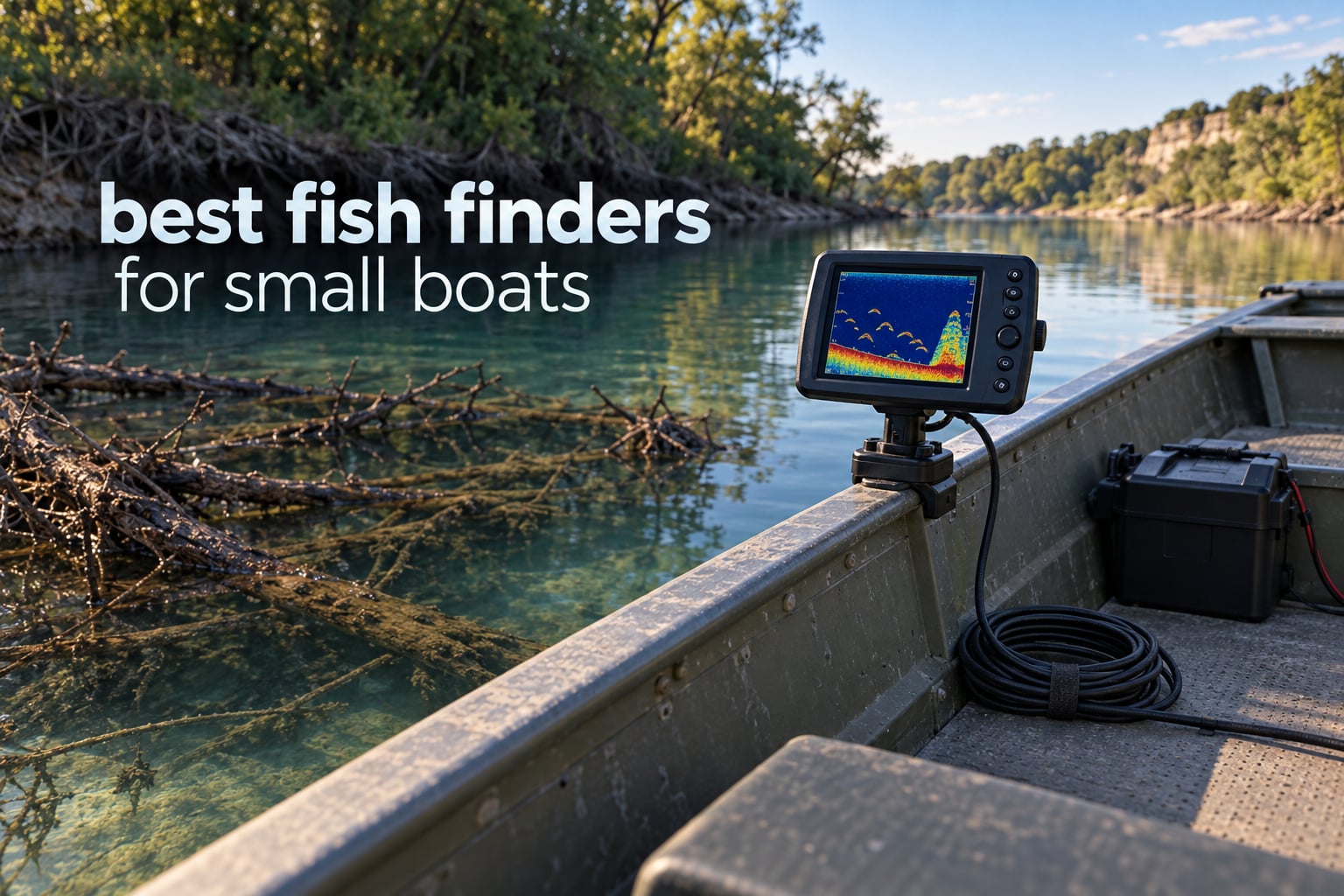
Choosing the best fish finders for small boats comes down to fit, not features. A 9-inch chartplotter needs a dash you do not have, a scanning sonar package needs a clean power lead you have never run, and a shiny screen on an open jon boat is unreadable at noon. I have spent the last few seasons rigging electronics onto aluminum boats where every gram of dash space and every spare amp matters, and the same three questions decide nearly every install: will it physically mount, how much current does it pull, and can you read it in direct sun.
What follows covers ten fish finders and depth sounders, from a 3.5-inch panel-mount unit to a castable sensor that needs no battery and no hole in the hull. I break each one down by the specs that matter on a boat with 12 inches of usable dash, and I flag the compromises honestly, including the units that are not really fish finders at all. Nothing here is a spec-sheet rewrite; these are the ones I would actually put on a small boat and the reasons why.
Our Top 3 Fish Finders for Small Boats, Picked for Fit and Power
Three picks make the short list, and they cover three very different small boats. One is the default for an aluminum hull that already has a battery. One is the cheapest way to get depth readings into a kayak. One needs no wiring at all. If your boat is one of those, stop reading here.

Garmin Striker 4
- CHIRP plus ClearVu scanning
- Built-in GPS with waypoints
- 3.5 inch keyed LCD
- Transom and trolling motor mounts

Garmin Striker Vivid 4cv
- Vivid color palettes
- CHIRP ClearVu scanning
- Quickdraw Contours built in
- GT20 transducer included

LUCKY FFC1108
- Handheld with neck strap
- 3 to 328 ft depth range
- Backlit display
- Fish and school alarms
Comparing Ten Fish Finders That Fit a Small Boat in 2026
The table below puts all ten side by side on the four things that decide whether a fish finder works on a small hull: screen size, sonar type, how it mounts, and whether it needs a wired power supply. Every entry ships with or pairs to a transducer, so none of these require a separate sonar purchase to be useful.
| Product | Details | |
|---|---|---|
| Garmin Striker 4 |
|
Check Latest Price |
| LUCKY FFC1108 Handheld |
|
Check Latest Price |
 Deeper Start Deeper Start |
|
Check Latest Price |
 Garmin Striker Plus 4 Garmin Striker Plus 4 |
|
Check Latest Price |
| Garmin Striker Vivid 4cv |
|
Check Latest Price |
 Humminbird PiranhaMAX 4 Humminbird PiranhaMAX 4 |
|
Check Latest Price |
 DepthTrax 2B In-Dash DepthTrax 2B In-Dash |
|
Check Latest Price |
 Venterior VT-FF005 Venterior VT-FF005 |
|
Check Latest Price |
 Deeper PRO+ 2 Deeper PRO+ 2 |
|
Check Latest Price |
 Lowrance Eagle 4 inch Lowrance Eagle 4 inch |
|
Check Latest Price |
1. Garmin Striker 4 – The Default for a Small Aluminum Boat
Garmin 010-01550-00 Striker 4 with Transducer, 3.5″ GPS Fishfinder with Chirp
3.5 inch LCD
CHIRP plus ClearVu scanning
Built-in GPS
1600 ft freshwater depth
+ Pros
- Accurate depth at trolling speed
- Bright screen in full sunlight
- Mounts to trolling motor with no drilling
- Built-in GPS with waypoint marking
- Weighs 8 ounces
- Cons
- Sonar signal drops out above low trolling speed
- Thin fragile battery hookup wires
- Documentation is thin on wiring
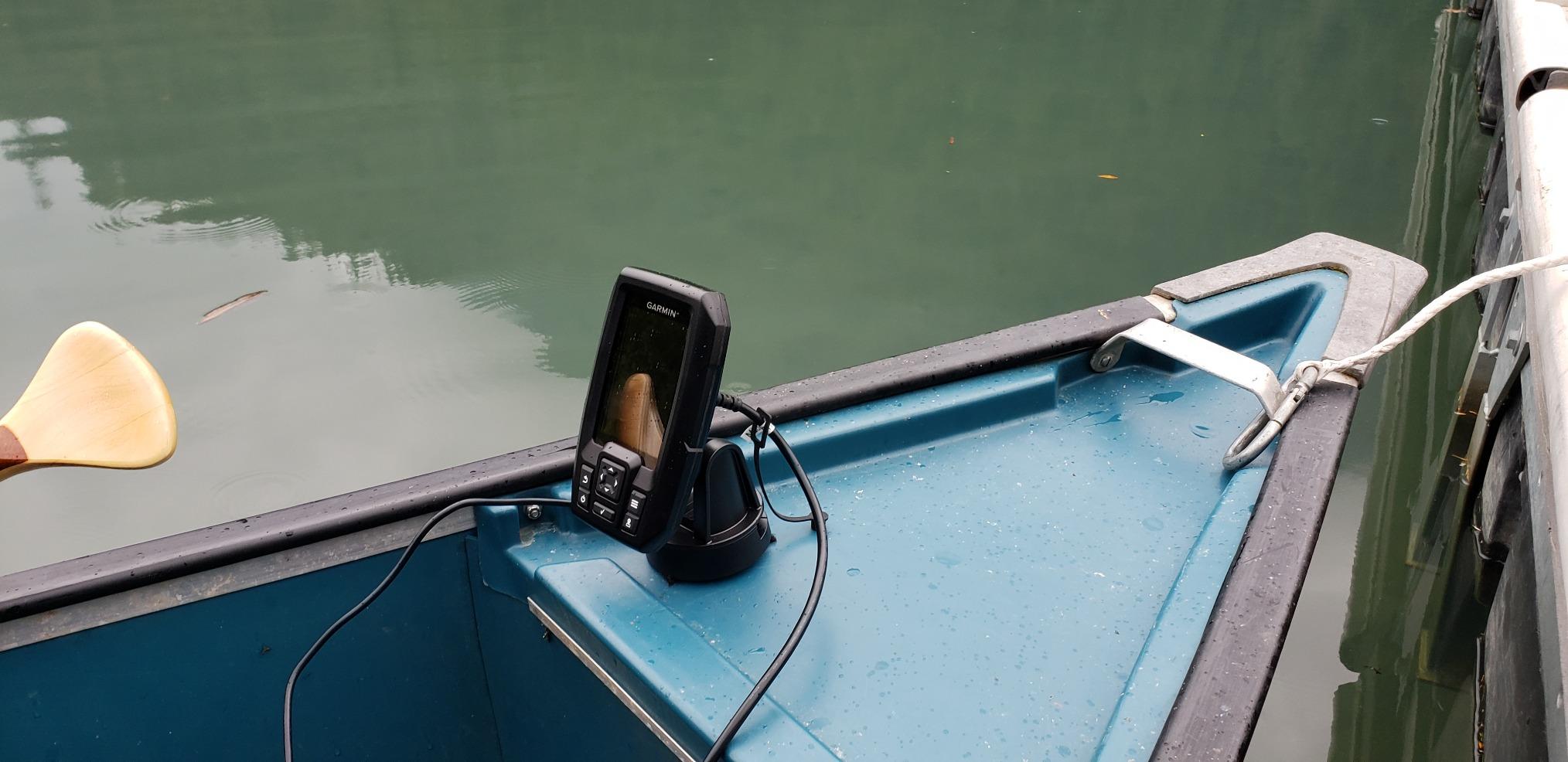
This is the unit I keep coming back to for 10-to-14-foot aluminum boats, and it is the most-recommended default on fishing forums for exactly that hull. The transom and trolling motor mounts are in the box, so a boat with no dash drilling still gets a clean, removable install. Owners also praise the keyed-button interface for being usable with wet hands, which matters more than it sounds when you are dialing in a trolling motor.
The built-in GPS is the quiet advantage. You can mark a brush pile, a stump line or a dock and come back to it, and the depth audible alarm lets you run a shallow creek without watching the screen continuously. At 8 ounces and with dimensions of 3.6 by 1.6 by 5.9 inches, it is the least intrusive head unit here.
Screen Fit and Sonar Behaviour on a Trolling Motor
A 3.5-inch keyed LCD is small, and that is a feature on a jon boat with a narrow gunnel. The unit is described as bright and readable in full sunlight, which is the single most common complaint we heard about lesser screens. The ClearVu scanning sonar gives near-photographic structure images alongside the traditional fish arches, so you can tell a stump from a school in the same glance.
The limitation to plan around is speed. Owners report the sonar signal cutting out above low trolling speed, so if you run a boat with a fast shallow-water trolling motor, expect to read bottom at low RPM rather than at cruise. CHIRP is the continuous frequency sweep that gives crisper arches than a single-frequency ping, and the IPX7 water rating means rain and spray are not a concern.
What the Box Includes and What It Does Not
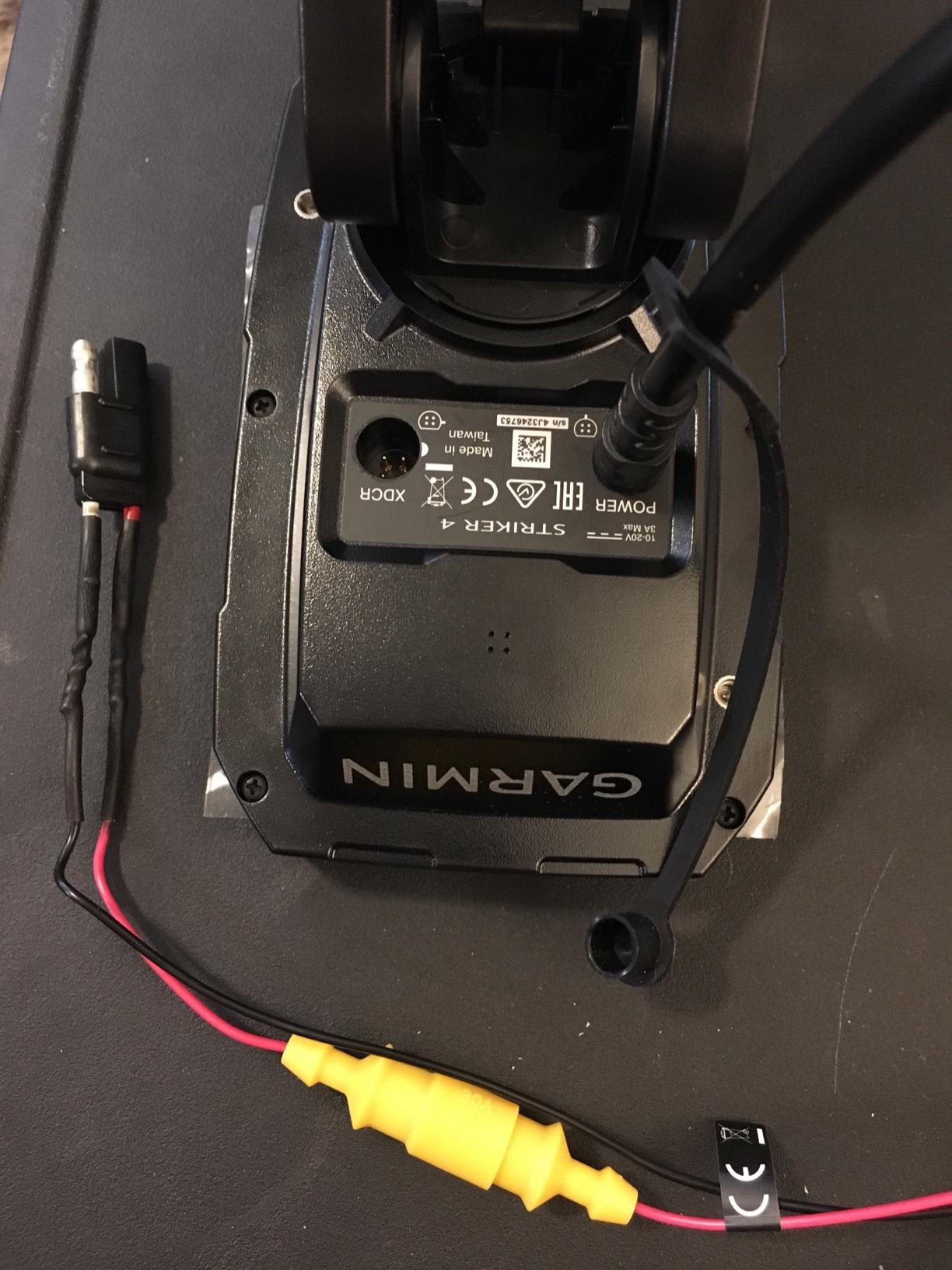
The package contains the head unit, documentation, power and data cable, tilt and swivel mount, transducer, and both transom and motor mounts. That completeness is why this is the first recommendation on most install threads: nothing has to be bought separately. The recurring gripes are the thin, fragile battery hookup wires and thin documentation on the power connections, so budget a proper fused feed rather than relying on the supplied leads.
Warranty is a one-year limited warranty, which is standard for the entry tier but worth weighing if you fish in saltwater. Owners also report the occasional defective model with power issues, so keep the receipt and register the unit rather than leaving it in the box.
2. LUCKY FFC1108 – The Cheapest Useful Depth Readout for a Kayak
LUCKY Kayak Portable Fish Depth Finder Water Handheld Fish Finder Sonar Castable Kayak Boat Fishfinder Transducer Fishing LCD Display FFC1108
2 inch backlit LCD
3 to 328 ft depth range
Five sensitivity levels
Fish and school alarms
+ Pros
- Genuinely one-hand portable
- Depth readings match a towed transducer
- Works through a kayak hull
- Backlit for day and night
- Low entry cost
- Cons
- Must be used from a boat or kayak
- Will not read through fiberglass
- Coarse fish identification
This is a handheld depth sounder rather than a mounted fish finder, and owners treat it that way. It hangs from a neck strap, so there is nothing to mount, nothing to wire and nothing to drill. On a kayak, a paddle craft or a boat with zero electrical system, that is the entire selling point. Depth readings line up well with a conventional transducer towed in open water, which is the standard people compare it against.
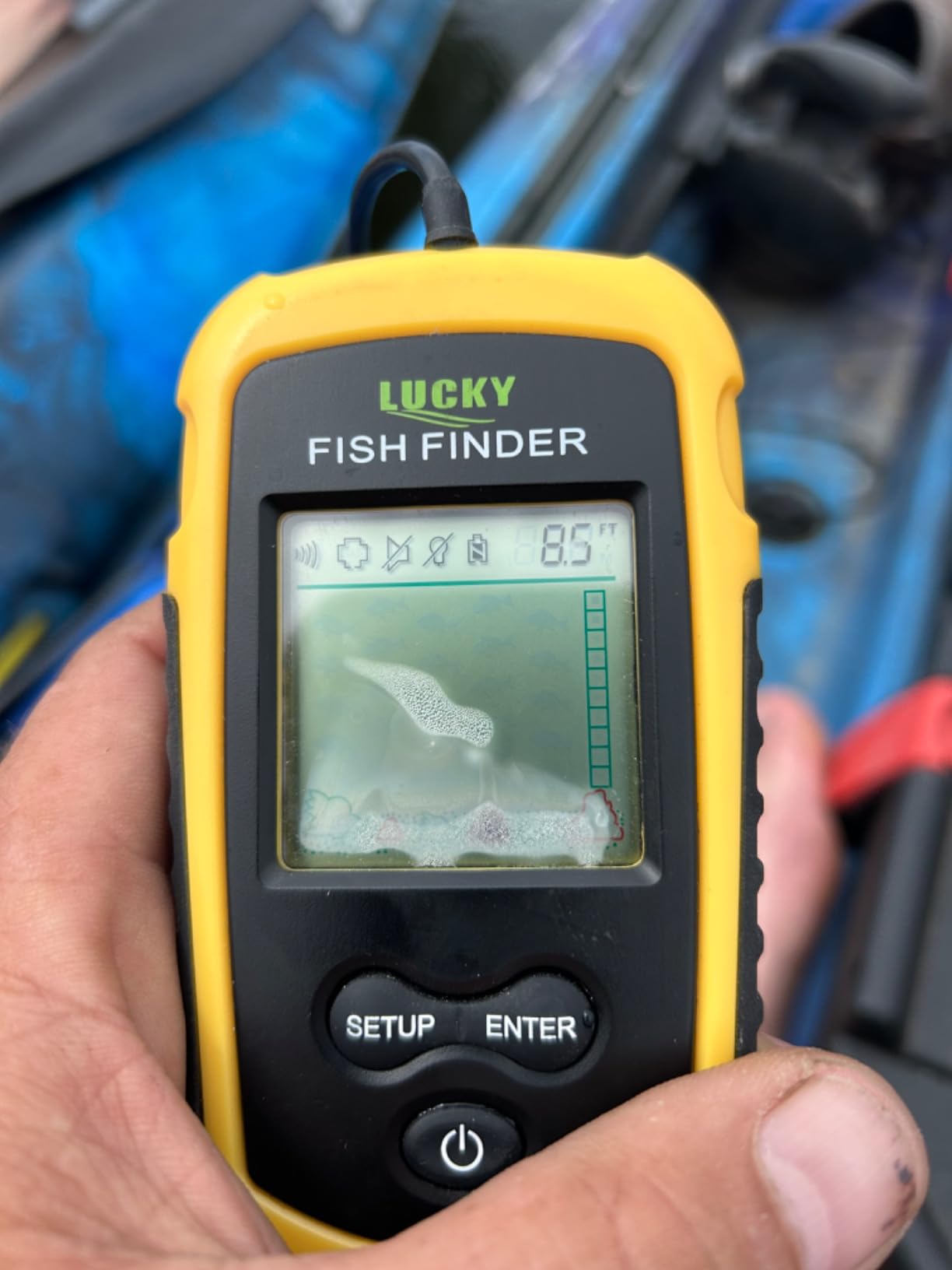
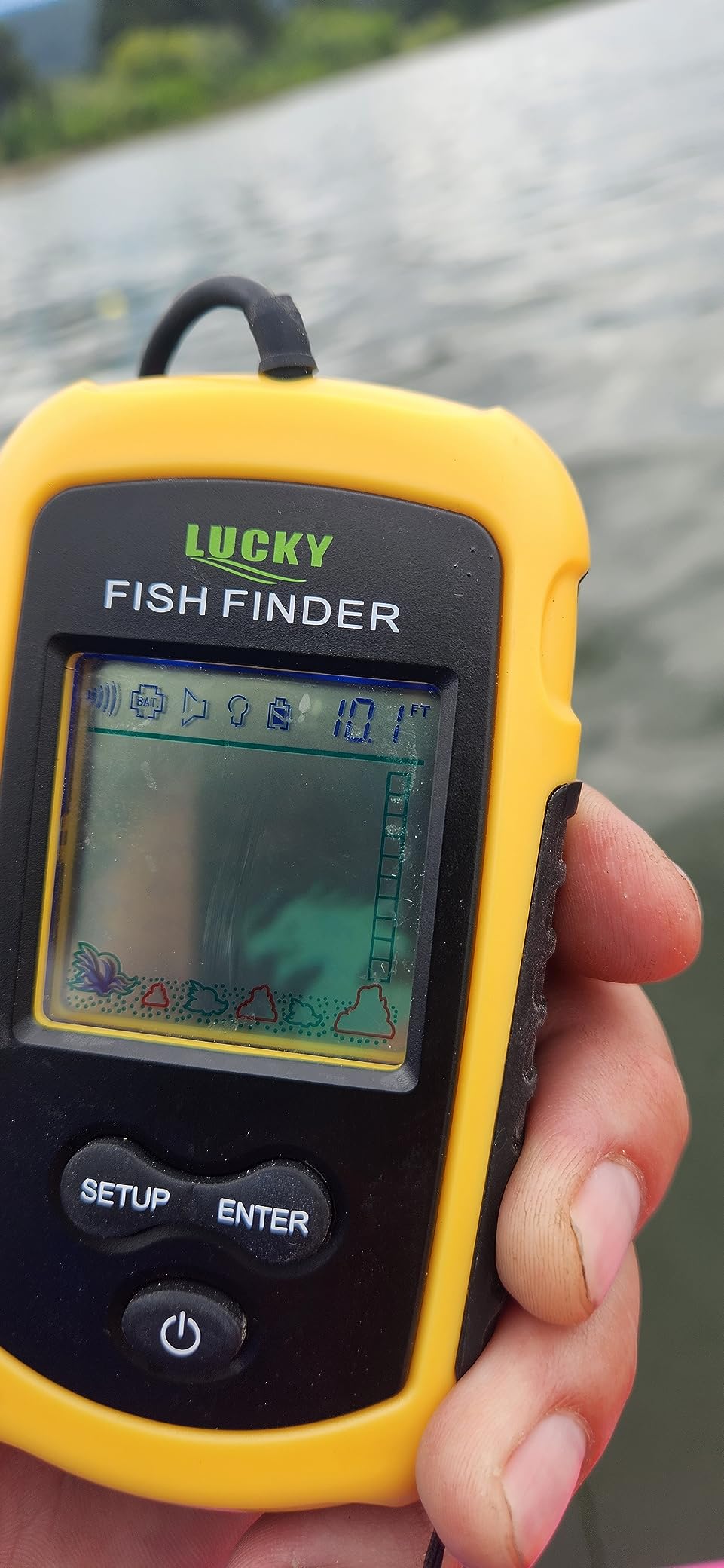
The display detects short and tall weeds, sand and rocks on the bottom across five sensitivity levels, and you can switch between feet and metres. The fish and fish-school alarm is the feature buyers mention most, along with the backlight that works in sunshine and in the dark. The stated battery life is four to five hours of continuous use on a new battery.
Where It Works and Where It Stops
Two hard limits are worth stating plainly. The first is location: the unit is only effective from a boat or kayak, not from shore, despite what the product listing implies across its use cases. The second is hull material: it does not read through fiberglass, so it is a natural fit for a polyethylene or aluminium kayak hull but a poor match for a glass skiff unless the sensor is in open water beside the hull.
Fish identification is coarse. Owners report that it picks up minnows and debris along with fish, so treat the arch display as an indication of life below rather than a species ID. Dimensions of 2.68 by 1.18 by 4.8 inches mean it fits a life jacket pocket, which is the point.
Who Should Buy This Instead of a Mounted Unit
Buy it if your boat has no electrical system and you want depth numbers rather than navigation. Skip it if you want to mark brush piles and come back to them, because there is no GPS. The five sensitivity levels let you cope with turbid water where a fixed unit would just show noise, which is a genuine advantage on stained river water and pond edges.
3. Deeper Start – Cast and Reel Sonar With No Wires or Battery
Deeper Start Fish Finder – Portable and Depth Finder for Recreational Fishing from Dock, Shore, Bank or Kayak | Castable Deeper Smart Sonar with Free User Friendly App
Castable smart sonar
Own Wi-Fi, no mobile data
165 ft cast and scan
Saves time and location
+ Pros
- No wires and no external battery
- Phone display keeps the deck clear
- Scans save with time and location
- Works from shore dock bank or kayak
- 6 hour stated battery
- Cons
- Requires a compatible smartphone and app
- Shorter range than premium portable sonar
- Modest target separation
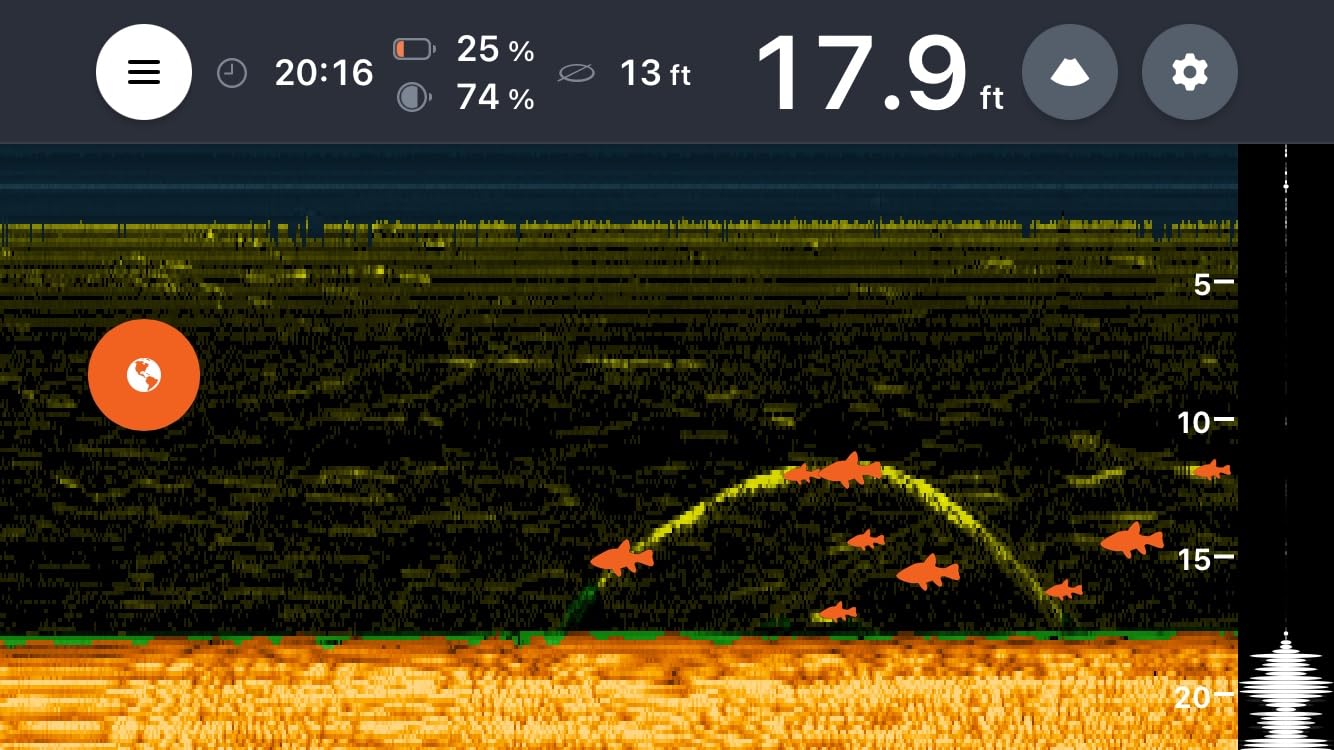
The Deeper Start changes the shape of the install entirely. You cast a tethered sensor, it connects on contact with the water, and the phone displays depth, bottom contour, vegetation and fish location. There is no wiring to run, no battery to charge for the boat and no hole in the hull, which makes it the only entry on this list that works on a boat with no electrical system without any compromise.
The part that changes how I fish with it is the automatic logging. Every scan saves with time and location, so a good patch of structure is recorded and easy to return to. Owners value the quick phone pairing and the fact that the device generates its own Wi-Fi, so it does not burn through mobile data on a trip with poor coverage.
Range Limits and Sonar Detail
Casting and scanning range are both 165 feet, and the beam is 40 degrees. That is enough to work a pond edge, a shoreline drop-off or a kayak fish but not enough to reach structure on a large lake from a distance. Compared with the PRO+ 2, the sonar detail and target separation here are modest, so do not expect to pick a lure out of the water column at depth.
The battery is specified at roughly a two-and-a-half hour charge and six hours of life, with a night fishing mode for low-light work. At 0.08 kg it is light enough to forget in a tackle bag, which is the honest argument for this class: convenience over capability.

App Dependence and Who It Suits
The tradeoff is dependence. A compatible smartphone and the Fish Deeper app are required for the display, so a cracked screen or a dead battery ends the trip. If you already fish with your phone in a waterproof case, that is a non-issue. If you want a dedicated screen that keeps working when the phone does not, one of the fixed-mount units is the better buy.
4. Garmin Striker Plus 4 – The Best Mapping You Can Get Without Drilling
Garmin 010-01870-00 Striker Plus 4 with Dual-Beam transducer
4.3 inch QSVGA screen
Quickdraw Contours
Dual-beam CHIRP traditional
GPS waypoints and routes
+ Pros
- Quickdraw contours are the standout feature
- Split-screen sonar and map view
- Bright screen readable in direct sun
- Runs for days on a 7Ah SLA battery
- Transom and trolling motor mounts included
- Cons
- No battery or power fittings included
- Screen resolution less crisp than earlier Garmin models
- Quickdraw maps cannot be exported
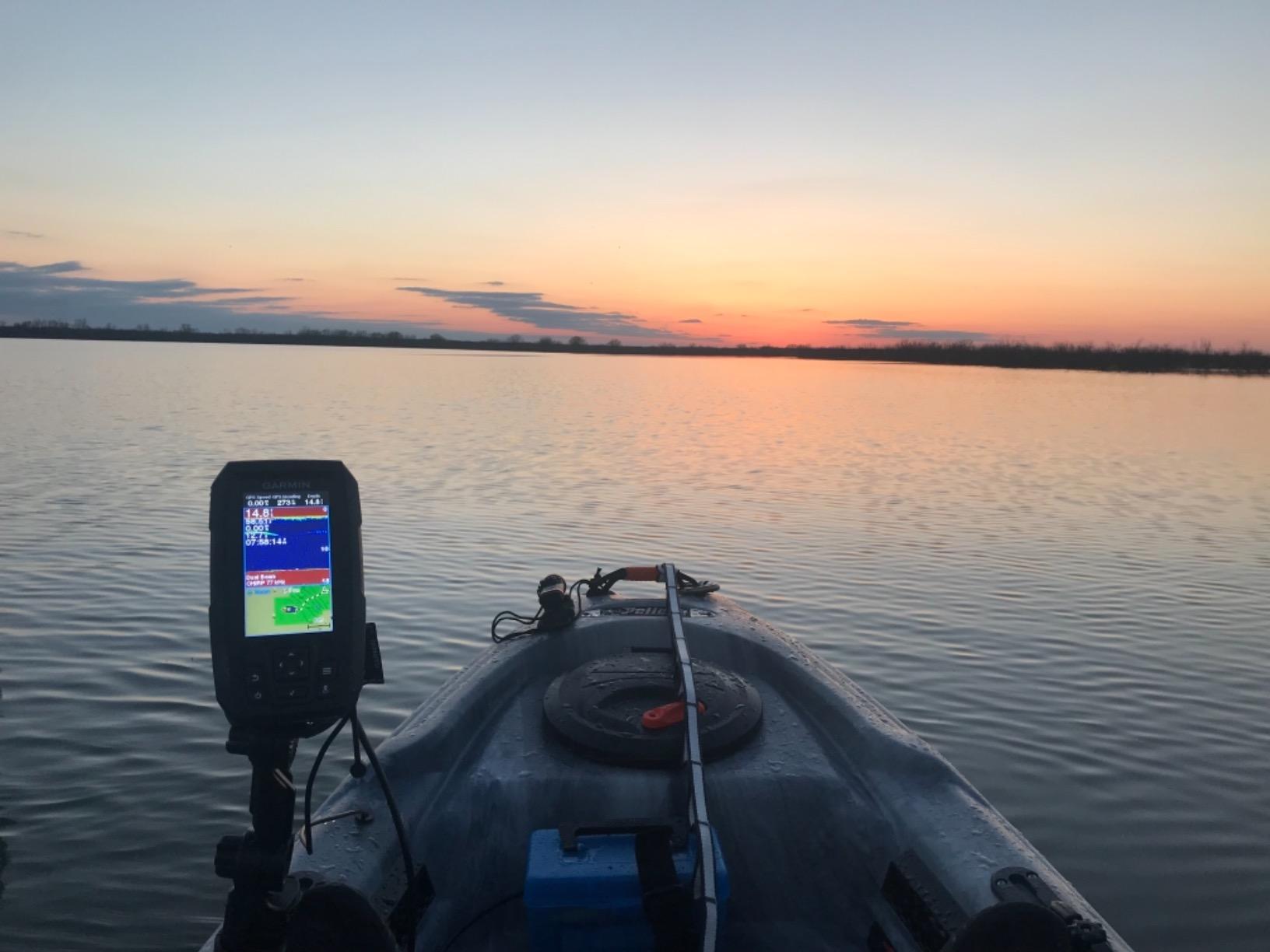
Quickdraw Contours is the reason this model exists, and it is the single most useful feature on this list for anyone fishing new water. The head unit auto-generates one-foot contour lines as you run, covering up to two million acres, so you build a map of your lake or river system without ever connecting a laptop.
Owners consistently report running it for days on a 7Ah sealed lead-acid battery, which is the most concrete endurance figure published for any unit here. The transom and trolling motor mounts in the box mean it fits the same small-hull mounting pattern as the smaller Garmin units.
Screen Brightness and Split-Screen Use
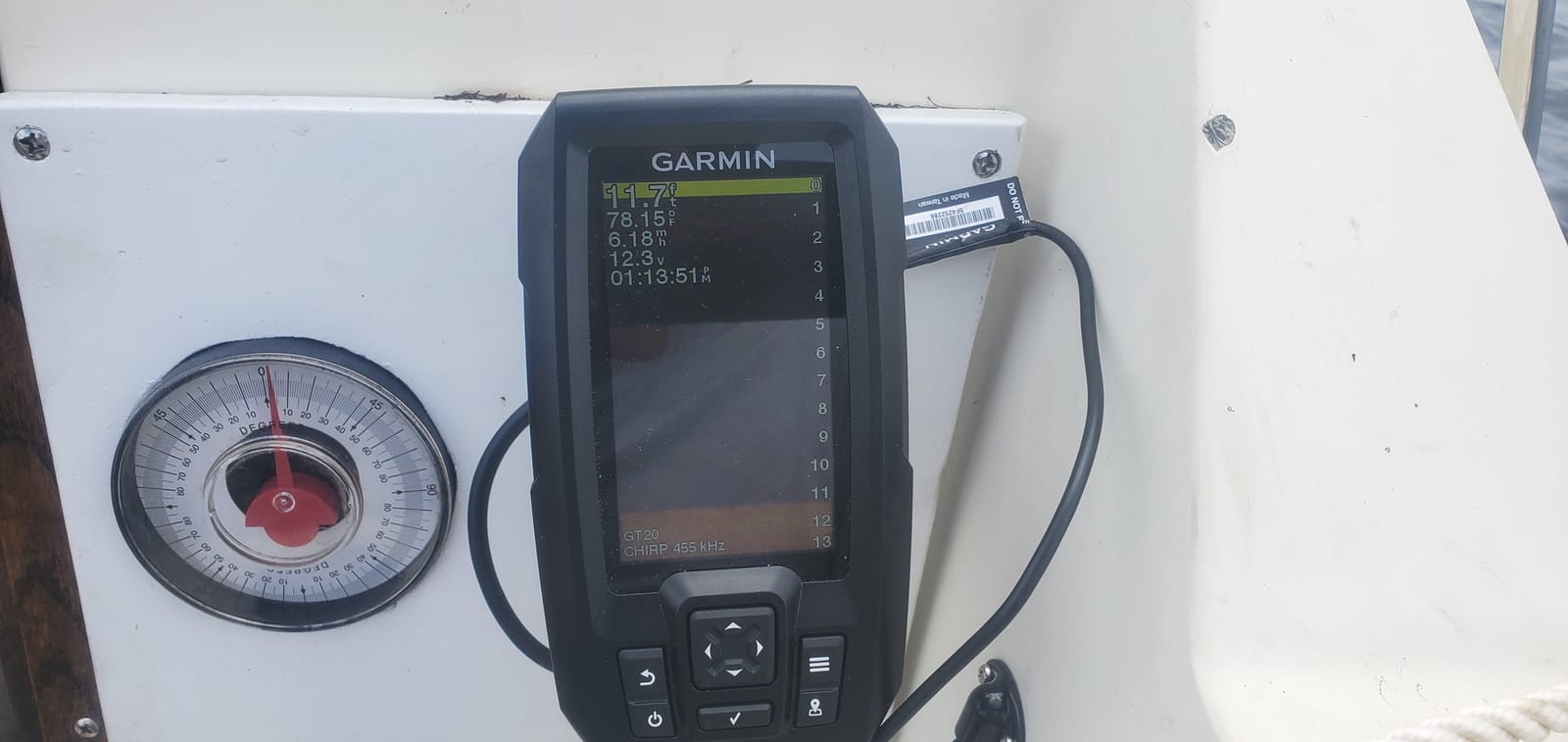
The 4.3-inch QSVGA display is described as bright and sharp enough to read in direct sun, and the split-screen configuration lets you run sonar on one half and the map on the other, with configurable orientation for portrait or landscape viewing. Traditional CHIRP runs at 50, 77, 83 and 200 kHz through a dual-beam transducer, with 200 W RMS transmit power and a 20-metre maximum depth.
The complaint to weigh is that the screen resolution is less crisp than earlier Garmin models, and a smaller display on a bright day is harder to read at arm’s length than a 4-inch IPS panel. If you fish from a seat with the unit on the gunnel, that resolution gap is the most likely thing you notice.
Mapping Limits and the Missing Power Leads
Two limits matter for planning. Quickdraw maps generated on this model cannot be uploaded or downloaded, so the contours live on the unit. And no battery or power fittings are included, which means you are sourcing the fuse, the leads and possibly a battery box yourself. The built-in GPS does provide waypoints, routes and boat speed.
For a boat with a real 12V system, this is the best balance of mapping and footprint here. For a boat with nothing, add the power hardware to your install budget before you commit.
5. Garmin Striker Vivid 4cv – The Highest Rated Unit in the Group
Garmin Striker Vivid 4cv Fishfinder with Transducer – 4-inch LCD Display – Easy-to-Use Scanning Sonar – Color Palettes, 11.2 Ounces (010-02550-00)
4 inch LCD
CHIRP ClearVu scanning
Vivid color palettes
Quickdraw Contours built in
+ Pros
- Vivid palettes separate fish from structure
- CHIRP traditional and ClearVu in one unit
- Quickdraw Contours and GPS at this tier
- Compact 4 inch format suits small boats
- Cons
- Smallest Garmin screen here limits structure detail
- Needs a wired 12V supply
This is the highest-rated model in our group, and the reason owners give is the color. Vivid scanning sonar color palettes let you separate fish from structure at a glance, which is the practical difference between seeing a band on the screen and knowing whether it is a school or a rock ledge.
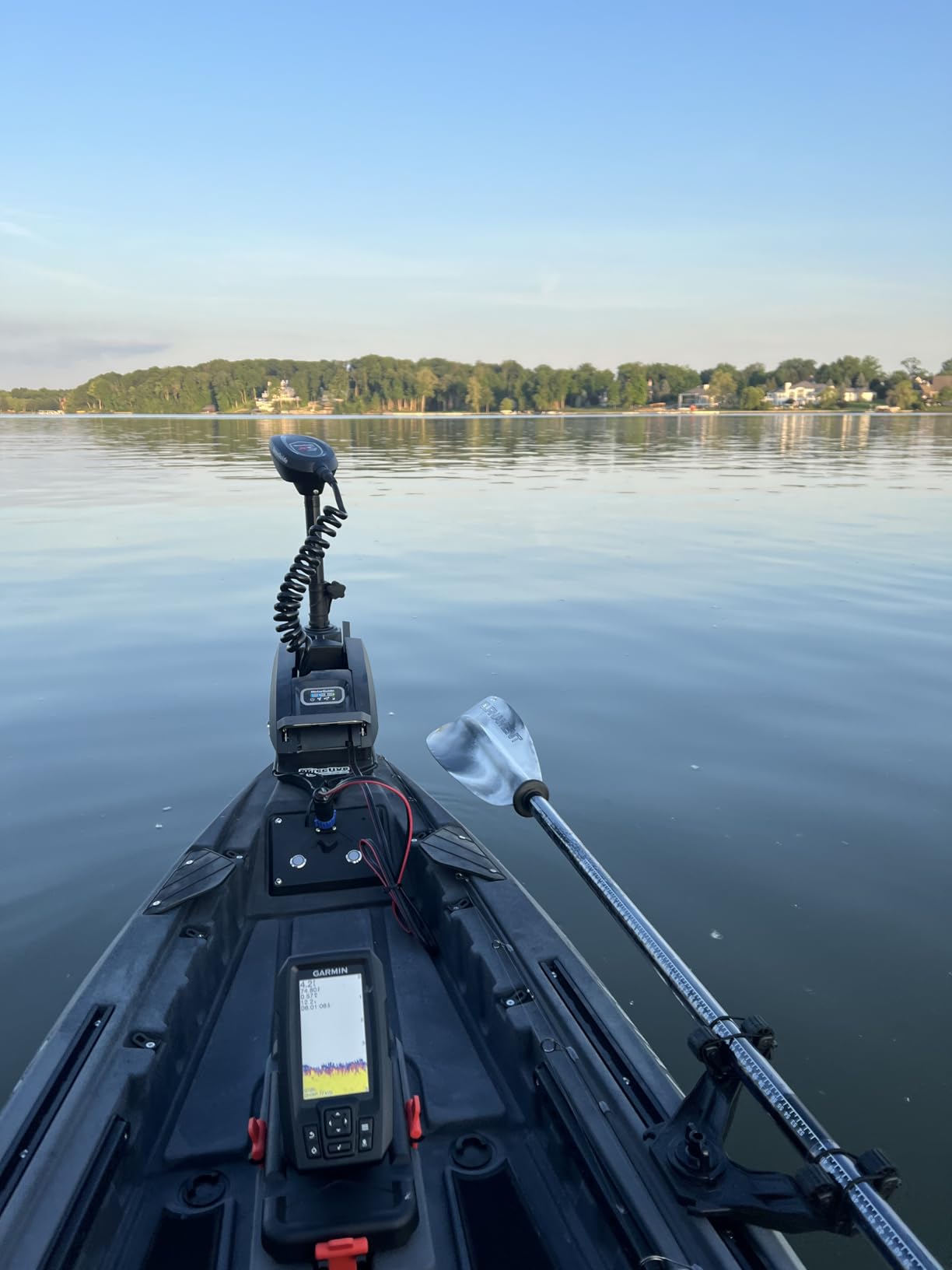
It is also the most complete small-screen unit without moving up in size. The GT20 transom-mount transducer is included and handles both CHIRP traditional and CHIRP ClearVu scanning, Quickdraw Contours mapping is built in, and the high-sensitivity GPS handles waypoints, routes and boat speed. The tilt and swivel bailmount bracket is in the box.
Why Color Palettes Beat Arch Shapes
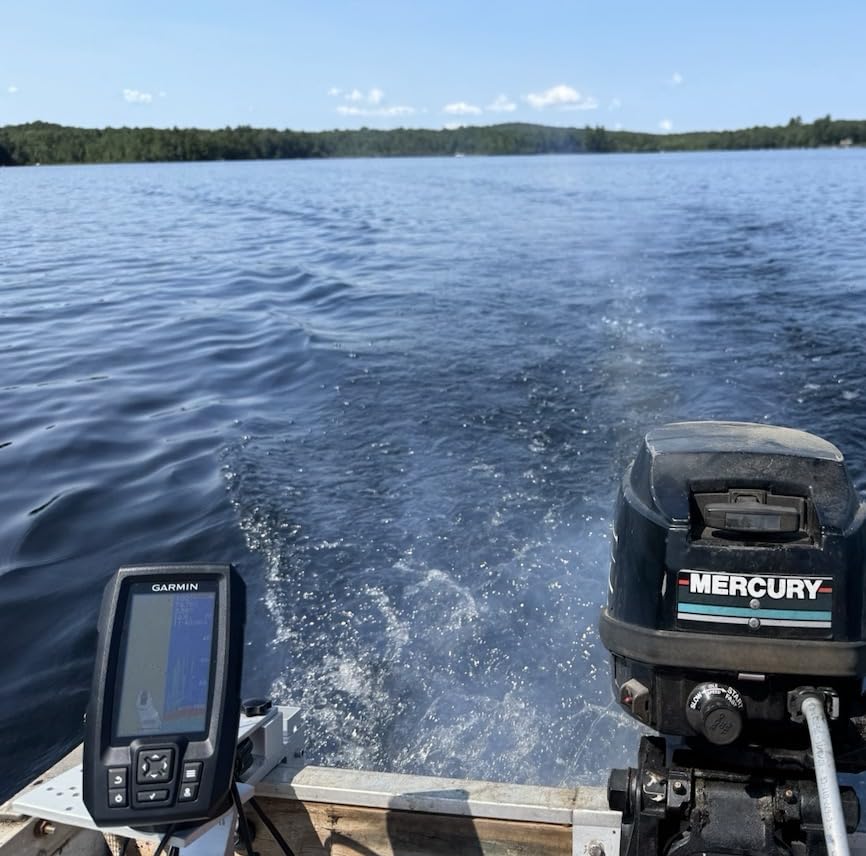
Traditional sonar draws arches for anything that returns an echo. ClearVu scanning sonar draws structure in near-photographic detail, and the Vivid palette option is what makes that imagery readable rather than abstract. On brush piles, stump fields and rock edges, the difference shows up as an ability to pick fish off the structure rather than just seeing that structure is there.
CHIRP is the technology doing the separation work, sweeping a band of frequencies instead of firing a single ping, which produces crisper arches and less smearing between closely spaced targets. The screen is 4 inches across, and the weight is 11.2 ounces. The tilt and swivel bracket makes it quick to adjust the viewing angle for a seated position on a small boat.
Screen Size and Power Reality
Owners cite the compact 4-inch format as both the strength and the limitation. It suits small boats and limited mounting space better than anything larger, but it is the smallest screen among the Garmin models here, so structure work takes more zooming than it would on a 7-inch unit. The unit is powered electrically from a wired 12V supply, so it needs a fused connection rather than a battery box.
The warranty is a two-year limited warranty, longer than the one-year terms on the entry units in this group, which matters if you keep electronics in a truck bed over winter. At 1.8 by 3.9 by 6.9 inches, it takes up very little dash space for what it displays.
6. Humminbird PiranhaMAX 4 – No-Fuss Sonar for Familiar Water
Humminbird PiranhaMAX 4 Fish Finder with Transducer, Dual Beam Sonar
4.3 inch LCD
Dual beam sonar
Tilt and swivel mount
600 ft maximum depth
+ Pros
- Dual beam trades detail against coverage
- Tilt and swivel mount suits seated anglers
- Proven widely deployed platform
- Transducer included in the box
- Cons
- No GPS or mapping
- Heaviest in its class at 2 pounds
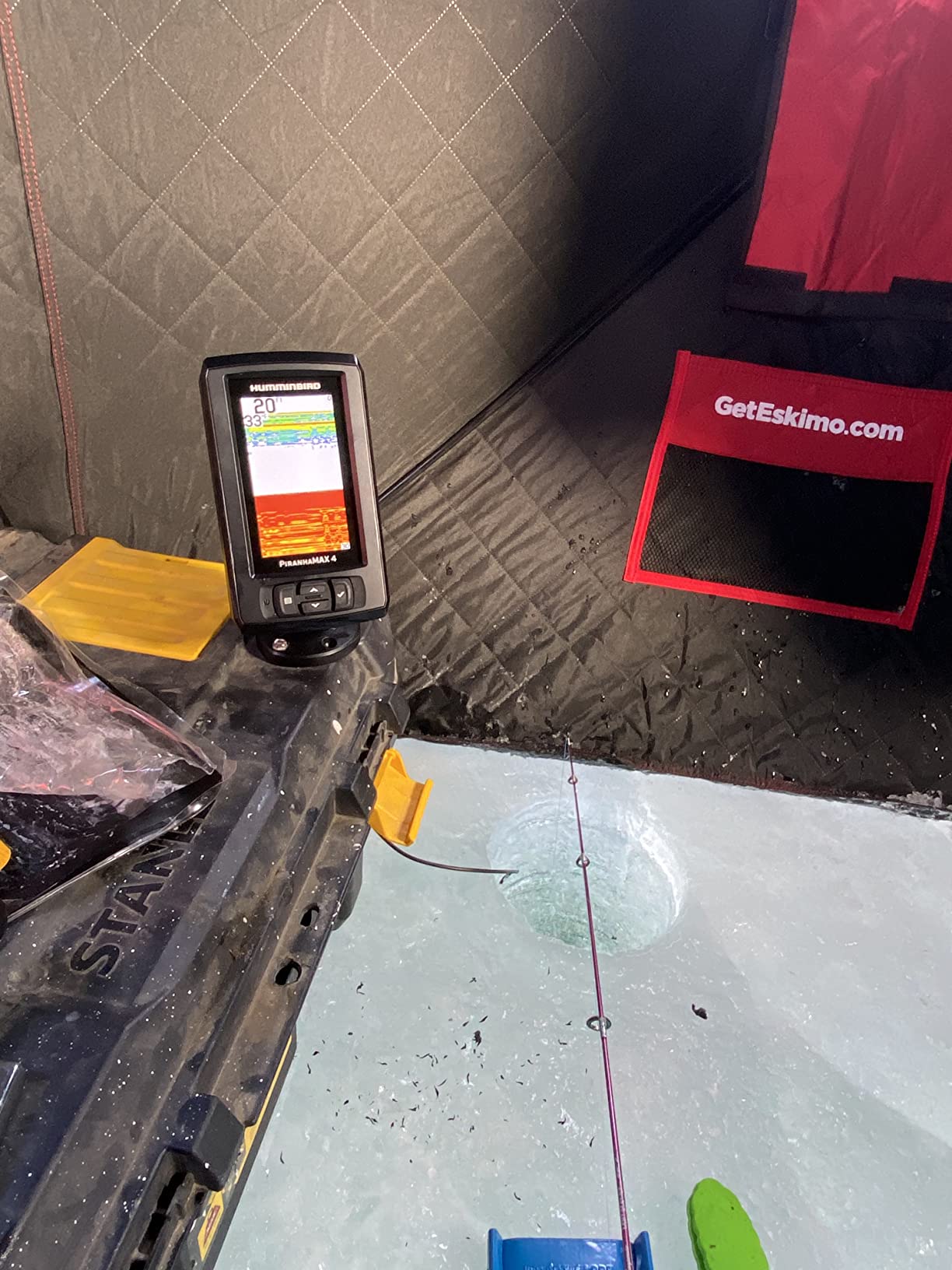
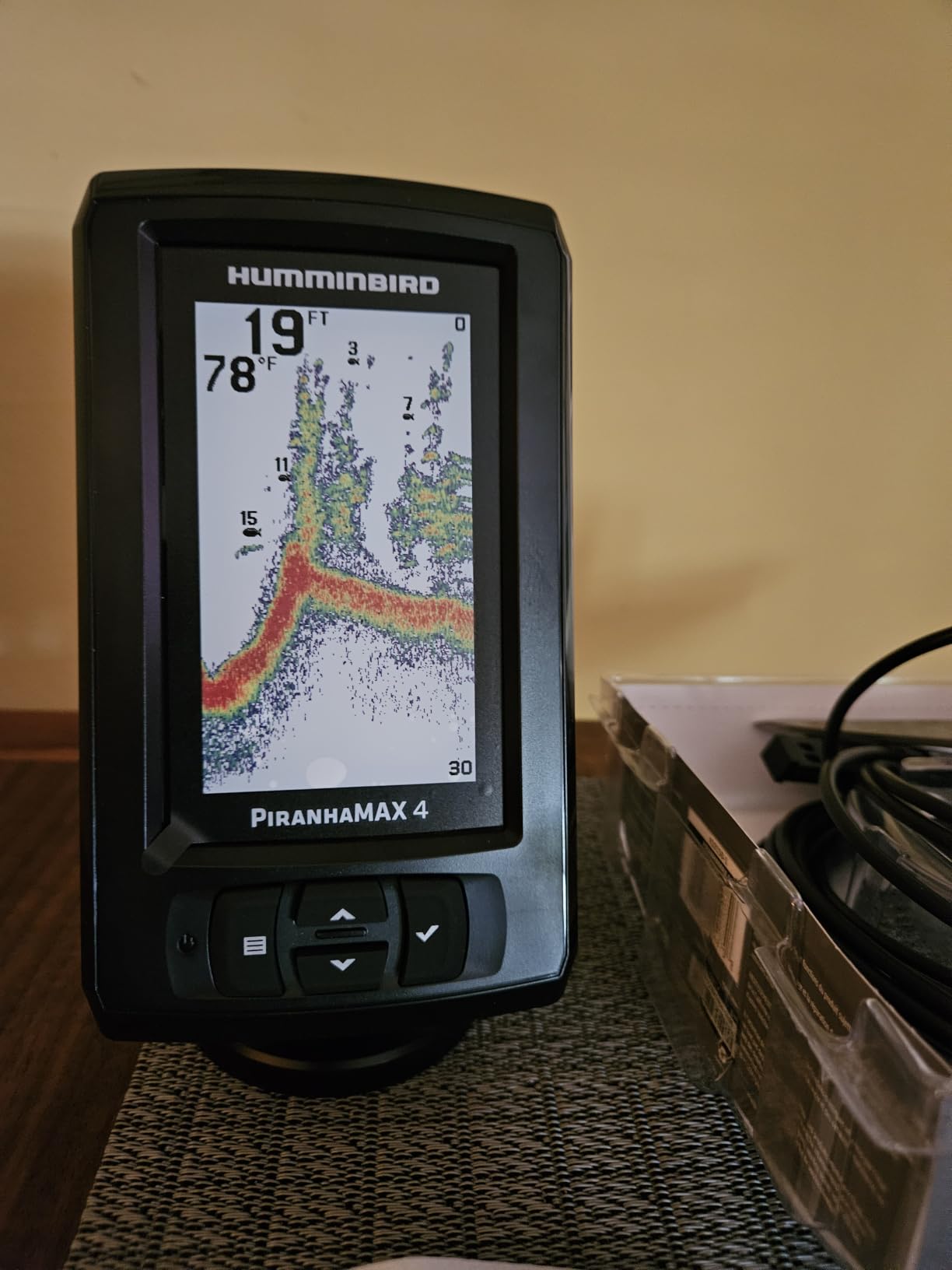
The PiranhaMAX 4 is the answer for someone who fishes water they already know and has no interest in electronics. It shows fish, structure and contours and nothing else. There is no GPS, no mapping and no waypoint menu to learn, which owners consistently describe as the feature rather than a gap.
Dual-beam sonar is the technical point worth understanding. A narrow beam gives detail while a wide beam gives coverage, and the dual-beam setup lets the display combine them. Maximum depth is 600 feet, and the XNT 9 28 T transom-mount transducer plus tilt and swivel mount are both included.
Mounting for a Seated Angler
The tilt and swivel bracket gets more praise than it should for a budget unit. On a small boat you sit low and look down at a steep angle, so being able to adjust the viewing angle in seconds matters more than any menu. Owners also cite the 4.3-inch platform as proven and widely deployed, which makes replacement mounts and transducers easy to find.
At two pounds it is the heaviest unit relative to its class on this list, and that is noticeable if you are moving the head unit in and out of storage. The 3.6 by 3.9 by 6.8-inch footprint is compact, and the single-year manufacturer warranty is the shortest here alongside the entry Garmins.
When Skipping GPS Is the Right Call
Skip GPS if you are on the same lake every weekend, if you mark spots by landmark, or if you want the fewest possible things to go wrong. The absence of GPS is the most-cited drawback, and it is a real drawback if you move between water bodies and want to return to a specific ledge.
Choose it over a mapping unit if your priority is a bright, readable, adjustable display that works the moment you turn it on. For mapping and contours, go to the Garmin models that include Quickdraw.
7. DepthTrax 2B In-Dash – Pure Depth Sounding for Shallow Water
DepthTrax 2B Boat Mount In Dash Digital Depth Finder
1.86 inch icon LCD
2.5 to 600 ft depth
Three-stage shallow water alarm
Reads up to 60 mph
+ Pros
- Continuous depth readings even at speed
- Glare-free display usable with polarized sunglasses
- Loud audible and visual shallow alarm
- Transducer shoots through solid fiberglass and thin aluminium
- Cons
- Depth sounder only with no fish or GPS features
- Small 1.86 inch icon display
- Glue-in install limited to certain hulls
This is a depth sounder, not a fish finder, and it solves a narrower problem very well. The transducer reads from 2.5 to 600 feet and returns uninterrupted readings at speeds up to 60 mph, which matters on a shallow bay flat or an approach through a channel where the first sign of trouble is the depth alarm.
The three-stage warning system combines an audible alarm, a red LED and LCD indicators, and the display is polarized with a storage sun cover so it stays readable with sunglasses on. That glare handling is a specific answer to the glare complaint that runs through small-boat electronics.
Hull Compatibility and Mounting Choices
The dual-mount transducer can shoot through solid fiberglass and up to one-eighth-inch aluminium hulls from a transom mount, or it can be glued in for non-cored fiberglass and thin aluminium. That is a real answer to the most common install fear on an aluminium boat, which is drilling a leak into a hull you would rather not open. The 200 kHz frequency is a workhorse depth-finding frequency rather than a fish-identification frequency.
Algorithmic programming reduces false readings, which is what makes a continuous depth trace usable at speed. The 1.86-inch polarized icon display is small and icon-driven, so there is nothing to interpret, only a number and a warning.

When a Depth Sounder Is the Right Buy
Buy this if your risk is running aground, not finding fish. Skip it if you want arches, structure imagery, GPS or waypoints, because none of those exist here. It is also the least attractive option for showing friends what you are doing on the screen, since the display is a depth readout rather than a picture.
At 1.7 pounds and 4 by 2 by 6 inches, it is an in-dash install with a small footprint. Owners who want fish identification should look at the Garmin or Humminbird units instead.
8. Venterior VT-FF005 – Wireless Casting With a Dedicated Screen
Venterior Portable Rechargeable Fish Finder Wireless Sonar Sensor Fishfinder Depth Locator with Fish Size, Temperature, Bottom Contour, Color Display
2.6 inch color TFT
Wireless sensor to 262 ft
105 degree beam
Rechargeable battery
+ Pros
- Wireless sensor removes drilling and cable clutter
- Casts with a regular rod
- Color screen for sun or night
- Three to four hours of stated use
- Cons
- Wide 105 degree beam is less accurate in deep water
- Wave interference when towed at speed
- Fish size classes are subjective
- Cold weather drains the sensor
The gap this fills is simple: a sonar with its own screen, no wires and no drilling. You tether the sensor with fishing line, cast it with an ordinary rod, and the handheld unit connects on contact with the water. Unlike the phone-app units, it does not need a compatible smartphone in the middle of the trip.
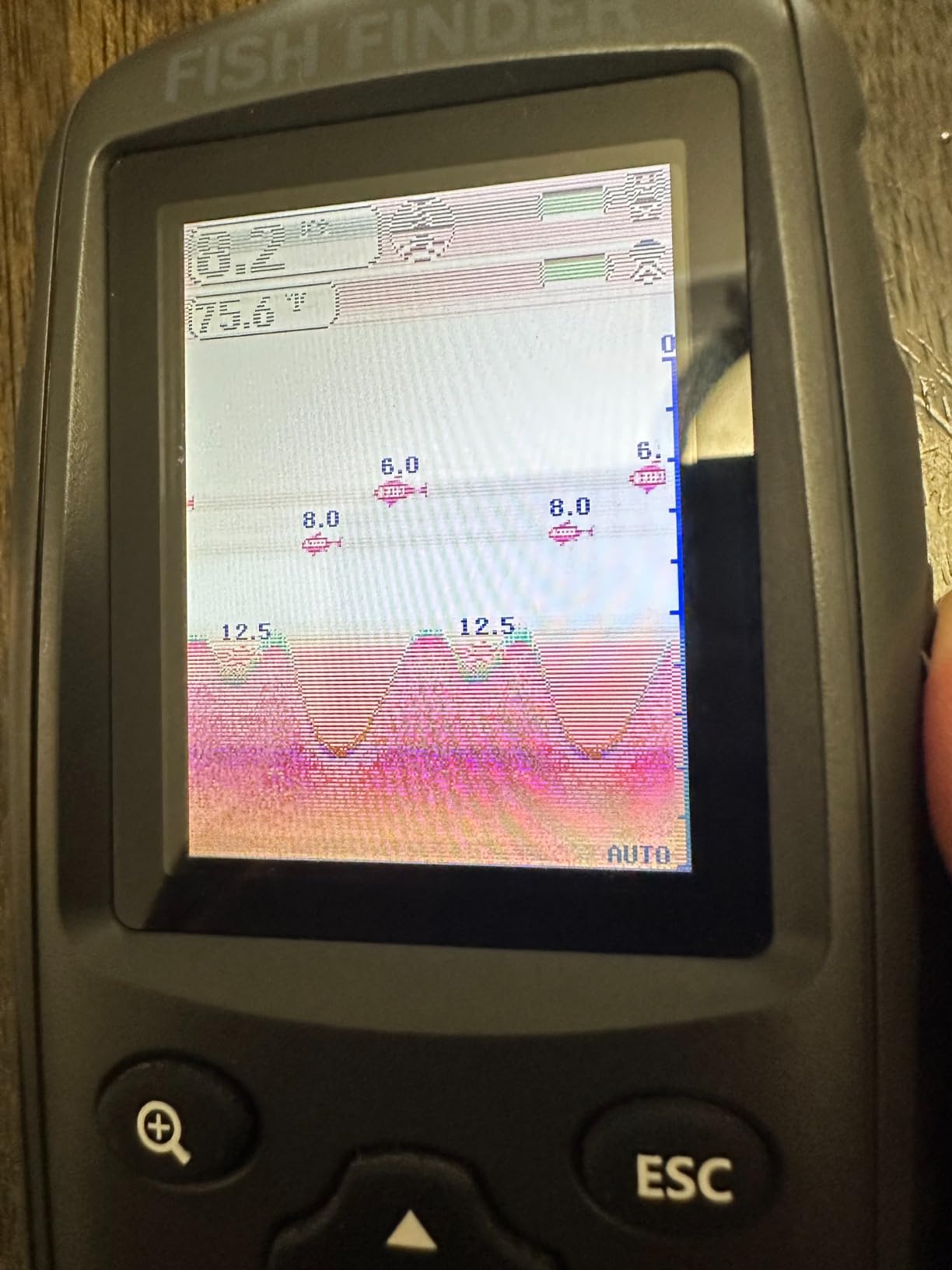
Owners call it a clean upgrade over suction-cup and corded sensors. The display gives depth, temperature, fish size, fish depth and bottom contour, and two selectable screen background colours let you switch between sunlight and night use without losing contrast.
Beam Width Versus Detail
The 105-degree beam is the specification to understand before you buy. A wide beam covers a large area at the cost of precision, and owners cite it as less accurate through ice and in very deep water. Depth range is 2.6 to 164 feet, and the sensor maintains a link to the handheld unit out to 262 feet.
Performance also drops when the sensor is towed behind a moving boat because wave action creates false signals. This is a stationary or drifting tool, and treating it otherwise produces disappointing results. Work and simulation modes plus convertible depth and temperature units round out the display options.
Whose Needs It Fits
This suits an angler who wants real structure and bottom contour data without committing to a permanent install, particularly on a rental boat, a shared boat or a hull where drilling is off the table. Battery life is roughly three to four hours of continuous use, and cold weather drains the sensor faster, which matters for ice and late-season use.
The fish size readout is a small, medium or big classification rather than a measurement, so use it as a guide. A two-year warranty with a stated brand support response within 24 hours is stronger than the one-year terms on several entry models here.
9. Deeper PRO+ 2 – Portable Sonar With Beam Choice and GPS Mapping
Deeper PRO+ 2 Sonar Fish Finder – Portable Fish Finder and Depth Finder For Kayaks, Boats and Ice Fishing with GPS Enabled | Castable Deeper Fish Finder with FREE User Friendly App
2.4 inch display
Wide mid and narrow beams
0.4 in narrow target separation
Built-in GPS mapping
+ Pros
- Beam selection for coverage or detail
- Tight target separation for jigging
- Built-in GPS makes bathymetric maps
- 3.2 ounces so it fits any tackle bag
- Maps save to the Fish Deeper app
- Cons
- Phone and app required for display
- Small 2.4 inch screen
- Wide beam separation is coarse
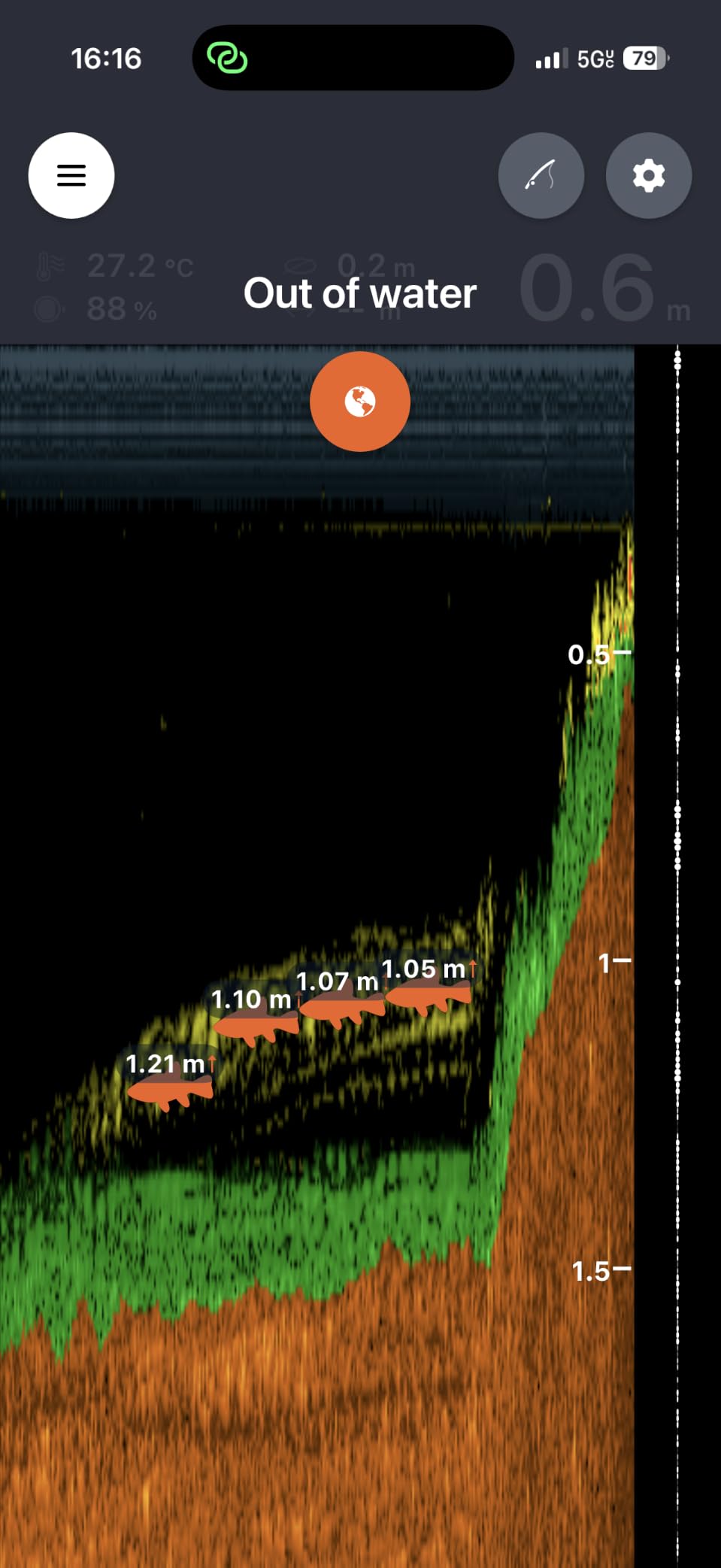
The PRO+ 2 is the more serious portable option, and the difference is beam control. Wide, mid and narrow modes let you scan a broad area for structure and then switch to a narrow beam with 0.4-inch target separation when you want to work a specific ledge or follow a falling lure.
Built-in GPS is the feature that separates it from the entry Deeper. It creates bathymetric maps of an area from shore, dock or bank, and the maps save to the app so you can return to water you have never fished. Accuracy is specified to 330 feet with independent Wi-Fi for a stable connection.
Target Separation for Vertical Jigging
Target separation describes how close two objects can be and still show as two returns instead of one blob. At 0.4 inches on the narrow beam, this is the tightest figure of any portable unit here, and it is what makes the unit useful for vertical jigging rather than just for finding a drop-off.
The catch is that the wide beam and mid beams give 1-inch separation, which is coarse. In practice you use wide to locate and narrow to work, and the mode switching takes a few taps on the phone. At 2.56 inches square and 3.2 ounces it is genuinely portable.
Mapping From Shore, Dock or Bank
This is the reason to step up from the entry Deeper. Firing the sensor from a dock, a shoreline or a river bank and letting it build a depth map takes you somewhere a transom-mounted transducer cannot follow, because the transducer has to stay with the boat. Owners who map water before a trip find that the saved maps are the main payoff.
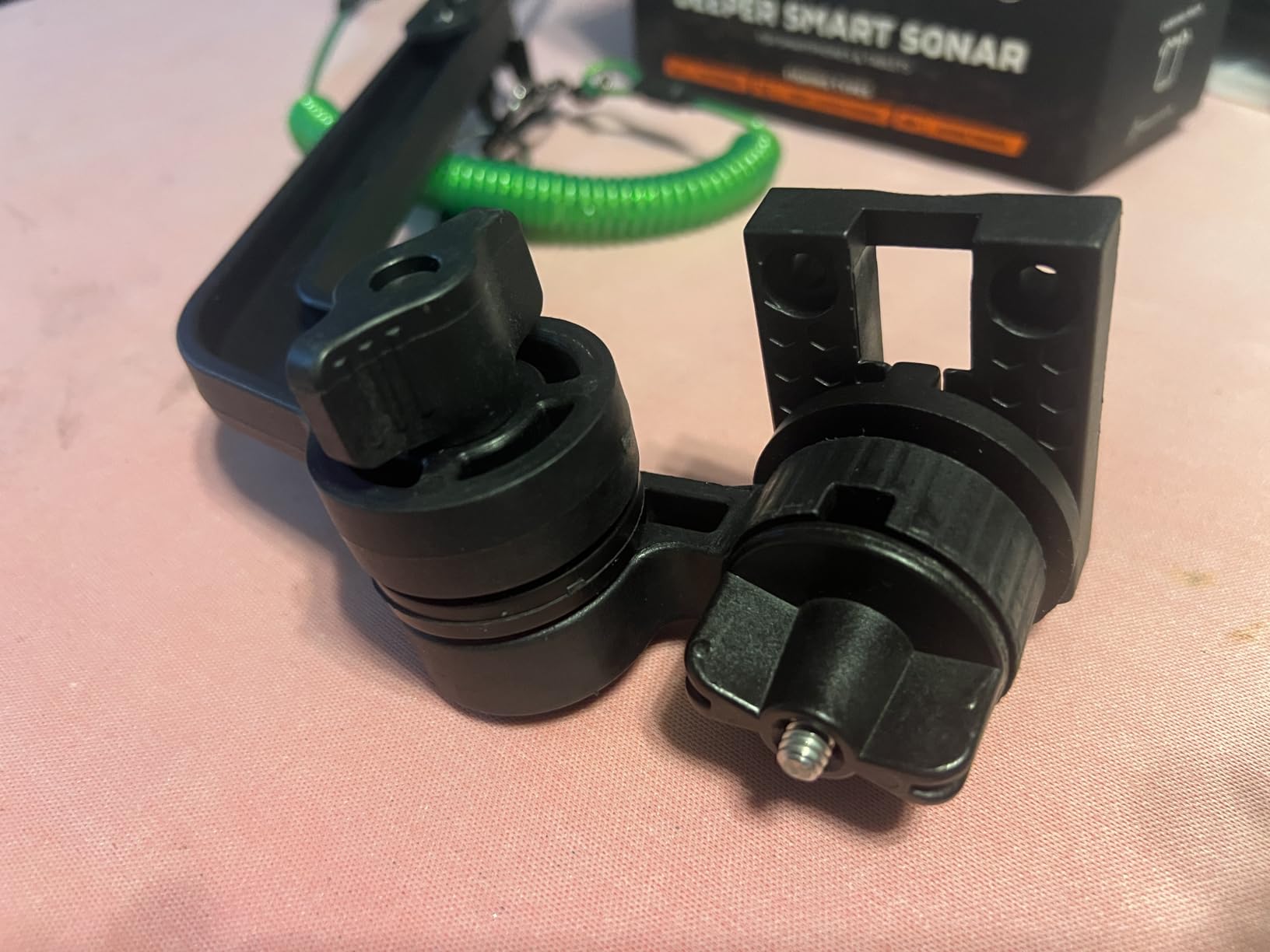
The compromise is the display. A 2.4-inch screen is small, and it only matters if you are using the app on a phone, so the screen in the box is close to secondary. The package includes attachment bolts, a neoprene pouch, the sonar unit, a quick guide and a USB cable, with a two-year limited manufacturer warranty.
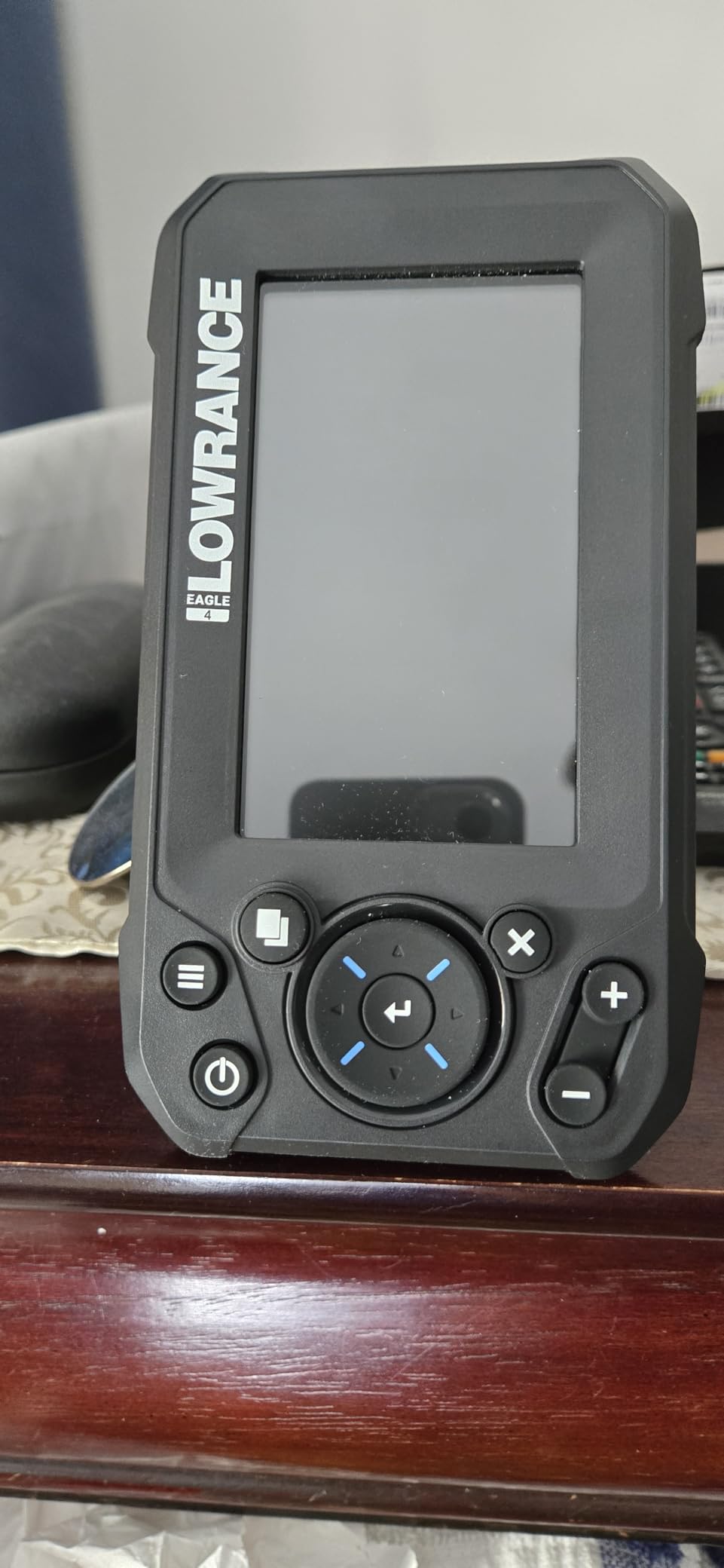
10. Lowrance Eagle 4 Inch – The Brightest Panel in a Portrait Case
Lowrance Eagle 4X Fish Finder with Bullet Transducer
4 inch IPS portrait screen
Auto-Tuning sonar
Bullet Skimmer 44 degree beam
Twist-lock quick connect
+ Pros
- IPS portrait screen readable in sun and through polarized glasses
- Auto-tuning removes manual setup
- 44 degree beam suits kayaks and small boats
- Twist-lock removes the display fast
- Drops into existing Lowrance mounts
- Cons
- Entry sonar only with no imaging on the base version
- Smallest review base in the group
- Fish size readings are uncertain
The Eagle line is the one place in this roundup where screen technology leads the spec sheet. A 4-inch IPS panel in portrait orientation stays readable in bright sunlight, at wide viewing angles and through polarized sunglasses, and the portrait layout is the narrowest footprint of any mounted unit here, which solves the vertical-space problem on a small console.
Auto-Tuning sonar optimises settings automatically, which removes the one task new owners find most confusing on a first trip. The included 200 kHz Bullet Skimmer transducer has a broad 44-degree beam, wide enough to be useful in a kayak, and the twist-lock connector makes removing the display between trips quick.
Screen Legibility in Direct Sun
Glare is the complaint that sends small-boat buyers back to the store with a returned unit, and IPS is the direct answer. Viewing angle flexibility matters on a boat because the sun moves and the angler moves with it, and an IPS panel holds contrast where a standard LCD washes out. Maximum depth is 500 feet, with fish icons, depth readout and zoom for closer inspection.
This listing is a variant hub covering the Eagle range from the 4-inch Sonar through 5, 7 and 9-inch SplitShot and TripleShot versions and C-MAP bundles. Reviews concentrate on the 4-inch Sonar version, so that is the configuration these observations apply to.
Install Compatibility and Limitations
Install compatibility is a genuine strength. The unit drops into existing transducer mounts with screw holes aligned to older Lowrance units, and the included kit covers the bracket, power cable, transducer, locking collars, fuse and fuse holder. Surface, panel and flush mounting options are all supported.
The limitation is that the base version is entry-level sonar only, with imaging and charting reserved for the higher variants. The review base for this listing is also the smallest of the ten, so treat owner feedback as thinner here. Fish size accuracy is listed as uncertain in reviews. At 2.8 pounds it is the second-heaviest unit on the list.
How We Evaluated Fish Finders for Small Boats
Small-hull fit carried about 70 percent of the weight in our ranking, and feature differentiation about 30 percent. That weighting is deliberate. On a 12-foot jon boat, a unit that will not mount or will not run all day is worthless no matter what its sonar can do, and the three brands that dominate this category all deliver competent sonar at the entry tiers.
Within fit, we weighted physical size against usable dash area, transducer mounting options, and stated endurance. Within features, we weighted sonar type, GPS and mapping, screen technology, and what is actually included in the box versus sold separately.
Here is what we did not test, and you should weigh that accordingly. We did not run a controlled sonar accuracy comparison across all ten in identical water. We did not perform battery endurance testing on our own rigs. Depth ranges, beam angles, battery figures and weight in this article come from the manufacturer specifications, and owner feedback is drawn from published customer reviews. Where owners and specifications disagree, we said so.
How to Choose a Fish Finder for a Small Boat
Screen Size: 3.5 to 4.3 Inches Is the Sweet Spot
The commonest buying mistake is over-sizing. A 7- or 9-inch unit needs a dash you probably do not have, and it is harder to read at arm’s length from a low seat in bright sun. The 3.5- to 4.3-inch range covers the realistic space on a jon boat, skiff or sub-18-foot console, and it is where this entire roundup sits.
Screen technology matters more within that range than raw inches. A 4-inch IPS panel beats a 4.3-inch standard LCD in direct sun, and a polarized display beats both if you wear polarized sunglasses. A keyed-button interface is easier to operate with wet hands than a touchscreen, which is why several of the units here use physical buttons.
Sonar Type Matters More Than Screen Size
CHIRP sonar sweeps a range of frequencies instead of firing a single ping, which sharpens fish arches and improves target separation. Imaging sonar, sold under names like ClearVu and DownScan, renders structure in near-photographic detail rather than as arches and blobs. On a small screen, the difference between those two is the difference between seeing a band and knowing what it is.
A dual-beam setup trades detail against coverage, and a wide single beam like the 44-degree Bullet Skimmer is a sensible compromise when screen space is tight. Depth range is rarely the deciding factor: 500 feet covers almost any small-boat water, and the shallow end is what actually matters on a creek or a bay flat.
Transducer Mounting on a Small Aluminium Hull
Transom mounting needs no holes and is the default on small boats. Every fixed-mount unit here includes a transom or trolling motor mount, and the trolling motor option is the cleanest install on a boat with no dash at all, since the head unit and transducer both bolt to the motor shaft.
Through-hull and glue-in mounting avoid bubbles and prop wash at speed but mean cutting into the hull, which is why most small-boat owners never do it. If your boat is solid fibreglass or aluminium thin enough to shoot through, a dual-mount transducer can read through the hull without any drilling at all. If you must drill, use a proper marine sealant and follow ABYC wiring practice, including an inline fuse within seven inches of the battery.
Power: What Runs a Unit All Day on a Small Battery
Here is the honest limitation of this roundup: most of these products do not publish a current draw, so runtime cannot be calculated for them the way anglers want. What is published is worth using. One owner reports the Garmin Striker Plus 4 running for days on a 7Ah sealed lead-acid battery. The LUCKY handheld is specified at four to five hours on a new battery. The Deeper Start is specified at six hours, and the Venterior sensor at roughly three to four hours.
Two practical rules follow. First, a small sealed lead-acid battery is a poor choice for a full day of sonar if you are running it above about 30 percent charge, so a deep-cycle battery of 50Ah or more is the working minimum for a long day. Second, running the finder off a trolling motor battery works well because the units draw lightly, but that bank is often the first thing that goes flat, and a finder that dies mid-trip is worse than no finder.
Do You Actually Need GPS and Mapping?
You need GPS if you fish unfamiliar water, want to mark brush piles and stumps, or move between lakes. Skip it if you fish one spot, navigate by landmark, and want the fewest things to fail. A pure depth sounder handles the running-aground risk, and a handheld or castable sonar handles the no-electrical-system case.
Mapping is a step beyond GPS. Quickdraw Contours on the Garmin units auto-generates one-foot contours as you run without a laptop, which is the most useful version of mapping on a small boat. A preloaded basemap is less useful on water you are learning than the raw depth contours.
Hull Type Fit Matrix
Jon boat or flat-bottom aluminium, 10 to 14 feet, usually no wiring: a 3.5-inch unit with a trolling motor mount, or a castable sonar if you want zero installation. Dinghy or skiff with a battery but no console: a 4-inch IPS or QSVGA unit with a transom mount, kept removable for storage. Sub-18-foot centre console: a 4.3-inch unit with split-screen sonar and map, plus a shallow-water alarm. Kayak or paddle craft: a handheld with a neck strap or a phone-app castable sonar, since drilling is not an option. Tiller-steered punt or skiff with no electrical system: the wireless castable class, where a sensor is tethered to a rod and cast. Pontoon: any of the above, though a larger 5-inch screen starts to make sense if you have a proper dash.
Saltwater Corrosion and Connector Choice
Saltwater is where build quality earns its price. Owners on coastal boats report that transducer quality and connector corrosion decide whether electronics survive more than one season, and non-marine-rated connectors are the usual culprit. Look for a marine-rated unit with a sealed transducer connector rather than a bare splice, and rinse the transducer and connector with fresh water after every trip.
Aluminium hulls deserve a second thought. Saltwater and galvanically dissimilar metals create corrosion, so a unit with fewer exposed steel fasteners and a properly sealed transducer mount ages better. Warranty length is a rough proxy: the two-year terms here are meaningfully better exposure for a saltwater boat than the one-year terms.
Frequently Asked Questions
Is Garmin better than Humminbird for small boats?
Neither is better in the abstract; it depends on what your boat is missing. Garmin covers more of the low end with CHIRP, ClearVu scanning and built-in Quickdraw Contours starting at a 3.5-inch screen, which is why its units dominate small-aluminium-hull recommendations. Humminbird is the simpler proposition: the PiranhaMAX 4 gives dual-beam sonar and an adjustable tilt and swivel mount with no GPS, no mapping and no menu to learn. Choose Garmin if you want to mark spots and build contours, and Humminbird if you fish familiar water and want nothing to go wrong.
What is the best portable fish finder for small boats?
The Venterior VT-FF005 is the best portable option that does not need a phone, because it pairs a castable wireless sensor to a dedicated 2.6-inch color screen with depth, temperature, fish depth and bottom contour. The Deeper PRO+ 2 is the better choice if you want beam selection and built-in GPS bathymetric mapping, since it runs to 330 feet with 0.4-inch target separation on the narrow beam. Both avoid drilling and wiring entirely, which is what makes them the natural pick for a boat with no electrical system.
What size fish finder screen do I need for a small boat?
Between 3.5 and 4.3 inches for a jon boat, skiff or sub-18-foot centre console. Going larger needs dash space and actually reads worse at arm’s length from a low seat, especially in direct sun. Within that range, favour screen technology over size: a 4-inch IPS panel stays readable through polarized sunglasses and at wide viewing angles where a standard LCD washes out. Pick 5 inches or more only if you have a real console to mount it to.
What is the best small battery to use for a fish finder?
A sealed lead-acid battery of at least 7Ah is the practical minimum for a short trip, and one owner reports running a Garmin Striker Plus 4 for days on a 7Ah unit. For a full day, use a deep-cycle battery of 50Ah or more rather than a small starting battery, because lead-acid loses usable capacity above roughly 30 percent charge. If the boat has no electrical system at all, skip the battery question entirely and use a handheld or castable sonar that runs from its own cell.
What is the best fish finder for a jon boat?
The Garmin Striker 4 is the strongest default for a 10-to-14-foot jon boat, because the transom and trolling motor mounts are included, it weighs 8 ounces, and the 3.5-inch footprint fits a narrow gunnel without drilling. It adds built-in GPS waypoint marking over basic depth sounders, which is what you need to mark brush piles. If your jon boat has no battery and no wiring, choose the LUCKY FFC1108 handheld or a castable sonar instead of planning a power install.
The Verdict: Which Fish Finder Fits Your Boat
If you have a battery, a small dash and you want the most complete package for a small hull, the Garmin Striker 4 is the one I would put on the boat. It carries CHIRP, ClearVu scanning, built-in GPS and both mounting options in a 3.5-inch, 8-ounce box, and the depth accuracy holds up at trolling speed.
If glare is your main worry, step to the Garmin Striker Vivid 4cv for vivid color palettes and a two-year warranty, or to the Lowrance Eagle 4 inch for the brightest IPS panel in a narrow portrait case. If mapping is the priority, the Garmin Striker Plus 4 builds one-foot contours automatically and runs for days on a small battery.
If your boat has no electrical system, stop planning a wiring job. The LUCKY FFC1108 covers depth from a kayak, the Venterior VT-FF005 adds a real screen with no phone, and the Deeper PRO+ 2 adds beam selection and GPS mapping from shore or dock. Pick the DepthTrax 2B only if your real problem is running aground in a channel, and the Humminbird PiranhaMAX 4 if you fish familiar water and want zero menu learning.
Whichever you choose, measure your dash before you order, and decide the power source before you cut a single wire. Those two answers remove almost every regret we have seen with small-boat electronics.