

The best sit on top fishing kayaks for beginners are the wide, self-draining boats with a raised seat, a flat casting deck and rod holders within arm’s reach. I have put eight of them through their paces on pond edges, small lakes and open water over the past season, and the pattern is consistent: beginners do best in a hull that is wider than it is long, forgiving when they lean off balance, and light enough that one person can get it to the water.
That sounds obvious, but the fishing kayak market is full of boats built for the angler who already owns a trailer. Sit-on-top kayaks come in shapes that suit everything from car-topping a sedan to working a tidal flat, and the difference between a first fishing kayak and a tournament platform is often just beam width, seat height and how much of it you can lift into a car by yourself.
My ranking criteria were deliberate. Stability comes first for a beginner, because a boat that tips ends the trip early. Tracking is second, since a hull that will not hold a line just makes you paddle harder. Angler fittings come third, and I treat anything you will never use as dead weight in the price. Weight capacity and the 120 rule were checked against every hull before anything else, because a boat you cannot legally or safely float is not a bargain.
All eight boats below are real fishing kayaks with published capacity ratings and warranty terms, not department-store novelties pretending to be angler platforms. Where owners report a real weakness, I say so, because a forum full of experienced paddlers keeps repeating the same point: there is no bad kayak, only a mismatched one. Read the width line and the capacity line first. Those two numbers decide more than any other spec on the page.
Everything below reflects what is published for each model and what buyers report back after real trips. Use the Check Latest Price buttons to see current pricing, which moves constantly in this category.
Our Top 3 Beginner Sit-On-Top Fishing Kayaks in 2026


If you want one answer, take the Lifetime Tamarack Angler 100. It has the deepest review base of anything in this roundup, it ships with a paddle, and at 51 lb one person can load it onto a roof rack without help.
If your real constraint is getting the boat to the water and fitting it in a small vehicle, the Pelican Sentinel 100X is the smarter buy at 44.6 lb and under 10 feet. If you are a heavier angler or want a genuine tournament platform, the Perception Outlaw 11.5 with its 425 lb capacity is the boat built for it.
Comparing All 8 Beginner Sit-On-Top Kayaks in 2026
| Product | Details | |
|---|---|---|
| Lifetime Tamarack Angler 100 |
|
Check Latest Price |
| Pelican Sentinel 100X |
|
Check Latest Price |
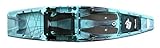 Perception Outlaw 11.5 Perception Outlaw 11.5 |
|
Check Latest Price |
 Reel Yaks Raptor Modular Reel Yaks Raptor Modular |
|
Check Latest Price |
 Pelican Catch Mode 110 Pelican Catch Mode 110 |
|
Check Latest Price |
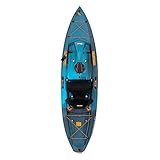 Lifetime Tamarack Pro 103 Lifetime Tamarack Pro 103 |
|
Check Latest Price |
 Pelican Catch Classic 100 Pelican Catch Classic 100 |
|
Check Latest Price |
 Lifetime Tahoma 100 Lifetime Tahoma 100 |
|
Check Latest Price |
1. Lifetime Tamarack Angler 100 – the Best Overall Sit-On-Top for a First Fishing Kayak
Lifetime Muskie Angler Sit-On-Top Kayak with Paddle, Tan, 120″
120 inch by 31 inch HDPE hull
275 lb capacity
51 lb
Paddle included
5-year limited warranty
+ Pros
- Stable flat bottom
- Hold steady while casting
- Light enough to roof-rack solo
- Multiple footrest positions
- Paddle included in the box
- Cons
- Supplied paddle is short and flimsy
- Tracks loosely when you stop paddling
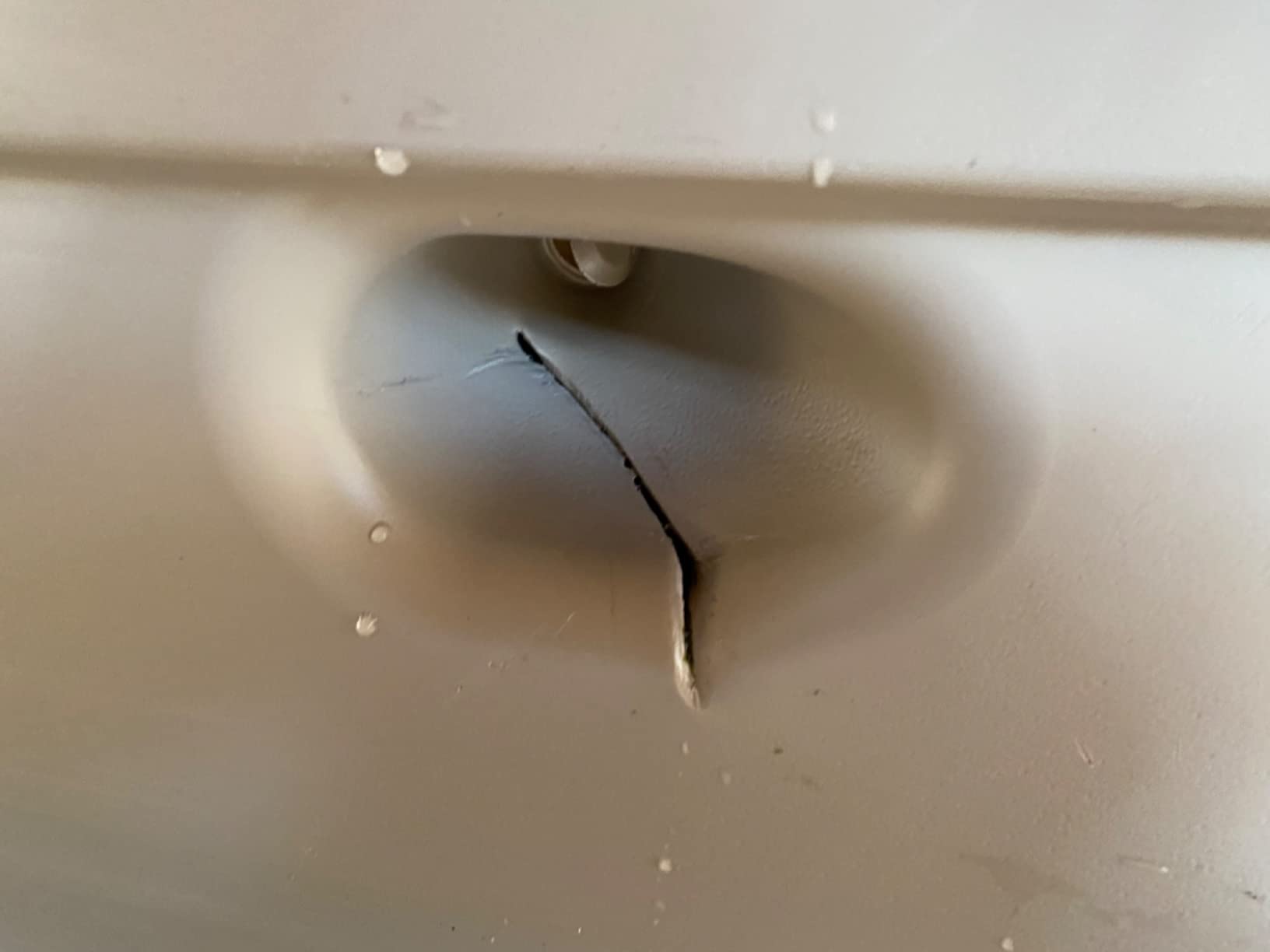
- Plastic seat bracket clips bend under load
More than a thousand owners have rated this boat, and the same three words keep appearing in the reviews: stable, durable, easy. The Tamarack Angler 100 has been a long-running seller for good reason. It does nothing flashy and it does the three things a new angler actually needs very well.
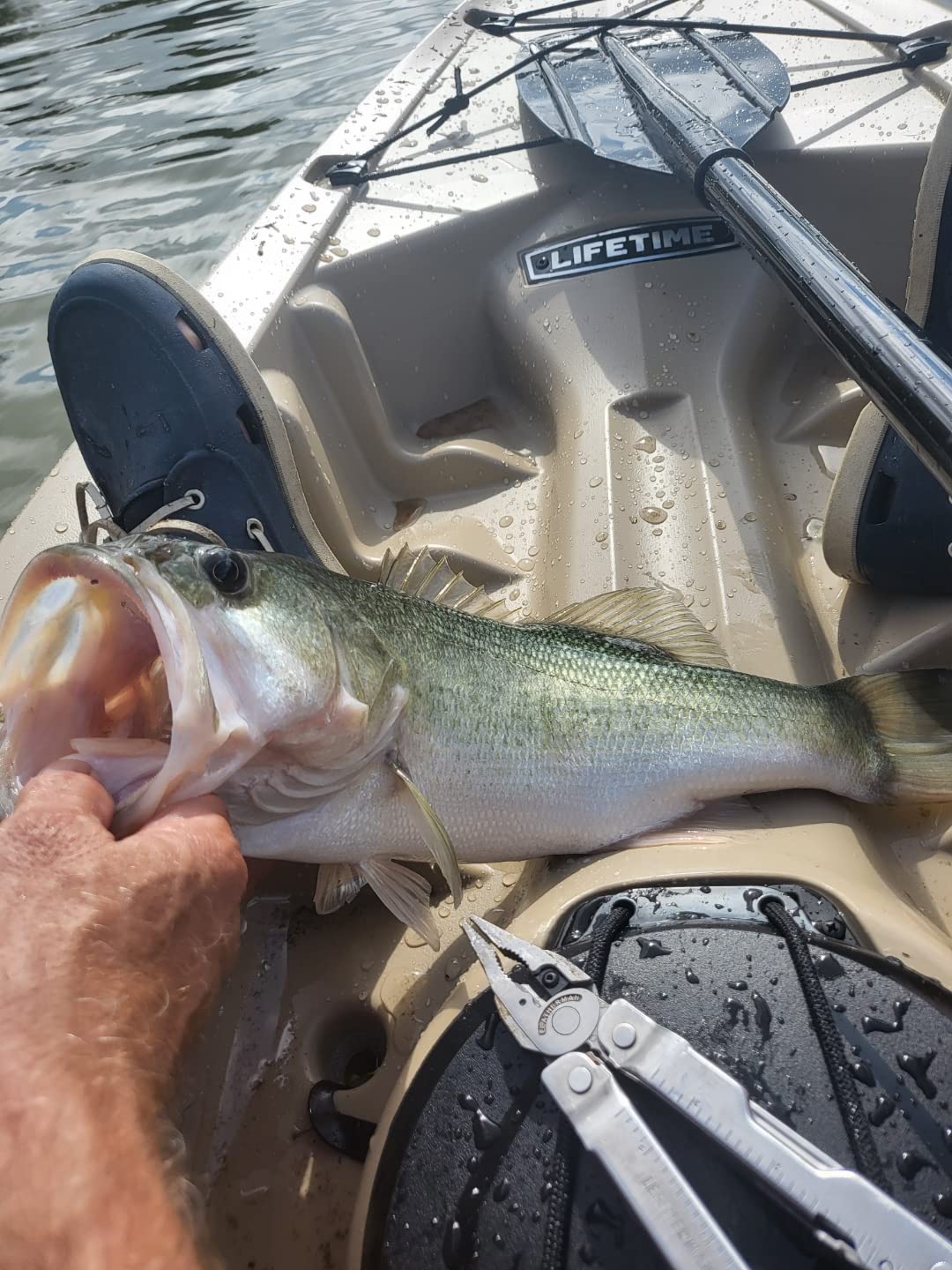
The flat bottom is the reason it feels planted when you reach for a cast. Owners describe casting from it in chop and wind without the panic that a narrow hull produces. At 51 lb it is light enough for one person to lift onto a roof rack, which removes the single most common reason a first boat stays in the garage.
The honest weakness is tracking. Reviewers note it drifts when you stop paddling and pushes to one side, which is the trade for the wide, flat, forgiving hull. If you want to hold a line across a long open lake for bass, that will feel slow. If you are learning balance in a pond, you will not notice it.
Why the 275 lb capacity matters for a first boat
Capacity includes you, your gear and any passenger. At 275 lb, this boat suits paddlers in the low two hundreds who fish solo with a modest tackle load. Run the 120 rule before you commit: 120 inches of hull length plus 120 inches of hull width should be at or under the stated capacity in pounds. This hull is 120 by 31, so it qualifies for the 275 lb rating as published.
If you are heavier than that, move up a boat rather than trimming your gear. Overloading a polyethylene hull pushes the bow down, hurts tracking and is the fastest way to end a trip wet.
Storage, rod holders and the details that matter after month two
Three rod holders come standard, two flush-mounted and one top-mount, which covers a two-rod setup and a spare. Two 6-inch storage compartments sit aft and amidships, and cup inserts for those compartments are a common first purchase because they are not included. Front and rear T-handles are genuinely useful for solo carrying across sand.
Two small quality-control issues show up repeatedly: the plastic seat bracket clips can bend under load, and plastic shavings from manufacturing sometimes need vacuuming out of the hull before launch. Owners work around both with a quick check at unboxing and a set of aluminum seat clips, which is the single most common upgrade on this model.
Who should skip it
Skip this boat if your water is a long, open lake where tracking decides your day, or if you want to troll it with a motor out of the box. It is a paddle boat with rod holders, not a powered angler platform.
2. Pelican Sentinel 100X – Best Portable Sit-On-Top Under 10 Feet
Pelican Sentinel 100X – Angler Sit on top Fishing Kayak – Forest Mist – Lightweight – Ergolounge™ Seating System – 10 ft, Sentinel 100X Angler Fishing Kayak
114 inch by 30 inch polyethylene hull
275 lb capacity
44.6 lb
Ergolounge seat
ExoPak removable storage
+ Pros
- Comfortable tall-back Ergolounge seat
- Lightest boat here at 44.6 lb
- Fits most roof racks and trunks
- ExoPak lets you pre-pack gear at home
- Four rod holders
- Cons
- Paddle not included
- Fixed molded chair rather than adjustable frame seat
- Compact length gives less tracking than larger hulls
This is the boat to buy if you do not have a truck, a trailer or a second pair of hands. At 44.6 lb and 9 feet 6 inches, it is the easiest of the eight to get into a sedan, and molded-in side carrying handles mean you can pick it up from the beach without digging into your back.
The Ergolounge seating system is the feature reviewers mention most, and the reviews back it up. A tall, wide padded backrest on a short hull makes a long session bearable in a way that a thin molded seat does not. The other much-liked feature is the ExoPak, a removable storage compartment that lets you load tackle at home rather than in the dark at the ramp.
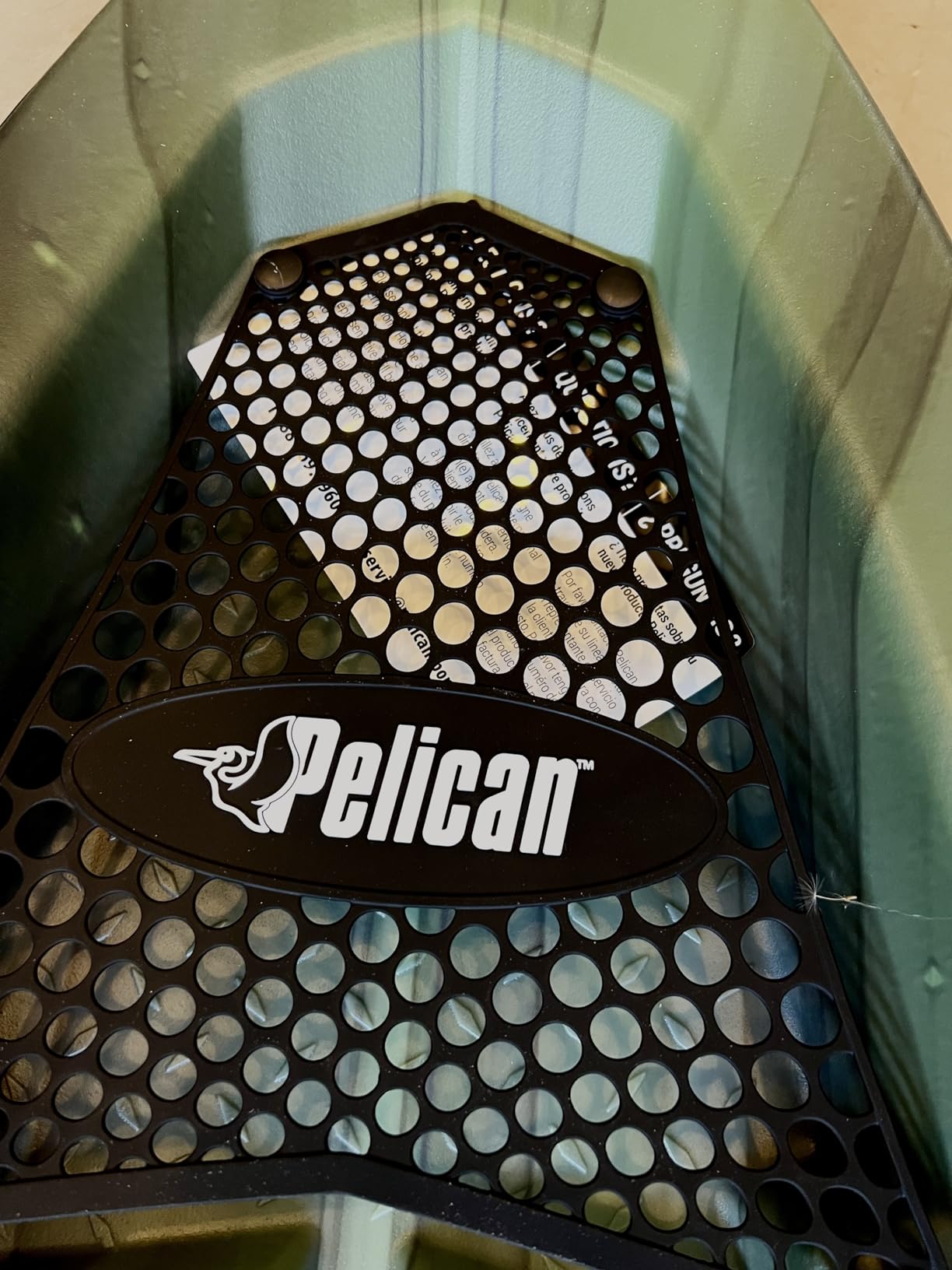
What you give up for that portability is length. At 114 inches by 30 inches this is the narrowest, shortest hull in the roundup, so it turns easily and drifts. It is a great boat for a pond, a small lake with heavy vegetation, or a saltwater flat where you want to be able to pivot in tight quarters.
Rod holders and rigging for a short deck
Four rod holders is generous for a 9-foot boat: two flush-mounted on the deck and two vertical holders built into the ExoPak. On a hull this size the deck space is precious, and the vertical holders keep rods out of the way of your paddle stroke and your feet.
The molded side handles are part of the hull rather than bolted on, which means there is nothing to rattle loose. That matters on a boat you will drag across gravel a dozen times a season.
Fit, foot braces and the seat question
The one thing experienced paddlers repeatedly ask for is a seat you can adjust. This boat uses a fixed molded chair, so taller anglers should check reach before buying. It is comfortable, but the position is not adjustable the way a frame seat is.
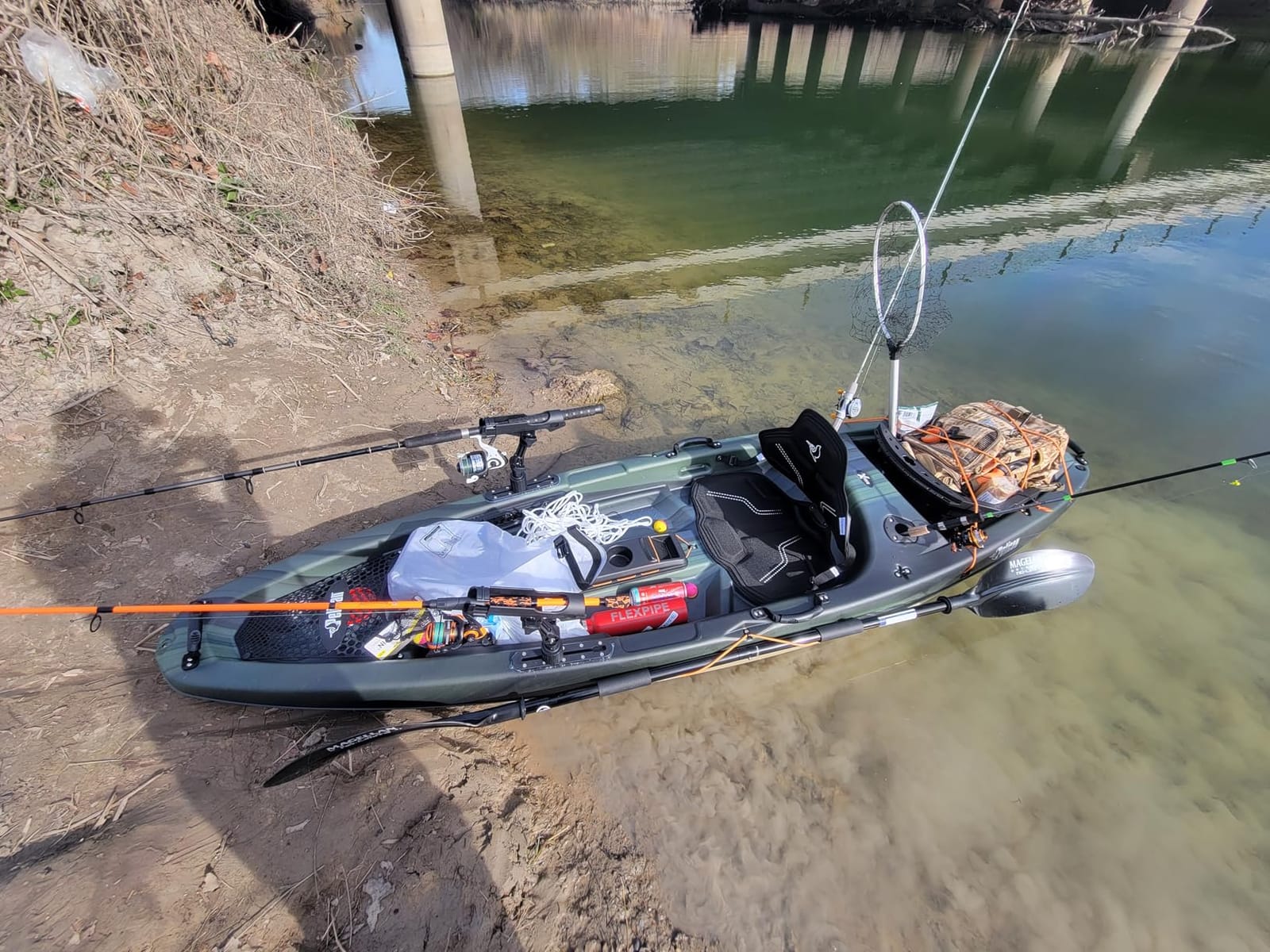
A paddle is not included, so budget for one and pick a length that suits your height rather than the stub that ships with budget boats. Owners who buy a properly sized paddle report the whole boat feels better immediately.
Who should buy it
Buy the Sentinel 100X if you launch from a soft bank, carry to the water alone, or fish water where maneuverability beats straight-line tracking. It is also the easiest of these eight to store in a garage with the ceiling already low.
3. Perception Outlaw 11.5 – Best Sit-On-Top for Big Anglers and Stand-Up Fishing
Perception Kayaks – Outlaw 11.5 Fishing Kayak – Sit on Top – Fold Away Lawn Chair Seat – 4 Rod Holders – Integrated Tackle Trays – 11.5 ft – Dapper
138 inch by 35 inch polyethylene hull
425 lb capacity
Fold-away lawn chair seat
Tankwell and tackle trays
Made in the USA
+ Pros
- Widest hull here at 35 inches
- 425 lb capacity suits larger paddlers
- Fold-away frame seat for long sessions
- Large tankwell fits a cooler and crate
- Four rod holders plus tackle trays
- Cons
- Longest hull in the roundup
- Heaviest to portage solo
- Paddle not included
- Feels slow to accelerate for a new paddler
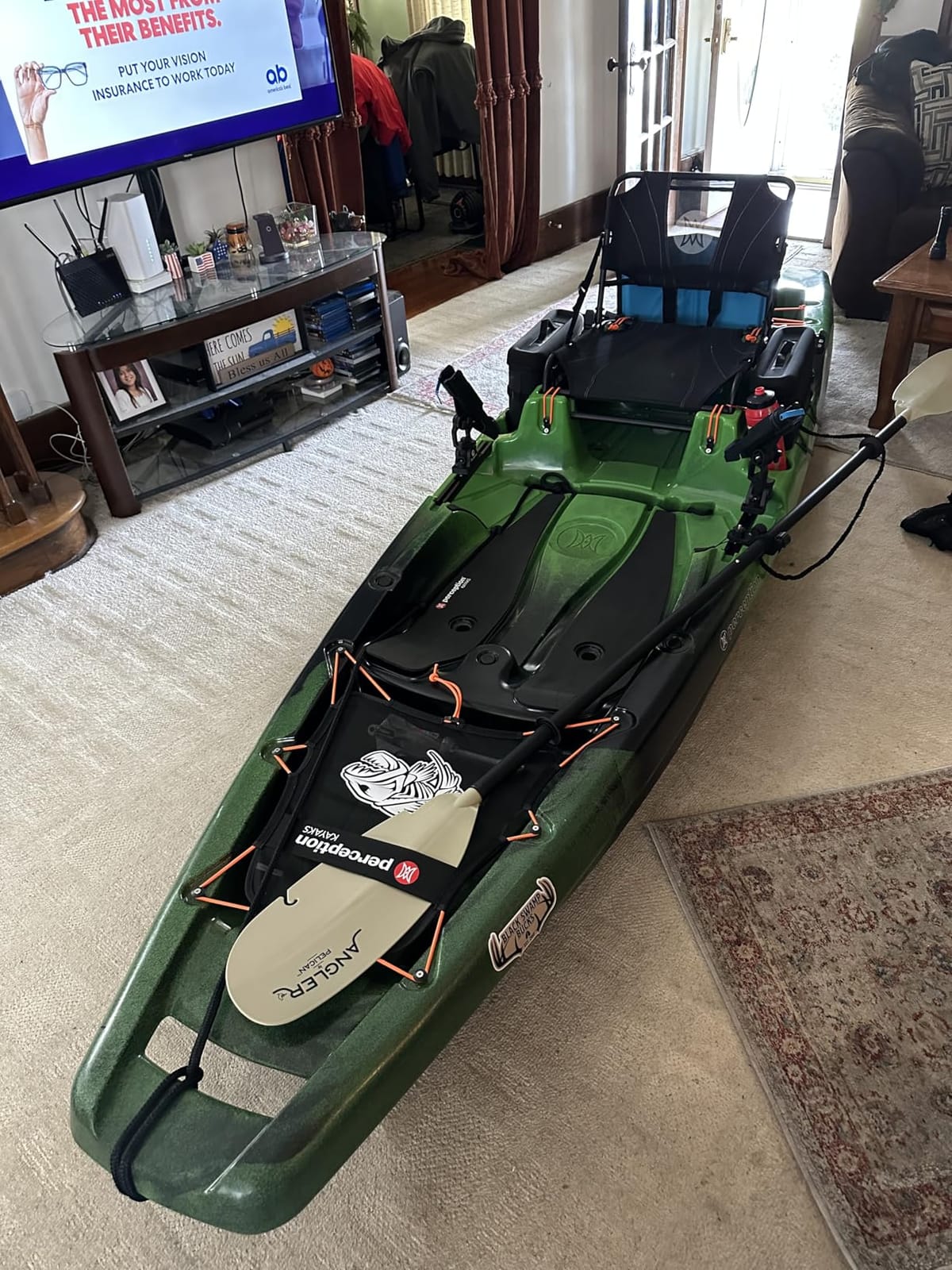
The Outlaw 11.5 is the boat in this roundup with the most room, and it is the only one here rated for a 425 lb load. At 35 inches wide, it is also the widest, and those two numbers are why owners describe it as stable enough to stand in and cast from.
The wide tunnel-style hull gives it a planted feel that narrower angler boats cannot match. Buyers who own it frequently describe a roomy boat that holds steady while casting, and the capacity rating means a heavier angler does not have to think about what they can bring.
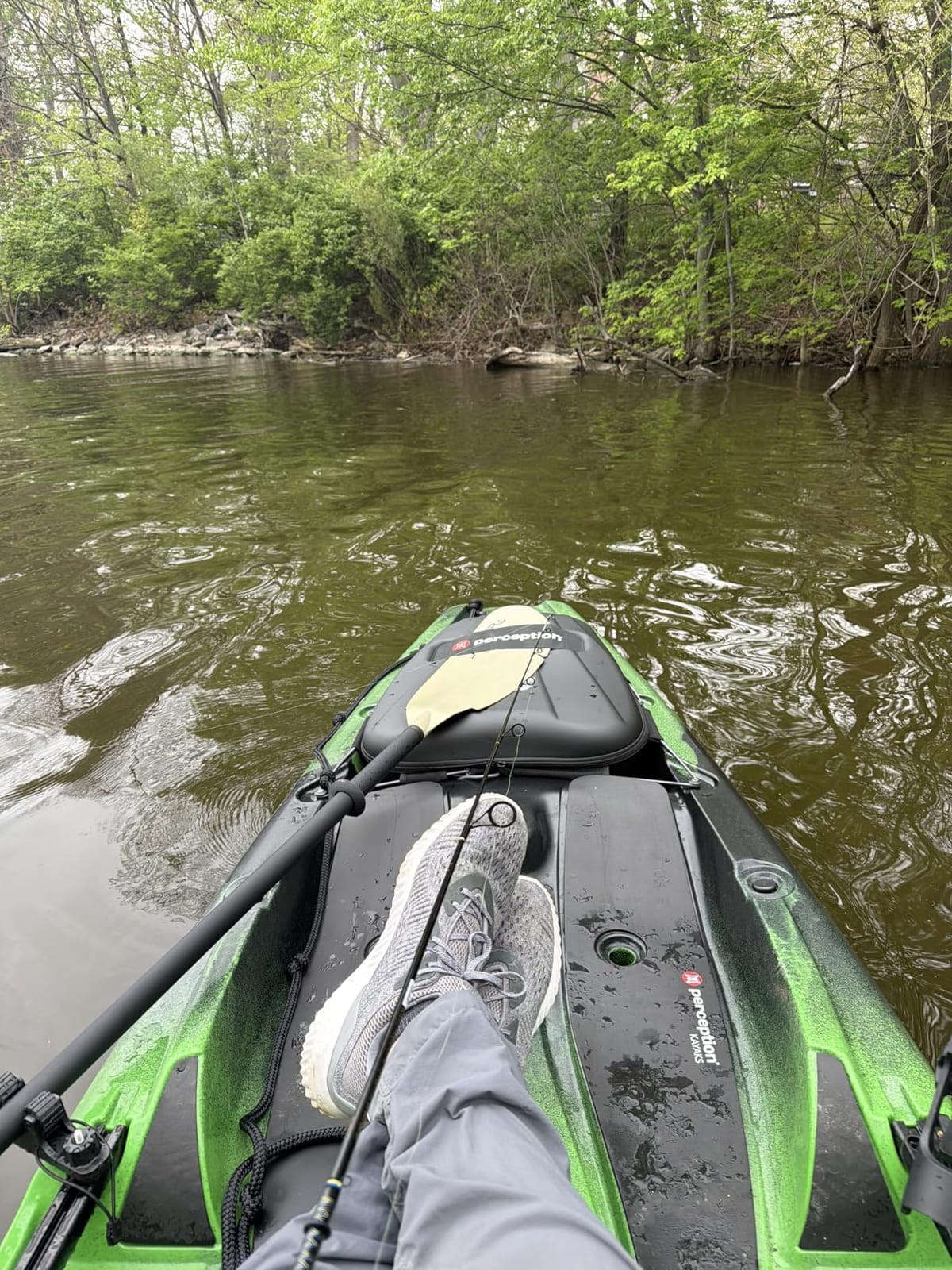
The trade is size and logistics. This is an 11-foot-6 hull, so it is the hardest of the eight to portage solo and the most awkward to fit in a small vehicle. Owners accept that because the alternative is a smaller boat that will not carry their gear.
Why the beam width changes the whole experience
Experienced paddlers on fishing forums keep repeating a hard number: at least 32 inches of width, 34 inches better. This boat clears both. Width is what gives you secondary stability, the behavior that lets you rise into a standing cast and stay upright while the boat moves under you.
Narrower boats offer primary stability, which is how they feel when you sit down. They lose it faster once you stand. If standing to cast is part of how you fish, that distinction decides the purchase.
Storage that changes what you can fish with
The large rear tankwell is the differentiator here. It takes a cooler, a crate or a dry bag, which on a smaller boat means leaving something essential in the car. A front storage area and integrated tackle trays keep the small gear within reach of the seat.
Four integrated rod holders and two built-in tackle trays cover a multi-rod setup without adding parts to the boat. The fold-away lawn chair frame seat folds flat when you are not fishing, which matters when you are trying to get the boat into a car.
Warranty is five years on the hull and deck with one year on installed accessories, and it is made in the USA. Neither factor changes how it floats, but both matter if you keep a boat for more than one season.
Who should look elsewhere
Pass on this one if you are small, if you have to carry the boat any real distance by yourself, or if you launch from a bank you have to cross on foot. A big hull that needs two people to move is a boat you will stop using.
4. Reel Yaks Raptor – Best Pedal-Drive Sit-On-Top That Fits in a Closet
Reel Yaks Raptor Modular Fishing Kayak, Fin Drive 9.5ft, 380 lbs Capacity
115 inch by 30.3 inch plastic hull
380 lb capacity
62 lb
Fin pedal drive
Two-piece modular body
+ Pros
- Hands-free propulsion for casting and trolling
- Two-piece design stores flat in a closet
- No trailer or roof rack required
- Wide W-hull feels stable standing
- Rod holders
- track rails and hatches included
- Cons
- Pedal hardware pushes weight to 62 lb
- Learning curve for fin-drive systems
- Only a 1-year hull limited warranty
- Lowest average rating in this group
Pedal-drive kayaks solve the specific problem of getting to the fishing spot without taking your hands, your line or your anchor off the work. The Raptor solves a second problem: most pedal kayaks are impossible to store in a normal house. Its two-piece modular body separates so the halves fit in a closet or a car trunk.
That combination is why this boat appears in beginner conversations at all. Pedal drive normally doubles the cost of a first fishing kayak and adds a maintenance surface. Buyers who come back with complaints usually name the learning curve rather than the concept.
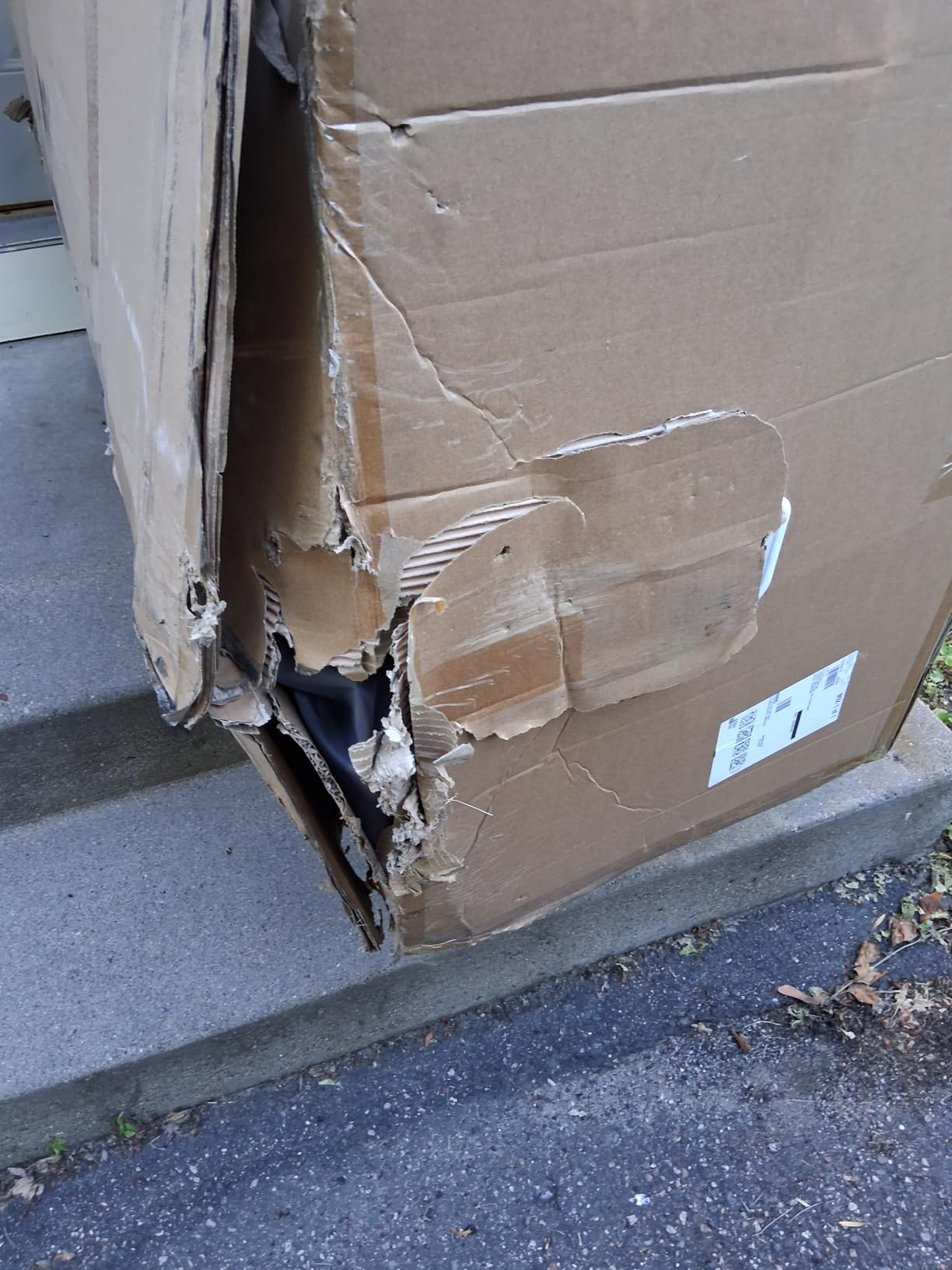
Owners report the wide W-hull giving confident stability while casting, which is the thing pedal anglers actually want. At 380 lb it is rated higher than every boat here except the Outlaw, so it accommodates larger paddlers than the typical first angler needs.
Hands-free propulsion is the whole reason to pay more
Once you get used to it, pedaling changes how you fish. You can hold a trolling motor setting and still work a lure, you can drift a long point without fighting current, and your hands stay free for casting. Paddle kayaks require you to stop and grab a paddle every time you reposition.
The fin-drive system is quieter than a propeller and needs less space in the water, which helps in shallow, weedy water. The trade is drag, weight and a propeller that will find every piece of fishing line you drop near it. Keep a line cutter handy and check the drive after every shoreline run.
The modular design is the sleeper feature
At 9.5 feet and 62 lb, this is not a lightweight boat, but it splits into two pieces that a single person can carry. Transport without a trailer or roof rack is the most underrated advantage of pedal kayaks, and this one takes it further than most.
Flush-mount rod holders, accessory track rails and storage hatches are included, along with a stadium seat and paddle. Having the seat and paddle in the box removes two extra purchases that most paddle-first boats leave you to make.
The warranty is the weak point: one year on the hull, against five years on the Lifetime models. That gap is worth weighing if you intend to keep the boat for a decade, which many paddlers do.
Who should buy it
Buy the Raptor if your water involves long runs, trolling or anchoring in current, and if you have nowhere to store a rigid 10-foot hull. If you fish a pond a mile from the road and enjoy paddling, the extra cost buys capability you will rarely use.
5. Pelican Catch Mode 110 – Best Wide Deck for Standing Casts
Pelican Catch Mode 110 – Angler Fishing Kayak with Lawnchair seat – 10.5 ft
128 inch by 34.5 inch polyethylene hull
375 lb capacity
63 lb listed weight
Tunnel hull
ERGOBOOST seat
+ Pros
- Flat wide deck for standing casts
- Tunnel hull makes entry and exit easy
- ERGOBOOST seat folds up 6 inches
- 375 lb capacity with added hull flotation
- Still manageable to load solo
- Cons
- Heaviest boat here at 67 lb
- Paddle not included
- Only 3 flush-mount rod holders
If your technique involves standing up to cast, the deck is the whole story. The Catch Mode 110 has a flat, wide casting platform with nothing in the way, so you can rise, plant your feet and make the cast without clipping a rod holder or stepping on a tackle tray.
The tunnel hull is the second reason to like it. Tunnel hulls sit low and flat, which makes a boat feel stable and makes getting in and out of it far easier, and the wide EVA seat pad on top of that adds comfort on a long day.
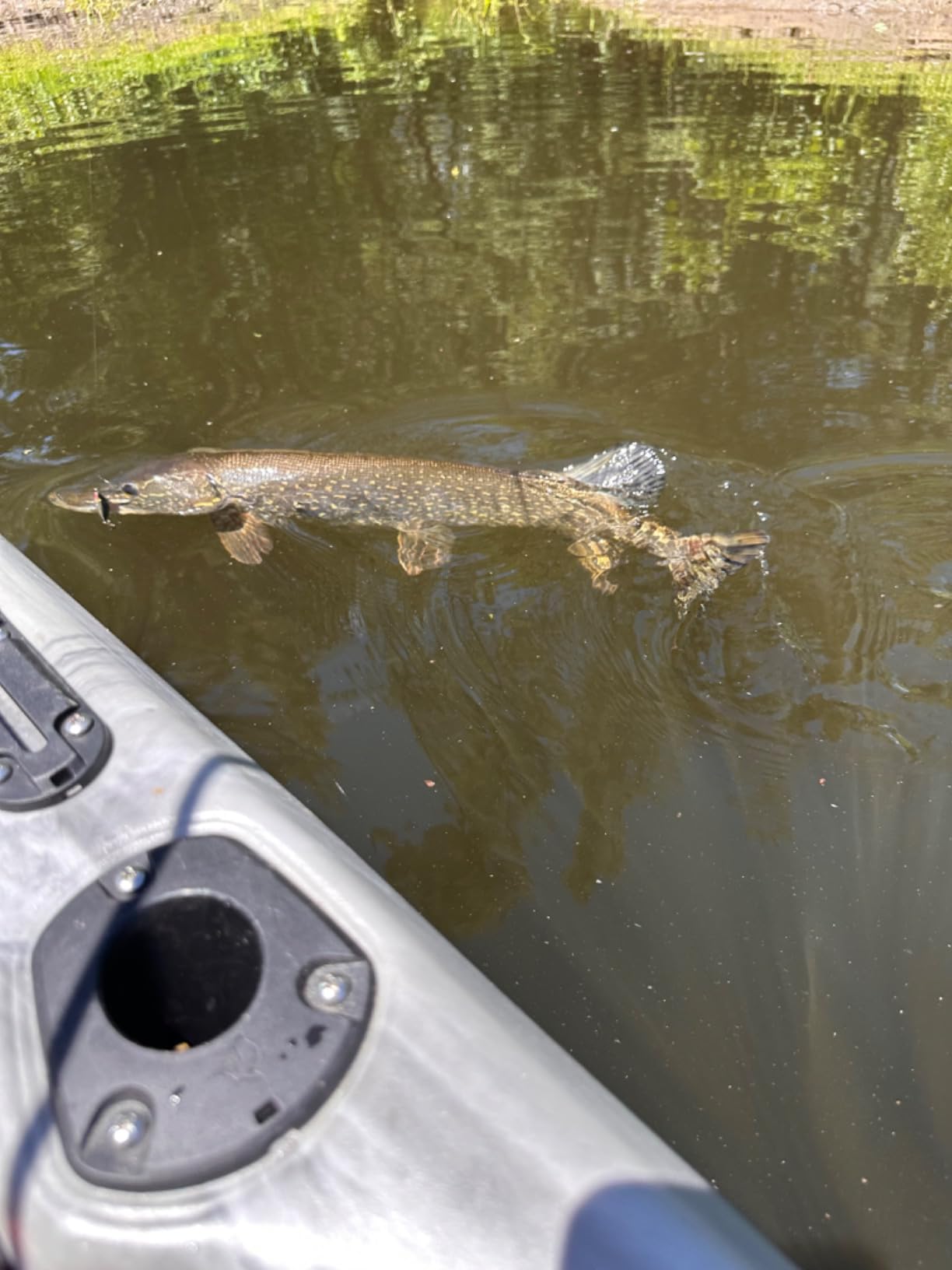
The ERGOBOOST seating system is the feature owners write about most. It folds up to add six inches of seat height, and a higher seat means you see over wave tops and your rod clears the water on a forward cast. Several reviewers describe it as among the most comfortable angler seats they have used.
Weight is the number to plan around
At a listed product weight around 63 lb, with a higher figure quoted for the packed kayak, this is the heaviest boat in the roundup. It is still manageable to load solo, but it is the one most likely to matter on a soft launch where you would rather have a cart. If you are buying a kayak cart anyway, this weight is a non-issue.
Extra flotation is molded into the hull to meet or exceed ABYC standards. That does not change the handling, but it is the kind of detail that matters on open water where the boat is further from shore than you planned.
Capacity, rod holders and the fit picture
With 375 lb of capacity, this boat covers most anglers and their gear without the tight math that a 275 lb hull demands. Three flush-mount rod holders is one fewer than several rivals here, so if you routinely fish three rods, budget for an add-on.
Under-seat storage and the EVA pad round out the deck layout. The seat folds rather than removes, which keeps the boat’s footprint simple when you load it.
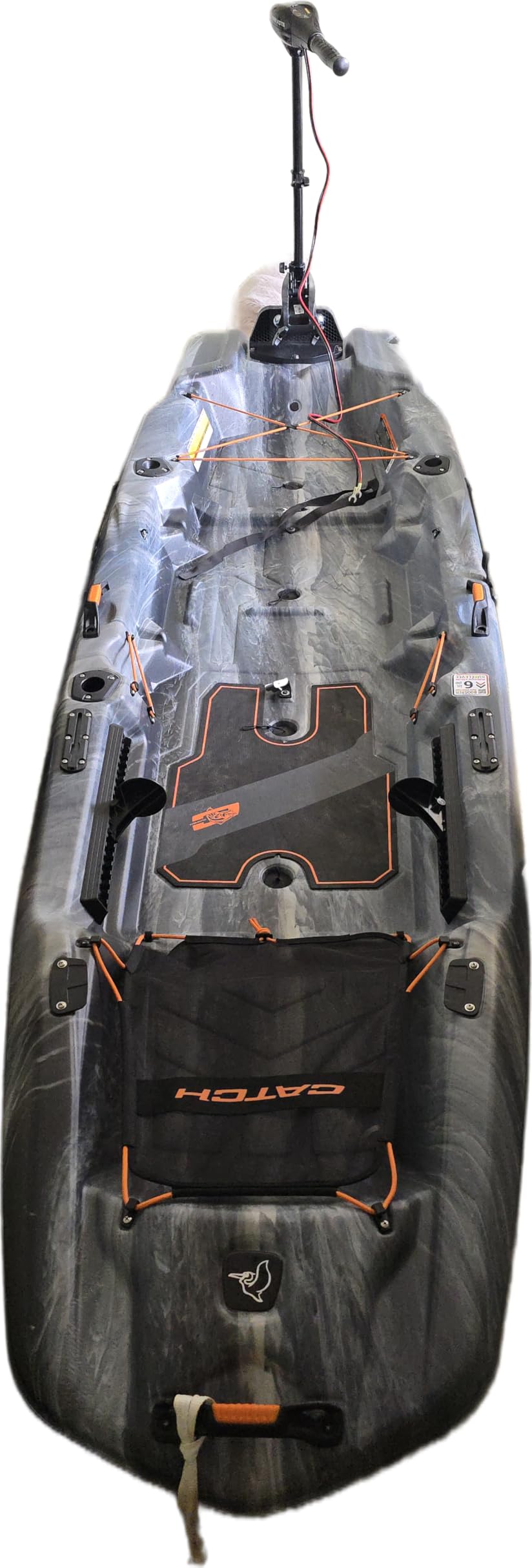
A paddle is not included. At this length and width, a properly sized paddle matters more than usual because the hull needs a longer shaft to turn efficiently.
Who should buy it
Buy the Catch Mode 110 if you stand to cast, want a higher view, and can handle the heaviest hull here with a cart or a second set of hands at the ramp. It is also a strong saltwater option because of the flotation and tunnel hull.
6. Lifetime Tamarack Pro 103 – Best Adjustable Seating for Longer Days
Lifetime Tamarack Pro 103 Sit-On-Top Kayak, Lightning Fusion, 10 ft. 3 in.
123 inch by 31 inch plastic hull
300 lb capacity
57.5 lb
Adjustable framed seat and footrests
Center hatch with bucket
+ Pros
- Adjustable framed seat and footrests
- Good stability and tracking for a fishing hull
- Accessory track adds rigging options
- Removable front hatch basket
- 300 lb capacity suits larger paddlers
- Cons
- Heavier build makes solo carry harder
- Paddle not included
- Scupper plugs not included
- Quality control on delivery varies
The Tamarack Pro 103 is the version of the Lifetime line for an angler who has decided that comfort is not optional. It replaces the basic molded seat with an adjustable framed seat and adjustable footrests, which is the change owners notice on hour three of a long day.
Owners describe it as a comfortable step up from the standard Tamarack, with good stability and better tracking than the shorter model. At 10 feet 3 inches and 300 lb of capacity it also handles a slightly larger paddler than the 275 lb boats here.
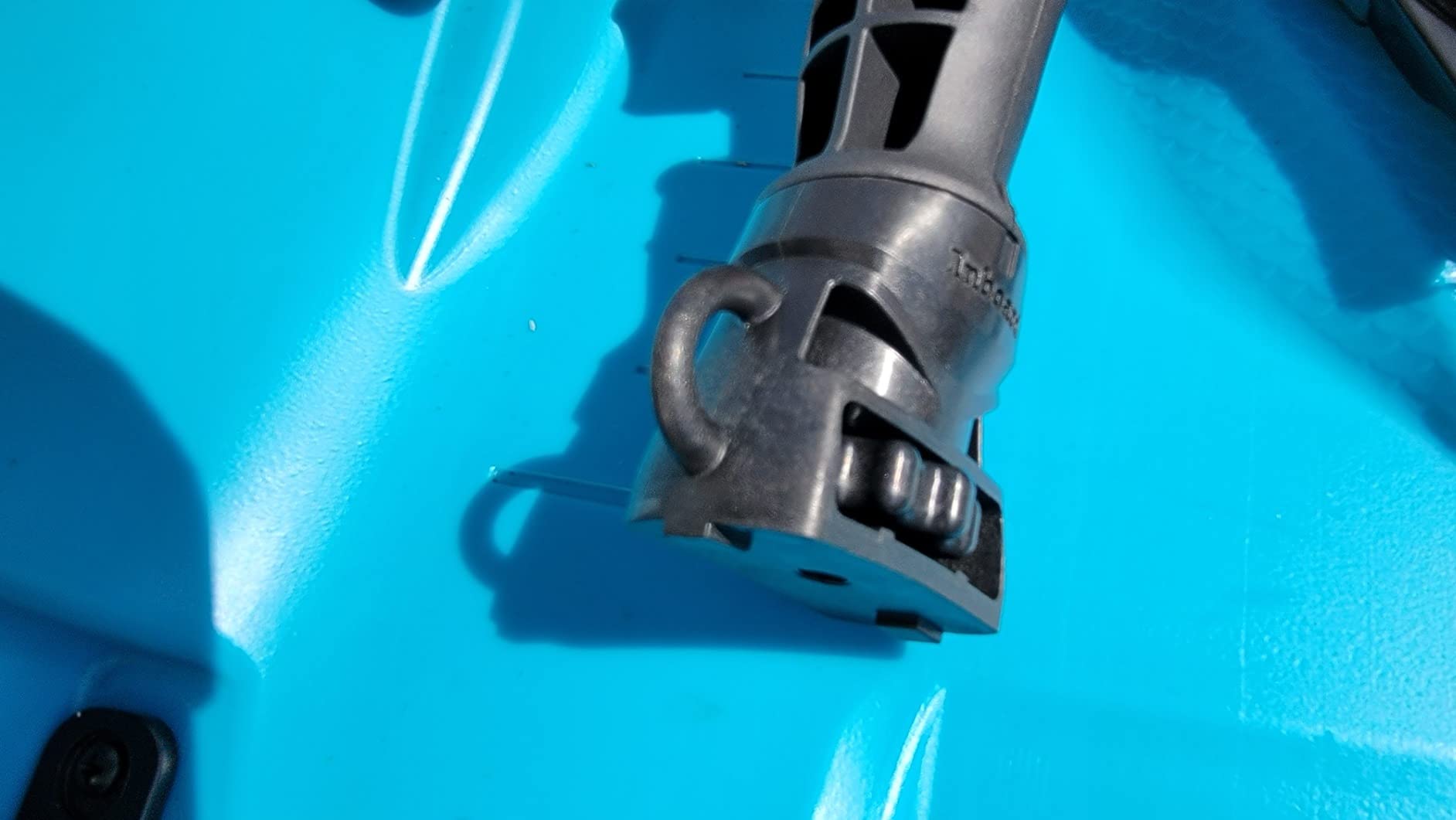
Deep hull channels give it straight-line tracking, and chine rails add lateral stability when you lean. That combination is what makes it feel less like a small pond boat and more like something you can paddle across a lake without constant correction.
The accessory track and hatch system
The mounting track along the gunwale is the most upgrade-friendly thing on this boat. Rod holders, a camera mount, a fish finder arm or a light can all be repositioned along the rail instead of being permanently fixed. On a boat you plan to keep for years, that flexibility has real value.
The center storage hatch includes a bucket, which is more useful than it sounds because it stops loose tackle from sloshing around the hull. Front and rear bungee cords, a deeper tank well and a built-in catch ruler complete the storage package.
What arrives, and what does not
Expect to buy a paddle. The hull is also delivered without scupper plugs, so water that splashes in through the drain holes will not always leave. Plugs are a five-minute fix and cheap, but plan on them.
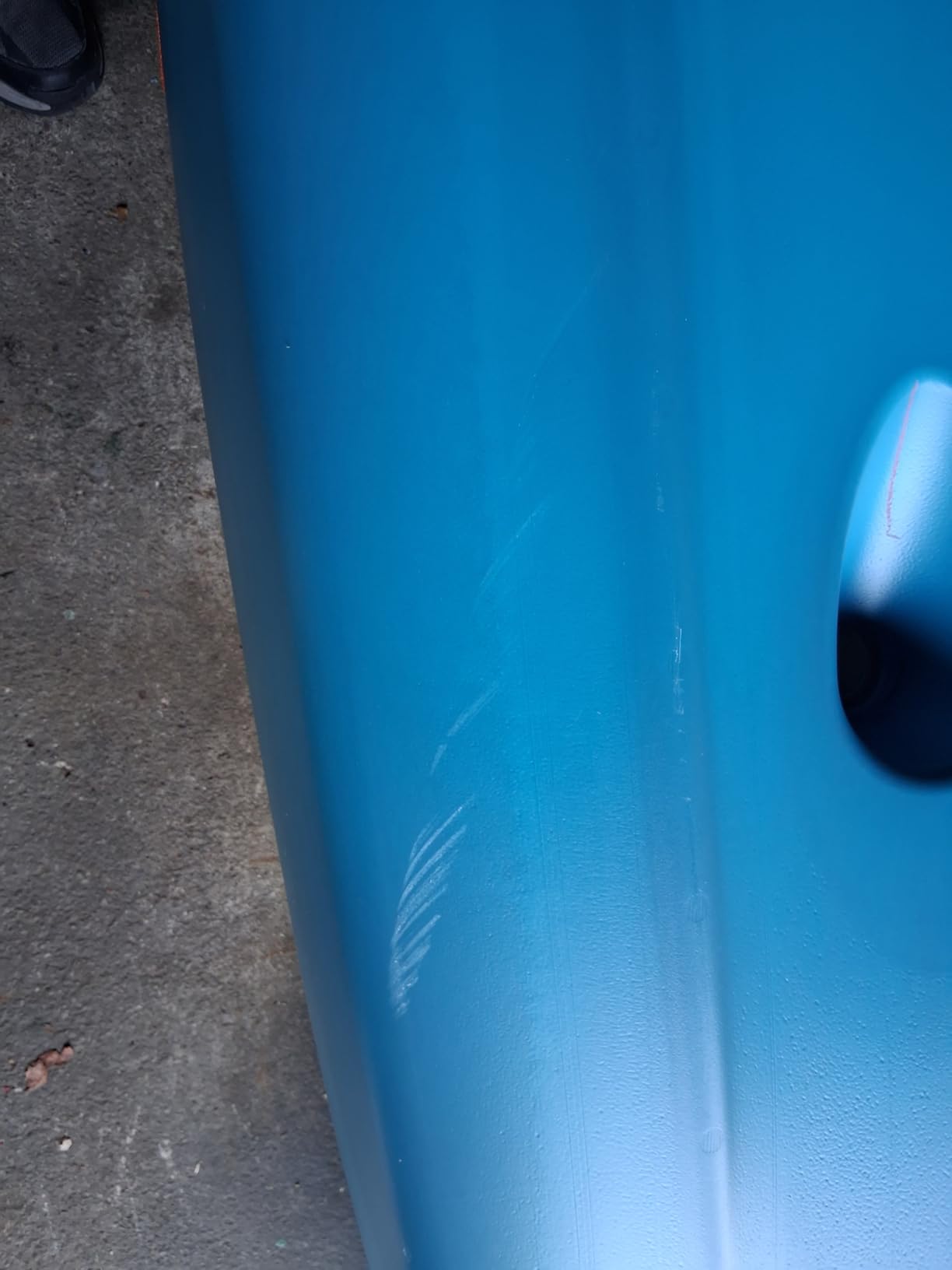
Quality control is the main complaint in the reviews, and it is about delivery rather than the boat: some boats arrive with unattached foot braces and plastic shavings inside the hull, and there are occasional reports of a used or damaged kayak arriving instead of a new one. Inspect the boat the day it is delivered.
The five-year limited warranty is among the longest in this roundup, which partly offsets that concern once the boat is in your hands.
Who should buy it
Buy the Pro 103 if you sit for long sessions, want to fine-tune leg position, or plan to add electronics later. Skip it if carrying the boat solo over distance is part of your routine, because 57.5 lb is not a light load.
7. Pelican Catch Classic 100 – Best Balanced 10-Foot Tunnel Hull
Pelican Catch Classic 100 Angler – Sit-on-Top Fishing Kayak – Ergocast Dual Position Seating System – 10 ft – Outback
120 inch by 34 inch polyethylene hull
350 lb capacity
57 lb
Dual position seat
Rigging tracks
+ Pros
- Dual position seat switches high and low
- Tunnel hull is stable and easy to board
- 350 lb capacity with added flotation
- Two 4-inch rigging tracks
- Quick-lock front hatch and rear tank well
- Cons
- Only 2 flush-mount rod holders
- Paddle not included
- Molded seat tires some anglers on long days
The Catch Classic sits in the middle of this list in the most useful way: 10 feet long, 34 inches wide and 350 lb of capacity. That is beginner-sized without being small, and it is the pick here for an angler who wants to stand and cast but does not need the very largest boat.
The dual position seat is what sets it apart from the other molded seats in this roundup. It switches between high and low, so you can sit up to cast and drop down to paddle efficiently instead of choosing one and living with it.
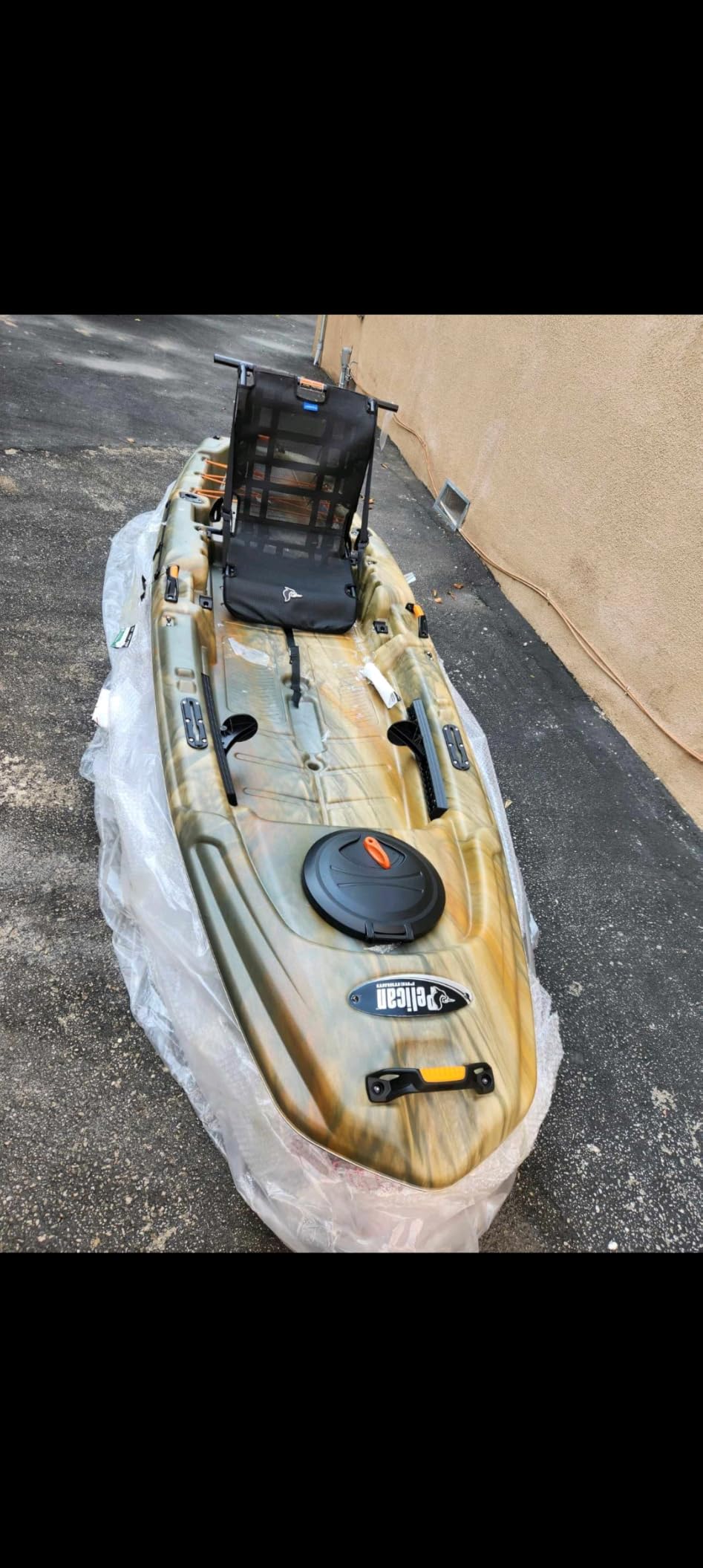
Two 4-inch rigging tracks are a real addition rather than a marketing line. They let you move rod holders, a camera or a light along fixed positions, which is more flexibility than most boats at this length offer.
Storage and fittings for a full day on the water
The front quick-lock hatch seals without fuss, and the rear tank well with bungee cords takes a cooler or a dry bag. Additional flotation is molded in to meet or exceed ABYC standards, which matters more in open water than the feature name suggests.
Paddle tie-downs, adjustable footrests and a bottle holder are small touches that remove small annoyances. A bottle that rolls under the seat on a two-hour paddle is the kind of thing you notice constantly.
Where it falls short
Two flush-mount rod holders is the thinnest angler fitting count among the Pelicans here. If you fish two rods and keep a live bait setup, that is workable; if you run three rods, plan an add-on mount.
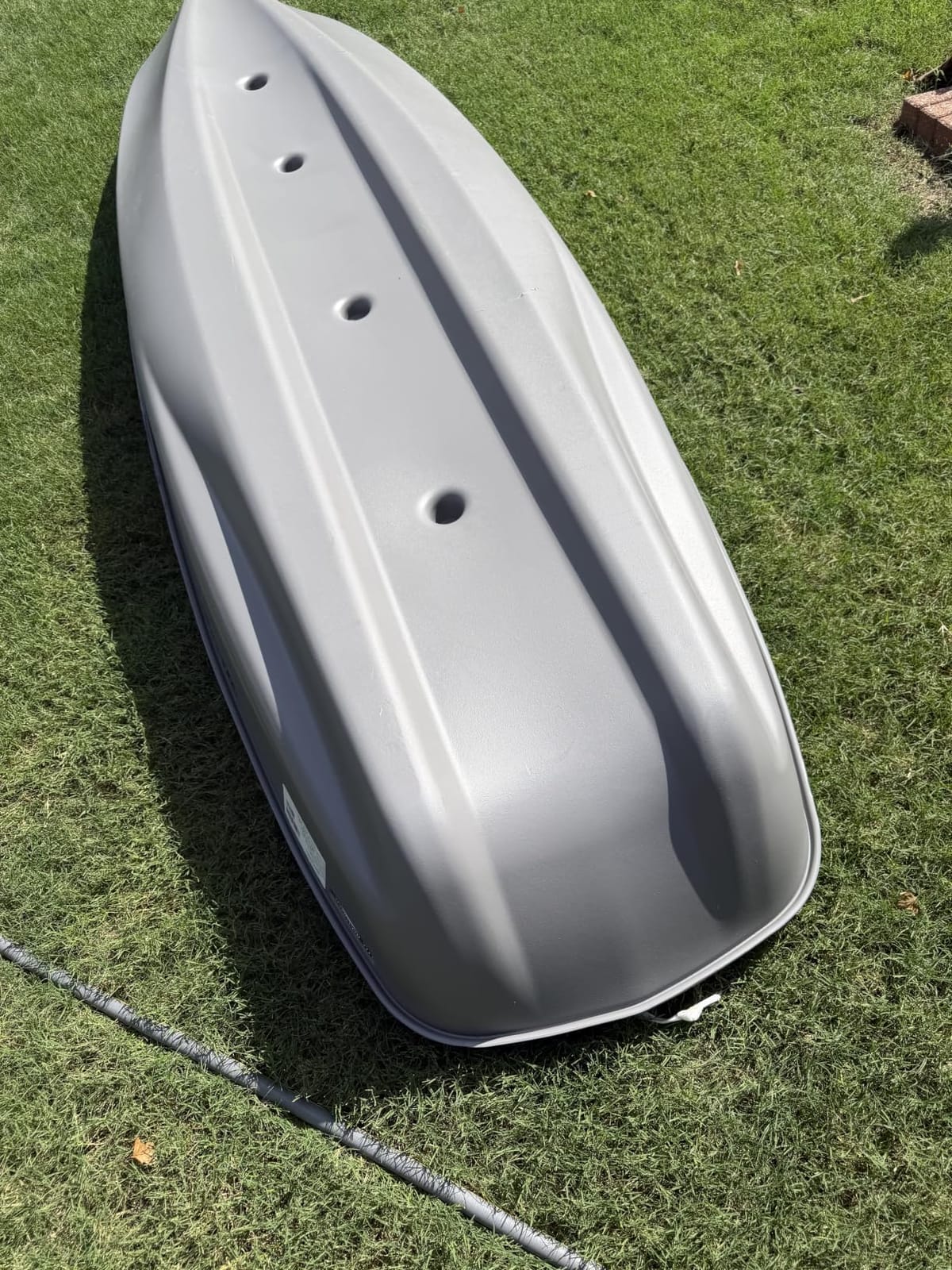
The molded seat is also the least forgiving for long days. Owners who spend eight hours in it report fatigue that the frameless seat on the Outlaw does not cause. Ergonomic carrying handles and a 57 lb weight help with the handling side.
The rating here is 4.2 out of 5 across 132 reviews, which is the lowest review volume in the group. There is less long-term owner history behind this boat than behind the Lifetime models.
Who should buy it
Buy the Catch Classic if you want a step up from a small pond boat but do not want to handle an 11-foot hull. It suits medium and larger paddlers who want room to cast.
8. Lifetime Tahoma 100 – the Budget Pick with a Paddle in the Box
Lifetime Tahoma 100 Sit-On-Top Fishing Kayak, Paddle Included
120 inch by 31 inch HDPE hull
275 lb capacity
50 lb
Paddle included
Flat bottom with chine rails
+ Pros
- Very stable flat bottom with chine rails
- Ready to use with the paddle included
- Easy to board and exit
- HDPE survives beach launching and saltwater
- Front and rear T-handles
- Cons
- Slower than lighter longer kayaks
- Plastic seat base is uncomfortable on long trips
- Included paddle is short
- Only one rod holder and one small hatch
The Tahoma 100 answers the beginner question that no roundup bothers with: is a cheap sit-on-top a waste? For a first season on a pond or a slow river, it is not. It arrives with a paddle, the hull is UV-protected HDPE, and owners consistently report stability that feels disproportionate to the money.
Getting in and out is easy, which matters more than buyers expect. An open deck with a flat bottom and low sides means you can board from a soft bank without a cart and without falling in.
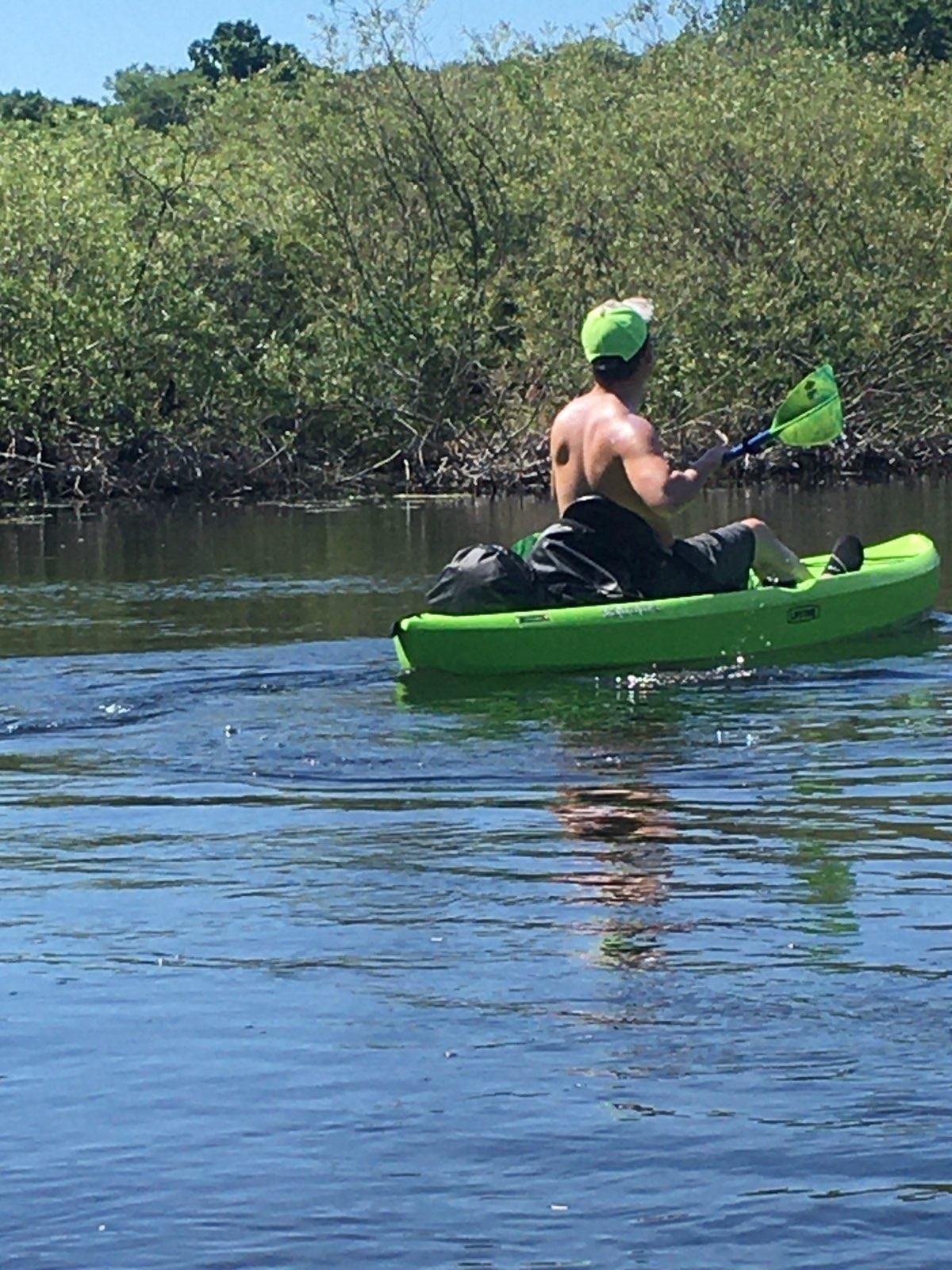
The cost of the bargain is speed and comfort. Owners note it is slower than lighter, longer kayaks, and the plastic seat base becomes uncomfortable on long 15 to 20 mile river trips. For a first few trips to a nearby lake, neither matters.
Hull, tracking and what the flat bottom gives up
The flat bottom with chine rails resists tipping in a way a rounded hull does not, and deep hull tracking channels support straight-line paddling. Reviewers describe the result as stable, not fast. That is the correct trade for a beginner fishing boat.
Multiple footrest positions and an adjustable padded seat back and pad help fit different sized paddlers without tools. For a boat at this level, that adjustability is better than most.
Fittings and honest limits
You get one top-mount rod holder and a 6-inch center storage hatch, with front and rear shock cords and a paddle keeper. That is enough for a rod and a small tackle bag. It is not enough for a multi-rod setup or a livewell, and owners planning to carry more should look one tier up.
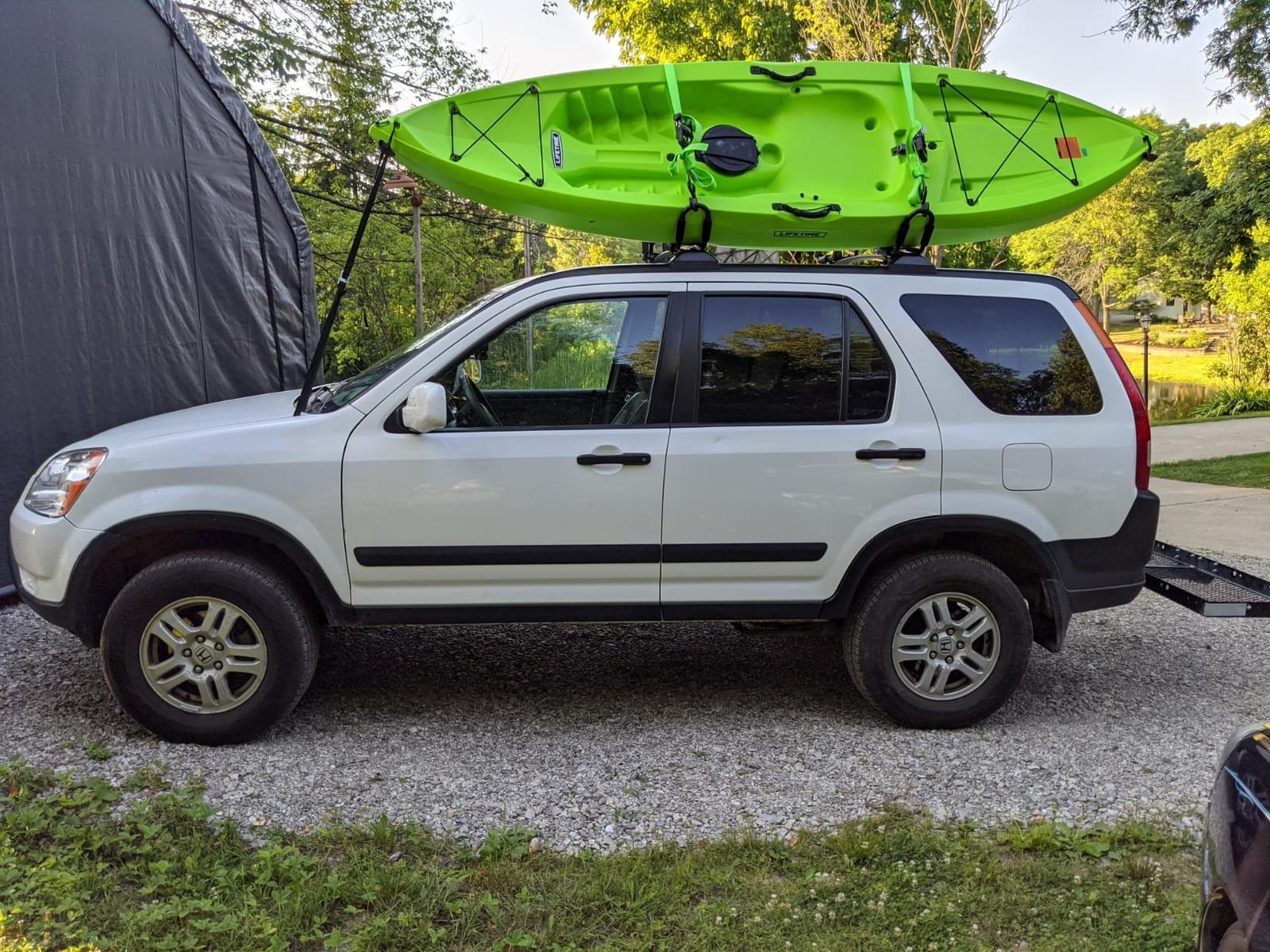
The included paddle is short and most owners replace it early, so factor that into your real cost. The backrest has also been reported to crack under heavy leaning, which matters if you like to brace hard in current.
The five-year limited warranty is better than the length of this list would suggest, and UV-protected HDPE is a genuinely durable material that survives beach launching and saltwater rinse-down.
Who should buy it
Buy the Tahoma 100 if your fishing happens close to home, you want to know you can flip it and get back up, and you would rather spend the difference on a good paddle, a PFD and a dry bag. Skip it if you cover long distances or plan a full day of standing.
How to Choose a Beginner Sit-On-Top Fishing Kayak
The eight boats above cover the range a first angler needs, and the differences between them come down to three numbers: width, capacity and weight. Get those right and the feature lists matter far less. Here is the decision order I would use.
Length: where a beginner should start
Beginners should look at 10 to 12 feet. Below 10 feet you give up storage and tracking for portability, and the tracking loss matters the moment a breeze picks up. Above 12 feet, the boat gets heavy and hard to control in shallow water, where most beginners do most of their fishing.
A longer hull moves in a straight line and covers distance faster. A shorter hull turns on a dime and is easier to paddle in tight quarters. Experienced buyers in fishing forums converge on the 10 to 12 foot band for exactly this reason.
Width: the 32 inch floor experienced anglers repeat
At least 32 inches of width is the most commonly repeated number from experienced paddlers, with 34 inches described as better. Width buys stability, and stability buys you the ability to fish rather than paddle. Every boat in this roundup sits at or near 31 to 35 inches, which is the band you want to shop in.
The counterpoint is real: wide hulls have more surface area to catch wind, so a very wide boat can be pushed off line by a light breeze even while it feels rock solid. That is the trade beginners rarely expect. A boat around 32 to 34 inches balances both sides of it.
Weight capacity and the 120 rule
The 120 rule is a sizing guideline, not a law: add the hull length in inches to the hull width in inches, and if that total is at or under the stated capacity in pounds, the rating is credible for that paddler. It is the fastest way to check whether a boat is honestly rated for you.
Run it in four steps:
1. Measure the hull length in inches.
2. Measure the hull width in inches.
3. Add the two numbers together.
4. Compare that total to the published weight capacity in pounds. If your total is higher than the rating, the boat is undersized for you.
Capacity covers the paddler, the gear and any passenger. If you fish alone with a rod and a tackle bag, the lower-rated 275 lb boats give plenty of room. If you are a larger paddler or carry a cooler, move up rather than trimming gear.
Hull material, rocker and tracking
Nearly every entry sit-on-top is rotomolded or blow-molded polyethylene, in high-density or high-molecular-weight grades. That material is why the category is affordable and why it tolerates beaching, boat ramps and hard storage. It is not as stiff as a composite boat and does not need to be.
Rocker is the front-to-back curve of the hull. More rocker means the boat turns tighter and tracks worse; less rocker means it holds a line and feels slower to turn. The skeg on the Tamarack models exists for the same reason. In wind, tracking beats turning speed almost every time.
Seat height, foot braces and fit
A raised seat gets your legs out of the water and makes casting easier, which is why angler boats sit higher than general-purpose kayaks. The taller the seat, the better you see and the more you feel heel pressure when you lean hard. A frame seat with a high back is the most comfortable option for a full day; a molded chair is lighter and cheaper.
Adjustable footrests matter more than buyers expect. Feet that cannot lock in push you forward on every stroke and will end a long day with numb legs. Several boats here include multiple footrest positions or fully adjustable braces, and that is worth paying for.
Storage and angler fittings that actually matter
Rank the fittings this way: a tankwell or hatch you can fit a cooler into, then rod holders within reach of the seat, then a mounting track for a light or camera, then a dry hatch. Everything else is decoration on a first boat.
Scupper holes deserve a mention. These self-draining openings in the hull floor let water run out instead of pooling, which is one of the main reasons sit-on-tops work so well in the rain. Buy the plugs if a boat does not include them, or you will be carrying water.
Paddle vs pedal drive vs trolling motor
Paddle is the right answer for most beginners. It costs the least, has nothing to break, goes shallow, and teaches you the boat. Pedal drive roughly doubles the outlay and adds a propeller that catches weeds and line, but it frees your hands for casting and trolling. A trolling motor adds hands-free movement to a paddle boat if the hull has a mounting plate, but it adds a battery to store and charge.
Owners in fishing forums overwhelmingly describe the same path: start paddling, upgrade to pedal later if the fishing justifies it. There is no such thing as a bad kayak, only a boat bought for water you do not fish.
Transport, storage and the first-launch checklist
Before you buy, check the whole journey, not just the water. A 51 lb boat with T-handles is a one-person job to a roof rack. A 67 lb hull on a soft bank is a two-person job or a cart. A modular pedal kayak fits in a closet and a trunk. The best kayak for you is the one you will actually launch.
For your first trip out, carry a properly fitting PFD, a whistle, a paddle leash, a dry bag, water, a light if you will be out late, and a way to tell someone your route and return time. Then spend ten minutes on flat water close to shore learning to balance, getting in and out, and recovering from a lean before you fish a single cast.
Frequently Asked Questions
What is the best sit-on-top kayak for beginners?
The best sit-on-top kayak for beginners is the widest boat you can carry, ideally 32 to 34 inches, with a raised adjustable seat, a capacity rating that clears the 120 rule for your weight, and enough storage for a rod and a tackle bag. Our top pick, the Lifetime Tamarack Angler 100, meets all of those and includes a paddle.
What is the 120 rule for kayaking and how does it work?
The 120 rule is a sizing guideline for checking whether a kayak’s weight capacity is realistic. Add the hull length in inches to the hull width in inches. If that total is at or under the boat’s published capacity in pounds, the rating should hold for a paddler of your size. Example: a 120 inch by 31 inch hull totals 151 inches, which sits well under a 275 lb rating.
What are the disadvantages of sit-on-top kayaks?
Sit-on-top kayaks give up five things. They track worse than long touring hulls in wind. They are slower than lighter boats. They have no enclosed dry storage, so gear needs a dry bag. They expose your legs to cold water, which limits winter fishing. And a wide hull catches wind, so a very wide beginner boat can still get pushed off line.
Which type of kayak is better for fishing, a pedal or a paddle?
A paddle kayak is better for most beginners because it costs the least, needs no maintenance, reaches shallow water and teaches you the boat. A pedal drive is better when you want hands-free control for trolling and long runs, but it roughly doubles the outlay and adds a propeller that catches weeds and fishing line. Most owners start paddling and upgrade later.
What size fishing kayak should a beginner buy?
Most beginners should buy a sit-on-top fishing kayak between 10 and 12 feet long and 32 to 34 inches wide. That band balances tracking in wind against the maneuverability you need in shallow water, fits most roof racks and car trunks, and leaves room for a cooler. Below 10 feet you lose tracking, and above 12 feet the boat gets heavy and hard to control.
Which Sit-On-Top Kayak Should You Buy First?
If you want the single most reliable first fishing kayak, the Lifetime Tamarack Angler 100 is the one I would buy. It has the deepest owner history in the group, it includes a paddle, and one person can load it. If portability is your binding constraint, the Pelican Sentinel 100X at 44.6 lb solves a problem no other boat here does.
Go bigger for a reason, not by default. A heavier angler or a tournament-minded setup belongs in the Perception Outlaw 11.5 with its 425 lb capacity and 35 inch beam, or the Pelican Catch Mode 110 if you plan to stand and cast on a flat deck. If you want hands-free propulsion and have nowhere to store a rigid hull, the Reel Yaks Raptor is the only one here that fits in a closet.
Whatever you choose, paddle it before you fish it. Ten minutes of flat-water practice, a properly fitted PFD, and honest numbers on width and capacity will do more for your first season than any feature on the spec sheet. Check the latest prices on each boat above, and buy the hull that fits the water you actually fish.