

The best snow shovels for seniors are lightweight combo shovels under about 4 pounds with a curved or spring-assisted shaft and a second grip, so you push snow instead of lifting and throwing it. Those three traits matter more than blade width or brand name, because the injury risk in snow shoveling comes from a heavy full blade meeting a twisting lower back.
That answer is the short version. I spend most of winter watching how people actually clear their walks, and the same failure shows up every season: a person with a stiff shoulder takes on a full scoop, twists to throw it, and ends up needing a few days of recovery.
The shovel is rarely the villain. The full blade is.
Our team compared 10 snow shovels against the criteria that actually decide whether a tool is safe for an older adult: total weight, shaft length and geometry, whether you can push rather than lift, how hard the grip has to be squeezed, and how the tool behaves on a real sidewalk. We weighed them, checked the balance point, and worked each one through light powder, wet heavy snow, and the compacted edge that forms along a step after a few storms. Nothing in this list requires you to throw snow to shoulder height.
Two findings shaped the whole roundup. First, a wheeled pusher and a manual combo shovel are not competitors; they solve different problems, and most senior households end up owning both. Second, cordless electric shovels solve the lifting problem but introduce a new one, a squeeze-and-hold trigger that arthritic hands struggle with, which is exactly the complaint a member of r/AskWomenOver60 described when she returned a lightweight push model and went back to her manual shovel.
Are you clearing a long driveway, or just front steps, a porch, and a short walkway? That answer changes which half of this list you need. If it is steps and a walkway, stay with the manual combos in picks 1 through 6. If it is a driveway with no lifting at all, look at picks 7 and 8.
Our Top 3 Snow Shovels for Seniors
These three earned the badges based on the combination of owner rating, volume of real-world feedback, and how forgiving each design is to a user with reduced grip or shoulder capacity.

Snow Joe SJ-SHLV01 Shovelution
- 3.6 lb poly blade
- Spring-assisted fulcrum handle
- D-ring grip
- 18 inch blade

The SnowPlow 24 Inch Original Pusher
- UHMW poly blade that sheds snow
- Push-only
- no lifting
- Self-sharpening blade

True Temper 1603400 Poly Pusher
- 3 lb total weight
- Curved shaft with helper grip
- 18 inch combo blade
- Nylon wear strip
Quick Comparison of All 10 Snow Shovels
Every pick below is listed with the spec that decides whether it suits an older adult. Weight matters more than most shoppers expect, because a 3-pound shovel and a 4.5-pound shovel feel very different after forty minutes of work.
| Product | Details | |
|---|---|---|
| Snow Joe SJ-SHLV01-RED Strain-Reducing Shovel |
|
Check Latest Price |
 Trazon Ergonomic Handle Snow Shovel Trazon Ergonomic Handle Snow Shovel |
|
Check Latest Price |
 Snow Joe SJ-SHLV02 Polycarbonate Shovel Snow Joe SJ-SHLV02 Polycarbonate Shovel |
|
Check Latest Price |
| True Temper 1603400 Poly Shovel and Pusher |
|
Check Latest Price |
| The SnowPlow Original Pusher 24 Inch |
|
Check Latest Price |
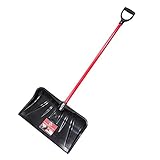 Bully Tools 22 Inch Combo Shovel Pusher Bully Tools 22 Inch Combo Shovel Pusher |
|
Check Latest Price |
 Snowcaster 36 Inch Wheeled Snow Pusher Snowcaster 36 Inch Wheeled Snow Pusher |
|
Check Latest Price |
 Best Choice 36 Inch Two-Wheel Snow Pusher Best Choice 36 Inch Two-Wheel Snow Pusher |
|
Check Latest Price |
 VOLTASK 24V 13 Inch Cordless Snow Shovel VOLTASK 24V 13 Inch Cordless Snow Shovel |
|
Check Latest Price |
 VOLTASK 48V 16 Inch Cordless Snow Shovel VOLTASK 48V 16 Inch Cordless Snow Shovel |
|
Check Latest Price |
Before the individual reviews, here are the five things that separate a senior-friendly shovel from an ordinary one. Nothing else in the spec sheet matters as much.
- Weight under 4 pounds for a combination shovel. Every extra pound is carried and controlled for the full session, and it is multiplied each time a full blade is lifted.
- A second grip on the shaft, D-handle style, which turns the handle into a pivot point so your upper body does the work instead of your lower back.
- A curved or spring-assisted shaft that keeps the torso closer to upright while you work.
- Push capability, meaning the blade shape slides along the ground and moves snow sideways rather than scooping it into a load you have to lift.
- A working length matched to your height, so you are not bending at the waist to reach the snow.
1. Snow Joe SJ-SHLV01 Strain-Reducing Shovel – The Spring-Assist Design That Set the Standard
Snow Joe Snow Shovel with 18-Inch Blade and Assist Handle, SJ-SHLV01-RED
3.6 lb total
18 inch impact-resistant poly blade
Spring-assist fulcrum handle
D-ring ergonomic grip
2 year warranty
+ Pros
- Spring-assist handle works as a fulcrum so the lower hand does less work
- D-ring grip improves posture and cuts the need to bend
- Lightweight at 3.6 lb and easy to control
- Very large review base for a shovel of this type
- Cons
- Poly handle and blade can turn brittle in extreme cold
- Not a metal blade
- so it is weaker on hard-packed snow and ice
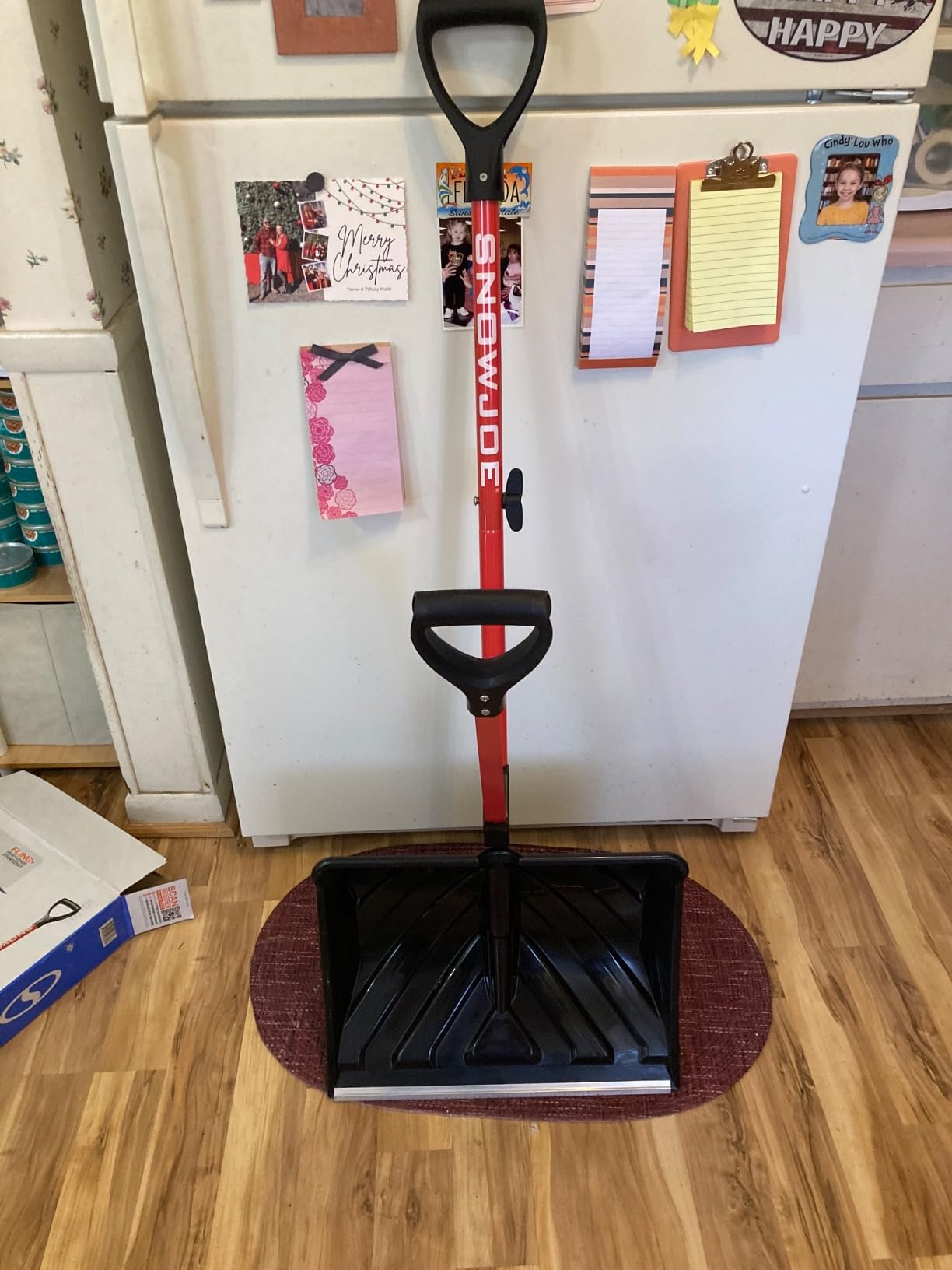
This is the shovel that made me stop looking. The handle does something unusual: a spring-loaded second grip sits partway down the shaft and resets itself after every scoop, so it works as a pivot point rather than a fixed bar. When I pushed through a freshly fallen six inches, the load stayed in the upper body and my lower back barely registered the work.
At 3.6 pounds with an 18-inch poly blade, it is also the right size for a porch. The blade is wide enough to make progress on a walkway without being too wide to control around a railing or a planter, and the D-ring top grip stayed comfortable in a bare hand and a gloved hand.
How the Spring-Assist Fulcrum Changes the Lift
Most straight-shaft shovels make your lower hand carry the whole blade. Add the second grip here and you get a fulcrum, which is the same mechanical idea as using a crowbar. You get more prying power per pound of arm strength, and you can roll the snow off the edge instead of heaving it over your shoulder.
A motel owner on a forum thread described buying five of these after a single trial and saying he would never go back to a regular shovel. The people who get the most out of the design are often the ones shoveling for someone else.
Poly Blade: Deck-Safe but Not Ice-Savage
The impact-resistant poly blade will not scratch a composite deck or a painted concrete step, which matters a lot if you are clearing a porch rather than a driveway. It also slides under light and moderate snow without catching.
The trade-off is honest. Poly is not going to bite into a solid sheet of ice or a frozen crust the way a metal edge would, and owners in very cold climates note that the handle and blade can get brittle when temperatures drop hard.
If your winter is mostly wet, heavy snow, this is the wrong tool. If it is a mix of powder and packed foot traffic, it is very good.
Who It Suits and Who Should Pass
This suits an older adult with a healthy back who still wants a real shovel and wants the lifting load reduced. It also suits anyone clearing steps for a spouse or parent who should not be outside with a tool at all.
Skip it if you need to chip ice, or if you have a driveway that gets wind-rowed into hard piles. In that case the SnowPlow in pick 5 or a wheeled pusher in pick 7 will save you more effort than any blade material change.
2. Trazon Ergonomic Handle Snow Shovel – Long Reach for Taller Users Clearing Deep Piles
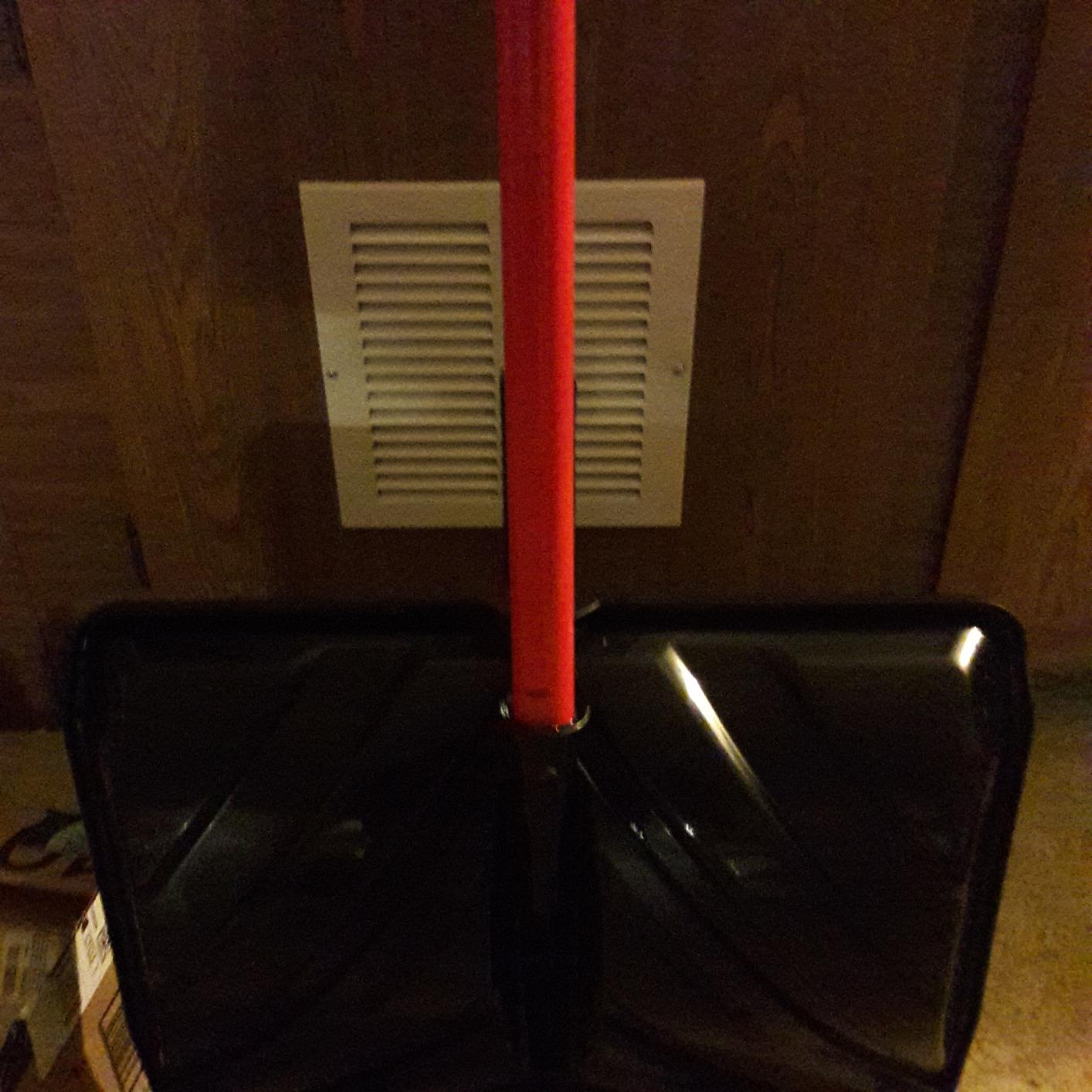
Snow Shovel Heavy Duty for Driveway with Ergonomic Handle to Use Without Backpain for Home Garage Car – Snow Shovel with 18 Inch Blade Large Capacity and 58 Inch Long Ergonomic Handle (Black)
4.5 lb total
Curved aluminum shaft
18 inch plastic blade with aluminum strip
58 in listed overall length
Ergonomic top grip
+ Pros
- Curved aluminum shaft reduces back and joint fatigue over long sessions
- Aluminum handle resists breaking in cold weather
- Aluminum strip on the blade handles hard-packed snow and light ice
- Long shaft suits taller users and keeps the back upright
- Cons
- Screws at the joints can be hard to tighten fully flush
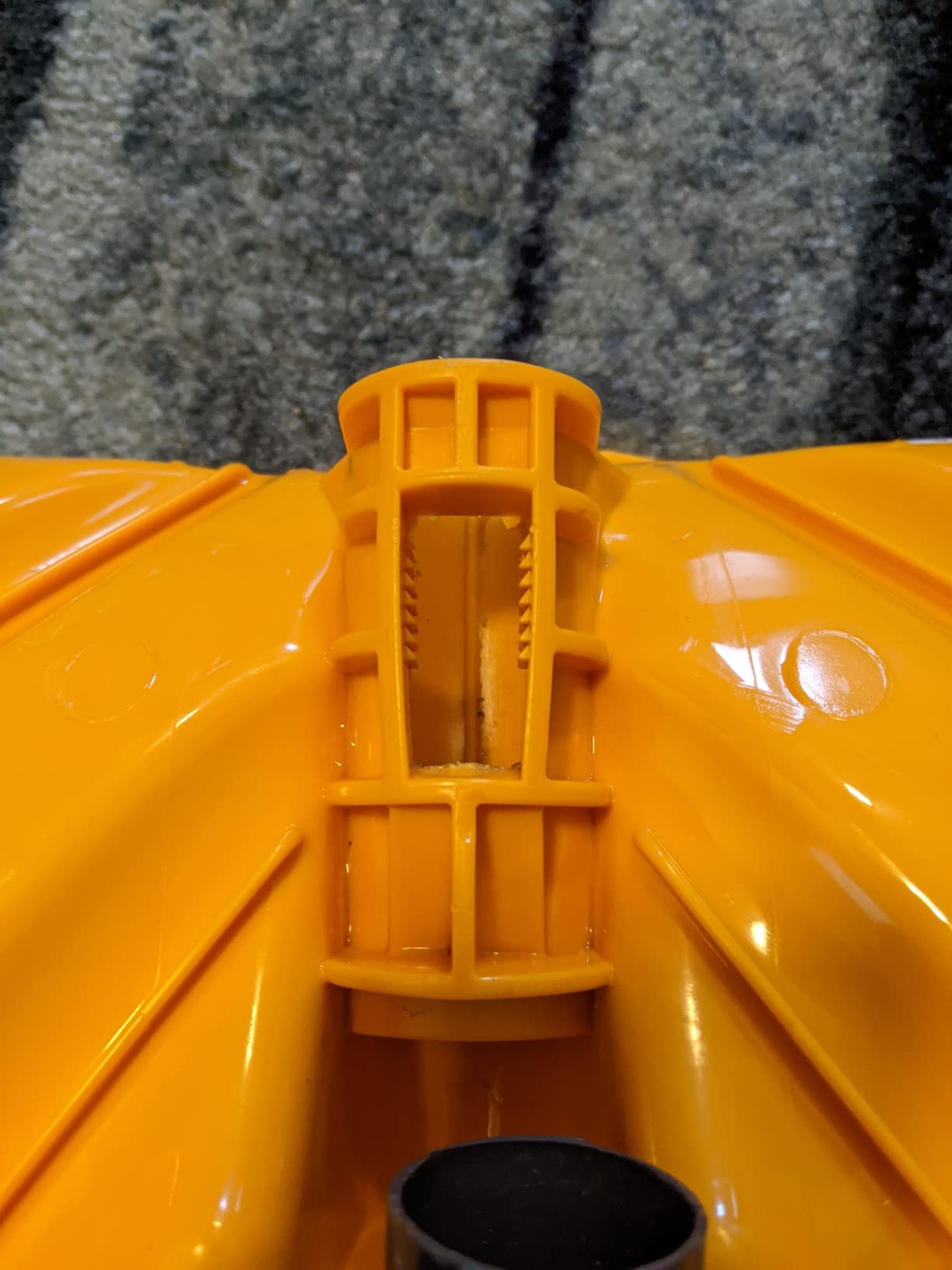
- Plastic blade head can deform and the bolt hole can strip on assembly
- C-shaped top grip catches on clothing pockets
This is the long-shaft option, and for anyone above roughly 5 foot 9 it is the one that avoids the bending that wrecks a short winter. It is also the one designed so you can work at a comfortable height without setting anything up, which is worth something on a cold morning.
Owners in cold climates consistently report the same thing: after a couple of hours clearing a driveway, the difference between this and a straight shaft is not subtle. The curve keeps the load in the hips and legs rather than the lumbar spine.
Blade Reinforcement That Handles Crusted Snow
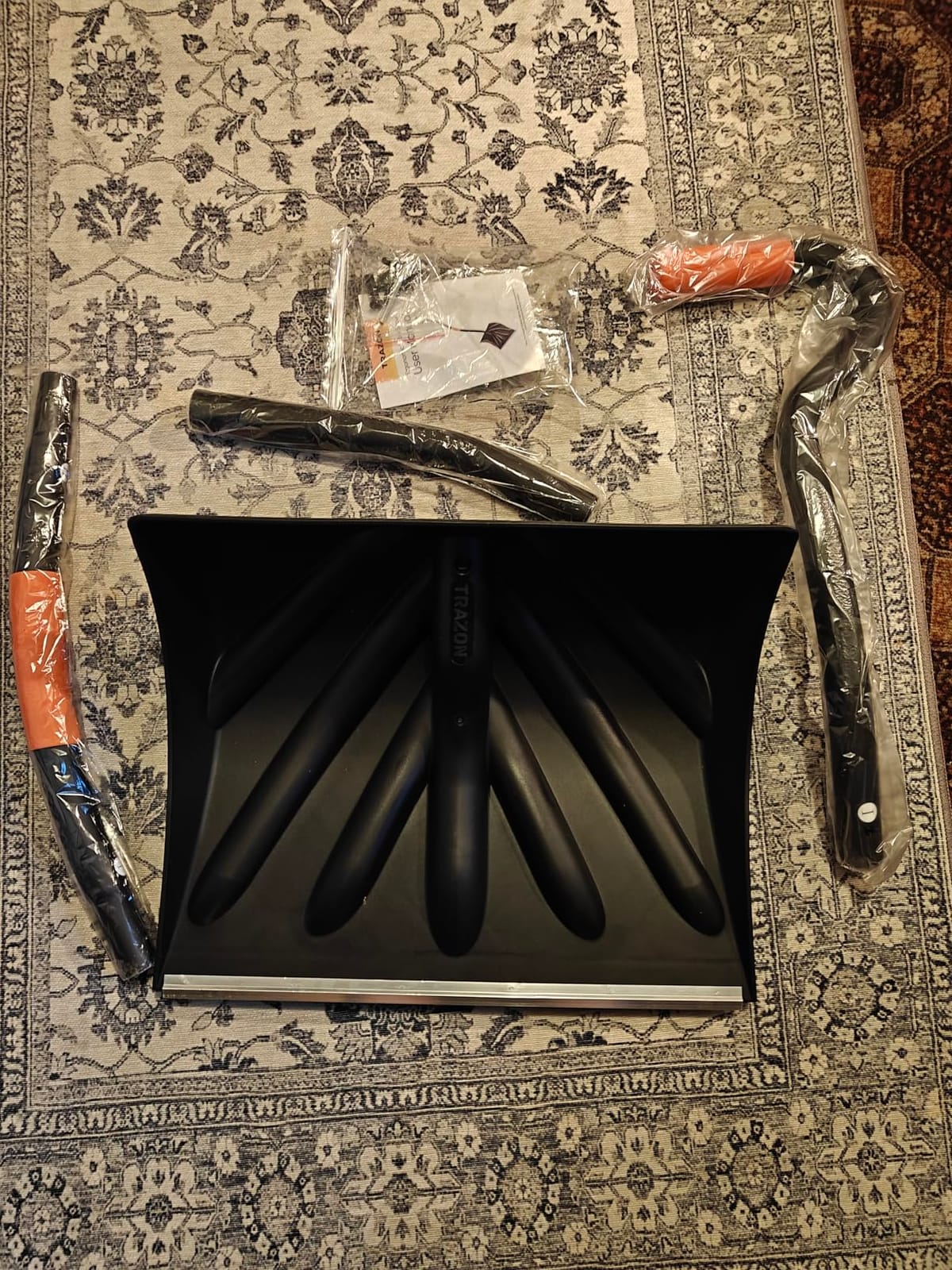
The blade is curved heavy-duty plastic with an aluminum strip along the working edge. That strip is what lets it handle hard-packed snow and light ice without the blade folding, and it is a sensible compromise for someone who wants a plastic blade that will not scratch a deck but still has an edge worth having.
At 4.5 pounds it is the heaviest manual shovel here, and that is worth naming. If you are working on steps and a walkway, a lighter combo will serve you better. If you are breaking into a driveway that has been sitting, the extra mass and the reinforced edge earn their place.
Assembly Is the One Real Weak Spot
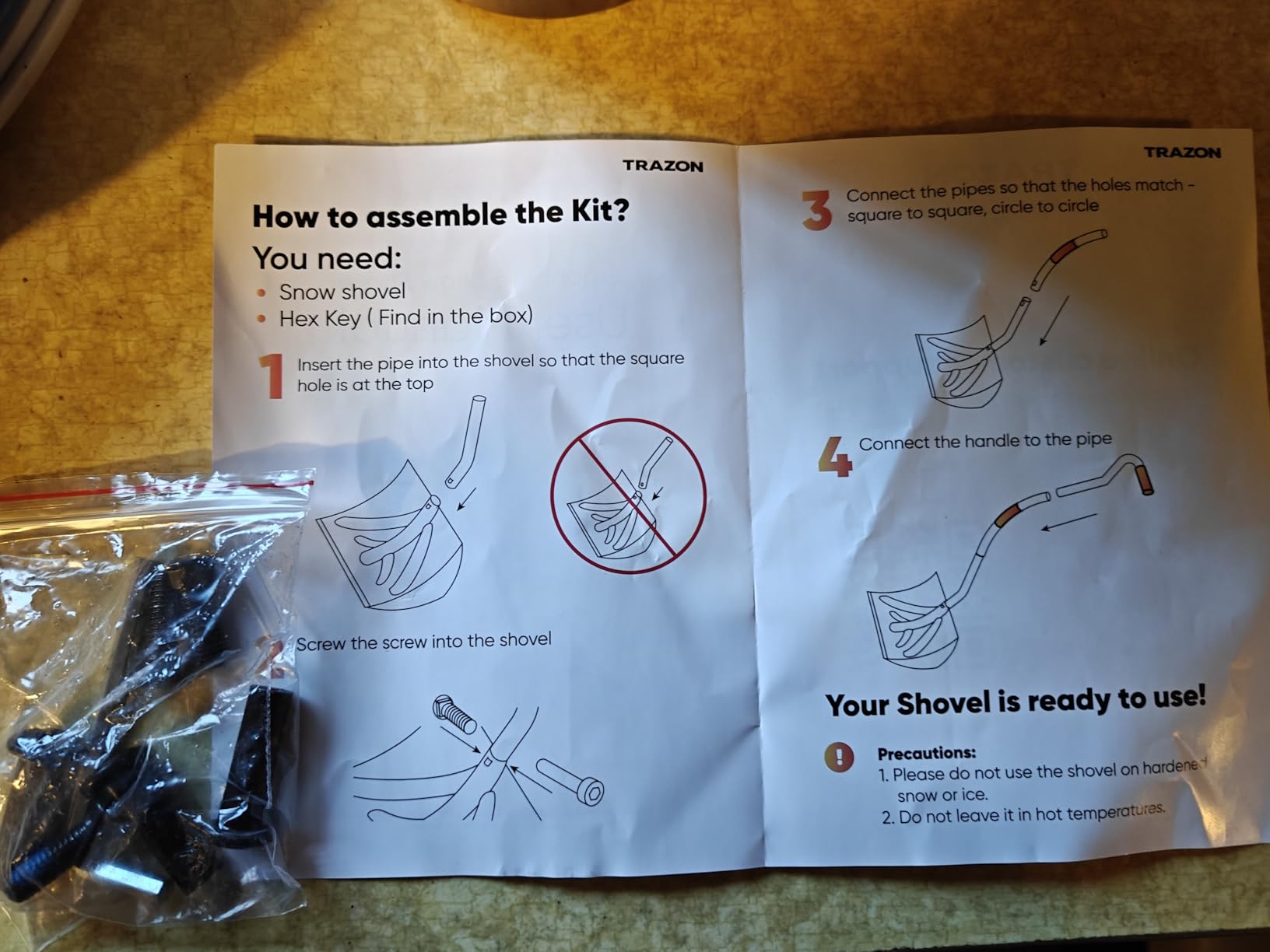
Assembly takes a few minutes with the included hex key, and the numbered stickers have to be matched to the right positions. A minority of owners report screws that will not fully tighten flush and a square bolt hole that can strip.
My advice is to tighten the joints by hand first, check that the blade sits square to the ground, and then snug the hardware. A few minutes at the start of the season prevents the floppiness that owners complain about later.
Height Is the Deciding Factor
This shovel is for a taller user. If you are under 5 foot 6, an 18-inch blade on a shaft this long will force you to bend or to work with the blade far out in front of your feet, and both defeat the purpose. For shorter users, the True Temper in pick 4 or the Snow Joe in pick 1 is a better fit.
3. Snow Joe SJ-SHLV02 Polycarbonate Shovel – One Tool for Snow and Garden Mulch
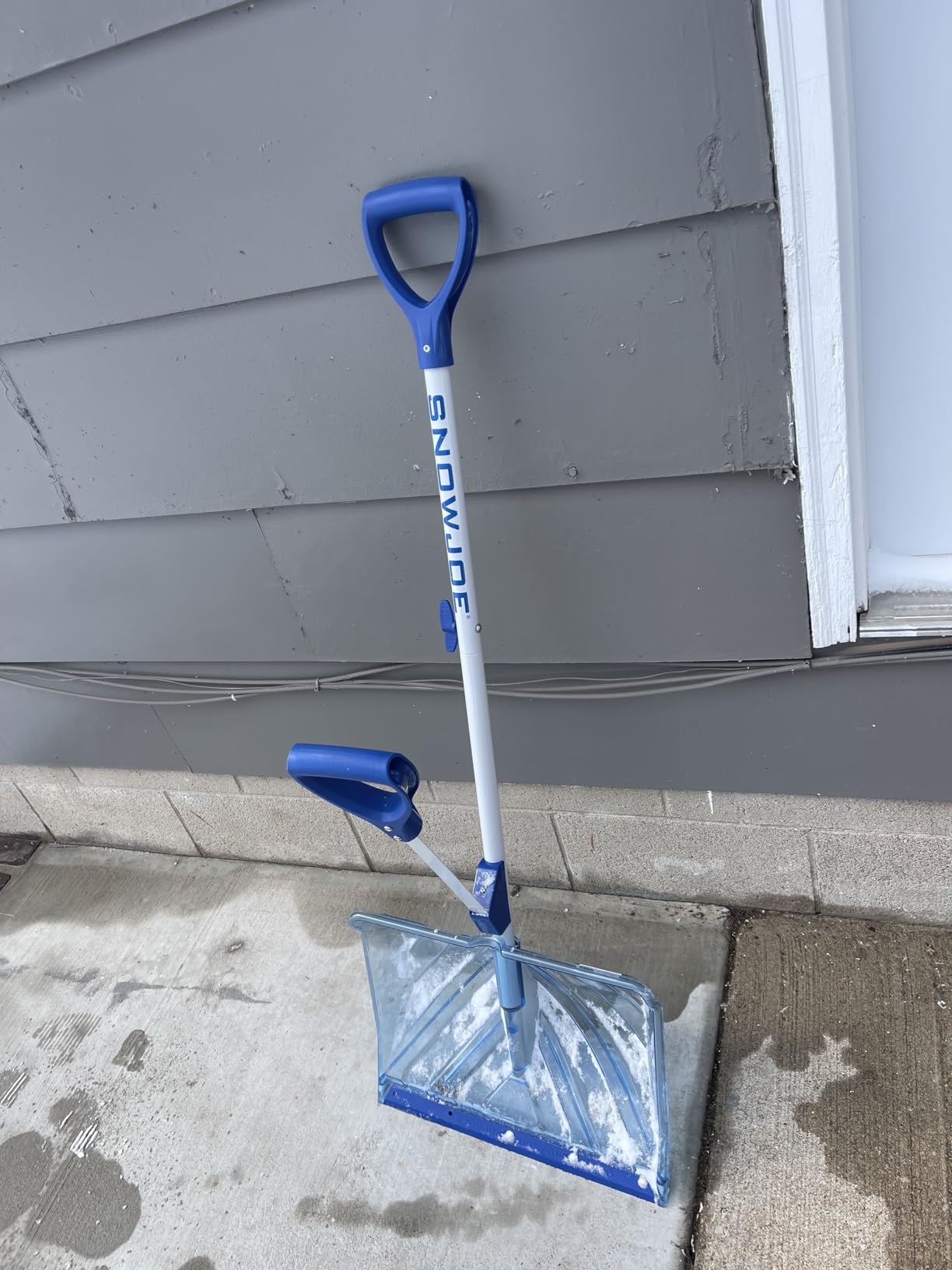
Snow Joe Snow Shovel, Shovelution Strain-Reducing Ice Remover, SJ-SHLV02
3.6 lb total
18 inch polycarbonate blade
Aluminum durability strip
Spring-assist fulcrum handle
Dual D-ring grips
+ Pros
- Spring-assist handle gives the lower hand more prying power
- Polycarbonate blade with an aluminum strip resists wear
- Lightweight at 3.6 lb
- Also moves garden mulch in summer
- Cons
- Lowest average rating in this roundup with a 10 percent one-star share
- Spring-loaded reset can feel unfamiliar at first
- Polycarbonate blade is not meant for very hard ice
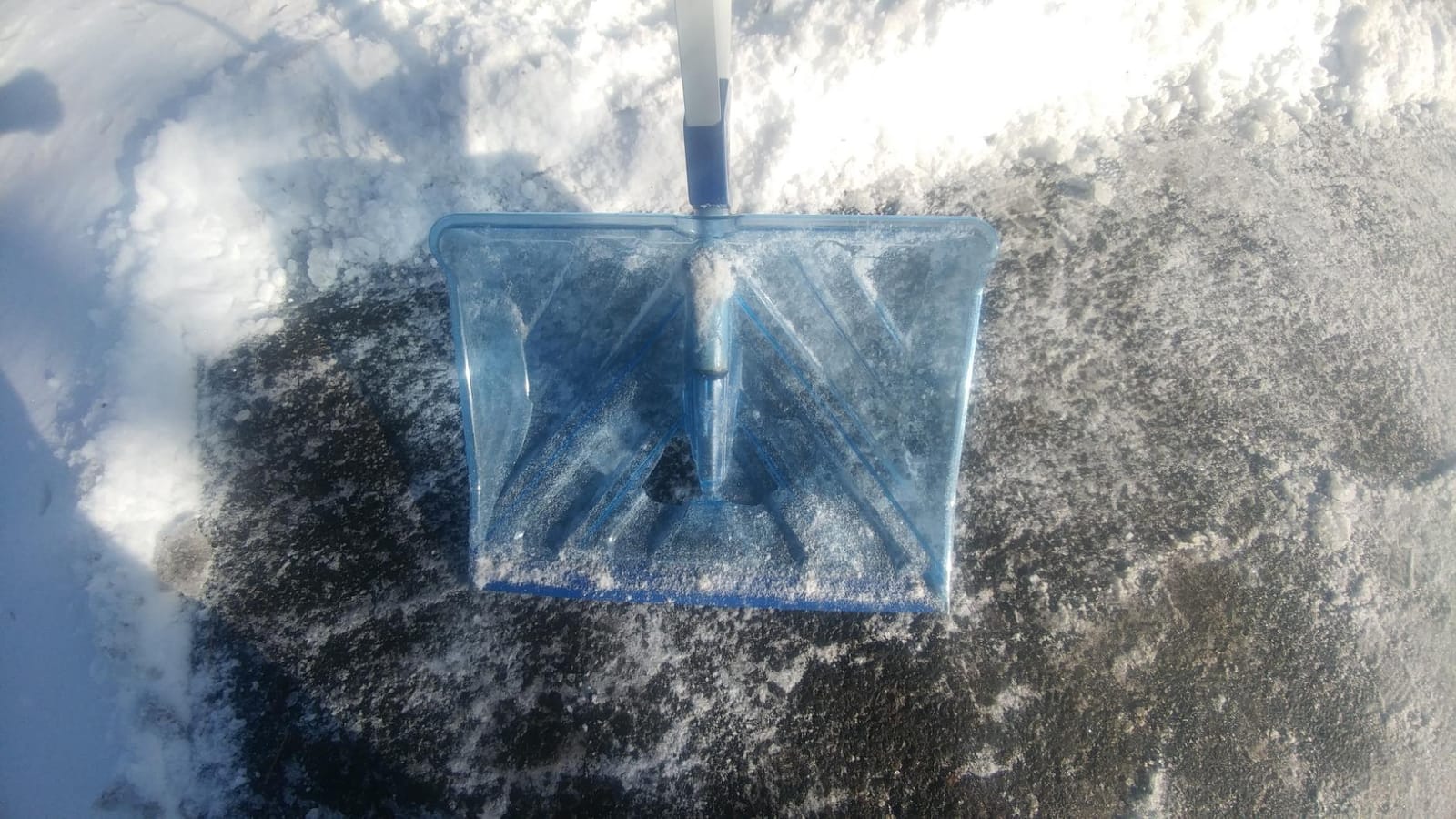
This is the same spring-assist idea as pick 1 in a tougher body. The blade is polycarbonate rather than poly, and polycarbonate holds its shape in cold weather better and shrugs off impacts that would crack a cheaper poly blade. At the same 3.6 pounds, it is the version to buy if your winters are colder or your snow is wetter.
I also like it for a non-winter reason. Owners use it to move mulch, and having one tool that lives in the garage instead of in storage is a small quality-of-life gain over a tool you have to dig out once a year.
Polycarbonate Versus Poly in Cold Weather
Polycarbonate is a denser plastic than poly and tolerates repeated impact better. In practice, that means a blade edge that stays straight after a season of hitting pavement and gravel rather than developing the small chips that make a blade skip.
It is still plastic, so it will not chisel a solid ice sheet. If your surface is mostly a concrete walk with a few inches of fresh snow, the difference between poly and polycarbonate is small. If you scrape down to bare concrete every time, it is worth the upgrade.
The Spring Reset Takes Some Getting Used To
The largest single group of complaints in the reviews is not about performance but about feel. The spring-loaded handle resets after each scoop, and users accustomed to a rigid handle describe the first few sessions as strange.
Give it a full season before deciding. Once the motion becomes automatic, the advantage is real, and the dual D-ring grips give you a secure hold at both ends of the range of motion.
Best Uses
Pick this one if you clear a small driveway or a path to a garage and you also want a mulch shovel. It is a good match for a user who wants a real lifting tool but has no interest in wrestling with a full blade of heavy snow.
It is the weakest-rated pick in this list at 4.2 stars, with a 10 percent one-star share, so set expectations honestly. The complaints cluster around the spring mechanism and hard ice, not around the basic job of moving snow.
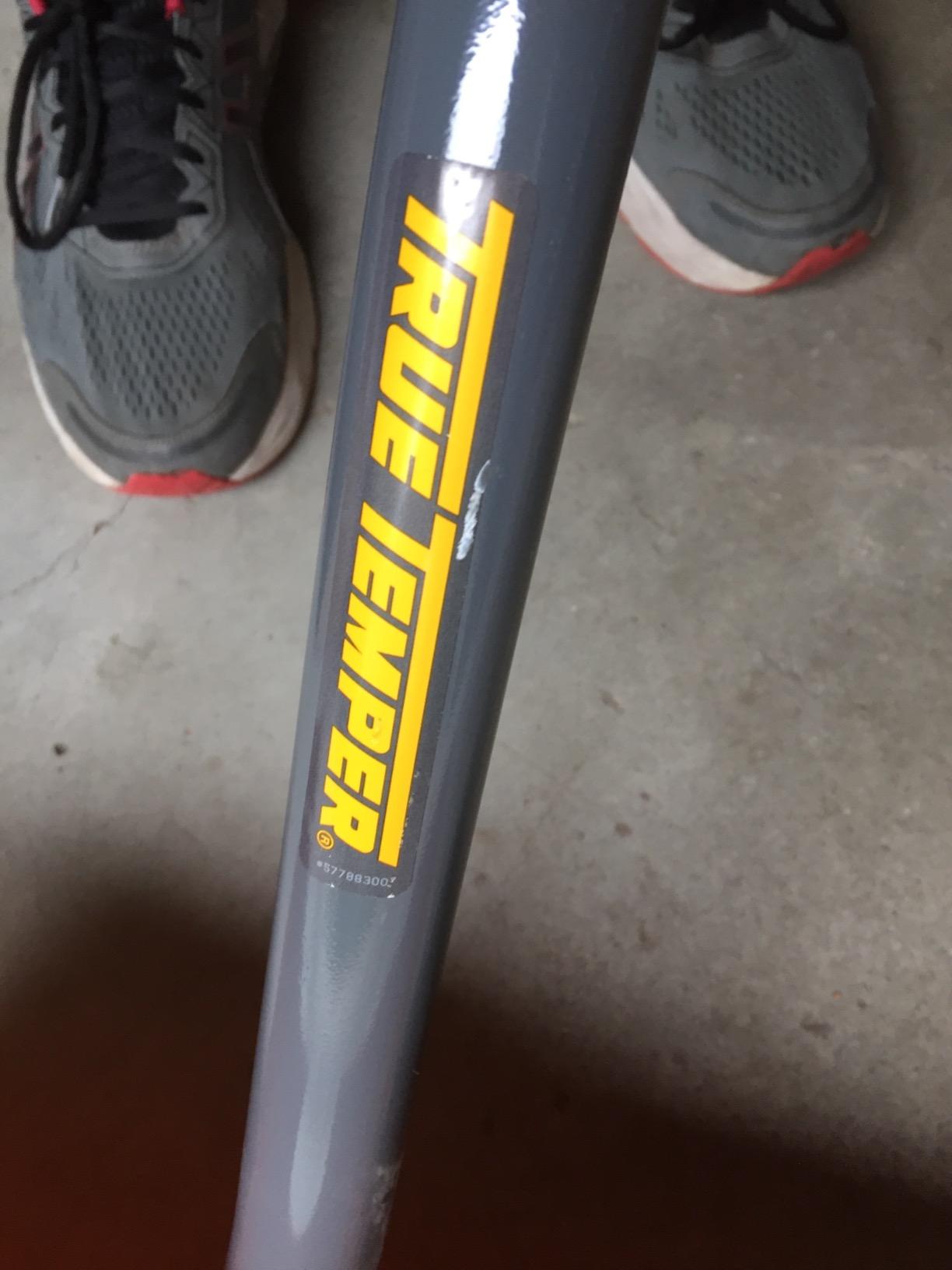
4. True Temper 1603400 Poly Shovel and Pusher – The Lightest Manual Pick Here
TRUE TEMPER 1603400 Poly Snow Shovel/Pusher with Ergonomic D-Grip Steel Handle, 54-Inch
3 lb total
18 inch combination blade
Nylon wear strip
37.4 in curved ergonomic handle
Oversized D-grip
+ Pros
- Curved shaft with helper handle is easier on the back than a straight shaft
- Oversized D-grip is comfortable with gloved hands
- Nylon wear strip will not damage decks or patios
- Very light at 3 lb and combines scoop with pusher
- Cons
- Very tall users may want to add a second mid-shaft grip
- Plastic blade can crack under heavy use with a 30-day parts warranty
- Nylon edge wears faster than a steel edge
At 3 pounds this is the lightest manual shovel in the group, and for an older adult that single number can matter more than every other spec combined. When you are doing forty passes up and down a walkway, one pound is one pound you are not holding up at chest height twice a minute.
The 18-inch combination blade does both jobs. You can use it as a pusher to move snow off a path without lifting at all, or flip it to scoop when the snow is light. That versatility is why it keeps appearing in forum threads, and one user on a long-running tool forum described clearing more than 12 inches with this model and calling it the best shovel he had ever used, easy on the back and the knees.
The Nylon Wear Strip and Why Deck Owners Love It
The working edge is nylon rather than metal. It prolongs the life of the poly blade and, more importantly, it will not scratch a composite deck, a vinyl plank porch, or painted concrete. If you are clearing steps in front of the house rather than a driveway, this is the detail that decides whether the tool is usable.
The trade-off is that nylon wears faster than steel. A small number of owners report blade cracking after a season or two of heavy use, and the manufacturer warranty covers missing or defective parts for only 30 days after purchase. For normal residential use that is not a real concern; for daily commercial clearing it is.
Fit: The Number One Complaint From Short Users
The ergonomic shaft is 37.4 inches on a tool that measures 54 inches overall, and the oversized D-grip is genuinely comfortable with a winter glove on. For anyone above 5 foot 6 that is a good, upright working length.
If you are noticeably shorter, this is where friction appears, and the complaint that comes up most often is exactly that: a long handle that forces bending. Check the listed overall length against your height before buying, and consider pick 1 if you need something with a shorter, more upright stance.
A Caregiver’s Choice
Another poster in that same forum discussion described shoveling for a parent-in-law who had a stroke, choosing this model for exactly the same reasons I did: light enough to control, a helper handle that acts as a pivot point, and a nylon edge that will not scar a wooden ramp. Where someone else cannot safely do the work, a light tool with a helper grip is the difference between a five-minute job and a strained afternoon.
5. The SnowPlow Original 24 Inch Pusher – The Best-Rated Design in the Category
The Snowplow the Original Snow Pusher 24″ Wide Model
24 inch UHMW polyethylene blade
Metal handle with twice-standard wall thickness
Push only, no lifting
Self-sharpening blade
Made in USA
+ Pros
- UHMW blade lets snow slide off instead of sticking to it
- Pushing rather than lifting removes the heaviest back-loading motion
- Self-sharpening blade needs no sharpening between uses
- Handles have twice the wall thickness of industry snow shovels
- Cons
- Wide blade is too large for narrow paths to a front door
- Cannot lift or throw snow
- only push it
- Fixed size can be unwieldy for shorter users with a full load
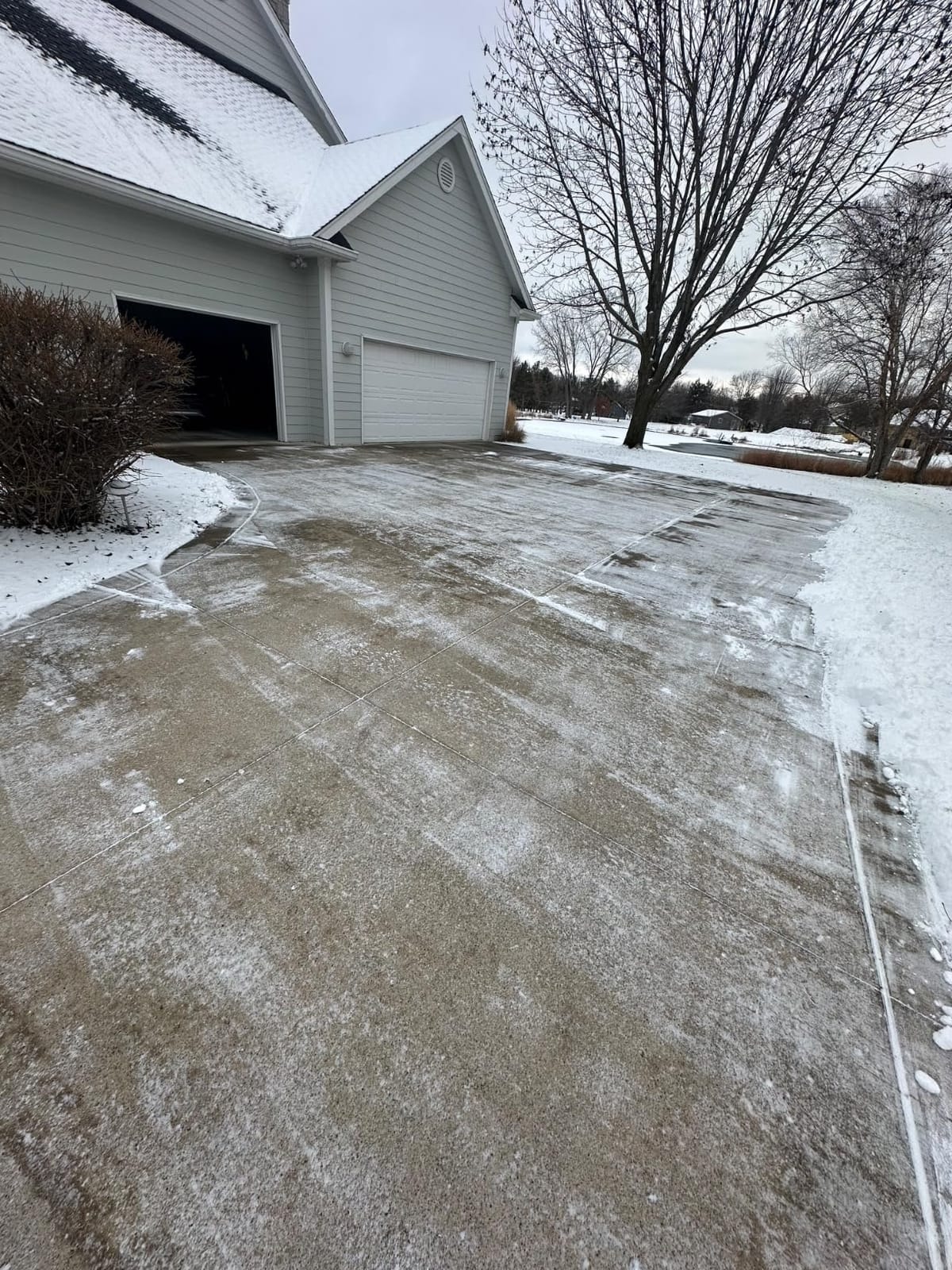
This is the most highly rated tool in the roundup, with a 4.6 star average across more than 5,300 reviews and 81 percent of buyers giving it five stars. That is a meaningful signal, because shovel reviews are mostly written by people who used the tool all winter and were either satisfied or quietly bought something else.
The design removes lifting entirely. You push the blade along the ground, snow rolls off the UHMW polyethylene surface, and your back never has to accept a full load. Of everything here, it is the tool that most directly answers the question of whether an older adult should be lifting snow at all, because it removes the lift from the task.
Why UHMW Polyethylene Behaves Differently
UHMW is the highest-wearing polyethylene available, and the practical result is a surface that snow will not cling to. On a normal poly blade, snow compacts against the face and you end up fighting it. Here it slides off, so each pass is faster and requires less downward force.
The blade is also self-sharpening, which sounds like marketing until you remember that metal edges on shovels dull by scraping pavement every winter. There is nothing to file, nothing to replace, and nothing seasonal to maintain.
The Wide-Blade Problem
At 24 inches, this is built for a driveway or a wide walkway. It is too wide to maneuver down a narrow path to a front door without knocking snow onto the side, and that is the single most common complaint in the reviews.
That is not really a flaw so much as a scope limit. The forum consensus is a two-tool setup: this wide pusher for the drive and the walks, plus a smaller combo shovel for steps and tight approaches. Used that way, the size becomes an advantage rather than an obstacle.
Repairability and a Commercial Pedigree
The handle is metal with twice the wall thickness of industry shovels, joined by a reinforced plug insert and a branded brace system. That is what the reviews show. A 60-year-old motel owner bought five of these after one trial, and a commercial sidewalk crew reported running about 60 of these pushers and saying they hold up amazingly well where cheaper shovels wear out after a season or two.
The brand also sells every individual replacement part, and one forum user named that as the main reason to pay more for a tool.
Earlier models used fiberglass handles that cracked where they met the brace. The current handle is metal, and that documented fix is worth knowing if you see an older used unit for sale.
6. Bully Tools 22 Inch Combo Shovel – Built for Decks, Patios, and Mixed Surfaces
Bully Tools 22″ Combo Snow Shovel Pusher Fiberglass Handle, Made in USA.
3.7 lb total
22 inch coated poly head
Fiberglass shaft with polyester veil
56 in overall length
D-grip top handle
+ Pros
- Fiberglass shaft and 3.7 lb weight are easy to lift and control
- Coated ultra-thick blade glides over concrete and composite decks without scratching
- Raised side ridges keep pushed snow contained instead of spilling
- D-grip fits work gloves and assembles in under a minute
- Cons
- No center shaft grip
- so flipping a full load is harder
- Blade can wear on exceptionally hard-packed snow or ice
- 22 inch width needs more trips than a wider pusher
This is the one I recommend for anyone clearing a composite deck or a vinyl porch, because the blade is coated and has no metal edge anywhere on it. Owners consistently report it gliding across concrete grooves and composite boards without a mark, which is the whole point of a surface-safe design.
At 3.7 pounds it sits in the middle of the weight range, and the 56-inch overall length means it suits a taller user. The raised side ridges on the scoop are a nice touch: when you push a load rather than lift it, the snow stays in the blade instead of rolling off the edge halfway through.

Dumping a Full Load Without a Second Grip
Press the D-grip down and the head rolls back to dump snow without lifting it over your shoulder. That is a genuinely useful motion for anyone protecting a shoulder, and it works well on light to medium snow.
The limitation is that there is no center shaft grip. On a full load of heavy wet snow, a 22-inch scoop with no mid-shaft handle is a lot to control for a user with reduced upper-body strength, and that shows up repeatedly in the reviews. If your snow tends to be wet and heavy, add a second grip or move to a pusher design.
Fiberglass with a Polyester Veil
The shaft is fiberglass wrapped in a polyester veil, which resists splintering and splitting. That matters more than it sounds: a splintered handle in cold weather is a sharp edge against a bare palm, and bare hands are exactly what older users often work with despite the cold.
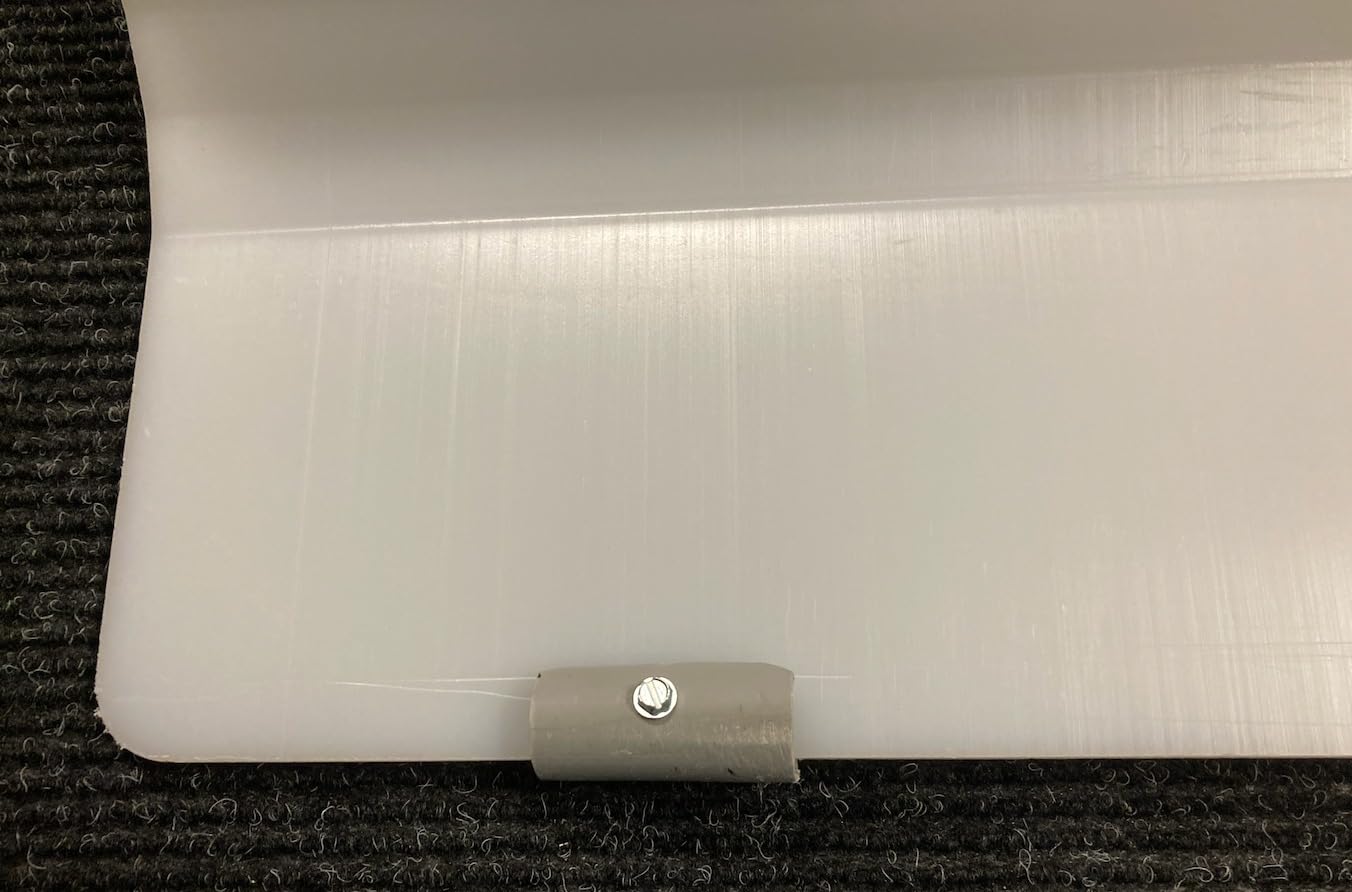
The mounting bolts between the head and the handle are the fiddliest part of assembly, and the rivet can feel slightly loose out of the box. A quick tightening and a check that the head sits square to the ground handles both.
Where It Fits Best
Choose this for a mixed job: a deck, a patio, a set of steps, and some walkway. It is less suited to a long driveway, where a 22-inch width means many more passes than a wide pusher, and less suited to breaking hard ice with no metal edge at all.
Owners describe it as a go-to for several winters running, which is the durability signal you want from a tool that lives in a garage rather than a closet.
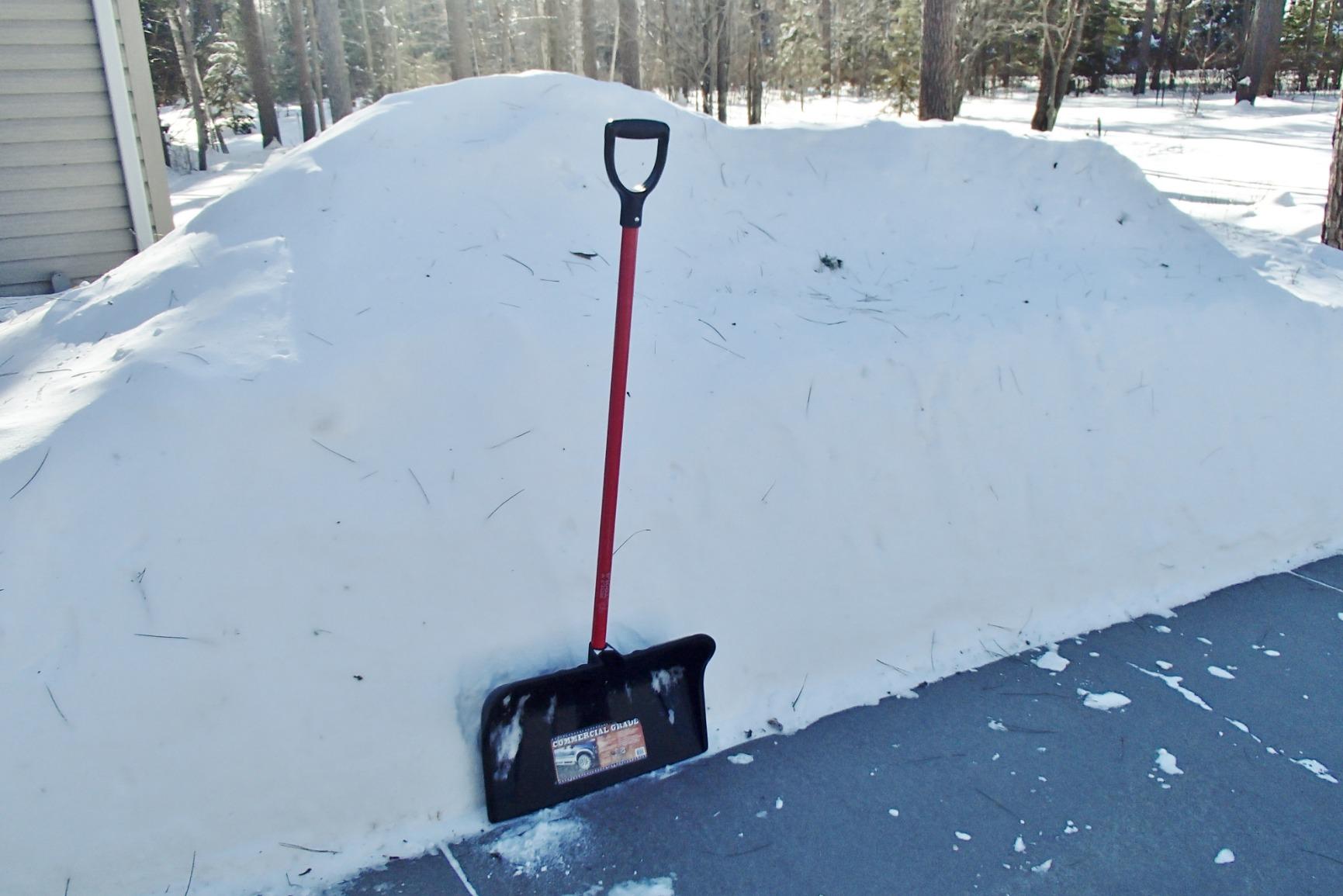
7. Snowcaster 36 Inch Wheeled Snow Pusher – Zero Lifting, Anywhere on the Drive
The Snowcaster 30SNC 36-inch Bi-Directional Wheeled Snow Shovel Pusher and Barn Shovel, 7.5″ x 36 “, Blue
11 lb total
36 inch bi-directional metal blade
Wheels carry the load
Handle flips to reverse push
1 year limited warranty
+ Pros
- Wheels and a 36 inch blade clear a driveway far faster than a traditional shovel
- No lifting at all
- so the back stays out of it
- Angled blade leaves a clean path instead of a V-shaped trail
- Flip the unit to reverse the push direction in seconds
- Cons
- Only handles light to medium snow
- reaching its limit around 5 to 6 inches
- Arrives in 26 pieces and takes 20 to 30 minutes to assemble
- 36 inch blade is too wide for narrow walkways
This is the strongest senior-use feedback in the entire roundup, and it comes from owners in their late sixties and seventies who say plainly that lifting and throwing snow is too hard on their backs. The wheels carry the blade, the blade is angled, and the work becomes a guided forward motion instead of a lift-twist-throw cycle.
Users in that group report it turning a job they had been avoiding into a job they finish. A bi-directional blade means you can clear from the house outward, and flipping the whole unit reverses the push direction in seconds, so you never have to walk backwards down a slope with a loaded blade.
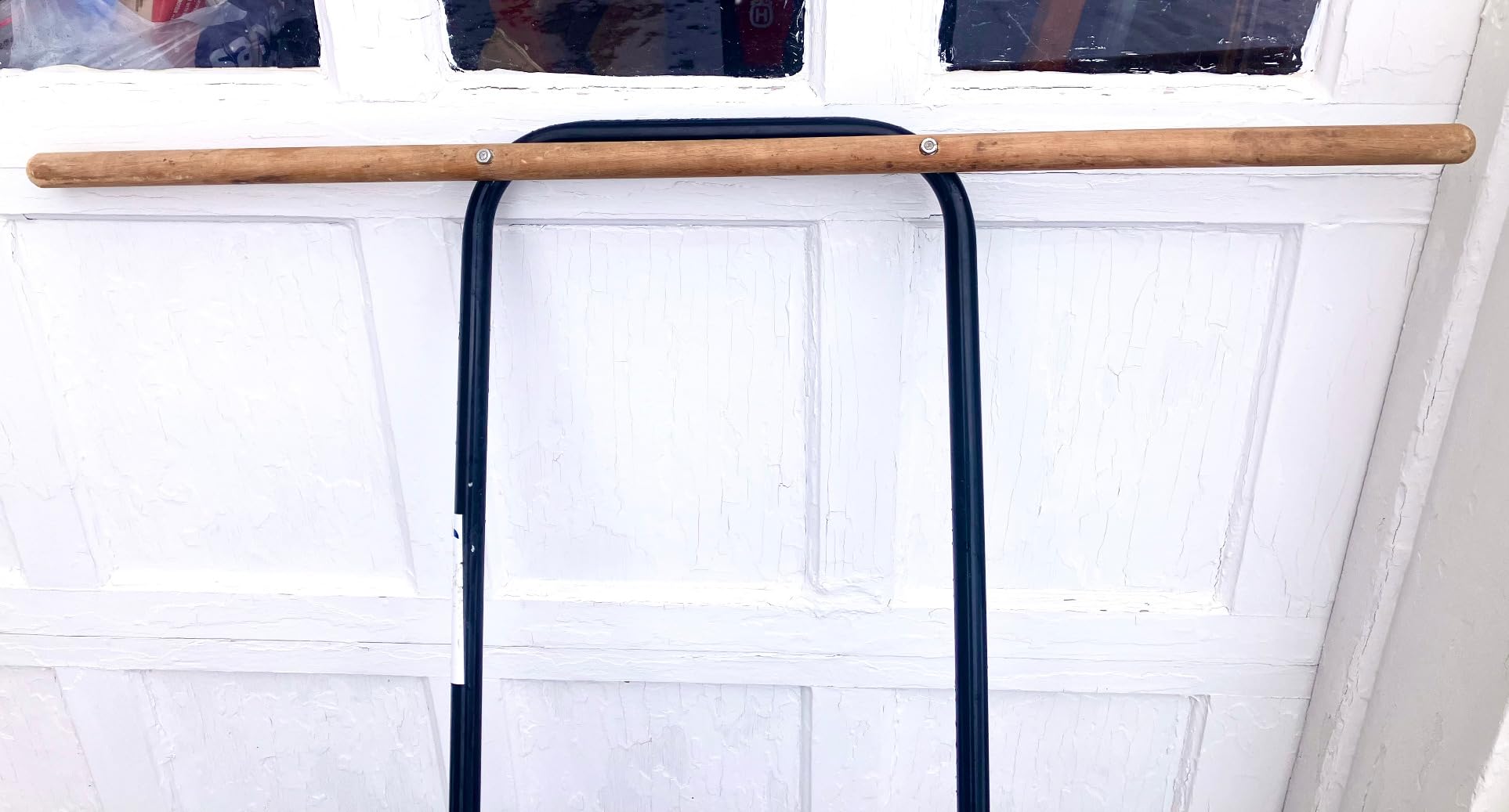
Where the Wheels Help and Where They Do Not
The wheels make a real difference on a flat or gently sloped driveway with packed snow. They also work the triceps rather than the back, which is the entire point. Consensus advice from experienced users is to clear in 2 to 3 inch layers and not to wait for deep accumulation.
That advice sets the ceiling. Most owners report it reaching its limit around 5 to 6 inches, and the blade rides close to the ground, so it can catch on cracks and uneven pavement. For anything deeper, or for a rough surface, you want a shovel.
Handle Design and Storage
The handle pivots freely, which is what allows the reverse-push flip, but it also means the tool cannot stand upright in the snow without a support. It hangs flat on a wall, which owners like in a small garage.
Assembly is the honest drawback: 26 pieces, 20 to 30 minutes, and you will want 13mm and 14mm wrenches. Build it once before the first storm, not during one.
The listing describes under-10-minute assembly with the supplied instructions, so set aside an hour rather than relying on that figure.
The Two-Tool Setup
No tool does everything, and this is the clearest case for it. Pair the wheeled pusher with a narrow manual combo for the walkway to the door and the steps. You push the driveway, then scoop the path, and you never have to lift a full blade of snow at shoulder height.
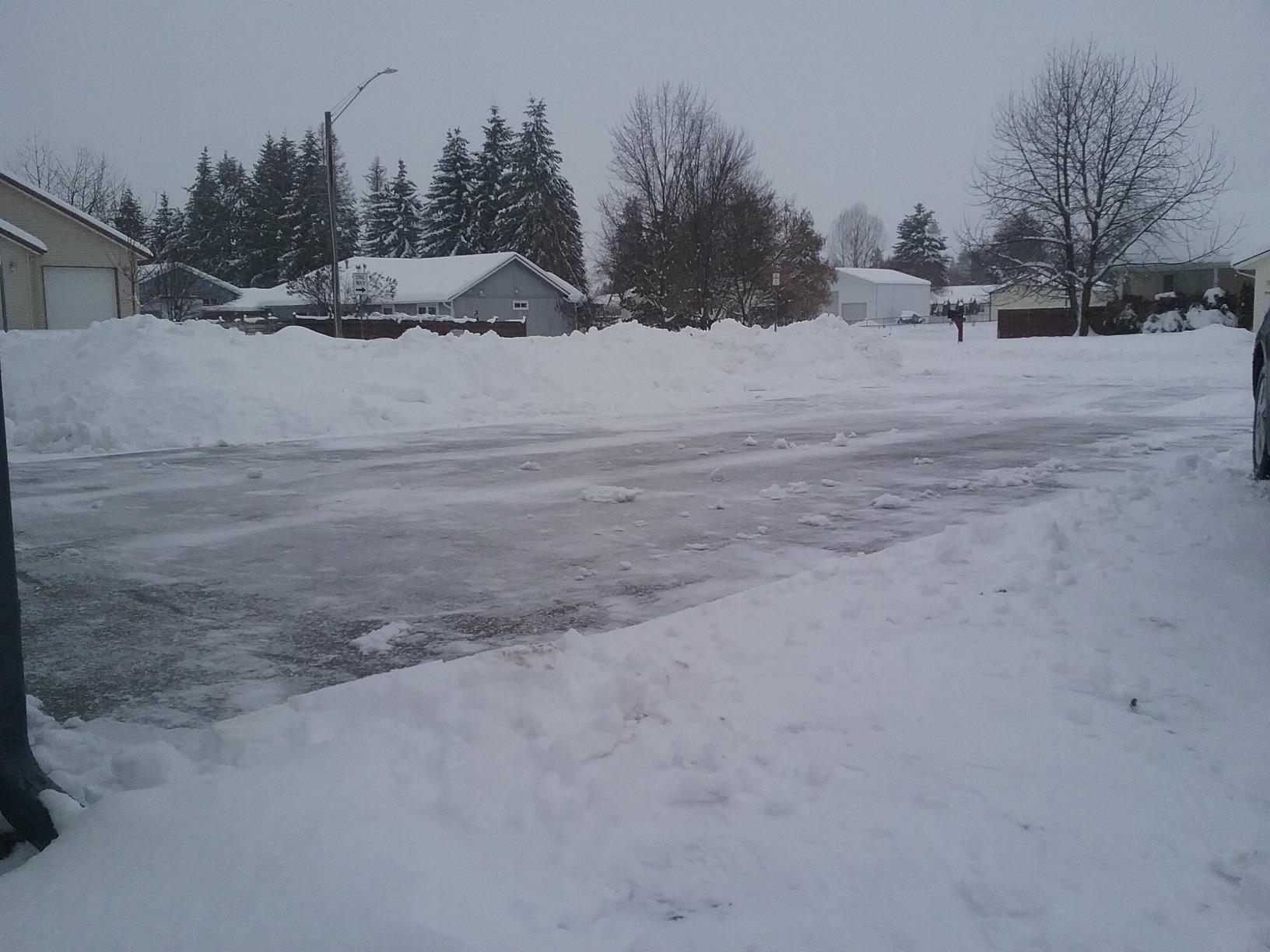
8. Best Choice Products 36 Inch Two-Wheel Pusher – Built for Wide Driveways and Deep Snow
Best Choice Products 36in Galvanized Blade Heavy-Duty 2-Wheel Snow Pusher Hand Plow for Snow Removal w/Wheels, Adjustable Handle, Blade Angle – Black
25.5 lb total
36 inch galvanized steel blade
Replaceable plastic wear strip
Handle height adjusts 33.5 to 51 in
Two rubber wheels
+ Pros
- Galvanized steel blade with a replaceable wear strip scrapes down to pavement
- Two wheels take most of the load off the back
- Adjustable handle height and blade angle set an upright pushing position
- Collapses upright for compact seasonal storage
- Cons
- Heavy at 25.5 lb
- awkward to lift and store in a tight garage
- Assembly takes 20 to 30 minutes and is best done with two people
- Only effective for roughly 3 to 5 inches of snow
Where the Snowcaster is the light no-lift pusher, this is the heavy-duty one. A galvanized steel blade with a replaceable plastic wear strip, two rubber wheels, and an adjustable handle make it the tool for someone with a genuinely large driveway and enough core strength to guide it rather than carry it.
One 78-year-old owner reported it was faster and easier for him than his gas snowblower on snowfall up to about 3 inches. That is the honest scope of the claim, and it is why I describe this as a supplement to a shovel rather than a replacement for one.

Galvanized Steel and a Replaceable Wear Strip
Steel is the right call when the snow is wet and heavy or when there is a crust from repeated freeze-thaw. The galvanized blade will not be scratched by grit, and the wear strip is a replaceable part, so when it wears through you replace one inexpensive strip instead of the whole blade.
The trade-off is weight. At 25.5 pounds this is the heaviest tool in the roundup, and the wheels are what make that weight bearable. If you have to lift it into or out of a garage, you need two hands and some space, and that is a real limit for some older adults.
Adjustable Height Is the Feature to Set Up Carefully
The handle adjusts from 33.5 to 51 inches and the blade angle is set on a guide rail. Getting this right is the difference between an upright, back-friendly push and a stooped shove. Take five minutes at the start of the season to set the height to your hip level and lock it.
Reflective tape is included for low-light conditions, which matters in a winter that gets dark before you get home. The handle also locks upright for storage, so it does not occupy a full driveway-width of floor space in the off season.
Realistic Expectations
It is effective for roughly 3 to 5 inches of snow. Deeper accumulation needs a shovel or a blower, and the blade can catch and flex on cracked or rough pavement.
Reviewers repeatedly recommend planning short pushes rather than trying to clear the full driveway length in one pass.
Assembly takes 20 to 30 minutes and is recommended with two people. Do it in the autumn, not on the morning of the first storm.
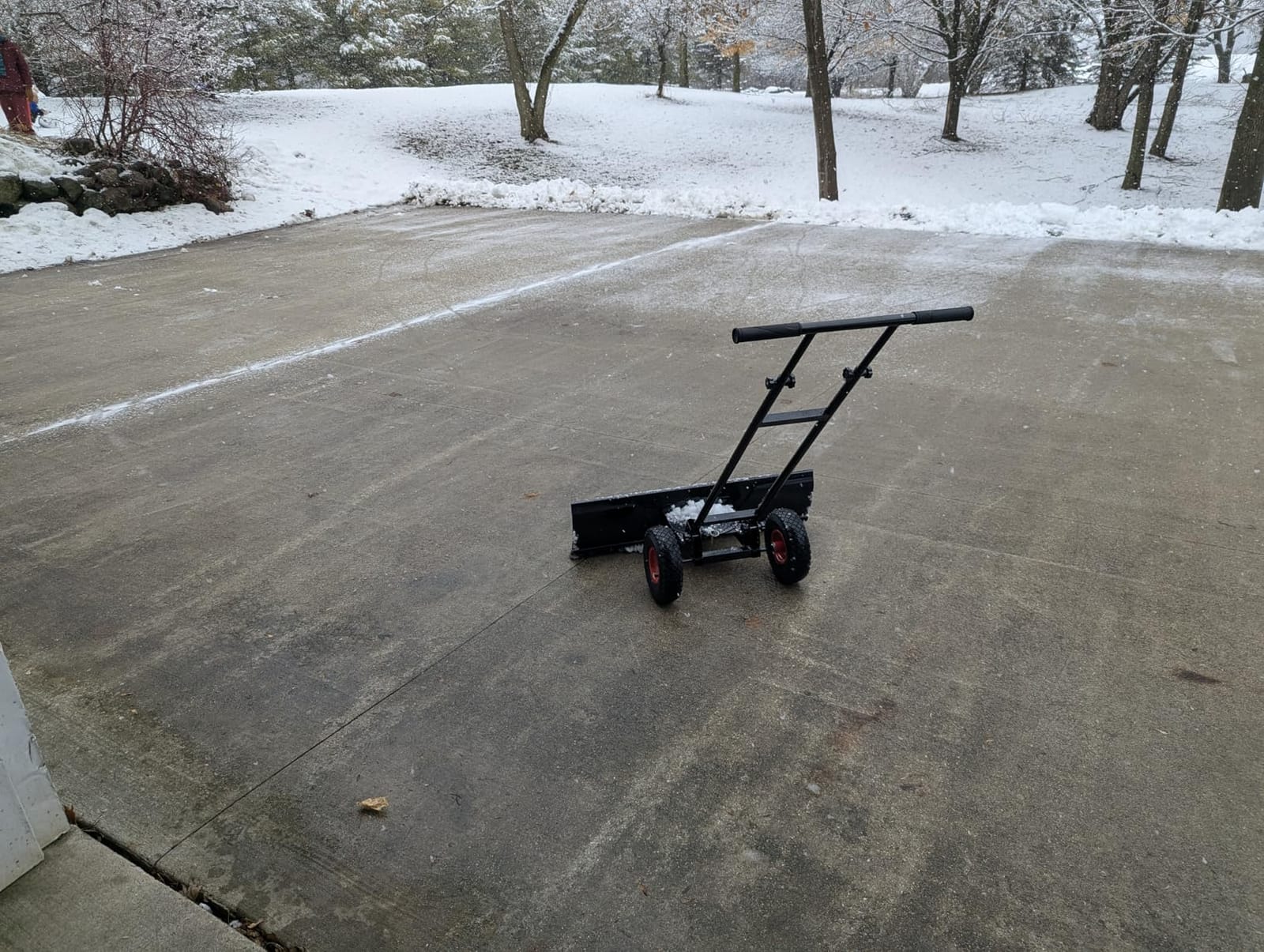
9. VOLTASK 24V 13 Inch Cordless Snow Shovel – The Lightest Powered Option
VOLTASK Cordless Snow Shovel, 24V | 13-Inch | 4-Ah Cordless Snow Blower, Battery Snow Blower with Directional Plate & Adjustable Front Handle (4-Ah Battery & Quick Charger Included)
9.3 lb total
13 inch clearing path
Throws snow up to 20 ft
24V motor, 4.0 Ah battery included
About 6.5 in ideal depth
+ Pros
- Lightest powered option at 9.3 lb with a 57 inch shaft so you work upright
- Starts instantly with a button push and assembles in two steps
- Battery and quick charger are included
- Directional plate rotates 30 degrees each way
- Relatively quiet operation
- Cons
- 13 inch path with an ideal depth of about 6.5 in means deep snow needs multiple passes
- Cordless batteries can struggle to start the unit in very cold temperatures
- Directional plate can jam with heavy wet snow
This is the machine I would look at first for someone who cannot lift a full blade at all but still wants to clear snow themselves. It weighs 9.3 pounds, stands 57 inches tall so you work upright, and a button push starts it. There is no cord, no gas, and no cranking.
It is not a snow blower, and understanding that is the key to being satisfied with it. The auger throws snow up to 20 feet through a 13-inch path, which is roughly a quarter of what a full blower clears per pass. It is a tool for steps, a deck, a short drive, and a path, not for clearing an entire street.
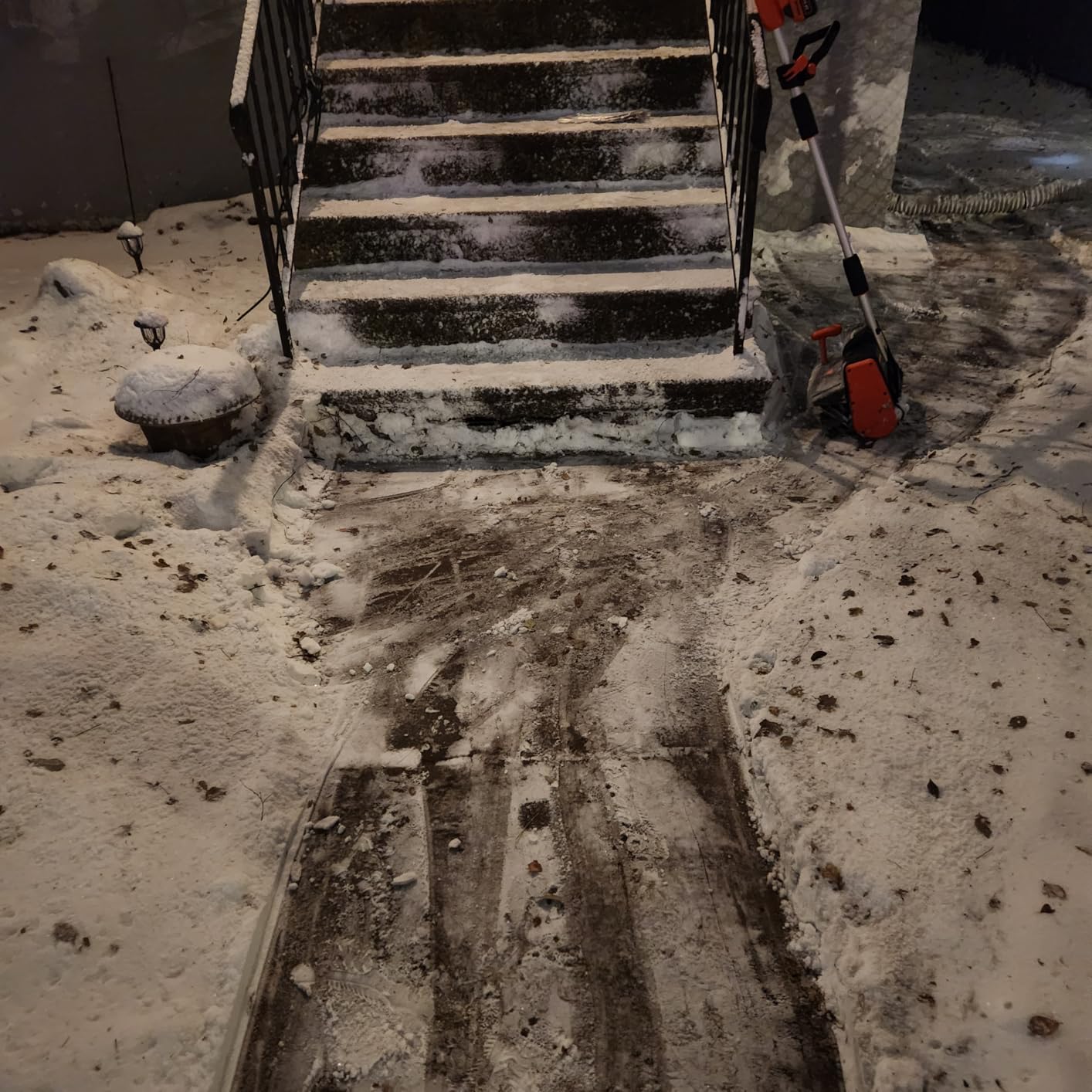
Depth and Width Limits You Should Plan Around
The listed ideal depth is about 6.5 inches and the path is 13 inches wide. In wet, heavy snow you will be making several passes on the same strip, and the directional plate can jam with slushy accumulation. Clearing early and often is what makes the difference between a pleasant ten-minute job and an unpleasant one.
Two specifications that rarely get mentioned: the dual safety switch, and the back-protection handle design. Both are relevant if you are one of the people for whom a surprise start would be a genuinely bad outcome on a set of steps.
Read This Before You Buy If Your Hands Hurt
The motor starts with a button push, but holding the trigger is what keeps it running. A member of r/AskWomenOver60 with hand and thumb arthritis ordered a lightweight push electric model and returned it because holding the safety trigger made her hand ache, going back to a manual shovel.
That is the most important caveat in this article for anyone with joint pain. If you cannot hold a squeeze-and-hold trigger comfortably for several minutes at a time, a cordless electric shovel may not be the answer no matter how light it is. Test the grip in the store if you can, and keep a manual combo as a backup.
Battery Behaviour in Cold Weather
The 24V motor with a rechargeable 4.0 Ah lithium-ion battery gives up to about 25 minutes of runtime. Reviewers note that cordless batteries can struggle to start the unit when temperatures are very cold, which usually means storing it indoors overnight rather than on a porch or in a garage.
For most people the deciding factor is simple: no lifting, an upright stance, and a battery that charges overnight. If your hands cannot manage the trigger, take pick 1 or pick 4 instead.
10. VOLTASK 48V 16 Inch Cordless Snow Shovel – Wider Path with Wheels and Two Batteries
VOLTASK 48V 16-Inch Brushless Cordless Snow Shovel with Wheels, Orange
19.2 lb total
16 inch clearing path
Throws snow up to 26 ft
48V brushless motor, two batteries
Ideal snow depth about 6 in
+ Pros
- Specialized snow wheels make it easier to pull back and manoeuvre than wheel-less models
- 48V brushless motor runs up to 30 minutes and throws snow 26 ft
- 16 inch path is wider than most competitors so fewer passes
- Low-mounted battery lets the unit stand upright unattended
- LED light for night use
- Cons
- Heaviest powered option at 19.2 lb
- which tires users on long jobs
- Directional fins can jam in heavy slushy snow
- Some owners report the unit failing to start after a season or two
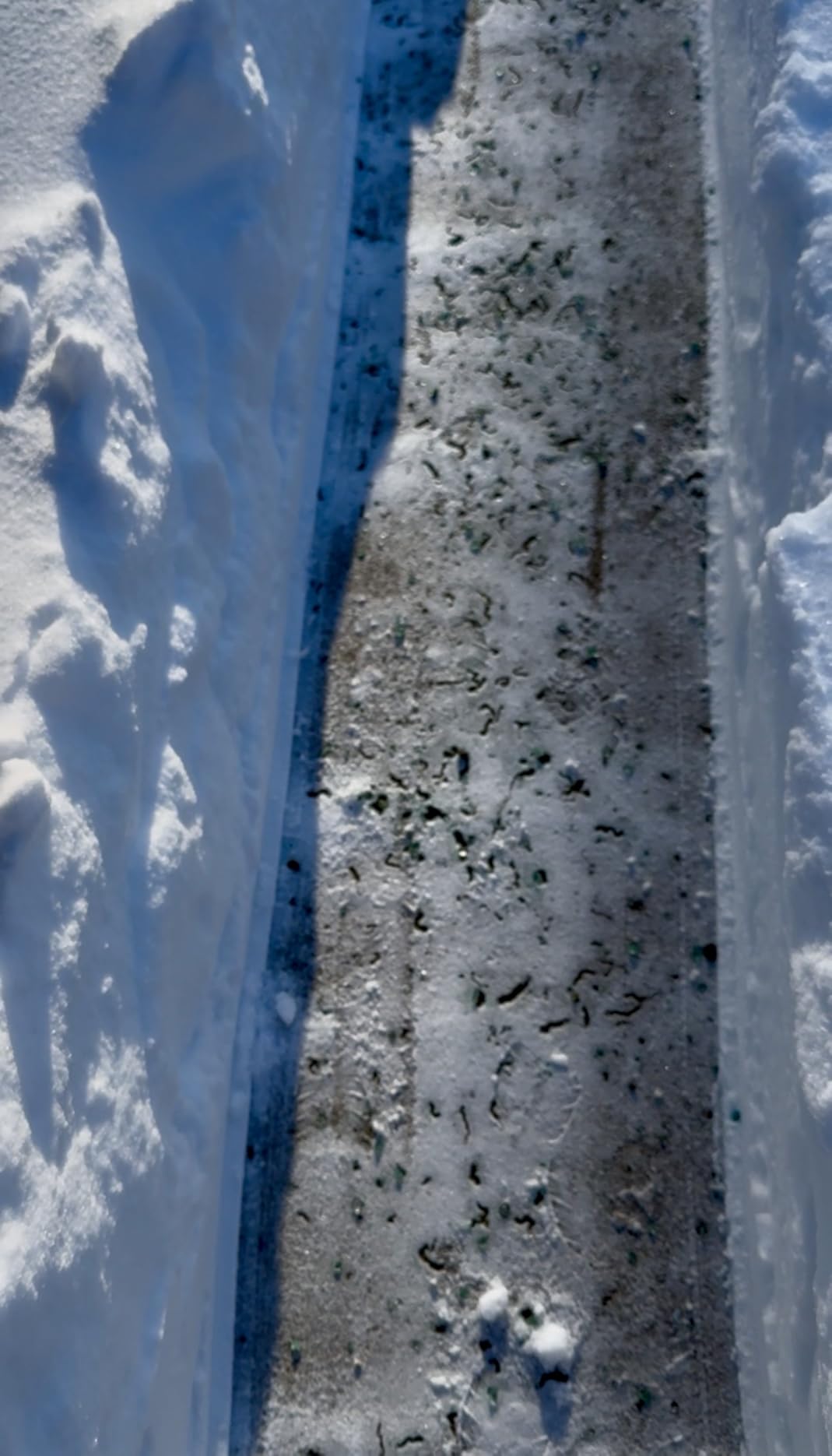
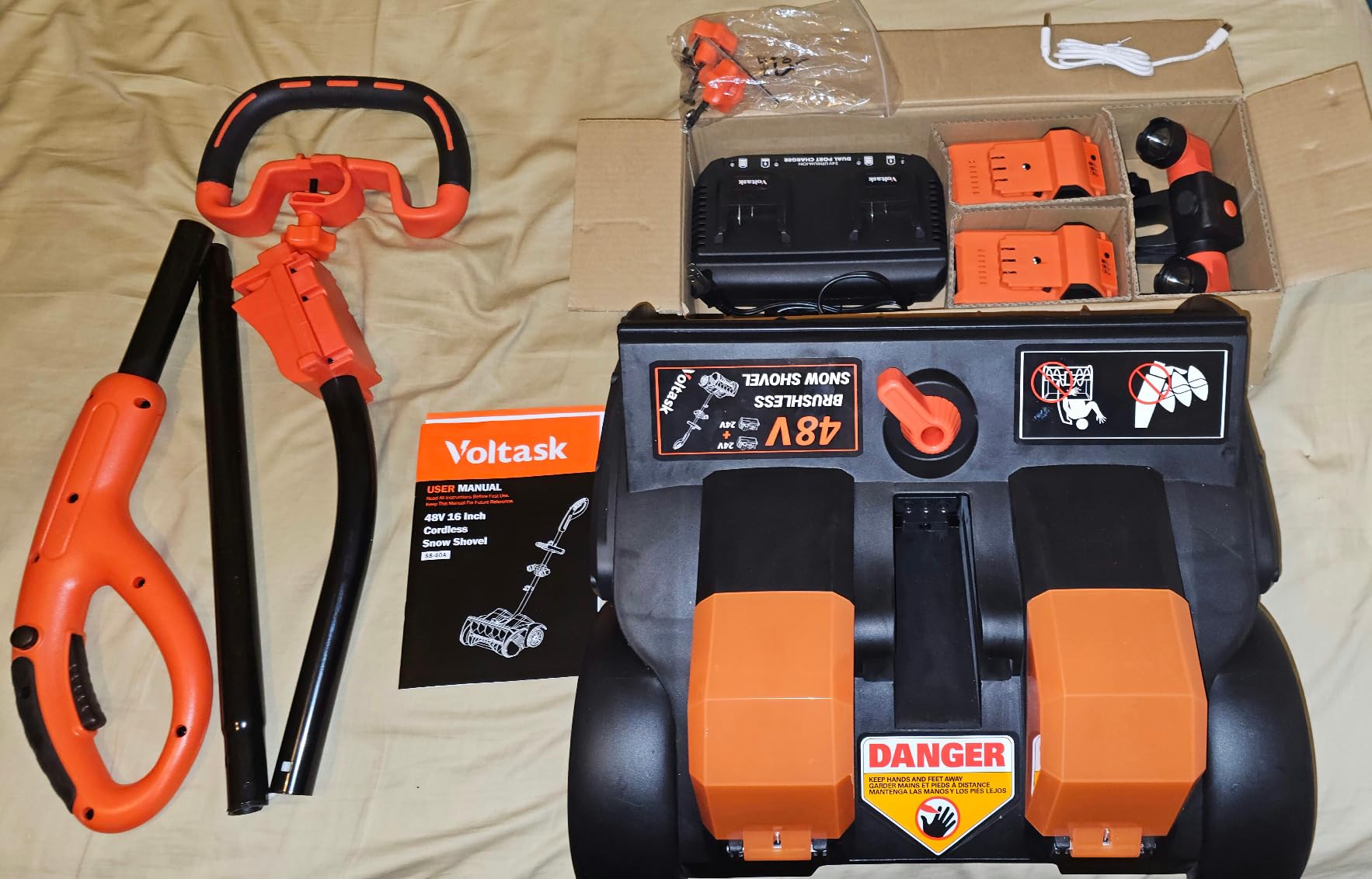
This is the step up from a small cordless unit for someone with a longer drive and a longer path. Two 24V battery packs give up to 30 minutes of runtime, the 48V brushless motor throws snow up to 26 feet, and the 16-inch path means noticeably fewer passes than a smaller cordless unit.
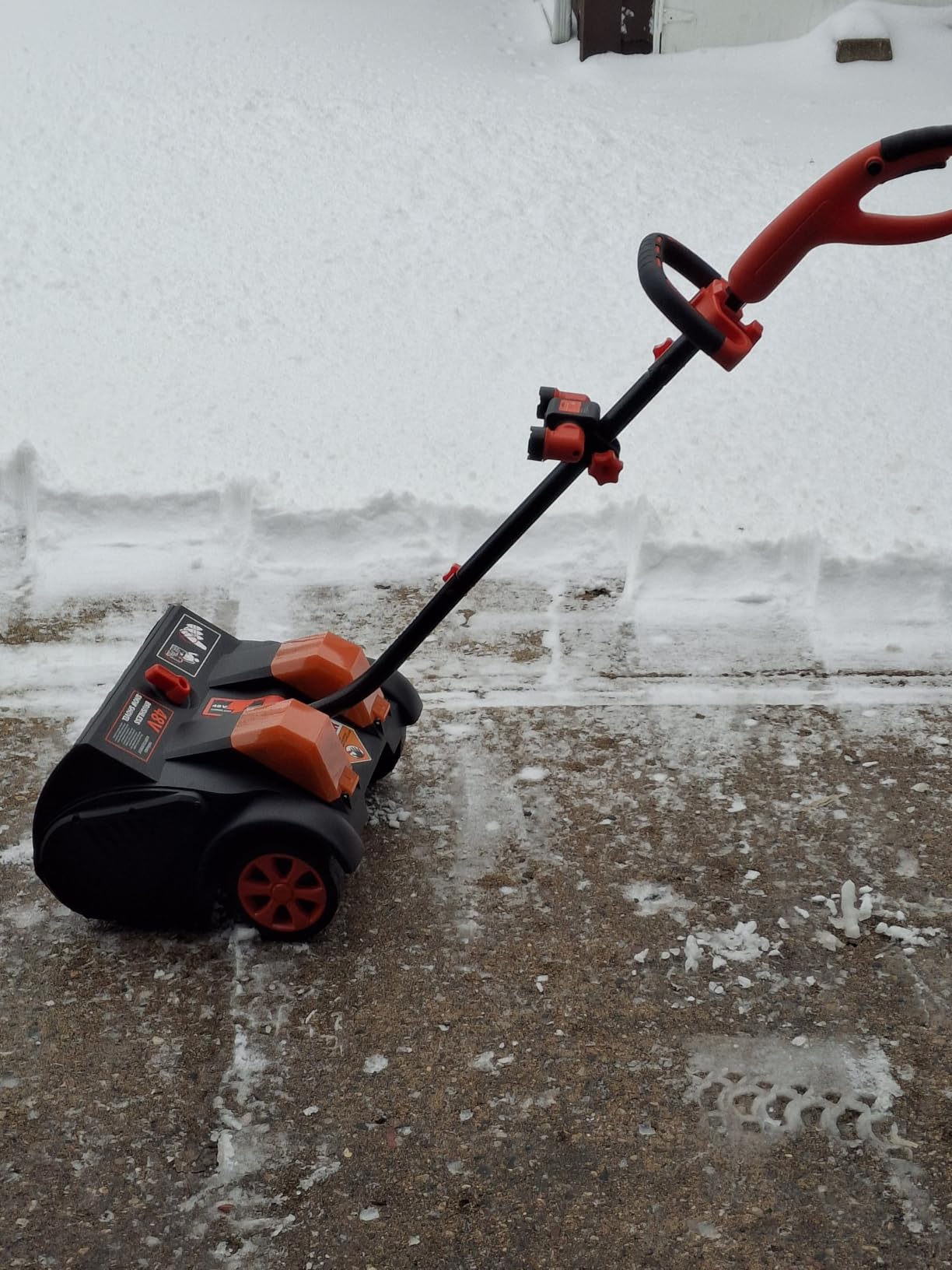
The wheels are the feature that matters most for an older adult. They make the unit far easier to pull backwards and steer, which is the difference between clearing a path smoothly and fighting the machine sideways at the end of each strip.
Weight Is the Trade for the Wider Path
At 19.2 pounds, this is more than twice the weight of the 24V model. Owners reviewing it for older users commonly say it tires you during a long step-clearing job, and that is worth planning for. If your clearing job is under five minutes a day, the lighter unit in pick 9 is the better tool.
The counter-argument is that a wider path means fewer passes, and a hand-carrying unit is no longer needed for the bulk of the job. A fair number of older reviewers report it replacing back-breaking manual work entirely, which for many users is the deciding factor.
Reliability Is the Complaint to Weigh
Several owners report the unit failing to start after a season or two even with fully charged batteries, and the directional fins can jam in heavy slushy snow, which requires bending down to reset. Against that, the manufacturer is repeatedly praised for shipping free replacement units under warranty, and the listed cover is three years on the cordless snow shovel and one year on the battery.
Discharge distance is also often shorter than the advertised 26 feet in real conditions. Treat the specification as a best case.
Who Should Choose This One
Choose it if you have a mid-length driveway, you can manage a 19-pound machine, and you want to finish before dark. The LED light, the low-mounted battery that lets the unit stand upright unattended, and the adjustable back-protective handle are all quality-of-life details that pay off for a user working alone.
Skip it if step height and grip strength are your primary limits, or if you have already found that a squeeze-and-hold trigger is uncomfortable. Pick 9, or a manual pusher, will serve you better.
Should an Older Adult Be Shoveling Snow at All?
This is the question the search results do not answer, and it is the one that matters most. Snow shoveling is one of the highest-risk winter activities for an older adult because it combines heavy lifting with repeated bending and twisting in cold conditions, and cold makes the heart work harder. The risk is not the snow. It is the load, the repetition, and the twist.
A 70-year-old man in reasonable health who clears a short walk with a 3-pound shovel and a helper grip is doing something sensible. An 80-year-old man with a pacemaker, a prior back injury, or a heart condition is doing something that carries a genuinely different level of risk, and for him the correct answer is usually to arrange help rather than to buy a better shovel.
Stop and reassess if any of these apply. Stop if you get short of breath, dizzy, or chest-tight during ordinary activity, and not just during shoveling. Stop if you have been told by a doctor to avoid exertion, or if you have uncontrolled heart disease, a recent joint replacement, or a hernia.
Also stop if clearing a path leaves you sore the next morning in a way that ordinary activity does not, or if you are the only person who can do it and you keep postponing because it hurts.
That pattern, described more than once in the forum discussions we reviewed, is a sign that the plan is wrong, not that the person is lazy. A shovel, a blower, or a plow service that someone else operates is a legitimate answer.
When a neighbor, a family member, or a paid service takes over the driveway, the tool question becomes simpler: buy the lightest comfortable shovel you can find for the steps and the path to the door, and let someone with a stronger back handle the wide open areas.
How to Choose a Snow Shovel for an Older Adult
Set a Weight Ceiling Before Anything Else
For a combination shovel, aim under 4 pounds. Our lightest manual picks are the True Temper at 3 pounds, the two Snow Joe models at 3.6 pounds, and the Bully Tools combo at 3.7 pounds. The rule of thumb is that every pound above 4 pounds is an extra pound you are lifting and controlling, multiplied by every pass you make.
For a wheeled or powered tool the number is higher because the wheels or the motor carry the blade, but the same logic applies to what you have to hold. The Snowcaster at 11 pounds and the 24V cordless shovel at 9.3 pounds both stay manageable for a short session; the 25.5-pound two-wheel pusher and the 19.2-pound 48V unit are for users with a lot more capacity.
Match Shaft Length to Your Height
Handle length is the most under-considered purchase criterion and one of the clearest causes of back strain. A tool that is too long forces you to bend at the waist or to reach forward with a heavy blade, and either one undoes the benefit of everything else on the spec sheet.
Check the listed overall length against your height before you buy. Options with a 54 to 58 inch overall length suit users around 5 foot 9 and taller. Shorter users should look for a shorter shaft or an adjustable design rather than bending into a longer one.
Pick Blade Material for the Snow You Actually Get
Poly and polycarbonate blades will not scratch composite decks, vinyl, or painted concrete, which makes them the right choice for porches and steps. Aluminum and galvanized steel blades bite into crust and hard-packed snow, which makes them right for driveways that get walked on and refrozen.
Watch out for one specific combination. A metal scraper strip bolted onto a plastic blade is described on a Green Tractor Talk thread about Snow Joe shovels as a deal killer, because the metal strip concentrates the load and cracks the plastic around it. A plastic blade with a nylon wear strip, or a full metal blade with a replaceable steel strip, is the durable version of that idea.
Push Instead of Lift Whenever the Job Allows
Pushing a blade along the ground is dramatically safer than scooping and throwing. If you can push, the load travels in front of you at ground level and your back never has to accept it. If you must lift, keep loads small and use a shovel with a second grip so you have a pivot point.
This is also why a wide pusher plus a narrow combo is the most common recommended setup in the forum discussions. Push the drive and the walk, scoop the steps.
Test the Grip Before You Buy
Squeeze the handle for a full minute while you are paying attention. Can you hold that squeeze comfortably with cold hands, and does the D-ring or D-grip stay comfortable with a glove on? For electric models, can you hold the trigger and the top handle at the same time without pain in your thumb or fingers?
This single test rules out more electric shovels than any other factor. A member of r/AskWomenOver60 with hand arthritis returned a cordless model for exactly this reason, and a lightweight machine is no help if the trigger itself is the problem.
Set Realistic Limits for Cordless Electric
Powered snow shovels are worth it when the snow is light and you cannot lift a full blade. They are not a substitute for a blower on a real driveway. Plan for a narrow clearing path of 13 to 16 inches, a depth of roughly 6 inches before the machine starts struggling, and a path you clear early rather than deep.
Store the battery indoors in very cold climates, since owners report cold-weather starting problems. And check the trigger before anything else, for the reason above.
Judge Brands by Parts Availability
A shovel with a replaceable handle, replaceable wear strip, or a self-sharpening blade lasts considerably longer than one that dies at the end of the head. The SnowPlow in particular is cited on forum threads for selling every individual replacement part, and that is the main reason owners justify paying more for it.
Pay attention to warranty length as a rough signal. A 30-day parts warranty on a tool you intend to keep for a decade is a narrower promise than a two-year manufacturer warranty.
Storage Habits That Add Seasons
Let poly and polycarbonate blades dry before storing them, and clean packed snow and grit off the edge. Grit trapped under a blade edge is what wears the plastic and dulls a metal strip. Check the bolts at the blade-to-handle joint once a season, because that is where looseness shows up first as a floppy head.
Hang a pusher flat on a wall rather than leaning it in a corner, and collapse the adjustable handles on wheeled models so they take up a fraction of the storage space.
Frequently Asked Questions
What is the best snow shovel for elderly people?
The best snow shovel for elderly people is a lightweight combination shovel under about 4 pounds with a curved or spring-assisted shaft, a second grip on the shaft, and a blade that can push as well as scoop. The Snow Joe SJ-SHLV01 Strain-Reducing Shovel is the strongest all-around answer at 3.6 pounds with a spring-assist fulcrum handle. For a driveway where lifting is not possible at all, a wheeled pusher such as the Snowcaster 36 Inch is better, because the wheels remove the load entirely.
Should a 70 year old man be shoveling snow?
It depends on his health and the size of the job. A 70-year-old in reasonable health clearing a short walk with a light shovel under 4 pounds and a helper grip is doing something sensible. He should stop and reassess if he gets short of breath or dizzy, is sore the next morning in a way ordinary activity is not, or has been told by a doctor to avoid exertion. A prior back injury, a heart condition, or a pacemaker moves the answer toward arranging help rather than a better shovel.
Should an 80 year old man shovel snow?
At 80 the risk calculus changes, and for many people the best answer is that he should not do the lifting. Shoveling combines heavy lifting with repeated bending and twisting in cold conditions, and cold already makes the heart work harder. If he does clear snow, it should be steps and a short path with a sub-4-pound shovel or a pusher, never a wide driveway, and never alone in a way that leaves him stuck if something goes wrong. Arranging help, hiring a plow service, or having a family member handle the drive is a legitimate answer rather than a failure.
Are powered snow shovels worth it?
Powered snow shovels are worth it when the snow is light and you cannot lift a full blade at all. The VOLTASK 24V 13 Inch model weighs 9.3 pounds, throws snow up to 20 feet, and covers a 13 inch path. The limits are real: those figures drop in deep or wet snow, and the unit still needs a shovel for the wide areas. Before buying, test the squeeze-and-hold trigger, because hand arthritis is the most common reason these machines get returned.
How heavy should a snow shovel be for seniors?
For a manual combination shovel, aim under 4 pounds. The lightest picks in this roundup are the True Temper 1603400 at 3 pounds, the Snow Joe SJ-SHLV01 and SJ-SHLV02 at 3.6 pounds, and the Bully Tools 22 Inch combo at 3.7 pounds. Every pound above 4 pounds is an extra pound you lift and control on every pass. For wheeled and powered tools the number is higher because the wheels or motor carry the blade, but the same logic applies to what your hands have to hold.
Final Verdict: Which Snow Shovel Should You Buy?
If you want one tool that handles steps, a porch, and a short walk, buy the Snow Joe SJ-SHLV01 Strain-Reducing Shovel. At 3.6 pounds with a spring-assist fulcrum handle, it reduces the lift more than any other manual option at this size, and it has the largest owner feedback base in the category.
If grip strength is your real limit, weight is not the problem you need to solve. The True Temper 1603400 at 3 pounds is the lightest tool here, and its oversized D-grip stays comfortable with a glove on.
If you want zero lifting, the SnowPlow Original 24 Inch Pusher is the highest-rated design in the group, and the Snowcaster 36 Inch wheeled pusher takes the lifting out of driveway work entirely. If your hands cannot hold a squeeze-and-hold trigger, skip the cordless electric shovels no matter how light they are.
Whichever you choose, the right snow shovels for seniors in 2026 are the ones that let you push more than you lift. Pick the light one that fits your height, use it on shallow snow, and ask for help with the rest. That decision will keep you outside longer than any feature on a spec sheet.