
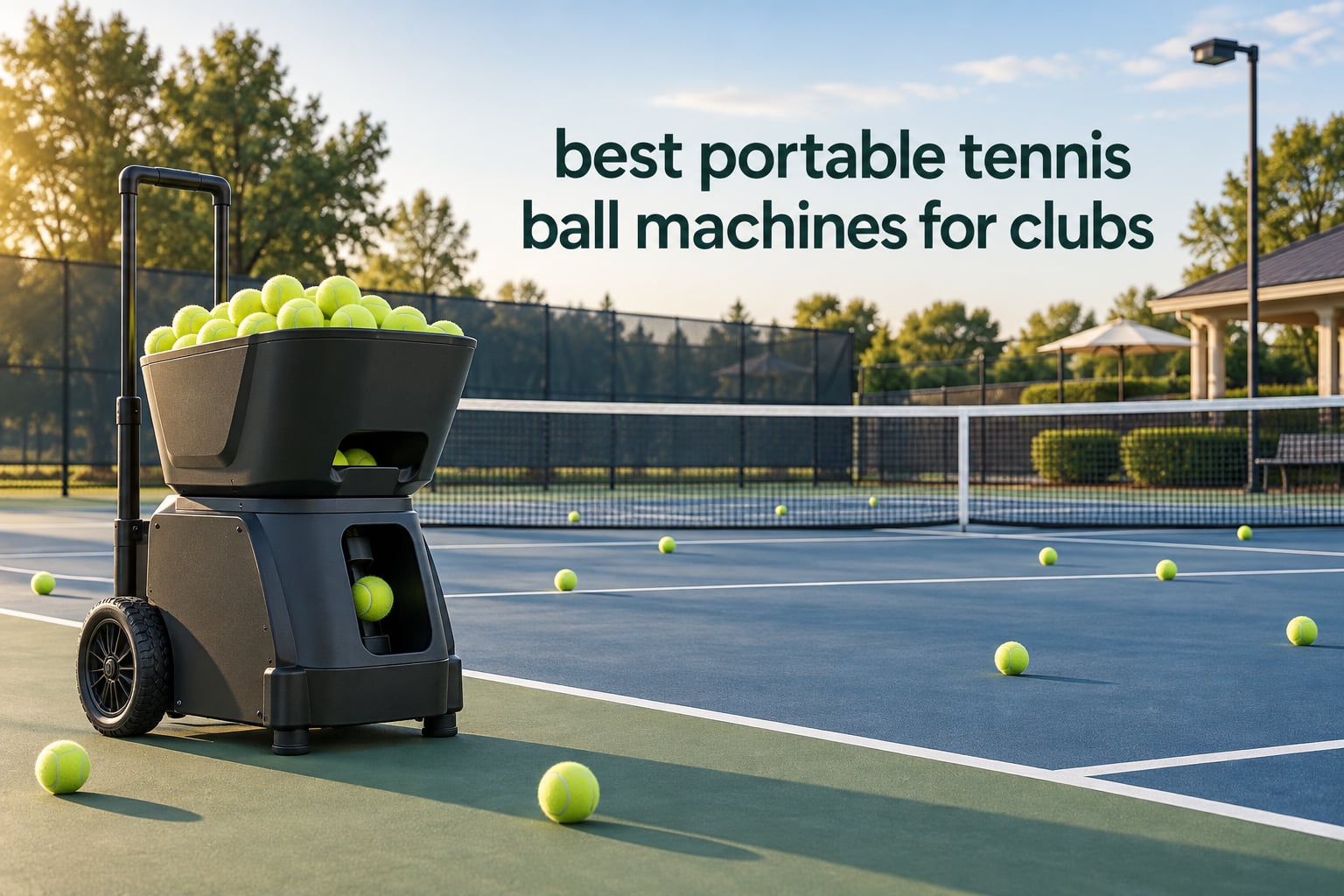
A portable tennis ball machine grips two or three balls with counter-rotating wheels and fires them at a set speed, spin and feed rate, so players and coaches can run drills without a hitting partner. Club-grade portable models run on a rechargeable battery, hold roughly 60 to 150 balls, and weigh from about 19 lb to 50 lb. Weight matters more than any other spec, because someone still has to move the machine to the court alone.
We read the owner reviews, warranty terms and spec sheets on the ten machines below, and we filtered for club use rather than personal use. A unit that lives in a club store room and gets wheeled onto three courts each week has a very different life from one a player unloads from a car boot twice a week.
That is why the best portable tennis ball machines for clubs are not the ones with the longest feature lists. They are the machines one person can unload, run for a full 90-minute session on a single charge, and store in a locked shed. One-person transport, hopper capacity that survives a session, real battery hours, feed consistency and warranty length did most of the sorting. We did not rank on advertised top speed alone, because three of these machines have owners measuring noticeably lower speeds than the listing claims.
Our Top 3 Ball Machines for Club Programs This Year

Lobster Elite Liberty
- 10 to 70 mph
- 2 to 4 hours per charge
- 8-inch all-terrain wheels
- 2-year warranty

Nisplay N1 Combo
- Dual motor for topspin and backspin
- 26 lb
- 4+ hour detachable battery
- oscillator included

Spinshot Plus-2
- 120+ ball foldable hopper
- phone-programmed shots
- any oscillation pattern
- quiet motors
The Lobster Elite Liberty takes our top slot on evidence rather than excitement. It has the largest verified owner base in this group at 174 ratings, a listed 2-year warranty, full topspin-to-backspin control and 8-inch all-terrain wheels for gravel and grass where smaller casters struggle.
The Nisplay N1 earns the value slot by pairing a 4.5 owner rating, dual-motor spin and a 26 lb wheeled chassis, a rare combination in a category where weight usually climbs with features. The Spinshot Plus-2 takes the premium slot for coach-led programming, since it is the machine where a session can be built shot by shot from a phone.
All 10 Machines Compared Side by Side in 2026
| Product | Details | |
|---|---|---|
| Lobster Elite Liberty |
|
Check Latest Price |
 Spinshot Pro Spinshot Pro |
|
Check Latest Price |
| Spinshot Plus-2 |
|
Check Latest Price |
 Spinshot Plus Spinshot Plus |
|
Check Latest Price |
 PUSUN PT-Smart PUSUN PT-Smart |
|
Check Latest Price |
 TENNIIX Basic TENNIIX Basic |
|
Check Latest Price |
| Nisplay N1 Combo |
|
Check Latest Price |
 PONGBOT PACE S PRO PONGBOT PACE S PRO |
|
Check Latest Price |
 Wilson Sports Tutor Portable Wilson Sports Tutor Portable |
|
Check Latest Price |
 PUSUN PT-Smart Pro PUSUN PT-Smart Pro |
|
Check Latest Price |
How We Picked Machines That Survive Club Use
Five criteria set the order, and each one came from complaints that repeat across owner reviews rather than one-off grumbles.
One-person transport. Anything above 45 lb is a two-person job in most club settings. If your store room is far from the court gate, weight becomes the deciding spec.
Hopper capacity against session length. A 60-ball hopper empties fast in a group session at competitive feed rates, so we noted capacity for every machine and flagged where a mid-session refill is likely.
Battery hours as reported, not advertised. Where owners report shorter runtimes than the listing claims, we used the shorter figure, because a coach cannot pause a lesson to find a wall outlet.
Feed consistency and jam behaviour. Damp and older balls are part of a club’s normal life, and machines with a de-jam design or multiple feed apertures handled that better.
Warranty length and serviceability. Shared equipment gets stacked, dropped and left out in the rain. Cover of two years or more on the main unit is worth real money to a club.
1. Lobster Elite Liberty – The All-Terrain Performer With the Biggest Owner Base
LOBSTER Sports – Elite Liberty Battery Operated Tennis Ball Machine – Lightweight – Large Wheels – Full-Featured Tennis Ball Thrower – Oscillation – Spin – 2-4 hr Runtime – Charger Included
10 to 70 mph
0 to 50 degrees elevation
2 to 4 hours court time
2-year warranty
+ Pros
- Largest verified owner review base in this group
- Full spin control from heavy topspin through flat to heavy backspin
- 8-inch all-terrain wheels and a folding metal handle
- Listed 2-year warranty
- Cons
- 3.9 star average
- tied for the lowest here
- 15 percent of ratings are 1-star
- Primarily plastic construction
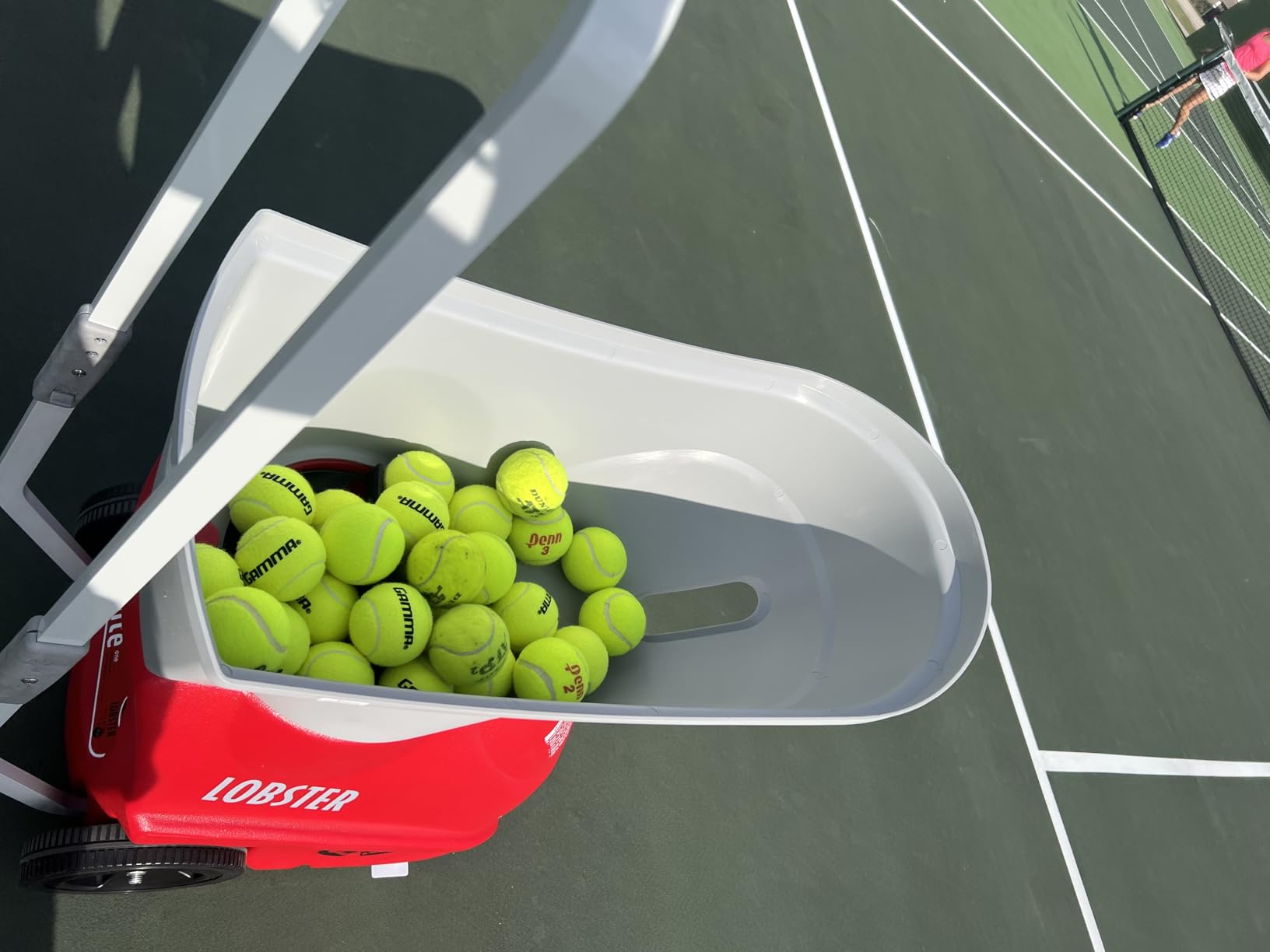
The Lobster Elite Liberty has been listed since 2013, and that longevity shows in the review base. At 174 owner ratings it is the best-documented machine here, and its speed range of 10 to 70 mph with 0 to 50 degrees of elevation covers everything from a flat drive to a lob.
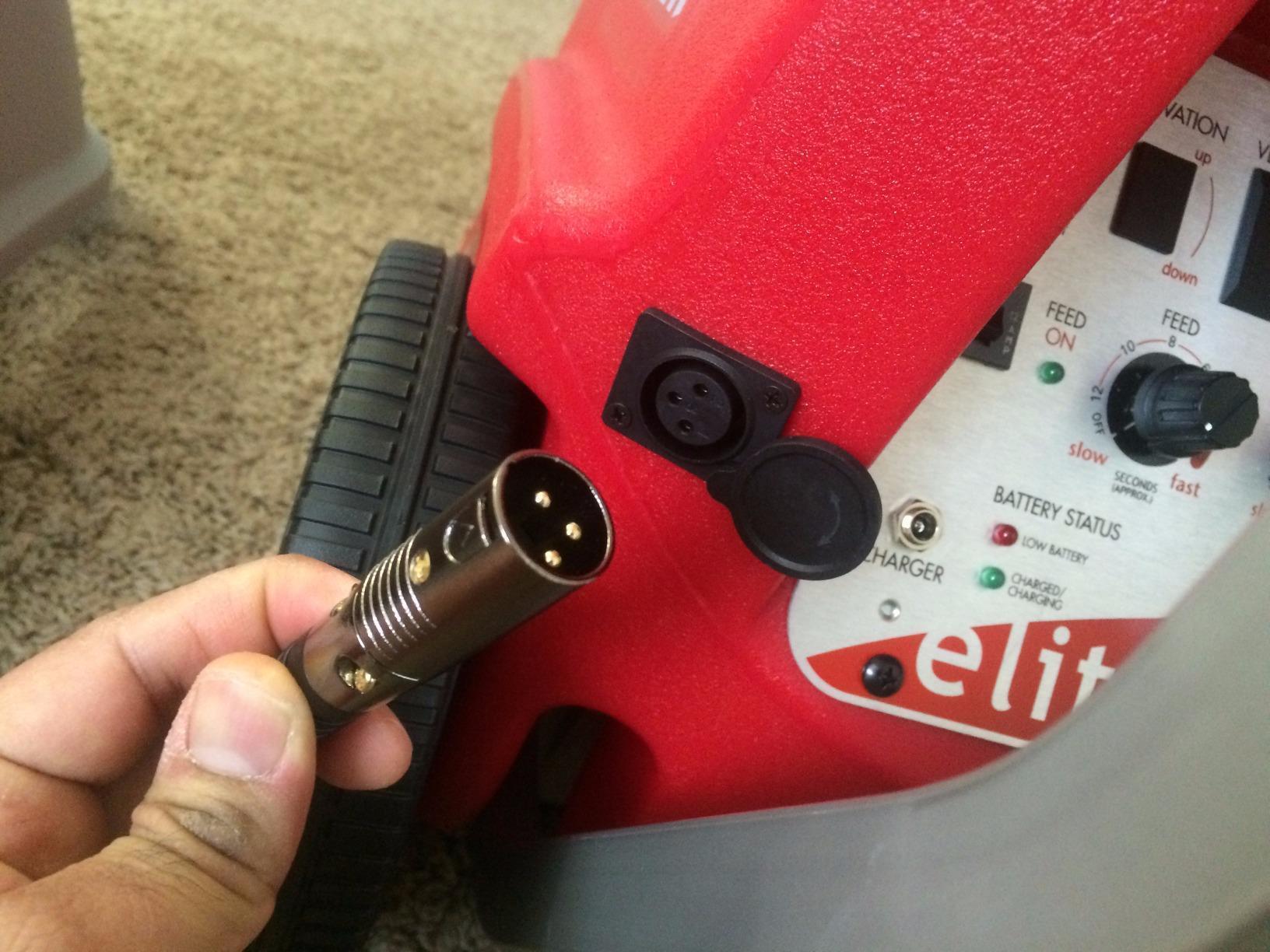
At roughly 35 lb it can be lifted into a car by one adult, and the 8-inch all-terrain wheels cross gravel, grass and curbs without the tipping small casters give you. The inverting hopper and folding metal handle are small details a coach notices every week.
Battery Runtime and Charge Planning
The rechargeable 8.5 amp battery is quoted at 2 to 4 hours of court time, which brackets a 90-minute lesson at either end. The range is wide because feed rate dominates: a machine firing every ten seconds will run far longer than one firing every 1.5 seconds. Plan on the lower figure and charge overnight rather than between blocks.
Spin Control and What a Coach Can Program
Spin runs from heavy topspin through flat to heavy backspin, and horizontal oscillation is standard, so a coach can feed a defensive rally for juniors in the morning and a flat drive for league night without swapping machines. Forum discussion of the Spinfire and Lobster brands centres on their many small parts, which users treat as either a serviceability plus or a durability risk.
Where the Lobster Elite Falls Short
The 3.9 star average is tied for the lowest in this group, and 15 percent of ratings sit at one star, with those complaints clustering around durability over time rather than first-day performance. The chassis is plastic, so a club fleet should pair it with a firm storage plan to protect the battery between seasons.
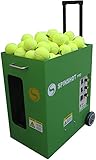
2. Spinshot Pro – The Metal-Build Machine for Clubs That Fix Their Own Gear
Spinshot Pro Tennis Ball Machine (The Best Model for Easy Use)
Metal and PU construction
About 60 ball hopper
1 to 10 second feed range
Battery sold separately
+ Pros
- Only machine here built from metal and PU/TPU rather than plastic
- Knob controls any volunteer can learn in a minute
- Feed rate from 1 ball per second to 1 per 10 seconds
- Spinshot support has replaced failed batteries and bent handles
- Cons
- Heaviest unit here at 49.8 lb
- Battery sold separately
- One spin type per session
- Feed occasionally jams and needs a manual clear
Everything structural on the Spinshot Pro is metal and polyurethane rather than plastic, which owners describe as built like a tank. For a club storing kit in an unheated shed or running drills on grass, the chassis is the selling point.
All features are knob-controlled, and that matters more than it sounds. A club machine gets operated by whoever is on court that evening, and there is no app to pair, no account to create and no firmware to update mid-session.
Hopper Size and the Mid-Session Refill
The hopper holds about 60 balls, and at a realistic feed of one ball every three seconds that load is gone in three minutes. It is workable when a person is dedicated to feeding, and a poor fit when the machine should run semi-autonomously while a coach watches six players.
The Separately Sold Battery
A charger is included but the battery is a separate purchase, and buyers report roughly 1.5 hours at top speed with some batteries failing after limited use. For a club the failure mode is a machine stopping mid-session, so buy the battery new and keep a spare on the shelf.
Who Should Skip This Machine
At 49.8 lb it is the heaviest unit here, which makes loading it a two-person task despite the wheels. It also dispenses one spin type per session, so mixed-spin drills force a manual change mid-point, and members who want both spins should look at a dual-motor machine instead.
3. Spinshot Plus-2 – The Most Programmable Machine for Coach-Led Point Drills
Spinshot Plus-2 Tennis Ball Machine (Plus2 Model =Plus Model + Player Model)
120+ ball foldable hopper
Program each shot from a phone
Any oscillation pattern supported
Quiet operation
+ Pros
- Shot-by-shot programming for speed
- spin
- height
- angle and feed rate
- Handles moon balls
- drop shots and approach sequences
- Over 120 ball hopper covers a long session
- Quiet operation and strong motors
- Cons
- App pairing is described as inconsistent
- Hopper flaps are widely criticised as flimsy
- Small wheels make it awkward to move
- Battery sold separately with short reported runtimes
The Plus-2 behaves more like a coaching system than a ball launcher. You set speed, spin, height, angle and feed rate for each individual shot from a phone, and the phone remote upgrade is included at no extra cost.
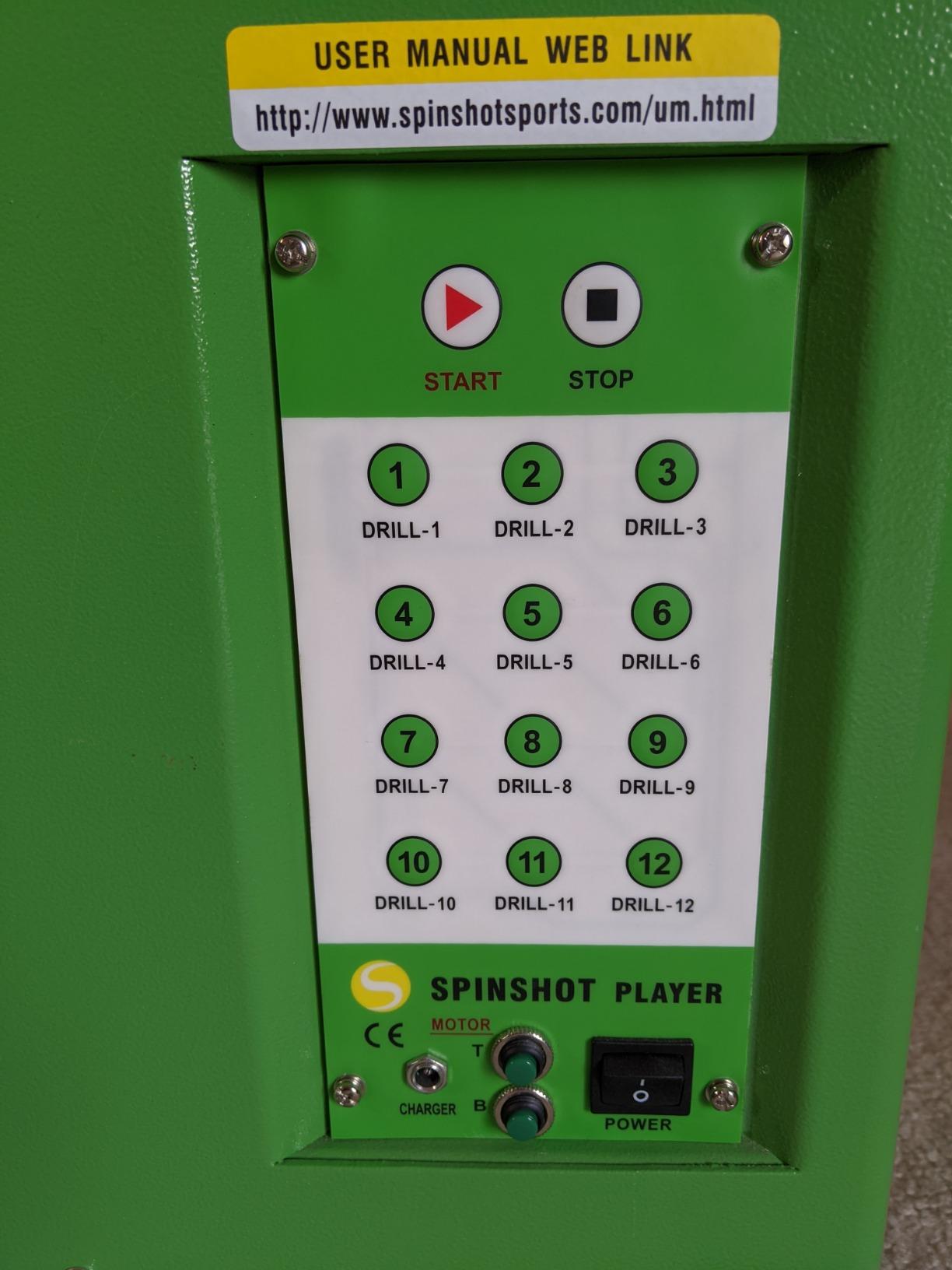
Owners use that flexibility for moon balls, drop shots and multi-shot approach sequences, which are drills a simpler machine physically cannot serve. It is also quiet, and on an outdoor court beside houses a machine you can talk over can stay running for a whole session.
Hopper Capacity and Session Coverage
The foldable hopper holds over 120 balls, the difference between an uninterrupted session and one that keeps stopping for refills. The recurring complaint is that the feed does not always load cleanly and the machine waits until someone walks over to restart it, which costs real time in a counting points drill.
Programming Flexibility and the App Layer
Any oscillation pattern can be set through the Player model, and the motors are praised for strength and quiet running. The trade-off is the software: owners report the app connection needing to be closed and reopened, so keep a written session plan in case a failed pairing ends a lesson.
Build and Support Realities
Hopper flaps are criticised as flimsy, the small wheels make crossing a court awkward, and support is reachable mainly by email with slow response times. Buyers still rate Spinshot as the top tier for drill flexibility, and for a progression-based programme that is worth the support overhead.
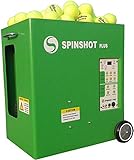
4. Spinshot Plus – The De-Jam Design Built for Damp Club Balls
Spinshot Plus Tennis Ball Machine (Best Model for an Intermediate Player)
Patented de-jam design
Metal body
42 lb
Quick oscillation from panel or app
+ Pros
- Patented de-jam design clears feed problems without opening the machine
- Metal construction for durability
- Quick oscillation controllable from the panel or a phone app
- Flexible power options let a club standardise
- Cons
- 3.9 star average with 19 percent 1-star ratings
- One of the heavier units here at 42 lb
- Owners report reliability problems after a period of use
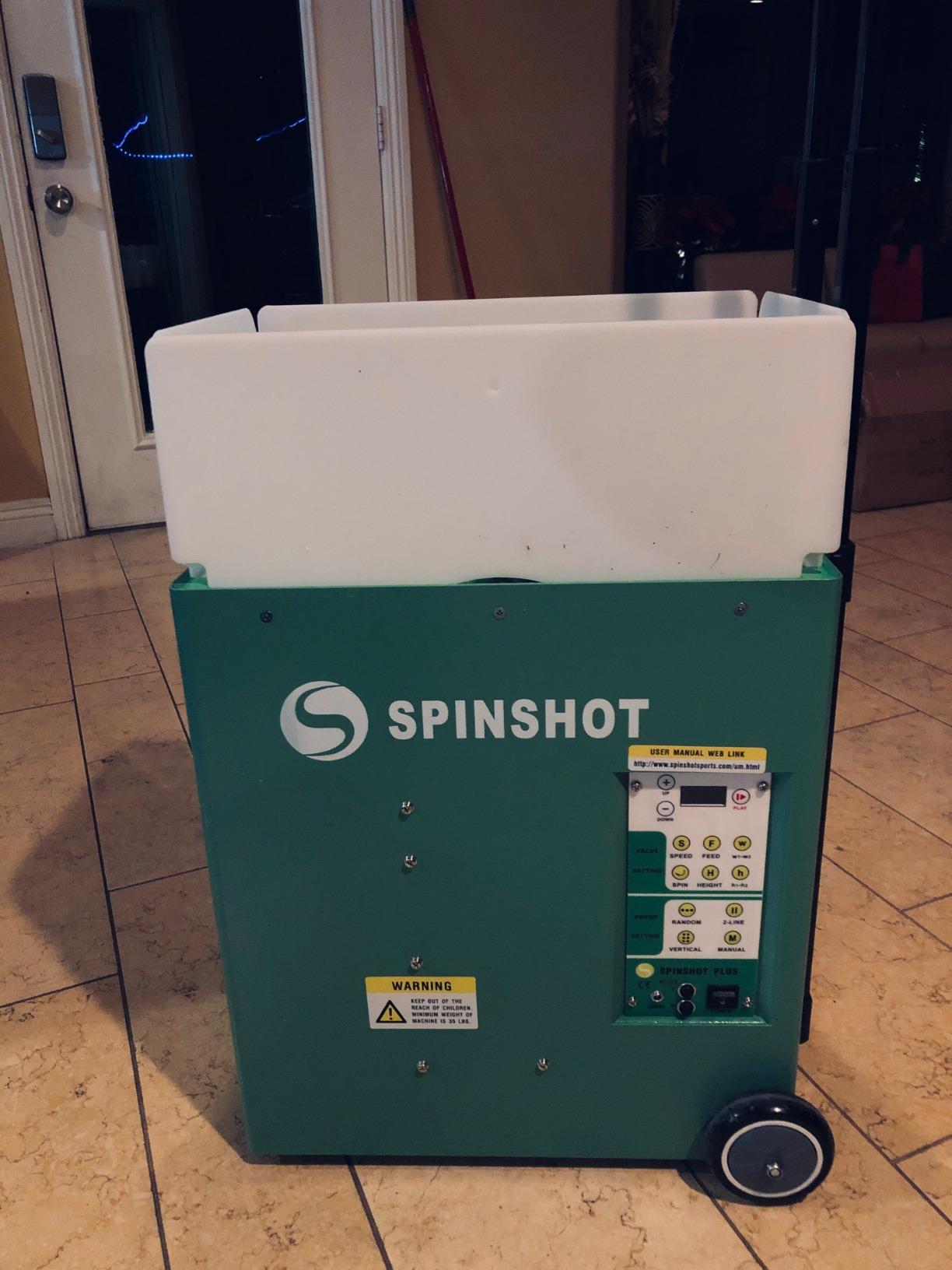
The Spinshot Plus sits between the Pro and the Plus-2, and its standout feature is the patented de-jam design. For a club running autumn and spring sessions with a basket of damp balls, that is a more useful specification than any speed figure.
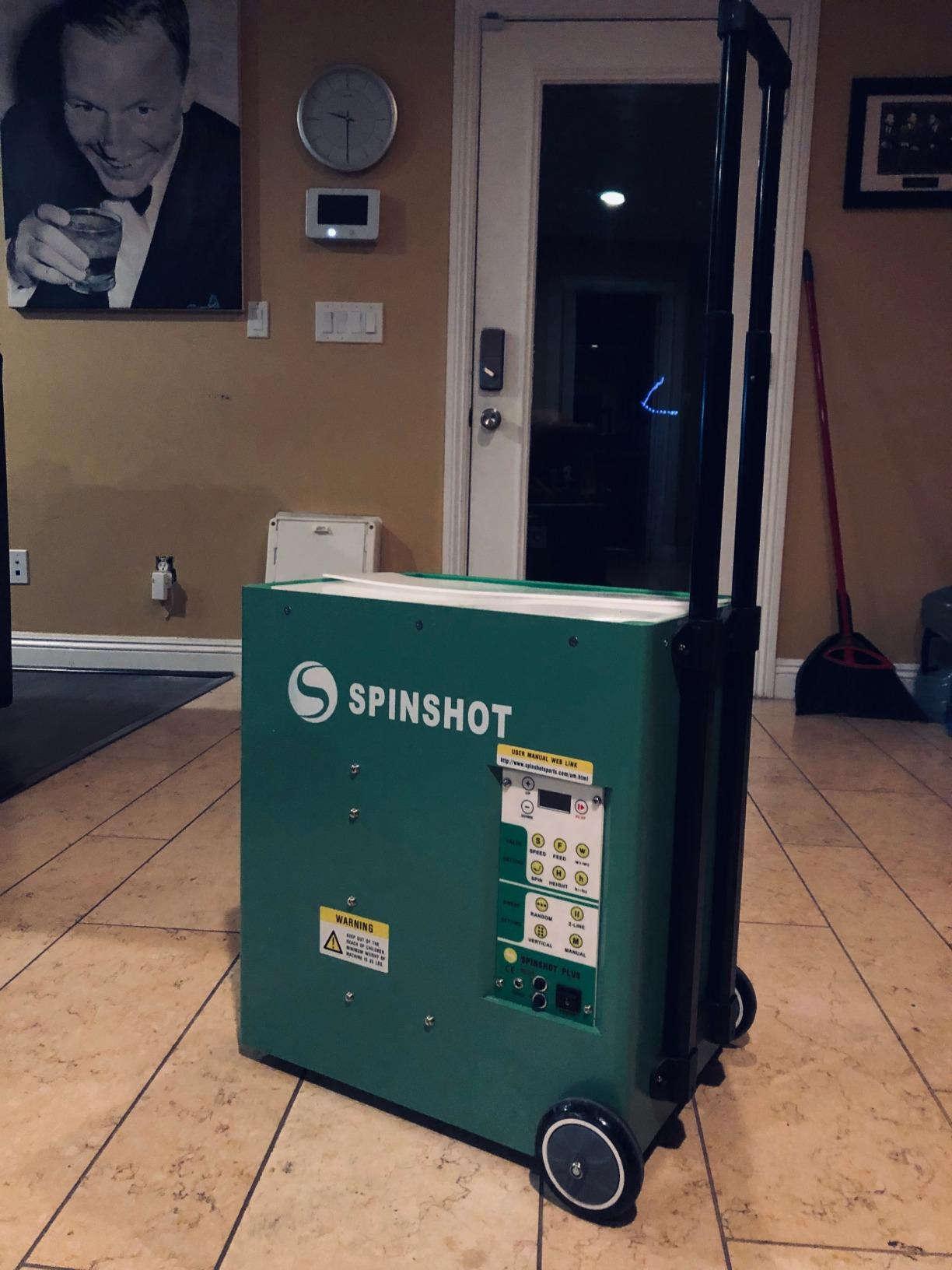
The body is metal, and quick oscillation can be driven from the control panel or the free phone remote app. That dual path suits shared equipment, since the panel still works when the phone does not, and the machine suits both left- and right-handed players without modification.
Why the De-Jam Design Matters More Than Speed
Owners single out the de-jam system as the practical differentiator in this line-up, and forum users rate reliable feeding above feature count. A machine that clears a misfeed mid-instruction does not stop the session, while one that needs its lid opened does.
Weight and the Reality of 42 lb
At 42 lb this is a two-person lift for loading and unloading, and the metal construction is both the reason it holds up and the reason it is heavy. A cart solves it for a club rotating one machine across courts, and the weight matters far less if machines sit permanently on the two busiest courts.
Reliability Is the Question Mark
The 3.9 star average with 19 percent one-star ratings is the most polarised profile in the Spinshot line-up here, with reliability complaints appearing after a period of use while a majority rate the build and de-jam design highly. A club buying one of these should stagger two units rather than run a single machine hard every session.
5. PUSUN PT-Smart – The Best Fit for Junior Progression Sessions
PUSUN Tennis Ball Machine,Portable Tennis Launcher,Tennis Trainer,PT-Smart
12 to 75 mph, 1.8 to 8 second feed
28 landing points
4 to 6 hour external battery
3-year main unit warranty
+ Pros
- 12 built-in NTRP 1.0 to 5.0 progression modes
- 28 landing points with visible external oscillation
- App
- remote and Apple Watch control from the court
- Dust-proof mainboard rated for clay and hard courts
- Cons
- External battery pack is a separate item to carry
- 14 percent 1-star share on early control issues
- Newer listing with a smaller review base
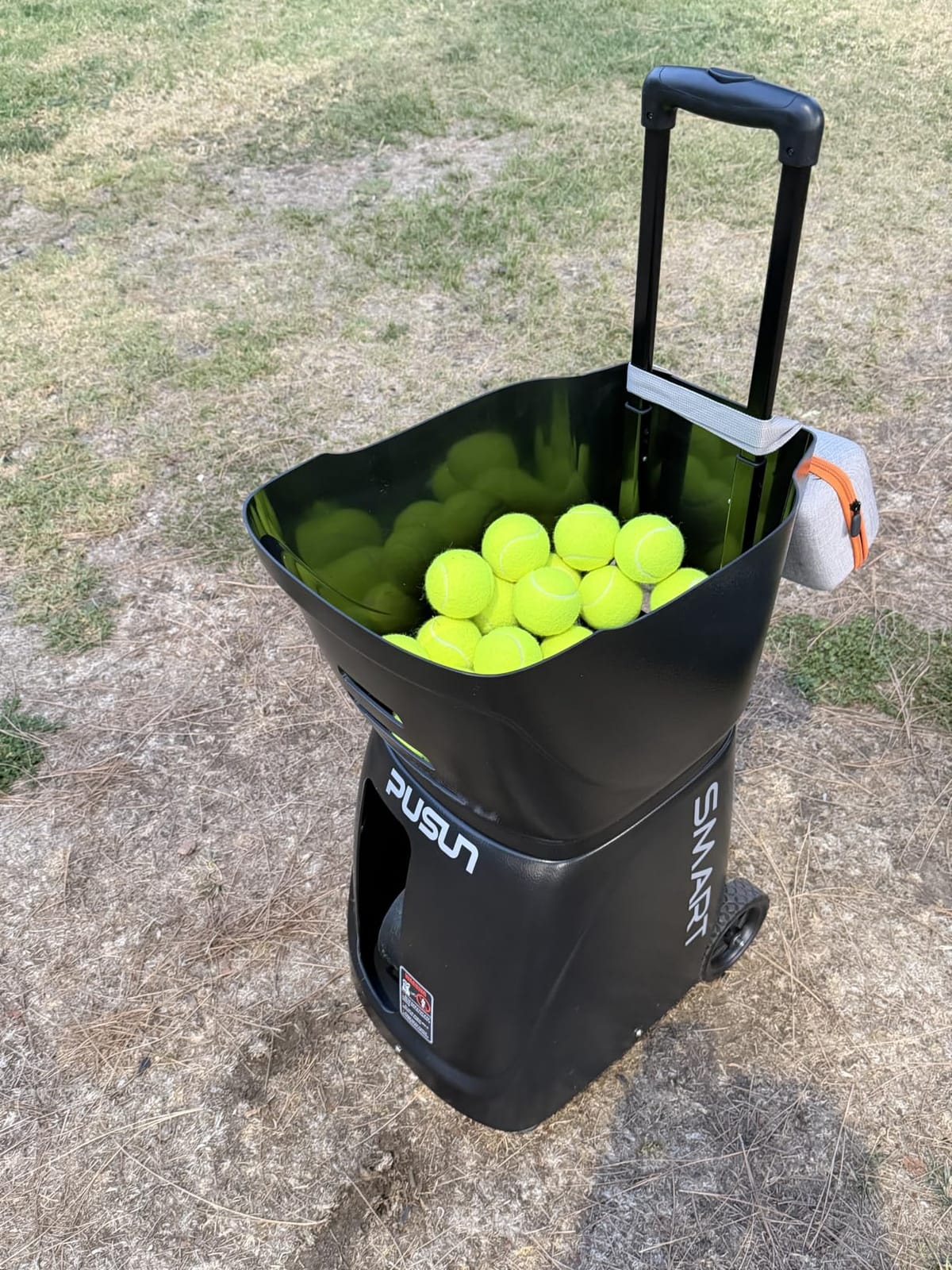
The PT-Smart is built around progression rather than raw speed. Twelve built-in modes map to NTRP 1.0 through 5.0, splitting into Primary and Fixed modes for beginners and Vary Speed and Program modes for advanced work, plus a one-tap padel mode with 14 drills.
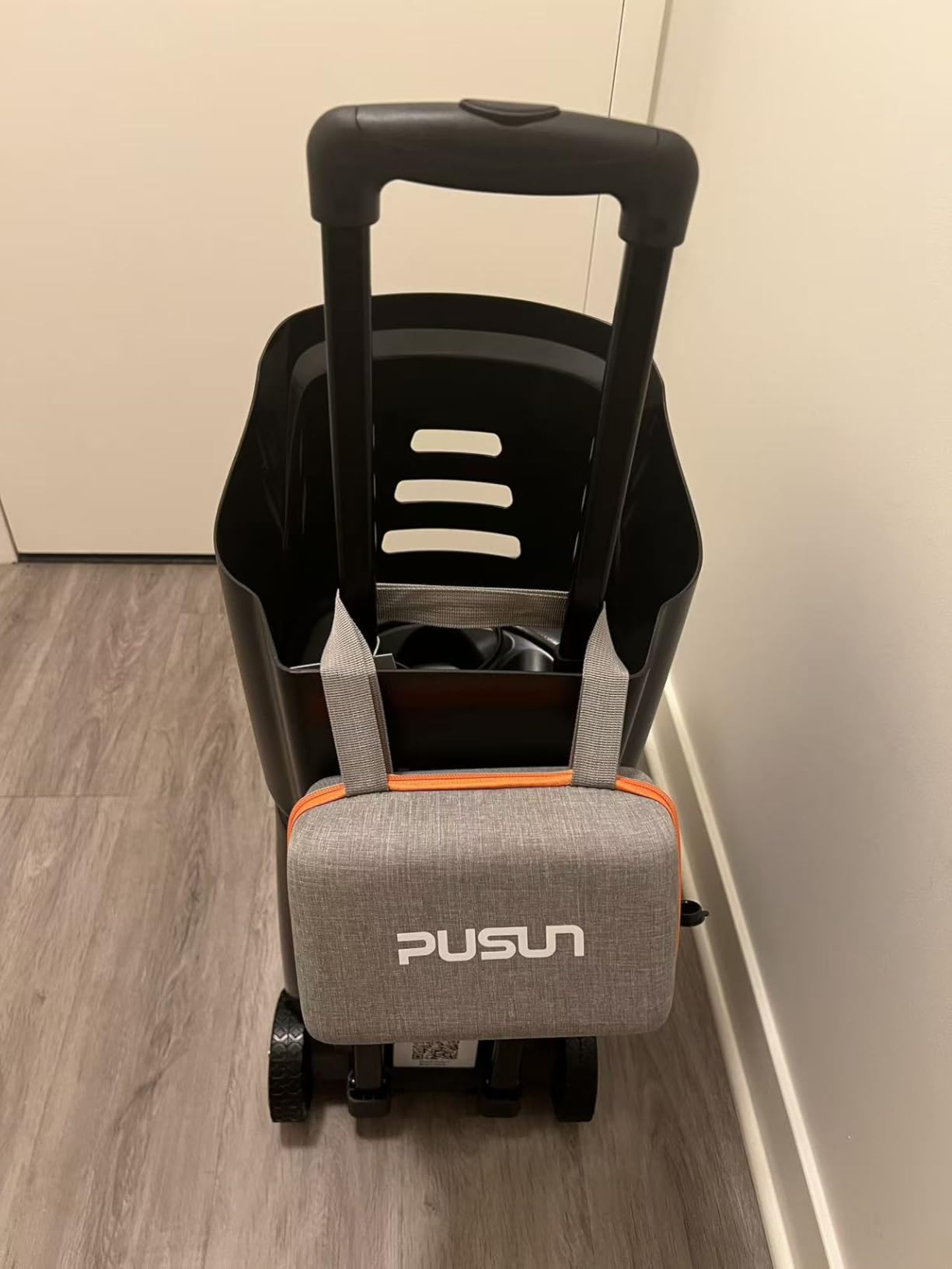
That is the feature that earns its place in a junior programme. A coach can hand a 3.0 player a fixed pattern and a 4.5 player a varying one from the same machine, and speed still spans 12 to 75 mph with 1.8 to 8 second feed intervals across six spin levels, all adjustable from the court.
28 Landing Points and Visible Oscillation
The 28 programmable landing points with external oscillation give players a visible cue of where the next ball goes, which is a genuine coaching tool because anticipation is a habit juniors need taught explicitly. The trade-off is that a moving oscillator becomes a visual tell once a player has watched it a dozen times.
Battery Placement and Court Durability
The 153.6Wh external battery pack gives 4 to 6 hours of play and over 5,700 shots, and it charges away from the machine, so the pack comes inside overnight while the unit stays on the court fence. The dust-proof mainboard and metal base are specified for clay and hard courts, with cover of 1 year on the pack and 3 years on the main unit.
Where the Software Shows Its Age
A 14 percent one-star share points to early firmware or control issues, and with 50 reviews the long-term record is thinner than the Spinshot and Lobster machines here. Because the value is in the training modes, save your drill library in the app and document a service contact before the machine goes on the court.
6. TENNIIX Basic – The Lightest Machine One Person Can Carry to Any Court
TENNIIX Basic Tennis Ball Machine, 18.7LB Portable Tennis Robot, Black
18.7 lb, folds to 15.4 x 10.7 x 17.6 inch
7000 mAh removable battery, up to 4 hours
Up to 75 mph dual-wheel
9 shot patterns plus Match Mode
+ Pros
- Lightest machine in this group at 18.7 lb
- Folds small enough for a car boot
- 46 voice commands through a wireless armband
- 9 shot patterns plus a 6-style Match Mode
- Cons
- No wheels
- so it is carried rather than rolled
- Narrow hopper opening is awkward to fill
- Capacity falls short of the advertised figure
- Machine depends heavily on the phone app
At 18.7 lb, the TENNIIX Basic is the machine here that changes club behaviour rather than inventory. Owners frame it as the reason they practise more often, because carrying a machine to an outdoor court in winter is no longer a two-person job.
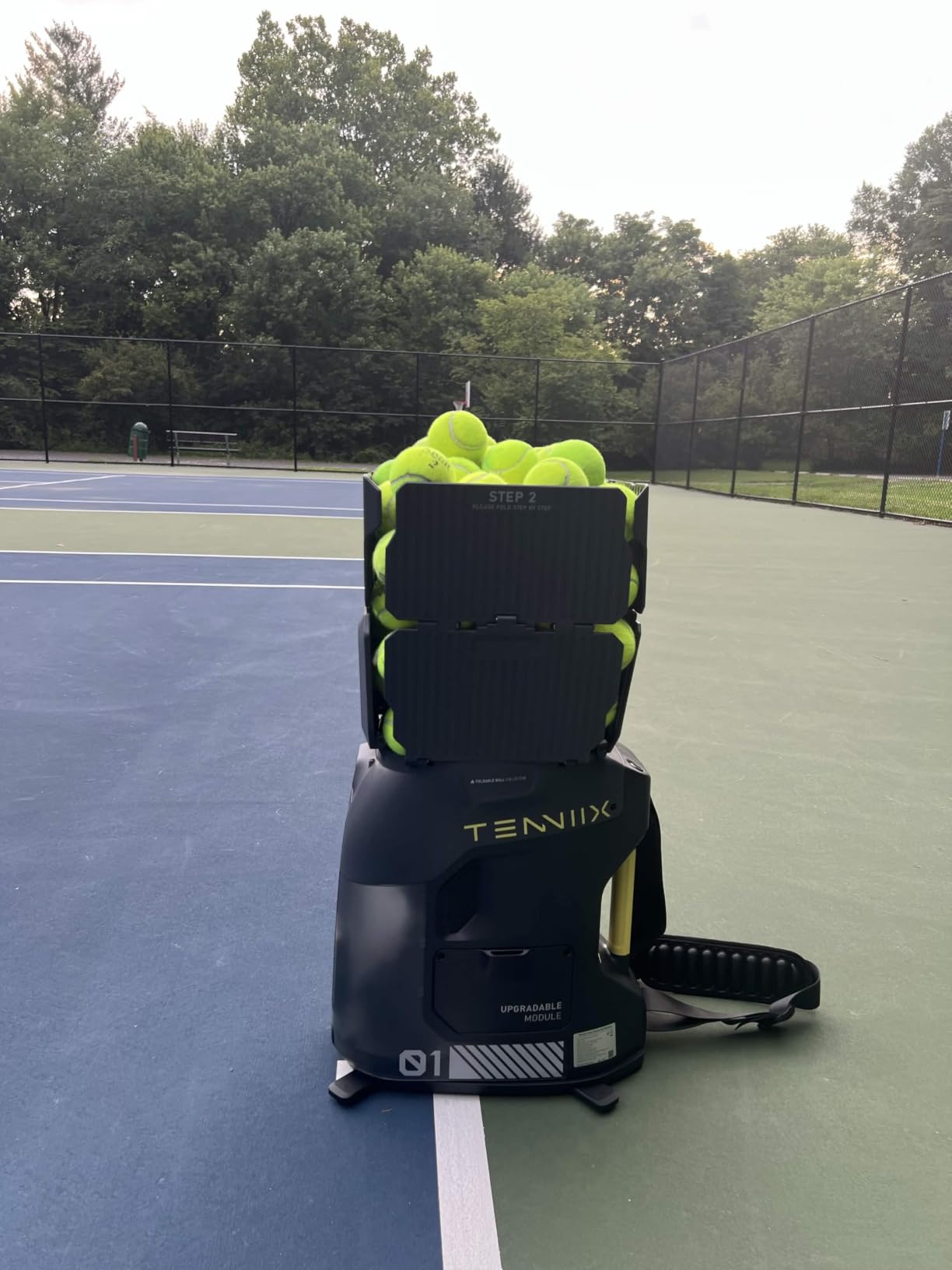
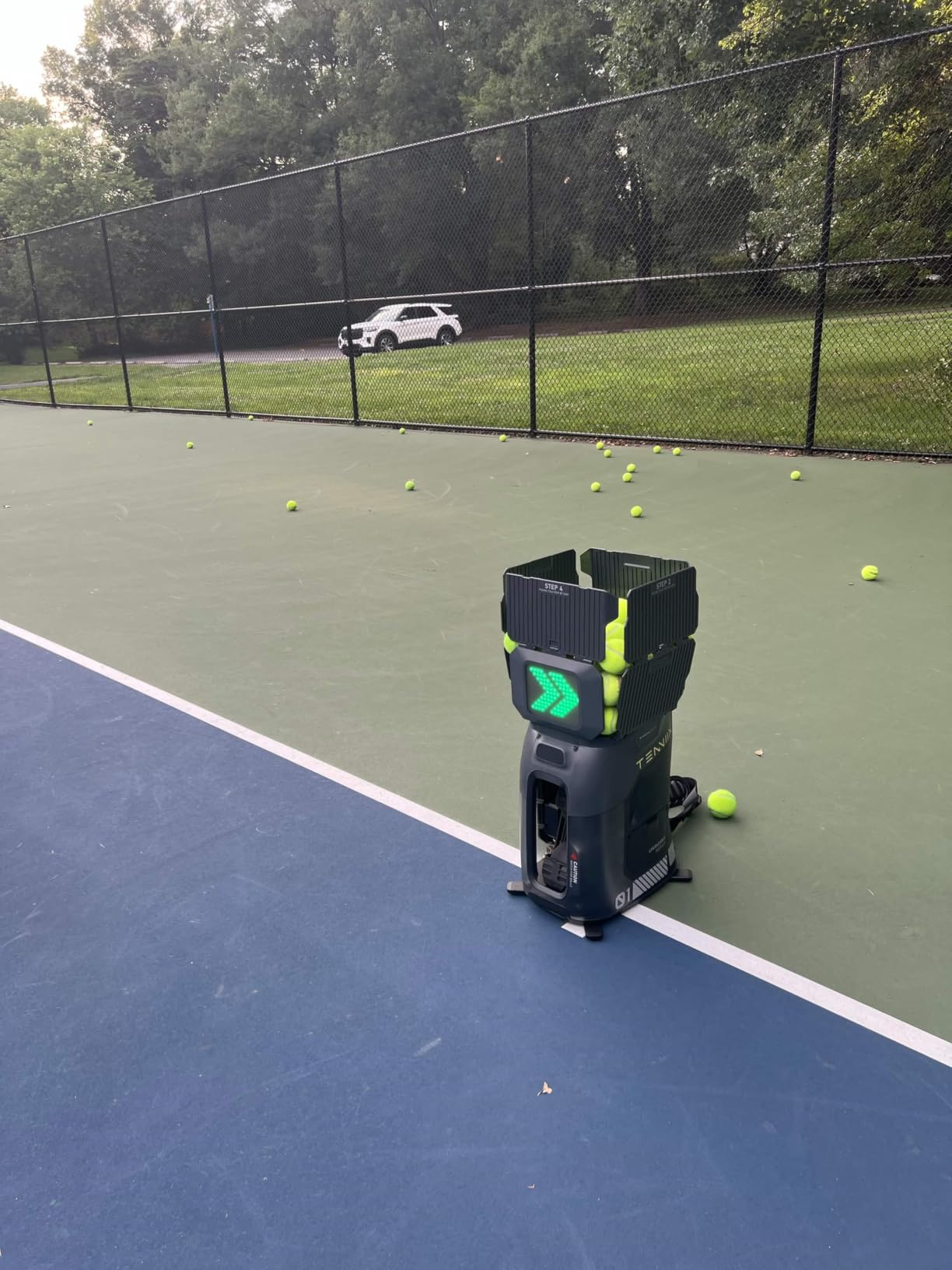
It folds to 15.4 by 10.7 by 17.6 inches, so it lives in a car boot or a wall locker rather than a full storage bay. Launch is by dual-wheel system to 75 mph, and the 7000 mAh removable battery is quoted at up to 4 hours or about 1,800 shots per charge.
Voice Control and Match Mode Drills
A wireless wrist armband carries 46 voice command keywords over Bluetooth 5.2, letting a player change speed or pattern without crossing the court. Nine shot patterns cover baseline, half-court, feed, volley, overhead, topspin, backspin, moon ball and hand-toss, and Match Mode adds six rally styles with NTRP L1 to L3 presets.
The Mechanical Weak Spots
There are no wheels, so over a grass or gravel path it becomes a two-hand carry, and that is the real limit of the design. The hopper opening is narrow and awkward to pour into with strays bouncing away, capacity lands slightly below the advertised figure, and a minimum five-second delay between programmed patterns interrupts drill flow.
The App Dependency Question
Most control runs through the phone app across more than 1,000 speed, spin, angle and interval combinations, and one owner reports the controller app stopping and leaving only an on-off function. Support options are limited despite the stated one-year warranty, and the optional AI vision module adds drills and shot scoring to the same machine rather than replacing it.
7. Nisplay N1 Combo – The Highest-Rated Machine With Dual-Motor Spin and Wheels
Nisplay Portable Tennis Ball Machine (26lbs) – Dual Motor for TopSpin and Backspin, 80+ Balls, Max 68MPH, 4+ Hours Play with External Lithium Battery (Ball Machine + Oscillator Combo)
26 lb with oversized wheels
Up to 68 mph, 0 to 50 degrees
1 to 9 second feed
4+ hour detachable lithium battery
+ Pros
- 4.5 owner rating
- the highest average here
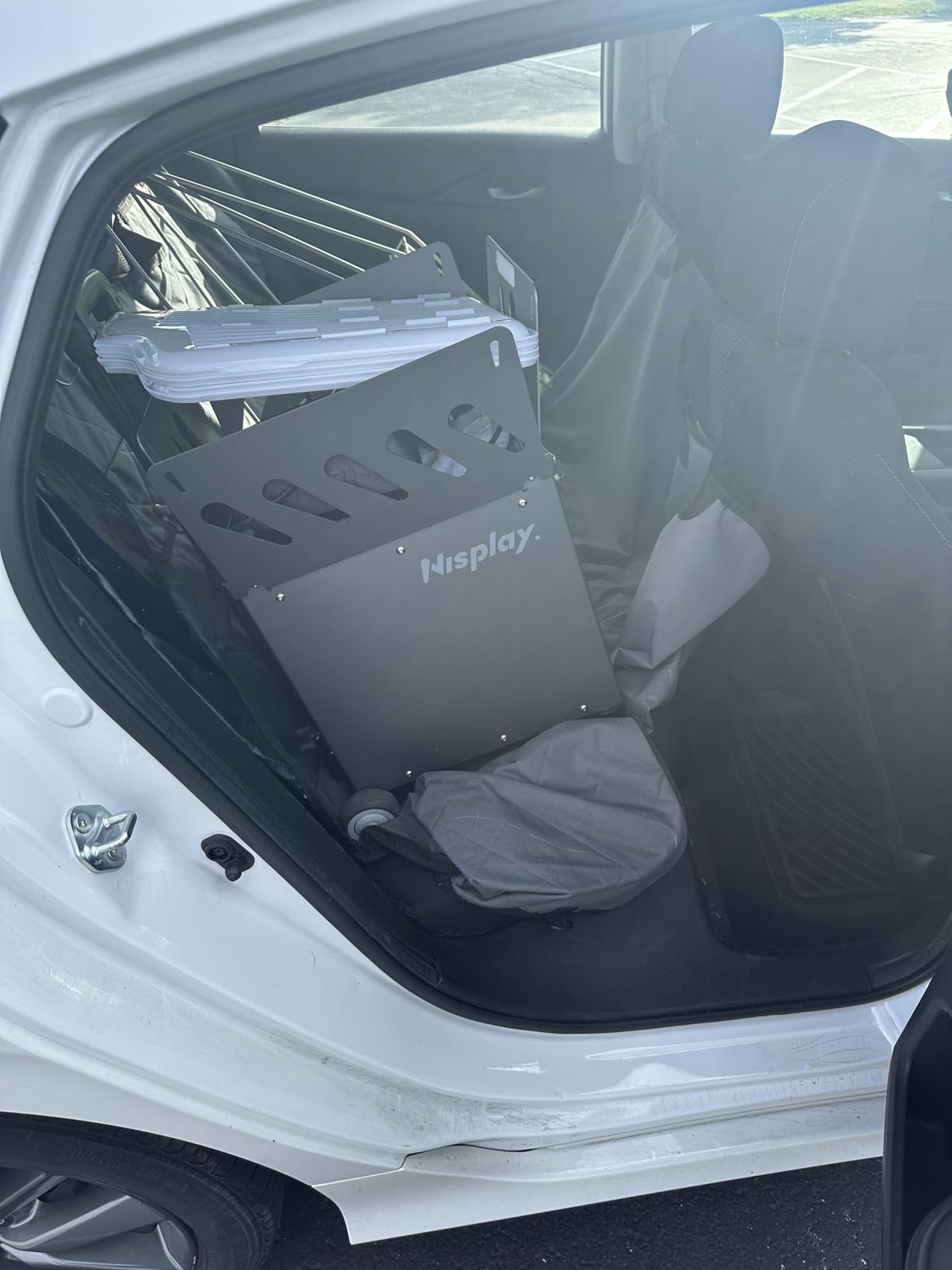
- Compact enough for a sedan boot with a basket of balls
- Detachable battery lets the machine stay at the club
- Three feed apertures let a jam clear without walking over
- Cons
- Remote cannot engage the oscillator or stop the launch wheels
- Feed dial is labelled by time between balls and reads counter-intuitively
- Y cable to the oscillator is short
- Spin output is modest for the money
The Nisplay N1 carries the highest owner rating in this group at 4.5 stars with no one-star ratings, and at 26 lb it is one of the few units light enough to move alone. That combination is unusual, because most machines in this category buy their features with weight.
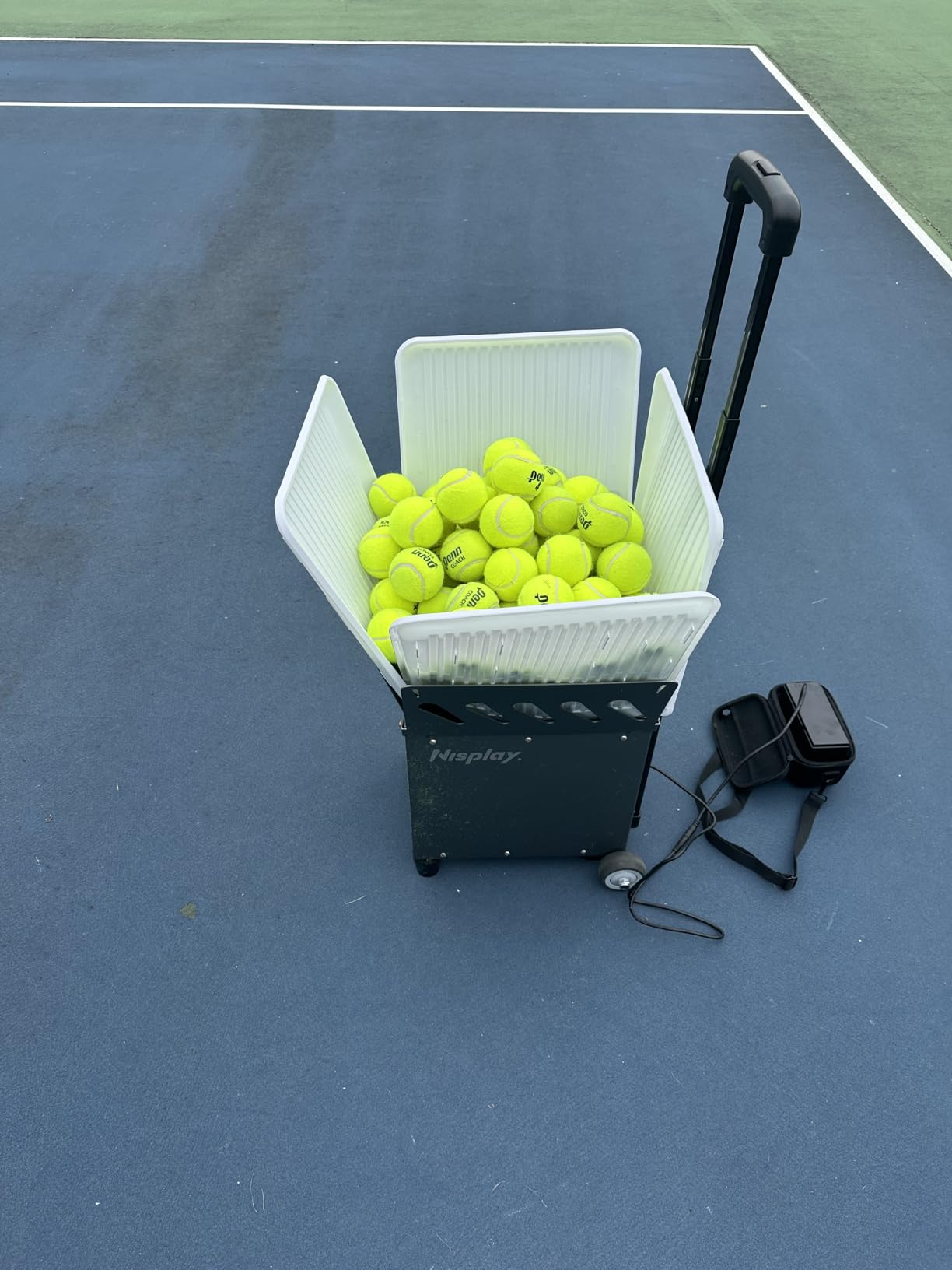
The dual-motor design handles flat, topspin and backspin at adjustable levels, speed runs to 68 mph, elevation covers 0 to 50 degrees and feed intervals run 1 to 9 seconds. The oscillator unit is included, and oversized wheels with a 3-foot folding handle roll it from a car park over curbs.
Detachable Battery and Club Charging Logistics
The detachable lithium battery gives 4+ hours of play and only the pack needs recharging, so the machine can sit on a court-side trolley while packs rotate through the office overnight. Three ball-feed apertures mean a jam often clears itself, which on a unit used by whoever is coaching that evening is worth more than feed-rate range.
Where the Controls Fall Short
The remote cannot engage the oscillator or stop the launch wheels, so a coach finishing a block remotely still walks over to switch the machine off. The ball-frequency knob is labelled by time between balls, meaning the highest setting gives the fewest balls, and a laminated label beside the dial fixes it for the volunteers who will not read the manual.
Speed and Oscillation Claims Worth Testing
At least one owner disputes the 68 mph figure after measuring much lower ball speed over the net, and reports note the oscillation spray is skewed with one side pivoting further. The short Y cable can strain as the oscillator pivots, and spin output is called modest for the money, so verify delivered speed on a court visit if your programme depends on pace.
8. PONGBOT PACE S PRO – The Longest-Running Machine for Long Club Sessions
PONGBOT Tennis Ball Machine, APP and Remote Control, Custom Drills, 150 Ball Capacity, Max 80mph,8+ Hours of Endurance, Dual Motor for Topspin and Backspin, PACE S PRO
150 ball hopper
Over 8 hours of runtime
Up to 80 mph, 60 rps spin
6 oscillation spots
+ Pros
- Largest hopper in this group at 150 balls
- Over 8 hours of runtime from a removable battery
- Deepest drill library with hundreds of pre-loaded drills
- Remote-controlled barrel opening speeds up ball pickup
- Cons
- 46 lb is the second-heaviest unit here
- Recent listing with only 34 reviews so longevity is unverified
- Drill creation is app-dependent and adds a learning curve
On paper the PACE S PRO leads this group on specification. It holds 150 balls, runs for over eight hours on a removable battery with a management system, and outputs up to 80 mph with 60 rps dual-motor spin, and those figures map straight onto club session planning.
It also has the deepest drill library here, with hundreds of pre-loaded drills, unlimited custom drills, 30 drills that sync from the app to the handheld remote, over-the-air updates, and smart sensors for adaptive rallies and NTRP match challenges on clay, hard and grass as well as padel. A remote-controlled barrel opening is unique in this group and speeds up ball pickup and cleaning at the end of a session, which saves real time on a club evening.
Weight and the Portable Claim
At 46 lb it is the second-heaviest unit here despite being sold as portable. Wheels, a pull handle and a compact car trunk design help with distance, but 46 lb still means a two-person load or a trolley, so it suits a club that places the machine permanently on one court rather than rotating it across four.
Ball Pickup as a Club Efficiency Issue
A remote-controlled barrel opening is unique in this group and speeds up ball pickup and cleaning at the end of a session, which saves real time on a club evening. Ball pickup is one of the most common questions on tennis forums, and a slinger bag or hoop is the cheaper answer for everyone else, though a 150-ball hopper only pays off if the balls get back in quickly.
App Dependence and an Unproven Track Record
Drill creation runs through the app, which adds a learning curve when several coaches share one machine, and the 30 drills synced to the remote are the mitigation because they survive a phone going out of range. With 34 reviews, long-term durability is largely unverified, so the honest position is strong specifications and a short service history.
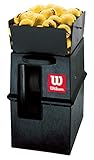
9. Wilson Sports Tutor Portable – The Three-Year Parts and Labor Warranty With No App
Wilson Portable Tennis Ball Machine. Speed 75 MPH. Variable Topspin/Underspin. Random Oscillatror. Electronic Elevation. from The #1 Name in Tennis – Wilson Sports
10 to 75 mph
Random oscillator
110 ball hopper
3-year parts and labor warranty
+ Pros
- 3-year parts and labor warranty
- the longest stated cover here
- Knob controls with no app or programming needed
- Random oscillator delivers shots across the court
- US manufacturing with factory service in Burbank
- California
- Cons
- Internal battery reported to degrade to about 25 minutes after roughly 13 months
- Hopper side flaps are flimsy and let balls escape
- 75 mph top speed disputed by at least one owner
- Shot-to-shot depth varies
Built by Sports Tutor and sold under the Wilson name, this machine argues its case without features: a 3-year parts and labor warranty, US manufacturing, factory service in Burbank, California, and no app in the operating experience at all.
Speed runs 10 to 75 mph with electronic elevation from groundstrokes through lobs, both topspin and underspin adjust from light to heavy on one control, and feed interval runs from every 1.5 seconds to every 10. Knobs only means any coach or volunteer can start it, the 110-ball hopper cuts refills in a group session, and a towing handle with large wheels moves it from an SUV onto the court in one trip.
Random Oscillation for Running Drills
Random placement is genuinely different from a programmed pattern, because the player has to read the machine rather than anticipate a known sequence, which trains split-step timing and recovery running that a fixed cross-court pattern never will. A towing handle and large wheels move it from an SUV onto the court in one trip.
The Internal Battery Problem
The most serious reported issue is degradation: one owner has the internal rechargeable down to about 25 minutes of play after roughly 13 months, so treat the 4-hour figure as a new-battery number. Because the pack is internal, replacing it is a service job rather than a swap, which is exactly where the 3-year cover earns its value.
Mechanical Limits and Speed Claims
Hopper side flaps are described as flimsy and prone to vibrating open so balls escape, and they can collapse if a shot hits the unit. Owners also report shot-to-shot depth varying, the 75 mph figure is disputed, and the single towing handle sits at machine height so you push rather than pull it.
10. PUSUN PT-Smart Pro – Hidden Oscillation That Removes the Visual Tell
PUSUN Tennis Ball Machine,PT-Smart Pro Internal Oscillation
Hidden internal oscillation
12 to 75 mph, 1.8 to 8 second feed
5-hour external battery, 5000+ shots
3-year warranty
+ Pros
- Hidden internal oscillation removes the visual tell of a moving barrel
- Stepper motors give consistent landing control for repeatable drills
- App
- smart remote and Apple Watch control
- Support ships replacement parts with repair videos
- Cons
- Top speed falls well short of the advertised 75 mph
- Depth-changing drills behave inconsistently
- Phone and watch cannot be used at the same time
- 4.0 owner rating with an 18 percent 1-star share
The PT-Smart Pro’s real innovation is that the outer shell stays still. Oscillation happens inside the machine, so there is no visible barrel swing, and once a player has watched a conventional oscillator for ten minutes that movement becomes a giveaway.
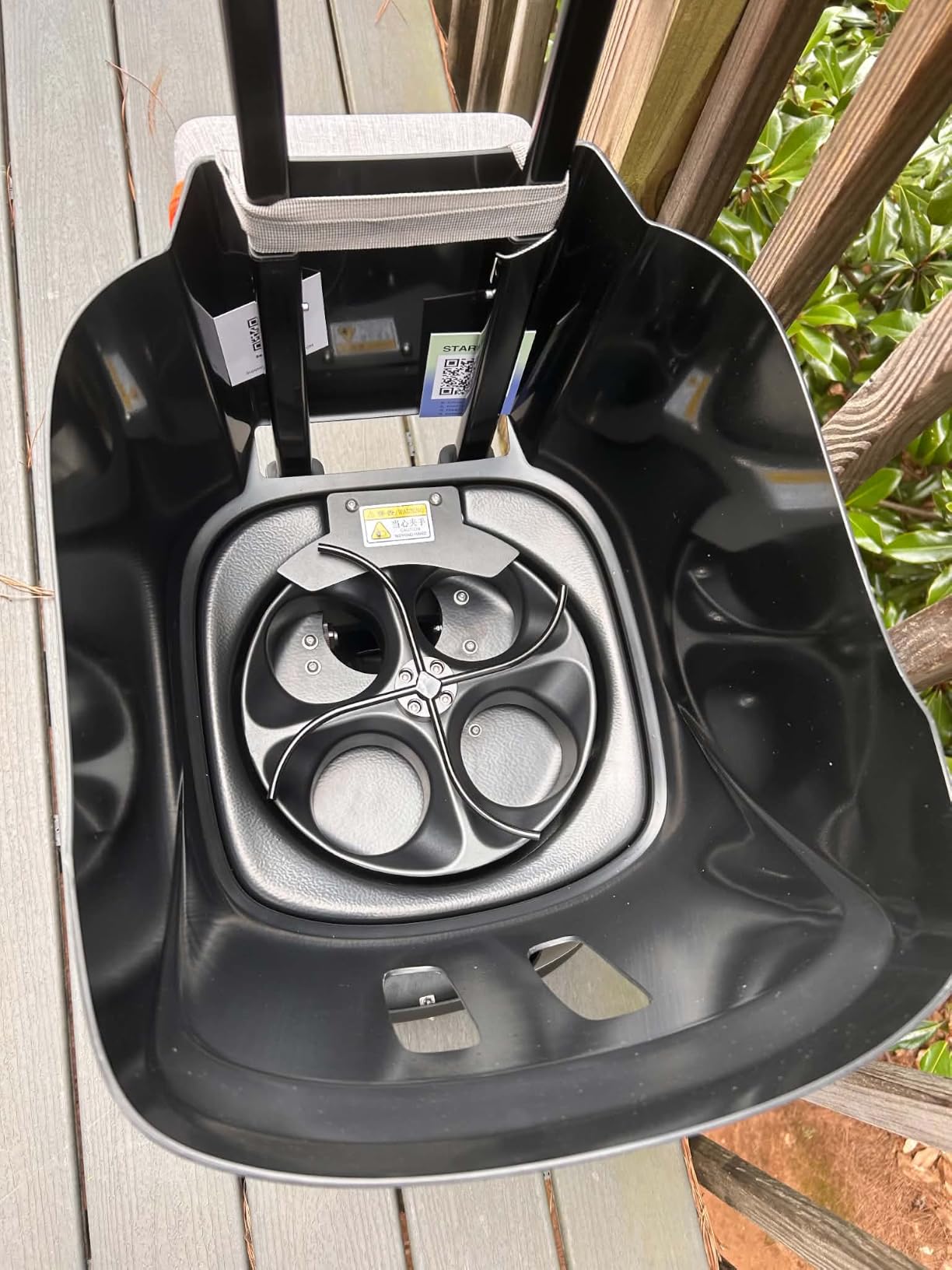
Stepper motors drive 28-point custom drills, speed covers 12 to 75 mph with 1.8 to 8 second feeds across six spin levels, and control comes from the app, a smart remote or a compatible Apple Watch. The 5-hour external pack gives roughly 5,000 shots and charges without moving the machine, with a 3-year warranty and a repair wrench set in the box.
Internal Oscillation and Repeatable Placement
The wider launch window and stepper control are what make this useful for technical work, where the same feed needs to land in the same place every time. Removing the visual tell also raises the tactical value, because a player who cannot read the machine has to watch the ball rather than the barrel.
Speed and Depth Consistency Concerns
The most consistent complaint is that the advertised 75 mph is not delivered, with one owner measuring about 50 mph at zero topspin and roughly 45 mph at maximum topspin. Depth-changing drills also behave inconsistently, with the first ball landing correctly and the next launching at least ten feet high, so verify speed on court before committing for advanced groups.
Rating, Controls and Review Volume
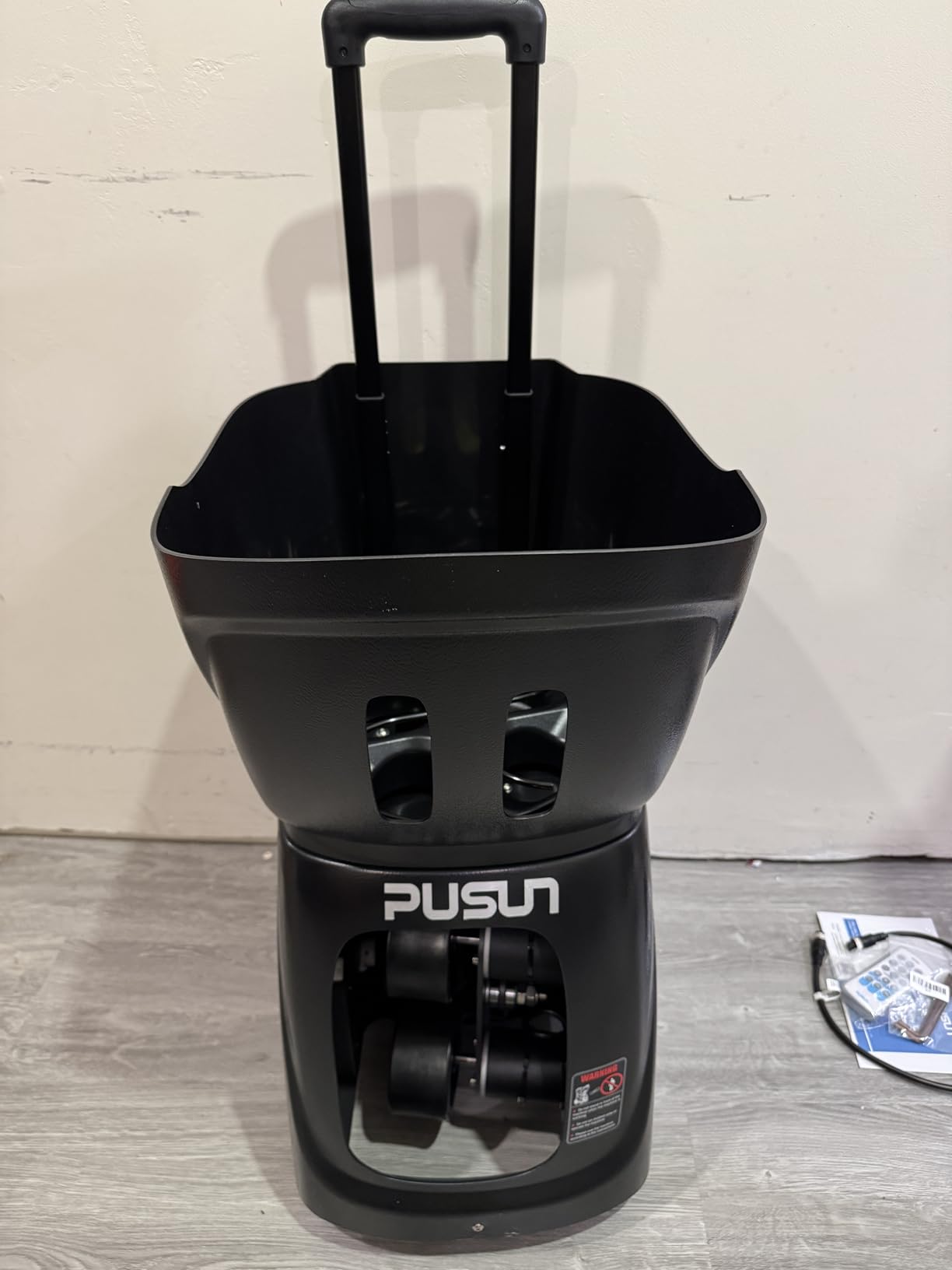
At 4.0 stars with an 18 percent one-star share across 21 reviews, this is the least proven machine here by owner volume, and phone and watch cannot be used at the same time. What earns its place is the hidden oscillation, stepper placement and a support model that ships parts with repair videos, which are the parts that matter over five seasons.
How to Choose a Portable Ball Machine Your Club Will Actually Use
Power Source: Where the Battery Lives
Every machine here runs on a rechargeable battery, so the real question is whether the pack is detachable. Detachable packs, found on the Nisplay, both PUSUN machines and the TENNIIX Basic, let the machine stay parked on court while packs charge indoors, which removes most of the friction a club sees with shared kit. On the Spinshot models the battery is sold separately, a real cost and logistics step most buyers miss.
Propulsion: Why Spinning Wheels Suit Courts and Neighbours
All ten machines use counter-rotating wheels. The alternative on the wider market is pneumatic air pressure, which some players prefer for feel and which is noticeably louder outdoors, so a spinning-wheel machine is the quieter default next to houses. Spin capability splits into two tiers: dual-motor machines handle flat, topspin and backspin in one session, while the Spinshot Pro dispenses a single spin type at a time.
Hopper Capacity and Refill Breaks in a 90-Minute Session
Capacity is the spec clubs underestimate most. The Spinshot Pro holds about 60 balls, the TENNIIX Basic lands slightly under its advertised figure, and the largest hoppers here hold 110, over 120 and 150 balls. For a supervised group session 60 balls is manageable, while for semi-autonomous member practice the 100-ball mark is where sessions stop stalling.
Oscillation, Feed Rate and Random vs Programmed
Random oscillation, as on the Wilson Sports Tutor machine, forces running and recovery work, while programmed patterns on the Spinshot Plus-2 and the PUSUN machines give repeatability for technical drilling. Most programmes eventually need both, which is an argument for a small fleet rather than a single unit. Feed rate is the overlooked control, and a range of 1 to 9 or 1.5 to 10 seconds covers everything from a rally to a slow technical feed.
Weight, Wheels and One-Person Transport
Weight is the deciding number for multi-court clubs. The TENNIIX Basic at 18.7 lb can be carried by one person, the Nisplay at 26 lb can be wheeled by one person, and anything from 42 lb upward is a two-person lift or a trolley job. Check the wheels too: the Lobster Elite Liberty has 8-inch all-terrain wheels for gravel, the Nisplay has oversized wheels with a folding handle, and the TENNIIX has none at all.
Ball Pickup, Storage and Running Order for a Club Fleet
Ball pickup is a session-efficiency line clubs rarely budget for, since a machine that ends with 90 loose balls on court adds real time to every session. Plan a lockable, dry storage space with a charging point near it, and keep each machine on a labelled shelf with its own charger. On rotation, one machine per heavily used court works better than one machine moving around all day, because moving a 40 lb unit four times a session is where volunteers stop helping.
Frequently Asked Questions
What is a good portable tennis ball machine?
A good portable tennis ball machine for a club is one person can move unaided, holds at least 100 balls so a 90-minute session runs without refills, and delivers 4 or more hours of real battery runtime. Dual-motor topspin and backspin, a random or programmable oscillator, and a warranty of 2 years or more are the next things to check.
What is the best portable tennis ball machine?
The Lobster Elite Liberty takes our top slot for clubs, with the largest verified owner review base at 174 ratings, full topspin-to-backspin control, 8-inch all-terrain wheels and a 2-year warranty. The Nisplay N1 is the best-value alternative at 26 lb with a 4.5 owner rating, and the TENNIIX Basic wins on one-person transport at 18.7 lb.
Are tennis ball machines worth it for a club?
Yes, for the repetition they add. A player in a real match hits roughly 300 shots an hour, but against a ball machine they can hit about 900, which is why clubs buy them for member practice, league nights and coach-led development sessions. The main cost lines are consumed balls, battery replacement and storage space, not the machine alone.
How long does a ball machine battery last?
Runtime depends heavily on speed and feed rate. Quoted figures in this group range from 2 to 4 hours for the Lobster Elite Liberty, up to 4 hours on the Wilson Sports Tutor machine, 4 to 6 hours on the PUSUN PT-Smart and more than 8 hours on the PONGBOT PACE S PRO. Where owners report shorter runs than advertised, plan on the lower figure.
Can a ball machine replace a hitting partner?
Partly. A machine gives far more repetition than a partner can and works on footwork, consistency and stroke shape, but it cannot judge ball flight quality, adjust a tactical pattern in real time or push you at match intensity. Club programmes get the best results using both, with the machine handling volume and the coach handling decisions.
Which Ball Machine Should Your Club Buy?
If you run one machine across several courts and want an evidence base you can point a committee at, the Lobster Elite Liberty is the pick, with 174 owner ratings, a 2-year warranty and wheels that handle rough surfaces. If you want the strongest owner satisfaction and dual-motor spin without carrying 40 lb, the Nisplay N1 is the choice.
If your programme is built around progression and the machine will sit on one court, the Spinshot Plus-2 handles drills the others cannot. For junior development, the PUSUN PT-Smart has 12 NTRP stages built in, and for one-person transport to any court the TENNIIX Basic at 18.7 lb changes how often members practise. For a machine that rarely needs a mid-session refill, the PONGBOT PACE S PRO pairs a 150-ball hopper with 8+ hours of runtime.
Whichever you choose for 2026, budget the consumables and the charging setup in the same purchase decision, because those are the line items that catch clubs out in their second season.