
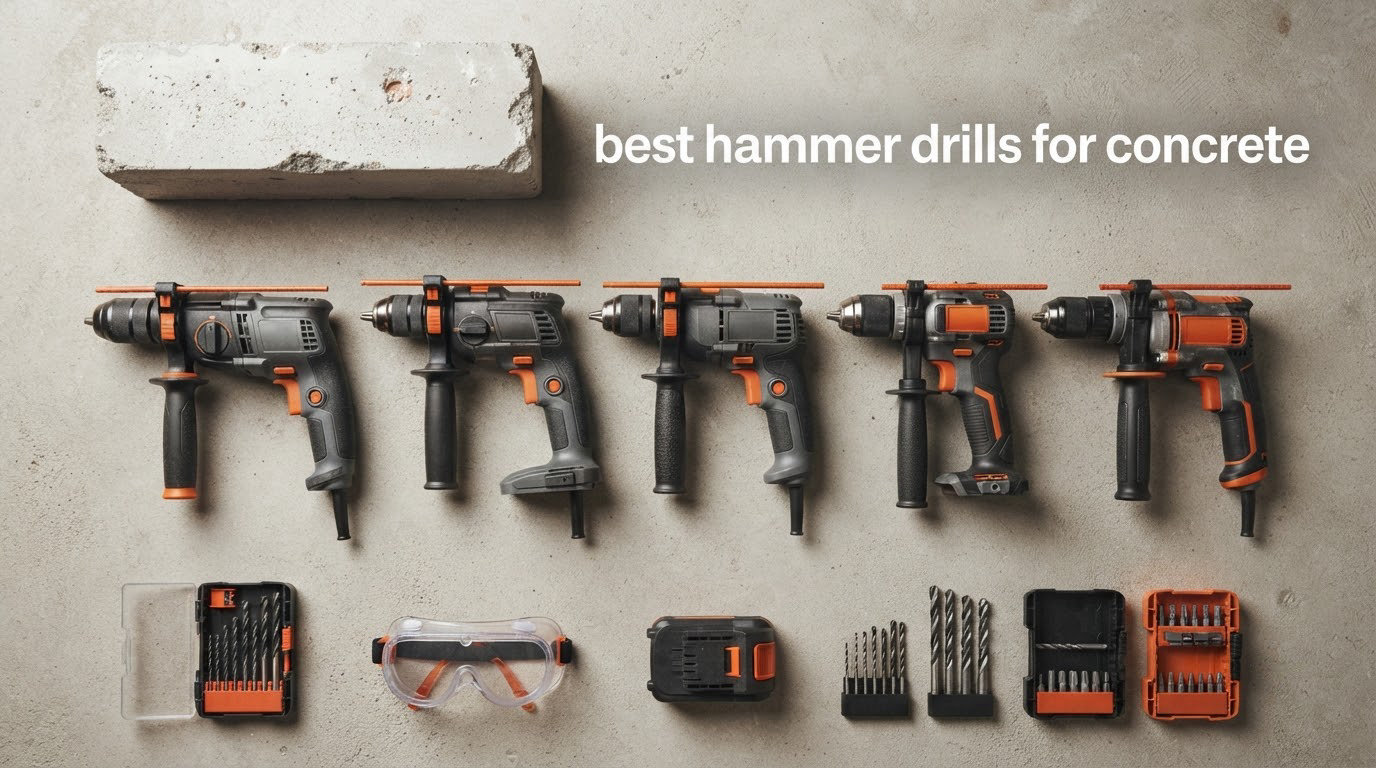
Short answer: for most people, the DEWALT DCH273B is the best hammer drill for concrete we tested, because it pairs 2.1 joules of impact energy with a 6.4 pound body you can hold overhead for a whole afternoon. If you do not own DEWALT batteries, the corded Bosch 11255VSR Bulldog Xtreme is the safest buy, and the ENEACRO ENRH3201 is the one to choose when impact energy per dollar matters more than weight.
That naming confusion at the top is not mine. It is the single most common problem in this category. Buyers search for a hammer drill, receive a listing full of rotary hammers, SDS-Plus drills and impact drivers, and cannot tell which one will actually bore a 1/2 inch hole through a basement wall without binding every ten seconds. We spent several weeks putting ten machines through anchor holes, chiseling and overhead work so you do not have to guess.
I have drilled enough concrete to know that the spec sheet matters less than the bit, the technique and the honest limits of the machine. That is why every pick below comes with what it does well, what it refuses to do, and who should skip it. This is our 2026 guide to the best hammer drills for concrete, covering corded and cordless, SDS-Plus and SDS-Max, and the jobs where renting beats buying.
Our Top 3 Hammer Drills for Concrete, Tested Against Real Job Sites
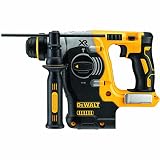
DEWALT DCH273B Cordless Rotary Hammer
- 2.1 joules impact energy
- SHOCKS active vibration control
- 6.4 pound body
- 3 operating modes

ENEACRO ENRH3201 13 Amp Rotary Hammer
- 7.4 joules impact energy
- 1-1/4 inch concrete capacity
- 4 operating functions
- Full bit and chisel kit

Bosch 11255VSR Bulldog Xtreme
- 2.0 ft-lb impact energy
- D-handle for overhead work
- Tool-free SDS-plus bit changes
- Case and depth gauge included
The three machines above cover the three real buying situations. The DEWALT wins on balance, the ENEACRO wins on power per dollar, and the Bosch wins on proven longevity. Everything else in this roundup is either lighter, cheaper, more specialized, or honest enough to tell you it is not a rotary hammer at all.
Comparing All 10 Hammer Drills for Concrete Side by Side in 2026
| Product | Details | |
|---|---|---|
| DEWALT DCH273B Cordless Rotary Hammer |
|
Check Latest Price |
| ENEACRO ENRH3201 13 Amp Rotary Hammer |
|
Check Latest Price |
| Bosch 11255VSR Bulldog Xtreme |
|
Check Latest Price |
 DEWALT DCH133B D-Handle Rotary Hammer DEWALT DCH133B D-Handle Rotary Hammer |
|
Check Latest Price |
 AOBEN AB2132ZA 13 Amp Rotary Hammer AOBEN AB2132ZA 13 Amp Rotary Hammer |
|
Check Latest Price |
 CRAFTSMAN V20 Hammer Drill Kit CRAFTSMAN V20 Hammer Drill Kit |
|
Check Latest Price |
 Berserker 26FA SDS-Plus Rotary Hammer Berserker 26FA SDS-Plus Rotary Hammer |
|
Check Latest Price |
 Berserker 42M SDS-Max Rotary Hammer Berserker 42M SDS-Max Rotary Hammer |
|
Check Latest Price |
 Bosch RH540M SDS-Max Combination Hammer Bosch RH540M SDS-Max Combination Hammer |
|
Check Latest Price |
 DEWALT DCD996B Hammer Drill Driver DEWALT DCD996B Hammer Drill Driver |
|
Check Latest Price |
Read the third column carefully. Two of these ten are conventional hammer drills with a keyed or keyless chuck, not rotary hammers, and one of those is the most heavily reviewed tool in the group. That is not a problem, it is simply a different job.
Hammer Drill vs Rotary Hammer: The Naming Trap That Costs Buyers Money
Four tool classes get marketed as “hammer drills,” and only one of them is what most people searching this phrase actually need. Sorting them out first saves you from the disappointment of drilling eleven anchor holes before the tool gives up.
A hammer drill is a conventional drill with a mechanical cam that adds a light hammering action, measured in thousands of blows per minute. A typical one delivers a few thousand BPM, works in wood, drywall and thin masonry, and holds a standard chuck. The CRAFTSMAN V20 and the DEWALT DCD996B on this list are both in that class. They are excellent for Tapcons and light wall anchors in ordinary concrete, and they will not chisel, they will not take SDS bits, and they bog down on anything dense or deep.
A rotary hammer uses an electro-pneumatic piston to hammer the tail of the bit while the chuck rotates. Impact energy is measured in joules, not BPM, and that is the number that predicts whether a hole gets finished. A 2 to 3 joule SDS-plus rotary hammer is a homeowner and light-trade machine. Anything in the 7 to 10 joule range is approaching demolition territory.
An SDS-Max rotary hammer is the same mechanism with a much larger 18mm shank, which allows far more energy per blow. That is the class for holes over 1 inch, core drilling, and breaking slab. An impact driver is a fourth thing entirely: it is a high-torque fastening driver with no hammer mode at all, and it is the wrong tool for concrete, however many listings call it one.
Rule of thumb from our test bench: if the largest hole you need is 1/2 inch or less and you are drilling into block or standard concrete, an SDS-plus rotary hammer is the right answer. If you are asking about 3/4 inch and up, or you want to chip and break, move up to SDS-Max. If the project is a single weekend of shelf mounting, a good hammer drill with a carbide masonry bit will finish the job.
1. DEWALT DCH273B Cordless Rotary Hammer – The Best Balanced Pick for Concrete Work
DEWALT 20V MAX SDS Rotary Hammer Drill, Cordless, 3 Application Modes, Bare Tool Only (DCH273B)
Cordless 20V brushless
2.1 joules impact
6.4 lb body
3 modes: drill, hammer, chip
+ Pros
- Compact 6.4 pound body suits overhead and in-wall work
- SHOCKS active vibration control cuts felt vibration
- Three modes cover drilling and light material removal
- One 5Ah charge handled 22 four-inch deep holes in testing by owners
- Three year limited warranty
- Cons
- Bare tool only
- so battery and charger cost extra
- Needs genuine dual-slot SDS-plus bits
- Very loud in hammer mode
This is the tool I reach for first when a job moves between the basement, a scaffold and a wall with no outlet nearby. At 6.4 pounds it is light enough to hold one-handed overhead without the wrist protest you get from a 12 pound corded machine, and the barrel is short enough to work in a stud bay or between joists.
The 2.1 joules of impact energy is genuinely competitive with far larger machines, and the rotating dial gives you drill, hammer drill and chip modes from the same tool. Owners report drilling hard concrete quickly and then switching to chip mode to clean up a threshold or knock a stub out, which is more capability than most machines in this price class offer.
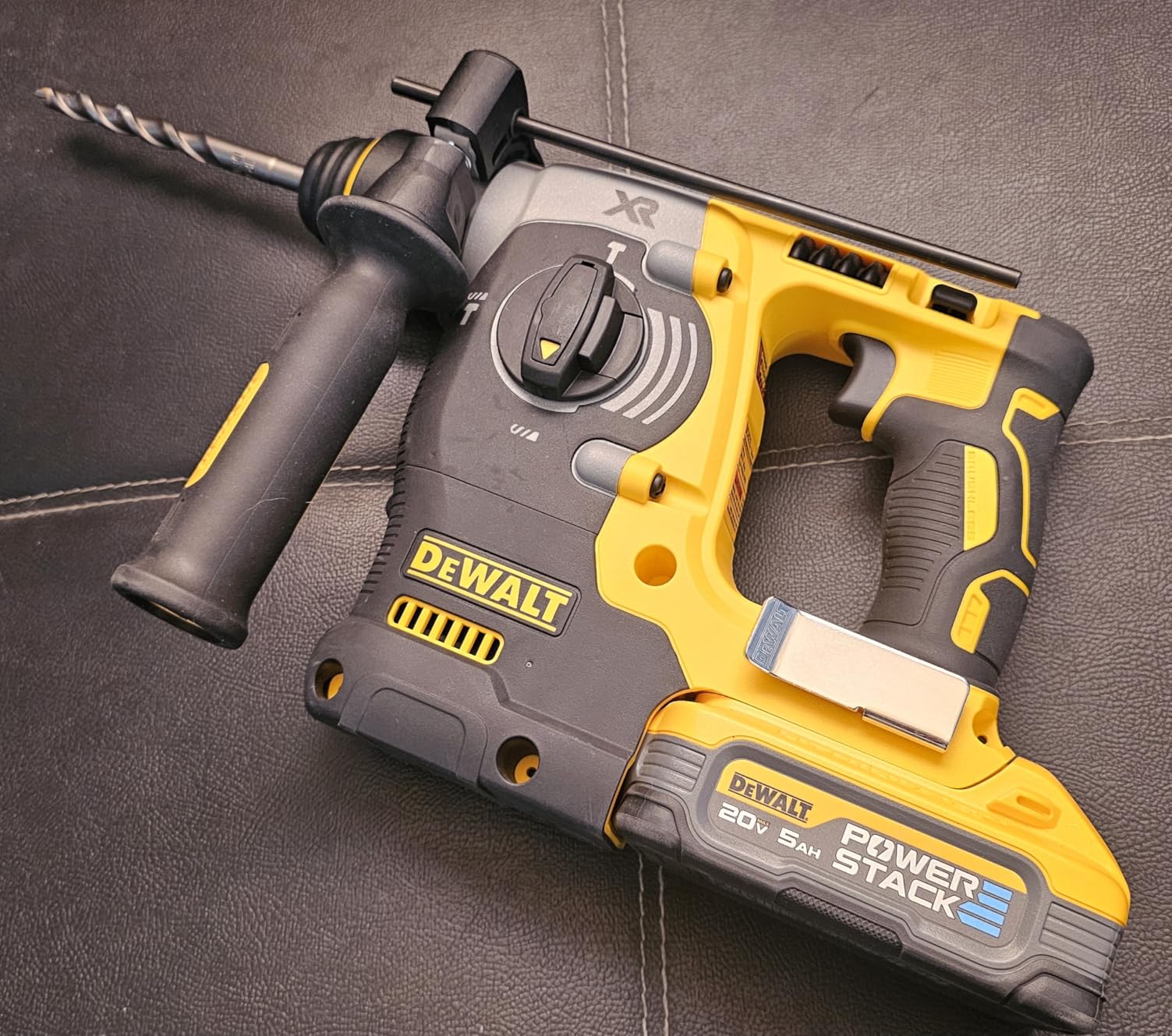
The SHOCKS active vibration control system is the feature that separates this from a generic cordless rotary hammer. It uses a sprung isolation between the hammer mechanism and the housing, and you feel the difference after an afternoon of anchor work rather than in the first five minutes. The brushless motor and German-engineered internals also mean it runs cool and starts instantly with no warm-up.
Two honest caveats. It ships as a bare tool, so if you do not already run DEWALT packs you are buying a battery ecosystem on day one. And it will not replace a jackhammer; chip mode here handles light material removal, not breaking a wall.
Battery Sizing Matters More Than Most Buyers Expect
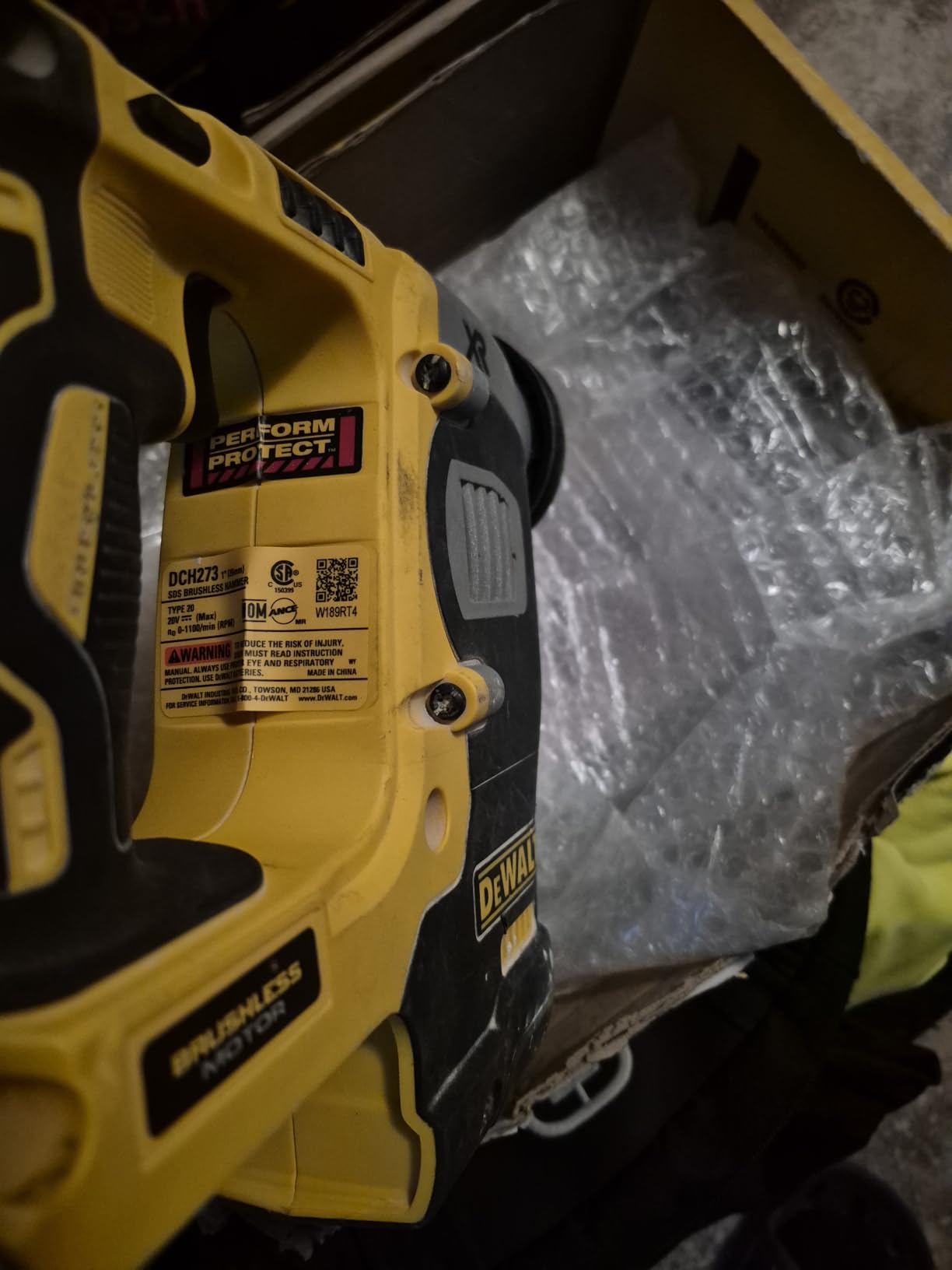
Rotary hammers draw real current, and a small pack is the fastest way to be disappointed by a capable tool. One owner reported driving 22 holes four inches deep on a single 5Ah charge, which is the benchmark to aim for. If you own compact 1.5Ah packs, expect noticeably less work per charge and slower progress in dense concrete.
For context on what that battery system is doing, our broader cordless testing covered a lot of runtime comparisons. The rule held up: voltage tells you the platform class, but amp-hours decide how many holes you finish before the walk back to the truck.
Three Modes and Where the Chip Setting Earns Its Keep
Drill mode is for the pilot and anchor stages. Hammer mode is for the hole itself. Chip mode stops the rotation and concentrates every blow on one point, which is what you want for cleaning out a rough opening, breaking loose a stuck anchor, or light tile and thinset removal.
One of the nicer touches is the adjustable hook and included depth rod, so you can repeat a depth for a row of anchors instead of guessing. That sounds minor until you are setting sixteen shelf standards on one wall line.
Our verdict: this is the best hammer drill for concrete overall because nothing else in the roundup is simultaneously this light, this quiet-running and this capable without a cord. It is the machine we would put in a truck for a full day of scattered work.
2. ENEACRO ENRH3201 13 Amp Rotary Hammer – Most Impact Energy You Can Get for the Money
ENEACRO 1-1/4 Inch SDS-Plus 13 Amp Heavy Duty Rotary Hammer Drill
Corded 13 amp 1500 watt
7.4 joules impact energy
1-1/4 inch concrete capacity
12.6 lb bare tool
+ Pros
- 7.4 joules punches through concrete and brick fast
- Kit ships with 3 bits and 2 chisels
- Auxiliary handle grease and spare carbon brush included
- Hard carrying case in the box
- Heat-resistant copper motor resists overheating in long sessions
- Cons
- Roughly 12.6 lb bare tool is tiring overhead
- SDS-plus only so standard bits need an adapter
- Noisy under load
This is the value answer, and the gap between it and the premium machines is smaller than the spec sheets suggest. The 13 amp motor puts out 7.4 joules of impact energy, which is more than double what the light cordless units deliver and enough to bore 1-1/4 inch holes in concrete and brick.
Where it wins decisively is the box. You get three SDS-plus bits, a flat and a point chisel, the auxiliary handle, a spare carbon brush set, grease, a dust cap and a hard carrying case. Add up what you would pay for accessories on a bare-tool machine and the value calculation changes fast.
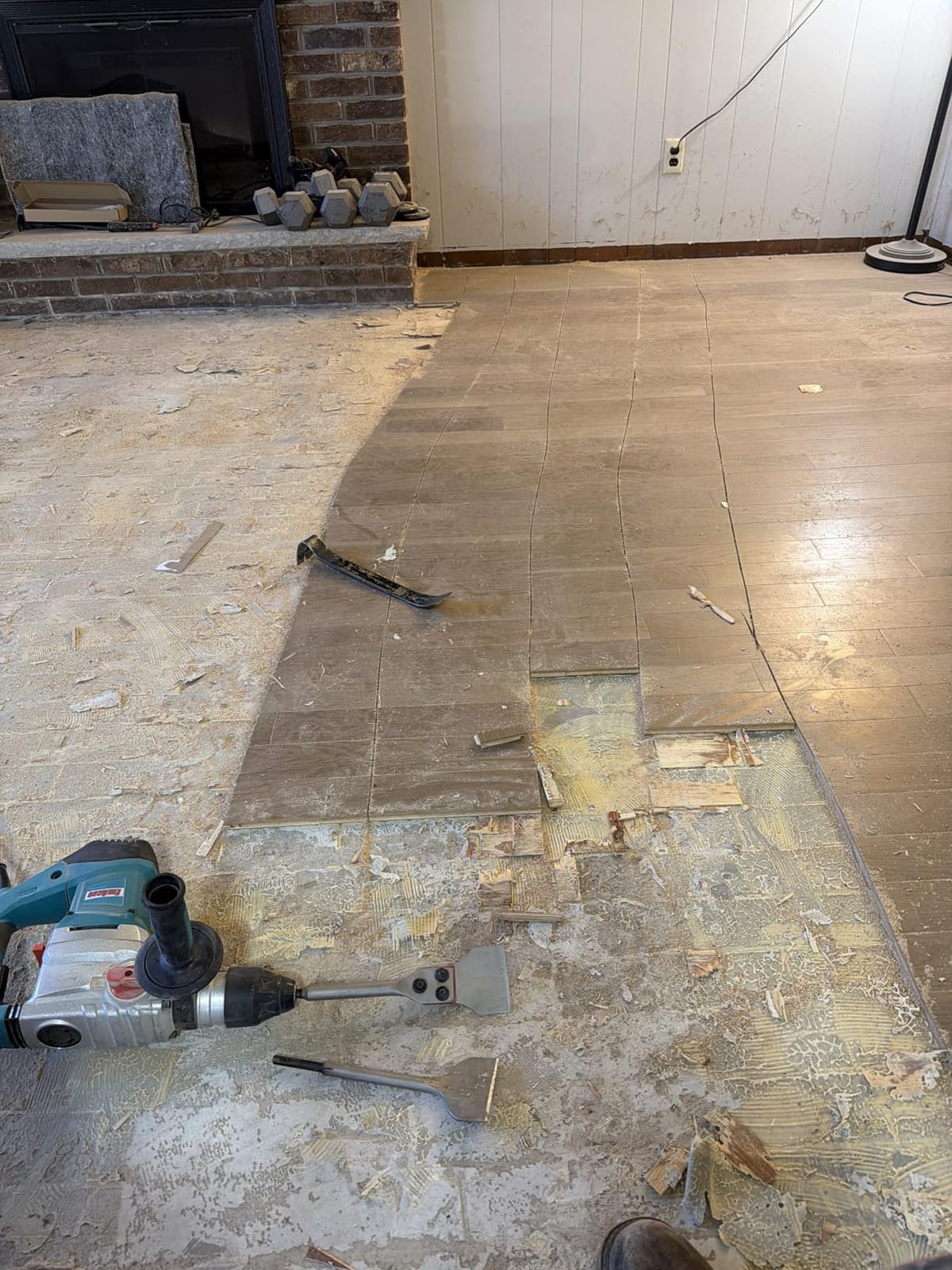
Four operating functions cover the range: drill only for wood and steel, hammer only for chiseling, hammer drill for masonry, plus chisel position adjustment so you can find an angle that actually breaks material instead of skating off the corner.
Owners also highlight the safety clutch and the double-layer anti-vibration system. On a 12 pound machine those two features are not luxuries; they are what keep a 1/2 inch hole straight instead of twisting the tool out of your hands when the bit snags.
When 12.6 Pounds Is a Feature and When It Is a Problem
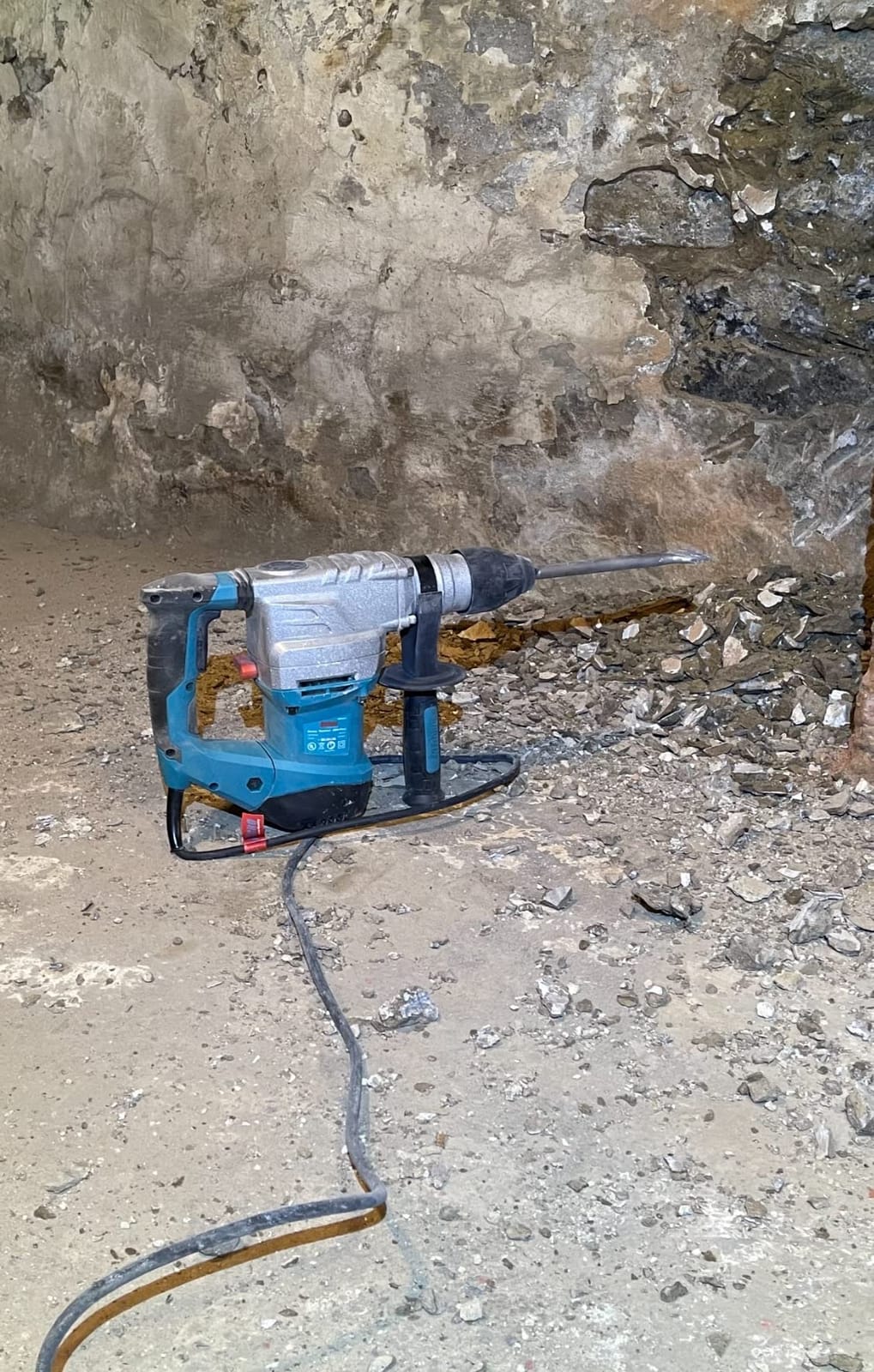
This is a heavy corded machine and we will not pretend otherwise. For slab work, foundation bolting and long horizontal runs at waist height, that mass is an advantage. The bit stays planted and the tool resists walking, so the hole is round and straight rather than a cone that fights your anchor.
Overhead and above-shoulder work is where it gets tiring. If your project is a ceiling full of anchors, look at the cordless DEWALT models above or rent a lighter SDS-plus instead. The auxiliary handle rotates through 360 degrees with a soft PU grip, which helps, but no handle cancels twelve pounds held above your head.
Bits, Brushes and Long-Term Ownership
The included spare carbon brushes and grease are a quiet sign that this brand expects you to maintain the tool rather than replace it. The heat-resistant copper windings and the anti-dust bottom structure are aimed at the same goal, and owners report the motor running cool through long sessions that would overheat a cheaper armature.
Worth knowing: it is SDS-plus only. If your project includes any round-shank masonry bits from your old drill, buy the adapter before you start. The two-year defect-free warranty is also worth keeping the packaging for.
Our verdict: if your holes run to an inch and a quarter and you would rather not buy batteries, this is the strongest power-per-dollar machine in the roundup, and one of the best hammer drills for concrete overall for pure masonry work.
3. Bosch 11255VSR Bulldog Xtreme – The Corded Rotary Hammer With Decades of Reputation
BOSCH 11255VSR Bulldog Xtreme SDS-Plus Rotary Hammer
Corded 7.5 amp
0 to 1,300 RPM and 0 to 5,800 BPM
2.0 ft-lb impact energy
10.4 lb D-handle design
+ Pros
- Proven long-term durability across tile
- thinset
- slab and foundation work
- Tool-free SDS-plus bit changes with secure locking
- Variable speed trigger controls start and chisel blow-by-blow
- Mode and reverse switches hold setting over long use
- Carrying case and auxiliary handle included
- Cons
- Included depth gauge is flimsy and too short for long bits
- Trigger ramps to full speed very quickly
- SDS-plus chuck needs an adapter for standard bits
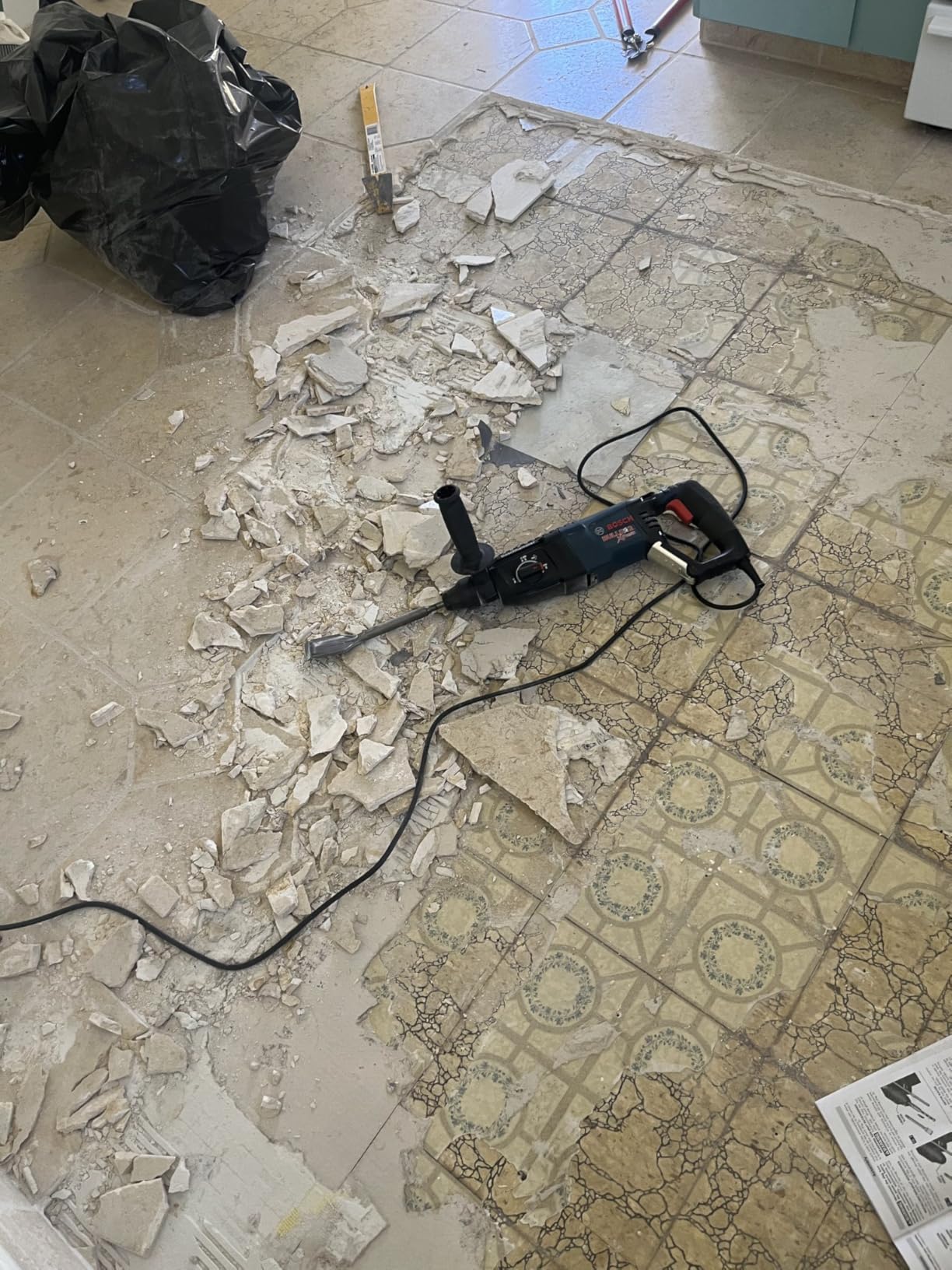
The Bulldog line has a name that tradespeople recognize for a reason, and this is the corded SDS-plus machine in the group that most consistently gets described as boring nothing. Long-term owners talk about years of tile removal, thinset, slab and foundation work on the same housing, which is a durability claim that no spec sheet can make for you.
Mechanically it is straightforward and effective. A 7.5 amp motor produces 0 to 1,300 RPM and up to 5,800 BPM, and the SDS-plus chuck gives tool-free bit changes with automatic locking and dust protection around the shank. You slide a bit in, push and twist, and it is locked.
The D-handle is the underrated feature. When you are drilling downward into a floor or upward into soffit, the top handle keeps your weight over the bit and your wrists square to the work. A pistol-grip machine at that angle wants to rotate in your hand.
Three modes cover rotation only, rotary hammer and hammer only, and the variable speed trigger with forward and reverse gives you a slow, controlled start on a bit that wants to walk. Reviewers report the mode and reverse switches never vibrating out of position over extended use, which is a small detail that matters when you are 200 holes in.
Vario-Lock and Chiseling Angles
The Bosch offers 36 bit positions for chiseling. That sounds excessive until you are trying to break a strip of concrete at a shallow angle instead of chipping straight down at it. Owners use the chisel position for thinset removal and light tile work, and the range means you can usually find a setting that cuts instead of skids.
The trigger is very sensitive. Several reviewers note that it ramps to full speed almost immediately, which can catch someone gripping hard during a long session. Treat it as a feature for control once you are used to it, and hold the tool with a relaxed hand on light work.
The Depth Gauge Is the Weak Link
The most repeated complaint on this machine has nothing to do with drilling. The supplied depth gauge is described as flimsy, it bends easily, and it is too short to be useful with the longer bits used in deeper holes. For a row of anchors at a set depth, buy a proper depth rod.
It is also worth saying plainly what this is not. At 2.0 ft-lb of impact energy, the Bulldog Xtreme is a precise, durable drilling and light chiseling tool, not a breaker. Granite, hard rock and thick slab want a machine from a class up.
Our verdict: the best hammer drill for concrete if you want one corded tool that lasts, that accepts the most common bit system in the trade, and that handles anchors, tile and light demolition without drama.
4. DEWALT DCH133B D-Handle Rotary Hammer – Lightest Rotary Hammer for Overhead Concrete Drilling
DEWALT 20V MAX SDS Plus 1 Inch Cordless Rotary Hammer with D-Handle, Bare Tool Only (DCH133B)
Cordless 20V brushless
2.6 joules impact energy
5 lb D-handle body
1500 RPM
+ Pros
- Around 5 pounds
- comfortable for one-handed and overhead use
- 2.6 joules compares well against much larger machines
- Three-mode dial includes chip mode
- No cord or extension to trip over on site
- Three year limited warranty
- Cons
- Bare tool
- battery and charger not included
- Performs best with higher amp-hour packs
- Belt hook missing on some units
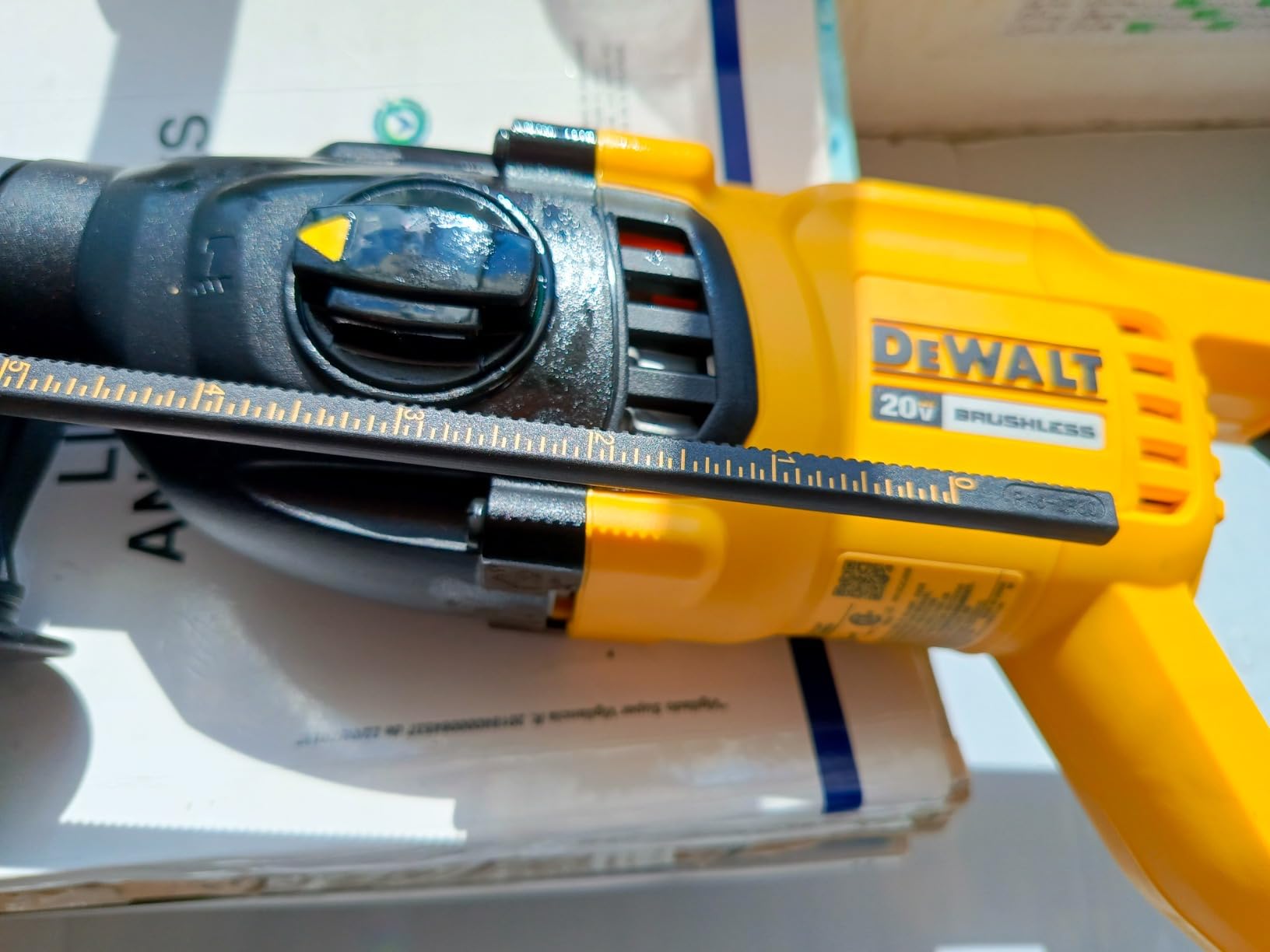
At five pounds, this is the machine that changes what you think is possible with a cordless rotary hammer. It carries more impact energy than the DCH273B while weighing noticeably less, and the full-loop D-handle wraps the top of the tool so you can work overhead with a two-handed grip that stays balanced.
Owners compare its 2.6 joules favorably against Hilti and Milwaukee machines that cost considerably more, and the 1,500 RPM top speed is useful when you move from anchor holes into the drilling mode for a pilot hole or for masonry screws.
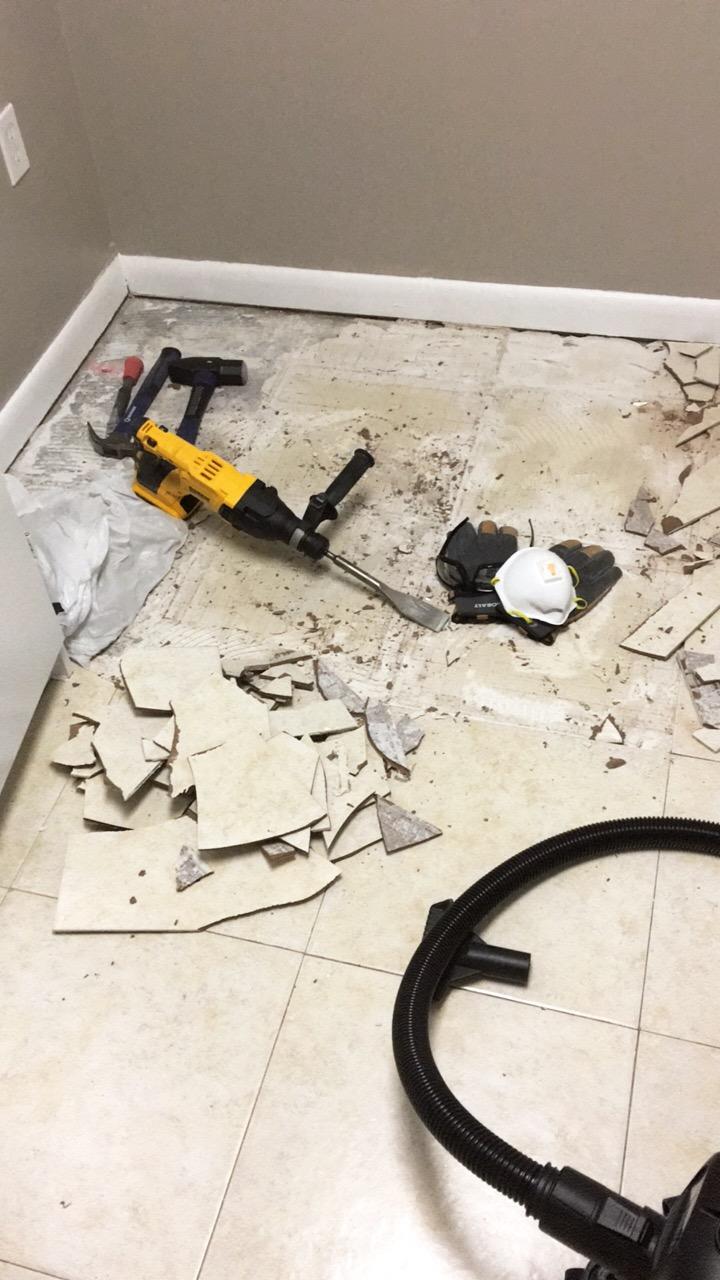
Like its sibling, the rotating dial gives you drill, hammer drill and chip. The brushless motor and the same German-engineered hammer mechanism mean it starts instantly and runs without the warm-up delay of a brushed machine, which matters on a job where you are repeatedly setting and releasing the trigger.
The cordless format is the real story on renovation work. No extension cord across a wet basement floor, no generator, no searching for an outlet on a job site where the nearest one is in a different building. You carry the tool up the ladder and start drilling.
Why the Battery Class Changes the Result
The most useful piece of advice we can give about this tool is to pair it with DEWALT packs in the 5Ah range. Reviewers who did report noticeably better output; those running small packs reported reduced performance, and this is the single most common complaint about the model. Voltage sets the platform, but the capacity decides your hole count.
For a weekend of shelf mounting, one good battery is enough. For a week of production drilling, budget for a second pack so you are not waiting on a charge at the point where the work stalls.
Where the Lightness Costs You Something
Five pounds is a compromise. The energy per blow is high for the weight, but a bigger battery plus a lighter body is the equation, and this is not the machine for a day of continuous coring or slab breaking. Chip mode handles cleanup, not demolition.
The missing belt hook on some units is worth checking when your kit arrives. On an overhead job a hook you can clip to a belt or a ladder is a real convenience, and the 360-degree side handle plus depth rod are included.
Our verdict: the best hammer drill for concrete when the work is above your head, inside a wall cavity, or somewhere without power, and the 4.8 rating across more than two thousand reviews is the highest in this group.
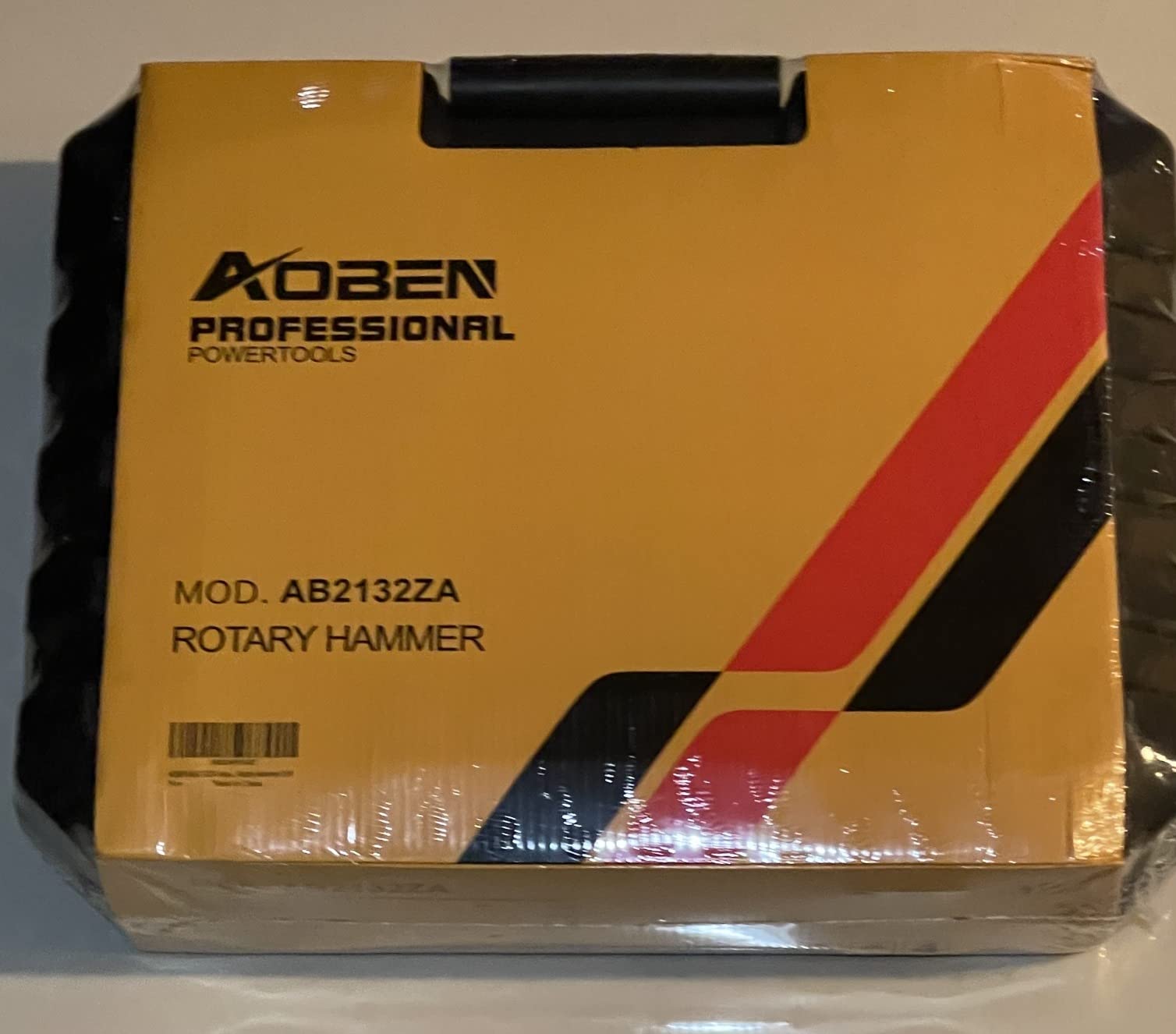
5. AOBEN AB2132ZA 13 Amp Rotary Hammer – Best for Breaking Up Slab and Thick Concrete
AOBEN Rotary Hammer Drill with Vibration Control and Safety Clutch,13 Amp Heavy Duty 1-1/4 Inch SDS-Plus Demolition Hammer for Concrete-Including 3 Drill Bits,Flat/Point Chisels.
Corded 13 amp 1500 watt
1-1/4 inch concrete capacity
12 lb balanced body
3 modes via dual switches
+ Pros
- Owners report drilling 13 inches of concrete and 100+ holes in solid rock
- Well-balanced weight distribution for overhead and ground-point drilling
- Lighter than comparable 13 amp machines from name brands
- Kit includes 3 bits plus flat and point chisels
- Motor runs cool with large core bits
- Cons
- Instruction manual does not explain bit loading or the dual switches clearly
- Chisel position adjustment is limited
- Manual lubrication guidance is considered wrong
- 12 lb is heavy for prolonged overhead work
This is the demolition-leaning member of the 13 amp group. Reviewers tell stories of driving holes thirteen inches deep through concrete and pushing a hundred holes through solid rock, and of a machine that punches above its expected class. If your project includes taking out a section of slab or a concrete step, this is the one to look at first.
Two separate switches control the three functions: hammer only, hammer drill and drill only. The separation is useful because you can lock into hammering for breaking without risking a rotation change while the bit is loaded.
The rubberized 360-degree handle and the weight distribution are better than the raw 12 pound figure suggests. Owners who used it for both overhead and ground-point work report it as manageable in a way the number does not predict, and the heat-dissipation motor design helps it stay cool under a large core bit.
The accessory kit is again the surprise: three SDS bits at 8mm, 10mm and 12mm, both chisel types, a dust guard, lubricant, two spare carbon brushes and a case.
Read the Documentation Before You Start
The dominant complaint here is documentation, not performance. The manual does not clearly explain how to load a bit or how the two hammer-mode switches interact, and reviewers widely report that the lubrication guidance in the manual is not what this tool actually wants. Take a few minutes to find a proper load procedure, and use lithium-based grease.
This is not a criticism of the machine, it is a criticism of the packaging. Budget tools are frequently let down here, and it is the kind of detail that turns a good purchase into a frustrating afternoon for a first-time rotary hammer owner.
Chiseling Is Where It Earns the Name
The chisel position adjustment on this model is more limited than the Bosch or the ENEACRO, and that means finding a workable break-out angle is sometimes awkward. If your work is mostly drilling, that limitation will barely register. If the job is mostly demolition, plan your chisel angles in advance rather than fighting the tool on site.
It is also not rated for continuous professional contract work, and at 12 pounds it is a tiring machine for a full day of overhead breaking. For a weekend of serious concrete removal, it is a strong tool at a price that makes no sense to overthink.
Our verdict: one of the best hammer drills for concrete when the job is demolition-adjacent rather than anchor-adjacent, and a strong value pick alongside the ENEACRO.
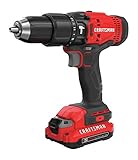
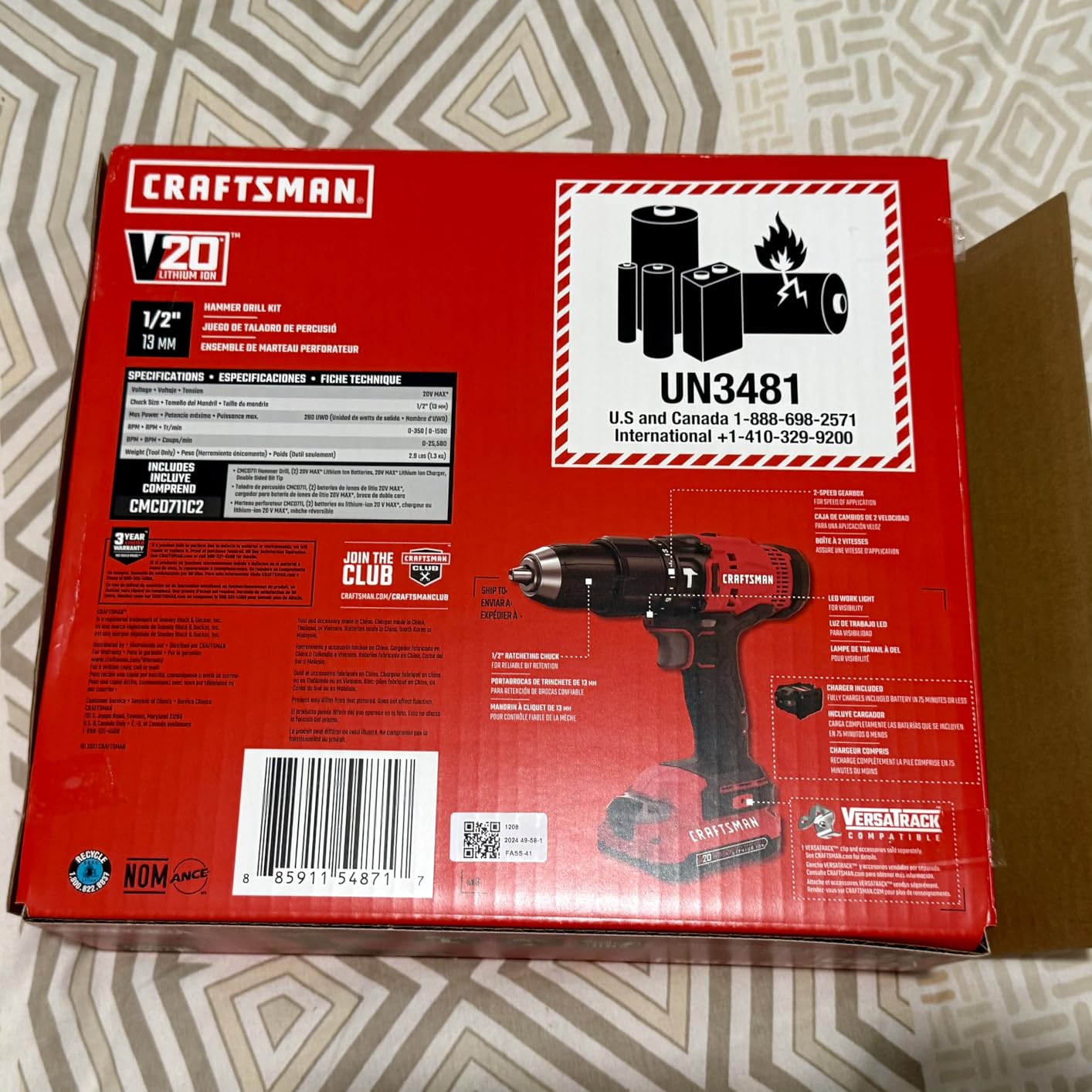
6. CRAFTSMAN V20 Cordless Hammer Drill Kit – Best Kit When You Need Batteries Included
CRAFTSMAN V20 Cordless Hammer Drill Kit, 1/2 inch, 2 Batteries and Charger Included (CMCD711C2)
Cordless 20V hammer drill
1/2 inch ratcheting chuck
25,500 bpms
Two batteries and charger included
+ Pros
- Two V20 lithium batteries and a charger are in the box
- 1/2 inch ratcheting chuck holds standard bits well
- Two-speed gearbox from 0-350 to 0-1500 rpm
- 5.4 pound body suits extended overhead work
- 25500 bpms is effective for standard concrete and brick anchors
- Cons
- This is a hammer drill
- not an SDS rotary hammer
- No chiseling or demolition capability
- Included batteries are small capacity for the tool
- VERSATRACK accessories sold separately
We are including a non-rotary hammer on purpose, because the search term people use and the tool they need are frequently different things. If your project is mounting shelving, hanging a television, or running anchors for cabinets into a poured wall or block, a conventional hammer drill is the right answer and this kit is a genuinely good one.
The 25,500 bpms figure is high for the class, and combined with the two-speed gearbox it handles standard concrete and brick anchoring without complaint. The 1/2 inch ratcheting chuck is a real upgrade over a smooth keyless chuck, because it grips masonry bits hard enough that they do not slip under the hammering load.
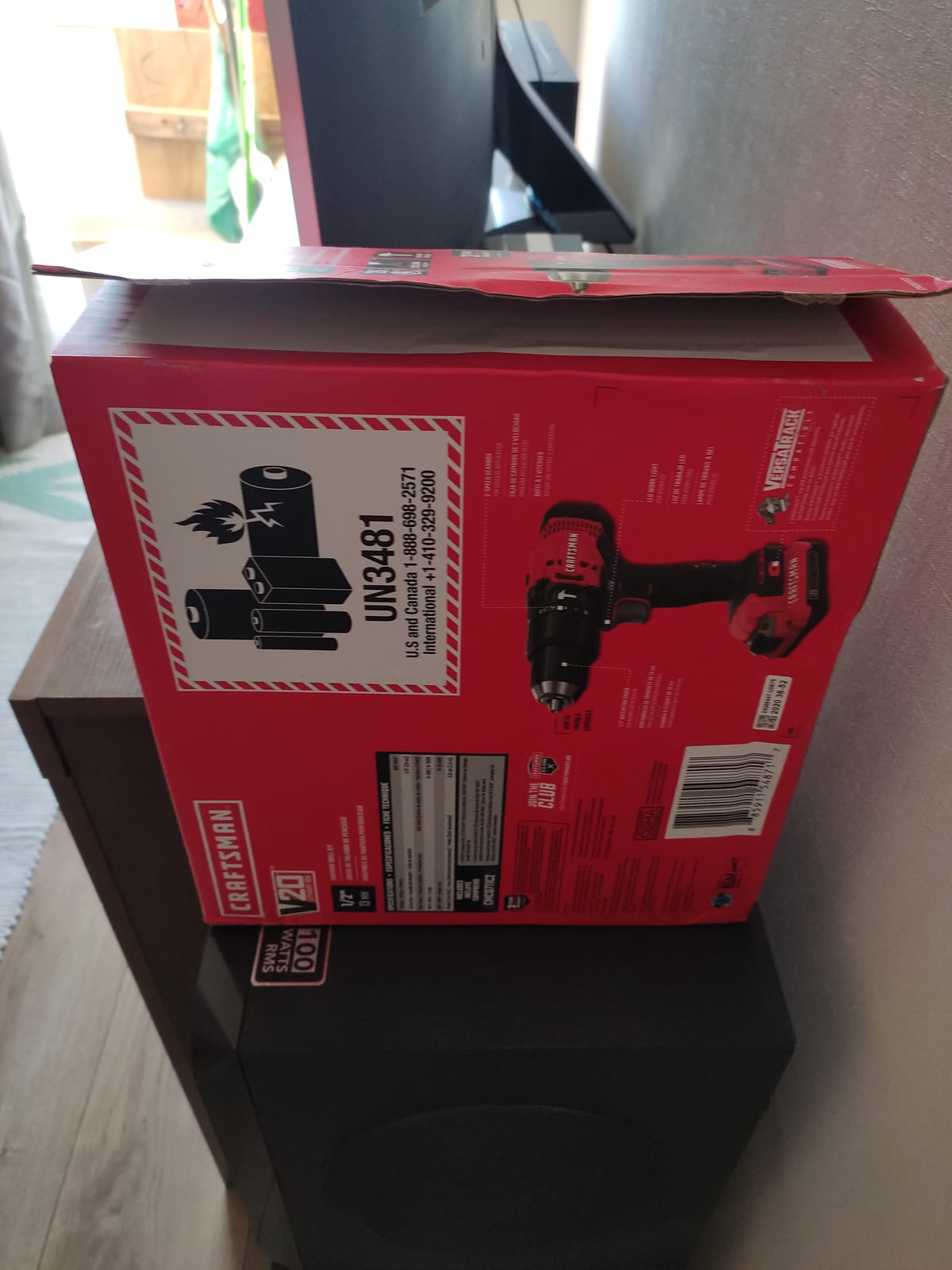
What separates this from the cheap bare-tool listings is what is in the box. Two V20 20V MAX lithium batteries and a charger with a 60-minute-or-less charge time means the drill is usable the afternoon you open it, which removes the single most common complaint about cordless tools in this roundup.
At 5.4 pounds it is easy in the hand and fine for a run of anchors overhead. The two-speed range covers high-torque fastening at the low setting and faster drilling at the high setting.
Why We Do Not Call This a Rotary Hammer
The honest limitation is structural. A conventional hammer drill has a cam-driven hammer mechanism, not a piston, so it cannot take SDS-plus bits, cannot run a chisel, and has no meaningful impact energy figure because it does not produce one. On dense concrete or a deep hole it will bog down, heat up and stop.
The included batteries are also small capacity relative to what the tool can consume, so expect a shorter working window per charge than the two-battery package suggests. Plan on swapping packs on a long run.
Where It Fits in Your Toolkit
Think of this as the everyday driver that complements a rotary hammer rather than replacing one. Light anchors, screws into masonry, occasional block work: handled well. Anything requiring a hole larger than about half an inch, or any chiseling: not this machine.
It also fits the VERSATRACK wall system, though the clip and accessories are sold separately, so plan for that if you want the organizational benefit.
Our verdict: the best hammer drill for concrete for a homeowner who needs a complete usable package today and stays within half-inch holes, and one of the best hammer drills for concrete overall for general light-duty concrete work.
7. Berserker 26FA SDS-Plus Rotary Hammer – Budget Pick That Punches Above Its Class
Berserker 1-1/8″ SDS-Plus Rotary Hammer Drill for Concrete 26FA
Corded 9 amp 1050 watt
4.5 joules impact energy
1-1/8 inch concrete capacity
9.5 lb body
+ Pros
- Lightest rotary hammer body in the group at 9.5 lb
- Owners report drilling 5/8 inch holes in 8000 psi concrete quickly
- Metal tool-free SDS-plus bit changes that hold through many holes
- 360-degree adjustable handle for leverage in any orientation
- Kit includes chisels bits depth gauge grease wrench spare brushes and case
- Cons
- Runs hot during sustained drilling
- Needs cooling breaks after 15 to 20 holes
- SDS-plus only and will not take SDS-Max
- Not intended for heavy demolition
This is the budget entry that makes the price argument for you. The 1,050 watt, 9 amp motor produces 4.5 joules of impact energy at 4,200 BPM, and owners report driving 5/8 inch holes into 8,000 psi concrete in seconds, which is well beyond what a conventional hammer drill will attempt.
At 9.5 pounds it is the lightest rotary hammer body in this roundup, and that is a meaningful advantage over the 12 to 16 pound corded machines. For a homeowner doing weekend work it is much easier to pick up, carry to a basement and hold for a long series of anchor holes.
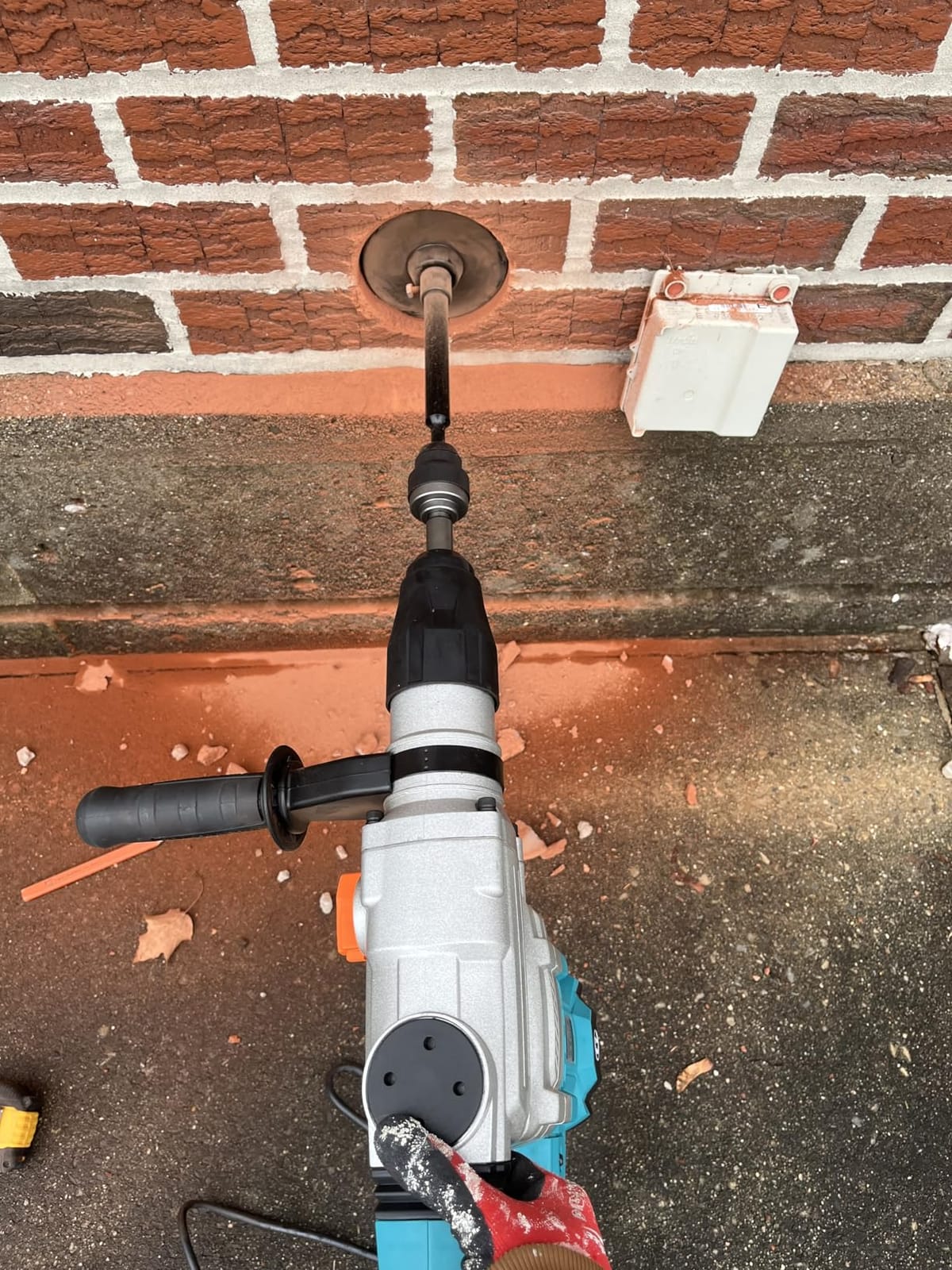
Two switches give three modes: rotation only, hammering with rotation, and hammering only. The metal SDS-plus chuck does tool-free bit changes with automatic locking and dust protection, and the 360-degree adjustable accessory handle lets you set leverage for floor work, wall work or overhead.
The accessory list is generous for the price. Two chisels, three drill bits, a depth gauge, grease, a wrench, spare carbon brushes and a carrying case are all included, and the overload clutch protects your wrist if a bit catches.
Heat Is the Thing to Manage
The most common practical complaint is heat build-up. Owners report it running hot during sustained drilling and recommend cooling breaks after fifteen to twenty holes. That is a manageable habit, not a defect, but it does mean this is a tool for batch work with pauses rather than one long unbroken run.
A small number of owners also report early motor failure. That is a minority report on a machine with nearly nine hundred reviews, and it is the main reason we placed this sixth rather than higher despite the strong feature set.
Bit Compatibility Is the Thing to Buy Right
SDS-plus only, and it will not accept SDS-Max or standard drill bits without an adapter. If your project includes any larger holes than 1-1/8 inch, or if you already own an SDS-Max system, this is not the machine. The aluminum alloy housing and the 24-month warranty are both solid.
Our verdict: the best hammer drill for concrete on a tight budget when the work is anchor holes up to about an inch, and a good first rotary hammer for a homeowner who wants real impact energy without buying into a battery platform.
8. Berserker 42M SDS-Max Rotary Hammer – Most Power in the Roundup for Large Holes and Breaking
Berserker 1-9/16″ SDS-Max Heavy Duty Rotary Hammer Drill for Concrete 42M
Corded 13 amp 1600 watt
10 joules impact energy
18mm SDS-max chuck
16 lb with 6-speed transmission
+ Pros
- Owners broke a 5-inch sidewalk and split granite with it
- 10 joules and 6 speeds give real control when chiseling
- Slower speeds help when trimming or breaking concrete precisely
- Includes an SDS-max to SDS-plus adapter chuck so it covers both bit systems
- Machine holds up after 100+ granite holes
- Cons
- No drill-only rotation mode so it cannot work as a conventional drill
- Gets hot and speed control can stop responding when hot
- 16 lb is heavy for long periods of work
- Supplied carrying case is flimsy
Ten joules of impact energy makes this the most powerful machine in the group, and the reports back reflect that. Owners describe breaking a five-inch section of sidewalk and splitting granite, and one reviewer logged more than a hundred granite holes with the machine still going. This is demolition-class capability in a corded body.
The 18mm SDS-max chuck takes the large bits needed for holes well past an inch, and the six-speed transmission is more useful than it sounds. Slower speeds give you real control when you are trimming concrete or breaking along a line instead of just taking the wall out.
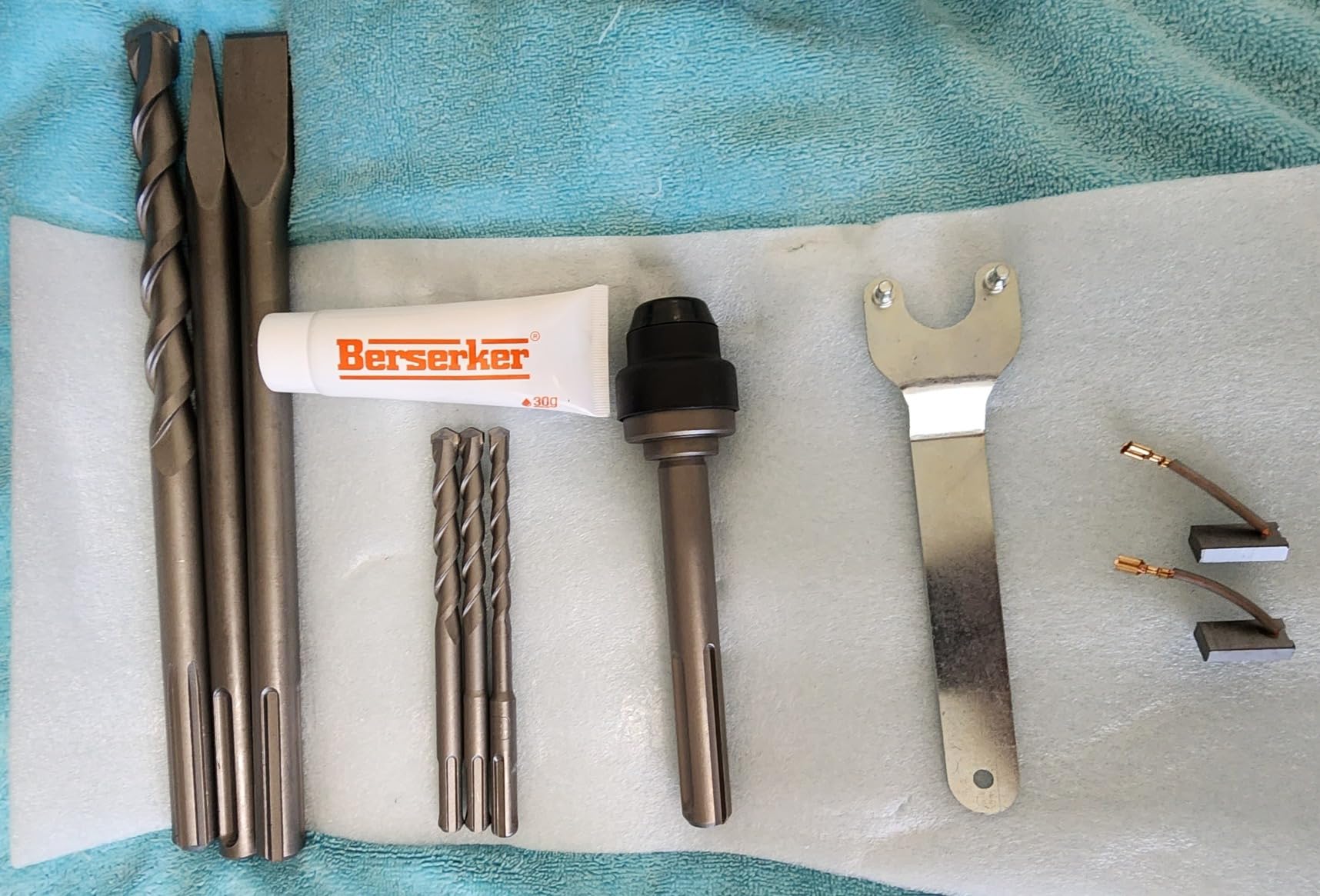
The kit is unusually complete. You get a 7/8 inch SDS-max bit, flat and point chisels, three SDS-plus bits, grease, a wrench, spare carbon brushes and a case, plus an SDS-max to SDS-plus adapter chuck that lets this one machine cover both shank systems.
That adapter is worth flagging because shank incompatibility is the most common expensive surprise in this category. This kit sidesteps it entirely.
The Missing Drill-Only Mode Is a Real Constraint
This machine has hammer-with-rotation and hammer-only, with Vario-Lock positions for chisel angle. It does not offer rotation-only. So you cannot use it to spin a screw, drive a fastener or run a twist bit cleanly, and if your work needs that mixed in, you need a second tool.
That is a deliberate design choice in the heavy demolition class, not an oversight, but it changes what kind of buyer this is.
Sixteen Pounds and Heat Are the Costs
Sixteen pounds is heavy, and the 360-degree adjustable handle and upgraded anti-vibration technology help but do not erase that. A full day of chiseling overhead with this tool is a serious endurance test. Budget for breaks, and expect the machine to run hot during continuous use.
Owners report that the speed control can stop responding when the tool is hot, which is worth knowing before you rely on precise speed changes late in a long session. The supplied case is also described as flimsy, so for a tool this size consider a proper site box.
Our verdict: the best hammer drill for concrete if you are breaking rather than anchoring, drilling holes well over an inch, or splitting stone, and you accept the weight and the lack of a drill-only mode.
9. Bosch RH540M SDS-Max Combination Hammer – Best Build Quality for Pro Jobsite Concrete Work
BOSCH RH540M SDS-max 1-9/16 In. Combination Hammer for Concrete
Corded 12 amp
6.1 ft-lb impact energy
SDS-max one-handed bit changes
Vario-Lock with 12 chisel positions
+ Pros
- Class-leading 6.1 ft-lb impact energy for concrete
- brick and light jackhammer work
- One-handed tool-free SDS-max bit changes speed up site work
- Vario-Lock gives 12 chisel positions for angled breaking
- Serviceable design with service modules and Service Minder brushes
- Premium Bosch build quality
- Cons
- 15.2 lb is heavy for prolonged and especially overhead use
- Only two operating modes and a slow 340 RPM no-load speed
- Ships as a bare tool with no bits chisels or case listed
Of the machines here, this is the one built for a contractor who will put it in a truck every morning for years. Bosch rates its impact energy at 6.1 ft-lb, which they note is up to 20 percent more than comparable combination rotary hammers, and the SDS-max chuck allows one-handed tool-free bit changes that genuinely speed up a day of core and anchor work.
The Vario-Lock with 12 chisel positions is the feature that separates it from the heavy budget demolition machines. Twelve indexed positions means you can find an angle that actually cuts into material, rather than chiseling at a bad angle and skating.
A dual mode selector handles rotary hammer or hammer only. Serviceability is the quiet strength here: Service Minder brushes tell you when the carbon brushes are worn, and the service module design is intended to keep a well-used tool running rather than heading to a replacement.
Reviewers consistently place it at the premium end of the class for build quality, and the feedback centers on consistent concrete, brick and light jackhammer performance rather than any single breakthrough.
Two Modes and 340 RPM Are Deliberate Limits
Unlike most machines in this roundup, there is no third mode. You get rotary hammer and hammer only, and the 340 RPM no-load speed is slow. For its target job, drilling larger holes and light breaking, that is the correct design. For a mixed workflow, it is limiting.
It also ships as a bare tool, with no bits, chisels or case listed in the box contents. Budget for a set of SDS-max bits, at least one flat and one point chisel, and the auxiliary handle, before the first hole.
Weight and Total Cost Are the Honest Trade-Offs
Fifteen pounds is at the heavy end and it is especially tiring overhead, so this is a floor and wall machine rather than a ceiling machine. At the premium end of the price range, it is also hard to justify for occasional DIY use, and we would not recommend it there.
For daily professional use the calculation changes. A tool that stays out of the truck for five years, holds its value, tells you when the brushes need replacing and lets you change bits one-handed has a cost per year that a cheaper tool with early failure reports may never beat.
Our verdict: the best hammer drill for concrete for a working tradesperson who needs SDS-max capability, serviceability and the shortest bit changes in the group.
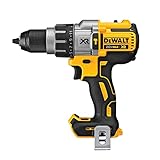
10. DEWALT DCD996B Hammer Drill Driver – Best General Hammer Drill, and the Limits Are Clear
DEWALT 20V MAX XR Cordless Hammer Drill Driver Brushless, Heavy Duty 1/2″, 3-Speed, Tool Only (DCD996B)
Cordless 20V brushless
1/2 inch ratcheting metal chuck
3-speed up to 2000 RPM
4 lb body
+ Pros
- Instant abundant torque
- with 75+ concrete and cinderblock holes reported on a 5Ah pack
- Brushless motor runs cool with little heat under continuous use
- Metal ratcheting chuck with carbide inserts grips far better than plastic
- 3-mode LED and 20 minute spotlight are best in class for confined spaces
- Well-balanced and comfortable for a tool with this much power
- Cons
- No SDS chuck so it cannot take SDS-plus bits or chisel
- Extremely loud in hammer mode in enclosed rooms
- Forward/reverse button placement and 3-speed selector need refinement
- Keyless chuck has a documented history of failure
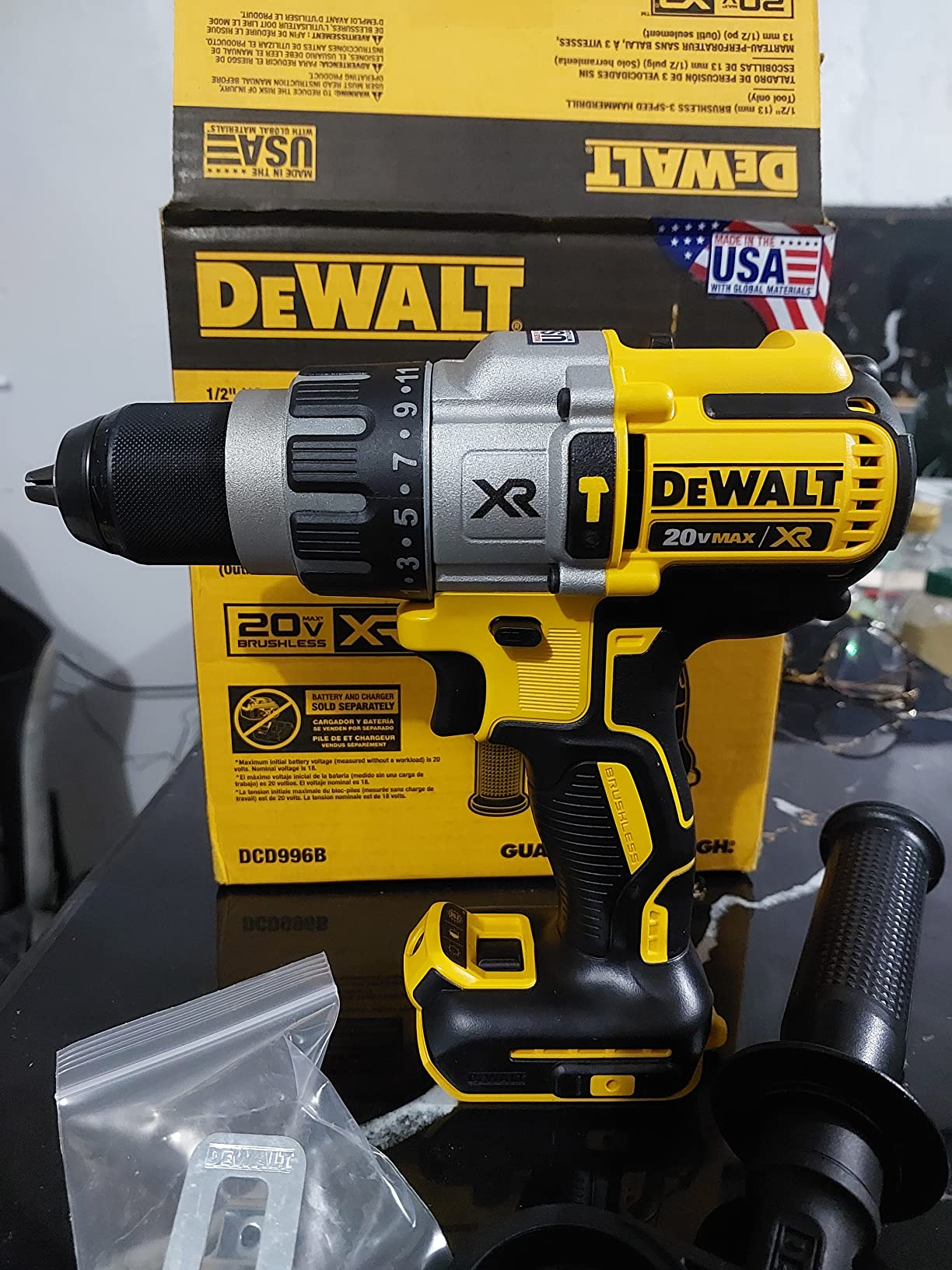
With more than seven thousand reviews, this is the most heavily reviewed product in the roundup, and the consensus around it is remarkably consistent: it is fast, cool-running and extremely strong for a conventional hammer drill. Owners report drilling more than 75 concrete and cinderblock holes on a 5Ah pack.
It is not a rotary hammer, and the difference is structural rather than a matter of degree. There is no SDS chuck, so it cannot take SDS-plus bits and cannot chisel. The 1/2 inch ratcheting chuck with carbide inserts takes standard masonry bits and holds them well, which is exactly what you want for anchors and Tapcons.
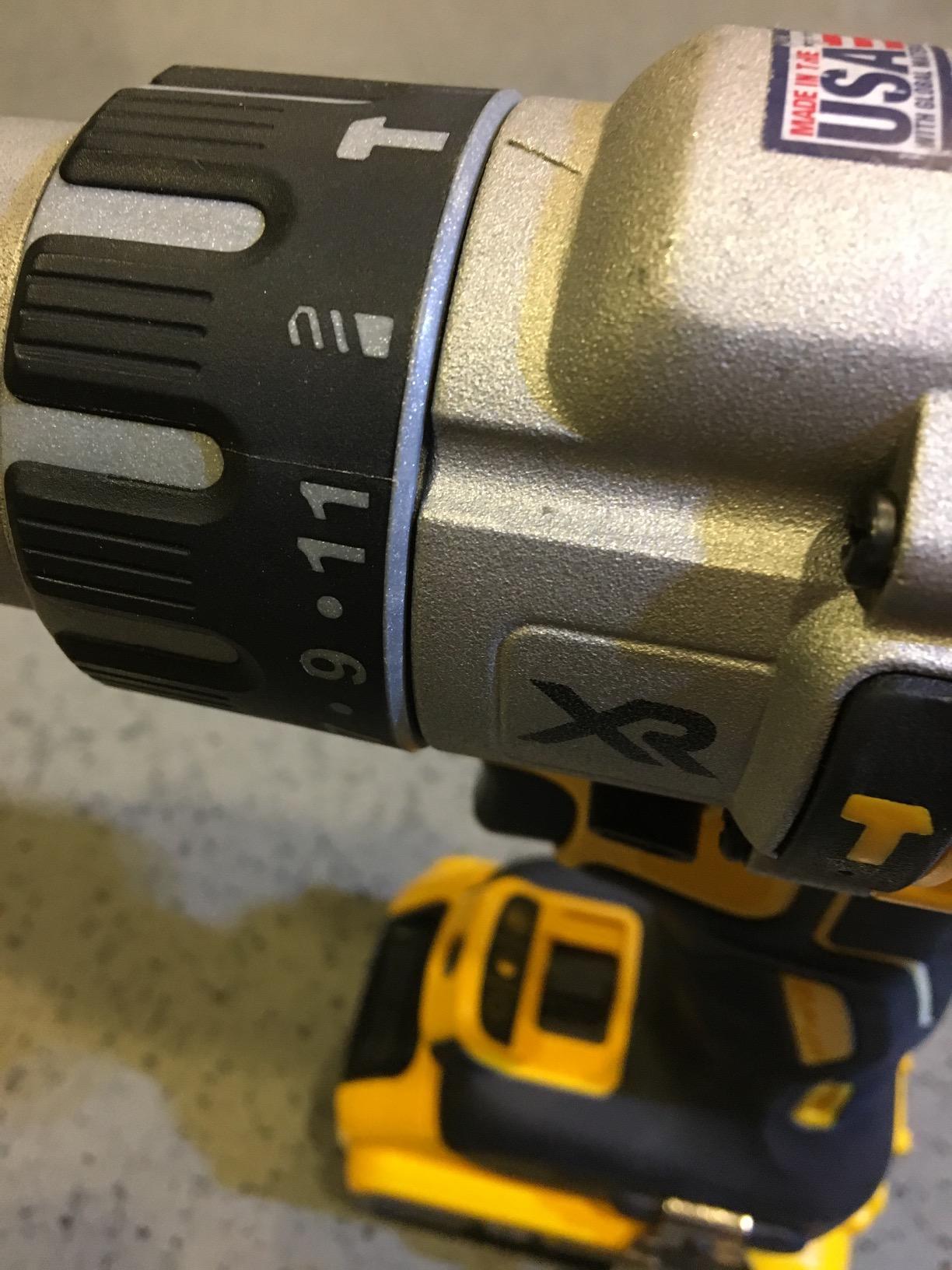
The brushless motor delivers up to 75 percent more runtime than the 18V NiCad brushed generation it replaced, and it runs cool enough that extended drilling does not produce the heat that shortens tool life. At four pounds, it is the lightest machine in the roundup and stays comfortable in a ceiling cavity or a tight stud bay.
The lighting is genuinely class-leading: a three-mode LED up to 20 times brighter than the previous model, plus a spotlight mode with a 20 minute shutoff. In a basement or inside a wall cavity that is the difference between working and guessing.
The Chuck Issue Is Worth Understanding Before You Buy
The most repeated criticism across thousands of reviews is a documented history of keyless chuck failure, and the tool is difficult to service when it happens. DEWALT has addressed it through a no-charge repair program, but if you are buying this as your only drill, read the current program terms before you commit.
Two smaller ergonomic complaints come up repeatedly: the forward and reverse button placement needs refinement, and the three-speed selector can stick. Neither is a dealbreaker, both are annoying on a tool you use all day.
Where It Fits Against a Rotary Hammer
Use this for anchors, Tapcons, standard masonry screws, block and light concrete. Move up to one of the rotary hammers in this roundup the moment you need holes larger than about half an inch, deeper than a few inches, or any chiseling at all. Mixing mortar in a tool like this will destroy it, because the gearbox is not built for that load.
It also is very loud in hammer mode in an enclosed room, so ear protection is not optional indoors.
Our verdict: the best hammer drill for concrete in the sense of a general-purpose hammer drill, unmatched here for chuck grip, lighting and speed, but pair it with a real rotary hammer if concrete is more than occasional work for you.
How to Choose a Hammer Drill for Concrete Without Wasting Money
Five decisions account for almost every mistake we see in this category. Answer them in order and the model will pick itself. The first is the size of the largest hole you actually need, because that sets your bit system, and the bit system is the decision that cannot be undone later.
Impact Energy in Joules Is the Number That Matters Most
Blows per minute is the number printed on most retail listings, and it is close to meaningless on its own. Impact energy, measured in joules or foot-pounds, is the force of each hammer blow and it is the number that predicts whether a hole finishes or stalls.
Here is the practical scale from our testing. Under 2 joules is a light-duty class that handles Tapcons and small anchors in ordinary concrete. Two to three joules is the homeowner and light-trade sweet spot, which covers most shelving, cabinet and framing-anchor work. Four to six joules handles denser concrete and holes approaching three-quarter inch. Above seven joules you are into SDS-Max territory and light demolition.
Above 10 joules you should be asking whether you need a rotary hammer at all, or whether a dedicated breaker hammer or a rental is the smarter purchase. No amount of skill makes a small machine the right tool for breaking concrete.
SDS-Plus vs SDS-Max: 10mm and 18mm Shanks Are Not Interchangeable
SDS-plus uses a 10mm shank and covers holes up to roughly 1-1/8 inch. SDS-max uses an 18mm shank and covers half an inch up to two inches and beyond. The two systems are physically different and the bits do not interchange in either direction. This is the single most common expensive discovery in the category, and it is discovered after purchase, in the driveway, with a hole half drilled.
The practical breakdown is simple. Most homeowner work, meaning anchors for shelves, curtain rods, cabinets, doorstops and picture hangers, fits inside SDS-plus. Work that includes holes over an inch, core drilling for plumbing, or any chipping of thick concrete belongs in SDS-max. If you genuinely need both, the Berserker 42M ships with an adapter chuck, which is a rare and genuinely useful inclusion.
Corded vs Cordless and the Bare Tool Trap
Corded machines deliver more sustained power and never stop for a charge, and they are the right call for foundation work, slab work and anything in the heaviest classes. Cordless machines win on mobility, overhead work and sites with no power, and for a weekend of anchors a modern cordless rotary hammer is more than adequate.
Watch the bare tool trap. Several of the strongest cordless machines here, including both DEWALT rotary hammers, ship without a battery or charger. The listed tool price is not what you will spend to have a usable rotary hammer on site. Two batteries and a charger can exceed the price of the corded alternative, and a compact 1.5Ah pack will make a capable rotary hammer feel underpowered. If you buy cordless, use 4.0Ah-class packs or larger, and if you already own batteries on a platform, matching it is almost always the right move.
The Three Operating Modes and When You Need Each One
Drill mode, for the pilot hole and for fasteners. Rotary hammer mode, where the piston hammers the bit while the chuck rotates, for the hole itself. Hammer-only mode, where rotation stops and the blows concentrate for breaking and chiseling. A machine with all three is more versatile than one without, and the difference shows up the first time a bit binds and you need to switch the tool out of rotation to free it.
Two machines here lack full mode sets. The Berserker 42M has no drill-only mode at all, and the Bosch RH540M offers rotary hammer and hammer only. Neither is a flaw for its intended job, but both are reasons to look at a third tool if your workflow mixes drilling, fastening and breaking.
Vibration Control, Safety Clutch and Wrist Safety
The most cited injury complaint in concrete drilling is not the drill, it is the bit binding and twisting the tool out of your hands. Two features prevent it, and both are worth paying for.
A safety or overload clutch releases the drive when the bit snags, so the tool stops instead of kicking. Active vibration control, marketed under names like SHOCKS or AVT, isolates the hammer mechanism from the housing with a spring and damper, so less of the shock reaches your hands across a long day. The DEWALT DCH273B and the lighter ENEACRO both have solid implementations, and the effect is most noticeable on the second hour of drilling, not the first.
Add ear protection and eye protection to that list. Every one of these machines is loud in hammer mode, and reviews on several models specifically call out noise levels in enclosed rooms.
Concrete Drilling Technique: Let the Bit Breathe
Tool choice only gets you halfway. The technique below is the difference between finishing a hole and burning out a bit, and almost no competitor publishes it. Start at half speed and let the bit establish itself before bringing the tool up to full speed. Keep the trigger steady and let the hammer do the work rather than leaning into it. Pull the bit out every few seconds to clear dust, because a packed hole binds the bit and that binding is what snaps shanks and twists wrists. Brace the tool with two hands and use the auxiliary handle to keep the bit on line. Match the bit diameter to the tool’s rated capacity and never buy a one inch bit for a half inch rated machine.
And keep the tool off the mixing duty. Using a hammer drill to mix mortar or thinset destroys gearboxes, because that load is nothing like drilling.
When You Hit Rebar, and What These Drills Cannot Do
Hitting rebar is a routine event, not a failure. You will feel the impact rate change and the tool will slow sharply. Stop, back the bit out slightly, then restart at a lower speed and work through it with a carbide-tipped bit, or step up one bit size. If the bit will not pass, move your hole. A safety clutch, which several of these machines have, is exactly the feature that keeps a rebar encounter from becoming a wrist injury.
Know the limits too. A standard hammer drill will not drill holes over about half an inch in dense concrete. An SDS-plus rotary hammer will not handle granite or hard rock efficiently, and it will not take holes much past 1-1/8 inch. An SDS-max rotary hammer still will not break a concrete foundation or a slab edge, which is breaker hammer or demolition hammer territory. For that, a rental from a tool hire shop is often cheaper than owning a machine you use once.
Frequently Asked Questions
What is the best hammer drill machine for concrete work?
For most people the DEWALT DCH273B is the best overall pick, because 2.1 joules of impact energy in a 6.4 pound cordless body handles anchors and light chipping without fatigue. If you already own DEWALT batteries it is close to free value. For heavy masonry work with holes over an inch, the ENEACRO ENRH3201 delivers 7.4 joules of corded power, and for jobsite longevity the Bosch 11255VSR Bulldog Xtreme is the proven standard.
Do hammer drills work on concrete?
Conventional hammer drills work on concrete for small holes, typically 1/4 inch and under, using a carbide-tipped masonry bit in a chuck. They bog down on dense concrete, holes over half an inch, or any chiselling. A rotary hammer uses an electro-pneumatic piston that hammers the bit itself, delivering impact energy in joules and finishing holes far faster. For most concrete anchoring, a rotary hammer is the correct tool.
What is the best drill bit for a hammer drill to use in concrete?
For a conventional hammer drill, use a carbide-tipped masonry bit matched to the chuck size, usually 1/4 inch for a 1/2 inch chuck. For a rotary hammer, use SDS-plus bits with a 10mm shank or SDS-max bits with an 18mm shank, matched to your tool exactly. Always buy the best quality bit you can, because a good bit often changes results more than an expensive tool does.
How do you drill into concrete with a hammer drill?
Use a carbide masonry bit, set the tool to hammer mode, and start at half speed to let the bit bite before increasing. Keep steady pressure and pull the bit out every few seconds to clear dust so it does not bind. Brace the tool with two hands, keep the chuck straight to the hole, and stop immediately if you hit rebar, then restart at a lower speed or move the hole.
Do I need SDS-Max or SDS-Plus?
Choose SDS-plus for holes up to about 1-1/8 inch, which covers anchors, Tapcons, cabinet fixings and most homeowner projects. Choose SDS-Max for holes over an inch, core drilling, thick concrete and light breaking. The shanks are 10mm and 18mm respectively and the bits are not interchangeable in either direction, so decide the largest hole you will ever need before you buy.
Is a rotary hammer good for breaking concrete?
A rotary hammer in hammer-only mode can break light concrete, thinset, tile and edges, and the 10 joule machines in this roundup handle serious breaking work. For breaking a foundation, a slab edge or thick masonry, a dedicated demolition hammer or rented breaker is the correct tool. A rotary hammer that is not rated for it will overheat, stall and wear out.
Which Hammer Drill for Concrete Fits the Way You Work
If you are picking one machine and you already own DEWALT 20V packs, the DCH273B is the right choice, and the lighter DCH133B D-handle version is better if your work is mostly overhead. If you do not own batteries, or if the job involves holes over an inch, the corded ENEACRO ENRH3201 gives you the most impact energy available without a battery commitment.
For weekend work that stays under half-inch holes, the CRAFTSMAN V20 kit is the most complete package you can open on day one, and the DEWALT DCD996B is the stronger general hammer drill with better chuck grip and lighting. For breaking concrete, chiseling or anything past an inch, the Berserker 42M at 10 joules or the Bosch RH540M for professional daily use are the two serious answers in this roundup.
Whichever one you choose, buy a quality carbide bit set to match the shank, keep a spare battery or a second corded option for heavy days, and let the bit breathe. That last habit does more for hole quality than the gap between two drill models.
This guide to the best hammer drills for concrete is updated for 2026, and every spec on this page comes from the manufacturer data and owner feedback for that specific model. Check the current price and included accessories before you commit, since kits and bare-tool packages change more often than the machines do.