
Most people searching for the best framing nailers for decks are not really asking which tool is the strongest. They are trying to work out whether the nailer in the aisle can drive the exact nail their joist hanger spec sheet calls for, whether it will handle wet pressure-treated lumber, and whether they need a compressor to get there at all. Get that match right and the tool choice mostly makes itself.
I have spent years framing decks and outbuildings, mostly with pneumatic 21-degree guns, and I moved to cordless once jobsites started getting further from the truck. That shift taught me the thing most roundups miss: a framing nailer is a structural frame tool, not a decking tool. It belongs on your ledger, rim joists, beams and joist hangers. It does not belong on the surface boards, where ring shank or screw fasteners are what actually keep decking from cupping and lifting.
Every pick below is a real framing nailer with published nail ranges, weights and drive specifications. I grouped them the way the decision actually goes: capacity and gauge first, then power source, then weight for overhead work, then the features that decide whether a connector will seat properly. Where a tool genuinely falls short, I say so rather than writing around it.
Our Top 3 Framing Nailers for Deck Framing This Year
These three cover the widest range of real deck projects. The NuMax is the pick I hand to someone building a full frame with a compressor on site. The Metabo HPT is the one that stays on my truck because of its weight. The Bostitch earns its place because of the second nosepiece.

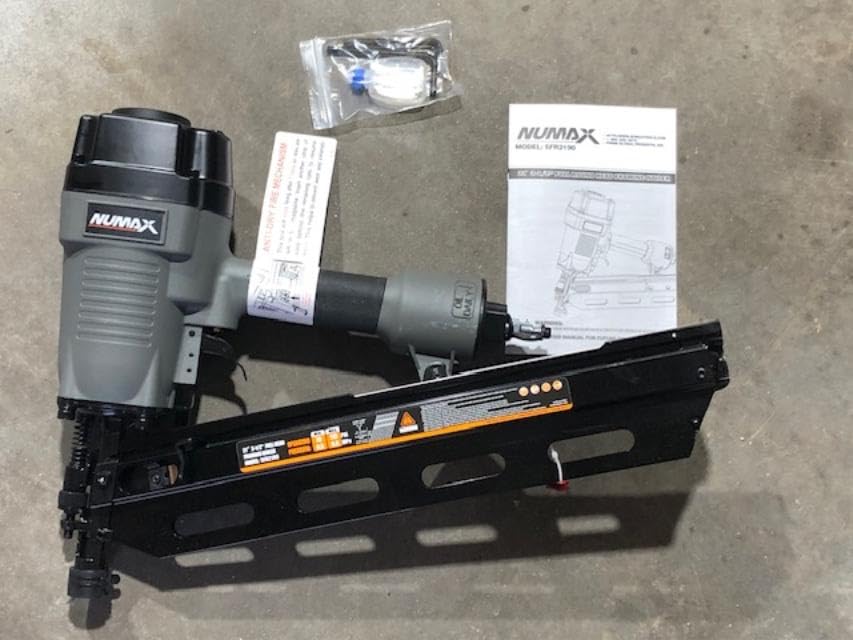
NuMax SFR2190 21 Degree
- 2-3.5 in full round head nails
- One-piece hardened drive blade
- Tool-free depth wheel
- 8.6 lb

Metabo HPT NR90AES1
- Lightest body at 7.5 lb
- 21 degree plastic collated
- Selectable actuation
- 5 year warranty

Bostitch F21PL
- Second nosepiece for connector nails
- Magnesium body
- Adjustable rafter hook
- 8.15 lb
Quick Spec Comparison of All 10 Framing Nailer Picks
Every tool in the table below drives full round head nails in a 21-degree plastic collated strip, with one exception that converts between three angles. Weights come from the published specifications, and nail ranges reflect what each gun is rated to seat rather than what a stripped plastic collated nail will physically fit.
| Product | Details | |
|---|---|---|
| NuMax SFR2190 |
|
Check Latest Price |
| Metabo HPT NR90AES1 |
|
Check Latest Price |
| Bostitch F21PL |
|
Check Latest Price |
 Makita AN924 Makita AN924 |
|
Check Latest Price |
 Freeman PFR2190 Freeman PFR2190 |
|
Check Latest Price |
 Metabo HPT NR1890DRS Metabo HPT NR1890DRS |
|
Check Latest Price |
 PneuTools SN2283H PneuTools SN2283H |
|
Check Latest Price |
 3PLUS H2190SP 3PLUS H2190SP |
|
Check Latest Price |
 CRAFTSMAN CMCN621PLB CRAFTSMAN CMCN621PLB |
|
Check Latest Price |
 3PLUS HFN90SP 3PLUS HFN90SP |
|
Check Latest Price |
1. NuMax SFR2190 – Best Overall Framing Nailer for Deck Framing
NuMax SFR2190 Pneumatic 21 Degree 3-1/2″ Framing Nailer
Pneumatic
21 degree plastic collated
2-3.5 in nails at 0.113-0.131 in
8.6 lb
+ Pros
- Full 2-3.5 in full round head range
- Tool-free depth adjustment wheel
- Anti-dry-fire mechanism
- 360 degree adjustable exhaust
- No-mar safety tip
- Cons
- Requires a compressor and hose
- Plastic collation debris needs sweeping
- Air inlet needs regular oiling
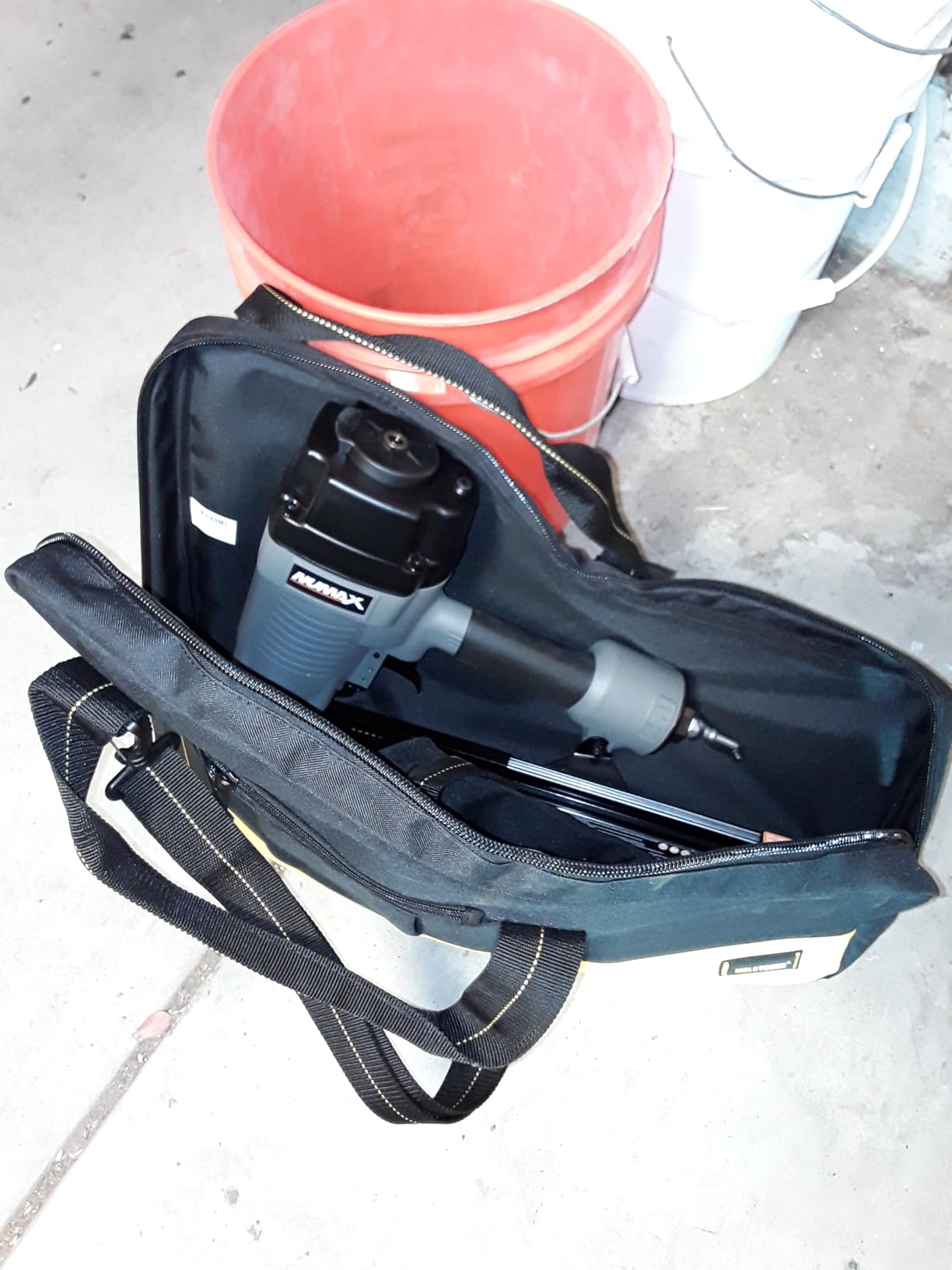
The NuMax SFR2190 is the pneumatic 21-degree framing nailer I recommend to anyone building a full deck frame who already owns or plans to own a compressor. It drives 2 inch to 3-1/2 inch full round head plastic collated nails at 0.113 inch to 0.131 inch diameter, which covers essentially every structural connection most residential decks need, and it has the largest review base of any tool in this roundup at over 7300 ratings. That installed base matters on a tool you depend on for a two-day frame.
What stood out in use was the tool-free depth adjustment wheel. Switching from toe-nailing joists flush to setting a countersink on a rim joist takes a fraction of a second, and I stopped reaching for a hex key partway through the second day of a build. The no-mar tip also earns its place, because a visible mark on a pressure-treated rim joist is the kind of thing you notice after the frame is up.
It is a dual mode tool, flipping between sequential for connector work and bump fire for speed across the open face of a rim joist. The 360 degree adjustable exhaust matters more than it sounds when you are nailing into a confined bay between joists and the exhaust is otherwise blowing debris back across your line of sight.
Nail Capacity and Fastener Spec Match
The 0.113 inch to 0.131 inch diameter window is the important detail here, not the length range. Joist hanger and seismic connector specifications typically call for a specific diameter and length, and most 21-degree guns top out at 0.131 inch. If your spec sheet calls for a heavier structural nail, you need the Makita later in this list, which is rated to 0.148 inch.
Full round head matters outdoors. Round head has a larger bearing surface against the wood than a clipped head, and it is the head style most connector manufacturers specify for exterior and load-bearing work. If a spec sheet calls for full round head, a 21-degree plastic collated gun is the right magazine format because plastic collated strips come in full round head from most fastener suppliers.
Drive Force and Jam Behaviour on Treated Lumber
Wet pressure-treated lumber is where framing nailers earn or lose their reputation, and the one-piece hardened steel drive blade on this gun is the reason I trust it on green stock. The anti-dry-fire mechanism stops blank drives, which protects the internal components and keeps you from weakening a connection with an empty shot you never noticed.
Reviewers report a well-balanced feel for a tool in this weight class, and the comfort grip handle holds up over long framing runs. The one persistent friction is the plastic collation, which leaves a scattering of clipped plastic strips across the deck frame as the strip breaks at the driver. Sweep it before you frame the surface boards and it is a non-issue.
What This Nailer Cannot Do
It will not drive nails heavier than 0.131 inch diameter, so it is not the tool for dense hardwood or some engineered lumber connections. It needs roughly 85 to 90 PSI of clean dry air, and a small pancake compressor will leave nails proud of the surface. And it is a frame tool, so using it on surface deck boards means accepting smooth or ring shank nails at a drive depth the gun was not designed to control.
2. Metabo HPT NR90AES1 – Lightest Body for Long Framing Days
Metabo HPT Framing Nailer, 21° Plastic Collated 2-3.5in, NR90AES1
Pneumatic
21 degree plastic collated
2-3.5 in nails
7.5 lb
+ Pros
- Lightest body in this roundup at 7.5 lb
- Tool-less depth adjustment
- Selective actuation switch
- 5 year professional warranty
- Safety glasses included
- Cons
- No rafter hook or carrying case
- Plastic body less rigid under abuse
- Requires a compressor and hose
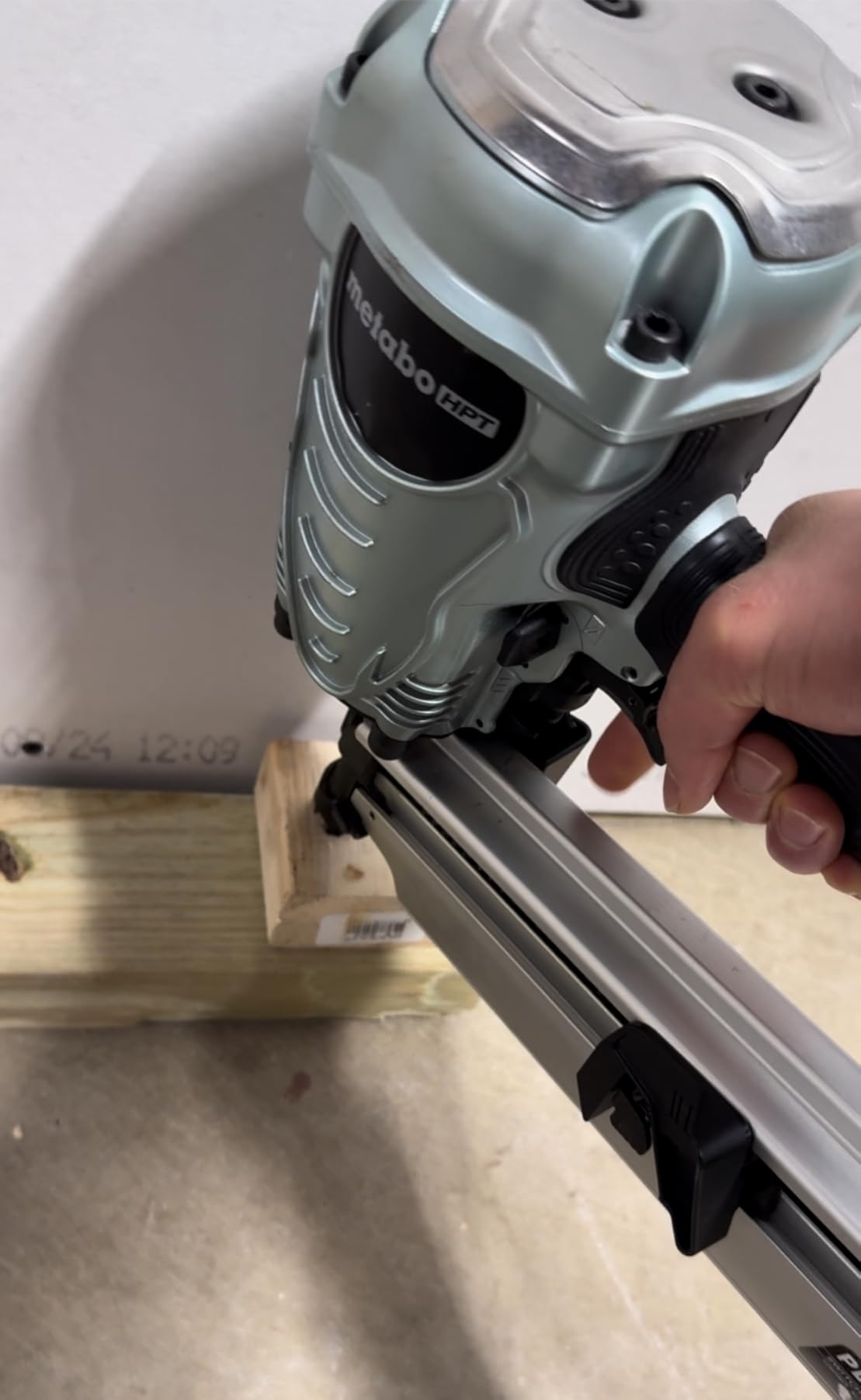
The Metabo HPT NR90AES1 is the gun I keep reaching for when a deck frame runs into a third day and my shoulder is telling me about it. At 7.5 pounds this is the lightest full framing nailer here, and the balance point is good enough to swing between joists without catching the magazine on framing. It also carries the highest average rating in the group at 4.7 across nearly 2500 ratings.
Weight is not a vanity metric on a deck. You are nailing overhead into a rim joist from a ladder, then toeing joists from a crouch, then standing up to fasten a beam. A tool that is roughly a pound lighter than the alternatives compounds across a day of that rotation, and the Metabo is the difference between finishing the frame and slowing down.
The selective actuation switch flips between sequential and contact nailing with a single switch throw rather than a separate trigger swap, which is faster than the systems that require you to change a trigger assembly mid-job. Tool-less depth adjustment handles the countersink to flush change across materials without a tool.
Weight and Balance on Joist Runs
At 7.5 pounds with a well-balanced body, this is the gun to use on a deck frame where you are moving around the perimeter repeatedly rather than setting up at one station. When you are hanging from a ladder fastening a rim joist at face height, the lighter body is the difference between a controlled shot and a wobble that splits the board.
It is built for framing work more broadly, including truss build-up, sub flooring, roof decking and wall sheathing, so it is not a dedicated deck tool. That breadth is a strength if you frame fences and outbuildings as well, and a mild warning if you only ever work on decks.
Depth Control and Sequential Switching
Tool-less depth adjustment is the feature I use most and it is here, with the range to countersink or drive flush across pressure-treated pine, cedar and composite blocking. On a rim joist where you are joining two pieces, I set the depth once and run the whole seam, then dial it in a quarter turn for the toe nailing that follows.
The actuation switch is genuinely a flip, not a menu. On connector work I sit in sequential so a stray contact with the safety tip does not fire a nail into my glove. On open-face nailing I move to contact so I can keep the nose on the wood and drive continuously.
What This Nailer Cannot Do
It is a single angle, single collation tool, so it will not accept 30-degree paper collated nails or the shorter connector nails that a multi-nose gun handles. There is no rafter hook in the box, which matters the moment you are working overhead on a ledger or beam. And the plastic body, while light, is less rigid under abuse than magnesium or aluminum alternatives.
3. Bostitch F21PL – Two Nosepieces for Joist Hangers and Framing
BOSTITCH Framing Nailer, Round Head, 1-1/2-Inch to 3-1/2-Inch, Pneumatic (F21PL)
Pneumatic
21 degree
1.5-3.5 in framing nails plus connector nails
8.15 lb
+ Pros
- Second nosepiece for metal connector nails
- Magnesium body for durability
- Adjustable rafter hook for overhead work
- Push-button depth adjustment
- Long production history
- Cons
- Long 21.2 in body between joists
- Depth setting shifts when nosepieces swap
- Connector nails harder to find in some sizes
The Bostitch F21PL solves a specific deck problem that most framing nailers make you solve with a second tool: metal connectors. It includes two quick-change nosepieces, so the same gun drives 1-1/2 inch to 3-1/2 inch full round head framing nails and 1-1/2 inch and 2-1/2 inch metal connector nails at 0.131 inch to 0.148 inch diameter. For a deck where every joist sits in a hanger, that saves buying and carrying a second nailer.
The magnesium body is the reason I keep recommending this to people who beat their tools. Magnesium is stiff enough to take the drop-and-drag abuse of a framing site while staying light, and at 8.15 pounds it sits in the middle of the weight class here. The adjustable rafter hook is the feature that shows up in use on a ledger job, letting the gun hang on a joist while your off hand holds the member in place.
The push-button depth guide changes driving depth quickly, which is what you want when switching from toe nailing to connectors. This design has been on the market since 2004, and reviewers regularly describe units still running after a decade of service, so parts and support are not a worry.
The Second Nosepiece for Metal Connectors
Connector nails are a different geometry from framing nails, and they are specified by diameter and length in the connector publication, not by nail type. The second nosepiece is what lets the same tool seat a 0.131 inch to 0.148 inch connector nail to the required depth instead of driving it proud or splitting the flange. That is the difference between a passable connection and one that matches the published spec.
Plan for a shop around this. Connector nails in the shorter lengths are not a big-box shelf item in every market, and you will have better luck ordering them by the box from a fastener supplier. The framing nails, by contrast, are everywhere.
Rafter Hook and Overhead Ledger Work
On a ledger attachment at five or six feet, the rafter hook is not a gimmick. Hanging the gun on the joist or ledger frees your off hand to hold the flashing or the pressure-treated ledger while you position the connection, and it removes the awkward moment of trying to set the nailer on a narrow member at height. This is a real safety behaviour, not just convenience.
The tool is 21.2 inches long, which is long for a full framing gun. Between joists on a tight bay that length is noticeable, and you will be more aware of the magazine nose than with a compact 21-degree gun.
What This Nailer Cannot Do
Swapping the nosepiece can knock the depth setting out of position, so recheck it after every change if you are working to a spec. The largest framing nails are commonly available in indoor grade only, which limits your options for exterior pressure-treated connections in some lengths. And it is a long tool, so it is not the first choice for a frame with very tight joist spacing.
4. Makita AN924 – Widest Nail Gauge Range for Dense Lumber
Makita AN924 21º Full Round Head 3-1/2″ Framing Nailer
Pneumatic
21 degree plastic collated
2-3.5 in at 0.113-0.148 in
8.3 lb tool
+ Pros
- Accepts nails up to 0.148 in diameter
- Large capacity air chamber
- Top-loading aluminum magazine
- Air fitting and oil and safety glasses in the box
- Cons
- No rafter hook or carrying case included
- Listed weight is higher than the rated tool weight
- Single-angle design only
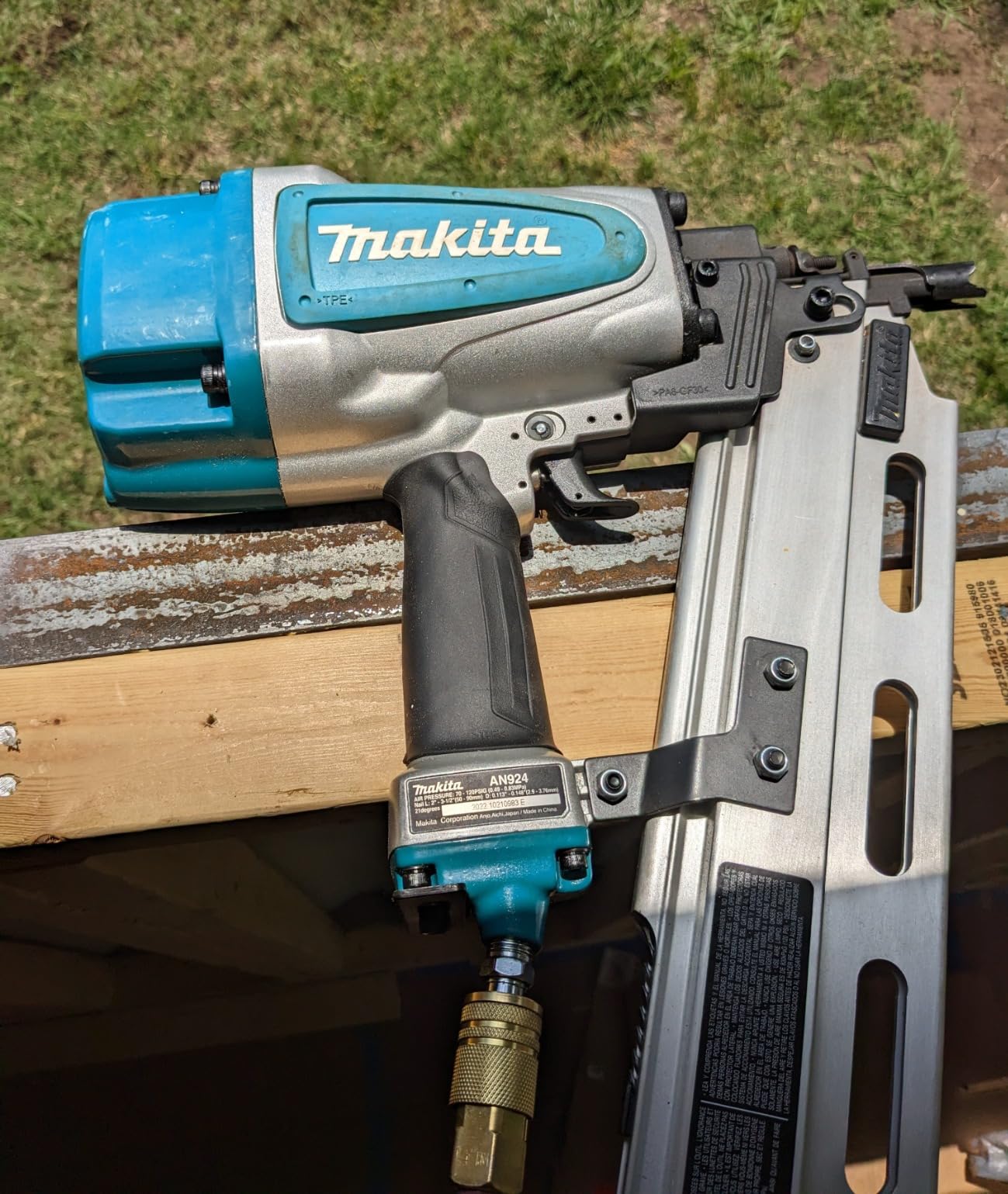
The Makita AN924 is the pick when your fastener spec calls for something heavier than a standard 0.131 inch nail. It drives 21-degree plastic collated nails from 2 inch to 3-1/2 inch at 0.113 inch to 0.148 inch diameter, and it is the only gun here that drives that heaviest gauge on its standard framing nosepiece. That is the difference between satisfying a connector spec and quietly driving a nail that does not meet it.
Drive power comes from a large capacity air chamber, which is the part you feel rather than read. On dense pressure-treated members and laminated veneer lumber it keeps a consistent cycle instead of the first-shot hesitation you get from a small chamber losing pressure between shots. The top-loading aluminum magazine is a longer-life choice than stamped steel, and it means loading from the top rather than wrestling a strip into the side.
It also arrives complete. Air fitting, hex wrench, pneumatic nailer oil and safety glasses are in the box, which removes the small trip to the hardware store before your first framing session.
Accepting Nails Up to 0.148 Inch Diameter
Gauge capacity is the whole argument for this tool. A 0.148 inch nail has meaningfully more holding power in end grain and dense material than a 0.131 inch, and some connector and engineered lumber specifications call for it explicitly. Every other pneumatic pick here tops out at 0.131 inch on framing nails, so if your spec sheet says 0.148, this is the gun that can comply.
Heavy gauge nails also need the air pressure to match. Run this at a healthy compressor pressure rather than at the low end of the range and the drive stays consistent. A compressor that is struggling to hold pressure shows up first as inconsistent nail depth, which is exactly when you are checking a spec.
Aluminum Magazine and Drive Chamber
A top-loading aluminum magazine resists the corrosion and wear cycle better than the stamped steel magazines common in this price class, which matters when a nailer lives in a pickup bed through a wet spring. The magazine capacity keeps reloads down during a long joist run rather than every forty nails.
Be aware of a discrepancy in the published data before you plan your overhead work. The rated tool weight is 8.3 pounds, while the listed shipping weight is 11.8 pounds. Budget for the heavier figure in your head when you are on a ladder for an afternoon.

What This Nailer Cannot Do
It is a single-angle, single-coll pneumatic tool with no rafter hook and no case, so it is a pure framing gun with none of the convenience features. There is no cordless counterpart in this roundup either, so if you are working far from power you are looking at a different section of the market entirely.
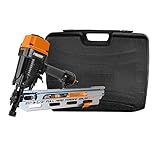
5. Freeman PFR2190 – Anodized Body and Case at a Mid Tier
Freeman PFR2190 Pneumatic 21 Degree 3-1/2″ Framing Nailer with Case
Pneumatic
21 degree plastic collated
2-3.5 in nails
8.5 lb
Case included
+ Pros
- Anodized aluminum magazine and cylinder
- Removable no-mar tip for toe nailing
- 7 year limited warranty
- Blow molded case included
- Tool-free depth wheel
- Cons
- Bulkier than the lighter 7.5 lb Metabo HPT
- No rafter hook
- Needs roughly 85-90 PSI or nails sit proud
The Freeman PFR2190 is the pick when you want a serious frame nailer and a case without moving up to a premium brand price. The anodized aluminum magazine and cylinder are a genuine step up from the stamped components used in budget guns, and the blow molded case with accessory pockets is unusual at this tier and protects the tool in a truck bed.
The removable no-mar tip is the detail I noticed most on a real deck. Pull it off and the aggressive claw teeth give you the grip you want to toe-nail a joist without it slipping; put it back on when you are fastening something visible. Having both behaviours in one tool is worth more than it sounds during a long frame.
Long ownership stories are common for this tool, with owners reporting they bought a second one after decades with the first. The 7-year limited warranty is the longest in this roundup, and it backs that up.
Anodized Magazine and Corrosion Resistance
Anodizing is a surface treatment on the aluminum magazine and cylinder, and for a tool that lives outdoors on a wet deck frame it is a reasonable middle ground between a stamped steel magazine and a full magnesium body. It resists the rust bloom and wear cycle that shortens the life of cheaper magazines, without the weight penalty of a solid metal housing.
Reviewers commonly describe this as the value pick in the class, with several owners comparing it favourably to tools costing multiples more. The one-line summary that shows up: it does not jam when it is fed the correct plastic collated nails.
Compressor Air Demand and Nail Depth
This gun wants roughly 85 to 90 PSI. Under that, nails sit proud of the surface, which means every connection you drove is a connection you need to go back and check. If your compressor is a small unit, the air demand is a real factor in whether you buy this and whether you buy a bigger compressor at the same time.
Switching between sequential and bump fire here requires swapping the trigger assembly rather than flipping a switch. That is a few minutes of setup each time you change phases, so pick your mode for the sequence of work rather than flipping back and forth mid-run.
What This Nailer Cannot Do
It does not accept nails heavier than 0.131 inch diameter, there is no rafter hook for overhead work, and the high-gloss finish scuffs visibly on a job site. The anti-dry-fire mechanism also leaves a few nails unusable in the magazine at a time, which is a safety feature but does mean a strip occasionally loads short.
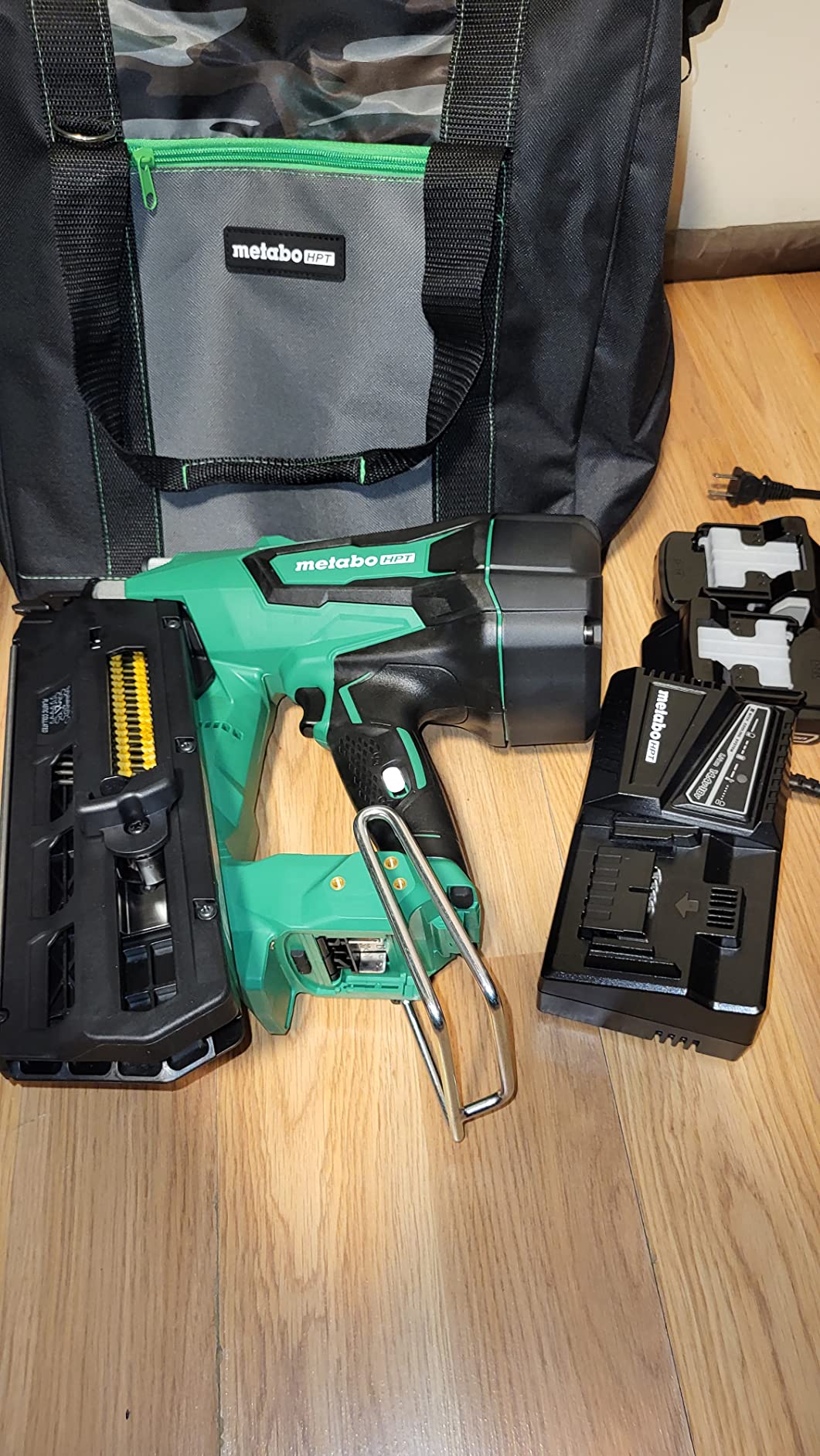
6. Metabo HPT NR1890DRS – Cordless 18V Framing Nailer With No Hose
Metabo HPT Cordless Framing Nailer Kit, 18V, Brushless Motor, 2″ Up To 3-1/2″ Framing Nails, Compact 3.0 Ah Lithium Ion Battery, Lifetime Tool Warranty (NR1890DRS)
18V cordless
21 degree round head strip nails
2-3.5 in
About 400 nails per charge
+ Pros
- No compressor
- hose or cartridges needed
- Airspring drive with zero ramp up
- Brushless motor
- Includes battery
- charger
- bag and glasses
- Lifetime tool warranty
- Cons
- Heavy 10.1 lb body
- tiring overhead
- Will not drive 0.131-0.148 in gauges
- About 400 nails per charge means pack swaps
- 2 year battery warranty
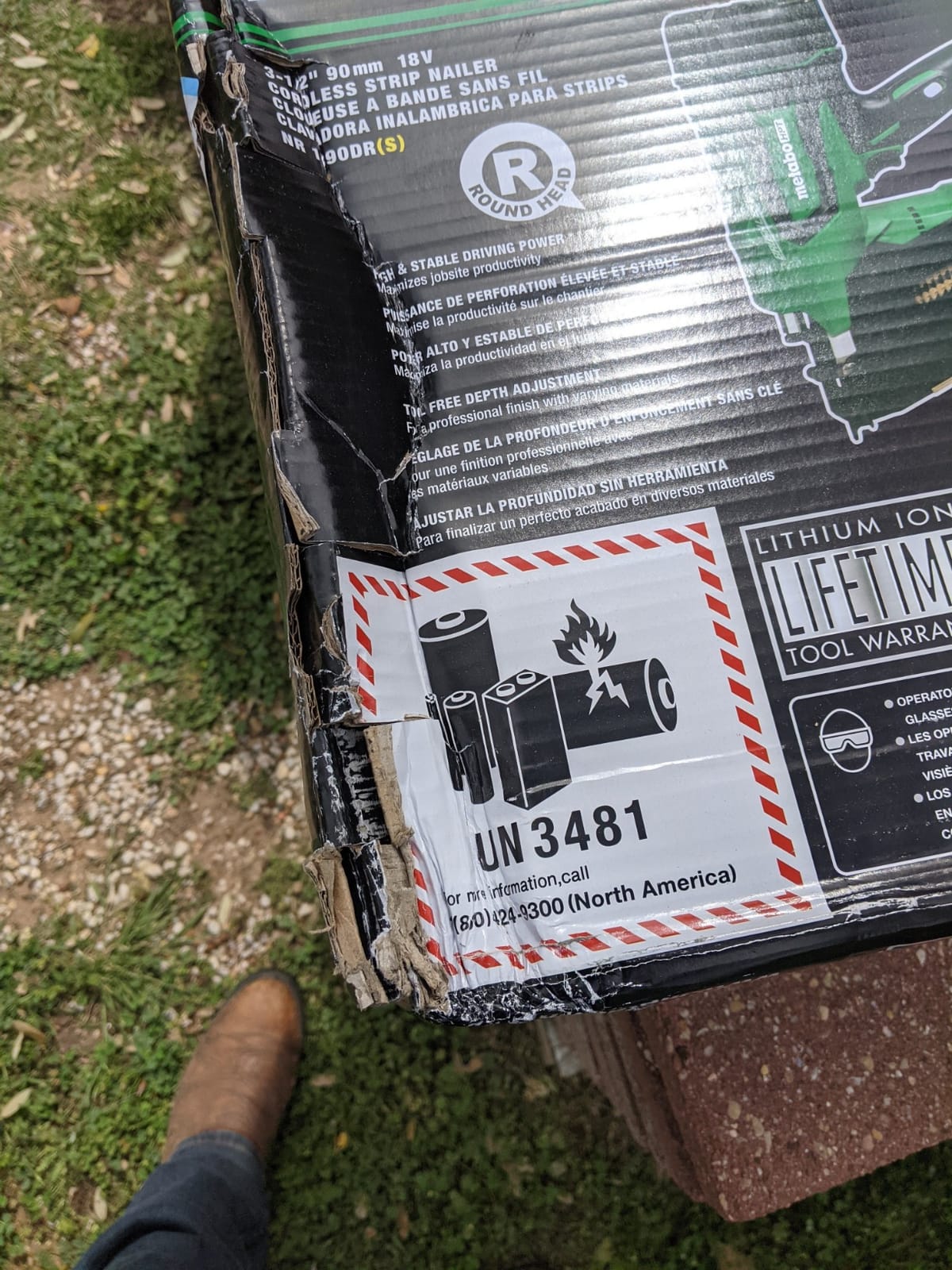
The Metabo HPT NR1890DRS is the cordless pick here, and the reason it appears at all is that it genuinely solves a problem the pneumatic guns cannot: a deck at the back of a property with no power access, or a punch-out job where a compressor is a liability. There is no tank, no hose and no ramp up. You pull the trigger and it fires.
The airspring drive system is what makes it feel less like a toy than most cordless nailers. It delivers a pneumatic-like feel and a zero ramp-up cycle, and paired with the brushless motor you get longer run time and lower maintenance than a brushed design. Around 400 nails per charge with the included 3.0 Ah battery covers most single framing sessions.
It comes as a complete kit: the nailer, a compact 3.0 Ah lithium ion battery, a fast charger, a contractor bag and safety glasses. That matters for a cordless tool, because a bare nailer is only cheap if you already own the platform.
Battery Runtime and Nails Per Charge
About 400 nails per charge is the honest planning number. On a 400 square foot deck frame you will go through a battery and then some, which means a second pack on the charger while you work. Budget for one spare pack and a charger, because that is the real cost of entry into a cordless nailer rather than the tool price.
The 18V compact 3.0 Ah pack is a small capacity by modern cordless standards. If you already run a larger 18V battery in the same Metabo HPT platform, check compatibility before assuming the smaller pack is your only option, because runtime scales directly with the pack you carry.
Air Spring Drive Feel and Depth Adjustment
Tool-less depth of drive adjustment gets you from countersink to flush across materials without a tool, and the control panel lets you move between sequential and bump fire without leaving the work. On a deck with a lot of connector nails, I set sequential; on open rim joist runs I set bump fire.
Weight is the honest drawback. At 10.1 pounds before the battery, this is heavier than the light pneumatic guns in the group, and on overhead work that difference against a 7.5 pound pneumatic is felt by the end of the first hour.
What This Nailer Cannot Do
It stops at 0.131 inch diameter, so it will not satisfy a spec sheet calling for a heavier structural nail. It is also not a decking tool. And with a 10.1 pound body plus battery, it is a poor choice for an afternoon of overhead ledger work compared with a 7.5 pound pneumatic gun and a short hose.
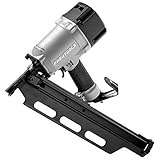
7. PneuTools SN2283H – Simple Single Mode Gun With a Rafter Hook
PneuTools SN2283H 21 Degree Framing Nailer with Rafter Hook
Pneumatic
21 degree plastic collated
Full round head
Rafter hook
10.53 lb
+ Pros
- Rear hook for overhead framing work
- Simple single mode trigger with nothing to configure
- Hardened end cap and one piece safety mechanism
- Highest share of 5 star ratings in this group
- Cons
- Single mode only with no bump fire option
- Heavy 10.53 lb body even with the rafter hook
- Fewer adjustment features than rivals
- Smaller installed base than the major brands
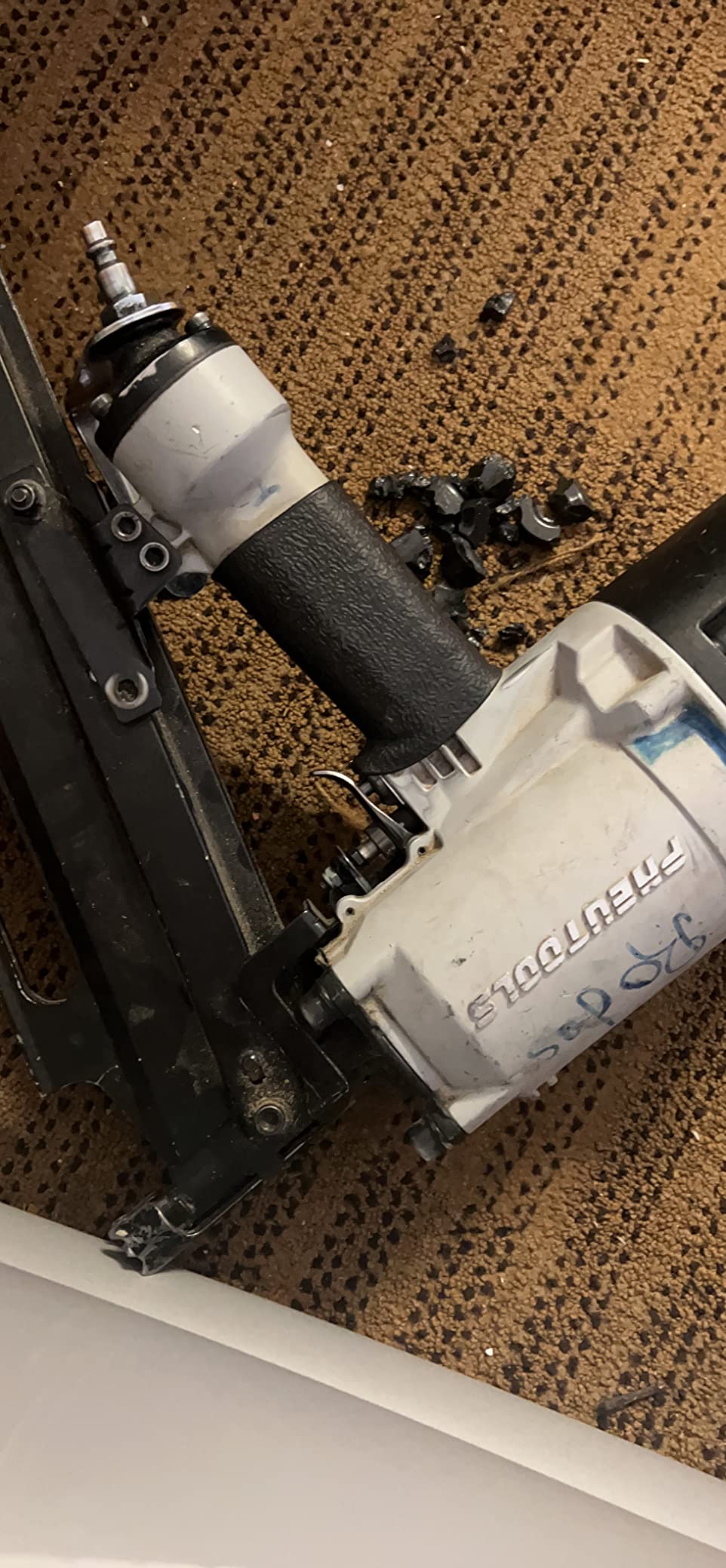
The PneuTools SN2283H is a deliberately simple framing nailer, and the simplicity is the point. There is one trigger mode, no mode switch to mis-set, and a hardened end cap with a one piece safety mechanism built for service life. Reviewers consistently describe it as the most reliably well-received tool in the group, with the highest share of top ratings of anything here.
The rafter hook is the feature that earns it a place in a deck roundup. Hanging a 10.5 pound gun off a joist or ledger is not a luxury when you are one-handed at height fastening a rim joist, and only three of the ten tools here come with a hook.
It runs on standard, economical full round head 21-degree plastic collated nails, which means your nail supply is the same strip you would buy for any other 21-degree gun on this list. Nothing proprietary, nothing to track down.
Rafter Hook Use on Ledger and Beam Work
Overhead deck work is where a rafter hook earns its place, and this is the clearest example. On a double rim joist or a beam connection at height, you hang the gun, position the member with your off hand, take the gun back, drive, and repeat. Without the hook you are setting a heavy tool on a narrow member or holding it one-handed while your other hand holds the lumber.
The hook does not change the weight. At 10.53 pounds this is one of the heavier guns in the roundup, so pair it with the hook rather than assuming the hook solves the fatigue problem. For a very large frame, a lighter gun with a hook is the better combination.
Single Mode Trigger Trade Off
A single low profile trigger means there is nothing to configure and nothing to mis-set. In practice you drive one nail per trigger pull, which is exactly right for connector work and controlled nailing, and slower for long open seams where a bump-fire capable gun would let you keep the nose in contact and drive continuously.
It also has fewer adjustment features than most rivals in this class, with no listed tool-free depth control. Budget a little more time setting depth changes across materials than you would with the NuMax or the 3PLUS H2190SP.
What This Nailer Cannot Do
It is single mode, so there is no bump-fire speed for high-volume framing. At 10.53 pounds it is one of the heavier tools here. It has a smaller installed base and a thinner supply of replacement parts than the major brands. And it is a framing nailer, so it is not a substitute for a tool with precise depth control when you are working to a spec.
8. 3PLUS H2190SP – Basic Pneumatic With Tool-Free Depth Control
3PLUS H2190SP 21 Degree Full Round Head Framing Nailer
Pneumatic
21 degree full round head
2-3.5 in nails
10.69 lb
+ Pros
- Full 2-3.5 in range at an entry price
- Tool-free depth adjustment
- Hardened claw tip for toe nailing
- Two-mode sequential and bump switch
- Dry-fire lockout and no-mar tip
- Cons
- Very heavy body at 10.69 lb for overhead work
- Some users report the dry-fire lockout confuses at the end of a strip
- Limited parts and service availability
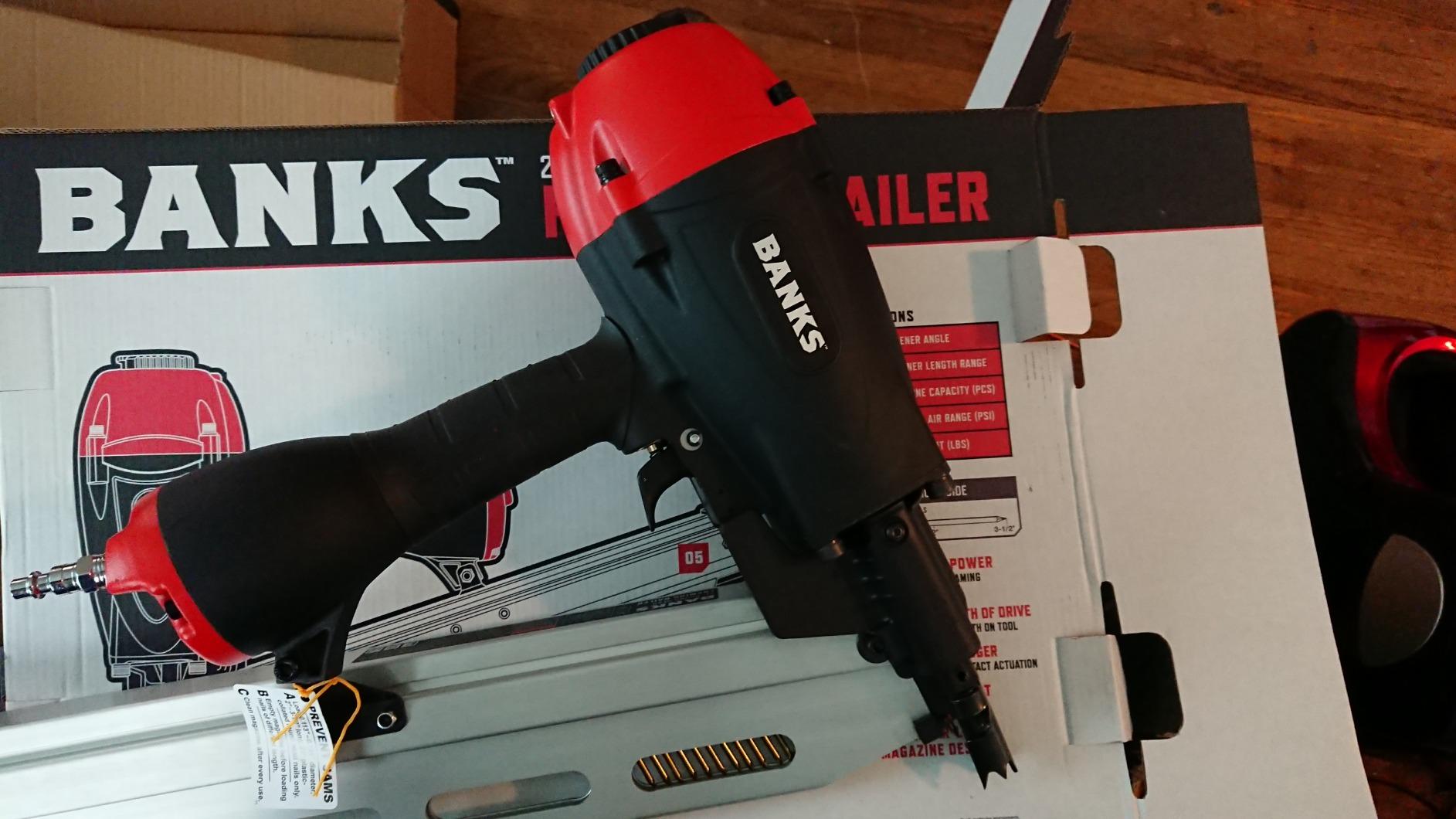
The 3PLUS H2190SP is a straight 21-degree full round head pneumatic that covers the entire 2 inch to 3-1/2 inch range without any gimmick, and it sits in the entry tier. For a first framing nailer on a real deck project, the feature list is unusually complete for that class.
Tool-free depth adjustment for flush or countersink driving, a two-mode selective actuation switch between sequential and bump fire, a 360 degree rotating exhaust cover and a no-mar tip all come standard. The hardened claw tip is the detail I care about most on a deck, because it reduces nose wear and minimises slippage when you are toe-nailing blocking and joists.
Owners report it still running reliably years after purchase, including after shed and deck framing work. For a tool at this level of investment, that durability history is the main argument.
Full Nail Range at an Entry Tier
The nail range is the same as the premium pneumatic guns: 2 inch to 3-1/2 inch full round head plastic collated. That is the range a residential deck frame needs from ledger to joist, so there is no compromise here on the connections themselves. You are buying less in the tool construction, not in the fastening capability.
One reviewer reported this tool would not drive 3-1/2 inch nails consistently across an 80 to 150 PSI sweep and returned it, while still rating the build quality highly. If you buy this, verify your longest nails seat at your actual line pressure on the first project rather than assuming it.
Claw Tip and Dry-Fire Lockout
The hardened claw tip is genuinely useful on a deck because toe-nailing is how most of the frame gets fastened. A tip that resists wear keeps its grip on the lumber and reduces the slips that leave a dimple in a visible board.
The dry-fire lockout protects the driver from empty shots and prevents missing nails, which is a structural benefit, not just a durability one. Some users find it confusing when only a few nails remain in the magazine, so it is worth knowing that behaviour before it surprises you mid-run.
What This Nailer Cannot Do
At 10.69 pounds it is a heavy tool for a full-size framing gun, which makes it a poor overhead choice on a large frame. Parts and service for the brand are limited, so a failed driver is a bigger problem than with a major brand. And it will not accept connector nails or any collation other than 21-degree plastic collated full round head.
9. CRAFTSMAN CMCN621PLB – Cordless Pick for V20 Platform Owners
CRAFTSMAN V20 Cordless Framing Nailer, Nail Gun, 21 Degree, up to 3-1/4 inch Nails, Bare Tool Only (CMCN621PLB)
20V cordless
21 degree
Brushless motor
Up to 3-1/4 in nails
10.75 lb
+ Pros
- Shares the V20 battery platform with lawn and garden tools
- Brushless motor
- Tool-free depth adjustment
- Integrated rafter hook
- No compressor
- hose or cartridges
- Cons
- Bare tool with no battery or charger
- Maximum nail length is 3-1/4 in
- Owners report intermittent jams and double fires
- Heavy at 10.75 lb
The CRAFTSMAN CMCN621PLB is worth including for one specific reason: if you already own V20 batteries for lawn and garden tools, this nailer drops into the platform you have and the entry cost collapses. A brushless motor in a cordless framing nailer at this level is also unusual and buys you longer run time and lower maintenance than a brushed design.
The integrated rafter hook means it hangs on a joist during overhead work, and tool-free depth adjustment gives clean, repeatable nail placement across materials. Owners already on the V20 platform rate it highly for convenience and for handling older lumber as readily as fresh stock.
It is a bare tool. The nailer is in the box, and the battery and charger are sold separately, so the real number is the tool plus two batteries plus a charger before you drive a single nail.
Cordless Convenience and Shared Batteries
The platform argument is the real argument here. A V20 battery you already own across mowers and trimmers removes the most expensive part of entering a cordless nailer ecosystem, and it means one battery family covers the whole garage. Tool-free depth adjustment and a brushless motor keep the driving consistent across pressure-treated lumber.
The tool is also VERSATRACK compatible, so a clip and accessories can be added later if you want it on a wall or in a truck rather than loose in a bag.
The 3-1/4 Inch Ceiling and What It Rules Out
Here is the hard limit: this nailer drives up to 3-1/4 inch round head nails. That is quarter inch short of the 3-1/2 inch nails many deck joist, beam and rim joist connections and most connector specifications call for. On a deck frame, that is not a minor shortfall, it decides whether the tool is legal for the connection you need to make.
Owners also report intermittent jamming and occasional double fires, which some attribute to the 20V power ceiling on the heaviest nails. At 10.75 pounds, it is also heavy for overhead shooting, and the recoil and noise are noticeably higher than pneumatic alternatives.
What This Nailer Cannot Do
It cannot drive 3-1/2 inch nails, which is the disqualifying limitation for a lot of structural deck work. It does not include a battery. It is also a heavy, high recoil tool for overhead shooting, and it has the smallest review base in this roundup, so there is less long-term history to lean on.
10. 3PLUS HFN90SP – 3-in-1 Magazine for 21, 28 and 34 Degree Nails
3PLUS HFN90SP 3-in-1 Air Framing Nailer with Adjustable Magazine for 21/28/34 Degree Nails
Pneumatic
Convertible 21, 28 and 34 degree magazine
2-3/16-3.5 in nails
70-120 PSI
+ Pros
- Only tool here that accepts 21
- 28 and 34 degree collated nails
- Runs reliably with small 2 gallon compressors
- Hardened claw tip and no-mar tip cover
- 9 lb body
- Cons
- Lowest average rating here with recurring double fire reports
- Some reports of jamming when the strip runs low
- One report of a leaking air seal out of the box
- Angle changes add setup time
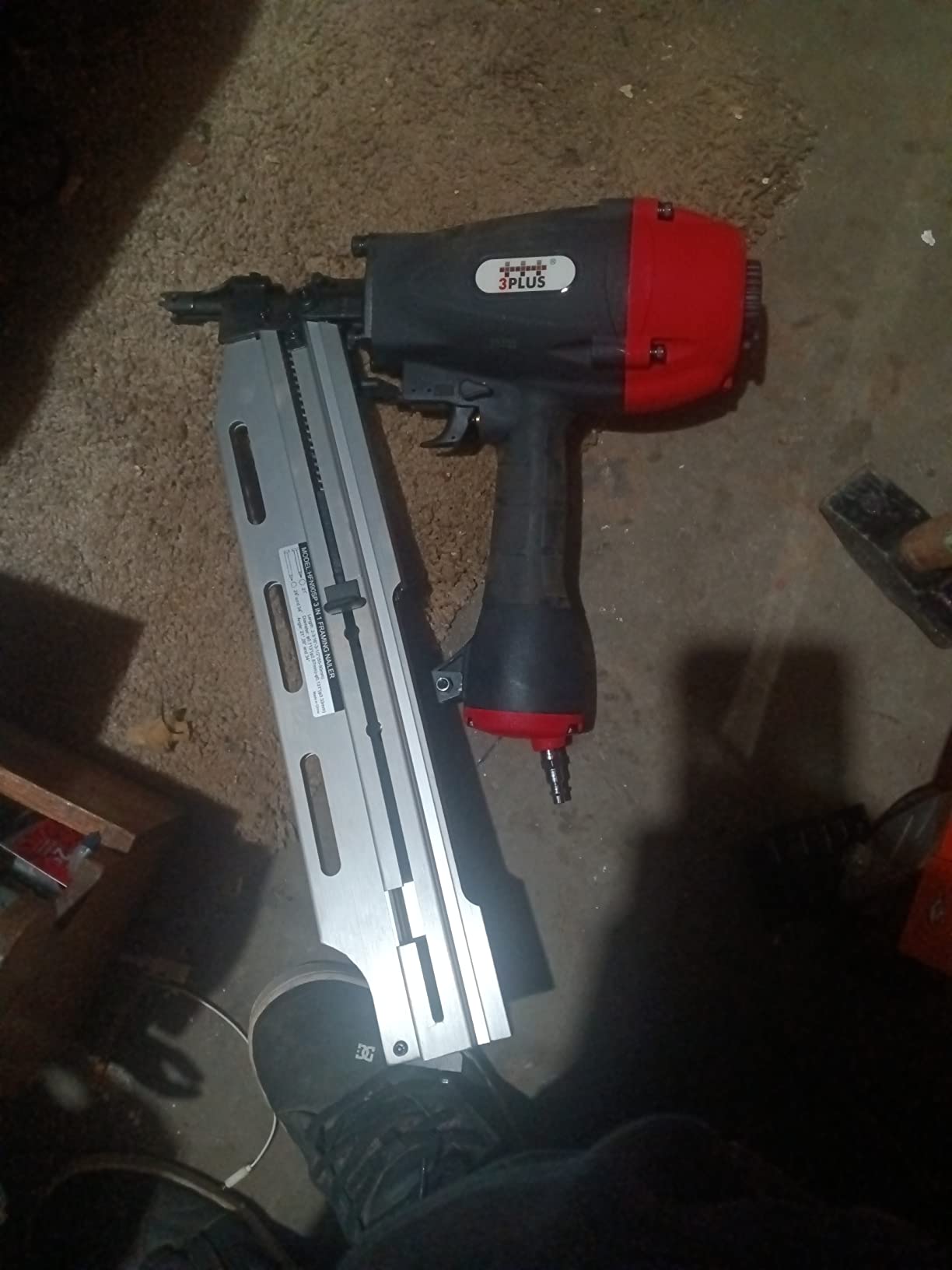
The 3PLUS HFN90SP is the only tool here that converts between 21, 28 and 34 degree collated nails. If you already have strips of a different angle in the shed, or you work on projects where 30-degree paper collated nails are the local standard, that flexibility is worth more than a dedicated angle. The nail range runs from 2-3/16 inch to 3-1/2 inch at 70 to 120 PSI.
It also runs happily on a small 2 gallon compressor, which makes it the most forgiving pick here if you do not own a serious air setup. Pro carpenters report performance comparable to dedicated guns costing several times more, and one owner logged over 2000 nails without a jam.
The hardened claw tip accepts an optional no-mar tip, so toe-nailing grip and surface protection are both available from the same nose.
Converting the Magazine Between Angles
Changing the magazine angle means physically reconfiguring the tool and then committing to the matching nail format. That is a real setup cost, and it is only worth paying when you genuinely have a mix of collations to run. If you build only decks and always use 21-degree full round head plastic collated nails, a dedicated 21-degree gun is simpler and more consistent.
The value case is inventory. Running whichever angle is on the shelf, or whichever is the better deal on a bulk order, spreads your nail cost across formats and reduces the number of strips you need to keep on hand.
Low Air Demand on Small Compressors
The 70 to 120 PSI operating range is broad and the low end is genuinely forgiving. Owners report it running reliably on 2 gallon compressors, which matters enormously for a first-time deck builder who does not want to buy a large compressor before buying a nailer. The adjustable depth control and single shot to bump fire toggle round out an unusually adjustable tool for the tier.
At 9 pounds it sits mid-weight, which is acceptable but not light. Between joists it is fine; overhead it is a tool you will want to hang and use in short bursts.
What This Nailer Cannot Do
It carries the lowest average rating in this roundup, with recurring reports of double firing in single shot mode and jamming when a strip runs low, plus one report of a leaking air seal straight from the box. Converting the angle adds setup time and forces you to buy the correct nails for whichever angle you are running. It also cannot accept connector nails.
How to Choose a Framing Nailer for Deck Building
The decision goes in a specific order, and skipping steps is how people end up with a tool that cannot make the connection their spec sheet requires. Nail capacity and gauge come first, then power source, then weight, then everything else.
Pneumatic or Cordless for Your Deck Build
A pneumatic framing nailer gives you unlimited runtime, consistent drive force, and no platform lock-in. Its costs are the compressor, the hose, and the logistics of getting a compressor to the far end of a property. Most DIY builders who already own a compressor of reasonable size should buy pneumatic, because the per-nail economics are better over thousands of nails.
A cordless framing nailer removes the hose entirely, which is decisive on a deck at the back of a lot, on a punch-out repair, or on a site where running an extension cord is not practical. The trade is runtime and weight: the cordless picks here run several pounds heavier than the lightest pneumatic and give you a few hundred nails per charge. Budget spare batteries, because the platform, not the nailer, is the expensive part.
21 Degree vs 30 Degree Magazine Angle
Both drive the same structural nails. The difference is how the strip is collated and how the magazine sits against the work. A 21 degree magazine holds more nails per strip and stays clear of a perpendicular surface better, which is why it is the standard for close-quarters joist work. Plastic collated 21-degree strips are plastic welded to the nail, so they do not swell or fall apart in weather the way paper collated strips do.
A 30 degree magazine gives you a slightly larger capacity and a faster reload cycle, and paper collated strips are cheaper per nail. The catch is weather: paper strips disintegrate when wet and leave a mess in a damp or outdoor setting. For a deck, a 21-degree plastic collated gun is the more sensible default. If your local framing supply is built around 30-degree paper collated nails, the 3PLUS HFN90SP converts between angles and covers you.
Within 21-degree, be aware of the head style. Full round head is the correct structural choice and is what most exterior connection specifications call for. A clipped head nail is cheaper and will fit some magazines, but it is not what a deck ledger or a joist hanger spec sheet is asking for.
Which Nails For Which Part of the Deck
Matching the nailer to the fastener spec is the single step that separates a frame that passes inspection from one that gets flagged. Open the fastener manufacturer’s published spec for your joist hanger, seismic connector or ledger attachment and work backwards from the diameter and length they call for. Then confirm the nailer’s gauge range and length range actually cover it.
For structural connections, the common specification is a 3 inch to 3-1/2 inch full round head nail in a hot-dipped galvanized or stainless grade, in 21-degree plastic collated form. A nailer that stops at 3-1/4 inch cannot satisfy that spec, regardless of how good the rest of the tool is.
Coating is not optional outdoors. Pressure-treated lumber is corrosive to plain steel, and fasteners that are not rated for treated lumber will rust, stain the surrounding wood and eventually lose holding power. Hot-dipped galvanized is the common exterior choice; stainless is the choice for coastal exposure and for the woods most likely to cause corrosion problems. The fastener publication will tell you which grade it accepts.
Surface deck boards are a different fastener decision. Ring shank nails resist withdrawal far better than smooth shank, which is why they are the standard on decking, and they are driven with a tool that controls depth more precisely than a framing nailer. Use screws if you want a surface you can walk on in wet conditions or replace without wrestling the boards.
Compressor Size and Air Demand
A pneumatic framing nailer needs a compressor that can hold line pressure under load, not just peak pressure on a gauge. Most 21-degree guns want something in the range of 80 to 100 PSI, and a small unit that cannot hold that pressure will leave nails proud of the surface. That is a connection that is not fully seated, and on a structural joint it is a connection that is not doing its job.
Hose length matters too. Long runs of hose restrict airflow and cut the drive force at the tool, which is the same symptom as an undersized compressor. Shorter hose, a larger bore hose, and a reel near the work beat a longer hose and a bigger tank for this specific application. A 2 gallon compressor is workable with a low-demand tool like the HFN90SP and a poor match for the rest.
Weight and Balance for Overhead Work
Weight is the second most common deal breaker among people framing decks, and the published figure is the one to compare. The spread across the pneumatic picks here runs from 7.5 pounds on the Metabo HPT NR90AES1 to 10.69 pounds on the 3PLUS H2190SP, which is a meaningful difference when you are on a ladder fastening a rim joist at height.
Balance matters as much as raw weight. A well-balanced tool lets you hold it one-handed at a jaunty angle without the nose dropping into the lumber. If you are framing overhead for an afternoon, add a rafter hook to your shortlist: the Bostitch F21PL, the PneuTools SN2283H and the CRAFTSMAN all include one, and it changes how safely you can work one-handed at height.
Nails vs Structural Deck Screws
For the structural frame, nails are the traditional answer and screws are the more forgiving one. Nails are faster, cheaper and what most residential detailing expects. Screws resist withdrawal better and will not split lumber the way a nail driven into dry treated pine can, at the cost of more time and a higher fastener cost per connection.
Forum builders split on this one, and the honest summary is that nails bend rather than pull out, while screws can snap in shear. Either will work if the fastener and the spec are matched to the connection. The mistake is using a screw in a spot the detailing does not accept, or driving nails outside the spec and assuming nobody will check.
For surface boards the calculus shifts again, and that is where ring shank nails and structural deck screws take over from a framing nailer entirely. A framing nailer is for the frame. It is not the tool that makes the walking surface.
Jam Clearing and Common Failure Modes
Six problems account for nearly every framing nailer complaint, and all of them have a fix:
Jams on wet pressure-treated lumber. Wet treated stock is denser and more brittle at the surface. Keep the strip loaded straight, do not force a partial strip into a nearly empty magazine, and make sure the driving depth is set for the material rather than left where it worked on dry pine.
Blank drives from dry firing. A dry-fire lockout is a structural safeguard, not just a durability feature, because an unnoticed blank drive leaves a joint with one less fastener than you counted on. Empty the nailer at the end of a session rather than leaving nails in it.
Short nails that will not seat. A gun rated to 3-1/4 inch cannot make a connection specified at 3-1/2 inch. Check the fastener spec before the tool, not after.
Insufficient compressor airflow. Nail depth inconsistency on a pneumatic tool is a compressor problem until proven otherwise. Check pressure at the tool under load, not at the tank.
Depth set too deep. Overdriving splits the face of pressure-treated lumber and, on a visible rim joist, shows. Recheck depth after every material change, and use the no-mar tip.
Stripped plastic not accepted. Some magazines will not take a strip that has been pulled apart or re-plastic-welded. Load intact strips and let the mechanism do the breaking.
Safety Gear for Deck Nailing
A framing nailer is a loud, fast tool that puts fasteners into wood at high velocity, near your hand. Safety glasses are the minimum. Add hearing protection, because a framing nailer cycle sits well above the safe exposure level and the damage is cumulative across a build.
For overhead and ladder work the bigger risk is falling, not the tool. Use a rafter hook so the gun is never the thing you are holding onto with three fingers, keep three points of contact for your body, and set the ladder on solid level ground. If a rafter hook is on the tool, use it, because the alternative is holding a several-pound tool at arm’s length while your weight is on a ladder.
Wear gloves and eye protection, keep other hands clear of the nose end of the tool, and treat pressure-treated lumber dust the way you would any treated material.
Frequently Asked Questions
Can I use a framing nailer for a deck?
Yes, for the structural frame. A framing nailer is the correct tool for the pressure-treated ledger board, rim joists, beams, joists and joist hangers, driving 2 inch to 3-1/2 inch full round head structural nails. It is not the right tool for surface deck boards, where ring shank nails or structural deck screws driven at a controlled depth are what resist cupping and withdrawal. Frame with a framing nailer, surface with a dedicated decking or finish tool.
What nails should I use to frame a deck?
For structural connections, use 3 inch to 3-1/2 inch full round head nails in 21-degree plastic collated strips, in a hot-dipped galvanized or stainless grade rated for pressure-treated lumber. Confirm the diameter and length against the fastener manufacturer’s published spec for your joist hanger or ledger attachment, then confirm your nailer covers that range. Full round head is the structural choice; clipped head is not an equivalent substitute outdoors.
Which is better, a 21 or 30 degree framing nailer?
For decks specifically, a 21 degree plastic collated nailer is the better default. It holds more nails per strip, clears close joist work, and its plastic collated strips do not disintegrate in wet weather the way paper collated 30 degree strips do. A 30 degree gun offers slightly larger capacity and cheaper paper collated nails, which is why it dominates general house framing. Choose 30 degree only if your local nail supply and detailing assume it.
What are the common problems with framing nailers?
Six issues account for most complaints. Jams on wet pressure-treated lumber, caused by dense stock and misaligned strips. Blank drives from dry firing, which weaken a joint by one fastener. Short-nail tools that cannot seat a 3-1/2 inch specification. Undersized compressors leaving nails proud. Depth set too deep, which splits lumber faces. And re-collated or stripped plastic that a magazine will not accept.
What nail gun is best for deck framing?
For a full structural frame with a compressor on site, a 21 degree full round head pneumatic such as the NuMax SFR2190 covers 2 inch to 3-1/2 inch nails at 0.113 inch to 0.131 inch diameter and is the most proven choice available. If your spec calls for nails up to 0.148 inch, the Makita AN924 is rated for that gauge. If you have no power access, a cordless 18V model such as the Metabo HPT NR1890DRS removes the hose entirely.
Which Framing Nailer Should You Buy
If you are building a full pressure-treated deck frame and own a compressor, buy the NuMax SFR2190. It covers the standard structural range, has the largest installed base of any tool here, and the tool-free depth wheel is the feature you will use most. If overhead work and long framing days are the deciding factor, the Metabo HPT NR90AES1 at 7.5 pounds is the better tool and the better rated one.
If your fastener spec calls for nails heavier than 0.131 inch diameter, go to the Makita AN924, which is rated to 0.148 inch. If every joist sits in a metal connector, the Bostitch F21PL’s second nosepiece saves you a second tool. If you have no power access, the Metabo HPT NR1890DRS is the cordless answer, with spare batteries budgeted in. And if you already run V20 packs, the CRAFTSMAN CMCN621PLB fits the platform you have but stops at 3-1/4 inch, so check your spec first.
Whatever you buy, confirm the nail length and diameter against the fastener manufacturer’s published spec before you drive the first structural nail. That single check is the difference between a frame that gets approved and a frame that gets flagged, and it is the step that turns one of the best framing nailers for decks into a compliant deck in 2026.