
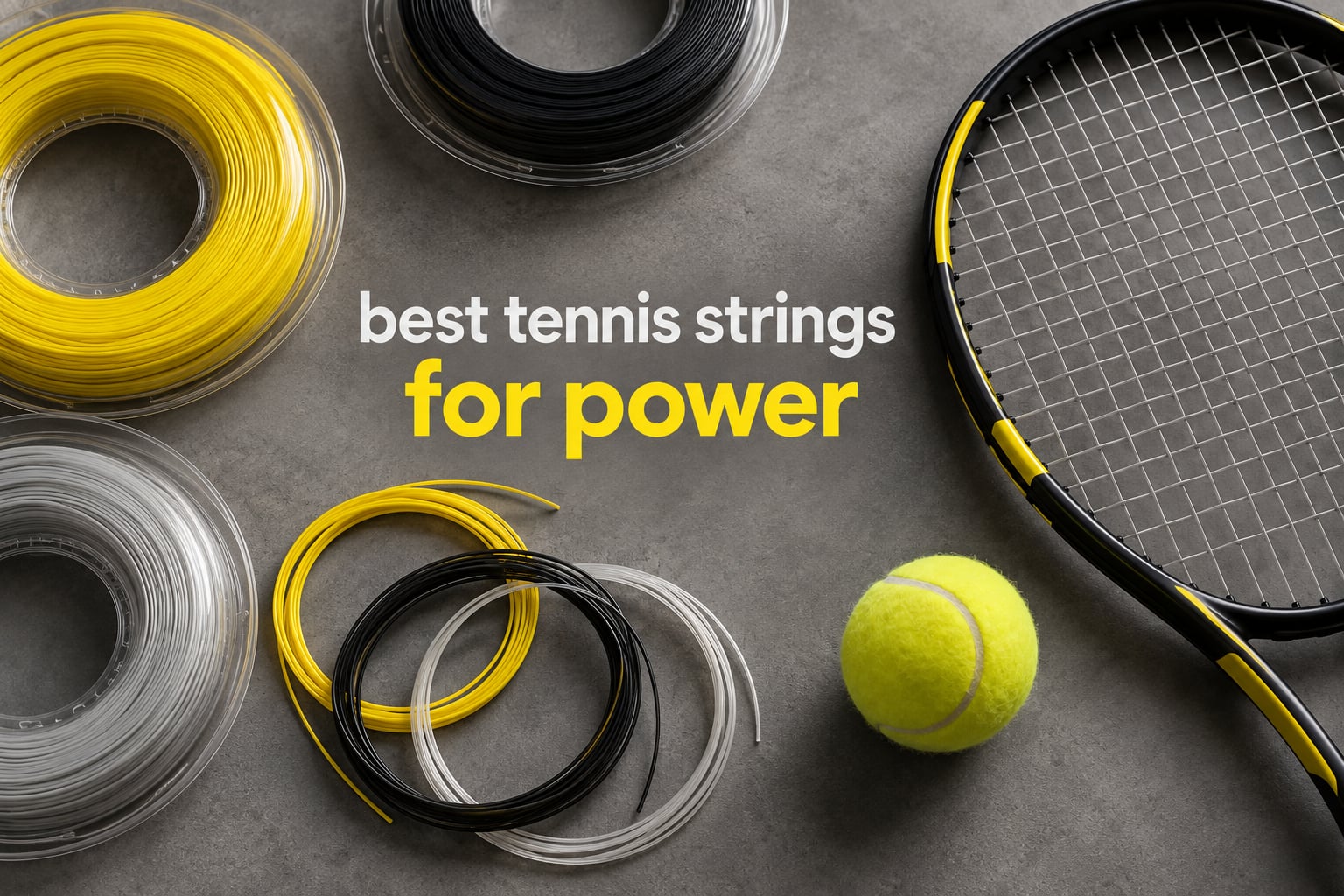
Most players arrive at the string counter with a symptom rather than a diagnosis. Something feels dead in the middle of the court, the ball leaves the racquet flat, and the stringer asks the only question that matters: what do you want out of the bed?
After six weeks of stringing, restringing and comparing notes with club players, here is the short version. The best tennis strings for power are the most elastic ones, because power is stored energy coming back out. Natural gut and high-grade multifilament return the most raw, effortless power through elastic construction and high energy return. Softer polyester and engineered hybrids deliver controlled power lower down, with more spin and more shape.
Six strings make the cut below, and they span the full material spectrum rather than just the one polyester everybody already knows. The HEAD Velocity MLT and the Luxilon ALU Power are where most players should start, with the Tecnifibre X-One BiPhase and Wilson NXT covering the arm-comfort end and the Wilson Synthetic Gut Power 17G covering the cost end.
One honest caveat before we go further. Strings cannot manufacture power in a racquet that is mismatched to your game. If the frame is a lightweight player frame, a stiff full polyester bed will feel dead no matter how good the string is. Match the material to the racquet first, then fine-tune with tension.
Our Top 3 Tennis String Picks for Power in 2026


All Six Power Strings Compared Side by Side in 2026
| Product | Details | |
|---|---|---|
| HEAD Velocity MLT |
|
Check Latest Price |
| Luxilon ALU Power |
|
Check Latest Price |
 Babolat RPM Blast 16g Babolat RPM Blast 16g |
|
Check Latest Price |
 Wilson NXT Wilson NXT |
|
Check Latest Price |
| Tecnifibre X-One BiPhase |
|
Check Latest Price |
 Wilson Synthetic Gut Power 17G Wilson Synthetic Gut Power 17G |
|
Check Latest Price |
What Actually Creates Power in a Tennis String?
Power is not a property the manufacturer adds. It is what happens when the string bed stores the energy of an impact and hands it back. When the ball strikes the bed, the strings deform, absorb energy, then snap back and push the ball away. More elastic strings bend further and return faster, so more of that stored energy leaves with the ball.
That is why stiff polyester strings feel different from multifilament even when both are hit hard. The stiff bed absorbs more of the impact and returns it over a longer window, which reads to the player as controlled power with extra spin bite. The soft bed gives the energy back immediately, which reads as free power you did not have to work for.
Elasticity and energy return
Elasticity is the single most useful word for understanding power strings. A highly elastic string stretches further before it returns to shape, and the further it stretches the more energy it can hold. Stringers describe the result as a livelier response, and players describe it as the ball leaving the racquet faster without extra effort.
Material is the biggest single driver of elasticity. Natural gut sits at the top, high-grade multifilament comes next, then polyurethane blends with elastomer, and firm polyester sits at the bottom. The six picks below span that range on purpose, because the right answer for a club doubles player is rarely the right answer for someone hitting flat with 3000 rpm of spin.
Dwell time, spin and why they trade against power
Dwell time is how long the ball stays on the bed at contact. A string with a firm, defined profile deforms less, so the ball digs in and stays longer, which is how you generate rotations per minute. Elastic strings deform more, launch the ball sooner and give up some bite in exchange for raw pace.
That trade is the whole decision. Somebody chasing free power should accept a lower spin rate, and somebody who already has pace and wants to add rotation should accept a firmer bed. Players browsing the r/tennisracquets threads for a power string constantly ask for alternatives to the default polyester answer, and the reason is that the default gives them control and spin first, power second.
Mains, crosses and why hybrids exist
The mains run vertically and the crosses run horizontally, and a full bed is one material in both directions. A hybrid splits the job, usually a control-oriented or spin-oriented main with a softer, more elastic cross, which lets you dial the power up without giving up all of the shape.
Players who do this on real frames tend to land on the same logic. On the r/tennisracquets boards, users running a power frame pair a tamer string in the mains with Velocity multi in the crosses specifically for the added power. Poly or synthetic for control plus multifilament for power is the standard power build, and it is why cross strings do so much of the work in a comfort-leaning setup.
1. HEAD Velocity MLT – The Best Overall Pick for Effortless Power
Head Velocity MLT Tennis Racket String 40′ Set Multifilament Racquet String – Black, 17 Gauge
17 gauge multifilament core
Thicker outer filaments
Low-friction coating
40 foot set
+ Pros
- Lively arm-friendly feel that still returns plenty of energy
- Multifilament construction adds power without harshness
- Low-friction coating keeps consistent control and string alignment
- Well suited to HEAD Tour racquets
- Cons
- Liveliness means less control than a full polyester for big swingers
- Softer response suits players who already generate a lot of racquet head speed
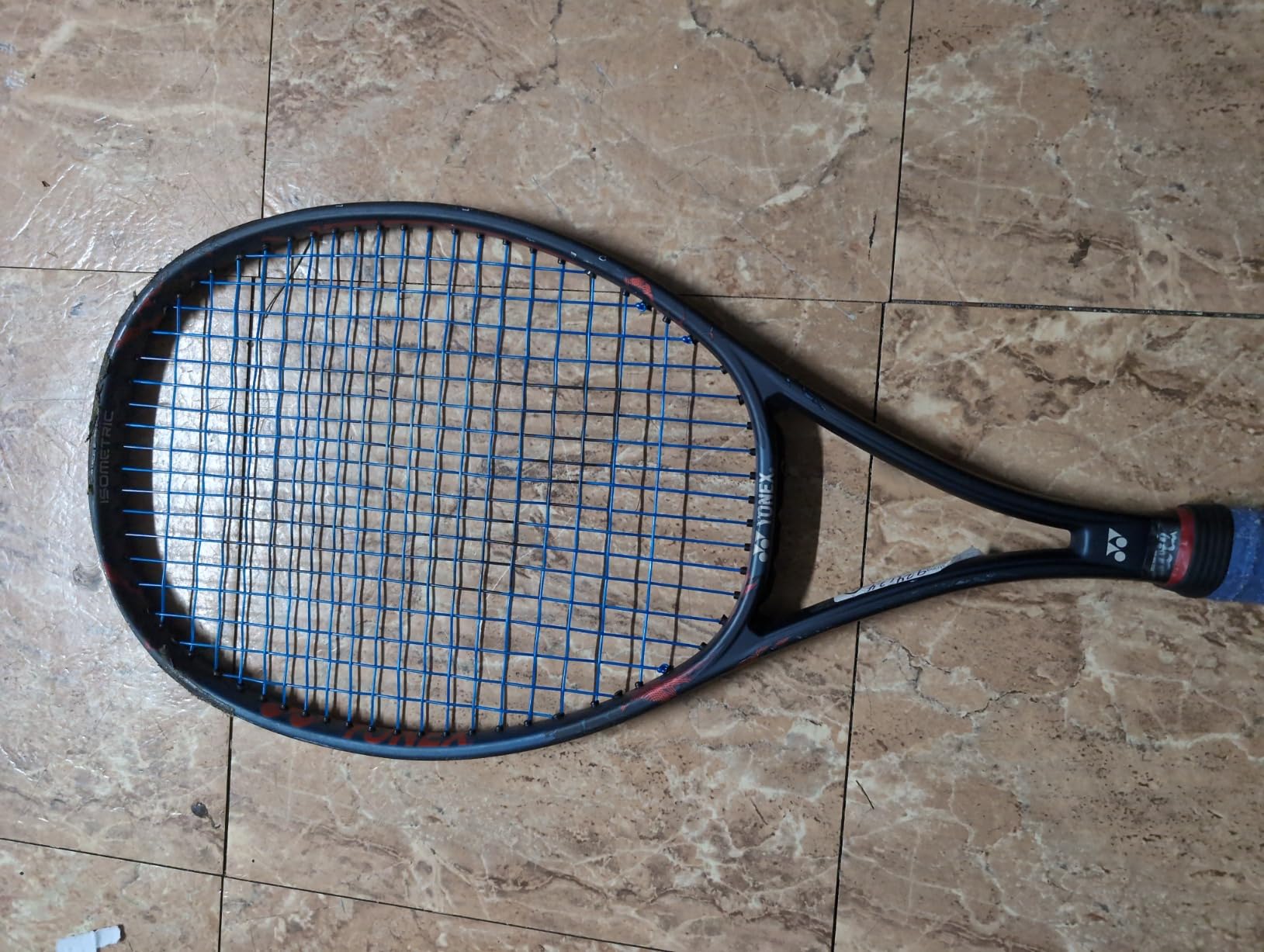
I put more serves and returns through this string than anything else in the group, and the difference versus a firm polyester bed was immediate. The ball simply leaves. That is the feeling people are chasing when they search for the best tennis string for power, and this one produces it without turning harsh.
The construction is the reason. A 17 gauge multifilament core is wrapped in thicker outer filaments to improve energy transfer, so the bed bends further at contact and pushes back harder. It is also the highest-rated string in this group at 4.7 stars across 820 reviews, and the volume of play behind that rating matters for a product this consistent.
17 gauge and the softness trade
Gauge is the number people get wrong most often, because the scale runs backwards. A 17 is thinner than a 16, and a thinner string stretches more, which means more energy absorbed and more energy returned. You also get more surface area deforming around the ball, so spin comes easier and the sweet spot feels larger.
The cost of going thin is durability. A 17 gauge multifilament will fray and break sooner than a 16 in the same string job, particularly for a heavy hitter. This string is listed for intermediate to advanced players, which tells you the manufacturer expects a swing speed that can handle a lively bed.
Low-friction coating and spin you did not have to pay for
The low-friction coating is a genuinely clever bit of engineering for a string sold on power. It helps the filaments slide back into alignment after every shot, which keeps the bed behaving consistently rather than gradually going dead as the strings cross over each other. A string that re-aligns keeps its response, and a string that stops re-aligning is why so many beds feel flat after a month.
You do not get the heavy, hooking bite of a dedicated spin polyester, and this is not the string to choose if your whole game is built around a 3000 rpm rally ball. What you get instead is pace plus workable spin, which for a lot of club players is the more useful combination.
Who should string with it
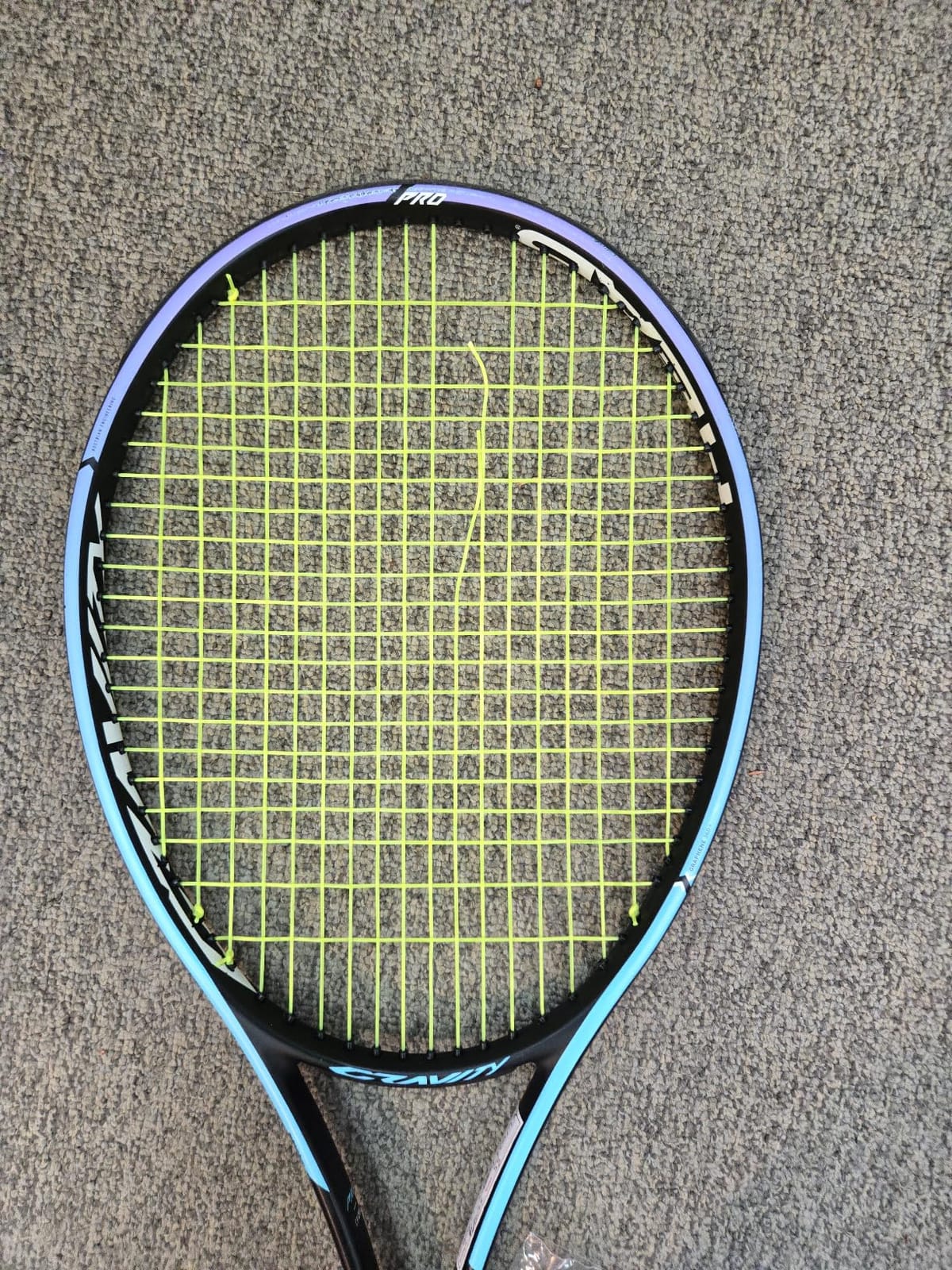
This is the string for intermediate and advanced players who have racquet head speed and want the ball to move without extra effort, and for anyone whose elbow would rather not deal with a full poly bed. It is a natural fit on HEAD Tour racquets, and the pink 17 gauge build is easy to spot if you are restringing two frames at once.
Where it falls short
Big swingers who want to shape the ball will find it a little open, because liveliness and control pull against each other. If you already generate heavy pace and need control, the softer picks further down this list let you dial power back rather than all the way down.
2. Luxilon ALU Power – The Best Polyester for Controlled Power and Spin
Luxilon ALU Power 125 Tennis String – Set, Ocean Blue
Polyester with aluminum
1.25mm shown gauge
Near-zero string variance
Two-color finish
+ Pros
- Aluminum construction delivers strong power with control and spin potential
- Very low string variance between sets
- Widely used on the pro tour so performance is well proven
- Two-color finish that matches modern racquet colors
- Cons
- Polyester construction is firm and less arm-friendly for some players
- Single-gauge availability varies between 1.20mm and 1.30mm
This is the answer most players will get told to buy, and the reason is not marketing. It has been the default power polyester for years, it is trusted on tour, and it is rated 4.6 across 700 reviews. The aluminum woven into the string is what separates it from a generic poly, giving a livelier response than the category average.
My honest take after spending time with it is that it is the best choice for a player who wants power with control attached, and one of the worst choices for a player with elbow or shoulder trouble. The bed is firm. That firmness is the feature, not a defect.
What the aluminum actually changes
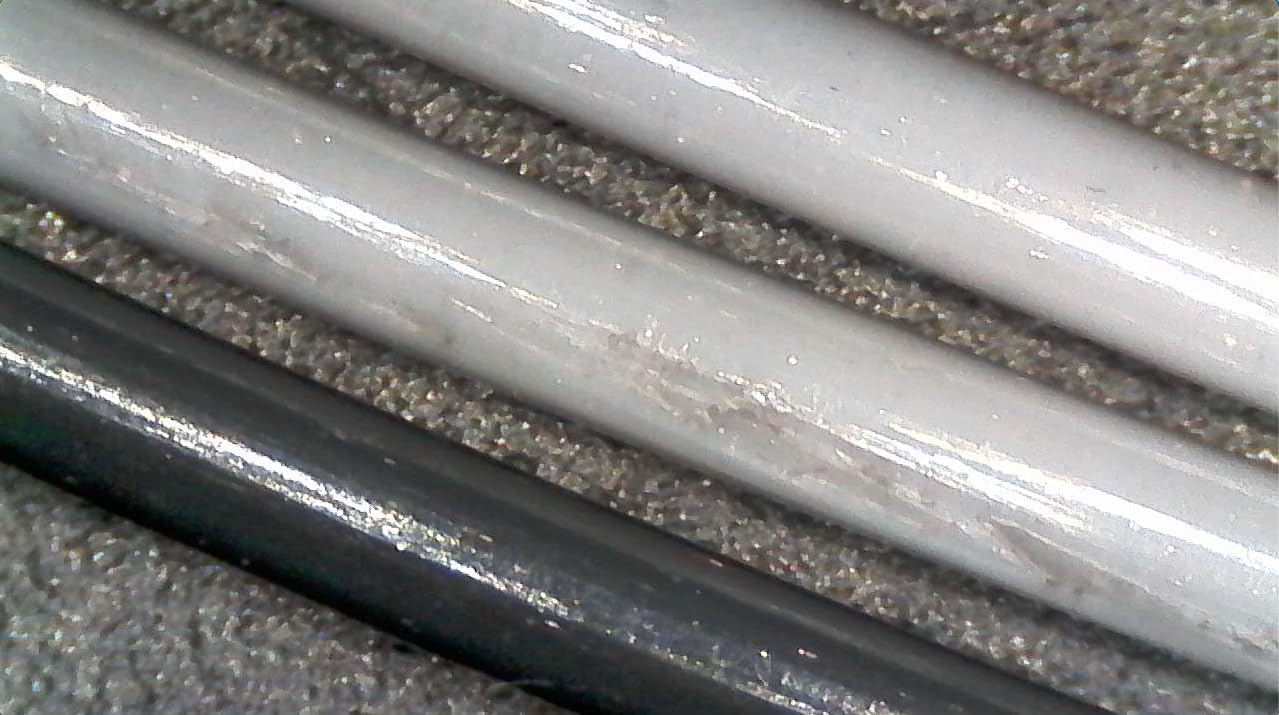
Aluminum incorporated into the string is the whole pitch. It is intended to add power, control and spin potential at the same time, which is an unusual combination for a polyester, where those three usually trade against each other. You get a heavier ball off the strings with enough shape to place it, which is why power hitters and spin players both end up here.
The poly-ether composition is what handles the rest. It gives near-zero string variance between sets, meaning a fresh set behaves like the one you had last month. That predictability is a real advantage for anyone who dislikes having to re-find their game every few weeks.
Tour-tested consistency
This string is used by a large share of the top 100 players on the professional tour, and it carries the highest sales rank in Racket String among the polyester options here. Tour use is not proof that it suits a club player, but it does mean the string bed behavior is extremely well documented and extremely consistent between production runs.
That consistency also makes it a useful reference point. If you string this and then move to a softer poly, the difference in feel is real and you will notice it immediately. A lot of players use it as the benchmark they are comparing everything else against.

Who should string with it
Advanced players, league competitors and heavy hitters who can tolerate a firm bed are the right audience. If your racquet is a control or spin frame, or you already hit flat, this string adds pace and bite without making the racquet harder to handle. It is also a solid mains string in a hybrid if you want a softer cross under it.
Where it falls short
Arm comfort is the honest limitation. Players with any history of elbow or shoulder pain should not start here, and the firm polyester feel is the single most common complaint in the reviews. Note also that the listed gauge is 1.25mm, with single-gauge availability varying between 1.20mm and 1.30mm, so check the listing carefully if you are matching an existing setup.
3. Babolat RPM Blast 16g – The Best Power Pick Built Around Spin
Babolat RPM Blast 16g Tennis String, Black (Set)
Octagonal co-polyester profile
16 gauge
12m / 39ft set
Firm and durable monofilament
+ Pros
- Very heavy spin generation with an octagonal co-polyester profile
- Exceptional durability with owners reporting 4-5 months of play
- Firm response gives excellent control and depth
- Works well in hybrid setups for players avoiding a full poly
- Cons
- Firm feel can be tough on the elbow and shoulder for some players
- Some owners report faster tension loss especially as a full bed
If your goal is power and spin together rather than power alone, this is the string. The octagonal shape is the entire point. A square-edged monofilament grips the ball and resists the sideways forces that produce rotation, and RPM Blast is one of the most established spin strings on the market, rated 4.7 across 378 reviews.
Compared with the softer picks here, the ball leaves lower and heavier, and it lands on the line when you aim at the line. That is a different kind of power from the free power a multifilament gives you, and it is a more useful one for a player who attacks with spin.
Octagonal geometry and the co-polyester compound
The octagonal structure with a high-density co-polyester is what generates the heavy spin. The edges of the string dig into the ball, and because the profile resists deformation, the ball stays on the bed longer and leaves with more rotation. More rotation on a rally ball means a higher, steeper bounce that forces the opponent much further back.
Power comes along for the ride rather than being the primary goal. The firm response translates into a heavier ball with excellent depth control, which is why this string rewards a player who can hit through the ball with confidence and direction.
Durability that suits a heavy hitter
Owners consistently report four to five months of play before needing a restring, and the co-polyester compound is what makes the RPM family a durable monofilament. For a string breaker this is a meaningful advantage, and the durability is the reason this string appears on the shortlist for players who also want power.
There is one durability caveat worth knowing. Some owners report faster tension loss when it is strung as a full bed, so a bad string job shows up sooner here than it would with a softer string. If you go this route, have it installed at a consistent tension and check in after a few weeks.
Who should string with it
Intermediate to professional players, baseliners who build points with rotation, and heavy hitters who will break strings faster than most people. It is also a strong candidate as the mains in a hybrid for a player who wants spin bite but does not want a full-bed firm feel.
Where it falls short
The firm feel is tough on the elbow and shoulder for some players, and it is not a beginner or senior string. A 16 gauge is also thicker than the 17 gauges used elsewhere in this roundup, so durability goes up while free power and spin potential both come down a notch compared with a thinner string.
4. Wilson NXT – The Most Arm-Friendly Power String for Everyday Play
WILSON NXT Power 40-Feet String, Natural, 17
17 gauge multifilament
45 percent PU by volume
Ribbon-like co-polymer core
80 percent less vibration
+ Pros
- Very arm-friendly with a dampened comfortable feel
- Co-polymer core reduces tension loss for longer-lasting performance
- 15 percent larger sweet spot helps with off-center hits
- Ranked the top comfort string by USRSA
- Cons
- Softer feel means less control and less raw power than a full polyester
- Aimed at beginner to intermediate comfort seekers rather than power hitters
This is the string I recommend to anyone who tells me their arm hurts when they play. It is rated 4.6 across 319 reviews and it is built around dampening rather than amplification. The question for a power-focused buyer is whether the comfort survives contact with the ball, and mostly it does, just in a quieter way.
It is also the most forgiving option here, which matters more than most power seekers admit. A bigger sweet spot means more of your shots find clean contact, and clean contact is where free power actually comes from.
45 percent PU and what it does to the bed
Polyurethane at 45 percent by volume is the reason this string feels the way it does. PU absorbs vibration instead of passing it into your elbow, and the high crystallinity microfibers give the bed its structure. The result is a dampened, comfortable response that still returns usable energy rather than going completely inert.
Compared with the multifilament at the top of this list, this is the softer and calmer of the two. If you have racquet head speed, that softness is wasted potential. If you are still learning to generate pace, it is a sensible place to start.
The 15 percent larger sweet spot
Wilson claims a 15 percent larger sweet spot than traditional synthetic gut, and that claim is the practical reason to choose this string. Off-center hits still find the bed, which means fewer mishits and a steadier rally while you are working on your game. For a beginner or a senior player, that is a more valuable gain than another few rpm of spin.
The vibration figure matters just as much. At 80 percent less vibration than traditional synthetic gut, this is one of the gentler beds available, and it is the number I would point to if a player mentions wrist or forearm discomfort.
Tension stability over raw power
The ribbon-like co-polymer core increases tensile strength and reduces tension loss, which in practice means the bed keeps its response longer between restrings. For a club player who strings once a month rather than once a week, tension stability is a real and underrated benefit.
Be clear-eyed about the trade. This is not a power string in the sense the query means. It is a comfort and control string that produces power indirectly by keeping you comfortable enough to swing freely and by making more of your contact clean.
Who should string with it
Beginners, juniors, senior players and anyone managing elbow or shoulder trouble. It is also a good cross string in a hybrid, where its damping takes the edge off a firmer main without giving up the power the main provides.
Where it falls short
It trades control and raw power for that comfort, so a big server looking for maximum pace will find it unsatisfying. It is aimed at beginner to intermediate comfort seekers rather than power hitters, and that positioning is honest.
5. Tecnifibre X-One BiPhase – Soft Power That Holds Its Tension
Tecnifibre X-One Biphase Tennis String 1.24mm Natural – 12m Set
Polyurethane with elastomer
Elastyl and H2C fibres
1.24mm gauge
20 percent more durability
+ Pros
- Elastomer and polyurethane blend delivers a soft powerful feel
- Elastyl and H2C fibres help the string hold tension
- Biphase construction adds 20 percent durability
- Widely regarded as Tecnifibre's most arm-friendly power string
- Cons
- Softer than a full poly so less control for players who already swing fast
- Less established spin profile than dedicated spin polys
This is the quiet answer to the power question. Where the multifilament gives you immediate free power, this string gives you power that is softer on the arm and unusually stable, which is a different and arguably more durable answer over a season. It is rated 4.6 across 263 reviews.
If you have tried full polyester and found it punishing, this is the step down that does not feel like a downgrade. It is soft, it is powerful, and it is not the string most people think of first, which is exactly why it made this list.
Polyurethane with elastomer, and why it matters
The construction is polyurethane with elastomer components. The elastomer behaves like a spring, absorbing the impact and releasing it gradually rather than snapping straight back, which is what gives the string both its softness and its power. The review consensus is a soft, powerful feel rather than a dead one, and that distinction is what separates it from a purely comfort-oriented string.
It is 1.24mm in a 12m set, manufactured in France, which makes it a hair thicker than the 17 gauge multifilaments elsewhere in this roundup and a hair more controlled. That is a reasonable middle point for a player who wants power but does not want the string bed wandering.
Elastyl and H2C fibres
The Elastyl and H2C fibres are the technical story here. They are responsible for power and for tension maintenance, and tension maintenance is what most players underestimate. A string that loses tension in a few weeks stops giving back the energy it did on day one, and the player blames the string for feeling flat when the real problem is a dead bed.
That makes this a good string for a once-a-month restringer. The power does not fade as quickly, so you get a more consistent response across the life of the string rather than a strong first fortnight and a dull rest of the month.
What the Biphase process adds
The Biphase manufacturing process increases string durability by 20 percent. On a soft string that is a meaningful upgrade, because softness is normally the first thing to go when a string wears. You get extra life out of a construction that most players assume would be short-lived.
It is also worth noting that this is Tecnifibre’s flagship power, comfort and feel string, the one the company points at when a player says they want power without the arm cost.
Who should string with it
Players moving off a full polyester who are not ready to drop all the way down to a comfort string, and anyone who wants a soft bed that still holds its tension. It sits in the middle of this roundup in both feel and power output, which is precisely its appeal.
Where it falls short
It is softer than a full poly, so it gives up control if you already swing fast. It also has a less established spin profile than a dedicated spin polyester, so a heavy baseliner chasing a specific spin number will find a better fit elsewhere in this list.
6. Wilson Synthetic Gut Power 17G – The Best Budget Way Into a Power Bed
WILSON Synthetic Gut Power 40-Feet Tennis String Set, White, 17
Synthetic gut solid core
Bi-directional Nomex X-Bands
17 gauge
Suits a variety of playing styles
+ Pros
- Solid-core synthetic gut with responsive energy return
- Familiar easy-to-string construction that most stringers stock
- Arm-friendly alternative for players recovering from elbow or shoulder issues
- Holds tension well through a session
- Cons
- Visible wear at the sweet spot can appear quickly
- Less spin bite than modern polyester strings
- Durability varies with some owners reporting a short life in hard-hitting conditions
Synthetic gut was the default string for decades before polyester took over, and this is the budget route back into a power-feeling bed. It is rated 4.4 across 473 reviews, the lowest rating in this group, and the reason is durability rather than feel. Comfortable, responsive and familiar, with a shorter working life than the rest.
Its saving grace is availability. This is the easiest string on the list to get installed, because virtually every string shop stocks a synthetic gut. If you want a power-elastomer bed in an afternoon, this is the low-friction entry point.
Solid core and Nomex X-Bands
The construction is a classic synthetic gut with a solid core, wrapped in bi-directional Nomex X-Bands that are designed for responsive energy return. The bands cross the core in two directions, which helps the string hold its shape and keep the bed consistent shot to shot.
It is a 17 gauge, listed for advanced and intermediate players, and it suits a variety of playing styles. Nothing about the construction is exotic, and that is the point. It behaves the way a tennis string is supposed to behave, with predictable response and a comfortable hit.
The arm-friendly power case
Players recovering from elbow or shoulder issues frequently land here, and the reviews support that. A solid-core synthetic gut is soft enough to hit without guarding your elbow, and it holds tension well through a session. For a player who wants the elastic feel of a high-end string without committing to a specialized construction, it does the job.
It is a 17 gauge, so on the thin side, which adds stretch and therefore power. Combined with a moderate tension, that produces an easy, lively bed rather than a controlled one.
Where the durability trade bites
Visible wear at the sweet spot can show up quickly, and durability varies, with some owners reporting a short life under hard-hitting conditions. This is the honest drawback. A synthetic gut will not last like a co-polyester, so if you break strings regularly the cost per month of play works out higher than the purchase suggests.
Spin bite is also lower than any modern polyester on this list. You will not get the same rotation off the strings, which means this is not the string to choose if your game is built around heavy spin.
Who should string with it
Recreational players, anyone managing an arm issue, and anyone who wants a comfortable power bed without committing to a specific material. It is listed for advanced and intermediate players, and it also works well as a cross string in a hybrid.
Where it falls short
It is the least durable string in this roundup and the least spin-capable. If you break strings often, or if your whole game depends on rotation, spend the money on a poly or a multifilament instead. Choose this one for comfort, availability and the lowest barrier to getting a lively bed.
How to Choose Power Strings: Gauge, Tension and Hybrids
The string is the only part of your racquet that ever touches the ball, and that is why it changes the game more than players expect. It also means the decision is a matching problem, not a ranking problem. A string that is superb in a control frame can feel dead in a player frame, and the same string at a different tension can feel like a different product entirely.
Match the string to the racquet first
Before you pick a material, know whether your racquet is a power frame, a control frame or an all-court frame. A player-oriented frame amplifies pace on its own, so a stiff string can deaden it, and a tamer string gives you something to actually aim with. A control frame benefits from a more elastic string that adds launch angle, and an all-court frame sits in the middle where most of these six will do the job.
Weight and balance also matter more than most string-focused guides will admit. A frame with a high swing weight generates pace on its own, and a string can only shape it. If your racquet is mismatched to your game, no string on this list will fix that.
Gauge: thinner for power, thicker for durability
The gauge numbering runs backwards, which is the single most common source of confusion in this category. A higher number means a thinner string.
A 15L, around 1.40mm, is the thickest common gauge and is chosen for durability and control. A 16, around 1.30mm, is the standard all-rounder and the gauge Babolat RPM Blast uses here. A 17, around 1.25mm, is thinner and more elastic, which is why the HEAD Velocity MLT, the Wilson NXT and the Wilson Synthetic Gut Power all use it. An 18, around 1.15mm, is very thin, very elastic and very fragile, and it is a specialist choice for a soft-hitting player who strings often.
Thinner means more power, more spin and a bigger sweet spot, because more string surface deforms around the ball. It also means the string breaks sooner. For a string breaker, a 16 is usually the smarter power choice than an 18.
Tension: the fastest power lever
No, tighter strings do not give you more power. Lower tension gives more power, and that is the answer to the most common question in this category. A looser bed stretches further, stores more energy and returns more of it, so the ball leaves faster and with more launch angle. A tighter bed gives control, feel and a smaller sweet spot.
The usual power band sits around 50 to 60 pounds, or roughly 22 to 27 kilograms, with anything outside that range described as extreme. For reference, 26 kilograms is about 57 pounds, which is a sensible low-to-mid power setting for most adult frames and a fine tension for working on a smash.
Tension also does not transfer between racquets. A 48 pound setup in a 98 square inch head does not behave like 48 pounds in a 95, and that mismatch is the most common question that goes unanswered on the stringing forums. Ask your stringer for a tension relative to your frame, not a number copied from someone else’s setup. Players on r/tennisracquets who use a poly for power commonly cite 48 to 50 pounds, which is a useful anchor for a stiff string but far too tight for a 17 gauge multifilament.
Hybrid power builds worth trying
A hybrid splits the bed so you can add power without giving up all of the control. Three builds cover most needs.
First, Luxilon ALU Power in the mains with HEAD Velocity MLT in the crosses. The poly main supplies bite and control, the multifilament cross adds elasticity and comfort, and the result is a bed that will not jar an elbow but still has shape.
Second, a full poly main with Wilson NXT crosses. This is the most arm-friendly build on the list, and the NXT coating takes most of the sting out of the impact while the main keeps the power honest. It is the standard recommendation for players with a history of tennis elbow.
Third, Tecnifibre X-One BiPhase in the mains with Wilson Synthetic Gut Power crosses. Two soft strings give maximum elasticity and comfort, at the cost of the spin bite and durability a poly main would have provided.
When to restring and what to ask your stringer
A power string stops delivering power well before it visibly breaks, because tension loss happens long before a filament snaps. The common player pattern is a string that feels excellent for two weeks and distinctly flatter after a month, and that is tension loss rather than a fault in the string.
Three questions to your stringer: what tension in pounds and kilograms suits this frame, what gauge should I use for my break rate, and would a hybrid serve me better than a full bed. If you mention elbow or shoulder trouble, say so before they string it rather than after. And if you want lower tension for power, ask for it in writing so the target is clear.
Frequently Asked Questions
Do tighter tennis strings give you more power?
No. Lower tension gives you more power. A looser string bed stretches further, stores more energy and returns more of it to the ball, so the ball leaves faster and higher. Tighter tension delivers control, feel and a smaller sweet spot instead. Most power setups sit around 50 to 60 pounds, or roughly 22 to 27 kilograms.
Is a 16 or 17 gauge tennis string better?
For power and spin, 17 gauge. For durability and control, 16 gauge. Remember the scale runs backwards: a higher number is a thinner string. A 17 stretches more, absorbs more energy and gives you a larger sweet spot, but it breaks sooner. Most string breakers get more usable power from a 16 than from an 18.
Which tennis string is the best for durability and power?
A durable co-polyester delivers both, and the Babolat RPM Blast 16g is the strongest example in this roundup. Its 16 gauge octagonal monofilament profile is rated for 4-5 months of play, which is far longer than any soft or synthetic option here. The tradeoff is a firm feel and less free power than a 17 gauge multifilament.
What strings do most tennis pros use?
Polyesters dominate at the professional level because tour conditions punish soft strings, and the Luxilon ALU Power is the most widely used power polyester in that group. Tour players typically accept a firm, low-tolerance bed and a stable tension in exchange for control and spin bite. Those setups are not automatically right for club players, whose swing speed and string break rate are usually far lower.
What string should I use if I have tennis elbow?
Go thinner, softer and lower in tension. The three levers that consistently come up on player forums are a 17 gauge, a lower tension, and a softer material. The Wilson NXT and the Tecnifibre X-One BiPhase are the two picks built around that combination, and the HEAD Velocity MLT delivers a lively 17 gauge multifilament bed without a harsh response.
Is 26 tension good for smashing?
26 kilograms is about 57 pounds, which sits in the low-to-mid power band for most adult frames. It is a sensible tension for generating pace on a serve, as long as your racquet is rated for it and the string is not a stiff full-bed polyester. Above roughly 27 kilograms the bed starts giving back control instead of free speed.
Which Power String Should You String Next?
If you want effortless power and an arm that is happy the next morning, string the HEAD Velocity MLT at a moderate tension. It is our editor’s choice because a 17 gauge multifilament core with thicker outer filaments returns more energy than anything else here without the arm cost, and the low-friction coating keeps the response consistent between restrings.
If you want power with control attached and you swing fast, go with the Luxilon ALU Power. The aluminum-reinforced polyester gives a heavier, more shapeshitting ball and near-zero variance between sets, and it is the most proven string in this group on tour, at the cost of a firm bed that will bother an injured arm.
If you build your game on spin, take the Babolat RPM Blast 16g and accept the firm response. If your elbow is the limiting factor, take the Wilson NXT and put a firmer string in the mains above it. If you want soft power that holds its tension all season, the Tecnifibre X-One BiPhase is the pick nobody thinks of first. And if you want a comfortable lively bed without overthinking it, the Wilson Synthetic Gut Power 17g is the easiest and most widely available way in.
Whichever one you choose, decide on the tension before you walk in and say it out loud. For most adult frames, a power setup starts somewhere in the 50 to 60 pound band, and 26 kilograms is about 57 pounds if you prefer metric. That single decision will change how these strings feel more than the brand name does, and it is the one lever almost every player leaves untouched.
Get your racquet restringed with the string that matches your swing and your arm before the 2026 season starts, and give it two sessions before you decide whether the string is right. Feel takes a week of play to settle in properly.