
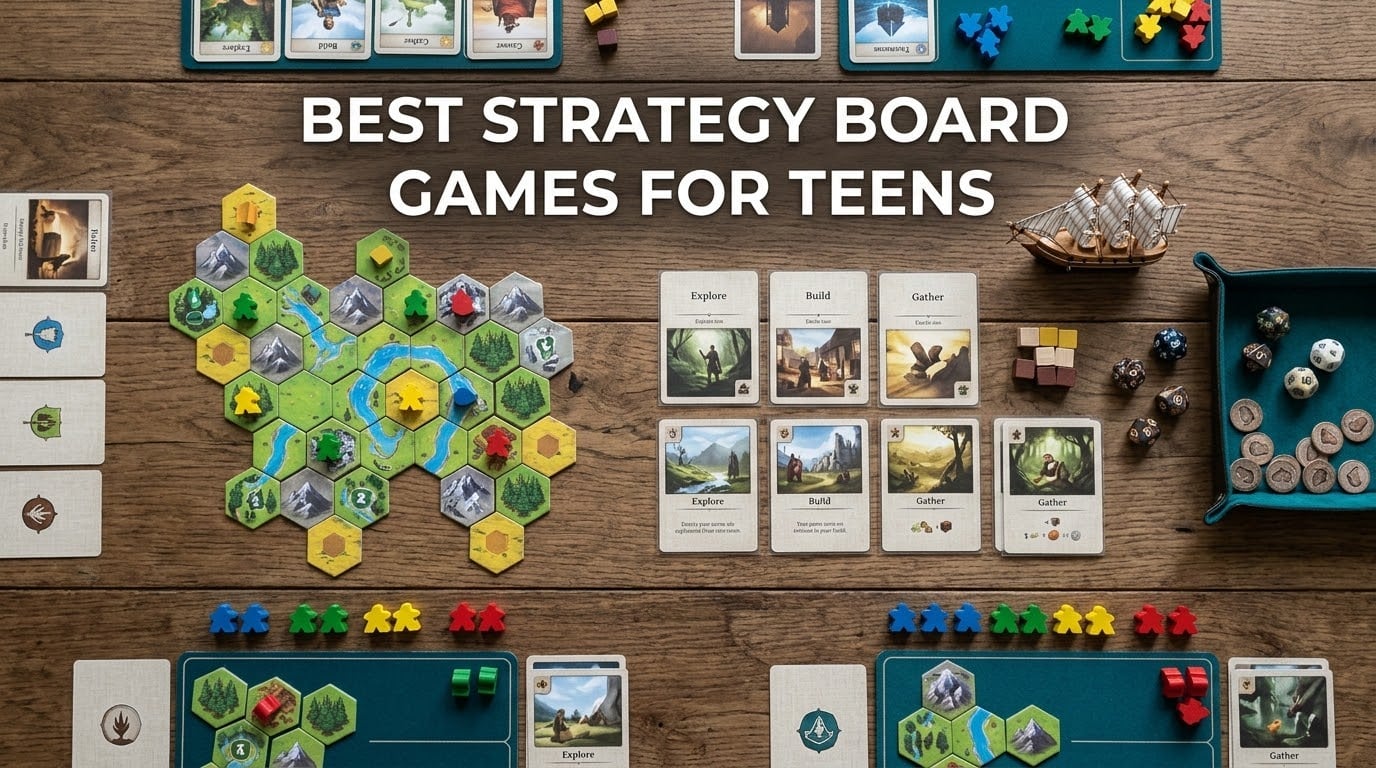
If you are searching for the best strategy board games for teens, the three picks I keep handing to friends and relatives are Pandemic, Splendor and Azul. All three teach a real decision-making skill inside 30 to 60 minutes, and none of them needs a rulebook read aloud twice.
I have played dozens of euro games with groups of teenagers and adults mixed together, and I have watched plenty of gifted strategy games die on the table within ten minutes. The reason is almost never the game itself. It is downtime, a rulebook nobody wants to read, or an elimination mechanic that turns a 15-year-old into a spectator by minute twenty.
Every pick below was judged on the same three things: strategy depth that survives repeat plays, age fit for a 13 to 18 year old, and teachability, meaning a teenager can explain the game to a friend without an adult narrating. I have also stated player count, play time, and an honest downside for each one, updated for October 2026.
If a game is not here, it likely failed on one of those three. A large part of the selection also reflects what comes up repeatedly in hobby forum threads: word-deduction and bluffing games hold adolescent groups, cooperative adventure games work for mixed ages, and gateway games are the single most requested category for a reason.
Our Top 3 Strategy Board Games for Teens in 2026

Pandemic
- Cooperative team strategy
- Specialist roles with unique abilities
- 2-4 players
- 45-60 minutes
- Ages 8+

Splendor
- Engine-building gem trading
- Collect tokens and attract nobles
- 2-4 players
- 30 minutes
- Ages 10+
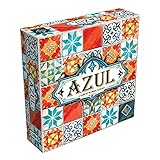
Azul
- Spiel des Jahres 2018 winner
- Mosaic tile drafting and placement
- 2-4 players
- 30-45 minutes
- Ages 8+
Pandemic takes the top slot because it is the rare game that makes a group of strangers cooperate within one rule explanation. Splendor earns the highest rating in the group at 4.9 and finishes in half an hour. Azul wins on component quality and on being the least embarrassing gateway game for a table where one person already knows the hobby.
Comparing All 12 Strategy Games for Teens Side by Side
| Product | Details | |
|---|---|---|
| Pandemic |
|
Check Latest Price |
| Azul |
|
Check Latest Price |
| Splendor |
|
Check Latest Price |
 Wingspan Wingspan |
|
Check Latest Price |
 Carcassonne Carcassonne |
|
Check Latest Price |
 7 Wonders Duel 7 Wonders Duel |
|
Check Latest Price |
 Risk Risk |
|
Check Latest Price |
 Terraforming Mars Terraforming Mars |
|
Check Latest Price |
 Spirit Island Spirit Island |
|
Check Latest Price |
 Catan 6th Edition Catan 6th Edition |
|
Check Latest Price |
 Plunder Plunder |
|
Check Latest Price |
 Spy Alley Spy Alley |
|
Check Latest Price |
1. Pandemic – The Cooperative Classic That Teaches Team Play and Blame-Free Winning
Pandemic Cooperative Strategy Board Game, 2-4 Players, 45-60 Min
Cooperative for 2-4
Ages 8+
45-60 min
1.04 kg
Board 12 x 8.6 in
+ Pros
- Winning as a team removes the blame dynamic
- Four roles with genuinely different powers
- Teaches in about five minutes
- Base game feeds into Pandemic Legacy
- Cons
- Experienced players can dominate decisions
- Setup takes some time
- Repeats after many plays without expansions
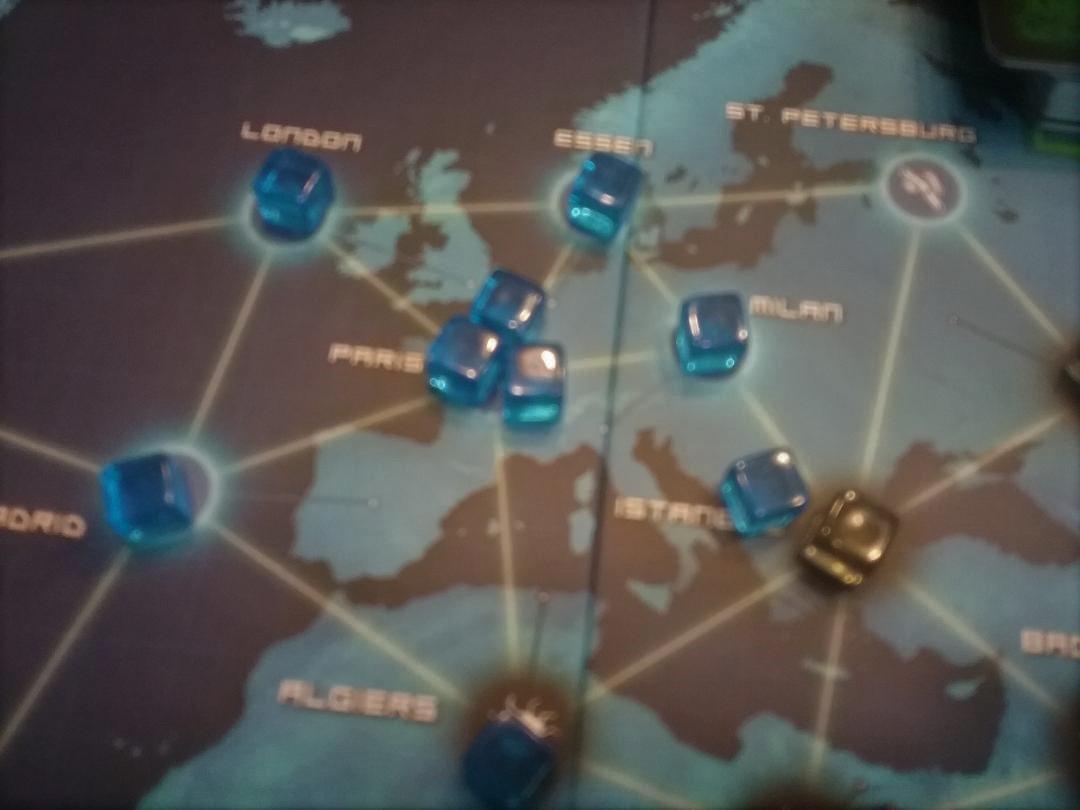
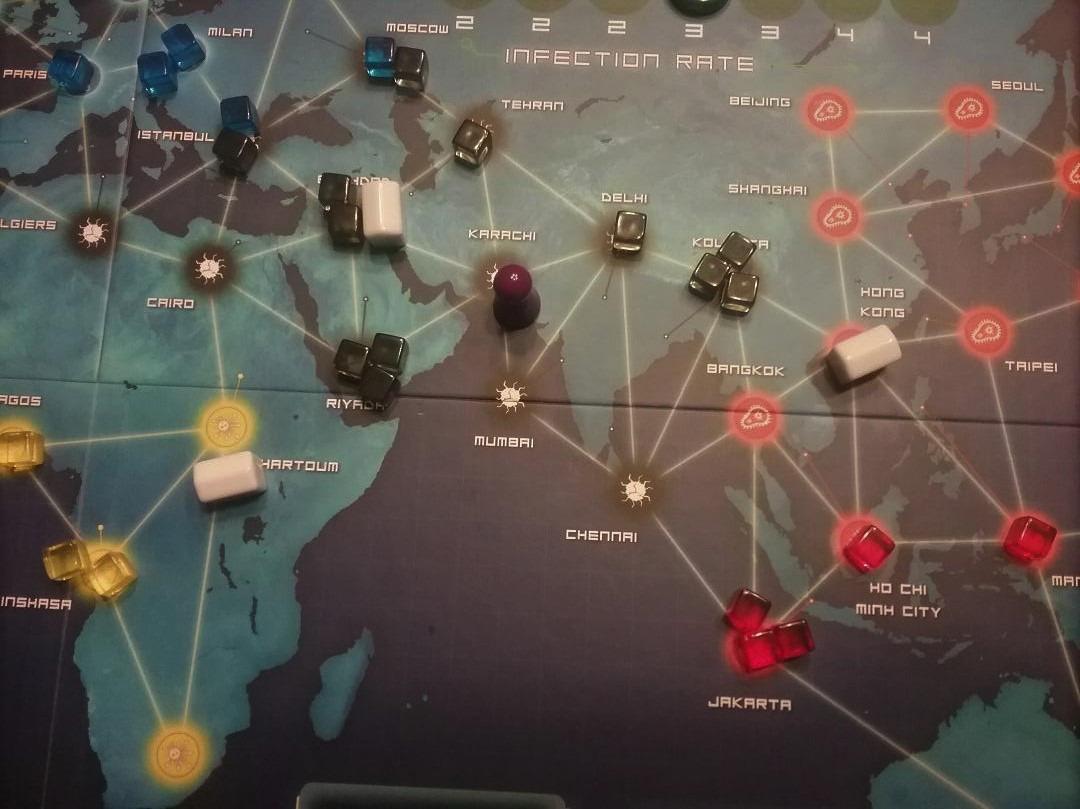
Every week for the last few months I have pulled Pandemic out for mixed groups, and it is the one that survives a 15-year-old plus two parents plus a friend who has never played a strategy game. You are disease researchers racing four outbreaks across the world, and the whole group wins or loses together.
What makes it work for teens is that nobody can be blamed for the outcome. A teenager who makes a bad call is not the reason the group lost, because the failure belongs to everyone equally. That single design choice removes the most common reason strategy games collapse at an adolescent table, which is social pressure to play well.
Four roles that change how the table thinks
Each player takes a specialist: the Medic, the Scientist, the Researcher and the Operations Expert. The Medic cures everyone in the city you are in, and the Scientist treats any disease anywhere.
The Researcher puts a research station under your control, and the Operations Expert moves the disease instead of treating it. Those four powers are simple, but they create constant negotiation about who acts first.
The Scientist is the card everyone argues about in the first game. Once the group sees that the role is too strong to give to a new player, the strategic texture of the whole session changes, because the other three become support roles instead of rivals.
Why a 45 minute commitment is a strength here
The listed play time is 45 to 60 minutes, which is longer than Splendor and Azul but well inside a school-night window if you start at 6pm. It is also short enough that finishing matters. An abandoned cooperative game is more demoralizing than an abandoned competitive one, because the group was building something together.
Setup is the one part I flag. It involves building a deck of roughly 60 disease and player cards, and the first-timer who reads the instructions badly can cost the table ten minutes. Once the deck exists, reshuffling takes seconds.
Player count changes the tension curve
At two players the map feels manageable and the game is a gentle introduction. At four players the outbreaks arrive faster and the table gets loud, which is exactly what a group of teenagers usually wants.
The box lists 2 to 4 players, ages 8 and up, with a board size of 12 by 8.6 inches and a weight of about 1.04 kg.
The honest downside: the alpha player problem
Reviewers report the same limitation consistently. A confident player will start optimising for the group instead of asking, and the quieter teens stop contributing by the third outbreak. If you can see that happening, call the next location verbally before anyone moves, which slows the game just enough to bring everyone back in.
It is also a game that can feel repetitive after many plays without expansions. Reviewers consistently recommend the Pandemic Legacy series as the next step, because the campaign permanently alters the deck and the board between sessions.
2. Azul – The Gateway Game With the Most Tactile Components
Azul Mosaic Tile-Placement Strategy Board Game, 2-4 Players, 30-45 Min
Spiel des Jahres 2018
Tile drafting
2-4 players, 30-45 min
100 resin tiles
Board 10.25 in square
+ Pros
- Winner of the Spiel des Jahres 2018
- 100 solid resin tiles that feel expensive
- Scales cleanly from 2 to 4 players
- Teaches in one round
- Cons
- Abstract theme leaves some players cold
- Scoring puzzle confuses new players
- Can trigger analysis paralysis
- Low player interaction
Azul is the game I hand to a teenager who says they do not like board games. Nobody drafts colorful tiles onto their own board. It looks like a craft project, the components are heavy, and the first round takes ninety seconds to understand.
It won the Spiel des Jahres in 2018, which is the most reliable quality signal in this category, and the 100 resin tiles are the reason the box feels expensive in the hand. I have played it with 12-year-olds and 17-year-olds in the same session and the age gap never mattered.
Drafting is the whole game, and that is a feature
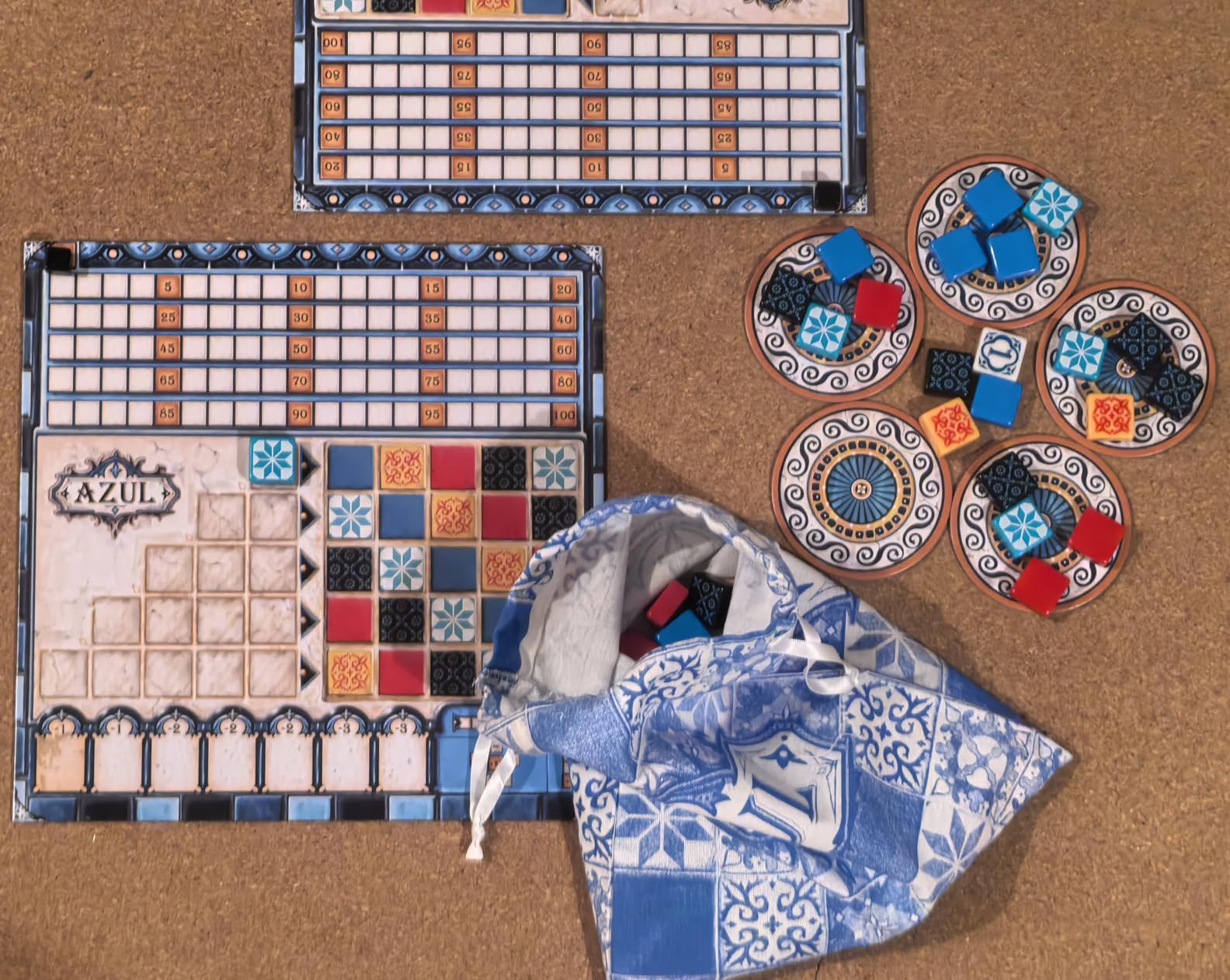
Each round, tiles come off a common wall and you take three. One goes on your board, one goes into a personal reserve line, and one is discarded face down. Everything downstream is planning about which colors you are short of and which you are drowning in.
Because every player draws from the same wall, the game has more shared tension than a typical gateway euro without anyone needing to attack anyone. That balance is why it works for a table where two people are competitive and two just want to be included.
Player boards, factory displays and box size
The box measures 10.25 by 10.25 by 2.75 inches and includes 4 player boards and 9 factory displays. The factory displays are physically good, tall wooden stands that keep the wall visible, and they are part of why the game reads clearly from across a table.
At 2 to 4 players and 30 to 45 minutes, Azul is one of the most flexible titles here. It is a strong pick for a teen and one friend who want a real game without committing to a two-hour evening.
The scoring puzzle is the one teaching moment
Scoring counts complete rows and columns of the same color plus a bonus for the color you have the most of. New players always take that bonus, and always find out twenty seconds later that it was a mistake. Tabletop groups tend to point this out once per game, and it becomes a running joke by the third play.
The honest downside: no direct interaction
Nothing happens to you in Azul. Nobody blocks your row or takes your tile, so a group that wants direct conflict and negotiation will find it flat after a few rounds. Reviewers also note the theme is genuinely abstract, which matters for a teen who plays games primarily for story.
A second caution is analysis paralysis. Experienced players will stall for minutes calculating floor lines, so set a soft time limit per turn if the group starts drifting.
3. Splendor – The 30 Minute Engine Builder With the Highest Customer Rating Here
Asmodee Splendor Gem Trading Strategy Board Game, 2-4 Players
Engine building
2-4 players, 30 min
Ages 10+
40 gem tokens, 90 cards
Box 10.8 x 8.5 in
+ Pros
- Highest customer rating in the group
- Exactly 30 minutes per game
- Three-action turns create real tension
- Heavy poker-chip style tokens feel premium
- Cons
- Very light on theme
- Little direct player interaction
- Can feel repetitive after many plays
- Noble tiles can swing the balance
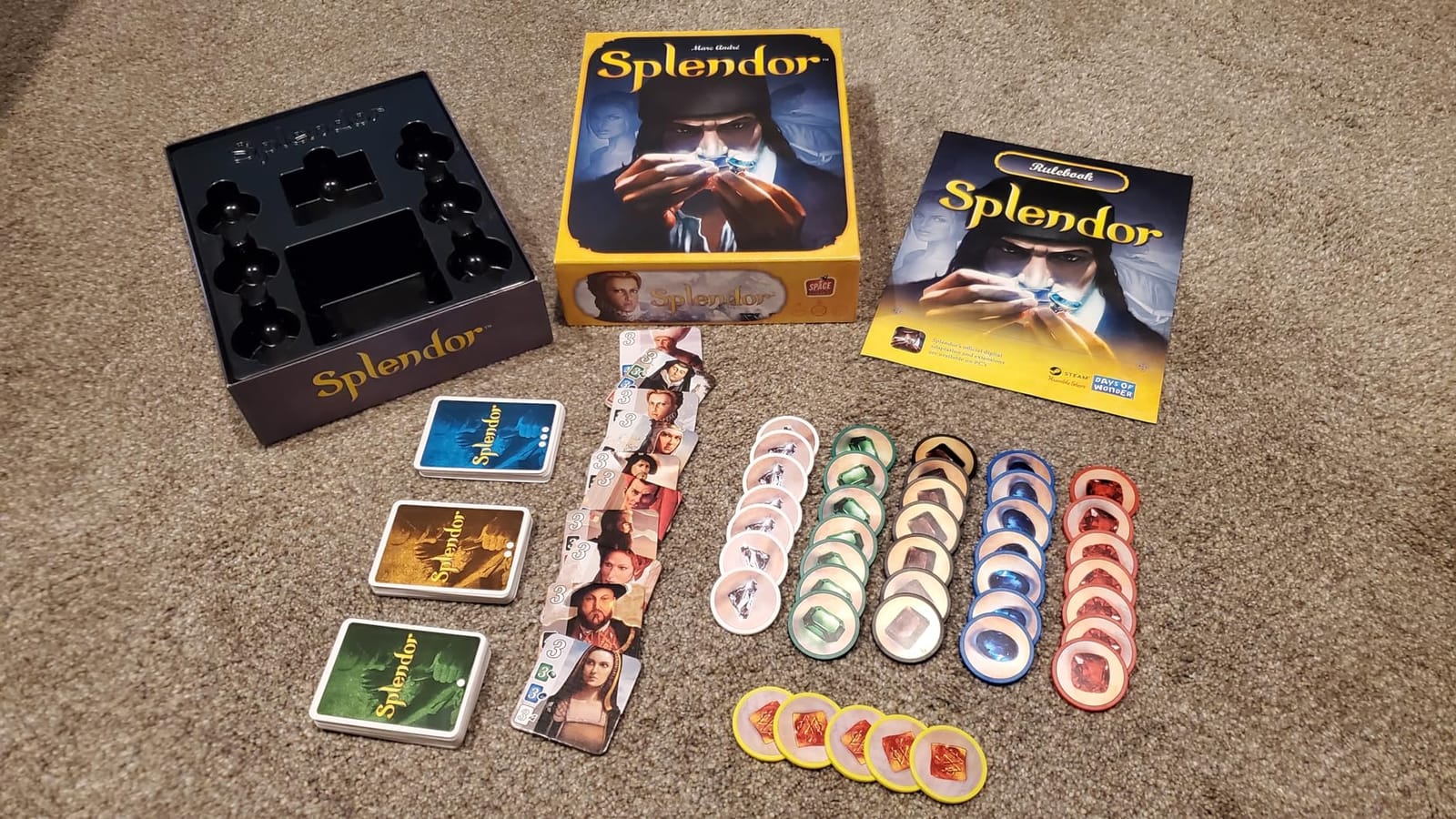
Splendor carries the highest customer rating in this roundup at 4.9 across more than 15,000 reviews, and it is the one I recommend when a teen needs a full game inside a lunch break. Thirty minutes, three actions per turn, and a decision that matters every single round.
You are a Renaissance merchant collecting gem tokens and buying development cards that generate permanent income. The goal is 15 prestige points, which come from attracting nobles who want specific sets of cards in your permanent collection.
The learning curve is genuinely about two minutes. Anyone can play, and the third game is where people start thinking about which card to take early so it is available for a noble later.
Three actions per turn, and none of them are free
Each turn you take up to three of: collect a gem token from the board, sell a gem for a gold, or buy a development card. You can also reserve a card, which hides it and costs you your next turn.
That reservation rule is the sharpest edge in the game, because it blocks a card your opponent wanted and takes a turn of income to do it.
Experts do not collect more than they need. They take one gem per turn, sell the rest, and buy cards that pay for themselves. A teenager who discovers that pattern on their own usually starts converting friends to the hobby.
Components and physical play feel expensive
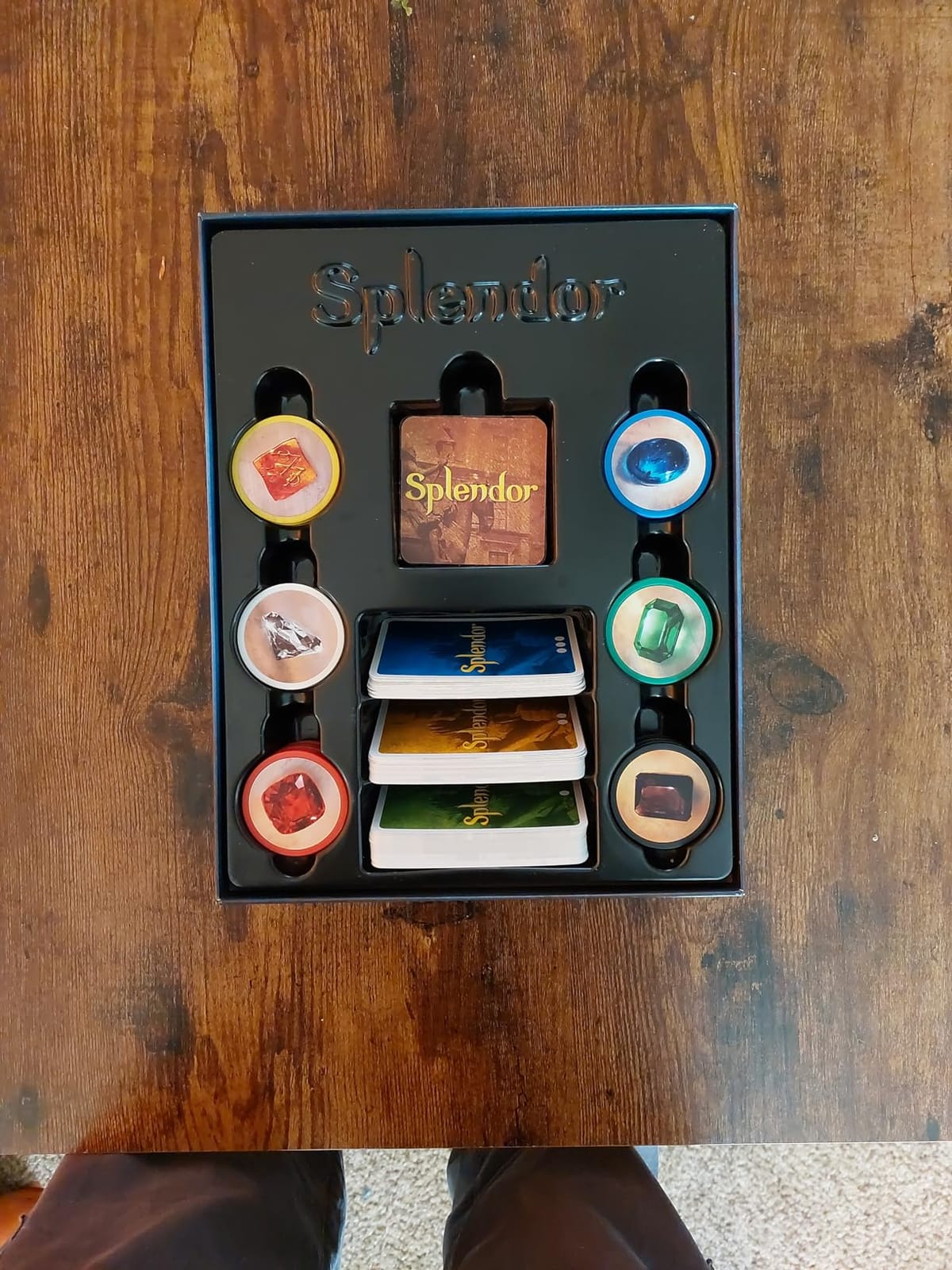
The box includes 40 plastic gem tokens, 90 development cards and 10 noble tiles, measuring 10.8 by 8.5 by 2.5 inches. The tokens are thick and poker-chip weighted, and that tactile quality matters more than it sounds like it should with a teenage audience that has spent years handling plastic phone cases.
The card backs are plain, but the nobles have a satisfying cardboard stand that everyone recognizes from the first time they see it.
Why this is a two-player and four-player game
At 2 players the card market is tighter and the game gets tactical fast, which is why it appears on most two-player recommendation lists. At 4 players the market slows to a crawl and the game becomes an engine-building simulator, which some teens love and some find passive.
That difference matters at a mixed-age table. Two players get a duel. Four players get a slow build. Three players is the sweet spot and the one I would aim for.
The honest downside: almost no interaction
Nobody attacks you in Splendor. Reviewers describe it as abstract and low on player-to-player conflict, and that is accurate. If a group wants negotiation and bluffing, this is the wrong box even though the rating is excellent.
The other complaint reviewers report is repetition after many plays, and balance swings when the noble tiles come out early. Adding expansions restores the tension, but the base game still plays well on its own for most households.
4. Wingspan – Detailed Components, Real Biology and a Strong Solo Mode
Stonemaier Games: Wingspan by Elizabeth Hargrave
Engine building and set collection
1-5 players
Ages 14+
60-90 minutes
Board 11.5 in square
+ Pros
- Best component quality here
- 170 unique bird cards with thematic abilities
- Kennerspiel des Jahres 2019 winner
- Automa solo mode is genuinely competitive
- Cons
- Upper end on play time at 60-90 minutes
- Heavier than a first strategy game
- Setup is involved
- Large box footprint
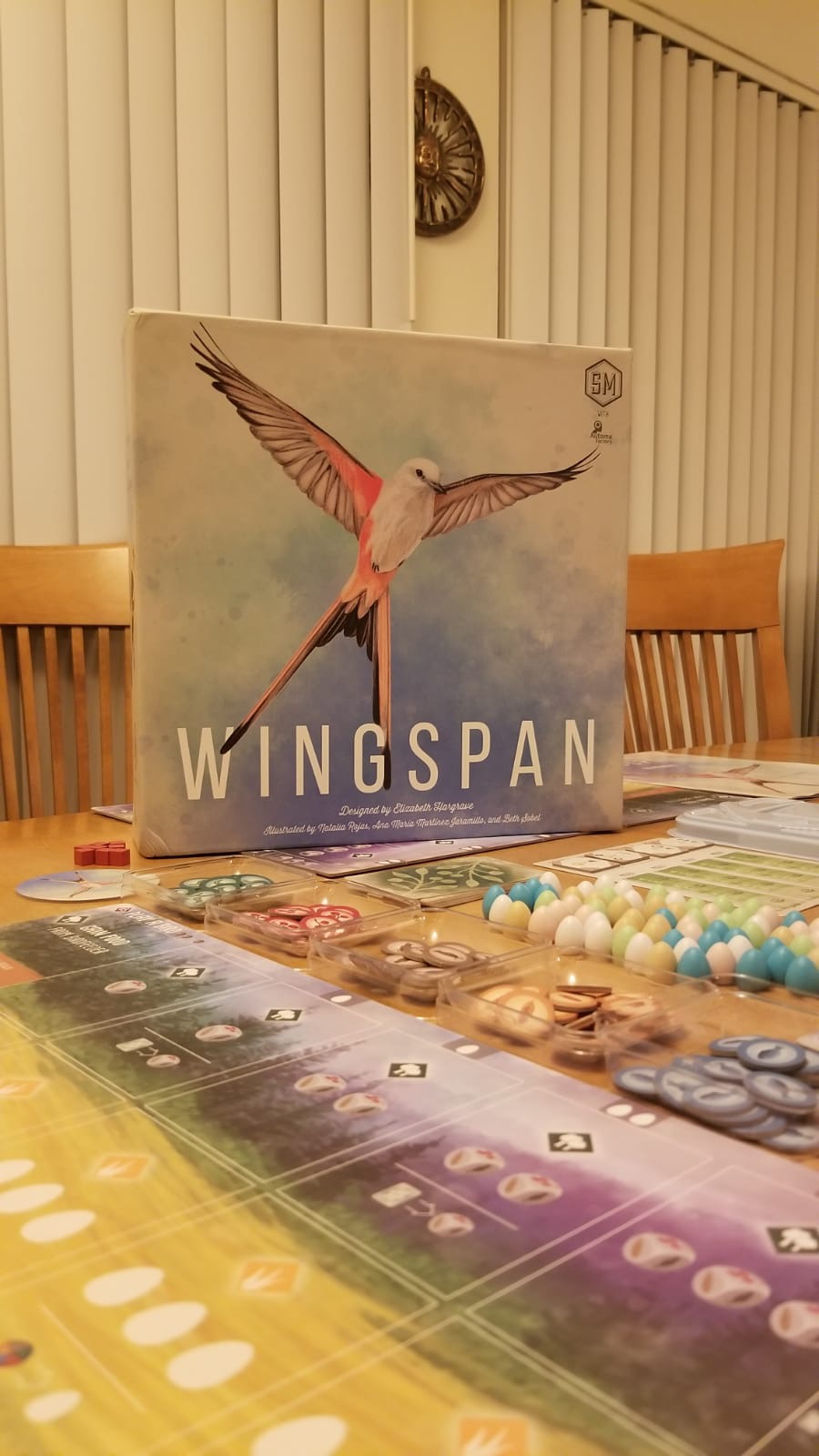
Wingspan is the game I use when a teenager’s main objection to board games is that they look childish. Nothing about the components reads that way. The birdfeeder dice tower, the wooden eggs and the preserve boards are closer to a museum gift shop than a toy aisle.
You attract birds to your wildlife preserves by spending food, and the birds pay you in eggs and cards. It is engine building with a science textbook attached, and the science is real enough that a bird-loving teenager will read the card text unprompted.
170 cards and one of the widest solo modes here
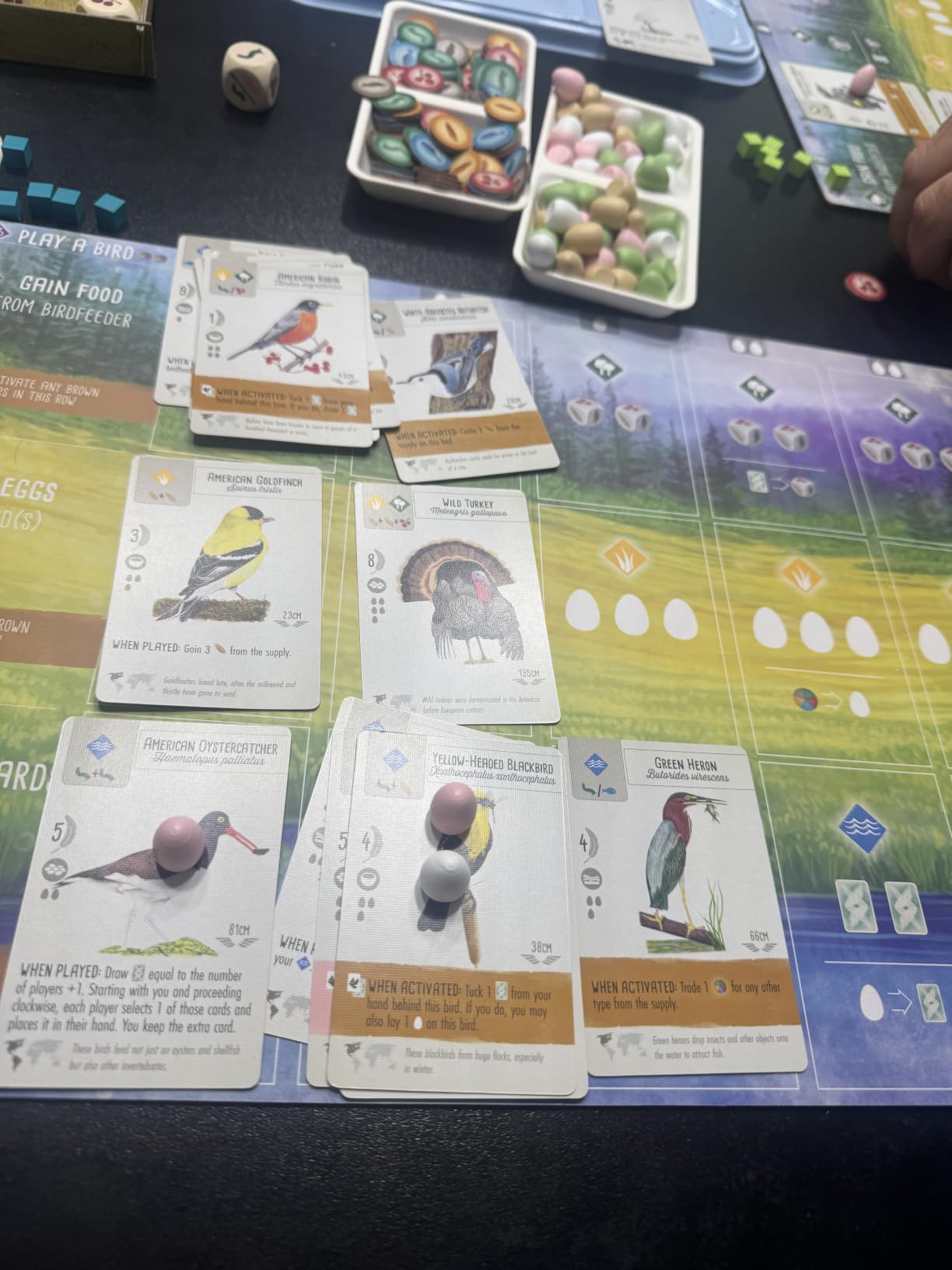
The bird cards each have a power that references real species behaviour, like gaining food when playing a bird that caches its prey. Powers are drawn from a row that is shared by all players, so someone else taking a card can directly limit your best engine.
The solo mode uses an Automa opponent with its own deck. It competes properly, not as a warm-up, which is why Wingspan shows up constantly on lists of best single-player board games for teens and adults sharing a house.
Player count, age fit and the 70 minute reality
The box lists 1 to 5 players, ages 14 and up, and 60 to 90 minutes of play. The manufacturer rating of 14 is honest here, unlike some games that understate the age, and a group of younger teens tends to lose focus around the 45 minute mark.
At 5 players the round length grows and the last round takes far too long. Two to four is the right range, and the box measures 11.5 by 11.5 by 3 inches with a weight of 2.3 kg, so it is not a game you carry to a cafe.
Setup takes longer than you expect
Every player sorts the bird cards by habitat, sets up their personal supply board, and builds the shared round track. Budget ten minutes before anyone takes a turn. On a weeknight with a 6pm start, that pushes a full game past 8pm.
The honest downside: length and weight
At 60 to 90 minutes this sits at the upper end of what a teen will still finish, and the component quality is the most elaborate in this roundup. Reviewers also note it is complex for younger teens even inside the rated age band.
My advice is to save Wingspan for a weekend afternoon or an empty evening rather than a school night. It is a good game to own, but it is not a game to try first.
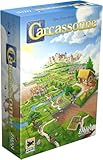
5. Carcassonne – The Gateway Game That Teaches Spatial Thinking Fast
Carcassonne Tile Placement Strategy Board Game, 2-5 Players, 35 Min
Tile laying
2-5 players
35 minutes
Ages 7+
Includes The Abbot and The River
+ Pros
- Teaches in about three minutes
- Two mini-expansions included in the box
- Random tile draw means no two games match
- Works with a wide age spread
- Cons
- Farmer scoring confuses first-time players
- Luck of the tile draw can decide a round
- Components are functional
- not premium
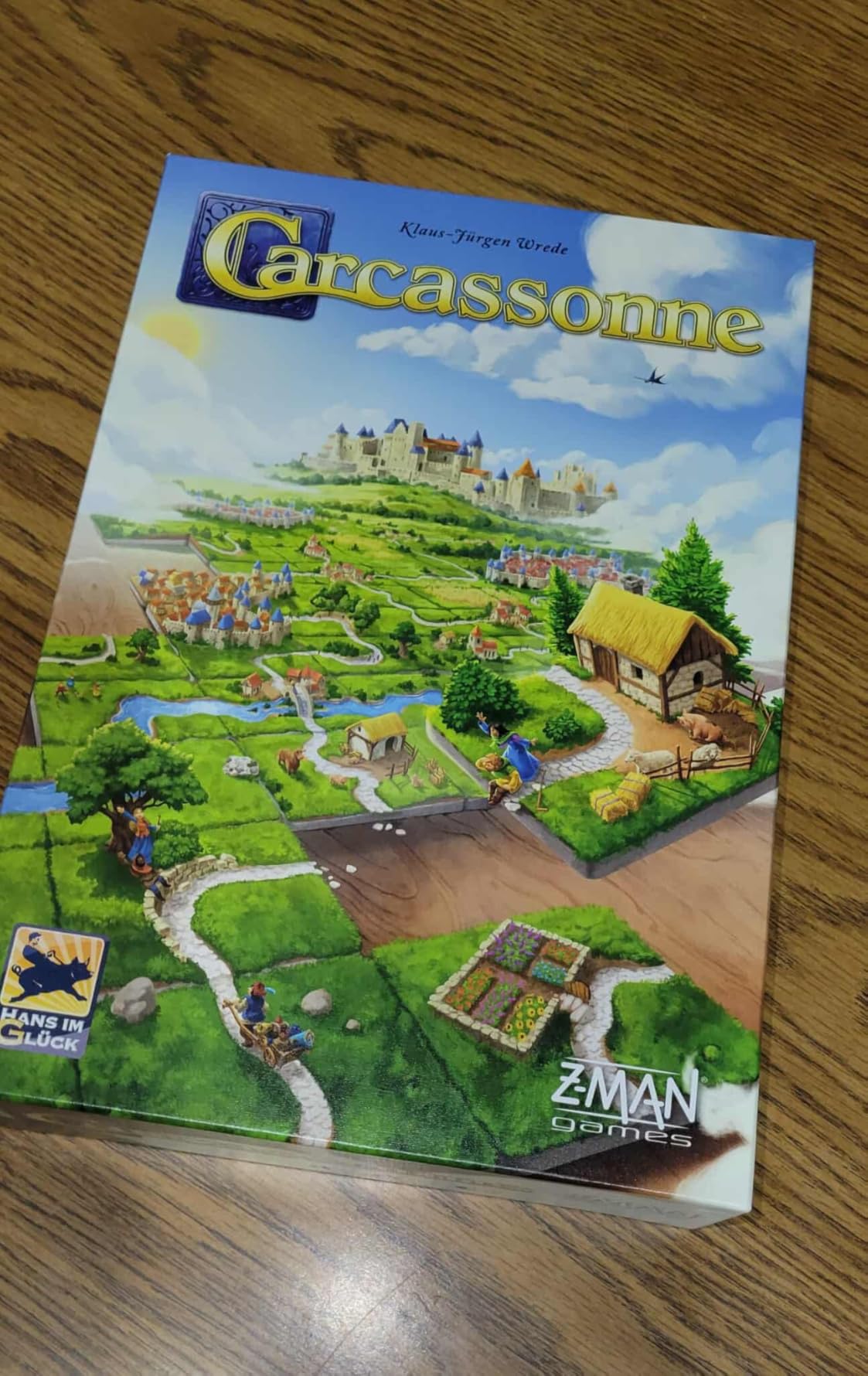
Carcassonne is the oldest recommendation I make to a brand-new board gamer under 14, and it is on the standard strategy baseline in parent communities for a reason. You draw a medieval tile, place it, and claim the features on it with a wooden figure called a meeple.
That is the entire game. A teenager can play competently within three minutes, which removes the rulebook problem entirely, and the strategy lives in where you place your own meeples rather than in a rule set.
This edition includes The Abbot and The River, two mini-expansions that add scoring pressure and a rule about rotating the board. They are not required to play, which is a good design choice for a mixed-experience table.
Tile placement rewards thinking three moves ahead
Because the tile you need might be buried in the bag, every placement is a bet. Holding onto a city tile in reserve to complete a road is a real strategic decision, and it is the kind that teenagers enjoy once they realise the bag is not random noise.
The scoring split between completed features and features with meeples still on them is the core tension. A meeple you place early scores more but blocks your own later placement, which is a genuine trade-off rather than an obvious choice.
Player count and the wide age spread
The box lists 2 to 5 players, ages 7 and up, and 35 minutes. At 2 players the map stays small and the game is pleasantly tense. At 5 it becomes a sprawling construction project that smaller players struggle to follow, and I would cap it at 4 for a teen group.
It is also one of the few games here that works with a grandparent and a 13-year-old in the same session without anyone feeling patronised, which makes it a reliable family game night option.
What the box actually contains
Material is cardboard, the box measures 2.63 by 7.5 by 10.75 inches, and the weight is about 0.74 kg. The components are flat and light, which makes it the easiest game here to carry to a sleepover or a camping trip.
The honest downside: luck and low interaction
Reviewers flag the farmer scoring as the single confusing point for new players, and the tile draw as a genuine source of luck that can undercut good decisions. Interaction is also limited to occasionally blocking a road, so a competitive group will want something else.
That is not a flaw so much as a boundary. Carcassonne is the right first purchase, and a teenager who outgrows it will usually move to Azul or Splendor next.
6. 7 Wonders Duel – The Two-Player Strategy Game Built Specifically for a Teen and One Friend
Asmodee 7 Wonders Duel Board Game BASE GAME – Intense Two-Player Battles in the Ancient World, Strategy Game for Kids and Adults, Ages 10+, 2 Players, 30 Minute Playtime
Two-player civilization building
2 players, 30 minutes
Ages 10+
Three victory paths
Model SEV07
+ Pros
- Purpose-built for two
- not a two-player variant
- Three competing victory paths prevent a single meta
- Exactly 30 minutes per game
- One path can be explained in a sentence
- Cons
- Resource pricing takes a full game to internalise
- Small cards are awkward to shuffle
- Will not seat a third player
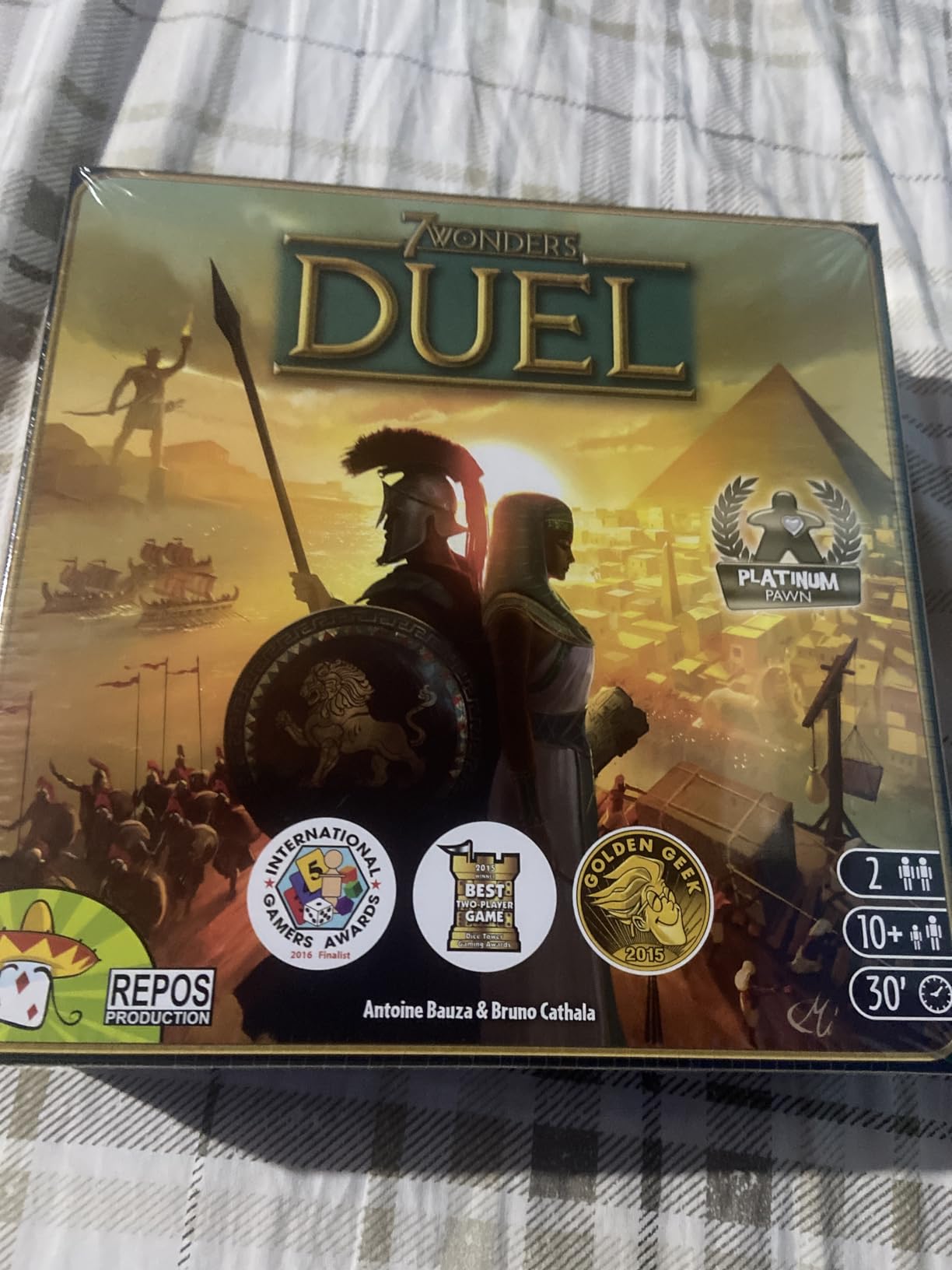
Most two-player recommendations are actually multiplayer games with a two-player rule bolted on. 7 Wonders Duel is not. It was designed for two from the start, and that changes the tension in every round.
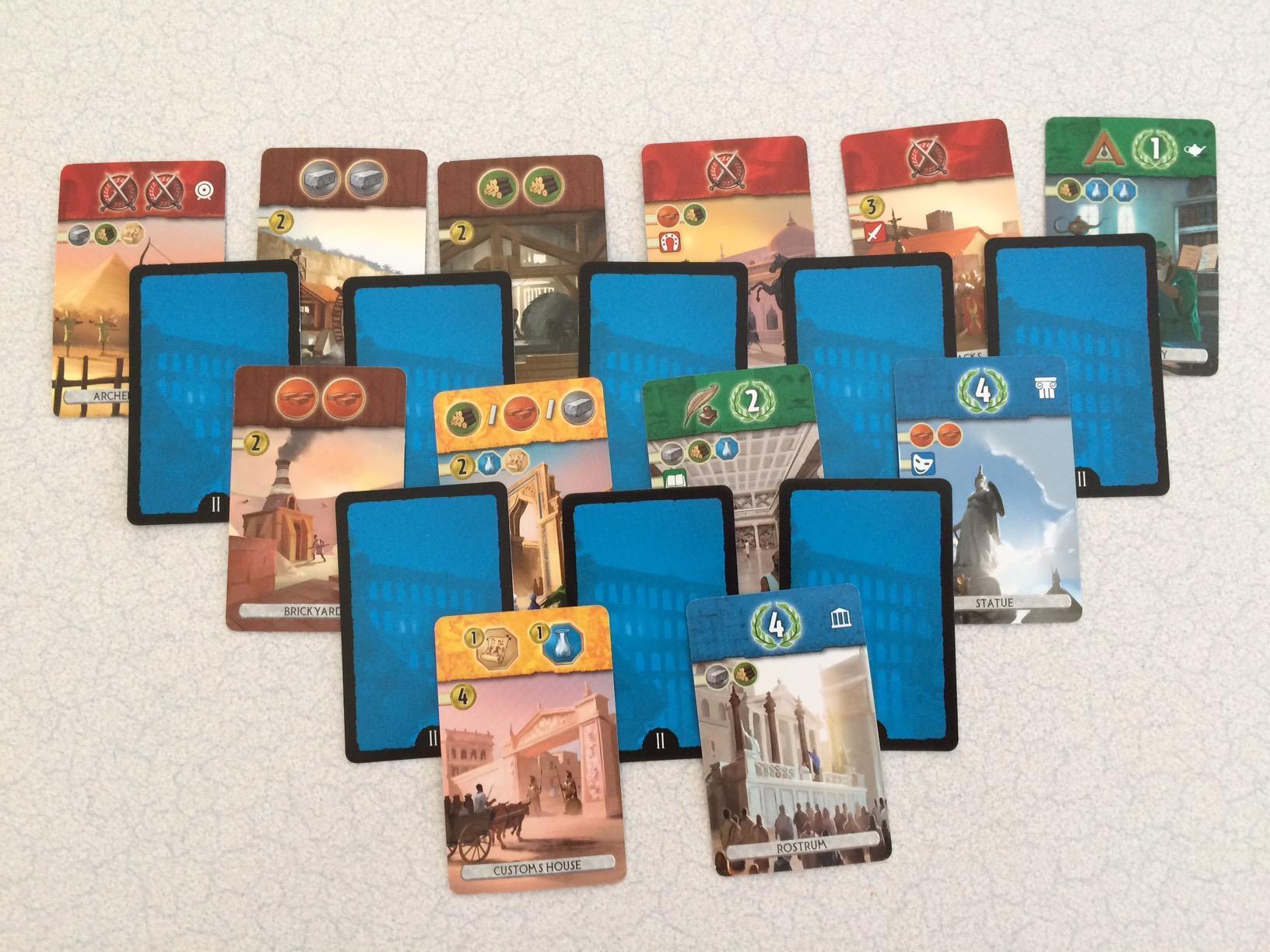
You build a civilization by drafting cards from a pyramid, and three of the eight wonders go to your opponent in this edition. The military path is a direct head-to-head race, the science path is a counting puzzle, and the points path is a collection exercise. Whichever route you push, your opponent can counter it.
At 30 minutes it is one of the fastest games here, which makes it the default recommendation when a teen has exactly one friend available on a school night.
Why the pyramid draft creates real tension
Cards are hidden in a pyramid structure and you can take any card or take the top of a column. Taking a buried card risks revealing the one your opponent wanted next, so every decision is a negotiation you are having with yourself.
Because seven of the eight wonders can be built per game, the science symbols a player takes determine which wonders are even available. Reviewers consistently describe the game as having no dominant strategy, which is why it holds up over dozens of plays.
How the three victory paths change how you play
If you go military, every point on a wonder competes with your opponent’s building progress. If you go science, you are watching symbols and planning a target wonder three turns ahead. If you go points, you are reading the red cards. Each path plays like a different game while using the same components.
This is also why it is a strong teaching game. A teenager can explain one path in a sentence, and the other player immediately has a reason to care about it.
Size, components and the shuffling problem
The box measures 2 by 8 by 8 inches and weighs 0.54 kg, so it is compact and easy to store. The board is small and the cards are small too, and reviewers flag the shuffling complaint often: the cards are cardstock and hard to riffle cleanly.
Budget five minutes for the pyramid setup, then about 25 minutes of play. That math is what makes it fit a school night so reliably.
The honest downside: it seats exactly two
This is not a game you bring to a three-person gathering, and the resource-pricing system takes a full first game before a new player stops overpaying for cards. Experienced players read the pricing as a solved formula, which is a gap beginners feel.
For a teen who mostly plays with one friend, those are acceptable limits. For a group of four, pick a different game from this list.
7. Risk – The Area Control Game That Commits a Whole Evening
Risk Board Game, Strategy Games for 2-5 Players, Strategy Board Games for Teens, Adults, and Family, War Games, Ages 10 and Up
Area control war game
2-5 players
2 hours
Ages 10+
5 armies, plastic miniatures
+ Pros
- Genuinely tense global domination fantasy
- Works for 4 or 5 players where most games stall
- Quality plastic miniatures
- Dragon token adds a real variant
- Cons
- Over two hours per game
- Elimination leaves players watching
- Dice-heavy combat feels random
- Can cause arguments among friends
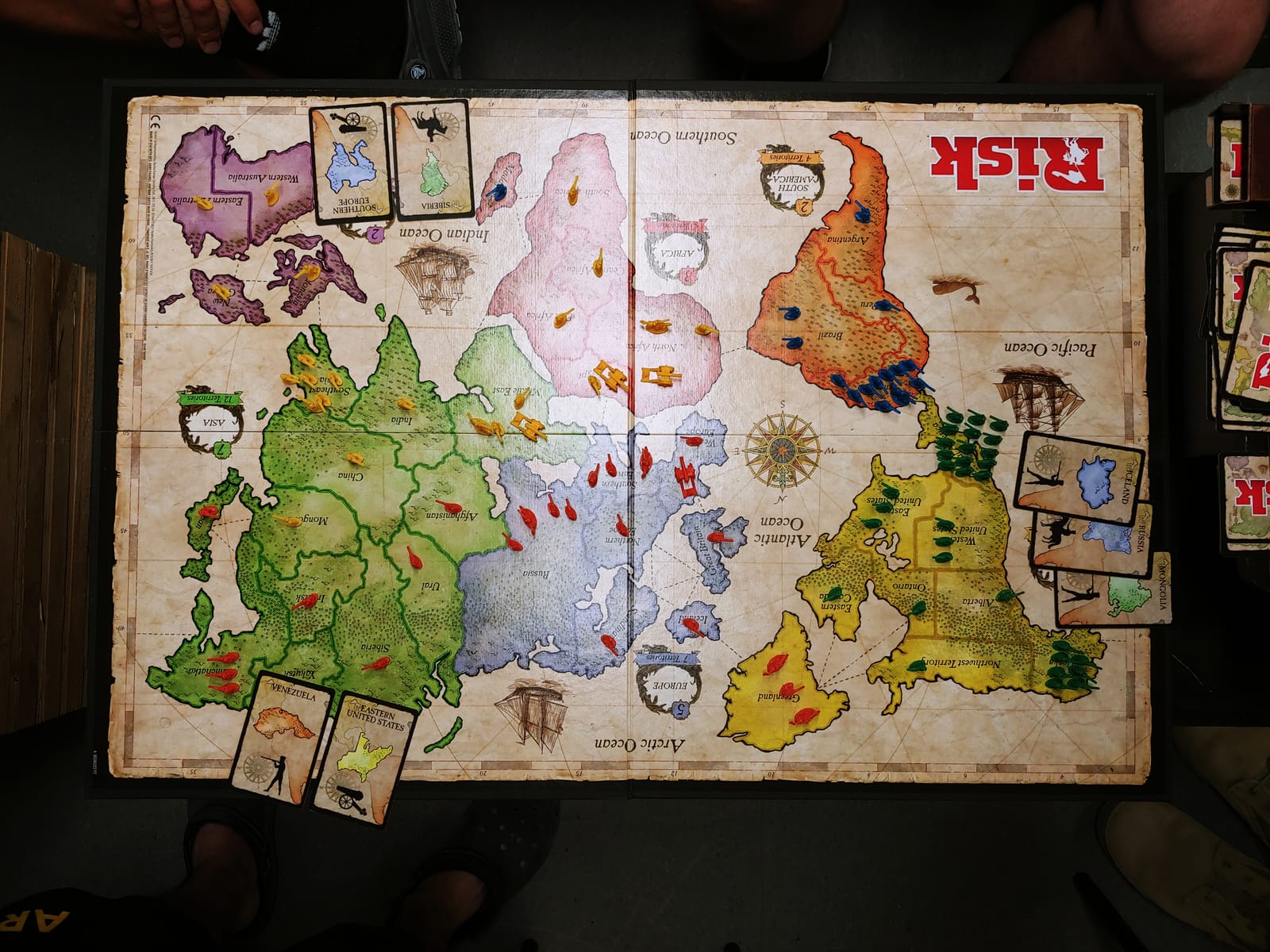
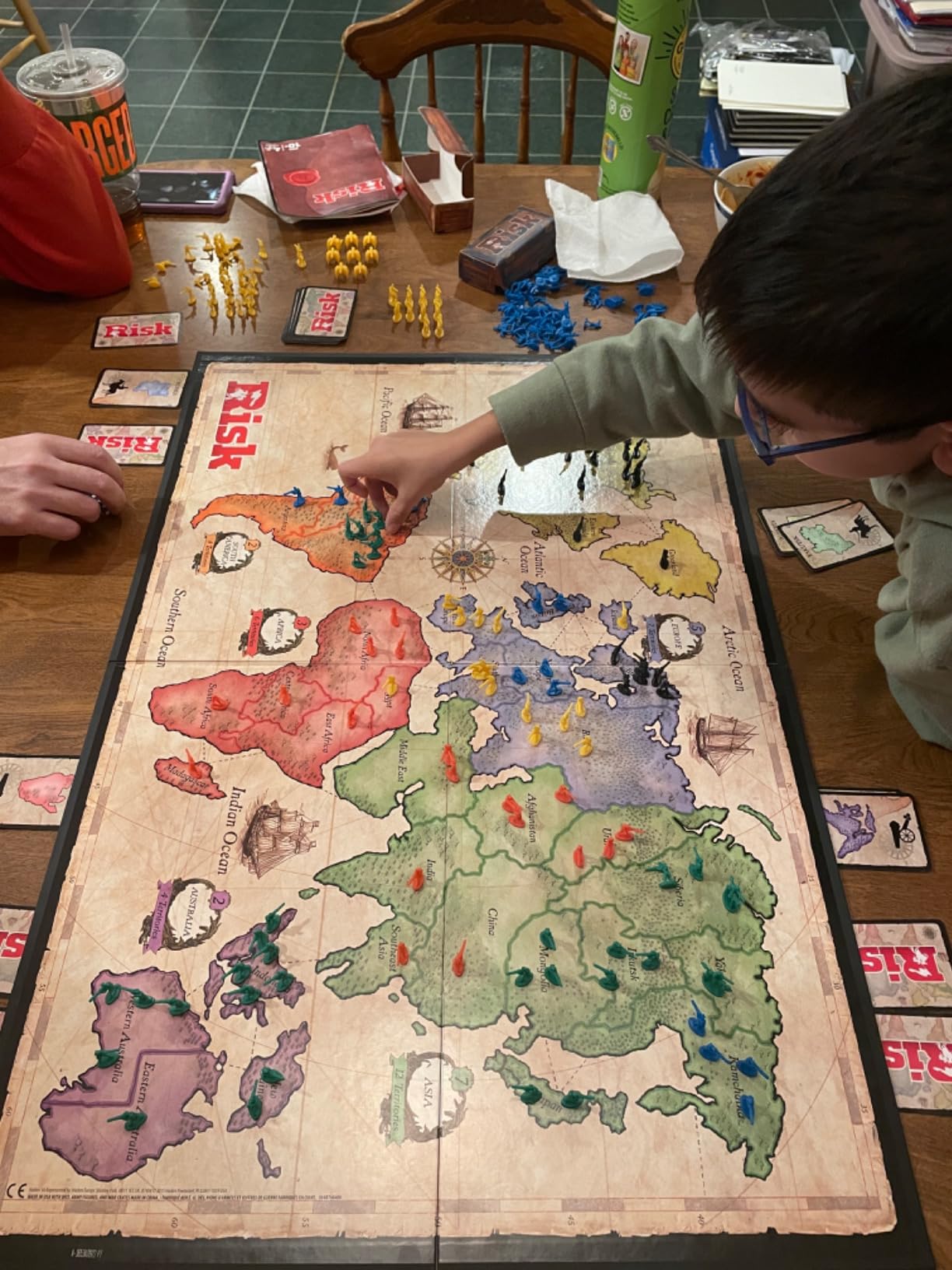
Risk is in this list because it is the game most teenagers have already played and the one they are most surprised to learn has real strategy in it. Conquer the world with dice rolls across a map of territories, using infantry, cavalry and artillery.
I put it near the bottom deliberately. It is a two-hour commitment with elimination and a heavy reliance on dice, which is exactly the combination that kills a group at a school night. But for a weekend with four or five motivated players, nothing else here holds attention the same way.
This edition includes quality plastic miniatures for five armies and a dragon token variant that changes the escalation rules. It also has an Alexa skill integration for players who want the rules read aloud.
Area control and the elimination problem
Attacks are resolved with dice, so the same board position can produce different results twice. Strong players attack with their weakest units purely to dice-roll their way into a favourable matchup, which looks nonsensical to a newer player and is correct play.
The bigger issue is elimination. Once a player is knocked out, they sit out for an hour. Reviewers report this is the most common reason games end early or get abandoned, and it is the mechanic most likely to embarrass you in front of a 13-year-old.
Play time, components and language
The box lists 2 to 5 players, ages 10 and up, and 120 minutes of play. Dimensions are 1.97 by 15.75 by 10.51 inches with a weight of 1 kg, so it is a large-format box that needs real table space.
One purchasing caution reviewers raise: some shipments arrive with French-only components. Check the listing for English language before you commit, since a game with a language mismatch is a wasted gift.
What the miniatures add
Five armies with detailed plastic units make the board readable at a glance, and a teenager who has played the older cardboard version immediately notices the upgrade. The dragon token is a genuine variant rather than a gimmick, and it is worth one game on its own.
The honest downside: it produces arguments
Reviewers are unusually blunt about this one. Risk can cause arguments and backstabbing among friends, and the dice-heavy combat makes a losing player feel like they were cheated even when the math was right.
If the group is a group of friends who will remember the outcome, choose something else. If the group is competitive and wants a campaign-style grudge match, this is the right box.
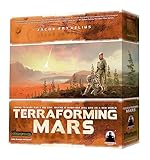
8. Terraforming Mars – The Engine Builder to Buy Once Someone Wants a Hobby
Terraforming Mars by Stronghold Games, Strategy Board Game
Engine building
1-5 players
Ages 14+
120 minutes
6 resources, 3 global parameters
+ Pros
- Deep engine building with long-term replay value
- Scientific theme backed by real concepts
- Solo mode works properly with 14 generations
- Many corporations with distinct abilities
- Cons
- Steep learning curve on the first play
- Player boards are thin cardboard
- Multiplayer games run 3 to 5 hours
Terraforming Mars is where a strategy hobby actually begins. The manufacturer rates it 14 and up, the rules are heavier than anything else here, and it is the one I recommend to a 17-year-old who has already played Splendor three times and called it easy.
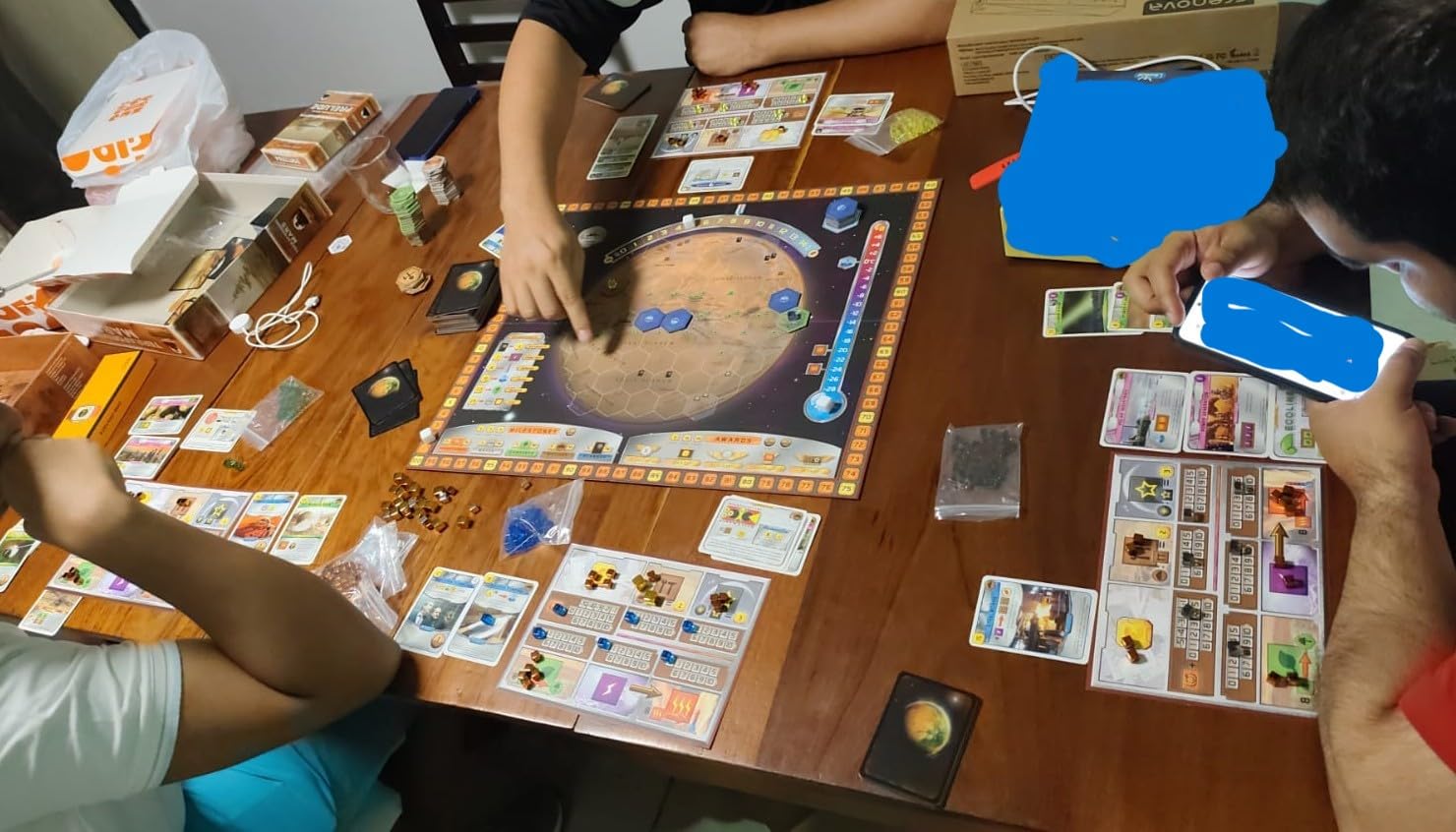
You run a corporation competing to raise three global parameters: temperature, oxygen and ocean coverage. Six resource types, dozens of cards, and a scoring system that rewards long planning more than any other game here.
Six resources and the corporation choice
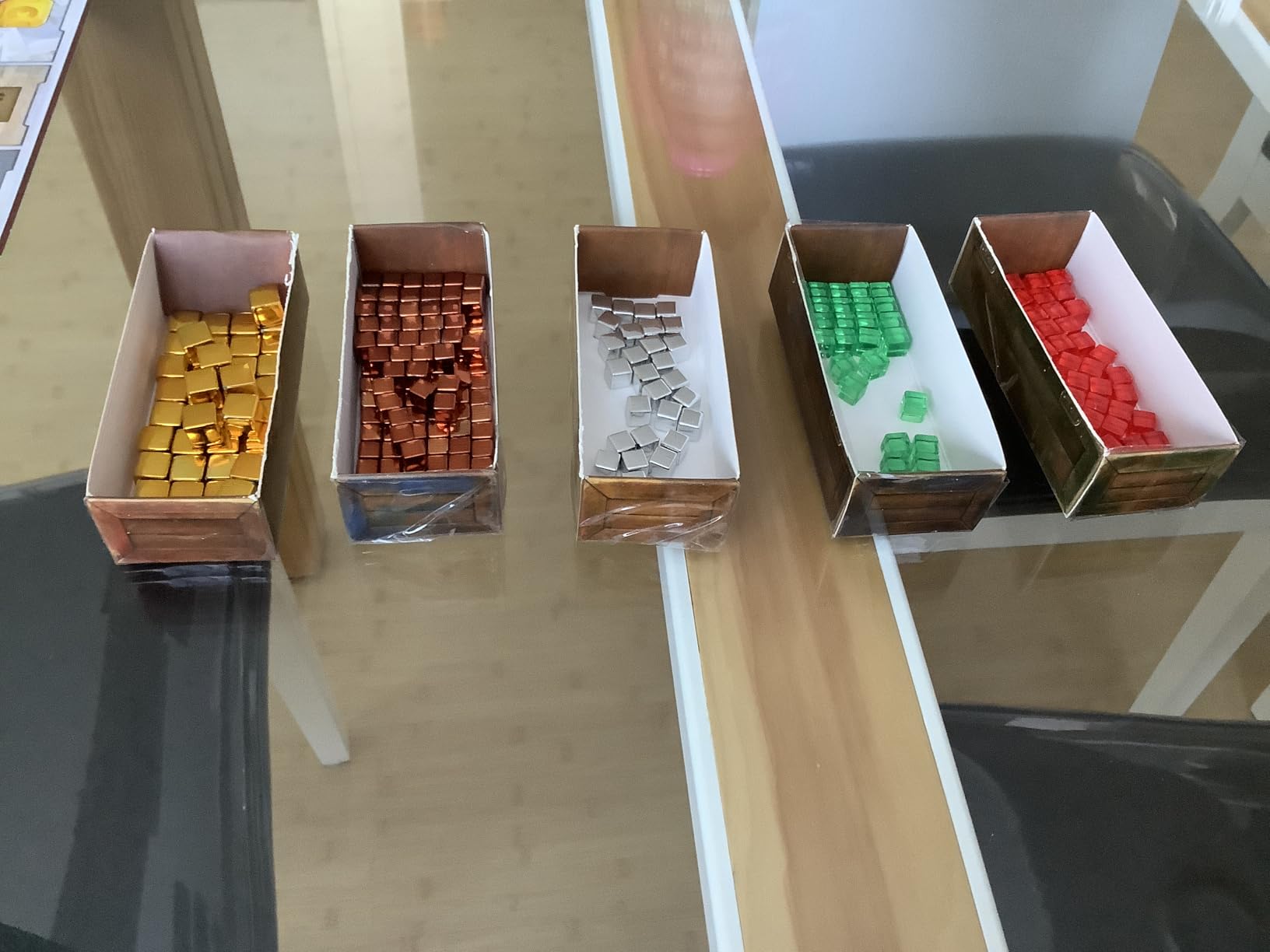
MegaCredits, steel, titanium, plants, energy and heat. Each corporation starts with unique abilities that change how you value those resources, so two players can look at the same card and want opposite things. That is the real depth of the game.
Because the theme is scientific rather than abstract, a teenager who is into space or engineering gets a thematic hook that holds attention through a long game. The concepts are real, which makes the victory condition feel earned.
Solo mode and the multiplayer time problem
The solo mode asks you to reach a global terraforming target within 14 generations, and it works without an opponent. It is a fast solo option for an adult and a teen sharing a house, because the two of you can compare final scores without sitting through a long multiplayer game.
Multiplayer is the problem. The box lists 120 minutes, and reviewers consistently report 3 to 5 hours in practice once people start overthinking. This is a weekend game for experienced players, not a school-night game.
Component quality is the real complaint
Reviewers report thin cardboard player boards where the resource cubes slide off, plus card printing and token issues. Many owners buy third-party player boards to fix it, which is a reasonable first upgrade.
The box measures 3 by 11.7 by 11.6 inches and weighs 1.6 kg, and multiple expansions are available for anyone who finishes the base game. Plan for a long-term project, not a one-night purchase.
The honest downside: the first game is rough
Reviewers describe a steep learning curve that can stretch a first game past two hours, and analysis paralysis is the symptom that shows up most. Play a short solo game first, or accept that the first session is a tutorial with a scoring sheet.
This is the pick on the list with the highest chance of a teen rejecting it, and the pick with the highest payoff if they do not. Buy it second, not first.
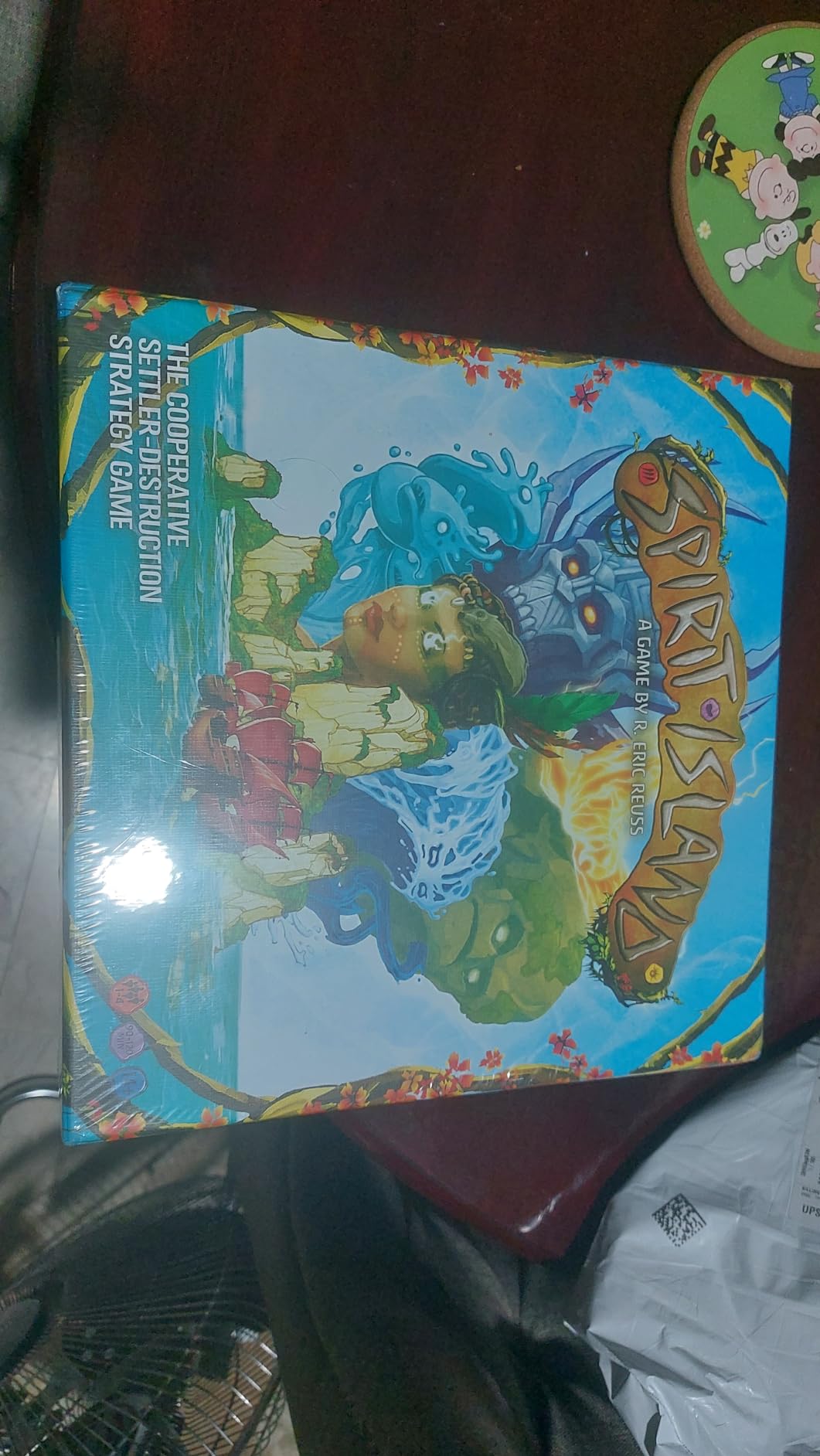
9. Spirit Island – The Hardest Cooperative Game Here and the Most Rewarding One to Finish
Greater Than Games Spirit Island – Cooperative Strategy Board Game
Asymmetric cooperative
1-4 players
Ages 14+
90-120 minutes
8 unique spirits
+ Pros
- Anti-colonial theme that is genuinely distinctive
- Eight spirits with very different play styles
- Solo play is excellent
- Adversaries scale the difficulty
- Cons
- Three hours to learn
- Complex setup and bookkeeping
- Not for casual players
Spirit Island is the hardest game in this roundup, and I include it because a 17 or 18 year old who wants a real challenge deserves an honest option. You play as a spirit defending an island from colonizing invaders, and the theme does something almost no other game in the category does.
It is also the game in this list most likely to end a friendship if you pick it wrong. Three hours to learn is not an exaggeration of the marketing copy; reviewers put the first full game at three hours or more once you include teaching.
My honest recommendation is to learn it with one other person first, then play it with a group. That is how I learned it, and it is why the game works at my table.

Eight spirits, eight different games
Each spirit has a unique power that changes your whole approach. Some spirits generate resources, some move freely across the board, some punish invaders for attacking them. Reviewers describe the spread between spirits as the widest in modern board games.
That asymmetry is the appeal for a teenager who has already heard the standard euro patterns. There is no single correct opening because the spirit you picked defines what a good opening even means.
Simultaneous play and the fear track
All players act at once each round, which is unusual in a cooperative game and reduces the downtime that normally makes long cooperative sessions drag. Fear accumulates on a shared track and triggers devastating effects when it fills, giving the group a genuine losing condition to argue about.
Invader actions are telegraphed, so the tactical puzzle is solvable rather than random. That is what makes the game feel fair even when you lose.
Difficulty scaling and solo play
There are four difficulty levels plus adversaries and scenarios for scaling the challenge. The box lists 1 to 4 players, ages 14 and up, and 90 to 120 minutes, with dimensions of 11.6 by 2.95 by 11.6 inches.
Reviewers frequently single out the solo mode as among the best cooperative solo experiences available. If a teenager plays alone regularly, that is a serious reason to consider this over the lighter cooperative options.
The honest downside: it is not for casual players
Reviewers are consistent about three complaints: a very steep learning curve, complex setup and bookkeeping, and long playtimes with new players. Alpha player issues appear here too, and the fear track means a strong player can carry the group without anyone else contributing.
If anyone at the table does not want to study a rulebook, start with Pandemic instead and come back to this one in a year.
10. Catan 6th Edition – The Famous One, Still Worth a Place on the Table
CATAN Board Game (6th Edition) Trade, Build & Settle in the Classic Strategy Game for Family, Kids & Adults, Ages 10+, 3-4 Players, 60-90 Min Playtime
Trade build settle
3-4 players
Ages 10+
60-90 minutes
Modular hex board
+ Pros
- Timeless balance of luck and strategy
- Modular board means every setup differs
- Trading creates genuine player interaction
- 6th edition components are an upgrade
- Cons
- 3-4 players only
- Trading stalls with uncooperative players
- Dice drive resource generation
- Longer with new players
- Messy box insert
Almost every teenager has tried Catan, usually badly, usually with someone who knew the rules. The 6th Edition is worth a second look because the components are genuinely better and the game is still the most socially open strategy game in this list.
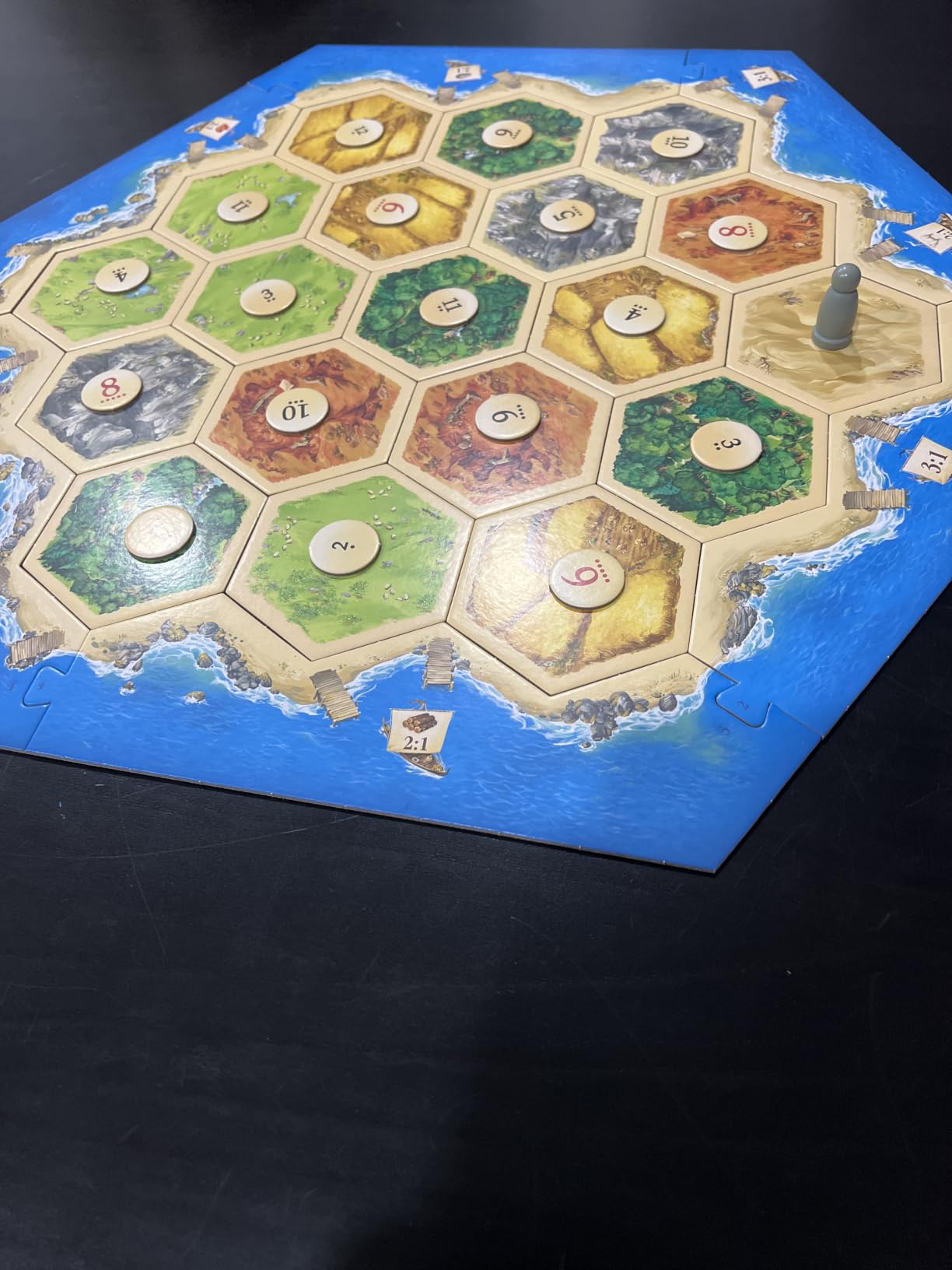
You trade five resources to build settlements and cities, and the first player to ten victory points controls the island. The modular hex board means no two games have the same resource geometry, which is a real improvement over older editions.
It is also the game where the conversation between players is the main event. Trading is how you play, and a confident talker will beat a strong player.
Why the robber exists
The robber lets you block a competitor from a productive hex for a turn. It is a simple interaction valve in a game where players otherwise never touch each other, and it creates the table arguments that make Catan memorable.
It is also the mechanic most likely to annoy a teenager who prefers clean strategy. If that is your group, the tile games earlier in this list are a better fit.
Player count is the hard limitation
The box lists 3 to 4 players, ages 10 and up, and 60 to 90 minutes. Two players is not supported without a variant, and that is the single most common reason this game disappoints. Dimensions are 11.7 by 3.7 by 0.1 inches with a weight of 3.5 pounds.
At 3 players it is noticeably better than at 4, because the trading economy stays liquid. If you only have two players, pick 7 Wonders Duel instead.
Luck versus strategy in a 6th edition box
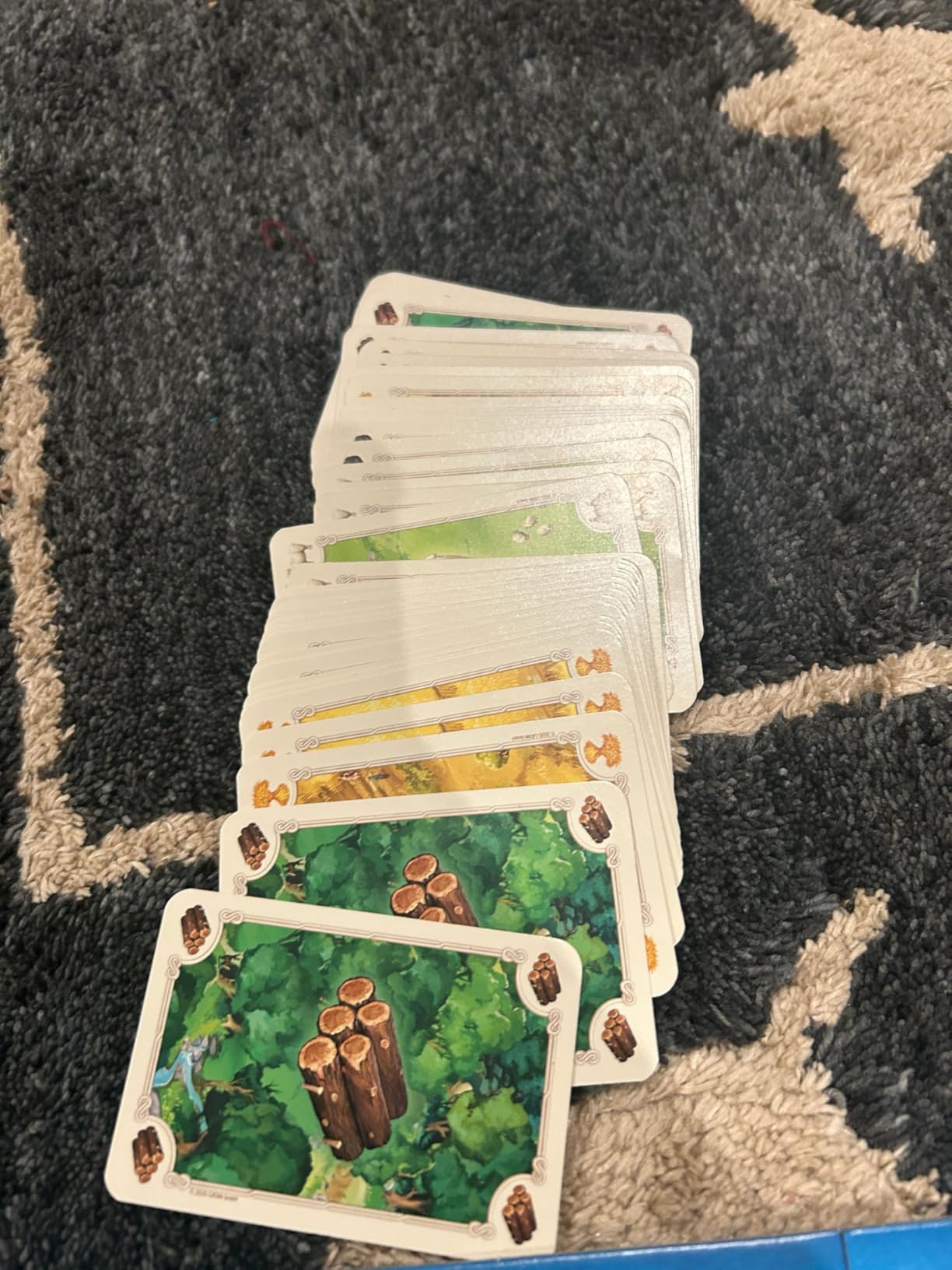
Two dice generate resources, so early luck shapes the whole game. The updated components, clearer rulebook and better-organized player boards reduce the friction of older printings, but the underlying luck ratio is unchanged.
Reviewers also mention the box insert could be organized better, which is a minor annoyance that matters more for a family storing it after a long evening.
The honest downside: it stalls without talkers
Reviewers report that trading can stall completely with uncooperative or quiet players, and that games run longer when new players are learning. A group of teens who would rather not negotiate will finish quickly and remember it as boring.
It also sits in the lowest-rated group in this roundup at 4.6, which is a fair reflection of a game that is more social than mechanical.
11. Plunder: A Pirate’s Life – The Six-Player Pick With No Elimination Built In
Plunder A Pirate’s Life – Family Board Game for Adults and Kids
Pirate naval warfare
2-6 players plus team mode
20 minutes per player
Ages 10-20
+ Pros
- No player elimination
- so everyone plays to the end
- Modular ocean tiles make a new map each game
- Scales to 6 players
- Intuitive thematic rules
- Cons
- Heavy box with wooden pieces
- Combat can feel luck-dependent
- Less depth than heavy euro games
- Not suited to very young children
Plunder is the pick for a group of six. Almost every game in this list tops out at four players and turns into a slog beyond that, and this one is designed for 2 to 6 with an optional team mode on top.
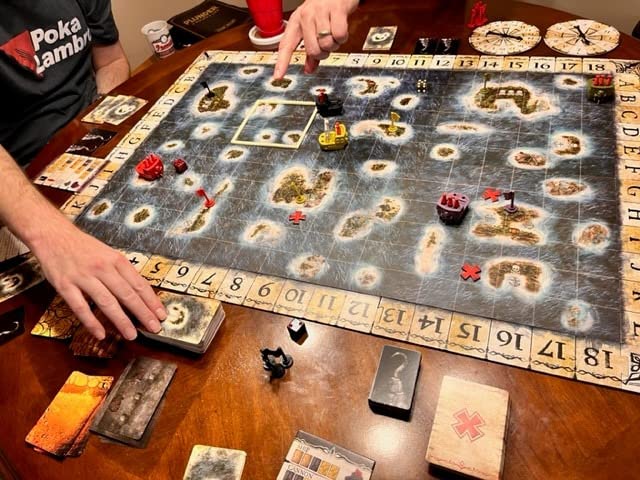
You build pirate fleets, upgrade their masts and cannons, and fight over islands and merchant routes. Six double-sided ocean tiles are shuffled into a different map every game, which is a cheap trick that works extremely well at keeping a repeat play fresh.
The publisher rates it for ages 10 to 20, which is one of the most accurate age ratings in this category and worth trusting.
No elimination is the whole design
Nobody gets knocked out and sent to the sidelines. Everyone plays until the end, which is the exact problem forum threads raise about games for adolescent groups. Reviewers consistently name the no-elimination design as the reason this game works with mixed groups.
There is a variant where a player is eliminated only when their own island is taken, and even then they keep something. That design choice removes the single mechanic most likely to embarrass a 13-year-old.
Twenty minutes per player is a real number
Play time is listed as 20 minutes per player, so two players take about 40 minutes and six players take about two hours. That is a genuinely scalable system rather than a marketing estimate, and it is unusual to see stated that way.
At six players the game is loud and physical, with wooden vessels being placed and moved constantly. A teen group that dislikes downtime will find very little of it here.
Physical weight and component quality
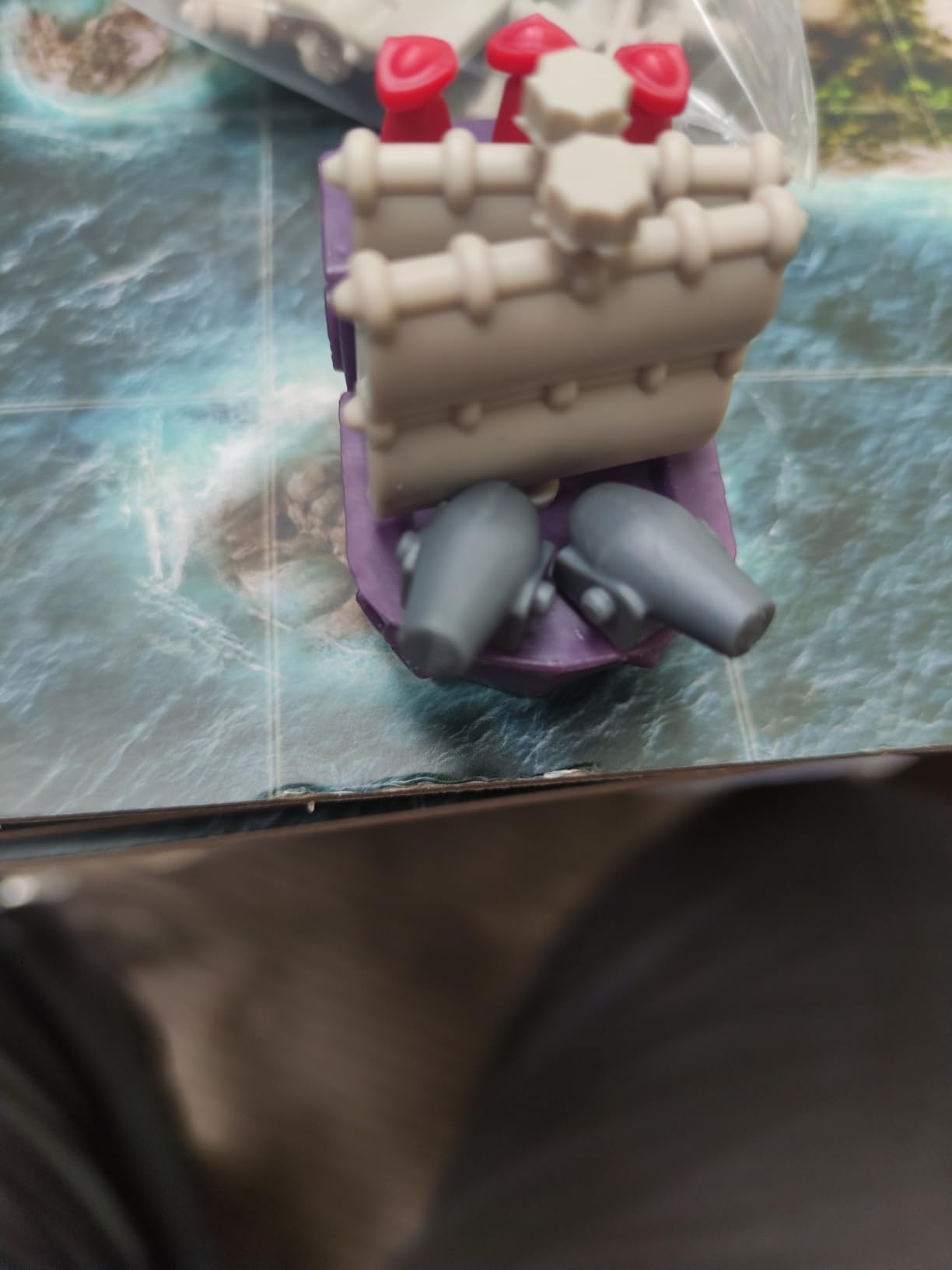
The box is 12.8 by 12.8 by 4.2 inches and weighs 6.3 pounds, which makes it one of the bulkiest boxes in this roundup. Reviewers describe the wooden pieces as substantial and the box as genuinely heavy, so it is a game that lives on one shelf rather than moving between homes.
Material is a mix of cardboard, paper, plastic and wood, and the production quality sits closer to the middle of this list than the top.
The honest downside: luck in combat
Reviewers note that combat resolution can feel luck-dependent, and that the game has less strategic depth than the heavier euro titles. If your group wants a genuine optimization puzzle, this will read as a pleasant bridge rather than a destination.
It is also not designed for very young children, so a family with a 7-year-old should look at Carcassonne instead for that seat at the table.
12. Spy Alley – The Bluffing and Deduction Game Built for a Teen Group
Spy Alley – Mensa Award-Winning Strategy Game – Social Deduction & Bluffing Board Game – Family Game Night Fun – Ages 8+ for 2-6 Players
Social deduction and bluffing
2-6 players, 45 minutes
Ages 8+
Mensa Best Mind Game winner
+ Pros
- Blends deduction
- bluffing and board movement well
- Genuinely better with 5 or 6 players
- Easy to teach and multi-generational
- No downtime between turns
- Cons
- First-time rules take 15-20 minutes to explain
- Functional components rather than premium
- Die rolls frustrate some players
- Longer sessions at 6 players
Spy Alley is the one game in this roundup built entirely around hidden identity, and that makes it the best fit for a group of teenagers who would rather bluff than optimize. Each player is secretly a spy for a different country, and the only way to win is to figure out who is lying.
It won the Mensa Best Mind Game award and the Australian Game of the Year, and it is genuinely a mind game rather than a dexterity game. Deduction and bluffing are the entire skill set.
Forum recommendations for teen groups repeatedly favour word and identity games for exactly this reason, and Spy Alley is the board game version of that instinct.
How the hidden identity actually works
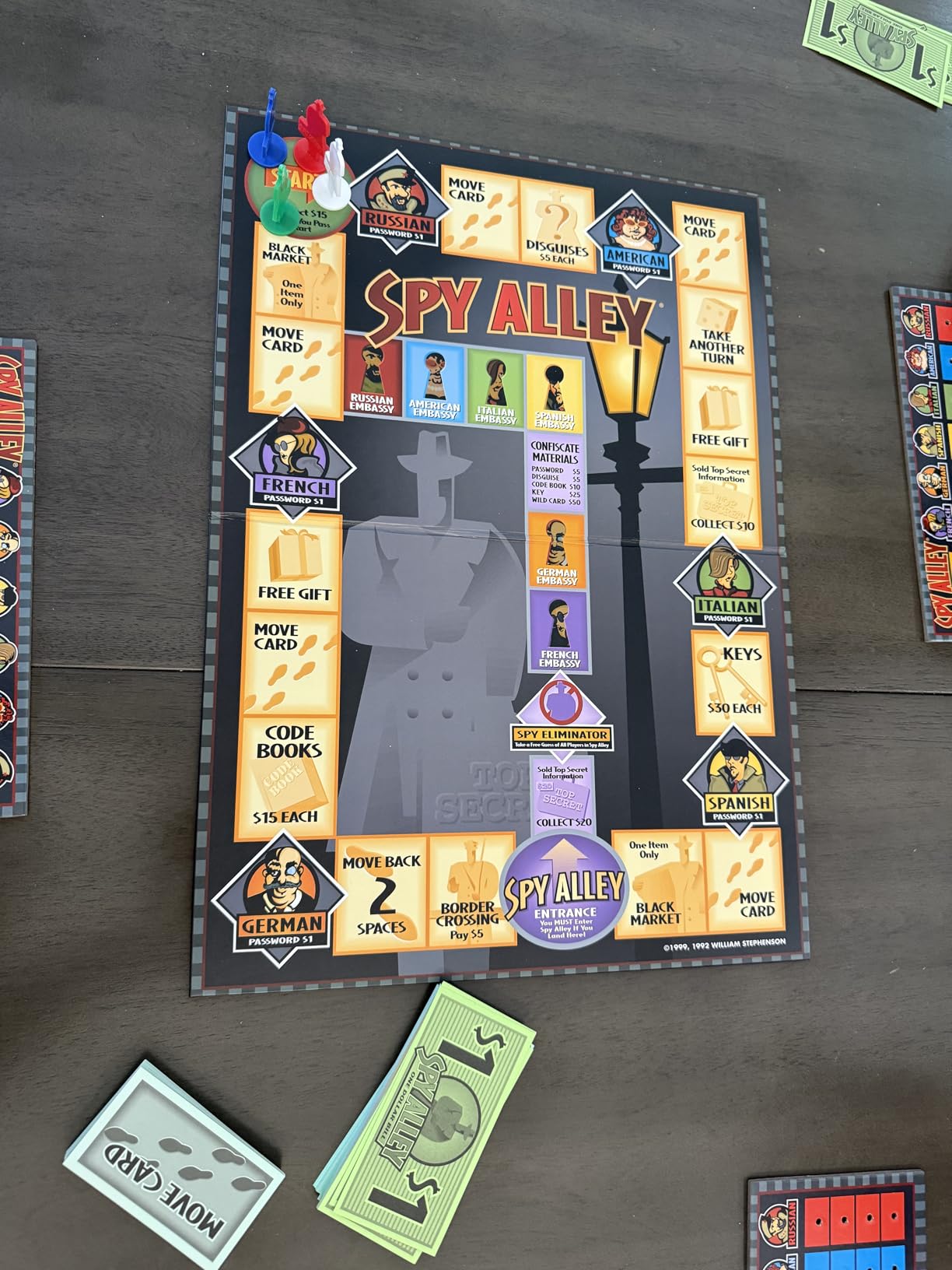
You receive a spy card showing your country, and you collect equipment that matches your nation’s kit. Showing a card to move is a bluff, and calling someone out when you think they are lying is the central decision. The player who catches the most spies without being caught themselves wins.
Because everyone is simultaneously an investigator and a suspect, the game generates the kind of table argument teens actually enjoy. Accusations are the game, not a side effect of it.
Player count is the single biggest variable
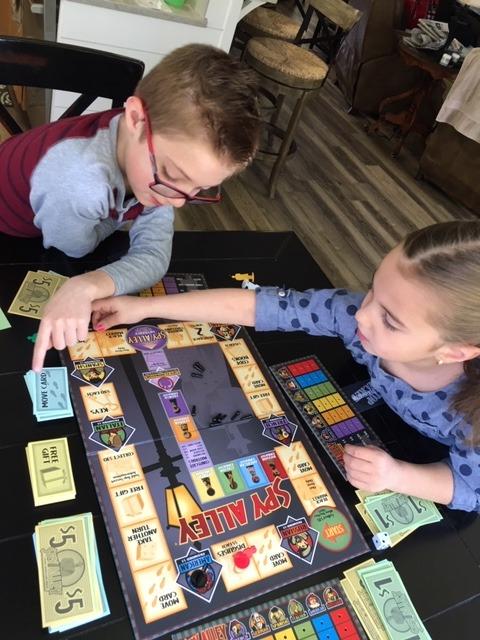
The box lists 2 to 6 players, ages 8 and up, and 45 minutes. Reviewers are clear that the game is noticeably better with 5 or 6 players because the bluffing space widens and nobody sits idle.
At 2 players it is still playable but thin, and at 6 it runs longer than the listed time. The sweet spot is 4 to 5, and the box includes 6 spy cards, a move deck, a gift deck and play money.
The first rules explanation is the hurdle
Reviewers report 15 to 20 minutes of explanation for first-time players, which is the main reason this game gets put away before it starts. The fix is to teach it yourself first and then explain it in about four minutes once you know the rhythm.
Components are cardboard, and the box measures 9.25 by 2.5 by 13 inches. Reviewers describe the components as functional rather than premium, so set expectations on quality before it arrives.
The honest downside: dice and rules length
Die rolls frustrate some players who came for pure deduction, and the 15 to 20 minute explanation is long for a game aimed at teens who want to start quickly. At 6 players the session runs past the listed 45 minutes.
What it does better than anything else in this list is keep six people engaged with no downtime. That is a specific and valuable thing to own, which is why I keep it on the shelf.
How to Choose a Strategy Game a Teen Will Actually Finish
Every game on this list works. The failure mode is a mismatch between the game and the table, so here is how to avoid that rather than another cycle of a game being bought, tried once and shelved.
Game weight explained: the 1-5 complexity scale
Game weight is a community rating from 1 to 5 that measures how much rules and how much thinking a game asks of you. A 1 or 2 teaches in a couple of minutes. A 3 has real strategic structure. A 4 or 5 is a hobby commitment with a steep first play.
For this roundup, Carcassonne, Splendor, Azul, Plunder and 7 Wonders Duel sit in the 2 to 3 band. Pandemic and Wingspan sit around 3. Risk, Terraforming Mars and Spirit Island are 4 to 5 games. No competitor in this search space classifies games this way, and it is the fastest way to avoid a bad purchase.
The rule I use: never put a 4 or 5 game in front of a group that has never played a 3 or lower game. A heavy game with no gateway step teaches the table that strategy games are homework.
Choosing by player count, including two-player nights
Two players is the most common real scenario for a teenager, and it eliminates half the games in this roundup instantly. The strongest two-player options here are 7 Wonders Duel at exactly two players, then Splendor, Azul and Plunder, which all handle two well.
Carcassonne and Spy Alley also work at two. Catan does not, without a variant. Risk at two players is a long elimination slog, and I would not recommend it.
For four or more players, the shortlist is Plunder, Spy Alley, Wingspan and Carcassonne. For five to six, only Plunder and Spy Alley are designed for it, and those two are why both are in this list.
Play time tolerance: fitting a game into a school night
Under 30 minutes: Splendor and 7 Wonders Duel. Both finish before attention drops. Under 45 minutes: Azul and Carcassonne. These four are the reliable school-night choices.
Longer games need a specific occasion. Pandemic at 45 to 60 minutes works on an early evening. Wingspan at 60 to 90 minutes needs an unhurried start. Risk, Terraforming Mars and Spirit Island are weekend or holiday commitments, and treating them as school-night games is the most common mistake I see parents make.
My own rule is to start a long game at 6pm and accept that it will not be finished. If a game cannot be paused and resumed, choose a shorter one instead.
Cooperative vs competitive for mixed-experience tables
Cooperative games work best when the table has one new player, because a bad decision costs the group rather than an individual. That is why Pandemic and Plunder are the safest first purchases for a mixed group.
Competitive games work best when everyone knows how to lose. Splendor, Azul and Carcassonne are competitive but low-stakes, because a loss costs nothing but the game. Terraforming Mars and Spirit Island are competitive and high-stakes, and a strong player at those tables can end the evening badly.
For a parent and teen playing one-on-one, cooperative is almost always kinder. A cooperative game removes the crushing-your-kid problem, which parent groups describe as the central issue with family strategy games.
Strategy vocabulary decoder
Gateway game means a lighter game designed to bring new players into the hobby, which is exactly the role Carcassonne and Splendor play here. Euro game means a strategy game with low direct interaction and indirect competition, like Azul or Terraforming Mars.
Worker placement is a mechanic where you place a token on a shared board to take an action, and it is the core of Catan and Wingspan. Engine building means you acquire permanent income-generating pieces, which is the mechanic in Splendor and Terraforming Mars. Deck building is acquiring new cards during play, which none of these twelve use, so if that is what a teenager wants, the buy is a different search.
Set collection is building a group of matching items to score, which is the heart of Wingspan. Hidden information is knowing less than your opponents, which is the entire basis of Spy Alley.
Picking by age band
For a 13 or 14 year old, start with Carcassonne, Plunder or Pandemic. All three teach quickly, none of them punish a newcomer publicly, and all three handle a wide age spread at the same table.
For a 15 or 16 year old, move to Splendor, Azul, Wingspan and 7 Wonders Duel. These are gateway games with genuine depth, and a teenager at this age usually wants the strategy to be real rather than simplified.
For a 17 or 18 year old, Terraforming Mars and Spirit Island are the honest recommendations, along with Spy Alley for a large group. At this age the constraint is almost never ability, it is whether the group will sit still for two hours.
The mechanics that make teens quit
Downtime is the number one killer. If a teenager sits waiting for four other people to think, they check their phone and do not come back. Games like Spirit Island and Spy Alley handle this with simultaneous or continuous action; Risk and Terraforming Mars have long gaps.
Elimination is the second. A teenager knocked out in minute twenty has to watch for an hour, and reviewers across this category report it as the most common reason a game ends early. Avoid it entirely: Plunder has no elimination, and the cooperative options have no winner and loser at all.
Rulebook length is the third. A game that takes 20 minutes to explain is a game you will not play on a school night. This is the strongest argument for the 2 and 3 weight games in this list.
Randomness that overrides planning is the fourth, and it is why Risk sits low here despite its reputation. A teenager who makes a good decision and loses anyway learns that decisions do not matter, which is the opposite of what a strategy game should teach.
Counterfeit editions and what to look for
Forum threads about buying Catan, 7 Wonders and similar titles repeat one complaint: unauthorized sellers and counterfeit copies with wrong components, missing cards and thin boards. Check that the listing specifies the edition number, the manufacturer and the language before buying.
Two examples in this roundup. Catan 6th Edition lists model number CN3081, and a different edition with a different number is a different product. Risk lists French and English as its language, and reviewers report French-only shipments arriving, so verify language before buying that one as a gift.
Thin player boards and card printing issues in Terraforming Mars are reported repeatedly, and owners often buy upgraded boards separately. If that bothers you, a third-party player board is a cheap fix.
Frequently Asked Questions
What are the top 5 strategy board games?
Our top five for teens are Pandemic, Splendor, Azul, 7 Wonders Duel and Carcassonne. Pandemic covers cooperative teamwork in 45 to 60 minutes, Splendor and Azul finish inside 45 minutes with engine building and tile placement, 7 Wonders Duel is purpose-built for exactly two players, and Carcassonne teaches spatial strategy in 35 minutes with the fewest rules of any pick here.
What are the most popular board games for teens?
Judged by customer review volume, the most popular board games for teens are Pandemic, Azul, Splendor, Wingspan and Carcassonne. The most commonly played title is different: Catan and Risk are what most teenagers have already tried at a family gathering. The games being opened for the first time in front of friends are Splendor, Pandemic and Azul, because each teaches in one short explanation.
What is the best board game for a 14-year-old?
Carcassonne is the best first choice for a 14-year-old, with Plunder and Pandemic close behind. All three teach in minutes, support a wide age range at one table, and none of them punish a newcomer publicly. Wingspan is rated 14 and up by the manufacturer and works well too, but at 60 to 90 minutes it needs an unhurried evening rather than a school night.
What are some good board games for a 15-year-old?
At 15 the constraint is usually a shorter attention span rather than ability. Splendor at 30 minutes and Azul at 30 to 45 minutes give real strategic depth without a long first play, and 7 Wonders Duel is the strongest option when a teenager has exactly one friend available. Carcassonne stays a solid choice, and Catan works if the group enjoys talking and trading.
What is the best board game for a group of teenagers?
Plunder: A Pirate’s Life is the best pick for a large group, supporting 2 to 6 players plus a team mode with no player elimination. Spy Alley is the other option designed for that size, with 2 to 6 players and no downtime between turns. Both scale cleanly to six; most of the lighter games in this roundup turn into a slog beyond four players.
How do you pick a strategy board game for a teenager?
Pick by game weight, player count and play time rather than by theme. Choose a weight 2 or 3 game as a first purchase, match the player count to the exact number of friends available, and keep a first game under 45 minutes. Cooperative games like Pandemic suit mixed-experience tables, and avoiding elimination removes the mechanic most likely to end a game early.
Which Strategy Game Should You Buy First?
Start with Pandemic if the table is mixed in experience or a parent is playing with a teenager. It teaches in one explanation, nobody gets blamed, and the box is a pathway into a larger cooperative series.
Choose Splendor or Azul if you want a shorter first game and do not mind that nobody attacks anybody. Splendor finishes in 30 minutes and carries the highest customer rating in this roundup. Azul wins on tile quality and works at any player count from 2 to 4.
Pick 7 Wonders Duel when there are exactly two players and you both want real tension. Choose Plunder or Spy Alley when the group is five or six. Save Wingspan, Terraforming Mars and Spirit Island until someone has already finished a lighter game twice.
Whatever you choose, run the same test: if the group asks to play it again unprompted, you have found the right box. That is the whole reason Pandemic remains my pick as the best strategy board game for teens, and the reason I keep a copy in my own house. Start with the table you actually have, and buy for the players sitting at it.