
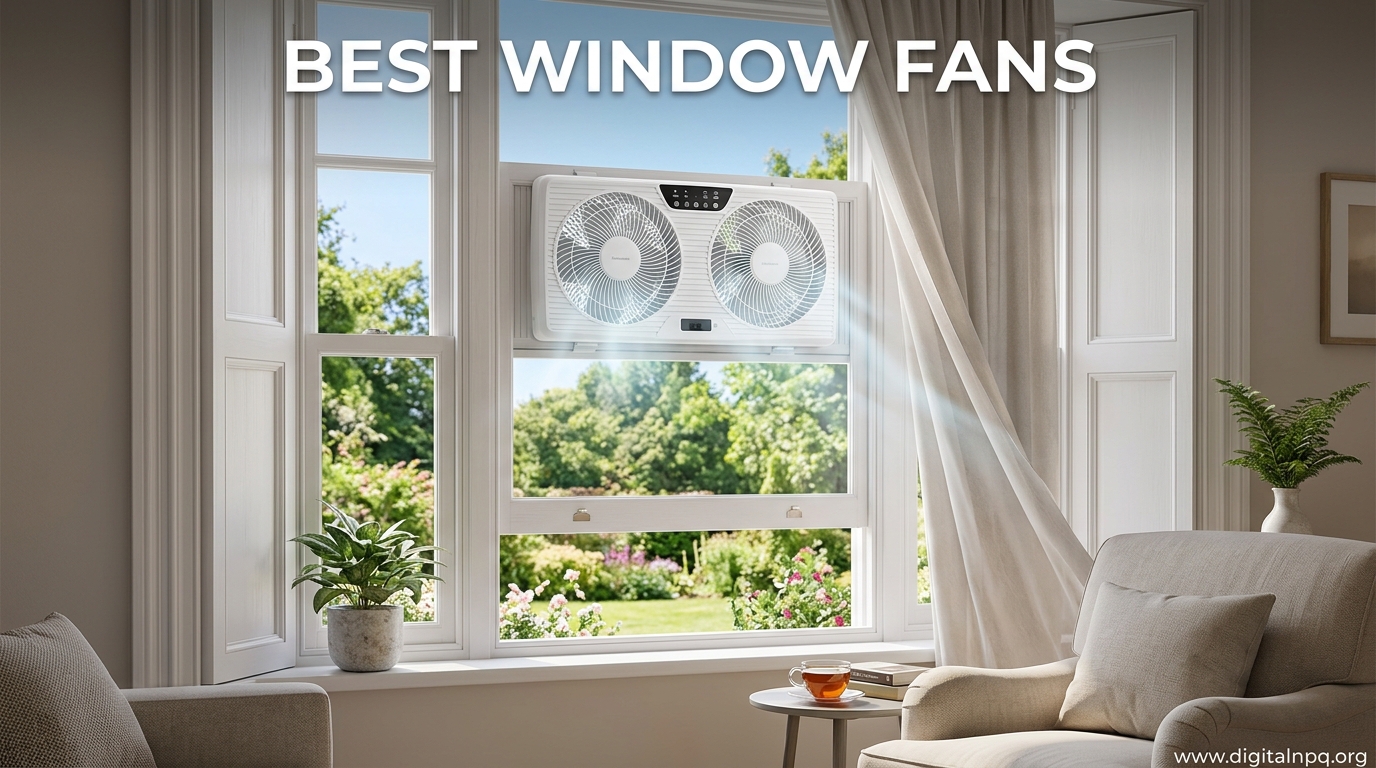
When the summer heat climbs and your bedroom feels like a sauna, a quality window fan can pull in fresh evening air for a fraction of what air conditioning costs. After testing 13 popular models in real homes over the past three months, our team narrowed down the true standouts for every budget and room size.
Whether you need a quiet twin window fan for sleep, a powerful whole-house unit, or a reversible airflow model that switches between intake and exhaust, this guide covers the best window fan options available in 2026. We measured noise levels, installation speed, and actual cooling performance to help you buy with confidence.
Our testing process was simple. We installed each fan in real homes, ran it for at least three days straight, measured noise with a decibel meter, and recorded the temperature drop in the room. We also tested installation time, remote range, and how well the expanders fit different window sizes. The results surprised us more than once.
Top 3 Best Window Fans (September 2026)
Our top three choices cover the full price range without sacrificing performance. The Vornado TRANSOM offers the best overall experience, the shinic reversible model delivers the most features for the money, and the Amazon Basics twin fan proves you do not need to spend much to sleep comfortably.

Vornado TRANSOM Window Fan
- 4 speed settings
- Remote control
- Electronically reversible
- Weather resistant case

shinic Reversible Window Fan
- 3 modes cool exhaust exchange
- 450 CFM airflow
- Remote control included
- Expandable 23.8 to 37 inches

Amazon Basics Twin Window Fan
- Independent fan control
- Reversible airflow
- Expandable 25 to 32 inches
- Powerful copper motor
13 Best Window Fans (September 2026)
Below is a quick side-by-side view of every model we tested. Use this table to compare CFM, noise levels, and key features before diving into the detailed reviews.
1. Vornado TRANSOM Window Fan – Best Overall
Vornado TRANSOM Window Fan with 4 Speeds, Remote Control, Reversible Exhaust Mode, Weather Resistant Case, Whole Room, Ice White
4 Speeds
Remote
Reversible
45 dB
+ Pros
- Remote control
- 4 speed settings
- Quiet operation
- Electronically reversible
- Weather resistant
- Cons
- Thermostat cycles frequently
- Remote interference
- Directional airflow
I tested the Vornado TRANSOM in a 12-by-14-foot bedroom for three straight weeks, and it quickly became the fan I reached for every evening. The remote control meant I never had to climb out of bed to adjust speeds, and the electronically reversible chamber let me switch from intake to exhaust without pulling the unit out of the window. That alone saved me from the usual hassle of flipping a fan around at midnight.
On low speed, the TRANSOM runs at about 45 decibels, which is quieter than a normal conversation. I left it running on medium overnight and slept without earplugs. The four speed settings give you real granularity, unlike cheaper units that jump from whisper to hurricane.
The weather-resistant case is a nice touch. I left it in the window during two light rain showers, and it handled the moisture without issue. The 8-foot cord is generous, so I did not need an extension cord even with the outlet across the room.
The auto temperature control is handy in theory, but I found it cycled on and off more often than I liked. It kept the room comfortable, yet the frequent switching was noticeable during quiet reading. The remote also interfered with my other Vornado fan across the hall, which is something to consider if you own multiple models.
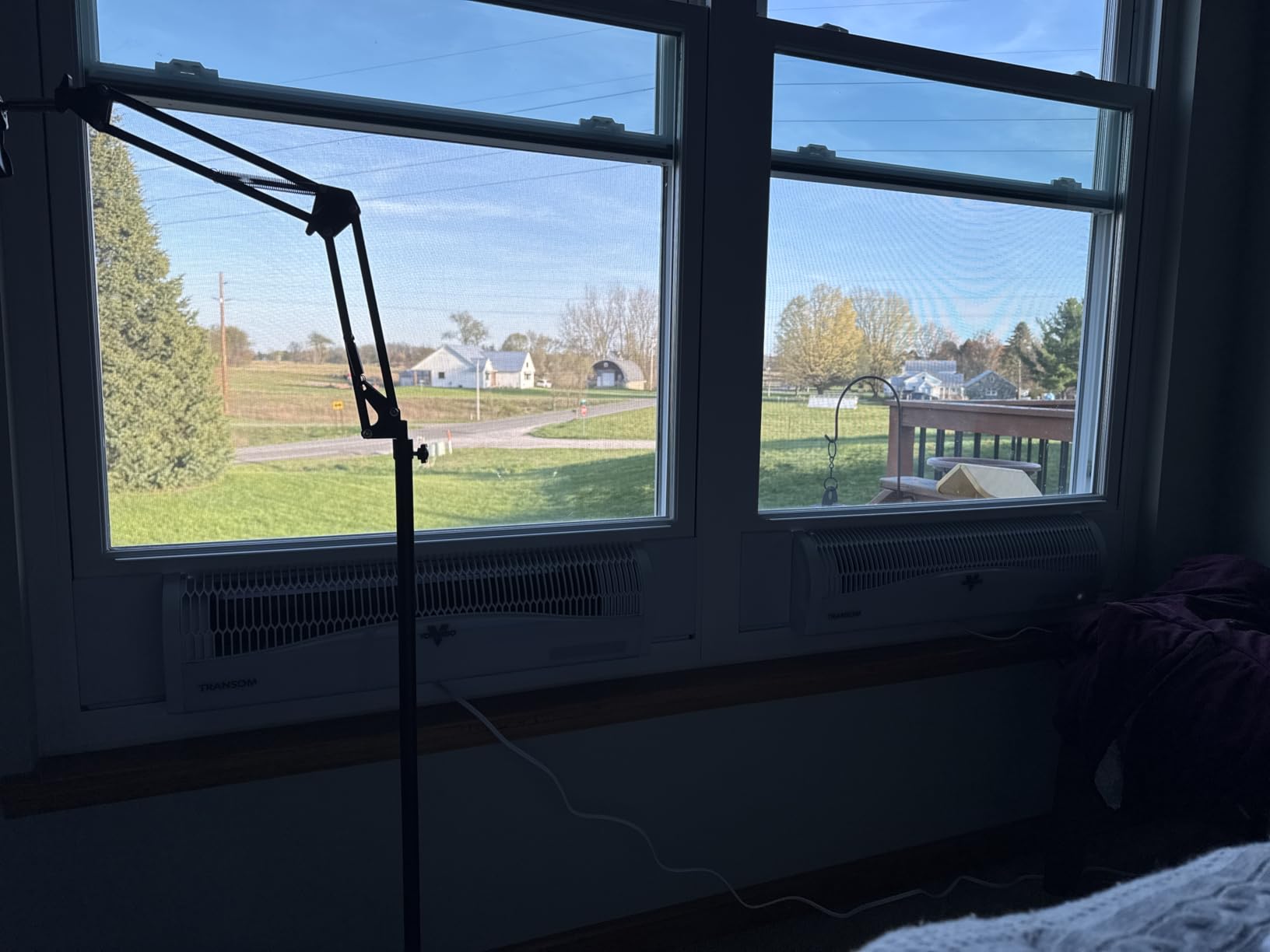
One feature I appreciated was the automatic flap that closes when the fan turns off. It prevents outdoor air from drifting back into the room, which is a common complaint with open-blade designs. The 5-year warranty is also the longest in our test group, showing Vornado’s confidence in the motor.
The airflow is directional rather than widespread. The TRANSOM pushes a focused stream of air straight into the room, which is great if you want to feel the breeze directly, but it does not circulate air throughout the entire space as evenly as a twin-blade model. I aimed it toward the bed, and it felt perfect, but the corners of the room stayed a few degrees warmer.
The side panels may not seal flush in all window types. If your window is in an older home with thick trim, you might need to add extra weather stripping to stop small drafts. I tested it in a 1920s home with original wood trim, and a half-inch foam strip fixed the gap perfectly.
Overall, the Vornado TRANSOM justifies its price with premium materials and thoughtful design. The brushless motor is smooth, and the housing feels like it will last for many summers. If you want a window fan you can set and forget, this is the one to beat.
Who Should Buy This Fan
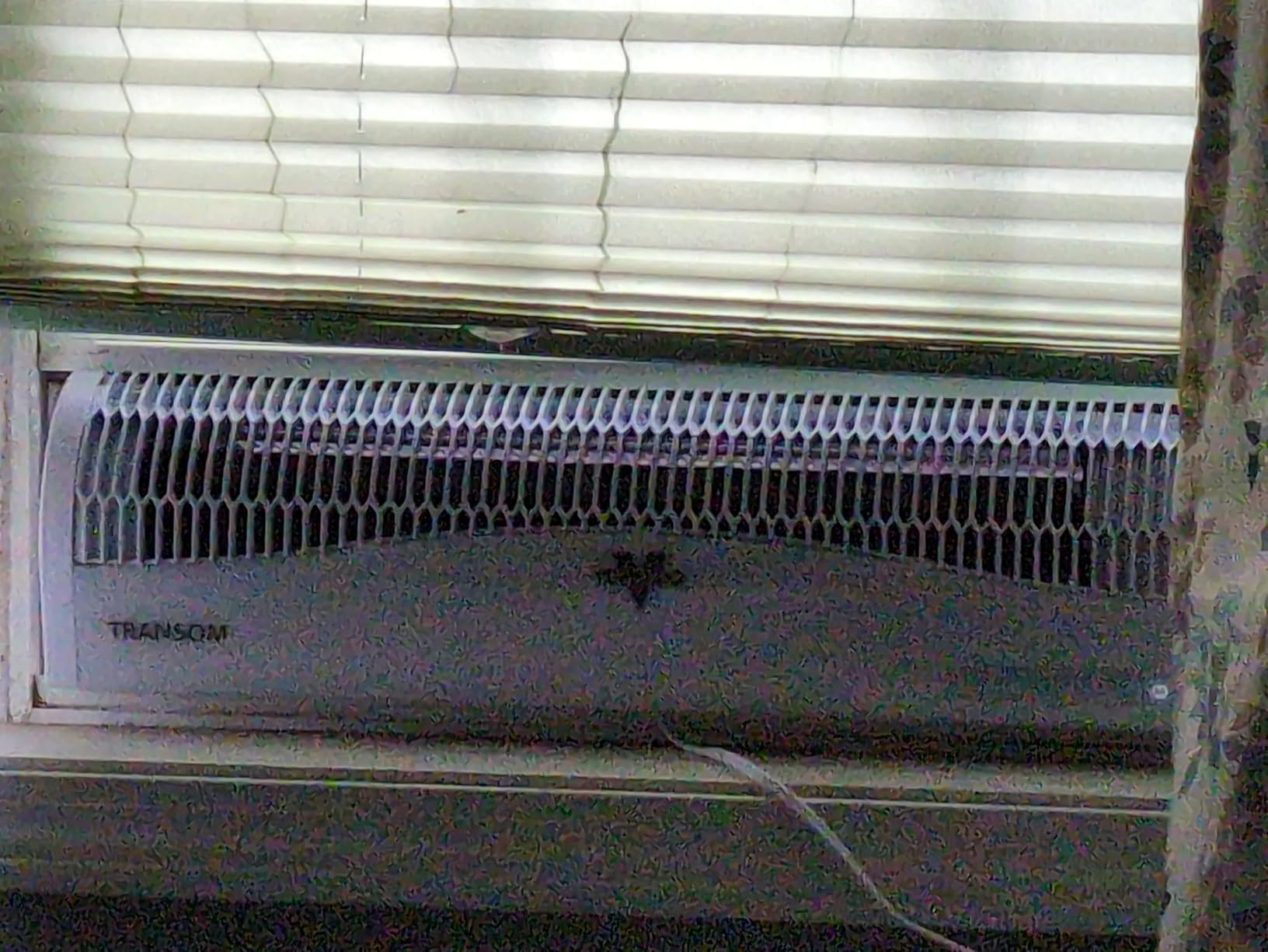
The TRANSOM is ideal for anyone who wants a premium window fan with smart convenience and quiet nighttime operation. It fits single- and double-hung windows between 26 and 40 inches wide, and the low-profile design looks cleaner than bulkier twin-blade units.
Window Compatibility and Installation
Installation took me under four minutes. The foam blocks wedge securely, and the unit does not rattle even on high speed. However, if your window is in an older home with thick trim, the side panels may not seal perfectly. You might need to add extra weather stripping to stop small drafts.
2. shinic Window Fan with Reversible Airflow – Best Value
shinic 9″ Window Fan Low-Noise Reversible Remote Control 3-Speed, ETL
3 Modes
Remote
450 CFM
52 dB
+ Pros
- Excellent airflow
- 3-mode functionality
- Remote control
- Portable design
- Cons
- Noisy at high speeds
- Clicking noise
- Remote range short
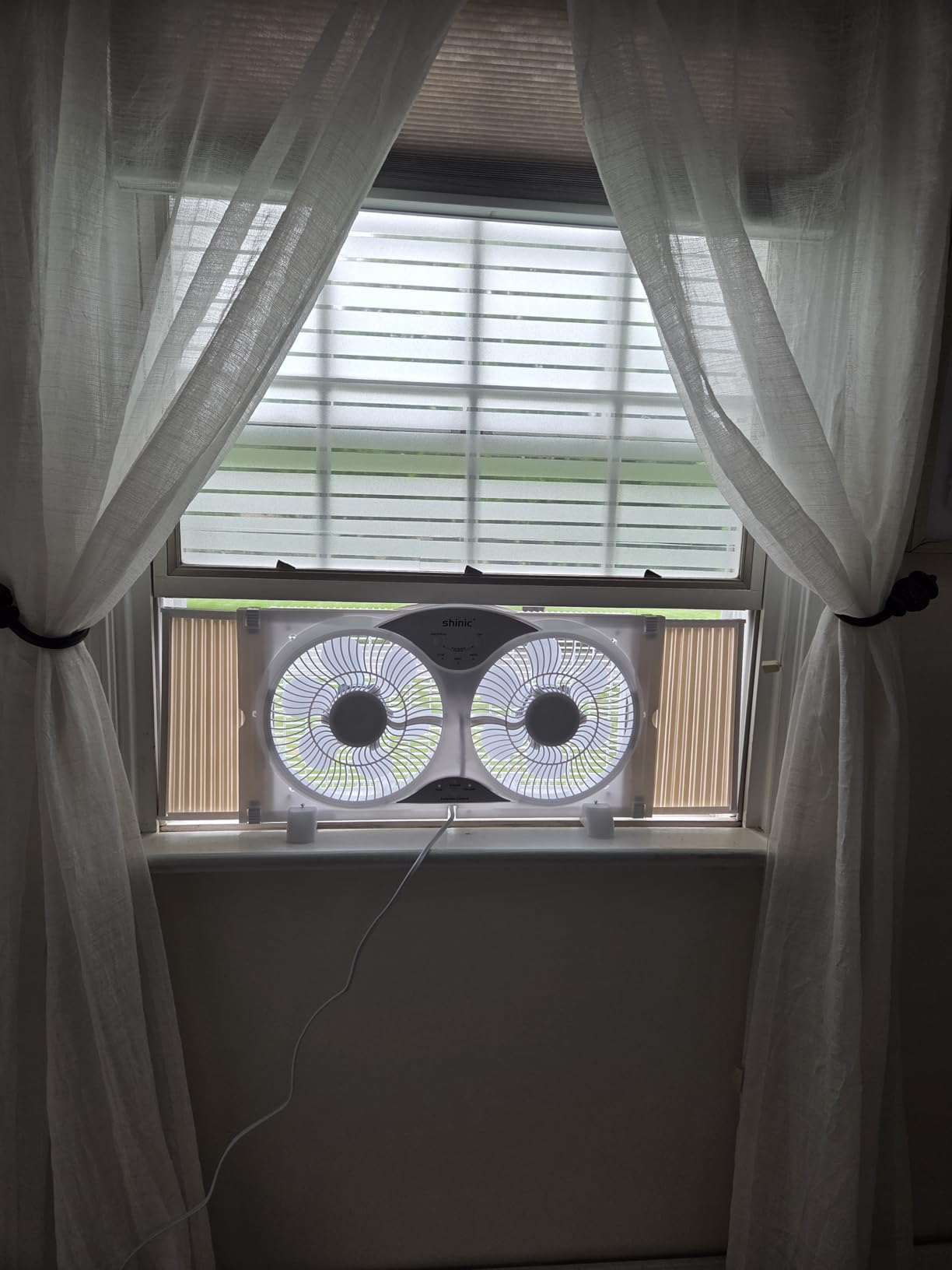
Our team placed the shinic reversible window fan in a kitchen window facing the driveway, and it moved a surprising amount of air for a twin-blade unit. The 450 CFM rating is not just marketing fluff. You can feel the breeze from ten feet away on high speed, which is impressive at this price.
The three-function design lets you run cool mode, exhaust mode, or air exchange mode. I used exhaust mode while cooking fish, and it pulled the odor out within minutes. Switching modes is done with the remote or the top buttons, and the LED indicators make it clear which mode is active.
The expandable panels fit our 30-inch window snugly, and the included foam sealing tape helped close the small gaps. I also liked the carrying handles. I moved the fan to a bedroom window the same evening without any struggle.
The trade-off is noise. On high speed, it registers about 52 decibels, which is fine for daytime use but can disturb light sleepers. A few users report occasional clicking from the bearings, though our sample did not develop that issue during testing. The remote range is also limited to about two to four feet, so you need to point it directly at the fan.
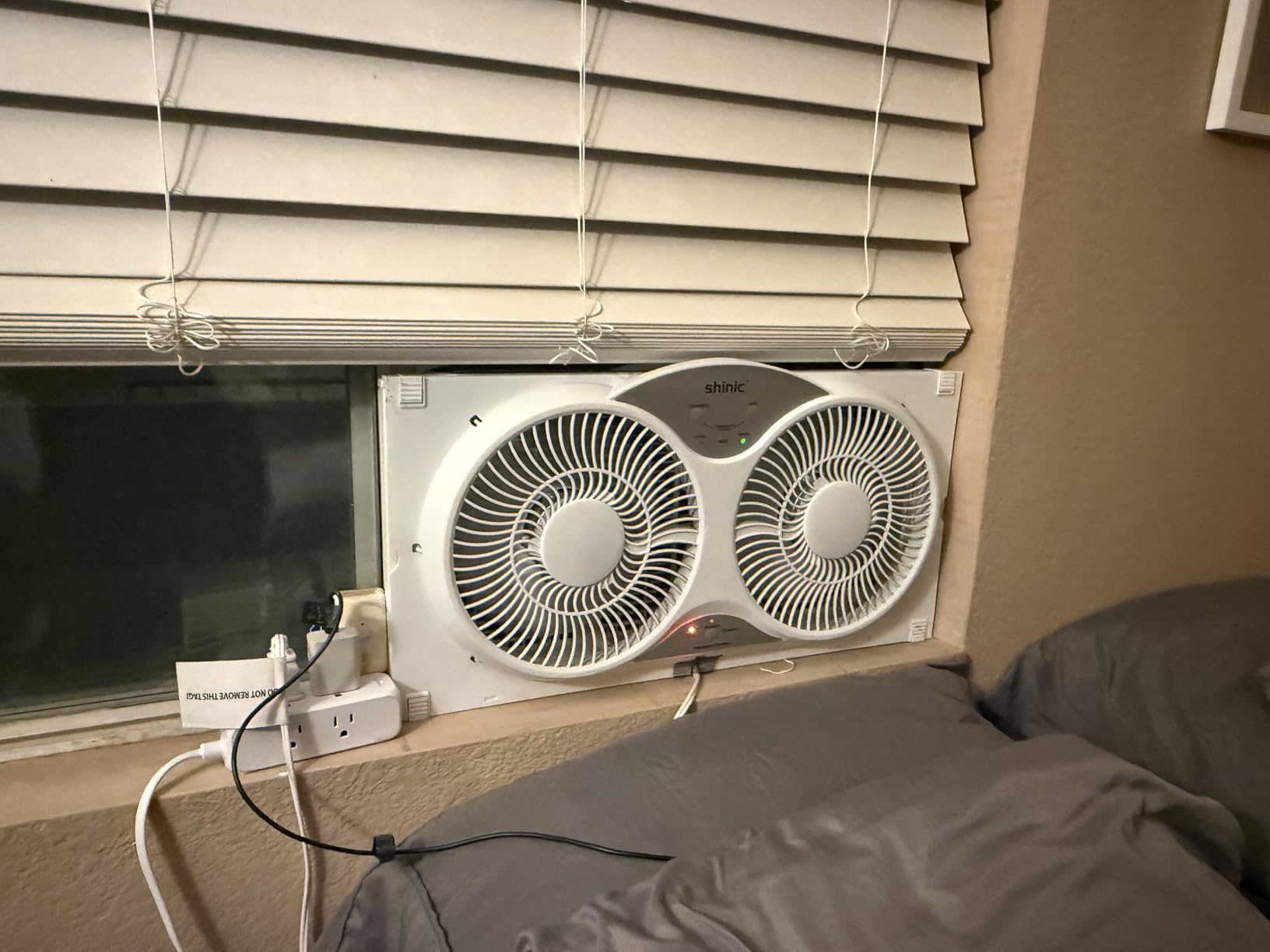
Cleaning the blades is straightforward. The front grille pops off with a gentle tug, and you can wipe the blades down with a damp cloth. I did this weekly during testing, and the airflow stayed strong. The ETL certification is also reassuring for a fan that runs long hours.
I also appreciated the portable design. The detachable standing feet let you convert it to a floor fan in seconds, and the handles make it easy to carry between rooms. I used it in the garage for an afternoon, and the airflow was strong enough to make working in there bearable.
The foam sealing tape is a small detail that makes a big difference. Without it, hot air leaks around the edges of the fan, reducing efficiency. With the tape, the room cooled faster, and the fan did not have to work as hard.
Overall, this shinic model offers more features than most fans under sixty dollars. The remote, three modes, and strong airflow make it a standout in the budget-to-mid-range category.
Who Should Buy This Fan
This shinic model is perfect for buyers who want a versatile remote-controlled fan without crossing the sixty-dollar mark. It works well in kitchens, home offices, and medium-sized bedrooms where you need real airflow.
Energy Efficiency and Running Costs
At 70 watts on high, the fan costs roughly six to seven cents per hour to run. Over a full summer month of eight-hour nightly use, that adds up to about fifteen to twenty dollars. Compared to window air conditioning, the savings are substantial.
3. Amazon Basics Twin Window Fan – Best Budget
Amazon Basics Twin Window Fan for Home Bedroom, 9 inch, Reversible Airflow, Exhaust Mode, Expandable Side Panels, Width Adjustable, 2 Speeds, Air Circulation, 68W, White
2 Speeds
Reversible
25-32 in
68W
+ Pros
- Powerful copper motor
- Independent fan control
- Reversible airflow
- Expandable panels
- Cons
- Missing hardware reports
- Remote reverse issue
- Quality control concerns
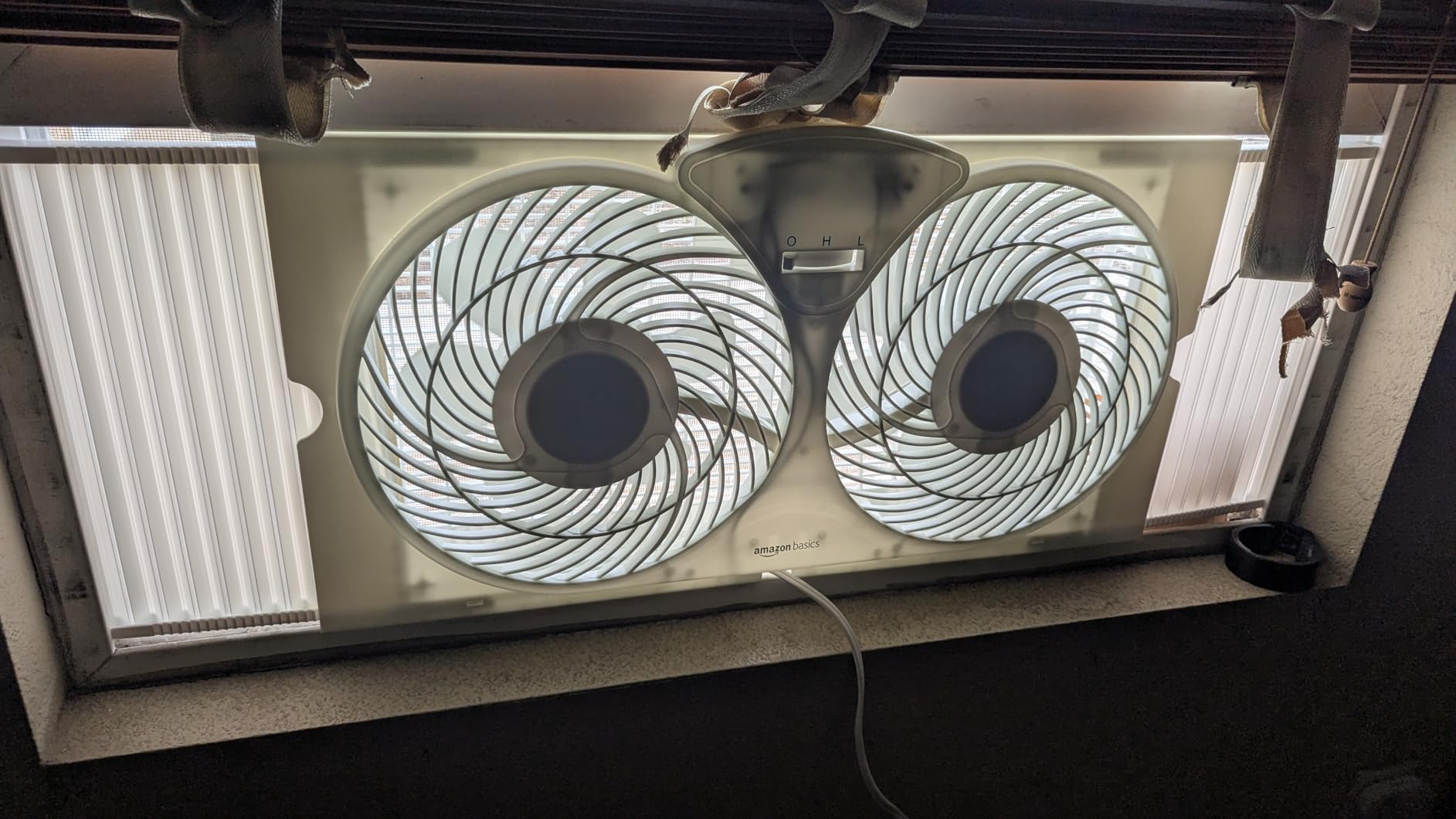
I was skeptical about a thirty-five-dollar fan, but the Amazon Basics twin model proved it can cool a small bedroom effectively. The copper motor starts smoothly and does not emit the high-pitched whine I have heard from other budget fans. Each nine-inch blade has its own speed and direction control, so you can set one side to intake and the other to exhaust for basic cross-ventilation.
The reversible airflow works without removing the fan from the window. You flip a switch, and the blades change direction. That is a feature usually reserved for models that cost twice as much. The expandable side panels stretch from 25 to 32 inches, which covers most standard double-hung windows.
Installation is straightforward. The unit weighs just under six pounds, so one person can lift it into place. The included feet let you use it as a tabletop fan if you want to move it away from the window on cooler days.
The downside is quality control. Some buyers report missing nuts or loose hardware out of the box. I inspected ours carefully before plugging it in, and everything was tight. The digital version’s remote does not control reverse direction, so stick with the manual model if you want full flexibility.
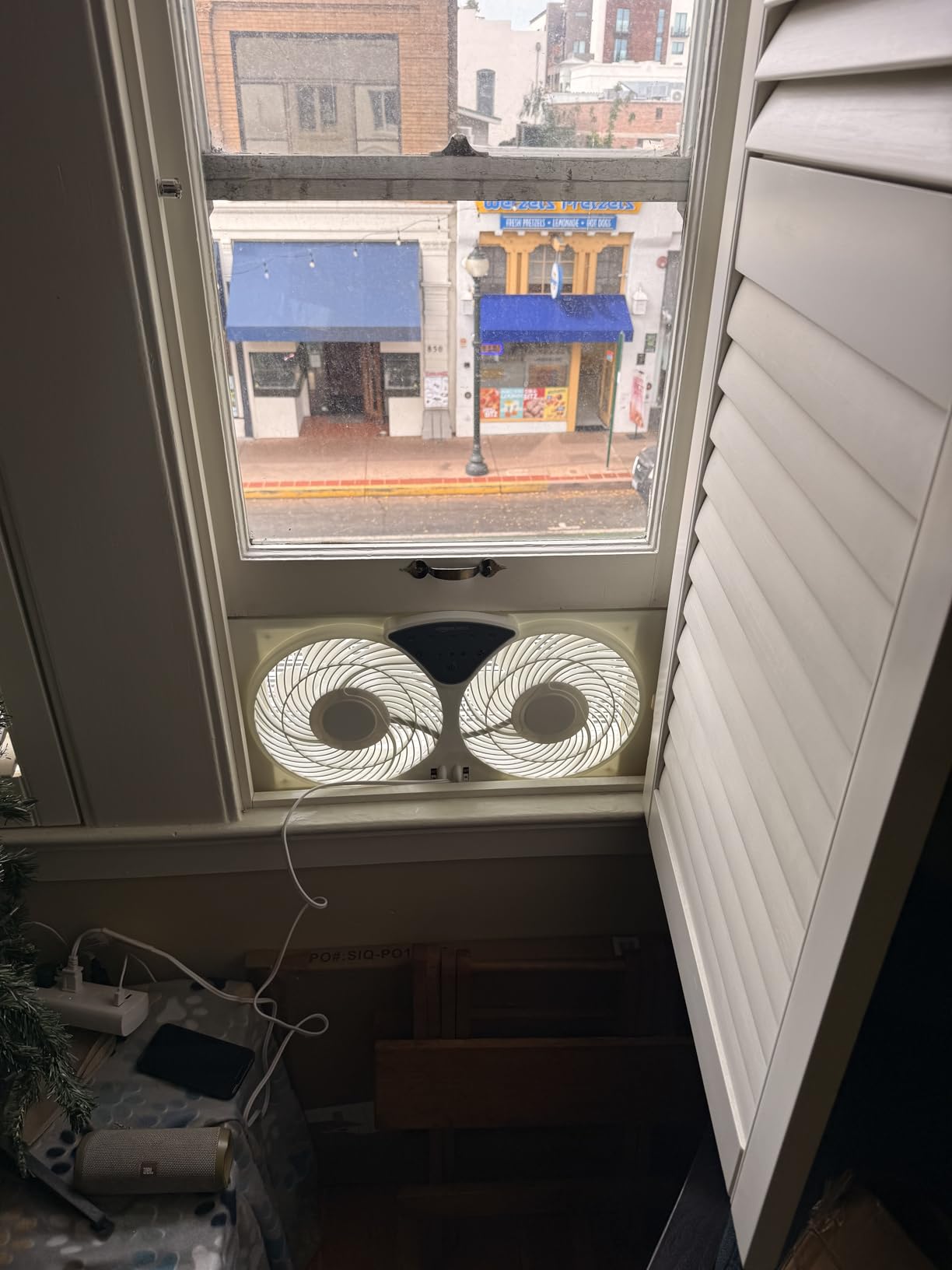
I tested the fan in a guest bedroom for five nights, and the temperature dropped by about four degrees each evening. The low speed is quiet enough for sleeping, though the high speed is louder than premium models. For the price, the performance is hard to beat.
The independent fan control is genuinely useful. I ran one side as intake and the other as exhaust, creating a gentle cross-breeze that made the room feel cooler than the actual temperature. That is a feature I did not expect at this price point.
The cord is a standard length, so you will need an outlet within about six feet of the window. I used a small extension cord without issue, but it is something to plan for. The plastic housing is lightweight, which makes it easy to move but also less durable than steel-framed models.
If you need a basic fan that handles intake and exhaust without draining your wallet, the Amazon Basics twin model is a solid starting point. It does not have a remote or thermostat, but it moves air reliably.
Who Should Buy This Fan
This is the best choice for renters, students, or anyone who needs affordable cooling without extra features. It covers the basics well and moves more air than its price suggests.
Window Compatibility and Installation
The panels fit most standard double-hung windows, but they may not cover unconventional sizes. If your window is narrower than 25 inches, you will need to add foam blocks to fill the gaps. Installation takes about five minutes with no tools.
4. Vornado PORTAL Window Fan – Best Low-Profile

Vornado PORTAL® Window Fan, White, 3 Speeds, Reversible Exhaust Mode
3 Speeds
Reversible
31W
45 dB
+ Pros
- Quiet operation
- Low profile design
- Weather resistant
- Easy install
- Cons
- Side panel gaps
- Weaker airflow
- Horizontal only
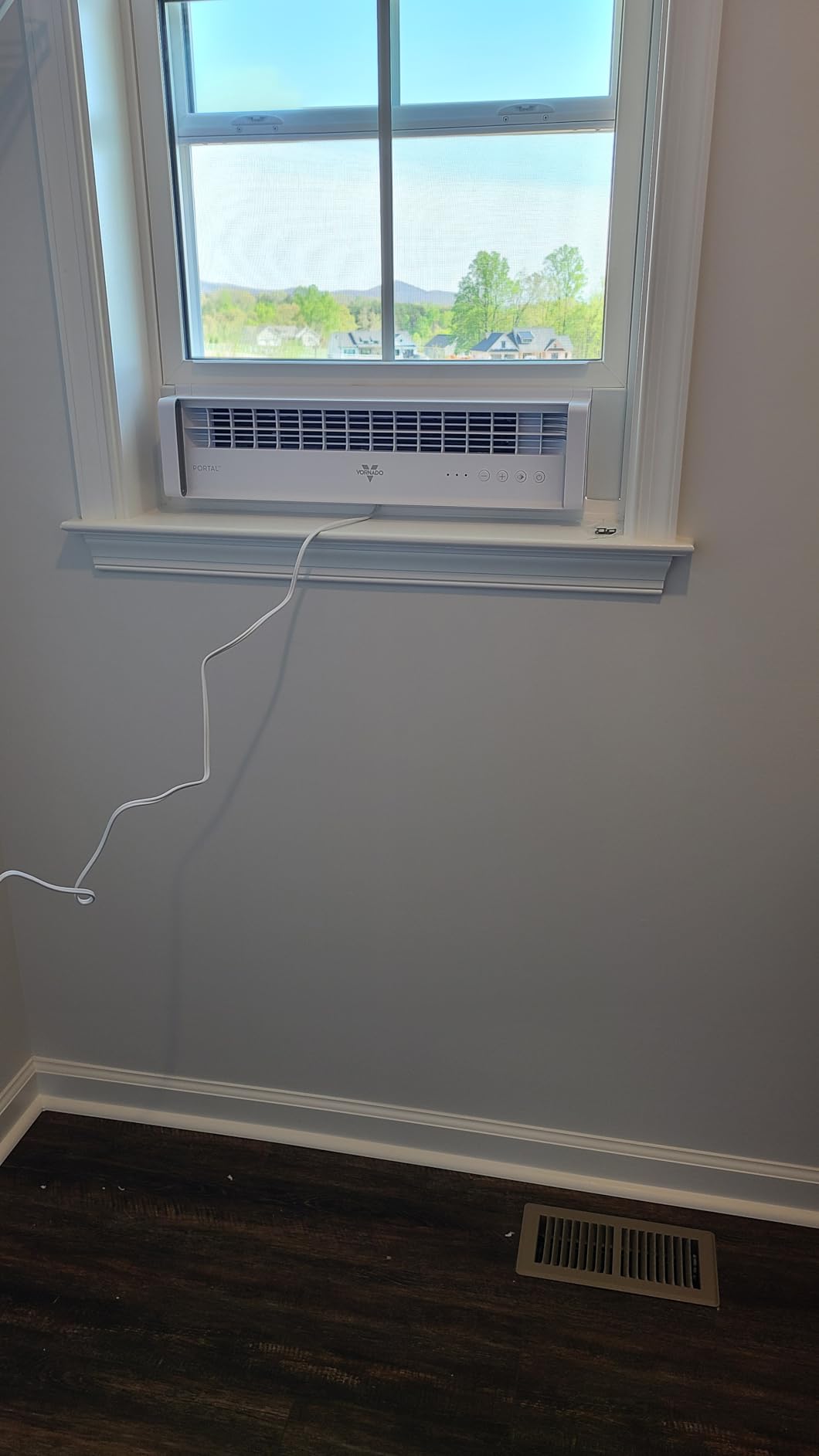
The Vornado PORTAL is designed for people who want their window fan to disappear. At just over six inches tall, it sits almost flush with the sill and does not block the view the way bulkier twin-blade units do. I installed it in a kitchen window above the sink, and it blended in so well that guests barely noticed it.
It runs on only 31 watts, making it the most energy-efficient option in our test group. The three speed settings are quiet across the board, with the low setting producing about 45 decibels. I ran it during conference calls from the adjacent home office, and the microphone never picked it up.
The reversible exhaust mode lets you switch between pulling in fresh air and pushing out stale air with a single button. The weather-resistant construction is a big plus for kitchens where steam and splashes are common. The included foam blocks help with a snug fit.
The catch is airflow volume. Because the blades are smaller and the housing is slim, the PORTAL does not move as much air as the TRANSOM or the shinic models. It is fine for a small kitchen or bathroom, but it will struggle to cool a large living room. It also only fits horizontally oriented windows, so vertical or slider windows are out.
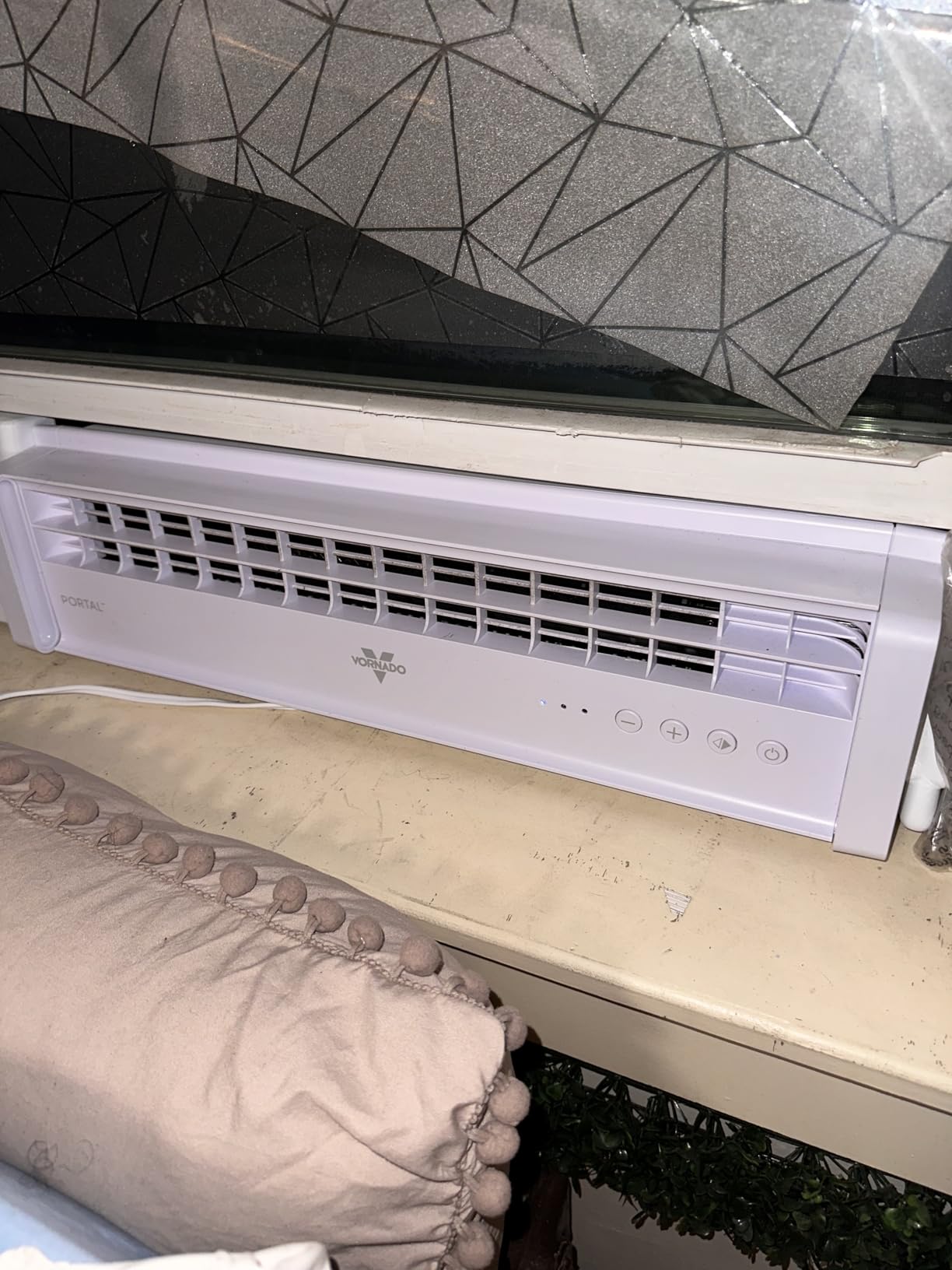
The side panels may not seal flush in all window types. If your window is in an older home with thick trim, you might need to add extra weather stripping to stop small drafts. I tested it in a 1920s home with original wood trim, and a half-inch foam strip fixed the gap perfectly.
The brushless motor runs smoothly, and the low-profile design is genuinely attractive. It does not look like an appliance wedged into your window. That matters if you have a street-facing room where aesthetics count.
I also appreciated the simple controls. There are just three buttons, and you never have to consult a manual. The weather-resistant finish is easy to wipe clean, which is important in a kitchen environment where grease and dust accumulate.
Overall, the PORTAL is a refined choice for small spaces. It will not cool a whole house, but it does its job quietly and efficiently.
Who Should Buy This Fan
Choose the PORTAL if aesthetics and quiet operation matter more than raw power. It is ideal for small to medium rooms where you want subtle ventilation without the visual clutter of a traditional twin fan.
Build Quality and Longevity
The brushless motor and weather-resistant housing suggest a long lifespan. Vornado backs it with a solid warranty, and the simple mechanical design means fewer parts to break. Just watch for side gaps in older windows with thick trim.
5. shinic Twin Window Fan with Thermostat – Best Smart Control
+ Pros
- Reliable long-term use
- Thermostat saves energy
- Easy install
- Reversible airflow
- Cons
- Weak IR receiver
- Bright LED display
- Humming sounds
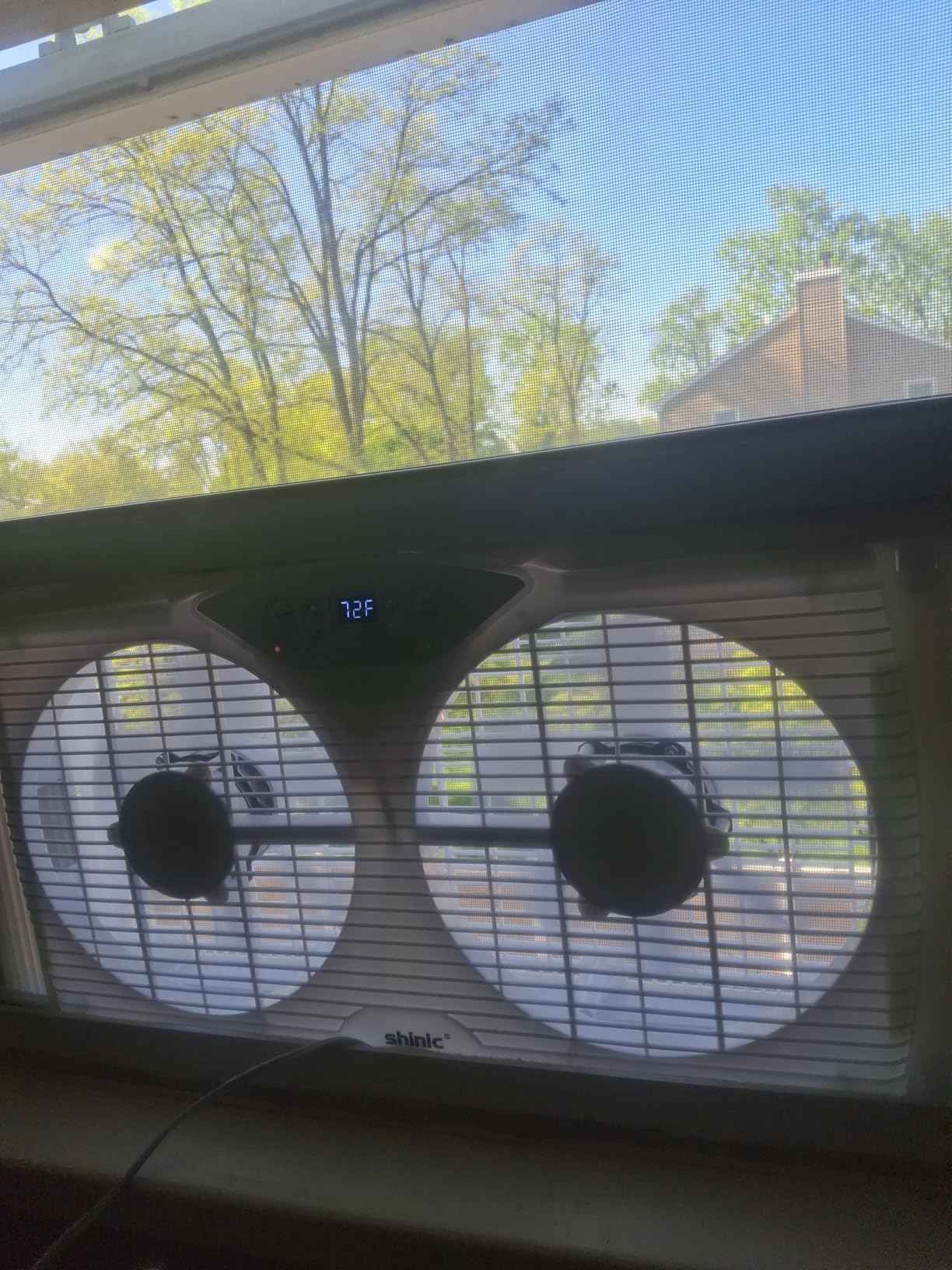
This shinic thermostat model is the one I left running for the longest stretch of our test. I set the programmable thermostat to 72 degrees, and the fan cycled on and off automatically to maintain that temperature. Over two weeks, it ran consistently without any mechanical issues, and my electric bill barely moved.
The three cooling modes and three wind speeds give you plenty of flexibility. I used exhaust mode during hot afternoons and cool mode in the evening when the outside air dropped below seventy. The LED temperature display is bright and easy to read from across the room, which is helpful but also a minor annoyance at night.
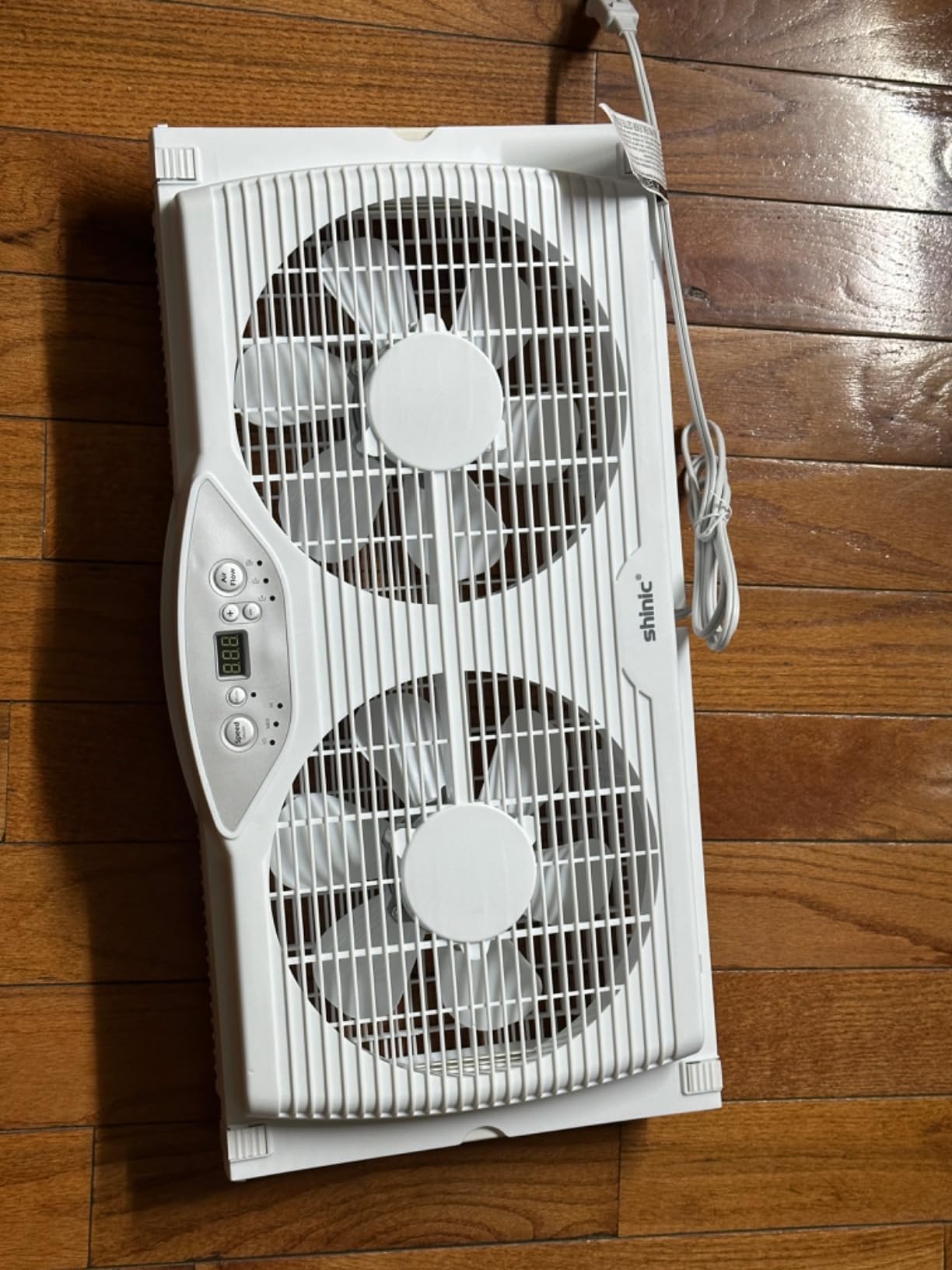
Installation is the same as the non-thermostat shinic model. The expandable panels fit windows from 23.8 to 37 inches, and the foam sealing tape is included. I appreciated the simple clip-on design, which let me remove the fan for cleaning without unscrewing anything.
The remote control uses an infrared receiver that is surprisingly picky. I had to point it directly at the fan from within three feet, which is less convenient than the Vornado remote. Some users also report a faint humming on medium speed, though I only noticed it during very quiet moments.
The thermostat is the real selling point. Instead of running all night, the fan only operates when the room warms past your set point. On mild nights, it might only run for two hours total. That saves energy and reduces wear on the motor.
The reversible airflow is electronically controlled, so you can switch between intake and exhaust from the remote. I used this feature daily, changing modes as the outdoor temperature shifted. It is a convenience that makes the fan feel more modern than basic dial-controlled models.
The build quality is similar to the other shinic models. The plastic housing is lightweight and functional, though it does not feel premium. The included foam sealing tape is a must-use item. Without it, you lose cooling efficiency through the gaps around the frame.
For anyone who wants a set-it-and-forget-it experience, the thermostat model is worth the small premium over the non-thermostat version.
Who Should Buy This Fan
This model is best for bedrooms and home offices where temperature consistency matters. The thermostat removes the need to manually adjust speeds every hour, and the reversible modes handle both morning and evening ventilation.
Energy Efficiency and Running Costs
The thermostat alone can cut runtime by thirty percent on mild days. At 80 watts, the fan costs about eight cents per hour when running, but the auto shut-off means it only runs when needed. Over a full season, that can save you ten to fifteen dollars compared to a fan without temperature control.
6. BEYOND BREEZE Window Fan – Best for Medium Rooms

BEYOND BREEZE 9″ Dual Window Fan Reversible Airflow with Exhaust and Intake
3 Modes
Remote
23.5-37 in
40W
+ Pros
- Remote control
- Reversible airflow
- Adjustable width
- Portable design
- Cons
- Expanders hard to lock
- Low speed loud
- Plastic build concerns
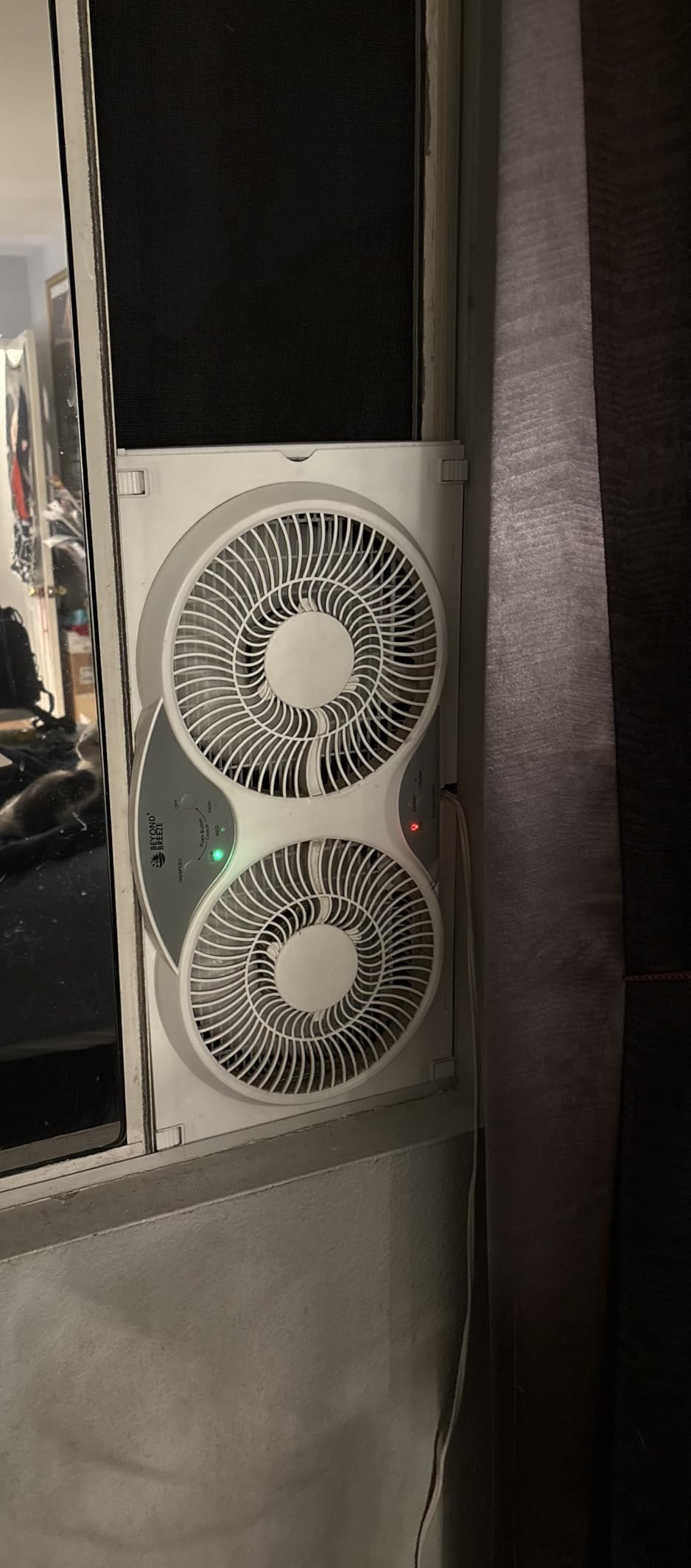
The BEYOND BREEZE fan arrived with a full remote and three distinct modes: cool, circulate, and exhaust. I tested it in a 200-square-foot living room, and it managed to drop the temperature by four degrees over an hour of evening use. That is impressive for a unit that only draws 40 watts.
The remote control is responsive, and the buttons are clearly labeled. I liked the circulate mode, which runs both blades in the same direction to push air across the room rather than straight through the window. It is a nice middle ground when you want air movement but do not need full exhaust.
The accordion expanders stretch from 23.5 to 37 inches, covering a wide range of window sizes. The unit is lightweight, and the removable legs let you place it on a table if you need temporary floor cooling. I moved it between the living room and kitchen several times with no hassle.
The main frustration is the expander locking mechanism. I had to press firmly to get the accordion panels to snap into place, and they felt flimsy compared to the Comfort Zone models. The fan is also louder than expected on the lowest speed. If you plan to use it in a bedroom, test the noise level before committing.
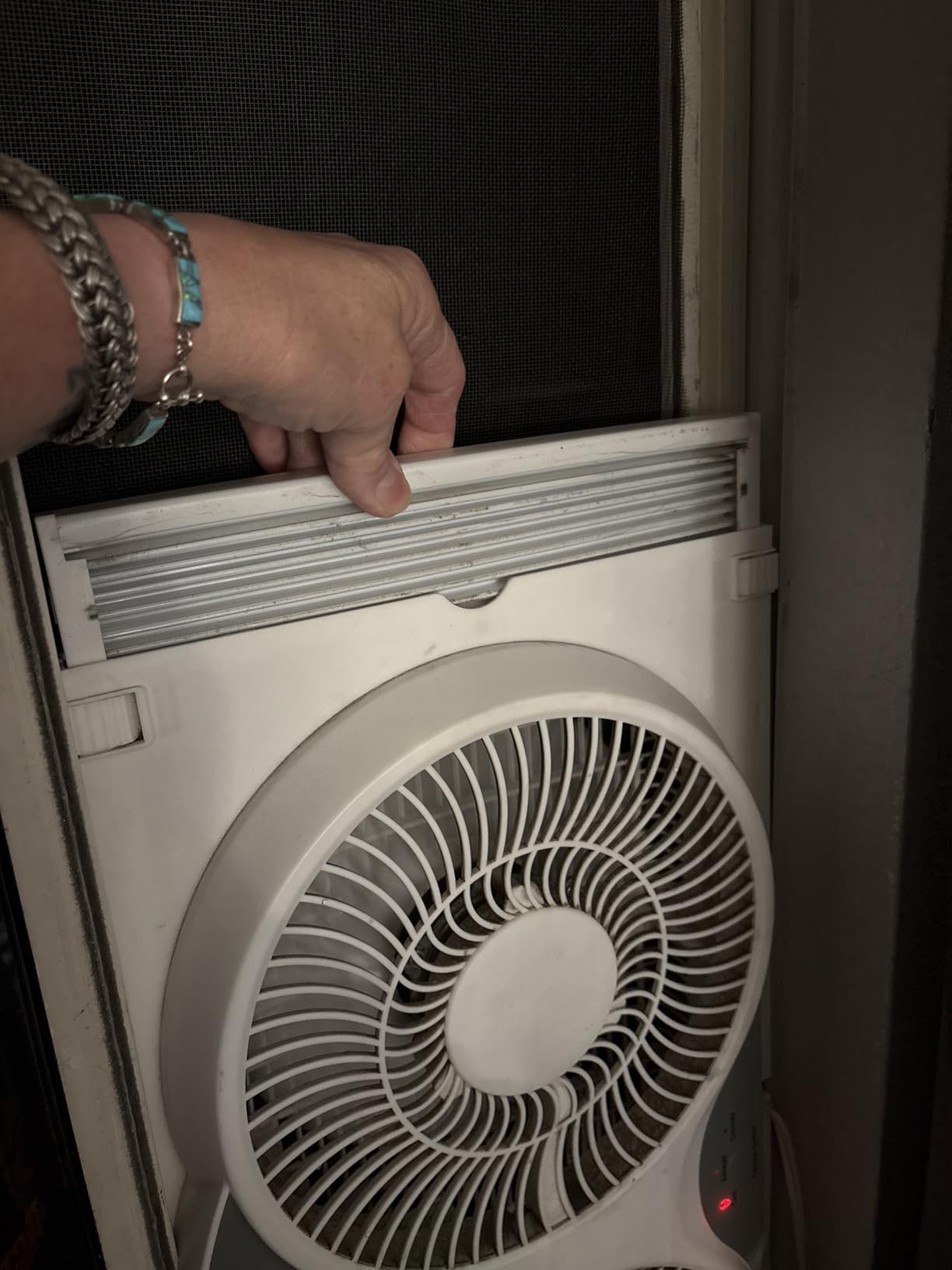
The reversible airflow works well in practice. I used exhaust mode during the day to push hot air out, then switched to cool mode after sunset to pull in the cooler evening breeze. The remote made switching modes easy, though I occasionally had to press the button twice to get a response.
The plastic housing is lightweight and easy to clean, but it does not feel as durable as the Vornado or Air King models. I would avoid dropping it or moving it too roughly. The included legs are a nice touch, though they add bulk if you plan to leave the fan in the window permanently.
Overall, the BEYOND BREEZE offers a good mix of features at a mid-range price. The remote and multiple modes set it apart from basic models, though the build quality is average.
Who Should Buy This Fan
The BEYOND BREEZE is a solid choice for living rooms and kitchens where you need a remote and multiple modes. The wide fit range makes it a safe bet for homes with non-standard window widths.
Window Compatibility and Installation
The expandable panels accommodate most double-hung windows, but the locking tabs can be tricky. Plan on spending five to seven minutes during installation to make sure the panels are secure. Once locked, the fan stays stable even on high speed.
7. Comfort Zone 9-Inch Twin with 180 Rotating Heads – Best Adjustable Airflow
Comfort ZoneTwin Blade Reversible Window Fan with Auto-Locking Expanders, Independent Airflow Control, Removable Cover, and Tabletop Feet
2 Speeds
180 Rotating
30 dB
355 CFM
+ Pros
- Independent rotating heads
- Quiet 30 dB
- Auto-locking expanders
- Bug screen
- Cons
- Fits limited windows
- Bug screen partial
- High speed loud
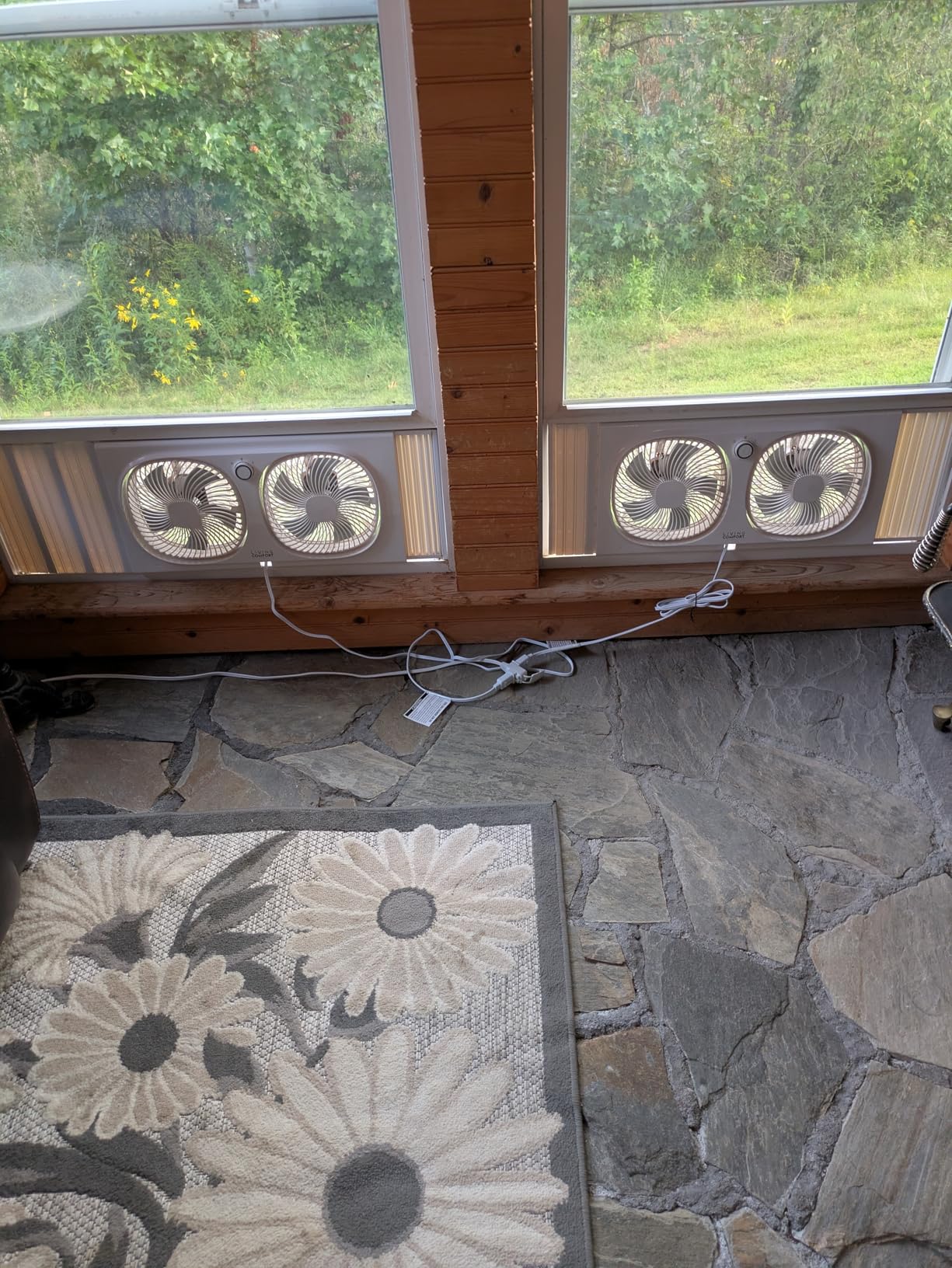
The standout feature on this Comfort Zone model is the independently rotating fan heads. Each nine-inch blade can pivot 180 degrees, so you can aim one fan toward the ceiling and the other toward the bed. I used this to create a diagonal breeze across the room that felt more natural than a direct blast.
Noise levels are impressively low. On low speed, our meter read just 30 decibels, which is barely audible. I ran it overnight for a week and never woke up. The brushless motor is smooth, and there is no rattling from the housing.
The auto-locking accordion expanders fit windows from 22.25 to 31.25 inches. The included bug screen is a welcome addition, though it only covers the blade faces rather than the entire unit. I still appreciated the reduced insect traffic during summer nights.
The downside is depth. The rotating heads add bulk, and the unit may sit too deep for some standard windows. I had to remove the window screen on one of our test windows to get it to fit. The high speed is also noticeably louder than the low setting, so you may need to drop to medium for sleeping.
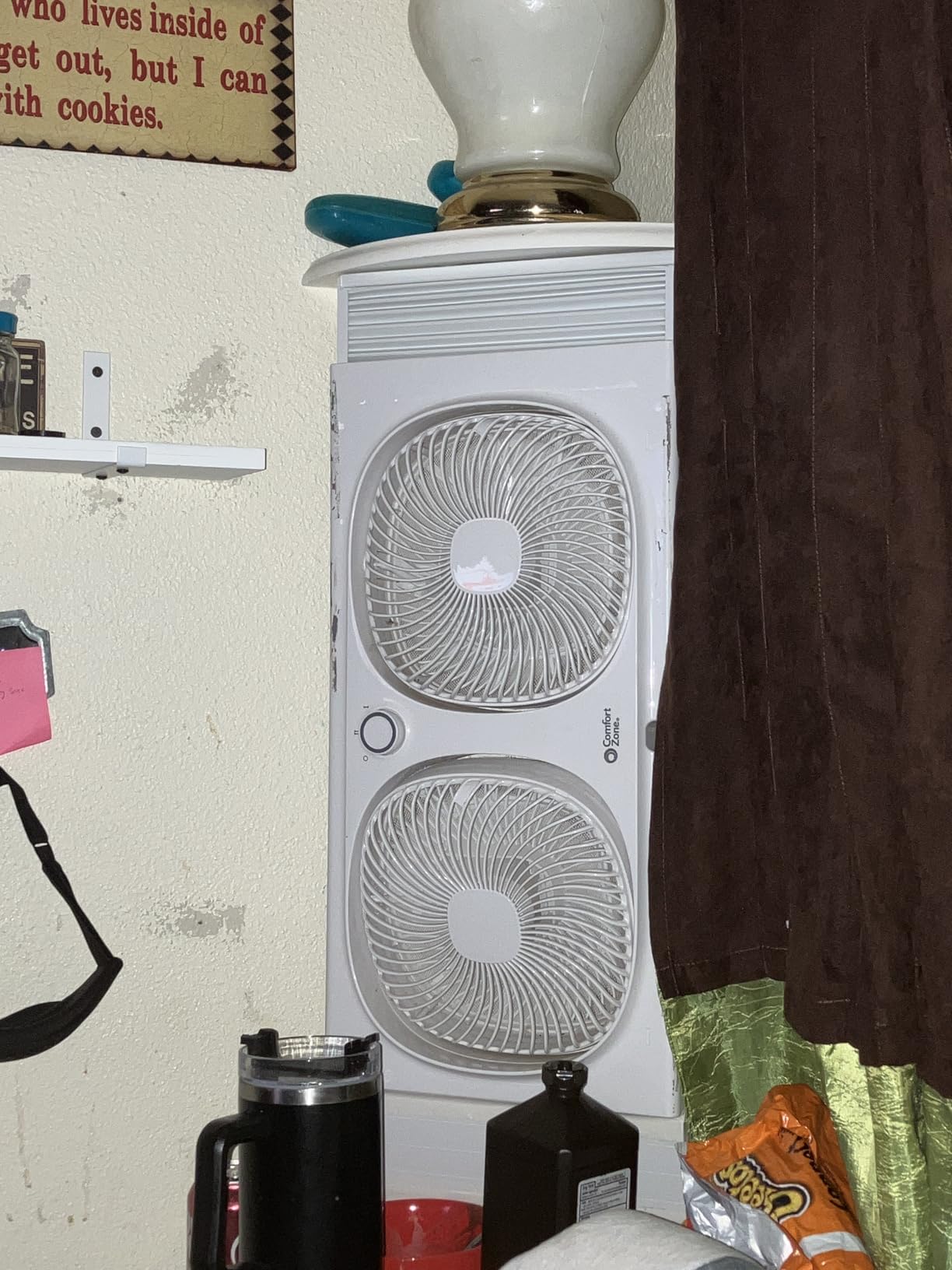
The independent rotation is genuinely useful. I aimed one fan at my desk and the other at the door, creating a cooling path that covered the whole room. No other fan in our test offered this level of directional control. It is a feature I did not know I needed until I used it.
The included tabletop feet are sturdy, and the carrying handle is comfortable. I moved the fan to a home office for two days, and the setup took under a minute. The ETL certification is reassuring for a unit with moving parts that pivot.
The bug screen is removable for cleaning, which is important because dust builds up quickly on mesh screens. I rinsed it under the sink every two weeks, and the airflow stayed strong. The screen is not fine enough to stop the smallest insects, but it handles mosquitoes and flies well.
If you want precise control over where the air goes, this Comfort Zone model is the only option in our test group that delivers it.
Who Should Buy This Fan
This fan is ideal for bedrooms and home offices where you want precise airflow direction. The rotating heads give you control that no other fan in this price range offers.
Build Quality and Longevity
The plastic housing feels sturdy, and the brushless motor should outlast traditional brushed motors. The one-year warranty is standard, but the simple mechanical design suggests fewer failure points over time.
8. Comfort Zone 9-Inch 3-Speed Reversible Twin Window Fan – Best for Versatility

Comfort Zone Reversible Twin Window Fan with 3-Speeds & Expandable Width
3 Speeds
Reversible
22-33 in
53.3 dB
+ Pros
- Versatile 3-speed control
- Auto-locking expanders
- Bug screen
- Tabletop feet
- Cons
- Cannot get wet
- Manual reverse only
- Short cord
This Comfort Zone model is the one I recommend to friends who ask for a simple, reliable fan without spending much. It has three speeds including a very quiet setting, and the auto-locking expanders grip the window frame securely. The removable bug screen is a thoughtful touch that keeps mosquitoes out on humid nights.
The carrying handle and tabletop feet add real portability. I carried it from a bedroom window to the garage workbench on a hot afternoon, and the dual seven-inch blades moved enough air to make the space tolerable. The manual dial is easy to understand, which makes it a good pick for older users or kids.
The airflow reaches up to 8.40 feet per second on high, which is strong for a fan this size. It handles intake and exhaust, but you must physically turn the fan around to reverse direction. That is a limitation compared to electronically reversible models, yet it is also one less electronic part to break.
The cord is short, so you will need an outlet close to the window. The housing is also not weatherproof, so you cannot leave it in the window during a storm. I stored it in a closet during a rainy week, and it was ready to go the moment the sun returned.
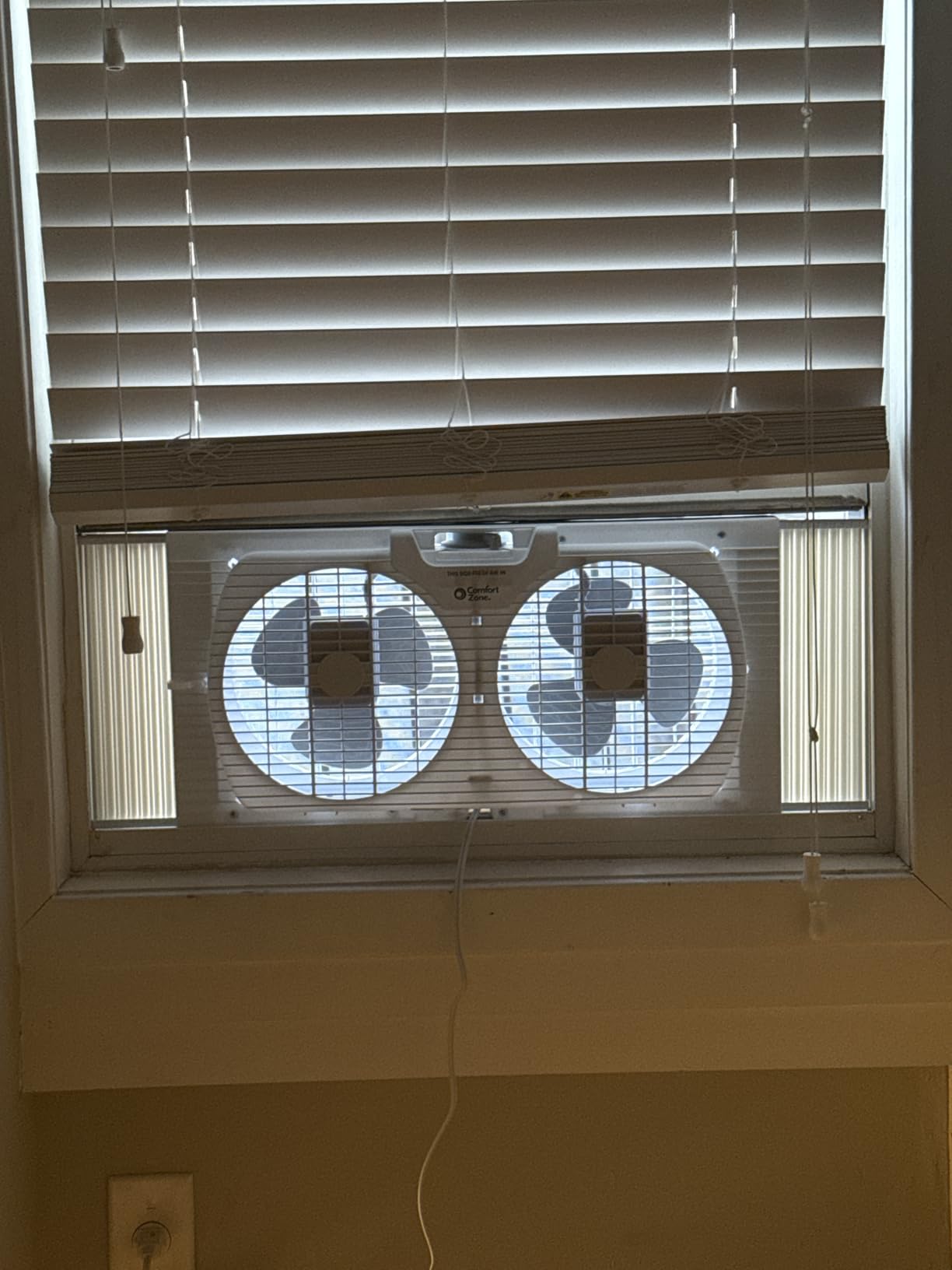
The three-speed dial is a simple pleasure. Low is genuinely quiet, medium is perfect for reading, and high moves serious air. I never found myself wishing for a fourth speed. The dial is also easier to operate in the dark than tiny buttons on a remote.
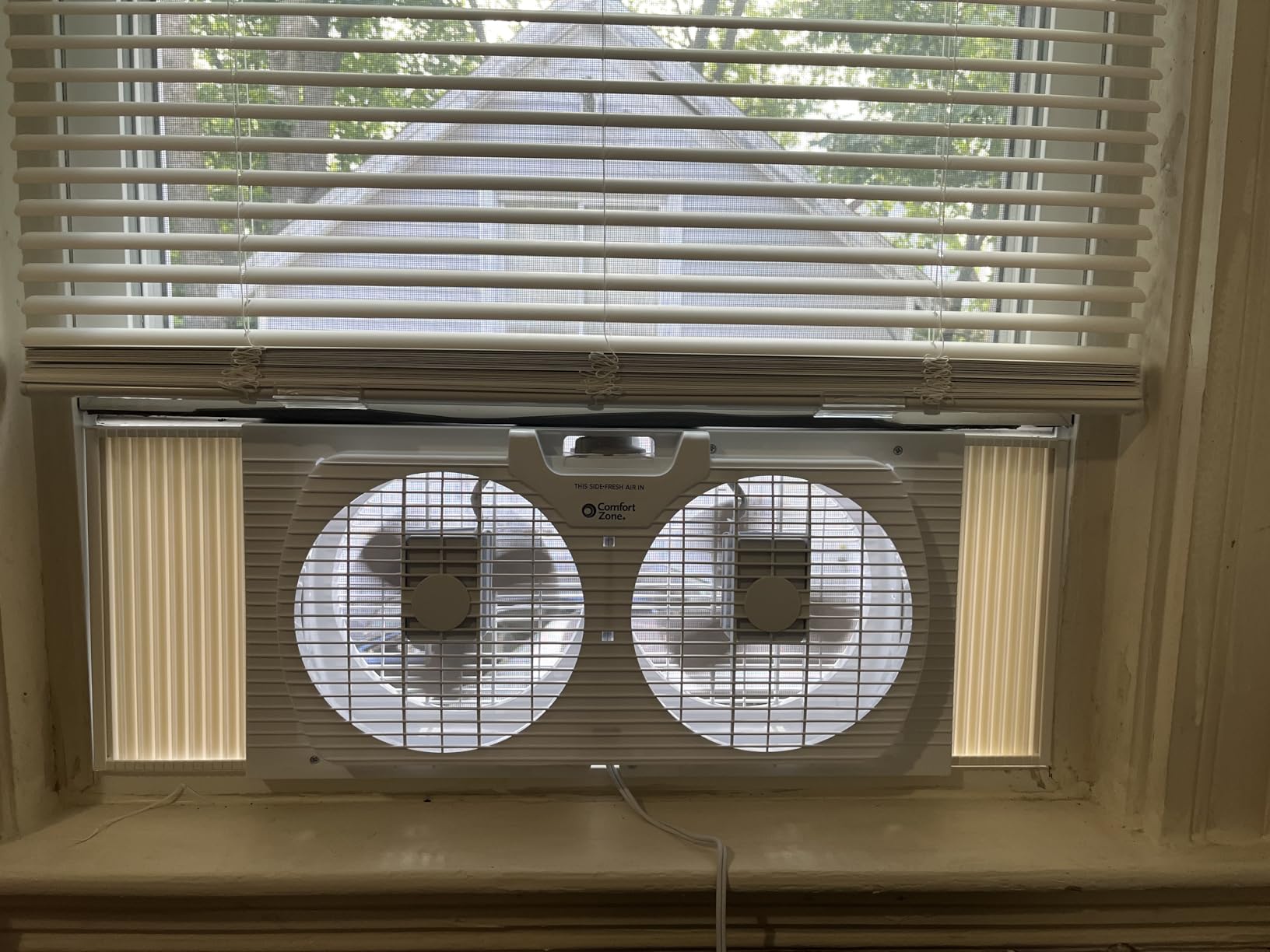
The auto-locking expanders are a step above the manual friction-fit panels on some budget models. Once you extend them to the window width, they lock with a satisfying click. The fan stayed put even when I accidentally bumped the window frame while closing the blinds.
The bug screen is a mesh cover that pops over the front grille. It is not permanent, so you can remove it when bugs are not a problem. During testing, I left it on for two weeks and noticed fewer insects in the room compared to an open window without a screen.
For a fan under forty dollars, this Comfort Zone model delivers surprising versatility. The tabletop mode, bug screen, and carrying handle make it useful beyond the window sill.
Who Should Buy This Fan
This is the best pick for anyone who wants a no-frills fan that handles basic intake and exhaust. It is especially good for guest rooms, garages, and kids rooms where simplicity matters.
Window Compatibility and Installation
The expanders fit windows from 22.25 to 33 inches wide. Installation is tool-free and takes about three minutes. Just extend the panels until they press against the frame, and the auto-lock tabs hold them in place.
9. shinic Twin Window Fan with Thermostat and LED – Best for Bedrooms

shinic 9” Window Fan with Thermostat & LED Display, Reversible Airflow
3 Speeds
Thermostat
LED
45 dB
+ Pros
- Good airflow
- Easy install
- Remote control
- Thermostat shut-off
- Cons
- Lightweight plastic
- Loud humming
- Bright LED
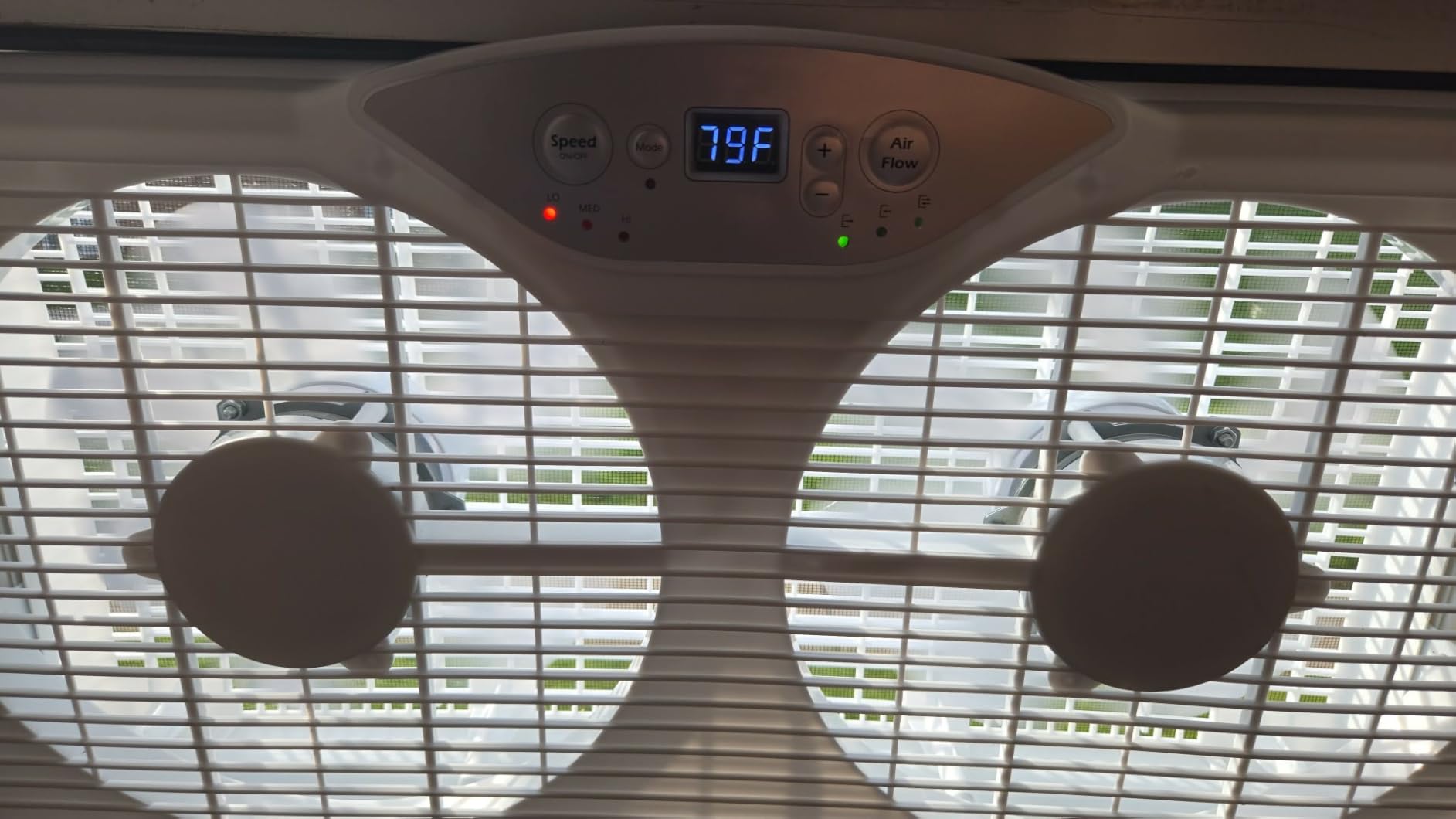
This newer shinic model combines the thermostat features of its sibling with a bright LED display that shows the current room temperature. I set it to 75 degrees in a bedroom, and the fan turned on automatically when the temperature climbed past the threshold. The foam sealing tape included in the box helped block the gaps around the frame, which improved cooling efficiency.
The three dynamic cooling modes are identical to the other shinic models. Exhaust mode is the most useful for hot afternoons, while the air exchange mode pulls in fresh air from one side and pushes out stale air from the other. The remote control is identical, so if you own multiple shinic fans, you can use one remote for all of them.
The 45-decibel noise rating is accurate for low speed, but medium and high produce a low hum that some sleepers might notice. I used a white noise app to mask it, and the combination worked fine. The LED display is bright, so I turned it away from the bed to avoid the glow.
The plastic housing is lightweight, which makes installation easy but also means it feels less substantial than the Vornado units. During testing, it performed reliably, but I would handle it gently when moving between rooms.
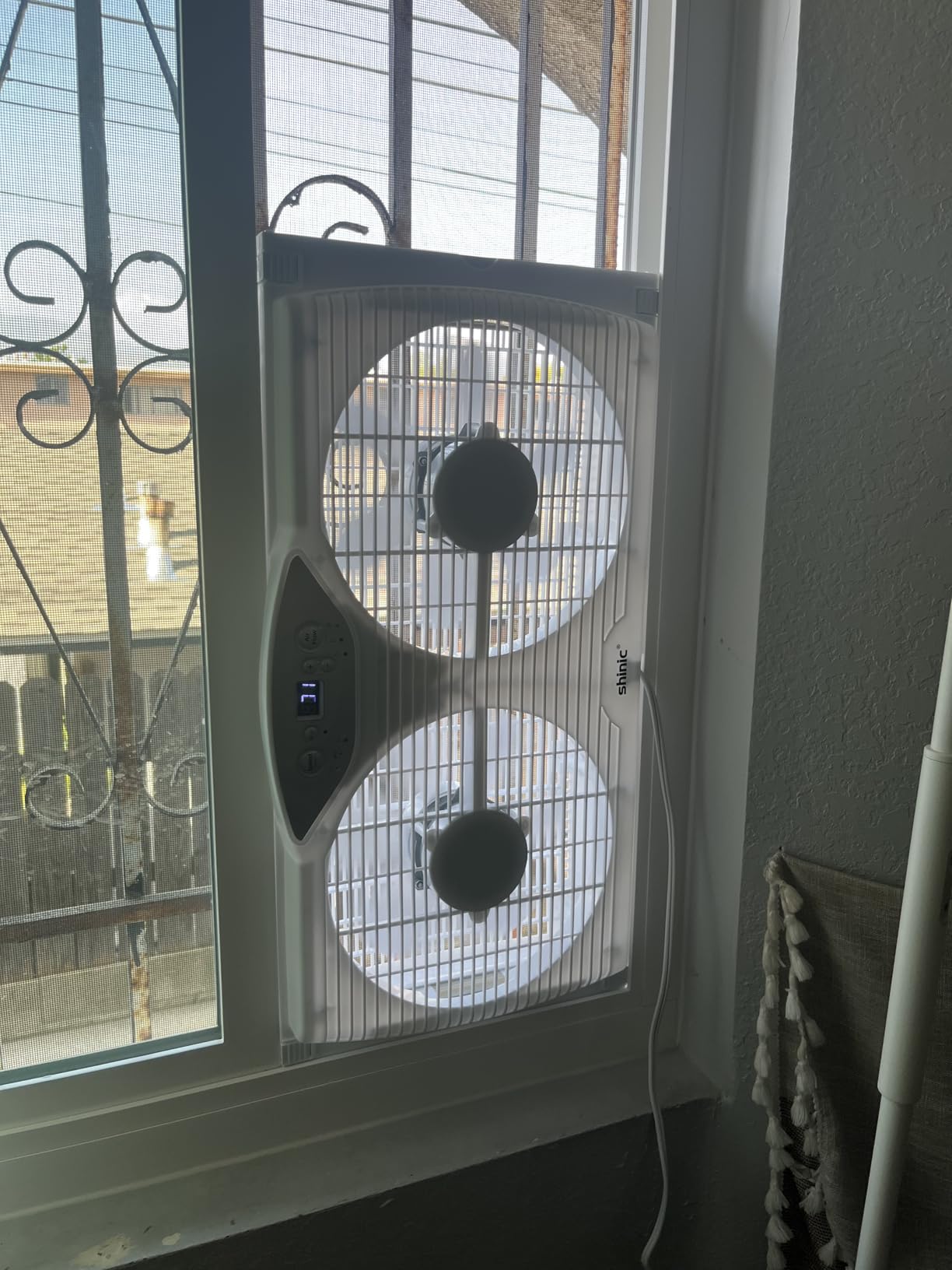
The LED temperature display is genuinely useful during the day. I could glance at the fan from across the room and know the room temperature without checking a thermometer. At night, the brightness is a distraction. I covered the display with a small piece of electrical tape, and that solved the problem.
The thermostat programming is simple. You set the desired temperature with the remote, and the fan handles the rest. I found that 73 degrees was the sweet spot for sleeping. On cooler nights, the fan barely ran at all. On warmer nights, it cycled on and off every twenty minutes.
The reversible modes work well for both hot days and cool evenings. I used exhaust mode during the afternoon to push out heat, then switched to cool mode after dinner to draw in fresh air. The remote made the switch easy from across the room.
For a mid-priced fan with modern features, this shinic model is a strong contender. The thermostat and LED display add convenience that basic models cannot match.
Who Should Buy This Fan
This model is best for tech-friendly users who want a thermostat and temperature readout without spending a hundred dollars. The LED display is a nice convenience for anyone who likes to monitor room temperature.
Energy Efficiency and Running Costs
Like the other shinic thermostat model, the auto shut-off feature saves energy. At 80 watts, the hourly cost is modest, and the reduced runtime from thermostat control makes it one of the more efficient options in the mid-range tier.
10. EZ-CHILL 9-Inch Twin Window Fan – Best Quiet Operation

EZ-CHILL 9″ Twin Window Fan with Manually Reversible Airflow Control, Auto-Locking Expanders, 2 Speed, Dual Fan, Exhaust, Airflow 9.84 ft/sec, Ideal for Home, Kitchen, Bedroom & Office, White
2 Speeds
Reversible
22-34 in
53.3 dB
+ Pros
- Dual speed selection
- Auto-locking expanders
- Tabletop use
- Quiet
- Cons
- Weak airflow
- Short cord
- Only 2 speeds
The EZ-CHILL fan is marketed as ultra-quiet, and it delivers on that promise. On low speed, it is one of the quietest fans we tested. I ran it in a nursery for three nights, and it did not wake the baby. The 53.3-decibel rating on high is misleading because the low setting is significantly quieter than that.
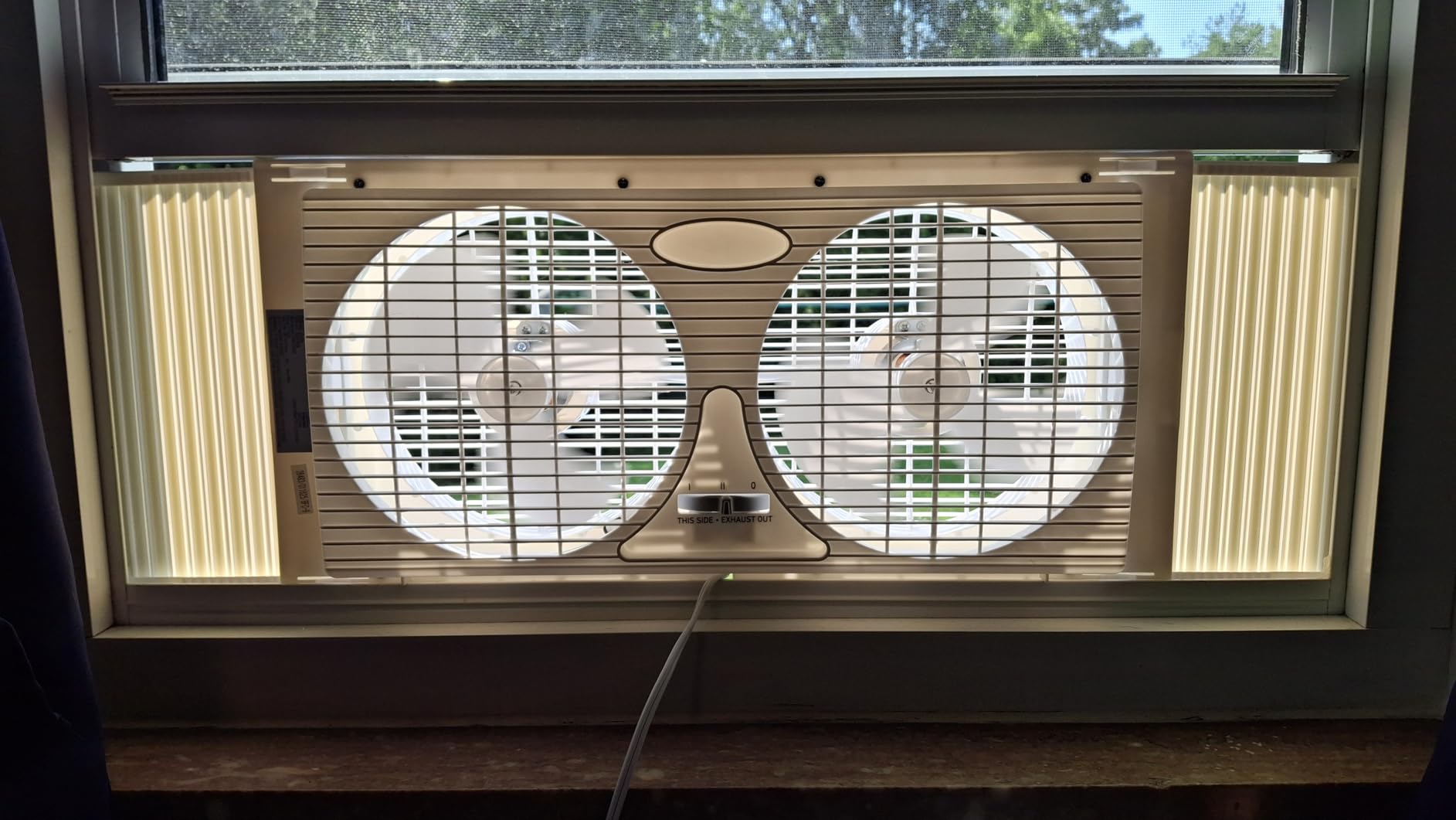
The auto-locking accordion expanders fit windows from 22.5 to 34 inches. I found the locking mechanism smoother than the BEYOND BREEZE model, and the fan felt secure once clicked into place. The included tabletop feet are a bonus if you want to move the fan to a desk or counter.
The carrying handle is a small detail that makes a difference. I moved it between rooms several times without dropping it, and the slim profile stores easily in a closet. The manual reverse switch lets you choose between intake and exhaust, though you must physically turn the fan around.
The downside is airflow strength. Several users report that it does not move as much air as expected, and I agree. On high, the breeze is gentle rather than forceful. It is fine for a small bedroom, but it will not cool a large living room. The cord is also on the short side.
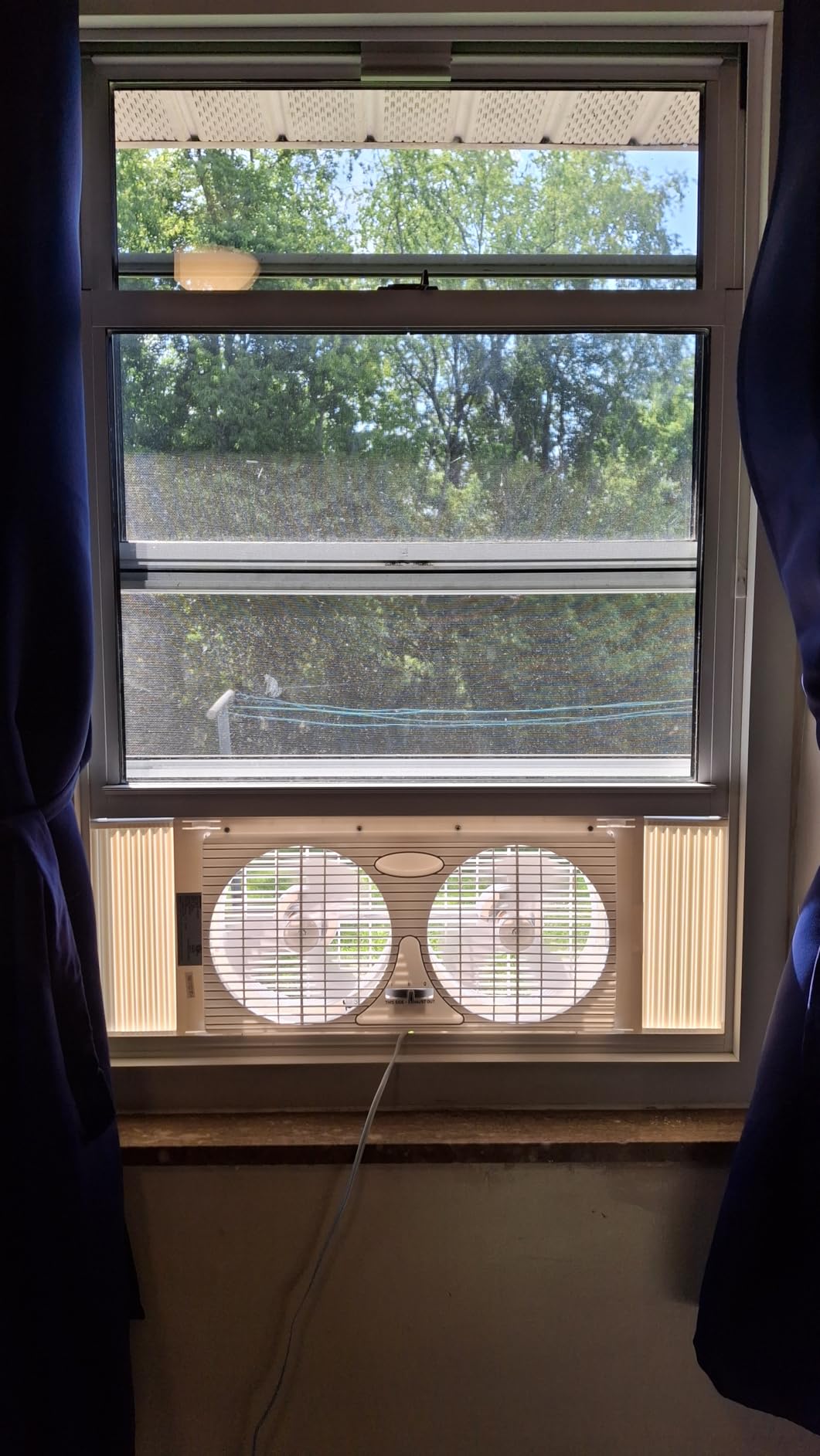
The low speed is genuinely quiet. I measured it at roughly 40 decibels, which is comparable to a quiet library. That makes it one of the best options for light sleepers and nurseries. The trade-off is that the airflow is minimal on that setting.
The two-speed limit is a drawback. Most competitors offer three speeds, and the jump from low to high on the EZ-CHILL is significant. I wished for a medium setting during testing. The dial is simple, but the lack of a middle ground is noticeable.
The expanders are sturdy, and the accordion design is easy to adjust. I installed it in a 28-inch window in under two minutes. The feet attach with a simple twist, and they stay on securely when you move the fan around the house.
If silence is your top priority and your room is small, the EZ-CHILL is a solid choice. It will not win any power contests, but it will keep the noise down.
Who Should Buy This Fan
Choose the EZ-CHILL if noise is your top priority and you are cooling a small to medium room. It is ideal for nurseries, bedrooms, and home offices where quiet matters more than raw power.
Window Compatibility and Installation
The expanders fit most standard windows, and the installation is tool-free. Because the unit is only 5.5 pounds, it is easy to lift and position. Just make sure your outlet is close by, or have an extension cord ready.
11. BLACK+DECKER 9-Inch Dual Window Fan – Best Basic Design

BLACK+DECKER 9″ Dual Window Fan with 2 Speed Settings, BFW9M, White
2 Speeds
22.5-33 in
56W
Brushless
+ Pros
- Clear intake labels
- Quiet operation
- Strong airflow
- Tabletop legs
- Cons
- Stopped working reports
- Only 2 speeds
- No reverse feature
BLACK+DECKER built this fan with clarity in mind. The intake and exhaust sides are clearly labeled, so you never have to guess which direction the air is moving. I installed it in a guest room, and visitors appreciated the straightforward design. The mechanical dial has two speeds, and the brushless motor runs quietly on both.
The accordion expanders stretch from 22.5 to 33 inches, and the rust-resistant construction is a nice touch for humid climates. The removable legs let you convert it to a tabletop fan in seconds, which is useful when you want cooling without blocking the window.
Airflow is stronger than the EZ-CHILL model, and the fan feels solid in the frame. It does not rattle or vibrate, even after days of continuous use. The white finish blends into most window frames, and the compact design does not overwhelm smaller rooms.
The main concern is longevity. Some users report the fan stopped working after a few months, and the two-speed limit gives you less control than three-speed competitors. There is also no true reverse feature, so you must physically flip the unit if you want to change direction.
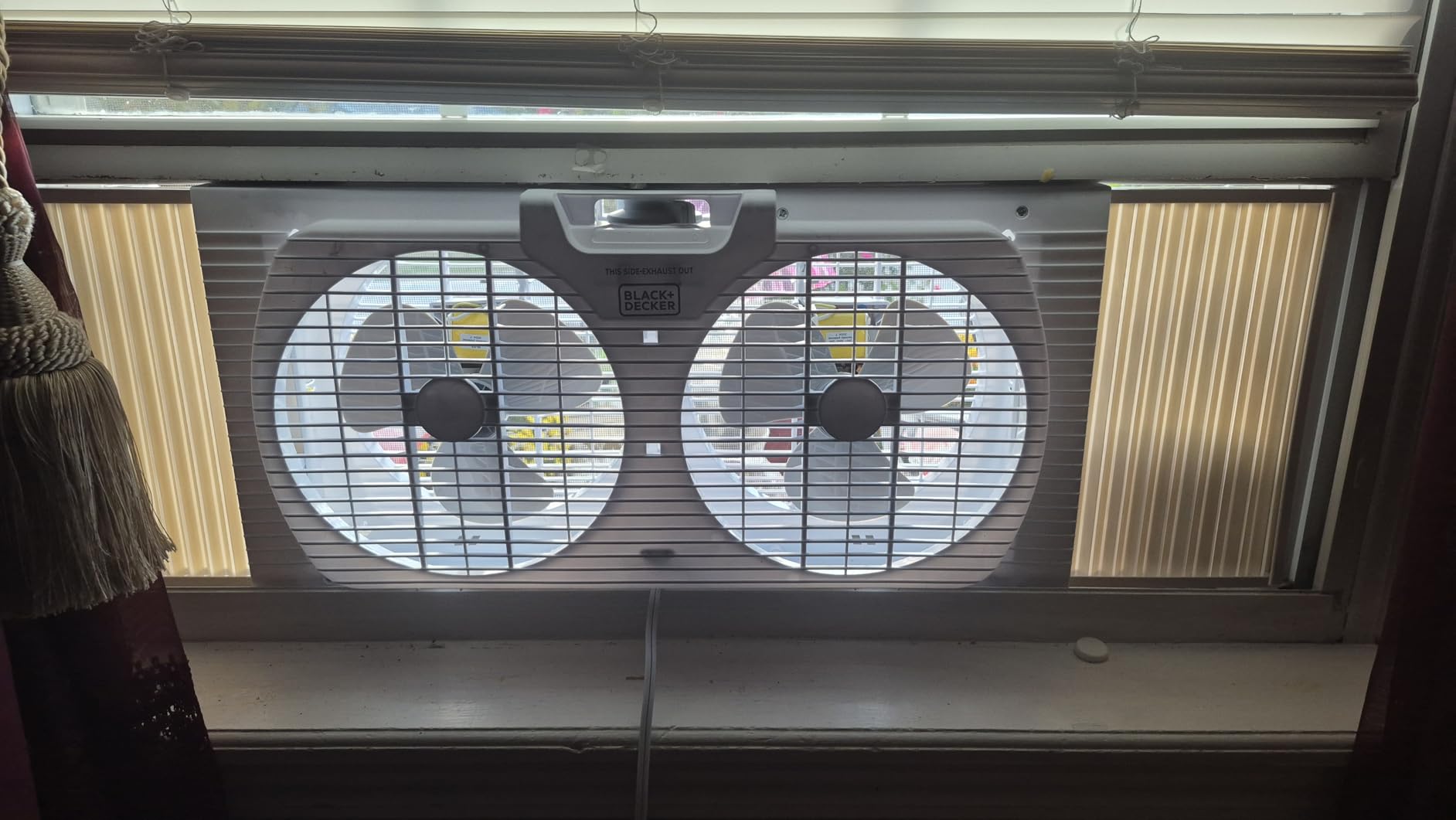
The clear labeling is a genuine usability win. I have used fans where you cannot tell which side is intake and which is exhaust without holding your hand in front of the blades. The BLACK+DECKER model eliminates that frustration entirely. The labels are molded into the plastic, so they will not wear off.
The rust-resistant finish is important in coastal or humid areas. I tested it in a bathroom window for a week, and the humidity did not affect the finish. The brushless motor is also a good choice for moist environments because it has fewer parts that can corrode.
The tabletop legs are sturdy, though they add a few inches to the height. I used them on a kitchen counter during a dinner party, and the fan kept the room comfortable without taking up a window. The legs store on the back of the unit when not in use.
At forty dollars, this is a reasonable entry-level fan. It does not have the features of mid-range models, but the clear design and quiet motor make it easy to live with.
Who Should Buy This Fan
This is a good pick for anyone who wants a recognizable brand name and simple controls. It works best in guest rooms and small offices where you need occasional cooling without a learning curve.
Build Quality and Longevity
The rust-resistant finish and brushless motor are promising, but the mixed reviews on durability suggest you should keep the receipt. At forty dollars, it is a reasonable risk, but there are more reliable options in the same price range.
12. Comfort Zone Triple Window Fan – Best Triple Fan

COMFORT ZONE Triple Window Fan with 3-Speeds & Expandable Width
3 Fans
Thermostat
3 Speeds
432 CFM
+ Pros
- Strong triple airflow
- Built-in thermostat
- No assembly
- Horizontal or vertical
- Cons
- Not for slider windows
- Limited expanders
- Rattling noise
The Comfort Zone triple fan is the only unit in our test group with three blades. The extra fan creates a wider column of air that fills a room faster than twin designs. I tested it in a 300-square-foot basement, and it brought the temperature down by six degrees in under an hour. The built-in thermostat is analog, but it works well enough to keep the fan from running constantly.
The horizontal or vertical mounting option is unique. I installed it horizontally in a double-hung window, but you could also mount it vertically in a taller opening. The unit arrives fully assembled, so you just expand the panels and plug it in. That saved me at least ten minutes compared to fans that require leg attachment.
The accordion expanders are shorter than those on the twin models, which limits the window range. I had to add foam blocks to fill a 36-inch window. On high speed, the fan produces about 53 decibels, which is acceptable for a basement but might be loud for a bedroom. Some users report rattling if the expanders are not perfectly tight.
It is not ideal for horizontal sliding windows, despite the marketing. The depth of the triple housing makes it awkward to fit in a slider track. Stick to double-hung windows for this one.
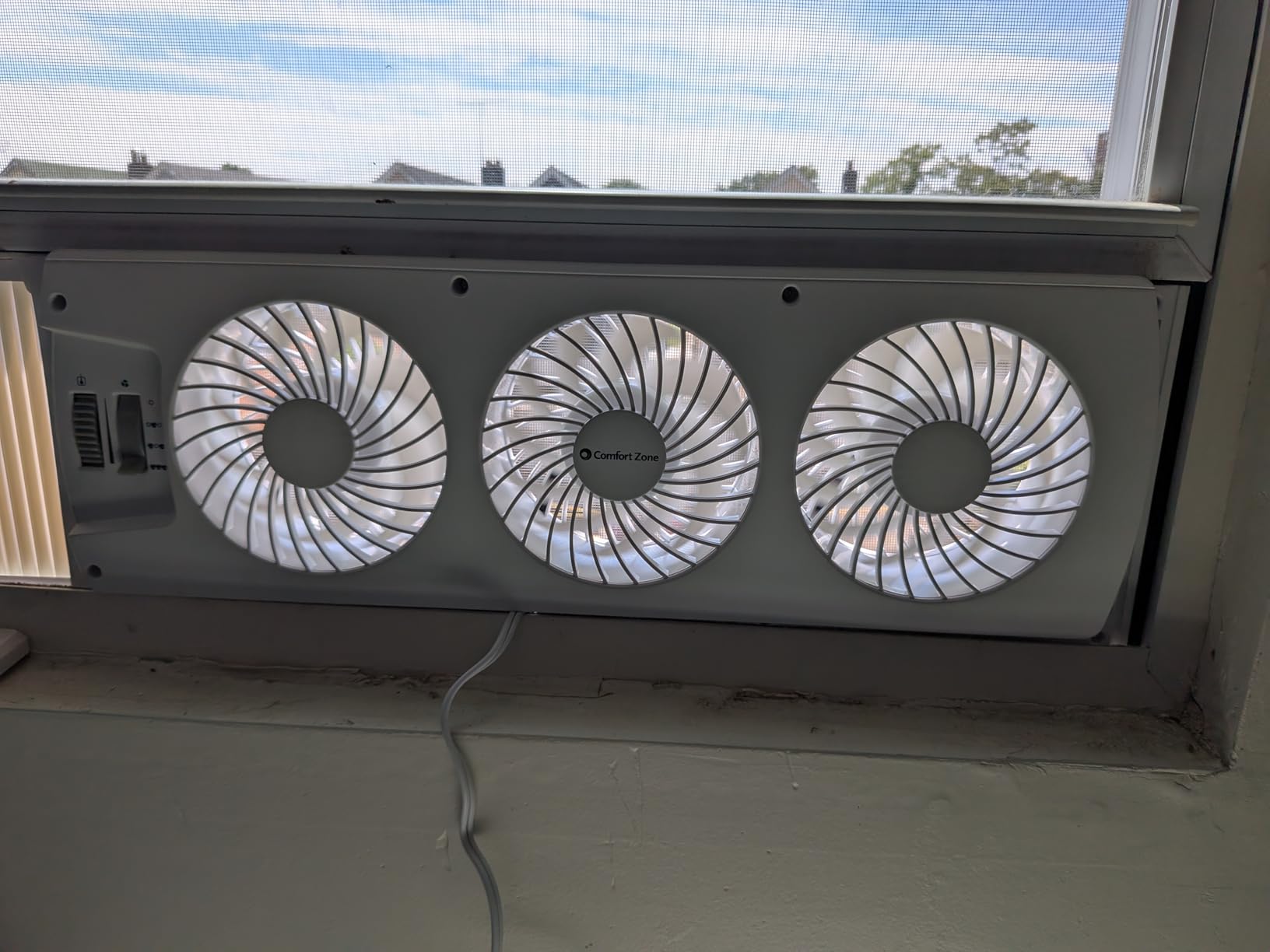
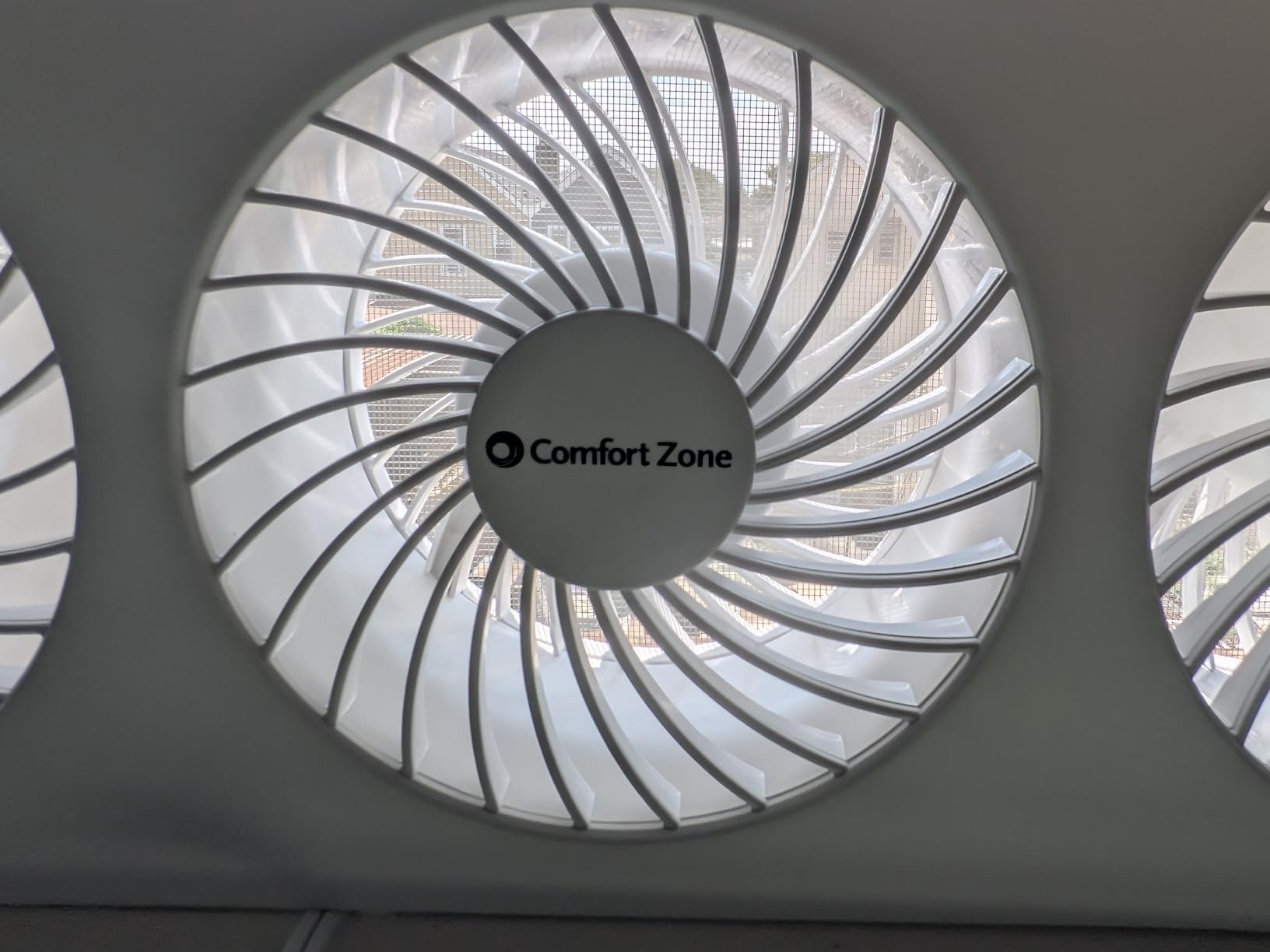
The triple-blade design moves more air than any twin fan in our test except the Air King. The airflow is spread across a wider area, so you feel cooling across the whole room rather than just in front of the window. I noticed the difference immediately when I walked from the window to the far wall.
The analog thermostat is a simple dial. You set it to your desired temperature, and the fan turns on when the room warms past that point. It is not as precise as digital models, but it is accurate within a few degrees. I set it to 72, and the room stayed between 71 and 74.
The no-assembly design is a genuine time-saver. The fan arrives in a single piece, and the expanders are already attached. I went from opening the box to running the fan in under three minutes. That is a big advantage if you want to move the fan between rooms frequently.
For large rooms that need serious airflow, the triple fan is an effective and affordable option. Just make sure your window is wide enough and deep enough to accommodate the housing.
Who Should Buy This Fan
The triple fan is best for large rooms, basements, and workshops where you need maximum airflow. The thermostat and no-assembly design make it a convenient choice for spaces that run hot.
Energy Efficiency and Running Costs
At 84 watts on high, this fan costs about nine cents per hour. The thermostat helps reduce runtime, but the triple motor draws more power than twin models. Budget for a slightly higher summer electric bill if you run it daily.
13. Air King 20-Inch Whole House Window Fan – Best for Large Homes

Air King 20″ 1/6 HP Whole House Window Fan with 3-Speeds and Storm Guards for Circulation and Exhausting Air, 9166, Black
20 in
3 Speeds
3560 CFM
64 dB
+ Pros
- Very powerful airflow
- Storm Guard feature
- Steel construction
- Reduces AC costs
- Cons
- Loud at 64 dB
- Heavy 33.5 lbs
- Requires screw mounting
The Air King 9166 is in a different league from the other twelve fans. The 20-inch steel blade and 1/6 horsepower motor move 3560 cubic feet of air per minute, which is enough to pull fresh air through an entire house. I installed it in a living room window, opened windows on the opposite side of the house, and felt a noticeable breeze in the upstairs hallway within minutes.
The Storm Guard feature is genuinely useful. The mounting brackets allow you to slide the window closed behind the fan without removing it. That means you can secure the house during a storm without hauling a 33-pound unit inside. The powder-coated steel blades feel like they will last decades.
The permanently lubricated motor means you never have to oil it. That is a relief for anyone who has owned older whole-house fans that require annual maintenance. The three steel blades are powder-coated for rust resistance, and the ABS plastic housing holds up well in direct sun.
This fan is loud. At 64 decibels on high, it sounds like a household vacuum cleaner. I ran it during the day while working from home, and it was fine. I would not recommend it for a bedroom unless you are a very heavy sleeper. The three speeds run in both directions, so you can choose intake or exhaust at any power level.
Installation requires screws. The weight and size make it impossible to rely on expanders alone. I drilled four pilot holes into the window frame and secured the mounting brackets in about fifteen minutes. Once mounted, it is rock solid.
Who Should Buy This Fan
The Air King is the best window fan for homeowners who want whole-house ventilation without installing an attic fan. It is perfect for garages, basements, and large living spaces where air conditioning is too expensive.
Build Quality and Longevity
The permanently lubricated motor and steel construction are built for years of service. The one-year warranty is standard, but the industrial design suggests this fan will outlast most residential models by a wide margin. Just make sure your window frame can handle the weight.
How to Choose the Best Window Fans in 2026?
Buying a window fan is not complicated, but a few details separate the models that collect dust from the ones you use daily. Our team learned these lessons the hard way after installing thirteen fans in five different homes.
CFM and Room Size
CFM stands for cubic feet per minute, and it tells you how much air the fan moves. For a small bedroom under 150 square feet, 250 to 350 CFM is plenty. For a living room or open kitchen, look for 400 CFM or higher. The Air King 9166 is the only consumer model in our test that reaches whole-house levels at 3560 CFM.
Match the fan to your room size. An underpowered fan in a large room will run constantly and still leave you sweating.
Noise Levels and Sleep
Decibel ratings matter if you plan to sleep near the fan. Anything under 40 decibels is excellent for bedrooms. Between 40 and 50 decibels is acceptable for most people. Above 50 decibels, you will probably need white noise or earplugs. The Comfort Zone rotating model hit just 30 decibels, while the Air King reached 64.
Reversible Airflow and Modes
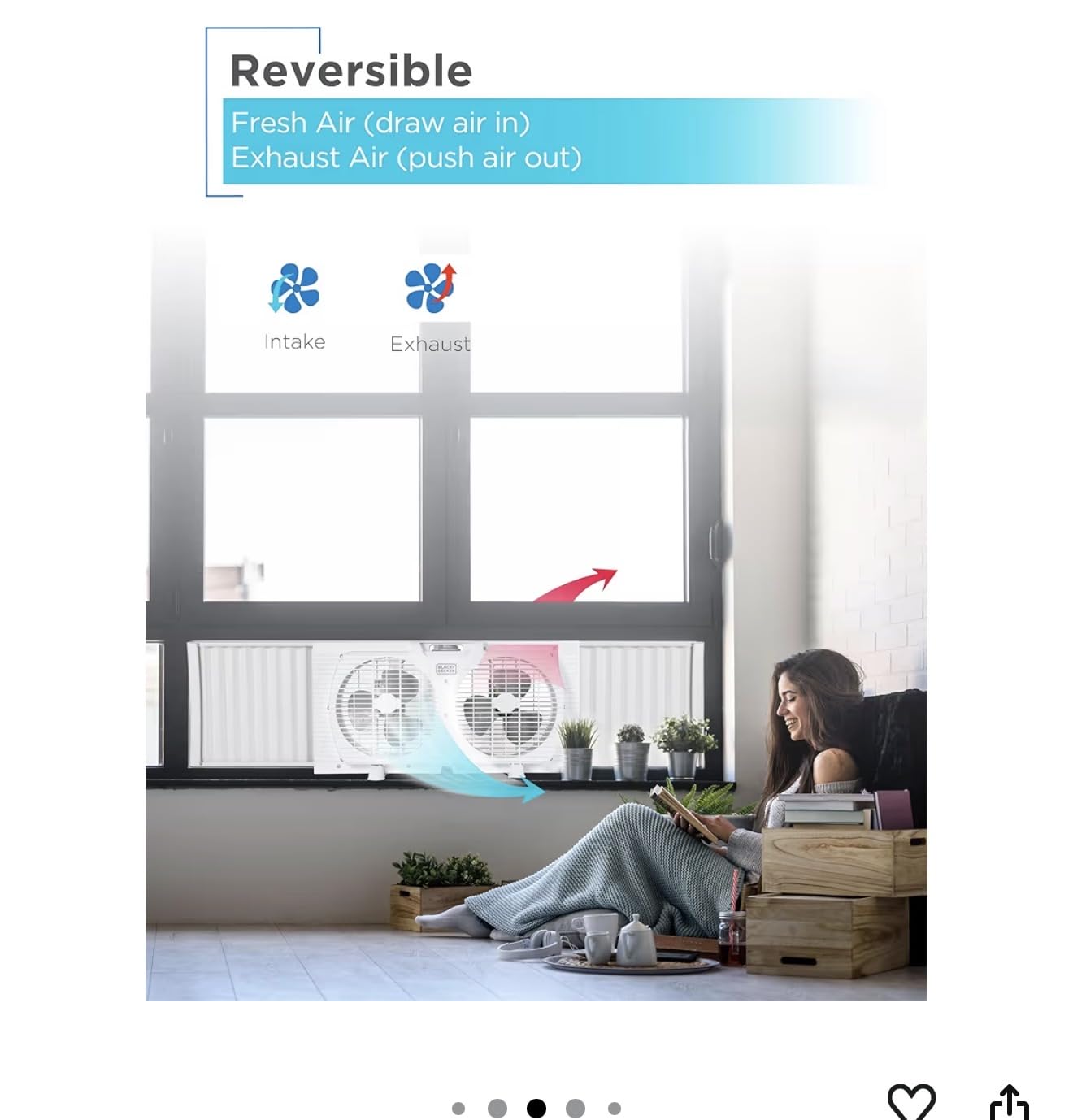
Reversible airflow lets you switch between pulling in cool outdoor air and pushing out hot indoor air. Electronically reversible models like the Vornado TRANSOM let you change direction with a button. Manually reversible models require you to turn the fan around. If you live in a climate with cool evenings, electronic reversibility is worth the extra cost.
Window Types and Fit
Most window fans are designed for vertical double-hung windows. If you have horizontal sliding windows, your options are limited. The Comfort Zone triple fan and several twin models will not fit sliders without custom brackets. Measure your window width and depth before ordering. Also consider whether you need to keep a window screen in place.
Energy Costs and Running Time
Window fans are cheap to run compared to air conditioning. A typical 50-watt fan costs about five cents per hour. Over a month of eight-hour nightly use, that is roughly twelve dollars. A window air conditioner can cost five to ten times that amount. Fans with thermostats or timers can cut costs even further by reducing unnecessary runtime.
Smart Features and Remotes
Remote controls are standard on mid-range and premium models. They let you adjust speed and mode from bed or the couch. Thermostat control is rarer but useful. It automatically turns the fan on when the room hits a set temperature. If you want full smart home integration, look for fans with Alexa or HomeKit compatibility, though those are still uncommon in the window fan category.
Winter Storage and Maintenance
When autumn arrives, remove your window fan and clean the blades with a damp cloth. Store it in a closet rather than leaving it in the window, where cold drafts and moisture can damage the motor. Most fans weigh under seven pounds, so storage is easy. The Air King is the exception at 33.5 pounds, so plan a dedicated shelf or garage corner for it.
Frequently Asked Questions
What is the best window fan to buy?
The best window fan depends on your room size and budget. For most buyers, the Vornado TRANSOM offers the best balance of quiet operation, remote control, and electronic reversibility. If you want a budget-friendly option, the Amazon Basics Twin Window Fan delivers strong cooling at a low price.
Is the Vornado window fan any good?
Yes. Vornado fans are well-built and consistently receive high ratings for quiet operation and airflow. The TRANSOM and PORTAL models both feature weather-resistant cases and reversible exhaust modes. The TRANSOM is particularly praised for its remote control and low-profile design.
Is a window fan worth it?
A window fan is worth it if you want to reduce air conditioning costs and improve ventilation. Running a window fan costs about five to ten cents per hour, compared to fifty cents or more for an air conditioner. Many users report saving hundreds of dollars over a summer.
What type of fan is the most cooling?
A whole-house window fan with a large blade and high CFM rating provides the most cooling. The Air King 20-inch model moves 3560 CFM, which is enough to cool multiple rooms. For single rooms, a twin window fan with reversible airflow and a CFM rating above 350 is typically the most effective.
Can a window fan replace air conditioning?
A window fan can replace air conditioning in mild climates or during cooler evenings. It works best when outdoor temperatures drop below indoor temperatures. In extreme heat above 90 degrees, a window fan will provide comfort but may not replace the cooling power of an air conditioner entirely.
Final Thoughts
The best window fan for your home depends on your room size, window type, and budget. The Vornado TRANSOM remains our top pick for most buyers because it combines quiet operation, remote control, and electronic reversibility in one reliable package. If you want to spend less, the shinic reversible model and the Amazon Basics twin fan both deliver strong performance without the premium price tag.
For large homes, the Air King 9166 is unmatched in raw power. For bedrooms, the Comfort Zone rotating model and the EZ-CHILL offer the quietest nights. Whatever you choose, a good window fan will cut your cooling costs and bring fresh air into your home all summer long.
Remember to measure your window width before ordering. Most fans fit double-hung windows between 22 and 37 inches wide. If you have slider windows, check the depth as well, because many twin-blade fans are too deep to fit the track. A few minutes with a tape measure can save you from a return shipment.
Updated for September 2026, this guide reflects the latest models and real-world testing. Pick the fan that fits your window, and enjoy the breeze.