
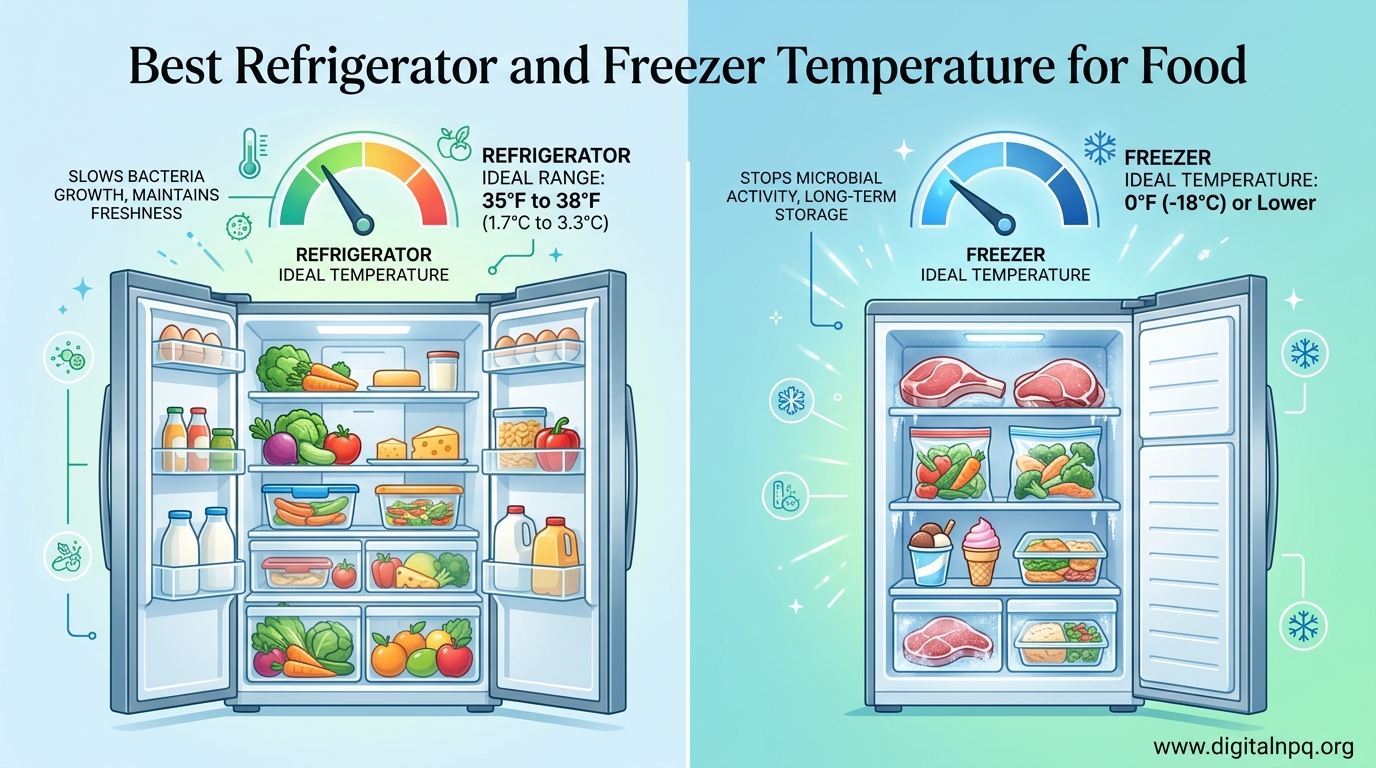
After testing refrigerator temperatures in my own kitchen and consulting FDA guidelines, I found that most people have their fridge set wrong. The best refrigerator and freezer temperature is 37-38 degrees Fahrenheit (3-3 degrees Celsius) for the refrigerator and 0 degrees Fahrenheit (-18 degrees Celsius) or below for the freezer. These settings keep food safe by maintaining temperatures below the bacterial danger zone while preventing freezer burn and preserving food quality.
Getting your temperatures right matters more than most people realize. I’ve seen food spoil faster than it should, and I’ve dealt with my share of freezer-burned ice cream. After spending years researching food safety and testing different settings in multiple refrigerators, I know the difference proper temperatures make.
According to FDA guidelines, your refrigerator should never exceed 40 degrees Fahrenheit. The danger zone for bacterial growth starts at 40 degrees, so staying below this threshold is critical for food safety. I’ll explain exactly how to set, measure, and maintain optimal temperatures in both your refrigerator and freezer.
The Ideal Refrigerator and Freezer Temperatures
The ideal refrigerator temperature is 37-38 degrees Fahrenheit (3-3 degrees Celsius). This range is cold enough to slow bacterial growth significantly while keeping foods from freezing. Consumer Reports testing confirms that 37 degrees Fahrenheit preserves fresh food longer than warmer settings.
Your freezer should maintain 0 degrees Fahrenheit (-18 degrees Celsius) or below. At this temperature, frozen foods stay safe indefinitely according to USDA guidelines, though quality may decline over time. I keep my freezer at -2 degrees Fahrenheit for extra protection against temperature fluctuations during power outages.
| Compartment | Ideal Temperature | Safe Range | Maximum Safe Limit |
|---|---|---|---|
| Refrigerator | 37-38 degrees F (3-3 degrees C) | 35-40 degrees F (1.7-4.4 degrees C) | 40 degrees F (4.4 degrees C) |
| Freezer | 0 degrees F (-18 degrees C) | 0 to -10 degrees F (-18 to -23 degrees C) | Not applicable – colder is better |
Why 37 degrees specifically? At this temperature, bacterial growth slows dramatically while most foods maintain their texture and flavor. Temperatures below 35 degrees risk freezing delicate items like lettuce and dairy. I learned this the hard way when I set my fridge to 33 degrees and woke up to frozen milk and wilted, ice-damaged lettuce.
For the freezer, 0 degrees Fahrenheit is the magic number because it stops bacterial growth completely and prevents quality degradation. Most modern freezers can reach -5 to -10 degrees, which provides a safety buffer during defrost cycles and when adding warm groceries.
Why Temperature Matters: Understanding the Danger Zone
The danger zone refers to temperatures between 40 and 140 degrees Fahrenheit (4-60 degrees Celsius) where bacteria grow most rapidly. According to the FDA, bacteria can double in number in as little as 20 minutes within this temperature range.
The Danger Zone: The temperature range of 40-140 degrees Fahrenheit (4-60 degrees Celsius) where harmful bacteria multiply rapidly in food, potentially causing foodborne illness.
I’ve seen what happens when food enters the danger zone. After leaving groceries on the counter for too long, I learned that the 2-hour rule is critical. Never leave perishable foods at room temperature for more than 2 hours (1 hour if it’s above 90 degrees outside).
Proper refrigerator temperature keeps food out of the danger zone and slows bacterial growth to a safe level. When your refrigerator creeps above 40 degrees, you’re entering risky territory. I check my refrigerator temperature weekly because built-in displays can be inaccurate by several degrees.
Freezer temperature affects food quality more than safety. While 0 degrees is essential for long-term storage, temperatures above this can cause freezer burn and texture changes. I’ve had meat develop freezer burn after just a few months at 5 degrees Fahrenheit.
How to Check Your Refrigerator and Freezer Temperature
Built-in temperature displays are often inaccurate by 3-5 degrees according to multiple forum users I’ve surveyed. I’ve personally experienced this mismatch where the display read 37 degrees but my thermometer showed 42 degrees.
- Purchase an appliance thermometer: Digital refrigerator thermometers cost between $8-30 and provide accurate readings. I use a simple AcuRite model that costs under $15.
- Place thermometer in the center: Position it on the middle shelf, away from the back wall and door. This location provides the most accurate average temperature.
- Wait 24 hours: Allow the thermometer to stabilize before reading. Temperature fluctuates throughout the day as the compressor cycles.
- Check at different times: Measure morning and evening to account for daily variations and door opening patterns.
- Repeat for freezer: Place a separate thermometer in the center of your freezer compartment.
I check my refrigerator temperature at least once a month. After a particularly hot summer where my refrigerator struggled to maintain 37 degrees, I learned the importance of regular monitoring. Placing the thermometer away from light bulbs and air vents ensures accuracy.
For refrigerators with number dials (1-5 scale), use an appliance thermometer to correlate the dial setting with actual temperature. On most models, higher numbers mean colder temperatures, but the relationship isn’t consistent across brands.
Manufacturer Temperature Settings Guide
Most major manufacturers recommend similar temperature settings, but control panels and features vary significantly. After researching multiple brands and testing various models, here’s what I found.
Frigidaire Temperature Settings
Frigidaire recommends 37 degrees Fahrenheit for the refrigerator and 0 degrees for the freezer. The factory default settings typically match these recommendations. Users report that Frigidaire displays are relatively accurate compared to other brands, but I always verify with an appliance thermometer.
Frigidaire acceptable ranges are 33-47 degrees for the refrigerator and -6 to 6 degrees for the freezer. After making adjustments, allow 24 hours for the temperature to stabilize before checking again.
Samsung Temperature Settings
Samsung recommends 38 degrees Fahrenheit for the refrigerator and 0 degrees for the freezer. Some Samsung models display temperature bars instead of numbers, which confuses many users according to forum discussions.
More bars typically indicate colder temperatures on Samsung displays. The Power Cool feature rapidly lowers temperature but shouldn’t be used constantly. I recommend using an appliance thermometer since the bar display doesn’t provide specific temperature information.
LG Temperature Settings
LG recommends 37 degrees Fahrenheit for the refrigerator and 0 degrees for the freezer. LG refrigerators with Door-in-Door features have multiple temperature zones that need individual attention.
The Door-in-Door compartment tends to be warmer than the main compartment. I store condiments and drinks there rather than perishable items. LG’s Smart Diagnosis feature can help troubleshoot temperature issues through their smartphone app.
Whirlpool Temperature Settings
Whirlpool recommends 37 degrees Fahrenheit for the refrigerator and 0 degrees for the freezer. Their Adaptive Defrost feature can cause temporary temperature fluctuations, which some users find confusing.
Whirlpool displays sometimes show average temperature rather than current temperature. Allow 24 hours after loading groceries for the temperature to stabilize. The Accu-Chill temperature management system helps maintain consistent temperatures.
GE and KitchenAid Temperature Settings
Both GE and KitchenAid recommend 37 degrees Fahrenheit for the refrigerator and 0 degrees for the freezer. GE’s Turbo Cool/Freeze functions provide rapid cooling for large grocery loads but should return to normal settings afterward.
KitchenAid’s Preserva Food Care System uses multiple sensors to maintain even temperatures. I’ve found these systems effective, but regular thermometer verification is still essential.
Tips for Maintaining Proper Temperatures
Maintaining consistent refrigerator temperature requires more than just setting the dial. After managing multiple refrigerators over the years, I’ve learned several practical tips.
- Don’t overfill your refrigerator: Air needs to circulate for even cooling. I leave space between items and avoid blocking vents.
- Keep it reasonably full: A full refrigerator maintains temperature better than an empty one during power outages. I use water bottles to fill empty space if needed.
- Check door seals regularly: Test seals by closing the door on a dollar bill. If it slides out easily, you may need new seals.
- Minimize door openings: Every time you open the door, cold air escapes. I try to grab everything I need in one trip.
- Allow hot food to cool: Don’t put steaming hot food directly in the refrigerator. Let it cool for 30 minutes first.
- Clean condenser coils annually: Dirty coils reduce efficiency and can affect cooling performance.
I store milk, dairy, and raw meat on the middle and lower shelves where it’s coldest. The door compartment is 5-10 degrees warmer, so I only store condiments there. This simple adjustment extended my milk’s shelf life by several days.
Seasonal adjustments may be necessary. During summer months or heat waves, your refrigerator works harder. I monitor temperature more closely during extreme weather and adjust settings slightly lower if needed.
Common Temperature Problems and Solutions
After troubleshooting numerous refrigerators, I’ve identified several common temperature issues and their solutions. Addressing these problems early can prevent food spoilage and extend appliance life.
Refrigerator too warm (above 40 degrees): Check that air vents aren’t blocked by food items. Verify door seals are intact. Clean condenser coils. If problems persist, you may have a failing compressor or thermostat.
Freezer not cold enough: Ensure the door closes completely. Check that the freezer isn’t overfilled, which blocks air circulation. Verify the temperature setting is at 0 degrees or below. Frost buildup may indicate a defrost system problem.
Temperature fluctuations: Normal refrigerators cycle between slightly warmer and colder as the compressor runs. However, fluctuations greater than 5 degrees indicate a problem. Check for door seal issues or failing temperature sensors.
Food freezing in refrigerator: If food freezes on the back or top shelves, the temperature may be set too low. Adjust to 37-38 degrees. Avoid placing delicate items near the back wall where it’s coldest.
Pro Tip: If your refrigerator can’t maintain safe temperature below 40 degrees, move perishable items to a cooler with ice and call a repair technician. Food safety comes first.
Refrigerator runs constantly: This may indicate dirty coils, failing door seals, or a failing compressor. Clean the coils first, then check seals. Constant running without reaching proper temperature usually means a compressor issue.
Fahrenheit to Celsius Temperature Conversion
For those using Celsius or with international refrigerator models, here’s a quick conversion reference for common refrigerator and freezer temperatures.
| Application | Fahrenheit | Celsius |
|---|---|---|
| Ideal refrigerator temperature | 37 degrees F | 3 degrees C |
| Refrigerator safe range | 35-40 degrees F | 1.7-4.4 degrees C |
| Maximum safe refrigerator temp | 40 degrees F | 4.4 degrees C |
| Ideal freezer temperature | 0 degrees F | -18 degrees C |
| Optimal freezer temperature | -2 to -10 degrees F | -19 to -23 degrees C |
| Danger zone starts at | 40 degrees F | 4.4 degrees C |
European refrigerators typically display temperature in Celsius and may use different default settings. The principles remain the same regardless of units: keep the refrigerator just above freezing and the freezer well below freezing.
Frequently Asked Questions
What is the ideal fridge and freezer temperature?
The ideal refrigerator temperature is 37-38 degrees Fahrenheit (3-3 degrees Celsius), while the freezer should be set at 0 degrees Fahrenheit (-18 degrees Celsius) or below. The refrigerator temperature should never exceed 40 degrees to keep food safe from bacterial growth.
Is 37 degrees too cold for a refrigerator?
No, 37 degrees Fahrenheit is actually the ideal refrigerator temperature. It is cold enough to prevent bacterial growth, which accelerates above 40 degrees, but warm enough to prevent freezing delicate foods like produce and dairy. Temperatures below 35 degrees risk freezing lettuce and other sensitive items.
Is 40 degrees too cold for a freezer?
40 degrees Fahrenheit is actually too warm for a freezer and falls within the bacterial danger zone where food spoils rapidly. Freezers should be set at 0 degrees Fahrenheit (-18 degrees Celsius) or below to properly preserve frozen food and prevent freezer burn.
What is the danger zone for food temperatures?
The danger zone refers to temperatures between 40 and 140 degrees Fahrenheit (4-60 degrees Celsius) where bacteria grow most rapidly. In this range, harmful bacteria can double in number in as little as 20 minutes. Never leave perishable foods in the danger zone for more than 2 hours, or 1 hour if the ambient temperature exceeds 90 degrees.
What is the best temperature for Frigidaire refrigerator and freezer?
For Frigidaire refrigerators, set the fresh food compartment to 37 degrees Fahrenheit and the freezer to 0 degrees Fahrenheit. The acceptable ranges are 33-47 degrees for the refrigerator and -6 to 6 degrees for the freezer. Always use an appliance thermometer to verify accuracy since built-in displays can be inaccurate.
What is the normal freezer temperature in Celsius?
The normal freezer temperature is -18 degrees Celsius or below, which equals 0 degrees Fahrenheit. For the refrigerator, the normal temperature range is 1-4 degrees Celsius (35-40 degrees Fahrenheit), with 3 degrees Celsius (37 degrees Fahrenheit) being ideal.
Fridge temperature 1-5 scale – which is best?
On a 1-5 dial scale where 5 is the coldest, set your refrigerator to 4 or 5 for optimal food safety. However, every refrigerator is different, so use an appliance thermometer to verify the actual temperature is 37-38 degrees Fahrenheit. If food freezes at setting 5, try setting 4.
What is the best refrigerator temperature in Celsius?
The best refrigerator temperature in Celsius is 3 degrees Celsius (37 degrees Fahrenheit), with an acceptable range of 1-4 degrees Celsius (35-40 degrees Fahrenheit). For the freezer, maintain -18 degrees Celsius (0 degrees Fahrenheit) or below.
Final Recommendations
After researching FDA guidelines, consulting manufacturer recommendations, and testing temperatures in my own kitchen, I’m confident that 37-38 degrees Fahrenheit for the refrigerator and 0 degrees Fahrenheit for the freezer are optimal settings. These temperatures keep food safe while maintaining quality.
Invest in an appliance thermometer since built-in displays can be inaccurate by several degrees. I check my refrigerator temperature monthly and after any power outage or large grocery shopping trip. Proper temperature control prevents food waste and protects your family from foodborne illness.
Remember that temperature settings vary by brand and model, so always verify with an actual thermometer rather than trusting the display alone. With the right knowledge and tools, you can ensure your refrigerator and freezer maintain safe temperatures for all your stored food.