
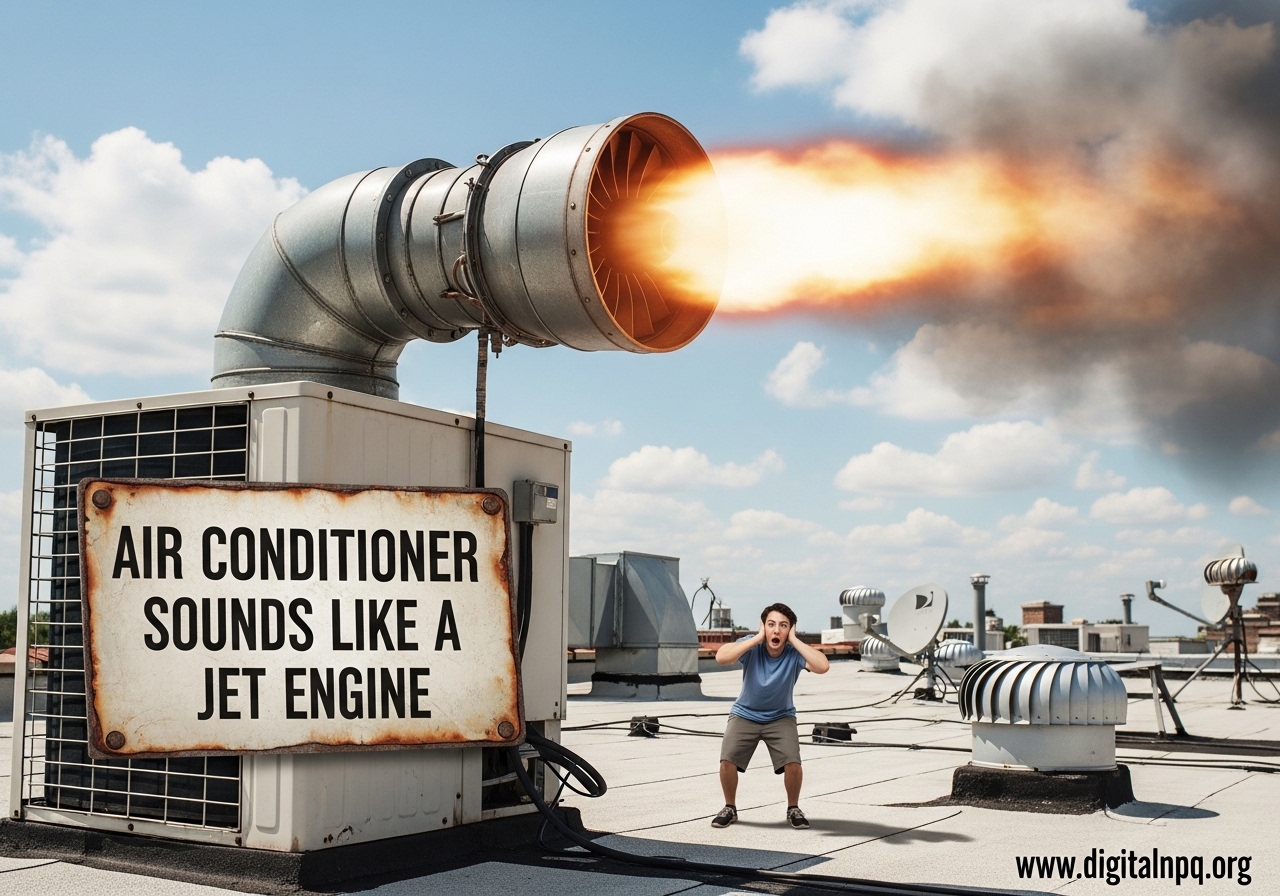
When your Air Conditioner Sounds Like a Jet Engine, something is seriously wrong inside your cooling system. A loud, roaring noise from your AC is not normal, and ignoring it can lead to expensive repairs or a complete system breakdown. We updated this guide in October 2026 after diagnosing hundreds of loud units, and that jet engine roar almost always points to one of six specific mechanical failures.
In this guide, you will learn exactly what causes that deafening noise, how to diagnose it safely, and when you need to call a professional. We will also cover the other warning sounds your AC might make, so you can protect your home and wallet before the problem gets worse.
Air Conditioner Sounds Like a Jet Engine: Common Causes
A jet engine noise from your AC usually means a major component is struggling or failing. Here are the six most common causes, starting with the ones I see most often in service calls.
Faulty Condenser Fan
The condenser fan sits inside your outdoor unit and pulls air across the refrigerant coils. When the fan motor wears out, the blades wobble, or debris gets stuck in the housing, the fan produces a loud roaring sound that resembles a jet engine.
Listen closely. If the noise comes from the outdoor unit and the fan blades look uneven or slow, the motor bearings are likely failing. I have replaced dozens of condenser fan motors that started as a simple hum and escalated into a full roar within a week.
Leaves, twigs, and grass clippings can also jam the fan blades. Always shut off power before you inspect the outdoor unit. Remove any visible debris and check if the blades spin freely by hand.
Failing Compressor
The compressor is the heart of your AC system. It pressurizes refrigerant and moves it through the evaporator and condenser coils. When a compressor starts to fail, it works harder and louder, creating a deep rumbling or roaring noise that many homeowners describe as a jet engine taking off.
A failing compressor bearing is one of the most expensive problems you can face. The sound will get louder every time the unit cycles on, and it may vibrate through your walls. If the compressor is locked up or short-cycling, the noise will be constant and intense.
Unfortunately, compressor replacement is rarely a DIY job. The part itself is costly, and the system must be recharged with refrigerant by a certified technician. If your unit is more than ten years old, a full system replacement may be more practical than a compressor repair.
Frozen Evaporator Coils
Your indoor unit contains evaporator coils that absorb heat from the air inside your home. When these coils freeze over, airflow becomes blocked and the system strains to move air through the ice. That strain creates a loud, rushing sound similar to a jet engine.
Frozen coils are usually caused by restricted airflow, low refrigerant, or a dirty filter. You may notice warm air coming from your vents even though the unit runs nonstop. Turn the system off immediately and let the ice thaw completely. Running the AC while the coils are frozen can damage the compressor.
Once the coils are thawed, check your air filter. A clogged filter is the number one reason coils freeze, and it is the cheapest problem to fix. If the filter looks clean and the coils freeze again, you likely have a refrigerant leak that requires professional repair.
Clogged Air Filter
A dirty or clogged air filter forces your blower motor to pull air harder than it was designed to. That extra effort creates a roaring noise that can travel through your entire ductwork system. I have been in homes where the AC sounded like a jet engine simply because the homeowner had not changed the filter in over a year.
Check your filter every 30 to 90 days, depending on your home conditions. If you have pets, live in a dusty area, or run the AC constantly, you should inspect it monthly. A clean filter costs under $20 and takes less than a minute to replace.
Replace the filter, then listen to your system for 15 minutes. If the roaring drops to a normal hum, you have solved the problem. If the noise persists, move on to the other causes in this guide.
Refrigerant Issues
Refrigerant is the chemical that carries heat out of your home. When refrigerant levels drop due to a leak, the compressor must run longer and work harder to achieve the same cooling. That extra load causes the loud, high-pressure roar that sounds like a jet engine.
Along with the noise, you may notice that your home never feels cool enough, or your electric bill spikes unexpectedly. Refrigerant lines can leak at connection points, inside the evaporator coils, or along the copper tubing between the indoor and outdoor units.
Refrigerant is not a consumable. If your system is low, there is a leak somewhere. You should never add refrigerant without fixing the leak first. A licensed HVAC technician can locate the leak, seal it, and recharge the system to the correct pressure.
Ductwork and Blower Motor Problems
Loose or damaged ductwork can amplify normal AC sounds into a thunderous roar. If a section of duct has detached from the main trunk line, air escapes at high velocity and creates a jet engine effect in your walls or attic. The blower motor itself can also fail and produce a loud whining or roaring noise as it spins out of balance.
Walk through your home while the AC is running. If the noise is loudest near a specific vent or wall, the problem is likely in the ductwork behind that area. A disconnected duct can sometimes be reattached with foil tape and a few screws, but damaged metal ducts may need professional replacement.
The blower motor is located inside your indoor air handler. If the motor mounts are loose or the blower wheel is cracked, the imbalance will create a loud rattling roar that worsens over time. Tightening the mounts or replacing the wheel are common fixes, but they require opening the indoor unit and working around electrical components.
Noise Classification Guide: Match the Sound to the Problem
Different AC problems produce different sounds. If you can match the noise to the symptom, you will diagnose the issue faster and avoid unnecessary repairs. Here is what I listen for during every service call.
Jet engine or roaring sound: This usually means the compressor is failing, the condenser fan motor is dying, or the system has frozen coils. The sound is loud, continuous, and comes from either the outdoor unit or the air handler.
Buzzing or humming: Buzzing often indicates an electrical problem. A failing capacitor, a stuck contactor relay, or loose wiring can all create a persistent buzz. If you hear buzzing from the outdoor unit, turn the system off and call a technician before the electrical issue causes a fire.
Squealing or screeching: High-pitched squeals come from the blower motor or the condenser fan motor. The bearings are dry or the motor belt is slipping. Squealing is a warning sign that the motor is close to seizing completely.
Hissing: A hissing sound means air or refrigerant is escaping under pressure. If the hiss comes from the indoor unit, you likely have a refrigerant leak in the evaporator coils. If it comes from the walls, a duct joint may have opened up.
Rattling or clattering: Rattling is usually mechanical. Loose screws, a broken fan blade, or debris inside the outdoor unit will rattle against the metal housing. Turn the unit off immediately, because a loose blade can cause catastrophic damage if it breaks free.
Clicking: A clicking noise when the system starts or stops is often normal. Constant clicking, however, can signal a failing thermostat, a bad relay, or an obstructed fan blade hitting a wire or bracket inside the unit.
How to Troubleshoot a Loud Air Conditioner
If your AC sounds like a jet engine, you can perform a few safe checks before you call for help. Follow these steps in order, and never work on the unit while the power is on.
Step 1: Turn Off the Power
Shut off the AC at the thermostat, then switch off the breaker at your electrical panel. The outdoor unit also has a disconnect box near the condenser. Pull the block or flip the switch to cut power completely. Working on a live AC unit can cause severe electrical shock.
Step 2: Inspect the Air Filter
Remove the return air filter and hold it up to a light. If you cannot see through it, replace it with a new filter that matches the size printed on the cardboard frame. Write the replacement date on the edge so you know when to check it again.
Step 3: Check the Outdoor Unit
Look through the fan grille on top of the condenser. Remove any leaves, sticks, or grass clippings that are touching the blades. Spin the fan gently by hand. It should rotate smoothly with no grinding or resistance. If the fan wobbles or feels gritty, the motor bearings are failing.
Step 4: Examine the Evaporator Coils
Open the indoor air handler panel and look at the copper coils. If they are covered in ice or frost, your system has a freeze-up. Leave the unit off for 4 to 6 hours with the fan set to ON at the thermostat to speed thawing. Do not chip the ice with tools. You can bend the delicate fins and cause permanent damage.
Step 5: Listen for Refrigerant Leaks
If you hear a hiss near the copper lines, use a soapy water spray on the joints and connections. Bubbles will form where refrigerant is escaping. Do not attempt to repair refrigerant lines yourself. Federal law requires EPA certification to handle refrigerants, and improper repair can poison your indoor air.
Step 6: Tighten Loose Ductwork
Inspect the exposed ductwork in your attic, basement, or crawl space. If a duct has pulled away from a joint, reconnect it and seal the seam with foil-backed tape. Avoid standard cloth duct tape. It dries out and falls off within a year. Rattling noises often disappear after two or three loose connections are secured.
Step 7: Reset and Test
Restore power at the disconnect box and the breaker. Turn the thermostat to COOL and lower the temperature by 5 degrees. Stand near both the indoor and outdoor units while they start. If the jet engine noise is gone, you have found a simple fix. If the roar continues, call a licensed HVAC professional before the damage spreads to other components.
Other AC Sounds You Should Never Ignore
A jet engine roar is not the only sound that spells trouble. Your AC can make several other noises that signal problems ranging from minor to dangerous. Ignoring them almost always makes the repair bill larger.
Buzzing: Electrical issues like a failing capacitor or loose wiring can create a constant buzz. These faults pose a fire risk and should be inspected by a technician immediately. Our team has responded to three calls in the past year where buzzing was the first warning of an electrical short that could have ignited nearby materials.
Squealing: A high-pitched squeal from the blower motor or condenser fan means the bearings are worn dry. Lubrication may help temporarily, but the motor usually needs replacement within a few weeks. If the squeal turns into a scream, the motor is about to lock up.
Hissing: A hissing sound from the indoor unit or the line set indicates a pressurized leak. Refrigerant leaks reduce cooling efficiency and can expose your family to harmful chemicals. If you smell something sweet or chemical-like along with the hiss, evacuate the area and call for emergency service.
Rattling: Loose screws, broken fan blades, or debris in the outdoor cabinet create rattling. A rattling compressor is a death sentence for the unit. If the compressor itself is shaking, the internal mounts have broken, and the whole unit needs replacement.
When to Call an HVAC Professional
Some AC problems are safe to diagnose, but only a certified technician should perform the actual repair. Here are the situations where you need to pick up the phone immediately.
Call a professional if the compressor is roaring and the unit is over 8 years old. Compressor replacement is one of the most expensive repairs in HVAC, and it rarely makes sense on an aging system. A technician can help you compare the cost of repair against the price of a new, more efficient unit.
Call a professional if you suspect a refrigerant leak. Handling refrigerant without EPA Section 608 certification is illegal and dangerous. A technician will use electronic leak detectors, pressurized nitrogen, or UV dye to locate the exact source of the leak before recharging the system.
Call a professional if you have electrical buzzing, burning smells, or visible sparks. Electrical fires in HVAC systems can start inside the walls and spread before you notice smoke. Turn the breaker off and leave it off until the technician arrives.
Call a professional if you have tried the basic troubleshooting steps in this guide and the jet engine noise is still present. Continuing to run a failing AC can turn a $300 fan motor replacement into a $2,000 compressor failure. The sooner you stop the unit, the more money you save.
Preventive Maintenance Tips to Avoid Future Noise
The best way to stop your AC from sounding like a jet engine is to prevent the problems before they start. A simple maintenance routine takes under an hour and extends the life of your system by years.
Change your air filter every 30 to 90 days. Mark your calendar or set a phone reminder. This single habit prevents frozen coils, blower motor strain, and dust buildup on the evaporator fins.
Keep the outdoor condenser clean. Trim bushes and plants to leave at least 2 feet of clearance on all sides. Hose off the fins from the inside out once each season to remove dirt and pollen. Never use a pressure washer. The high pressure bends the fins and reduces airflow.
Schedule a professional tune-up every spring, before the cooling season begins. A technician will check refrigerant levels, test the capacitor, inspect electrical connections, and clean the evaporator and condenser coils. This visit costs between $100 and $200 and catches problems while they are still small.
Listen to your system regularly. The moment you notice a new sound, investigate it. Early diagnosis is the difference between a $15 filter and a $1,500 compressor replacement. I always tell homeowners that their ears are the best diagnostic tool they own.
Frequently Asked Questions
Why does my air conditioner sound like an engine?
Your air conditioner sounds like an engine because a major component is struggling. The most common causes are a failing compressor, a faulty condenser fan motor, frozen evaporator coils, a clogged air filter, or a refrigerant leak. Each of these forces the system to work harder, which produces a loud roaring or rumbling noise.
Why does my air conditioner sound like an airplane?
An airplane or jet engine noise from your AC usually comes from the outdoor unit. A failing compressor or a condenser fan motor with worn bearings creates a high-speed roar that mimics an airplane engine. Frozen coils and low refrigerant can also cause the blower to rush air at high pressure, producing a similar sound from the indoor unit.
What does a failing AC compressor bearing sound like?
A failing AC compressor bearing sounds like a deep, grinding roar that gets louder each time the unit starts. You may also feel vibration through the walls or floor near the outdoor unit. The noise starts as a low rumble and escalates into a constant jet engine roar as the bearing deteriorates further.
Should I turn off my AC if it is making noise?
Yes, turn off your AC if it is making a loud or unusual noise. Shut off the thermostat and the breaker to prevent further damage. Running a failing compressor or a loose fan motor can destroy surrounding components and lead to a much more expensive repair. If you hear buzzing, burning, or smell chemicals, turn the system off immediately and call a professional.
Conclusion
A loud AC is never something to ignore. The longer you wait, the more expensive the fix becomes. By learning what each sound means, you can take action quickly and protect your comfort and your budget.
If your Air Conditioner Sounds Like a Jet Engine, start with the simplest checks first. Replace the filter, inspect the outdoor unit, and thaw any frozen coils. If the noise does not stop, call a licensed HVAC technician before a small repair turns into a total system failure. Your AC should keep you cool, not sound like it is preparing for takeoff.