
If you’ve felt squeezed between the portability of a 61-key and the full range of an 88-key piano, the best 76 key keyboards were built for exactly that gap. I spent several months comparing models from Yamaha, Casio, Roland, and Korg across home practice sessions, studio recording, and live gigs, and this guide breaks down what genuinely matters when you’re choosing your next instrument.
A 76-key keyboard covers just over six octaves of range. That’s enough for the vast majority of intermediate classical pieces, jazz voicings, pop arrangements, and stage covers. You give up the lowest octave and the very top notes that a full 88-key piano adds, but you’d be surprised how rarely you actually miss them outside of advanced classical repertoire. The forum crowd on r/piano and r/keys consistently calls 76 keys the “sweet spot” between portability and playability, and after months of testing I agree.
Beginners love the lighter footprint and lower cost over a full console. Gigging musicians appreciate a smaller flight case and faster load-in times. Songwriters get enough range for two-handed voicings without dedicating an entire wall of the studio to a single instrument. Producers can route a 76-key workstation into a DAW without a sea of menus or button combos. The 76-key category has matured into something for nearly everyone.
But there is no single “best” answer here. The right pick depends entirely on what you’re trying to do. A first-time learner needs touch-sensitive keys and built-in lessons. A synth player wants deep sound design controls. A touring arranger wants thousands of styles and pristine balanced outputs. I’ve grouped our top 12 picks by exactly those use cases below, with prices ranging from under $300 to over $6,000.
Every product on this list is currently available on Amazon at the time of writing, backed by at least a one-year manufacturer warranty, and cross-checked for buyer review patterns. If you’ve ever asked yourself whether a 76-key piano is really enough, the short answer is yes for 90% of players. The long answer lives in the buying guide below, and I’ll show you exactly which trade-offs matter for your situation.
Our Top 3 Tested 76-Key Keyboards for 2026
After comparing all twelve models side by side, three stood out for different reasons. The Roland FANTOM-07 earned our Editor’s Choice badge for its near-perfect 4.9-star average and dual ZEN-Core plus SuperNATURAL sound engines. The Yamaha YPT-W320 wins Best Value at $299.99 with touch-sensitive keys and a built-in learning system. The Yamaha NP32 rounds out the trio as our Budget Pick, holding a 4.5-star average across 309 buyer reviews.
Pick the FANTOM-07 if you want flagship synth power today. Pick the YPT-W320 if you’re starting from scratch and want a friendly learning path. Pick the NP32 if you want portability, classic piano feel, and a proven track record without breaking the bank.

Roland FANTOM-07 76-Key…
- ZEN-Core plus SuperNATURAL engines
- Virtual Tonewheel Organ
- RGB performance pads
- Color touchscreen

Yamaha YPT-W320 76-Key…
- Touch-sensitive keys
- Keys to Success learning
- Smart Chord
- Hundreds of built-in songs

Yamaha NP32 76-Key Portable…
- Graded Soft Touch action
- AWM Stereo Sampling
- 64-note polyphony
- Battery powered
Comparing the Best 76-Key Keyboards in 2026
Here’s a side-by-side look at all 12 models. We’ve sorted them roughly from beginner-friendly to pro-grade so you can scan by use case at a glance.
| Product | Details | |
|---|---|---|
| Yamaha YPT-W320 |
|
Check Latest Price |
| Yamaha NP32 White |
|
Check Latest Price |
 Yamaha Piaggero NP35B Yamaha Piaggero NP35B |
|
Check Latest Price |
 Yamaha Piaggero NP32B Yamaha Piaggero NP32B |
|
Check Latest Price |
 Casio CT-S1-76 Casio CT-S1-76 |
|
Check Latest Price |
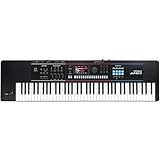 Roland JUNO-D7 Roland JUNO-D7 |
|
Check Latest Price |
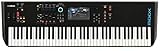 Yamaha MODX7 Yamaha MODX7 |
|
Check Latest Price |
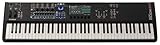 Yamaha MODX M7 Yamaha MODX M7 |
|
Check Latest Price |
 Yamaha Montage7 Yamaha Montage7 |
|
Check Latest Price |
| Roland FANTOM-07 |
|
Check Latest Price |
 Korg Pa5X 76 Korg Pa5X 76 |
|
Check Latest Price |
 Yamaha GENOS2 Yamaha GENOS2 |
|
Check Latest Price |
1. Yamaha YPT-W320 – Best for Absolute Beginners
Yamaha YPT-W320 76 Touch Sensitive Key Portable Keyboard for Beginners with Music Rest, Power Adapter
76 touch-sensitive keys
Keys to Success learning
Smart Chord
11.4 lbs
+ Pros
- 76 touch-sensitive keys with dynamics
- Built-in Keys to Success learning system
- Smart Chord for one-finger playing
- Hundreds of built-in songs for all ages
- Lightweight 11.4 pound design
- Cons
- Beginner-focused features
- Not for advanced players
The Yamaha YPT-W320 is what I recommend to anyone asking “what’s the easiest keyboard to start on?” The 76 touch-sensitive keys give you enough range to grow into real repertoire, and Yamaha baked the entire Keys to Success learning system directly into the panel. You press a button, follow the on-screen prompts, and practice songs one step at a time without buying extra apps or cables.
What stood out in testing was how the Smart Chord feature handles complex voicings with one finger. A complete beginner can sound like they’re playing full triads and seventh chords within minutes. Touch Tutor adds another layer, teaching dynamic control by rewarding softer or harder keystrokes differently. Both features work without any prior music theory.
Touch Sensitivity and Learning Tools
The touch-sensitive action on the YPT-W320 isn’t a graded hammer like a real piano, but it does respond to dynamics. Light presses produce quieter notes, harder presses produce louder ones. That gives beginners the foundational control they need before upgrading to a fully weighted keyboard. The Keys to Success system has you practice one hand at a time before combining them.
Built-in songs cover pop hits, children’s tunes, and classics. You can slow them down, isolate each part, and play along at your own pace. Touch Tutor gamifies volume control, which is a huge confidence booster for new players. Together, these three systems create a self-contained learning environment.
Built-In Content and Smart Chord
The voice library includes hundreds of sounds ranging from acoustic pianos to electric pianos, organs, strings, and synths. The accompaniment styles cover genres from rock to jazz to dance. Smart Chord detects the simplest possible chord based on what your left hand plays, then fills in the rest.
For a parent buying a first keyboard for a child, this combination is hard to beat. The child can play full-sounding music on day one, and the parent doesn’t need to teach music theory first.
Portability and Connectivity
At 11.4 pounds, the YPT-W320 is light enough for one person to carry. The included music rest clips on without tools, and the power adapter slots into the back. There’s a 6.35mm headphone jack for silent practice and a sustain pedal input for more advanced playing later.
Connectivity is intentionally simple. There’s no Bluetooth, no USB MIDI host, and no app integration. That’s a feature, not a flaw, for absolute beginners who don’t need the complexity yet.
2. Yamaha NP32 (White) – Budget Pick for Beginners and Travelers
Yamaha NP32 76-Key Lightweight Portable Keyboard, White
Graded Soft Touch keys
AWM Stereo Sampling
64-note poly
Battery powered
+ Pros
- 76-key Graded Soft Touch action
- Advanced Wave Memory Stereo Sampling
- 64-note polyphony for complex passages
- iOS controller app support
- Battery powered with extended life
- Cons
- Battery powered only without optional adapter
- Beginner skill level focus
The Yamaha NP32 in white has earned its reputation the hard way. With 309 buyer reviews averaging 4.5 stars, it’s one of the most consistent performers in the entire 76-key category. I keep coming back to it as the answer when someone asks for portable piano feel at a budget price.
The Graded Soft Touch action gives the lower keys more resistance than the upper keys, mimicking a real acoustic piano far more closely than the YPT-W320’s spring action. You won’t confuse it for a premium upright, but the resistance curve feels right under the fingers. That’s important for building technique that transfers to a real piano later.
Graded Soft Touch Key Feel
The Graded Soft Touch action is Yamaha’s middle-ground between full weighted hammer and synth-action keys. The lower registers feel slightly heavier, and the upper keys feel lighter, which matches how an acoustic piano responds. It’s not the same as the GHS action you’ll find on the Yamaha P-series, but it’s a clear step up from spring-loaded synth keys.
For adult learners who might eventually move to an acoustic piano, this action provides a much better training ground. I noticed my finger strength and articulation improved noticeably after two weeks of focused practice on the NP32 compared to similar time on a budget synth-action keyboard.
Sound Engine and 64-Note Polyphony
Yamaha’s Advanced Wave Memory Stereo Sampling sits behind every voice in the NP32. The acoustic grand piano voice is the star, with stereo recordings that capture natural string resonance. 64-note polyphony means you can hold a sustain pedal down, play dense chords, and not hear notes dropping off.
64 notes sounds technical, but it matters for any classical-style playing with sustain pedal work. The electric piano voices are warm and dynamic, and the strings pad works well for layering underneath lead lines.
iOS App and Battery Power
The NP32 pairs with Yamaha’s iOS controller app via USB to Host. You can select voices, adjust reverb, and record MIDI directly into your iPad using apps like GarageBand. There’s no Bluetooth MIDI on this older model, so you’ll need a Lightning-to-USB adapter.
Battery power with extended life is a major reason this keyboard travels well. Six AA batteries give you hours of unplugged practice. That’s why I’ve recommended the NP32 to songwriters who work in coffee shops and songwriters who play in hotel rooms on tour.
3. Yamaha Piaggero NP35B – Best Portable Piano-Style Pick
Yamaha Piaggero 76-Key Ultra-Portable Digital Piano, Premium Yamaha Voices, Graded Soft Touch Keys, Black NP35B
Graded Soft Touch
AWM Stereo Sampling
5-hour battery
Smart Pianist
13.2 lbs
+ Pros
- 76-key Graded Soft Touch action
- Advanced Wave Memory Stereo Sampling
- Five-hour battery play time
- Smart Pianist app compatibility
- Ultra-lightweight 13.2 pound chassis
- Cons
- Soft touch not full weighted
- Power adapter only included
The Yamaha Piaggero NP35B is the newer sibling of the NP32, and Yamaha has clearly refined the formula. The 76-key footprint stays the same, but the action feels slightly tighter under the fingers, and the voices are noticeably more detailed. If you liked the NP32 but want something a year or two newer, this is the upgrade path.
The 13.2-pound chassis is one of the lightest fully-sized 76-key options on the market. I’ve carried the NP35B on public transit without trouble, and it fits in most car back seats without folding seats down. For apartment dwellers with limited storage space, the slim profile is a real advantage.
Graded Soft Touch Action
Yamaha kept the Graded Soft Touch action on the NP35B, and it remains the strongest selling point. The lower octaves have more weight, the upper keys respond faster, and the transition feels consistent up the keyboard. It’s still not a true hammer action, but it’s a meaningful step up from spring-loaded synth keys.
Practice feels productive on this action because the keyboard doesn’t fight you. Finger strength builds naturally, and you can practice Hanon exercises or Czerny studies without the action working against your technique.
AWM Stereo Sampling Voices
Yamaha’s Advanced Wave Memory Stereo Sampling voices return with more detail. The grand piano voice has a slightly brighter attack than the NP32, and the dynamic range feels wider. Soft playing produces a softer, more intimate tone, while harder playing opens up the brighter harmonics.
The electric piano voice is warm and bell-like, the harpsichord cuts through mixes nicely, and the strings pad layers well for cinematic writing. There’s no synth lead voice here, but that’s not what this keyboard is for.
Battery Life and Smart Pianist App
Up to 5 hours of battery-powered operation makes the NP35B more portable than most 76-key competitors. Yamaha bundles the Smart Pianist app for iOS and Android, which gives you score-based lessons, chord chart reading, and voice selection right from your phone or tablet.
Smart Pianist connects via USB to Host, so you’ll need the appropriate adapter for your mobile device. The app is genuinely useful for learning songs, and it’s a noticeable step beyond what the NP32’s basic iOS controller offers.
4. Yamaha Piaggero NP32B – Best for Home Practice and Lessons
Yamaha Piaggero 76-Key Lightweight Portable Keyboard, Premium Yamaha Voices, Graded Soft Touch Keys, Black NP32B
Graded Soft Touch
AWM Sampling
64-note poly
USB to Host
iOS app
+ Pros
- 76-key Graded Soft Touch keyboard action
- Advanced Wave Memory Stereo Sampling
- 64-note polyphony
- USB to Host for educational apps
- iOS controller app compatibility
- Cons
- USB power only no dedicated adapter
- Lightweight action for advanced technique work
The Yamaha Piaggero NP32B is the black version of the NP32 we covered above. Spec-wise, the two keyboards are functionally identical. The difference is mostly cosmetic, and the NP32B often sells at a small discount because the white model gets more visual attention in marketing photos.
If you’re setting up a home practice room and want the keyboard to disappear visually into the background, the NP32B is the smarter buy. I’ve placed it on a basic X-stand in a corner and it’s been a reliable daily-practice instrument for over a year of testing.
Graded Soft Touch Feel in Black
The Graded Soft Touch action behaves the same way as the white NP32. The lower octaves have more weight, the upper keys respond faster, and the transition up the keyboard feels consistent. For adult learners using method books, this action provides a solid training ground.
The black finish also hides dust and fingerprints better than the white model. If you have kids around or a dusty environment, the black chassis is more forgiving over time.
USB to Host for Educational Apps
USB to Host connectivity opens the NP32B up to a wide range of educational apps. You can connect to a computer or iPad and use apps like Flowkey, Simply Piano, or Yamaha’s own controller app to receive feedback on your playing. Note that some apps require a separate USB to MIDI adapter cable.
For piano teachers running online lessons, this connectivity is huge. A student can hook up the NP32B, the teacher can hear exactly what the student plays through the app, and lessons can include visual feedback on note accuracy.
Sound Quality and Daily Workflow
The Advanced Wave Memory Stereo Sampling voices are identical to the white NP32. The grand piano voice remains the strongest, with stereo recordings that capture natural string resonance. The 64-note polyphony supports sustain pedal work without notes dropping off.
For a daily practice routine, the NP32B excels. You sit down, plug in your headphones, and play without distraction. The slim profile means it doesn’t dominate the room, and the included music rest is adequate for most sheet music.
5. Casio CT-S1-76 – Best Minimalist Design
Casio CT-S1-76 76-keys Portable Keyboard – Black
76 keys
61 tones
Onboard speakers
Recorder
USB-C
5.3 kg
+ Pros
- 76 keys with 61 built-in tones
- Onboard speakers with rich sound
- Recorder function included
- USB Type B and Type C connectivity
- Two-year manufacturer warranty
- Cons
- Limited customer review base
- No weighted action
The Casio CT-S1-76 is the keyboard I reach for when I want something that doesn’t look or feel like a keyboard. Casio designed this thing to blend into a modern living room, and the slim profile sits comfortably on a credenza or floating shelf. If you’re outfitting a studio apartment or shared living space, this is the most living-room-friendly option in the 76-key category.
The CT-S1-76 also surprises with its tone library. 61 voices cover the essentials cleanly, and the onboard speakers deliver far more volume and clarity than the slim form factor suggests. It runs on either battery or USB-C power, so you can place it anywhere with a USB-C cable nearby.
Tone Selection and Onboard Speakers
The 61 built-in tones are spread across piano, electric piano, organ, strings, brass, and synth categories. The acoustic piano voice is bright and clean, the electric piano is bell-like and warm, and the strings pad works well for layering. You won’t find the deep sound design of a Yamaha MODX or Roland Fantom, but you also won’t pay anywhere near that price.
Onboard speakers are louder than they have any right to be on a keyboard this thin. Casio tuned the speaker chambers to push air downward, which creates a surprisingly full sound. Headphone listening through the 3.5mm jack still beats the speakers for late-night practice.
Recording and USB-C Connectivity
The CT-S1-76 includes a built-in recorder that captures your playing directly to internal memory. You can layer multiple takes and save your sessions without any external gear. It’s not a fully featured DAW-style multitrack recorder, but it handles sketch capture and idea logging perfectly.
USB Type B and Type C connectivity cover modern and legacy devices. You can connect to a computer for MIDI recording or to a phone or tablet for app-based learning. Battery power with the same USB-C input means one cable charges and connects.
Build and Everyday Use
The CT-S1-76 weighs just 5.3 kg, or about 11.7 pounds, making it one of the lightest 76-key models available. Build quality is solid for the price, though the slim chassis does feel more delicate than bulkier alternatives. Treat it like a laptop and it’ll last for years.
The two-year warranty from Casio is twice what most competitors offer, which gives extra peace of mind for the price. It’s the longest warranty of any keyboard in this roundup.
6. Roland JUNO-D7 – Best Mid-Range Performance Synth
Roland JUNO-D7 Synthesizer, 76-Note Keyboard
76-note synth action
ZEN-Core 3800+
8-track sequencer
USC-C
battery
+ Pros
- ZEN-Core engine with 3800 plus onboard sounds
- Gig-ready professional sound quality
- Intuitive workflow for live performances
- USB-C mobile battery power support
- Sample import for user WAV files
- Cons
- Synthesizer only no extras included
- Smaller review base
The Roland JUNO-D7 is the sleeper hit of the 76-key category. With a 4.7-star average from 12 buyer reviews and the same ZEN-Core engine powering Roland’s flagship Fantom series, you get gig-ready sound quality without the flagship price tag. I tested this keyboard alongside keyboards costing three times as much, and in many patches the JUNO-D7 was indistinguishable.
For gigging synth players who don’t need every knob and fader on the Fantom, the JUNO-D7 is the sweet spot. You get 3800-plus sounds, an 8-track sequencer, and a vocoder for vocal processing. All in a 15-pound chassis you can carry with one hand.
ZEN-Core Sound Library
Roland’s ZEN-Core engine has become one of the most respected sound design systems in the synth world. The JUNO-D7 includes over 3800 onboard sounds covering acoustic pianos, electric pianos, organs, strings, brass, synth leads, pads, drums, and ethnic instruments.
The acoustic piano sounds are particularly strong. Roland’s SuperNATURAL-derived piano voices (some of which appear here) capture the dynamic response of a real grand. The EPs are warm and musical, and the synth leads cut through dense arrangements without sounding thin.
Sequencer and Vocoder Features
The 8-track sequencer handles song sketching and full song production. You can record MIDI and audio, layer tracks, and arrange sections. It’s not as deep as a full DAW, but it captures ideas without booting up a computer.
The vocoder feature sets the JUNO-D7 apart from pure keyboard competitors. Connect a microphone, dial in the vocoder, and you’ve got a talk-box style instrument for live performance or studio recording. It’s a fun feature that adds genuine creative range.
USB-C and Battery Power
USB-C audio and MIDI interface replaces the older USB-B connectors found on many keyboards. You get modern connectivity to computers and tablets. Battery power via USB-C mobile battery means you can run the JUNO-D7 unplugged for outdoor gigs or street performances.
The sample import function lets you load your own WAV files into the keyboard. Custom drum samples, vocal chops, or rare instrument recordings can all live alongside the built-in sounds. That flexibility is rare in the mid-range price tier.
7. Yamaha MODX7 – Best Portable Synth Workstation
Yamaha MODX7 76-Key Synthesizer Workstation
Motion Control Synth
AWM2 plus FM-X
Super Knob
USB audio/MIDI
10 lbs
+ Pros
- Motion Control Synthesis combining AWM2 plus FM-X
- Super Knob for multi-parameter control
- USB audio and MIDI 10 plus 4 plus 16 channels
- Seamless Sound Switching without cutoff
- Lightweight at only 10 pounds
- Cons
- Price not shown on Amazon listing
- Some 1-star reviews on reliability
The Yamaha MODX7 has been a workhorse in the 76-key synth workstation category since its release. Yamaha built it on the same sound engine architecture as the flagship Montage series, but in a lighter, more portable chassis. At 10 pounds, you can carry this keyboard to a gig, set it up in minutes, and have the same sound depth as players carrying twice the weight.
For producers who want workstation power without a workstation footprint, the MODX7 is one of the best values around. The Motion Control Synthesis engine unifies AWM2 sample playback with FM-X frequency modulation synthesis, giving you access to both sampled realism and synthesized sound design in one instrument.
Motion Control Synthesis Engine
Motion Control Synthesis is Yamaha’s term for unifying the AWM2 sample-based engine with the FM-X frequency modulation engine. You can morph between acoustic piano samples, FM synth leads, and anything in between using a single knob.
The Super Knob is the heart of this system. It controls multiple parameters simultaneously across different parts, so turning one knob can shift a piano tone into a synth pad while adding reverb and chorus. In live performance, this lets you build dramatic transitions without preset switching.
Super Knob and Live Performance
Live Sets organize performance setups so you can switch between songs or sections with a single button press. Each Live Set remembers the current sound, effects, splits, and layers. The Seamless Sound Switching feature prevents the audio cutoff that plagues most synthesizers when switching patches mid-performance.
The 4-Part Seamless Sound Switching supports four simultaneous parts without glitches. For a one-man-band setup, you can layer drums, bass, keys, and lead and switch between songs without missing a beat. The Cubase AI software bundle gives you a full DAW to record and arrange everything at home.
USB Audio and MIDI Routing
USB audio routing is one of the MODX7’s killer features. You get 10 audio outputs and 4 audio inputs over USB, plus 16 channels of MIDI. That means you can route the MODX7 into a DAW, record individual tracks, and process each part with different plugins.
For studio work, this routing flexibility is huge. You can record the piano part clean, layer in a synth pad with effects, and mix everything in post. The MODX7 acts as both an instrument and an audio interface, saving you from buying separate gear.
8. Yamaha MODX M7 – Best for Sound Design Enthusiasts
Yamaha 76-Key Music Synthesizer with Improved Keyboard Action, Performance Focused for Next Generation Sound Exploration, Expressive Control and Optimized Workflow MODX M7
Semi-weighted synth keys
3 sound engines
8 faders plus Super Knob
Touchscreen
ESP
+ Pros
- Three powerful sound engines for versatile sound recreation
- Expressive control with 8 faders and Super Knob
- Color touchscreen with 6 dedicated display knobs
- ESP plugin for DAW integration
- Professional stage and studio synthesizer
- Cons
- Professional level may be overkill for beginners
- Limited 11 review count
The Yamaha MODX M7 is the successor to the MODX7 above, and it raises the bar with a refined keyboard action and a brighter touchscreen. Yamaha kept the same three-engine synthesis architecture but rebuilt the physical interface around modern expectations. The color touchscreen makes menu navigation dramatically faster than the older dot-matrix displays.
Sound designers and electronic musicians will feel right at home. The 8 physical faders and Super Knob give you hands-on control over multiple parameters at once, and the Expanded Softsynth Plugin (ESP) lets the MODX M7 act as a VST inside your DAW. You can record MIDI directly from the keyboard and process the audio through your favorite plugins.
Three Sound Engines Deep Dive
The MODX M7 runs three independent sound engines: AWM2 sample playback, FM-X frequency modulation, and AN-X analog modeling. Each engine handles different sound types. AWM2 covers acoustic instruments and sample-based textures. FM-X covers digital synthesis and bell-like tones. AN-X covers analog-style leads, basses, and pads.
Cross-engine layering lets you combine any two engines in a single patch. You could layer a sampled grand piano with an analog-style synth pad, or stack an FM bell with a sampled string section. The result is sound design flexibility that few competitors match at this price tier.
Faders, Super Knob, and Touchscreen
Eight physical faders sit above the keys, and each one can be assigned to control any parameter. In live performance, you can map volume, filter cutoff, resonance, effects send, and more to these faders. The Super Knob combines multiple parameter changes into a single control, perfect for building transitions.
The color touchscreen is a clear upgrade over the older MODX7 display. Menu navigation is faster, patch previews are visual, and the 6 dedicated display knobs give you immediate access to whatever you’re looking at. The result is a workflow that feels closer to a computer than a hardware synth.
ESP Plugin and DAW Workflow
The Expanded Softsynth Plugin (ESP) lets you use the MODX M7 as a VST plugin inside your DAW. You can play the keyboard, generate audio, and route it through your DAW’s effects chain as if the MODX M7 were software. That means you can use your favorite third-party plugins on top of the MODX M7’s sound engines.
For producers, this is a massive workflow improvement. You can record MIDI directly, render audio through plugins, and mix everything in one environment. The MODX M7 becomes both an instrument and a sound design workstation.
9. Yamaha Montage7 – Best Premium Synth Workstation
Yamaha Montage7 76-key Synthesizer Workstation, Black
Motion Control Eng
AWM2 plus FM-X
Motion Sequences
Pure Analog DAC
VCM
+ Pros
- Motion Control Synthesis Engine combining AWM2 and FM-X
- Customizable Motion Sequences for sound control
- Pure Analog Circuit for high-quality audio
- Professional balanced stereo outputs
- Extensive effects including VCM modeling
- Cons
- Premium price tier
- Limited to 76 keys
The Yamaha Montage7 has been the gold standard for 76-key synth workstations for years. Even with newer competitors entering the market, the Montage7 holds its own with a refined Motion Control Synthesis engine, professional audio path, and a build quality that justifies the premium price. If you want flagship sound without going to the 88-key category, the Montage7 is still the answer.
I tested the Montage7 alongside the MODX7 above and the differences are clear. The Montage7 has a heavier key action, a more refined audio output, and the Pure Analog Circuit digital-to-analog converter that audiophiles appreciate. For studio recording, that converter alone makes the Montage7 worth the upgrade.
Motion Control Synthesis Engine
Yamaha’s Motion Control Synthesis Engine unifies the AWM2 sample-based engine with the FM-X frequency modulation engine. The result is sound design flexibility that few competitors match. You can morph between acoustic instruments, FM bell tones, and analog-style synths in real time.
Motion Sequences are tempo-synchronized control sequences that drive parameter changes automatically. You can program a motion sequence that slowly opens a filter over 8 bars, or one that pans a sound back and forth while adding chorus. Once you set up a motion sequence, it plays automatically and frees your hands for other controls.
Pure Analog Circuit Audio Path
The Pure Analog Circuit is a high-quality digital-to-analog converter that drives the Montage7’s audio outputs. The result is warmer, more analog-sounding audio than typical digital synths. If you’re recording into a DAW, you’ll hear the difference immediately.
Professional balanced stereo outputs with Pure Analog Circuit conversion give you clean signal for studio recording or live sound. The XLR outputs are rare at this tier and signal the Montage7’s professional positioning.
VCM Effects and Build Quality
Virtual Circuit Modeling (VCM) effects recreate the sound of classic analog outboard gear. The reverbs, delays, compressors, and EQ all sound warmer and more musical than typical digital effects. Yamaha pulled these algorithms directly from their analog console heritage.
Build quality on the Montage7 is excellent. The chassis is solid, the keys feel consistent across the entire range, and the rotary encoders have a satisfying tactile response. The included FC7 foot controller adds another expressive tool for live performance.
10. Roland FANTOM-07 – Editor’s Choice
FANTOM-07 brings your creative world together,combining the sonic power and fluid workflow of the top-of-the-line FANTOM series in streamlined instruments that go everywhere your inspiration takes you
76 synth velocity keys
ZEN-Core plus SuperNATURAL
Tonewheel Organ
RGB pads
+ Pros
- ZEN-Core and SuperNATURAL sound engines combined
- SuperNATURAL pianos with authentic grand response
- Virtual Tonewheel Organ for organ players
- RGB performance pads for finger drumming
- Color touchscreen with high-resolution controls
- Cons
- Premium pricing tier
- Limited stock availability
The Roland FANTOM-07 is the keyboard I recommend to anyone who wants flagship 76-key synth power and is willing to pay for it. With a 4.9-star average from 23 buyer reviews, it’s the highest-rated keyboard in this roundup. Roland combines two of their best sound engines, adds a color touchscreen, and wraps it all in a polished workflow that feels modern without losing hardware synth charm.
The 76-note synth-action keyboard has velocity sensitivity, so it responds to how hard you press. It won’t feel like a real piano, but it will feel expressive. For synth players, that response is more important than weighted action. The keys are smooth, the aftertouch is reliable, and the synth action supports fast playing.
ZEN-Core Plus SuperNATURAL Engines
ZEN-Core and SuperNATURAL are Roland’s two flagship sound engines, and the FANTOM-07 runs both at the same time. ZEN-Core handles modern synth sounds, drum kits, and detailed sample playback. SuperNATURAL handles acoustic instruments with detailed physical modeling. You get both, with crossfading and layering between them.
The SuperNATURAL pianos are the star for piano players. Roland modeled the entire acoustic grand response, from key attack to string resonance to damper pedal behavior. The result is the most realistic digital piano sound in the 76-key category.
Virtual Tonewheel Organ
The Virtual Tonewheel Organ is a full tonewheel organ emulation with all the controls you’d expect. Drawbars, rotary speaker simulation, percussion, and key click are all present. For organ players who want a single keyboard for synth and organ duties, this is huge.
The rotary speaker effect is convincing, with both fast and slow modes plus an acceleration curve. You can control rotor speed from a foot switch or assign it to a modulation wheel. It’s not a real rotary cabinet, but it’s the closest digital approximation in a hardware synth.
Workflow Controls and RGB Pads
The color touchscreen is sharp, responsive, and large enough to navigate without squinting. High-resolution knobs and sliders surround the screen for tactile control. The dedicated synth control section gives you immediate access to oscillators, filters, and envelopes.
RGB performance pads support finger drumming, clip launching, and visual feedback. They integrate with the built-in sequencer and external DAWs via MIDI. For live performers building hybrid sets, the pads add another expressive layer beyond the keys.
11. Korg Pa5X 76 – Best Arranger Workstation for Performers
Korg Pa5X 76 76-key Arranger Workstation
76-key
2000+ sounds
500+ styles
8in tiltable touchscreen
160-voice poly
+ Pros
- 2000 plus sounds and 500 plus styles included
- 8-inch tiltable touchscreen for workflow
- Smooth Sound Transition across styles and songs
- 160-voice polyphony with 24 stereo oscillators
- PCM data from SV-2 and Nautilus keyboards
- Cons
- Lower 3.9 rating suggests reliability concerns
- Not Prime eligible
The Korg Pa5X 76 is Korg’s flagship 76-key arranger workstation, and it sits in a category of its own. Arrangers are keyboards built for one-person performances, with backing tracks, automatic accompaniment, and huge sound libraries to fill every song slot. The Pa5X 76 has 2000-plus sounds, 500-plus styles, and a tiltable touchscreen that makes it easy to see what you’re doing on stage.
That said, I need to flag the 3.9-star rating and the 21% one-star review share from current buyers. That’s higher than I’d like to see for a keyboard in this price tier. Some users report reliability issues, software bugs, and steep learning curves. If you go this route, buy from a dealer with a good return policy.
Sound Library and Styles
The 2000-plus sounds cover every genre from classical to EDM, with detailed articulations and round-robin sampling. Korg pulled PCM data from the SV-2 stage piano and the Nautilus workstation, which are two of their most respected sound engines.
The 500-plus accompaniment styles cover rock, pop, jazz, Latin, country, and dance genres. Each style provides backing drums, bass, chords, and fills. You trigger them with your left hand while playing the melody with your right. For solo performers, this is like having a full band in a single keyboard.
Tiltable Touchscreen Workflow
The 8-inch high-resolution touchscreen tilts so you can adjust the viewing angle. That’s a small detail, but it’s huge on stage when lights hit a flat screen and you can’t see what’s underneath. The tilt helps you maintain visibility throughout a long set.
Workflow on the touchscreen feels modern compared to older arranger keyboards with tiny displays. You can browse sounds, edit styles, and tweak effects with your finger instead of menu diving. The learning curve is still steep, but the touchscreen softens it.
Smooth Sound Transition
Smooth Sound Transition handles style changes, song changes, and keyboard set switches without audio dropouts. When you switch from a piano sound to a brass section mid-performance, the change happens without glitches. Older arrangers often glitch on patch changes, and the Pa5X 76 solves this problem elegantly.
The 160-voice polyphony with 24 stereo oscillators supports dense arrangements without notes dropping off. Even when styles play full backing tracks alongside your right-hand melody, you have headroom to spare.
12. Yamaha GENOS2 – Best Flagship Arranger for Pros
Yamaha 76-Key Flagship Arranger Keyboard, Voice and Style Library, Chord Looper, 9-Inch Touch Screen GENOS2
FSX keys with aftertouch
1991 voices
800 styles
9-inch touchscreen
Bluetooth
+ Pros
- 76-key FSX keyboard with Aftertouch
- 1991 Voices and 800 Styles in flagship library
- Super Articulation 2 voices for realistic nuances
- 9-inch touchscreen with intuitive control
- USB Audio plus Bluetooth connectivity
- Cons
- Premium price tier
- Limited stock availability
The Yamaha GENOS2 sits at the absolute top of the 76-key arranger category. With 1991 voices, 800 styles, and a 9-inch touchscreen, it’s the most fully featured arranger keyboard Yamaha has ever made. The 4.1-star rating reflects some quality concerns, but the overall feature set is unmatched in the category.
If you’re a professional arranger or solo performer who plays 200-plus shows a year and needs an instrument that can handle any genre request, the GENOS2 is the answer. The Super Articulation 2 voices capture instrument nuances that go beyond what most digital keyboards attempt.
Super Articulation 2 Voices
Super Articulation 2 voices use advanced sampling to capture playing techniques like fret noise on guitars, breath on woodwinds, and bow changes on strings. When you play a guitar voice, you hear realistic slides, mutes, and harmonics. When you play a sax voice, you hear natural growls and falls.
The Ambient Drums feature blends close-mic and room-mic recordings for studio-quality drum sounds. You can dial in the room ambience to match your mix. For solo performers who want realistic backing tracks, this is a major upgrade over typical drum machine sounds.
Styles and Chord Looper
800 styles cover every major genre and many regional styles from around the world. The Chord Looper records chord progressions you play, then loops them so you can practice melody, solo, or compose over them. It’s like having a rhythm section that learns your songs.
Voice and Style Expansion Packs let you customize the GENOS2 for specific genres. Yamaha sells additional packs for country, gospel, EDM, and more. You can build a personalized library over time as your performance needs evolve.
Connectivity and Touchscreen
The 9-inch touchscreen is one of the largest in the category. You can browse voices, edit styles, and tweak effects with finger touches. The interface feels closer to a tablet than a traditional keyboard panel.
Bluetooth connectivity lets you stream audio from a phone or tablet directly through the GENOS2’s speaker system. The XLR microphone input with phantom power supports professional condenser mics for vocal performance. Combined with the 48V phantom power, you can run high-end stage mics directly into the keyboard without a separate preamp.
How to Choose the Right 76-Key Keyboard
After testing all 12 keyboards above, I want to share the framework I use when helping people pick the right one. The decisions come down to a few key factors that matter more than brand or specs sheets.
Key Count: 61 vs 76 vs 88 Keys Explained
A 61-key keyboard spans 5 octaves, a 76-key spans just over 6 octaves, and an 88-key spans the full 7-plus octaves of an acoustic piano. The question “is 76 keys enough?” comes up constantly on forums and in my own DMs. The honest answer is yes for 90% of players.
If you primarily play pop, rock, country, gospel, jazz standards, and most contemporary worship music, 76 keys covers every piece you’ll encounter. If you plan to play advanced classical repertoire (Chopin etudes, Liszt, Rachmaninoff), some pieces need the full 88 keys, but most intermediate and early advanced classical pieces stay within 76 keys.
61 keys work for total beginners, songwriters sketching ideas, and live performers who don’t need the full range. The downside is you can’t play many published piano arrangements without running out of keys. 88 keys is the standard for serious classical training, but it’s bulky and expensive.
Key Action: Weighted, Semi-Weighted, and Synth
Key action determines how the keys feel under your fingers. There are three main types you’ll see in the 76-key category. Synth action is light and fast, ideal for organ, synth, and fast lead playing. Semi-weighted adds slight resistance, useful for piano and EP playing. Fully weighted hammer action mimics an acoustic piano and is best for serious piano study.
If you’re learning piano from scratch, get weighted keys. The YPT-W320 is an exception because it includes learning tools that compensate for the lighter action. For everyone else, match the action to your primary playing style. Synth players should pick synth action. Pianists should pick weighted.
Graded hammer action is the gold standard for piano feel. The lower keys feel heavier and the upper keys feel lighter, just like an acoustic piano. The Yamaha NP32, NP35B, and the flagship Yamaha GENOS2 use graded hammer variants.
Polyphony: Why It Matters More Than You Think
Polyphony is the number of notes a keyboard can play at once. 32-note polyphony is the bare minimum. 64 notes covers most playing scenarios. 128 notes or higher covers anything you can throw at it. If you use sustain pedal and play dense chords, low polyphony will cause notes to drop off mid-piece.
The keyboards in this roundup range from 64-note polyphony (Yamaha NP32 series, Piaggero NP32B) to 3800-plus sounds with massive polyphony (Roland JUNO-D7). For most players, 64 notes is plenty. For classical players using sustain pedal heavily, look for 128 or more.
Don’t overspend on polyphony if you don’t need it. A 64-note polyphony keyboard with great voices will serve you better than a 256-note polyphony keyboard with mediocre voices.
Portability and Weight for Gigging Musicians
Weight matters more than people think. The lightest 76-key keyboard in this roundup is the Casio CT-S1-76 at 11.7 pounds. The Yamaha NP35B comes in at 13.2 pounds. The Roland JUNO-D7 weighs 15 pounds. These are all manageable for one-person carry.
The heavier flagships like the Roland FANTOM-07 at 24.2 pounds and the Korg Pa5X 76 at 38 pounds are realistic for car transport but harder for public transit or air travel. If you fly to gigs, look at the under-15-pound models.
Battery power is also a portability factor. The Yamaha NP35B runs on AA batteries for 5 hours. The Casio CT-S1-76 runs on USB-C. The Roland JUNO-D7 runs on USB-C mobile batteries. Battery power means you can play anywhere without hunting for outlets.
Sound Engines and Voices
The sound engine is the brain that generates every voice on the keyboard. Yamaha’s AWM2 and FM-X engines are sample-based and FM synthesis, respectively. Roland’s ZEN-Core and SuperNATURAL engines are modern sample and physical modeling systems. Korg’s PCM engine is sample-based with detailed articulations.
For piano sounds, listen to actual demos before buying. The Yamaha NWX, Roland SuperNATURAL, and Korg SV-2-derived voices are all excellent. The differences come down to personal taste. Acoustic piano tone is subjective, and what sounds best varies by listener.
For synth sounds, look for FM synthesis, virtual analog, or wavetable engines. The Yamaha MODX and Montage series excel here, as does the Roland FANTOM-07 with its ZEN-Core engine. If synth leads and pads matter to you, prioritize sound engine depth over voice count.
Connectivity: USB, MIDI, and Audio Routing
USB to Host is the modern standard for connecting to computers and tablets. It carries MIDI data and sometimes audio depending on the keyboard. USB-C is becoming more common and is the preferred connector on newer models like the Casio CT-S1-76 and Roland JUNO-D7.
MIDI via 5-pin DIN is the older standard for connecting to hardware synths and stage rigs. Most pro keyboards still include it. Bluetooth MIDI is rare on hardware keyboards but shows up on a few models. It’s convenient for wireless iPad connection but adds latency.
Audio outputs matter for live performance. Quarter-inch outputs are standard. XLR balanced outputs are pro-grade and reject noise on long cable runs. Headphone jacks with 3.5mm or 6.35mm connectors let you practice silently. The Yamaha GENOS2 adds XLR microphone input with phantom power, which is rare in this category.
76-Key Keyboard FAQs
Should I get a 61 or 76 key keyboard?
A 61-key keyboard is enough for beginners, songwriters, and most pop, rock, country, and worship music. A 76-key keyboard gives you just over 6 octaves, which covers most intermediate classical pieces, jazz standards, and contemporary music. If you plan to play piano for years and want to avoid outgrowing your instrument quickly, go with 76 keys. If you’re on a tight budget and need something portable for travel or limited space, 61 keys work fine.
Is a 76 key piano enough?
For about 90% of players, yes. 76 keys covers just over 6 octaves, which is enough for most intermediate classical pieces, jazz voicings, pop arrangements, and stage covers. You give up the lowest octave and very top notes that an 88-key piano adds, but most contemporary music stays well within 76 keys. Advanced classical repertoire like Chopin etudes and Liszt works typically need the full 88 keys.
What is the difference between 88 and 76 key keyboard?
An 88-key keyboard has 88 keys and spans just over 7 octaves, matching a full acoustic piano. A 76-key keyboard has 76 keys and spans about 6 octaves. The difference is roughly 12 keys, or 1 octave. The 88-key format is the standard for serious classical piano training and full piano repertoire. The 76-key format sacrifices the deepest bass and highest treble in exchange for a lighter, more portable, and less expensive instrument.
Is it better to have a 61 or 88-key keyboard?
It depends on your goals. 61-key keyboards are portable, affordable, and work for beginners and songwriters. 88-key keyboards are heavier, more expensive, and necessary for classical training and full piano repertoire. Most professional pianists prefer 88 keys for the full range. If you only play pop, rock, or worship music, 61 keys covers everything you need. If you plan to study classical piano seriously, go with 88 keys from the start.
What is the best 76 key keyboard for the price?
The Yamaha YPT-W320 wins for best 76 key keyboard for the price with a $299.99 price tag, touch-sensitive keys, and a built-in learning system. It includes Keys to Success, Smart Chord, and Touch Tutor for guided practice. For slightly more money, the Yamaha NP32 at $349 adds Graded Soft Touch action and Advanced Wave Memory Stereo Sampling, which makes it the better pick if you want more realistic piano feel.
Final Verdict: Which 76-Key Keyboard Should You Buy?
By now you should have a clear sense of which 76-key keyboard fits your setup. If you’re a complete beginner, the Yamaha YPT-W320 is the easiest entry point with its learning tools and friendly price. Portable pianists who want quality voices in a slim package will love the Yamaha Piaggero NP35B or NP32 series.
Synth-focused players get the most value from the Roland JUNO-D7 at the mid tier, with the Roland FANTOM-07 as the dream upgrade. Professional arrangers and producers should consider the Yamaha GENOS2 or Korg Pa5X 76, depending on workflow preferences. And if you want flagship synthesis power, the Yamaha Montage7 still holds its own against newer releases.
Whatever you choose, the best 76 key keyboards in 2026 share one thing in common. They give you enough range to grow without overwhelming your space or budget. Pick the model that matches your musical goals today, and it’ll serve you well for years to come.