
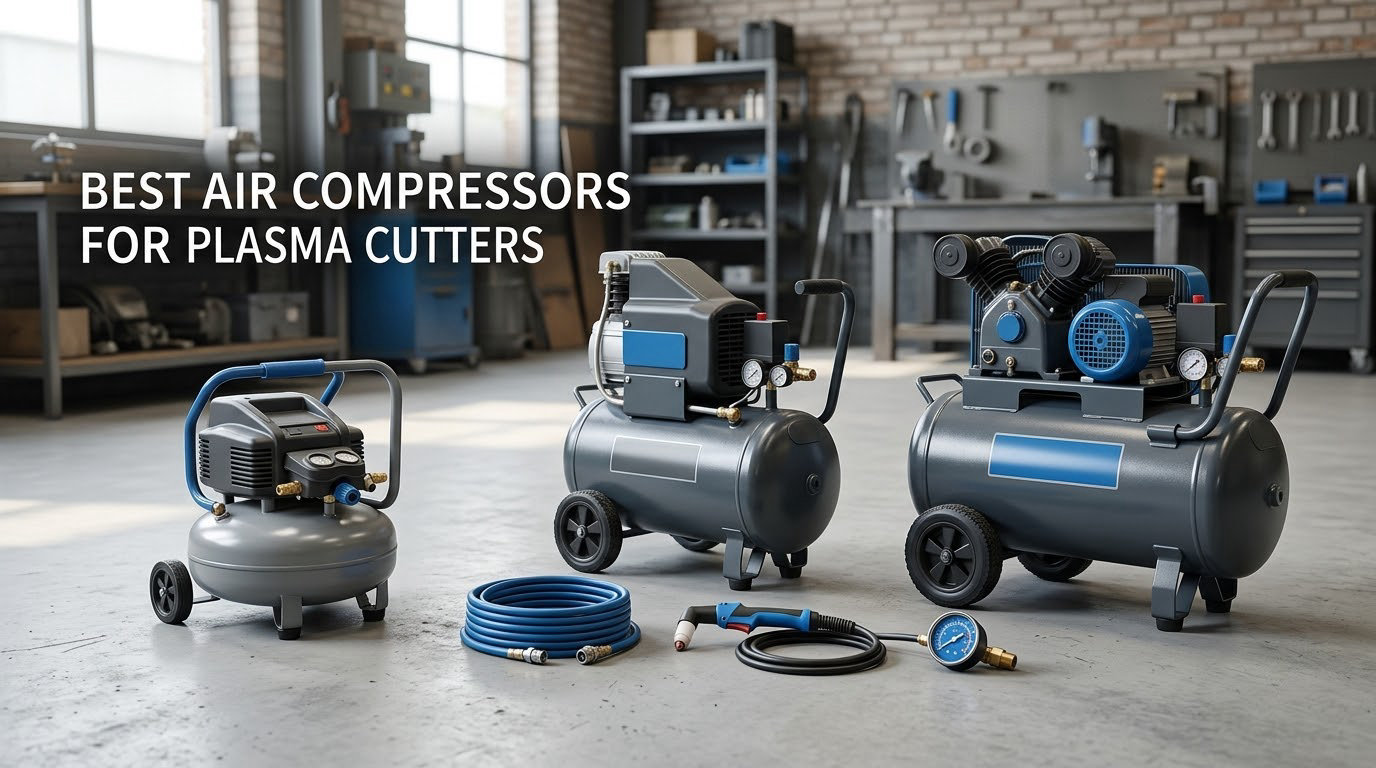
A plasma cutter only cuts as well as the air feeding it. The torch ionises compressed air into a plasma arc, and that same stream blows molten metal out of the kerf so the cut stays clean. When the supply sags mid-pass, the pilot arc starves, the kerf goes ragged, dross appears on the far side, and the cut stops dead.
That is why the compressor, not the cutter, is usually the weak link in a new plasma setup. I spent weeks sizing these units against real torch demand and reading owner reports, and the same failure showed up again and again: manufacturers advertise peak CFM at 40 PSI, buyers see a big number, and the unit cannot deliver at the 90 PSI a torch actually runs at.
The rule that fixes most of this is simple, and I want you to hold onto it for the whole guide: size your compressor’s rated SCFM at 90 PSI to 30-50% above your cutter’s stated CFM demand. For a 45 amp handheld rated at 6 CFM, that means targeting a compressor that publishes 9-10 SCFM at 90 PSI. Anything less and you will watch pressure fall every time you start a cut.
Below I break down the best air compressors for plasma cutters available now, covering handheld torches from 20 to 50 amps, CNC table work, and shop setups that need a dedicated 230V circuit. I have also included a sizing lookup keyed to cutter amperage, a look at the air quality chain nobody else explains, and a plain-language answer to the breaker question that trips up most new plasma owners.
One note on sourcing: every CFM figure I quote is the manufacturer’s published number at 90 PSI where the spec sheet provides it, and I say so plainly when a brand only publishes a bare CFM number with no pressure attached. That distinction decides several picks below.
Our Top 3 Picks for Plasma Cutting in 2026
The three units below are the ones I would put behind a torch without hesitating. Each publishes real output at 90 PSI, each runs on ordinary shop power, and each has enough owner history to trust the spec sheet.

VEVOR 15-Gallon Oil-Free 2HP
- 5.3 CFM at 90 PSI
- 15-gallon steel tank
- 125 PSI max
- 78 dB oil-free

California Air Tools 8010A
- 60 dBA noise level
- Oil-free dual piston
- 8-gallon aluminum tank
- 37.3 pounds

Ingersoll Rand 2 HP Twin-Stack
- 100 percent continuous duty
- Cast iron cylinder
- Two quick couplers
- 79 dBA
Comparing Every Air Compressor in This Roundup
All ten units below run on 120V household or shop supply, so none of them needs an electrician before you start. Sort by rated CFM at 90 PSI first, then by tank size, then by noise.
| Product | Details | |
|---|---|---|
| VEVOR 15-Gallon Oil-Free 2HP |
|
Check Latest Price |
 Klutch 29-Gallon 2.5 HP Klutch 29-Gallon 2.5 HP |
|
Check Latest Price |
 Stealth 12-Gallon Ultra Quiet Stealth 12-Gallon Ultra Quiet |
|
Check Latest Price |
| California Air Tools 8010A |
|
Check Latest Price |
 MAZOT 10-Gallon Oil-Free MAZOT 10-Gallon Oil-Free |
|
Check Latest Price |
 RyanTek 15-Gallon Twin Cylinder RyanTek 15-Gallon Twin Cylinder |
|
Check Latest Price |
 WIILAYOK 15-Gallon 3.7 HP WIILAYOK 15-Gallon 3.7 HP |
|
Check Latest Price |
 Campbell Hausfeld 26-Gallon Campbell Hausfeld 26-Gallon |
|
Check Latest Price |
| Ingersoll Rand 2 HP Twin-Stack |
|
Check Latest Price |
 Stealth 20-Gallon Ultra Quiet Stealth 20-Gallon Ultra Quiet |
|
Check Latest Price |
What Size Air Compressor Does a Plasma Cutter Need?
Match your compressor to your torch’s published air consumption, then add 30-50% headroom. A 20-30 amp handheld needs about 3.5-4 CFM at 70-80 PSI, a 40-50 amp handheld needs 5-6 CFM at 90 PSI, and a 45-65 amp CNC table torch needs 6-7 CFM at 100 PSI. Production plate work at 85-105 amps pulls 10-12 CFM at 100-120 PSI.
Here is the same guidance as a lookup you can print and keep at the bench, written out by cutter class.
20-30A handheld. The torch draws 3.5-4 CFM at 70-80 PSI, so target a compressor publishing 5-6 SCFM at that pressure with a 20-gallon minimum tank.
40-50A handheld. The torch draws 5-6 CFM at 90 PSI, so target 8-10 SCFM at 90 PSI and a 30-gallon minimum tank.
45-65A CNC table torch. The torch draws 6-7 CFM at 100 PSI, so target 10-12 SCFM at 100 PSI and a 60-gallon minimum tank.
85-105A production plate work. The torch draws 10-12 CFM at 100-120 PSI, so target 15-18 SCFM and an 80-gallon two-stage tank on a 230V circuit.
If your torch manual lists 6 CFM, do not buy a compressor rated 6 CFM. Buy one rated 9-10 SCFM at 90 PSI. Forum consensus across CNC and metalworking communities lands on roughly 6 CFM for a common 45 amp handheld torch, with the sizing rule of thumb set at about 150% of the cutter’s own requirement.
SCFM, CFM, and Peak CFM Are Not the Same Number
Peak CFM is measured at 40 PSI, where a compressor produces its most air. Your torch runs at 70-120 PSI, where it produces considerably less. This is the single most confused spec in the category, and it is why buyers end up with a unit that cannot feed their cutter.
SCFM means standard cubic feet per minute, measured at a standard pressure and temperature reference. Any honest spec sheet for plasma duty gives you two numbers: the 40 PSI figure and the 90 PSI figure. If only one is published, assume the 40 PSI one and plan accordingly, or look elsewhere.
Pressure: Match the Rating at the Working PSI
Handheld air plasma torches run 70-80 PSI, mid-power units run around 90 PSI, and CNC table and production torches want 100-120 PSI. A compressor rated 125 PSI is fine for a 90 PSI torch with regulator headroom, but it will not help you if it delivers that pressure at 2 CFM.
Watch out for the tank-versus-flow confusion. A 175 PSI maximum rating describes the receiver’s ceiling, not what the pump holds while the torch is open. The number that matters is rated SCFM at the PSI your torch demands.
Will a 20 Gallon or 30 Gallon Compressor Run a Plasma Cutter?
A 20-gallon compressor will run a 20-30 amp handheld on thin material if it delivers 5 or more CFM at 90 PSI. A 30-gallon compressor will comfortably cover 40-50 amp handheld work. Neither will carry continuous CNC table duty without pressure sag.
Tank volume decides how long you can cut before the pump has to catch up. If the receiver empties faster than the pump refills it, the cut stops mid-pass. That is a receiver size problem, not a motor size problem, and it is why the Klutch 29-gallon and Stealth 20-gallon earn their place in this list.
1. VEVOR 15-Gallon Oil-Free 2HP – Highest Rated Flow at 90 PSI in This Group
VEVOR Air Compressor, 15 Gallon Steel Tank, 2HP 5.3 CFM@90 PSI Oil Free Air Compressor & Max. 125PSI Pressure, 78dB Ultra Quiet Portable Compressor, for Auto Repair, Tire Inflation, Spray Painting
5.3 CFM at 90 PSI
15-gallon steel tank
125 PSI max
78 dB oil-free
+ Pros
- Highest published CFM at 90 PSI in this group
- Oil-free so no oil reaches the torch
- 78 dB is quiet for the output
- Auto overheat and pressure relief protection
- 665 owner reviews to learn from
- Cons
- Short power cord limits placement
- Sensitive to extension cords and low voltage
- Cheap wheels and handle hardware
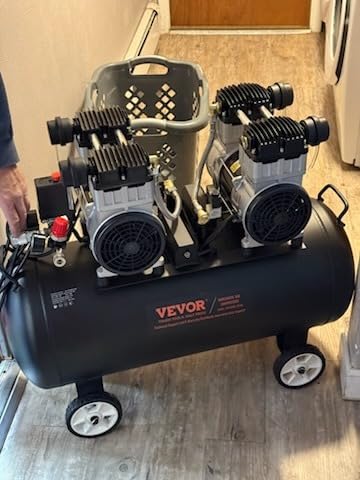
The VEVOR 15-gallon publishes its headline number at exactly the pressure that matters: 5.3 CFM at 90 PSI. Out of ten units I compared, only two others print a 90 PSI flow figure higher than that, and neither of those is backed by anywhere near the same volume of owner feedback.
That combination of a real 90 PSI rating and 665 reviews is why this is my first pick. At 5.3 CFM, it covers a 20-30 amp handheld with genuine margin and handles a 40 amp torch without starving, which is the range where most home and garage fabricators actually operate.
Oil-Free Means Nothing Contaminates Your Consumables
The 1.32 kW oil-free motor spins to 1680 rpm and compresses air with no lubricating oil in the airflow. For plasma work that removes an entire failure mode: there is no compressor oil to carry downstream and gum up a torch tip, and no oil changes to schedule.
Forum advice is consistent on this point. Owners running plasma on r/Tools and r/CNC repeatedly warn never to feed an oil-lubricated compressor to a torch without proper filtration, and the California Air Tools brand comes up constantly as a solid domestic oil-free choice. This VEVOR shares that trait.
Tank Steel and Build Details That Hold Up
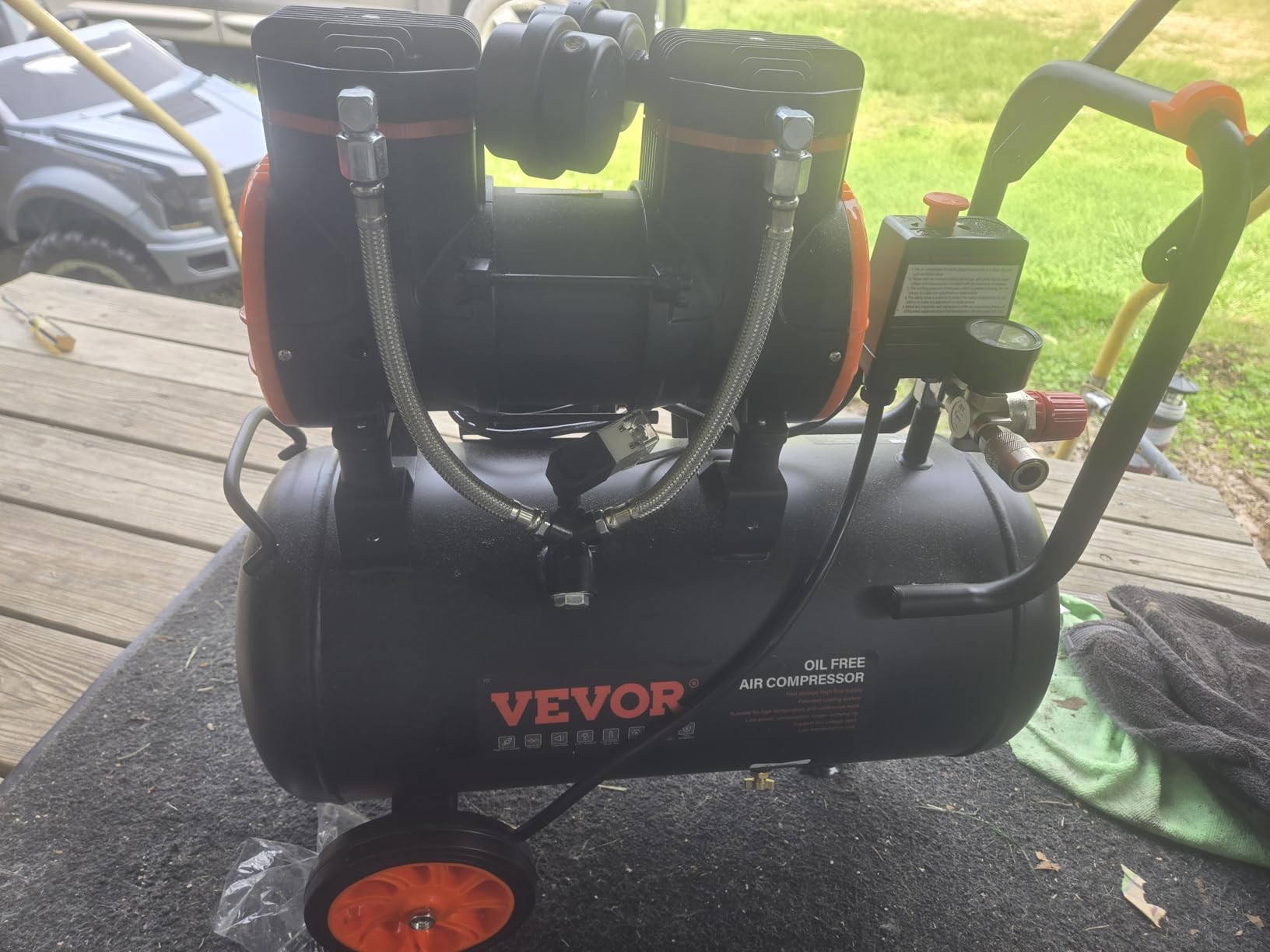
The tank is Q235B structural steel with a three-layer powder coating over seamless welds, listed at 60 liters and 81.6 pounds. Owners report a sealed build with no air leaks, and a tube-and-cylinder intake using heat-resistant silicone with a stainless steel braided mesh hose.
Large cooling fans plus automatic overheat and pressure relief protection mean the unit shuts itself down rather than cooking. A minority of owners do report the motor housing running very hot during sustained operation, so give it clearance if you plan long sessions.
Who Should Skip This Compressor
Skip it if your shop has no clean 120V circuit nearby. Owners report the unit is voltage sensitive and will not run reliably on long or multiple extension cords, and the power cord is short, so placement is not flexible.
It is also not the right unit for CNC table work. At 15 gallons and 5.3 CFM, a 60-65 amp table torch will pull it down toward its pressure ceiling faster than a larger receiver would absorb.
2. Klutch 29-Gallon 2.5 HP – The Receiver That Stops Mid-Cut Dropouts
Klutch 29-Gallon Air Compressor, 2.5 HP, 120V, 175 PSI, 5.1 CFM at 90 PSI
5.1 SCFM at 90 PSI
29-gallon vertical tank
175 PSI max
120V 14.5 A
+ Pros
- Largest receiver that still runs on a 120V outlet
- 175 PSI max gives real regulator headroom
- Vertical footprint saves floor space
- Brass one-handed quick coupler
- 738 reviews
- Cons
- Noticeably loud at 81 dB in an enclosed shop
- 127 pounds is heavy to reposition
- Slow fill from empty due to tank volume
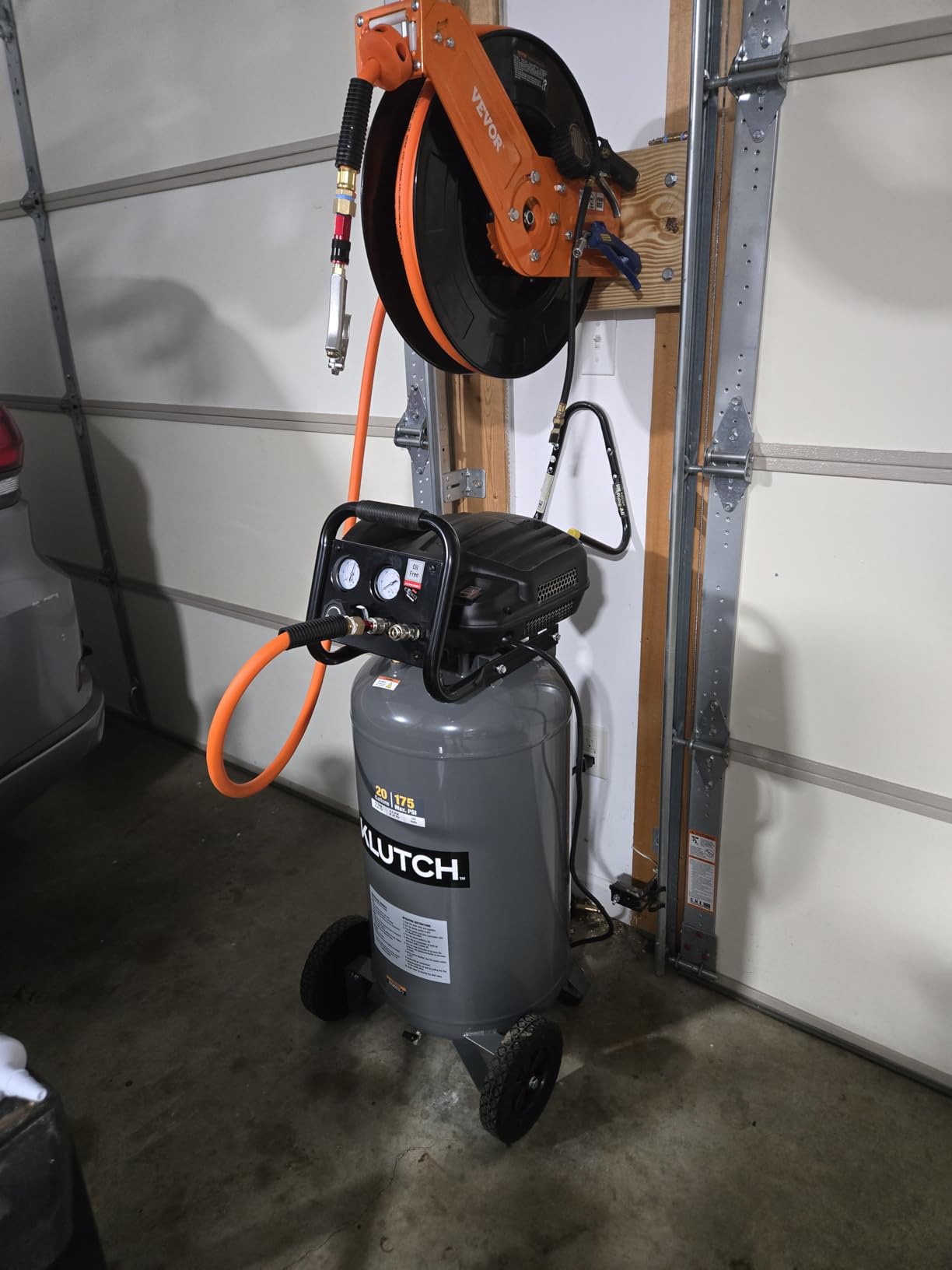
Most compressors in this class sell you air volume. The Klutch 29-gallon sells you stored air, which is the part that decides whether a thick-plate cut finishes or stalls. At 29 gallons it is the largest receiver here that still runs from a standard 120V outlet at 14.5 A.
Owners describe the practical result simply: jobs rarely stall waiting for a refill. On a 45 amp torch running long lead-ins through 3/8 inch plate, that buffer is the difference between a clean pass and a torch that dies halfway across the plate.
Why 29 Gallons Changes the Cut, Not Just the Runtime
A receiver works as a pressure buffer. While the torch draws air, the pump refills the tank simultaneously. A large tank absorbs the difference between demand and pump output, so line pressure stays steady through the pass instead of sagging.
The vertical layout is a real advantage in a working shop. At 23.2 by 21.1 by 45.3 inches, it holds nearly triple the storage of a pancake compressor in a fraction of the floor footprint, which matters when the same bay holds a table saw and a welder.
Pressure Ceiling and Duty in a 120V Package
The 175 PSI maximum is the highest rated ceiling among the compressors here, and it gives you genuine regulator headroom above the 90 PSI a mid-power torch wants. The 2.5 HP oil-free vertical pump is a sensible match for intermittent shop duty rather than continuous production cutting.
The 5.1 SCFM at 90 PSI figure is honest for this class, though at least one long-term owner considers the rating optimistic. Treat it as the low end of the real number and you will not be disappointed.
Who Should Skip This Compressor
Skip it if noise is a constraint. At 81 dB, owners describe it as clearly noticeable in an enclosed shop, which is the opposite of the Stealth units further down this list.
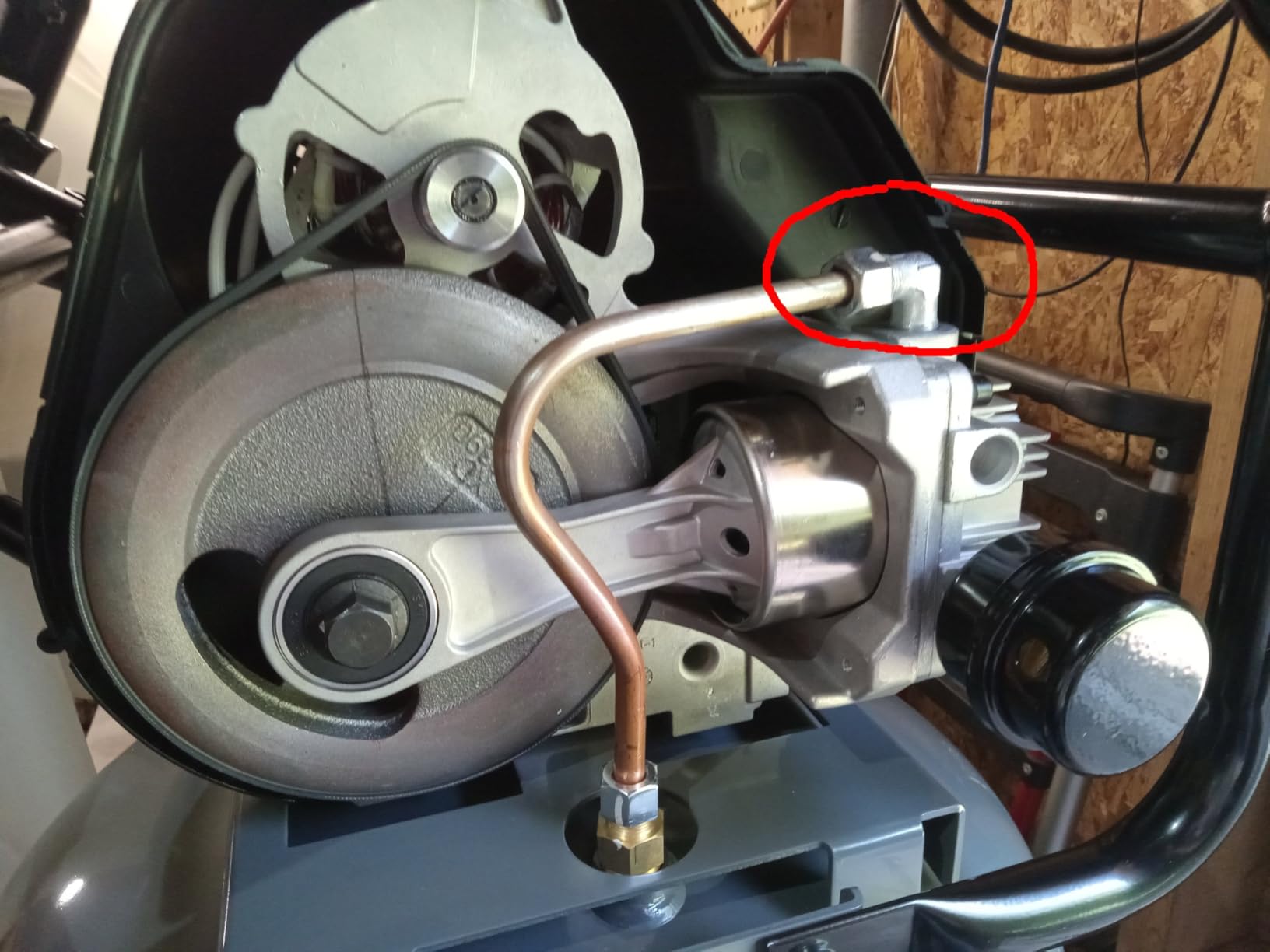
Also weigh the 127 pound weight and the slow fill from empty caused by the large tank volume. And if you notice a unit whose power switch behaves oddly, stop using it immediately; one detailed review by a maintenance manager describes an internally bypassed switch that caused an arc-flash event and required disconnecting the compressor under load.
3. Stealth 12-Gallon Ultra Quiet – 68 dB for an Enclosed Garage
Stealth 12 Gallon Ultra Quiet Air Compressor, 1.5 HP Oil-Free Peak 150 PSI 68 Decibel,5 CFM @ 40 PSI 4 CFM @ 90 PSI Silent Portable Long Life Electric Air Compressor W/Wheel for Garage
4 CFM at 90 PSI
68 dB noise level
12-gallon steel tank
Oil-free induction motor
+ Pros
- Exceptionally quiet at 68 dB for indoor use
- Oil-free induction motor needs no maintenance
- Quick recovery between tool bursts
- Steady pressure holding
- Cons
- Only 4 CFM at 90 PSI
- 12-gallon tank refills often in continuous use
- Some owners find CFM figures optimistic
If your shop is attached to a house, noise is not a preference, it is a hard constraint. The Stealth 12-gallon is built around a fully sealed oil-free induction motor rated at 68 dB, which is quiet enough to run beside a normal conversation without raising your voice.
It also lists a 150 PSI peak pressure and a 4 CFM at 90 PSI rating, published at the right pressure rather than the flattering 40 PSI number. For a 20-30 amp handheld doing sheet metal and thin mild steel, that is enough air with a little margin.
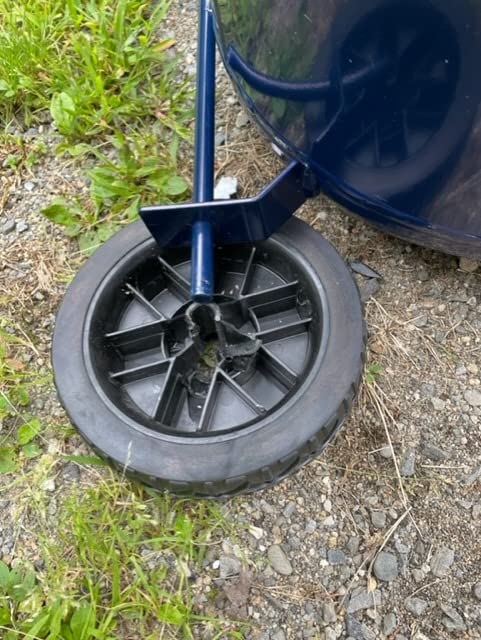
68 dB and a 1,000-Hour Motor Life Claim
The induction motor is rated by the manufacturer for a service life over 1,000 hours, and the oil-free design means no oil changes and no oil reaching your torch consumables. The Q235B steel tank body sits on 7-inch rubber-reinforced wheels with a 6-foot cord included in the box.
At 95 pounds and 20 by 18 by 29 inches, it is smaller than most vertical units here but not genuinely light. Plan the position before you lift it, because noise and placement are the two things you are buying this unit for.
Where the 4 CFM Figure Bites
Four CFM at 90 PSI is the real limit on this machine. It is fine for intermittent handheld cutting, and it will keep up with a spray gun or nailer between passes, but a 40 amp torch will pull the pressure down and hold it there.
The 12-gallon tank compounds this on long jobs. It refills relatively often during continuous use, so on a CNC table or a production plate you will be waiting on the pump mid-cut. Some owners also report the stated CFM figures run optimistic in practice.
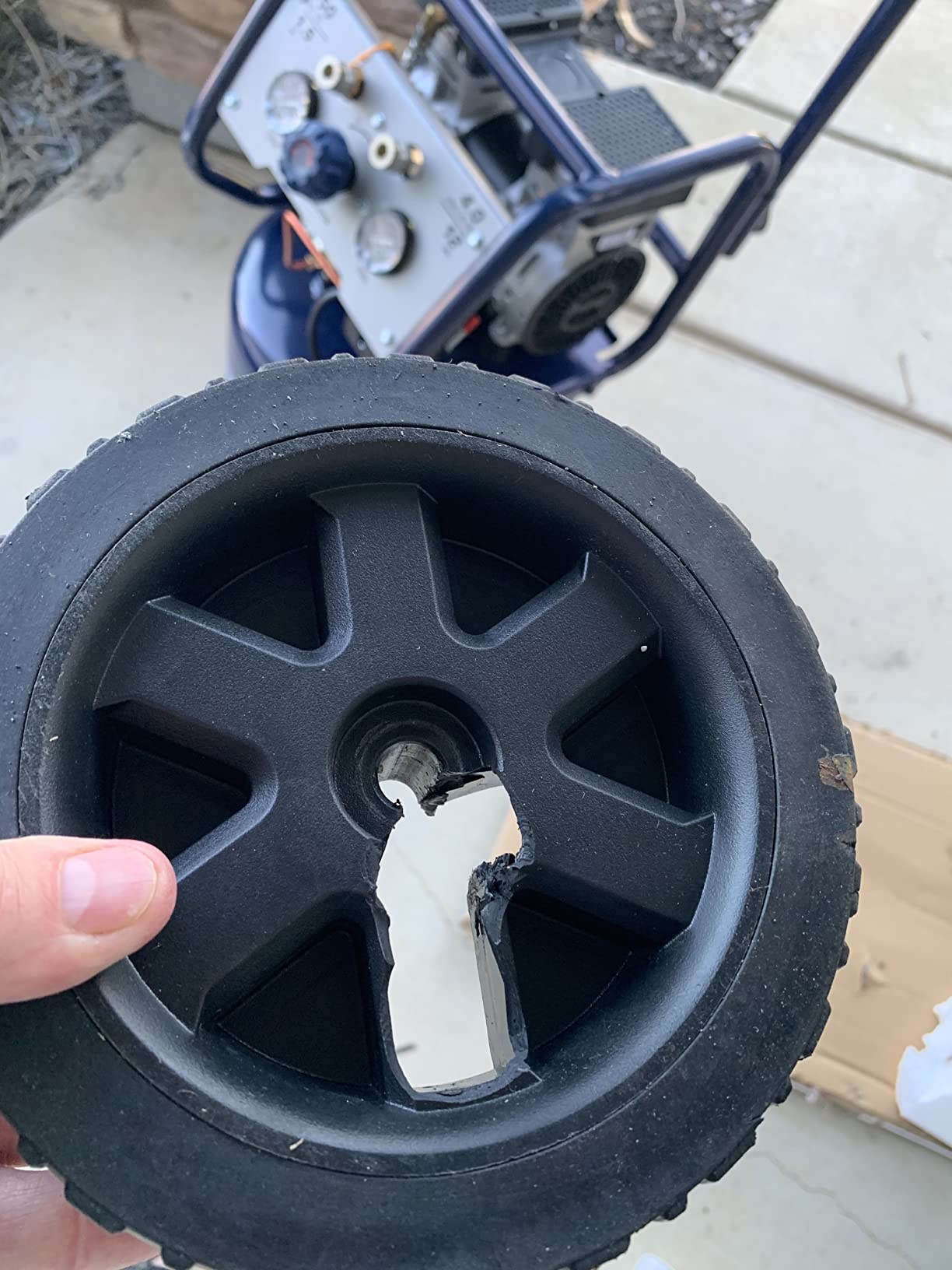
Who Should Skip This Compressor
Skip it if you run anything above a 30 amp handheld. There is simply not enough published flow, and the small tank gives you no buffer during a sustained pass.
It is also the wrong choice if you want the deepest owner documentation in this category. The units carrying 600-plus reviews elsewhere in this roundup give you a much longer service record to lean on before you commit.
4. California Air Tools 8010A – The Most Reviewed and Top Rated Unit Here
California Air Tools 8010A 1.0 HP Ultra Quiet and Oil-Free Air Compressor, 8 Gallon Aluminum Tank, Lightweight with Wheels, 60 dBA Noise Level
2.2 CFM at 90 PSI
60 dBA noise level
8-gallon aluminum tank
37.3 pounds
+ Pros
- Quietest unit in the roundup at 60 dBA
- Lightest at 37.3 pounds with wheel kit
- Dual piston pump rated beyond 3000 hours
- Quick 60-second recovery from 90 to 120 PSI
- Highest rating and review count in the group
- Cons
- Lowest airflow here at 2.2 CFM at 90 PSI
- 120 PSI max sits below competitors
- 1 HP single-phase motor limits continuous duty
The California Air Tools 8010A carries a 4.7 rating across more than 1,100 reviews, an 84% five-star share, and the lowest noise figure in this roundup at 60 dBA. Forum owners running plasma duty on r/Tools and r/CNC name this brand repeatedly as a trusted domestic oil-free option, and the owner record backs that up.
I am including it with an honest caveat rather than as a top-three pick. At 2.2 CFM at 90 PSI, it will not feed a working plasma torch. It is here because it is the right answer to a different question in this category, and because a well-built unit that is clearly mismatched to heavy duty is worth more than a heavy-duty unit recommended for the wrong job.
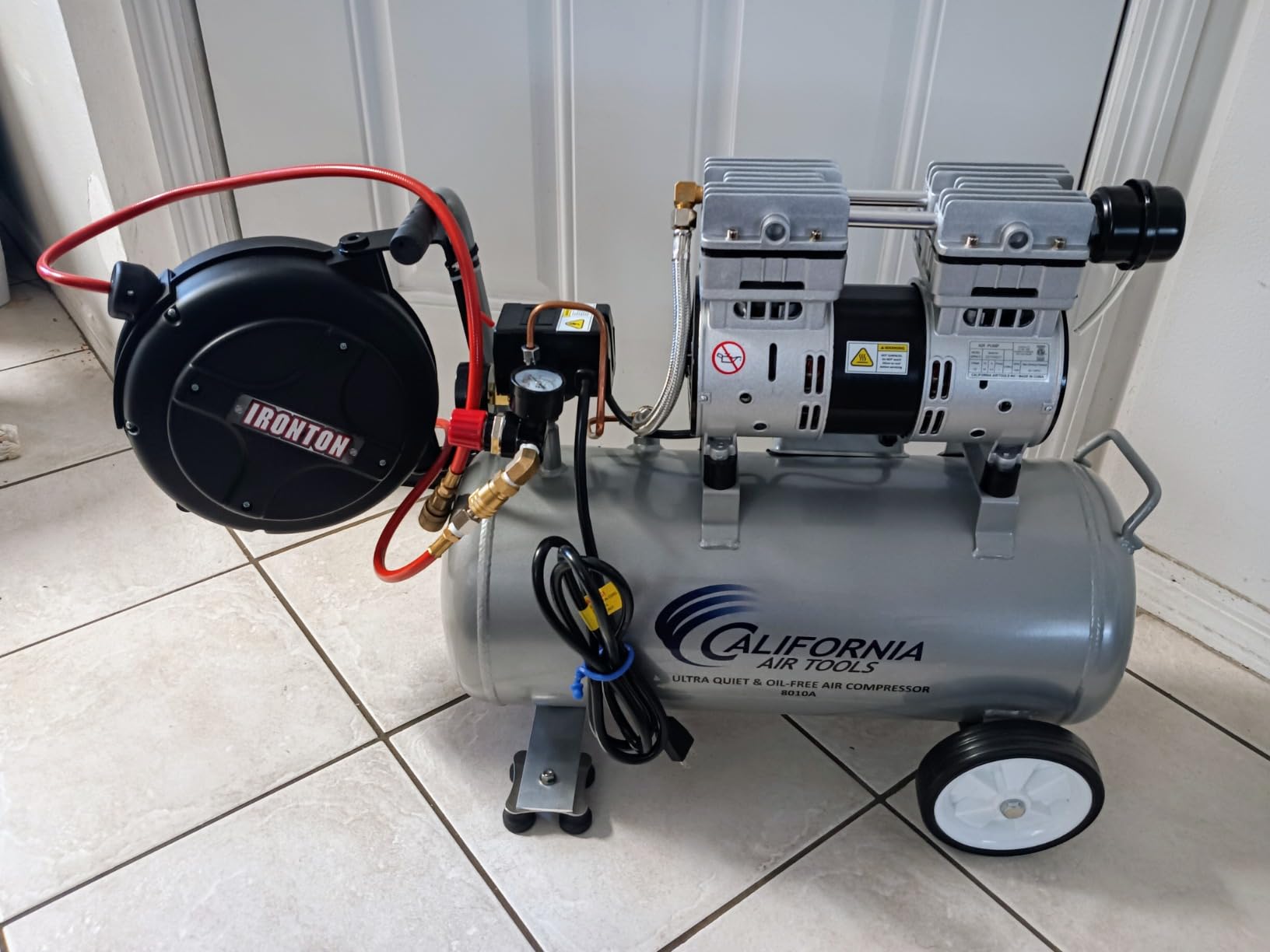
Where This Unit Genuinely Fits
This is a finishing and trimming compressor. It handles inflating, airbrushing, small pneumatic tools, and cleanup work without waking the household. The 165-second tank fill and 60-second recovery from 90 to 120 PSI keep it responsive for intermittent tasks.
It is also the easiest unit here to move. At 37.3 pounds with the wheel kit, you can roll it from the garage to the basement to the job site without recruiting help, which no other machine on this list allows.
The Specification Gap Nobody Mentions
The 120 PSI maximum is the other limitation. A torch that wants 90 PSI has 30 PSI of margin, but a table torch asking for 100 PSI leaves almost none, and no amount of regulator adjustment creates pressure the receiver does not hold.
The 1.0 HP single-phase motor at 1680 rpm is the real ceiling. The oil-free dual piston pump is rated for 3,000 or more hours before wear, and there is a 1-year limited warranty, but the honest summary is that this machine optimises for quiet and light rather than flow.
Who Should Skip This Compressor
If you cut metal for a living, skip it. 2.2 CFM at 90 PSI is the lowest airflow in this roundup, and an 8-gallon tank will cycle constantly on any real plasma job.
Buy it instead if your plasma work is occasional and your real demand is airbrushing, inflating, and light pneumatic tools in a noise-sensitive space. It is one of the only compressors here you can run indoors at full tilt without complaints.
5. MAZOT 10-Gallon Oil-Free – Compact Power With a Two-Year Warranty
Mazot 10 Gallon Quiet Oil-Free Air Compressor, Portable Air Compressor with 120 PSI Max Pressure, 5.26 CFM @ 90 PSI, Fast Recovery for Garage, Air Tools, Tire Inflation, Spray Painting & Woodworking
5.26 CFM at 90 PSI
10-gallon steel tank
120 PSI max
65 dB enclosed housing
+ Pros
- 5.26 CFM at 90 PSI from a compact 10-gallon tank
- 65 dB enclosed noise-reduction housing
- Filled from empty quickly with fast recovery
- Two-year warranty is longer than most here
- Small footprint for garage storage
- Cons
- Only 23 reviews
- a thin ownership record
- Some units arrive without wheels or handle
- Small tank runs continuously on longer jobs
The MAZOT 10-gallon does something unusual for a compact unit: it publishes 5.26 CFM at 90 PSI. That is more rated flow than every other compressor in this roundup except the VEVOR, out of a 10-gallon tank, with a fully enclosed noise-reduction housing rated at 65 dB.
For a garage fabricator running a 20-30 amp handheld on a 120V outlet, that combination is genuinely useful. One owner notes running it daily through summer heat for model airbrushing without a fault.
Safety Hardware and the Two-Year Warranty
The spec sheet lists a reinforced steel tank, overload protection, automatic pressure relief, dual pressure gauges, and quick-connect fittings. A two-year warranty is longer than most machines in this price class offer, and reviewers mention responsive manufacturer support.
At 23.62 by 12.2 by 25.59 inches it stores neatly against a wall, and the enclosed housing suits basements and attached garages where an exposed motor would be unbearable.
What a Thin Review History Means for You
Twenty-three reviews is a small sample, and that is the main reason this sits fifth rather than higher. You are trusting a spec sheet more than a long ownership record, which is a different kind of risk than a poorly performing machine.
There are real quality-control reports too: some units arrive without wheels or a handle, and some included nozzles leak air and need replacing. Inspect the box contents before you plan a job around it.
Who Should Skip This Compressor
Skip it if you want a documented long-term record before committing, or if you need a receiver big enough to finish a thick-plate pass. A 10-gallon tank runs near-continuously during longer jobs, which is exactly the cycling behaviour that hurts cut quality.
It is also the wrong pick above a 30 amp handheld, where the 120 PSI ceiling starts to feel tight.
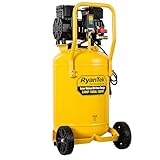
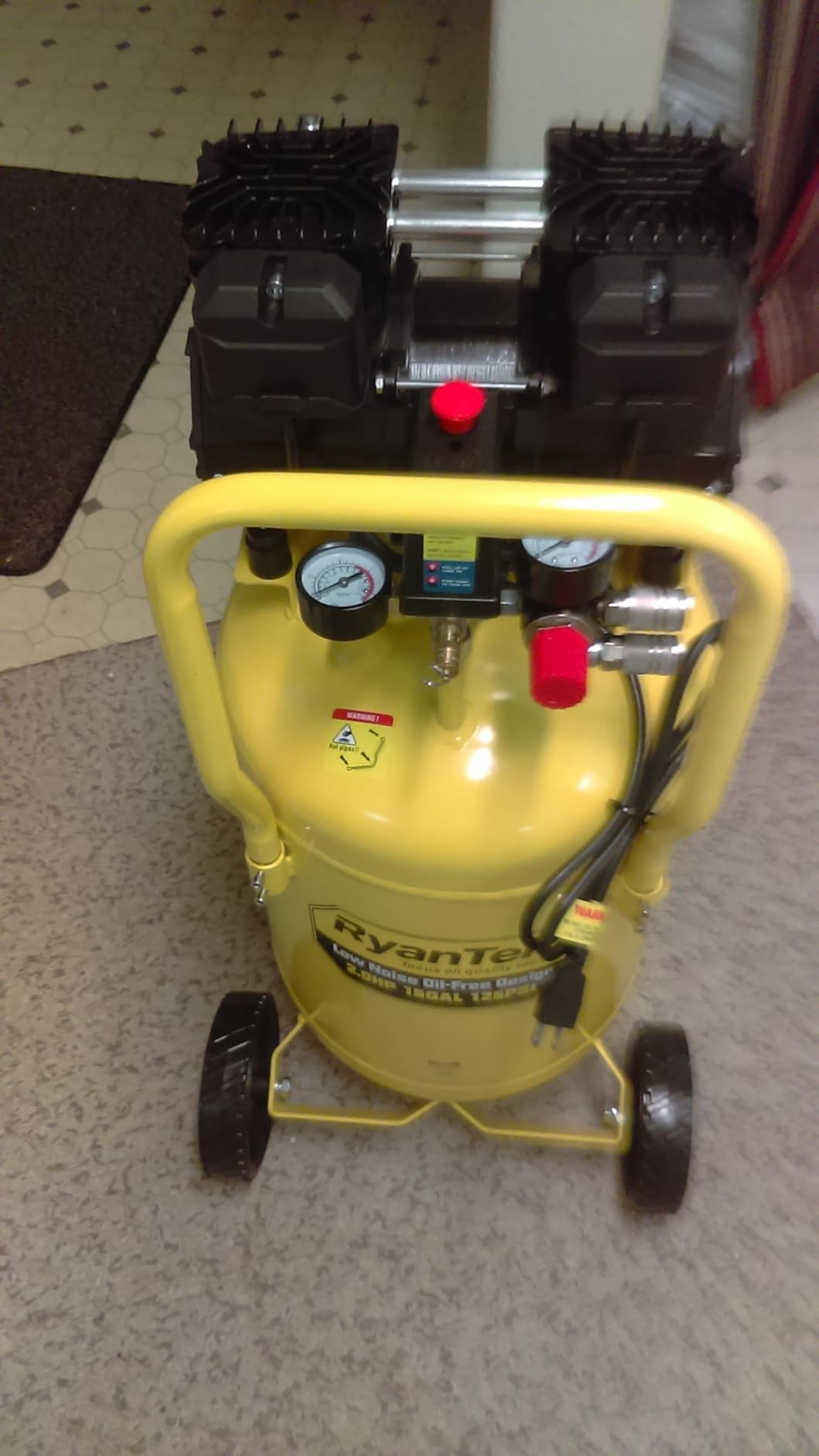
6. RyanTek 15-Gallon Twin Cylinder – Vertical Tank, Dual Outlets, Thoughtful Details
RyanTek 15-Gallon Air Compressor, 2HP, Quiet 66dB, 4.5CFM@90PSI
4.5 CFM at 90 PSI
15-gallon vertical tank
66 dBa at 4 meters
Oil-free twin cylinder
+ Pros
- Genuinely quiet for a piston compressor
- 15-gallon vertical tank reduces motor cycling
- 4.5 CFM at 90 PSI suits HVLP spray work
- Upward-facing gauge and dual outlets
- Fast responsive manufacturer service
- Cons
- Soft rubber feet deform under tank weight
- Handle blocks access to the air filter screws
- 7-8 minute fill from empty
The RyanTek 15-gallon is the design I’d choose for a small bay. The twin-cylinder oil-free pump publishes 4.5 CFM at 90 PSI and 125 PSI maximum, and the vertical tank holds enough air to reduce how often the motor has to cycle during a cut.
It is also one of the more thoughtfully laid-out machines here. The gauge faces upward so you can read it without crouching, there are dual air outlets for running two tools, and a side-mounted handle protects both the gauge and the switch from knocks.

Read the Noise Figure With the Distance Caveat
The 66 dBa figure is measured at 4 meters. Owners point this out directly, and real readings in a working shop are higher. Even so, reviewers consistently describe it as genuinely quiet relative to typical piston compressors of this size.
At 68.3 pounds with integrated wheels and a handle, it is light enough to reposition for spot welds and cleanup without a fight. The screw-mounted square air filter is designed to resist loosening, which fixes a common failure point on budget machines.
The Hardware Complaints Worth Knowing Before You Buy
Three issues come up repeatedly. The included rubber feet are far too soft and deform badly under the tank weight, so plan on replacing them. Assembly is awkward because the handle blocks access to the air filter screws, and the directions omit socket sizes.
Owners also report a 7-8 minute fill from empty, which is long, and a small number of units arriving with a persistent air leak or a defective regulator. At 38 reviews, that sample is small, but the pattern is consistent enough to mention.
Who Should Skip This Compressor
Skip it if you need strong published flow. At 4.5 CFM at 90 PSI it suits a 20-30 amp handheld and HVLP spray work, but a 40 amp torch will push it to the edge of its range.
Also skip it if you want a plug-and-play first start with zero assembly frustration, or if a 7-8 minute full fill would drive you mad on a job site with frequent stops.
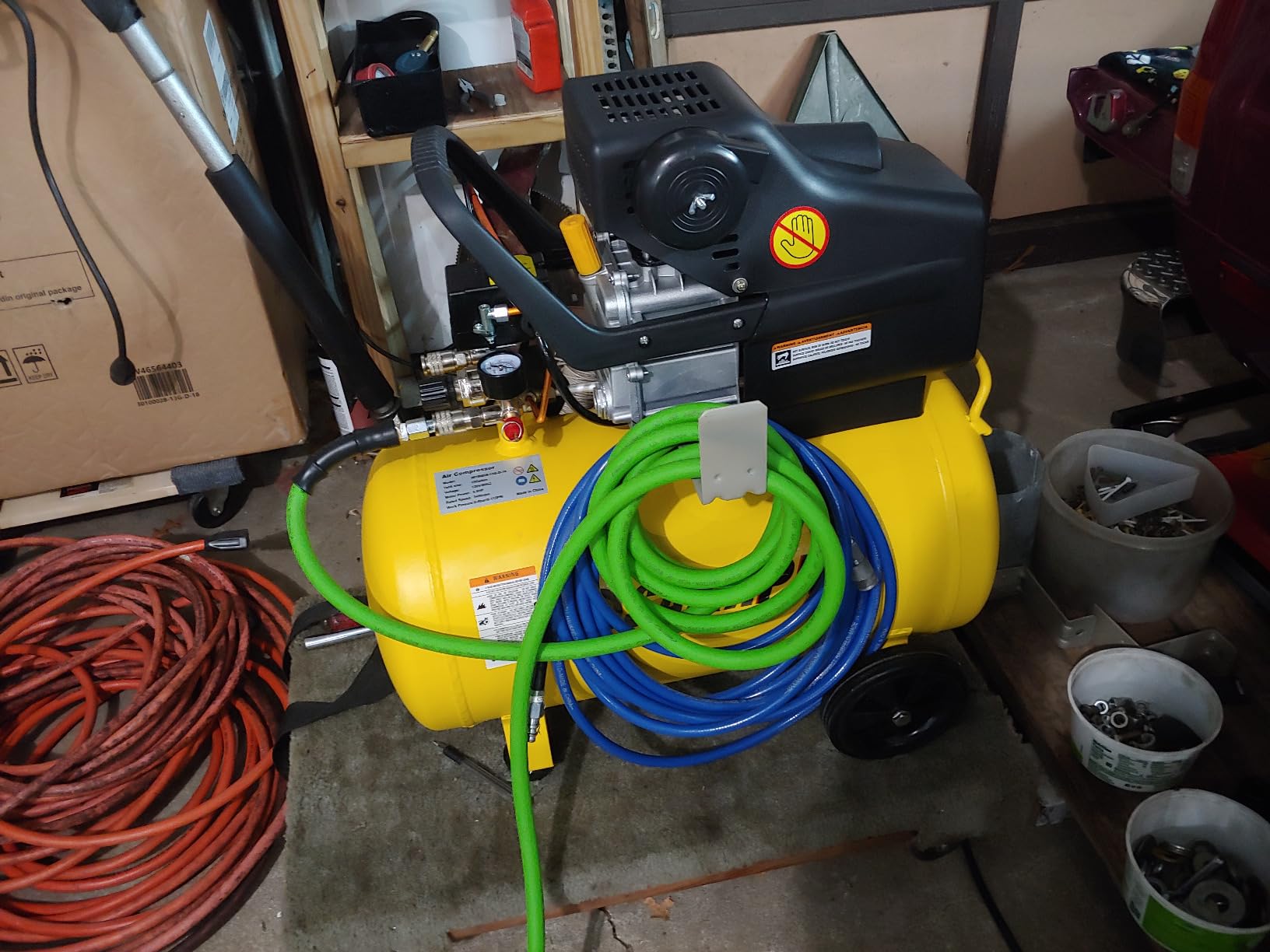
7. WIILAYOK 15-Gallon 3.7 HP – Most Claimed Airflow, and a Filtration Requirement
WIILAYOK 15 Gallon Portable Air Compressor, 3.7 HP, 6 CFM, 115 PSI
6 CFM claimed
15-gallon horizontal tank
115 PSI max
Oil-lubricated pump
+ Pros
- Highest claimed CFM of any unit here
- Fast fills and steady pressure on HVLP spray work
- 70 dB is acceptable for the output
- 70 pounds with top handle and wheels
- Three-layer reinforced steel tank
- Cons
- 6 CFM is not published at any specific PSI
- Oil-lubricated so a coalescing filter is mandatory
- Lowest pressure ceiling here at 115 PSI
The WIILAYOK 15-gallon claims 6 CFM from a 3.7 HP motor on 110V, which is the highest airflow figure in this roundup. Owners using it for HVLP spray work report fast fills and a stable 28-35 PSI at the trigger, and one says the unit paid for itself after a single job.
But here is the caveat that decides its ranking: the 6 CFM is not published at any stated pressure. That is precisely the spec-sheet problem that forum buyers complain about, and I will not award flow credit for a number with no pressure attached.
Oil-Lubricated Changes the Air Quality Chain
This is an oil-lubricated pump with a long-life lubrication system designed to reduce friction and extend component life. That is a durability win for the machine and a complication for your torch, because compressor oil is exactly what fouls plasma consumables.
Forum guidance is unambiguous on this point: never run an oil-lubricated compressor to a torch without filtration. If you buy this unit, budget for a moisture separator and a coalescing filter, and expect to service them. The alternative is shortened electrode and nozzle life and a torch that sputters.
Pressure Ceiling and Build Concerns
At 115 PSI maximum, this is the lowest rated pressure ceiling among the larger tanks in this roundup. It is adequate for a handheld torch at 70-90 PSI, but it leaves nothing for a table torch asking for 100 PSI or more.
Quality control is the other theme. Owners report machines arriving scratched with missing screws, no printed manual, and gauges that read around 10 PSI apart from an external reference, with the 30 PSI cut-off setting needing adjustment. Several plan to replace the drain valve, regulator, and gauges themselves.
Who Should Skip This Compressor
Skip it if you want a clean air line with no filtration in the path. The oil-lubricated pump and a torch that produces its own fine particulate are a bad pairing without a coalescing filter between them.
Also skip it for CNC table work. The 115 PSI ceiling and the horizontal 15-gallon tank do not give the pressure reserve or the buffer that table work demands.
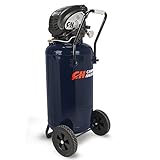
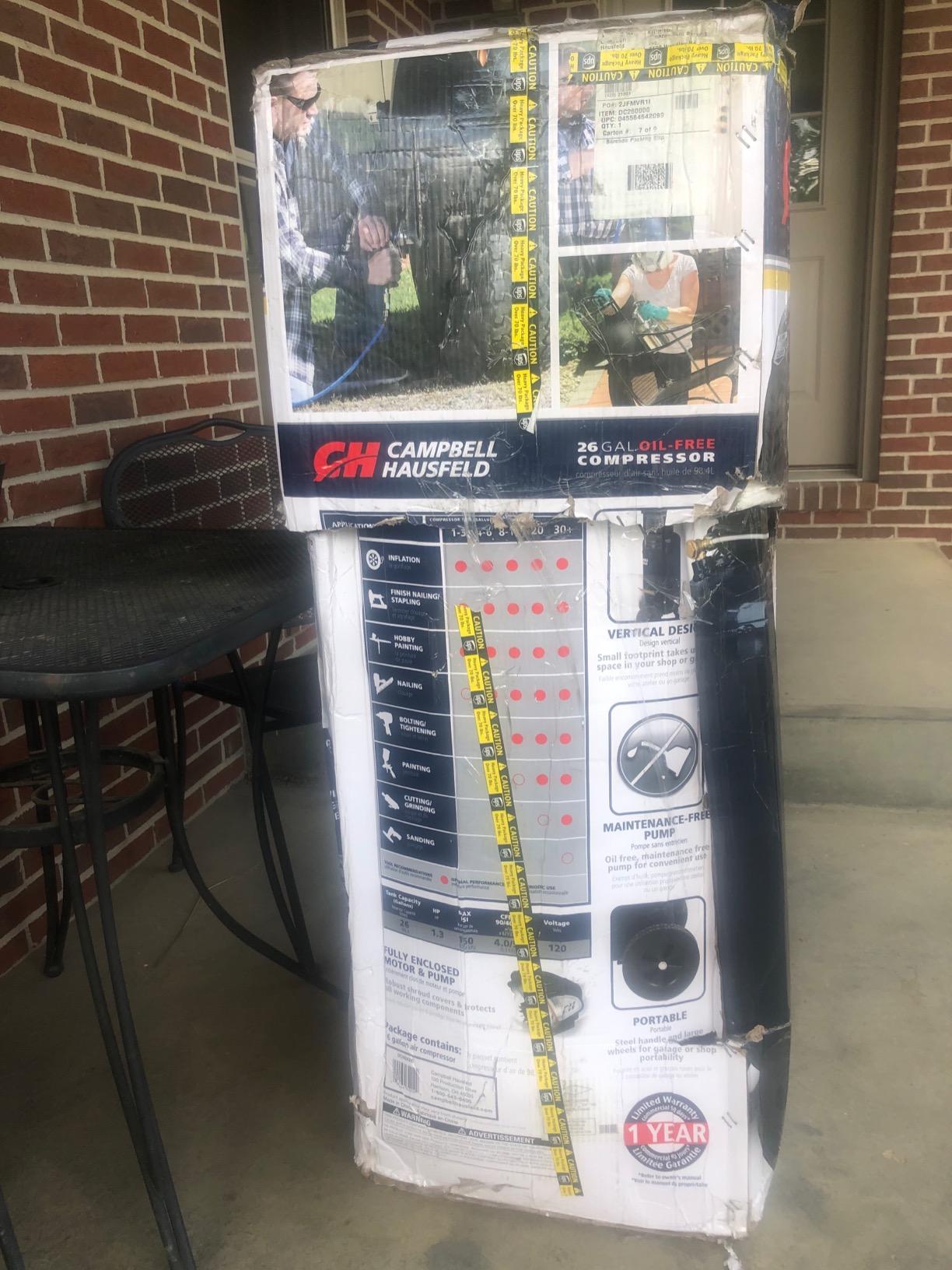
8. Campbell Hausfeld 26-Gallon – Air Storage Without Air Delivery
Campbell Hausfeld 26-Gallon Oil-Free Air Compressor, 150 PSI, (DC260000)
4.0 CFM at 90 PSI
26-gallon vertical tank
150 PSI max
Oil-free single-stage
+ Pros
- 26-gallon vertical tank gives a large air reserve
- Oil-free pump means no routine maintenance
- Runs on ordinary 120V supply
- Recognized brand with a 1-year limited warranty
- Vertical layout conserves floor space
- Cons
- Only 4.0 CFM at 90 PSI for a tank this size
- Louder than most at a listed 88 dB
- 105.84 pounds
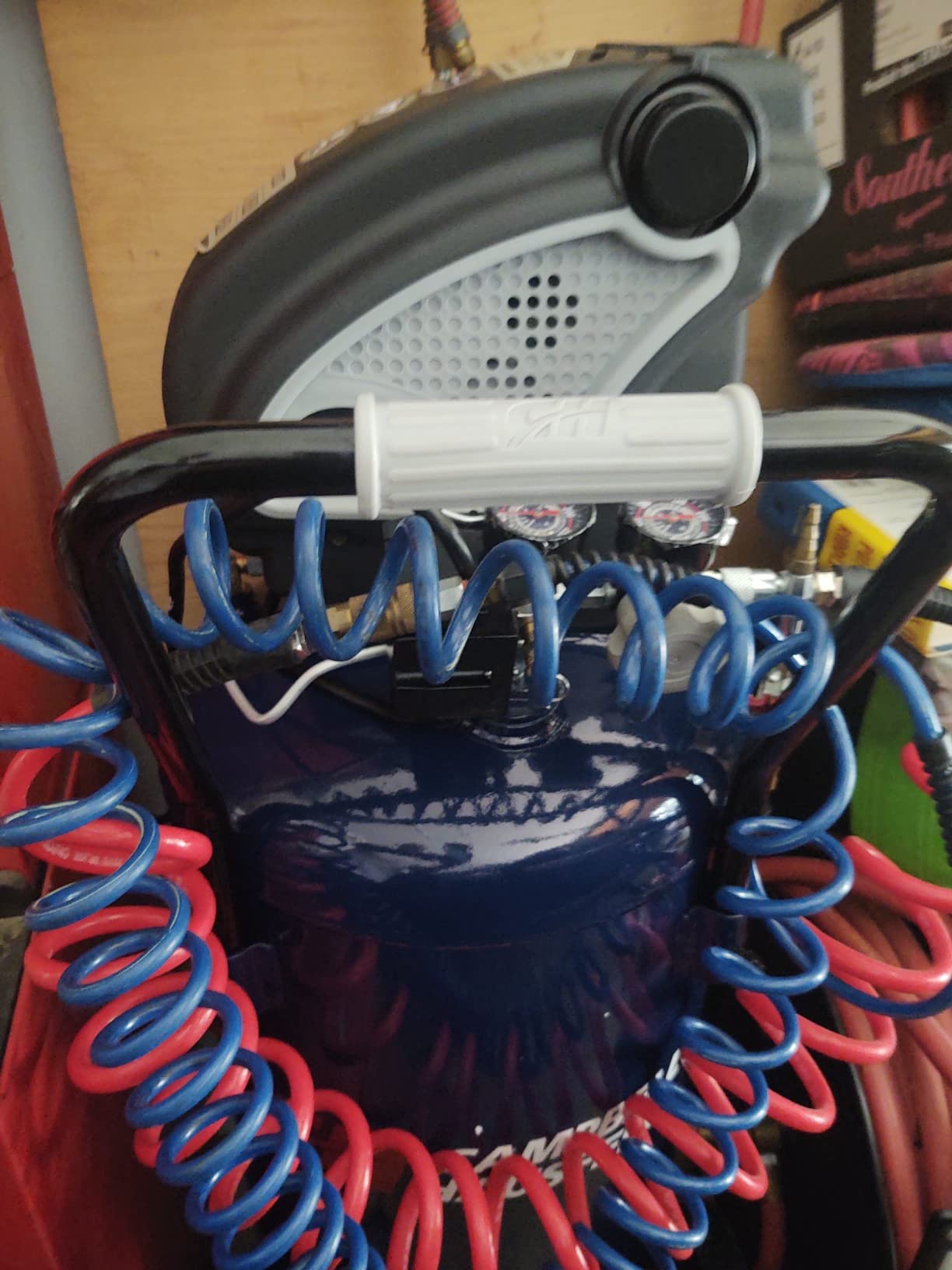
This machine illustrates the clearest example in the roundup of why tank size and pump output are different things. The 26-gallon vertical receiver stores a lot of air, and the 1.3 HP oil-free single-stage pump delivers 4.0 CFM at 90 PSI to refill it.
Owners value the format, the maintenance-free pump, and the ability to run on ordinary 120V power with no dedicated circuit. The brand carries a degree of trust that some of the no-name units in this roundup do not.
A Big Tank Does Not Substitute for Flow
A 26-gallon receiver buys you roughly twice the runtime of a 12-gallon unit, but it does not raise the pressure ceiling while the torch is drawing. At 4.0 CFM at 90 PSI, a 40 amp handheld will still pull the line down. The tank simply takes longer to fall on you.
That makes this a decent companion machine for intermittent shop duty and inflating alongside a plasma torch, rather than a dedicated plasma supply.
Noise and the Warranty Picture
The listed 88 dB is the second-highest figure in this roundup, and owners looking for a shop you can stand in for hours will notice it. The 150 PSI maximum gives good regulator headroom, though the pump cannot sustain high pressures at useful flow.
At 105.84 pounds with a steel handle and large wheels, it moves acceptably for its size. The 1-year limited warranty is standard. The 14% one-star share is the highest among the well-reviewed models here, which suggests some units underdeliver against expectations.
Who Should Skip This Compressor
Skip it as a primary plasma supply for anything above a 20-30 amp handheld. Four CFM at 90 PSI simply will not hold pressure against a torch that pulls five or more.
It is also the wrong choice for a shared indoor workspace at 88 dB, and a heavy 105.84 pound lift for a small garage where floor space and weight matter more than stored air.
9. Ingersoll Rand 2 HP Twin-Stack – The Only True Continuous-Duty Motor Here
Ingersoll Rand 42672949 2 HP Portable Twin-Stack Air Compressor
3.2 CFM at 90 PSI
100 percent continuous duty
Cast iron cylinder
Two quick couplers
+ Pros
- Only unit in this roundup rated 100 percent continuous duty
- Cast iron cylinder built for tough duty
- Two quick disconnect couplers run multiple tools
- Synthetic lubricant gives 2000 hour service intervals
- Two-year pump warranty
- Cons
- Smallest tank here at 4 gallons
- Lowest airflow in the roundup at 3.2 CFM at 90 PSI
- Oil-lubricated so filtration is required
The Ingersoll Rand 2 HP twin-stack is the only compressor in this roundup with a motor rated for 100 percent continuous duty. Everything else here is rated for intermittent shop duty with recovery pauses, and for long fabrication days that distinction matters more than most buyers expect.
The cast-iron cylinder and the All Season Select synthetic lubricant rated for 2,000 hours between changeouts are the reasons. The warranty runs one year on the full package and two years on the pump when that lubricant is used.
Continuous Duty Versus a 4-Gallon Tank
Continuous-duty capability lets the motor run hard and cool properly under sustained load. The 4-gallon receiver is the compromise, and buyers describe it plainly: this is built for intermittent duty and portability rather than long uninterrupted runs.
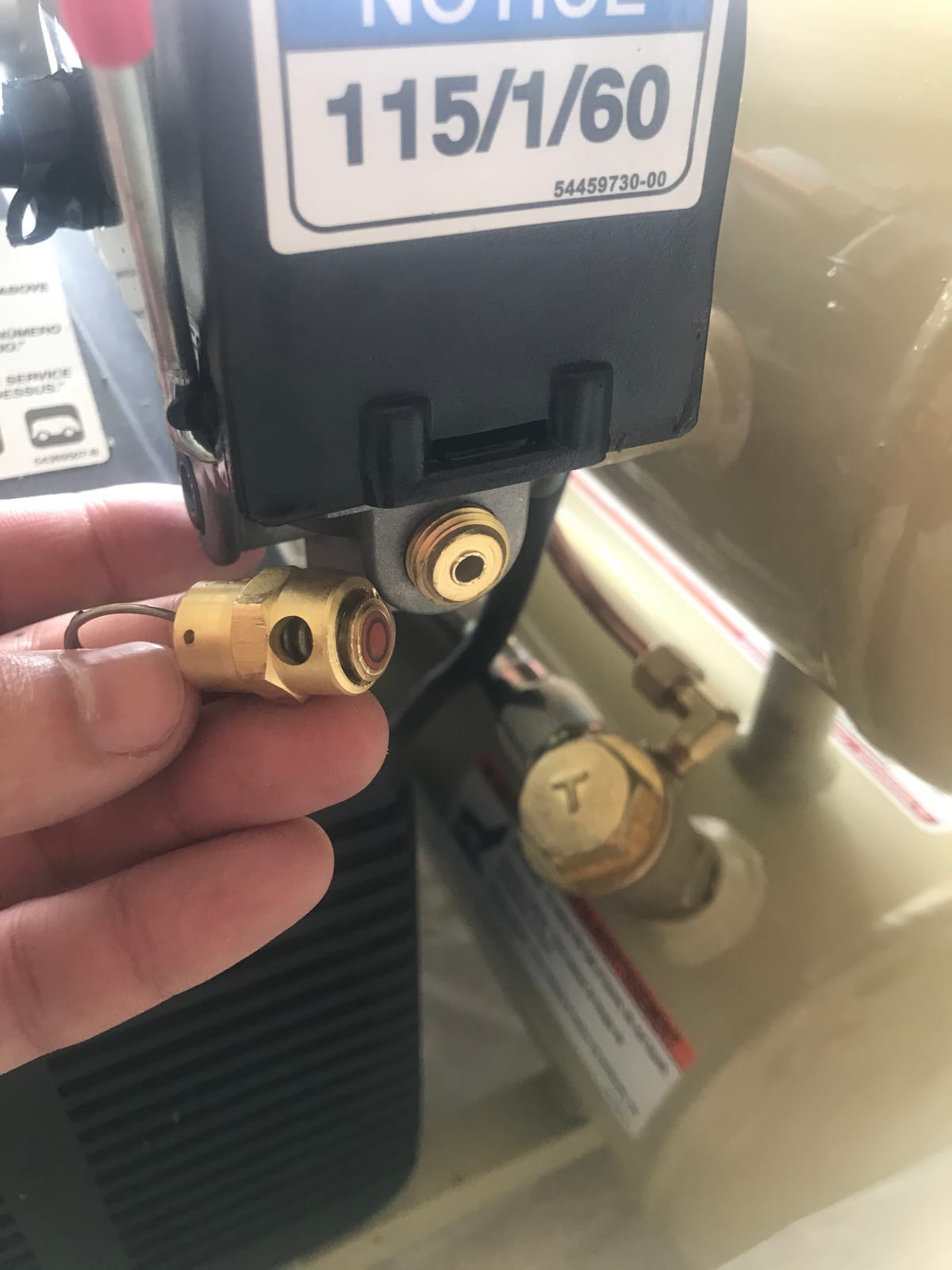
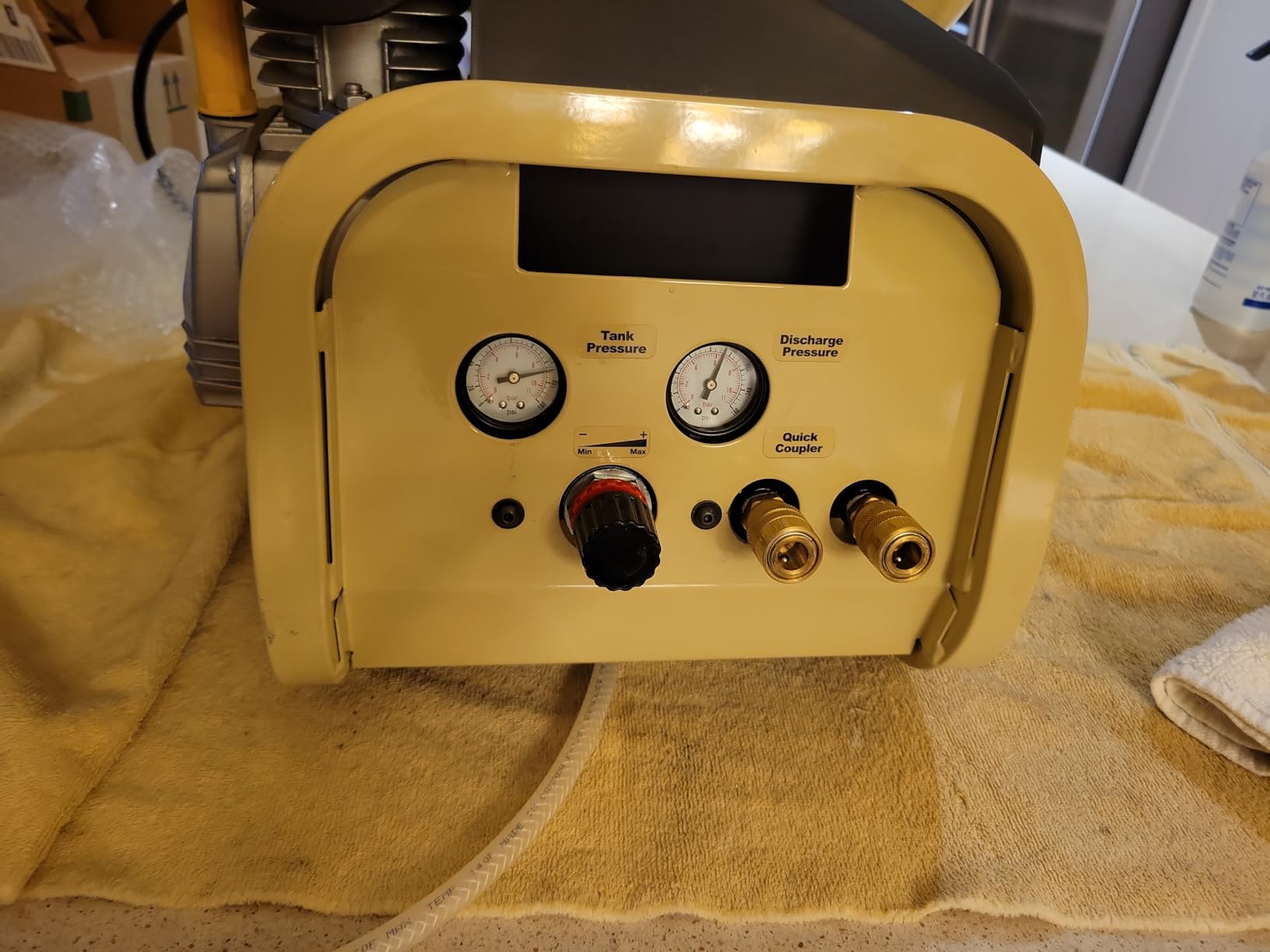
Two quick disconnect couplers let you run two tools at once, which is useful when a plasma torch and a second pneumatic tool share a line. At 79 dBA it is also quieter than most cast-iron machines of its type.
Why Oil-Lubricated Matters Here Too
The pump is oil-lubricated with a cast iron cylinder, so compressor oil is in the airflow. That is a durability trade you accept in exchange for the long service intervals, and it means a coalescing filter is not optional if this feeds a torch.
Owners also report that used 240V compressors tend to have longer service life, higher duty cycle, and better resale than new 120V machines of the same age. This unit is 115V, so if you are shopping used, a 240V unit is worth considering for a shop that can supply it.
Who Should Skip This Compressor
Skip it if your cuts are long. At 3.2 CFM at 90 PSI and a 4-gallon tank, this is the least capable machine here for a thick-plate pass, and it is the smallest receiver in the roundup.
It is also the wrong pick for clean torch air with no filtration in the path, and at 77 pounds with a 20-inch cube footprint, portability is more theoretical than practical once it is full.
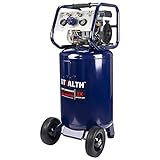
10. Stealth 20-Gallon Ultra Quiet – 5 CFM at 90 PSI With a Lifetime Warranty
STEALTH 20 Gallon Air Compressor, Ultra Quiet, Oil-Free and Long Life Cycle,1.8 Hp Large Air Compressor with Rubber Wheels (Blue, SAQ-12018)
5.0 CFM at 90 PSI
20-gallon Q235B tank
150 PSI max
Oil-free induction motor
+ Pros
- Best airflow-to-pressure combination here at 5.0 CFM at 90 PSI and 150 PSI
- 20-gallon tank supports running several tools
- Silent mode below 70 dB
- Oil-free with no air-line oil
- Limited lifetime warranty
- Cons
- Only a 1.8 HP motor driving a 20-gallon tank
- 121 pounds limits where it can go
- Thin 89-review base
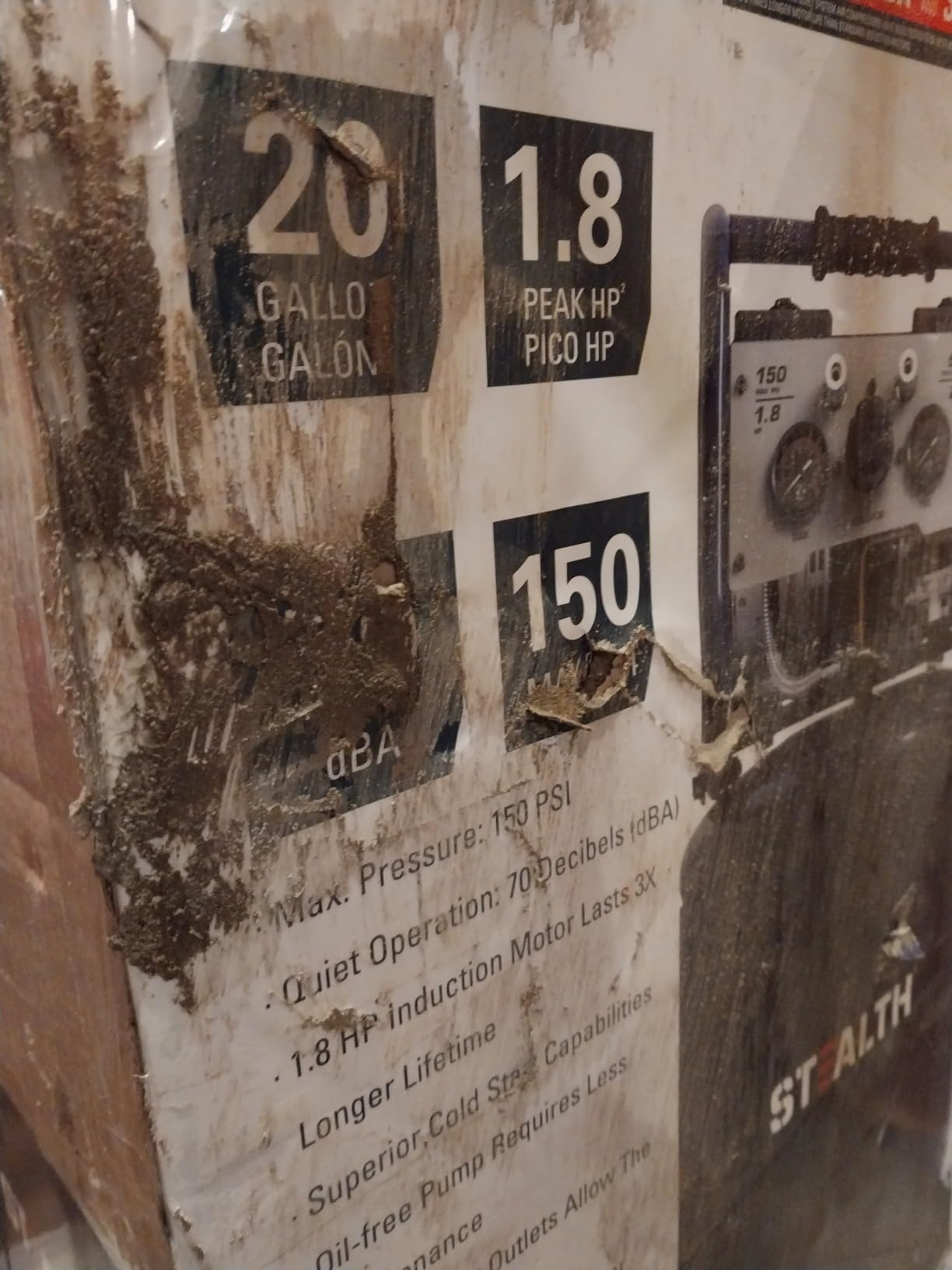
The Stealth 20-gallon is the most complete single-machine answer in this roundup for a shop that wants both flow and quiet. It publishes 5.5 CFM at 40 PSI and 5.0 CFM at 90 PSI, holds 150 PSI, and stores 20 gallons in a 19.67 by 17.52 by 41 inch vertical footprint.
Buyers treat it as a premium pick and value the limited lifetime warranty. The oil-free induction motor needs no lubrication and puts no oil in the air stream, which removes the coalescing filter requirement for anyone planning to feed a torch directly.
Silent Mode and What It Hides
Silent mode runs below 70 dB, with an induction motor rated over 1,000 hours of service life. Be aware that the marketing leans on silent mode, so the sound while the pump is working hard is noticeably higher than the headline number.
The 150 PSI working pressure gives real regulator headroom for a torch that wants 90 PSI, and the 20-gallon receiver is large enough that several tools can run without the pressure collapsing.
The Price and Weight Trade
At 121 pounds it is the second-heaviest unit here, and it needs a planned position because moving it is not a casual task. The tank also takes meaningful floor space in a small shop, which is worth measuring before you commit.
The 89-review base is thin compared with the established models, so long-term durability is less well documented. The limited lifetime warranty partly answers that concern, but verify the terms before relying on them.
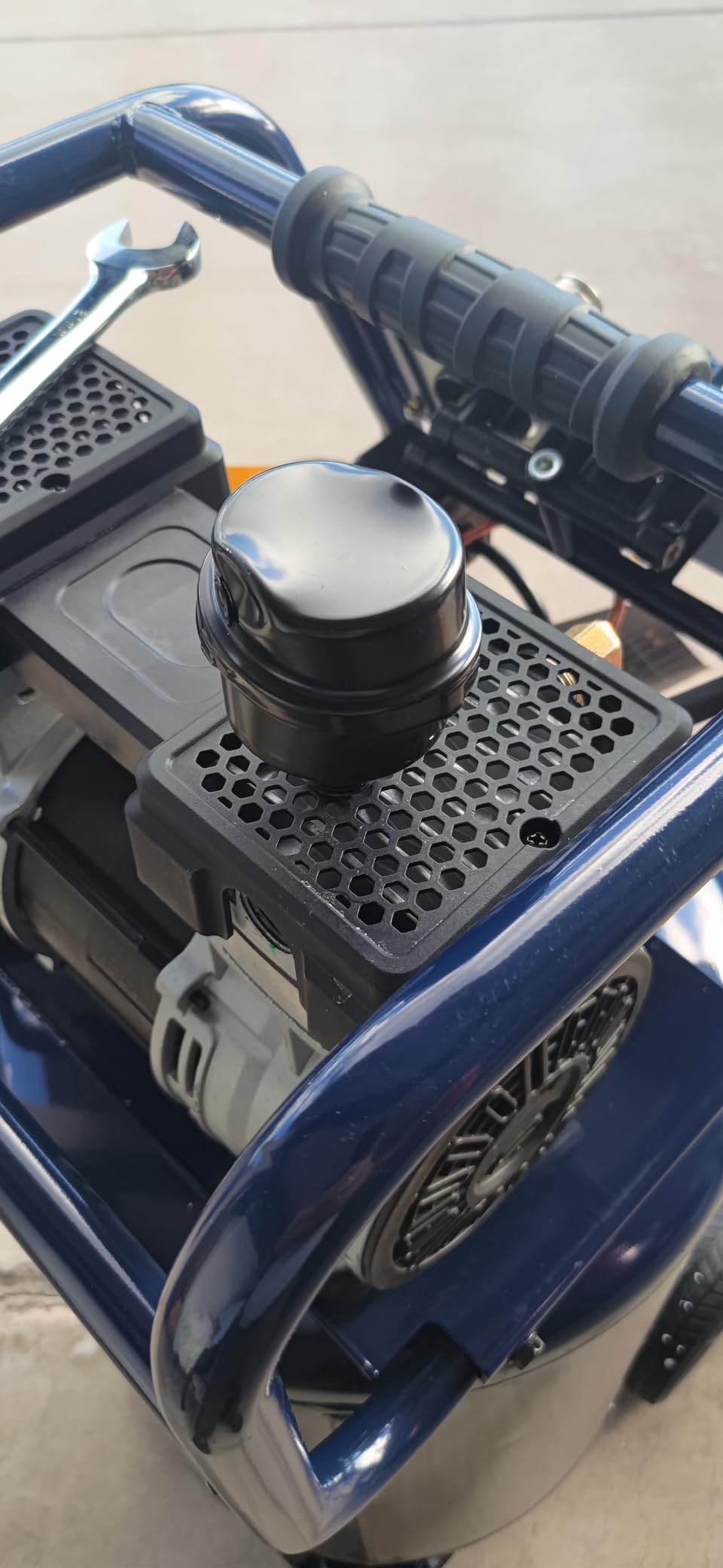
Who Should Skip This Compressor
Skip it if budget is the deciding factor. A 1.8 HP motor driving a 20-gallon tank is a heavy way to buy flow, and the 89-review base leaves long-term durability less well documented than on the established models here.
And if the machine has to be moved regularly, 121 pounds rules it out. Choose a portable unit instead and accept a smaller buffer.
How to Choose: Tank Size, Duty Cycle, Voltage and Air Quality
The compressor matters less than the air path around it. Below is how I would work through the decisions in order, based on what owners in metalworking and CNC communities actually run into trouble with.
Start With Rated SCFM at 90 PSI, Not Peak CFM
Read the spec sheet twice. First pass, find the CFM published at 90 PSI. Second pass, confirm the 40 PSI peak figure is clearly labelled as a different number. If both are there, you can size confidently. If only the 40 PSI figure appears, assume the 90 PSI output is materially lower and plan on the low end of any estimate.
Then apply the 30-50% headroom rule. A torch rated at 6 CFM needs a compressor rated 9-10 SCFM at 90 PSI. Headroom covers the pressure drop across a long hose, the momentary surge at pilot ignition, and the loss of flow that comes with age and fouling.
Choose Tank Size by the Longest Cut You Expect
The receiver is a buffer, not a power source. Twenty gallons covers handheld sheet metal work. Thirty gallons covers thicker plate and longer lead-ins. Sixty gallons and up is the threshold for table work, because a CNC torch cuts continuously rather than in passes.
A common mistake is buying storage and calling it power. The Campbell Hausfeld 26-gallon proves the point: a large tank paired with a 1.3 HP motor still sags under a torch that pulls more than 4 CFM.
Two Small Compressors or One Large One?
For a single shop with one torch, one correctly sized machine is simpler to service and quieter to own. Two small compressors plumbed to a common tank only make sense if you need redundancy, and they will both cycle, which is exactly the behaviour that hurts cut quality.
If you already own a small unit, consider using it as a tank bleeder and buying one compressor that meets the flow requirement, rather than combining two weak pumps.
Oil-Free, Duty Cycle, and What Continuous Duty Actually Means
Oil-free removes a failure mode: no compressor oil in the line to foul electrodes and nozzles. It costs some efficiency and some tank size for the same horsepower, which is why oil-lubricated machines like the Ingersoll Rand and WIILAYOK exist.
Duty cycle is the number most buyers ignore. Intermittent-duty compressors are rated for roughly 50% duty, meaning equal time running and resting. Continuous-duty units are rated for 80% or higher and are built with larger bearings and better cooling. If you cut for hours at a stretch, ask for the 80% figure in writing.
120V Versus 230V and the Breaker Trip Question
Every unit in this roundup runs on 120V, which is why none of them needs an electrician. Larger two-stage compressors above 40 amp cutter class generally want 230V on a dedicated circuit, and discovering that requirement after purchase is one of the most expensive mistakes in this category.
If your plasma cutter keeps tripping the breaker, there are three usual causes. First, the compressor and the torch share a 120V circuit. Second, the compressor restarts against a fully charged tank and the start current stacks on top of torch draw. Third, you have moved above the 40 amp cutter class without stepping up supply voltage.
The fixes are straightforward: put the compressor on its own circuit, confirm the tank is bled down before a cold start, and step up to 230V with a dedicated breaker for anything above 40 amps. A CNC shop owner described running an Ingersoll Rand refrigerated air dryer between a Quincy compressor and the main shop air line to feed plasma work, which is the same principle applied to the whole shop rather than one machine.
Air Quality: Build the Filtration Chain in This Order
Wet air is the quiet cause of bad cuts. Moisture beads inside the torch, the arc wanders, and consumables burn up far faster than expected. Four stages solve it, and the order matters.
Step 1, moisture separator. Mounted at the tank outlet, this knocks out bulk water and rust particulate. It is a spinning element or cyclonic separator, and it is the cheapest stage that prevents most visible problems.
Step 2, coalescing filter. Mounted after the separator, this is the stage that removes oil aerosols and fine water mist. If you buy an oil-lubricated compressor, this stage is mandatory rather than optional. This is what protects electrode and nozzle life.
Step 3, aftercooler. A finned or pipe heat exchanger that drops the air temperature. Cooler air holds far less moisture, so everything downstream of the aftercooler is working with drier air. Put it before the dryer.
Step 4, dryer. A refrigerated dryer brings the air to a low dew point, and a desiccant dryer goes further. For aluminium and stainless finish cuts, where oxide marks matter, this is the stage that earns its keep.
Forum consensus adds one more detail worth copying: set post-flow time between 5 and 45 seconds, with 45 seconds the most common recommendation, to keep the torch cool enough and protect the electrode.
Do You Always Need a Separate Compressor?
No. Integrated plasma cutters with a built-in compressor exist, and they trade cut thickness and duty cycle for portability. For occasional work away from a shop, that trade is often worth making. For a CNC table or production plate work, a separate dedicated compressor is the only serious option.
Used compressors are also worth a look. Inspect the receiver for corrosion, confirm the pressure switch cycles cleanly, and check for moisture in the tank before you start. Fill any compressor that arrives dry with the manufacturer-specified synthetic oil before the first start, or the warranty is void.
Frequently Asked Questions
What size air compressor do I need for a plasma cutter?
Size your compressor’s rated SCFM at 90 PSI to 30-50% above your cutter’s air demand. A 20-30 amp handheld needs 5-6 SCFM in a 20-gallon tank, a 40-50 amp handheld needs 8-10 SCFM in 30 gallons, and a 45-65 amp CNC table torch needs 10-12 SCFM at 100 PSI in a 60-gallon tank.
Can you run a plasma cutter off an air compressor?
Yes, every plasma cutter needs an external compressed air supply unless the unit has a built-in compressor. A 20-30 amp handheld needs roughly 3.5-4 CFM at 70-80 PSI, so a 120V compressor publishing 5 or more CFM at 90 PSI will carry it with margin.
How many PSI do you need to run a plasma cutter?
Handheld air plasma torches run 70-80 PSI, mid-power units run around 90 PSI, and CNC table and production torches want 100-120 PSI. Match the compressor’s rated CFM at the PSI your torch actually uses, not at its peak 40 PSI figure.
What causes a plasma cutter to sputter?
The usual causes are moisture in the air line, insufficient CFM causing pressure sag, worn electrodes and nozzles, and too short a post-flow time. Add a moisture separator and coalescing filter, size the compressor with 30-50% headroom, and set post-flow to about 45 seconds.
Why does my plasma cutter keep tripping the breaker?
Three causes account for most trips: the compressor and torch sharing one 120V circuit, the compressor restarting against a fully charged tank, or a cutter above 40 amps on supply that cannot handle it. Give the compressor a dedicated circuit, bleed the tank down before a cold start, and step up to 230V for higher amperage.
Final Verdict: Which Compressor Fits Your Torch
If you run a 20-50 amp handheld on 120V and want the strongest published flow with no oil in the line, take the VEVOR 15-gallon oil-free at 5.3 CFM at 90 PSI. It is our editor’s choice and the one machine here I would put behind a torch without a second thought.
If your failure mode is a cut that stops mid-pass rather than a torch that will not ignite, take the Klutch 29-gallon. Its receiver is the largest you can run from a normal outlet, and that buffer is what fixes dropout on thick plate. If noise is the constraint, the Stealth 20-gallon delivers 5.0 CFM at 90 PSI at 150 PSI under 70 dB with a limited lifetime warranty.
If you cut for hours every day, the Ingersoll Rand twin-stack is the only unit here with a true continuous-duty motor. If you are setting up a CNC table, none of these ten is enough on its own, and you should be looking at a 60-gallon two-stage machine on a dedicated 230V circuit instead.
Whichever one you pick, add a moisture separator and a coalescing filter, check that your compressor is wired to its own circuit, and read the CFM figure at 90 PSI before you buy. That single habit will save you more time than any other on this page.