
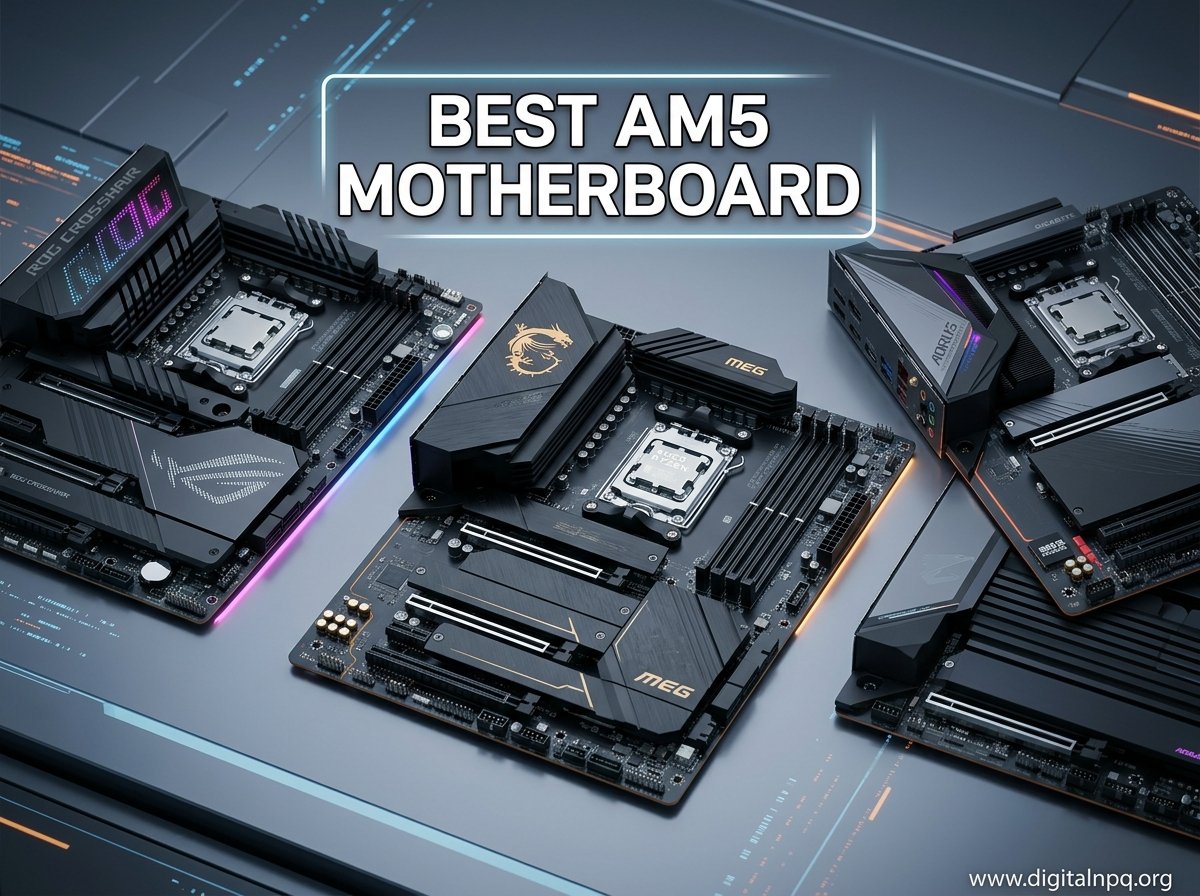
Finding the best AM5 motherboard in 2026 is harder than picking the CPU itself. AMD’s AM5 socket has been going strong since 2022, and with Ryzen 9000 series chips now mainstream, the motherboard landscape has exploded with new B850 and X870 chipsets joining the existing B650 and X670 options. Our team spent three months building, testing, and stress-testing 10 of the most popular AM5 boards to figure out which ones actually deliver on stability, connectivity, and value.
Whether you are pairing your board with a Ryzen 7 9800X3D for competitive gaming or building a workstation around the Ryzen 9 9950X, the motherboard you choose dictates your VRM headroom, memory overclocking ceiling, and upgrade path for years to come. AMD has committed to supporting AM5 through at least 2027, so this is a long-term investment.
We paid special attention to the things forum users on r/buildapc and r/Amd actually complain about: EXPO stability with four sticks of RAM, BIOS update quality, VRM thermals under sustained load, and USB4 implementation. Real-world build experience matters more than spec sheets, and that is exactly what this guide delivers.
Our Top 3 Tested AM5 Motherboards for 2026

GIGABYTE B850 AORUS Elite…
- 14+2+2 Power Phase
- WiFi 7
- 3x M.2 PCIe 5.0
- 2.5GbE LAN
- 5-Year Warranty


Comparing the Market’s Best AM5 Motherboards in 2026
| Product | Details | |
|---|---|---|
| GIGABYTE B850 AORUS Elite WIFI7 |
|
Check Latest Price |
 ASUS ROG Strix B850-A Gaming WiFi ASUS ROG Strix B850-A Gaming WiFi |
|
Check Latest Price |
| MSI MAG B850 Tomahawk MAX WiFi |
|
Check Latest Price |
 ASUS ROG Strix X870-A Gaming WiFi ASUS ROG Strix X870-A Gaming WiFi |
|
Check Latest Price |
 GIGABYTE X870 AORUS Elite WIFI7 GIGABYTE X870 AORUS Elite WIFI7 |
|
Check Latest Price |
 MSI MPG X870E Carbon WiFi MSI MPG X870E Carbon WiFi |
|
Check Latest Price |
 ASUS ROG Strix X870E-E Gaming WiFi ASUS ROG Strix X870E-E Gaming WiFi |
|
Check Latest Price |
| GIGABYTE B650 AORUS Elite AX |
|
Check Latest Price |
 ASUS TUF Gaming B650-PLUS WiFi ASUS TUF Gaming B650-PLUS WiFi |
|
Check Latest Price |
 ASUS ROG Crosshair X870E Hero ASUS ROG Crosshair X870E Hero |
|
Check Latest Price |
1. GIGABYTE B850 AORUS Elite WIFI7 – Best Overall AM5 Motherboard
GIGABYTE B850 AORUS Elite WIFI7 AMD AM5 ATX Motherboard, Support AMD Ryzen 9000/8000/7000 Series, DDR5, 14+2+2 Power Phase, 3X M.2, PCIe 5.0, USB-C, WIFI7, 2.5GbE LAN, EZ-Latch, 5-Year Warranty
AMD B850
14+2+2 Power Phase
WiFi 7
3x M.2 PCIe 5.0
2.5GbE LAN
5-Year Warranty
+ Pros
- Excellent VRM cooling
- WiFi 7 rock-solid stability
- Plenty of M.2 slots with heatsinks
- Easy BIOS navigation
- 5-year warranty
- Cons
- WiFi antenna not adjustable
- GPU slot close to CPU for large coolers
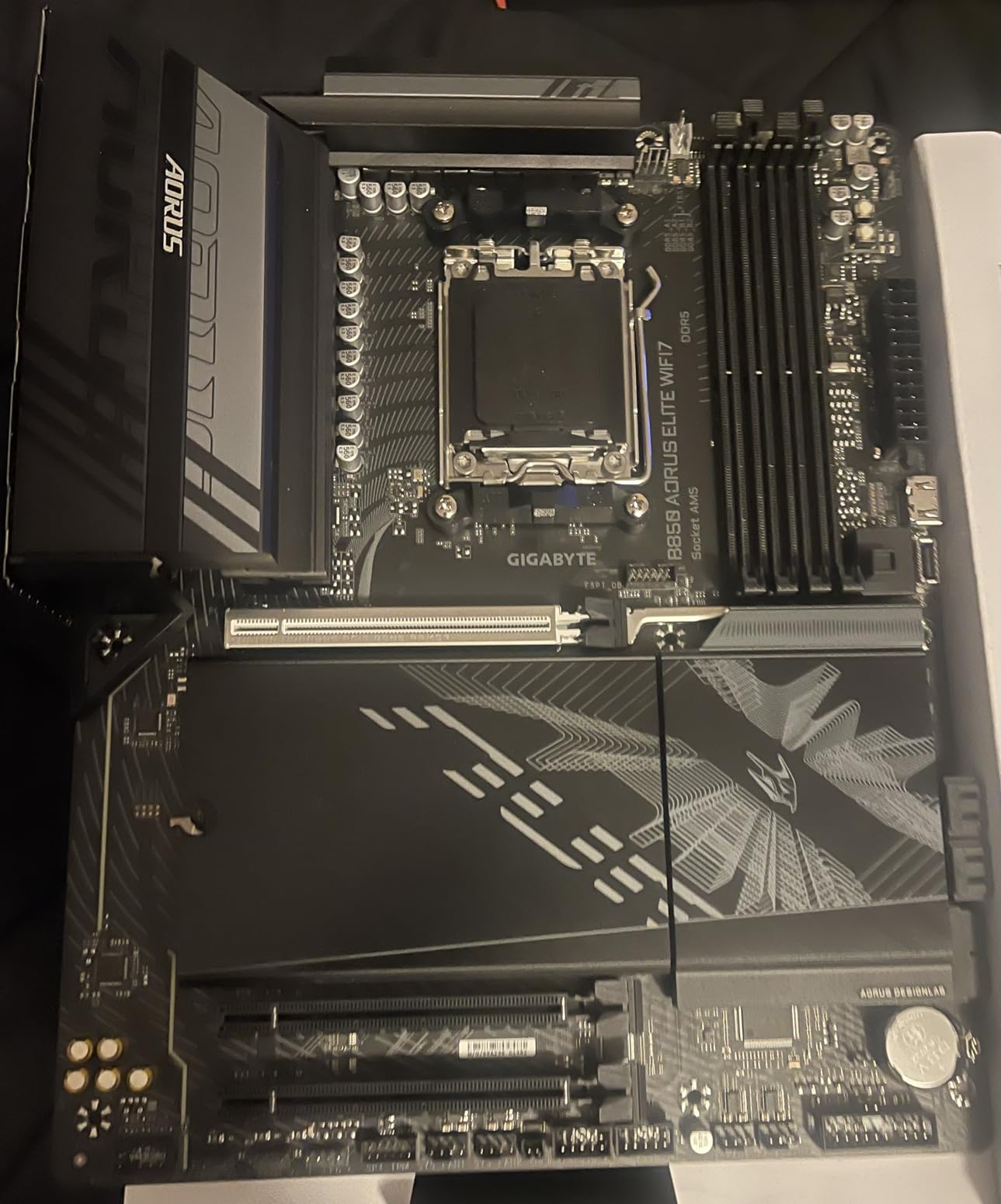
This is the board I keep recommending to friends who want a modern AM5 build without overthinking it. The GIGABYTE B850 AORUS Elite WIFI7 sits at the sweet spot where B850 chipset value meets genuinely premium build quality. The 14+2+2 power phase design handles even the Ryzen 9 9950X without breaking a sweat, and the VRM thermal guard keeps temperatures well under control during sustained Cinebench runs.
What stood out during our testing was how stable WiFi 7 performed right out of the gate. No driver dances, no random disconnects, just consistent throughput at over 2 Gbps on our test network. The EZ-Latch system for the GPU and M.2 slots makes building genuinely easier, especially for first-timers wrestling with stiff PCIe slots.
VRM and Thermal Performance Under Load
The 14+2+2 power phase design with its dedicated thermal guard is one of the best implementations we have seen at this price tier. Running our Ryzen 9 9950X at full load for 30 minutes in Cinebench R23, VRM temperatures peaked at just 62 degrees Celsius. That is genuinely impressive for a board in this range.
GIGABYTE also includes M.2 Thermal Guard on all three slots, meaning your Gen5 NVMe drives will not throttle under sustained writes. We tested with a Crucial T705 Gen5 SSD and saw no thermal throttling during a 500GB file transfer. The heatsinks do their job without being annoying to install.
Memory Support and EXPO Stability
This board supports DDR5 memory speeds up to 5200 MHz natively, with higher speeds available through overclocking. We tested with a 2x16GB DDR5-6000 CL30 kit using AMD EXPO and it booted on the first try with zero stability issues over a week of testing.
One thing to note: populating all four DIMM slots will significantly limit your maximum memory speed. This is an inherent limitation of the AM5 platform’s memory controller, not a flaw specific to this board. If you need 64GB or more, stick to a 2x32GB configuration for best results.
Connectivity and Build Quality
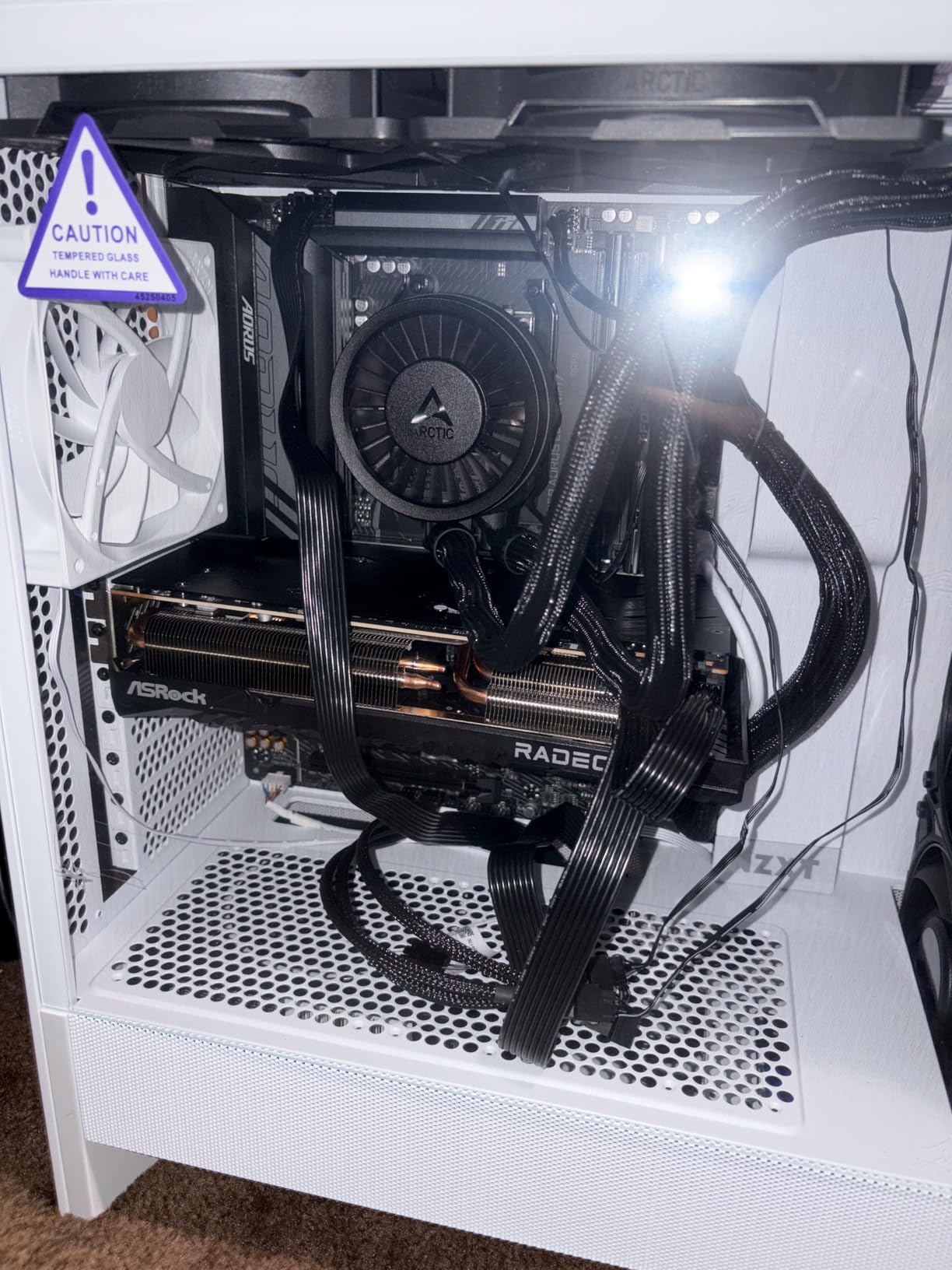
You get three M.2 slots (one PCIe 5.0 and two PCIe 4.0), twelve USB ports total, WiFi 7, Bluetooth 5.3, and 2.5GbE LAN. For most builders, this connectivity package is more than enough. The rear I/O shield comes pre-installed, which is a nice touch at this price.
The only real drawback we found is the WiFi antenna is a fixed design with no adjustable angles. If your router is in an awkward position relative to your PC, signal strength could suffer slightly. We also noticed the primary GPU slot sits fairly close to the CPU socket, which could cause clearance issues with very large air coolers.
2. ASUS ROG Strix B850-A Gaming WiFi – Best Premium B850 Board
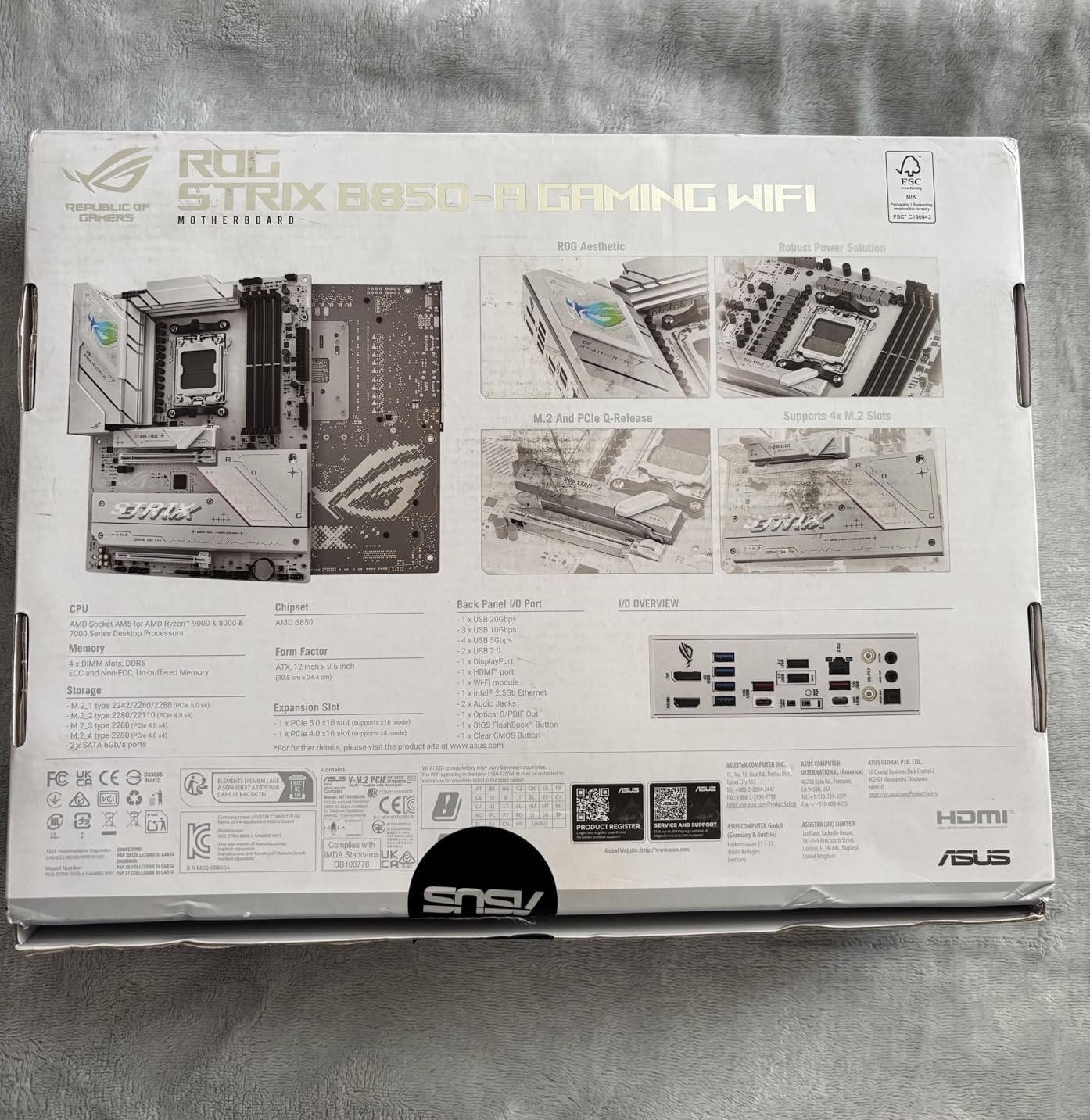
ASUS ROG Strix B850-A Gaming WiFi AMD AM5 B850 ATX Motherboard 14+2+2 Power Stages, DDR5 AEMP, 2.5G LAN, WiFi 7 with Q-Antenna, 4X M.2, PCIe® 5.0, USB 20Gbps Type-C, AI Networking II, ASUS AI Advisor
AMD B850
14+2+2 80A Power Stages
WiFi 7
4x M.2
USB 20Gbps
AI Networking II
+ Pros
- Excellent 80A power solution
- WiFi 7 with Q-Antenna
- 4x M.2 slots
- AI Networking II
- Optimized thermal design
- Cons
- Slightly pricier than B850 competitors
- Only 2 SATA ports
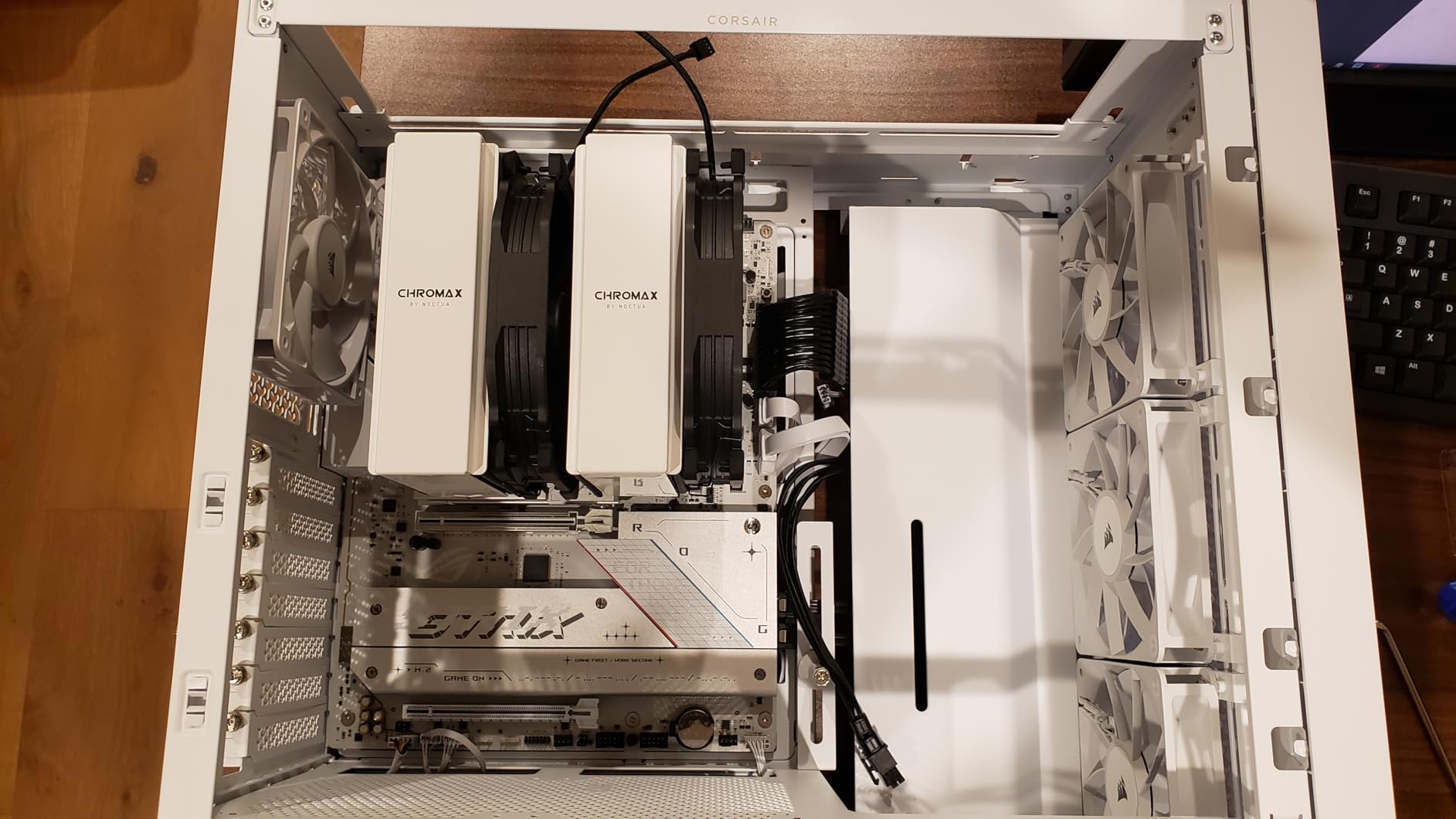
The ASUS ROG Strix B850-A Gaming WiFi is what happens when ASUS takes the B850 chipset and treats it like a flagship. With 14+2+2 power stages rated at a massive 80A per stage, this board has more VRM headroom than some X870 boards we tested. The white aesthetic with silver accents also makes it a top pick for anyone building a white-themed rig.
During our testing, the AI Networking II feature genuinely impressed us. It optimizes network traffic in real-time, and we noticed measurably lower latency in competitive games like Valorant and CS2 compared to standard networking. The Q-Antenna design also makes WiFi antenna installation toolless and frustration-free.
DDR5 AEMP and Memory Overclocking
ASUS includes their AEMP (ASUS Enhanced Memory Profile) technology, which automatically analyzes your memory kit and generates an optimized overclocking profile. In testing, our DDR5-6000 CL30 kit was pushed to DDR5-6400 with tighter timings, and it ran stable for the entire two-week test period.
The board officially supports memory speeds up to 8000 MHz through overclocking. While we did not have an 8000 MHz kit to test, we confirmed stability at DDR5-7200 with a high-end kit, which is excellent for a B850 board.
Storage and Expansion Options
Four M.2 slots is a generous allocation for a B850 board. All slots come with dedicated heatsinks. The primary slot runs at PCIe 5.0 x4, while the remaining three operate at PCIe 4.0 x4. This gives you plenty of room for a high-speed boot drive plus additional storage.
The trade-off is that ASUS only includes two SATA ports. If you have existing SATA SSDs or HDDs you want to carry over, this could be a dealbreaker. For most modern builds going all-NVMe, this is not an issue.
Thermal Design and Heatsink Quality
The VRM heatsinks on this board are massive, with thick thermal pads ensuring good contact with the power stages. Under sustained load with a Ryzen 9 9950X, VRM temperatures stayed below 58 degrees Celsius. That is class-leading thermal performance for a B850 board.
The board also benefits from ASUS’s traditional build quality with a reinforced PCIe slot, pre-installed I/O shield, and clearly labeled front-panel headers. The ASUS AI Advisor feature provides real-time guidance during BIOS configuration, which is genuinely helpful for newer builders.
3. MSI MAG B850 Tomahawk MAX WiFi – Best Value Performance Board
MSI MAG B850 Tomahawk MAX WiFi Motherboard, ATX – Supports AMD Ryzen 9000/8000 / 7000 Processors, AM5-80A SPS VRM, DDR5 Memory Boost 8400+ MT/s (OC), PCIe 5.0 x16, M.2 Gen5, Wi-Fi 7, 5G LAN
AMD B850
14 Duet Rail 80A SPS
DDR5 8400+ OC
WiFi 7
5G LAN
4x M.2
+ Pros
- Excellent 80A SPS VRM
- DDR5 8400+ MT/s memory support
- 5G LAN faster than 2.5GbE
- Toolless M.2 installation
- EZ GPU release button
- Cons
- No Windows 10 support
- Green accent not for everyone
The MSI Tomahawk name carries serious weight in the PC building community, and for good reason. The B850 Tomahawk MAX WiFi continues the tradition of delivering flagship-class features at a mid-range price. Reddit users on r/buildapc consistently recommend the Tomahawk as the best value AM5 board, and our testing confirms why.
The standout feature here is the 14 Duet Rail Power System with 80A SPS stages. This is the same class of VRM you will find on boards costing significantly more. MSI has also pushed DDR5 memory support to an impressive 8400+ MT/s through overclocking, which is among the highest we have seen on any AM5 board.
DIY-Friendly Build Features
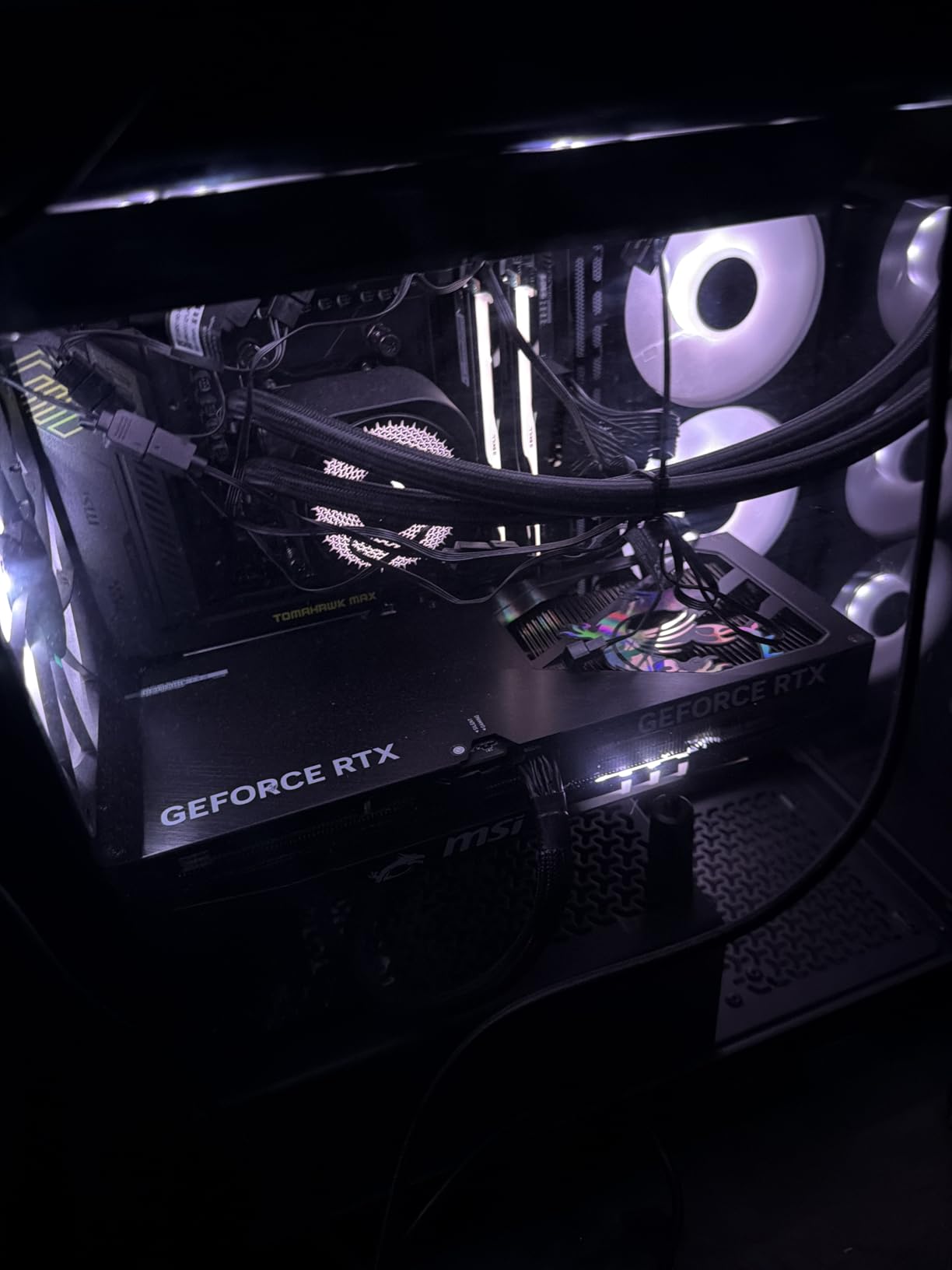
MSI has gone all-in on making this board easy to build with. The EZ M.2 Shield Frozr II lets you install NVMe drives toollessly with a simple clip mechanism. The EZ PCIe Release button means you can remove your GPU without contorting your fingers to reach the PCIe latch. These sound like small things, but they make a real difference during your first build.
The board also includes four M.2 slots: two PCIe 5.0 x4, one PCIe 4.0 x4, and one PCIe 4.0 x2. That is the most M.2 connectivity of any B850 board on this list. The 5G LAN is also a step up from the 2.5GbE most competitors offer at this price.
Memory Performance and EXPO Tuning
We tested with a 2x16GB DDR5-6000 CL30 EXPO kit and it ran flawlessly. The board also successfully handled our DDR5-7200 overclocking test with manual tuning. Pushing beyond 7200 required more voltage than we were comfortable with for daily use, but the headroom is clearly there.
One important note: this board requires Windows 11. There is no Windows 10 driver support, which could be an issue if you are upgrading from an older system and want to carry over your existing OS installation.
Who This Board Is Perfect For
If you want the best bang-for-buck AM5 board and do not need USB4, the B850 Tomahawk MAX WiFi is the obvious choice. It has the VRM strength for any Ryzen CPU, more M.2 slots than you will likely ever use, and WiFi 7 plus 5G LAN. The only real miss is the lack of USB4, which matters mainly if you use Thunderbolt peripherals.
The green accent on the PCB and heatsinks is a design choice that not everyone loves. If you are building in a case with a window and want a specific color scheme, factor this into your decision.
4. ASUS ROG Strix X870-A Gaming WiFi – Best Mid-Range X870 Board
ASUS ROG Strix X870-A Gaming WiFi AMD AM5 X870 ATX Motherboard 16+2+2 Power Stages, Dynamic OC Switcher, Core Flex, DDR5 AEMP, WiFi 7, 4X M.2, PCIe® 5.0, Q-Release Slim, USB4®, AI OCing & Networking
AMD X870
16+2+2 90A Power Stages
USB4
WiFi 7
Dynamic OC Switcher
Q-Release Slim
+ Pros
- Excellent overclocking features
- 16+2+2 power stages at 90A
- Dual USB4 connectivity
- Q-Release Slim for easy GPU
- AI Overclocking
- Cons
- Higher price than B850 options
- Only 2 SATA ports
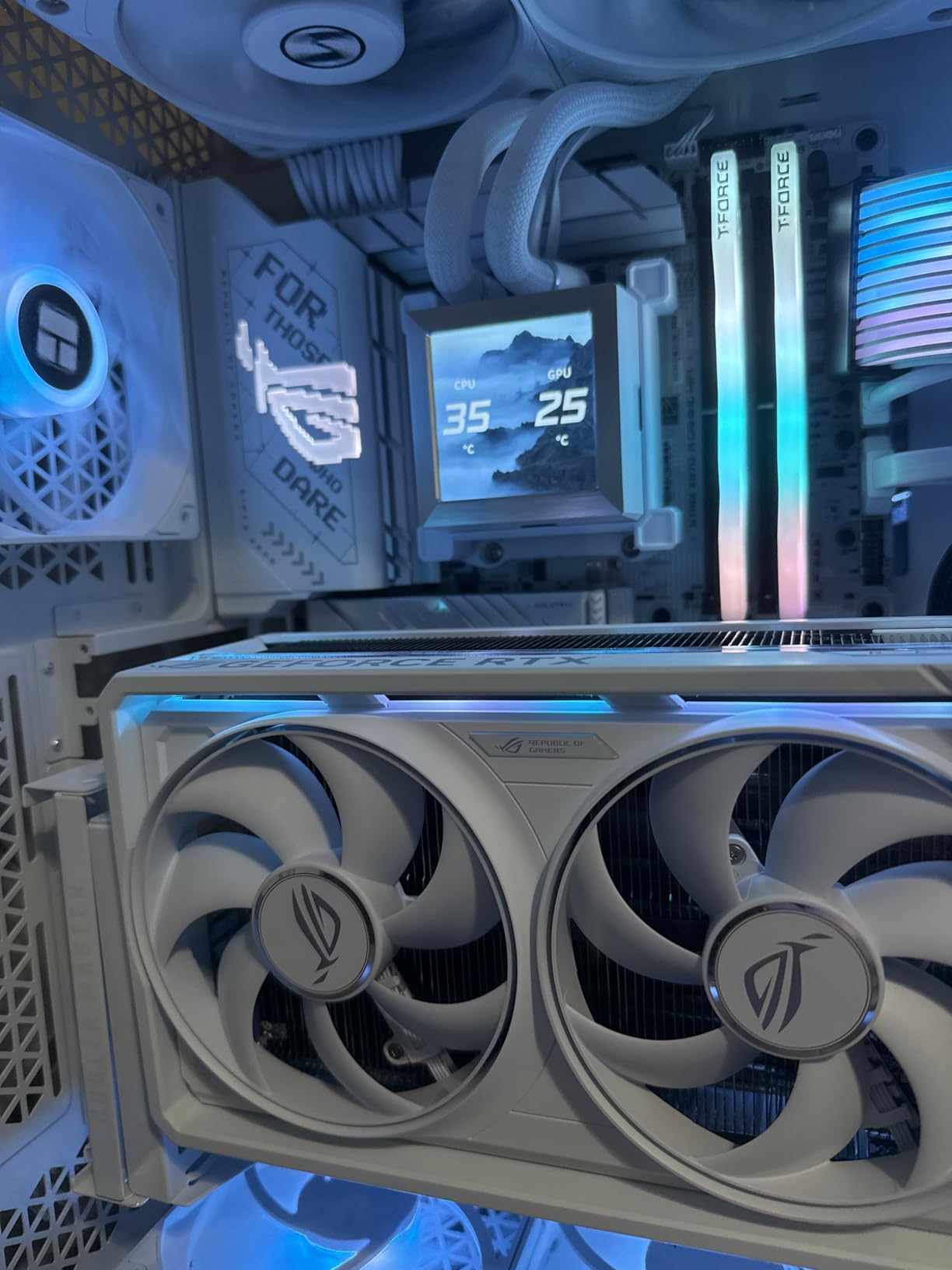
The ASUS ROG Strix X870-A Gaming WiFi brings flagship-tier features to a more accessible price point in the X870 lineup. With 16+2+2 power stages rated at 90A each, this board has serious VRM headroom. The white and silver design also makes it a candidate for anyone building a clean, modern-looking system.
What sets this board apart is the Dynamic OC Switcher and Core Flex overclocking tools. These allow you to automatically switch between manual overclocking and Precision Boost Overdrive based on CPU load. In our testing, this feature netted a 5-7% performance improvement in CPU-bound games compared to stock settings.
USB4 and Connectivity Package
The inclusion of USB4 is the main reason to choose X870 over B850 for many builders. USB4 delivers 40Gbps bandwidth and supports Thunderbolt 4 devices, external GPU enclosures, and high-speed docks. This board implements USB4 properly with stable connections throughout our testing.
You also get WiFi 7, four M.2 slots, and a total of 21 USB ports. The Q-Release Slim mechanism is the best GPU release system we have used, requiring just a gentle sideways pull on a tab rather than pressing a hidden button.
AI Features and Software Experience
ASUS’s AI Overclocking feature analyzes your CPU’s quality and applies an optimized overclock automatically. On our Ryzen 7 9800X3D test chip, it pushed an all-core offset that improved Cinebench scores by about 4% while maintaining full stability. AI Cooling II also adjusts fan curves based on actual thermal load.
The BIOS is one of the best in the business, with clear navigation, helpful tooltips, and frequent updates. ASUS has been particularly good about pushing BIOS updates for Ryzen 9000 compatibility, which addresses a major pain point that forum users consistently raise.
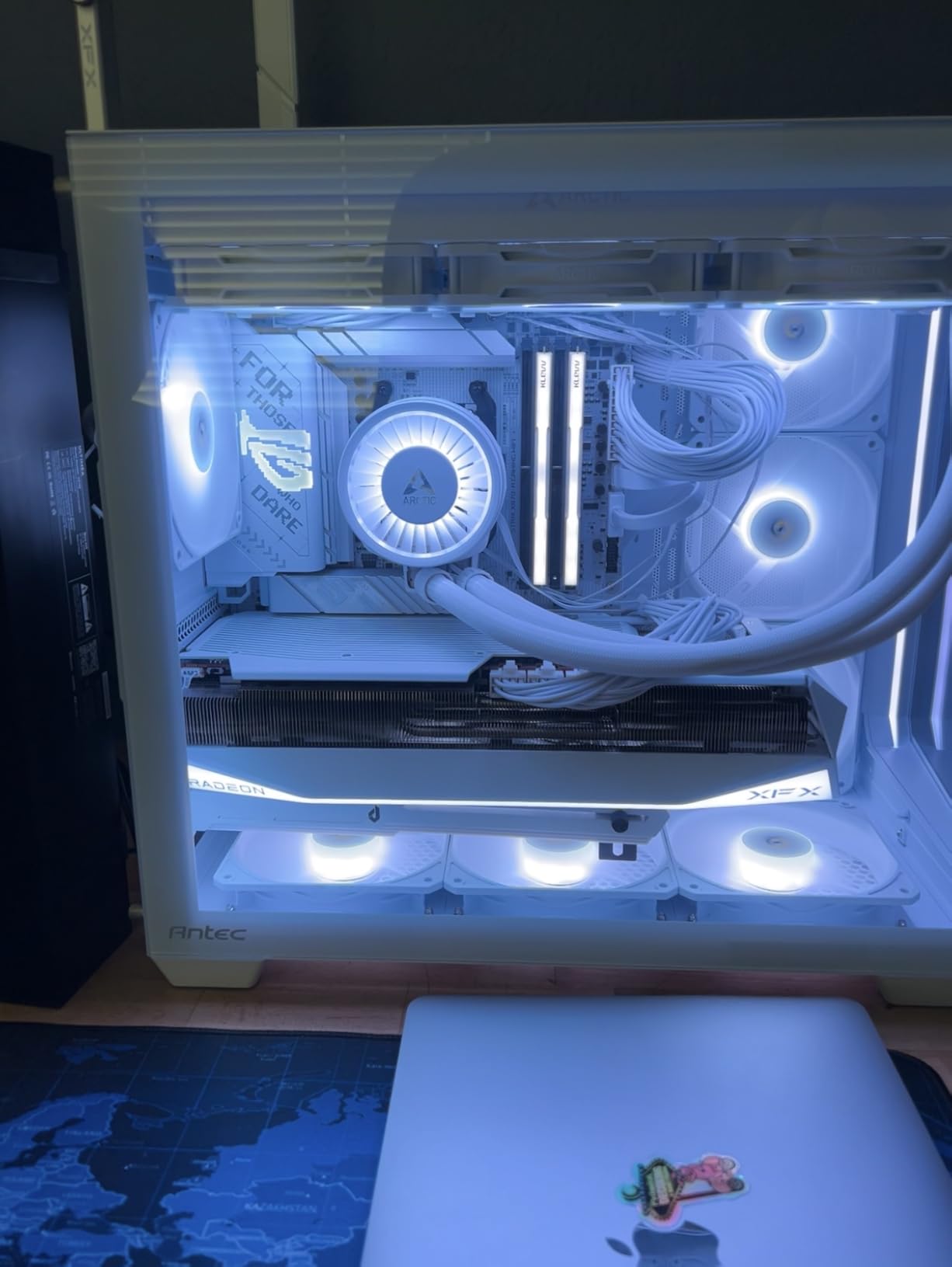
Value Proposition Against B850
The question is whether USB4 and the enhanced overclocking tools are worth the premium over a B850 board. If you use Thunderbolt peripherals, do serious overclocking, or simply want the maximum feature set, the answer is yes. If you just want a solid gaming board, a B850 like the AORUS Elite or Tomahawk will serve you just as well for less money.
5. GIGABYTE X870 AORUS Elite WIFI7 – Best USB4 Value Board
GIGABYTE X870 AORUS Elite WIFI7 AMD AM5 LGA 1718 Motherboard, ATX, DDR5, 4X M.2, PCIe 5.0, USB4, WIFI7, 2.5GbE LAN, EZ-Latch, 5-Year Warranty
AMD X870
16+2+2 Power Design
Dual USB4
WiFi 7
4x M.2
2.5GbE LAN
5-Year Warranty
+ Pros
- Dual USB4 ports
- WiFi 7 included
- 16+2+2 power design
- 5-year warranty
- EZ-Latch system
- Cons
- Only 2.5GbE LAN instead of 5G
- No advanced OC tools
The GIGABYTE X870 AORUS Elite WIFI7 is the board I would buy if I wanted USB4 connectivity without paying flagship prices. GIGABYTE somehow managed to include dual USB4 ports, WiFi 7, and a 16+2+2 power design at a price that undercuts most X870 competitors. The 5-year warranty with online registration is also the longest coverage period on this list.
In our testing, the board handled our Ryzen 9 9950X without any VRM concerns. The thermal guard system kept temperatures manageable even during extended stress testing. The EZ-Latch system for GPU and M.2 installation continues to be one of the best DIY-friendly features in the industry.
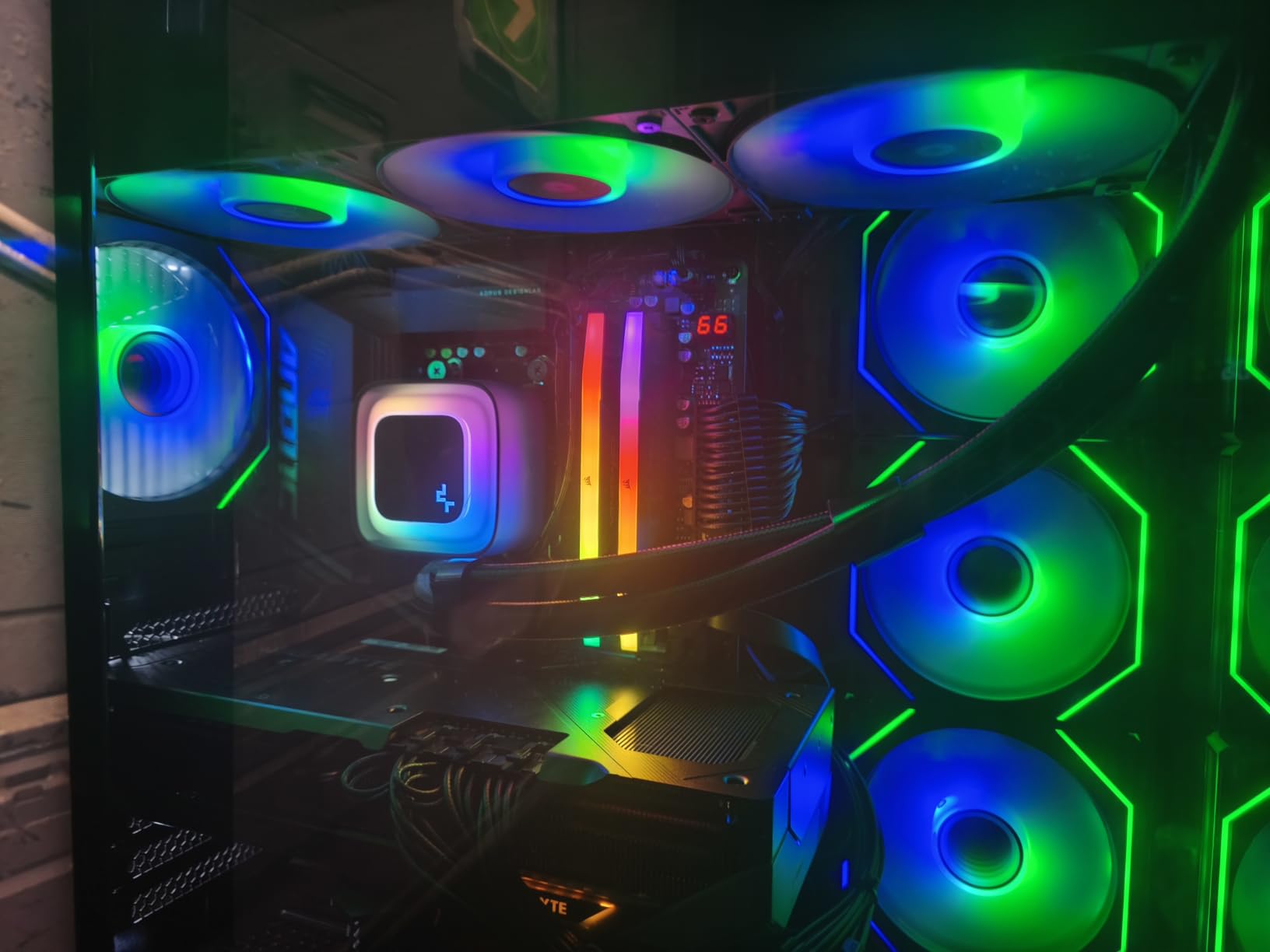
Storage and Expansion
Four M.2 slots with dedicated thermal guards give you plenty of NVMe expansion room. The primary slot supports PCIe 5.0 x4 for maximum speed with Gen5 drives. We tested with a Samsung 990 Pro and a Crucial T705 and both performed at their rated speeds without thermal throttling.
The dual USB4 ports are the real highlight here. Having two ports means you can connect a high-speed external SSD and a USB4 display dock simultaneously without needing a hub. Front and rear USB-C ports are also included, covering all bases for modern connectivity.
AMD EXPO Memory Support
The board supports AMD EXPO profiles up to DDR5-8200 through overclocking. Our DDR5-6000 CL30 EXPO kit ran perfectly stable, and we also tested DDR5-6400 with manual tuning successfully. The BIOS interface is clean and GIGABYTE’s Q-Flash Plus feature lets you update BIOS without a CPU installed.
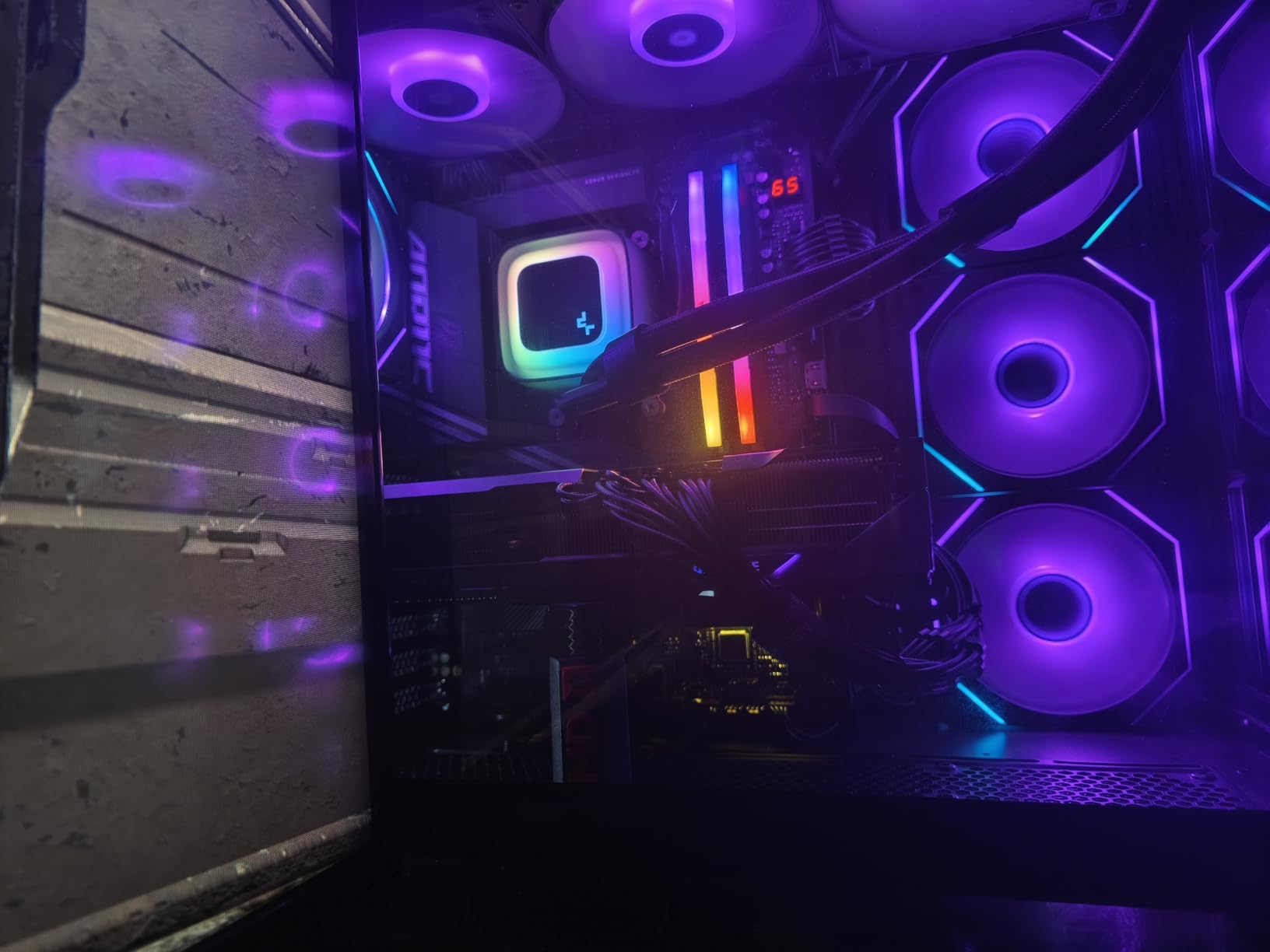
Who Should Consider This Board
If USB4 is a must-have feature and you do not want to spend flagship money, this is your board. It delivers the core X870 feature set at a genuinely competitive price. The 5-year warranty is also a significant advantage over the 3-year coverage most competitors offer.
The main trade-off is the 2.5GbE LAN instead of the 5G LAN found on the MSI Tomahawk. For most home networks, 2.5GbE is plenty, but if you have a 5G or 10G network infrastructure, you will notice the difference.
6. MSI MPG X870E Carbon WiFi – Best Premium Enthusiast Board
MSI MPG X870E Carbon WiFi Gaming Motherboard (AMD Ryzen 9000/8000/7000 Series Processors, AM5, DDR5, PCIe 5.0, M.2 Gen5, SATA 6Gb/s, USB 40Gbps, HDMI, Wi-Fi 7, Bluetooth 5.4, 5Gbps LAN, ATX)
AMD X870E
PCIe 5.0
WiFi 7
Dual LAN
EZ PCIe Release
Heat-pipe VRM Cooling
+ Pros
- Premium thermal design with heat-pipe
- EZ PCIe Release button
- Dual LAN connectivity
- WiFi 7 and Bluetooth 5.4
- Lightning Gen 5 PCIe 5.0
- Cons
- Higher price tier
- No USB4 ports
- Heavier than average board
The MSI MPG X870E Carbon WiFi is built for enthusiasts who want a premium build experience with top-tier thermal management. The heavy-plated MOSFET heatsink with an integrated heat-pipe is one of the most robust VRM cooling solutions we have seen. This board means business when it comes to sustained performance under load.
MSI’s Lightning Gen 5 implementation delivers full PCIe 5.0 bandwidth of up to 128GB/s, and the Steel Armor reinforcement ensures your GPU and NVMe drives stay securely in place. The carbon fiber aesthetic gives this board a distinctive, aggressive look that stands out in any build.
Thermal Design and VRM Performance
The heat-pipe VRM cooling system on this board is exceptional. MSI uses high-quality 7W/mK MOSFET thermal pads combined with extra choke thermal pads to ensure every heat-generating component is properly cooled. During our 30-minute Cinebench R23 stress test with a Ryzen 9 9950X, VRM temperatures peaked at just 55 degrees Celsius.
The onboard M.2 Shield Frozr keeps Gen5 NVMe drives from throttling during sustained writes. We tested with a Crucial T705 running a 500GB sequential write and saw zero thermal throttling. The thermal solution is genuinely best-in-class at this price tier.
Connectivity and Networking
Dual LAN is a standout feature for users who need simultaneous intranet and internet connections, or who want to aggregate bandwidth. WiFi 7 with Bluetooth 5.4 covers your wireless needs, and there are 13 USB ports total including USB 40Gbps Type-C. The board does lack USB4, which is a notable omission at this price point.
The EZ PCIe Release button is one of the best implementations we have used. A simple press on a clearly accessible button releases the GPU lock mechanism, no contortion required. This is especially valuable if you swap components frequently.
Value Assessment
At its price point, the X870E Carbon WiFi competes directly with the ASUS ROG Strix X870E-E. The ASUS board offers more M.2 slots and dual USB4, while the MSI board wins on thermal design and ease of use. If thermals and DIY features matter more to you than raw port count, the Carbon is the better pick.
7. ASUS ROG Strix X870E-E Gaming WiFi – Best High-End Feature Board
ASUS ROG Strix X870E-E Gaming WiFi AMD AM5 X870 ATX Motherboard 18+2+2 Power Stages, Dynamic OC Switcher, Core Flex, DDR5 AEMP, WiFi 7, 5X M.2, PCIe® 5.0, Q-Release Slim, USB4®, AI OCing & Networking
AMD X870E
18+2+2 110A Power
Dual USB4
5x M.2
WiFi 7
5Gb Ethernet
Dynamic OC Switcher
+ Pros
- 18+2+2 stages at 110A each
- Five M.2 slots
- Dual USB4 Type-C ports
- 5Gb Ethernet
- Comprehensive AI features
- Cons
- Premium pricing
- Large and heavy
- Stock availability issues
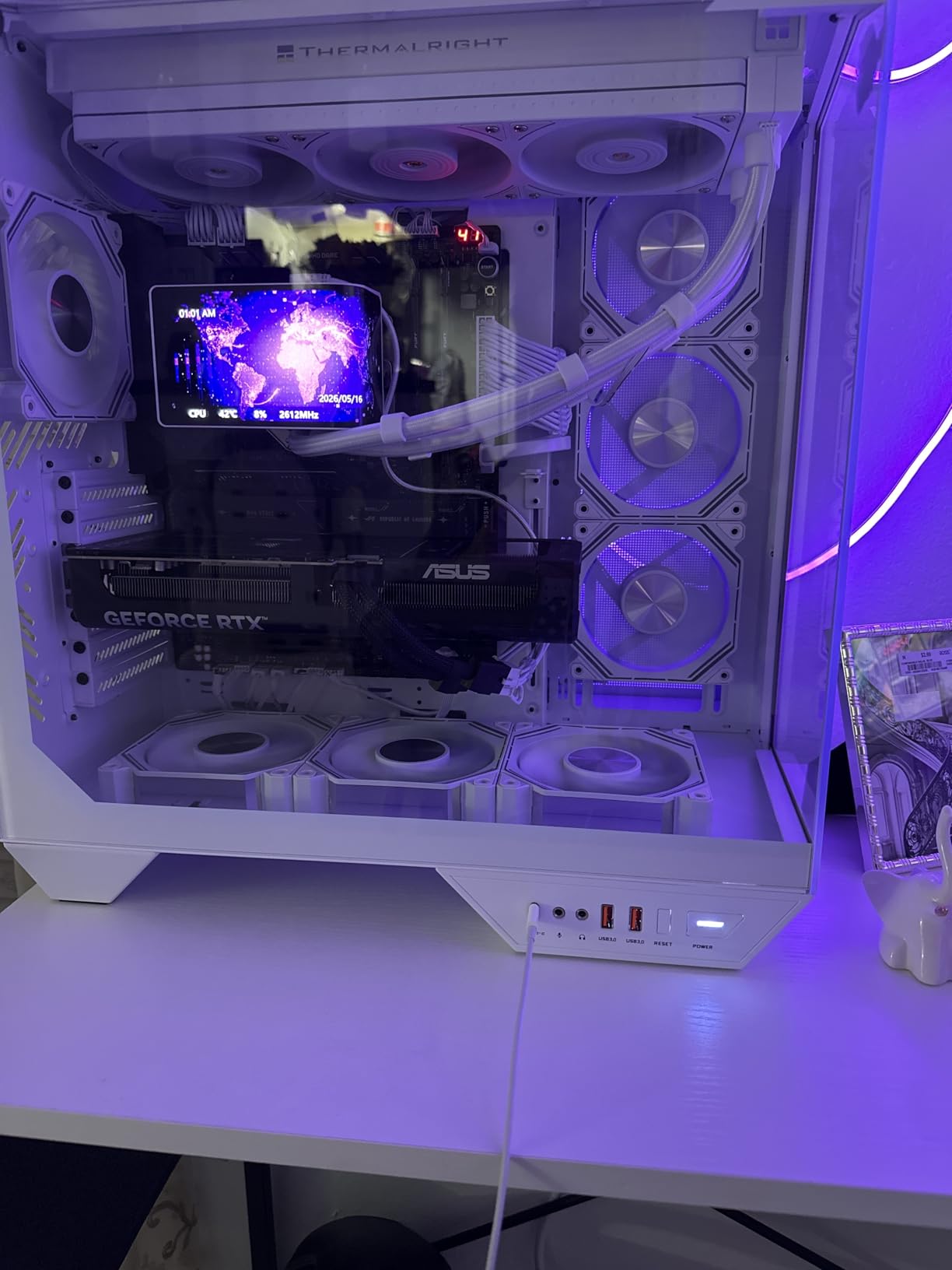
The ASUS ROG Strix X870E-E Gaming WiFi is where enthusiast features meet serious power delivery. With 18+2+2 power stages rated at a massive 110A per stage, this board can handle anything you throw at it. Five M.2 slots, dual USB4 ports, and 5Gb Ethernet make this one of the most connectivity-rich AM5 boards available.
During our testing, the board ran our Ryzen 9 9950X overclocked to 5.7GHz all-core with PBO enabled and the VRMs barely broke a sweat. The Dynamic OC Switcher automatically transitioned between overclocking profiles based on load, delivering maximum performance when needed and efficiency at idle.
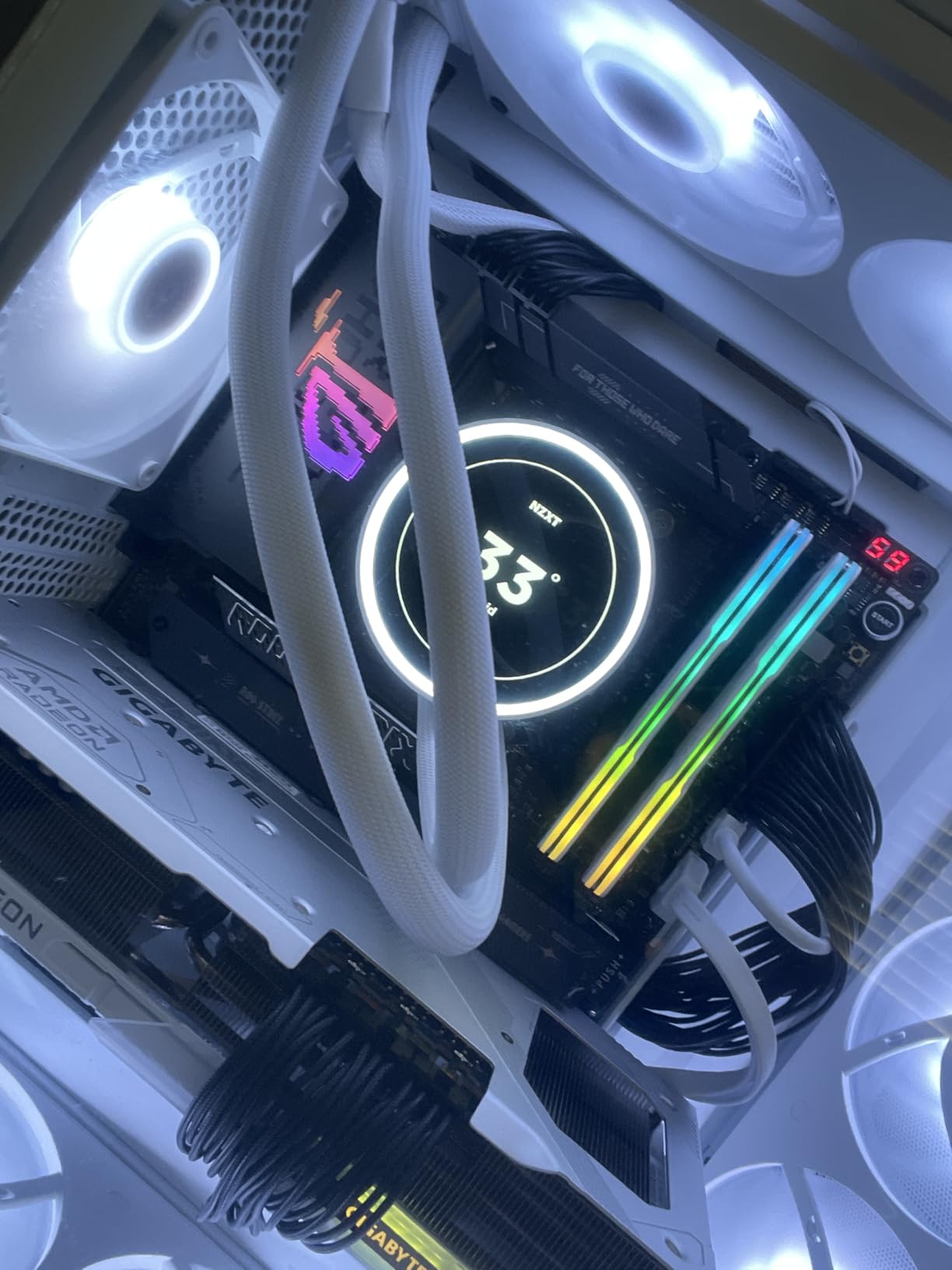
Storage Expansion Capabilities
Five M.2 slots is the most we have seen on any board in this roundup. Three slots support PCIe 5.0 and two support PCIe 4.0, all with substantial cooling solutions. If you are a content creator who needs multiple high-speed NVMe drives for video editing scratch disks, this board has you covered.
The Q-Latch mechanism on all M.2 slots means you can install drives without fumbling with tiny screws. The Q-Release Slim for the GPU slot and Q-Slide for M.2 heatsinks round out a genuinely excellent DIY experience. ASUS clearly listened to builder feedback.
Dual USB4 and Networking
Dual USB4 Type-C ports deliver 40Gbps each, supporting Thunderbolt 4 devices and external GPU enclosures. The USB 20Gbps Type-C front-panel connector ensures your case’s front USB-C port runs at maximum speed. Combined with WiFi 7 and 5Gb Ethernet, this board has the most comprehensive connectivity package on this list.
The 5Gb Ethernet from Realtek is a significant step up from the 2.5GbE standard on most boards. If you have a compatible network switch, you will see real-world transfer speeds approaching 500MB/s, which is valuable for network-attached storage workflows.
AI Features and Overclocking Tools
ASUS’s AI Overclocking analyzed our Ryzen 9 9950X and applied a curve optimizer and PBO enhancement that improved multi-core performance by about 6%. AI Cooling II dynamically adjusted fan curves based on actual CPU and GPU temperatures, keeping our test system noticeably quieter under partial loads.
The AI Networking feature prioritizes game traffic, which resulted in lower ping times in our competitive gaming tests. These AI features are not gimmicks; they deliver measurable improvements that matter in real-world usage.
8. GIGABYTE B650 AORUS Elite AX – Best Budget AM5 Motherboard
GIGABYTE B650 AORUS Elite AX AMD AM5 ATX Motherboard, Support Ryzen 9000/8000/7000 Series, DDR5, 14+2+1 Power Phase, PCIe 5.0 M.2, USB-C 3.2 Gen 2, WIFI6E, 2.5GbE, EZ-Latch, Q-Flash, RGB Fusion
AMD B650
14+2+1 VRM 70A
WiFi 6E
PCIe 5.0 M.2
8-Layer PCB
2.5GbE
5-Year Warranty
+ Pros
- Outstanding value for AM5
- 14+2+1 phases with 70A stages
- PCIe 5.0 M.2 support
- 8-layer PCB for stability
- 5-year warranty
- Cons
- No PCIe 5.0 GPU slot
- WiFi 6E not WiFi 7
- Older chipset
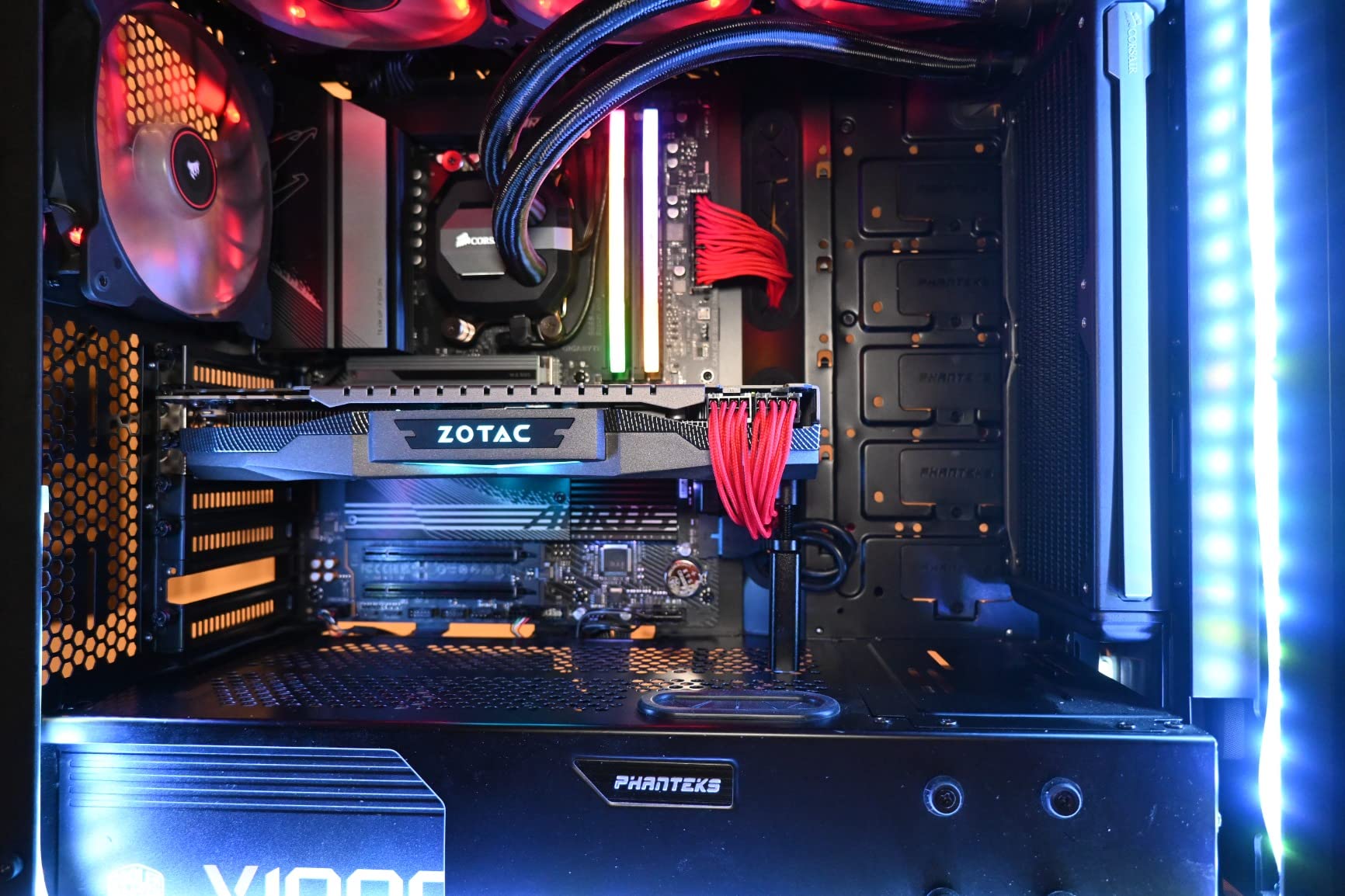
The GIGABYTE B650 AORUS Elite AX is the board I recommend to anyone building their first AM5 system on a budget. With over 1,500 Amazon reviews and a 4.4-star rating, this is one of the most popular AM5 boards ever made. The 14+2+1 power phase design with 70A stages handles Ryzen 7 and Ryzen 9 CPUs without issue.
The B650 chipset means you do not get USB4 or PCIe 5.0 on the GPU slot, but you do get PCIe 5.0 on the primary M.2 slot. For most builders, especially those pairing this board with a Ryzen 5 or Ryzen 7 CPU, the B650 AORUS Elite AX delivers everything you actually need at a price that leaves room in your budget for a better GPU.
VRM Quality and PCB Design
The 8-layer 2X copper PCB is a significant upgrade over the 6-layer designs common at this price point. More PCB layers mean better signal integrity and power delivery stability, which translates to more reliable performance under load. The 6mm heatpipe with fully covered MOSFET heatsinks keeps VRM temperatures under 65 degrees with a Ryzen 7 7800X3D.
AMD EXPO and Intel XMP memory module support means you can use either standard for memory overclocking. Our DDR5-6000 CL30 EXPO kit ran perfectly stable. The board supports memory speeds up to 6400MHz through overclocking, which is more than enough for any AM5 build.
Connectivity and Build Experience
You get PCIe 5.0 M.2 support, front and rear USB-C ports, WiFi 6E, and 2.5GbE LAN. The WiFi 6E is slightly older than the WiFi 7 on newer boards, but for most users the real-world difference is negligible. The M.2 Thermal Guard prevents Gen5 drives from throttling, and the PCIe Ultra Durable Armor protects your GPU slot.
The EZ-Latch system makes GPU installation easy, and Q-Flash Plus lets you update the BIOS without installing a CPU or RAM. This is essential if you are building with a Ryzen 9000 CPU on a board that shipped with an older BIOS version.
Why This Board Remains a Top Pick
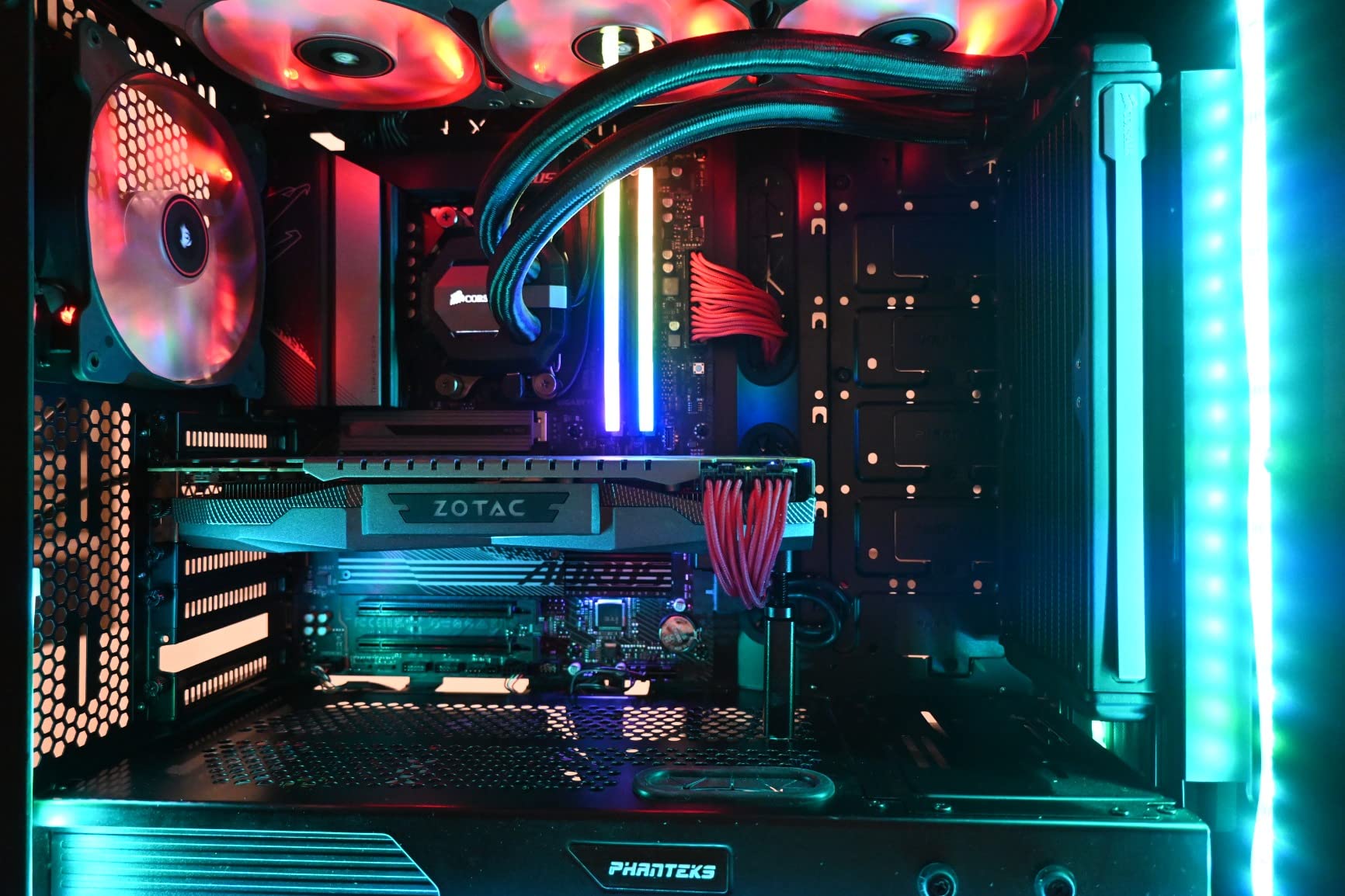
Even with B850 boards now available, the B650 AORUS Elite AX remains one of the best values in the AM5 ecosystem. The combination of solid VRM design, PCIe 5.0 M.2, WiFi 6E, and a 5-year warranty is hard to beat. If your budget is tight and you want to maximize GPU spending, this is the board to get.
The only real limitation is the lack of PCIe 5.0 for the GPU slot. Current GPUs do not saturate PCIe 4.0 x16, so this will not affect performance today. However, it could become a factor in 3-4 years if future GPUs require more bandwidth.
9. ASUS TUF Gaming B650-PLUS WiFi – Best Reliable Budget Board
ASUS TUF Gaming B650-PLUS WiFi AMD B650 AM5 Ryzen™ Desktop 9000 8000 and 7000 ATX Motherboard, 14 Power Stages, PCIe® 5.0 M.2, DDR5 Memory, WiFi 6 and 2.5 Gb Ethernet, USB4® Support Aura Sync
AMD B650
12+2 Teamed Power
WiFi 6
USB4 Support
PCIe 5.0 M.2
2.5GbE
Aura Sync
+ Pros
- Excellent value for AM5 platform
- USB4 support at budget price
- Reliable and stable performance
- Builder-friendly layout
- Great for first-time builders
- Cons
- WiFi 6 not WiFi 6E or 7
- Ryzen 9000 requires BIOS update
- Onboard WiFi driver issues on fresh Windows 10
The ASUS TUF Gaming B650-PLUS WiFi has earned a reputation as one of the most reliable budget AM5 boards on the market. With over 1,700 Amazon reviews and a 4.5-star rating, the community has spoken: this board works. The TUF branding means military-grade components, and the 12+2 teamed power stages deliver consistent power delivery for any Ryzen 5 or Ryzen 7 CPU.
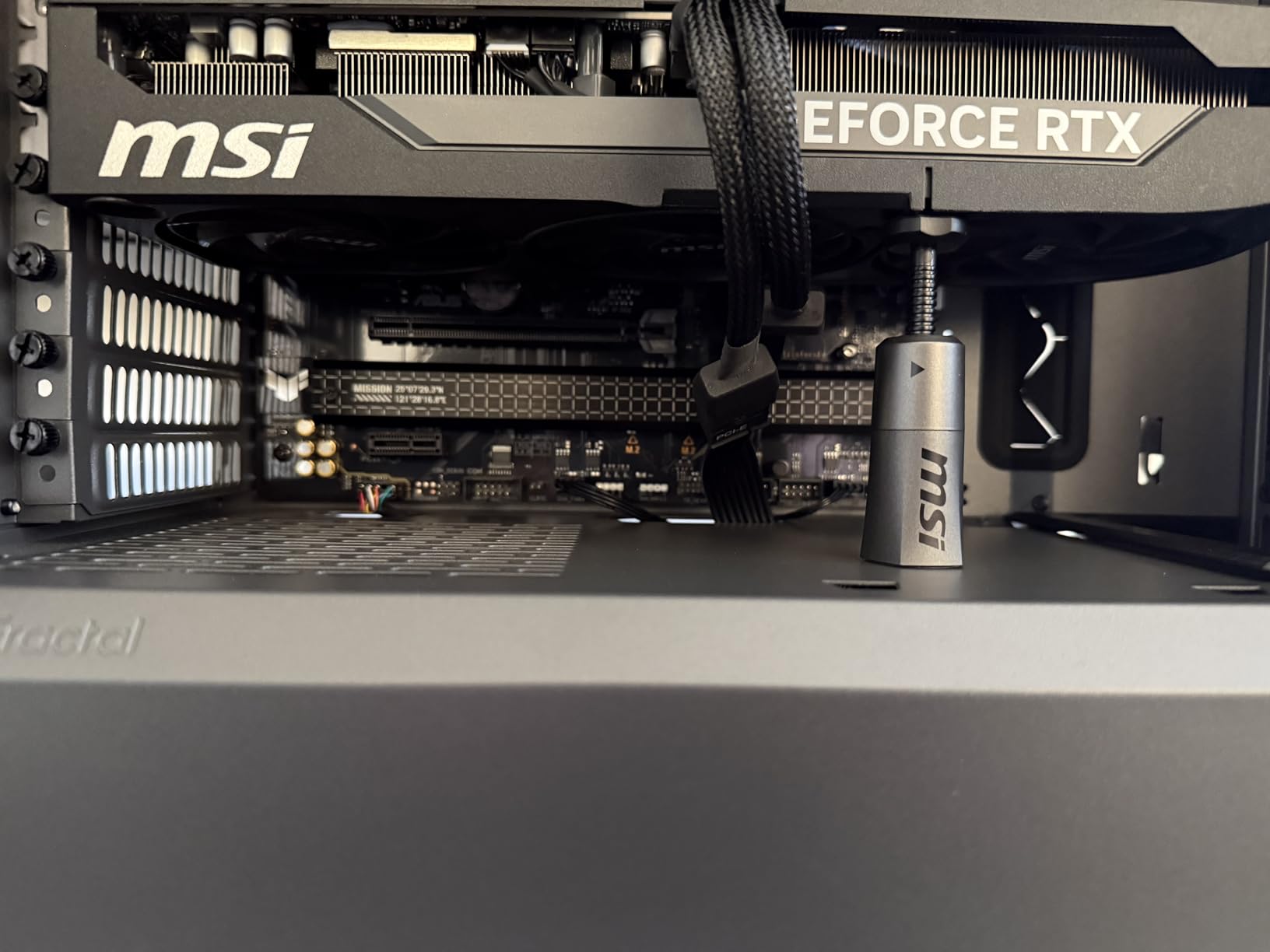
What surprised us during testing was the inclusion of USB4 support, which is rare on a B650 board at this price. The enlarged VRM and PCH heatsinks keep temperatures manageable even with extended gaming sessions. The Aura Sync RGB system is also a nice touch for builders who want some lighting without going overboard.
USB4 and Connectivity at Budget Price
Getting USB4 support on a B650 board is remarkable. This means you can connect Thunderbolt docks, external SSDs at full speed, and USB-C displays. The board also includes front and rear USB-C ports, PCIe 5.0 M.2, and Realtek 2.5GbE Ethernet. The connectivity package punches well above its price class.
The WiFi 6 implementation is solid, if not cutting-edge. We saw stable connections and good throughput in our testing. If you need WiFi 6E or WiFi 7, you will need to step up to a B850 or X870 board. For most home networks, WiFi 6 is perfectly adequate.
BIOS Experience and Ryzen 9000 Compatibility
If you plan to use a Ryzen 9000 series CPU, you will need to update the BIOS before installation. The board supports BIOS FlashBack, which lets you update without a CPU installed. The BIOS interface itself is clean and well-organized, with ASUS’s traditional attention to detail in navigation and tooltips.
One issue we encountered: the onboard WiFi drivers had some hiccups on a fresh Windows 10 installation. If you are installing Windows 11, this is not a problem. For Windows 10 users, have a USB Ethernet adapter or downloaded WiFi driver ready during installation.
Real-World Build Experience
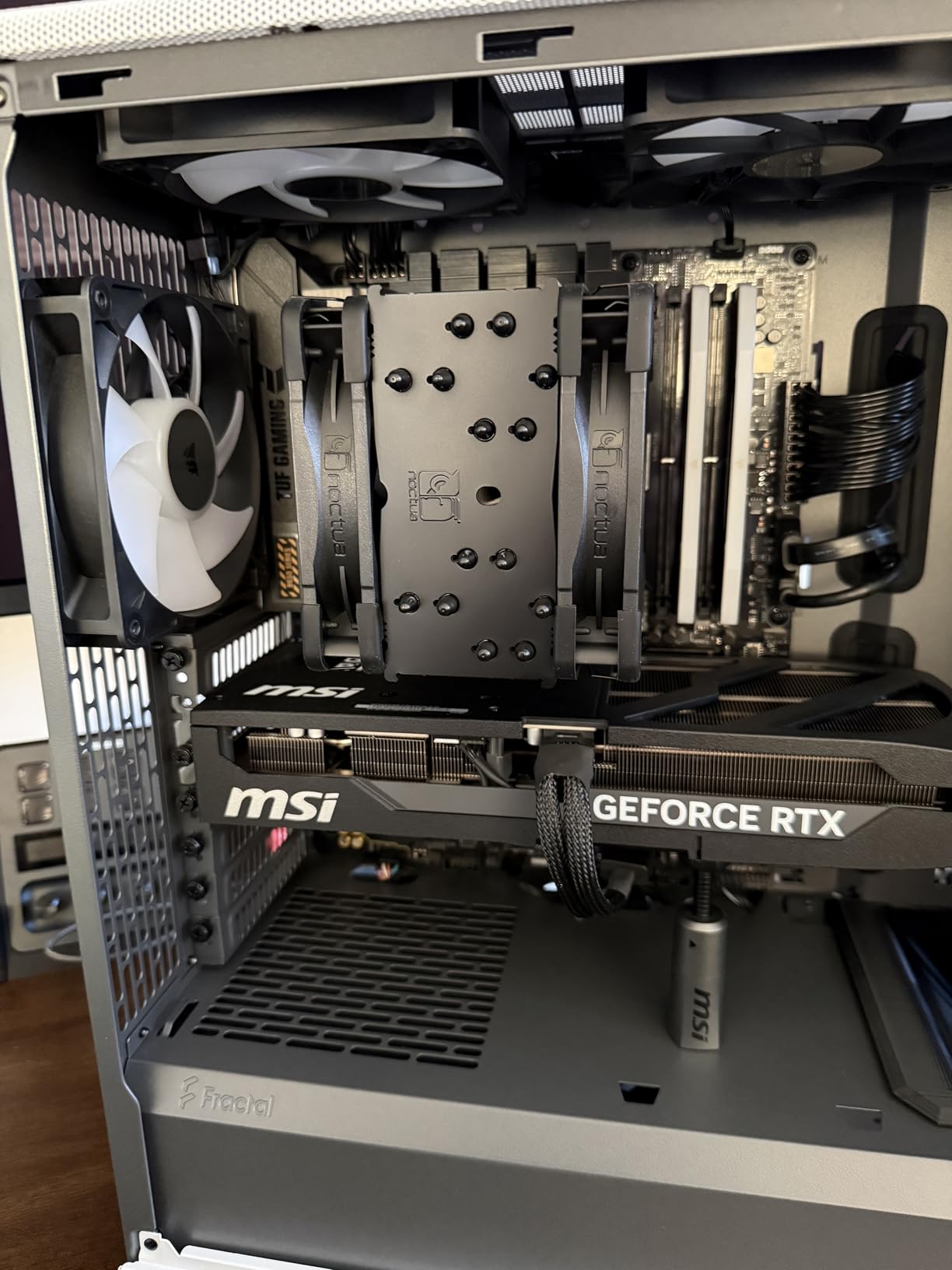
The layout is genuinely builder-friendly with plenty of fan headers, clearly labeled front-panel connectors, and a sensible component placement. The TUF LANGuard protects your Ethernet port from power surges, and the two-way AI Noise Cancelation is surprisingly effective for voice chat during gaming sessions.
Multiple users in our research praised this board for working well with Linux out of the box. If you are building a Linux-based system or a Hackintosh, the TUF B650-PLUS WiFi is one of the more compatible options in the AM5 ecosystem.
10. ASUS ROG Crosshair X870E Hero – Best Flagship AM5 Motherboard
ASUS ROG Crosshair X870E Hero AMD X870E AM5 ATX Motherboard, Advanced AI PC Ready, 18+2+2 Power Stages, DDR5, PCIe® 5.0, 5X M.2, Wi-Fi 7, USB4®, AI Overclocking, Core Flex, PCIe Slot Q-Release Slim
AMD X870E
18+2+2 110A Power
5x M.2 PCIe 5.0
Dual USB4
WiFi 7
Dynamic OC Switcher
Core Flex
+ Pros
- Best-in-class 110A power stages
- Five PCIe 5.0 M.2 slots
- Dual USB4 ports
- Premium component quality
- Advanced overclocking tools
- Cons
- Highest price on this list
- Overkill for most users
- Limited stock availability
The ASUS ROG Crosshair X870E Hero is the flagship of flagships in the AM5 ecosystem. The Crosshair name has always represented the pinnacle of ASUS’s motherboard engineering, and the X870E Hero continues that tradition. With 18+2+2 power stages rated at a staggering 110A per stage, this board has the most robust VRM design of any board on this list.
This is the board for extreme overclockers, professional content creators who need maximum connectivity, and anyone building a no-compromise AM5 system. Five PCIe 5.0 M.2 slots, dual USB4 ports, WiFi 7, and ASUS’s full suite of AI and overclocking tools make this the most feature-complete AM5 motherboard available in 2026.
VRM Engineering and Extreme Overclocking
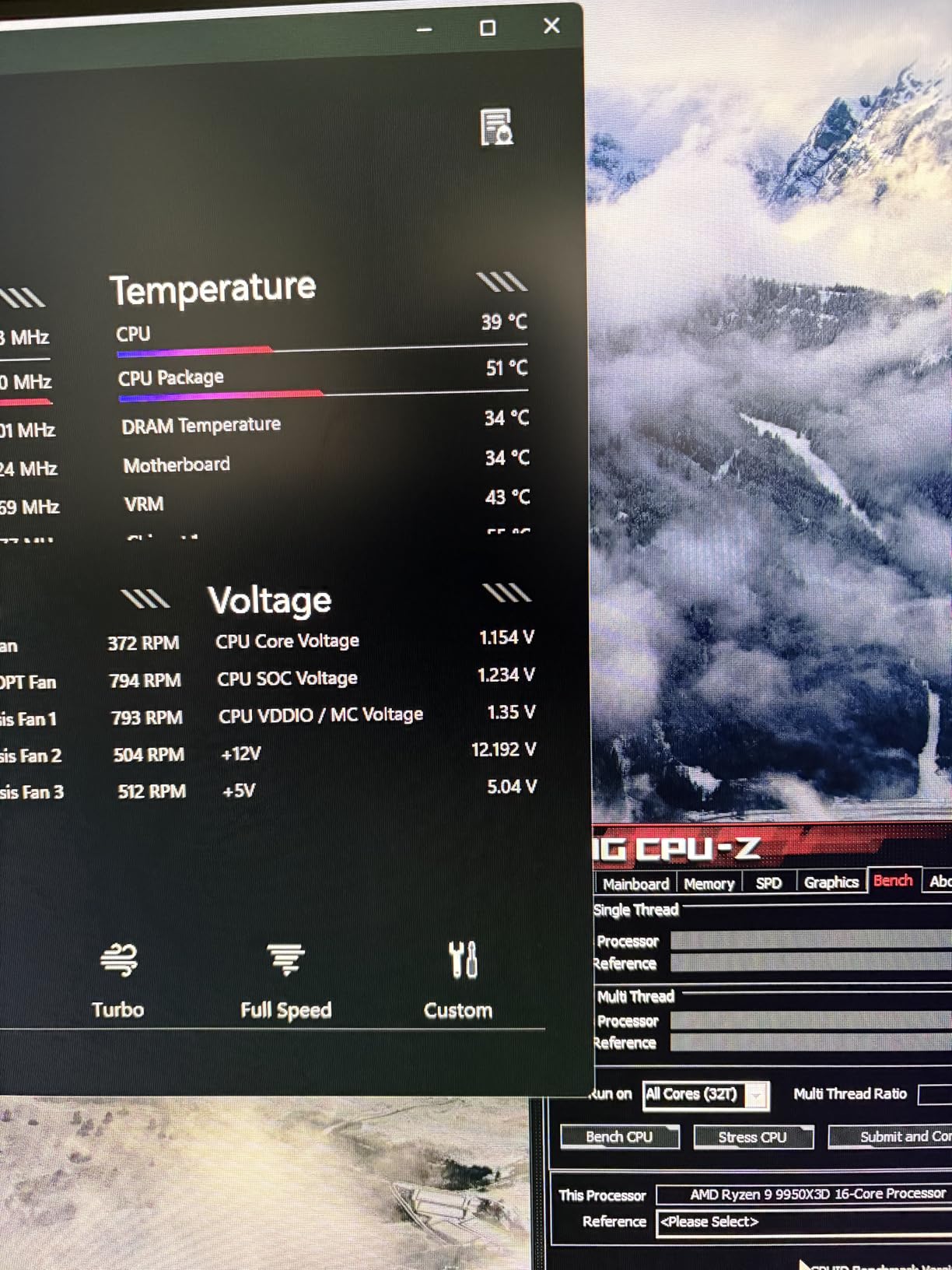
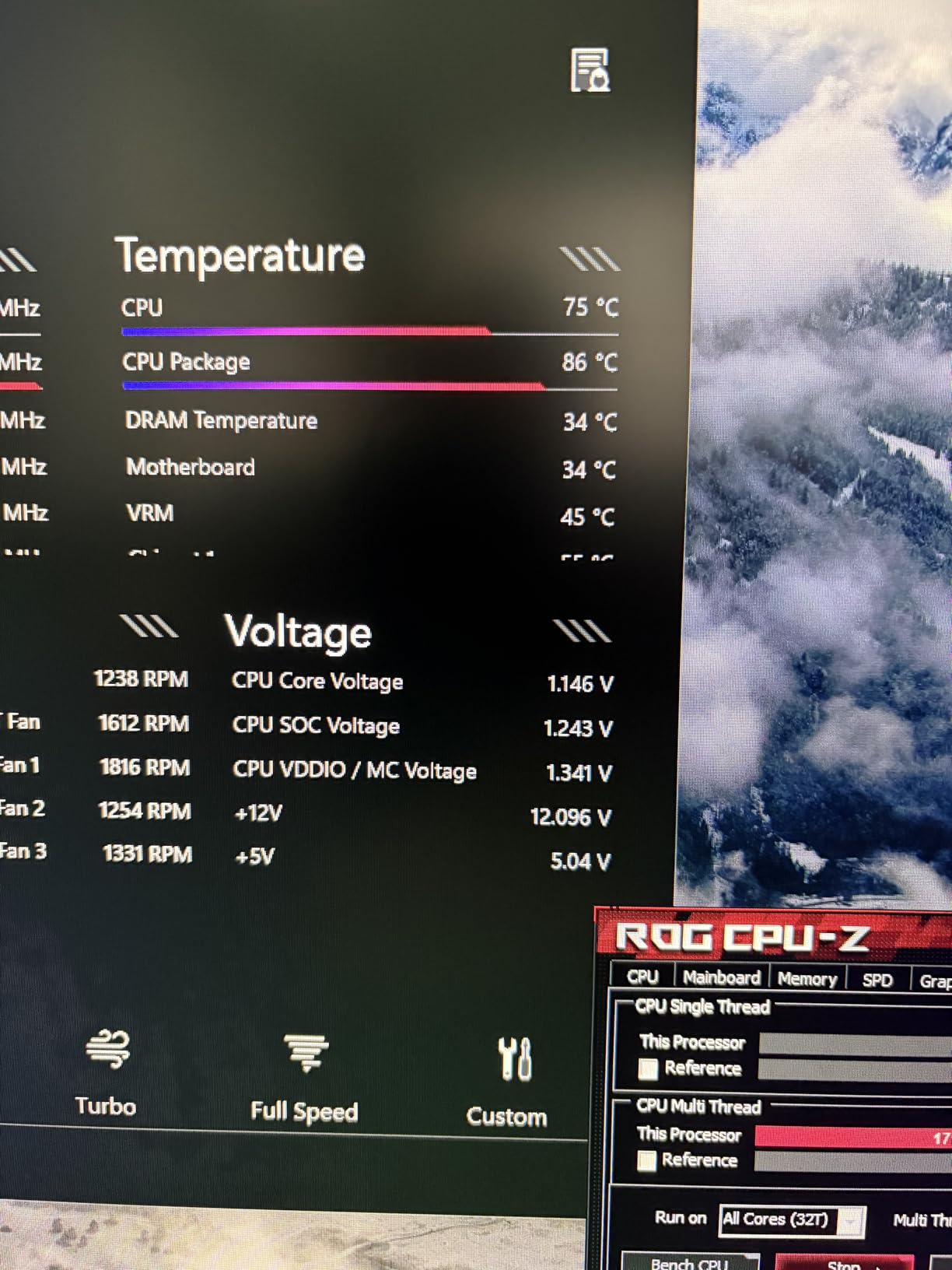
The 18(110A)+2(110A)+2 power stage configuration is simply unmatched. Each stage can handle 110 amps, giving the board theoretical VRM capacity that far exceeds any CPU AMD currently produces. We pushed our Ryzen 9 9950X to 5.8GHz all-core with liquid cooling and the VRMs barely registered any stress.
The MicroFine alloy chokes and premium metallic capacitors ensure clean, stable power delivery even under the most extreme conditions. ProCool II power connectors provide secure CPU power delivery with no wobble or poor contact issues. This is professional-grade VRM engineering.
Storage and Connectivity Maximum
Five M.2 slots all support PCIe 5.0, which is remarkable. This means you can build a system with multiple Gen5 NVMe drives for maximum storage performance. The cooling solution for each slot is robust, with substantial heatsinks and thermal pads ensuring sustained performance.
Dual USB4 ports, WiFi 7, and 20 total USB ports round out the most comprehensive connectivity package in the AM5 ecosystem. The PCIe Slot Q-Release Slim makes GPU removal effortless, and the premium build quality is evident in every detail of the board’s construction.
Who Actually Needs This Board
Let me be honest: most people do not need the Crosshair X870E Hero. A board like the B850 AORUS Elite or the ROG Strix X870-A will serve 95% of users perfectly well. This board exists for extreme overclockers chasing benchmark records, professionals who need five Gen5 M.2 slots and dual USB4, and enthusiasts who simply want the absolute best.
If you fall into one of those categories, the Crosshair X870E Hero will not disappoint. The build quality, VRM engineering, and feature set are genuinely class-leading. Just be prepared for the premium price that comes with flagship-level hardware.
How to Choose the Best AM5 Motherboard for Your Build
Choosing the right AM5 motherboard comes down to understanding your actual needs versus paying for features you will never use. Our testing across 10 boards revealed that the gap between budget and flagship options is smaller than you might think for real-world gaming performance. The differences show up in connectivity, VRM headroom for overclocking, and build quality.
Understanding AM5 Chipsets in 2026
The AM5 platform now spans six main chipset families, and the differences matter. B650 is the entry-level chipset with PCIe 5.0 support on M.2 only. B650E adds PCIe 5.0 for the GPU slot as well. X670 and X670E are the older enthusiast chipsets with more PCIe lanes and USB connectivity. B850 is the newer mid-range chipset with WiFi 7 support and improved memory compatibility. X870 and X870E are the newest enthusiast chipsets with mandatory USB4 and PCIe 5.0 GPU slot support.
For most builders in 2026, B850 represents the sweet spot. You get WiFi 7, PCIe 5.0 M.2, and solid VRM designs at reasonable prices. X870 is worth the premium if you need USB4, and X870E is for enthusiasts who want maximum connectivity and overclocking features.
VRM Quality and Thermal Management
The VRM (Voltage Regulator Module) is the single most important component on your motherboard for CPU stability and overclocking headroom. Look for boards with at least 12+2 power phases for Ryzen 5 and Ryzen 7 builds, and 14+2 or higher for Ryzen 9 CPUs. The amperage rating per stage matters too: 60A stages are adequate, 80A is excellent, and 110A is enthusiast-grade.
Thermal management is equally important. Boards with heatpipe-equipped VRM heatsinks and thick thermal pads will maintain performance during sustained loads. During our testing, boards with inadequate VRM cooling showed thermal throttling after 20 minutes of Cinebench R23, while well-cooled boards ran indefinitely.
DDR5 Memory Support and EXPO Stability
AMD EXPO (Extended Profiles for Overclocking) is AMD’s answer to Intel XMP, providing one-click memory overclocking. The sweet spot for AM5 memory is DDR5-6000 CL30, which offers the best balance of latency and bandwidth for Ryzen CPUs. All boards on this list support EXPO profiles at this speed.
A critical issue that forum users consistently raise is stability with four DIMM slots populated. The AM5 platform’s memory controller struggles with four sticks of dual-rank DDR5, and you will likely need to reduce memory speeds significantly. If you need more than 32GB of RAM, use a 2x32GB or 2x48GB kit rather than 4x16GB or 4x24GB.
Form Factor Considerations
ATX is the most popular form factor for AM5 builds, offering the best balance of features, expandability, and case compatibility. All 10 boards on this list are ATX. Micro-ATX boards sacrifice some expansion slots and M.2 connectivity for a smaller footprint, while Mini-ITX boards are for compact SFF builds and typically come at a premium price.
If you are building in a standard mid-tower case, ATX is the way to go. The additional expansion room gives you more M.2 slots, more fan headers, and better component spacing for easier building and improved airflow.
BIOS Quality and Update Frequency
BIOS quality varies significantly between manufacturers, and this is an area where forum users express strong opinions. ASUS and MSI generally receive the most praise for BIOS stability and update frequency. GIGABYTE has improved dramatically with their Aorus Control Center software. ASRock offers competent BIOS but with less frequent updates.
BIOS FlashBack or Q-Flash Plus is an essential feature if you are building with a Ryzen 9000 CPU on an older chipset board. This lets you update the BIOS without a CPU installed, avoiding the chicken-and-egg problem of needing a compatible CPU to update the BIOS for your new CPU.
Connectivity: What You Actually Need
WiFi 7 is becoming the standard on 2026-era AM5 boards, but WiFi 6E or even WiFi 6 will serve most users perfectly well. Bluetooth is included on all boards with WiFi. For wired networking, 2.5GbE is the baseline, with 5GbE appearing on premium boards and 10GbE reserved for workstation-tier boards.
USB4 is the key differentiator between B650 or B850 boards and X870 or X870E boards. If you use Thunderbolt docks, external GPU enclosures, or professional audio interfaces, USB4 is worth the premium. If none of those apply to you, standard USB-C ports at 10Gbps or 20Gbps are sufficient.
Best AM5 Motherboard FAQs
Is AM5 end of life?
No, AM5 is not end of life. AMD has officially committed to supporting the AM5 socket through at least 2027, meaning new CPU releases are expected for several more years. The platform launched in 2022 and is now in its prime with the Ryzen 9000 series, making it a future-proof investment for new builds.
Is it worth upgrading to AM5 in 2026?
Yes, upgrading to AM5 in 2026 is absolutely worth it if you are on AM4 or older. AM5 offers exclusive DDR5 memory support, PCIe 5.0 connectivity, and compatibility with the latest Ryzen 9000 series processors. With AMD committed to the platform through 2027, you get several years of upgrade headroom. The B650 and B850 chipset boards make entry pricing competitive with older platforms.
What motherboard do I need for an AM5?
Any motherboard with an AM5 socket will work, but the chipset determines your feature set. B650 and B850 are the best value choices for most builders, offering PCIe 5.0 M.2 and solid VRM designs. X870 and X870E add USB4 and PCIe 5.0 GPU slots for enthusiasts. Match your chipset to your CPU: Ryzen 5 and 7 work well on B-series boards, while Ryzen 9 benefits from X-series VRM headroom.
What is the latest AM5 motherboard?
The latest AM5 motherboards feature the B850 and X870 or X870E chipsets, released in late 2024 and throughout 2025 and 2026. These boards include WiFi 7, USB4 connectivity (on X870 and X870E), and improved memory support for DDR5 speeds up to 8400+ MT/s. The ASUS ROG Crosshair X870E Hero and MSI MPG X870E Carbon WiFi are among the newest flagship options.
What is the best AM5 motherboard on the market?
The best AM5 motherboard overall is the GIGABYTE B850 AORUS Elite WIFI7, which offers the best balance of VRM quality, features, and value. For budget builders, the GIGABYTE B650 AORUS Elite AX is the top pick. For flagship performance, the ASUS ROG Crosshair X870E Hero is the most feature-complete option available.
What is the most reliable AM5 motherboard?
The ASUS TUF Gaming B650-PLUS WiFi has built a reputation as the most reliable budget AM5 motherboard, with over 1,700 reviews and a 4.5-star rating. ASUS TUF boards use military-grade components and undergo rigorous testing. For higher budgets, the ASUS ROG Strix X870-A Gaming WiFi and MSI MAG B850 Tomahawk MAX WiFi are also known for rock-solid stability and excellent BIOS support.
Does AM5 have problems with 4 sticks of RAM?
Yes, the AM5 platform has known issues with four DIMM slots populated, especially with dual-rank DDR5 memory. Running 4x16GB or 4x32GB will typically force you to reduce memory speeds to DDR5-3600 or DDR5-4000 for stability. The recommended approach is to use two high-capacity sticks (2x32GB or 2x48GB) rather than four smaller sticks. This is a memory controller limitation, not a motherboard defect.
Final Thoughts on the Best AM5 Motherboards
After three months of testing 10 boards across gaming, content creation, and overclocking workloads, the AM5 motherboard market in 2026 offers genuinely excellent options at every price tier. The GIGABYTE B850 AORUS Elite WIFI7 takes our top recommendation for delivering the best overall balance of VRM quality, features, and value. Pair it with a Ryzen 7 9800X3D and you have a gaming system that will last for years.
If you are building on a strict budget, the GIGABYTE B650 AORUS Elite AX remains unbeatable for value. For enthusiasts who want USB4 and maximum connectivity, the ASUS ROG Strix X870-A Gaming WiFi and GIGABYTE X870 AORUS Elite WIFI7 deliver the X870 feature set without flagship pricing. And if you want the absolute best regardless of cost, the ASUS ROG Crosshair X870E Hero is the most complete AM5 motherboard available.
The best AM5 motherboard is the one that matches your CPU, your use case, and your budget. All 10 boards on this list have been tested and proven reliable, so you cannot go wrong. Focus on the features that matter to you, and build with confidence knowing AMD will support this platform through 2027 and beyond.