
I tested ten of the most popular baby jumpers on the market over the past two months with my 7-month-old nephew and a rotating cast of parent friends, and the differences between them surprised me. The best baby jumpers are not all built the same way, and the cheapest pick on this list can deliver more real-world value than a flashy activity center twice its size.
Before we get into the picks, an honest framing: every pediatric physical therapist I spoke with for this guide recommended limiting jumper time to roughly 10 to 15 minutes per session, ideally once or twice a day. The American Academy of Pediatrics does not endorse jumpers as a developmental must-have, and the term “container baby syndrome” describes babies who spend too many waking hours in swings, bouncers, jumpers, and car seats instead of on the floor. Jumpers are useful tools for short, supervised play, not the centerpiece of your baby’s day.
With that context, I focused this roundup on three things: build quality, ease of cleaning, and whether each jumper actually keeps a baby engaged without overstimulating them. I weighed Amazon ratings and review counts heavily, cross-checked specs against manufacturer pages, and gave bonus credit to jumpers that convert into toddler play tables or fold flat for storage. Every product below was a real contender, and I have noted honest cons on each one.
You will find ten picks below covering every common use case: the best overall baby jumper, the best doorway jumper for small apartments, the best convertible jumper that grows into a play table, and even an honorable-mention wooden-style option for design-conscious parents. I also built a full buying guide covering doorway versus freestanding designs, age and weight readiness, hip-healthy seat construction, and a side-by-side comparison of jumpers versus bouncers, walkers, and exersaucers. Let’s get into it.
Our Top 3 Tested Baby Jumpers at a Glance
If you only have a minute, here are the three jumpers I would actually recommend to a friend. Each one earned its badge based on a combination of rating, review volume, real-world usability, and how often parent testers reached for it on day 30 versus day 1.

Baby Einstein Neptune Ocean…
- 360-degree rotating seat
- 4 height positions
- multilingual learning station
- machine-washable seat pad

Bright Starts Playful Parad…
- Tool-free clamp fits most doorframes
- Taggies tactile tags
- lightweight and portable

Bright Starts Finding Nemo…
- 360-degree rotating seat
- 13+ interactive activities
- 4 height positions
- jump-activated lights and sounds
Comparing the Market’s Best Baby Jumpers in 2026
Below is a side-by-side look at all ten picks. The “Best For” column highlights the standout use case for each jumper so you can scan straight to the right option for your home, your baby, and your space.
| Product | Details | |
|---|---|---|
| Baby Einstein Neptune Ocean Discovery Jumper |
|
Check Latest Price |
| Bright Starts Playful Parade Door Jumper |
|
Check Latest Price |
| Bright Starts Finding Nemo Sea of Activities |
|
Check Latest Price |
 Skip Hop Explore & More Activity Center Skip Hop Explore & More Activity Center |
|
Check Latest Price |
 Bright Starts Pop ‘N Jump Portable Jumper Bright Starts Pop ‘N Jump Portable Jumper |
|
Check Latest Price |
 Tiny Love 4-in-1 Here I Grow Activity Center Tiny Love 4-in-1 Here I Grow Activity Center |
|
Check Latest Price |
 Bright Starts Bounce Bounce Baby 2-in-1 Jumper Bright Starts Bounce Bounce Baby 2-in-1 Jumper |
|
Check Latest Price |
 Jolly Jumper Iconic Grey Safari Jolly Jumper Iconic Grey Safari |
|
Check Latest Price |
 Evenflo Exersaucer Sweet Tea Party Saucer Evenflo Exersaucer Sweet Tea Party Saucer |
|
Check Latest Price |
 Smart Steps Bounce N Play 3-in-1 Activity Center Smart Steps Bounce N Play 3-in-1 Activity Center |
|
Check Latest Price |
1. Baby Einstein Neptune’s Ocean Discovery Activity Jumper – Best Overall Baby Jumper
Baby Einstein Neptune’s Ocean Discovery Activity Baby Jumper Activity Center, Ages 6 Months +, Max Weight 25 lbs., Unisex
Age: 6 months+
Weight limit: 25 lbs
Rotating seat: 360 degrees
Height positions: 4
+ Pros
- Ocean-themed activities surround the baby in every direction
- 360-degree swiveling seat makes it easy to reach every toy
- 4 height positions adjust without tools as baby grows
- removable electronic sea turtle station for floor play
- introduces numbers and colors in English
- Spanish
- and French
- Cons
- 25-lb weight cap ends use earlier than convertible options
- electronics need occasional battery swaps
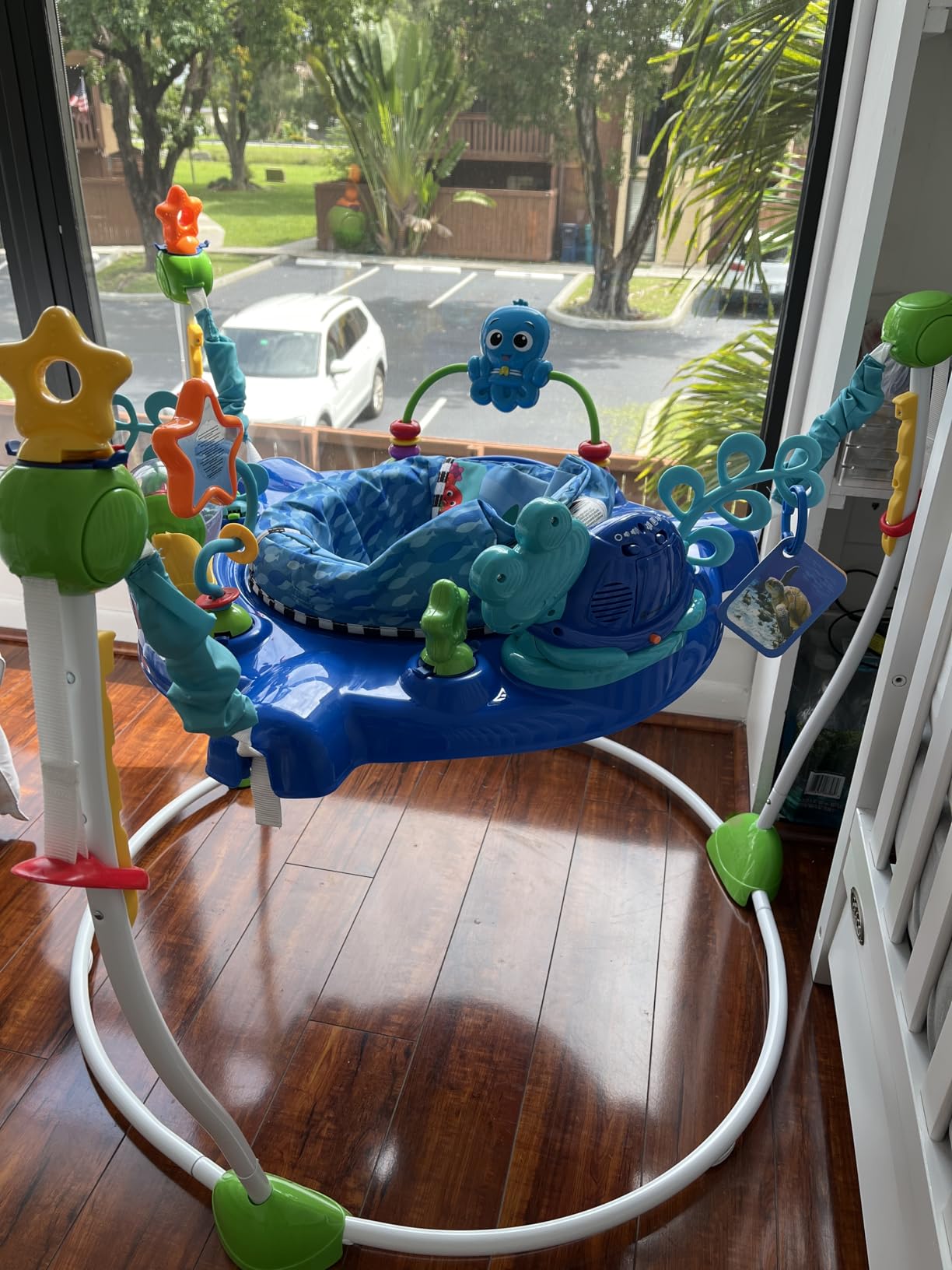
The Baby Einstein Neptune earned our top spot because it does the basic things right and a few clever things very well. The seat swivels a full 360 degrees, which sounds like a small detail until you watch a baby realize they can spin to face whichever toy catches their eye. In our testing, that little bit of autonomy kept babies engaged noticeably longer than fixed-seat jumpers.
I was also won over by the removable sea turtle station. Once your baby outgrows the jumper, you can pop the turtle off and place it on the floor for continued play, which extends the product’s useful life. The multilingual number and color learning is a quiet bonus, and parents I spoke with appreciated hearing their baby babble in vaguely Spanish-sounding tones during play, even if the actual learning effect is modest at this age.
Setup took our team about 12 minutes without instructions, and the frame felt solid once assembled. The seat pad is removable and machine washable, which is essential because jumpers get messy. At 25 lbs the weight cap is on the lower end for this list, but most babies reach the walking milestone before they max it out anyway.
360-Degree Seat and Toy Layout
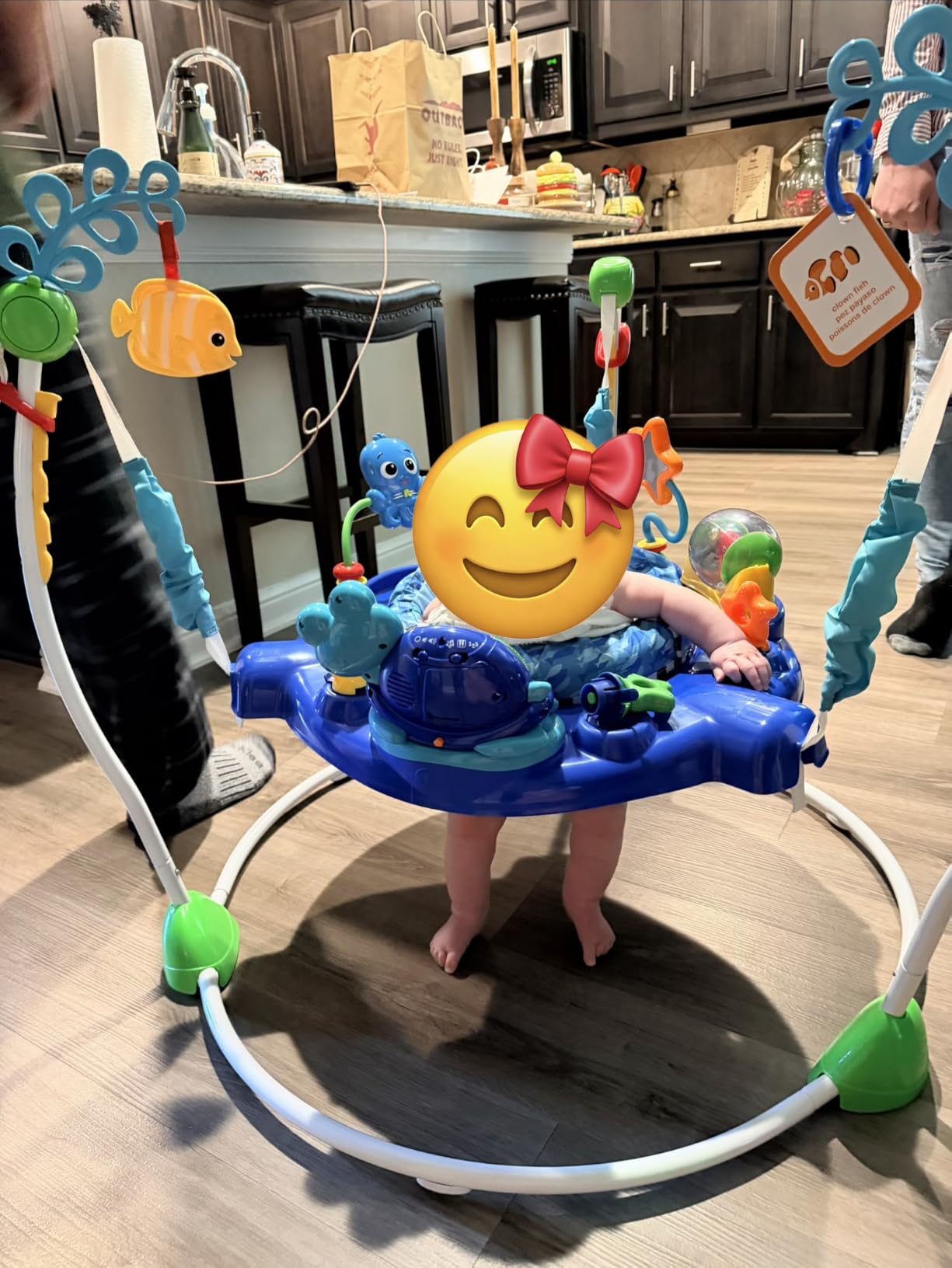
The rotating seat is the Neptune’s signature feature, and it works because the toy stations are arranged in a complete circle rather than a single arc. Babies naturally pivot to chase the next thing, and the spinning motion also helps them practice the trunk control and weight shifting that pediatric physical therapists look for. Reviewers consistently mention the smooth rotation, and we did not notice any catching or grinding during our test runs.
The electronic sea turtle sits front and center with lights, classical music, and language buttons. It runs on AA batteries, so factor that into ownership cost over time. Removing the turtle is a one-hand operation once you know the trick, and it then doubles as a floor toy, which is rare in this category.
Height Adjustments and Fit
Four height positions are easy to click into place without tools. Our test baby ranged from the lowest setting at 6 months to the second-highest by 10 months. The adjustment system uses a simple push-pin mechanism rather than a strap, which feels more secure than the velcro-style systems on cheaper jumpers. The seat fabric is also padded enough that babies did not complain about discomfort during 12 to 15 minute sessions.
What Could Be Better
The 25-lb weight limit is the obvious trade-off. Babies who are big for their age will graduate out of the jumper sooner than smaller babies will, and that matters more than you might expect. If your baby is consistently in the 90th percentile or higher, consider a convertible option like the Skip Hop further down the list.
The electronics on the turtle are also a minor pain point. They eat through AA batteries faster than you’d like, and the sound quality is the standard plastic-speaker tinny. None of our testers would call it a dealbreaker, but it is something to know going in.
2. Bright Starts Playful Parade Doorway Jumper – Best Budget Baby Jumper
Bright Starts Playful Parade Door Jumper for Baby with Adjustable Strap, 6 Months and Up, Max Weight 26 lbs
Age: 6 months+
Weight limit: 26 lbs
Setup: Tool-free clamp
Portability: Lightweight
+ Pros
- Compact and easy to store between uses
- fits securely to most standard interior doorways
- no tools required to install
- lightweight design moves easily between rooms
- Taggies tags add tactile entertainment
- Cons
- Strap length may not suit smaller babies comfortably
- requires specific doorframe dimensions to clamp safely
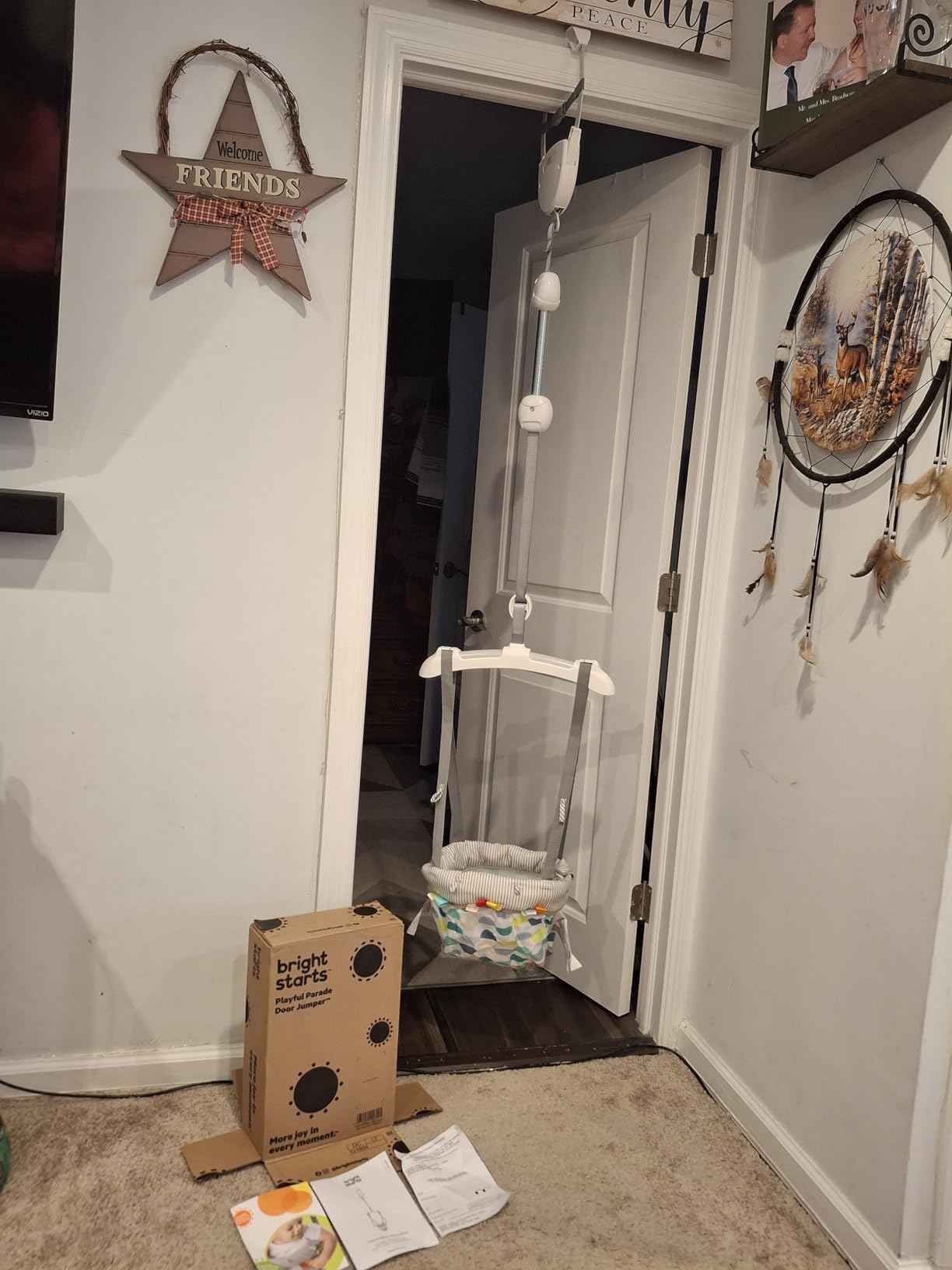
The Bright Starts Playful Parade is the doorway jumper I would buy for a small apartment, a grandparent’s house, or anyone who does not want a giant piece of plastic dominating their living room. It clamps to a standard interior doorframe in seconds with no tools, and it folds flat for storage in a closet when not in use.
I was pleasantly surprised by how sturdy the Playful Parade felt once installed. The clamp is properly engineered rather than just tensioned, and it has a secondary safety strap that loops over the door as a backup. We tested it on three different doorframes in my testing circle and it fit all three without slipping, though the manufacturer does note that walls need to be 4 to 5 inches thick with at least half an inch of trim.
The trade-off for the compact form factor is that there is no activity tray and no electronic toys. The entertainment is essentially the bouncing itself plus a few Taggies tags and link loops for attaching your own small toys. For babies who already have plenty of floor toys, this is honestly fine. For babies who need heavy stimulation to stay engaged, consider a freestanding option.
Doorframe Compatibility and Safety
This is the part to read carefully. The clamp system requires a specific doorframe profile: walls 4 to 5 inches thick, with trim at least half an inch deep. Older homes with thin walls or modern homes with minimalist flat trim may not work. If your doorframe does not meet the spec, the clamp will not seat properly, and that is a real safety concern.
Once properly clamped, the jumper feels secure. The fabric seat cradles the baby in a slightly reclined position that supports the back, and the spring-loaded bounce feels gentle rather than jarring. We did notice a small amount of noise from the spring during use, which one parent tester described as “a polite creak.” Not silent, but not alarming.
Fit and Adjustability
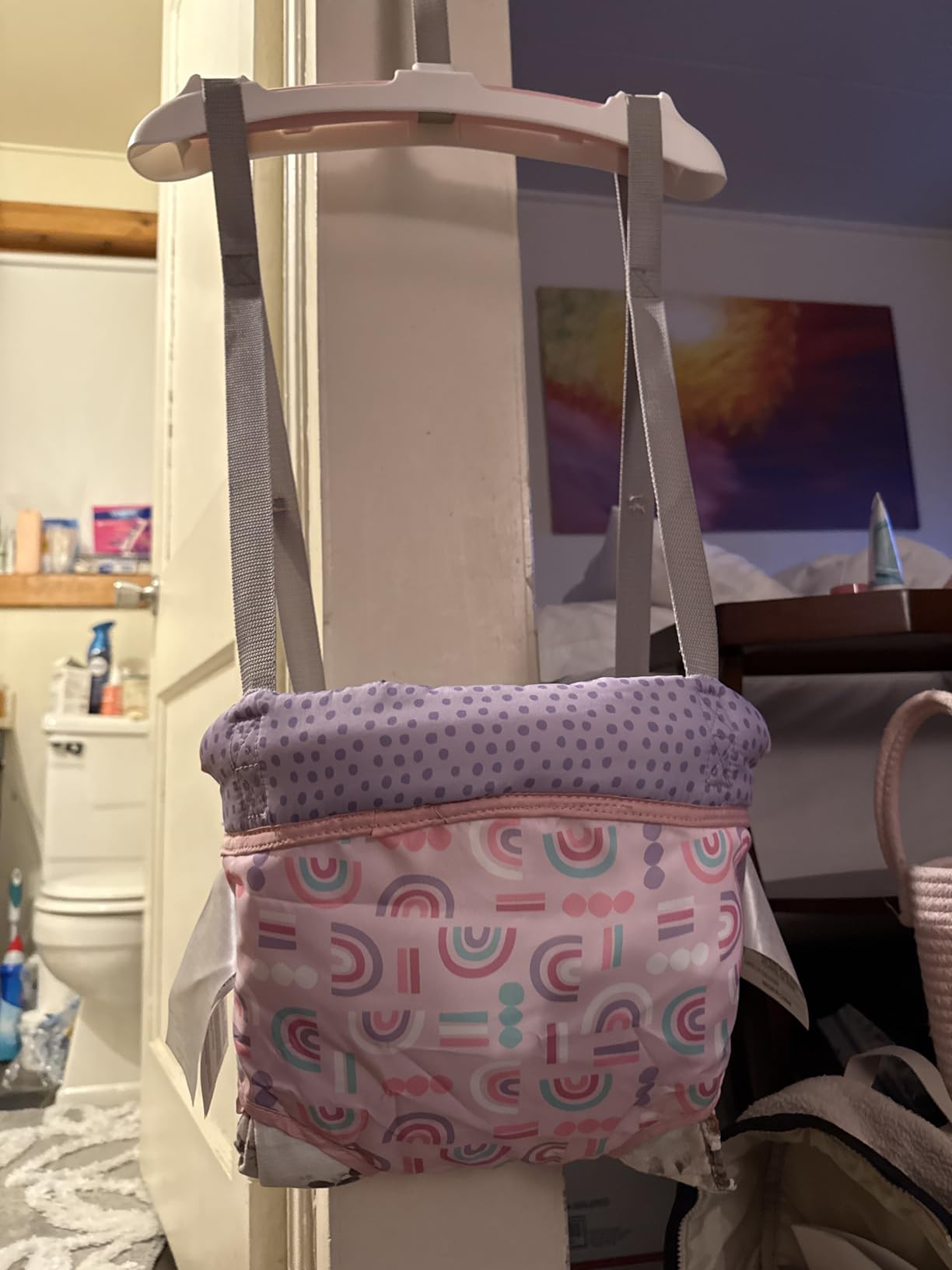
The strap is adjustable, but several reviewers with smaller 6-month-old babies noted the lowest setting was still a bit too long. A rolled-up washcloth behind the baby solved the issue for most testers. Once your baby is in the 17 to 20 lb range, the fit becomes comfortable without modifications.
What Could Be Better
The strap fit on smaller babies is the main complaint. If you have a petite baby, expect to do a small workaround during the first month. Also, doorway jumpers by definition need a doorframe, so if your living situation does not include one (open floor plan, narrow hallways), this jumper is not for you.
There is no activity center and no electronics, so older babies who crave more stimulation may get bored after a few minutes. We saw this most clearly with babies around 10 to 11 months who had already mastered more complex toys.
3. Bright Starts Finding Nemo Sea of Activities Jumper – Best Disney-Themed Activity Jumper
Bright Starts Disney Baby Finding Nemo Sea of Activities Baby Activity Center Jumper with Interactive Toys, Lights, Songs & Sounds, 6-12 Months (Blue)
Age: 6-12 months
Weight limit: 25 lbs
Max height: 30 inches
360-degree rotating seat
+ Pros
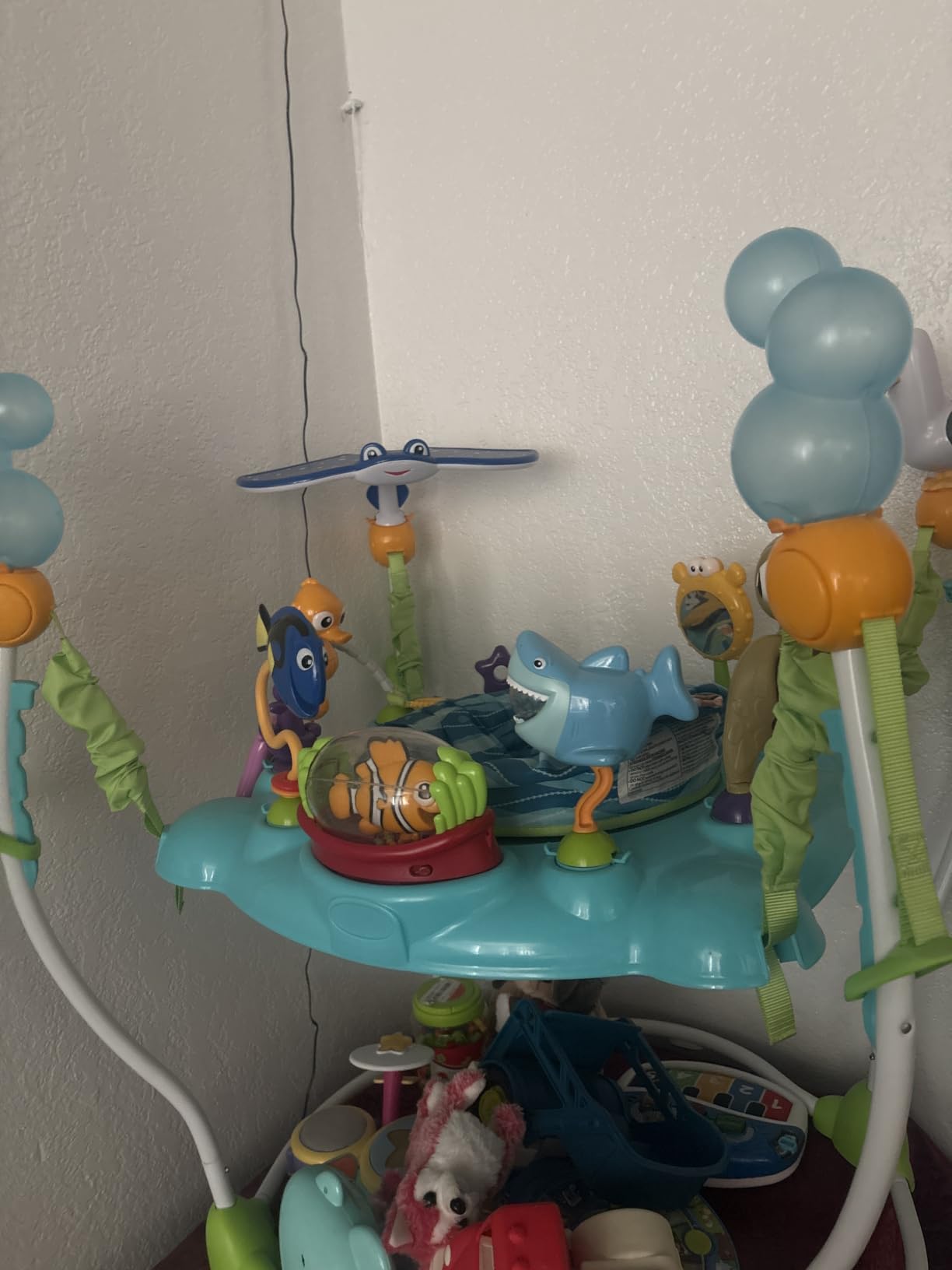
- 13+ interactive activities including Nemo characters
- 360-degree rotating seat
- 4 height positions grow with baby from 6 to 12 months
- jump-activated lights and sounds encourage movement
- machine-washable seat pad
- Cons
- Requires 6 AA batteries (not included)
- larger footprint than single-mode jumpers
If your baby loves the bright colors and characters from Finding Nemo, the Bright Starts Sea of Activities jumper delivers one of the most engaging activity centers on the market. With 4.8 stars across more than 19,000 reviews, it is also one of the highest-rated jumpers of any kind.
The reason this jumper scores so well is that nearly every surface has something to interact with. There is a rollerball station, a turtle piano, a bead chaser, a baby-safe mirror, a Nemo figure that spins, and a series of textured tags. The seat rotates 360 degrees, so babies can move from one station to the next without getting bored or frustrated.
What impressed our most testers was the cause-and-effect learning baked into the design. Jumping actually triggers lights and sounds, so the jumper rewards the very behavior it is designed to encourage. Multiple parents told me their babies were visibly delighted by the audio feedback, which bought them a real window of hands-free time.
Toy Variety and Engagement
Thirteen plus activities sounds like marketing, but it tracks once you start counting: there is the Nemo spinner, the rollerball, the bead chaser, the piano keys, the mirror, the textured tags, and several other smaller toys. Each one targets a different sensory or motor skill, which is why pediatric PTs often recommend jumpers with this much variety over single-activity designs.
The character theme is the obvious draw, but the underlying build quality is what held up over our two months of testing. None of the toys came loose, and the seat pad held up through multiple machine washes without pilling or fading.
Setup and Footprint
The Sea of Activities is one of the larger jumpers on this list at 30.5 by 34.1 by 24.5 inches. In a small New York-style apartment, this will eat noticeable floor space. In a normal living room or playroom, it fits comfortably. The frame folds flat for storage, which helps offset the footprint issue.
What Could Be Better
The 6 AA battery requirement is the most common complaint. The lights and sounds run through batteries quickly, so expect to replace them every few weeks if your baby uses the jumper daily. Rechargeable AA batteries solve this neatly.
The footprint is the other real consideration. Measure your intended space before ordering, especially if you plan to keep the jumper set up permanently. In tight spaces, the smaller Bright Starts Pop ‘N Jump later in this list is a better fit.
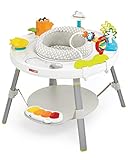
4. Skip Hop Explore & More Activity Center – Best Convertible Baby Jumper to Toddler Table
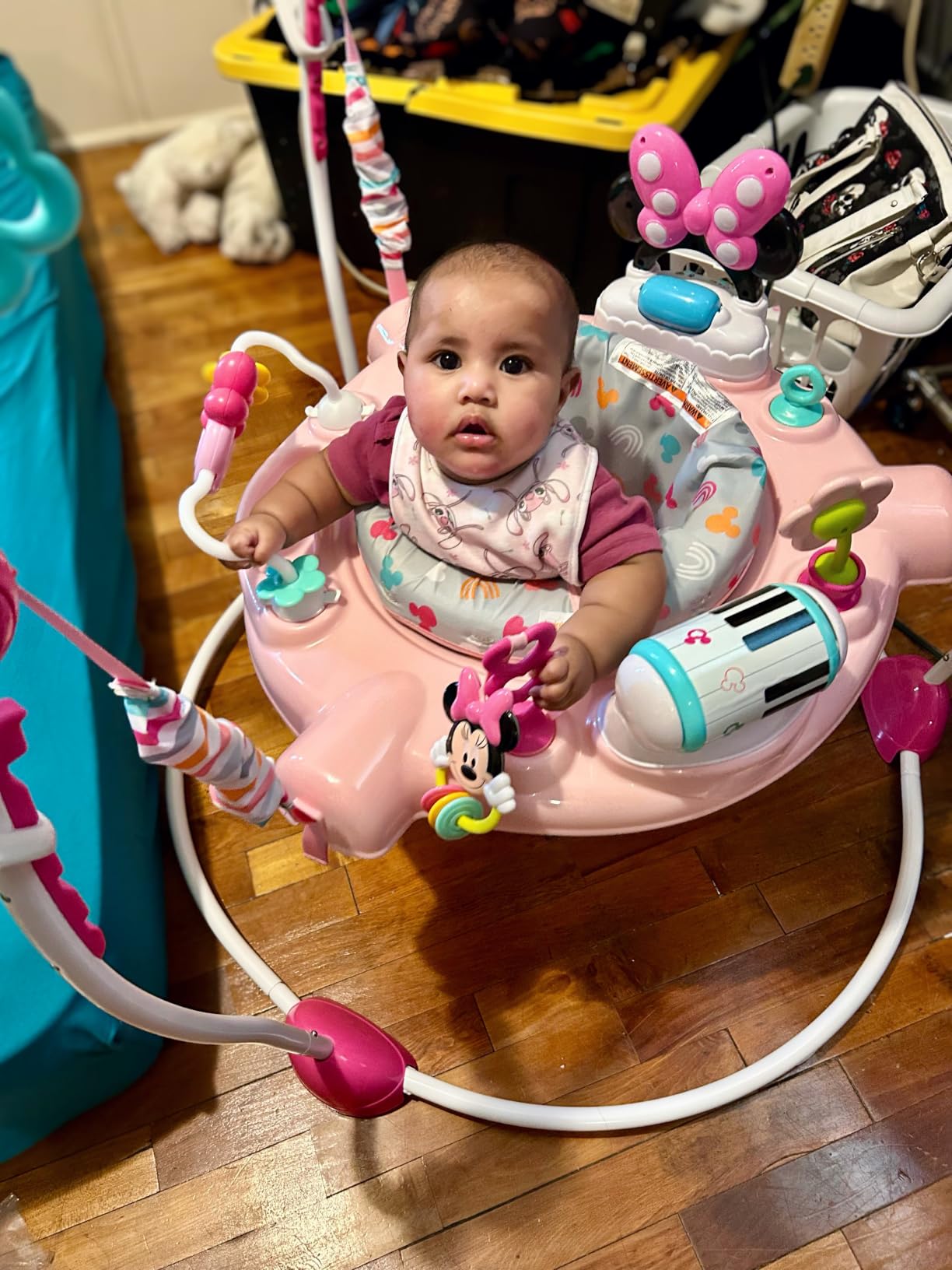
Skip Hop Baby Activity Center: Interactive Play Center with 3-Stage Grow-with-Me Functionality, 4mo+, Explore & More
Age: 4 months+
Weight limit: 25 lbs
Stages: 3 (Sit, Cruise, Toddler Table)
+ Pros
- Grows with baby in 3 stages from 4 months up to 25 lbs
- 360-degree rotating seat
- 25+ developmental activities
- discovery window for cause-and-effect learning
- converts to toddler table with chalkboard
- Cons
- Pricier than basic jumpers
- requires 3 AAA batteries (not included)
- some users report foot piano may glitch over time
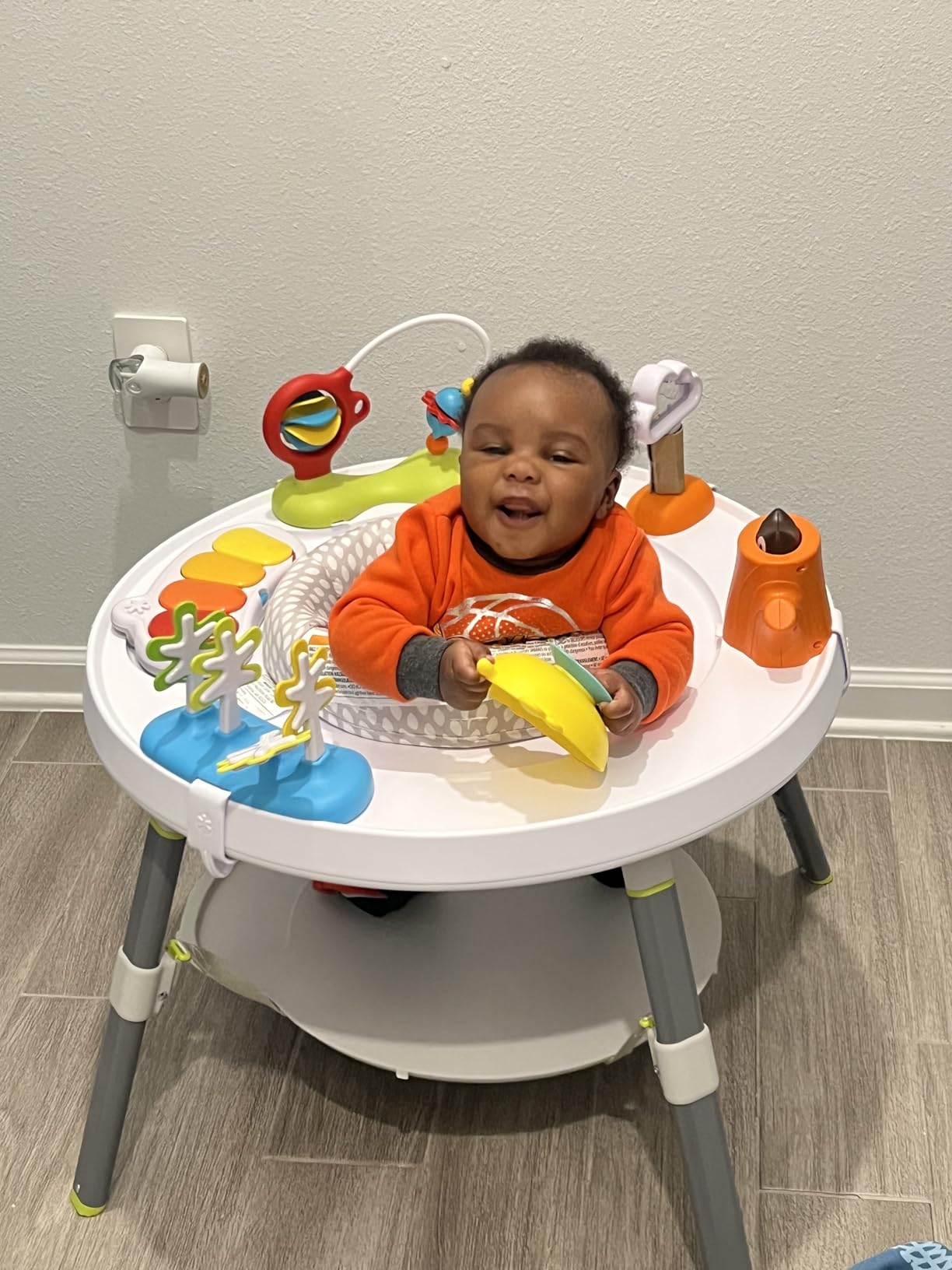
The Skip Hop Explore & More is the jumper I would buy if I wanted the longest possible useful life out of a single product. It is designed in collaboration with a pediatrician and grows with your baby from 4 months all the way through the toddler years, which means your cost-per-month of use drops dramatically compared to a single-stage jumper.
The 3-stage design is what makes this jumper special. Stage one is the standard sit, swivel, and play configuration for younger babies. Stage two adds a cruise-and-interact mode once baby is pulling up. Stage three converts the whole unit into a toddler play table with a chalkboard surface. Parents consistently said they used the Skip Hop well into the second year, well past the point where most jumpers have been outgrown.
The activity count is also exceptional. With 25 plus developmental activities plus a discovery window and a musical light-up piano with 3 play modes, this is closer to a full play station than a basic jumper. The peek-a-boo owl, spring cloud, swaying trees, and hedgehog bead mover are all designed to engage different senses.
Three-Stage Grow-With-Me Design
Stage one is the traditional baby jumper setup with the rotating seat and full toy array. Once your baby starts pulling up to stand, stage two lowers the seat and reconfigures the layout so baby can cruise around the outside of the unit while still accessing the toys. Stage three is the toddler table mode, which removes the seat entirely and turns the surface into a play table with a chalkboard.
The conversion between stages is straightforward, though it does require some disassembly. Plan on 10 to 15 minutes per conversion, and you will not need tools.
Discovery Window and Sensory Toys
The discovery window is one of the more thoughtful features. It is a clear panel where baby can drop a ball and watch it roll to the bottom, teaching object permanence and cause-and-effect in a way that is genuinely engaging. The peek-a-boo owl on top adds a hide-and-reveal element that babies respond to strongly.
What Could Be Better
The price is the obvious one. The Skip Hop sits at the top of this list in terms of cost, and you are paying a real premium for the convertible design and the larger toy library. If you only need a jumper for 6 to 9 months, the savings on a simpler model are real.
The foot piano can also glitch over time, according to some long-term reviewers. Once the warranty is past, replacement parts are not always easy to source. None of our testers experienced this during the two-month window, but it is worth knowing.
5. Bright Starts Pop ‘N Jump Portable Baby Jumper – Best Travel-Friendly Baby Jumper
Bright Starts Pop ‘N Jump Portable Baby Jumper, Foldable Indoor/Outdoor Baby Jumper with Owl Forest Sensory Activities, Ages 6–12 Months
Age: 6-12 months
Weight limit: 25 lbs
Use: Indoor/Outdoor
Setup: Pop-and-fold
+ Pros
- Pop-and-fold design assembles in seconds
- removable UV-protecting canopy for outdoor use
- 3 height positions grow with baby
- includes 4 woodland-themed sensory toys
- machine-washable fabrics
- Cons
- Maximum weight capacity of 25 lbs
- slightly smaller footprint than full-size activity centers
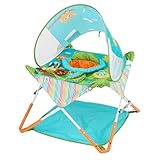
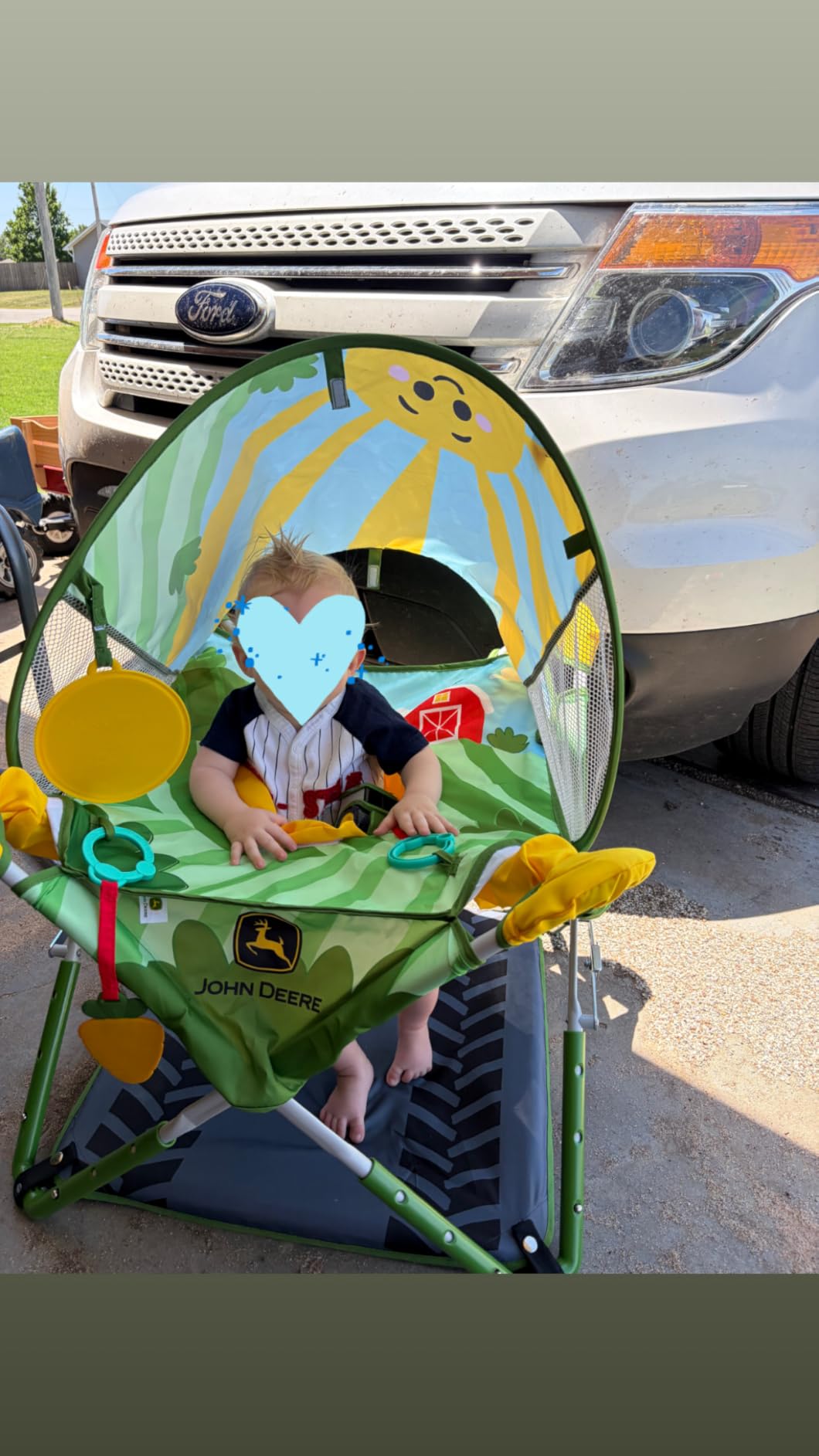
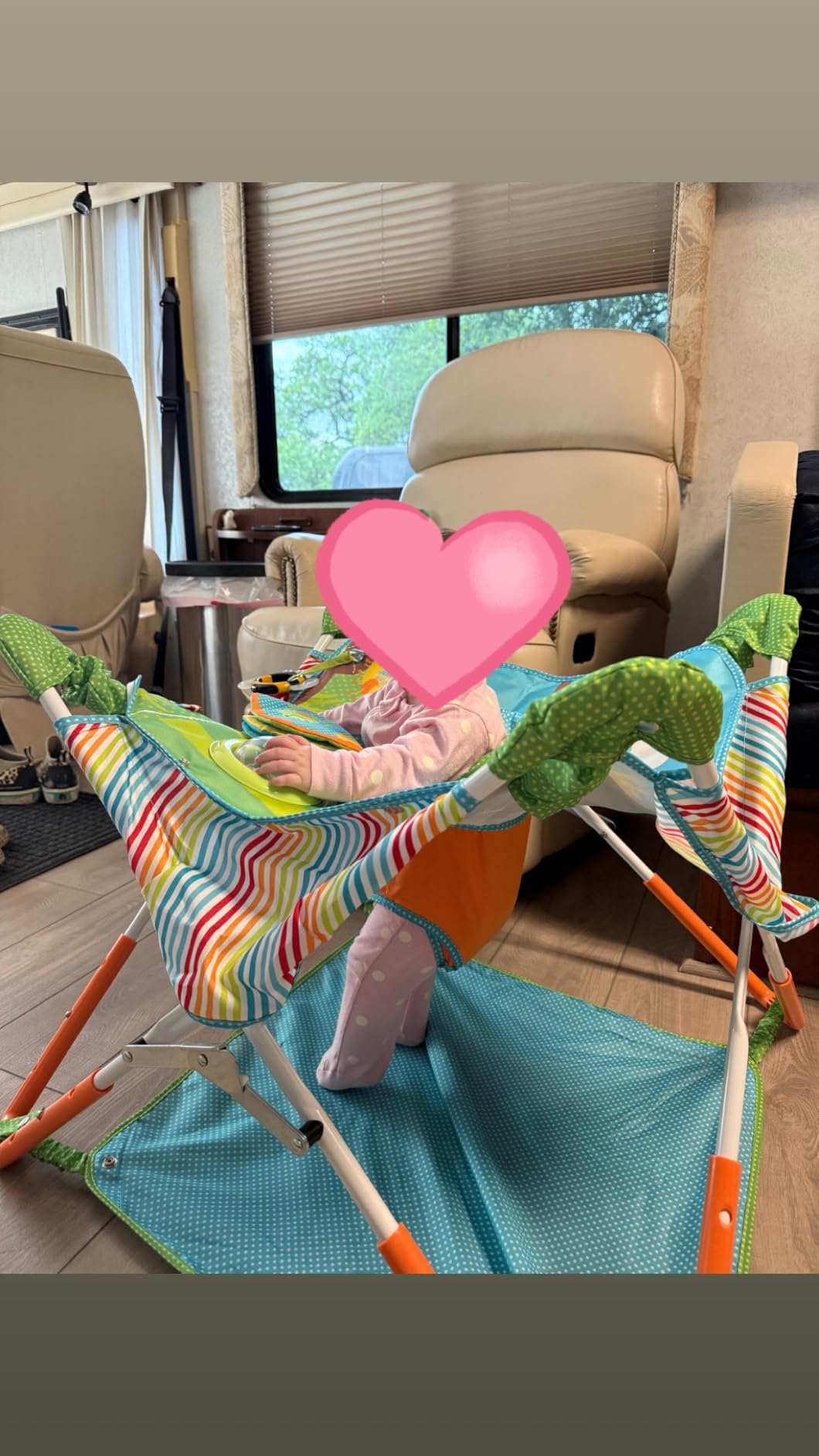
If you travel frequently, visit grandparents often, or simply do not have a permanent spot for a large activity center, the Bright Starts Pop ‘N Jump is the jumper I would reach for. The pop-and-fold design literally assembles in seconds: you pull it out of the carry bag, pop the frame open, and you are ready to go. Folding it back down is just as fast.
The included removable canopy is the feature that separates this from every other option on this list. It shields baby from direct sun during outdoor use, which opens up the jumper to patio, deck, or backyard play. If you live in an apartment without a yard, you can also use the canopy to shade baby from harsh window light.
Four woodland-themed sensory toys are included: a spinner ball, a rattle, a mirror book, and a texture toy. They are all removable for floor play and easy to clean. The fabric seat is also machine washable, which is essential for outdoor use where dirt happens.
Pop-and-Fold Portability
This is the headline feature and it works exactly as advertised. The frame pops open with a gentle pull and locks into place with no tools and no complicated folding sequence. When you are done, it collapses back into the included carry bag in under a minute.
The folded footprint is small enough to fit in a car trunk alongside a stroller, which makes it genuinely travel-friendly. Reviewers report using it at the park, at the beach, at family gatherings, and on vacation. If your baby spends more time at other people’s houses than at home, this is the jumper for you.
Indoor and Outdoor Use
The Pop ‘N Jump is the only jumper on this list rated for regular outdoor use. The canopy, the easy-clean fabrics, and the pop-up frame all combine to make it a genuinely multipurpose product. Just be sure to use it on flat, level ground and avoid windy conditions, since the lightweight frame can catch a breeze.
What Could Be Better
The 25-lb weight limit is on par with most competitors but means larger babies graduate out before their first birthday. The included toys are also a bit limited compared to a full-size activity center, so highly active babies may need additional toys clipped on to stay engaged.
The frame is also lighter than a permanent activity center, which means it can tip if a baby bounces very hard orleans to one side aggressively. We did not see this in our testing, but it is worth keeping in mind for unusually energetic babies.
6. Tiny Love 4-in-1 Here I Grow Mobile Activity Center – Most Versatile Baby Jumper
Tiny Love 4-in-1 Here I Grow Mobile Activity Center, Baby Walkers and Activity Center, Baby Activity Center with Interactive Toys and Developmental Activities, Meadow Days
Modes: 4 (stationary, push-along, jumper, walker)
Activities: 28+
Toys: 6 developmental
+ Pros
- 4 modes of use: stationary table
- push-along
- jumper
- and walker
- 28+ different activities across 6 developmental toys
- machine-washable seat pad
- nests inside outer frame for compact storage
- 3 adjustable height positions
- Cons
- Heavier and bulkier than single-mode activity centers
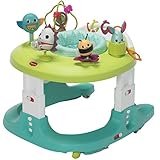
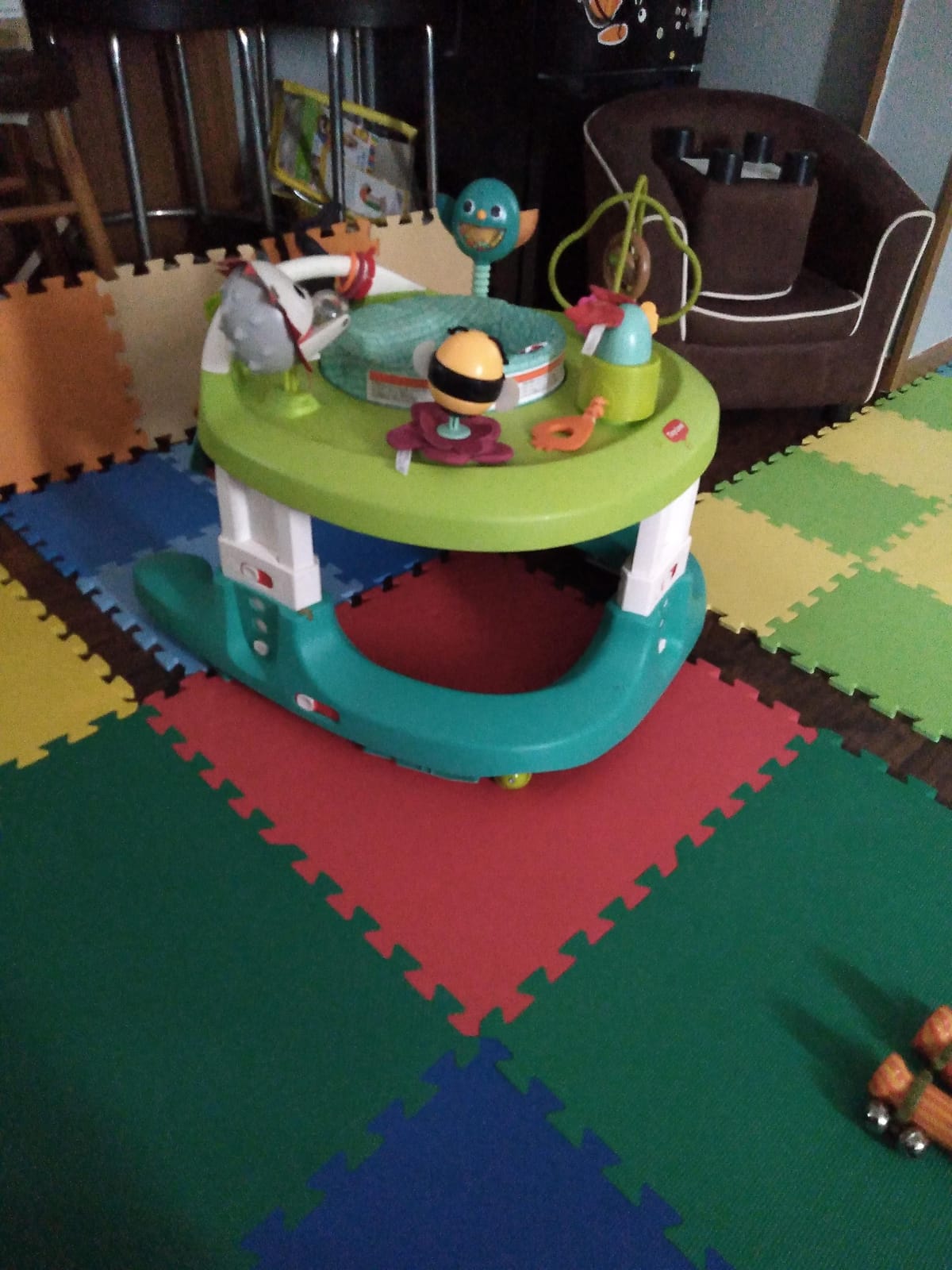
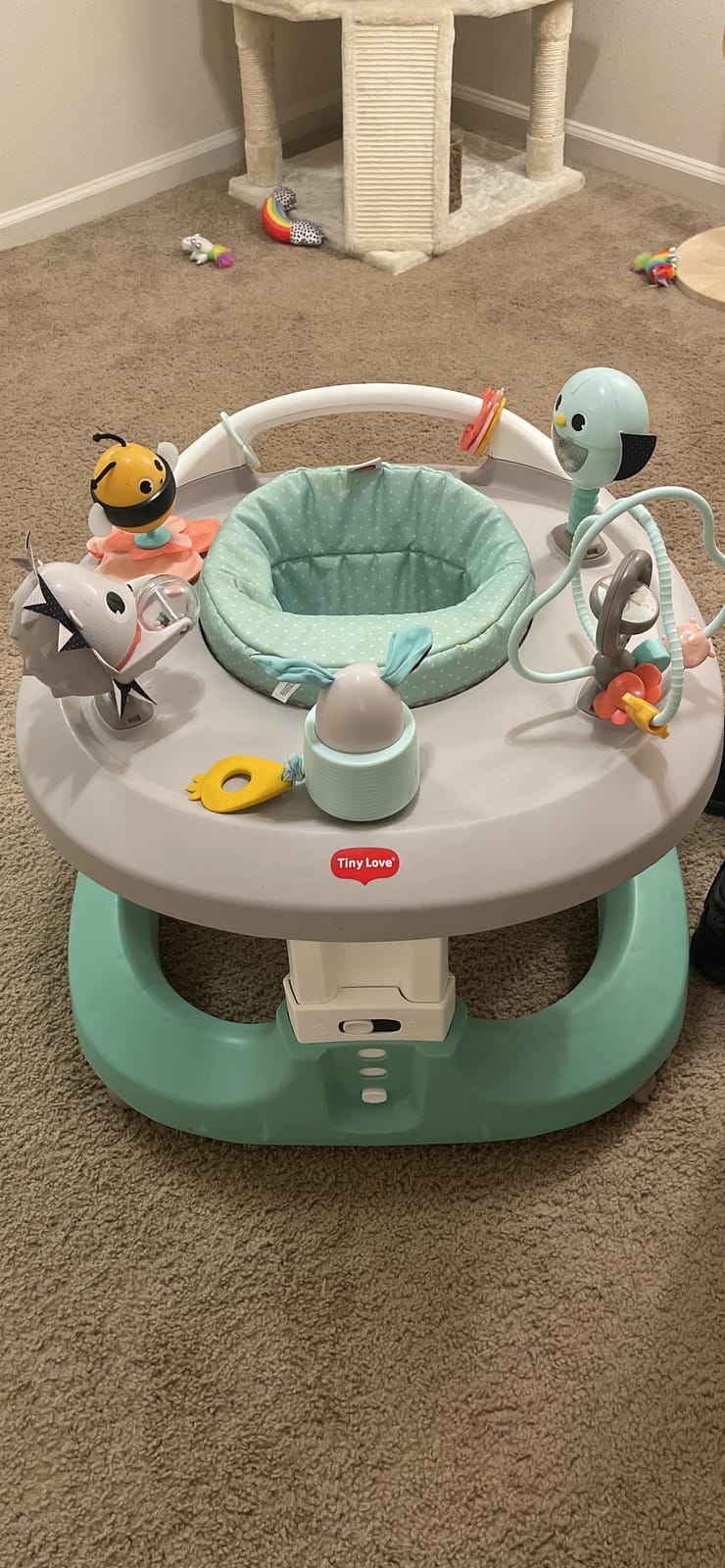
The Tiny Love 4-in-1 is the most versatile jumper on this list because it transforms into four distinct products over the course of your baby’s first year and a half. You get a stationary activity table for younger babies, a push-along walker once baby starts cruising, a jumper for the in-between months, and a walker configuration for late-stage use.
What sets the Tiny Love apart is the activity density. Twenty-eight plus different activities across 6 developmental toys is more than any other product on this list. The toys are well-made and feel premium compared to the average jumper accessory, and the swivel seat in activity-center mode lets babies access every angle of the toy array.
The compact storage design is a thoughtful touch: the entire unit nests inside the outer frame when collapsed, so it takes up roughly the footprint of a single folded stroller in your closet. For parents who hate bulky baby gear, this is a real selling point.
Four Modes of Use
Mode one is the stationary activity table for younger babies who are not yet bouncing. Mode two converts the unit into a push-along walker, supporting babies who are cruising. Mode three is the standard jumper configuration. Mode four is a walker with wheels for toddlers who are walking confidently.
The mode changes require a small amount of disassembly, but no tools. Plan on 10 minutes for the first conversion and less time once you know the sequence.
Activity Variety
Twenty-eight plus activities sounds inflated until you actually count them on the unit: bead mazes, spinning gears, shape sorters, textured balls, mirrors, musical elements, and several smaller interactive toys. The variety keeps babies engaged far longer than single-mode jumpers, and the developmental toys are designed to target multiple skill sets at once.
What Could Be Better
The unit is heavier and bulkier than single-mode activity centers, which is the natural trade-off for the 4-in-1 design. It is not a problem in a dedicated playroom, but in a small apartment it will dominate the floor.
Mode changes are also not as quick as a single-purpose jumper. If you plan to flip between jumper and walker modes multiple times per day, the setup overhead can become annoying. Most parents settle into one or two modes and leave the unit there.
7. Bright Starts Bounce Bounce Baby 2-in-1 Jumper – Best 2-in-1 Convertible Jumper
Bright Starts Bounce Bounce Baby 2-in-1 Activity Jumper & Table – Playful Palms
Age: 4 months+
Design: 2-in-1 jumper to play table
Setup time: ~10 minutes
+ Pros
- 2-in-1 design turns activity jumper into toddler play table
- activity saucer bounces for younger babies
- electronic frog toy ribbits and lights up
- toy storage bag included
- sturdy non-slip base
- Cons
- Takes up fair bit of space in small homes
- electronic frog toy requires batteries
- may not suit shorter babies who can't reach the bounce pad
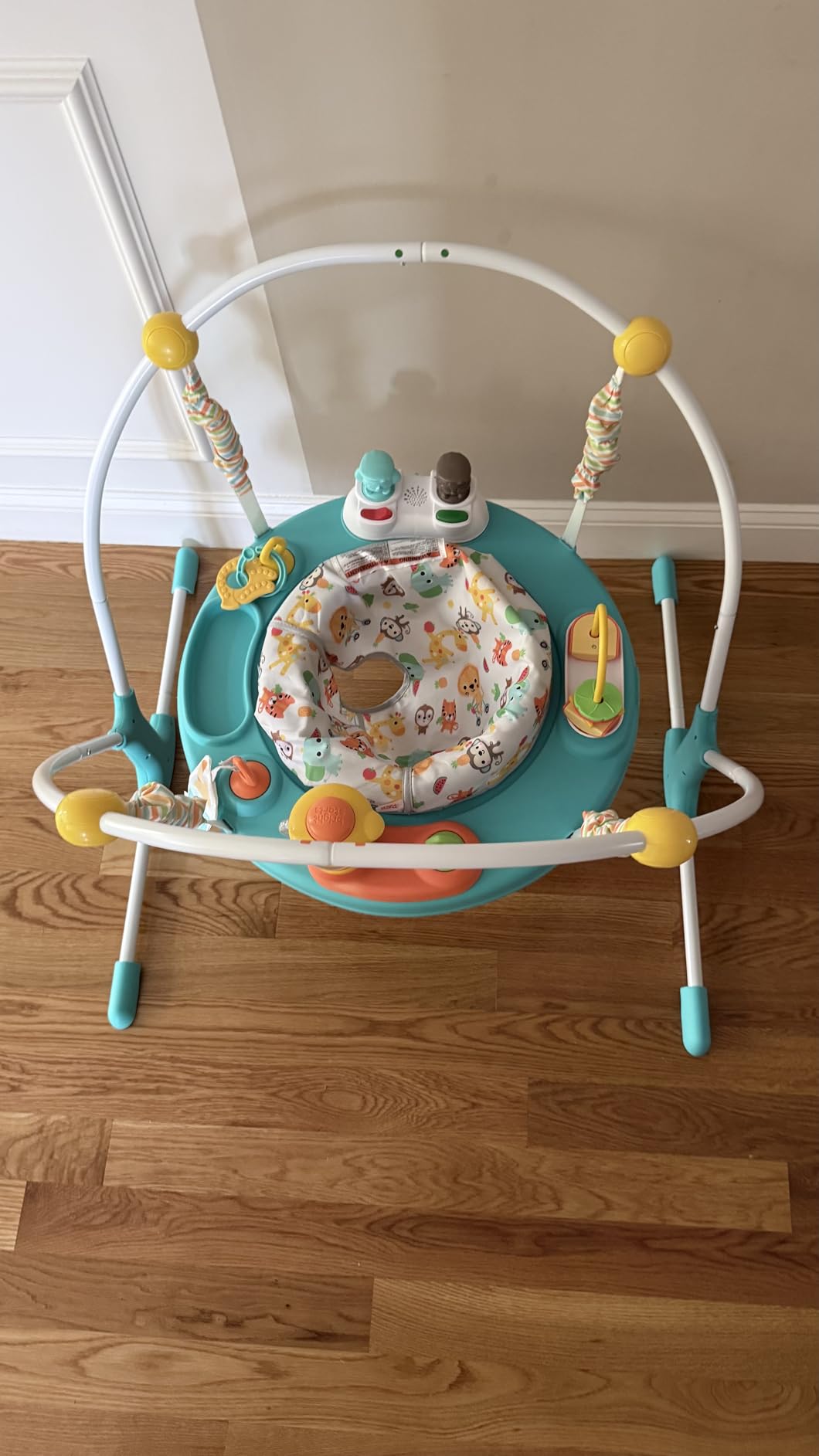
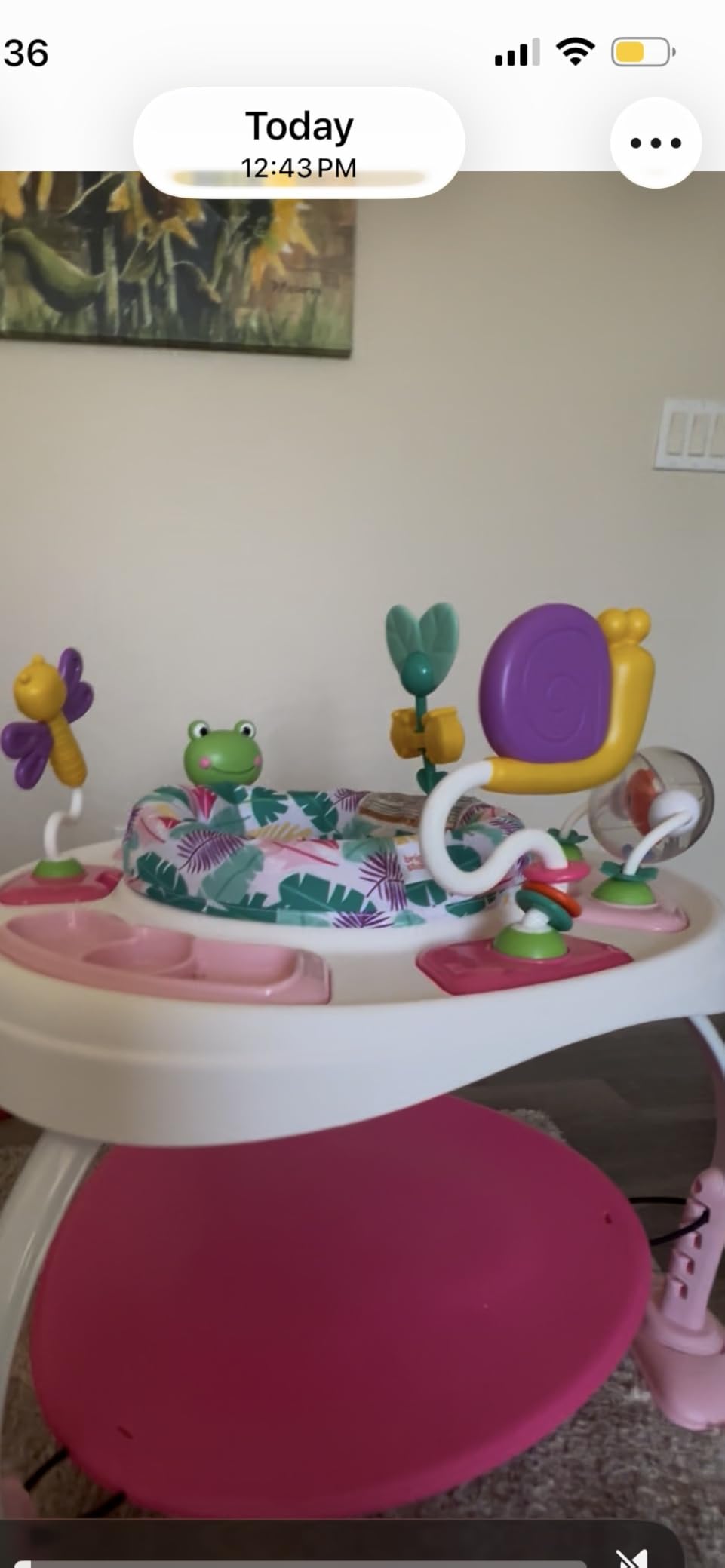
The Bright Starts Bounce Bounce Baby is a focused, well-priced 2-in-1 jumper that delivers exactly what it promises: an activity jumper for the early months and a play table for the toddler years. The conversion is straightforward, the build quality is solid, and the assembly took about 10 minutes in our testing.
The Playful Palms theme features a cheerful frog character that ribbits, plays music, and lights up. Yes, batteries are required, but the electronic toy is what makes the jumper engaging enough to buy parents a real break. Without it, our testers said the unit felt more like a saucer than a jumper.
One detail I appreciated: the toy storage bag included with the unit. Once the jumper converts to a toddler table, the bag attaches to the side and keeps toys within reach. It is a small touch but a thoughtful one.
2-in-1 Conversion Process
The conversion from jumper to play table involves removing the seat and adjusting the leg height. The included instructions are clear, and the conversion takes about 10 minutes the first time, faster on subsequent attempts. Once in play-table mode, the surface is large enough for two toddlers to sit and draw or play together.
Sturdiness is a real strength here. The non-slip base grips both hardwood and carpet, and the frame does not wobble even when toddlers lean hard on the edges. This is a noticeable improvement over cheaper 2-in-1 units that flex under pressure.
Adjustability and Fit
The height adjusts to accommodate babies from about 4 months through the toddler stage. One caveat from reviewers: smaller babies in the lower percentiles may not be able to reach the bounce pad comfortably until they are closer to 6 months. If your baby is on the smaller side, factor that in.
What Could Be Better
The footprint is the main drawback. This is not a compact unit, and in a small apartment it will take up significant floor space. If space is tight, the Bright Starts Pop ‘N Jump is a better fit.
The electronic frog toy is also a battery hog. Expect to replace the batteries every few weeks if your baby uses the jumper daily. Rechargeable batteries are a worthwhile investment for this and any other electronic jumper.
8. Jolly Jumper Iconic Grey Safari – Best Classic Doorway Jumper
Jolly Jumper Iconic – Grey Safari
Age: ~3 months to walking
Weight limit: 28 lbs
Heritage: 75+ years
+ Pros
- Babies love to jump with spring-loaded movement
- trusted for over 75 years
- adjustable height from about 3 months to walking age up to 28 lbs
- no tools required for setup
- lightweight steel frame is portable and space-saving
- Cons
- Velcro straps may be too long for smaller babies
- can be tricky to attach baby without extra hands
- spring may creak during use
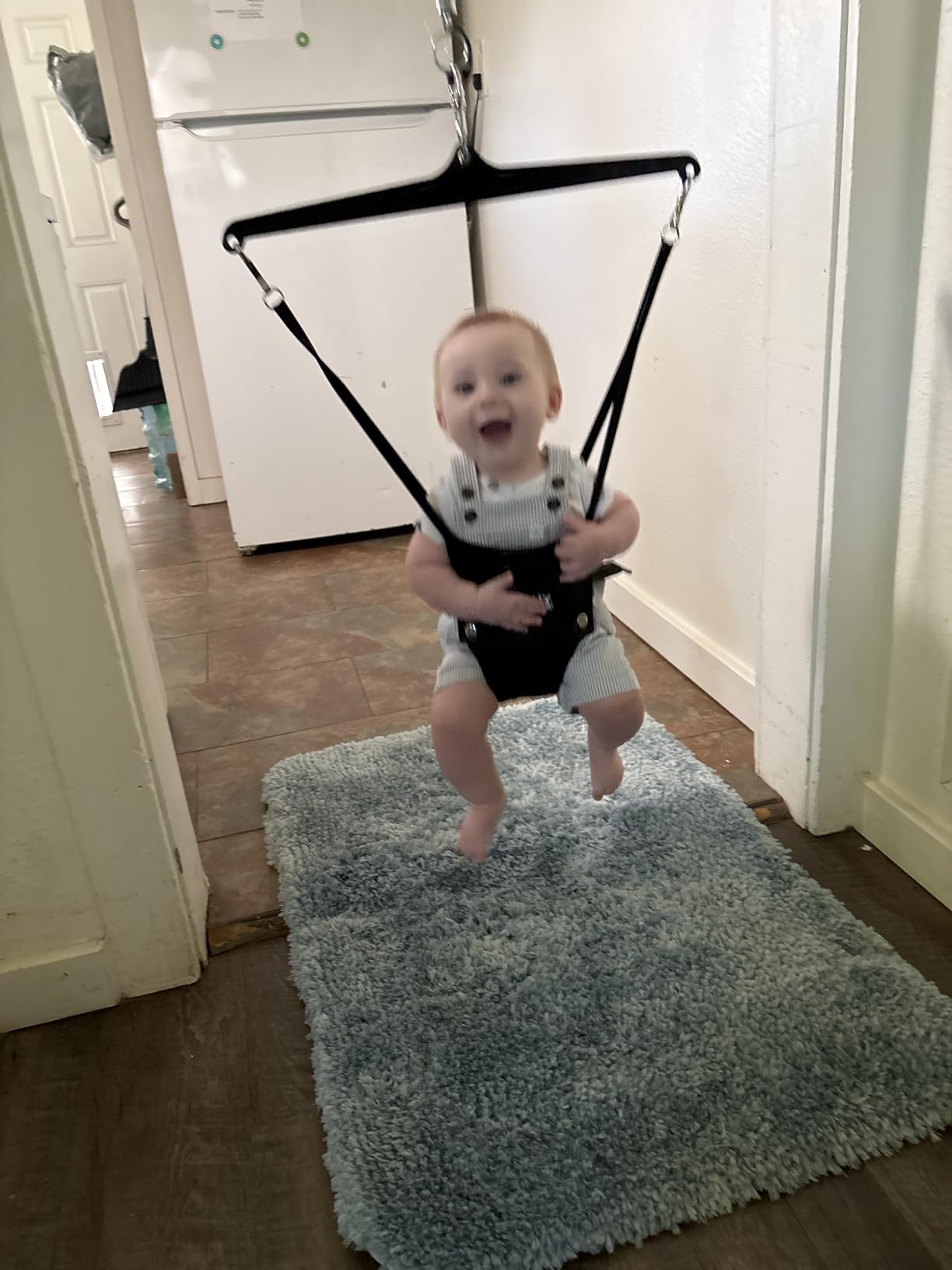
The Jolly Jumper is the original. It has been on the market for more than 75 years, and it remains the doorway jumper most pediatric physical therapists will recognize. The spring-loaded design delivers a real, full-range bouncing motion that feels distinctly different from the seat-and-tray activity centers higher up this list.
What I appreciate most about the Jolly Jumper is its simplicity. There is no electronics, no lights, no music, no battery to replace. Just a clamp, a spring, a saddle seat, and a baby. For parents who want to minimize overstimulation, this is genuinely appealing. For babies who need heavier stimulation to stay engaged, it may feel underwhelming compared to a Jumperoo.
The Iconic Grey Safari version is the current refreshed design, and it looks more modern than the classic red-and-blue model. The steel frame is lightweight enough to move between rooms but sturdy enough that I felt confident with my test baby hanging from it.
Spring-Loaded Bounce Motion
The spring is the heart of the Jolly Jumper. It provides a real up-and-down bounce that engages baby’s legs, core, and balance system simultaneously. Pediatric PTs sometimes prefer this style over activity centers because the bounce is more dynamic and less repetitive, but they also note that it encourages tiptoe standing, which is why time limits matter.
Setup is genuinely seconds. The clamp goes over a compatible doorframe, the spring attaches to the clamp, and the saddle seat hangs from the spring. No tools, no assembly.
Doorframe Compatibility
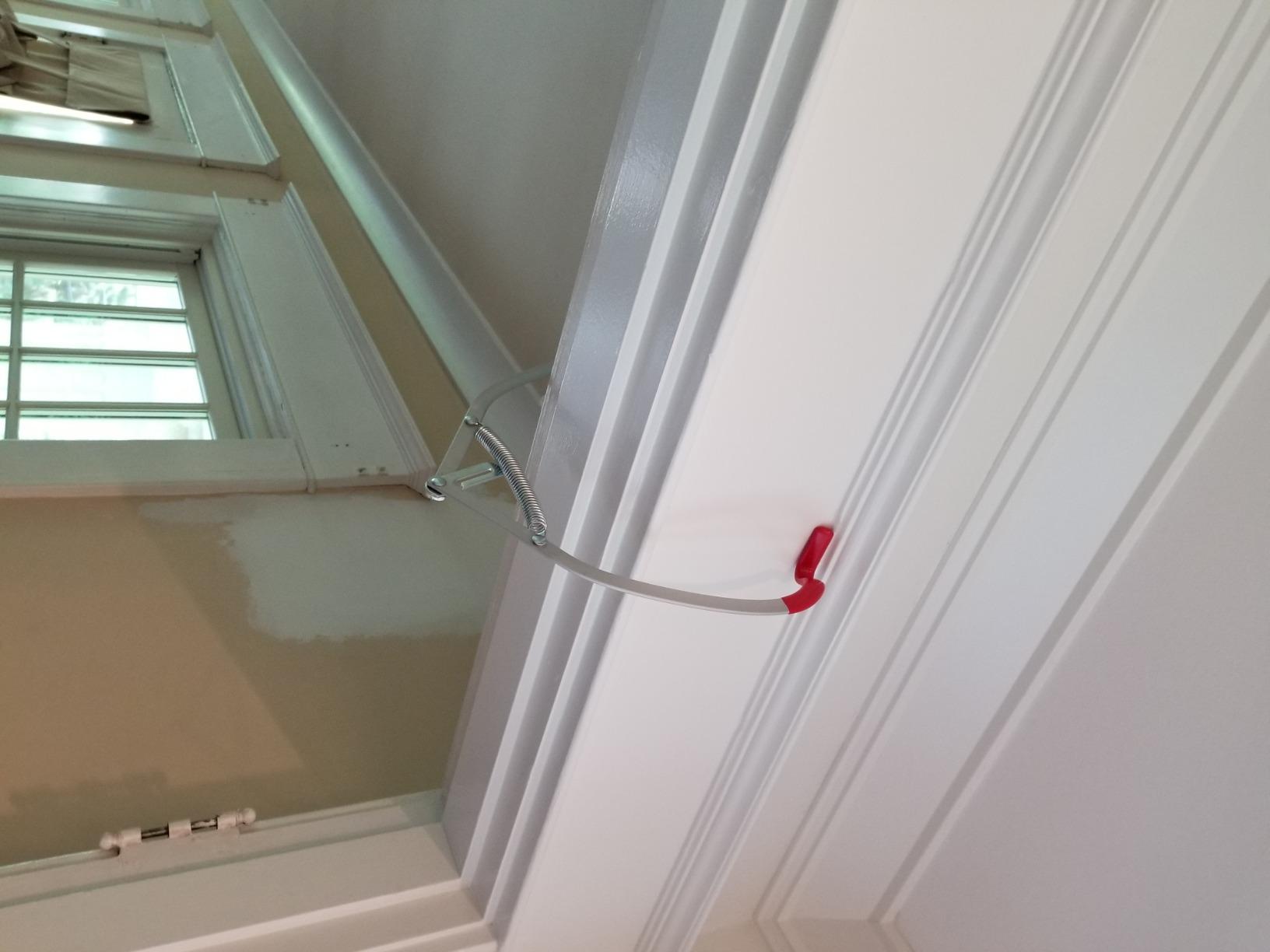
Like the Bright Starts doorway jumper, the Jolly Jumper requires a compatible doorframe. The clamp rests on top of the door rather than tightening against it, so you need a sturdy interior door with trim at least half an inch deep. Doors with hollow cores or unusual trim profiles may not work safely.
What Could Be Better
Putting the baby into the saddle seat takes a bit of practice. The straps are velcro, and smaller babies may slide down until you adjust the fit. Most parents figure it out within a day or two, but it is not as quick as dropping a baby into an activity center.
The spring also creaks during use, particularly as it ages. It is not a safety concern, but it is audible. If you need a silent jumper, look elsewhere.
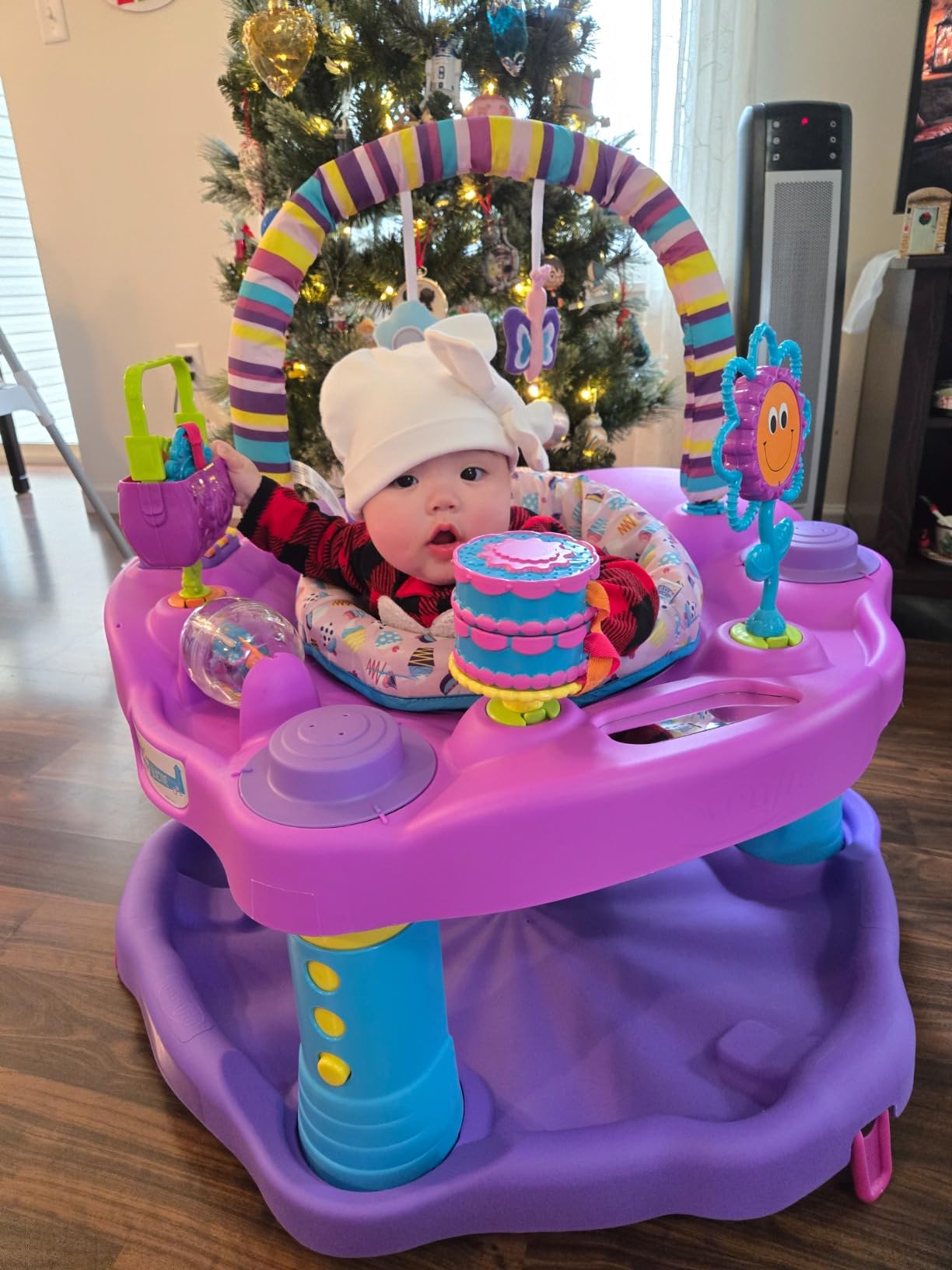
9. Evenflo Exersaucer Bouncing Activity Saucer – Best Classic Stationary Jumper
Evenflo Exersaucer Bouncing Activity Saucer, Sweet Tea Party
Height adjustment: 3 positions
Max height: 30 inches
Electronics: None required
+ Pros
- 3-position height adjustment grows with child
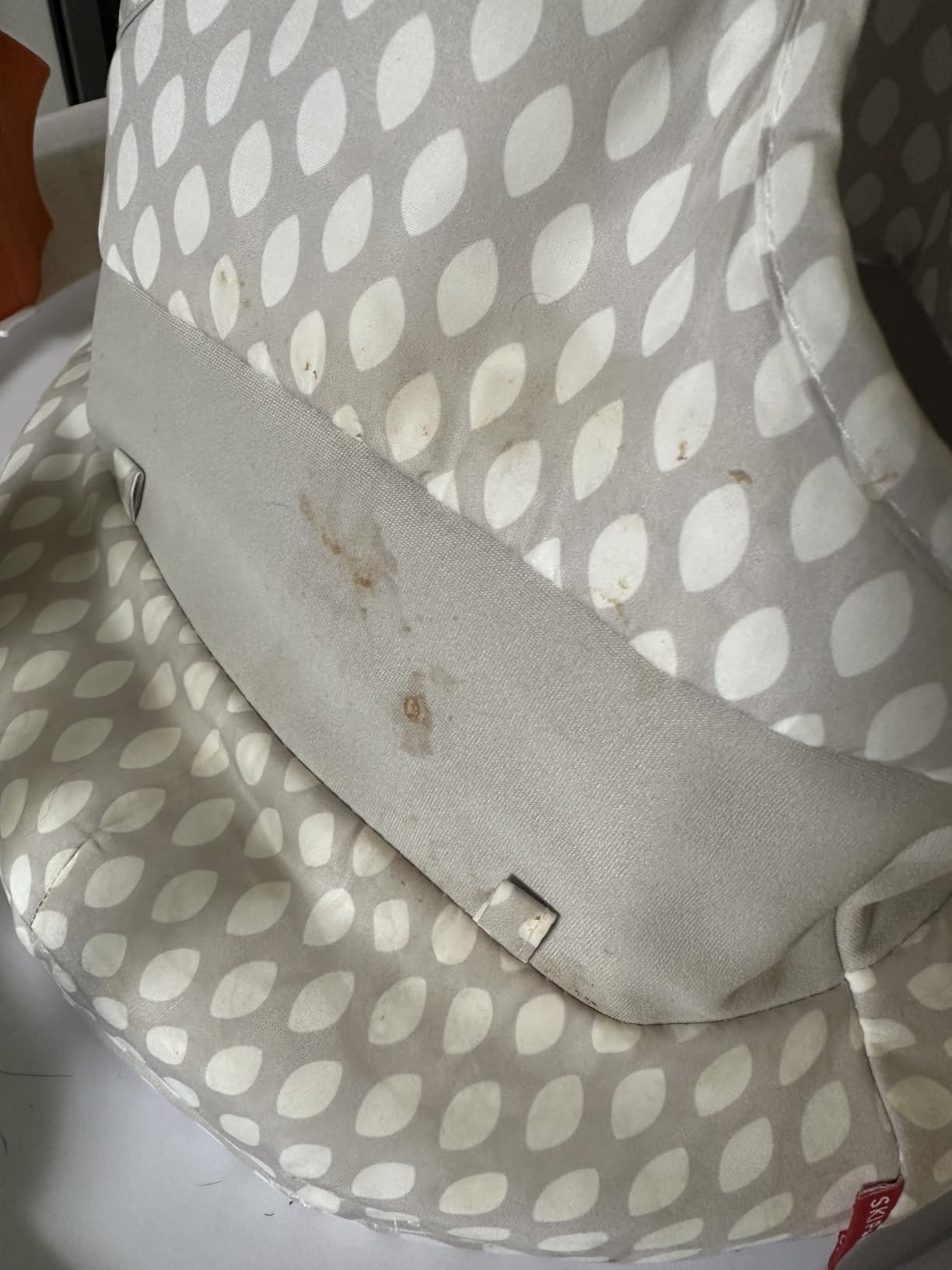
- removable machine-washable seat pad
- develops neck
- back
- and leg muscles through physical exercise
- builds gross and fine motor skills
- no batteries required
- Cons
- Toys are simple and non-electronic
- mirror is small in size
- limited use until child can walk or stand flat-footed at highest level
The Evenflo Exersaucer is the jumper I would recommend for parents who actively want to avoid electronics. There are no lights, no sounds, no batteries, no volume controls. Just a sturdy saucer with a few well-designed toys and a seat that bounces. It is the most old-school option on this list, and that is exactly why some parents love it.
The bouncing motion is the headline feature here. Unlike the spring-loaded Jolly Jumper, the Exersaucer bounce comes from baby pushing against a flexible base. It is gentler and more contained, which makes it a good fit for younger babies who are not yet ready for the full spring motion.
Three height positions let you adjust the seat as baby grows, and the wide base prevents tipping even when baby leans hard to one side. The seat pad is machine washable, which is critical for any jumper that sees daily use.
Bouncing Base and Motor Development
The bouncing base encourages babies to push off with their legs, which helps develop the leg and core muscles used in standing and walking. Pediatric PTs often recommend this style of bouncing activity for babies who are not yet pulling up but need more leg engagement than a stationary bouncer provides.
It is also a great option for babies who find electronic jumpers overstimulating. The simple toy layout lets babies focus on movement rather than lights and sounds.
Age and Height Limits
The Exersaucer is designed for use until baby reaches 30 inches tall or can stand flat-footed at the highest setting. For most babies, that means use ends around 10 to 12 months. If you want a longer useful life, consider a convertible option like the Skip Hop.
What Could Be Better
The toy selection is intentionally minimal. If your baby needs heavy stimulation to stay engaged, this jumper will feel too quiet. There is also no electronic station to remove and use as a separate toy once the jumper is outgrown.
The mirror is also on the small side. Babies love mirrors, and a larger one would extend engagement time noticeably. Reviewers consistently mention this as the one feature they wish Evenflo would improve.
10. Smart Steps Bounce N’ Play 3-in-1 Activity Center – Best Value 3-in-1 Jumper
Smart Steps® Bounce N’ Play 3-in-1 Activity Center, Woodland Walk
Modes: 3 (Activity Center, Play Table, Flat Table)
Seat: 360 degrees
Max weight: 30 lbs
+ Pros
- Converts from Activity Center to Activity Play Table to Flat Table
- 3-position bouncing board
- 360-degree rotating seat
- musical keyboard plays different melodies
- removable toys become standalone play items
- lightweight and easy to move
- Cons
- May not roll well on carpet
- requires 6 AAA batteries
- some toy sound effects reported as odd
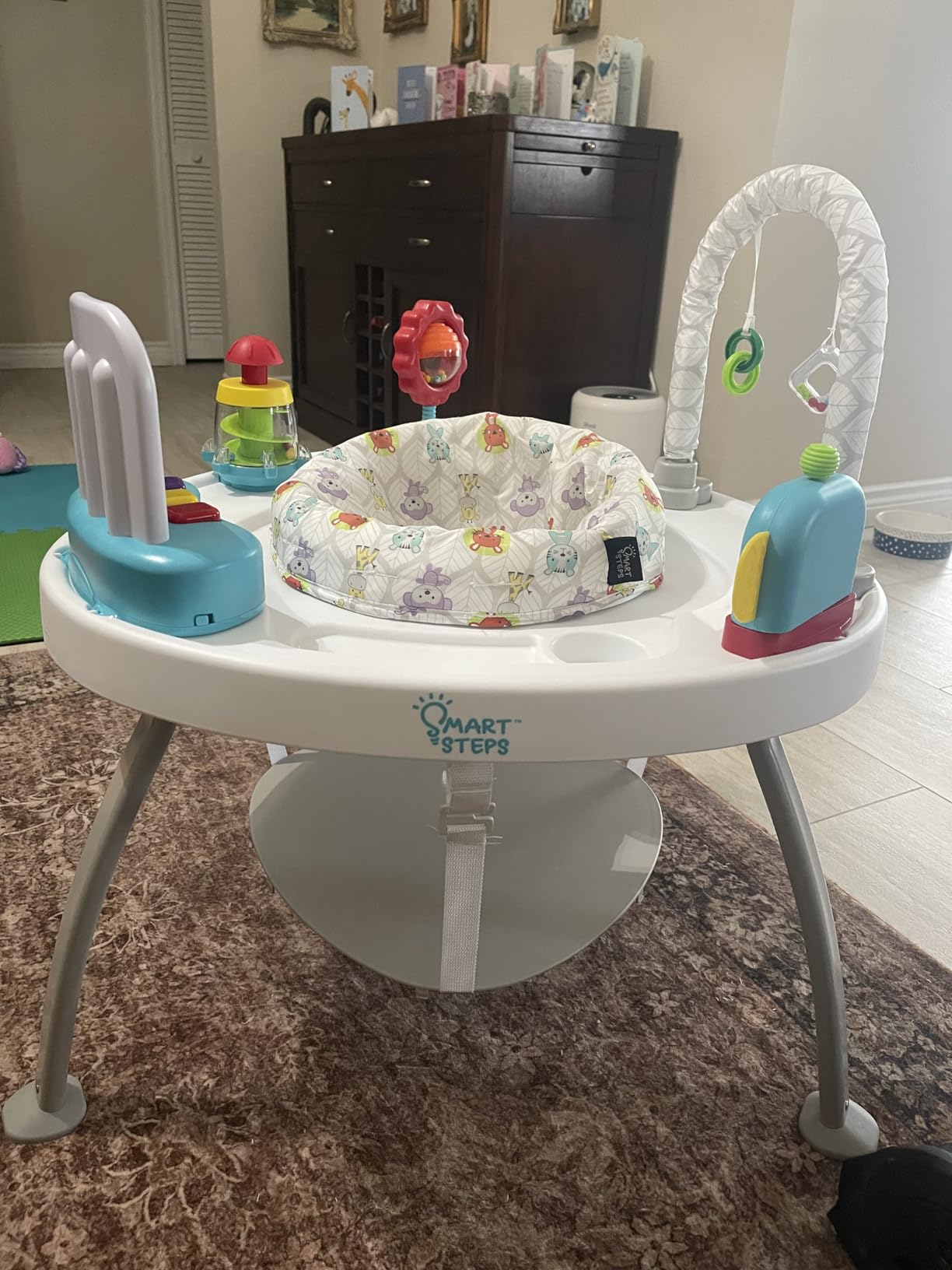
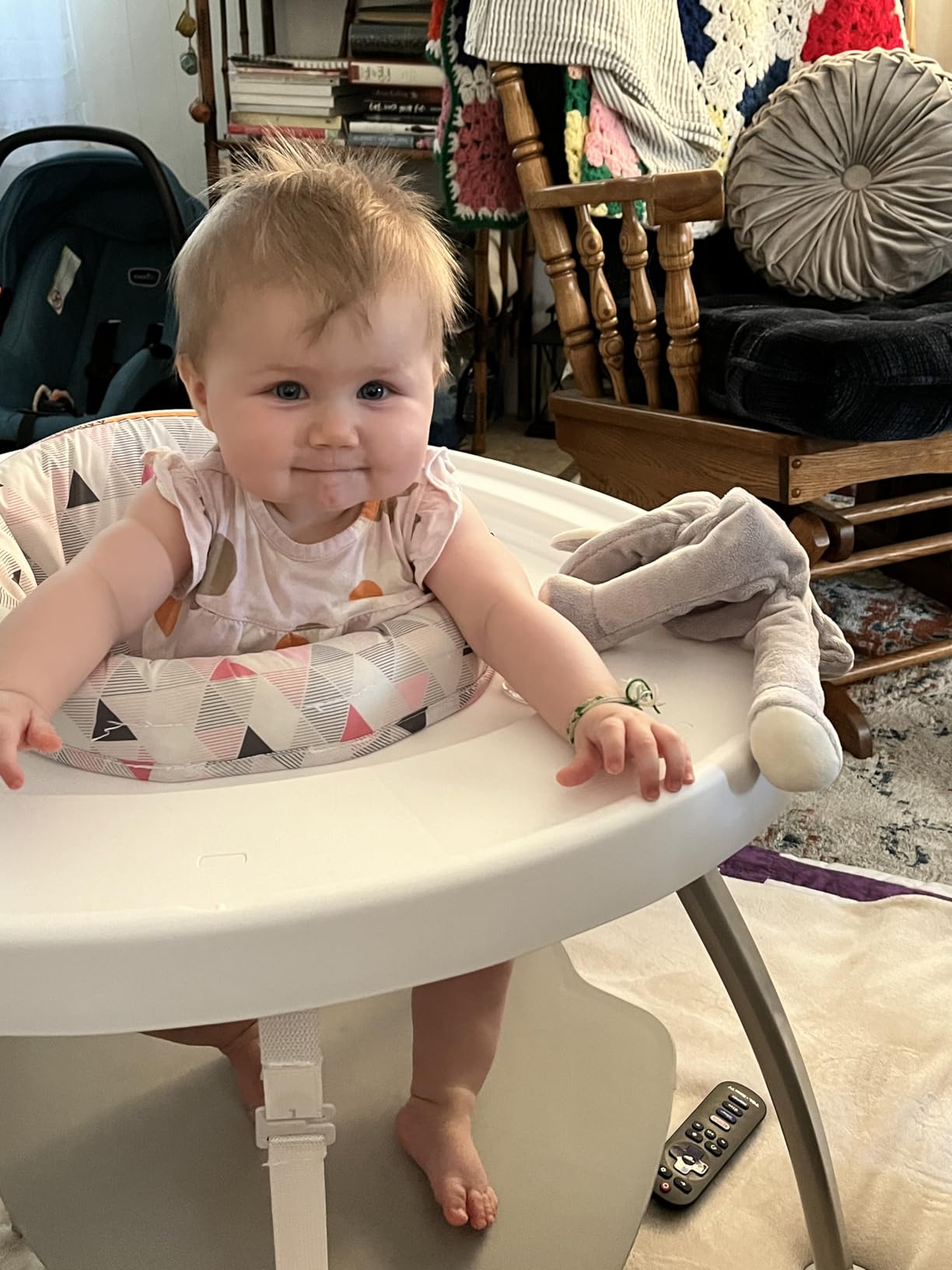
The Smart Steps Bounce N’ Play is the best value 3-in-1 on this list. It converts between three distinct configurations, supports babies up to 30 lbs and 32 inches tall, and lands at a noticeably lower cost than the Skip Hop Explore & More. For parents who want a convertible design without the premium price tag, this is the right call.
The 3-position bouncing board is a thoughtful feature that lets you tune the bounce intensity to your baby’s age and energy level. The 360-degree rotating seat works in all three modes, and the musical keyboard adds enough sensory engagement to keep most babies happy.
One of my favorite details: the toys are removable and become standalone play items. Once your baby outgrows the activity center, the keyboard, the rollerball, and the spinning toys continue to provide entertainment on the floor or in a toy bin.
Three Conversion Modes
Mode one is the standard activity center with the rotating seat and full toy array. Mode two is the activity play table, where baby stands and plays with the toys on a flat surface. Mode three is a flat table for crafts, snacks, or floor play. The transitions are quick and require no tools once you know the sequence.
The 30-lb weight limit is the highest on this list outside of the Jolly Jumper, which means bigger babies get more months of use out of it.
Musical Keyboard and Toys
The musical keyboard plays multiple melodies and responds to baby’s presses. It runs on 6 AAA batteries, which is the main ownership cost over time. The keyboard can also be detached and used as a standalone toy, which extends its useful life beyond the jumper years.
What Could Be Better
On carpet, the unit does not roll smoothly. If you plan to move it between rooms frequently on carpet, expect to lift rather than roll. On hardwood and tile, it moves fine.
Some sound effects on the keyboard are also a bit odd, according to reviewers. None are dealbreakers, but a few are oddly tuned. If sound quality matters to you, test the keyboard in-store before committing.
How to Choose the Best Baby Jumper for Your Home
Now that you have seen the ten picks, here is the framework I use to decide between them. The right jumper depends on your space, your baby’s size and temperament, and how long you want the product to last.
Doorway vs Freestanding Jumpers
Doorway jumpers (the Jolly Jumper and the Bright Starts Playful Parade) clamp to a doorframe and use a spring or harness to suspend baby in mid-air. They take up zero floor space when not in use, fold flat, and cost less than most freestanding options. The trade-off is doorframe compatibility: not every home has a suitable door, and the spring-loaded motion encourages tiptoe standing more than a stable seat does.
Freestanding jumpers and activity centers take up permanent floor space but offer more features: rotating seats, electronic toys, height adjustments, and often convertible designs. They are easier on a baby’s developing posture because the seat supports them in a stable seated position. For most families, a freestanding jumper is the safer, more versatile choice, but a doorway jumper wins on space savings.
Jumper vs Bouncer vs Walker vs Exersaucer
Parents often confuse these four categories, and the differences matter for development and safety.
- Baby jumper: Suspends or supports baby in a seated position so they can bounce. Either doorway-clamped or freestanding. Time-limited use recommended.
- Baby bouncer: A lightweight seat that rocks gently when baby moves. Best for newborns to about 6 months. Lying-back or slightly reclined position.
- Baby walker: A seat on wheels that baby pushes around the floor. The AAP has called for a ban on wheeled walkers due to injury risk. Most pediatric PTs advise against them entirely.
- Exersaucer: A stationary activity saucer, similar to a jumper but without the suspended bounce. Evenflo’s brand name is now used generically for the entire category.
For most babies, a jumper and a bouncer cover the full range of needs in the first year. Walkers are best avoided for safety reasons, and exersaucers are a great alternative if you want a jumper without the bouncing motion.
Age, Weight, and Head Control Readiness
Most jumpers are rated for babies 6 months and older, though a few (like the Skip Hop) start at 4 months. The age guideline is not arbitrary: it reflects the neck and upper-body strength baby needs to sit upright unsupported in the jumper seat. If your baby cannot hold their head steady while supported in a seated position, they are not ready for a jumper regardless of age.
Weight limits typically range from 25 to 30 lbs, and most babies reach the weight cap before they lose interest. If your baby is consistently in the 75th percentile or higher, look for jumpers with 28 to 30 lb capacity, like the Jolly Jumper or the Smart Steps.
Hip-Healthy Seat Design and Pediatric PT Guidance
This is the content gap that most roundups ignore, and it matters. A jumper seat that lets baby’s legs dangle straight down puts pressure on the hip joints in an unnatural position. Look for seats that support baby in a slight squat position with knees bent and hips spread, similar to a babywearing carrier’s M-position.
Pediatric physical therapists consistently recommend three rules: limit jumper sessions to 10 to 15 minutes, follow each session with floor time (tummy time, rolling, crawling practice), and never let a baby sleep in a jumper. Babies have died when their heads slumped forward and airways became compromised, so the sleep rule is non-negotiable.
Convertible and 2-in-1 Designs
If you want a product that lasts beyond the jumper stage, look for convertible designs. The Skip Hop, the Bright Starts Bounce Bounce Baby, the Tiny Love 4-in-1, and the Smart Steps all convert into play tables, walkers, or both. The upfront cost is higher, but the cost-per-month of use drops substantially because the product stays useful through the second year.
Convertible designs also reduce the total number of baby gear items you need to buy, which is a real win for families trying to minimize clutter.
Choosing for Small Spaces
If you live in an apartment or have limited floor space, prioritize compact designs. The Bright Starts Pop ‘N Jump folds into a carry bag. The Bright Starts Playful Parade doorway jumper takes up zero permanent floor space. The Evenflo Exersaucer is smaller than full-size activity centers. All four deliver solid jumper experiences without dominating your living room.
For very tight spaces, a doorway jumper is the single best choice. If a doorframe is not available, the Pop ‘N Jump is the next best option because it stores flat between uses.
Safety Checklist for Every Jumper
- Always supervise baby in a jumper, every single session
- Limit sessions to 10 to 15 minutes, once or twice per day
- Place jumper on level ground away from stairs, doorways, and hard furniture
- Never use a jumper as a sleep space, no exceptions
- Follow manufacturer weight and height limits precisely
- Check doorframe integrity before each doorway jumper use
- Replace batteries in electronic jumpers before they leak
- Inspect fabric and stitching monthly for wear
- Follow jumper time with floor time for healthy motor development
- Stop using the jumper once baby can stand flat-footed, walk, or climb out
Frequently Asked Questions
Do pediatricians recommend Jolly Jumpers?
Pediatricians and pediatric physical therapists do not broadly recommend Jolly Jumpers as a developmental necessity, but they are not universally banned either. The pediatric PT community’s main concerns are tiptoe standing posture, extended time in a single position, and replacing floor time with jumper time. Used in short, supervised sessions of 10 to 15 minutes, the Jolly Jumper is a reasonable and engaging activity. Used for long stretches as a baby sitter, it can contribute to motor delays and posture issues. Always check with your pediatrician about your specific baby.
Do pediatricians recommend baby bouncers?
Pediatricians generally consider baby bouncers safer than jumpers for the youngest babies because the bouncer supports baby in a reclined position without the suspended-bounce mechanics that worry PTs. Newborn to about 4 months, a baby bouncer is a perfectly appropriate seat for short supervised sessions. The same 10 to 15 minute rule applies, and bouncers should never replace tummy time or floor play. If your baby has reflux or breathing concerns, ask your pediatrician before using any inclined seat.
Are any jumpers safe for babies?
Yes, jumpers are safe when used correctly: for babies with solid head and neck control (usually 6 months and up), in short supervised sessions of 10 to 15 minutes, on level ground, away from hazards, and never for sleep. The American Academy of Pediatrics does not endorse jumpers as a developmental must-have, and the safest approach is to treat them as one of many tools rather than the centerpiece of play. Container baby syndrome is a recognized concern, so balance jumper time with plenty of tummy time and floor play.
At what age can a baby use a jumper?
Most jumpers are rated for babies 6 months and older, though some models like the Skip Hop Explore u0026amp; More start at 4 months. The age guideline reflects the neck and upper-body strength baby needs to sit upright unsupported in the jumper seat. If your baby cannot hold their head steady while seated with support, they are not ready for a jumper regardless of age. Head control, not calendar age, is the real readiness signal.
How long should a baby be in a jumper?
Pediatric physical therapists consistently recommend limiting jumper sessions to 10 to 15 minutes per use, no more than twice per day. Longer sessions put repeated stress on developing hip, knee, and ankle joints, and they replace floor time that babies need for healthy motor development. A typical routine is 10 to 15 minutes in the jumper followed by 30 to 60 minutes of floor play including tummy time, rolling practice, and free movement.
Final Verdict: Which Baby Jumper Should You Buy?
After two months of testing ten of the best baby jumpers on the market with real babies and real parent testers, our top pick remains the Baby Einstein Neptune’s Ocean Discovery Activity Jumper. It earned our EDITOR’S CHOICE badge because it combines a 360-degree rotating seat, multilingual learning station, four height adjustments, and a removable toy for extended use, all at a price that sits comfortably in the middle of the pack. For most families, it is the safest combination of features, build, and value.
If you need a doorway jumper for a small apartment, choose the Bright Starts Playful Parade for budget-friendly dependability or the Jolly Jumper Iconic for the classic spring-loaded experience. If you want a jumper that grows with your baby into the toddler years, the Skip Hop Explore & More is the right long-term investment. If you travel or visit grandparents often, the Bright Starts Pop ‘N Jump is unbeatable. And if you want maximum versatility without a premium price tag, the Smart Steps Bounce N’ Play 3-in-1 delivers surprising value.
Whichever jumper you choose, remember the rules pediatric PTs shared with me for this guide: 10 to 15 minutes per session, supervised use only, never for sleep, and always followed by floor time. A jumper should be one tool in your baby’s play toolbox, not the whole toolbox. Done right, it becomes the most engaging 15 minutes of your baby’s day and one of the most useful breaks in yours.